EP0324979B1 - Mélange de norbornène à durée d'emploi prolongée - Google Patents
Mélange de norbornène à durée d'emploi prolongée Download PDFInfo
- Publication number
- EP0324979B1 EP0324979B1 EP88121765A EP88121765A EP0324979B1 EP 0324979 B1 EP0324979 B1 EP 0324979B1 EP 88121765 A EP88121765 A EP 88121765A EP 88121765 A EP88121765 A EP 88121765A EP 0324979 B1 EP0324979 B1 EP 0324979B1
- Authority
- EP
- European Patent Office
- Prior art keywords
- hexanol
- cocatalyst
- carbon atoms
- mixtures
- norbornene
- Prior art date
- Legal status (The legal status is an assumption and is not a legal conclusion. Google has not performed a legal analysis and makes no representation as to the accuracy of the status listed.)
- Expired - Lifetime
Links
Classifications
-
- C—CHEMISTRY; METALLURGY
- C08—ORGANIC MACROMOLECULAR COMPOUNDS; THEIR PREPARATION OR CHEMICAL WORKING-UP; COMPOSITIONS BASED THEREON
- C08G—MACROMOLECULAR COMPOUNDS OBTAINED OTHERWISE THAN BY REACTIONS ONLY INVOLVING UNSATURATED CARBON-TO-CARBON BONDS
- C08G61/00—Macromolecular compounds obtained by reactions forming a carbon-to-carbon link in the main chain of the macromolecule
- C08G61/02—Macromolecular compounds containing only carbon atoms in the main chain of the macromolecule, e.g. polyxylylenes
- C08G61/04—Macromolecular compounds containing only carbon atoms in the main chain of the macromolecule, e.g. polyxylylenes only aliphatic carbon atoms
- C08G61/06—Macromolecular compounds containing only carbon atoms in the main chain of the macromolecule, e.g. polyxylylenes only aliphatic carbon atoms prepared by ring-opening of carbocyclic compounds
- C08G61/08—Macromolecular compounds containing only carbon atoms in the main chain of the macromolecule, e.g. polyxylylenes only aliphatic carbon atoms prepared by ring-opening of carbocyclic compounds of carbocyclic compounds containing one or more carbon-to-carbon double bonds in the ring
Definitions
- Polymers of cyclic olefins that contain the norbornene moiety can be made by ring-opening polymerization of the cyclic olefins in the presence of a methathesis catalyst comprising at least one alkylaluminum halide or trialkylaluminum cocatalyst and at least one tungsten or molybdenum compound catalyst.
- a methathesis catalyst comprising at least one alkylaluminum halide or trialkylaluminum cocatalyst and at least one tungsten or molybdenum compound catalyst.
- Bulk polymerization is defined as polymerization in the absence of solvent or diluent. Early attempts of bulk polymerization reactions were too rapid and therefore, uncontrollable. Furthermore, the known initial bulk polymerization attempts resulted in materials that were very dark, had poor physical properties, and poor appearance.
- a further development set forth in U.S.-A-4,426,502 relates to ring opening polymerization in bulk of at least one monomer containing the norbornene group or a mixture of such monomers using a ring opening methathesis cocatalyst wherein the cocatalyst is transformed to an alkoxy alkylaluminum or aryloxyalkylaluminum halide by reaction with at least one alcohol or active hydroxyl-containing compound prior to subsequent contact and reaction with at least one tungsten or molybdenum compound catalyst.
- the cyclic olefins are formed into hard objects in a single step by means of a reaction injection molding (RIM) process. Examples of such objects are business machine housings, furniture, window frames, and the like.
- reaction injection molding formulations of norbornene functional monomers are relatively short.
- the short pot lives present problems when reactive molding processes other than RIM, such as resin transfer molding (RTM), are used.
- RIM resin transfer molding
- work interruptions take place during molding operations, expensive time consuming solvent flushing of a reactive mix from the mixing chamber is required following work interruptions longer than the pot life of the reactive mix.
- the present invention is directed to specific cocatalysts which form a part of the methathesis catalyst system which result in such molding formulations having longer pot lives. More specifically, the present invention is directed to specific cocatalyst variations and to a process for making a molded product comprising the steps of conveying a reactive liquid mix into a mold maintained at ambient or at an elevated temperature wherein ring opening polymerization in bulk of the liquid mix is accomplished .
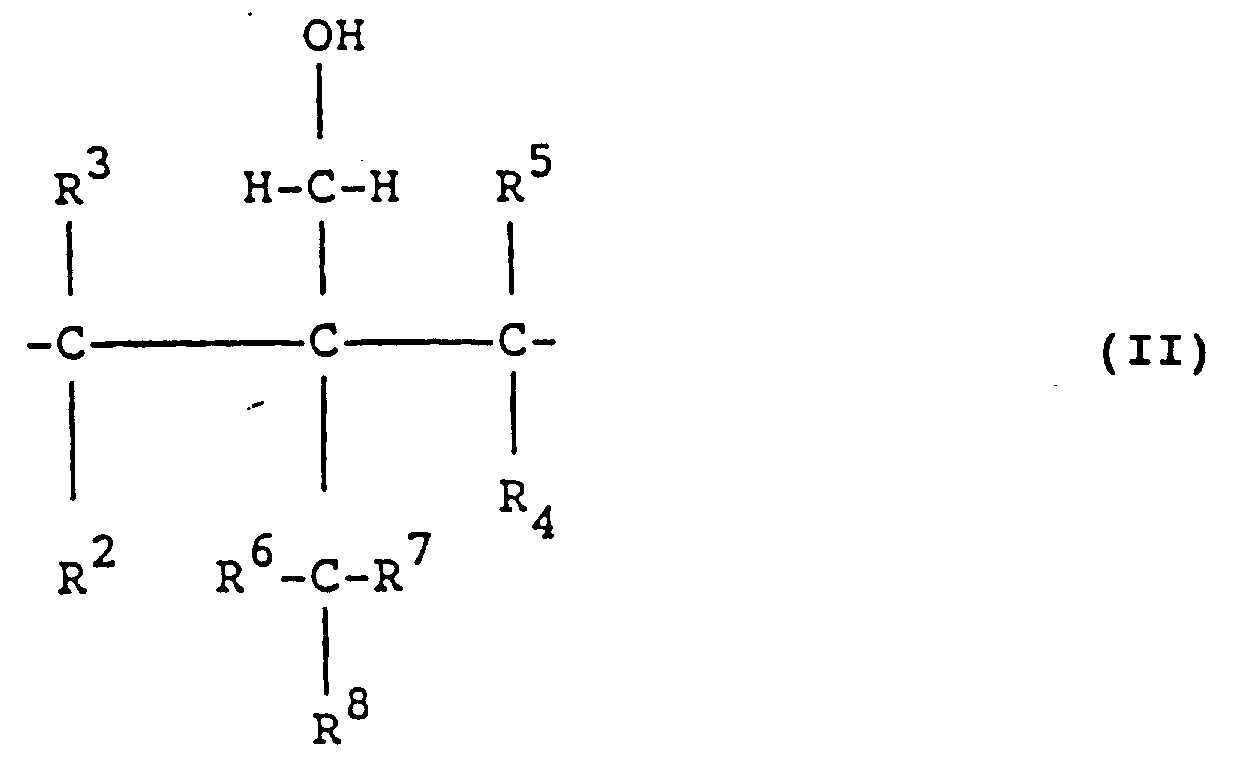
- the cocatalyst composition comprises at least one norbornene-type monomer; a metathesis ring opening cocatalyst selected from alkoxyalkylaluminums, aralkoxyalkylaluminums, alkoxyalkylaluminum halides, aralkoxyalkylaluminum halides, and mixtures thereof, wherein said alkoxy and said aralkoxy groups are derived from branched alcohols selected from tertiary alcohols, hindered primary alcohols having the structure (II): where in the above group II, R2, R3, R4 R5, R6, R7 and R8 are individually selected from hydrogen, alkyl, alkenyl, alkinyl, cycloaliphatic and aryl groups of 1 to 12 carbon atoms; hindered secondary alcohols having the structure (I): where in the above Group I, R3 and R5 are individually selected from hydrogen, alkyl, alkenyl, alkinyl,
- the use of the branched alcohol produces a cocatalyst which, when used in ring opening polymerization, yields a reactive liquid mix with a longer pot life.
- the invention in its broad aspects relates to specific cocatalyst variations and to a ring opening bulk polymerization process that exhibits sufficient pot life so that interruption of a reactive molding process will not necessitate the expensive and time consuming step of solvent flushing the mixing chamber and related equipment.
- the use of branched alcohols, or mixtures thereof, to make the alkoxyalkylaluminum, aralkoxyalkylaluminum, alkoxyalkylaluminum halide or aralkoxyalkyl aluminum halide cocatalysts used in the process results in an increased pot life for the reactive mix.
- Pot life refers to the time during which polymerization of the reaction mix at ambient conditions remains essentially dormant, the reactive mix being a mixture of at least one cyclic monomer, catalyst, cocatalyst, and halometal activator.
- the halometal activator is optional when alkoxyalkylaluminum halides or aralkoxyalkylaluminum halides are used as cocatalysts.
- pot life is the time interval between mixing of the ingredients to form the reactive mix and commencement of monomer polymerization at ambient conditions.
- Pot life depends on many variables such as the amount and type of ingredients, the temperature at which the reactive mix is held, impurities present in the system, ratio of catalyst to cocatalyst, etc. Pot life also depends on the reducing power of the cocatalyst: the higher the reducing power, the shorter the pot life.
- Impingement mixing apparatus can be used to mix the ingredients herein.
- the reaction injection molding industry uses the impingement mixing apparatus nearly exclusively due to the short pot lives of most available RIM chemical systems.
- an impingement mixing apparatus as applied to the system herein, the two monomer portions, i.e., one containing the catalyst and the other the cocatalyst, can be nearly instantaneously mixed and injected into the mold.
- the primary benefit of this invention namely longer pot lives, is realized in reactive molding processes other than RIM, RTM and casting (pour molding) being two of these.
- RIM also benefits from this invention when mats or preforms of reinforcing fiber are placed in the mold cavity, necessitating a slow mold fill rate and requiring non-reaction of the reaction mix during the longer than usual mold fill time.
- the system herein is designed to give a pot life in excess of about one-half hour, preferably in excess of two hours, and more preferably in excess of five hours.
- the temperature of the mold for the system described herein should be in excess of 50°C, more likely in the range of 60° to 120°C.
- Polymerization time for reaction injection molding should generally be less than 5 minutes, preferably 5 seconds to 2 minutes, although this time depends on many variables, including the thickness of the resulting molding. For other forms of bulk polymerization, different polymerization periods can be designed with a concomitant effect on pot life.
- the alcohol When forming the cocatalyst, the alcohol can be prereacted with the alkyl aluminum or alkyl aluminum halide before adding it to the appropriate formulation component or it may be formed in situ.
- a reaction is conducted in absence of water, by providing a blanket of nitrogen and mixing the monomer diluted ingredients. The reaction is rapid and results in evolution of volatile hydrocarbons, such as ethane if diethylaluminum chloride is the cocatalyst. The reaction goes essentially to 100% completion.
- the alkoxy or aralkoxy group in the cocatalyst functions to inhibit the reducing power of the cocatalyst by replacing some of the alkyl groups on the aluminum thus making it possible to mix and subsequently react the cyclic olefins via bulk polymerization. It should be understood that a stoichiometric excess of alcohol or a hydroxyl-containing material must be avoided. Stoichiometric excess herein is defined as twice the number of moles of alcohol or hydroxyl-containing material in excess of the molar amount of the alkylaluminum moiety, which renders the aluminum compound ineffective as a reducing agent or cocatalyst. It is usually sufficient to employ approximately an equimolar ratio of these ingredients to obtain a long pot life.
- alkoxyalkylaluminum, aralkoxy alkylaluminum, alkoxyalkylaluminum halide or aralkoxyalkylaluminum halide cocatalyst that is used in conjunction with at least one organoammonium molybdate or organoammonium tungstate as a polymerization catalyst system is derived from monoalkylaluminum dihalides, R1AlX2, dialkylaluminum monohalides, R 1 2 AlX, alkylaluminum sesquihalides, R 1 3 Al2X3, trialkylaluminum, R 1 3 Al, and mixtures thereof.
- R1 is an alkyl radical containing 1 to 12 carbon atoms, preferably 2 to 8 carbon atoms
- X is a halogen selected from chlorine, iodine, bromine and fluorine.
- alkylaluminum and alkylaluminum halide cocatalysts include ethylaluminum dichloride, diethylaluminum monochloride, ethylaluminum sesquichloride, diethylaluminum iodide, ethylaluminum diiodide, propylaluminum dichloride, propylaluminum diiodide, isobutylaluminum dichloride, ethylaluminum dibromide, methylaluminum sesquichloride, methylaluminum sesquibromide, trioctylaluminum, triethylaluminum and triisobutylaluminum.
- the halide cocatalyst obtained has the formula (RO) a R 1 b AlX c
- R is a branched alkyl, branched alkenyl, branched alkinyl or a branched aryl radical containing 4 to 34 carbon atoms, preferably a branched alkyl radical of 4 to 20
- R1 is an alkyl radical containing 1 to 12 carbon atoms, preferably 2 to 8, as defined above
- X is a halogen selected from chloride, iodine, bromine and fluorine, preferably chlorine
- "a” is the number of equivalents of the alkoxy or aryloxy moiety (RO-) and can vary from a minimum of 1/2 to a maximum of 2-1/2, preferably from 0.75 to 1-1/2
- "b” is the number of equivalents of the alkyl group (R1) and can vary from a minimum of 1/4 to a maximum of 2, preferably from 1/2 to 1-1/2
- "c” is the number of equivalents
- the ranges for a, b and c are as follows: for a, it is 0.7 to 1.5, preferably 0.75 to 1.25; for b, it is 1.5 to 2.3, preferably 1.75 to 2.25; and c is zero since no halide is present.
- Such halogen-free cocatalysts require the presence of a halometal activator.
- the sum of a, b, and c must equal 3.
- the molar ratio of aluminum in the cocatalyst to molybdenum or tungsten in the catalyst is in the range of 200:1 to 1:10, preferably 10: 1 to 2:1. 0.1 to 10 millimoles of molybdenum or tungsten is used per mole of monomer that is polymerized by ring opening, in a preferred embodiment. On the monomer basis, molar ratio of aluminum to monomer is 0.01 to 2,000, preferably 0.2 to 100 millimoles of aluminum per mole of monomer.
- halide such as a chloride
- an activator is used to supply halide to the system.
- Suitable activators are selected generally from halometal compounds and more specifically, from halosilanes of the formula R m SiXn where m is 0-3, n is 1-4, R is individually selected from hydrogen, alkyl and alkoxy groups containing 1 to 6 carbon atoms; and X is selected from chlorine, fluorine, bromine and iodine, particularly chlorine.
- activators are chlorosilanes such as dimethylmonochlorosilane, dimethyldichlorosilane, diphenyldichlorosilane, tetrachlorosilane, and the like.
- Amount of the activator that is used is in the range of 0.05 to 10 millimoles per mole of the norbornene-containing monomer, preferably 0.1 to 2 millimoles per mole of monomer.
- the alkoxy or aralkoxy radical RO- in the cocatalyst is derived from a tertiary alcohol, a hindered secondary alcohol, or a hindered primary alcohol.
- the hindered secondary alcohols have the following group I in their structures: where in the above Group I, R3 and R5 are individually selected from hydrogen, alkyl, alkenyl, alkinyl, cycloaliphatic and aryl groups of 1 to 12 carbon atoms and R2 and R4 are individually selected from alkyl, alkenyl, alkinyl, cycloaliphatic and aryl groups of 1 to 12 carbon atoms.
- R3 and R5 are individually selected from hydrogen and alkyl groups of 1 to 6 carbon atoms and R2 and R4 are individually selected from alkyl groups of 1 to 6 carbon atoms.
- hindered secondary alcohols which can be used to prepare cocatalysts with long pot lives include 2,4-dimethyl-3-pentanol, 3,5-dimethyl-4-heptanol, 2,4-diethyl-3-hexanol, 2,4-dimethyl-3-hexanol, 2-methyl, 4-ethyl-3-hexanol, and 2-methyl, 4-ethyl-3-heptanol.
- the hindered primary alcohols suitable herein contain the following group (II) in their structures: where in the above group II, R2, R3, R4, R5, R6, R7 and R8 are individually selected from hydrogen, alkyl, alkenyl, alkinyl, cycloaliphatic, and aryl groups of 1 to 12 carbon atoms. In a preferred Group II embodiment, R2, R3, R4, R5, R6, R7 and R8 are individually selected from hydrogen and alkyl groups of 1 to 6 carbon atoms.
- hindered primary alcohols suitable herein include neopentyl alcohol, 2,2-dimethyl-1-butanol, 2,2-diethyl-1-butanol, 2-methyl, 2-ethyl-1-propanol, 2-methyl, 2-ethyl-1-butanol, 2,2-dipropyl-1-pentanol, 2,2-dipropyl-1-hexanol and 2-propyl, 2-ethyl-1-hexanol.
- tertiary alcohols include t-butanol, t-amyl alcohol, 3-ethyl-3-pentanol, 3-methyl-3-pentanol, 2-methyl-2-hexanol, triphenyl methanol, 2-ethyl-2-hexanol, 2-propyl-2-hexanol, 3-methyl-3-hexanol, 3-ethyl-3-hexanol, 3-propyl-3-hexanol, 1-phenyl, 1-methyl-1-ethanol, and 1-phenyl, 1-ethyl-1-propanol.
- the alcohols defined above and suitable herein are soluble in norbornene-containing monomers or cycloolefins that are polymerized to polymers by ring opening polymerization. Although a one molar amount of triphenyl methanol did not dissolve in dicylcopentadiene (DCPD) even after it was heated to about 60°C, a 0.1 molar solution of triphenyl methanol did dissolve in DCPD when heated to about 60°C.
- DCPD dicylcopentadiene
- isopropyl alcohol when reacted with diethylaluminum chloride (DEAC) to form the cocatalyst and used to polymerize methyltetracyclododecene (MTD) at an ROH/DEAC molar ratio of 1.2, 1.4 and 1.4 at respective mold temperatures of 110°C, 110°C and 75°C in the presence of 1 .5 mls of 0.25 molar silicon tetrachloride (SiCl4) activator in DCPD, yielded respective pot lives of 2, 7-1/2, and 6 minutes with respective conversions exceeding 94%.
- DEC diethylaluminum chloride
- Preferred molybdenum and tungsten compound catalysts are organoammonium molybdates and organoammonium tungstates that are selected from those defined as follows: [R4N] (2y-6x) M x O y [R 1 3 NH] (2y-6x) M x O y where O represents oxygen; M represents either molybdenum or tungsten; x and y represent the number of M and O atoms in the molecule based on the valence of +6 for molybdenum, +6 for tungsten, and -2 for oxygen; and the R and R1 radicals can be the same or different and are selected from hydrogen, alkyl, and alkylene groups each containing from 1 to 20 carbon atoms, and cycloaliphatic groups each containing from 5 to 16 carbon atoms.
- R and R1 radicals cannot be hydrogens nor be small in the number of carbon atoms since such a condition will render the molecule essentially insoluble in hydrocarbons and most-organic solvents.
- the R radicals are selected from alkyl groups each containing 1 to 18 carbon atoms wherein the sum of carbon atoms on all the R radicals is from 20 to 72, more preferably from 25 to 48.
- the R radicals are selected from alkyl groups each containing from 1 to 18 carbon atoms wherein the sum of carbon atoms on all of the R1 radicals is from 15 to 54, more preferably from 21 to 42.
- organoammonium molybdates and organoammonium tungstates described herein include tridodecylammonium molybdates and tungstates, methyltricaprylammonium molybdates and tungstates, tri(tridecyl)ammonium molybdates and tungstates, and trioctylammonium molybdates and tungstates.
- the organoammonium molybdate or organoammonium tungstate catalyst is employed at a level of 0.01 to 50 millimoles molybdenum or tungsten per mole of total monomer, preferably 0.1 to 10 millimoles per mole of total monomer.
- the molar ratio of the cocatalyst to the organoammonium molybdate and/or organoammonium tungstate is not critical and can be in the range of 200:1 or more to 1:10, preferably from 10:1 to 2:1 of aluminum to molybdenum or tungsten.
- the norbornene-type or cycloolefin monomers that can be polymerized in bulk, in accordance with the process described herein, are characterized by the presence of at least one of the following norbornene group, identified by formulas I and II.
- R and R1 are independently selected from hydrogen, alkyl, and aryl groups of 1 to 20 carbon atoms, and saturated and unsaturated cyclic groups containing 3 to 12 carbon atoms formed by R and R1 together with the two ring carbon atoms connected thereto.
- R and R1 are independently selected from hydrogen and alkyl groups of 1 to 2 carbon atoms.
- cycloolefin monomers referred to herein include norbornene, dicyclopentadiene, ethylidene norbornene, dihydrodicyclopentadiene, trimers of cyclopentadiene, tetramers of cyclopentadiene, tetracyclododecene, methyltetracyclododecene, 2-norbornene and other norbornene monomers such as 5-methyl-2-norbornene, 5,6-dimethyl-2-norbornene, 5-ethyl-2-norbornene, 5-butyl-2-norbornene, 5-hexyl-2-norbornene, 5-octyl-2-norbornene, and 5-dodecyl-2-norbornene.
- This invention especially contemplates preparation of homopolymers, copolymers and terpolymers of methylnorbornene, ethylidene norbornene, trimers and tetramers of cyclopentadiene, methyltetracyclododecene, and dicyclopentadiene and especially homopolymers of dicylcopentadiene, methyltetracyclododecene and methylnorbornene.
- the copolymers of methyltetracyclododecene and methylnorbornene are polymerized from monomer mixtures containing from 1 to 75% by weight of methylnorbornene.
- the copolymers of dicyclopentadiene and ethylidene norbornene are polymerized from monomer mixtures containing from 1 to 75 weight percent ethylidene norbornene.
- the copolymers and terpolymers of dicyclopentadiene and trimer(s) of cyclopentadiene are polymerized from monomer mixtures containing 25 to 99% dicyclopentadiene.
- the terpolymers are polymerized from monomer mixtures containing 1 to 75% by weight methylnorbornene and 25 to 99% by weight methyltetracyclododecene, with the remainder being dicyclopentadiene.
- Bulk polymerization of the system described herein is especially suitable for reactive molding processes such as resin transfer molding and reaction injection molding.
- a cycloolefin is added to one tank, together with a cocatalyst, and the other half is added to another tank along with a catalyst.
- Both the cocatalyst and the catalyst described herein are soluble in the cycloolefin monomers.
- Other additives can be admixed with the monomer in either or both tanks. Agitators are provided in the tanks to facilitate mixing of the formulation components and each tank is connected to a nitrogen source through respective lines so that each tank can be maintained under a blanket of nitrogen.
- valves are manipulated to admit the formulation components from their respective tanks into a mix head where they are mixed at about room or ambient temperature and conveyed to a mold.
- the mold In a thermally initiated system, the mold is maintained at a temperature in excess of 100°C, and preferably in the range of 100° to 120°C. Depending on the reactive molding process used, it can take only a few seconds or several minutes to fill the mold. The size of the mold also affects mold fill times.
- the mix after entering the mold, rises in temperature from 25°C to 100°C and then to in excess of 140°C in the next 2 to 10 seconds. At this time, polymerization is completed and the temperature begins to drop as the solid, molded object starts to cool. When sufficiently cooled, the mold is opened and the object is removed.
- the time in the mold should be less than 5 minutes. This is the time measured from the commencement of the filling of the mold to the time when the monomers are in a polymerized state and the object is ready for removal from the mold.
- Reaction injection molding a form of bulk polymerization, is a low pressure one-step or one-shot injection of liquid components into a closed mold where rapid polymerization occurs resulting in a molded plastic product.
- RIM differs from thermoplastic injection molding in a number of important respects.
- Thermoplastic injection molding is conducted at pressures of 68.9 to 137.8 MPa (10,000 to 20,000 psi) in the mold cavity by melting a solid resin and conveying it into a mold maintained at a temperature below the Tg of the polymer and the molten resin temperature being 150° to 350°C, and the viscosity of the molten resin in the thermoplastic injection molding process being generally in the range of 50,000 to 1,000,000 mPa ⁇ s (cps), and typically about 200,000 mPa ⁇ s (cps).
- solidification of the resin occurs in about 10 to 90 seconds, depending on the size of the molded product, following which, the molded product is removed from the mold. There is no chemical reaction taking place in a thermoplastic injection molding process when the resin is introduced into a mold.
- the viscosity of the materials fed to a mold is about 50 to 3,000 mPa ⁇ s (cps), preferably about 100 to 1500 mPa ⁇ s (cps), at injection temperatures varying from room temperature for urethanes to about 80°C for lactams. Mold temperatures in a RIM process are in the range of 50° to 150°C and pressures in the mold are generally in the range of 0.21 to 1.03 MPa (30 to 150 psi). At least one component in the RIM formulation is a monomer that is polymerized to a polymer in the mold.
- injection molding a chemical reaction takes place in the mold to transform a monomer to a polymeric state.
- the chemical reaction must take place rapidly in 2 seconds to 2 minutes, in a preferred embodiment.
- injection molding a solid polymer is heated to render it flowable, and is then injected into a mold where cooling of the mold produces a solid object.
- beverage bottles were dried for at least one hour at 105°C and then were cooled at room temperature under a nitrogen purge. Monomer or a mixture thereof, alcohol, alkylaluminum halide cocatalyst, halosilane activator, and the molybdenum catalyst solution were then added to the bottles in the order given, with good mixing during and after each addition. A pouring spout was then affixed to each bottle and the bottles were inverted to inject the contents thereof into a preheated mold which was purged with nitrogen. The pot life was determined by allowing a portion of the sample to remain in the bottle at room temperature and recording the time to apparent thickening.
- the alcohol, cocatalyst, silane activator and the catalyst were predissolved in a separate amount of the monomer before each solution was added to the monomer in the order given in the indicated amount.
- Antioxidant (AO) and the impact modifier, if used, were mixed and dissolved in the monomer before other ingredients were added thereto.
- the alcohol to aluminum ratio (ROH/Al) is on molar basis.
- the molybdenum catalyst solution (MO) was prepared by dissolving tridodecylammonium octamolybdate in the monomer.
- This example demonstrates operability of tertiary and certain hindered primary and hindered secondary alcohols to impart longer pot lives that are practical in non-RIM reactive molding operations.
Landscapes
- Chemical & Material Sciences (AREA)
- Health & Medical Sciences (AREA)
- Chemical Kinetics & Catalysis (AREA)
- Medicinal Chemistry (AREA)
- Polymers & Plastics (AREA)
- Organic Chemistry (AREA)
- Transition And Organic Metals Composition Catalysts For Addition Polymerization (AREA)
- Adhesives Or Adhesive Processes (AREA)
- Dental Preparations (AREA)
- Materials For Medical Uses (AREA)
- Polyoxymethylene Polymers And Polymers With Carbon-To-Carbon Bonds (AREA)
- Addition Polymer Or Copolymer, Post-Treatments, Or Chemical Modifications (AREA)
- Agricultural Chemicals And Associated Chemicals (AREA)
Claims (11)
- Composition co-catalytique comprenant au moins un monomère de type norbornène, un co-catalyseur à ouverture de noyau par méthathèse choisi parmi les alkoxyalkylaluminiums, les aralkoxyalkylaluminiums, les halogénures d'alkoxyalkylaluminium, les halogênures d'aralkoxyalkylaluminium, et leurs mélanges, composition dans laquelle lesdits groupes alkoxy et lesdits groupes aralkoxy sont dérivés d'alcools ramifiés choisis parmi les alcools tertiaires, les alcools primaires empêchés ayant pour structure (II):
les alcools secondaires empêchés ayant pour structure (I):
et leurs mélanges, ladite composition co-catalytique, lorsqu'elle est combinée à un catalyseur, étant à même de prolonger la durée d'utilisation de mélanges de moulage contenant au moins un monomère de type norbornène. - Composition selon la revendication 1 ayant une durée d'utilisation dépassant une demi-heure et dans laquelle le monomère de type norbornène est choisi parmi les 2-norbornènes substitués et non substitués, les dicyclopentadiènes, les dihydrodicyclopentadiènes, les trimères et les tétramères de cyclopentadiènes, les tétracyclododécènes et leurs mélanges, ledit co-catalyseur ayant la structure suivante:
(RO)aR¹bAlXc
où Al est de l'aluminium, X est un halogène, R est un groupe de type alkyle ramifié, alcényle ramifié, alcinyle ramifié ou aryle ramifié contenant de 4 à 20 atomes de carbone, dérivé d'un alcool ramifié choisi parmi les alcools tertiaires, les alcools primaires empêchés, les alcools secondaires empêchés et leurs mélanges, lesdits alcools primaires et secondaires empêchés étant tels que définis dans la revendication 1, et où, dans les co-catalyseurs contenant un halogénure, "a" est d'environ 1/2 à 2 1/2, "b" est de 1/4 à 2, "c" est de 1/2 à 2 et, dans les co-catalyseurs qui sont exempts d'un tel halogénure, "a" est de 0,7 à 1,5, "b" est de 1,5 à 2,3 et "c" est égal à zéro, la somme de "a", "b" et "c" étant de 3,0, et R¹ est choisi parmi les radicaux alkyle ayant 1 à 12 atomes de carbone. - Composition selon la revendication 2, comprenant 0,1 à 2 millimoles d'activateur par mole dudit monomère, ledit activateur étant choisi parmi les halosilanes définis comme suit:
RmSiXn
où m est égal à 0 à 3, n est égal à 1 à 4, R est individuellement choisi parmi les groupes alkyle et alkoxy contenant 1 à 6 atomes de carbone et X est choisi parmi le chlore, le brome, le fluor et l'iode. - Composition selon la revendication 3 ayant une durée d'utilisation dépassant deux heures, dans laquelle, dans ledit co-catalyseur, R est choisi parmi les radicaux alkyle de 4 à 20 atomes de carbone, R¹ contient 2 à 8 atomes de carbone; dans les co-catalyseurs contenant un halogénure, "a" est égal à 0,75 à 1-1/2, "b" est égal à 1/2 à 1-1/2, "c" est égal à 3/4 à 1-1/4; dans les co-catalyseurs exempts d'halogénure, "a" est égal à 0,75 à 1,25, "b" est égal à 1,75 à 2,25 et "c" est égal à zéro; et X est du chlore; le rapport molaire de l'aluminium dans ledit co-catalyseur audit monomère est de 0,2 à 100 millimoles par mole dudit monomère.
- Composition selon la revendication 4, dans laquelle lesdits alcools ramifiés sont choisis parmi le t-butanol, l'alcool t-amylique, le 3-éthyl-3-pentanol, le 3-méthyl-3-pentanol, le 2-méthyl-2-hexanol, le triphényl méthanol, le 2,4-diéthyl-3-hexanol, le 2,4-diméthyl-3-hexanol, le 2-méthyl-4-éthyl-3-hexanol, le 2,2-diméthyl-1-butanol, le 2,2-diéthyl-1-butanol, le 2-méthyl-2-éthyl-1-propanol, le 2-méthyl-2-éthyl-1-butanol, le 2,2-dipropyl-1-pentanol, le 2,2-dipropyl-1-hexanol, le 2-propyl-2-éthyl-1-hexanol, le 2-propyl-2-hexanol, le 2-éthyl-2-hexanol, le 3-méthyl-3-hexanol, le 3-éthyl-3-hexanol, le 3-propyl-3-hexanol, le 1-phényl-1-méthyl-1-éthanol, le 1-phényl-1-éthyl-1-propanol, le 2,4-diméthyl-3-pentanol, l'alcool néopentylique et des mélanges de ces alcools, ledit monomère de type norbornène est choisi parmi le méthyl norbornène, l'éthylidènenorbornène, le dicyclopentadiène, le méthyltétracyclododécène, les trimères de cyclopentadiène, les tétramères de cyclopentadiène et les mélanges desdits monomères, ledit activateur est choisi parmi le tétrachlorosilane, le diméthylmonochlorosilane, le diméthyldichlorosilane et le diphényldichlorosilane et leurs mélanges, et ledit co-catalyseur est formé à partir de composants choisis parmi les dichlorures de monoalkylaluminium, les monochlorures de dialkylaluminium, les sesquichlorures d'alkylaluminium, le trialkyl aluminium et leurs mélanges, chaque groupe alkyle contenant 2 à 8 atomes de carbone.
- Procédé de polymérisation d'une charge monomère contenant au moins un monomère de type norbornène pour obtenir un polymère, consistant à mélanger une série de flux réactionnels, un flux réactionnel contenant au moins un monomère de type norbornène, un activateur choisi parmi les composés d'halométaux qui est nécessaire avec des co-catalyseurs ne contenant pas d'halogénure, mais qui est facultatif avec des co-catalyseurs contenant un halogénure, et un co-catalyseur à ouverture de noyau par méthathèse choisi parmi les alkoxyalkylaluminiums, les aralkoxyalkylaluminiums, les halogénures d'alkoxyalkylaluminium, les halogénures d'aralkoxyalkylaluminium et leurs mélanges, lesdits groupes alkoxy et lesdits groupe aralkoxy étant dérivés d'alcools ramifiés choisi parmi les alcools tertiaires, les alcools primaires empêchés ayant une structure (II)

les alcools secondaires empêchés ayant pour structure (I):
- Procédé selon la revendication 6, dans lequel ledit co-catalyseur est à même de prolonger la durée d'utilisation dudit flux de réactifs mixte contenant ledit co-catalyseur et au moins l'un desdits monomères de type norbornène, lesdits monomères de type norbornène contenant un ou plusieurs monomères de structure suivante:

(RO)aR¹bAlXc
où Al est de l'aluminium, X est un halogène, R est un groupe de type alkyle ramifié, alcényle ramifié, alcinyle ramifié ou aryle ramifié contenant 4 à 20 atomes de carbone dérivé d'un alcool ramifié choisi parmi les alcools tertiaires, les alcools primaires empêchés, les alcools secondaires empêchés et leurs mélanges, dans lesquels lesdits alcools primaires et secondaires empêchés sont tels que définis dans la revendication 6, et où dans les co-catalyseurs contenant un halogénure, "a" est de 1/2 à 2 1/2, "b" est de 1/4 à 2, "c" est égal à 1/2 à 2 et, dans les co-catalyseurs qui sont exempts d'un tel halogénure, "a" est de 0,7 à 1,5, "b" est de 1,5 à 2,3 et "c" est égal à zéro, la somme de "a", "b" et "c" est de 3,0, et R¹ est choisi parmi les radicaux alkyle ayant 1 à 12 atomes de carbone, et ledit activateur est choisi parmi les halosilanes définis comme suit:
RmSiXn
où m est égal à 0 à 3, n est égal à 1 à 4, R est individuellement choisi parmi les groupes alkyle et alkoxy contenant 1 à 6 atomes de carbone et X est choisi parmi le chlore, le brome, le fluor et l'iode. - Procédé selon la revendication 7, dans lequel la durée d'utilisation desdits flux de réactifs mixtes est d'au moins une demi-heure et, dans ledit co-catalyseur, R est choisi parmi les radicaux alkyle de 4 à 20 atomes de carbone, R¹ contient 2 à 8 atomes de carbone; dans les co-catalyseurs contenant un halogénure, "a" est égal à 0,75 à 1-1/2, "b" est égal à 1/2 à 1-1/2, "c" est égal à 3/4 à 1-1/4; dans les co-catalyseurs exempts d'halogénure, "a" est égal à 0,75 à 1,25, "b" est égal à 1,75 à 2,25 et "c" est égal à zéro, et X est du chlore, le rapport molaire de l'aluminium dans ledit co-catalyseur audit monomère est de 0,2 à 100 millimoles par mole dudit monomère et le rapport dudit activateur audit monomère est de 0,05 à 10 millimoles par mole.
- Procédé selon la revendication 8 dans lequel la durée d'utilisation desdits flux de réactifs mixtes est d'au moins deux heures, ledit catalyseur est choisi parmi les molybdates d'organoammonium, les tungstates d'organoammonium et leurs mélanges, lesdits alcools ramifiés sont choisis parmi le t-butanol, l'alcool t-amylique, le 3-éthyl-3-pentanol, le 3-méthyl-3-pentanol, le 2-méthyl-2-hexanol, le triphénylméthanol, le 2,4-diéthyl-3-hexanol, le 2,4-diméthyl-3-hexanol, le 2-méthyl-4-éthyl-3-hexanol, le 2,2-diméthyl-1-butanol, le 2,2-diéthyl-1-butanol, le 2-méthyl-2-éthyl-1-propanol, le 2-méthyl-2-éthyl-1-butanol, le 2,2-dipropyl-1-pentanol, le 2,2-dipropyl-1-hexanol, le 2-propyl-2-éthyl-1-hexanol, le 2-propyl-2-hexanol, le 2-éthyl-2-hexanol, le 3-méthyl-3-hexanol, le 3-éthyl-3-hexanol, le 3-propyl-3-hexanol, le 1-phényl-1-méthyl-1-éthanol, le 1-phényl-1-éthyl-1-propanol, le 2,4-diméthyl-3-pentanol, l'alcool néopentylique et des mélanges de ces alcools, ledit monomère de type norbornène est choisi parmi le méthyl norbornène, l'éthylidènenorbornène, le dicyclopentadiène, le méthyltétracyclododécène, les trimères de cyclopentadiène, les tétramères de cyclopentadiène et les mélanges desdits monomères, ledit activateur est choisi parmi le tétrachlorosilane, le diméthylmonochlorosilane, le diméthyldichlorosilane et le diphénoldichlorosilane et leurs mélanges, et ledit co-catalyseur est formé à partir de composants choisis parmi les dichlorures de monoalkylaluminium, les monochlorures de dialkylaluminium, les sesquichlorures d'alkylaluminium, le trialkyl aluminium et leurs mélanges, chaque groupe alkyle contenant 2 à 8 atomes de carbone.
- Procédé selon la revendication 9, dans lequel ledit catalyseur est choisi parmi les molybdates et les tungstates de tridodécylammonium, les molybdates et les tungstates de méthyltricaprylammonium, les molybdates et les tungstates de tri(tridécyl)ammonium, les molybdates et les tungstates de trioctylammonium et des mélanges de ces molybdates et de ces tungstates, et la quantité dudit catalyseur est de 0,1 à 10 millimoles de molybdène ou de tungstène par mole dudit monomère de type norbornène.
- Procédé selon la revendication 10, incluant l'étape consistant à maintenir ledit moule à une température de 60 à 120°C, température à laquelle la polymérisation dudit monomère est amorcée par la chaleur.
Priority Applications (1)
| Application Number | Priority Date | Filing Date | Title |
|---|---|---|---|
| AT88121765T ATE103302T1 (de) | 1987-12-31 | 1988-12-28 | Norbornen-gemisch mit laengerer haltbarkeitsdauer. |
Applications Claiming Priority (2)
| Application Number | Priority Date | Filing Date | Title |
|---|---|---|---|
| US14006287A | 1987-12-31 | 1987-12-31 | |
| US140062 | 1987-12-31 |
Publications (3)
| Publication Number | Publication Date |
|---|---|
| EP0324979A2 EP0324979A2 (fr) | 1989-07-26 |
| EP0324979A3 EP0324979A3 (en) | 1990-08-22 |
| EP0324979B1 true EP0324979B1 (fr) | 1994-03-23 |
Family
ID=22489573
Family Applications (1)
| Application Number | Title | Priority Date | Filing Date |
|---|---|---|---|
| EP88121765A Expired - Lifetime EP0324979B1 (fr) | 1987-12-31 | 1988-12-28 | Mélange de norbornène à durée d'emploi prolongée |
Country Status (5)
| Country | Link |
|---|---|
| EP (1) | EP0324979B1 (fr) |
| AT (1) | ATE103302T1 (fr) |
| BR (1) | BR8806953A (fr) |
| DE (1) | DE3888669T2 (fr) |
| ES (1) | ES2053701T3 (fr) |
Families Citing this family (4)
| Publication number | Priority date | Publication date | Assignee | Title |
|---|---|---|---|---|
| US4943621A (en) * | 1988-08-04 | 1990-07-24 | The B. F. Goodrich Company | Storage stable components of reactive formulations for bulk polymerization of cycloolefin monomers |
| EP0426142B1 (fr) * | 1989-11-01 | 1995-09-20 | Nippon Zeon Co., Ltd. | Procédé de préparation, par ouverture de cycle, de polymères de norbornène utilisant des agents de stabilisation à l'entreposage |
| JPH04226124A (ja) * | 1990-06-08 | 1992-08-14 | B F Goodrich Co:The | 塊状重合用反応性配合液、共触媒組成物および大型成形品の製造法 |
| JP3082354B2 (ja) * | 1991-09-27 | 2000-08-28 | 日本ゼオン株式会社 | メタセシス共触媒、それを含む触媒系およびシクロオレフィンの重合方法 |
Family Cites Families (4)
| Publication number | Priority date | Publication date | Assignee | Title |
|---|---|---|---|---|
| DE2106301A1 (de) * | 1971-02-10 | 1972-08-17 | Bayer | Verfahren zur Polymerisation von Cycloalkenen |
| US4426502A (en) * | 1982-06-14 | 1984-01-17 | The B. F. Goodrich Company | Bulk polymerization of cycloolefins |
| US4418179A (en) * | 1982-09-29 | 1983-11-29 | The B. F. Goodrich Company | Impact modified polycycloolefins |
| US4727125A (en) * | 1986-11-03 | 1988-02-23 | Hercules Incorporated | Thermally activated two component metathesis catalyst system |
-
1988
- 1988-12-28 ES ES88121765T patent/ES2053701T3/es not_active Expired - Lifetime
- 1988-12-28 AT AT88121765T patent/ATE103302T1/de not_active IP Right Cessation
- 1988-12-28 DE DE3888669T patent/DE3888669T2/de not_active Expired - Fee Related
- 1988-12-28 EP EP88121765A patent/EP0324979B1/fr not_active Expired - Lifetime
- 1988-12-29 BR BR888806953A patent/BR8806953A/pt not_active Application Discontinuation
Also Published As
| Publication number | Publication date |
|---|---|
| EP0324979A2 (fr) | 1989-07-26 |
| EP0324979A3 (en) | 1990-08-22 |
| BR8806953A (pt) | 1989-08-29 |
| DE3888669D1 (de) | 1994-04-28 |
| DE3888669T2 (de) | 1994-07-28 |
| ATE103302T1 (de) | 1994-04-15 |
| ES2053701T3 (es) | 1994-08-01 |
Similar Documents
| Publication | Publication Date | Title |
|---|---|---|
| US4426502A (en) | Bulk polymerization of cycloolefins | |
| US4380617A (en) | Preparation of polymers from cycloolefins | |
| EP0353729B1 (fr) | Composantes stables de stockage à formulation réactive pour la polymérisation en masse des monomères cyclooléfines | |
| JP2509047B2 (ja) | ジシクロペンタジエン重合体を含有する組成物 | |
| US4418178A (en) | Impact modified polymers of cycloolefins | |
| US4418179A (en) | Impact modified polycycloolefins | |
| EP0181641B1 (fr) | Polymérisation de cyclooléfines du type norbornène | |
| CA1258745A (fr) | Methode d'obtention d'un polymere de dicyclopentadiene reticule | |
| EP0269948B1 (fr) | Procédé pour préparer des polycyclo-oléfines modifiées | |
| EP0324980B1 (fr) | Mélange de norbornène à durée d'emploi prolongée et à basse température de moulage | |
| EP0324979A2 (fr) | Mélange de norbornène à durée d'emploi prolongée | |
| KR970001540B1 (ko) | 열 경화성 수지의 제조방법 | |
| EP0460652B1 (fr) | Procedé de preparation des articles moulés obtenus à partir de formulations de norbornène stables à l'entreposage | |
| EP0488135A2 (fr) | Solutions de réaction polymérisable en masse | |
| EP0534482B1 (fr) | Système de catalysateur métathesis | |
| JP2663289B2 (ja) | 共触媒組成物およびノルボルネン系ポリマーの製造法 | |
| US5438093A (en) | Modified polycycloolefins | |
| JPH05178970A (ja) | ジシクロペンタジエン重合体の加熱撓み温度及びガラス転移温度を高める塩素化重合体の使用 | |
| EP0347768A2 (fr) | Polymérisation avec cocatalyseur d'ouverture de cycle | |
| EP0585887A2 (fr) | Système catalytique de métathèse activé | |
| EP0374576A2 (fr) | Polymérisation du produit de réaction du dicyclopentadiène et d'un élastomère | |
| CA2056209A1 (fr) | Solutions de reaction polymerisables en masse |
Legal Events
| Date | Code | Title | Description |
|---|---|---|---|
| PUAI | Public reference made under article 153(3) epc to a published international application that has entered the european phase |
Free format text: ORIGINAL CODE: 0009012 |
|
| AK | Designated contracting states |
Kind code of ref document: A2 Designated state(s): AT BE CH DE ES FR GB GR IT LI LU NL SE |
|
| PUAL | Search report despatched |
Free format text: ORIGINAL CODE: 0009013 |
|
| AK | Designated contracting states |
Kind code of ref document: A3 Designated state(s): AT BE CH DE ES FR GB GR IT LI LU NL SE |
|
| 17P | Request for examination filed |
Effective date: 19901211 |
|
| 17Q | First examination report despatched |
Effective date: 19930225 |
|
| GRAA | (expected) grant |
Free format text: ORIGINAL CODE: 0009210 |
|
| AK | Designated contracting states |
Kind code of ref document: B1 Designated state(s): AT BE CH DE ES FR GB GR IT LI LU NL SE |
|
| REF | Corresponds to: |
Ref document number: 103302 Country of ref document: AT Date of ref document: 19940415 Kind code of ref document: T |
|
| REF | Corresponds to: |
Ref document number: 3888669 Country of ref document: DE Date of ref document: 19940428 |
|
| ITF | It: translation for a ep patent filed | ||
| ET | Fr: translation filed | ||
| REG | Reference to a national code |
Ref country code: GR Ref legal event code: FG4A Free format text: 3011641 |
|
| REG | Reference to a national code |
Ref country code: ES Ref legal event code: FG2A Ref document number: 2053701 Country of ref document: ES Kind code of ref document: T3 |
|
| PLBE | No opposition filed within time limit |
Free format text: ORIGINAL CODE: 0009261 |
|
| STAA | Information on the status of an ep patent application or granted ep patent |
Free format text: STATUS: NO OPPOSITION FILED WITHIN TIME LIMIT |
|
| EAL | Se: european patent in force in sweden |
Ref document number: 88121765.7 |
|
| 26N | No opposition filed | ||
| PGFP | Annual fee paid to national office [announced via postgrant information from national office to epo] |
Ref country code: LU Payment date: 19961001 Year of fee payment: 9 |
|
| PGFP | Annual fee paid to national office [announced via postgrant information from national office to epo] |
Ref country code: SE Payment date: 19961002 Year of fee payment: 9 |
|
| PGFP | Annual fee paid to national office [announced via postgrant information from national office to epo] |
Ref country code: NL Payment date: 19961007 Year of fee payment: 9 |
|
| PGFP | Annual fee paid to national office [announced via postgrant information from national office to epo] |
Ref country code: CH Payment date: 19961024 Year of fee payment: 9 |
|
| PGFP | Annual fee paid to national office [announced via postgrant information from national office to epo] |
Ref country code: AT Payment date: 19961119 Year of fee payment: 9 |
|
| PGFP | Annual fee paid to national office [announced via postgrant information from national office to epo] |
Ref country code: ES Payment date: 19961216 Year of fee payment: 9 Ref country code: GR Payment date: 19961216 Year of fee payment: 9 |
|
| PGFP | Annual fee paid to national office [announced via postgrant information from national office to epo] |
Ref country code: BE Payment date: 19971212 Year of fee payment: 10 |
|
| PG25 | Lapsed in a contracting state [announced via postgrant information from national office to epo] |
Ref country code: LU Free format text: LAPSE BECAUSE OF NON-PAYMENT OF DUE FEES Effective date: 19971228 Ref country code: AT Free format text: LAPSE BECAUSE OF NON-PAYMENT OF DUE FEES Effective date: 19971228 |
|
| PG25 | Lapsed in a contracting state [announced via postgrant information from national office to epo] |
Ref country code: SE Free format text: LAPSE BECAUSE OF NON-PAYMENT OF DUE FEES Effective date: 19971229 |
|
| PG25 | Lapsed in a contracting state [announced via postgrant information from national office to epo] |
Ref country code: CH Free format text: LAPSE BECAUSE OF NON-PAYMENT OF DUE FEES Effective date: 19971231 Ref country code: LI Free format text: LAPSE BECAUSE OF NON-PAYMENT OF DUE FEES Effective date: 19971231 Ref country code: GR Free format text: LAPSE BECAUSE OF NON-PAYMENT OF DUE FEES Effective date: 19971231 |
|
| PG25 | Lapsed in a contracting state [announced via postgrant information from national office to epo] |
Ref country code: NL Free format text: LAPSE BECAUSE OF NON-PAYMENT OF DUE FEES Effective date: 19980701 |
|
| REG | Reference to a national code |
Ref country code: CH Ref legal event code: PL |
|
| NLV4 | Nl: lapsed or anulled due to non-payment of the annual fee |
Effective date: 19980701 |
|
| EUG | Se: european patent has lapsed |
Ref document number: 88121765.7 |
|
| PG25 | Lapsed in a contracting state [announced via postgrant information from national office to epo] |
Ref country code: ES Free format text: LAPSE BECAUSE OF NON-PAYMENT OF DUE FEES Effective date: 19981229 |
|
| PG25 | Lapsed in a contracting state [announced via postgrant information from national office to epo] |
Ref country code: BE Free format text: LAPSE BECAUSE OF NON-PAYMENT OF DUE FEES Effective date: 19981231 |
|
| BERE | Be: lapsed |
Owner name: THE B.F. GOODRICH CY Effective date: 19981231 |
|
| REG | Reference to a national code |
Ref country code: GB Ref legal event code: IF02 |
|
| REG | Reference to a national code |
Ref country code: GB Ref legal event code: 732E |
|
| REG | Reference to a national code |
Ref country code: FR Ref legal event code: TP Ref country code: FR Ref legal event code: CD |
|
| REG | Reference to a national code |
Ref country code: ES Ref legal event code: FD2A Effective date: 19990114 |
|
| PGFP | Annual fee paid to national office [announced via postgrant information from national office to epo] |
Ref country code: FR Payment date: 20061208 Year of fee payment: 19 |
|
| PGFP | Annual fee paid to national office [announced via postgrant information from national office to epo] |
Ref country code: DE Payment date: 20061221 Year of fee payment: 19 |
|
| PGFP | Annual fee paid to national office [announced via postgrant information from national office to epo] |
Ref country code: GB Payment date: 20061227 Year of fee payment: 19 |
|
| PGFP | Annual fee paid to national office [announced via postgrant information from national office to epo] |
Ref country code: IT Payment date: 20061231 Year of fee payment: 19 |
|
| GBPC | Gb: european patent ceased through non-payment of renewal fee |
Effective date: 20071228 |
|
| PG25 | Lapsed in a contracting state [announced via postgrant information from national office to epo] |
Ref country code: DE Free format text: LAPSE BECAUSE OF NON-PAYMENT OF DUE FEES Effective date: 20080701 |
|
| REG | Reference to a national code |
Ref country code: FR Ref legal event code: ST Effective date: 20081020 |
|
| PG25 | Lapsed in a contracting state [announced via postgrant information from national office to epo] |
Ref country code: GB Free format text: LAPSE BECAUSE OF NON-PAYMENT OF DUE FEES Effective date: 20071228 |
|
| PG25 | Lapsed in a contracting state [announced via postgrant information from national office to epo] |
Ref country code: FR Free format text: LAPSE BECAUSE OF NON-PAYMENT OF DUE FEES Effective date: 20071231 |
|
| PG25 | Lapsed in a contracting state [announced via postgrant information from national office to epo] |
Ref country code: IT Free format text: LAPSE BECAUSE OF NON-PAYMENT OF DUE FEES Effective date: 20071228 |