EP0325742A2 - Phthalocyaninbestandteil und dieses verwendender optischer Speicherstoff - Google Patents
Phthalocyaninbestandteil und dieses verwendender optischer Speicherstoff Download PDFInfo
- Publication number
- EP0325742A2 EP0325742A2 EP88120358A EP88120358A EP0325742A2 EP 0325742 A2 EP0325742 A2 EP 0325742A2 EP 88120358 A EP88120358 A EP 88120358A EP 88120358 A EP88120358 A EP 88120358A EP 0325742 A2 EP0325742 A2 EP 0325742A2
- Authority
- EP
- European Patent Office
- Prior art keywords
- group
- formula
- alkyl group
- phthalocyanine compound
- carbon atoms
- Prior art date
- Legal status (The legal status is an assumption and is not a legal conclusion. Google has not performed a legal analysis and makes no representation as to the accuracy of the status listed.)
- Granted
Links
- HEMCGZPSGYRIOL-UHFFFAOYSA-N C(C1)C11CCCC1 Chemical compound C(C1)C11CCCC1 HEMCGZPSGYRIOL-UHFFFAOYSA-N 0.000 description 1
Images

Classifications
-
- G—PHYSICS
- G11—INFORMATION STORAGE
- G11B—INFORMATION STORAGE BASED ON RELATIVE MOVEMENT BETWEEN RECORD CARRIER AND TRANSDUCER
- G11B7/00—Recording or reproducing by optical means, e.g. recording using a thermal beam of optical radiation by modifying optical properties or the physical structure, reproducing using an optical beam at lower power by sensing optical properties; Record carriers therefor
- G11B7/24—Record carriers characterised by shape, structure or physical properties, or by the selection of the material
- G11B7/241—Record carriers characterised by shape, structure or physical properties, or by the selection of the material characterised by the selection of the material
- G11B7/242—Record carriers characterised by shape, structure or physical properties, or by the selection of the material characterised by the selection of the material of recording layers
- G11B7/244—Record carriers characterised by shape, structure or physical properties, or by the selection of the material characterised by the selection of the material of recording layers comprising organic materials only
- G11B7/246—Record carriers characterised by shape, structure or physical properties, or by the selection of the material characterised by the selection of the material of recording layers comprising organic materials only containing dyes
- G11B7/248—Record carriers characterised by shape, structure or physical properties, or by the selection of the material characterised by the selection of the material of recording layers comprising organic materials only containing dyes porphines; azaporphines, e.g. phthalocyanines
-
- C—CHEMISTRY; METALLURGY
- C09—DYES; PAINTS; POLISHES; NATURAL RESINS; ADHESIVES; COMPOSITIONS NOT OTHERWISE PROVIDED FOR; APPLICATIONS OF MATERIALS NOT OTHERWISE PROVIDED FOR
- C09B—ORGANIC DYES OR CLOSELY-RELATED COMPOUNDS FOR PRODUCING DYES, e.g. PIGMENTS; MORDANTS; LAKES
- C09B47/00—Porphines; Azaporphines
- C09B47/04—Phthalocyanines abbreviation: Pc
-
- C—CHEMISTRY; METALLURGY
- C09—DYES; PAINTS; POLISHES; NATURAL RESINS; ADHESIVES; COMPOSITIONS NOT OTHERWISE PROVIDED FOR; APPLICATIONS OF MATERIALS NOT OTHERWISE PROVIDED FOR
- C09K—MATERIALS FOR MISCELLANEOUS APPLICATIONS, NOT PROVIDED FOR ELSEWHERE
- C09K9/00—Tenebrescent materials, i.e. materials for which the range of wavelengths for energy absorption is changed as a result of excitation by some form of energy
- C09K9/02—Organic tenebrescent materials
Definitions
- the present invention relates to a novel photochromic phthalocyanine compound and an optical recording material using it. More particularly, the present invention relates to a novel photochromic phthalocyanine compound which is useful as the substance in various recording or memory materials, photocopying materials, light controlling materials, photosensitive printing materials, laser beam sensitive materials, photoprinting or optical filters, masking materials, actinometers or display materials.
- the present invention relates to an optical recording material, wherein information recording can j be made by irradiation with light to change the color of a substance contained in the recording layer, and reproduction of the recorded information can be made by reading the difference in the absorbance or the reflectivity between the portion where such a color change has occured and the portion where no such color change has taken place.
- Japanese Unexamined Patent Publication No 149812/1980 discloses a photochromic material having a spiropyrane compound of the following formula dispersed in a nitrocellulose resin: wherein R a is a hydrogen atom or a halogen atom, R I is an alkyl group, and R° is a hydrogen atom or an alkoxy group.
- Futher, Japanese Examined Patent Publication No. 28892/1970 discloses a photochromic material containing a spironaphthooxazine compound of the formula: wherein R d is a hydrogen atom, a halogen atom, a cyano group or an alkyl or alkoxy group having from 1 to 8 carbon atoms.
- a photochromic material containing a spirobenzopyrane derivative having a benzothiopyrane ring of the following formula has been proposed as a compound having an improved sensitivity to a semiconductor laser beam under item (1) among the above requirements.
- a photochromic compound When a photochromic compound is used in an optical recording material, it is important that it has both the thermal stability of recorded information as required under item (3) and the sensitivity to a semiconductor laser beam as required under item (1).
- no optical recording material satisfying both of these requirements have been proposed.
- the optical recording material containing the above-mentioned spirobenzopyrane derivative is inferior in the thermal stability of recorded information as required under item (3), whereas the one containing dithienyldicyanoethene derivative does not have the sensitivity to a semiconductor laser beam as required under item (1).
- Another object of the present invention is to provide an optical recording material using such a compound as a photochromic substance in a recording layer, wherein information recording is effected by irradiation with light to change the color of the substance contained in the recording layer and reproduction of the recorded information is effected by reading the difference in the absorbance or the reflectivity between the portion where such color change has occured and the portion where no such color change as taken place.
- the present invention provides a phthalocyanine compound of the formula: wherein M is 2H, or a metal atom of Group VIII, Ib, llb, Illb, IVa, Va, Vla or Vlla of the Periodic Table or its oxide or halide, and each of A', A 2 , A3, A4, B 1 , B 2 , B 3 and B 4 is a heterocyclic group, provided that A' and B 1 , A 2 and B 2 , A3 and B 3 , and A4 and B 4 are, respectively, cyclizable by irradiation with light to form a cyclohexadiene ring and thereby change the optical properties.
- the present invention also provides an optical recording material comprising recording layer containing a photochromic substance capable of reversibly undergoing a color change in such a manner that when irradiated with light, it undergoes a color change and when irradiated with another light having a different wavelength, it returns to the initial color, in which information is recorded by irradiating the recording layer with light, wherein said photochromic substance is a phthalocyanine compound of the formula I as defined above.
- the phthalocyanine compound of the present invention has the formula I as defined above.
- the heterocyclic group for A 1 , A 2 , A3, A4, B 1 , B 2 , B 3 and B 4 has the formula II or III: wherein is an alkyl group, a halogen atom or a trifluoromethyl group, each of R2 and R3 is a hydrogen atom, an alkyl group, a halogen atom, a trifluoromethyl group or a substituted or unsubstituted phenyl group, and R@ is a hydrogen atom or a substituted or unsubstituted alkyl, aryl or cycloalkyl group, wherein ring A is a hydrocarbon ring or a hetero ring, Z is and R5 is an alkyl group, a halogen atom or a trifluoromethyl group, wherein R6 is a hydrogen atom or a substituted or unsubstituted alkyl, aryl or cycloalkyl group.
- heterocylic groups include the following.
- the alkyl group for R1 and R5 is preferably an alkyl group having from 1 to 4 carbon atoms such as a methyl group or an ethyl group.
- the alkyl group for R2 and R3 may be a straight chain or branched alkyl group having from 1 to 20 carbon atoms such as a methyl group, an ethyl group, a n-propyl group, an i-propyl group, a n-butyl group, an i-butyl group, a sec-butyl group, a n-pentyl group, a n-heptyl group, a n-hexyl group, a n-octyl group, a 2-ethylhexyl group or a n-stearyl group, preferably an alkyl group having from 1 to 4 carbon atoms.
- the halogen atom for R1, R2, R3 and R5 includes a fluorine atom, a chlorine atom, a bromine atom and an iodine atom.
- the substituent on the phenyl group for R2 and R3 may be an alkyl group, an alkoxy group, or a halogen atom.
- the alkyl group is preferably a lower alkyl group having from 1 to 4 carbon atoms
- the alkoxy group is preferably a lower alkoxy group having from 1 to 4 carbon atoms
- the halogen atom includes a fluorine atom, a chlorine atom and a bromine atom.
- the alkyl group is preferably an alkyl group having from 1 to 6 carbon atoms
- the aryl group is preferably a phenyl group
- the cycloalkyl group is preferably a cyclohexyl group or a cyclopentyl group.
- the substituent for such groups includes an alkoxy group, an alkoxyalkoxy group, an alkoxyalkoxyalkoxy group, an allyloxy group, an aryl group, an aryloxy group, a cyano group, a hydroxyl group and a tetrahydrofuryl group.
- a preferred heterocyclic group is a group wherein when X is C-R3, X is S, O or Se, R1 is an alkyl group having from 1 to 4 carbon atoms, and each of R2 and R@ is an alkyl group having from 1 to 20 carbon atoms. Particularly preferred is a group wherein X is S, and each of R1, R2 and R3 is an alkyl group having from 1 to 4 carbon atoms.
- each of R1, R@ and R@ is an alkyl group having from 1 to 4 carbon atoms or a phenyl group which is unsubstituted or substituted by a lower alkyl group, a lower alkoxy group or a halogen atom.
- Z is preferably ring A is preferably a benzene ring, a naphthalene ring, a pyridine ring or a quinoline ring, and R5 is preferably an alkyl group having from 1 to 4 carbon atoms.
- Z is S
- ring A is a benzene ring
- R5 is a methyl group or an ethyl group.
- the phthalocyanine compound of the present invention is preferbaly a compound of the formula: wherein M is 2H, or a metal atom of Group VIII, Ib, IIb, lllb, IVa, Va, VIa or VIIa of the Periodic Table or its oxide or halide, each of ⁇ and ⁇ which may be the same or different is C-R x or N, each of Y and Y which may be the same or different is S, 0 or Se, each of R 1 , R 4 and R" is a hydrogen atom, an alkyl group, a halogen atom, a trifluoromethyl group or a substituted or unsubstituted phenyl group, and each of R 2 and R 3 is a halogen atom, a trifluoromethyl group or an alkyl group.
- each of ⁇ and ⁇ is C-R x
- Y and Y' are the same and each represents S, 0 or Se.
- particularly preferred is a phthalocyanine compound wherein each of Y and Y is S.
- each of R 1 , R 4 and R" is preferably an alkyl group having from 1 to 20 carbon atoms
- each of R 2 and R 3 is preferably an alkyl group having from 1 to 4 carbon atoms.
- Each of R 1 , R 4 and R" is particularly preferably an alkyl group having from 1 to 4 carbon atoms
- each of R 2 and R 3 is particularly preferably a methyl group or an ethyl group.
- each of R 1 and R 4 is preferably a phenyl group which is substituted or unsubstituted, or a straight chained or branched alkyl group having from 1 to 20 carbon atoms, particularly preferably a phenyl group which may be substituted by a lower alkyl group, a lower alkoxy group or a halogen atom, or a straight chained or branched alkyl group having from 1 to 4 carbon atoms.
- the preferred alkyl group for R 2 and R 3 is a straight chained or branched alkyl group having from 1 to 4 carbon atoms such as a methyl group or an ethyl group.
- M is preferably 2H, or a metal atom or its oxide or halide, such as Cu, Ni, Zn, VO, Fe, Co or AICI, particularly preferably Cu, Ni, Co, Zn, Fe or VO.
- a metal atom or its oxide or halide such as Cu, Ni, Zn, VO, Fe, Co or AICI, particularly preferably Cu, Ni, Co, Zn, Fe or VO.
- the compound of the present invention may be prepared, for example, as follows.
- this compound is dissolved in an organic solvent such as 2-(N,N-dimethylamino)ethanol or butanol, and the solution is, as it is (in the case where M is 2H) or after an addition of a metal salt of the formula: MCl 2 (VII) wherein M is as defined above except for 2H, heated and refluxed for cyclization, to obtain a phthalocyanine compound of the formula IV.
- an organic solvent such as 2-(N,N-dimethylamino)ethanol or butanol
- the organic solvent to be used for the preparation of the diiminoindoline compound is preferably an alcohol solvent such as ethanol, n-propanol, n-butanol or iso-propanol in addition to methanol. Further, as the metal to be used, potassium may be mentioned in addition to sodium.
- the reaction temperature is preferably from room temperature to 150°C, more preferably from 60 to 90 C.
- the organic solvent to be used for the preparation of the phthalocyanine compound from the diiminoindoline compound is preferably an N,N-alkylamino alcohol solvent such as N,N-dimethylaminoethanol, N,N-diethylaminoethanol or N,N-di-n-propylaminoethanol, or a butanol solvent.
- the reaction temperature is preferably from 80 to 200 C, more preferably from 100 to 150 C.
- the present invention provides an optical recording material having such a phthalocyanine compound incorporated in a recording layer, wherein information recording is conducted by irradiation with light by utilizing the photochromic property of the compound whereby it reversibly undergoes a color change when irradiated with light and reproduction of the recorded information is effected by reading the difference in the absorbance or in the reflectivity between the portion where such color change has occured and the portion where no such color change has occured.
- the novel phthalocyanine compound of the present invention may be incorporated in a recording layer to obtain an optical recording material in accordance with the following conventional methods.
- an optical recording material may be prepared by forming a recording layer by the following methods:
- an optical recording material of the present invention is preferably prepared by the method (c).
- the concentration of the phthalocyanine compound of the present invention in the recording layer sealed in the cell is at least 10- 5 mol/liter.
- the substrate to be used in the method (a) may be transparent or opaque to the light to be used.
- plastics As the material for the substrate, there may be mentioned glass, plastics, paper, metal sheets or foils, which are commonly employed as supports for recording materials. Among them, plastics are preferred from various standpoints.
- the plastics include acrylic resin, methacrylic resin, vinyl acetate resin, vinyl chloride resin, nitrocellulose, polyethylene resin, polypropylene resin, polycarbonate resin, polyimide resin and polysulfone resin.
- the coating method it is possible to employ a conventional film-forming method such as a doctor blade method, a casting method, a spinner method or a dipping method.
- a vapor deposition method a vacuum deposition method or a sputtering method may be employed.
- the recording layer formed on such a substrate preferably has a thickness of from 100 A to 100 u.m, more preferably from 1,000 A to 10 ⁇ m.
- the recording layer may be provided on both sides of the substrate, or may be provided on one side only.
- Recording of information onto the optical recording material using the phthalocyanine compound of the present invention thus obtained can readily be effected by irradiating the recording layer provided on one side or each side of the substrate or the recording layer in a cell, with a semiconductor laser beam collimated to a beam diameter of from 1 to 10 u.m.
- the irradiated portion undergoes a color change upon absorption of the light energy.
- Reproduction of the recorded information can be effected by reading the difference in the reflectivity or in the absorbance between the portion where the color change has occured by irradiation and the portion where no such color change has occured.
- step (1) 0.5 g (1.46 x 10- 3 mol) of the diiminoindoline compound of the formula: obtained in step (1) was dissolved in 10 ml of 2-(N,N-dimethylamino)ethanol, and the solution was refluxed for 20 hours under heating. This reaction solution was subjected to filtration, and the product was washed a few times with small amounts of methanol and acetone and then dried to obtain 16 mg (yield: 3%) of a phthalocyanine compound (molecular weight: 1,306) of the formula:
- step (1) 0.15 g of the diiminoindoline compound of the formula: obtained in step (1) was dissolved in 5 ml of dried butanol in a flask equipped with a condenser having a calcium chloride drying tube, and the solution was refluxed under heating. Seven hours later, the formed precipitate was collected by filtration, washed with methanol and then with acetone, and dried to obtain 12.8 mg (yield: 8.5%) of the same phthalocyanine compound as obtained in step (3). Further, the filtrate was returned to the reactor and heated for 13 hours.
- the formed precipitate was collected by filtration, washed with methanol and then with acetone, and dried to obtain 23.8 mg (yield: 16%) of the phthalocyanine compound again.
- the total amount of the phthalocyanine compound obtained was 36.6 mg (yield: 24.8%).
- the ⁇ max (in o-dichlorobenzene) of the phthalocyanine compound obtained in steps (3) and (4) was at 673 nm and 610 nm, and thus the absorption was confirmed to be within the semiconductor laser region (600-900 nm).
- Example 2 In the same manner as in Example 1 except that instead of 2.1 g of the dicyanobis(2;4,5-trimethyl- thienyl)ethene of the formula: used in Example 1, 2.7 g of a dicyanobis(2,4,5-triethylthienyl)ethene of the formula: was used, a phthalocyanine compound of the formula: was obtained.
- the ⁇ max (in o-dichlorobenzene) of this product was at 674 nm and 610 nm, and thus the absorption was confirmed to be within the semiconductor laser region (600-900 nm) like the product obtained in Example 1.
- the reaction mixture was treated in the same manner as in step (4) of Example 1 to obtain 80 mg (yield: 46.8%) of a phthalocyanine compound of the formula:
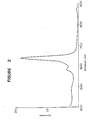
- the ⁇ max (in chloronaphthalene) of the phthalocyanine compound thus obtained was at 583 nm and 639 nm as shown in Figure 2, and thus the absorption was found to be within the semiconductor laser region (600-900 nm).
- the ⁇ max (in 1-methylnaphthalene) of the phthalocyanine compound thus obtained was at 580 nm and 639 nm, and thus the absorption was found to be within the .semiconductor laser region (600-900 nm).
- the ⁇ max (in 1-methylnaphthalene) of the phthalocyanine compound thus obtained was at 590 nm and 643 nm, and the absorption was found to be within the semiconductor laser region (600-900 nm).
- the ⁇ max (in chloronaphthalene) of the phthalocyanine compound thus obtained was at 630 nm and 680 nm, and thus the absorption was found to be within the semiconductor laser region (600-900 nm).
- a benzene solution of the compound thus obtained was sealed in a glass cell.
- This glass cell was irradiated with a monochromatic light of 404.5 nm for two minutes, whereby the initial yellow color turned bluish purple. This colored state was thermally very stable. Then, it was irradiated with a monochromatic light of 680 nm for 5 minutes by a combination of a mercury lamp and a filter, whereby the color immediately faded away. It was possible to repeat this color change reversibly.
- phthalocyanine compounds of the formula IV wherein the substituents are as identified in Table 2 were prepared by suitably selecting the compounds to be reacted. These phthalocyanine compounds were all found to exhibit absorptivity within the semiconductor laser region.
Landscapes
- Chemical & Material Sciences (AREA)
- Organic Chemistry (AREA)
- Engineering & Computer Science (AREA)
- Materials Engineering (AREA)
- Optical Record Carriers And Manufacture Thereof (AREA)
- Nitrogen Condensed Heterocyclic Rings (AREA)
- Thermal Transfer Or Thermal Recording In General (AREA)
Applications Claiming Priority (2)
| Application Number | Priority Date | Filing Date | Title |
|---|---|---|---|
| JP1189588 | 1988-01-22 | ||
| JP11895/88 | 1988-01-22 |
Publications (3)
| Publication Number | Publication Date |
|---|---|
| EP0325742A2 true EP0325742A2 (de) | 1989-08-02 |
| EP0325742A3 EP0325742A3 (en) | 1990-10-24 |
| EP0325742B1 EP0325742B1 (de) | 1994-03-30 |
Family
ID=11790463
Family Applications (1)
| Application Number | Title | Priority Date | Filing Date |
|---|---|---|---|
| EP19880120358 Expired - Lifetime EP0325742B1 (de) | 1988-01-22 | 1988-12-06 | Phthalocyaninbestandteil und dieses verwendender optischer Speicherstoff |
Country Status (2)
| Country | Link |
|---|---|
| EP (1) | EP0325742B1 (de) |
| DE (1) | DE3888820T2 (de) |
Cited By (5)
| Publication number | Priority date | Publication date | Assignee | Title |
|---|---|---|---|---|
| WO1991010994A1 (en) * | 1990-01-09 | 1991-07-25 | Hoechst Celanese Corporation | Low energy recording process |
| WO1992019694A1 (en) * | 1991-05-01 | 1992-11-12 | British Technology Group Ltd. | Electrochromic device |
| EP0786768A3 (de) * | 1996-01-29 | 1997-11-12 | Ricoh Company, Ltd | Medium für optische Datenspeicherung |
| WO2005003126A1 (en) | 2003-07-07 | 2005-01-13 | The University Of Hong Kong | Photochromic diarylethene-containing coordination compounds and the production thereof |
| WO2007028536A3 (en) * | 2005-09-06 | 2007-06-07 | Basell Polyolefine Gmbh | Process for preparing olefin polymers in the presence of catalyst systems having photochromic groups |
Family Cites Families (2)
| Publication number | Priority date | Publication date | Assignee | Title |
|---|---|---|---|---|
| FR1570576A (de) * | 1968-03-29 | 1969-06-13 | ||
| FR2563229B1 (fr) * | 1984-04-20 | 1986-07-18 | Commissariat Energie Atomique | Materiau electrochrome organique, son procede de fabrication et son application a l'affichage |
-
1988
- 1988-12-06 EP EP19880120358 patent/EP0325742B1/de not_active Expired - Lifetime
- 1988-12-06 DE DE19883888820 patent/DE3888820T2/de not_active Expired - Fee Related
Cited By (8)
| Publication number | Priority date | Publication date | Assignee | Title |
|---|---|---|---|---|
| WO1991010994A1 (en) * | 1990-01-09 | 1991-07-25 | Hoechst Celanese Corporation | Low energy recording process |
| WO1992019694A1 (en) * | 1991-05-01 | 1992-11-12 | British Technology Group Ltd. | Electrochromic device |
| US5521745A (en) * | 1991-05-01 | 1996-05-28 | British Technology Group Ltd. | Electrochromic device |
| EP0786768A3 (de) * | 1996-01-29 | 1997-11-12 | Ricoh Company, Ltd | Medium für optische Datenspeicherung |
| US5998093A (en) * | 1996-01-29 | 1999-12-07 | Ricoh Company, Ltd. | Optical information recording medium |
| WO2005003126A1 (en) | 2003-07-07 | 2005-01-13 | The University Of Hong Kong | Photochromic diarylethene-containing coordination compounds and the production thereof |
| EP1648864A4 (de) * | 2003-07-07 | 2009-08-19 | Univ Hong Kong | Photochrome diarylethenhaltige koordinationsverbindungen und deren herstellung |
| WO2007028536A3 (en) * | 2005-09-06 | 2007-06-07 | Basell Polyolefine Gmbh | Process for preparing olefin polymers in the presence of catalyst systems having photochromic groups |
Also Published As
| Publication number | Publication date |
|---|---|
| DE3888820T2 (de) | 1994-10-27 |
| EP0325742B1 (de) | 1994-03-30 |
| DE3888820D1 (de) | 1994-05-05 |
| EP0325742A3 (en) | 1990-10-24 |
Similar Documents
| Publication | Publication Date | Title |
|---|---|---|
| US4837063A (en) | Optical recording material | |
| EP0186364B1 (de) | Photochrome Verbindungen | |
| JPH0372118B2 (de) | ||
| EP0189188B1 (de) | Optisches Aufzeichnungsmedium | |
| JPH08245579A (ja) | ジアリールエテン系フォトクロミック化合物および該化合物を用いた光学記録材料 | |
| US4882428A (en) | Azaporphyrin compounds | |
| EP0325742B1 (de) | Phthalocyaninbestandteil und dieses verwendender optischer Speicherstoff | |
| JPH04252268A (ja) | ポリメチン染料 | |
| JPH0723468B2 (ja) | フオトクロミツク感光性組成物 | |
| EP0254553B1 (de) | Optisches Aufzeichnungsmedium | |
| JP3200649B2 (ja) | 遷移金属スピロベンゾピラン錯体、その製造方法及び該錯体からなるフォトクロミック材料 | |
| JPH0745509B2 (ja) | ニッケル錯体 | |
| JPS61291187A (ja) | 光学記録体 | |
| JPH0576947B2 (de) | ||
| JPS6142585A (ja) | 赤外線吸収性組成物 | |
| JPH0413354B2 (de) | ||
| JP2960131B2 (ja) | フォトクロミック化合物 | |
| JPS61263935A (ja) | ジアリルエテン誘導体 | |
| JPH02665A (ja) | フタロシアニン系化合物 | |
| JPH0196282A (ja) | フタロシアニン誘導体 | |
| JPH0134465B2 (de) | ||
| JPS60177089A (ja) | フオトクロミツク化合物 | |
| JPH08245627A (ja) | 架橋スピロピラン化合物 | |
| JPS62280264A (ja) | ジチエニルジシアノエテン誘導体及びそれを使用した光記録材料 | |
| JP2585722B2 (ja) | 新規な近赤外線吸収色素 |
Legal Events
| Date | Code | Title | Description |
|---|---|---|---|
| PUAI | Public reference made under article 153(3) epc to a published international application that has entered the european phase |
Free format text: ORIGINAL CODE: 0009012 |
|
| AK | Designated contracting states |
Kind code of ref document: A2 Designated state(s): DE FR GB NL |
|
| PUAL | Search report despatched |
Free format text: ORIGINAL CODE: 0009013 |
|
| AK | Designated contracting states |
Kind code of ref document: A3 Designated state(s): DE FR GB NL |
|
| 17P | Request for examination filed |
Effective date: 19901211 |
|
| 17Q | First examination report despatched |
Effective date: 19911115 |
|
| GRAA | (expected) grant |
Free format text: ORIGINAL CODE: 0009210 |
|
| AK | Designated contracting states |
Kind code of ref document: B1 Designated state(s): DE FR GB NL |
|
| REF | Corresponds to: |
Ref document number: 3888820 Country of ref document: DE Date of ref document: 19940505 |
|
| ET | Fr: translation filed | ||
| PLBE | No opposition filed within time limit |
Free format text: ORIGINAL CODE: 0009261 |
|
| STAA | Information on the status of an ep patent application or granted ep patent |
Free format text: STATUS: NO OPPOSITION FILED WITHIN TIME LIMIT |
|
| 26N | No opposition filed | ||
| PGFP | Annual fee paid to national office [announced via postgrant information from national office to epo] |
Ref country code: GB Payment date: 19971127 Year of fee payment: 10 |
|
| PGFP | Annual fee paid to national office [announced via postgrant information from national office to epo] |
Ref country code: FR Payment date: 19971209 Year of fee payment: 10 |
|
| PGFP | Annual fee paid to national office [announced via postgrant information from national office to epo] |
Ref country code: NL Payment date: 19971223 Year of fee payment: 10 |
|
| PGFP | Annual fee paid to national office [announced via postgrant information from national office to epo] |
Ref country code: DE Payment date: 19980130 Year of fee payment: 10 |
|
| PG25 | Lapsed in a contracting state [announced via postgrant information from national office to epo] |
Ref country code: GB Free format text: LAPSE BECAUSE OF NON-PAYMENT OF DUE FEES Effective date: 19981206 |
|
| PG25 | Lapsed in a contracting state [announced via postgrant information from national office to epo] |
Ref country code: NL Free format text: LAPSE BECAUSE OF NON-PAYMENT OF DUE FEES Effective date: 19990701 |
|
| GBPC | Gb: european patent ceased through non-payment of renewal fee |
Effective date: 19981206 |
|
| PG25 | Lapsed in a contracting state [announced via postgrant information from national office to epo] |
Ref country code: FR Free format text: LAPSE BECAUSE OF NON-PAYMENT OF DUE FEES Effective date: 19990831 |
|
| NLV4 | Nl: lapsed or anulled due to non-payment of the annual fee |
Effective date: 19990701 |
|
| REG | Reference to a national code |
Ref country code: FR Ref legal event code: ST |
|
| PG25 | Lapsed in a contracting state [announced via postgrant information from national office to epo] |
Ref country code: DE Free format text: LAPSE BECAUSE OF NON-PAYMENT OF DUE FEES Effective date: 19991001 |