EP0327687A2 - Membranes d'ultrafiltration - Google Patents
Membranes d'ultrafiltration Download PDFInfo
- Publication number
- EP0327687A2 EP0327687A2 EP88119233A EP88119233A EP0327687A2 EP 0327687 A2 EP0327687 A2 EP 0327687A2 EP 88119233 A EP88119233 A EP 88119233A EP 88119233 A EP88119233 A EP 88119233A EP 0327687 A2 EP0327687 A2 EP 0327687A2
- Authority
- EP
- European Patent Office
- Prior art keywords
- alumina
- layer
- alpha
- tube
- support
- Prior art date
- Legal status (The legal status is an assumption and is not a legal conclusion. Google has not performed a legal analysis and makes no representation as to the accuracy of the status listed.)
- Ceased
Links
Images


Classifications
-
- B—PERFORMING OPERATIONS; TRANSPORTING
- B01—PHYSICAL OR CHEMICAL PROCESSES OR APPARATUS IN GENERAL
- B01D—SEPARATION
- B01D67/00—Processes specially adapted for manufacturing semi-permeable membranes for separation processes or apparatus
- B01D67/0039—Inorganic membrane manufacture
- B01D67/0051—Inorganic membrane manufacture by controlled crystallisation, e,.g. hydrothermal growth
-
- B—PERFORMING OPERATIONS; TRANSPORTING
- B01—PHYSICAL OR CHEMICAL PROCESSES OR APPARATUS IN GENERAL
- B01D—SEPARATION
- B01D67/00—Processes specially adapted for manufacturing semi-permeable membranes for separation processes or apparatus
- B01D67/0039—Inorganic membrane manufacture
- B01D67/0048—Inorganic membrane manufacture by sol-gel transition
-
- B—PERFORMING OPERATIONS; TRANSPORTING
- B01—PHYSICAL OR CHEMICAL PROCESSES OR APPARATUS IN GENERAL
- B01D—SEPARATION
- B01D69/00—Semi-permeable membranes for separation processes or apparatus characterised by their form, structure or properties; Manufacturing processes specially adapted therefor
- B01D69/10—Supported membranes; Membrane supports
-
- B—PERFORMING OPERATIONS; TRANSPORTING
- B01—PHYSICAL OR CHEMICAL PROCESSES OR APPARATUS IN GENERAL
- B01D—SEPARATION
- B01D71/00—Semi-permeable membranes for separation processes or apparatus characterised by the material; Manufacturing processes specially adapted therefor
- B01D71/02—Inorganic material
- B01D71/024—Oxides
- B01D71/025—Aluminium oxide
-
- C—CHEMISTRY; METALLURGY
- C04—CEMENTS; CONCRETE; ARTIFICIAL STONE; CERAMICS; REFRACTORIES
- C04B—LIME, MAGNESIA; SLAG; CEMENTS; COMPOSITIONS THEREOF, e.g. MORTARS, CONCRETE OR LIKE BUILDING MATERIALS; ARTIFICIAL STONE; CERAMICS; REFRACTORIES; TREATMENT OF NATURAL STONE
- C04B41/00—After-treatment of mortars, concrete, artificial stone or ceramics; Treatment of natural stone
- C04B41/009—After-treatment of mortars, concrete, artificial stone or ceramics; Treatment of natural stone characterised by the material treated
-
- C—CHEMISTRY; METALLURGY
- C04—CEMENTS; CONCRETE; ARTIFICIAL STONE; CERAMICS; REFRACTORIES
- C04B—LIME, MAGNESIA; SLAG; CEMENTS; COMPOSITIONS THEREOF, e.g. MORTARS, CONCRETE OR LIKE BUILDING MATERIALS; ARTIFICIAL STONE; CERAMICS; REFRACTORIES; TREATMENT OF NATURAL STONE
- C04B41/00—After-treatment of mortars, concrete, artificial stone or ceramics; Treatment of natural stone
- C04B41/45—Coating or impregnating, e.g. injection in masonry, partial coating of green or fired ceramics, organic coating compositions for adhering together two concrete elements
- C04B41/50—Coating or impregnating, e.g. injection in masonry, partial coating of green or fired ceramics, organic coating compositions for adhering together two concrete elements with inorganic materials
- C04B41/5025—Coating or impregnating, e.g. injection in masonry, partial coating of green or fired ceramics, organic coating compositions for adhering together two concrete elements with inorganic materials with ceramic materials
- C04B41/5031—Alumina
-
- C—CHEMISTRY; METALLURGY
- C04—CEMENTS; CONCRETE; ARTIFICIAL STONE; CERAMICS; REFRACTORIES
- C04B—LIME, MAGNESIA; SLAG; CEMENTS; COMPOSITIONS THEREOF, e.g. MORTARS, CONCRETE OR LIKE BUILDING MATERIALS; ARTIFICIAL STONE; CERAMICS; REFRACTORIES; TREATMENT OF NATURAL STONE
- C04B41/00—After-treatment of mortars, concrete, artificial stone or ceramics; Treatment of natural stone
- C04B41/80—After-treatment of mortars, concrete, artificial stone or ceramics; Treatment of natural stone of only ceramics
- C04B41/81—Coating or impregnation
- C04B41/85—Coating or impregnation with inorganic materials
- C04B41/87—Ceramics
-
- B—PERFORMING OPERATIONS; TRANSPORTING
- B01—PHYSICAL OR CHEMICAL PROCESSES OR APPARATUS IN GENERAL
- B01D—SEPARATION
- B01D2325/00—Details relating to properties of membranes
- B01D2325/02—Details relating to pores or porosity of the membranes
- B01D2325/0283—Pore size
-
- B—PERFORMING OPERATIONS; TRANSPORTING
- B01—PHYSICAL OR CHEMICAL PROCESSES OR APPARATUS IN GENERAL
- B01D—SEPARATION
- B01D2325/00—Details relating to properties of membranes
- B01D2325/30—Chemical resistance
Definitions
- This invention relates to the field of ultrafiltration membranes, which are defined for the purposes of this application as membranes with an effective pore size of 100 nanometers (nm) or less. More particularly, this invention relates to fine ultrafiltration membranes, i.e., membranes having effective pore sizes of 35 nm or less.
- Ultrafiltration membranes as known in the art, may be used as filters, selective diffusion or effusion barriers, osmosis or electrophoresis membranes, zones for controlled reactions between gas and liquid phases, etc.
- the membranes may be used unsupported, but more often they are backed by much stronger and thicker supporting membranes with substantially larger pore sizes, so that the supporting membrane contributes mechanical support without significantly restricting the flow of materials through the ultrafiltration membrane.
- a convenient and frequently used support is a microfilter, which has an average pore size between about 100 and 5000 nm.
- the layer with the finest pore size, which controls the separation effectiveness of the total assembly of membrane plus support is denoted herein as the "effective separating layer” or "ESL".
- Gamma alumina is known to have significantly less corrosion resistance than alpha alumina in a variety of practically important environments, such as sodium hypochlorite, sodium hydroxide, and nitric acid solutions in water.
- Supported fine ultrafiltration membranes in which the ESL consists essentially of alpha alumina can be obtained by (a) coating a microfilter support with a layer of aluminum hydrate gel having dispersed therein an effective amount of finely divided crystalline seed particles, (b) drying the gel layer and support, and (c) heating the dried gel layer and support at a temperature below 1300 C for a sufficient time to convert the dried gel into alpha alumina.
- "consisting essentially of alpha alumina” means that the ESL is at least sixty percent by volume alpha alumina and that the ESL has substantially the same resistance to chemical attack as characterizes commercially pure polycrystalline alpha alumina.
- the preferred supports for ultrafilters according to this invention are substantially 100 % alpha alumina tube microfilters available from Norton Company, Worcester, Massachusetts under the trademark CERAFLO. These tubes are available in average pore sizes from 0.2 microns to 5 microns or more, with the ESL on either the inside or outside of the tube.
- the preferred alumina hydrate is boehmite
- the preferred source of colloidal boehmite is a commercially available product, SB Plural Alumina supplied by Condea.
- the colloidal dispersion as supplied is preferably diluted with water if necessary to bring its concentration within the range of 0.5 - 10 weight per cent (wt %) ALOOH content.
- the dispersion of proper boehmite concentration is normally slightly acidified to bring it to the point of incipient gelation. Any convenient fairly strong acid that does not leave any undesirable residue upon heating, such as hydrochloric, perchloric, or acetic acid may be used, but nitric acid is generally preferred.
- the boehmite dispersion is mixed with a suitable amount of fine crystalline seeds.
- Alpha alumina seeds are generally preferred, but gamma alumina and alpha iron oxide, or any crystal that promotes the growth of alpha alumina may also be used.
- the total weight of crystalline solid in the seeds preferably is 0.05 to 1 wt % of the amount of boehmite in the dispersion, and still more preferably is 0.4-0.8 wt % of the boehmite.
- the seeds should be sufficiently small to have a specific surface area of at least 35 square meters per gram (m2/g) and preferably have a surface area of at least 100 m2/g.
- the seeds preferably are alpha alumina, and the preferable source of seeds is the attrition of predominantly alumina milling media during vibratory milling, as described in U. S. Patent 4,623,364, the entire specification of which is hereby incorporated herein by reference.
- the thickness of the gel layer deposited on the support can be controlled by the time of contact with the support as is generally known in the art, and the thickness of the filtering layer eventually formed is generally close to that of the gel layer from which it is formed. Layers thicker than about 5 microns tend to crack during drying and/or firing, but multiple coating of successive layers, with intermediate drying and firing of each individual layer, can be used to build up effective filtering layers 20 microns thick or more, if such thick ultrafine layers are needed.
- Drying at room temperature of gel layers prepared according to this invention is preferred, and may generally be accomplished in 24 hours or less.
- the dried layer must be carefully and slowly heated to convert it to alpha alumina, in order to avoid cracking and/or the development of undesirable large pores in the layer.
- a suitable heating program for a layer of dried gel up to 5 microns thick is to increase the temperature at a rate of 20 C per hour from room temperature to 600 C, hold at 600 C for six hours, increase the temperature at a rate of 50 C per hour to 900, hold at 900 C for three hours, raise the temperature at a uniform rate to 1000 C over two hours, and hold at 1000 C for one hour. Cooling should be at a rate of no more than 300 C/hr.
- ESL'S substantially thicker than one micron by a series of depositions about one micron thick, with intermediate drying and heating after each deposition only to a temperature, such as 600 - 900 C, sufficient to convert to gamma rather than alpha alumina.
- a temperature such as 600 - 900 C
- additional heating to a higher temperature is performed to convert the entire layer substantially to alpha alumina.
- a water soluble polymer such as poly(vinyl alcohol), poly(ethylene glycol), or cellulose ether in the formulation so as to reduce the chances of forming cracks or large pores.
- a water soluble polymer such as poly(vinyl alcohol), poly(ethylene glycol), or cellulose ether
- Use of such polymers is especially valuable when the gel layer is applied in thicknesses greater than 5 microns and/or over a support with exceptionally large pores.
- the difficulties may often be overcome by depositing an intermediate layer with somewhat larger pores, drying the intermediate layer, and either firing it or leaving it in the green state until a green ESL according to this invention has been added over the intermediate layer.
- the intermediate layer may be applied according to methods taught in French Patent 2,502,508.
- aqueous dispersion containing 1 wt % boehmite, 0.006 wt % of alpha alumina seeds, and 0.07 mole of HNO3 per mole of boehmite was used to coat a 20-25 cm long cylindrical microfiltration tube with 3 mm inside diameter and 5 mm outside diameter.
- the tube commercially available under the name CERAFLO from Norton Company, Worcester, Massachusetts, had an initial ESL with an average pore size of about 200 nm.
- the tube used as a support was first coated with an intermediate layer of readily sinterable, 99.5 % or better purity alpha alumina particles averaging about 200 nm in diameter from an aqueous dispersion of such particles to give a layer 1-10 microns thick on the interior of the tube.
- This intermediate layer was dried at 22 C for 24 hours and then fired at 1000 C for 3 hours.
- the boehmite dispersion described above was drawn up into the tube precoated with the intermediate layer and allowed to drain out again as soon as it had reached the top. This operation, which required about two seconds, produced a green gel layer 1-2 microns thick over the intermediate layer. Even though the top of the tube was exposed for less time than the bottom, the gel layer was fairly uniform over the entire length of the tube, because the thickness depends primarily on the extent to which the sol penetrates the tube by capillary attraction, not on any time dependent settling rate such as might control the thickness on a horizontal surface.
- the tube with its deposited gel layer was dried at 24 C for 24 hours and then its temperature was increased at a rate of 20 C per hour from room temperature to 600 C, held at 600 C for six hours, increased at a rate of 50 C per hour to 900, held at 900 C for three hours, raised at a uniform rate to 1000 C over two hours, and held at 1000 C for one hour.
- Example 1 was identical with Example 1 up through the point of application of the boehmite gel layer.
- this layer of gel was dried and then heated only through the part of the temperature program through six hours at 600 C.
- a second gel layer was then applied over the first one in the same manner as the first layer. From this point on, the process continued exactly as after the application of the only gel layer in Example 1.
- the resulting product had the same characteristics as that of Example 1, except that the ESL thickness ranged from 1-3 microns.
- Figures 1 and 2 which are at the same scale, are photomicrographs of the inner part of a cross section and of the inner diameter surface respectively of a tube made in this example.
- the upper part of Figure 1 shows the ESL, with pores barely detectable at this scale, in contrast to the lower part of the Figure, representing the initially coated alpha alumina layer with an effective pore diameter of about 0.1 micron.
- Figure 2 shows the extraordinarily uniform inner surface achieved by the method of this invention.
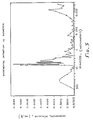
- Figure 3 shows an analysis by mercury porosimetry of a tube made according to this example. The porosity shown in the region less than about 0.027 microns represents the ESL in this membrane.
- Example 2 This example was identical to Example 2, except that (1) the intermediate coating with dispersed alpha alumina and drying and firing such coating was not performed and (2) the first layer of boehmite gel was dried but not fired at all before the second layer of such gel was applied over it.
- Example 2 This example was identical to Example 1, except that the heating (but not the drying) of the intermediate layer of alpha alumina was eliminated.
- the filtering characteristics of the tubes made according to this example were essentially the same as in Example 1, but in repeating both examples it was found that the method of this example led to a lower rate of rejection for cracks and large pores than did the method of Example 1.
- Membranes made according to any of examples 1-4 were found to have substantially the same effectiveness in separating the materials tested. All these membranes, except for a small fraction that had cracked or developed anomalously large pores during processing, rejected over 95% of bovine serum albumin with an average molecular weight of about 67,000, over 80 % of a polyvinylpyrrolidone dispersion with an average molecular weight of about 160,000, and over 90 % of human blood Immunoglobulin G, also with a molecular weight of about 160,000.
- a support tube of the same type as used for examples 1-12 was used for this example.
- a boehmite sol with 5.6 wt % boehmite, 0.034 wt % of seeds having a specific surface area of 110 m2/g and containing at least 80% alpha alumina, and sufficient nitric acid to provide 0.07 mole HNO3 per mole of boehmite was used. This sol was forced by air pressure to flow through the interior to the top of the support tube and then allowed to drain immediately, producing a gel layer about five microns thick.
- the tube containing the gel layer was dried for 24 hours at room temperature and then heated at 30 C/hr to 600 C, followed by heating at 200 C/hr to 1000 C and holding at 1000 C for one hour.
- Figures 4 and 5 are photomicrographs, at two different degrees of magnification, of the inner cross section of a tube prepared according to this example.
- Figure 4 shows the ESL as a thin layer on top, the intermediate layer corresponding to the inner layer of the original support tube, with effective pore size of about 0.2 microns dispersion, and at the bottom another portion of the original tube support tube, with effective pore size of about 1 micron.
- Figure 5 is on too large a scale to show the latter layer, but shows even better than Figure 4 the highly uniform porosity achieved in the ESL.
- Table 1 illustrates the significant difference made by seeding in the range of pore sizes obtainable when transformation of boehmite gels to alpha alumina is complete.
- transformation to alpha is complete in one hour at 1000 C, and the pore size is only a little over 10 nm. By holding at 1000 C, the pore size can be increased to more than 40 nm, but the distribution remains narrow.
- the transformation to alpha is not complete below 1200 C and is accompanied by pore growth that can not be controlled to give pores as fine as those obtained readily with the use of seeding.
Landscapes
- Chemical & Material Sciences (AREA)
- Engineering & Computer Science (AREA)
- Ceramic Engineering (AREA)
- Chemical Kinetics & Catalysis (AREA)
- Inorganic Chemistry (AREA)
- Structural Engineering (AREA)
- Materials Engineering (AREA)
- Organic Chemistry (AREA)
- Manufacturing & Machinery (AREA)
- Dispersion Chemistry (AREA)
- Crystallography & Structural Chemistry (AREA)
- Separation Using Semi-Permeable Membranes (AREA)
- External Artificial Organs (AREA)
- Catalysts (AREA)
Applications Claiming Priority (2)
| Application Number | Priority Date | Filing Date | Title |
|---|---|---|---|
| US13177487A | 1987-12-11 | 1987-12-11 | |
| US131774 | 1987-12-11 |
Publications (2)
| Publication Number | Publication Date |
|---|---|
| EP0327687A2 true EP0327687A2 (fr) | 1989-08-16 |
| EP0327687A3 EP0327687A3 (fr) | 1989-11-15 |
Family
ID=22450975
Family Applications (1)
| Application Number | Title | Priority Date | Filing Date |
|---|---|---|---|
| EP88119233A Ceased EP0327687A3 (fr) | 1987-12-11 | 1988-11-18 | Membranes d'ultrafiltration |
Country Status (3)
| Country | Link |
|---|---|
| EP (1) | EP0327687A3 (fr) |
| JP (1) | JPH01171609A (fr) |
| CA (1) | CA1336151C (fr) |
Cited By (10)
| Publication number | Priority date | Publication date | Assignee | Title |
|---|---|---|---|---|
| DE4116522A1 (de) * | 1990-05-23 | 1991-11-28 | Fraunhofer Ges Forschung | Verfahren zur herstellung von mit (alpha)-al(pfeil abwaerts)2(pfeil abwaerts)o(pfeil abwaerts)3(pfeil abwaerts) beschichteten substraten |
| EP0414098A3 (en) * | 1989-08-23 | 1992-01-29 | Technische Textilien Loerrach Gmbh | Filter element and method and device for its production |
| EP0745572A1 (fr) * | 1995-05-31 | 1996-12-04 | Elf Atochem S.A. | Procédé de préparation de pièces poreuses en céramique comprenant des plaquettes monocristallines d'alumine alpha |
| WO2000048717A1 (fr) * | 1999-02-19 | 2000-08-24 | Norsk Hydro Asa | Procede de fabrication d'une membrane |
| WO2004067154A1 (fr) * | 2003-01-30 | 2004-08-12 | Itn Nanovation Gmbh | Composite ceramique multicouche |
| WO2008050812A1 (fr) * | 2006-10-18 | 2008-05-02 | Ngk Insulators, Ltd. | Membrane poreuse en céramique et filtre en céramique |
| WO2008050813A1 (fr) * | 2006-10-18 | 2008-05-02 | Ngk Insulators, Ltd. | Membrane poreuse en céramique et filtre en céramique |
| WO2012082265A1 (fr) * | 2010-12-17 | 2012-06-21 | General Electric Company | Membranes céramiques d'alumine |
| CN111517766A (zh) * | 2020-05-11 | 2020-08-11 | 镇江华鑫磨具有限公司 | 多孔陶瓷过滤板制造方法 |
| CN118681417A (zh) * | 2024-03-21 | 2024-09-24 | 南京工业大学 | 一种小孔径窄分布高渗透性α-氧化铝超滤膜的制备方法 |
Families Citing this family (1)
| Publication number | Priority date | Publication date | Assignee | Title |
|---|---|---|---|---|
| US8393478B2 (en) * | 2007-02-27 | 2013-03-12 | Corning Incorporated | Inorganic membranes and method of making |
Family Cites Families (7)
| Publication number | Priority date | Publication date | Assignee | Title |
|---|---|---|---|---|
| LU36002A1 (fr) * | 1957-04-26 | |||
| FR2550953B1 (fr) * | 1977-04-12 | 1987-02-20 | Commissariat Energie Atomique | Procede de fabrication de membranes minerales permeables |
| FR2502508B1 (fr) * | 1981-03-30 | 1985-10-25 | Geceral Grpt Etu Ceramiques Al | Structure de filtration, procede de realisation de telles structures et dispositif d'ultrafiltration en comportant |
| JPS58205504A (ja) * | 1982-05-24 | 1983-11-30 | Agency Of Ind Science & Technol | 耐熱性多孔質膜 |
| NL8303079A (nl) * | 1983-09-05 | 1985-04-01 | Stichting Energie | Werkwijze voor de bereiding van scheurvrije semi-permeabele anorganische membranen. |
| US4657754A (en) * | 1985-11-21 | 1987-04-14 | Norton Company | Aluminum oxide powders and process |
| GB8609248D0 (en) * | 1986-04-16 | 1986-05-21 | Alcan Int Ltd | Composite membranes |
-
1988
- 1988-11-18 EP EP88119233A patent/EP0327687A3/fr not_active Ceased
- 1988-12-02 CA CA000584918A patent/CA1336151C/fr not_active Expired - Fee Related
- 1988-12-09 JP JP63310241A patent/JPH01171609A/ja active Pending
Cited By (22)
| Publication number | Priority date | Publication date | Assignee | Title |
|---|---|---|---|---|
| EP0414098A3 (en) * | 1989-08-23 | 1992-01-29 | Technische Textilien Loerrach Gmbh | Filter element and method and device for its production |
| DE4116522A1 (de) * | 1990-05-23 | 1991-11-28 | Fraunhofer Ges Forschung | Verfahren zur herstellung von mit (alpha)-al(pfeil abwaerts)2(pfeil abwaerts)o(pfeil abwaerts)3(pfeil abwaerts) beschichteten substraten |
| EP0745572A1 (fr) * | 1995-05-31 | 1996-12-04 | Elf Atochem S.A. | Procédé de préparation de pièces poreuses en céramique comprenant des plaquettes monocristallines d'alumine alpha |
| FR2734812A1 (fr) * | 1995-05-31 | 1996-12-06 | Atochem Elf Sa | Procede de preparation de pieces foreuses en ceramique comprenant des plaquettes monocristallines d'alumine alpha |
| WO2000048717A1 (fr) * | 1999-02-19 | 2000-08-24 | Norsk Hydro Asa | Procede de fabrication d'une membrane |
| US6613384B1 (en) | 1999-02-19 | 2003-09-02 | Norsk Hydro Asa | Method for manufacturing a membrane |
| WO2004067154A1 (fr) * | 2003-01-30 | 2004-08-12 | Itn Nanovation Gmbh | Composite ceramique multicouche |
| AU2007310055B2 (en) * | 2006-10-18 | 2011-09-15 | Ngk Insulators, Ltd. | Ceramic porous membrane and ceramic filter |
| US9149771B2 (en) | 2006-10-18 | 2015-10-06 | Ngk Insulators, Ltd. | Ceramic porous membrane and ceramic filter |
| US7717272B2 (en) | 2006-10-18 | 2010-05-18 | Ngk Insulators, Ltd. | Ceramic porous membrane and ceramic filter |
| WO2008050812A1 (fr) * | 2006-10-18 | 2008-05-02 | Ngk Insulators, Ltd. | Membrane poreuse en céramique et filtre en céramique |
| AU2007310056B2 (en) * | 2006-10-18 | 2011-09-15 | Ngk Insulators, Ltd. | Ceramic porous membrane and ceramic filter |
| CN101528330B (zh) * | 2006-10-18 | 2012-01-11 | 日本碍子株式会社 | 陶瓷多孔膜和陶瓷过滤器 |
| CN101528328B (zh) * | 2006-10-18 | 2012-01-11 | 日本碍子株式会社 | 陶瓷多孔膜和陶瓷过滤器 |
| WO2008050813A1 (fr) * | 2006-10-18 | 2008-05-02 | Ngk Insulators, Ltd. | Membrane poreuse en céramique et filtre en céramique |
| US8485366B2 (en) | 2006-10-18 | 2013-07-16 | Ngk Insulators, Ltd. | Ceramic porous membrane and ceramic filter |
| JP2014501169A (ja) * | 2010-12-17 | 2014-01-20 | ゼネラル・エレクトリック・カンパニイ | アルミナセラミック膜 |
| WO2012082265A1 (fr) * | 2010-12-17 | 2012-06-21 | General Electric Company | Membranes céramiques d'alumine |
| AU2011341609B2 (en) * | 2010-12-17 | 2016-09-22 | Bl Technologies, Inc. | Alumina ceramic membranes |
| US9512041B2 (en) | 2010-12-17 | 2016-12-06 | General Electric Company | Ceramic membranes |
| CN111517766A (zh) * | 2020-05-11 | 2020-08-11 | 镇江华鑫磨具有限公司 | 多孔陶瓷过滤板制造方法 |
| CN118681417A (zh) * | 2024-03-21 | 2024-09-24 | 南京工业大学 | 一种小孔径窄分布高渗透性α-氧化铝超滤膜的制备方法 |
Also Published As
| Publication number | Publication date |
|---|---|
| JPH01171609A (ja) | 1989-07-06 |
| CA1336151C (fr) | 1995-07-04 |
| EP0327687A3 (fr) | 1989-11-15 |
Similar Documents
| Publication | Publication Date | Title |
|---|---|---|
| US4968426A (en) | Fine alpha alumina ultrafiltration membranes | |
| EP0144097B1 (fr) | Procédé de préparation de membranes minérales semi-perméables exemptes de fissures | |
| JP2670967B2 (ja) | 接線ろ過膜のためのモノリシックセラミック支持体 | |
| Leenaars et al. | The preparation and characterization of alumina membranes with ultra-fine pores: Part 1 Microstructural investigations on non-supported membranes | |
| US5851649A (en) | Inorganic porous sintered body and filter | |
| EP0515936A1 (fr) | Procédé de préparation de membranes céramiques microporeuses pour la séparation de mélanges de gaz et de liquide | |
| JP3922389B2 (ja) | ゼオライト膜の製造方法及び製造装置、並びにこの方法により得られたゼオライト管状分離膜 | |
| EP0536995B1 (fr) | Membranes céramiques microporeuses en aluminosilicate | |
| CA1336151C (fr) | Membrane d'ultrafiltration en alumine alpha | |
| US5208190A (en) | Microporous alumina ceramic membranes | |
| Das et al. | Formatation of pore structure in tape-cast alumina membranes–effects of binder content and firing temperature | |
| AU631493B2 (en) | A porous inorganic composite semipermeable membrane and a method of preparation | |
| Etienne et al. | A microporous zirconia membrane prepared by the sol—gel process from zirconyl oxalate | |
| US5004544A (en) | Reaction bonded silicon nitride filtration membranes | |
| EP0401928B1 (fr) | Procédé pour la préparation d'une membrane linaire en couche superficielle | |
| Van Gestel et al. | Hydrothermally stable mesoporous ZrO2 membranes prepared by a facile nanoparticle deposition process | |
| KR100946821B1 (ko) | 신규한 무기나노 여과막 | |
| CN1265864C (zh) | 分层结构型过滤器及其制备方法 | |
| Chu et al. | Microporous silica membranes deposited on porous supports by filtration | |
| Das et al. | Tape-cast ceramic membranes for microfiltration application | |
| AU779345B2 (en) | Method for the removal of particulate matter from aqueous suspension | |
| JPH03284329A (ja) | セラミック膜フイルタおよびその製造方法 | |
| JP2016073956A (ja) | ノルマルパラフィンの分離方法 | |
| WO1991012879A1 (fr) | Membranes inorganiques et procede de leur fabrication | |
| JP2004082008A (ja) | 種結晶の担持方法によって分離係数が決定されるゼオライト膜の製造方法 |
Legal Events
| Date | Code | Title | Description |
|---|---|---|---|
| PUAI | Public reference made under article 153(3) epc to a published international application that has entered the european phase |
Free format text: ORIGINAL CODE: 0009012 |
|
| AK | Designated contracting states |
Kind code of ref document: A2 Designated state(s): FR NL |
|
| PUAL | Search report despatched |
Free format text: ORIGINAL CODE: 0009013 |
|
| AK | Designated contracting states |
Kind code of ref document: A3 Designated state(s): FR NL |
|
| 17P | Request for examination filed |
Effective date: 19900426 |
|
| 17Q | First examination report despatched |
Effective date: 19920306 |
|
| STAA | Information on the status of an ep patent application or granted ep patent |
Free format text: STATUS: THE APPLICATION HAS BEEN REFUSED |
|
| 18R | Application refused |
Effective date: 19940423 |