EP0329510A1 - Verfahren zur Entasphaltierung schwerer Erdölfraktionen und dessen Verwendung - Google Patents
Verfahren zur Entasphaltierung schwerer Erdölfraktionen und dessen Verwendung Download PDFInfo
- Publication number
- EP0329510A1 EP0329510A1 EP89400284A EP89400284A EP0329510A1 EP 0329510 A1 EP0329510 A1 EP 0329510A1 EP 89400284 A EP89400284 A EP 89400284A EP 89400284 A EP89400284 A EP 89400284A EP 0329510 A1 EP0329510 A1 EP 0329510A1
- Authority
- EP
- European Patent Office
- Prior art keywords
- additive
- solvent
- deasphalting
- charge
- shearing
- Prior art date
- Legal status (The legal status is an assumption and is not a legal conclusion. Google has not performed a legal analysis and makes no representation as to the accuracy of the status listed.)
- Granted
Links
- 229930195733 hydrocarbon Natural products 0.000 title claims abstract description 32
- 150000002430 hydrocarbons Chemical class 0.000 title claims abstract description 32
- 238000000034 method Methods 0.000 title claims abstract description 31
- 239000004215 Carbon black (E152) Substances 0.000 title claims abstract description 19
- 239000000654 additive Substances 0.000 claims abstract description 82
- 230000000996 additive effect Effects 0.000 claims abstract description 77
- 239000002904 solvent Substances 0.000 claims abstract description 68
- 238000010008 shearing Methods 0.000 claims abstract description 39
- SMWDFEZZVXVKRB-UHFFFAOYSA-N anhydrous quinoline Natural products N1=CC=CC2=CC=CC=C21 SMWDFEZZVXVKRB-UHFFFAOYSA-N 0.000 claims description 22
- 238000004523 catalytic cracking Methods 0.000 claims description 13
- 239000011347 resin Substances 0.000 claims description 13
- 229920005989 resin Polymers 0.000 claims description 13
- XEKOWRVHYACXOJ-UHFFFAOYSA-N Ethyl acetate Chemical compound CCOC(C)=O XEKOWRVHYACXOJ-UHFFFAOYSA-N 0.000 claims description 12
- 150000001875 compounds Chemical class 0.000 claims description 12
- SECXISVLQFMRJM-UHFFFAOYSA-N N-Methylpyrrolidone Chemical compound CN1CCCC1=O SECXISVLQFMRJM-UHFFFAOYSA-N 0.000 claims description 11
- 239000010687 lubricating oil Substances 0.000 claims description 11
- LQNUZADURLCDLV-UHFFFAOYSA-N nitrobenzene Chemical compound [O-][N+](=O)C1=CC=CC=C1 LQNUZADURLCDLV-UHFFFAOYSA-N 0.000 claims description 6
- 125000002943 quinolinyl group Chemical group N1=C(C=CC2=CC=CC=C12)* 0.000 claims description 4
- 238000012360 testing method Methods 0.000 description 58
- 239000000203 mixture Substances 0.000 description 28
- 239000010426 asphalt Substances 0.000 description 15
- PXHVJJICTQNCMI-UHFFFAOYSA-N Nickel Chemical compound [Ni] PXHVJJICTQNCMI-UHFFFAOYSA-N 0.000 description 12
- ATUOYWHBWRKTHZ-UHFFFAOYSA-N Propane Chemical compound CCC ATUOYWHBWRKTHZ-UHFFFAOYSA-N 0.000 description 12
- 239000000945 filler Substances 0.000 description 12
- 239000000047 product Substances 0.000 description 12
- 125000004432 carbon atom Chemical group C* 0.000 description 11
- UDHXJZHVNHGCEC-UHFFFAOYSA-N Chlorophacinone Chemical compound C1=CC(Cl)=CC=C1C(C=1C=CC=CC=1)C(=O)C1C(=O)C2=CC=CC=C2C1=O UDHXJZHVNHGCEC-UHFFFAOYSA-N 0.000 description 10
- 238000004821 distillation Methods 0.000 description 9
- 238000004064 recycling Methods 0.000 description 9
- NINIDFKCEFEMDL-UHFFFAOYSA-N Sulfur Chemical compound [S] NINIDFKCEFEMDL-UHFFFAOYSA-N 0.000 description 7
- 229910052799 carbon Inorganic materials 0.000 description 7
- 239000003995 emulsifying agent Substances 0.000 description 7
- 239000001294 propane Substances 0.000 description 7
- 229910052717 sulfur Inorganic materials 0.000 description 7
- 239000011593 sulfur Substances 0.000 description 7
- IJGRMHOSHXDMSA-UHFFFAOYSA-N Atomic nitrogen Chemical compound N#N IJGRMHOSHXDMSA-UHFFFAOYSA-N 0.000 description 6
- 239000000446 fuel Substances 0.000 description 6
- VLKZOEOYAKHREP-UHFFFAOYSA-N n-Hexane Chemical compound CCCCCC VLKZOEOYAKHREP-UHFFFAOYSA-N 0.000 description 6
- 229910052759 nickel Inorganic materials 0.000 description 6
- 229910052720 vanadium Inorganic materials 0.000 description 6
- LEONUFNNVUYDNQ-UHFFFAOYSA-N vanadium atom Chemical compound [V] LEONUFNNVUYDNQ-UHFFFAOYSA-N 0.000 description 6
- 238000004876 x-ray fluorescence Methods 0.000 description 6
- IMNFDUFMRHMDMM-UHFFFAOYSA-N N-Heptane Chemical compound CCCCCCC IMNFDUFMRHMDMM-UHFFFAOYSA-N 0.000 description 5
- 239000010779 crude oil Substances 0.000 description 5
- 238000010586 diagram Methods 0.000 description 5
- 238000009434 installation Methods 0.000 description 5
- 229910052751 metal Inorganic materials 0.000 description 5
- 239000002184 metal Substances 0.000 description 5
- OFBQJSOFQDEBGM-UHFFFAOYSA-N n-pentane Natural products CCCCC OFBQJSOFQDEBGM-UHFFFAOYSA-N 0.000 description 5
- 239000003921 oil Substances 0.000 description 5
- 229920006395 saturated elastomer Polymers 0.000 description 5
- OKTJSMMVPCPJKN-UHFFFAOYSA-N Carbon Chemical compound [C] OKTJSMMVPCPJKN-UHFFFAOYSA-N 0.000 description 4
- 238000004519 manufacturing process Methods 0.000 description 4
- 150000002739 metals Chemical class 0.000 description 4
- 150000001338 aliphatic hydrocarbons Chemical class 0.000 description 3
- 125000004429 atom Chemical group 0.000 description 3
- 238000009835 boiling Methods 0.000 description 3
- 239000000295 fuel oil Substances 0.000 description 3
- GNOIPBMMFNIUFM-UHFFFAOYSA-N hexamethylphosphoric triamide Chemical compound CN(C)P(=O)(N(C)C)N(C)C GNOIPBMMFNIUFM-UHFFFAOYSA-N 0.000 description 3
- IJDNQMDRQITEOD-UHFFFAOYSA-N n-butane Chemical compound CCCC IJDNQMDRQITEOD-UHFFFAOYSA-N 0.000 description 3
- 229910052757 nitrogen Inorganic materials 0.000 description 3
- 239000002244 precipitate Substances 0.000 description 3
- 238000001556 precipitation Methods 0.000 description 3
- 239000003507 refrigerant Substances 0.000 description 3
- QVGXLLKOCUKJST-UHFFFAOYSA-N atomic oxygen Chemical compound [O] QVGXLLKOCUKJST-UHFFFAOYSA-N 0.000 description 2
- 230000008901 benefit Effects 0.000 description 2
- 238000004517 catalytic hydrocracking Methods 0.000 description 2
- 238000000605 extraction Methods 0.000 description 2
- 238000010438 heat treatment Methods 0.000 description 2
- 125000005842 heteroatom Chemical group 0.000 description 2
- 239000001282 iso-butane Substances 0.000 description 2
- 229910052760 oxygen Inorganic materials 0.000 description 2
- 239000001301 oxygen Substances 0.000 description 2
- 238000000926 separation method Methods 0.000 description 2
- 239000000243 solution Substances 0.000 description 2
- 239000007858 starting material Substances 0.000 description 2
- NNPPMTNAJDCUHE-UHFFFAOYSA-N trimethylmethane Natural products CC(C)C NNPPMTNAJDCUHE-UHFFFAOYSA-N 0.000 description 2
- VXNZUUAINFGPBY-UHFFFAOYSA-N 1-Butene Chemical compound CCC=C VXNZUUAINFGPBY-UHFFFAOYSA-N 0.000 description 1
- XPDWGBQVDMORPB-UHFFFAOYSA-N Fluoroform Chemical compound FC(F)F XPDWGBQVDMORPB-UHFFFAOYSA-N 0.000 description 1
- UFHFLCQGNIYNRP-UHFFFAOYSA-N Hydrogen Chemical compound [H][H] UFHFLCQGNIYNRP-UHFFFAOYSA-N 0.000 description 1
- JUJWROOIHBZHMG-UHFFFAOYSA-N Pyridine Chemical group C1=CC=NC=C1 JUJWROOIHBZHMG-UHFFFAOYSA-N 0.000 description 1
- 239000002253 acid Substances 0.000 description 1
- 150000007513 acids Chemical class 0.000 description 1
- 238000013019 agitation Methods 0.000 description 1
- 150000001298 alcohols Chemical class 0.000 description 1
- 150000001408 amides Chemical class 0.000 description 1
- 125000003118 aryl group Chemical group 0.000 description 1
- 239000001273 butane Substances 0.000 description 1
- IAQRGUVFOMOMEM-UHFFFAOYSA-N butene Natural products CC=CC IAQRGUVFOMOMEM-UHFFFAOYSA-N 0.000 description 1
- 239000003245 coal Substances 0.000 description 1
- 239000002826 coolant Substances 0.000 description 1
- 150000002148 esters Chemical class 0.000 description 1
- 150000002170 ethers Chemical class 0.000 description 1
- 238000005194 fractionation Methods 0.000 description 1
- 238000000227 grinding Methods 0.000 description 1
- 239000001257 hydrogen Substances 0.000 description 1
- 229910052739 hydrogen Inorganic materials 0.000 description 1
- 125000004435 hydrogen atom Chemical group [H]* 0.000 description 1
- 238000002347 injection Methods 0.000 description 1
- 239000007924 injection Substances 0.000 description 1
- 150000002576 ketones Chemical class 0.000 description 1
- 239000007788 liquid Substances 0.000 description 1
- 238000000622 liquid--liquid extraction Methods 0.000 description 1
- 238000012986 modification Methods 0.000 description 1
- 230000004048 modification Effects 0.000 description 1
- 239000004058 oil shale Substances 0.000 description 1
- 238000003825 pressing Methods 0.000 description 1
- 239000002689 soil Substances 0.000 description 1
- 239000004449 solid propellant Substances 0.000 description 1
- 238000000638 solvent extraction Methods 0.000 description 1
- 238000004230 steam cracking Methods 0.000 description 1
Images


Classifications
-
- C—CHEMISTRY; METALLURGY
- C10—PETROLEUM, GAS OR COKE INDUSTRIES; TECHNICAL GASES CONTAINING CARBON MONOXIDE; FUELS; LUBRICANTS; PEAT
- C10G—CRACKING HYDROCARBON OILS; PRODUCTION OF LIQUID HYDROCARBON MIXTURES, e.g. BY DESTRUCTIVE HYDROGENATION, OLIGOMERISATION, POLYMERISATION; RECOVERY OF HYDROCARBON OILS FROM OIL-SHALE, OIL-SAND, OR GASES; REFINING MIXTURES MAINLY CONSISTING OF HYDROCARBONS; REFORMING OF NAPHTHA; MINERAL WAXES
- C10G21/00—Refining of hydrocarbon oils, in the absence of hydrogen, by extraction with selective solvents
- C10G21/003—Solvent de-asphalting
-
- C—CHEMISTRY; METALLURGY
- C10—PETROLEUM, GAS OR COKE INDUSTRIES; TECHNICAL GASES CONTAINING CARBON MONOXIDE; FUELS; LUBRICANTS; PEAT
- C10G—CRACKING HYDROCARBON OILS; PRODUCTION OF LIQUID HYDROCARBON MIXTURES, e.g. BY DESTRUCTIVE HYDROGENATION, OLIGOMERISATION, POLYMERISATION; RECOVERY OF HYDROCARBON OILS FROM OIL-SHALE, OIL-SAND, OR GASES; REFINING MIXTURES MAINLY CONSISTING OF HYDROCARBONS; REFORMING OF NAPHTHA; MINERAL WAXES
- C10G31/00—Refining of hydrocarbon oils, in the absence of hydrogen, by methods not otherwise provided for
- C10G31/10—Refining of hydrocarbon oils, in the absence of hydrogen, by methods not otherwise provided for with the aid of centrifugal force
Definitions
- the present invention relates to a process for deasphalting a heavy hydrocarbon feed. It also relates to applications of this method.
- heavy hydrocarbon filler is meant, within the meaning of the present invention, a filler having at 15 ° C a density greater than about 930 kg / m3, composed essentially of hydrocarbons, but also containing other chemical compounds which, in addition to carbon and hydrogen atoms have heteroatoms, such as oxygen, nitrogen, sulfur, and metals, such as vanadium or nickel.
- This charge can be constituted, in particular, by a crude oil or a heavy oil having the density indicated above.
- the feedstock can also come from the fractionation or processing of crude oil, heavy oil, oil shale or even coal. It may thus be the residue from the distillation under reduced pressure or the residue from the distillation at atmospheric pressure of the starting materials mentioned above or, for example, the products obtained by the heat treatment of these starting materials or their distillation residues.
- the charge can also consist of fuel oil resulting from steam cracking, the residue from catalytic cracking and the residue from the pitch heat treatment.
- the heaviest part of heavy hydrocarbon charges consists of a mixture of an oily phase and an asphalt phase.
- the asphaltic phase is the phase which precipitates by the addition of a low boiling point hydrocarbon (for example, propane, butane, pentane, hexane, heptane), the oily phase being soluble in said hydrocarbon.
- a low boiling point hydrocarbon for example, propane, butane, pentane, hexane, heptane
- the oily phase that is to say the lighter phase, which is economically more advantageous than the asphaltic phase. It can, in fact, serve as a catalytic cracking charge leading to the production of light products. It can also serve as a hydrotreating or hydrocracking charge. It can also serve as a filler for obtaining bases for lubricating oils. The value of these products is higher than that of the fuels and bitumens obtained from the asphalt phase.
- heavy hydrocarbon feedstocks contain compounds having, in addition to hydrogen and carbon atoms, heteroatoms such as oxygen, nitrogen, sulfur and metals. Some of these compounds, especially those having metals, are contained in particular in the asphalt phase.
- Asphaltenes like resins, have polycyclic aromatic structures. Next to the aromatic rings are thiophenic and pyridine rings. But resins have less condensed structures than asphaltenes and lower molecular weights.
- the compounds which precipitate by addition to the charge of a saturated aliphatic hydrocarbon having from 5 to 7 carbon atoms are generally designated under the name of asphaltenes: pentane, hexane, heptane.
- pentane, hexane, heptane pentane, hexane, heptane.
- a hydrocarbon with a lower boiling point for example propane.
- this distinction is conventional and it is obvious that, if a given hydrocarbon is used for treating a charge at a given temperature, it will be possible, if the hydrocarbon and the temperature are suitable, to obtain the precipitation of compounds. of the asphaltenes type. If the charge freed from asphaltenes is then treated with propane at a higher temperature, it will be possible to obtain precipitation of the resins.
- the oily phase and the asphaltic phase are separated, in the well-known deasphalting process, by the operation which consists in extracting the oily phase from a hydrocarbon charge using a body called "solvent" by man. art.
- the solvent is both a solvent for the oil phase and a precipitant for the asphalt phase. In the remainder of this description, it will simply be called a solvent.
- the solvent can be chosen from the group consisting of: - aliphatic hydrocarbons, saturated or unsaturated, having 2 to 8 carbon atoms, alone or as a mixture, - mixtures of hydrocarbons, called distillates, having molecular weights close to those of hydrocarbons having from 2 to 8 carbon atoms, - mixtures of all the previously mentioned hydrocarbons.
- the deasphalting can be carried out in a single step, obtaining, in this case, an oily phase and an asphaltic phase, the latter containing both the asphaltenes and the resins. It can also be carried out in two stages, with the use of two different solvents and / or different operating conditions in the two stages.
- the oily phase, the resins and the asphaltenes are obtained separately in this two-step process (see for example French patent application No. 2,598,716, filed on May 15 1986, in the name of the Applicant).
- Patents are also known which describe the use of polar compounds in a deasphalting process (see, for example, French Patent No. 2,412,602).
- the aim of the present invention is therefore, in a deasphalting process, to increase the yield in the oily phase, while retaining and even improving the characteristics of this oily phase desired for the application which is targeted.
- a "Conradson" residue measured according to the AFNOR NFT 60-116 standard
- 8% by weight is desirable.
- the process for deasphalting a heavy hydrocarbon charge in accordance with the invention is of the type in which the charge is subjected to shearing, optionally before and / or after addition of at least part of the soil vant, and it is characterized in that, in combination with the use of a shear, is added to the load an additive before and / or after said shear.
- shearing is meant the application to the load, diluted or not, of a high stress.
- the shearing can in particular be obtained by forced passage of the load, possibly containing at least part of the solvent and / or of the additive in a restriction, a convergent, an air gap, between two moving parts, one with respect to the 'other, in a pipe with a narrower section than the load supply pipe or any equivalent equipment.
- Shearing can also be caused by the use of a turbine or any other means of agitation, for example in the deasphalting tower.
- the shear In the case of the passage of the load in an air gap limited by a fixed part, the shear is given by the ratio of dx , where du is the speed difference between the walls of the air gap and dx the distance between the parts of the air gap. This shear can then be between 103 and 106 s ⁇ 1 and, preferably, between 104 2.105s ⁇ 1.
- the deasphalting operation which follows the shearing or which is carried out at the same time as this, can be carried out in one or two stages.
- the solvent used in the extraction step (s) can be, for example, chosen from the group consisting of: - aliphatic hydrocarbons, saturated or unsaturated, having 2 to 8 carbon atoms, alone or as a mixture, - mixtures of hydrocarbons, called distillates, having molecular weights close to those of hydrocarbons having from 2 to 8 carbon atoms, - mixtures of all the previously mentioned hydrocarbons.
- the additive used in the extraction step (s) can be, for example, a polar compound. It can be chosen, for example, from the compounds of the list given on pages C 699 and following of the Handbook of Chemistry and Physics, 65th Edition, 1984-1985, CRC Press, without this list being limiting.
- They can be, for example, esters, ethers, ketones, alcohols, amides or acids.
- NMP N-methyl pyrrolidone
- quinoline quinoline
- nitrobenzene ethyl acetate
- hexamethylphosphoretriamide hereinafter called hexametapol
- the mass content of the solvent, relative to the filler can be included, for example, between 1 and 10 and preferably between 1 and 5.
- the mass content of the additive relative to the charge can be, for example, between 0 and 1 and, preferably, between 0.01 and 0.50.
- the upper limit is imposed by the need to obtain an oily phase of the desired quality, a viscosity suitable for application as a base for lubricating oil or a Conradson residue of less than 8% by weight for application as a catalytic cracking charge. .
- the other operating conditions, in the deasphalting stages, can be the following: - pressure between 20.105 and 1.107 pascal absolute, - temperature between 30 and 300 ° C.
- the additive can be added to the load before shearing or between shearing and deasphalting, when these operations are carried out separately.
- the solvent can be added to the charge before or after shearing, when shearing and deasphalting are carried out separately.
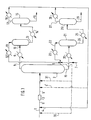
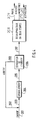
- Figures 1 to 4 are non-limiting diagrams of deasphalting units for implementing the method according to the invention
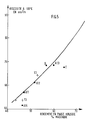
- FIG. 5 is a diagram relating to examples of implementation of the invention, which will be explained below.
- the heavy hydrocarbon charge to be treated is introduced via line 1 into the middle part of a liquid-liquid extractor 2.
- This charge consists of an oil with a density at 15 ° C. higher at 930 kg / m3.
- the load Before entering the extractor 2, the load passes through at least one restriction 3 (we can consider several in parallel, depending on the flow rate of the load), which causes the load to shear.
- the device 3 operates at a temperature between 20 and 200 ° C.
- an additive in quantity such as the mass ratio is between 0.01 and 0.50.
- the mixture of charge and additive is led by line 5 in the device 3. On leaving the device 3, the mixture is led by line 5 in the extractor 2.
- the additive can optionally be introduced into the charge via line 4 ′ after shearing.
- part of said additive can be introduced via the line 4 and the other part by line 4 ′.
- One can also introduce a first additive by line 4 and a second by line 4 ′.
- the additive (s) can be introduced directly into extractor 2 by one (or more) line (s) not shown
- the oily phase is extracted from the feedstock by a solvent, which is introduced into the extractor via line 6.
- This solvent can in particular be an aliphatic hydrocarbon, saturated or unsaturated, having from 2 to 8 atoms carbon, preferably from 3 to 5 carbon atoms, or mixtures of hydrocarbons, called distillates, having from 2 to 8 carbon atoms, or mixtures of all the previously mentioned hydrocarbons.
- the solvent for starting the unit comes from a source external to the unit via line 7. Losses of solvent can be compensated by an external make-up, brought by line 7.
- the pressure inside extractor 2 can be between 20.105 and 1.107pascal absolute, the temperature between 30 and 300 ° C, the mass rate being between 1 and 10.
- the pressure inside l extractor can be around 40.105 pascal absolute, the head and bottom temperatures being respectively around 100 ° C and 75 ° C, the mass ratio being 3 and the additive used being quinoline.
- the oily phase is collected via line 8 in solution in the solvent and containing the additive.
- This mixture is conducted, after passing through a heater 9, in an expansion tower 10, in order to separate the solvent.
- this tower can operate at a temperature of approximately 150 ° C and at a pressure of approximately 25.105pascal absolute.
- the solvent is collected at the top of tower 10, through line 11, which, after passing through a cooler 12, is recycled through line 6.
- the oily phase containing the additive is collected at the bottom of tower 10, via line 13. After passing through a heater 14, this mixture is led into an expansion tower 15. In the case where the additive is quinoline, this tower operates at a temperature of approximately 280 ° C. and a pressure of approximately 2.105pascal absolute .
- the oily phase is collected at the bottom of tower 15, via line 16, which can be used as a charge for a catalytic cracking unit or as a base of lubricating oil.
- the additive is recovered at the top of tower 15 by line 17, which, after passing through the coolant 18, can be recycled by lines 4 or 4 ′.
- the precipitated asphalt phase containing solvent and additive is collected at the bottom of extractor 2, via line 19.
- the mixture is led, after passage through the heater 20, in an expansion tower 21.
- this tower can operate at a temperature of approximately 300 ° C and a pressure of around 14.105 pascal absolute.
- the asphalt phase containing the additive is collected at the bottom of tower 21, via line 24.
- the mixture is led, after passage through a heater 25, in an expansion tower 26.
- this tower can operate at a temperature of approximately 340 ° C. and a pressure of approximately 1.10 5 absolute pascal.
- the additive is collected at the top of tower 26 by line 27, which, after passing through a heater 28, can be recycled by lines 4 or 4 ′.
- Part of the solvent in line 6 can be carried to lines 1 or 5 by lines 30 and 31.
- the hydrocarbon feedstock to be treated is introduced via line 51 into at least one restriction 52, which causes shearing of the feedstock.
- an additive in quantity such as the mass ratio is between 0.01 and 0.50.
- the mixture of the charge and the additive is conducted by line 54 in the device 52.
- the additive can optionally be introduced into the charge, via line 53 ′, after shearing.
- part of said additive can be introduced via line 53 and the other part via line 53 ′.
- One can also introduce a first additive by line 53 and a second by line 53 ′.
- the additive On leaving the device 52, which operates at a temperature between 20 and 200 ° C, the additive is removed from the mixture. For this purpose, after passing through a heater 56, the mixture is led by line 55 in an expansion tower 57 operating, in the case where the additive is quinoline, at a temperature of approximately 280 ° C and at a pressure of approximately 2.105 pascal absolute.
- the sheared charge collected at the bottom of the tower 57 is conducted by the line 58, after passing through a cooler 59, in the middle part of a liquid-liquid extraction tower 60, while the additive recovered at the top of the tower 60 is recycled by line 61 and by line 53, after passing through a refrigerant 62.
- the oily phase is extracted from the feedstock with a solvent, which is introduced into the extractor via line 61.
- This solvent can in particular be an aliphatic hydrocarbon, saturated or unsaturated, having 2 to 8 atoms carbon, preferably 3 to 5 atoms carbon, or mixtures of hydrocarbons, called distillates, having from 2 to 8 carbon atoms, or mixtures of all the previously mentioned hydrocarbons.
- the solvent for starting the unit comes from a source external to the unit via line 62.
- the losses of solvent can be compensated by an external make-up, brought by line 62.
- the pressure inside the extractor 60 can be between 20.105 and 1.107 absolute pascal, the temperature between 30 and 300 ° C, the mass rate being between 1 and 10.
- the pressure inside the extractor can be around 40.105 pascal absolute, the temperatures at the top and bottom being respectively around 100 ° C and 75 ° C, the mass ratio being 3.
- the oily phase is collected via line 63 in solution in the solvent.
- This mixture is conducted, after passing through a heater 64, in an expansion tower 65, in order to separate the solvent.
- this tower can operate at a temperature of approximately 150 ° C and at a pressure of approximately 25.105 pascal absolute.
- the solvent is collected at the top of the tower 65, by the line 66, which, after passing through a refrigerant 67, is recycled by the line 61.
- the oily phase is collected at the bottom of tower 65, via line 68, which can be used as a charge for a catalytic cracking unit or as a base of lubricating oil.
- the precipitated asphalt phase containing solvent is collected at the bottom of the extractor 60, via line 69.
- the mixture is led, after passage through the heater 70, in an expansion tower 71.
- this tower can operate at a temperature of about 300 ° C and a pressure about 14.105 absolute pascal.
- the asphalt phase is collected at the bottom of tower 60, via line 74, the applications of which have been mentioned: road and industrial bitumens or fuel.
- Part of the solvent in line 61 can be taken to line 58 via line 75.
- Figures 3 and 4 show simplified diagrams of units implementing the method according to the invention, but using a deasphalting in two stages, as described in French patent application No. 2,598,716 cited above.
- an additive is introduced into a hydrocarbon feedstock contained in line 101.
- the mixture of the additive and of the feedstock is conducted via line 103 in a shearing device 104.
- a the output of this device the mixture is led by line 105 in a deasphalting unit in two stages 106 such as that described in French patent application No. 2,598,716.
- the solvent circuits inputs, recycling.
- three products containing the additive are obtained: the oily phase, the resins and the asphaltenes.
- the oily phase, the resins and the asphaltenes are collected by lines 117, 118 and 119, respectively.
- the oily phase can, for example, serve as a catalytic cracking charge
- the resins can be used as fuel and the asphaltenes as solid fuel after grinding.
- an additive is introduced into a hydrocarbon feed contained in line 201.
- the mixture of the additive and of the feed is conducted via line 203 in a shearing device 204.
- a at the outlet of this device the mixture is led by line 205 in an installation for separating the additive 206.
- the additive is collected, which is recycled by line 202 and the sheared charge by line 207.
- the charge is carried out in a two-stage deasphalting installation 208, at the outlet of which the oily phase, the resins and the asphaltenes are collected by lines 209, 210 and 211 respectively.
- This example relates to deasphalting tests carried out on a residue from the distillation under reduced pressure of the residue from the distillation under atmospheric pressure of a Statfjord crude oil from the North Sea.
- the characteristics of this charge are as follows: - density at 15 ° C (measured according to AFNOR NFT 60-101 standard): 970.3 kg / m3, - viscosity at 100 ° C (measured according to AFNOR NFT 60-100 standard): 201 mm2 / s, - "Conradson" residue (measured according to AFNOR NFT - 116 standard): 11.0% by weight, - content of: * asphaltenes (measured according to standard AFNOR NFT 60 - 115): 2.96% by weight, * sulfur (measured by X-ray fluorescence): 1.30% by weight, * nickel (measured by X-ray fluorescence): 78 ppm, * vanadium (measured by X-ray fluorescence): 17 ppm
- T1 deasphalting control test without load shearing and without the use of additives
- T2 deasphalting control test with load shearing, but without the use of an additive
- - different tests according to the invention A11, A12, A13 and A14, with load shearing and with the use of NMP.
- a solvent having the following composition, in% by volume: - propane: 38.37%, - isobutane: 14.65%, - normal butane: 43.06%, - normal butene: 3.92%.
- the NMP is added to the load, it is sheared, then the solvent is added.
- FIG. 5 shows the curve of the viscosity at 100 ° C. of the oily phase as a function of the yield of said phase.
- the curve itself is the so-called reference curve for deasphalting, without shearing and without additive of the filler used in the present example, with the solvent mentioned, by varying the temperature.
- Tests A11, A12 and A13 show that the quantity of additive can be adjusted according to the quality of the oily phase desired.
- A14 The test shows that, if NMP is removed before the deasphalting is obtained a pha oil is better (see viscosity) than the control test T1, T2 and T3 and a yield at least equal to T1 testing and T2.
- This latter scheme can, in particular, in addition to the gain in selectivity, make it possible to transform, with minor modifications, a deasphalting unit for the production of bases for lubricating oils into a "deep deasphalting" unit, that is to say say similar to what would be obtained in deasphalting with a solvent of higher average molecular mass, having improved selectivity and making it possible to produce deasphalted oils for catalytic cracking.
- a simple interruption of the injection of the additive makes it possible to return to the production of bases for lubricating oils, while retaining the benefit of shearing.
- This example relates to deasphalting tests, carried out with the same load as that of Example 1, the same solvent, the same temperature and pressure conditions, but with different additives.
- Test B was carried out with nitrobenzene, with the following mass ratios: - solvent / filler: 3.07 - additive / charge: 0.12 - solvent + additive / filler: 3.19
- Test C was carried out with quinoline, with the following mass ratios: - solvent / filler: 3.05 - additive / charge: 0.12 - solvent + additive / filler: 3.17
- the additive is added to the charge, it is sheared, and then the solvent is added.
- This example relates to deasphalting tests carried out with the same load as that of Example 1, but with a different solvent, and different operating conditions.
- a solvent having the following composition, in% by volume: - propane : 70.7%, - isobutane: 7.3%, - normal butane: 22.0%.
- the process according to the invention provides, in the case of the use of a light solvent for obtaining bases for lubricating oils, increased yields of bases whose viscosity is entirely suitable for this use.
- This example relates to deasphalting tests carried out on a residue of the distillation under reduced pressure of the residue of the distillation at atmospheric pressure of a crude oil from Kuwait.
- This charge is heavier than that used in Examples 1, 2 and 3 and shows that the process according to the invention can be used for different charges.
- the characteristics of this charge are as follows: - density at 15 ° C (measured according to AFNOR NFT 60-101 standard): 1.025 kg / m3, - viscosity at 100 ° C (measured according to AFNOR NFT 60-100 standard): 1526 mm2 / s, - "Conradson" residue (measured according to AFNOR NFT 60-116 standard): 19.7% by weight, - content of: * asphaltenes (measured according to standard AFNOR NFT 60-115): 12.7% by weight, * sulfur (measured by X-ray fluorescence): 4.43% by weight, * nickel (measured by X-ray fluorescence): 102 ppm, * vanadium (measured by X-ray fluorescence): 32 ppm
- This example relates to deasphalting tests carried out on a residue of the distillation under reduced pressure of the residue of the distillation at atmospheric pressure of a crude oil from Kuwait, (same charge as that used in Example 4).
Landscapes
- Chemical & Material Sciences (AREA)
- Oil, Petroleum & Natural Gas (AREA)
- Engineering & Computer Science (AREA)
- Chemical Kinetics & Catalysis (AREA)
- General Chemical & Material Sciences (AREA)
- Organic Chemistry (AREA)
- Production Of Liquid Hydrocarbon Mixture For Refining Petroleum (AREA)
- Disintegrating Or Milling (AREA)
Applications Claiming Priority (2)
| Application Number | Priority Date | Filing Date | Title |
|---|---|---|---|
| FR8801629A FR2627188B1 (fr) | 1988-02-11 | 1988-02-11 | Procede de desasphaltage d'une charge hydrocarbonee lourde et applications de ce procede |
| FR8801629 | 1988-02-11 |
Publications (2)
| Publication Number | Publication Date |
|---|---|
| EP0329510A1 true EP0329510A1 (de) | 1989-08-23 |
| EP0329510B1 EP0329510B1 (de) | 1994-03-23 |
Family
ID=9363182
Family Applications (1)
| Application Number | Title | Priority Date | Filing Date |
|---|---|---|---|
| EP19890400284 Expired - Lifetime EP0329510B1 (de) | 1988-02-11 | 1989-02-01 | Verfahren zur Entasphaltierung schwerer Erdölfraktionen und dessen Verwendung |
Country Status (4)
| Country | Link |
|---|---|
| EP (1) | EP0329510B1 (de) |
| DE (1) | DE68914013T2 (de) |
| ES (1) | ES2050825T3 (de) |
| FR (1) | FR2627188B1 (de) |
Cited By (1)
| Publication number | Priority date | Publication date | Assignee | Title |
|---|---|---|---|---|
| CN106833719A (zh) * | 2017-03-08 | 2017-06-13 | 中国石油大学(北京) | 一种萃取分离原油的方法 |
Citations (5)
| Publication number | Priority date | Publication date | Assignee | Title |
|---|---|---|---|---|
| DE176468C (de) * | ||||
| GB935725A (en) * | 1960-11-28 | 1963-09-04 | Shell Int Research | Process for the removal of asphaltenes and ash-forming constituents from residual petroleum fractions |
| FR2412602A1 (fr) * | 1977-12-22 | 1979-07-20 | Exxon Research Engineering Co | Procede pour desasphalter et simultanement extraire des huiles minerales |
| US4211633A (en) * | 1978-01-30 | 1980-07-08 | Energy Modification, Inc. | Separation of asphaltic materials from heptane soluble components in liquified solid hydrocarbonaceous extracts |
| EP0128047A1 (de) * | 1983-06-06 | 1984-12-12 | Exxon Research And Engineering Company | Die selektive Trennung von Schweröl mittels einer Mischung polarer und nichtpolarer Lösungsmittel |
-
1988
- 1988-02-11 FR FR8801629A patent/FR2627188B1/fr not_active Expired - Lifetime
-
1989
- 1989-02-01 EP EP19890400284 patent/EP0329510B1/de not_active Expired - Lifetime
- 1989-02-01 DE DE1989614013 patent/DE68914013T2/de not_active Expired - Fee Related
- 1989-02-01 ES ES89400284T patent/ES2050825T3/es not_active Expired - Lifetime
Patent Citations (5)
| Publication number | Priority date | Publication date | Assignee | Title |
|---|---|---|---|---|
| DE176468C (de) * | ||||
| GB935725A (en) * | 1960-11-28 | 1963-09-04 | Shell Int Research | Process for the removal of asphaltenes and ash-forming constituents from residual petroleum fractions |
| FR2412602A1 (fr) * | 1977-12-22 | 1979-07-20 | Exxon Research Engineering Co | Procede pour desasphalter et simultanement extraire des huiles minerales |
| US4211633A (en) * | 1978-01-30 | 1980-07-08 | Energy Modification, Inc. | Separation of asphaltic materials from heptane soluble components in liquified solid hydrocarbonaceous extracts |
| EP0128047A1 (de) * | 1983-06-06 | 1984-12-12 | Exxon Research And Engineering Company | Die selektive Trennung von Schweröl mittels einer Mischung polarer und nichtpolarer Lösungsmittel |
Cited By (1)
| Publication number | Priority date | Publication date | Assignee | Title |
|---|---|---|---|---|
| CN106833719A (zh) * | 2017-03-08 | 2017-06-13 | 中国石油大学(北京) | 一种萃取分离原油的方法 |
Also Published As
| Publication number | Publication date |
|---|---|
| DE68914013T2 (de) | 1994-10-13 |
| ES2050825T3 (es) | 1994-06-01 |
| FR2627188B1 (fr) | 1990-08-03 |
| EP0329510B1 (de) | 1994-03-23 |
| FR2627188A1 (fr) | 1989-08-18 |
| DE68914013D1 (de) | 1994-04-28 |
Similar Documents
| Publication | Publication Date | Title |
|---|---|---|
| EP0708174B1 (de) | Verfahren und Anlage zur Reinigung von Altölen | |
| EP0246956A1 (de) | Verfahren zur Entfernung von Asphalt aus einer Kohlenwasserstoffbeschickung | |
| CA2890371C (fr) | Procede de desasphaltage selectif de charges lourdes | |
| EP0621334A1 (de) | Verfahren zur Herstellung von Brennstoff-durch Extraktion und Wasserstoffbehandlung von Kohlenwasserstoff Einsätz und so hergestellte Gasöl | |
| CA1280990C (fr) | Procede de desasphaltage d'une charge d'hydrocarbures contenant des asphaltenes | |
| CA2891129C (fr) | Procede de conversion d'une charge hydrocarbonee lourde integrant un desasphaltage selectif avec recycle de l'huile desasphaltee | |
| EP0256940B1 (de) | Verfahren zur Entasphaltierung eines Schwerkohlenwasserstoffeinsatzes | |
| EP0661371B1 (de) | Verfahren zur Erzeugung eines Brennstoffes für innere Verbrennungsmotoren durch Wasserstoffbehandlung und Extraktion | |
| EP0235027B1 (de) | Verfahren, um feste Asphalte zu fraktionieren | |
| EP3077482A1 (de) | Verfahren zur selektiven deasphaltierung in reihe | |
| EP0329510B1 (de) | Verfahren zur Entasphaltierung schwerer Erdölfraktionen und dessen Verwendung | |
| EP0064447B1 (de) | Verfahren zur Herstellung von synthetischem Rohöl | |
| BE1019627A3 (fr) | Procede de valorisation de bruts lourds et de residus petroliers. | |
| CA1204692A (fr) | Procede de conversion d'une charge d'hydrocarbures de haute viscosite en une fraction d'hydrocarbures moins visqueuse, plus facilement transportable et plus aisement raffinable | |
| FR2503734A1 (fr) | Procede d'obtention d'un petrole brut synthetique | |
| FR3148601A1 (fr) | Formulations de solvants pour extraction liquide-liquide de composés aromatiques | |
| WO2023241930A1 (fr) | Procédé d'hydrocraquage avec gestion du recyclage optimisée pour la production de naphta | |
| FR2566795A1 (fr) | Procede de conversion d'une charge hydrocarbonee lourde | |
| FR2475569A1 (fr) | Procede de conversion et de separation de charges hydrocarbonees contenant des asphaltenes | |
| BE545706A (de) | ||
| BE559418A (de) | ||
| BE394154A (de) | ||
| FR2906812A1 (fr) | Procede de conversion de residu desasphalte par craquage thermique | |
| FR2474049A1 (fr) | Production d'huile lubrifiante par extraction au solvant | |
| FR2633307A1 (fr) | Procede de transformation d'huiles lourdes contenant des asphaltenes |
Legal Events
| Date | Code | Title | Description |
|---|---|---|---|
| PUAI | Public reference made under article 153(3) epc to a published international application that has entered the european phase |
Free format text: ORIGINAL CODE: 0009012 |
|
| AK | Designated contracting states |
Kind code of ref document: A1 Designated state(s): BE DE ES GB IT NL |
|
| 17P | Request for examination filed |
Effective date: 19900208 |
|
| 17Q | First examination report despatched |
Effective date: 19930407 |
|
| RAP1 | Party data changed (applicant data changed or rights of an application transferred) |
Owner name: TOTAL RAFFINAGE DISTRIBUTION S.A. |
|
| GRAA | (expected) grant |
Free format text: ORIGINAL CODE: 0009210 |
|
| ITF | It: translation for a ep patent filed | ||
| AK | Designated contracting states |
Kind code of ref document: B1 Designated state(s): BE DE ES GB IT NL |
|
| REF | Corresponds to: |
Ref document number: 68914013 Country of ref document: DE Date of ref document: 19940428 |
|
| REG | Reference to a national code |
Ref country code: ES Ref legal event code: FG2A Ref document number: 2050825 Country of ref document: ES Kind code of ref document: T3 |
|
| GBT | Gb: translation of ep patent filed (gb section 77(6)(a)/1977) |
Effective date: 19940629 |
|
| PLBE | No opposition filed within time limit |
Free format text: ORIGINAL CODE: 0009261 |
|
| STAA | Information on the status of an ep patent application or granted ep patent |
Free format text: STATUS: NO OPPOSITION FILED WITHIN TIME LIMIT |
|
| 26N | No opposition filed | ||
| PGFP | Annual fee paid to national office [announced via postgrant information from national office to epo] |
Ref country code: GB Payment date: 19990125 Year of fee payment: 11 |
|
| PGFP | Annual fee paid to national office [announced via postgrant information from national office to epo] |
Ref country code: NL Payment date: 19990128 Year of fee payment: 11 Ref country code: DE Payment date: 19990128 Year of fee payment: 11 |
|
| PGFP | Annual fee paid to national office [announced via postgrant information from national office to epo] |
Ref country code: BE Payment date: 19990208 Year of fee payment: 11 |
|
| PGFP | Annual fee paid to national office [announced via postgrant information from national office to epo] |
Ref country code: ES Payment date: 19990222 Year of fee payment: 11 |
|
| PG25 | Lapsed in a contracting state [announced via postgrant information from national office to epo] |
Ref country code: GB Free format text: LAPSE BECAUSE OF NON-PAYMENT OF DUE FEES Effective date: 20000201 |
|
| PG25 | Lapsed in a contracting state [announced via postgrant information from national office to epo] |
Ref country code: ES Free format text: LAPSE BECAUSE OF NON-PAYMENT OF DUE FEES Effective date: 20000202 |
|
| PG25 | Lapsed in a contracting state [announced via postgrant information from national office to epo] |
Ref country code: BE Free format text: LAPSE BECAUSE OF NON-PAYMENT OF DUE FEES Effective date: 20000228 |
|
| BERE | Be: lapsed |
Owner name: S.A. TOTAL RAFFINAGE DISTRIBUTION Effective date: 20000228 |
|
| PG25 | Lapsed in a contracting state [announced via postgrant information from national office to epo] |
Ref country code: NL Free format text: LAPSE BECAUSE OF NON-PAYMENT OF DUE FEES Effective date: 20000901 |
|
| GBPC | Gb: european patent ceased through non-payment of renewal fee |
Effective date: 20000201 |
|
| NLV4 | Nl: lapsed or anulled due to non-payment of the annual fee |
Effective date: 20000901 |
|
| PG25 | Lapsed in a contracting state [announced via postgrant information from national office to epo] |
Ref country code: DE Free format text: LAPSE BECAUSE OF NON-PAYMENT OF DUE FEES Effective date: 20001201 |
|
| REG | Reference to a national code |
Ref country code: ES Ref legal event code: FD2A Effective date: 20010910 |
|
| PG25 | Lapsed in a contracting state [announced via postgrant information from national office to epo] |
Ref country code: IT Free format text: LAPSE BECAUSE OF NON-PAYMENT OF DUE FEES;WARNING: LAPSES OF ITALIAN PATENTS WITH EFFECTIVE DATE BEFORE 2007 MAY HAVE OCCURRED AT ANY TIME BEFORE 2007. THE CORRECT EFFECTIVE DATE MAY BE DIFFERENT FROM THE ONE RECORDED. Effective date: 20050201 |