EP0333165A2 - Système de gestion de zones d'enregistrement sur un disque optique inscriptible - Google Patents
Système de gestion de zones d'enregistrement sur un disque optique inscriptible Download PDFInfo
- Publication number
- EP0333165A2 EP0333165A2 EP89104593A EP89104593A EP0333165A2 EP 0333165 A2 EP0333165 A2 EP 0333165A2 EP 89104593 A EP89104593 A EP 89104593A EP 89104593 A EP89104593 A EP 89104593A EP 0333165 A2 EP0333165 A2 EP 0333165A2
- Authority
- EP
- European Patent Office
- Prior art keywords
- area
- data
- optical disk
- management information
- erased
- Prior art date
- Legal status (The legal status is an assumption and is not a legal conclusion. Google has not performed a legal analysis and makes no representation as to the accuracy of the status listed.)
- Granted
Links
Images








Classifications
-
- G—PHYSICS
- G11—INFORMATION STORAGE
- G11B—INFORMATION STORAGE BASED ON RELATIVE MOVEMENT BETWEEN RECORD CARRIER AND TRANSDUCER
- G11B27/00—Editing; Indexing; Addressing; Timing or synchronising; Monitoring; Measuring tape travel
- G11B27/02—Editing, e.g. varying the order of information signals recorded on, or reproduced from, record carriers
- G11B27/031—Electronic editing of digitised analogue information signals, e.g. audio or video signals
- G11B27/034—Electronic editing of digitised analogue information signals, e.g. audio or video signals on discs
-
- G—PHYSICS
- G06—COMPUTING OR CALCULATING; COUNTING
- G06F—ELECTRIC DIGITAL DATA PROCESSING
- G06F3/00—Input arrangements for transferring data to be processed into a form capable of being handled by the computer; Output arrangements for transferring data from processing unit to output unit, e.g. interface arrangements
- G06F3/06—Digital input from, or digital output to, record carriers, e.g. RAID, emulated record carriers or networked record carriers
- G06F3/0601—Interfaces specially adapted for storage systems
-
- G—PHYSICS
- G11—INFORMATION STORAGE
- G11B—INFORMATION STORAGE BASED ON RELATIVE MOVEMENT BETWEEN RECORD CARRIER AND TRANSDUCER
- G11B20/00—Signal processing not specific to the method of recording or reproducing; Circuits therefor
- G11B20/10—Digital recording or reproducing
- G11B20/12—Formatting, e.g. arrangement of data block or words on the record carriers
- G11B20/1217—Formatting, e.g. arrangement of data block or words on the record carriers on discs
- G11B20/1252—Formatting, e.g. arrangement of data block or words on the record carriers on discs for discontinuous data, e.g. digital information signals or computer program data
-
- G—PHYSICS
- G11—INFORMATION STORAGE
- G11B—INFORMATION STORAGE BASED ON RELATIVE MOVEMENT BETWEEN RECORD CARRIER AND TRANSDUCER
- G11B27/00—Editing; Indexing; Addressing; Timing or synchronising; Monitoring; Measuring tape travel
- G11B27/10—Indexing; Addressing; Timing or synchronising; Measuring tape travel
- G11B27/102—Programmed access in sequence to addressed parts of tracks of operating record carriers
- G11B27/105—Programmed access in sequence to addressed parts of tracks of operating record carriers of operating discs
-
- G—PHYSICS
- G11—INFORMATION STORAGE
- G11B—INFORMATION STORAGE BASED ON RELATIVE MOVEMENT BETWEEN RECORD CARRIER AND TRANSDUCER
- G11B27/00—Editing; Indexing; Addressing; Timing or synchronising; Monitoring; Measuring tape travel
- G11B27/10—Indexing; Addressing; Timing or synchronising; Measuring tape travel
- G11B27/19—Indexing; Addressing; Timing or synchronising; Measuring tape travel by using information detectable on the record carrier
- G11B27/28—Indexing; Addressing; Timing or synchronising; Measuring tape travel by using information detectable on the record carrier by using information signals recorded by the same method as the main recording
- G11B27/32—Indexing; Addressing; Timing or synchronising; Measuring tape travel by using information detectable on the record carrier by using information signals recorded by the same method as the main recording on separate auxiliary tracks of the same or an auxiliary record carrier
- G11B27/327—Table of contents
- G11B27/329—Table of contents on a disc [VTOC]
-
- G—PHYSICS
- G11—INFORMATION STORAGE
- G11B—INFORMATION STORAGE BASED ON RELATIVE MOVEMENT BETWEEN RECORD CARRIER AND TRANSDUCER
- G11B2220/00—Record carriers by type
- G11B2220/20—Disc-shaped record carriers
-
- G—PHYSICS
- G11—INFORMATION STORAGE
- G11B—INFORMATION STORAGE BASED ON RELATIVE MOVEMENT BETWEEN RECORD CARRIER AND TRANSDUCER
- G11B2220/00—Record carriers by type
- G11B2220/20—Disc-shaped record carriers
- G11B2220/21—Disc-shaped record carriers characterised in that the disc is of read-only, rewritable, or recordable type
- G11B2220/215—Recordable discs
- G11B2220/216—Rewritable discs
-
- G—PHYSICS
- G11—INFORMATION STORAGE
- G11B—INFORMATION STORAGE BASED ON RELATIVE MOVEMENT BETWEEN RECORD CARRIER AND TRANSDUCER
- G11B2220/00—Record carriers by type
- G11B2220/20—Disc-shaped record carriers
- G11B2220/25—Disc-shaped record carriers characterised in that the disc is based on a specific recording technology
- G11B2220/2525—Magneto-optical [MO] discs
Definitions
- the present invention relates to an optical disk which is used to record data and, more particularly, to system and method for managing recording areas on a writable type optical disk which is used in a data file apparatus or the like for a computer.
- a writable magnetic recording medium such as floppy disk, hard disk, or the like has been used.
- an optical disk having a large memory capacity of hundreds of megabytes or more has been started as an external memory medium for a computer.
- the use of not only the read only type or WORM type optical disk but also the writable type optical disk has been studied.
- phase transition type optical disk and the magneto-optical disk have been developed as the techniques of the present writable type optical disk.
- the present techniques have several problems. Particularly, there are problems such that the overwriting technique is not completed yet, the reliability of disk is not so high, the seeking time is long (the access speed is slow), and the like.
- the overwriting technique the development including the phase transition type optical disk has been progressed. However, it does not reach the practical use stage yet. In the present technique, the processing speed is slow because in order to rewrite data, the system must wait until the disk rotates once to erase the data which has already been written, and thereafter, new data is rewritten.
- the slower seeking time as compared with that in the case of the magnetic medium becomes a large cause of the necessity of a managing system different from that for the magnetic medium as a managing system of the optical disk.
- the reliability as well there still remains a problem of the deterioration of the disk such that a difference of error rate occurs due to the frequent rewritting operations, or the like.
- a managing system similar to that for the ordinary magnetic medium is used from an operating system by using the rewritable characteristic.
- the area in the medium is divided into a plurality of areas of a predetermined size and the areas are managed by using a table for recording the connecting state of a discontinuous file which exists in the blank area or a plurality of areas every area.
- Each of the areas is constructed on a block unit basis of a fixed length size of ordinarily about a few kilobytes.
- Fig. 3 shows such a table comprising file area management information 312 to record files and blank area management information 311 to manage the recordable blank areas.
- File name managing means 308 manages the file recording blocks on the basis of the file area management information 312.
- Recording position deciding means 309 decides the recording position on the basis of the blank area management information 311 in the case where a file is additionally recorded. Since data can be overwritten onto the magnetic medium, there is no need to wait for the rotation of the disk to erase as in the case of the optical disk. Therefore, the operating system doesn′t need to discriminate whether the area to record a file is the area which has previously been used or the area from which data has already been erased (including a virgin area). The recording position deciding means 309 assigns the blank area to record a file by using an algorithm shown in Fig. 4.
- step 401 in Fig. 4 the blank areas are sequentially searched from the low address side by using the blank area management information 311.
- step 402 on the basis of the result of step 401, if a blank area exists, step 403 follows and if no blank area exists, it is regarded that a recording error occurs due to the area overflow, and the processing routine is finished.
- step 403 the overwriting into the blank area searched in step 401 and the verification are instructed to an optical disk control section 306.
- step 404 a check is made to see if the whole file has been recorded or not. If not-recorded portion still remains, the processing routine from step 401 is repeated.
- the problem of the processing speed occurs in the case where the algorithm of Fig. 4 is applied to the writable type optical disk in which the overwriting operation cannot be performed.
- the algorithm of Fig. 4 the blank area which needs the erasing process and has previously been used on the low address side is preferentially assigned. Therefore, the recording processing speed becomes slow as compared with the case of assigning the blank area from which data has already been erased on the high address side.
- the magnetic medium type managing system since the blank areas are managed on a block unit basis, in particular, there is a problem of the recording area management such as release or reuse of the recording area. For instance, the released blank blocks of a small size discretely exist due to the deletion, addition, or the like of the file.
- the operating system searches the blank block from the low address side and sequentially records a part of the file, so that the file is divided into a plurality of blocks and discretely exists in the medium.
- the use state of each area in the optical disk is classified into three states of the using area into which valid data is recorded, the used area in which invalid data is recorded, and the erased area from which data has already been erased and into which new data can be rewritten, and the management is performed.
- the algorithm to preferentially select from the erased area by the recording position deciding means is used.
- the erased area to record a file lacks, the erasing process of the used area or the integrating process (garbage collection) of the erased area is executed.
- the integrating process has erased area making means for making the erased area by using the idle time of the processes or the like.
- the file system has therein: a converting section to convert the hysteresis information as recording information of the updating content in the optical disk into the format of area information (using file entry, list of unused areas); and a memory to store the converted area information.
- a converting section to convert the hysteresis information as recording information of the updating content in the optical disk into the format of area information (using file entry, list of unused areas); and a memory to store the converted area information.
- the area information in the memory is directly updated and the hysteresis information indicative of the change content is written into the erased area or used area in the optical disk. Therefore, there is no need to rewrite the area information in the optical disk.
- the area information in the memory is recovered to the newest form and loaded by the converting section with reference to the hysteresis information in the optical disk when the optical disk is exchanged. According to the above method, the number of rewriting times for the special area on the optical disk is reduced and the problem of the reliability due to the deterioration of the optical disk and the like can be solved.
- the invention comprises: a file entry to discriminate the file recorded area in the optical disk; and a file system to manage data on a file unit basis by using an unused area list indicative of the recordable area.
- the area designation information in the file entry in the management information is described by the head of the area and the size or end position of the area for one or more continuous areas.
- the allocation of the file is preferentially executed from the unused area of a large size.
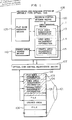
- reference numeral 101 denotes an optical disk and 102 indicates management information (hatched portion) of data in the optical disk 101.
- the management information 102 comprises: file area management information 103 to manage the recording areas of a file in the optical disk; used area management information 104 to manage the areas in which the deleted invalid data is recorded; and erased area management information 105 to manage the recordable areas from which data have already been erased.
- Reference numeral 106 denotes a file layout example in the optical disk; 107 indicates optical disk control means to record, reproduce, and erase for the optical disk 101; and 108 represents a writable type optical disk recording and managing system to manage the optical disk 101.
- Reference numeral 111 denotes area managing means for managing the management information 102 in the optical disk 101.
- the management information 102 is read out of the optical disk 101 each time it is referred, the processing speed decreases. Therefore, in many cases, the management information 102 is buffered into a high speed storage medium such as a memory or the like and is referred.
- the management information buffered by the area managing means 111 is shown as file area management information 113, used area management information 114, and erased area management information 115.
- the writable type optical disk recording managing system 108 includes: recording position deciding means 120 for deciding the recording position of the file by using the used area management information 114 and erased area management information 115; and file name managing means 109 for discriminating the recording position of a file by the file area management information 113.
- Reference numeral 110 denotes erased area making means which uses the idle time of the operating system or the like and is made operative asynchronously with the recording timing of the file and performs the erasing process of the used areas and the garbage collection of the used areas or erased areas which were distributed and prepares for the next recording process (hereinafter, referred to as an integrating process).
- the present invention is characterized by the algorithm for the file recording process in the embodiment by the recording position deciding means 120 in Fig. 1 in order to preferentially assign from the erased area and the algorithm for the activating process and its integrating process of the erased area making means 110 which is activated asynchronously with the recording timing of the file and executes the erasing process of the used area.
- Such algorithms will now be sequentially explained hereinbelow.
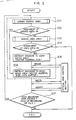
- Fig. 2 shows the algorithm to decide the file recording position in the embodiment by the recording position deciding means 120 in Fig. 1.
- the optimum erased area is selected from the erased area management information 115.
- step 202 on the basis of the result of step 201, if the erased area exists, step 206 follows. If no erased area is assigned, step 203 follows.
- step 206 the overwriting and verification for the recording area decided in step 201 are instructed to the optical disk control section 107.
- the optimum used area is selected from the used area management information 114.
- step 205 on the basis of the result of step 203, if a used area exists, step 205 follows.
- step 205 the erasing process of the recording area decided in step 203 is performed by the erased area making means 110 and step 206 then follows. Further, in step 207, a check is made to see if the whole file has been recorded or not. If any unrecorded portion still remains, the processing routine from step 201 is repeated. On the other hand, in the erased area making means 110, the discrimination with respect to the activation of the integrating process shown in the algorithm of Fig. 8 is executed in parallel. Therefore, when the recording area overflows, the integrating process is activated. After completion of the integrating process, the recording process of the file is again performed.
- the use state of each area in the optical disk is classified into three states of the using area, used area, and erased area and is managed.
- the algorithm to preferentially select from the erased area is used for the recording position deciding block as shown in Fig. 2.
- Figs. 9 to 15 show practical examples in the case of recording a file by the algorithms of Figs. 5 and 6.
- Fig. 9 shows examples of the file area management information 103 or 113, erased area management information 105 or 115, and used area management information 104 or 114 in Fig. 1.
- Figs. 9(a), 9(b), and 9(c) show the examples in the case of managing each area on a block unit basis of a fixed length.
- Figs. 9(d), 9(e), and 9(f) show the examples in the case of managing the area of a variable length by the start address and size or end address.
- Figs. 10 to 15 describe the cases of Figs. 9(d) to 9(f) where the areas of a variable length are managed.
- Fig. 9(d) shows the file area management information 103 or 113.
- Reference numeral 941 denotes a file identifier (file ID) to discriminate a file and 942 indicates area information to record the file content. Actually, each area information is shown by the head address and end address of the area as shown by reference numeral 946. On the other hand, in the case where the file content is separately recorded in a plurality of areas, the areas are shown.
- reference numeral 943 denotes an example in which a file A is recorded in an area 106.
- reference numerals 944 and 945 show that files B and C are recorded in areas 102 and 100.
- Fig. 9(e) shows the example of the used area management information 104 or 114 which is recorded in each of the independent used areas.
- Reference numeral 951 shows a state in which the start address, end address, and size are recorded with respect to a certain unused area.
- Reference numeral 952 and subsequent reference numerals also indicate similar states.
- the unused area can be designated by only the start address and end address, by also recording the size, it can be compared with the file size when a file is written and the unused area into which data will be recorded can be selected at a high speed.
- Fig. 9(f) shows an example of the erased area management information 105 or 115 which is recorded into each independent erased area in a manner similar to Fig. 9(e).
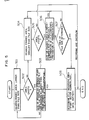
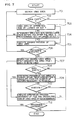
- step 501 in Fig. 5 an area larger than the file size to be recorded is searched from the erased area management information.
- step 502 if a proper large area is selected in step 501, step 503 follows. If no area cannot be selected, step 504 follows.
- step 503 the difference between the size of the area selected in step 501 with the file size is calculated.
- the size of the remaining area after the recording is equal to or smaller than a preset size, the selected area is abandoned and the processing routine is again returned to step 501 and the next area is selected.
- step 508 follows and the recording of the file into the selected area is instructed to the device driver.
- the discriminating step 503 is provided to prevent the fragmentation phenomenon in which areas of a small size discretely exist.
- the erased area which is equal to or smaller than the file size is searched in step 504. If a proper small erased area is selected in step 504 and the existence of such a proper small erased area is determined in step 505, step 506 follows. If no small erased area cannot be selected, the processing routine is finished by regarding that the recording area overflows. Then, the processing routine advances to the selecting routine of an unused area. If the size of the selected area is equal to or smaller than the preset size in step 506, the selected area is abandoned and the processing routine is again returned to step 504 and the next area is selected.
- step 507 follows.
- step 507 a check is made to see if the area of the file size has completely been selected or not. If NO in step 507, step 504 follows and the next area to record the remaining portion of the file is searched.
- the optimum value of the preset size which is used as a discriminating condition in steps 503 and 506 is determined in dependence on the sector size of the optical disk or the size of file which is mainly recorded. In general, in the case where the managing system is used to record a file of a large size such as image data or the like, the optimum value of the preset size is set to a large value. On the contrary, when the managing system is used to record a file of a small size such as a text file or the like, it is set to a small value.
- Steps 601 to 608 in Fig. 6 correspond to steps 501 to 508 in Fig. 5.
- the algorithms in Figs. 5 and 6 relate to examples in the embodiment.
- the conditions can be added or deleted in a manner such that the discriminating condition of step 503 is omitted or the like in accordance with the situation.
- Fig. 8 is a diagram explaining an example of the algorithm to discriminate the activation of the integrating process by the erased area making means.
- step 801 a check is made to see if the scheduling time of the operating system is a predetermined count or more or less. If it is the predetermined count or more, it is determined to be the idle time of the operating system and step 805 follows and the integrating process is executed. If the scheduling time is smaller than the predetermined count, step 802 follows. Since the integrating process requires a relatively long processing time, it is effective to execute the integrating process asynchronously with the recording of a file by using the idle time or the like of the operating system. In step 802, a check is made to see if an event indicative of the lack of recording area has been generated or not.
- step 806 follows. If NO, step 803 follows. In step 803, a check is made to see if no erased area of the preset size or smaller exists or not. If no erased area of the preset size or smaller exists, that is, if YES in step 803, step 806 follows. If NO, step 804 follows. In step 804, after completion of the discriminating steps 801 to 803, a check is made to see if an event to require other process for the operating system has been generated or not. If NO in step 804, step 806 follows and the count value of the scheduling time of the operating system is increased and the processing routine is returned to step 801. If YES in step 804, the process to discriminate the activation of the integrating process is finished and the other process requested is executed.
- step 701 the process is divided into two processes: the erasing process of the used area (steps 701 to 706); and the integrating process of a plurality of discontinuous areas (steps 707 to 713).
- step 701 the used area is searched from the used area management information.
- step 702 the presence or absence of the searched area is discriminated on the basis of the result of step 701. If the used area exists, that is, if YES in step 702, step 703 follows and a check is made to see if the searched used area is a predetermined size or larger or not.
- step 705 follows. If NO, step 704 follows. In step 704, if the adjacent erased areas before and after the area exist, a check is made to see if the total size of the areas including the adjacent erased areas is a preset size or larger or not. If it is the preset size or more, step 705 follows. If it is smaller than the preset size in step 704, step 701 follows and the next area is searched and the processing routine from step 701 is repeated. In step 705, the erasing process of the used area is executed and the resultant area is transferred from the used area management information to the erased area management information.
- step 707 the two adjacent used areas or erased areas are searched.
- step 708 if the searched areas exist on the basis of the result of step 707, the processing routine advances to step 709. If NO, the integrating process is finished.
- step 709 the time which is required for the integrating process of the two adjacent areas is calculated and if the time is a predetermined time or shorter, step 711 follows and the process is executed. If the time is the predetermined time or longer, step 710 follows.
- step 710 a check is made to see if the execution is allowed or not. If YES, step 711 follows. If NO, step 712 follows.
- the average time can be calculated by counting the number of sectors necessary to move the file which is sandwiched by the two areas. If it is necessary to largely move the file, it takes a fairly long time to remarkably rewrite the data in the optical disk, so that there is a case where an obstruction such that the other processes are stopped occurs. Therefore, it is proper to ask the user or the like to see if the processes should be executed or not before the start of the processes as mentioned above.
- step 711 the file is moved and the process to erase the used area after the integration is executed and the processing routine advances to step 712.
- step 712 the continuation of the process is inquired. If the process is continued, step 707 follows and the process is executed. If the process is not continued, the integrating process is finished.
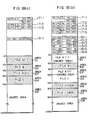
- FIG. 10 to 15 reference numerals 1000 to 1006 denote file layouts in the optical disk 101 in each state.
- Reference numerals 1101a to 1106a, 1101b to 1106b, and 1101c to 1106c show schematic diagrams of the management information in three areas. Actually, they have the formats of Figs. 9(d) to 9(f). In each diagram, the simplified block diagram is used and no practical numerical value is shown. The hatched portion in each diagram indicates the using area (file content), the mesh portion represents the used area, and the other portions represent the erased areas. For instance, Fig.
- FIG 10 shows an example in which the files A, B, C, and E are recorded as the using areas and the portion in which the file D was recorded is erased and managed as the erased area.
- the virgin area in which no data is used yet is also handled as an erased area.
- Fig. 11 shows an example in the case of additionally recording the file F into Fig. 10.
- the area of the old file D smaller than the size of file F is determined to be improper in step 501.
- Fig. 12 shows a state in which the files A and C were deleted from the state of Fig. 11. Although the areas in which the files A and C were recorded are released and can be used again, the erasing process is not executed yet and those areas are registered into the used area management information 1103c. Further, Fig. 13 shows an example in the case where the integrating process was activated from the state of Fig. 12. In accordance with the result of step 703 in Fig. 7, the area of the old file A is determined to be improper. On the basis of the result of the discrimination of step 704, the area of the old file C having the adjacent erased area is erased and the resultant area is transferred from the erased area management information 1103b to the erased area management information 1104b. Fig.
- FIG. 14 shows an example in the case where the file G is recorded in addition to the state of Fig. 13. In this case, the integrating process of the areas of the old files D and C is executed and the resultant area is selected in step 501 in the algorithm of Fig. 5 and the file G is recorded.
- Fig. 15 shows an example in the case where the file G is recorded in the state of Fig. 12. In this case, since an erased area larger than the file size cannot be selected by steps 501 and 502 in the algorithm of Fig. 5, an erased area which is equal to or smaller than the file size is selected in steps 504 to 507 and divided into two areas and recorded.
- the blank area management information and file area management information are also recorded into the same medium by setting a predetermined area. Therefore, each time a file is updated, the rewriting operations are frequently executed in such a predetermined area. Such a problem also becomes one of the reasons such that the magnetic medium type managing method is improper for the optical disk.
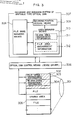
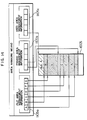
- Fig. 16 shows a construction in which a hysteresis information converting section 1300 is added to Fig. 1.
- Reference numeral 1601 denotes file information to record the file area management information and the difference information (hereinafter, referred to as hysteresis information) indicative of the updating content;
- 1602 indicates area information to record the used area management information and erased area management information and their hysteresis information;
- 1300 represents the hysteresis information converting section for respectively converting the file information 1601 in the optical disk into the format of the file area management information and converting the area information 1602 into the formats of the used area management information and erased area management information and for loading the resultant information into the area managing means 111.
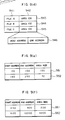
- Fig. 17(a) shows an example of the format of the file information 1601.
- Fig. 17(b) shows the example of the format of the area information 1602.
- Figs. 17(a) and 17(b) show the case of Fig. 18(b) where the files A and C were deleted from Fig. 18(a) and the erasing process was executed.
- Reference numerals 1711 to 1715 in Fig. 17(a) denote hysteresis information of the file management information; 1700 indicates a processing code representative of the content of the updating process; 00 shows the making of a file; FF a deletion of a file; 01 the updating of a file.
- Reference numeral 1701 denotes a file identifier and 1702 and 1703 indicate area information in which the file is stored. Each area is shown by the head addreass and end address. In the case where the file is divided and recorded into a plurality of areas, the areas are shown.
- reference numerals 1811 to 1816 denote hysteresis information of the erased area management information; 1800 indicates a status code representative of the status of the unused area; 00 shows the release of an area; and FF indicates that an area was used by the recording of a file.
- the hysteresis information 1812 denotes that a file was recorded into the unused area (addresses 450 to 600). In the example, the diagram is shown by assuming that no erased area exists for simplicity of explanation.
- Figs. 17(a) and 17(b) correspond to Figs. 9(d) and 9(f).
- the file area management information and erased area management information which were converted by the hysteresis information converting section 1300 so as to have the same formats as those of the file area management information of Fig. 9(d) and of the erased area management information of Fig. 9(f) are loaded in the area managing means 111.
- the hysteresis information 1714 and 1715 of the files A and C are recorded in the file information 1601.
- the hysteresis information 1812 and 1813 indicating that the areas 105 and 106 were used and the hysteresis information 1814, 1815, and 1816 indicating that the areas of the files A and B before updating were released are written into the area information 1602.
- the file area management information and blank area management information in the area managing means 111 are also simultaneously updated and rewritten into the formats of Figs. 9(d) and 9(f).
- the file information 1601 and management information 1602 are converted into the newest file area management information, erased area management information, and used area management information with reference to the hysteresis information by the hysteresis information converting section 1300 and the converted information are stored into the area managing means 111.
- the change of the file area management information, erased area management information, and used area management information after completion of the converting process they are directly changed in the area managing means 111 and managed in the newest state.
- those information are not rewritten into the same sector but the hysteresis information indicative of the content of the change is written into the file information 1601 and area information 1602. Therefore, the area in the optical disk 101 into which the management information is recorded does not need to be frequently rewritten. The deterioration of the optical disk due to the difference of the frequency of the rewriting operations can be prevented.
Landscapes
- Engineering & Computer Science (AREA)
- General Engineering & Computer Science (AREA)
- Theoretical Computer Science (AREA)
- Human Computer Interaction (AREA)
- Physics & Mathematics (AREA)
- General Physics & Mathematics (AREA)
- Multimedia (AREA)
- Signal Processing (AREA)
- Signal Processing For Digital Recording And Reproducing (AREA)
- Information Retrieval, Db Structures And Fs Structures Therefor (AREA)
- Management Or Editing Of Information On Record Carriers (AREA)
- Optical Recording Or Reproduction (AREA)
Applications Claiming Priority (4)
| Application Number | Priority Date | Filing Date | Title |
|---|---|---|---|
| JP63062405A JPH01236489A (ja) | 1988-03-16 | 1988-03-16 | 書換可能型光ディスク管理システム |
| JP63062404A JPH01236488A (ja) | 1988-03-16 | 1988-03-16 | 書換可能型光ディスク管理システム |
| JP62405/88 | 1988-03-16 | ||
| JP62404/88 | 1988-03-16 |
Publications (3)
| Publication Number | Publication Date |
|---|---|
| EP0333165A2 true EP0333165A2 (fr) | 1989-09-20 |
| EP0333165A3 EP0333165A3 (en) | 1990-09-19 |
| EP0333165B1 EP0333165B1 (fr) | 1995-02-01 |
Family
ID=26403458
Family Applications (1)
| Application Number | Title | Priority Date | Filing Date |
|---|---|---|---|
| EP89104593A Expired - Lifetime EP0333165B1 (fr) | 1988-03-16 | 1989-03-15 | Système de gestion de zones d'enregistrement sur un disque optique inscriptible |
Country Status (3)
| Country | Link |
|---|---|
| US (1) | US5107481A (fr) |
| EP (1) | EP0333165B1 (fr) |
| DE (1) | DE68920895T2 (fr) |
Cited By (14)
| Publication number | Priority date | Publication date | Assignee | Title |
|---|---|---|---|---|
| EP0460916A3 (en) * | 1990-06-04 | 1993-04-21 | International Business Machines Corporation | Format and method for recording digital data on record disks with a pre-erasure need to save extra rotations |
| EP0570203A3 (fr) * | 1992-05-14 | 1994-01-26 | Matsushita Electric Industrial Co., Ltd. | Disque optique à utiliser dans un appareil d'enregistrement et/ou de reproduction de données optiques |
| EP0510909A3 (fr) * | 1991-04-23 | 1994-03-02 | Ibm | |
| EP0472484A3 (fr) * | 1990-08-20 | 1994-03-23 | Ibm | |
| EP0508755A3 (en) * | 1991-04-10 | 1995-02-08 | Ibm | Hierarchical data storage system |
| EP0681292A3 (fr) * | 1994-04-20 | 1996-01-31 | Sony Corp | Méthode d'enregistrement et appareil pour support d'enregistrement. |
| EP0593032A3 (en) * | 1992-10-16 | 1996-05-01 | Sony Corp | Management of recordable area for toc (table of contents) and recording or recording/reproducing apparatus for performing recording action based on the same toc information |
| GB2338335A (en) * | 1998-06-12 | 1999-12-15 | Ricoh Kk | Optical-disc recording device |
| WO2000005717A1 (fr) * | 1998-07-24 | 2000-02-03 | Matsushita Electric Industrial Co., Ltd. | Support enregistre, procede et dispositif d'enregistrement et de reproduction de donnees |
| EP1031980A1 (fr) * | 1999-02-26 | 2000-08-30 | Sony Corporation | Méthode d'enregistrement, méthode de management, et appareil d'enregistrement |
| EP0833339A3 (fr) * | 1993-04-23 | 2002-05-02 | Sony Corporation | Commande de mémoire et recherche de données en mémoire |
| EP1031983A3 (fr) * | 1999-02-26 | 2004-02-11 | Matsushita Electric Industrial Co., Ltd. | Appareil d'entraínement de disque et appareil de disque l'utilisant |
| EP0908882A3 (fr) * | 1997-09-16 | 2005-01-26 | Sony Corporation | Appareil d'enregistrement, méthode d'enregistrement et support d'enregistrement en forme de disque |
| EP1528565A1 (fr) * | 2003-10-29 | 2005-05-04 | Kabushiki Kaisha Toshiba | Appareil et méthode d'enregistrement sur un disque |
Families Citing this family (44)
| Publication number | Priority date | Publication date | Assignee | Title |
|---|---|---|---|---|
| JPH0428061A (ja) * | 1990-05-24 | 1992-01-30 | Matsushita Electric Ind Co Ltd | 情報記録媒体と情報記録再生装置 |
| US5265230A (en) * | 1990-08-29 | 1993-11-23 | Hewlett-Packard Company | Method and apparatus for determining sector status in a data storage device by writing a status of read-only, writable, or obliterated in an error recovery area of each sector |
| JPH04141867A (ja) * | 1990-10-03 | 1992-05-15 | Canon Inc | ファイル管理方法 |
| JP2888958B2 (ja) * | 1990-10-20 | 1999-05-10 | 富士通株式会社 | 部分書き換え可能な記憶媒体におけるファイル管理方式 |
| JP3180366B2 (ja) * | 1991-04-19 | 2001-06-25 | ソニー株式会社 | 記録再生装置及び記録再生方法 |
| JP2731045B2 (ja) * | 1991-04-30 | 1998-03-25 | シャープ株式会社 | 情報記録再生装置 |
| JP2962335B2 (ja) * | 1991-06-24 | 1999-10-12 | 日本電気株式会社 | 空き領域検索方式 |
| JP3241402B2 (ja) * | 1991-08-01 | 2001-12-25 | ソニー株式会社 | 情報記録媒体 |
| DE69230742T2 (de) * | 1991-09-13 | 2000-07-27 | Canon K.K., Tokio/Tokyo | Methode zur Aufzeichnung von Daten und defektbezogener Information |
| JPH0588957A (ja) * | 1991-09-25 | 1993-04-09 | Olympus Optical Co Ltd | デイレクトリフオーマツト |
| WO1993007617A1 (fr) * | 1991-10-09 | 1993-04-15 | Seiko Epson Corporation | Support d'enregistrement de donnees, sa production et appareil d'enregistrement/reproduction de donnees |
| US5392267A (en) * | 1992-01-08 | 1995-02-21 | Olympus Optical Co., Ltd. | Optical card reading and writing method with redundant directory storage to improve reliability |
| DE69329360T2 (de) * | 1992-06-11 | 2001-03-01 | Canon K.K., Tokio/Tokyo | Datenverarbeitungsgerät und Ausgabegerät |
| JP3017892B2 (ja) * | 1992-09-30 | 2000-03-13 | 株式会社東芝 | ファイル管理装置 |
| JP2549810B2 (ja) * | 1993-03-15 | 1996-10-30 | 富士通株式会社 | 光ディスクの製造方法 |
| JP3132701B2 (ja) * | 1993-11-05 | 2001-02-05 | キヤノン株式会社 | 情報記録方法 |
| US5740435A (en) * | 1994-10-31 | 1998-04-14 | Sony Corporation | Data management apparatus and method for managing data of variable lengths recorded on a record medium |
| JPH08147110A (ja) * | 1994-11-18 | 1996-06-07 | Sony Corp | データ記録媒体管理方法、データ記録媒体管理装置およびデータ記録媒体 |
| JP3511721B2 (ja) * | 1995-03-15 | 2004-03-29 | ソニー株式会社 | 情報処理方法及び装置 |
| JPH0916966A (ja) | 1995-06-26 | 1997-01-17 | Pioneer Electron Corp | 情報記録方法および記録再生装置 |
| US5701281A (en) * | 1995-07-13 | 1997-12-23 | Nec Corporation | Optical disk device capable of recording a control parameter on unused optical disk area |
| KR100215705B1 (ko) * | 1996-11-02 | 1999-08-16 | 구자홍 | 기기록 정보의 보호기능을 가진 정보 기록방법 |
| JPH10162560A (ja) * | 1996-12-04 | 1998-06-19 | Matsushita Electric Ind Co Ltd | 映像編集方法、及びノンリニア映像編集装置 |
| MY126410A (en) * | 1997-04-08 | 2006-09-29 | Sony Corp | Recording medium reproducing apparatus and control method for recording medium reproducing apparatus |
| DE69809463T2 (de) * | 1997-09-17 | 2003-05-08 | Matsushita Electric Industrial Co., Ltd. | Aufzeichnungsgerät für optische Platte, computerlesbares Aufzeichnungsmedium zur Aufzeichnung eines Datenverwaltungsprogramms sowie optische Platte |
| US6370325B2 (en) | 1997-09-17 | 2002-04-09 | Matsushita Electric Industrial Co., Ltd. | Optical disc recording apparatus, computer-readable recording medium recording a file management program, and optical disc |
| MY126551A (en) * | 1997-09-17 | 2006-10-31 | Matsushita Electric Industrial Co Ltd | Video data editing apparatus and computer-readable recording medium storing an editing program |
| JPH11213633A (ja) | 1998-01-21 | 1999-08-06 | Pioneer Electron Corp | 情報記録装置 |
| US6377526B1 (en) | 1999-04-01 | 2002-04-23 | Plasmon Ide, Inc. | Erasable WORM optical disk and method of writing thereto multiple times |
| JP2001110148A (ja) * | 1999-10-04 | 2001-04-20 | Pioneer Electronic Corp | 情報記録媒体及びその記録再生方法ならびに情報記録再生装置 |
| US6598135B1 (en) | 2000-05-03 | 2003-07-22 | Plasmon Ide | System and method for defining rewriteable data storage media as write once data storage media |
| KR20020015392A (ko) * | 2000-05-30 | 2002-02-27 | 요트.게.아. 롤페즈 | 기록 매체상에 기록 공간을 할당하는 방법 및 장치 |
| US7133594B2 (en) * | 2000-06-26 | 2006-11-07 | Matsushita Electric Industrial Co., Ltd. | Digital recording apparatus that secures a certain number of video frames in a VOB constituting with another VOB a portion of encode stream that should be reproduced seamlessly |
| JP2002109831A (ja) * | 2000-09-29 | 2002-04-12 | Toshiba Corp | 記録再生装置 |
| JP2002170324A (ja) * | 2000-11-30 | 2002-06-14 | Toshiba Corp | 内蔵記憶媒体付録再装置 |
| JP2003110976A (ja) * | 2001-09-27 | 2003-04-11 | Fuji Photo Film Co Ltd | 画像データ送信方法、デジタルカメラ、画像データ保管方法および装置並びにプログラム |
| JP2003151216A (ja) * | 2001-11-12 | 2003-05-23 | Hitachi Ltd | 情報記録方法、及び情報記録装置 |
| JP4498159B2 (ja) * | 2005-02-03 | 2010-07-07 | キヤノン株式会社 | 撮像装置およびその制御方法 |
| JP2007080361A (ja) * | 2005-09-13 | 2007-03-29 | Funai Electric Co Ltd | 光ディスク記録装置 |
| US7991942B2 (en) * | 2007-05-09 | 2011-08-02 | Stmicroelectronics S.R.L. | Memory block compaction method, circuit, and system in storage devices based on flash memories |
| US8041883B2 (en) * | 2007-05-09 | 2011-10-18 | Stmicroelectronics S.R.L. | Restoring storage devices based on flash memories and related circuit, system, and method |
| US20080282024A1 (en) * | 2007-05-09 | 2008-11-13 | Sudeep Biswas | Management of erase operations in storage devices based on flash memories |
| US7882301B2 (en) * | 2007-05-09 | 2011-02-01 | Stmicroelectronics S.R.L. | Wear leveling in storage devices based on flash memories and related circuit, system, and method |
| JP2014186781A (ja) * | 2013-03-25 | 2014-10-02 | Hitachi-Lg Data Storage Inc | データ記録再生装置、アーカイブシステム、記録制御方法 |
Family Cites Families (7)
| Publication number | Priority date | Publication date | Assignee | Title |
|---|---|---|---|---|
| JPS59146355A (ja) * | 1983-02-09 | 1984-08-22 | Hitachi Ltd | 直接アクセス記憶装置のデ−タセツト再編成方法 |
| JPS59178879A (ja) * | 1983-03-30 | 1984-10-11 | Toshiba Corp | 画像情報記憶検索装置 |
| JP2635023B2 (ja) * | 1985-05-02 | 1997-07-30 | 株式会社日立製作所 | フアイルデータ用ラベル書き込み方法 |
| US4791623A (en) * | 1986-04-03 | 1988-12-13 | Optotech, Inc. | File management system for use in an optical data storage system |
| US4775969A (en) * | 1986-05-15 | 1988-10-04 | Aquidneck Systems International, Inc. | Optical disk storage format, method and apparatus for emulating a magnetic tape drive |
| FR2604280B1 (fr) * | 1986-09-19 | 1988-11-10 | Picard Michel | Procede de gestion de fichiers sur un support d'information non effacable |
| US4939598A (en) * | 1988-02-08 | 1990-07-03 | International Business Machines Corporation | Managing data storage space on large capacity record media |
-
1989
- 1989-03-13 US US07/322,428 patent/US5107481A/en not_active Expired - Fee Related
- 1989-03-15 DE DE68920895T patent/DE68920895T2/de not_active Expired - Fee Related
- 1989-03-15 EP EP89104593A patent/EP0333165B1/fr not_active Expired - Lifetime
Cited By (23)
| Publication number | Priority date | Publication date | Assignee | Title |
|---|---|---|---|---|
| EP0460916A3 (en) * | 1990-06-04 | 1993-04-21 | International Business Machines Corporation | Format and method for recording digital data on record disks with a pre-erasure need to save extra rotations |
| EP0472484A3 (fr) * | 1990-08-20 | 1994-03-23 | Ibm | |
| EP0508755A3 (en) * | 1991-04-10 | 1995-02-08 | Ibm | Hierarchical data storage system |
| EP0510909A3 (fr) * | 1991-04-23 | 1994-03-02 | Ibm | |
| US5347651A (en) * | 1991-04-23 | 1994-09-13 | International Business Machines Corporation | System for allocating worm optical medium file storage in groups of fixed size addressable areas while tracking unrecorded areas and end of volume |
| CN1035905C (zh) * | 1992-05-14 | 1997-09-17 | 松下电器产业株式会社 | 用于光数据记录和/或再现装置中的光盘 |
| EP0570203A3 (fr) * | 1992-05-14 | 1994-01-26 | Matsushita Electric Industrial Co., Ltd. | Disque optique à utiliser dans un appareil d'enregistrement et/ou de reproduction de données optiques |
| EP0593032A3 (en) * | 1992-10-16 | 1996-05-01 | Sony Corp | Management of recordable area for toc (table of contents) and recording or recording/reproducing apparatus for performing recording action based on the same toc information |
| EP0833339A3 (fr) * | 1993-04-23 | 2002-05-02 | Sony Corporation | Commande de mémoire et recherche de données en mémoire |
| EP0681292A3 (fr) * | 1994-04-20 | 1996-01-31 | Sony Corp | Méthode d'enregistrement et appareil pour support d'enregistrement. |
| US6052346A (en) * | 1994-04-20 | 2000-04-18 | Sony Corporation | Methods and apparatus for recording data on and deleting already recorded data from a recording medium |
| CN1097265C (zh) * | 1994-04-20 | 2002-12-25 | 索尼公司 | 用于记录介质的记录方法及装置 |
| US5774434A (en) * | 1994-04-20 | 1998-06-30 | Sony Corporation | Methods and apparatus for recording data on and deleting already recorded data from a recording medium |
| EP0908882A3 (fr) * | 1997-09-16 | 2005-01-26 | Sony Corporation | Appareil d'enregistrement, méthode d'enregistrement et support d'enregistrement en forme de disque |
| GB2338335A (en) * | 1998-06-12 | 1999-12-15 | Ricoh Kk | Optical-disc recording device |
| GB2338335B (en) * | 1998-06-12 | 2000-08-16 | Ricoh Kk | Optical-disc recording device |
| WO2000005717A1 (fr) * | 1998-07-24 | 2000-02-03 | Matsushita Electric Industrial Co., Ltd. | Support enregistre, procede et dispositif d'enregistrement et de reproduction de donnees |
| US6775466B1 (en) | 1999-02-26 | 2004-08-10 | Matsushita Electric Industrial Co., Ltd. | Disk control apparatus dividing a recording area into recorded and unrecorded areas |
| EP1031983A3 (fr) * | 1999-02-26 | 2004-02-11 | Matsushita Electric Industrial Co., Ltd. | Appareil d'entraínement de disque et appareil de disque l'utilisant |
| EP1031980A1 (fr) * | 1999-02-26 | 2000-08-30 | Sony Corporation | Méthode d'enregistrement, méthode de management, et appareil d'enregistrement |
| US6385690B1 (en) | 1999-02-26 | 2002-05-07 | Sony Corporation | Recording method, managing method, and recording apparatus |
| EP1528565A1 (fr) * | 2003-10-29 | 2005-05-04 | Kabushiki Kaisha Toshiba | Appareil et méthode d'enregistrement sur un disque |
| US7477578B2 (en) | 2003-10-29 | 2009-01-13 | Kabushiki Kaisha Toshiba | Disk recording device and disk recording method for recording and erasing titles on a disk |
Also Published As
| Publication number | Publication date |
|---|---|
| EP0333165B1 (fr) | 1995-02-01 |
| EP0333165A3 (en) | 1990-09-19 |
| US5107481A (en) | 1992-04-21 |
| DE68920895T2 (de) | 1995-06-22 |
| DE68920895D1 (de) | 1995-03-16 |
Similar Documents
| Publication | Publication Date | Title |
|---|---|---|
| EP0333165A2 (fr) | Système de gestion de zones d'enregistrement sur un disque optique inscriptible | |
| US8065473B2 (en) | Method for controlling memory card and method for controlling nonvolatile semiconductor memory | |
| US7610434B2 (en) | File recording apparatus | |
| EP0479535B1 (fr) | Procédé de gestion de fichiers | |
| JP3509285B2 (ja) | 圧縮データ管理方式 | |
| US5029125A (en) | Method of reading and writing files on nonerasable storage media | |
| KR20070013227A (ko) | 데이터 기억 장치 및 방법, 및 기록 재생 시스템 | |
| JP2006040264A (ja) | メモリカードの制御方法および不揮発性半導体メモリの制御方法 | |
| JP2831369B2 (ja) | 情報記録再生方式およびシステム | |
| JP4300669B2 (ja) | 記録方法および装置、ならびに、記録媒体 | |
| US20090030954A1 (en) | Management of multiple virtual data copies | |
| US20080232210A1 (en) | Data Recording/Reproduction for Write-Once Discs | |
| US20080310289A1 (en) | Data Recording/Reproduction for Write-Once Discs | |
| US20080192595A1 (en) | Data Recording/Reproduction for Write-Once Discs | |
| US20070043897A1 (en) | Method and device for storing information | |
| JPH03166634A (ja) | 情報記録再生方式 | |
| JP2001291366A (ja) | 記録方法および装置、ならびに、記録媒体 | |
| JPH0778097A (ja) | ファイル再配置システム | |
| JPH01236488A (ja) | 書換可能型光ディスク管理システム | |
| JP3707396B2 (ja) | 記録方法および記録装置 | |
| JPH05342817A (ja) | ファイル管理方法及び情報記録再生装置 | |
| JP2652388B2 (ja) | 光ディスクの記憶管理方法 | |
| JP2569084B2 (ja) | フアイル管理方式 | |
| JPH073661B2 (ja) | 情報処理システム及びその制御方法 | |
| JPH01236489A (ja) | 書換可能型光ディスク管理システム |
Legal Events
| Date | Code | Title | Description |
|---|---|---|---|
| PUAI | Public reference made under article 153(3) epc to a published international application that has entered the european phase |
Free format text: ORIGINAL CODE: 0009012 |
|
| AK | Designated contracting states |
Kind code of ref document: A2 Designated state(s): DE FR GB NL |
|
| PUAL | Search report despatched |
Free format text: ORIGINAL CODE: 0009013 |
|
| AK | Designated contracting states |
Kind code of ref document: A3 Designated state(s): DE FR GB NL |
|
| RHK1 | Main classification (correction) |
Ipc: G11B 20/12 |
|
| 17P | Request for examination filed |
Effective date: 19901128 |
|
| 17Q | First examination report despatched |
Effective date: 19930224 |
|
| GRAA | (expected) grant |
Free format text: ORIGINAL CODE: 0009210 |
|
| AK | Designated contracting states |
Kind code of ref document: B1 Designated state(s): DE FR GB |
|
| REF | Corresponds to: |
Ref document number: 68920895 Country of ref document: DE Date of ref document: 19950316 |
|
| ET | Fr: translation filed | ||
| PLBE | No opposition filed within time limit |
Free format text: ORIGINAL CODE: 0009261 |
|
| STAA | Information on the status of an ep patent application or granted ep patent |
Free format text: STATUS: NO OPPOSITION FILED WITHIN TIME LIMIT |
|
| 26N | No opposition filed | ||
| PGFP | Annual fee paid to national office [announced via postgrant information from national office to epo] |
Ref country code: GB Payment date: 19960306 Year of fee payment: 8 |
|
| PGFP | Annual fee paid to national office [announced via postgrant information from national office to epo] |
Ref country code: DE Payment date: 19960313 Year of fee payment: 8 |
|
| PGFP | Annual fee paid to national office [announced via postgrant information from national office to epo] |
Ref country code: FR Payment date: 19960315 Year of fee payment: 8 |
|
| PG25 | Lapsed in a contracting state [announced via postgrant information from national office to epo] |
Ref country code: GB Effective date: 19970315 |
|
| GBPC | Gb: european patent ceased through non-payment of renewal fee |
Effective date: 19970315 |
|
| PG25 | Lapsed in a contracting state [announced via postgrant information from national office to epo] |
Ref country code: FR Free format text: LAPSE BECAUSE OF NON-PAYMENT OF DUE FEES Effective date: 19971128 |
|
| PG25 | Lapsed in a contracting state [announced via postgrant information from national office to epo] |
Ref country code: DE Effective date: 19971202 |
|
| REG | Reference to a national code |
Ref country code: FR Ref legal event code: ST |