EP0337068B1 - Méthode et appareil pour le formatage de documents - Google Patents
Méthode et appareil pour le formatage de documents Download PDFInfo
- Publication number
- EP0337068B1 EP0337068B1 EP89102335A EP89102335A EP0337068B1 EP 0337068 B1 EP0337068 B1 EP 0337068B1 EP 89102335 A EP89102335 A EP 89102335A EP 89102335 A EP89102335 A EP 89102335A EP 0337068 B1 EP0337068 B1 EP 0337068B1
- Authority
- EP
- European Patent Office
- Prior art keywords
- document
- command codes
- formatting
- codes
- command
- Prior art date
- Legal status (The legal status is an assumption and is not a legal conclusion. Google has not performed a legal analysis and makes no representation as to the accuracy of the status listed.)
- Expired - Lifetime
Links
Images


Classifications
-
- G—PHYSICS
- G06—COMPUTING OR CALCULATING; COUNTING
- G06F—ELECTRIC DIGITAL DATA PROCESSING
- G06F17/00—Digital computing or data processing equipment or methods, specially adapted for specific functions
-
- G—PHYSICS
- G06—COMPUTING OR CALCULATING; COUNTING
- G06F—ELECTRIC DIGITAL DATA PROCESSING
- G06F40/00—Handling natural language data
- G06F40/10—Text processing
- G06F40/103—Formatting, i.e. changing of presentation of documents
Definitions
- the present invention relates to a method and an apparatus for formatting a document in accordance with structures of the document.
- the object of the invention is
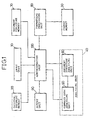
- Fig. 1 is a block diagram of a document formatting apparatus according to one embodiment of the present invention.
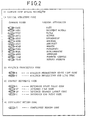
- Fig. 2 is a tabulated illustration of examples of command codes to be utilized in the document formatting apparatus shown in Fig. 1.
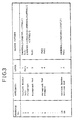
- Fig. 3 is another tabulated illustration of logical structures to be utilized in the document formatting apparatus shown in Fig. 1.
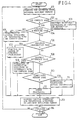
- Fig. 4 is a flow chart for the operation of formatting by the document formatting apparatus shown in Fig. 1.
- Fig. 5 is an illustration of a document being formatted by the document formatting apparatus shown in Fig. 1, showing manners in which the command codes are used in this embodiment.
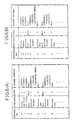
- Fig. 6(A) and (B) are tabulated illustrations of logical structures for the document shown in Fig 5, obtained without and with the command codes.
- Fig. 7 is another illustration of a document being formatted by the document formatting apparatus shown in Fig. 1, showing manners in which the command codes are used in this embodiment.
- FIG. 1 there is shown one embodiment of a document formatting apparatus according to the present invention.
- This document formatting apparatus comprises an input unit 10 from which a document to be formatted with command codes embedded is entered, an original document memory 20 for storing the document with the command codes entered at the input unit 10, a format memory 30 for storing a format into which the document is to be formatted, an analyzing unit 40 comprising a command code analyzing unit 50 for analyzing contents of the command codes, and a document structure analyzing unit 60 for analyzing logical and referential structures of the document in accordance with the analyzed contents of the command codes, a document structure memory 70 for storing the analyzed structures of the document, a formatting processing unit 80 for carrying out formatting in accordance with the structures of the document stored in the document structure memory 70 and the format stored in the format memory 30, an output unit 90 for presenting the document as formatted by the formatting processing unit 80, and an administration unit 100 for administerring the operations by all these parts of this document formatting apparatus mentioned above.
- the input unit 10 may take a form of a keyboard, a mouse, or a communication network.
- the output unit 90 may take a form of a CRT, a display, or a printer.
- the command code analyzing unit 50 adjusts operation of the document structure analyzing unit 60 such that the contents of the command codes are reflected in a manner of analyzing the logical and referential structures of the document.
- a user can deliberately control the analysis of the logical and referential structures.
- the command code analyzing unit 50 also deciphers those command codes which are directly concerned with layout of the document, so that the user can also have a control over the layout of the document.
- a set of command codes to be utilized in this embodiment are shown in Fig. 2.
- any command code begins with a symbol ⁇ in this embodiment, and what follows this symbol ⁇ designates a type of command code.
- Various different types of command codes and their corresponding logical attributes are summarized in the section (1) of Fig. 2.
- a command code ⁇ DATE indicates that what follows is the date
- a command code ⁇ NODC indicates what follows is the document number, and so on.
- there are analysis prohibition codes shown in the section (2) of Fig. 2 which indicate a portion of the document not to be structurally analyzed such as those containing mathematical formulae and those requiring special type of formatting.
- the logical structure in the document structure memory 70 comprises a sentence number labelling each sentences of the document, an attribute for each sentence, a level given to each attribute, and a header pattern for relevant sentences.
- a sentence labelled by the sentence number 4 is given an attribute of Paragraph End in response to the command code ⁇ HEAD present in that sentence, whose level is given as 3 and which has no header pattern.
- Such a logical structure will be utilized along with the format data in the format memory 30 in carrying out formatting of the document.
- the document with the command codes is entered from the input unit 10 and stored in the original document memory 20.
- one sentence of the document is read out from the original document memory 20 and given to the analyzing unit 40 at the step 101.
- step 102 whether there is any command code in this sentence is determined by the command code analyzing unit 50.
- step 104 when there is a command code in the sentence, the step 104 will be taken in which whether the command code present in the sentence is one of the logical structure codes is determined by the command code analyzing unit 50.
- the command code is one of the logical structure codes
- the logical structure of the sentence is extracted by the document structure analyzing unit 60 at the step 105 in accordance with what the command code indicates and the process proceeds to the step 113.
- step 106 will be taken in which whether the command code present in the sentence is one of the analysis prohibition codes is determined by the command code analyzing unit 50.
- the structural analysis by the document structure analyzing unit 60 is controlled at the step 107 in accordance with what the command code indicates and the process proceeds to the step 113.
- step 108 will be taken in which whether the command code present in the sentence is one of the graphic reference codes is determined by the command code analyzing unit 50.
- the referential structure of the sentence is extracted by the document structure analyzing unit 60 at the step 109 in accordance with what the command code indicates and the process proceeds to the step 113.
- step 110 will be taken in which whether the command code present in the sentence is the compulsory return code is determined by the command code analyzing unit 50.
- the command code is the compulsory return code
- the information of the compulsory return is deciphered and extracted by the command code analyzing unit 50 at the step 111 and the process proceeds to the step 113.
- the command code present in the sentence is in error since it is not any one of command codes given in Fig. 2, so at the step 112 the error in the command code is corrected, and the process proceeds to the step 113.
- the result of the logical and referential structures obtained up to this point is stored in the document structure memory 70.
- step 114 whether all the sentences in the document have been checked is determined. When all the sentences in the document have not been checked, the process returns to the step 101 and the steps following will be repeated.
- step 115 at which the formatting of the document is carried out by the formatting processing unit 80 in accordance with the logical and referential structures stored in the document structure memory 70 as well as with the format stored in the format memory 30, and as the resulting formatted document is outputted by the output unit 90 the process terminates.
- the first line “INTELLIGENT DOCUMENT PROCESSING SYSTEM” can be identified as a title by the ordinary automatic logical structure extraction so that no command code is necessary in this first line.
- the second line “RACHI YOZAN” will most likely not be identifiable as a name of the author, as Rachi Yozan is a very rare name so that this name cannot be found in a name data-base.
- Rachi Yozan is a very rare name so that this name cannot be found in a name data-base.
- that "RACHI YOZAN" is a name of the author is indicated by placing the command code ⁇ AUTH at the top of this second line.
- the document structure analyzing unit 60 can construe "RACHI YOZAN" as a name of the author correctly.
- "NICHIBEI SOFTWARE” in the third line can be identified correctly as a name of the organization to which the author belongs by placing the command code ⁇ SECT at the top of this third line.
- the fourth line there is a compulsory return code at the top of this fourth line, as this fourth line is to be left blank.
- the fifth line "1. INTRODUCTION" can be identified as a section header with 'introduction' as a reserved word, by the ordinary automatic logical structure extraction so that no command code is necessary in this fifth line.
- the thirty-third line " ⁇ S Fig. 10 ⁇ ZF bunsho-1 ⁇ ZP d ⁇ E " means that "Fig. 10 is in the file 'bunsho-1' and it is to be laid out in the lower part of the current page !.
- Fig. 6(A) and (B) how the logical structure obtained by the document structure analyzing unit 60 is affected by the presence of the command codes in the example of Fig. 5 is shown in Fig. 6(A) and (B), where Fig. 6(A) shows the logical structure obtained from the document without the command codes and Fig. 6(B) shows the logical structure obtained from the document with the command codes.
- Fig. 6(A) shows the logical structure obtained from the document without the command codes
- Fig. 6(B) shows the logical structure obtained from the document with the command codes.
- the second and the third lines are construed incorrectly as sub-titles in Fig. 6(A), whereas with the use of the command codes this misapprehension can be avoided in Fig. 6(B).
- FIG. 1 Another practical example of the document and the use of the command codes, in particular the use of the analysis prohibition codes, is shown in Fig. 1.
- the analysis prohibition start line code ⁇ X and the analysis prohibition end line code ⁇ Y are placed at a top and a bottom , respectively, of the mathematical formulae so that this portion will not be structurally analyzed, as the meaning of the mathematical formulae is not analyzable by the document structure analyzing unit 60.
- the analysis prohibition codes can similarly be used for those portions which are written in special or personal manners.
- the compulsory return code ⁇ C can be placed in a middle of a line as shown in Fig. 7.
- command codes are placed at the top of lines, this can easily be modified to allow placement of the command code anywhere in the lines.
- command codes which are directly concerned with layout of the document are the compulsory return codes, it is possible to incorporate more complicated command codes such as font command codes and style command codes used in 'Scribe', and thereby enhancing the scope of possible formatting.
- analysis prohibition codes ⁇ X and ⁇ Y can be modified such that within a portion indicated by them the analysis is to be performed by a particular processing system such as T E X which is known to be highly effective in dealing with mathematical formulae.
- this embodiment can be effectively employed not only for the document containing references to the graphics as in the examples in the foregoing description, but also for the document having references to a list of references or bibliography, and for relational data-bases.
Landscapes
- Engineering & Computer Science (AREA)
- Theoretical Computer Science (AREA)
- Physics & Mathematics (AREA)
- General Physics & Mathematics (AREA)
- General Engineering & Computer Science (AREA)
- Computational Linguistics (AREA)
- General Health & Medical Sciences (AREA)
- Health & Medical Sciences (AREA)
- Audiology, Speech & Language Pathology (AREA)
- Artificial Intelligence (AREA)
- Data Mining & Analysis (AREA)
- Databases & Information Systems (AREA)
- Mathematical Physics (AREA)
- Software Systems (AREA)
- Document Processing Apparatus (AREA)
- Facsimile Scanning Arrangements (AREA)
Claims (20)
- Appareil pour formater un document qui contient des codes de commande indiquant des commandes prescrites concernant des fonctions structurelles, comprenant :(a) des moyens (10) d'introduction pour introduire ledit document dans ledit appareil ;(b) des moyens (60) d'analyse pour analyser une structure de document pour chaque partie dudit document avec et sans codes de commande, ladite structure de document contenant au moins une structure logique qui indique un attribut logique pour chaque partie déterminée dudit document, et déterminant une information de structure qui définit la structure du document à partir dudit document en exécutant automatiquement une analyse par un sous-programme prescrit dudit document ;(c) des moyens (50) de détection pour détecter lesdits codes de commande et ajuster le fonctionnement desdits moyens (60) d'analyse pour les parties du document qui comportent des codes de commande afin de déduire ladite information de structure en fonction d'indications fournies par lesdits codes de commande ; et(d) des moyens (80) de formatage pour effectuer un formatage dudit document en utilisant ladite information structurelle déterminée par lesdits moyens (60) d'analyse.
- Appareil selon la revendication 1, dans lequel les moyens (60) d'analyse structurelle analysent la structure référentielle du document.
- Appareil selon la revendication 1, dans lequel les codes de commande indiquent également une commande prescrite concernant le format, et dans lequel lesdits moyens (80) de formatage effectuent ledit formatage également en fonction des commandes concernant le format indiqué par les codes de commande.
- Procédé pour formater un document qui contient des codes de commande indiquant des commandes prescrites concernant des fonctions structurelles, comprenant l'étape suivante :a) l'introduction dudit document dans ledit appareil ;dans lequel ledit procédé comprend en outre les étapes suivantes, qui sont effectuées automatiquement :b) l'analyse (103) d'une structure de document pour chaque partie dudit document avec et sans codes de commande, ladite structure de document comportant au moins une structure logique qui indique un attribut logique pour chaque partie déterminée dudit document, et la détermination d'une information structurelle qui définit la structure du document à partir dudit document en exécutant une analyse par un sous-programme prescrit dudit document ;c) la détection (102) desdits codes de commande et l'ajustement (105, 107, 109, 111) de ladite opération d'analyse pour les parties du document qui comporte des codes de commande afin de déterminer ladite information structurelle en fonction d'indications fournies par lesdits codes de commande ; etd) le formatage (115) dudit document en utilisant ladite information structurelle déterminée lors de ladite étape de détection et d'ajustement (102, 105, 107, 109, 111).
- Procédé selon la revendication 4, dans lequel, lors de l'étape (103) d'analyse structurelle, une structure référentielle du document est analysée.
- Procédé selon la revendication 4, dans lequel les codes de commande indiquent également une commande prescrite concernant un format, et dans lequel, lors de ladite étape (115) de formatage, ledit formatage est effectué également en fonction des commandes concernant le format indiqué par les codes de commande.
- Appareil selon la revendication 1,
caractérisé en ce que lesdits codes de commande comprennent des codes (X, Y) de commande d'inhibition d'analyse modifiée, de telle façon qu'à l'intérieur d'une partie du document qui est indiquée par ceux-ci, l'analyse soit effectuée par un système de traitement particulier, comme le système TEX (marque déposée). - Appareil selon la revendication 1,
caractérisé par une mémoire (20) de document original destinée à stocker le document avec les codes de commande introduits par lesdits moyens (10) d'introduction. - Appareil selon la revendication 1,
caractérisé par une mémoire (30) de format destinée à stocker le format, selon lequel ledit document introduit doit être formaté. - Appareil selon la revendication 1,
caractérisé par le fait que lesdits moyens (50) de détection analysent les contenus desdits codes de commande. - Appareil selon les revendications 10 et 2,
caractérisé par le fait que lesdits moyens (60) d'analyse analysent les structures logiques et référentielles dudit document en fonction desdits contenus analysés desdits codes de commande. - Appareil selon la revendication 1,
caractérisé par une mémoire (70) de structure de document destinée à stocker les structures analysées dudit document. - Appareil selon les revendications 12 et 9,
caractérisé par le fait que lesdits moyens (80) de formatage effectuent ledit formatage dudit document en fonction desdites structures de document stockées dans la mémoire (70) de structures de documents et du format stocké dans la mémoire (30) de format. - Appareil selon la revendication 1,
caractérisé par une unité (90) de sortie destinée à présenter le document tel qu'il est formaté par les moyens (80) de formatage. - Appareil selon la revendication 10,
caractérisé par le fait que lesdits moyens (50) de détection déchiffrent les codes de commande qui concernent directement la mise en page dudit document. - Appareil selon la revendication 1,
caractérisé par le fait que lesdits codes de commande comprennent des codes de structure logique, des codes d'inhibition d'analyse, des codes de référence à des graphiques et des codes de retour obligatoire. - Appareil selon les revendications 12 et 1,
caractérisé en ce qu'une structure logique stockée dans ladite mémoire (70) de structures de documents comprend un numéro de phrase repérant chaque phrase du document, un attribut pour chaque phrase, un niveau affecté à chaque attribut et une forme d'en-tête pour lesdites phrases. - Appareil selon les revendications 17 et 13, caractérisé par le fait que lesdits moyens (80) de formatage utilisent ladite structure logique avec lesdites données de format contenues dans ladite mémoire (30) de format pour effectuer ledit formatage dudit document.
- Procédé selon la revendication 4,
caractérisé en ce que ladite étape (103) d'analyse et ladite étape (102 ; 105, 107, 109, 111) de détection et d'ajustement sont répétées pour chaque phrase dudit document. - Procédé selon la revendication 4,
caractérisé en ce que, lors de l'étape de détection c), on déchiffre également les codes de commande qui concernent directement la mise en page du document.
Applications Claiming Priority (2)
| Application Number | Priority Date | Filing Date | Title |
|---|---|---|---|
| JP28789/88 | 1988-02-12 | ||
| JP63028789A JPH01205260A (ja) | 1988-02-12 | 1988-02-12 | 文書整形装置 |
Publications (3)
| Publication Number | Publication Date |
|---|---|
| EP0337068A2 EP0337068A2 (fr) | 1989-10-18 |
| EP0337068A3 EP0337068A3 (fr) | 1991-12-04 |
| EP0337068B1 true EP0337068B1 (fr) | 1997-05-28 |
Family
ID=12258193
Family Applications (1)
| Application Number | Title | Priority Date | Filing Date |
|---|---|---|---|
| EP89102335A Expired - Lifetime EP0337068B1 (fr) | 1988-02-12 | 1989-02-10 | Méthode et appareil pour le formatage de documents |
Country Status (5)
| Country | Link |
|---|---|
| US (1) | US5119491A (fr) |
| EP (1) | EP0337068B1 (fr) |
| JP (1) | JPH01205260A (fr) |
| KR (1) | KR920002668B1 (fr) |
| DE (1) | DE68928068T2 (fr) |
Families Citing this family (23)
| Publication number | Priority date | Publication date | Assignee | Title |
|---|---|---|---|---|
| US5175810A (en) * | 1989-06-19 | 1992-12-29 | Digital Equipment Corporation | Tabular data format |
| JPH03177964A (ja) * | 1989-12-07 | 1991-08-01 | Toshiba Corp | 文書整形装置 |
| DE69131471T2 (de) * | 1990-03-29 | 2000-03-30 | Canon K.K., Tokio/Tokyo | Textverarbeitungsvorrichtung mit Textformatierung |
| GB2245400B (en) * | 1990-06-15 | 1994-04-13 | Fuji Xerox Co Ltd | Document layout processing |
| DE4143620C2 (de) * | 1990-06-15 | 2000-01-05 | Fuji Xerox Co Ltd | Dokumentlayoutverarbeitungsverfahren und Vorrichtung zu dessen Durchführung |
| US5434962A (en) * | 1990-09-07 | 1995-07-18 | Fuji Xerox Co., Ltd. | Method and system for automatically generating logical structures of electronic documents |
| JP3110041B2 (ja) * | 1990-11-30 | 2000-11-20 | 株式会社東芝 | 画像情報処理装置 |
| JPH0573548A (ja) * | 1990-12-18 | 1993-03-26 | Casio Comput Co Ltd | 文書整形装置 |
| CA2048039A1 (fr) * | 1991-07-19 | 1993-01-20 | Steven Derose | Systeme et methode de traitement de donnees pour produire une representation de documents electroniques et consulter ces derniers |
| JPH06250895A (ja) * | 1993-02-26 | 1994-09-09 | Fujitsu Ltd | 構造化データベースシステム |
| US5440745A (en) * | 1993-04-29 | 1995-08-08 | International Business Machines Corporation | Batch format processing of record data |
| US5991782A (en) * | 1994-02-18 | 1999-11-23 | Fujitsu Limited | Automated extraction and doubly linked reference marks for partialized document contents and version control |
| US5671427A (en) * | 1994-10-12 | 1997-09-23 | Kabushiki Kaisha Toshiba | Document editing apparatus using a table to link document portions |
| US5655130A (en) * | 1994-10-14 | 1997-08-05 | Unisys Corporation | Method and apparatus for document production using a common document database |
| US6546406B1 (en) | 1995-11-03 | 2003-04-08 | Enigma Information Systems Ltd. | Client-server computer system for large document retrieval on networked computer system |
| US6167409A (en) * | 1996-03-01 | 2000-12-26 | Enigma Information Systems Ltd. | Computer system and method for customizing context information sent with document fragments across a computer network |
| US5893109A (en) * | 1996-03-15 | 1999-04-06 | Inso Providence Corporation | Generation of chunks of a long document for an electronic book system |
| JPH10143403A (ja) | 1996-11-12 | 1998-05-29 | Fujitsu Ltd | 情報管理装置および情報管理プログラム記憶媒体 |
| EP1126379A1 (fr) * | 2000-02-16 | 2001-08-22 | Sun Microsystems, Inc. | Conversion d'attributs directement assignés de format de document |
| US6941513B2 (en) | 2000-06-15 | 2005-09-06 | Cognisphere, Inc. | System and method for text structuring and text generation |
| US20020095378A1 (en) * | 2000-10-31 | 2002-07-18 | Cauchon Mark P. | Service provider network for legal services with direct browser delivery of rich text format documents |
| US7546527B2 (en) * | 2001-03-06 | 2009-06-09 | International Business Machines Corporation | Method and apparatus for repurposing formatted content |
| CN108351898B (zh) | 2015-10-30 | 2021-10-08 | 安客诚公司 | 用于结构化多字段文件布局的自动化解释 |
Family Cites Families (14)
| Publication number | Priority date | Publication date | Assignee | Title |
|---|---|---|---|---|
| US4028681A (en) * | 1971-09-29 | 1977-06-07 | Ing. C. Olivetti & C., S.P.A. | System for automatically processing and printing the contents and the format of a text |
| JPS5844563A (ja) * | 1981-09-10 | 1983-03-15 | Sharp Corp | 罫線処理装置 |
| US4539653A (en) * | 1983-04-11 | 1985-09-03 | International Business Machines Corporation | Formatting text/graphics using plural independent formatting mechanisms |
| US4633430A (en) * | 1983-10-03 | 1986-12-30 | Wang Laboratories, Inc. | Control structure for a document processing system |
| KR930009761B1 (ko) * | 1984-05-31 | 1993-10-09 | 쏘니 가부시기가이샤 | 워드프로세서 |
| US4723209A (en) * | 1984-08-30 | 1988-02-02 | International Business Machines Corp. | Flow attribute for text objects |
| US4751740A (en) * | 1984-12-10 | 1988-06-14 | Wang Laboratories, Inc. | Apparatus, method, and structure for translating a document having one structure into a document having another structure |
| JPH077410B2 (ja) * | 1986-03-29 | 1995-01-30 | 株式会社東芝 | 文書レイアウト方法 |
| JPH0776969B2 (ja) * | 1986-04-18 | 1995-08-16 | 株式会社東芝 | 文書処理装置 |
| US4841472A (en) * | 1986-04-22 | 1989-06-20 | Minolta Camera Kabushiki Kaisha | Word processor capable of automatic tilting of documents |
| US4773009A (en) * | 1986-06-06 | 1988-09-20 | Houghton Mifflin Company | Method and apparatus for text analysis |
| US4881197A (en) * | 1987-02-13 | 1989-11-14 | Addison Fischer | Document composition system using named formats and named fonts |
| US4796196A (en) * | 1987-03-13 | 1989-01-03 | Pitney Bowes Inc. | Letter processing apparatus |
| CN1009591B (zh) * | 1987-09-23 | 1990-09-12 | 北京市海淀区四通新技术研究所 | 计算机编辑排版系统及其方法 |
-
1988
- 1988-02-12 JP JP63028789A patent/JPH01205260A/ja active Pending
-
1989
- 1989-02-10 EP EP89102335A patent/EP0337068B1/fr not_active Expired - Lifetime
- 1989-02-10 DE DE68928068T patent/DE68928068T2/de not_active Expired - Fee Related
- 1989-02-11 KR KR1019890001561A patent/KR920002668B1/ko not_active Expired
- 1989-02-13 US US07/309,128 patent/US5119491A/en not_active Expired - Lifetime
Non-Patent Citations (1)
| Title |
|---|
| D.E. Knuth: "The TeXbook", Addison-Wesley Publishing Company, October 1984, pages 7-11, 19-21, 37-41, 85-89, 101, 339-365 * |
Also Published As
| Publication number | Publication date |
|---|---|
| DE68928068T2 (de) | 1997-10-09 |
| KR920002668B1 (ko) | 1992-03-31 |
| KR890013544A (ko) | 1989-09-23 |
| US5119491A (en) | 1992-06-02 |
| DE68928068D1 (de) | 1997-07-03 |
| JPH01205260A (ja) | 1989-08-17 |
| EP0337068A3 (fr) | 1991-12-04 |
| EP0337068A2 (fr) | 1989-10-18 |
Similar Documents
| Publication | Publication Date | Title |
|---|---|---|
| US5119491A (en) | Method and apparatus for formatting document by using command codes regarding document structure | |
| US5666139A (en) | Pen-based computer copy editing apparatus and method for manuscripts | |
| EP0911744B1 (fr) | Méthode de traitement de données numériques de texte | |
| US6199080B1 (en) | Method and apparatus for displaying information on a computer controlled display device | |
| EP0278722B1 (fr) | Système pour la composition de documents avec des formats et des fonts nommés | |
| US6551357B1 (en) | Method, system, and program for storing and retrieving markings for display to an electronic media file | |
| US7613996B2 (en) | Enabling selection of an inferred schema part | |
| CA2486528C (fr) | Identificateur de structure de document | |
| EP0440450B1 (fr) | Procédé et dispositif d'affichage et d'édition de formules mathématiques à format manuel | |
| US4539653A (en) | Formatting text/graphics using plural independent formatting mechanisms | |
| EP2666105B1 (fr) | Stockage d'un document au moyen de représentations multiples | |
| US6567830B1 (en) | Method, system, and program for displaying added text to an electronic media file | |
| US4484826A (en) | Automatic intertext column spacing | |
| EP0400269A2 (fr) | Méthode pour la manipulation d'éléments dans un document structuré avec une évaluation active des intentions de l'utilisateur | |
| EP0361464A2 (fr) | Méthode et dispositif pour produire un abrégé d'un document | |
| WO1994014122A1 (fr) | Systeme pour affichage de documents structures | |
| KR930009761B1 (ko) | 워드프로세서 | |
| EP0413653A2 (fr) | Sélection dynamique de formats de données pour élément logique emboîté récursivement | |
| Gutknecht | Concepts of the text editor Lara | |
| Hammer et al. | The implementation of Etude, an integrated and interactive document production system | |
| US4457638A (en) | Automatic centering of text column entries | |
| EP0449322B1 (fr) | Appareil de traitement de texte avec contrÔle de format du texte | |
| EP1109108A1 (fr) | Procédé pour produire des documents formatés | |
| EP0772137B1 (fr) | Barre d'insertion | |
| CA1175574A (fr) | Formatage de colonnes au moyen d'un exemple dactylographie |
Legal Events
| Date | Code | Title | Description |
|---|---|---|---|
| PUAI | Public reference made under article 153(3) epc to a published international application that has entered the european phase |
Free format text: ORIGINAL CODE: 0009012 |
|
| 17P | Request for examination filed |
Effective date: 19890210 |
|
| AK | Designated contracting states |
Kind code of ref document: A2 Designated state(s): DE FR GB |
|
| PUAL | Search report despatched |
Free format text: ORIGINAL CODE: 0009013 |
|
| AK | Designated contracting states |
Kind code of ref document: A3 Designated state(s): DE FR GB |
|
| 17Q | First examination report despatched |
Effective date: 19931013 |
|
| GRAG | Despatch of communication of intention to grant |
Free format text: ORIGINAL CODE: EPIDOS AGRA |
|
| GRAH | Despatch of communication of intention to grant a patent |
Free format text: ORIGINAL CODE: EPIDOS IGRA |
|
| GRAH | Despatch of communication of intention to grant a patent |
Free format text: ORIGINAL CODE: EPIDOS IGRA |
|
| GRAA | (expected) grant |
Free format text: ORIGINAL CODE: 0009210 |
|
| AK | Designated contracting states |
Kind code of ref document: B1 Designated state(s): DE FR GB |
|
| REF | Corresponds to: |
Ref document number: 68928068 Country of ref document: DE Date of ref document: 19970703 |
|
| ET | Fr: translation filed | ||
| PG25 | Lapsed in a contracting state [announced via postgrant information from national office to epo] |
Ref country code: GB Free format text: LAPSE BECAUSE OF NON-PAYMENT OF DUE FEES Effective date: 19980210 |
|
| PLBE | No opposition filed within time limit |
Free format text: ORIGINAL CODE: 0009261 |
|
| STAA | Information on the status of an ep patent application or granted ep patent |
Free format text: STATUS: NO OPPOSITION FILED WITHIN TIME LIMIT |
|
| 26N | No opposition filed | ||
| GBPC | Gb: european patent ceased through non-payment of renewal fee |
Effective date: 19980210 |
|
| REG | Reference to a national code |
Ref country code: FR Ref legal event code: D6 |
|
| PGFP | Annual fee paid to national office [announced via postgrant information from national office to epo] |
Ref country code: DE Payment date: 20070208 Year of fee payment: 19 |
|
| PGFP | Annual fee paid to national office [announced via postgrant information from national office to epo] |
Ref country code: FR Payment date: 20070208 Year of fee payment: 19 |
|
| REG | Reference to a national code |
Ref country code: FR Ref legal event code: ST Effective date: 20081031 |
|
| PG25 | Lapsed in a contracting state [announced via postgrant information from national office to epo] |
Ref country code: DE Free format text: LAPSE BECAUSE OF NON-PAYMENT OF DUE FEES Effective date: 20080902 |
|
| PG25 | Lapsed in a contracting state [announced via postgrant information from national office to epo] |
Ref country code: FR Free format text: LAPSE BECAUSE OF NON-PAYMENT OF DUE FEES Effective date: 20080229 |