EP0339217A2 - Spezifische Spaltung von Peptidbindungen durch organische tertiäre Phosphine mit nukleophilen Seitenketten - Google Patents
Spezifische Spaltung von Peptidbindungen durch organische tertiäre Phosphine mit nukleophilen Seitenketten Download PDFInfo
- Publication number
- EP0339217A2 EP0339217A2 EP89103906A EP89103906A EP0339217A2 EP 0339217 A2 EP0339217 A2 EP 0339217A2 EP 89103906 A EP89103906 A EP 89103906A EP 89103906 A EP89103906 A EP 89103906A EP 0339217 A2 EP0339217 A2 EP 0339217A2
- Authority
- EP
- European Patent Office
- Prior art keywords
- phosphine
- cleavage
- compound
- tertiary
- diethylaminopropylbis
- Prior art date
- Legal status (The legal status is an assumption and is not a legal conclusion. Google has not performed a legal analysis and makes no representation as to the accuracy of the status listed.)
- Granted
Links
Images


Classifications
-
- G—PHYSICS
- G01—MEASURING; TESTING
- G01N—INVESTIGATING OR ANALYSING MATERIALS BY DETERMINING THEIR CHEMICAL OR PHYSICAL PROPERTIES
- G01N33/00—Investigating or analysing materials by specific methods not covered by groups G01N1/00 - G01N31/00
- G01N33/48—Biological material, e.g. blood, urine; Haemocytometers
- G01N33/50—Chemical analysis of biological material, e.g. blood, urine; Testing involving biospecific ligand binding methods; Immunological testing
- G01N33/68—Chemical analysis of biological material, e.g. blood, urine; Testing involving biospecific ligand binding methods; Immunological testing involving proteins, peptides or amino acids
- G01N33/6803—General methods of protein analysis not limited to specific proteins or families of proteins
- G01N33/6818—Sequencing of polypeptides
-
- C—CHEMISTRY; METALLURGY
- C07—ORGANIC CHEMISTRY
- C07F—ACYCLIC, CARBOCYCLIC OR HETEROCYCLIC COMPOUNDS CONTAINING ELEMENTS OTHER THAN CARBON, HYDROGEN, HALOGEN, OXYGEN, NITROGEN, SULFUR, SELENIUM OR TELLURIUM
- C07F9/00—Compounds containing elements of Groups 5 or 15 of the Periodic Table
- C07F9/02—Phosphorus compounds
- C07F9/28—Phosphorus compounds with one or more P—C bonds
- C07F9/50—Organo-phosphines
- C07F9/5004—Acyclic saturated phosphines
-
- C—CHEMISTRY; METALLURGY
- C07—ORGANIC CHEMISTRY
- C07F—ACYCLIC, CARBOCYCLIC OR HETEROCYCLIC COMPOUNDS CONTAINING ELEMENTS OTHER THAN CARBON, HYDROGEN, HALOGEN, OXYGEN, NITROGEN, SULFUR, SELENIUM OR TELLURIUM
- C07F9/00—Compounds containing elements of Groups 5 or 15 of the Periodic Table
- C07F9/02—Phosphorus compounds
- C07F9/547—Heterocyclic compounds, e.g. containing phosphorus as a ring hetero atom
- C07F9/553—Heterocyclic compounds, e.g. containing phosphorus as a ring hetero atom having one nitrogen atom as the only ring hetero atom
- C07F9/572—Five-membered rings
-
- C—CHEMISTRY; METALLURGY
- C07—ORGANIC CHEMISTRY
- C07F—ACYCLIC, CARBOCYCLIC OR HETEROCYCLIC COMPOUNDS CONTAINING ELEMENTS OTHER THAN CARBON, HYDROGEN, HALOGEN, OXYGEN, NITROGEN, SULFUR, SELENIUM OR TELLURIUM
- C07F9/00—Compounds containing elements of Groups 5 or 15 of the Periodic Table
- C07F9/02—Phosphorus compounds
- C07F9/547—Heterocyclic compounds, e.g. containing phosphorus as a ring hetero atom
- C07F9/645—Heterocyclic compounds, e.g. containing phosphorus as a ring hetero atom having two nitrogen atoms as the only ring hetero atoms
- C07F9/6503—Five-membered rings
- C07F9/6506—Five-membered rings having the nitrogen atoms in positions 1 and 3
-
- C—CHEMISTRY; METALLURGY
- C07—ORGANIC CHEMISTRY
- C07K—PEPTIDES
- C07K1/00—General methods for the preparation of peptides, i.e. processes for the organic chemical preparation of peptides or proteins of any length
- C07K1/12—General methods for the preparation of peptides, i.e. processes for the organic chemical preparation of peptides or proteins of any length by hydrolysis, i.e. solvolysis in general
- C07K1/128—General methods for the preparation of peptides, i.e. processes for the organic chemical preparation of peptides or proteins of any length by hydrolysis, i.e. solvolysis in general sequencing
Definitions
- the invention relates to novel nucleophilic tertiary organophosphines and the specific cleavage of peptide bonds by nucleophilic tertiary organophosphines.
- This invention is of particular utility in providing chemical agents for use in the cleavage of proteins and the determination of the amino acid sequence of proteins.
- Determination of the sequence of amino acids in a protein requires a reproducible method of cleaving polypeptide chains into fragments.
- a strategy for amino acid sequence analysis requires that a protein be cleaved into fragments by at least two different specific methods so that sequences of overlapping peptide fragments can be obtained.
- proteolytic enzymes such as trypsin, chymotrypsin, thermolysin and pepsin to cleave proteins at unique sites based upon amino acid sequence is well known to those skilled in the art.
- trypsin is the most specific protease cleaving a polypeptide on the C-terminal side of lysine or arginine residues.
- Chymotrypsin and pepsin cleave a polypeptide at the C-terminal side of phenylalanine, tryptophan or tyrosine residues while thermolysin cleaves at the N-terminal side of leucine, isoleucine or valine residues.
- cleavage of polypeptides at cysteine or serine can be accomplished by conversion of the amino acid residue to dehydroalanine and subsequent hydrolysis of the dehydroalanine-containing polypeptide in acid.
- Cyanide reacts with cystine to yield a sulfhydryl group and a thiocyano group.
- the thiocyano-containing derivative will cyclize at a pH of 8 or below and then undergo hydrolysis to cleave the peptide bond.
- Cleavage at cysteine or cystine residues can be accomplished by reacting a polypeptide with 2-nitro-5-thiocyano-benzoic acid.
- Certain tertiary organophosphines have been described as having the ability to alter the configuration of keratin fibers and, under certain conditions, cause depilation of hair.
- U.S. Patent No. 3,489,811 to Drucker et al. discloses certain tertiary organic phosphines which are suitable for cosmetic uses such as in hair-waving compositions.
- that patent discloses and claims processes for producing a substantially odor-free tertiary phosphine.
- the use of particular organic phosphines to deform keratin fibers or cause depilation is disclosed in U.S. Patent No. 3,628,910 to Grayson.
- the Grayson patent teaches that the deformation and depilation effects on keratin fibers by particular organic phosphines are the result of the rupture and reformation of cystine disulfide bond linkages which exist between polypeptides of keratin fibers. Furthermore, the ability of certain unsymmetrical tertiary organophosphines to effect depilation is disclosed in U.S. Patent No. 3,754,035 to Grayson. Here, too, it is taught that the effect of such organophosphines is to cleave disulfide bonds of the hair keratin. The ability for organic phosphines to reduce disulfide bonds by acting as reducing agents has been shown using model compounds.
- nucleophilic tertiary organophosphines which are capable of effecting peptide bond cleavage. It is a further specific object of this invention to provide nucleophilic tertiary organophosphines which are capable of effecting peptide bond cleavage in a specific manner. Still further, it is an object of this invention to provide methods to be used with such nucleophilic tertiary organophosphines to effect such peptide bond cleavage. Additional objects and advantages of the present invention will be set forth in part in the description which follows and in part will be obvious from the description or may be learned by practice of the invention as hereinafter described and claimed.
- novel nucleophilic tertiary organophosphines of the present invention can be represented by the formula: Y and Z are, -NR10R11 or -OR12 ; R10 and R11 taken with the N form imidazolyl, pyrridonyl, pyridyl or morpholinyl rings; R13 is H or -OH; R14 is - (CH2) t -CH2OH; n,m and t are independently 0-3.
- R3-R8 are independently H or alkyl (C1-C4) ; with the provisos that: Z and Y are not the same for any given compound.
- nucleophilic tertiary organophospines is also directed to the novel use of nucleophilic tertiary organophosphines as specific peptide bond cleavage agents.
- the nucleophilic tertiary organophosphines used in this invention to specifically cleave peptide bonds at cysteine as hereinafter described can be represented by the formula: Y and Z are -OH, -NR10R11 or -OR12 ; R10 and R11 are independently H or alkyl (C1-C4);or R10 and R11 taken with N form morpholinyl, piperidinyl, imidazolyl or pyrrolidinyl; or R11 is acetyl, carbamyl or guanyl when R10 is H; R15 is H or -OH ; R16 is -(CH2) t -CH2OH ; n, m and t are independently 0-3.
- nucleophilic tertiary organophosphines of the present invention are prepared by procedures well known to those skilled in the art. See, for example, J. Org Chem . 26 , 5138 (1961); U.S. Patent 2,803,597 to Stiles, et al; and U.S. Patent 3,754,036 to Grayson. A.
- the following Examples will serve to illustrate the invention in more detail and should not be construed to limit the scope of the invention in any way.
- the general procedure is to react phosphine (PH3) in a pressurized vessel with a terminally ethylenic unsaturated amine or alcohol in the presence of a free radical initiator such as 2,2′ azobis(2-methylbutyronitrile) (hereinafter sometimes referred to as ABN).
- a free radical initiator such as 2,2′ azobis(2-methylbutyronitrile) (hereinafter sometimes referred to as ABN).
- ABN 2,2′ azobis(2-methylbutyronitrile)
- Typical of the terminally ethylenic unsaturated amines are 3-allyl-1-p-morpholine, 3-allyl-1-imidazole, 3-allyl-1- pyrollidone and 3-N,N-diethylaminopropene.
- Typical of the terminally ethylenic alcohols are 3-hydroxypropene, ally-2-hydroxyethyl ether and 6,7-dihydroxy-4-oxahept-1-ene (3-allyloxy-1,2-propane-diol).
- Q is the same as Q ⁇ in the formula: is dependent on the reaction ratios used in the above described reactions. Product purity of the compounds produced according to the above process can be established by microanalysis and 31P NMR spectroscopy.
- tertiary phosphines listed in Table 1 were prepared from the respective aminoalkyl or cycloaminoalkyl phosphine intermediates and alkenols using the process described in Example 1.
- 3-Hydroxypropy(phospine was prepared from PH3 and allyl alcohol in the presence of 2,2′-azobis(2-methy-lsobutyronitrile) essentially as in Example 1A.
- reaction product of Part A 12.0g was dissolved in 150ml of 2-propanol in a reaction flask under an inert atmosphere. Then, 0.5g of ABN was added and the mixture was heated to 50-55°C. A mixture containing 28.1g of 3-allylimidazole in 30ml of 2-propanol was added dropwise to the reaction mixture over a 30 minute period. The reaction mixture was then heated at 80°C for a total of 6 hours with the addition of 0.2g ABN at 3 hours.
- the reaction produced an inseparable mixture of 20% 3-imidazolylpropylbis (3-hydroxy-propyl)phosphine (5) and 80% 3-hydroxypropylbis(3-imidazolylpropyl)phosphine (6) which were separated from the starting material, intermediates and solvent essentially as described in Example 1.
- Example 1-6 The reaction products of Example 1-6 were verified by elemental analysis and 31PNMR and the results are listed in Table 2.
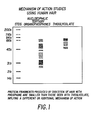
- Figure 1 is a representation of such a gel comparing the digestion of hair by N, N-diethylaminopropylbis(3-hydroxypropyl)phosphine and by sodium thioglycolate.
- N,N-diethylaminopropylbis(3-hydroxypropyl)phosphine produces lower molecular weight fragments than those produced by reduction of disulfide bonds alone (i.e., digestion by thioglycolate).
- BSA Bovine Serum Albumin
- N, N-diethylaminopropylbis(3-hydroxypropyl)phosphine was studied and compared with effects of the disulfide bond reducing agents thioglycolate (TG) and 2-mercaptoethanol(EtSH) on BSA.
- Solutions of BSA at 10mg/ml in .1M tris buffer at pH 8.0 were combined with equal volumes of 0.2M N,N-diethylaminopropylbis(3-hydroxypropyl)-phosphine, sodium thioglycolate or 2-mercaptoethanol, boiled for 15 minutes and then mixed 1:1 with SDS sample buffer without reducing agent.
- Figure 2 is a representation of a SDS-PAGE gel showing BSA treated with thioglycolate and BSA treated with N,N-diethylaminopropylbis(3-hydroxypropyl)phosphine.
- Treatment of BSA with EtSH or TG results in the production of a 66K monomer.
- Treatment of BSA with N,N-diethylaminopropyl-bis(3-hydroxypropyl) -phosphine results in cleavage of the 66K monomer into smaller peptide fragments indicating disruption of covalent bonds. There is no cleavage of covalent bonds in the 66K monomer by either EtSH or TG.
- N,N-diethylaminopropylbis (3-hydroxypropyl)phosphine was studied.
- Sperm whale myoglobin does not contain any cysteine residues.
- the protein was treated at a concentration 10 mg/ml with 0.2m mercaptoethanol or phosphine as in Example 8.
- Example 8 Using the same procedure as in Example 8, the following proteins, all containing cystine residues, were treated with N,N-diethylaminopropylbis(3-hydroxy- propyl)phosphine solutions and the products analyzed by SDS-PAGE: alcohol dehydrogenase, phosphorylase B, pyruvate kinase, creatinine kinase and phosphogluco-mutase. All the above proteins showed peptide bond cleavage as evidenced by the presence of lower molecular weight peptide fragments on the SDS gel.
- the expected fragments from the primary sequence are 2971, 8055, 11,026, and 23,054 daltons. This obviously is not the case since we see a 26,500 fragment present in the gel pattern. Thus a partial cleavage of the polypeptide occurs as well.
- Partial cleavage of the asparaginase with a hit on a single cysteine residue results in the following possible fragments, stating from the amino- terminal end: 8055, 26,025, 11,026, and 23,054. This still does not account for the lack of the 11,025 fragment and the presence of the 19,000 molecular weight band. Therefore, a possible explanation may be advanced as follows: the 11,025 if crosslinked with the 8055 fragment will give a 19,000 fragment. Assuming that the reaction occurs to completion there would remain the 8055 from the simultaneous hit of both cysteine residues but no remaining 11,025 since they are bound up by the excess 8055 fragment. This is consistent with the gel data since a 8055 fragment is visible in the gel.
- tertiary organophospines with and without nucleophilic side-chains was evaluated. Using the basic procedure for digestion outlined above, it was found that tertiary organophosphines with nucleophilic side chains cleave proteins containing cysteine residues while tertiary organophosphines without nucleophilic side chains act as reducing agents but do not cleave such proteins.
- tertiary organophosphines with tris-carboxy- ethyl, tris-n-butyl, tris-isobutyl or tri-cyanoethyl side chains show no sign of cleaving peptide bonds.
- BSA tris(isobutyl)phosphine and depicted in Figure 2. Only the parent, 66K, protein is seen after the reaction.
- the nucleophilic tertiary organophosphines of the present invention selectively cleave proteins containing cysteine residues at the cysteine residue sites. Proteins containing numerous cysteine -cysteine sequences, such as bovine serum albumin, are all readily cleaved by the compounds of this invention. Other proteins with fewer cysteine residues may require application of heat to the digestion reaction to push the reaction to completion.
- the cleavage reaction of the compounds of this invention occurs over a wide pH range (4-12) and can be adjusted for optimal results by one skilled in the art to which this invention pertains. The reaction can be performed in various approporiate aqueous buffer solutions.
- these compounds Due to the selectively of the cleavage by the compounds of this invention for cysteine residue sites, these compounds are very useful as a reagents for mapping of protein sequences and protein structural analysis. Such mapping and analysis can be performed using the digestion procedures described above.
- keratins contain a high percentage of cysteine residues
- treatment of keratins with the compounds of this invention will solubilize them.
- feathers, callus tissue, hair and nails can be solubilized by these nucleophilic tertiary organophosphines.
- Such solubilization can be useful as a dehairing agent prior to tanning of animal hides and as an agent for the removal of ingrown toenails or callus tissue.
- the compounds of this invention also may have antibacterial, antiviral and antifungal activity since these compounds cleave cystine containing proteins.
- the compounds of this invention will be useful as additional, selective tools in the modification of proteins by selective cleavage of protein.
Landscapes
- Chemical & Material Sciences (AREA)
- Life Sciences & Earth Sciences (AREA)
- Health & Medical Sciences (AREA)
- Organic Chemistry (AREA)
- Molecular Biology (AREA)
- Biochemistry (AREA)
- General Health & Medical Sciences (AREA)
- Engineering & Computer Science (AREA)
- Medicinal Chemistry (AREA)
- Hematology (AREA)
- Proteomics, Peptides & Aminoacids (AREA)
- Urology & Nephrology (AREA)
- Physics & Mathematics (AREA)
- Biophysics (AREA)
- Analytical Chemistry (AREA)
- Immunology (AREA)
- Biomedical Technology (AREA)
- Bioinformatics & Cheminformatics (AREA)
- Cell Biology (AREA)
- Biotechnology (AREA)
- Bioinformatics & Computational Biology (AREA)
- Microbiology (AREA)
- Genetics & Genomics (AREA)
- Food Science & Technology (AREA)
- General Physics & Mathematics (AREA)
- Pathology (AREA)
- Peptides Or Proteins (AREA)
- Investigating Or Analysing Biological Materials (AREA)
Applications Claiming Priority (4)
| Application Number | Priority Date | Filing Date | Title |
|---|---|---|---|
| US17657188A | 1988-04-01 | 1988-04-01 | |
| US17657388A | 1988-04-01 | 1988-04-01 | |
| US176571 | 1988-04-01 | ||
| US176573 | 1988-04-01 |
Publications (3)
| Publication Number | Publication Date |
|---|---|
| EP0339217A2 true EP0339217A2 (de) | 1989-11-02 |
| EP0339217A3 EP0339217A3 (en) | 1990-01-03 |
| EP0339217B1 EP0339217B1 (de) | 1994-09-21 |
Family
ID=26872381
Family Applications (1)
| Application Number | Title | Priority Date | Filing Date |
|---|---|---|---|
| EP89103906A Expired - Lifetime EP0339217B1 (de) | 1988-04-01 | 1989-03-06 | Spezifische Spaltung von Peptidbindungen durch organische tertiäre Phosphine mit nukleophilen Seitenketten |
Country Status (6)
| Country | Link |
|---|---|
| EP (1) | EP0339217B1 (de) |
| JP (1) | JPH0215092A (de) |
| AT (1) | ATE111918T1 (de) |
| CA (1) | CA1330800C (de) |
| DE (1) | DE68918323T2 (de) |
| ES (1) | ES2064374T3 (de) |
Cited By (2)
| Publication number | Priority date | Publication date | Assignee | Title |
|---|---|---|---|---|
| WO2007091907A1 (en) | 2006-02-09 | 2007-08-16 | Instytut Biochemii I Biofizyki Pan | Method of hydrolysis of peptide bond |
| US9994646B2 (en) | 2009-09-16 | 2018-06-12 | Genentech, Inc. | Coiled coil and/or tether containing protein complexes and uses thereof |
Families Citing this family (8)
| Publication number | Priority date | Publication date | Assignee | Title |
|---|---|---|---|---|
| CA2756244A1 (en) | 2009-04-02 | 2010-10-07 | Roche Glycart Ag | Multispecific antibodies comprising full length antibodies and single chain fab fragments |
| TW201138821A (en) | 2010-03-26 | 2011-11-16 | Roche Glycart Ag | Bispecific antibodies |
| CN103068846B9 (zh) | 2010-08-24 | 2016-09-28 | 弗·哈夫曼-拉罗切有限公司 | 包含二硫键稳定性Fv片段的双特异性抗体 |
| SG191153A1 (en) | 2010-12-23 | 2013-07-31 | Hoffmann La Roche | Polypeptide-polynucleotide-complex and its use in targeted effector moiety delivery |
| CA2861124A1 (en) | 2012-02-10 | 2013-08-15 | Genentech, Inc. | Single-chain antibodies and other heteromultimers |
| KR20150030744A (ko) | 2012-06-27 | 2015-03-20 | 에프. 호프만-라 로슈 아게 | 표적에 특이적으로 결합하는 하나 이상의 결합 단위를 포함하는 항체 Fc-영역 접합체의 제조 방법 및 그의 용도 |
| RU2639287C2 (ru) | 2012-06-27 | 2017-12-20 | Ф. Хоффманн-Ля Рош Аг | Способ отбора и получения высокоселективных и мультиспецифичных нацеливающих групп с заданными свойствами, включающих по меньшей мере две различные связывающие группировки, и их применения |
| EP3227332B1 (de) | 2014-12-03 | 2019-11-06 | F.Hoffmann-La Roche Ag | Multispezifische antikörper |
Family Cites Families (4)
| Publication number | Priority date | Publication date | Assignee | Title |
|---|---|---|---|---|
| US3628910A (en) * | 1966-05-02 | 1971-12-21 | American Cyanamid Co | Compositions for the deformation of keratin |
| FR1574239A (de) * | 1967-07-12 | 1969-07-11 | ||
| US3754035A (en) * | 1970-01-29 | 1973-08-21 | American Cyanamid Co | Tertiary organophosphines |
| US3970532A (en) * | 1975-01-16 | 1976-07-20 | Borg-Warner Corporation | 2-Hydroxyethylphosphines |
-
1989
- 1989-03-06 EP EP89103906A patent/EP0339217B1/de not_active Expired - Lifetime
- 1989-03-06 AT AT89103906T patent/ATE111918T1/de not_active IP Right Cessation
- 1989-03-06 ES ES89103906T patent/ES2064374T3/es not_active Expired - Lifetime
- 1989-03-06 DE DE68918323T patent/DE68918323T2/de not_active Expired - Fee Related
- 1989-03-30 CA CA000595161A patent/CA1330800C/en not_active Expired - Fee Related
- 1989-04-01 JP JP1083848A patent/JPH0215092A/ja active Pending
Cited By (3)
| Publication number | Priority date | Publication date | Assignee | Title |
|---|---|---|---|---|
| WO2007091907A1 (en) | 2006-02-09 | 2007-08-16 | Instytut Biochemii I Biofizyki Pan | Method of hydrolysis of peptide bond |
| US8969516B2 (en) | 2006-02-09 | 2015-03-03 | Instytut Biochemii I Biofizyki Pan | Method of hydrolysis of peptide bond |
| US9994646B2 (en) | 2009-09-16 | 2018-06-12 | Genentech, Inc. | Coiled coil and/or tether containing protein complexes and uses thereof |
Also Published As
| Publication number | Publication date |
|---|---|
| ATE111918T1 (de) | 1994-10-15 |
| DE68918323T2 (de) | 1995-05-18 |
| EP0339217B1 (de) | 1994-09-21 |
| CA1330800C (en) | 1994-07-19 |
| DE68918323D1 (de) | 1994-10-27 |
| JPH0215092A (ja) | 1990-01-18 |
| ES2064374T3 (es) | 1995-02-01 |
| EP0339217A3 (en) | 1990-01-03 |
Similar Documents
| Publication | Publication Date | Title |
|---|---|---|
| Gross | [27] The cyanogen bromide reaction | |
| Gurd | [34a] Carboxymethylation | |
| Paxton et al. | Sequence analysis of carcinoembryonic antigen: identification of glycosylation sites and homology with the immunoglobulin supergene family. | |
| Sutoh | An actin-binding site on the 20K fragment of myosin subfragment 1 | |
| Sela et al. | The reductive cleavage of disulfide bonds and its application to problems of protein structure | |
| EP0339217B1 (de) | Spezifische Spaltung von Peptidbindungen durch organische tertiäre Phosphine mit nukleophilen Seitenketten | |
| Fujimoto | Evidence for natural existence of pyridinoline crosslink in collagen | |
| RU2275377C2 (ru) | Способ пространственной упаковки химически синтезированных полипептидов | |
| ES2169269T3 (es) | Proceso para la preparacion de o-acetilserina, l-cisteina y productos afines a l-cisteina. | |
| Wakamatsu et al. | Three forms of thiol proteinase inhibitor from rat liver formed depending on the oxidation-reduction state of a sulfhydryl group. | |
| Schofield et al. | Procollagen-a precursor form of collagen | |
| Chang et al. | Chemical modification of the tryptophan residue in cobratoxin | |
| Paolini et al. | Amino acid sequence, post-translational modifications, binding and labelling of porcine odorant-binding protein | |
| Fraenkel-Conrat et al. | A general micromethod for the stepwise degradation of peptides | |
| Aquilina et al. | Cysteine is the initial site of modification of α-crystallin by kynurenine | |
| Kubo et al. | Oxidative folding of ω‐conotoxin MVIIC: Effects of temperature and salt | |
| US4956467A (en) | Nucleophilic tertiary organophosphines | |
| EA009771B1 (ru) | Полипептид нейбластина, способы его получения и применения | |
| Huisman et al. | Amino-acid composition of four different kinds of human haemoglobin | |
| Misono et al. | Structure of mouse submaxillary gland renin. Identification of two disulfide-linked polypeptide chains and the complete amino acid sequence of the light chain. | |
| JPH07507051A (ja) | 新規なパラトルモンフラグメント,その調製およびそれを含む医薬 | |
| Homandberg et al. | Carboxypeptidase inhibitors from Ascaris suum: the primary structure | |
| Pesciotta et al. | Purification and characterization of the amino-terminal propeptide of pro. alpha. 1 (I) chains from embryonic chick tendon procollagen | |
| GB2238051A (en) | Collagens having methionine sulphoxide residues, processes for preparing them and cosmetic agents | |
| Prabhakaram et al. | Determination of glycation crosslinking by the sugar-dependent incorporation of [14C] lysine into protein |
Legal Events
| Date | Code | Title | Description |
|---|---|---|---|
| PUAI | Public reference made under article 153(3) epc to a published international application that has entered the european phase |
Free format text: ORIGINAL CODE: 0009012 |
|
| AK | Designated contracting states |
Kind code of ref document: A2 Designated state(s): AT BE CH DE ES FR GB GR IT LI NL SE |
|
| PUAL | Search report despatched |
Free format text: ORIGINAL CODE: 0009013 |
|
| AK | Designated contracting states |
Kind code of ref document: A3 Designated state(s): AT BE CH DE ES FR GB GR IT LI NL SE |
|
| 17P | Request for examination filed |
Effective date: 19900618 |
|
| 17Q | First examination report despatched |
Effective date: 19920324 |
|
| RAP1 | Party data changed (applicant data changed or rights of an application transferred) |
Owner name: CARTER-WALLACE, INC. |
|
| GRAA | (expected) grant |
Free format text: ORIGINAL CODE: 0009210 |
|
| AK | Designated contracting states |
Kind code of ref document: B1 Designated state(s): AT BE CH DE ES FR GB GR IT LI NL SE |
|
| PG25 | Lapsed in a contracting state [announced via postgrant information from national office to epo] |
Ref country code: GR Free format text: LAPSE BECAUSE OF FAILURE TO SUBMIT A TRANSLATION OF THE DESCRIPTION OR TO PAY THE FEE WITHIN THE PRESCRIBED TIME-LIMIT Effective date: 19940921 |
|
| REF | Corresponds to: |
Ref document number: 111918 Country of ref document: AT Date of ref document: 19941015 Kind code of ref document: T |
|
| REF | Corresponds to: |
Ref document number: 68918323 Country of ref document: DE Date of ref document: 19941027 |
|
| ITF | It: translation for a ep patent filed | ||
| ET | Fr: translation filed | ||
| EAL | Se: european patent in force in sweden |
Ref document number: 89103906.7 |
|
| REG | Reference to a national code |
Ref country code: ES Ref legal event code: FG2A Ref document number: 2064374 Country of ref document: ES Kind code of ref document: T3 |
|
| PLBE | No opposition filed within time limit |
Free format text: ORIGINAL CODE: 0009261 |
|
| STAA | Information on the status of an ep patent application or granted ep patent |
Free format text: STATUS: NO OPPOSITION FILED WITHIN TIME LIMIT |
|
| 26N | No opposition filed | ||
| PGFP | Annual fee paid to national office [announced via postgrant information from national office to epo] |
Ref country code: SE Payment date: 19960220 Year of fee payment: 8 |
|
| PGFP | Annual fee paid to national office [announced via postgrant information from national office to epo] |
Ref country code: GB Payment date: 19960226 Year of fee payment: 8 |
|
| PGFP | Annual fee paid to national office [announced via postgrant information from national office to epo] |
Ref country code: DE Payment date: 19960228 Year of fee payment: 8 |
|
| PGFP | Annual fee paid to national office [announced via postgrant information from national office to epo] |
Ref country code: BE Payment date: 19960312 Year of fee payment: 8 |
|
| PGFP | Annual fee paid to national office [announced via postgrant information from national office to epo] |
Ref country code: AT Payment date: 19960314 Year of fee payment: 8 |
|
| PGFP | Annual fee paid to national office [announced via postgrant information from national office to epo] |
Ref country code: ES Payment date: 19960320 Year of fee payment: 8 |
|
| PGFP | Annual fee paid to national office [announced via postgrant information from national office to epo] |
Ref country code: FR Payment date: 19960327 Year of fee payment: 8 |
|
| PGFP | Annual fee paid to national office [announced via postgrant information from national office to epo] |
Ref country code: NL Payment date: 19960328 Year of fee payment: 8 |
|
| PGFP | Annual fee paid to national office [announced via postgrant information from national office to epo] |
Ref country code: CH Payment date: 19960411 Year of fee payment: 8 |
|
| PG25 | Lapsed in a contracting state [announced via postgrant information from national office to epo] |
Ref country code: GB Effective date: 19970306 Ref country code: AT Effective date: 19970306 |
|
| PG25 | Lapsed in a contracting state [announced via postgrant information from national office to epo] |
Ref country code: SE Effective date: 19970307 Ref country code: ES Free format text: LAPSE BECAUSE OF NON-PAYMENT OF DUE FEES Effective date: 19970307 |
|
| PG25 | Lapsed in a contracting state [announced via postgrant information from national office to epo] |
Ref country code: LI Effective date: 19970331 Ref country code: CH Effective date: 19970331 Ref country code: BE Effective date: 19970331 |
|
| BERE | Be: lapsed |
Owner name: CARTER-WALLACE INC. Effective date: 19970331 |
|
| PG25 | Lapsed in a contracting state [announced via postgrant information from national office to epo] |
Ref country code: NL Effective date: 19971001 |
|
| GBPC | Gb: european patent ceased through non-payment of renewal fee |
Effective date: 19970306 |
|
| REG | Reference to a national code |
Ref country code: CH Ref legal event code: PL |
|
| PG25 | Lapsed in a contracting state [announced via postgrant information from national office to epo] |
Ref country code: FR Free format text: LAPSE BECAUSE OF NON-PAYMENT OF DUE FEES Effective date: 19971128 |
|
| NLV4 | Nl: lapsed or anulled due to non-payment of the annual fee |
Effective date: 19971001 |
|
| PG25 | Lapsed in a contracting state [announced via postgrant information from national office to epo] |
Ref country code: DE Effective date: 19971202 |
|
| EUG | Se: european patent has lapsed |
Ref document number: 89103906.7 |
|
| REG | Reference to a national code |
Ref country code: FR Ref legal event code: ST |
|
| REG | Reference to a national code |
Ref country code: ES Ref legal event code: FD2A Effective date: 19990405 |
|
| PG25 | Lapsed in a contracting state [announced via postgrant information from national office to epo] |
Ref country code: IT Free format text: LAPSE BECAUSE OF NON-PAYMENT OF DUE FEES;WARNING: LAPSES OF ITALIAN PATENTS WITH EFFECTIVE DATE BEFORE 2007 MAY HAVE OCCURRED AT ANY TIME BEFORE 2007. THE CORRECT EFFECTIVE DATE MAY BE DIFFERENT FROM THE ONE RECORDED. Effective date: 20050306 |