EP0340732B1 - Membranes en polymères fluorocarbonés et procédé de fabrication de membranes en polymères fluorocarbonés - Google Patents
Membranes en polymères fluorocarbonés et procédé de fabrication de membranes en polymères fluorocarbonés Download PDFInfo
- Publication number
- EP0340732B1 EP0340732B1 EP89107944A EP89107944A EP0340732B1 EP 0340732 B1 EP0340732 B1 EP 0340732B1 EP 89107944 A EP89107944 A EP 89107944A EP 89107944 A EP89107944 A EP 89107944A EP 0340732 B1 EP0340732 B1 EP 0340732B1
- Authority
- EP
- European Patent Office
- Prior art keywords
- membrane
- polymer
- solvent
- pfa
- microporous
- Prior art date
- Legal status (The legal status is an assumption and is not a legal conclusion. Google has not performed a legal analysis and makes no representation as to the accuracy of the status listed.)
- Expired - Lifetime
Links
Images



Classifications
-
- B—PERFORMING OPERATIONS; TRANSPORTING
- B01—PHYSICAL OR CHEMICAL PROCESSES OR APPARATUS IN GENERAL
- B01D—SEPARATION
- B01D67/00—Processes specially adapted for manufacturing semi-permeable membranes for separation processes or apparatus
- B01D67/0002—Organic membrane manufacture
- B01D67/0023—Organic membrane manufacture by inducing porosity into non porous precursor membranes
- B01D67/003—Organic membrane manufacture by inducing porosity into non porous precursor membranes by selective elimination of components, e.g. by leaching
-
- B—PERFORMING OPERATIONS; TRANSPORTING
- B01—PHYSICAL OR CHEMICAL PROCESSES OR APPARATUS IN GENERAL
- B01D—SEPARATION
- B01D67/00—Processes specially adapted for manufacturing semi-permeable membranes for separation processes or apparatus
- B01D67/0081—After-treatment of organic or inorganic membranes
- B01D67/0083—Thermal after-treatment
-
- B—PERFORMING OPERATIONS; TRANSPORTING
- B01—PHYSICAL OR CHEMICAL PROCESSES OR APPARATUS IN GENERAL
- B01D—SEPARATION
- B01D67/00—Processes specially adapted for manufacturing semi-permeable membranes for separation processes or apparatus
- B01D67/0081—After-treatment of organic or inorganic membranes
- B01D67/0095—Drying
-
- B—PERFORMING OPERATIONS; TRANSPORTING
- B01—PHYSICAL OR CHEMICAL PROCESSES OR APPARATUS IN GENERAL
- B01D—SEPARATION
- B01D71/00—Semi-permeable membranes for separation processes or apparatus characterised by the material; Manufacturing processes specially adapted therefor
- B01D71/06—Organic material
- B01D71/30—Polyalkenyl halides
- B01D71/32—Polyalkenyl halides containing fluorine atoms
- B01D71/36—Polytetrafluoroethylene
-
- C—CHEMISTRY; METALLURGY
- C08—ORGANIC MACROMOLECULAR COMPOUNDS; THEIR PREPARATION OR CHEMICAL WORKING-UP; COMPOSITIONS BASED THEREON
- C08J—WORKING-UP; GENERAL PROCESSES OF COMPOUNDING; AFTER-TREATMENT NOT COVERED BY SUBCLASSES C08B, C08C, C08F, C08G or C08H
- C08J9/00—Working-up of macromolecular substances to porous or cellular articles or materials; After-treatment thereof
- C08J9/28—Working-up of macromolecular substances to porous or cellular articles or materials; After-treatment thereof by elimination of a liquid phase from a macromolecular composition or article, e.g. drying of coagulum
-
- D—TEXTILES; PAPER
- D01—NATURAL OR MAN-MADE THREADS OR FIBRES; SPINNING
- D01D—MECHANICAL METHODS OR APPARATUS IN THE MANUFACTURE OF ARTIFICIAL FILAMENTS, THREADS, FIBRES, BRISTLES OR RIBBONS
- D01D5/00—Formation of filaments, threads, or the like
- D01D5/24—Formation of filaments, threads, or the like with a hollow structure; Spinnerette packs therefor
-
- B—PERFORMING OPERATIONS; TRANSPORTING
- B01—PHYSICAL OR CHEMICAL PROCESSES OR APPARATUS IN GENERAL
- B01D—SEPARATION
- B01D2323/00—Details relating to membrane preparation
- B01D2323/08—Specific temperatures applied
- B01D2323/081—Heating
-
- C—CHEMISTRY; METALLURGY
- C08—ORGANIC MACROMOLECULAR COMPOUNDS; THEIR PREPARATION OR CHEMICAL WORKING-UP; COMPOSITIONS BASED THEREON
- C08J—WORKING-UP; GENERAL PROCESSES OF COMPOUNDING; AFTER-TREATMENT NOT COVERED BY SUBCLASSES C08B, C08C, C08F, C08G or C08H
- C08J2327/00—Characterised by the use of homopolymers or copolymers of compounds having one or more unsaturated aliphatic radicals, each having only one carbon-to-carbon double bond, and at least one being terminated by a halogen; Derivatives of such polymers
- C08J2327/02—Characterised by the use of homopolymers or copolymers of compounds having one or more unsaturated aliphatic radicals, each having only one carbon-to-carbon double bond, and at least one being terminated by a halogen; Derivatives of such polymers not modified by chemical after-treatment
- C08J2327/12—Characterised by the use of homopolymers or copolymers of compounds having one or more unsaturated aliphatic radicals, each having only one carbon-to-carbon double bond, and at least one being terminated by a halogen; Derivatives of such polymers not modified by chemical after-treatment containing fluorine atoms
Definitions
- This invention relates to a process for producing microporous poly (tetrafluoroethylene- co-perfluoro (alkyl vinyl ether)) (PFA) membranes and to the membrane so-produced.
- PFA microporous poly (tetrafluoroethylene- co-perfluoro (alkyl vinyl ether))
- Microporous membranes include thin sheets and hollow fibers generally formed from synthetic thermoplastic materials and having a substantially continuous matrix structure containing open pores or conduits of small size.
- the mean pore size range for pores of "microporous membranes" is not precisely defined in the art, but it is generally understood to extend from about 0.05 »m (microns) to about 10 »m (microns).
- Microporous membranes having open pores thereby importing permeability are useful in filtration.
- Microporous membranes having closed pores are impermeable. While not useful in filtration they are useful in other applications such as for thermal insulation.
- PFA and FEP poly(tetrafluoroethylene-co-hexafluoropropylene) polymers are desirable filtration membrane materials because of their excellent chemical and thermal stabilities. However, their inherent inert nature also renders them unamenable to be cast into membranes by conventional solution immersion casting processes.
- microporous membrane using similarly inert material is disclosed in U.S. Patents 3,953,566; 3,962,153; 4,096,227; 4,110,392 and 4,187,390.
- the process disclosed in these patents comprises stretching sintered poly(tetrafluoroethylene) (PTFE) particles to create a pore structure characterized by nodes inter-connected by fibrils. The pores are highly elongated in the stretch direction.
- U.S. Patents 4,623,670 and 4,702,836 disclose a process for forming microporous membranes from fluoropolymer resins selected from the group consisting of ethylene-tetrafluoroethylene copolymer, ethylene-chlorotrifluoroethylene copolymer and poly(chlorotrifluoroethylene).
- fluoropolymer resins selected from the group consisting of ethylene-tetrafluoroethylene copolymer, ethylene-chlorotrifluoroethylene copolymer and poly(chlorotrifluoroethylene).
- an inorganic filler is required in melt molding the polymer with a chlorotrifluoroethylene oligomer.
- the filler and oligomer are dissolved out of the polymer to form voids.
- the use of fillers in microporous membranes used in filtration is highly undesirable since all of the filler cannot be removed by solvation and the filler remaining may migrate into the filtrate and contaminate it.
- a method for making a porous fluorinated polymer structure is disclosed in U.S. Patent 4,434,116. It involves forming a solvated or partially solvated polymer/solvent mixture.
- the polymer for which this is applicable comprises a copolymer of tetrafluoroethylene and perfluoro vinyl ether with a sulfonyl fluoride (-SO2F), sulfonate (-SO3Z) or carboxylate (-COOZ) functional group wherein Z is a cation.
- -SO2F sulfonyl fluoride
- -SO3Z sulfonate
- -COOZ carboxylate
- the method described is based on thermal phase separation of the polymer/solvent mixture and specified that the solvent (porogen) is a solid at room temperature and must crystallize after phase separation. The solvent is then removed from the blend in the solid state. No pore morphology or permeability data of the porous structure were given.
- FR-A-2 575 398 discloses a permeable microporous fluorocarbon membrane comprising FEP of PFA, which is a composite membrane consisting of a ceramic substrate and a fluorocarbon membrane deposited thereon.
- the membrane is prepared by depositing a suspension of the fluorocarbon component and a suitable solvent on the ceramic substrate.
- JP-A-62 192 431 discloses porous membranes with excellent chemical and heat resistance and mechanical properties, useful as microfilters for purification of strong acids, strong alkalis, etc., which are prepared by melt molding of 10-70 vol% of an ethylene (I)-tetrafluoroethylene copolymer (II) or a chlorotrifluoroethylene(III)-I copolymer and 30-90 vol.% of a III oligomer, followed by extracting the III oligomer.
- II ethylene
- II ethylene-tetrafluoroethylene copolymer
- III chlorotrifluoroethylene
- microporous films are formed from PFA having an open or closed pore structure.
- the film When the structure is open, the film is permeable to both liquids and gases and can be used as filtration media.
- the pore structure of the film When the pore structure of the film is closed, the porous film is impermeable and is useful as an insulator or as an encapsulation system for slow release of drugs, for example.
- a mixture is formed comprising between about 10 and about 35 weight percent PFA polymer and the remainder a solvent (porogen) comprising chlorotrifluoroethylene oligomer having a boiling point below the melting point of said polymer, which permits liquid - liquid phase separation upon cooling from elevated temperature and subsequently solidification of the polymer.
- the present invention provides laminate products wherein a microporous PFA membrane sheet produced by the process of this invention is adhered directly to a porous sheet substrate on one or both surfaces of the membrane without the use of an adhesive.
- Figure 1 is a flow diagram depicting the process of this invention.
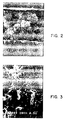
- Figure 2 is a photomicrograph at 1000 X the cross- section of a microporous poly (tetrafluoroethylene-co- perfluoro(alkyl vinyl ether)) (PFA) membrane made in accordance with this invention.
- PFA microporous poly (tetrafluoroethylene-co- perfluoro(alkyl vinyl ether))
- Figure 3 is a photomicrograph at 15000 X the cross section of the membrane shown in Figure 2.
- Figure 4 is a photomicrograph at 150 X the cross section of a microporous PFA sample with a cellular morphology.
- Figure 5 is a photomicrograph at 2000 X the cross section of the sheet of Figure 4.
- Figure 6 is a photomicrograph at 5300 X one surface of the membrane made by the process of Example 4.
- Figure 7 is a photomicrograph at 5200 X the surface of the membrane opposite the surface shown in Figure 7.
- Figure 8 is a photomicrograph at 1600 X the cross section of the membrane shown in Figure 7.
- membranes having a desired porosity and strength can be formed from a melt blend of poly(tetrafluoroethylene-co-perfluoro(aklyl vinyl ether)) (PFA) and a solvent having a boiling point below the melting point of said polymer, which permits phase separation on cooling which comprises heated chlorotrifluoroethylene oligomer oil.
- PFA poly(tetrafluoroethylene-co-perfluoro(aklyl vinyl ether))
- solvent having a boiling point below the melting point of said polymer which permits phase separation on cooling which comprises heated chlorotrifluoroethylene oligomer oil.
- PFA poly(tetrafluoroethylene-co-perfluoro(aklyl vinyl ether))
- solvent having a boiling point below the melting point of said polymer which permits phase separation on cooling which comprises heated chlorotrifluoroethylene oligomer oil.
- the resulting membrane will have an undesirably low porosity while membranes formed from melt blends having a concentration of PFA less than about 10 percent are too weak for use in environments which required adequate mechanical stability.
- the use of the solvent has been found to be essential in the process of this invention.
- a melt blend of the PFA and the solvent is prepared.
- the melt blend is formed by heating to at least the melting temperature of the PFA in the presence of the solvent and usually between about 280 and about 310°C, preferably in an inert atmosphere such as nitrogen or an inert gas. Oxygen tends to decompose the solvent at the high temperatures needed to form the melt blend.
- the PFA and the solvent are mixed such as in the mixing barrel of a conventional twin screw extruding apparatus wherein the mixture is heated during mixing.
- the melt blend is passed from the extrusion zone through a slot die or a hollow fiber die to form molten film or molten hollow fiber.
- the molten film or hollow fiber then is quenched such as by being passed through a quench bath comprising water or the like at a temperature below the phase separation temperature of the melt blend to form gel film or gel hollow fiber.
- the extruded molten film or fiber can be quenched by being passed over cooled rollers at the appropriate temperature in order to effect phase separation of the melt blend to form membrane or fiber.
- the resultant product is characterized by open pores and therefore is useful in filtration.
- the resultant product is characterized by a cellular morphology and therefore can be useful as in insulation or in encapsulation.
- the gel film or fiber then is immersed into a liquid bath which selectively imbibes the solvent thereby removing it from the PFA matrix without substantially softening or dissolving the polymer.
- the imbibing extraction liquid can also function as a quench medium such that the molten film or hollow fibers can be extruded directly into it. In this case, the quench and extraction steps take place in the same bath.
- Suitable imbibing liquids include 1,1,2 trichlorotrifluoroethene (Freon TF), 1,1,1 trichloroethane, carbon tetrachloride, hexane or the like.
- Extraction can be effected at a temperature between about 20°C and about 50°C in order to maximize solvent extraction while not softening the polymer.
- the polymer then is dried at a temperature usually between about 20°C and about 50°C and, during drying, the membrane may be restrained in order to prevent shrinkage.
- the dry polymer can be heat-set by heating it to a temperature between about 200°C and about 290°C in order to further set the characteristic of the membrane.
- the membrane then can be rolled onto a core for storage.
- microporous product of this invention is characterized by pores of a mean pore size of between about .05 and about 5 »m (micron).
- FIG. 1 A typical process useful for producing the membrane product of this invention is depicted in Figure 1.
- An extruder 10 is provided which is connected to a hopper 12 from which PFA and chlorotrifluoroethylene oligomer mixture is introduced into the extruder 10.
- a tank 14 and conduit 16 are provided for introducing additional chlorotrifluoroethylene oligomer into the extruder 10 for admixture with the PFA.
- the melt blend of polymer and solvent is removed from extruder 10 through conduit 18 and into die 20 from which a sheet membrane 22 exits through orifice 24.
- Extrudate film 22 passes over chill roll 26 where the extrudate film 22 is cooled to a temperature for effecting microphase separation of the polymer and the solvent into a gel membrane 23.
- the gel membrane 23 then passes over the guide rolls 28 and then through the bath 30 containing a liquid extractant for the solvent.
- Membrane 23 then passes out of the bath 30 into an enclosed heating zone 32 wherein the edges of the membrane 23 are restrained while the membrane is optionally heated in order to dry the membrane.
- the membrane 23 then passes over guide rollers 34 and 36 into heat-setting zone 38 wherein the membrane 23 is heat-set by heating.
- the membrane 23 passes out of the heat-setting zone 38 onto wind up roller 40.
- a porous sheet substrate 42 which is housed on roller 44 can be directed to the chill roll 26 in order to contact the extrudate film 22 and be adhered to it without the use of an adhesive.
- This porous sheet can either be inserted between extrudate film 22 and chill roll 26, or alternatively be placed in contact with film 22 on the air side opposite to chill roll surface.
- Another embodiment will be to form a three layer laminate by sandwiching extrudate film 22 between two porous sheets. Since the substrate is porous, it will have little adverse affect on the liquid extraction steps, the drying step or the heat-setting step which are downstream of the chill roll 26.
- Teflon R PFA 350 (DuPont) pellets were ground into fine powder and mixed with chlorotrifluoroethylene oligomer (CTFE oil #27 by Halocarbon Products Corp.) in a stirred pressure vessel (Parr reactor model 4561) at a concentration of 20% (w/w) polymer. The mixture was heated to 310°C under N2 atmosphere and agitated at this temperature for 1 hour. This hot melt blend was then extruded through a 50.8 mm (2") wide film die (also maintained at 310°C) connected to the vessel via a bottom drain valve. The extrudate, in form of molten film, was immediately quenched with water at room temperature. The sample was then placed in hexane overnight to extract the Halocarbon oil in liquid form and dried at room temperature. Afterwards the sample became white in appearance.
- Additional pure CTFE oil #56 was injected downstream into the extruder near the mid section of the extruder barrel, using a metering pump (FMI model RP-G150o) for delivery.
- the feed rates of the powder blend and oil were 14 g/min and 18 g/min respectively.
- the overall extrudate concentration would be approximately 20% (w/w) of PFA.
- the screws in the extruder consist of feed screw elements, mixing paddles and orifice plugs to provide capability for melting, mixing and coveying of the melt blend.
- a 10cm wide vertical-exiting film die was used downstream of the extruder to form a film of the PFA/CTFE oil melt blend extrudate.
- the die gap thickness was set at 0.25 mm.
- the temperature of the various zones of the extrusion line ranged from 250°C to 290°C with an increasing temperature profile from powder feed zone to the die. Screw speed was set at 350 rpm.
- the extrudate film was quenched on a rotating chrome plated chill roll.
- the temperature of the roll was maintained at 205°C by circulating thermostated silicon oil through its core.
- the quenched film was rolled up with a motorized take-up unit. Its thickness was approximately 70 »m (microns).
- a piece of the sample was restrained on a metal frame and placed in an excess volume 1,1,2 trichlorotrifluoroethane (Freon TF) solvent for extraction.
- the extraction time used was approximately two hours, with one fresh Freon change during this time.
- the restrained sample was removed from the Freon bath and allowed to dry at room temperature. After drying, the white microporous, membrane was further heat set with restraint at 285°C for 15 min.
- PFA membrane was prepared according to Example 1 except chlorotrifluoroethylene oligomer (CTFE oil #56 by Halocarbon Products Corp.) was used; the feed rates of the PFA/CTFE powder mixture and CTFE oil were adjusted to give an overall extrudate concentration of 23% (w/w) of PFA; and the temperature used for mixing and extrusion was set at 300°C.
- the microporous membrane was heat set with restraint at 250°C for 15 min.
Landscapes
- Chemical & Material Sciences (AREA)
- Engineering & Computer Science (AREA)
- Chemical Kinetics & Catalysis (AREA)
- Manufacturing & Machinery (AREA)
- Inorganic Chemistry (AREA)
- Mechanical Engineering (AREA)
- Physics & Mathematics (AREA)
- Thermal Sciences (AREA)
- Textile Engineering (AREA)
- Materials Engineering (AREA)
- Health & Medical Sciences (AREA)
- Medicinal Chemistry (AREA)
- Polymers & Plastics (AREA)
- Organic Chemistry (AREA)
- Manufacture Of Porous Articles, And Recovery And Treatment Of Waste Products (AREA)
- Separation Using Semi-Permeable Membranes (AREA)
Claims (5)
- Un procédé pour former une membrane polymère fluorocarbonée, qui comporte :(a) la formation d'un mélange fondu de poly(tétrafluoroéthylène-co-perfluoro(alkyle vinyle éther)) et un solvant oligomère chlorotrifluoroéthylène présentant un point d'ébullition inférieur au point de fusion dudit polymère, contenant entre environ 10 et 35 pour-cents en poids de polymère sur la base du poids du mélange,(b) la conformation dudit mélange fondu pour former un précurseur conformé à ladite membrane,(c) le refroidissement dudit précurseur conformé à une température à laquelle ledit solvant se sépare, du polymère par une séparation de phase pour former une pellicule en gel,(d) l'extraction sélective dudit solvant formé à partir de ladite pellicule en gel dans la phase (c) pour former une membrane microporeuse dudit polymère, et(e) le séchage de ladite membrane à partir de la phase(d) .
- Le procédé de la revendication 1, dans lequel ladite membrane séchée est fixée à chaud sous contrainte.
- Le procédé de la revendication 1, dans lequel la membrane de la phase (e) est séchée sous contrainte.
- Une membrane fluorocarbonée microporeuse perméable autoporteuse comportant un poly(tétrafluoroéthylène-co-perfluoro(alkyle vinyle éther)) et présentant une taille moyenne de pores entre 0,05 et 5 »m, telle que définie par une pression moyenne de point de bulle d'alcool isopropyle entre 6,9 et 1035 kPa (1 et 150 psi).
- Une membrane fluorocarbonnée microporeuse perméable autoporteuse de la revendication 4, présentant une porosité entre 40 et 90 %.
Applications Claiming Priority (2)
| Application Number | Priority Date | Filing Date | Title |
|---|---|---|---|
| US07/190,285 US4902456A (en) | 1988-05-04 | 1988-05-04 | Fluorocarbon membranes and process for making fluorocarbon membranes |
| US190285 | 1994-02-02 |
Publications (3)
| Publication Number | Publication Date |
|---|---|
| EP0340732A2 EP0340732A2 (fr) | 1989-11-08 |
| EP0340732A3 EP0340732A3 (en) | 1990-03-21 |
| EP0340732B1 true EP0340732B1 (fr) | 1995-07-05 |
Family
ID=22700716
Family Applications (1)
| Application Number | Title | Priority Date | Filing Date |
|---|---|---|---|
| EP89107944A Expired - Lifetime EP0340732B1 (fr) | 1988-05-04 | 1989-05-02 | Membranes en polymères fluorocarbonés et procédé de fabrication de membranes en polymères fluorocarbonés |
Country Status (4)
| Country | Link |
|---|---|
| US (1) | US4902456A (fr) |
| EP (1) | EP0340732B1 (fr) |
| JP (2) | JP2573524B2 (fr) |
| DE (1) | DE68923319T2 (fr) |
Families Citing this family (41)
| Publication number | Priority date | Publication date | Assignee | Title |
|---|---|---|---|---|
| US4990294A (en) * | 1988-05-04 | 1991-02-05 | Millipore Corporation | Process for producing fluorocarbon membranes and membrane product |
| US5721283A (en) * | 1992-06-25 | 1998-02-24 | E. I. Du Pont De Nemours And Company | Porous polytetrafluoroethylene and preparation |
| DE69330128T2 (de) * | 1992-06-25 | 2001-11-15 | E.I. Du Pont De Nemours And Co., Wilmington | Poröses polytetrafluorethylen und herstellung |
| US5374683A (en) * | 1992-08-28 | 1994-12-20 | E. I. Du Pont De Nemours And Company | Low-melting tetrafluoroethylene copolymer and its uses |
| EP0656912B1 (fr) * | 1992-08-28 | 1996-12-04 | E.I. Du Pont De Nemours And Company | Copolymere de tetrafluorethylene a bas point de fusion et ses utilisations |
| US5547761A (en) * | 1992-08-28 | 1996-08-20 | E. I. Du Pont De Nemours And Company | Low melting tetrafluoroethylene copolymer and its uses |
| US5266639A (en) * | 1992-08-28 | 1993-11-30 | E. I. Du Pont De Nemours And Company | Low-melting tetrafluorethylene copolymer and its uses |
| AU7564494A (en) * | 1993-08-13 | 1995-03-14 | Smith & Nephew Richards Inc. | Microporous polymeric foams and microtextured surfaces |
| RU2119817C1 (ru) * | 1995-10-23 | 1998-10-10 | Акционерное общество открытого типа "Полимерсинтез" | Пористая фторуглеродная мембрана, способ ее получения и патронный фильтр на ее основе |
| EP0889925B1 (fr) * | 1996-03-27 | 2004-06-02 | Novartis AG | Procede de fabrication d'un polymere poreux au moyen d'un porogene |
| US5981614A (en) * | 1996-09-13 | 1999-11-09 | Adiletta; Joseph G. | Hydrophobic-oleophobic fluoropolymer compositions |
| DE60024966T2 (de) * | 1999-01-29 | 2006-08-17 | Mykrolis Corp., Billerica | Perfluorierte, thermoplastische filterkartusche |
| AU2975600A (en) * | 1999-01-29 | 2000-08-18 | Millipore Corporation | Microporous hollow fiber membranes from perfluorinated thermoplastic polymers |
| US6921482B1 (en) * | 1999-01-29 | 2005-07-26 | Mykrolis Corporation | Skinned hollow fiber membrane and method of manufacture |
| US6582496B1 (en) | 2000-01-28 | 2003-06-24 | Mykrolis Corporation | Hollow fiber membrane contactor |
| DE60029308T2 (de) * | 1999-01-29 | 2007-07-19 | Entegris, Inc., Chaska | Mit einer haut versehenen hohlfarsermembran und verfahren zur herstellung |
| EP1148931B1 (fr) * | 1999-01-29 | 2006-06-28 | Entegris, Inc. | Contacteur a membrane en fibres creuses |
| KR100637987B1 (ko) | 1999-01-29 | 2006-10-23 | 엔테그리스, 아이엔씨. | 중공 섬유 막의 제조 방법 |
| US6802972B1 (en) | 1999-01-29 | 2004-10-12 | Mykrolis Corporation | Microporous hollow fiber membranes from perfluorinated thermoplastic polymers |
| US7347937B1 (en) | 2000-01-28 | 2008-03-25 | Entegris, Inc. | Perfluorinated thermoplastic filter cartridge |
| IT1320024B1 (it) * | 2000-04-07 | 2003-11-12 | Gambro Dasco Spa | Metodo per la regolazione della infusione in una macchina di dialisi e macchina di dialisi per l'applicazione del citato metodo. |
| DE10149734B4 (de) * | 2001-10-09 | 2004-09-16 | Robert Bosch Gmbh | Gassensor und Verfahren zur Herstellung seiner Polymermatrix |
| US6958365B2 (en) * | 2003-05-13 | 2005-10-25 | Eastman Kodak Company | Manufacturing process for open celled microcellular foam |
| US20040229966A1 (en) * | 2003-05-13 | 2004-11-18 | Eastman Kodak Company | Manufacturing process and use for open celled microcellular foam |
| ATE485886T1 (de) | 2003-06-18 | 2010-11-15 | Asahi Glass Co Ltd | Verfahren und vorrichtung zur herstellung von anorganischen sphären |
| JP4767504B2 (ja) * | 2003-06-18 | 2011-09-07 | 旭硝子株式会社 | 無機質球状体の製造方法及び製造装置 |
| US7384149B2 (en) | 2003-07-21 | 2008-06-10 | Asml Netherlands B.V. | Lithographic projection apparatus, gas purging method and device manufacturing method and purge gas supply system |
| US7175543B2 (en) | 2005-01-26 | 2007-02-13 | Callaway Golf Company | Golf ball and thermoplastic material |
| US7156755B2 (en) | 2005-01-26 | 2007-01-02 | Callaway Golf Company | Golf ball with thermoplastic material |
| US7312267B2 (en) * | 2005-02-23 | 2007-12-25 | Callaway Golf Company | Golf ball and thermoplastic material |
| US7612134B2 (en) * | 2005-02-23 | 2009-11-03 | Callaway Golf Company | Golf ball and thermoplastic material |
| RU2297875C2 (ru) * | 2005-04-12 | 2007-04-27 | ООО "Научно-производственное предприятие "Аквапор" | Полупроницаемая фторуглеродная мембрана и способ ее получения |
| US7612135B2 (en) * | 2006-02-17 | 2009-11-03 | Callaway Golf Company | Golf ball and thermoplastic material |
| US8921283B2 (en) * | 2006-10-30 | 2014-12-30 | Washington University | Method for generating microscopic patterns of protein and other macromolecules |
| CN101884878B (zh) * | 2010-08-18 | 2012-09-26 | 天津工业大学 | 一种全氟聚合物中空纤维多孔膜及其制备方法 |
| CN102580573B (zh) * | 2012-03-01 | 2013-12-25 | 天津工业大学 | 一种全氟聚合物中空纤维膜的制备方法 |
| CN104451934A (zh) * | 2013-09-22 | 2015-03-25 | 杭州费尔过滤技术有限公司 | 一种可熔性含氟树脂单丝及其制造方法 |
| CN103736399A (zh) * | 2014-01-20 | 2014-04-23 | 天津工业大学 | 一种全氟聚合物中空纤维膜及其制备方法 |
| EP3037156A1 (fr) * | 2014-12-22 | 2016-06-29 | Gambro Lundia AB | Séchage de membranes creuses en ligne |
| CN114733360A (zh) * | 2021-01-07 | 2022-07-12 | 杭州费尔新材料有限公司 | 一种聚烯烃中空纤维膜的制备方法 |
| CN113004569B (zh) * | 2021-02-09 | 2023-03-21 | 深圳华源再生医学有限公司 | 多孔膜的改性方法、改性多孔膜及其应用 |
Family Cites Families (13)
| Publication number | Priority date | Publication date | Assignee | Title |
|---|---|---|---|---|
| US2915483A (en) * | 1953-12-30 | 1959-12-01 | Minnesota Mining & Mfg | Plasticized perfluorochloroethylene polymer and process for preparing porous articles therefrom |
| US3379658A (en) * | 1964-05-25 | 1968-04-23 | Charles R. Kemper | Porous film and method of making |
| US3518332A (en) * | 1967-11-22 | 1970-06-30 | Esb Inc | Method for making thin,microporous fluorocarbon polymer sheet material |
| US3536796A (en) * | 1967-11-29 | 1970-10-27 | Grace W R & Co | Process for reducing shrinkage in preparing porous plastic sheet |
| JPS4895461A (fr) * | 1972-03-22 | 1973-12-07 | ||
| US4181983A (en) * | 1977-08-29 | 1980-01-08 | Kulkarni R K | Assimilable hydrophilic prosthesis |
| US4434116A (en) * | 1981-06-26 | 1984-02-28 | Diamond Shamrock Corporation | Method for making a porous fluorinated polymer structure |
| JPS617340A (ja) * | 1984-06-20 | 1986-01-14 | Asahi Chem Ind Co Ltd | フツ素系導電性微多孔膜及びその製造方法 |
| US4778601A (en) * | 1984-10-09 | 1988-10-18 | Millipore Corporation | Microporous membranes of ultrahigh molecular weight polyethylene |
| GB2168981B (en) * | 1984-12-27 | 1988-07-06 | Asahi Chemical Ind | Porous fluorine resin membrane and process for preparation thereof |
| US4874516A (en) * | 1984-12-29 | 1989-10-17 | Ngk Insulators, Ltd. | A ceramic filter for semi-ultrafiltration |
| JPS62192431A (ja) * | 1986-02-20 | 1987-08-24 | Asahi Chem Ind Co Ltd | エチレン共重合体フツ素樹脂多孔膜の製造方法 |
| JPS63331A (ja) * | 1986-06-20 | 1988-01-05 | Mitsubishi Rayon Co Ltd | 弗素樹脂系多孔質膜の製法 |
-
1988
- 1988-05-04 US US07/190,285 patent/US4902456A/en not_active Expired - Lifetime
-
1989
- 1989-05-02 DE DE68923319T patent/DE68923319T2/de not_active Expired - Lifetime
- 1989-05-02 EP EP89107944A patent/EP0340732B1/fr not_active Expired - Lifetime
- 1989-05-02 JP JP1112400A patent/JP2573524B2/ja not_active Expired - Lifetime
-
1995
- 1995-03-22 JP JP7087672A patent/JP2548092B2/ja not_active Expired - Lifetime
Also Published As
| Publication number | Publication date |
|---|---|
| JP2548092B2 (ja) | 1996-10-30 |
| EP0340732A3 (en) | 1990-03-21 |
| JPH0834874A (ja) | 1996-02-06 |
| JP2573524B2 (ja) | 1997-01-22 |
| EP0340732A2 (fr) | 1989-11-08 |
| JPH02208329A (ja) | 1990-08-17 |
| US4902456A (en) | 1990-02-20 |
| DE68923319T2 (de) | 1996-01-04 |
| DE68923319D1 (de) | 1995-08-10 |
Similar Documents
| Publication | Publication Date | Title |
|---|---|---|
| EP0340732B1 (fr) | Membranes en polymères fluorocarbonés et procédé de fabrication de membranes en polymères fluorocarbonés | |
| US5032274A (en) | Process for producing fluorocarbon membranes and membrane product | |
| US4906377A (en) | Fluorocarbon membranes and process for making fluorocarbon membranes | |
| US4874567A (en) | Microporous membranes from polypropylene | |
| US4990294A (en) | Process for producing fluorocarbon membranes and membrane product | |
| US7909178B2 (en) | Porous membrane of vinylidene fluoride resin and process for producing the same | |
| US6852223B2 (en) | Asymmetric porous polytetrafluoroethylene membrane and process for preparing the same | |
| EP1474222B1 (fr) | Membranes halar | |
| JP3795027B2 (ja) | フィルター用非対称性多孔質ポリテトラフルオロエチレン膜 | |
| CA2275891C (fr) | Procede de preparation d'un film polyolefinique microporeux hautement permeable | |
| US5217666A (en) | Process for producing porous polytetrafluoroethylene film | |
| CA2154070C (fr) | Methode de fabrication de membranes microporeuses de pps | |
| WO1986002282A1 (fr) | Membranes microporeuses en polyethylene de poids moleculaire tres eleve | |
| EP1230970B1 (fr) | Film microporeux thermoresistant | |
| EP0036315A2 (fr) | Membrane anisotrope | |
| CA2082511C (fr) | Membrane de fluorure de polyvinylidene | |
| JPH078926B2 (ja) | ポリテトラフルオロエチレン複層多孔膜の製造方法 | |
| WO1999047593A1 (fr) | Film microporeux | |
| EP1913992A1 (fr) | Membrane poreuse à fil creux en résine de fluorure de vinylidène | |
| JP2002535131A (ja) | スキン化中空繊維膜とその製造方法 | |
| CA2221466A1 (fr) | Pellicule poreuse en polyolefine a poids moleculaire eleve et methode de fabrication connexe | |
| JPH11319522A (ja) | 微多孔膜及びその製造方法 | |
| US4885092A (en) | Process for the manufacture of asymmetric, porous membranes and product thereof | |
| EP1769840A1 (fr) | Membrane de filtrage d"eau poresue de fibre creuse de resine de fluorure de vinylidene et procédé de fabrication de celle-ci | |
| EP0147570B1 (fr) | Procédé de fabrication de membranes poreuses asymétriques et ces membranes |
Legal Events
| Date | Code | Title | Description |
|---|---|---|---|
| PUAI | Public reference made under article 153(3) epc to a published international application that has entered the european phase |
Free format text: ORIGINAL CODE: 0009012 |
|
| AK | Designated contracting states |
Kind code of ref document: A2 Designated state(s): DE FR GB IT NL SE |
|
| PUAL | Search report despatched |
Free format text: ORIGINAL CODE: 0009013 |
|
| AK | Designated contracting states |
Kind code of ref document: A3 Designated state(s): DE FR GB IT NL SE |
|
| 17P | Request for examination filed |
Effective date: 19900504 |
|
| 17Q | First examination report despatched |
Effective date: 19920331 |
|
| RBV | Designated contracting states (corrected) |
Designated state(s): DE FR GB |
|
| GRAA | (expected) grant |
Free format text: ORIGINAL CODE: 0009210 |
|
| AK | Designated contracting states |
Kind code of ref document: B1 Designated state(s): DE FR GB |
|
| REF | Corresponds to: |
Ref document number: 68923319 Country of ref document: DE Date of ref document: 19950810 |
|
| ET | Fr: translation filed | ||
| PLBE | No opposition filed within time limit |
Free format text: ORIGINAL CODE: 0009261 |
|
| STAA | Information on the status of an ep patent application or granted ep patent |
Free format text: STATUS: NO OPPOSITION FILED WITHIN TIME LIMIT |
|
| 26N | No opposition filed | ||
| REG | Reference to a national code |
Ref country code: GB Ref legal event code: IF02 |
|
| REG | Reference to a national code |
Ref country code: GB Ref legal event code: 732E |
|
| REG | Reference to a national code |
Ref country code: GB Ref legal event code: 732E |
|
| REG | Reference to a national code |
Ref country code: FR Ref legal event code: TP |
|
| PGFP | Annual fee paid to national office [announced via postgrant information from national office to epo] |
Ref country code: DE Payment date: 20080630 Year of fee payment: 20 |
|
| PGFP | Annual fee paid to national office [announced via postgrant information from national office to epo] |
Ref country code: GB Payment date: 20080529 Year of fee payment: 20 |
|
| REG | Reference to a national code |
Ref country code: GB Ref legal event code: PE20 Expiry date: 20090501 |
|
| PG25 | Lapsed in a contracting state [announced via postgrant information from national office to epo] |
Ref country code: GB Free format text: LAPSE BECAUSE OF EXPIRATION OF PROTECTION Effective date: 20090501 |
|
| PGFP | Annual fee paid to national office [announced via postgrant information from national office to epo] |
Ref country code: FR Payment date: 20080519 Year of fee payment: 20 |
|
| P01 | Opt-out of the competence of the unified patent court (upc) registered |
Effective date: 20230526 |