EP0345100A1 - Präparat von PAF-Rezeptoren und Verfahren zur Dosierung PAF - Google Patents
Präparat von PAF-Rezeptoren und Verfahren zur Dosierung PAF Download PDFInfo
- Publication number
- EP0345100A1 EP0345100A1 EP89401054A EP89401054A EP0345100A1 EP 0345100 A1 EP0345100 A1 EP 0345100A1 EP 89401054 A EP89401054 A EP 89401054A EP 89401054 A EP89401054 A EP 89401054A EP 0345100 A1 EP0345100 A1 EP 0345100A1
- Authority
- EP
- European Patent Office
- Prior art keywords
- paf
- receptor
- preparation
- inhibitor
- assay
- Prior art date
- Legal status (The legal status is an assumption and is not a legal conclusion. Google has not performed a legal analysis and makes no representation as to the accuracy of the status listed.)
- Withdrawn
Links
- 238000002360 preparation method Methods 0.000 title claims abstract description 51
- 108700023400 Platelet-activating factor receptors Proteins 0.000 title claims abstract description 30
- 102000030769 platelet activating factor receptor Human genes 0.000 title claims abstract description 30
- 238000000034 method Methods 0.000 title claims abstract description 21
- 239000012528 membrane Substances 0.000 claims abstract description 25
- 239000012472 biological sample Substances 0.000 claims abstract description 11
- 239000012911 assay medium Substances 0.000 claims abstract description 8
- 239000003223 protective agent Substances 0.000 claims abstract description 7
- 239000000137 peptide hydrolase inhibitor Substances 0.000 claims abstract description 3
- 102000005962 receptors Human genes 0.000 claims description 32
- 108020003175 receptors Proteins 0.000 claims description 32
- 238000003556 assay Methods 0.000 claims description 31
- 230000006641 stabilisation Effects 0.000 claims description 6
- 238000011105 stabilization Methods 0.000 claims description 6
- 239000000126 substance Substances 0.000 claims description 6
- 230000000694 effects Effects 0.000 claims description 5
- 238000006243 chemical reaction Methods 0.000 claims description 4
- 108090000790 Enzymes Proteins 0.000 claims description 3
- 102000004190 Enzymes Human genes 0.000 claims description 3
- 210000004369 blood Anatomy 0.000 claims description 3
- 239000008280 blood Substances 0.000 claims description 3
- 229940088598 enzyme Drugs 0.000 claims description 3
- 102000006240 membrane receptors Human genes 0.000 claims description 3
- 108020004084 membrane receptors Proteins 0.000 claims description 3
- 238000000926 separation method Methods 0.000 claims description 3
- FJPHHBGPPJXISY-UHFFFAOYSA-N 2-[[2-[[2-[(2-aminoacetyl)amino]acetyl]amino]-3-(4-hydroxyphenyl)propanoyl]amino]-5-(diaminomethylideneamino)pentanoic acid Chemical compound NC(N)=NCCCC(C(O)=O)NC(=O)C(NC(=O)CNC(=O)CN)CC1=CC=C(O)C=C1 FJPHHBGPPJXISY-UHFFFAOYSA-N 0.000 claims description 2
- 229940123329 Cathepsin B inhibitor Drugs 0.000 claims description 2
- 229940123363 Cathepsin D inhibitor Drugs 0.000 claims description 2
- 229940122644 Chymotrypsin inhibitor Drugs 0.000 claims description 2
- 101710137926 Chymotrypsin inhibitor Proteins 0.000 claims description 2
- 101710193050 Papain inhibitor Proteins 0.000 claims description 2
- 102000057297 Pepsin A Human genes 0.000 claims description 2
- 108090000284 Pepsin A Proteins 0.000 claims description 2
- 229940122791 Plasmin inhibitor Drugs 0.000 claims description 2
- 229940124158 Protease/peptidase inhibitor Drugs 0.000 claims description 2
- 101710187074 Serine proteinase inhibitor Proteins 0.000 claims description 2
- 101000959886 Solanum tuberosum Aspartic protease inhibitor 2 Proteins 0.000 claims description 2
- 101000959868 Solanum tuberosum Aspartic protease inhibitor 8 Proteins 0.000 claims description 2
- 229940122618 Trypsin inhibitor Drugs 0.000 claims description 2
- 101710162629 Trypsin inhibitor Proteins 0.000 claims description 2
- 239000003541 chymotrypsin inhibitor Substances 0.000 claims description 2
- 230000009089 cytolysis Effects 0.000 claims description 2
- 239000012634 fragment Substances 0.000 claims description 2
- 239000003112 inhibitor Substances 0.000 claims description 2
- 229940111202 pepsin Drugs 0.000 claims description 2
- 239000002806 plasmin inhibitor Substances 0.000 claims description 2
- 230000001681 protective effect Effects 0.000 claims description 2
- 239000003001 serine protease inhibitor Substances 0.000 claims description 2
- 239000003381 stabilizer Substances 0.000 claims description 2
- 230000000087 stabilizing effect Effects 0.000 claims description 2
- 239000002753 trypsin inhibitor Substances 0.000 claims description 2
- 238000003745 diagnosis Methods 0.000 abstract 1
- 229940042399 direct acting antivirals protease inhibitors Drugs 0.000 abstract 1
- 239000000872 buffer Substances 0.000 description 10
- 230000027455 binding Effects 0.000 description 9
- 238000011534 incubation Methods 0.000 description 9
- 239000005556 hormone Substances 0.000 description 8
- 229940088597 hormone Drugs 0.000 description 8
- 241000283973 Oryctolagus cuniculus Species 0.000 description 7
- 238000003018 immunoassay Methods 0.000 description 6
- 239000003446 ligand Substances 0.000 description 6
- 239000008188 pellet Substances 0.000 description 6
- 230000009870 specific binding Effects 0.000 description 6
- 210000001519 tissue Anatomy 0.000 description 6
- 230000009466 transformation Effects 0.000 description 6
- 239000000203 mixture Substances 0.000 description 5
- 239000000523 sample Substances 0.000 description 5
- HEDRZPFGACZZDS-UHFFFAOYSA-N Chloroform Chemical compound ClC(Cl)Cl HEDRZPFGACZZDS-UHFFFAOYSA-N 0.000 description 4
- 238000004166 bioassay Methods 0.000 description 4
- 238000012512 characterization method Methods 0.000 description 4
- 230000006872 improvement Effects 0.000 description 4
- 239000002609 medium Substances 0.000 description 4
- 230000009871 nonspecific binding Effects 0.000 description 4
- QZAYGJVTTNCVMB-UHFFFAOYSA-N serotonin Chemical compound C1=C(O)C=C2C(CCN)=CNC2=C1 QZAYGJVTTNCVMB-UHFFFAOYSA-N 0.000 description 4
- 208000010110 spontaneous platelet aggregation Diseases 0.000 description 4
- 238000012360 testing method Methods 0.000 description 4
- QKNYBSVHEMOAJP-UHFFFAOYSA-N 2-amino-2-(hydroxymethyl)propane-1,3-diol;hydron;chloride Chemical compound Cl.OCC(N)(CO)CO QKNYBSVHEMOAJP-UHFFFAOYSA-N 0.000 description 3
- OKKJLVBELUTLKV-UHFFFAOYSA-N Methanol Chemical compound OC OKKJLVBELUTLKV-UHFFFAOYSA-N 0.000 description 3
- 230000009471 action Effects 0.000 description 3
- 210000004027 cell Anatomy 0.000 description 3
- 230000001413 cellular effect Effects 0.000 description 3
- 238000005119 centrifugation Methods 0.000 description 3
- 238000001514 detection method Methods 0.000 description 3
- 238000002474 experimental method Methods 0.000 description 3
- 238000000605 extraction Methods 0.000 description 3
- 230000005764 inhibitory process Effects 0.000 description 3
- 230000035945 sensitivity Effects 0.000 description 3
- 239000006228 supernatant Substances 0.000 description 3
- HVAUUPRFYPCOCA-AREMUKBSSA-N 2-O-acetyl-1-O-hexadecyl-sn-glycero-3-phosphocholine Chemical compound CCCCCCCCCCCCCCCCOC[C@@H](OC(C)=O)COP([O-])(=O)OCC[N+](C)(C)C HVAUUPRFYPCOCA-AREMUKBSSA-N 0.000 description 2
- 238000002965 ELISA Methods 0.000 description 2
- 108010003541 Platelet Activating Factor Proteins 0.000 description 2
- YZCKVEUIGOORGS-NJFSPNSNSA-N Tritium Chemical compound [3H] YZCKVEUIGOORGS-NJFSPNSNSA-N 0.000 description 2
- 230000002776 aggregation Effects 0.000 description 2
- 238000004220 aggregation Methods 0.000 description 2
- 230000008901 benefit Effects 0.000 description 2
- 238000011161 development Methods 0.000 description 2
- 238000010790 dilution Methods 0.000 description 2
- 239000012895 dilution Substances 0.000 description 2
- 238000004519 manufacturing process Methods 0.000 description 2
- 239000000463 material Substances 0.000 description 2
- 239000012074 organic phase Substances 0.000 description 2
- 150000003904 phospholipids Chemical class 0.000 description 2
- 210000004623 platelet-rich plasma Anatomy 0.000 description 2
- 230000028327 secretion Effects 0.000 description 2
- 229940076279 serotonin Drugs 0.000 description 2
- 238000003860 storage Methods 0.000 description 2
- 229910052722 tritium Inorganic materials 0.000 description 2
- 238000003828 vacuum filtration Methods 0.000 description 2
- PVWMAOPFDINGAY-UHFFFAOYSA-N 2-(3-methylbutanoyl)indene-1,3-dione Chemical compound C1=CC=C2C(=O)C(C(=O)CC(C)C)C(=O)C2=C1 PVWMAOPFDINGAY-UHFFFAOYSA-N 0.000 description 1
- 206010003178 Arterial thrombosis Diseases 0.000 description 1
- 206010014824 Endotoxic shock Diseases 0.000 description 1
- 206010020751 Hypersensitivity Diseases 0.000 description 1
- VLBPIWYTPAXCFJ-XMMPIXPASA-O Lyso-PAF C-16-d4 Chemical compound CCCCCCCCCCCCCCCCOC[C@@H](O)COP(O)(=O)OCC[N+](C)(C)C VLBPIWYTPAXCFJ-XMMPIXPASA-O 0.000 description 1
- 241000124008 Mammalia Species 0.000 description 1
- 108700020675 O-deacetyl platelet activating factor Proteins 0.000 description 1
- 102000015731 Peptide Hormones Human genes 0.000 description 1
- 108010038988 Peptide Hormones Proteins 0.000 description 1
- 239000004698 Polyethylene Substances 0.000 description 1
- 206010040070 Septic Shock Diseases 0.000 description 1
- 230000023445 activated T cell autonomous cell death Effects 0.000 description 1
- 230000004913 activation Effects 0.000 description 1
- 208000038016 acute inflammation Diseases 0.000 description 1
- 230000006022 acute inflammation Effects 0.000 description 1
- 102000030621 adenylate cyclase Human genes 0.000 description 1
- 108060000200 adenylate cyclase Proteins 0.000 description 1
- 230000004520 agglutination Effects 0.000 description 1
- 238000013019 agitation Methods 0.000 description 1
- 230000000172 allergic effect Effects 0.000 description 1
- 230000004075 alteration Effects 0.000 description 1
- 238000004458 analytical method Methods 0.000 description 1
- 208000010668 atopic eczema Diseases 0.000 description 1
- 102000023732 binding proteins Human genes 0.000 description 1
- 108091008324 binding proteins Proteins 0.000 description 1
- 238000010170 biological method Methods 0.000 description 1
- 238000004364 calculation method Methods 0.000 description 1
- 210000000170 cell membrane Anatomy 0.000 description 1
- 210000003169 central nervous system Anatomy 0.000 description 1
- 239000007979 citrate buffer Substances 0.000 description 1
- 230000037029 cross reaction Effects 0.000 description 1
- 201000010099 disease Diseases 0.000 description 1
- 208000037265 diseases, disorders, signs and symptoms Diseases 0.000 description 1
- 239000012636 effector Substances 0.000 description 1
- 230000002255 enzymatic effect Effects 0.000 description 1
- 238000001704 evaporation Methods 0.000 description 1
- 230000008020 evaporation Effects 0.000 description 1
- 238000004108 freeze drying Methods 0.000 description 1
- 238000007710 freezing Methods 0.000 description 1
- 230000008014 freezing Effects 0.000 description 1
- 210000000224 granular leucocyte Anatomy 0.000 description 1
- 239000008187 granular material Substances 0.000 description 1
- 108091008039 hormone receptors Proteins 0.000 description 1
- 210000000987 immune system Anatomy 0.000 description 1
- 230000003053 immunization Effects 0.000 description 1
- 238000002649 immunization Methods 0.000 description 1
- 230000002779 inactivation Effects 0.000 description 1
- 230000002757 inflammatory effect Effects 0.000 description 1
- 230000003834 intracellular effect Effects 0.000 description 1
- 102000027411 intracellular receptors Human genes 0.000 description 1
- 108091008582 intracellular receptors Proteins 0.000 description 1
- 238000002372 labelling Methods 0.000 description 1
- 210000000265 leukocyte Anatomy 0.000 description 1
- 150000002632 lipids Chemical class 0.000 description 1
- 239000007788 liquid Substances 0.000 description 1
- 210000004072 lung Anatomy 0.000 description 1
- 230000007246 mechanism Effects 0.000 description 1
- 230000002503 metabolic effect Effects 0.000 description 1
- 230000004963 pathophysiological condition Effects 0.000 description 1
- 239000000813 peptide hormone Substances 0.000 description 1
- 238000005191 phase separation Methods 0.000 description 1
- 229950004354 phosphorylcholine Drugs 0.000 description 1
- 230000035790 physiological processes and functions Effects 0.000 description 1
- 210000002381 plasma Anatomy 0.000 description 1
- -1 polyethylene Polymers 0.000 description 1
- 229920000573 polyethylene Polymers 0.000 description 1
- 238000001556 precipitation Methods 0.000 description 1
- 230000008569 process Effects 0.000 description 1
- 238000000746 purification Methods 0.000 description 1
- 238000000163 radioactive labelling Methods 0.000 description 1
- 238000003127 radioimmunoassay Methods 0.000 description 1
- 238000003156 radioimmunoprecipitation Methods 0.000 description 1
- 238000011160 research Methods 0.000 description 1
- 230000004044 response Effects 0.000 description 1
- 238000005070 sampling Methods 0.000 description 1
- 210000002460 smooth muscle Anatomy 0.000 description 1
- 239000011780 sodium chloride Substances 0.000 description 1
- FAPWRFPIFSIZLT-UHFFFAOYSA-M sodium chloride Inorganic materials [Na+].[Cl-] FAPWRFPIFSIZLT-UHFFFAOYSA-M 0.000 description 1
- 239000000243 solution Substances 0.000 description 1
- 241000894007 species Species 0.000 description 1
- 239000000758 substrate Substances 0.000 description 1
- 239000000725 suspension Substances 0.000 description 1
- 238000010257 thawing Methods 0.000 description 1
- 238000000844 transformation Methods 0.000 description 1
- 238000012795 verification Methods 0.000 description 1
Images



Classifications
-
- C—CHEMISTRY; METALLURGY
- C07—ORGANIC CHEMISTRY
- C07K—PEPTIDES
- C07K14/00—Peptides having more than 20 amino acids; Gastrins; Somatostatins; Melanotropins; Derivatives thereof
- C07K14/435—Peptides having more than 20 amino acids; Gastrins; Somatostatins; Melanotropins; Derivatives thereof from animals; from humans
- C07K14/705—Receptors; Cell surface antigens; Cell surface determinants
- C07K14/7056—Lectin superfamily, e.g. CD23, CD72
-
- G—PHYSICS
- G01—MEASURING; TESTING
- G01N—INVESTIGATING OR ANALYSING MATERIALS BY DETERMINING THEIR CHEMICAL OR PHYSICAL PROPERTIES
- G01N33/00—Investigating or analysing materials by specific methods not covered by groups G01N1/00 - G01N31/00
- G01N33/48—Biological material, e.g. blood, urine; Haemocytometers
- G01N33/50—Chemical analysis of biological material, e.g. blood, urine; Testing involving biospecific ligand binding methods; Immunological testing
- G01N33/92—Chemical analysis of biological material, e.g. blood, urine; Testing involving biospecific ligand binding methods; Immunological testing involving lipids, e.g. cholesterol, lipoproteins, or their receptors
Definitions
- the present invention relates to a new method for assaying the "platelet-activating factor" or PAF.
- PAF platelet-activating factor
- Another biological assay method has been proposed: based on the property of PAF as a stimulator for the release of platelet secretion granules, it consists in measuring the release rates of substances generated by platelets, in particular serotonin, the release of which can be quantified if platelets are preincubated in the presence of labeled serotonin.
- the disadvantages of this method are the same as those of the method which uses platelet aggregation.
- NISHIHIRA et al. [J. BIOCHEM., 95 (1984), pages 1247-1251] have thus described the production of specific anti-PAF polyclonal antibodies and their characterization by agglutination, double-immunodiffusion, inhibition of platelet aggregation and radioimmunoprecipitation, then KARASAWA ET AL. [J. BIOCHEM., 102 , 451-453 (1987)] described the preparation of specific anti-PAF polyclonal antibodies, by immunization of rabbits using a hapten-BSA conjugate, the hapten being constituted by a synthetic derivative PAF, resistant to enzymatic inactivation by plasma or tissues and which can bind to BSA covalently.
- the activity of the antibodies was determined by the ELISA technique; but the inhibition test by the ELISA technique which aimed to demonstrate that these antibodies have no cross-reaction with the PAF antibodies, introduces uncertainty as to certain PAF derivatives.
- the sensitivity of these immunoassays has been found to be lower than that of biological assays.
- the advantages of using cellular receptors in an assay are numerous: - high affinity of the receptor system (giving good sensitivity to the developed dosage), - high specificity, - numerous data on the system used, on the specificity of the model and on the biochemical characteristics, - multiple origins of the receptor: the receptor can come from different species or from different tissues and have common characteristics, unlike the characteristics of the antibodies used in an immunoassay, which will not have similar properties if they come from origins different.
- HWANG et al. [BIOCHEMISTRY, 22 (1983), pages 4756-4763] identified, using PAF labeled with tritium, its specific binding sites on rabbit platelet membranes; they evaluated the number of binding sites at 1.61 (+ 0.34) x1012 / mg of membrane, which corresponds to approximately 150-300 receptors / platelet.
- a specific PAF binding has been demonstrated using purified membrane preparations from smooth muscle and rat polymorphonuclear leukocytes. Similar work on preparations of membranes from human lung tissue has shown that these tissues contain specific PAF receptors [BIOCHEMICAL AND BIOPHYSICAL RESEARCH COMMUNICATIONS, Vol. 128, No. 2 (1985), pages 972-979].
- a specific binding protein from PAF has been purified and characterized from human platelet membranes [VALONE, IMMUNOLOGY, 52 (1984), pages 169-174; NISHIHIRA et al., TOHOKU J. EXP. MED., 147 (1985), pages 145-152].
- the purification yields are low and the characterization of the isolated molecule as a specific PAF receptor remains to be established.
- the object of the present invention is therefore to provide a new preparation of cellular PAF receptors which has great stability over time and improved properties of binding with PAF, as well as a new method of assay of PAF using cell receptors, which is more sensitive and more specific than immunoassay methods and is more specific than biological assay methods.
- the subject of the present invention is a preparation of PAF receptor which is characterized by the association of a membrane preparation of PAF receptor with suitable protective agents.
- the above-mentioned protective agents consist of a system for stabilizing the receptor preparation, which comprises at least one protease inhibitor.
- said stabilization system comprises at least one pepsin inhibitor and / or at least one plasmin inhibitor and / or at least one trypsin inhibitor and / or at least one papain inhibitor and / or at least one cathepsin B inhibitor and / or at least one cathepsin D inhibitor and / or at least one chymotrypsin inhibitor and / or at least one serine proteinase inhibitor.
- the membrane preparation consists of whole cells or tissue fragments, or by purified platelets isolated from the blood of suitable mammals, or by preparations resulting from the lysis of said platelets, or by membranes of purified platelets, or by solubilized membrane receptors.
- this consists of a stabilized preparation which can be either lyophilized or frozen.
- the present invention further relates to a method for assaying the PAF present in a biological sample, in which a labeled PAF introduced into the assay medium is put in competition with the unlabeled PAF contained in the abovementioned biological sample. , for their occupation of the PAF receptor sites present in a receptor preparation also introduced into the assay medium, characterized in that the above-mentioned PAF receptor preparation consists of the association of a membrane preparation of PAF receptor with appropriate protective and / or stabilizing agents.
- the labeled PAF used in the above-mentioned competition reaction is a PAF labeled with a radioisotope (125I, 14C, 3H, ...) or with a fluorescent, chemiluminescent, or enzyme chemical molecule.
- the amount of receptor and the amount of labeled PAF used are constant, which has the effect that an increase in unlabeled PAF in the assay medium reduces the amount of labeled PAF that binds to the receptor.
- the PAF molecule complex (labeled or not) - receptor to be assayed is separated from the PAF not linked to the receptor, by any appropriate separation technique such that separation by precipitation, by centrifugation, by vacuum filtration in particular, and the signal carried by the PAF molecule linked to the receptor, is revealed by any appropriate means.
- the revealing means are the counting of radioactivity, in a scintillation counter, in the case of radioactive labeling, the revealing by an appropriate substrate, for labeling by fluorescence or by an enzyme, etc.
- the biological sample containing the PAF to be assayed is treated, if necessary, to extract the PAF from it.
- the assay is carried out by establishing a curve showing the percentage of PAF which binds to the receptor in the presence of a biological sample containing a quantity of unlabeled PAF to be assayed, and comparison of this curve with a standard reference curve which shows the decrease in the percentage of labeled PAF molecules which binds to the receptor in the presence of progressively increasing amounts of unlabeled PAF.
- EXAMPLE 1 OBTAINING A PREPARATION OF PAF RECEPTOR.
- the pellet obtained is taken up in the incubation buffer and is frozen at -80 ° C.
- EXAMPLE 2 OBTAINING A PREPARATION OF PAF RECEPTOR.
- the frozen material at -80 ° C. obtained by proceeding as described in Example 1 is lyophilized.
- Example 1 The addition of the protection and stabilization system described in Example 1 to the membrane preparation of the PAF receptor has a double effect: - improvement of the bonding qualities and - improvement of the shelf life.
- the filters are placed in counting flasks with 4 ml of scintillating liquid (Atomlight NEN).
- the radioactivity is quantified on a LKB Rack beta 1214 scintillation counter.
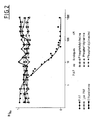
- Figure 1 attached shows a significant increase in the signal represented by an increase of x 2.5 in the amount of [3H] PAF specifically bound to preparation B according to the invention compared to the amount linked to preparation A containing no stabilization system.
- the treatment by the stabilization system makes it possible to maintain the qualities of the membrane preparations without alteration up to a time greater than one month.
- Freeze-drying re preparations PAF receptor according to the invention does not modify the binding properties with / 3H / PAF and the storage times are further increased.
- the binding site present on the membrane preparations is specific for the PAF structure.
- Several molecules, such as lyso-PAF (metabolic derivative of PAF) or various phospholipids, are not recognized by the binding site used for the assay (maximum dose tested: 10 ⁇ 6M).
- the coefficient of variation is expressed as a function of B / B o (given in percent).
- the part of the curve whose coefficient of variation is less than or equal to 10% -15% can be used for the assay.
- Nonspecific binding is determined by an excess of unlabeled PAF (1000 nM, or a factor of 1000 relative to the amount of [3H] PAF used).
- the attached Figure 4 indicates a typical standard range obtained from rabbit platelet membrane preparations.
- the PAF determinations of the samples are obtained by interpretation on the standard curve.
- B quantity of ligand specifically bound for the dose F of unlabeled ligand present
- B o quantity of ligand specifically bound in the absence of unlabeled ligand.
- the B o is determined by the amount of [3H] PAF specifically bound in the absence of standard PAF:
- the amount x of PAF present in the sample is determined by interpolation of the percentage inhibition of the amount x on the binding of [3H] PAF after transformation into logit.
- the PAF can be assayed either by direct assay (if the sample is not very rich in contaminating elements) or by assay after extraction.
- the sample must be diluted or concentrated, as appropriate, so that the unknown PAF values are within the limits of the assay (lower limit: 0.9 nM; upper limit 100 nM).
- the PAF is extracted from the sample by the method of BLIGH and DYER [CAN. J. BIOCHEM. PHYSIOL., 37 (1959), pages 911-918], proceeding as follows: - The reactions are stopped by adding methanol and chloroform to the biological medium (1: 1: 1 v / v / v relative to the volume of biological medium from which the PAF is to be extracted). - Agitation 10 minutes (Vortex), - Phase separation initiated by centrifugation (100 g, 5 minutes); - Sampling of the organic phase, - Washes (2) by addition of chloroform. (The biological medium can be, depending on the case, either a culture or incubation medium, or a comminuted tissue.)
Landscapes
- Health & Medical Sciences (AREA)
- Life Sciences & Earth Sciences (AREA)
- Chemical & Material Sciences (AREA)
- Molecular Biology (AREA)
- Immunology (AREA)
- Engineering & Computer Science (AREA)
- Biomedical Technology (AREA)
- Organic Chemistry (AREA)
- Biochemistry (AREA)
- Biophysics (AREA)
- General Health & Medical Sciences (AREA)
- Hematology (AREA)
- Medicinal Chemistry (AREA)
- Urology & Nephrology (AREA)
- Cell Biology (AREA)
- Proteomics, Peptides & Aminoacids (AREA)
- Endocrinology (AREA)
- Genetics & Genomics (AREA)
- Gastroenterology & Hepatology (AREA)
- Biotechnology (AREA)
- Zoology (AREA)
- Microbiology (AREA)
- Toxicology (AREA)
- Food Science & Technology (AREA)
- Physics & Mathematics (AREA)
- Analytical Chemistry (AREA)
- General Physics & Mathematics (AREA)
- Pathology (AREA)
- Measuring Or Testing Involving Enzymes Or Micro-Organisms (AREA)
Applications Claiming Priority (2)
| Application Number | Priority Date | Filing Date | Title |
|---|---|---|---|
| FR8805071A FR2630006B1 (fr) | 1988-04-18 | 1988-04-18 | Nouvelle preparation de recepteurs du paf et nouvelle methode de dosage du paf |
| FR8805071 | 1988-04-18 |
Publications (1)
| Publication Number | Publication Date |
|---|---|
| EP0345100A1 true EP0345100A1 (de) | 1989-12-06 |
Family
ID=9365384
Family Applications (1)
| Application Number | Title | Priority Date | Filing Date |
|---|---|---|---|
| EP89401054A Withdrawn EP0345100A1 (de) | 1988-04-18 | 1989-04-17 | Präparat von PAF-Rezeptoren und Verfahren zur Dosierung PAF |
Country Status (2)
| Country | Link |
|---|---|
| EP (1) | EP0345100A1 (de) |
| FR (1) | FR2630006B1 (de) |
Cited By (3)
| Publication number | Priority date | Publication date | Assignee | Title |
|---|---|---|---|---|
| EP0517926A4 (en) * | 1990-12-27 | 1993-09-08 | Japan Tobacco Inc. | Genes which code for guinea pig and human platelet activating factor receptors |
| WO2003033023A1 (en) * | 2001-10-12 | 2003-04-24 | Grelan Pharmaceutical Co., Ltd. | Drugs ameliorating hypo-hdl cholesterolemia |
| WO2002097435A3 (en) * | 2001-05-31 | 2003-09-04 | Daiichi Suntory Pharma Co Ltd | Assay method for platelet-activating factor |
-
1988
- 1988-04-18 FR FR8805071A patent/FR2630006B1/fr not_active Expired - Lifetime
-
1989
- 1989-04-17 EP EP89401054A patent/EP0345100A1/de not_active Withdrawn
Non-Patent Citations (6)
| Title |
|---|
| BIOCHEMISTRY, vol. 22, 1983, pages 4756-4763, American Chemical Society; S.-B. HWANG et al.: "Specific receptor sites for 1-0-Alkyl-2-0-acetyl-sn-glycero-3-phosphocholine (Platelet Activating Factor) on rabbit platelet and guinea pig smooth muscle membranes" * |
| CHEMICAL ABSTRACTS, vol. 101, no. 1, 2 juillet 1984, page 282, no. 3217r, Columbus, Ohio, US; K. UMEZAWA et al.: "Elimination of protein degradation by use of protease inhibitors" * |
| CHEMICAL ABSTRACTS, vol. 104, 1986, page 260, no. 84008k, Columbus, Ohio, US; J. NISHIHIRA et al.: "Purification and characterization of the specific binding protein for platelet activating factor (1-O-alkyl-2-acetyl-sn-glycero-3-phosphocholine) from human platelets", & TOHOKU J. EXP. MED. 1985, 147(2), 145-52 * |
| FEDERATION PROCEEDINGS, vol. 41, no. 4, 1982, page 1459, no. 6950; T.F. MOWLES et al.: "Radioreceptor binding assay for platelet-activating factor (PAF)" * |
| FEDERATION PROCEEDINGS, vol. 46, no. 3, 1 mars 1987, 71st Annual Meeting, Washington, DC, 29 mars - 2 avril 1987, page 740, no. 2475; S. PAULSON et al.: "Application of a radioreceptor binding assay for measurement of platelet activating factor synthesis by human neutrophils" * |
| IMMUNOLOGY, vol. 52, 1984, pages 169-174; F.H. VALONE: "Isolation of a platelet membrane protein which binds the platelet-activating factor 1-0-hexadecyl-2-acetyl-SN-glycero-3-phosphorylcholine" * |
Cited By (3)
| Publication number | Priority date | Publication date | Assignee | Title |
|---|---|---|---|---|
| EP0517926A4 (en) * | 1990-12-27 | 1993-09-08 | Japan Tobacco Inc. | Genes which code for guinea pig and human platelet activating factor receptors |
| WO2002097435A3 (en) * | 2001-05-31 | 2003-09-04 | Daiichi Suntory Pharma Co Ltd | Assay method for platelet-activating factor |
| WO2003033023A1 (en) * | 2001-10-12 | 2003-04-24 | Grelan Pharmaceutical Co., Ltd. | Drugs ameliorating hypo-hdl cholesterolemia |
Also Published As
| Publication number | Publication date |
|---|---|
| FR2630006A1 (fr) | 1989-10-20 |
| FR2630006B1 (fr) | 1991-07-19 |
Similar Documents
| Publication | Publication Date | Title |
|---|---|---|
| CA2294078C (fr) | Procede de dosage specifique du c-peptide | |
| FR2701954A1 (fr) | Composition stabilisée de troponine pour immunoessais et procédé de stabilisation de troponine pour immunoessais. | |
| WO1980002460A1 (fr) | Procede et dispositif pour le dosage des lipoproteines seriques | |
| EP1513878B1 (de) | Zusammensetzungen und verfahren zum nachweis vom apo-b48 und apo-b100 | |
| EP1968634A2 (de) | Immunglobulin g (igg)-konzentrat mit depletion von anti-a- und anti-b-antikörpern und polyreaktiven igg | |
| EP0314744B1 (de) | Bestimmung von monokinen | |
| FR2500009A1 (fr) | Procede et systeme de necessaire experimental diagnostique pour determiner quantitativement la presence de la forme isoenzymatique mb de la creatine kinase | |
| EP0804736A1 (de) | Verfahren zur hochempfindlichen dosierung von herztroponin - i | |
| EP0345100A1 (de) | Präparat von PAF-Rezeptoren und Verfahren zur Dosierung PAF | |
| EP0667897B1 (de) | Spezifisches immunotestsystem für menschliche plasma glutathionperoxidase | |
| Weston et al. | Respiratory metabolism and thiabendazole susceptibility in developing eggs of Haemonchus contortus | |
| EP0625706B1 (de) | Verfahren zum Schutz von Leukozyten, Schutzzusammensetzung, geschützte Blutzusammensetzung und Blutanalyseverfahren | |
| Jelezarova et al. | A C3 convertase assay for nephritic factor functional activity | |
| EP0041019A2 (de) | Aus thymischem serischem Faktor oder seinen Analoga und Derivaten hergestellte Präparate, Verfahren zu ihrer Herstellung, diese Präparate zur Verwendung als Arzneimittel, aus diesen Produkten erhaltene Isotopenindikatoren und Anwendung dieser Isotopenindikatoren in Dosierungsverfahren | |
| EP2005181B1 (de) | C4d/c4b-standard für die quantitative durchflusszytometrie humoraler transplantatabstossung | |
| EP3655014B1 (de) | Clusterin zur verwendung bei der behandlung von thrombotischen mikroangiopathien | |
| EP0192565B1 (de) | Verfahren zur immunologischen Bestimmung von Aminen, monoklonale Antikörper und Testsatz zur Durchführung des Verfahrens | |
| Oliva et al. | Iloprost binding and inhibition of aggregation in platelet rich plasma: differences between normal and type IIa hypercholesterolemic subjects | |
| FR2640385A1 (fr) | Nouveau procede de dosage de l'heparine et son utilisation dans les trousses de dosage | |
| CA2210166C (fr) | Procede de dosage ultrasensible de la troponine i cardiaque | |
| EP3403100B1 (de) | Verfahren zur in-vitro-diagnose von lebererkrankungen | |
| WO2007060373A2 (fr) | Procede d'identification du genotype en position 171 de la proteine prion d'ovin ainsi que trousses de mise en oeuvre de ce procede | |
| DE et al. | Effect of Cold Exposure on Rat Erythroeyte Membrane-bound Acetylcholinesterase | |
| Batiuk | Cyclosporine immunosuppression: the role of calcineurin phosphatase inhibition | |
| CA2007521A1 (fr) | Facteur inhibiteur du complement, sa caracterisation et ses applications |
Legal Events
| Date | Code | Title | Description |
|---|---|---|---|
| PUAI | Public reference made under article 153(3) epc to a published international application that has entered the european phase |
Free format text: ORIGINAL CODE: 0009012 |
|
| AK | Designated contracting states |
Kind code of ref document: A1 Designated state(s): AT BE CH DE ES FR GB GR IT LI LU NL SE |
|
| 17P | Request for examination filed |
Effective date: 19900726 |
|
| 17Q | First examination report despatched |
Effective date: 19920303 |
|
| STAA | Information on the status of an ep patent application or granted ep patent |
Free format text: STATUS: THE APPLICATION IS DEEMED TO BE WITHDRAWN |
|
| 18D | Application deemed to be withdrawn |
Effective date: 19920714 |