EP0345461A2 - Anticorps monoclonaux de souris contre VIH-IP24 et leur utilisation dans des tests de diagnostic - Google Patents
Anticorps monoclonaux de souris contre VIH-IP24 et leur utilisation dans des tests de diagnostic Download PDFInfo
- Publication number
- EP0345461A2 EP0345461A2 EP89108001A EP89108001A EP0345461A2 EP 0345461 A2 EP0345461 A2 EP 0345461A2 EP 89108001 A EP89108001 A EP 89108001A EP 89108001 A EP89108001 A EP 89108001A EP 0345461 A2 EP0345461 A2 EP 0345461A2
- Authority
- EP
- European Patent Office
- Prior art keywords
- hiv
- antibody
- monoclonal
- immunoassay
- monoclonal antibody
- Prior art date
- Legal status (The legal status is an assumption and is not a legal conclusion. Google has not performed a legal analysis and makes no representation as to the accuracy of the status listed.)
- Granted
Links
Images


Classifications
-
- C—CHEMISTRY; METALLURGY
- C07—ORGANIC CHEMISTRY
- C07K—PEPTIDES
- C07K16/00—Immunoglobulins [IG], e.g. monoclonal or polyclonal antibodies
- C07K16/08—Immunoglobulins [IG], e.g. monoclonal or polyclonal antibodies against material from viruses
- C07K16/10—RNA viruses
- C07K16/112—Retroviridae (F), e.g. leukemia viruses
- C07K16/114—Lentivirus (G), e.g. human immunodeficiency virus [HIV], feline immunodeficiency virus [FIV] or simian immunodeficiency virus [SIV]
- C07K16/1143—Gag-pol proteins, e.g. p17or p24
-
- Y—GENERAL TAGGING OF NEW TECHNOLOGICAL DEVELOPMENTS; GENERAL TAGGING OF CROSS-SECTIONAL TECHNOLOGIES SPANNING OVER SEVERAL SECTIONS OF THE IPC; TECHNICAL SUBJECTS COVERED BY FORMER USPC CROSS-REFERENCE ART COLLECTIONS [XRACs] AND DIGESTS
- Y10—TECHNICAL SUBJECTS COVERED BY FORMER USPC
- Y10S—TECHNICAL SUBJECTS COVERED BY FORMER USPC CROSS-REFERENCE ART COLLECTIONS [XRACs] AND DIGESTS
- Y10S435/00—Chemistry: molecular biology and microbiology
- Y10S435/971—Capture of complex after antigen-antibody reaction
-
- Y—GENERAL TAGGING OF NEW TECHNOLOGICAL DEVELOPMENTS; GENERAL TAGGING OF CROSS-SECTIONAL TECHNOLOGIES SPANNING OVER SEVERAL SECTIONS OF THE IPC; TECHNICAL SUBJECTS COVERED BY FORMER USPC CROSS-REFERENCE ART COLLECTIONS [XRACs] AND DIGESTS
- Y10—TECHNICAL SUBJECTS COVERED BY FORMER USPC
- Y10S—TECHNICAL SUBJECTS COVERED BY FORMER USPC CROSS-REFERENCE ART COLLECTIONS [XRACs] AND DIGESTS
- Y10S435/00—Chemistry: molecular biology and microbiology
- Y10S435/974—Aids related test
-
- Y—GENERAL TAGGING OF NEW TECHNOLOGICAL DEVELOPMENTS; GENERAL TAGGING OF CROSS-SECTIONAL TECHNOLOGIES SPANNING OVER SEVERAL SECTIONS OF THE IPC; TECHNICAL SUBJECTS COVERED BY FORMER USPC CROSS-REFERENCE ART COLLECTIONS [XRACs] AND DIGESTS
- Y10—TECHNICAL SUBJECTS COVERED BY FORMER USPC
- Y10S—TECHNICAL SUBJECTS COVERED BY FORMER USPC CROSS-REFERENCE ART COLLECTIONS [XRACs] AND DIGESTS
- Y10S435/00—Chemistry: molecular biology and microbiology
- Y10S435/975—Kit
Definitions
- the present invention relates to the detection of the Human Immunodeficiency Virus (HIV-I), the etiologic agent of Acquired Immunodeficiency Syndrome (AIDS), in serum, plasma or other body fluids.
- HIV-I Human Immunodeficiency Virus
- AIDS Acquired Immunodeficiency Syndrome
- this invention describes a diagnostic test which employs a combination of unique mouse monoclonal antibodies as a probe for the detection of HIV-I core protein p24.
- HIV-I HIV-I includes the formerly named viruses Human T-cell Lymphotrophic Virus Type III (HTLV III), Lymphadenopathy Associated Virus (LAV) and AIDS Associated Retrovirus (ARV). HIV-I is related to a group of cytopathic retroviruses, namely lentiviruses, on the basis of in vitro characteristics, morphologic features and nucleotide sequences (Gonda et al., Science (1985) 227:177-179; Stephan et al., Science (1986) 231 :589-594).
- HTLV III Human T-cell Lymphotrophic Virus Type III
- LAV Lymphadenopathy Associated Virus
- ARV AIDS Associated Retrovirus
- the most widely used methods for detecting HIV-I in infected individuals include the isolation of virus from infected blood or blood cells and subsequent in vitro propagation of the virus in lymphocyte cultures.
- In vitro replicating virus may be detected by measuring reverse transcriptase (RT) levels, immunocytochemical staining of viral proteins, electron microscopy, and nucleic acid probe hybridization.
- RT reverse transcriptase
- In vitro cultivation and isolation of virus are labor intensive, technique sensitive and may not be practical for use as a routine diagnostic method.
- enzyme immunoassays have been developed to detect HIV-I antigens in serum and other body fluids of infected people (Goudsmit et al., The Lancet (1986) 2:177-180; Allain et al., Brit. Med. J.
- HIV-I core antigens may be important serological markers for initial diagnosis of infection and disease progression, and as well may provide a tool for monitoring antiviral therapy in AIDS patients.
- Mouse monoclonal antibodies to HIV-I p24 are provided by the invention which are highly specific reagents employed in immunoassays designed to detect and/or capture HIV-I p24. Available information on the nature and consequence of HIV-I infection establishes a need for the early detection of HIV-I antigens, especially p24, prior to seroconversion in people infected with HIV-I.
- a highly sensitive diagnostic assay to detect HIV-I p24, using a mixture of two monoclonal antibodies as a probe, is provided by the present invention.
- One monoclonal antibody, 31-42-19 recognizes a unique epitope on HIV-I p24 which is not recognized by sera from seropositive individuals.
- monoclonal antibody 31-90-25 which recognizes an epitope within a highly immunogenic region of HIV-I p24, also is employed in the assay.
- monoclonal antibodies 31-42-19 and 31-90-25 are used together in solution as the probe to detect HIV-I p24, with polystyrene beads previously coated with anti-HIV-I human IgG as the capture antibodies. It has been found that 31-42-19 is the key monoclonal antibody which in combination with 31-90-25 results in optimal assay sensitivity for detection of HIV-I p24. Several alternate procedures can be employed to achieve the desired sensitivity and speed. In an alternate assay configuration, these two monoclonals can be successfully employed as capture antibodies for HIV-I p24 when coated on polystyrene beads.
- monoclonal antibody 31-42-19 also recognizes HIV-2 p24. This unique characteristic of detecting both HIV-I p24 and HIV-2 p24 can be exploited in an immunoassay designed to screen non-discriminately for HIV infection. In addition, monoclonal antibody 31-42-19 can be used as a probe for the detection of HIV-2 p24.
- monoclonal antibody 31-90-25 can be employed as a competitive probe to detect anti-HIV-I core antibodies in biological samples.
- the present invention provides a novel means for the detection of HIV-I p24 in picogram quantities in body fluids of infected individuals, using two monoclonal antibodies as a probe.
- This highly sensitive enzyme immunoassay is unique because of the characteristics of the monoclonal antibody 31-42-19.
- the epitope recognized by monoclonal antibody 31-42-19 maps toward the carboxy terminus of HIV-I p24 and is not immunogenic in humans.
- the second monoclonal antibody employed in this assay recognizes an epitope within a highly immunogenic region of HIV-I p24, and maps toward the amino terminus of HIV-I p24.
- Monoclonal antibodies 31-42-19 and 31-90-25 bind synergistically to HIV-I p24.
- the epitope recognized by monoclonal antibody 31-42-19 is antigenically cross-reactive with an epitope on HIV-2 p24, as shown by the ability of 31-42-19 to immunoprecipitate HIV-2 p24 from biosynthetically labeled HIV-2 infected cells.
- the monoclonal antibody 31-90-25 when appropriately labelled, can be employed as a competitive probe against HIV-I core antibodies in serum samples for binding to recombinant-derived HIV-I p24.
- HRPO labelled 31-90-25 can be employed in an immunoassay for antibodies to HIV as disclosed in U.S. Patent Application Serial No. 020,282, filed Feb. 27, 1987 by Dawson et al., and commonly assigned herewith.
- the present invention provides novel hybridoma cell lines, exemplified by murine-derived cell line ATCC HB 9726 and murine-derived cell line ATCC HB 9725, and novel monoclonal antibodies secreted thereby, exemplified by the above-noted monoclonal antibodies 31-42-19 and 31-90-25, respectively.
- a biological sample presumably containing HIV-I p24, is incubated with a mixture of monoclonal antibodies 31-42-19 and 31-90-25, and a polystyrene bead coated with anti-HIV-I IgG (purified from serum of seropositive individuals for HIV-I p24 antibodies).
- the amount of mouse monoclonal antibodies bound which is proportional to the amount of HIV-I p24 captured on the bead, is determined with horseradish peroxidase-labelled goat anti-mouse IgG.
- the monoclonal antibody mixture can also be coated on a solid phase to serve as capture antibodies.
- this mixture can be used to coat a solid support of an immunoassay to detect HIV-I (HTLV-III) antigens as disclosed in U.S. Patent No. 4,748,110, issued May 31, 1988.
- antibodies 31-42-19 and 31-90-25 can be employed in detection systems using fixed cells, with appropriate labelling of each monoclonal antibody.
- These antibodies also can be employed for purifying HIV-I p24, and the particular monoclonal 31-42-19 for purifying HIV-2 p24, by affinity chromatography.
- Biological samples which are easily tested by the method of the present invention include human and animal body fluids such as whole blood, serum, plasma, cerebrospinal fluid and lymphocyte or cell culture supernatants. Additionally, the test samples could be inactivated whole virus or partially purified native or recombinant HIV-I p24.
- Solid supports which can be used in immunoassays of the invention include wells of reaction trays, test tubes, polystyrene beads, strips, membranes, microparticles, and other solid matrices known to those skilled in the art. Any label capable of producing a detectable signal or an enzyme amplification system can be used in immunoassays of the invention. Representative labels include enzymatic, radioisotopic, fluorescent and chemiluminescent labels. Further, hapten/labelled anti-hapten systems such as a biotin/labelled anti-biotin system may be utilized in the inventive assays. Additionally, one can employ a labelled anti-idiotype antibody to detect the monoclonal antibodies described herein.
- reagents for the assays of the invention are ideally suited for preparation of a kit.
- a kit may comprise carrier means being compartmentalized to receive in close confinement, one or more container means such as vials, bottles, test tubes and the like.
- container means such as vials, bottles, test tubes and the like.
- Each of the container means comprises one of the separate elements to be used in the method of this invention.
- Examples 1 and 2 relate to the procedures whereby hybridoma cell lines secreting monoclonal antibodies were generated.
- Example 3 relates to the screening, cloning and characterization of monoclonal antibodies 31-42-19 and 31-90-25.
- Example 4 relates to the method used for amplifying antibody yields.
- Example 5 relates to assays performed to determine the activity, specificity and epitope mapping of the 31-42-19 and 31-90-25 monoclonal antibodies.
- Example 6 relates to the development of an enzyme immunoassay (EIA) for the detection of HIV-I p24 in biological fluids using the above-mentioned monoclonal antibodies.
- EIA enzyme immunoassay
- Example 7 is a summary of alternate assay procedures covering the clinical utility of these monoclonal antibodies for AIDS diagnostics.
- BZH mice obtained from Chella David, Department of Immunology, Mayo Clinic, Rochester, Minnesota
- partially purified, detergent disrupted HIV-I HTLV-III prototype strain obtained from R.C. Gallo, National Institute of Health
- recombinant derived purified p24 just before fusion.
- HIV-I was partially purified from infected H9 cells by (a) membrane filtration separating HIV-I from cells, followed by (b) concentration of cell culture fluid containing HIV-I, followed by (c) collection of virus by ultracentrifugation, followed by (d) resuspension of the virus and collection by centrifugation onto a 20% sucrose pad followed by (e) sucrose density gradient banding of HIV-I at a density of approximately 1.16 and (f) ultracentrifugation of banded virus to collect and concentrate HIV-I. HIV-I was disrupted by addition of 0.5% Triton X-100, followed by vigorous sonication at 4°C. Full-length recombinant HIV-I p24 was produced in E.
- coli by recombinant DNA methods and purified by affinity chromatography as disclosed in U.S. Patent Application Serial No. 020,282. Briefly, a plasmid designated pB1, containing a 951 bp Pvu II to Bg /II restriction fragment, was induced to produce full-length HIV-I p24, and then the recombinant HIV-I p24 was purified.
- mice received 10 ⁇ g disrupted HIV-I in 0.4 ml of Freund's Complete Adjuvant (Difco Laboratories) given subcutaneously (s.c.) and intraperitoneally (i.p.) in 0.1 ml portions at four different sites.
- the second immunization was performed 14 days later when mice received 10 ⁇ g of HIV-I in 0.3 ml of Freund's Incomplete Adjuvant, given s.c. and i.p.
- mice were immunized with 10 ⁇ g HIV-I and 4 ⁇ g of S. typhimurium extract (RIBI Immunochemicals) in 0.2 ml Freund's Complete Adjuvant.
- mice were immunized with 10 ⁇ g HIV-I in 0.2 ml Freund's Complete Adjuvant. Mice were bled on days 15, 36 and 70. The immune responses of the immunized mice were assessed by assaying their sera for anti-HIV-I antibody by enzyme-linked immunoassay and Western Blot. Approximately 14 months later, mice were immunized with a pre-fusion boost of recombinant HIV-I p24 antigen.
- EIA Enzyme-linked Immunoassay
- Sera from naive or immunized mice were serially diluted in dilution buffer containing 20 mM potassium phosphate, pH 7.4, 0.15 M NaCl, 20% normal goat serum, 10% fetal calf serum, 5 mM EDTA, 10 mM EGTA, 50 mM Tris buffer (pH 8.0), 0.2% Tween-20, and sodium azide as preservative.
- the diluted sera were reacted with 1/4" polystyrene beads directly coated with partially purified HIV-I, or, alternatively, with HIV-I bound to the bead via human anti-HIV-I antibody (purified from serum of an HIV-I seropositive individual).
- reaction mixtures consisted of a nitrocellulose strip incubated with an appropriate amount of test sample in 2.5 ml of buffer (20 mM Tris, 1 mM EDTA, 0.2M NaCl, 0.3% Triton X-100, and 2 mg/ml bovine serum albumin, pH 7.5) for 1-2 hours at room temperature.
- the strips were washed with buffered detergent (10 mM phosphate buffered saline (PBS), pH 7:5, containing 0.1% SDS and 0.5% Triton X-100), followed by addition of goat anti-mouse IgG antibody conjugated to HRPO.
- the strips were incubated for 1-2 hours at room temperature, followed by washing with buffered detergent.
- antibody bound to viral protein was visualized by addition of freshly prepared HRP color reagent (Biorad) (120 mg dissolved in 40 ml ice-cold methanol, then diluted into 200 ml Tris buffered saline, pH 7.8, containing 120 ⁇ l of 30% hydrogen peroxide). This assay demonstrated the presence of antibody to specific HIV-I proteins.
- mice Upon demonstration of specific anti-HIV-I antibody present at reasonable titers in sera of immunized mice, the mice were allowed to rest prior to a pre-fusion boost of antigen.
- the pre-fusion antigen boost was performed by intravenous (tail vein) injection of approximately 200 ⁇ l of purified recombinant HIV-I p24. Three days later the mice were sacrificed, and their spleens, containing anti-HIV-I antibody producing cells, were disrupted to single cells. The single cell suspensions were treated with 0.83% NH4Cl to remove red blood cells, and then mixed with SP2/0 cells at a 10:1 (SP2/0:spleen cells) ratio.
- the mixed cells were centrifuged, washed once with serum-free medium, then centrifuged again.
- the fusogen polyethylene glycol (PEG)
- PEG polyethylene glycol
- fusion of the spleen and SP2/0 cells was accomplished by exposing the pellet to 40% PEG (ATTC, MW 1300-1600) in serum-free Iscoe's Modified Dulbecco's Medium (IMDM) for two minutes.
- PEG serum-free Iscoe's Modified Dulbecco's Medium
- IMDM Iscoe's Modified Dulbecco's Medium
- the PEG and cell suspension was diluted slowly by the addition of 20 ml of serum-free IMDM over a period of five minutes, followed by colleciton of the cells by centrifugation.
- the supernatant was decanted and replaced with 30 ml IMDM containing 20% fetal bovine serum (Hyclone) with HAT (hypozanthine, aminopterin, and thymidine) to select for hybridomas.
- HAT hyperzanthine, aminopterin, and thymidine
- Spleen cells from one nonimmune Balb/c mouse also were added as a feeder layer.
- the cells were plated at 0.1 ml/well in three 96 well tissue culture plates. Three days later an additional 0.1 ml of HAT media was added to each well. At weekly intervals thereafter, one-half the media was replaced with IMDM containing 20% fetal bovine serum (Hyclone) with HT (hypozanthine and thymidine), and hybrids were allowed to grow for an additional 7-14 days.
- IMDM 20% fetal bovine serum
- HT hyperzanthine and thymidine
- hybrids were composed of spleen cells making antibody to HIV-I fused with SP2/0 cells. Briefly, the fusogen promotes fusion of spleen cell and SP2/0 cell membranes, forming a heterokaryon containing nuclei of both cells. Eventually, the dissimilar nuclei fuse producing a single nucleus capable of synchronous mitosis. As the fused cells divide, the hybrid stablizes by losing chromosomes of each nucleus. The fused cells are plated into multiple 96 well plates at 105 to 106 cells per well. Hybrid cells formed from SP2/0:spleen cell fusions are selectively propagated by culturing in HAT medium.
- SP2/0 or SP2/0:SP2/0 fused cells are prevented from growing by aminopterin, and unfused spleen cells or spleen:spleen fused cells die off in culture. Only SP2/0:spleen hybrids will grow in the HAT selection medium.
- culture fluids from wells containing hybridoma cell growth were screened for antibody to HIV-I p24 using EIA and Western Blot procedures described in Example 1.
- EIA using HIV-I p24 produced in E. coli by recombinant DNA methods (rp24) was employed for screening. Briefly, polystyrene beads coated with human IgG (purified from anti-p24 seropositive individuals) were reacted with crude E. coli extracts of full-length recombinant-derived HIV-I p24.
- Each expanded hybrid was plated into 96 well microtiter plates at dilutions of 105 to 106 and allowed to grow from 10-21 days.
- thirteen hybrids having clones identified as producing antibodies to HIV-I p24 were clones #19 from hybrid #42 of fusion #31, named accordingly 31-42-19, and #25 from hybrid #90 of fusion #31, named accordingly 31-90-25.
- the clones were obtained by limiting dilution using the guidelines outlined by J.W. Goding in Monoclonal Antibodies: Principles and Practice (Academic Press, N.Y., 1983).
- the isotype of monoclonal antibody 31-42-19 was determined to be IgG1 and that of monoclonal antibody 31-90-25 was determined to be IgG2a.
- An EIA isotyping procedure employed a microtiter plate coated with goat anti-mouse immunoglobulin, which was incubated with culture fluid of the clone to capture the secreted mouse antibody. After 2 hours, the plate was washed and rabbit anti-mouse isotype was applied for an additional 2 hours. The plate was washed again, and HRPO-conjugated goat anti-rabbit IgG was applied for 1 hr. The excess conjugate was removed by washing, then OPD substrate was added. The amount of rabbit anti-mouse isotype bound to mouse immunoglobulin was proportional to the absorbance measured at 492 nm. Further characterization of both monoclonals was performed with antibodies from mouse ascites.
- cloned cells of the desired antibody 31-42-19 or 31-90-25 were inoculated into a Balb/c mouse previously treated intraperitoneally with 0.5 ml pristane (2,6,10,14-tetramethylpentadecane) [method outlined in Hurrell et al., supra].
- Pristane treatment enhances growth of mouse myeloma hybrids within the peritoneum of the mouse, and the ascites fluids which form are rich in the monoclonal antibody secreted by the hybrid cells.
- mice After formation of monoclonal antibody enriched ascites (approximately 7 days) the mice were sacrificed and the ascites was withdrawn from the peritoneum, clarified by centrifugation and stored at -20°C. Other characterization procedures (described herein) were performed with culture fluid, clarified ascites or purified antibodies from ascites, using protein A sepharose (Hurrell et al., supra). The monoclonal antibody in ascites was titered by EIA (Example 5).
- human anti-HIV-I IgG was serially diluted in dilution buffer (described in Example 1) containing a constant amount of either 31-42-19 or 31-90-25.
- human anti-HIV-I IgG was added at a constant concentration (1 ⁇ g/ml) to serial dilutions of each of the monoclonals.
- the human IgG served as a competitive inhibitor for the binding of mouse monoclonal antibody to HIV-I rp24 on beads.
- Competition of anti-HIV-I IgG with each monoclonal was indicated by a reduction in the amount of monoclonal antibody bound to the bead when compared to the control which contained no competing human IgG.
- Tables 2 and 3 show that 31-42-19 recognizes an epitope not readily immunogenic in humans, while 31-90-25 recognizes an epitope within a highly immunogenic region of HIV-I p24.
- Table 3 data shows, however, that gross excesses of human anti-HIV-I IgG can block the binding of 31-42-19 to some extent.
- Table 1. Activity of Monoclonal Antibodies 31-42-19 and 31-90-25 against HIV-I rp24.
- Antibody Concentration( ⁇ g/ml) Absorbance (492 nm) 31-42-19 31-90-25 control +anti-HIV-I control +anti-HIV-I 1.0 1.436 1.412 1.767 0.612 0.5 1.305 1.315 1.771 0.461 0.25 1.250 1.223 1.717 0.383 0.125 1.215 1.069 1.731 0.255 0.0625 1.063 1.034 1.772 0.152 0.0312 0.848 0.663 1.799 0.108 0.0156 0.708 0.448 1.415 0.056 0.0078 0.484 0.353 1.131 0.053
- Cells were harvested from culture, washed once with RPMI 1640 deficient in methionine and cysteine (Gibco Laboratories), then suspended at 1-2.5 X 10⁶ cells/ml in the same medium. Washed cells were incubated for 30-45 minutes at 37°C in 6% CO2, followed by the addition of 50-100 ⁇ Ci each of [35S] methionine and [35S] cysteine (Amersham) to the medium.
- Cells were radiolabelled at 37°C for 4-8 hours, harvested by centrifugation and lysed in PBS, pH 7.4, containing 1 mM PMSF, aprotinin (100 kallikrein inactivation units per ml of buffer), 1.0% Triton X-100, 0.1% SDS and 0.5% sodium deoxycholate (all reagents from Sigma). The lysate was clarified by centrifugation at 100,000 x g for 40 minutes and stored at -70°C.
- Immunoprecipitation was performed by incubating 100 ⁇ l aliquots of cell lysates with 50 ⁇ g purified monoclonal antibody (1.0 mg/ml stock), 100 ⁇ l tissue culture supernatant or 3 ⁇ l serum for 30-60 minutes at 4°C.
- Antigen-antibody complexes were recovered by addition of 200 ⁇ l of preswollen protein A-Sepharose (Pharmacia) previously washed in lysis buffer containing 1.0 mg/ml bovine serum albumin (IgG binding capacity of 50-200 ⁇ g/200 ⁇ l protein A). The reaction mixture was shaken vigorously at 4°C for 1 hour, followed by 3 washes of Protein A-Sepharose using lysis buffer.
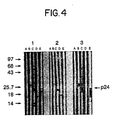
- Protein A-Sepharose was then collected by centrifugation and immune complexes were dissociated by heating at 95°C in SDS gel sample buffer containing 2-mercaptoethanol (Laemmli et al., supra). The sample was subjected to SDS-10% polyacrylamide gel electrophoresis. The gel was incubated for 30 minutes in Enhance (Dupont), dried and exposed to X-ray film for autoradiography of the immunoprecipitated radiolabelled proteins. The results are illustrated in Fig.
- each monoclonal antibody also was reacted with labelled cell lysates of HIV-I infected HUT 78 cell line (Panel A), HIV-2 infected HUT 78 cell lines (Panel B), and uninfected HUT-78 cell lines (Panel C). Results are illustrated in Fig. 2, wherein each of these cell lysates was reacted with (1) normal mouse serum, (2) normal human serum, (3) serum from an HIV-I seropositive individiual, (4) serum from an HIV-2 seropositive individual, (5) monoclonal antibody 31-90-25 and (6) monoclonal antibody 31-42-19. Results indicated that monoclonal antibody 31-42-19 specifically immunoprcipitates HIV-2 p24.
- Monoclonal antibodies 31-42-19 and 31-90-25 were employed in an immunocytochemical assay against uninfected and HIV-I infected H9 cells in order to further demonstrate their specificity for HIV-I. Briefly, uninfected or HIV-I infected H9 cells were fixed to microscope slides using 100% acetone for 10 min., then air dried, and stored at -20°C. For staining, the cells were rehydrated in PBS for 10 min., followed by addition of 100 ⁇ l of 2% normal goat serum in PBS containing 100 ⁇ g/ml normal human IgG for 10 min. Excess reagent was removed, and 100 ⁇ l of 1 ⁇ g/ml 31-42-19 IgG or 31-90-25 IgG were added for 30 min.
- the slides were washed in PBS, followed by addition of 100 ⁇ l of a second antibody, goat anti-mouse IgG (Pel Freez) at a 1:400 dilution, for 30 min.
- the slides were washed with PBS, followed by addition of 100 ⁇ l of peroxidase anti-peroxidase complex (Clonal PAP, Sternberger and Meyer) diluted 1:300 in PBS containing 2% normal goat serum and 100 ⁇ g/ml normal human IgG.
- the slides wre incubated (with the Clonal PAP) in a humidified chamber.
- EIA Enzyme-linked Immunoassay
- a panel of anti-HIV-I p24 monoclonal antibodies was tested in a three step assay configuration. Briefly, 200 ⁇ l HIV-I antigen sample (1.0 ng/ml partially purified HIV-I viral lysate, diluted in normal human plasma [NHP]) was incubated with a 1/4" polystyrene bead coated previously with anti-HIV-I human IgG overnight at room temperature. After washing, 200 ⁇ l of either a single monoclonal antibody solution or a monoclonal antibody mixture solution (each monoclonal in equal proportion), at a final concentration of 5 ⁇ g/ml diluted in NHP, was added. The reaction mixture was incubated at 40°C for 4 hr.
- Monoclonal antibodies 31-7-20, 31-32-9, 31-77-8, 31-89-8, 32-51-16 and 31-90-25 all recognize the same epitope on HIV-I p24. Therefore, 31-42-19 is the key monoclonal antibody which binds synergistically with 31-90-25, resulting in optimal binding between human anti-HIV-I IgG on the bead, HIV-I p24 and the monoclonals.
- Table 4 Synergy Between Monoclonal Antibodies to HIV-I p24 Tested as Probes for HIV-I p24 Antigen Assay. Probe Net O.D.
- Monoclonal antibody 31-79-18 recognized an epitope near the carboxy terminus of HIV-I p24.
- Table 5 Synergistic Characteristics of 31-42-19 and Epitope Specificity of Synergy Between 31-42-19 and a Group of Monoclonals to HIV-I p24.
- a sensitivity panel of p24 enriched antigen was prepared with partially purified HIV-I viral lysate diluted in NHP in the concentration range from 500 to 31.25 pg protein/ml. Each panel member was assayed using each of the below-listed monoclonal antibody mixtures as a probe. An absorbance value which was 0.05 0.D. units greater than that of the negative control was considered the cut-off value for the assay, and samples showing higher absorbance values than the cut-off were considered positive.
- the sensitivity defined as picograms of HIV-I p24 per ml that gave an absorbance value of 0.05 0.D. units greater than that of the negative control, was determined by linear regression.
- Monoclonal antibody 31-90-25 was selected from a group of monoclonals mapping to the same general region of HIV-I p24 because it produced the most sensitive results in the two step assay configuration, as demonstrated in Table 6.
- Table 6 Comparison of the Sensitivity of Two Step HIV-I p24 Antigen Assay, replacing 31-90-25 with Other Monoclonals which Map to Same Epitope.
- Experimental data detailed herein describe the preferred assay configurations for the detection of HIV-I p24 in biological fluids. Experimental conditions of incubation time and temperature can be varied according to the requirements of speed of the assay and sensitivity.
- Monoclonal antibodies 31-42-19 and 31-90-25 used in the assay were purified from either tissue culture supernatants or mouse ascites fluids using protein A-Sepharose. Protein determinations of purified IgG was done by measuring absorbance at 280 nm.
- a mixture of monoclonal antibodies was prepared as a stock solution containing 25 ⁇ g IgG/ml with a 31-42-19 to 31-90-25 ratio of 4:6, in a diluent of 20mM phosphate buffer, pH 7.4, 0.15M NaCl, 25% NHP (v/v), 1% bovine serum albumin (w/v) and 0.25% Triton X-100 (v/v).
- a stock solution containing 25 ⁇ g IgG/ml with a 31-42-19 to 31-90-25 ratio of 4:6, in a diluent of 20mM phosphate buffer, pH 7.4, 0.15M NaCl, 25% NHP (v/v), 1% bovine serum albumin (w/v) and 0.25% Triton X-100 (v/v).
- 50 ⁇ l of this solution was added to 200 ⁇ l of assay sample, it gave a final concentration of monoclonal mix at 5 ⁇ g/ml in the assay volume.
- reaction tray wells For the assay procedure, briefly, 50 ⁇ l of monoclonal mix was added to reaction tray wells followed by 200 ⁇ l of either (a) a sample presumably containing HIV-I p24, (b) a sensitivity panel member with known amounts of either partially purified HIV-I virus or native p24 diluted in NHP as positive control or (c) plasma from an established uninfected individual as negative control. A 1/4" polystyrene bead previously coated with anti-HIV-I human IgG was added to each reaction well. The reaction mixtures were incubated at room temperature overnight (12-18 hr). After washing beads with water, 200 ⁇ l of conjugate solution were added to each reaction well.
- the conjugate solution was prepared by diluting HRPO labelled goat anti-mouse (Y) IgG (Kirkegaard & Perry) or HRPO labelled goat anti-mouse (Fc) IgG (Jackson Immunochemicals) in a diluent containing 20mM phosphate buffer, pH 7.4, 0.15M NaCl, 10% fetal calf serum (v/v), 15% normal goat serum (v/v), 25% NHP (v/v), 5% normal rabbit serum (v/v), 0.025% benzyl alcohol (v/v), 0.5% Triton X-100 (v/v) and 20mM HEPES (N-2-Hydroxyethylpiperazine-N′-2-ethane sulphonic acid). The reaction mixtures were incubated at 40°C for 2 hr in a waterbath. After washing, the beads were transferred to reaction tubes and the addition of OPD carried out as described in Example 1.
- monoclonal antibodies 31-42-19 and 31-90-25 can be successfully coated on 1/4" polystyrene beads for use as capture antibodies for HIV-I p24.
- the monoclonal antibody mixture was coated at an appropriate concentration on polystyrene beads. Additional binding sites were overcoated with bovine serum albumin.
- the antigen sample containing HIV-I p24 was incubated with the coated beads. After appropriate incubation, beads were washed and HIV-I p24 bound was detects using a suitable probe.
- An especially preferred probe used comprised F(ab′)2 fragments prepared from purified anti-HIV-I rabbit IgG, as disclosed in an U.S. patent application, entitled “Immunoassay for HIV 1 Antigens Using F(ab′)2 Fragments as Probe,” filed by J. Stewart et al. concurrently with this application.
- Monoclonal antibody 31-42-19 exhibited similar synergistic characteristics when either used as a probe in solution or as a capture antibody on the bead in combination with monoclonal antibody 31-90-25.
- the assay described in section B.1 of this example was used to detect purified HIV-2 p24. Data indicated that the present assay configuration was able to detect 800 pg/ml HIV-2 p24 using anti-HIV-I human IgG as capture antibody on the bead. Increased sensitivity of the assay can be acheived by using HIV-2 specific capture antibodies. In addition, 31-42-19 monoclonal antibody used alone as a probe at 5 ⁇ g/ml assay concentration gave a sensitivity equivalent to that of the monoclonal mixture. These results were expected since 31-90-25 does not cross react with HIV-2 p24.
- the clinical utility of the monoclonal based HIV-I antigen assay was assessed by comparing it to the Abbott HIV-I antigen assay of established clinical efficacy (Paul et al., supra). Approximately 485 clinical samples from ARC, AIDS or high risk, asymptomatic patients were received from Rush Presbyterian St. Luke's Medical Center, Chicago, Illinois, and tested over a period of 1 year. Each of the samples was tested with the Abbott HIV-I antigen assay and the ON RT/2 hr 40°C Monoclonal assay. An absorbance value which was 0.05 0.D. units greater than that of the negative control was considered the cut-off value for both assays, and samples showing higher absorbance values than the cut-off were considered positive.
- HIV-I neutralization assay All positive samples were confirmed by the Abbott HIV-I neutralization assay procedure. Briefly, HIV-I antigen positive samples were incubated with an excess of serum or purified IgG from an established HIV-I seropositive individual with high HIV-I anti-p24 titers. After preincubation at room temperature, the residual (not neutralized) p24 was detected using either the Abbott HIV-I antigen assay or the Monoclonal assay. True HIV-I positive samples showed drastic reductions in O.D. units at 492 nm. Any sample that showed greater than 50% neutralization in the presence of anti-HIV-I antibodies compared to that of the control, which contained same amount of normal human IgG or plasma, was considered confirmed positive.
- Non-neutralizable positive samples were considered negative for HIV-I antigen. Data are summarized in Table 8. Table 8 Comparative Profile of Clinical Samples. Monoclonal HIV-I Ag Assay Pos Neg Abbott HIV-I Ag Assay Pos 165 7 a Neg 31 b 282 a Monoclonal assay missed 7 samples, of which 4 were serial bleeds from two patients. b Abbott antigen assay missed 31 samples, of which 22 samples were serial bleeds--2 samples from patient A, 3 samples from patient B, 4 samples from patient C, 2 samples from patient D and 11 samples from patient E.
- the assay configuration designed specifically for capture of HIV-I detects as low as 800 pg/ml of HIV-2 p24 due to a high degree of cross reactivity observed between the core antigens of HIV-I and HIV-2.
- monoclonal antibody 31-42-19 can be successfully used in the design of a highly sensitive HIV-2 p24 antigen assay.
- an antibody can be generated against native protein, synthetic peptide or recombinant protein including both HIV-I and HIV-2 p24 epitopes.
- monoclonal antibody 31-42-19 can also be used to design an immunoassay that would detect both HIV-I and HIV-2 p24 with equal efficiency.
- monoclonal antibody 31-42-19 can be employed in assays that detect both HIV-I and HIV-2 or assays that discriminate HIV-I and HIV-2 when used in appropriate enzyme immunoassay configurations.
- monoclonal antibody 31-90-25 can be employed as a labelled probe for the detection of anti-HIV-I core antibodies in biological samples. Labelling can be performed using horseradish peroxidase. Briefly, the HRPO was activated by addition of 1.6 ml of 5 mg/ml HRPO (Sigma) to 1.6 ml of NaIO4 at 17 mg/ml. The mixture was incubated 30 min in the dark followed by G25 Sephadex gel filtration. Fractions containing activated HRPO were pooled and protein concentration was adjusted to approximately to 0.6 mg/ml.
- test sample presumably containing anti-HIV-I p24
- partially purified recombinant p24 see Example 1
- the mixture was incubated with a bead, previously coated with anti-HIV-I p24 antibody purified from sera of HIV-I seropositive individuals, and [HRPO]31-90-25 simultaneously.
- the absence of bound recombinant p24 resulted in a reduction of O.D. values at 492 nm and indicated the presence of anti-HIV-I p24 antibodies in the test sample.
Landscapes
- Chemical & Material Sciences (AREA)
- Life Sciences & Earth Sciences (AREA)
- Organic Chemistry (AREA)
- Virology (AREA)
- Health & Medical Sciences (AREA)
- Biophysics (AREA)
- Immunology (AREA)
- General Health & Medical Sciences (AREA)
- Genetics & Genomics (AREA)
- Medicinal Chemistry (AREA)
- Molecular Biology (AREA)
- Proteomics, Peptides & Aminoacids (AREA)
- Biochemistry (AREA)
- Preparation Of Compounds By Using Micro-Organisms (AREA)
- Peptides Or Proteins (AREA)
- Medicines Containing Antibodies Or Antigens For Use As Internal Diagnostic Agents (AREA)
Applications Claiming Priority (2)
| Application Number | Priority Date | Filing Date | Title |
|---|---|---|---|
| US204798 | 1988-06-10 | ||
| US07/204,798 US5173399A (en) | 1988-06-10 | 1988-06-10 | Mouse monoclonal antibodies to hiv-1p24 and their use in diagnostic tests |
Publications (3)
| Publication Number | Publication Date |
|---|---|
| EP0345461A2 true EP0345461A2 (fr) | 1989-12-13 |
| EP0345461A3 EP0345461A3 (en) | 1990-06-27 |
| EP0345461B1 EP0345461B1 (fr) | 1994-09-28 |
Family
ID=22759480
Family Applications (1)
| Application Number | Title | Priority Date | Filing Date |
|---|---|---|---|
| EP89108001A Expired - Lifetime EP0345461B1 (fr) | 1988-06-10 | 1989-05-03 | Anticorps monoclonaux de souris contre VIH-IP24 et leur utilisation dans des tests de diagnostic |
Country Status (6)
| Country | Link |
|---|---|
| US (1) | US5173399A (fr) |
| EP (1) | EP0345461B1 (fr) |
| JP (1) | JP3102643B2 (fr) |
| CA (1) | CA1340919C (fr) |
| DE (1) | DE68918497T2 (fr) |
| ES (1) | ES2065935T3 (fr) |
Cited By (8)
| Publication number | Priority date | Publication date | Assignee | Title |
|---|---|---|---|---|
| EP0345462A3 (fr) * | 1988-06-10 | 1991-07-31 | Abbott Laboratories | Immunoessai pour des antigènes d'HIV-I utilisant des fragments de F(AB')2 comme sonde |
| EP0472659A4 (en) * | 1989-05-15 | 1992-04-08 | Akzo N.V. | T-lymphotropic retrovirus monoclonal antibodies |
| EP0519866A1 (fr) * | 1991-06-18 | 1992-12-23 | Ciba-Geigy Ag | Anticorps contre V.I.H. |
| FR2777285A1 (fr) * | 1998-04-10 | 1999-10-15 | Bio Merieux | Ligand peptidique presentant une affinite specifique vis-a-vis de la proteine p24 du retrovirus hiv-1 |
| WO2002064615A3 (fr) * | 2000-12-06 | 2003-04-17 | Abbott Lab | Anticorps monoclonaux diriges contre le virus de l'immunodeficience humaine et utilisation de ces anticorps |
| EP1072888A3 (fr) * | 1999-07-28 | 2003-06-18 | Fujirebio Kabushiki Kaisha | Méthode et réactif d'immunoessai pour l'antigène HIV-1p24 |
| WO2022013730A1 (fr) * | 2020-07-13 | 2022-01-20 | Grifols Diagnostic Solutions Inc. | Anticorps anti-virus de l'immunodéficience humaine-1 et leurs procédés d'utilisation |
| WO2023088444A1 (fr) * | 2021-11-20 | 2023-05-25 | 东莞市朋志生物科技有限公司 | Anticorps contre le vih-1 p24, son procédé de préparation et son utilisation |
Families Citing this family (22)
| Publication number | Priority date | Publication date | Assignee | Title |
|---|---|---|---|---|
| US6319665B1 (en) | 1994-06-07 | 2001-11-20 | Inverness Medical Technology, Inc. | Home test kit and method with telephone verification of results |
| AU3541495A (en) * | 1994-09-01 | 1996-03-22 | Wisconsin Alumni Research Foundation | Therapeutic remodeling in aids |
| US6027731A (en) * | 1998-11-17 | 2000-02-22 | Wisconsin Alumni Research Foundation | Pertussis toxin induced lymphocytosis |
| US6682940B2 (en) * | 1999-05-04 | 2004-01-27 | Dan A. Pankowsky | Products and methods for single parameter and multiparameter phenotyping of cells |
| US6828157B1 (en) | 1999-05-04 | 2004-12-07 | Dan A. Pankowsky | Products and methods for single parameter and multiparameter phenotyping of cells |
| WO2006126287A1 (fr) * | 2005-05-27 | 2006-11-30 | Masami Moriyama | Procede pour la detection du vih-1 et kit a utiliser pour le procede |
| WO2006126286A1 (fr) * | 2005-05-27 | 2006-11-30 | Masami Moriyama | Hybridome produisant un anticorps qui reconnait le vih-1 |
| WO2008059553A1 (fr) * | 2006-11-13 | 2008-05-22 | Masami Moriyama | Procédé de détection du vih-1 sans être affecté par l'anticorps de la protéine anti-souris existant chez l'homme et trousse destinée à une utilisation dans ce procédé |
| JP2008170700A (ja) * | 2007-01-11 | 2008-07-24 | Yamaha Corp | 鍵盤式打楽器 |
| EP2239575A4 (fr) * | 2007-12-28 | 2013-01-02 | Sysmex Corp | Réactif pour détecter un antigène de vih-1 et procédé de détection |
| US9181342B2 (en) * | 2008-09-12 | 2015-11-10 | Isis Innovation Limited | PD-1 specific antibodies and uses thereof |
| AU2011230619C1 (en) | 2010-03-25 | 2016-06-23 | Oregon Health & Science University | CMV glycoproteins and recombinant vectors |
| HUE037408T2 (hu) | 2011-06-10 | 2018-08-28 | Univ Oregon Health & Science | CMV glikoproteinek és rekombináns vektorok |
| CA2789539A1 (fr) | 2011-09-12 | 2013-03-12 | International Aids Vaccine Initiative | Immunoselection de virus de la stomatite vesiculeuse recombinant exprimant des proteines hiv-1 en neutralisant largement les anticorps |
| US9402894B2 (en) | 2011-10-27 | 2016-08-02 | International Aids Vaccine Initiative | Viral particles derived from an enveloped virus |
| ES2631608T3 (es) | 2012-06-27 | 2017-09-01 | International Aids Vaccine Initiative | Variante de la glicoproteína Env del VIH-1 |
| FR2994482B1 (fr) * | 2012-08-13 | 2014-08-22 | Repropharm | Composition, procede et trousse de detection du pic preovulatoire de lh |
| EP2848937A1 (fr) | 2013-09-05 | 2015-03-18 | International Aids Vaccine Initiative | Procédés d'identification de nouveaux immunogènes du VIH-1 |
| US9632087B2 (en) * | 2013-09-10 | 2017-04-25 | MockV Solutions | Methods for evaluating viral clearance from a biopharmaceutical solution employing mock viral particles |
| US10058604B2 (en) | 2013-10-07 | 2018-08-28 | International Aids Vaccine Initiative | Soluble HIV-1 envelope glycoprotein trimers |
| EP3069730A3 (fr) | 2015-03-20 | 2017-03-15 | International Aids Vaccine Initiative | Trimères de glycoprotéines de l'enveloppe du vih-1 soluble |
| US9931394B2 (en) | 2015-03-23 | 2018-04-03 | International Aids Vaccine Initiative | Soluble HIV-1 envelope glycoprotein trimers |
Family Cites Families (3)
| Publication number | Priority date | Publication date | Assignee | Title |
|---|---|---|---|---|
| US4376110A (en) * | 1980-08-04 | 1983-03-08 | Hybritech, Incorporated | Immunometric assays using monoclonal antibodies |
| US4755457A (en) * | 1985-02-05 | 1988-07-05 | Robert Guroff Marjorie | Method for detecting HTLV-III neutralizing antibodies in sera |
| US4748110A (en) * | 1985-09-25 | 1988-05-31 | Abbott Laboratories | Immunoassay for HTLV-III antigens |
-
1988
- 1988-06-10 US US07/204,798 patent/US5173399A/en not_active Expired - Fee Related
-
1989
- 1989-05-03 ES ES89108001T patent/ES2065935T3/es not_active Expired - Lifetime
- 1989-05-03 DE DE68918497T patent/DE68918497T2/de not_active Expired - Fee Related
- 1989-05-03 EP EP89108001A patent/EP0345461B1/fr not_active Expired - Lifetime
- 1989-05-25 JP JP01132515A patent/JP3102643B2/ja not_active Expired - Fee Related
- 1989-06-08 CA CA000602167A patent/CA1340919C/fr not_active Expired - Fee Related
Cited By (11)
| Publication number | Priority date | Publication date | Assignee | Title |
|---|---|---|---|---|
| EP0345462A3 (fr) * | 1988-06-10 | 1991-07-31 | Abbott Laboratories | Immunoessai pour des antigènes d'HIV-I utilisant des fragments de F(AB')2 comme sonde |
| EP0472659A4 (en) * | 1989-05-15 | 1992-04-08 | Akzo N.V. | T-lymphotropic retrovirus monoclonal antibodies |
| EP0519866A1 (fr) * | 1991-06-18 | 1992-12-23 | Ciba-Geigy Ag | Anticorps contre V.I.H. |
| FR2777285A1 (fr) * | 1998-04-10 | 1999-10-15 | Bio Merieux | Ligand peptidique presentant une affinite specifique vis-a-vis de la proteine p24 du retrovirus hiv-1 |
| WO1999053063A1 (fr) * | 1998-04-10 | 1999-10-21 | Bio Merieux | LIGAND PEPTIDIQUE PRESENTANT UNE AFFINITE SPECIFIQUE VIS-A-VIS DE LA PROTEINE p24 DU RETROVIRUS HIV-1 |
| EP1072888A3 (fr) * | 1999-07-28 | 2003-06-18 | Fujirebio Kabushiki Kaisha | Méthode et réactif d'immunoessai pour l'antigène HIV-1p24 |
| WO2002064615A3 (fr) * | 2000-12-06 | 2003-04-17 | Abbott Lab | Anticorps monoclonaux diriges contre le virus de l'immunodeficience humaine et utilisation de ces anticorps |
| EP2336175A1 (fr) * | 2000-12-06 | 2011-06-22 | Abbott Laboratories | Anticorps monoclonaux de virus de l'immunodéficience humaine et leurs utilisations |
| WO2022013730A1 (fr) * | 2020-07-13 | 2022-01-20 | Grifols Diagnostic Solutions Inc. | Anticorps anti-virus de l'immunodéficience humaine-1 et leurs procédés d'utilisation |
| TWI886305B (zh) * | 2020-07-13 | 2025-06-11 | 美商格里佛診斷方法股份有限公司 | 抗人類免疫缺陷病毒-1抗體、包含其的細胞、核酸、組合物及套組 |
| WO2023088444A1 (fr) * | 2021-11-20 | 2023-05-25 | 东莞市朋志生物科技有限公司 | Anticorps contre le vih-1 p24, son procédé de préparation et son utilisation |
Also Published As
| Publication number | Publication date |
|---|---|
| CA1340919C (fr) | 2000-03-07 |
| ES2065935T3 (es) | 1995-03-01 |
| US5173399A (en) | 1992-12-22 |
| EP0345461B1 (fr) | 1994-09-28 |
| JPH02107196A (ja) | 1990-04-19 |
| JP3102643B2 (ja) | 2000-10-23 |
| EP0345461A3 (en) | 1990-06-27 |
| DE68918497D1 (de) | 1994-11-03 |
| DE68918497T2 (de) | 1995-05-04 |
Similar Documents
| Publication | Publication Date | Title |
|---|---|---|
| EP0345461B1 (fr) | Anticorps monoclonaux de souris contre VIH-IP24 et leur utilisation dans des tests de diagnostic | |
| US9115189B2 (en) | Monoclonal antibodies to human immunodeficiency virus and uses thereof | |
| CA2009198C (fr) | Anticorps monoclonaux pour la differenciation des individus seropositifs a l'egard du hiv-2 ou du hiv-1 | |
| US5087557A (en) | Human monoclonal antibody to lymphadenopathy-associated virus | |
| US5219725A (en) | Monoclonal antibodies to feline-t-lymphotropic lentivirus | |
| US5104790A (en) | Monoclonal antibodies to specific antigenic regions of the human immunodeficiency virus and methods for use | |
| CA1339830C (fr) | Anticorps monoclonaux huamins pour les virus associes aux lymphadenopathies | |
| EP0335134B1 (fr) | Anticorps monoclonal de souris contre la protéine gp41 du virus d'immunodéficience humaine | |
| CA1339363C (fr) | Anticorps monoclonaux pour des regions antigeniques specifiques du virus de l'immunodeficience humaine; methodes d'utilisation | |
| US5254457A (en) | Monoclonal antibodies and method for identifying different aids-related viruses | |
| US5514541A (en) | T-lymphotropic retrovirus monoclonal antibodies | |
| CA2117378C (fr) | Dosage et methode de detection de htlv-i/htlv-ii | |
| US20030118985A1 (en) | Mouse monoclonal antibody (5-21-3) to human immunodeficiency virus gp41 protein | |
| EP0386713B1 (fr) | Essai immunologique des anticorps contre HIV | |
| WO1994010294A1 (fr) | Anticorps monoclonaux contre le parvovirus chez l'homme, procedes d'obtention et d'utilisation | |
| AU646460B2 (en) | Monoclonal antibody for differentiating HIV-2 from HIV-1 seropositive individuals | |
| AU625720B2 (en) | Monoclonal antibodies to specific antigenic regions of the human immunodeficiency virus and methods for use | |
| WO1988005824A1 (fr) | Selection d'anticorps monoclonaux contre des glycoproteines virales | |
| EP0424931A2 (fr) | Essais immunologiques qui sélectionnes des anticorps de neutralisation virus-spécifique |
Legal Events
| Date | Code | Title | Description |
|---|---|---|---|
| PUAI | Public reference made under article 153(3) epc to a published international application that has entered the european phase |
Free format text: ORIGINAL CODE: 0009012 |
|
| AK | Designated contracting states |
Kind code of ref document: A2 Designated state(s): DE ES FR IT |
|
| PUAL | Search report despatched |
Free format text: ORIGINAL CODE: 0009013 |
|
| RHK1 | Main classification (correction) |
Ipc: C12P 21/08 |
|
| AK | Designated contracting states |
Kind code of ref document: A3 Designated state(s): DE ES FR IT |
|
| 17P | Request for examination filed |
Effective date: 19901220 |
|
| 17Q | First examination report despatched |
Effective date: 19920928 |
|
| GRAA | (expected) grant |
Free format text: ORIGINAL CODE: 0009210 |
|
| AK | Designated contracting states |
Kind code of ref document: B1 Designated state(s): DE ES FR IT |
|
| REF | Corresponds to: |
Ref document number: 68918497 Country of ref document: DE Date of ref document: 19941103 |
|
| ITF | It: translation for a ep patent filed | ||
| ET | Fr: translation filed | ||
| REG | Reference to a national code |
Ref country code: ES Ref legal event code: FG2A Ref document number: 2065935 Country of ref document: ES Kind code of ref document: T3 |
|
| PLBE | No opposition filed within time limit |
Free format text: ORIGINAL CODE: 0009261 |
|
| STAA | Information on the status of an ep patent application or granted ep patent |
Free format text: STATUS: NO OPPOSITION FILED WITHIN TIME LIMIT |
|
| 26N | No opposition filed | ||
| PGFP | Annual fee paid to national office [announced via postgrant information from national office to epo] |
Ref country code: FR Payment date: 20030505 Year of fee payment: 15 |
|
| PGFP | Annual fee paid to national office [announced via postgrant information from national office to epo] |
Ref country code: ES Payment date: 20030522 Year of fee payment: 15 |
|
| PGFP | Annual fee paid to national office [announced via postgrant information from national office to epo] |
Ref country code: DE Payment date: 20030530 Year of fee payment: 15 |
|
| PG25 | Lapsed in a contracting state [announced via postgrant information from national office to epo] |
Ref country code: ES Free format text: LAPSE BECAUSE OF NON-PAYMENT OF DUE FEES Effective date: 20040504 |
|
| PG25 | Lapsed in a contracting state [announced via postgrant information from national office to epo] |
Ref country code: DE Free format text: LAPSE BECAUSE OF NON-PAYMENT OF DUE FEES Effective date: 20041201 |
|
| PG25 | Lapsed in a contracting state [announced via postgrant information from national office to epo] |
Ref country code: FR Free format text: LAPSE BECAUSE OF NON-PAYMENT OF DUE FEES Effective date: 20050131 |
|
| REG | Reference to a national code |
Ref country code: FR Ref legal event code: ST |
|
| PG25 | Lapsed in a contracting state [announced via postgrant information from national office to epo] |
Ref country code: IT Free format text: LAPSE BECAUSE OF NON-PAYMENT OF DUE FEES;WARNING: LAPSES OF ITALIAN PATENTS WITH EFFECTIVE DATE BEFORE 2007 MAY HAVE OCCURRED AT ANY TIME BEFORE 2007. THE CORRECT EFFECTIVE DATE MAY BE DIFFERENT FROM THE ONE RECORDED. Effective date: 20050503 |
|
| REG | Reference to a national code |
Ref country code: ES Ref legal event code: FD2A Effective date: 20040504 |