EP0345644A2 - Polyesterfilm für magnetische Aufzeichnungsträger - Google Patents
Polyesterfilm für magnetische Aufzeichnungsträger Download PDFInfo
- Publication number
- EP0345644A2 EP0345644A2 EP89109937A EP89109937A EP0345644A2 EP 0345644 A2 EP0345644 A2 EP 0345644A2 EP 89109937 A EP89109937 A EP 89109937A EP 89109937 A EP89109937 A EP 89109937A EP 0345644 A2 EP0345644 A2 EP 0345644A2
- Authority
- EP
- European Patent Office
- Prior art keywords
- particles
- film
- polyester
- particle size
- polyester film
- Prior art date
- Legal status (The legal status is an assumption and is not a legal conclusion. Google has not performed a legal analysis and makes no representation as to the accuracy of the status listed.)
- Granted
Links
Images
Classifications
-
- G—PHYSICS
- G11—INFORMATION STORAGE
- G11B—INFORMATION STORAGE BASED ON RELATIVE MOVEMENT BETWEEN RECORD CARRIER AND TRANSDUCER
- G11B5/00—Recording by magnetisation or demagnetisation of a record carrier; Reproducing by magnetic means; Record carriers therefor
- G11B5/62—Record carriers characterised by the selection of the material
- G11B5/73—Base layers, i.e. all non-magnetic layers lying under a lowermost magnetic recording layer, e.g. including any non-magnetic layer in between a first magnetic recording layer and either an underlying substrate or a soft magnetic underlayer
- G11B5/739—Magnetic recording media substrates
- G11B5/73923—Organic polymer substrates
- G11B5/73937—Substrates having an organic polymer comprising a ring structure
-
- C—CHEMISTRY; METALLURGY
- C08—ORGANIC MACROMOLECULAR COMPOUNDS; THEIR PREPARATION OR CHEMICAL WORKING-UP; COMPOSITIONS BASED THEREON
- C08J—WORKING-UP; GENERAL PROCESSES OF COMPOUNDING; AFTER-TREATMENT NOT COVERED BY SUBCLASSES C08B, C08C, C08F, C08G or C08H
- C08J5/00—Manufacture of articles or shaped materials containing macromolecular substances
- C08J5/18—Manufacture of films or sheets
-
- C—CHEMISTRY; METALLURGY
- C08—ORGANIC MACROMOLECULAR COMPOUNDS; THEIR PREPARATION OR CHEMICAL WORKING-UP; COMPOSITIONS BASED THEREON
- C08K—Use of inorganic or non-macromolecular organic substances as compounding ingredients
- C08K3/00—Use of inorganic substances as compounding ingredients
- C08K3/18—Oxygen-containing compounds, e.g. metal carbonyls
- C08K3/20—Oxides; Hydroxides
- C08K3/22—Oxides; Hydroxides of metals
-
- C—CHEMISTRY; METALLURGY
- C08—ORGANIC MACROMOLECULAR COMPOUNDS; THEIR PREPARATION OR CHEMICAL WORKING-UP; COMPOSITIONS BASED THEREON
- C08L—COMPOSITIONS OF MACROMOLECULAR COMPOUNDS
- C08L67/00—Compositions of polyesters obtained by reactions forming a carboxylic ester link in the main chain; Compositions of derivatives of such polymers
-
- G—PHYSICS
- G11—INFORMATION STORAGE
- G11B—INFORMATION STORAGE BASED ON RELATIVE MOVEMENT BETWEEN RECORD CARRIER AND TRANSDUCER
- G11B5/00—Recording by magnetisation or demagnetisation of a record carrier; Reproducing by magnetic means; Record carriers therefor
- G11B5/62—Record carriers characterised by the selection of the material
- G11B5/73—Base layers, i.e. all non-magnetic layers lying under a lowermost magnetic recording layer, e.g. including any non-magnetic layer in between a first magnetic recording layer and either an underlying substrate or a soft magnetic underlayer
- G11B5/733—Base layers, i.e. all non-magnetic layers lying under a lowermost magnetic recording layer, e.g. including any non-magnetic layer in between a first magnetic recording layer and either an underlying substrate or a soft magnetic underlayer characterised by the addition of non-magnetic particles
-
- C—CHEMISTRY; METALLURGY
- C08—ORGANIC MACROMOLECULAR COMPOUNDS; THEIR PREPARATION OR CHEMICAL WORKING-UP; COMPOSITIONS BASED THEREON
- C08J—WORKING-UP; GENERAL PROCESSES OF COMPOUNDING; AFTER-TREATMENT NOT COVERED BY SUBCLASSES C08B, C08C, C08F, C08G or C08H
- C08J2367/00—Characterised by the use of polyesters obtained by reactions forming a carboxylic ester link in the main chain; Derivatives of such polymers
-
- C—CHEMISTRY; METALLURGY
- C08—ORGANIC MACROMOLECULAR COMPOUNDS; THEIR PREPARATION OR CHEMICAL WORKING-UP; COMPOSITIONS BASED THEREON
- C08K—Use of inorganic or non-macromolecular organic substances as compounding ingredients
- C08K3/00—Use of inorganic substances as compounding ingredients
- C08K3/18—Oxygen-containing compounds, e.g. metal carbonyls
- C08K3/20—Oxides; Hydroxides
- C08K3/22—Oxides; Hydroxides of metals
- C08K2003/2227—Oxides; Hydroxides of metals of aluminium
-
- C—CHEMISTRY; METALLURGY
- C08—ORGANIC MACROMOLECULAR COMPOUNDS; THEIR PREPARATION OR CHEMICAL WORKING-UP; COMPOSITIONS BASED THEREON
- C08K—Use of inorganic or non-macromolecular organic substances as compounding ingredients
- C08K2201/00—Specific properties of additives
- C08K2201/002—Physical properties
- C08K2201/005—Additives being defined by their particle size in general
-
- C—CHEMISTRY; METALLURGY
- C08—ORGANIC MACROMOLECULAR COMPOUNDS; THEIR PREPARATION OR CHEMICAL WORKING-UP; COMPOSITIONS BASED THEREON
- C08K—Use of inorganic or non-macromolecular organic substances as compounding ingredients
- C08K2201/00—Specific properties of additives
- C08K2201/009—Additives being defined by their hardness
-
- Y—GENERAL TAGGING OF NEW TECHNOLOGICAL DEVELOPMENTS; GENERAL TAGGING OF CROSS-SECTIONAL TECHNOLOGIES SPANNING OVER SEVERAL SECTIONS OF THE IPC; TECHNICAL SUBJECTS COVERED BY FORMER USPC CROSS-REFERENCE ART COLLECTIONS [XRACs] AND DIGESTS
- Y10—TECHNICAL SUBJECTS COVERED BY FORMER USPC
- Y10T—TECHNICAL SUBJECTS COVERED BY FORMER US CLASSIFICATION
- Y10T428/00—Stock material or miscellaneous articles
- Y10T428/24—Structurally defined web or sheet [e.g., overall dimension, etc.]
- Y10T428/24942—Structurally defined web or sheet [e.g., overall dimension, etc.] including components having same physical characteristic in differing degree
Definitions
- the present invention relates to a polyester film which, when made into a magnetic tape, shows excellent electromagnetic properties, running properties and abrasion resistance. More particularly it relates to a base film for high-density magnetic recording media, which scarcely has scuffing and generates less abrasion dust during running of the tape and also enables easy cut of the magnetic tape made by using the film.
- Polyester films have excellent physical and chemical properties and are widely used in the industries. Especially biaxially stretched polyethylene terephthalate films are superior to other types of film in flatness, mechanical strength and dimensional stability and now are essential as base for magnetic recording media.
- base film is required to have a surface with a high degree of flatness for use in a magnetic tape, such as videotape, where high-density recording is made.
- a magnetic tape such as videotape
- high-density recording is made.
- the higher the flatness of film surface the greater becomes the friction between the film and the parts contacted therewith. This increases the risk of scuffing of the film and generation of abrasion dust to give rise to various troubles.
- abrasion dust is generated at a production stage prior to the magnetic layer coating step, there may take place skips of coating of the magnetic layer or deposition of abrasion dust on the magnetic layer surface to cause increase of frequency of dropout.
- abrasion dust is generated in the course of calendering which is conducted for the purpose of flattening the magnetic layer surface, such abrasion dust will deposit as white powder on the calender roll surfaces to cause roughening of the magnetic layer suface and a deterioration in electromagnetic properties of the product.
- abrasion resistance of the film is poor, abrasion dust might be generated in the tape running system within the tape deck even after made into a product such as magnetic tape to cause lowering of electromagnetic properties or more frequent occurrence of dropout.
- abration resistance and scuff resistance can be improved by incorporating inactive fine particles in polyester film to roughen the film surface to a proper degree.
- Such moderate surface roughening is not only helpful for improving abrasion resistance and scuff resistance but also contributes to improvement of film workability or running properties of magnetic tape using the film, but this approach can not meet with recent strict requirements in quality. It is necessary for well satisfying such quality requirements to increase the amount of fine particles blended or increase the particle size, but this approach tends to raise the average surface roughness to an excessive degree or to increase the number of coarse surface protuberances due to the presence of coarse particles, resulting in a deterioration in electromagnetic conversion characteristics of magnetic tape or an increase in the frequency of dropout.
- Another important property required of the base film for magnetic recording materials to possess is easiness to slit. If the base film is poor in cutting quality, when magnetic tape is slitted into the pieces of a given width, burrs are made at the slit end and, in some cases, the tape material may come off as powders from the slit end. When this phenomenon becomes more remarkable, fall-off of material in the form of powder from the magnetic layer may be caused, and such fallen-off powder may become a cause of dropout.
- the present inventors have made strenuous studies on polyester films for magnetic recording media and, as a result, found that a polyester film containing certain specified fine particles has excellent abrasion resistance, scuff resistance and cutting quality (easiness to cut).
- the present invention was accomplished on the basis of such finding.
- a polyester film for magnetic recording media which contains 0.05 to 5% by weight of inactive inorganic particles (A) having a Mohs hardness of 6 or above and an average particle size of 0.005 to 1.0 ⁇ m and 0.01 to 2.0% by weight of inactive particles (B) having an average particle size which is greater than that of the particles (A) and in the range of 0.1 to 3.0. ⁇ m, the polyester film having an intrinsic viscosity in the range of 0.52 to 0.65.
- polyester used in the present specification refers to those polyesters which can be obtained by using an aromatic dicarboxylic acid such as terephthalic acid, 2,6-naphthalenedicarboxylic acid, etc., or an ester thereof, and ethylene glycol as main starting materials, but the polyester may contain other material as third component.
- the dicarboxylic acids usable as a starting material in this invention include, for instance, isophthalic acid, phthalic acid, 2,6-naphthalenedicarboxylic acid, terephthalic acid, adipic acid, sebacic acid. These acids may be used either singly or in combination.
- the glycols usable as another starting material in this invention include ethylene glycol, propylene glycol, butanediol, 1,4-cyclohexanedimethanol, neopentyl glycol and the like, these being used either singly or in combination.
- oxycarboxylic acid such as p-oxyethoxybenzoic acid may be sued. It is preferable that the polyester according to this invention is the one in which 80% or more of the constitutional repeating units are ethylene terephthalate units.
- the polyester of this invention may contain suitable additives such as thermal stabilizer, anti-blocking agent, antioxidant, coloring matter, antistatic agent, ultraviolet absorber, and the like.
- the characteristic features of the present invention reside in hardness of the particles blended in polyester, combined use of two or more types of particles different in particle size (diameter) from each other, and intrinsic viscosity of polyester film. It has been known that the improvements of handling workability and abrasion resistance of polyester film and the improvements of running properties, wear resistance and scuff resistance of magnetic tapes made by using the polyester film could be realized by adding fine particles inactive to polyester.
- the present inventors found that greater improvements of these properties, especially a striking improvement of scuff resistance, could be attained by using two types of particles (A) and (B), (A) being the inactive inorganic particles having a Mohs hardness of 6 or above and (B) being the inactive particles having an average particle size greater than that of (A).
- the present inventors further found that the cutting quality of magnetic tape, namely easiness of cutting magnetic tape to a given width, could be improved by controlling the intrinsic viscosity of the film within the range of 0.52 to 0.65, and these findings have led to the attainment of the present invention.
- the inactive inorganic particles (A) having a Mohs hardness of 6 or above usable in the present invention include the particles of, for instance, SiO2, TiO2, Al2O3, SiC, zeolite and sellaite. Other similar materials are also usable as far as they have a Mohs hardness of 6 or above. Among them, Al2O3, SiC, TiC and titanium black, which are 8 or above in Mohs hardness, are preferred. Al2O3 is the most preferred.
- aluminum oxide can be obtained by pyrolyzing an alumina hydrate such as gibbsite, bialite, boehmite, etc.
- an alumina hydrate such as gibbsite, bialite, boehmite, etc.
- about 10 different types of aluminum oxide differing in crystal form i.e., ⁇ -type, ⁇ -type, ⁇ -type, ⁇ -type, ⁇ -type, ⁇ -type, ⁇ -type, ⁇ -type, and ⁇ -type are formed according to the type of starting material used and the pyrolysis conditions, especially temperature.
- aluminium oxide of different types of crystal form such as ⁇ -type, ⁇ -type, ⁇ -type, etc. according to the conditions.
- Al2O3 which is preferably used in the present invention is the one that is usually obtained by a so-called pyrolytic method, and the particle size thereof generally ranging from about 0.01 ⁇ m to about 0.1 ⁇ m in diameter.
- a part of Al2O3, for example less than 30% by weight thereof, may be substituted with an oxide of Si, Na, K or other like element.
- Al2O3 as the inactive organic particle (A), it is especially preferable to employ ⁇ type or ⁇ type.
- the particle size distribution of the inactive inorganic particle (A) is not specifically limited, but it is preferred that the particle size distribution curve thereof is sharp.
- the shape of the inactive inorganic particles (A) is also not restricted, but usually bulk or sphere is preferred. More precisely, the particle in which the volumetric shape factor of particles represented by the following formula: wherein V is the volume of particle ( ⁇ m3) and D is maximum diameter ( ⁇ m) on projected plan, is 0.1 to ⁇ /6, preferably 0.2 to ⁇ 6 is preferred.
- the inactive inorganic particles (A) are also not specifically limited in their specific surface area.
- the particles with an average diameter of 0.5 ⁇ m have a specific surface area of about 6 m2/g when such particles are supposed to be perfectly spherical and to have a density of 2 g/cm3.
- the inactive inorganic particles (A) may be modified in their surface by various types of surface treating agents.
- These surface treating agents which are usually used for the purpose of improving affinity for ethylene glycol or polyester, may be used in this invention in an amount of 5% by weight or less based on the particles.
- Typical examples of such surface treating agents usable in this invention are silane coupling agents and titanium coupling agents.
- the inactive inorganic particles (A) have a Mohs hardness of 6 or above because if the Mohs hardness of the particles is less than 6, their effect of improving scuff resistance is unsatisfactory.
- the mechanism of improvement of scuff resistance by the particles with a high Mohs hardness is not yet clarified.
- the particles forming the protuberances on the film surface act to abrade the sharp sections of the film contacting area to reduce the risk of scuffing of the film surface.
- inactive particles (B) having a greater average size than the inactive inorganic particles (A) of high hardness are also used.
- the particles (B) used in this invention may be either inorganic or organic particles as far as they are inactive to polyester, but it is especially preferable to use inorganic particles of a Mohs hardness lower than that of the inactive inorganic particles (A), heat-resistant polymer particles or deposited particles which separate out in the course of polyester preparation process.
- a polymeric fine powder having a high degree of crosslinking can be cited as a typical example of heat-resistant polymer particles usable as the inactive particles (B) in this invention.
- Such polymeric fine powder can be, for example, the particles of a copolymer of a monovinyl compound (a) having only one aliphatic unsaturated bond in the molecule and a compound (b) having two or more aliphatic unsaturated bonds in the molecule and acting as a crosslinking agent.
- Such a copolymer may have a group reactable with polyester.
- Examples of the compound (a) serving as a component of the copolymer are acrylic acid, methacrylic acid and their methyl or glycidyl esters, maleic anhydride and its alkyl derivatives, vinyl glycidyl ether, vinyl acetate, styrene, alkyl-substituted styrene and the like.
- Examples of the compound (b) are divinylbenzene, divinyl sulfone, ethylene glycol dimethacrylate and the like.
- Ethylene or a compound having nitrogen atoms may be copolymerized therewith.
- Typical examples of such copolymers are methyl methacrylate-divinylbenzene copolymer, and methyl acrylate-divinylbenzene copolymer.
- a crosslinked polymer having carboxyl groups can be easily obtained by saponifying the above crosslinked polymer having alkyl ester groups or by carrying out the copolymerization by using methacrylic acid instead of methacrylic acid ester or acrylic acid instead of acrylic acid ester.
- the commercially available weakly acidic cation exchange resins have a crosslinked structure as well as carboxyl groups, so that they can be preferably used as the heat-resistance polymer in the present invention. It is also possible to utilize a crosslinked polymer having alkyl ester groups which is an intermediate material of the resins.
- a copolymer of styrene and divinylbenzene is also preferred for use in this invention.
- the heat-resistance polymer particles may be porous.
- a method is favorably employed in which a compound (c) is allowed to exist in the course of copolymerization of the compounds (a) and (b), and after polymerization, the compound (c) is removed with an organic solvent.
- the compound (c) usable here are hydrocarbon compounds such as n-hexane, n-heptane, cyclohexane, kerosene, toluene and xylene, alcohol compounds such as n-butanol, n-hexanol and propyl alcohol, polystyrene, polyvinyl alcohol, polyalkylene oxide, and the like.
- Copolymerization of the compounds (a) and (b) can be started by using a known chemical radical initiator such as azoisobutyronitrile, benzoyl peroxide, t-butyl peroxide, cumene hydroperoxide, etc., or by irradiating ultraviolet. Also, polymerization can be initiated by simply heating the compounds.
- a known chemical radical initiator such as azoisobutyronitrile, benzoyl peroxide, t-butyl peroxide, cumene hydroperoxide, etc.
- the copolymer must be the one which has a crosslinked structure and is also substantially insoluble and infusible at high temperatures in the course of preparation of polyeser or molding thereof.
- the crosslinked polymer needs to have a degree of crosslinking of 6 to 50%, preferably 7 to 45%.
- the "degree of crosslinking" referred to herein represents the numerical value determined from the following formula:
- thermosetting phenolic resin thermosetting epoxy resin
- thermosetting urea resin thermosetting urea resin
- benzoguanamine resin fluorine resins such as polytetrafluoroethylene is also possible to use.
- the inactive deposited particles separating out in the reaction system which can be used as the inactive particles (B) in the present invention, are those which separate out in the reaction system in which polymerization is carried out in a usual way and an alkali metal or alkali earth metal compound is used as an ester exchange catalyst. Such particles may be caused to separate out by adding terephthalic acid in the course of ester exchange reaction or polycondensation reaction.
- one or more of phosphorus compounds such as phosphoric acid, trimethyl phosphate, triethyl phosphate, tributyl phosphate, acid ethyl phosphate, phosphorous acid, trimethyl phosphite, triethyl phosphite, tributyl phosphite and the like may be allowed to exist.
- the inactive deposited particles may be also caused to separate out by the above methods even when an esterification step is involved in the process.
- an alkali metal or alkali earth metal compound is introduced into the system either before or after the completion of the esterification reaction, and then the polymerization reaction is carried out in the presence or absence of a phosphorus compound.
- At least one of such elements as calcium, lithium, antimony and phosphorus is contained in the fine compound particles separating out in the course of polyester forming reaction in the present invention.
- n 0 or an integer of 1 to 5
- the size and amount of the deposited particles are subject to change according to the polymerization conditions, especially temperature and pressure.
- the above-shown particle size and amounts are therefore merely illustrative.
- the inactive particles (B) are lower in Mohs hardness than the inactive inorganic particles (A). If necessary, the particles (B) may comprise two or more different types of particles.
- the present invention is further characterized by the fact that the intrinsic viscosity of the polyester film according to this invention falls within the range of 0.52 to 0.65.
- the lower the intrinsic viscosity of the film the better is the cutting quality of the film, but it is to be noted that when the intrinsic viscosity is less than 0.52, there tends to take place break of the film in its forming process to badly affect the productivity.
- the intrinsic viscosity exceeds 0.65, there can not be obtained a desired improvement of slitting quality.
- the preferred range of intrinsic viscosity is from 0.54 to 0.62, and more preferred is 0.54 to 0.60.
- the inactive inorganic particles (A) used in the present invention are the particles having an average particle size of 0.005 to 1.0 ⁇ m, and the content thereof in the film is 0.05 to 5% by weight, preferably 0.1 to 2% by weight, based on the polyester.
- the inactive particles (B) used together with the particles (A) in this invention are those particles whose average particle size is greater than that of the particles (A) and in the range of 0.1 to 3.0 ⁇ m, preferably 0.3 to 1.5 ⁇ m, and the content thereof in the film is 0.01 to 2.0% by weight, preferably 0.05 to 1.0% by weight, based on the polyester.
- the average particle size of the particles (A) is greater than 1.0 ⁇ m, the effect of the larger particles (particles (B)) becomes unsatisfactory, resulting in poor slipperiness and abrasion resistance.
- the average particle size of the particles (A) is less than 0.005 ⁇ m, the desired improvement of scuffing resistance is not provided.
- the content of the particles (A) in the film is less than 0.05% by weight, there is observed no improvement of scuff resistance.
- the content exceeds 5% by weight there are produced coarse protuberances due to agglomeration of particles to cause a deterioration of electro-magnetic conversion properties of magnetic tapes or an increase of dropout.
- the average particle size of the particles (B) is less than 0.1 ⁇ m, there results a deterioration of handling qualities and abrasion resistance of the film and a degradation of running properties and wear resistance of the magnetic tapes using the film.
- the average particle size exceeds 3 ⁇ m, the film surface roughness becomes higher than necessary to invite a deterioration of electro-magnetic conversion properties of magnetic tapes.
- the content of the particles (B) is less than 0.01% by weight, the handling qualities and abrasion resistance of the film are deteriorated as so are running properties and wear resistance of magnetic tapes.
- the content exceeds 2% by weight the film surface roughness becomes too high or there are formed coarse protuberances due to agglomeration of particles, causing a deterioration of electromagnetic properties of magnetic tapes or an increase of dropout.
- the particles used in the present invention are preferably subjected to the ordinarily practiced grinding treatment, classification and filtration to remove coarse particles.
- the grinding treatment there can be used, for instance, rod mill, ball mill, oscillating rod mill, oscillating ball mill, pan mill, roller mill, impact mill, disc mill, stirring grinding mill, fluid energy mill and the like.
- semi-free vortex type method, forced vortex type method, hydrocyclone method, centrifugal method, etc. may be used. These methods may be used in combination.
- the particles may be added into polyester at any time before the start of, during or after the polycondensation reaction.
- the particles are added before starting the polycondensation reaction or in the early phase of the reaction.
- each type of particles are added independently into polyester, and the predetermined amounts of the respective polyesters containing each type of particles are blended when forming a film, or the predetermined amounts of the respective types of particles are added simultaneously into polyester.
- the refractive index (n ⁇ ) of the film in its thickness direction is 1.492 or greater, the running properties, abrasion resistance and scuff resistance are further improved.
- stretching in the machine direction is conducted at a temperature of about 105 to 115°C which is 5 to 30°C higher than the ordinary stretching temperature, or the biaxially stretched film is subjected to a high degree of relaxation in transverse direction before heat treatment.
- the upper limit of n ⁇ is preferably around 1.510.
- the effect of the present invention is maximized when the film thickness is 12.0 ⁇ m or less, especially 10.0 ⁇ m or less, and the F-5 value of the film in the machine direction is 12.0 kg/mm2 or above, especially 14 kg/mm2 or above.
- Such a film can be obtained by employing, for instance, the following film forming method.
- Polyester chips are melt extruded into a sheet form at 270 to 300°C, then cooled to 40 to 70°C and solidified to form an amorphous sheet.
- This sheet is biaxially stretched in the machine and transverse directions successively or simultaneously, then restretched 1.05 to 2.0 times in the machine direction at 110 to 180°C and subjected to a heat treatment at 160 to 240°C.
- the polyester molecular chain is oriented rather in the transverse direction than in the machine direction.
- a method is employed in which, for instance, an amorphous unstretched polyethylene terephthalate film is first stretched 3.0 to 4.0 times in the machine direction at about 90°C, then further stretched in the transverse direction 4.0 to 6.0 times at 90 to 150°C, and then heat set at 170 to 230°C.
- the value of ⁇ n is preferably 0.020 or greater, more preferably 0.025 or greater.
- a too large value of ⁇ n leads to a too strong anisotropy, which tends to give adverse effects to the film qualities such as heat shrinkage. Therefore, the value of ⁇ n is preferably not greater than 0.060.
- the film of this invention As a base film for magnetic tapes, it is preferable to select the film forming conditions such that the average refractive index ( n ) of the film will fall within the range of 1.598 to 1.604.
- n is less than 1.598, the dimensional stability of the film is deteriorated when some heat is given to the film.
- n exceeds 1.604 the film surface becomes frail and the particles contained therein fall off to form white powder in the calendering and other steps to cause contamination of the equipments and re-deposition of white powder on the tapes to induce dropout.
- the preferred range of n is from 1.600 to 1.603.
- the magnetic recording media to which the film of this invention can be most effectively applied are the tape type ones.
- the magnetic layer in such recording media can be formed either by “coating” or by "deposition”.
- the magnetic layer coated type magnetic tape can be produced by coating a polyester film with a composition comprising magnetic powder, binder resin, antistatic agent, abrasive, lubricant, dispersant, plasticizer and other additives.
- a composition comprising magnetic powder, binder resin, antistatic agent, abrasive, lubricant, dispersant, plasticizer and other additives.
- magnetic powder for instance, there can be used ⁇ -iron oxide, cobalt-dope ⁇ -iron oxide, chromium dioxide, iron, etc.
- binder resin vinyl resins, cellulose resins, urethane resins epoxy resins, phenoxy resins and the like may be used either singly or in combination.
- the film of the present invention can be also applied for forming a magnetic layer of smaller thickness by utilizing vacuum deposition or plating.
- magnetic material there can be used ⁇ -iron oxide, cobalt-dope ⁇ -iron oxide, cobalt-nickel, iron-cobalt-nickel, and the like.
- the sizes of the particles were measured by a microscope, and the particle size (diameter) of the particles which show 50% volume fraction calculated in terms of equivalent spheres was designated as average particle size (diameter).
- the surface roughness (Ra) was determined from the following equation:
- the cut-off value was 0.08 ⁇ m.
- Rank A White powder adhered slightly.
- Rank B A small amount (greater than Rank A) of white powder adhered.
- Rank C White powder adhered heavily and not practicable.
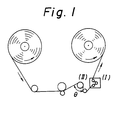
- the film was contacted with a fixed hard chrome-plated metal roll (6 mm in diameter) at a winding angle of 135° (2.356 rad ( ⁇ )). With a load of 53 g (T2) applied to an end, the film was let run at a speed of 1 m/min, measuring the resisting force (T1, g) at the other end, and the co-efficient of friction ( ⁇ d) of the running film was determined from the following equation:
- the magnetic tape used here was produced as follows.
- Rank 1 The film suffered many scuffs, some of them being deep.
- Rank 2 The film suffered a relatively large number of scuffs, some of them being deep.
- Rank 3 The number of the scuffs on the film was relatively small, and there were few deep ones.
- Rank 4 A few scuffs were seen, but no problem in practical use.
- Rank 5 The film was almost free of scuff.
- the base film side of the magnetic tape was placed in contact with a 6 mm-diameter nylon pin which had been subjected to a smoothing treatment, and the tape was let run in frictional contact with the pin at a speed of 4 m/sec.
- the degree of abrasion of the pin and the formation of white powder were examined after tape run of 2,000 meters, and the abrasion characteristics of the magnetic tape on the plastic pin was evaluated according to the following 5-rank system: Rank 1: A great many streaks were formed on the pin, and also white powder was seen heavily deposited on the pin.
- Rank 2 A fairly large number of streaks were observed on the pin, and also white powder deposition was relatively thick.
- Rank 3 Shallow streaks were seen, but white powder was small in amount.
- Rank 4 A few shallow streaks were seen, but white powder was slight in amount.
- Rank 5 The pin was almost free of streaks, and also none or only a trace of white powder was seen.
- a magnetic tape produced in a similar manner as in (5) was wound at a speed of 20m/sec and a tension of 100g in a length of 8,000m. Then, the tape was rewound and the degree of scuff on magnetic layer was visually observed.
- the evaluation was made according to the following 5-rank system.: Rank 1: Many scuffs, some of them being deep. Rank 2: Relatively large number of scuffs, some of them being deep. Rank 3: Relatively small number of scuffs, and few deep scuff. Rank 4: A few scuffs, but no problem in practical use. Rank 5: Substantially no scuff.
- the stress (kg/mm2) at 5% elongation was measured by using an Instron tension tester.
- the load at 5% elongation was read from the obtained S-S curve, and the F-5 value was calculated from the following equation. The average of measurements on 5 samples was employed.
- the electromagnetic properties of a magnetic tape obtained according to the method described in (5) above were determined by using a video deck Model NV-3700 mfd. by Matsushita Electric Co., Ltd.
- the VTR head output at a measuring frequency of 4MHz was determined by a synchroscope. Blank was supposed to be 0 dB, and its relative value was shown in dB.
- a video tape on which 4.4 MHz signals had been recorded was played back, and the number of dropouts was counted for a period of 20 minutes by a dropout counter made by Ohkura Industries Co., Ltd. The counted number was converted to the dropout count per minute.
- polyester (I) 80 parts of polyester (I) and 20 parts of polyester (II) were uniformly blended and after dried at 180°C, the mixture was extruded into a sheet at 290°C and then cooled by an electrostatic charge cooling method to obtain an amorphous film having a thickness of 200 ⁇ m.
- the amorphous film was stretched 3.5 times in the machine direction at 110°C, further stretched 3.5 times in the transverse direction at 110°C, then heat treated at 220°C for 3 seconds and then cooled to obtain a biaxially stetched polyester film having a thickness of 15 ⁇ m.
- Polyester films and magnetic tapes were produced in the same way as Example 1 except that the type and size of the particles contained in polyester (I) and polyester (II) were changed, that the both polyesters (I) and (II) were blended so that the content of each particle would be as shown in Table 1, and that the stretching conditions were changed so that the refractive index in the thickness direction of the films would have the values shown in Table 1.
- Polyester films were obtained by changing the type of particles added to polyester (I) and polyester (II), intrinsic viscosity of the polyesters and film stretching conditions.
- the properties of the obtained polyester films and the properties of the magnetic tapes made therefrom are shown in Table 1.
- the films of Examples 1 - 4 which met the requirements of the present invention, showed excellent running properties and abrasion resistance. Also, the magnetic tapes made by using these films caused no fall-off of cuttings when they were slit to a desired width. They also showed excellent scuff resistance in running at high speed.
- Comparative Example 2 in which intrinsic viscosity of the film was beyond the upper limit of the range specified in the present invention, the obtained magnetic tape was poor in slitting qualities and, when slit, it formed cuttings and also caused fall-off of powder from the magnetic layer, resulting in an increased number of dropouts in the tape.
- Example 1 CaCO3 3 0.1 0.5 CaCO3 3 0.6 0.2 0.58 1.498 0.25 A 2 +1.0 2.3 A 2 Al2O3 9 0.03 0.4 SiO2 6 - 7 0.7 0.03 0.66 1.497 0.40 A 4 +3.5 0.5 C 3 Organic cross-linked polymer 1 0.09 0.3 CaCO3 3 0.6 0.2 0.56 1.489 0.30 C 1 +0.8 1.8 A 4 - - - - Kaolin 3 0.8 0.3 0.63 1.490 0.33 B 1 +0.9 1.0 B
- the amount of these particles as measured by the usual method was 0.37% by weight based on the polyester.
- Aluminum oxide was uniformly dispersed in the polyester, and substantially no agglomerate of particles was seen.
- polyester (III) and polyester (IV) were mixed in a weight ratio of 70 : 30 and, after dried, extruded into a sheet at 290°C from an extruder to obtain an amorphous sheet.
- electrostatic charge cooling method in which the sheet is electrostatically charged.
- the sheet was then stretched 3.5 times in the machine direction and 3.4 times in the transverse direction and heat treated at 225°C to obtain a biaxially stretched film having a thickness of 15 ⁇ m.
- polyester film On this polyester film, was formed a magnetic layer to form a magnetic tape and its scuff resistance and electromagnetic properties were evaluated.
- a polyethylene terephthalate film and a magnetic tape using the film were obtained in the same way as Example 5 except that the amount (content) of the particles which separated out in the polyester, average size of the particles added and their amount blended were changed as shown in Table 2.
- a polyester containing deposited particles having an average size of 0.5 ⁇ m was obtained in the same way as Example 5 except that 0.26 part of triethyl phosphate and 0.05 part of acid ethyl phosphate were used in place of 0.31 part of triethyl phosphate used in the production of polyester (III) in Example 5.
- a polyester containing aluminum oxide particles By mixing the polyester and a polyester containing aluminum oxide particles, there was obtained a polyethylene terephthalate film containing the particles shown in Table 2.
- a magnetic tape was made by using the film and its properties were evaluated similarly to Example 5.
- Example 7 By mixing a polyester containing the deposited particles obtained in Example 7 and a polyester containing silicon carbide particles, there was obtained a polyethylene terephthalate film containing the particles shown in Table 2. The properties of this film and those of a magnetic tape made therefrom were evaluated.
- Biaxially oriented films having a thickness of 15 ⁇ m were obtained by following the process of Example 1 except that the particles contained in the polyethylene terephthalate film were changed as shown in Table 2. Also, magnetic tapes were made by using the biaxially oriented films, and the properties of the films and magnetic tapes were evaluated.
- Table 2 Particles A Particles B Film properties Magnetic tape properties Av. particle size ⁇ m Content in film wt% Type Av. particle size ⁇ m Content in film wt% Ra ⁇ m Slipperiness Abrasion resistance Scuff resistance S/N Dropout Example 5 0.8 0.26 Al2O3 0.02 0.30 0.016 0.38 A 5 +2.1 1.8 6 0.8 0.30 Al2O3 0.40 0.35 0.020 0.33 A 5 +1.5 2.0 7 0.5 0.20 Al2O3 0.05 0.30 0.013 0.40 A 5 +2.0 1.8 8 0.5 0.20 SiC 0.30 0.40 0.015 0.35 A 4 +1.6 2.1 Comp.
- Example 5 0.8 0.26 - - - 0.016 0.38 B 1 -3.0 15.1 6 0.8 0.26 CaCO3 0.40 0.35 0.021 0.35 B 1 - 2 -2.3 10.5 7 0.8 0.26 Al2O3 1.30 0.35 0.035 0.25 C 5 -4.5 6.8 8 - - Al2O3 0.03 0.30 0.004 > 1 C 4 -3.0 16.2
- Comparative Example 5 where the film was formed by using deposited particles alone without using the additive particles specified in the present invention, the magnetic tape made by using such a film was poor in scuff resistance and accordingly unsatisfactory in electromagnetic properties.
- Comparative Example 7 the additive particles used jointly with deposited particles were those having a Mohs hardness above 6 but larger than 1 ⁇ m in average size.
- the film obtained in this example had a too high surface roughness and also the particles added would come off to give adverse effect to the magnetic tape properties.
- a homogeneous solution consisting of 100 parts of methyl methacrylate, 25 parts of divinylbenzene, 22 parts of ethylvinylbenzene, 1 part of benzoyl peroxide and 100 parts of toluene was dispersed in 700 parts of water, and the dispersion was heated while stirring at 80°C in a nitrogen atmosphere for 6 hours to effect polymerization.
- the powder of the thus obtained crosslinked polymer having ester groups was about 0.1 mm in average particle size.
- the produced polymer was washed with demineralized water and then extracted twice with 500 parts of toluene to remove the unreacted monomers as well as linear polymer which were present in small quantities.
- the polymer powder was then ground by an attritor for 2 hours and then by a sand grinder for 3 hours to obtain a fine crosslinked polymer powder having an average particle size of 1.0 ⁇ m.
- polyester (VI) polyethylene terephthalate
- polyester (V) and polyester (VI) were mixed in a weight ratio of 50 : 50 and the mixture, after dried, was extruded into a sheet at 290°C from an extruder to obtain an amorphous sheet.
- electrostatic charge cooling method in which the sheet is electrostatically charged.
- the obtained sheet was stretched 3.5 times in the machine direction and 3.4 times in the transverse direction and then subjected to a heat treatment at 225°C to obtain a 15 ⁇ m thick biaxially stretched film.
- a magnetic layer was fomed by coating on the surface of the film to make a magnetic tape and its scuff resistance and electromagnetic properties were evaluated.
- Example 9 Deposited particles 0.80 0.37 - - - 0.020 0.35 B 1 -3.2 18.0 10 CaCO3 0.50 0.20 - - - 0.015 0.43 B - C 1 - 2 -1.8 10.5 11 Cross-linked polymer 1.0 0.20 CaCO3 0.40 0.20 0.026 0.31 A - B 1 - 2 -1.7 10.1 12 Al2O3 0.35 0.005 - - - 0.003 1 ⁇ C 1 -3.0 14.8
- Comparative Example 10 where the calcium carbonate particles with a Mohs hardness of 3 alone were used and Comparative Example 11 which was the same as Example 9 except for use of calcium carbonate in place of aluminium oxide, the obtained magnetic tapes were unsatisfactory in scuff resistance, had many scuff marks on the film surface and were poor in electromagnetic properties.
- Comparative Example 12 where the aluminium oxide particles alone were used in a small amount, film slipperiness was very bad and also abrasion dust was produced in large quantities to adversely affect the electromagnetic properties of the magnetic tape.
- titanium dioxide having an average particle size of 0.35 ⁇ m
- 0.05 part of triethyl phosphate and 0.04 part of antimony trioxide to carry out a polycondensation reaction in the usual way, obtaining polyethylene terephthalate having an intrinsic viscosity of 0.65.
- Titanium dioxide was dispersed very uniformly in the polyester, and substantially no agglomerate of particles was observed.
- This polyester was dried and extruded into a sheet from an extruder at 290°C to obtain a 150 ⁇ m thick amorphous sheet.
- An electrostatic charge cooling method was used in this sheet forming operation.
- This amorphous sheet was stretched 3.8 times in the machine direction and 3.6 times in the transverse direction and then again stretched 1.07 times in the machine direction to obtain a 9.8 ⁇ m thick biaxially stretched film strengthened in the machine direction. On this film, was formed a magnetic layer to make a magnetic tape.
- a biaxially stretched polyester film having a thickness of 9.8 ⁇ m was produced in the same way as Comparative Example 13 except that the particles contained in the polyester film were changed as shown in Table 4. Also, a magnetic tape was made by using the film in the same way as Comparative Example 13.
- Table 4 The results of evaluation of said film and magnetic tape are shown in Table 4.
- Table 4 Particles A Particles B Film properties Magnetic tape properties Type Av. particle size ⁇ m Content in film wt%
- Type Av. particle size ⁇ m Content in film wt% Ra ⁇ m
- Slipperiness Abrasion resistance F-5 Value (kg/mm2) Scuff resistance S/N Dropout
- Example 13 Al2O3 0.03 0.35 CaCO3 0.50 0.20 0.016 0.40 A 14.5 5 +2.1 1.7
- Example 14 TiO2 0.35 0.50 - - - 0.016 0.40 A 14.5 1 -2.1 13.0
- polyester (VII) and polyester (VIII) were mixed in a weight ratio of 50 : 50, and the mixture was dried and extruded into a sheet from an extruder at 290°C to obtain an amorphous sheet.
- This sheet was stretched 3.5 times in the machine dxirection at 90°C and 4.3 times in the transvese direction at 110°C and then heat treated at 210°C for 3 seconds to obtain a biaxially stretched film having a thickness of 15 ⁇ m.
- a magnetic layer was formed on the film to make a magnetic tape.
- a polyester was produced in the same way as Examples 14 except that ⁇ -type aluminum oxide having an average particle size of 0.1 ⁇ m obtained by heating boehmite in the air at 900 to 1,000°C was used in place of ⁇ -type aluminum oxide with an average particle size of 0.02 ⁇ m obtained from pyrolysis of aluminum trichloride.
- a film was produced from the polyester in the same way as Example 14 and its properties were evaluated.
- a film was obtained in the same way as Example 14 except that ⁇ -type aluminum oxide with an average particle size of 0.02 ⁇ m obtained by heating ammonium aluminum carbonate hydroxide and calcium carbonate with an average particle size of 0.8 ⁇ m were mixed so that their content in the film would be as shown in Table 5.
- a film was obtained in the same way as Example 14 except that the average particle size and content of ⁇ -type aluminum oxide were changed as shown in Table 5.
- Table 5 Particles A Particles B Abrasion characteristics of film Type Av. particle size ⁇ m Content in film wt% Type Av.
Landscapes
- Chemical & Material Sciences (AREA)
- Health & Medical Sciences (AREA)
- Chemical Kinetics & Catalysis (AREA)
- Medicinal Chemistry (AREA)
- Polymers & Plastics (AREA)
- Organic Chemistry (AREA)
- Engineering & Computer Science (AREA)
- Manufacturing & Machinery (AREA)
- Materials Engineering (AREA)
- Manufacture Of Macromolecular Shaped Articles (AREA)
- Compositions Of Macromolecular Compounds (AREA)
Applications Claiming Priority (12)
| Application Number | Priority Date | Filing Date | Title |
|---|---|---|---|
| JP63138051A JPH0755533B2 (ja) | 1988-06-04 | 1988-06-04 | 磁気記録媒体用ポリエステルフィルム |
| JP138051/88 | 1988-06-04 | ||
| JP63142419A JPH0781020B2 (ja) | 1988-06-09 | 1988-06-09 | 磁気記録媒体用ポリエステルフィルム |
| JP142419/88 | 1988-06-09 | ||
| JP63175452A JPH0224823A (ja) | 1988-07-14 | 1988-07-14 | 磁気記録媒体用二軸配向ポリエステルフィルム |
| JP175452/88 | 1988-07-14 | ||
| JP182360/88 | 1988-07-21 | ||
| JP63182362A JPH0231322A (ja) | 1988-07-21 | 1988-07-21 | 磁気記録媒体用二軸配向ポリエステルフィルム |
| JP63182360A JPH0231321A (ja) | 1988-07-21 | 1988-07-21 | 磁気記録媒体用二軸配向ポリエステルフィルム |
| JP182362/88 | 1988-07-21 | ||
| JP281977/88 | 1988-11-08 | ||
| JP63281977A JPH02129230A (ja) | 1988-11-08 | 1988-11-08 | 配向ポリエステルフィルム |
Publications (3)
| Publication Number | Publication Date |
|---|---|
| EP0345644A2 true EP0345644A2 (de) | 1989-12-13 |
| EP0345644A3 EP0345644A3 (en) | 1990-12-27 |
| EP0345644B1 EP0345644B1 (de) | 1994-11-02 |
Family
ID=27552889
Family Applications (1)
| Application Number | Title | Priority Date | Filing Date |
|---|---|---|---|
| EP89109937A Expired - Lifetime EP0345644B1 (de) | 1988-06-04 | 1989-06-01 | Polyesterfilm für magnetische Aufzeichnungsträger |
Country Status (4)
| Country | Link |
|---|---|
| US (1) | US5006589A (de) |
| EP (1) | EP0345644B1 (de) |
| KR (1) | KR960008598B1 (de) |
| DE (2) | DE345644T1 (de) |
Cited By (12)
| Publication number | Priority date | Publication date | Assignee | Title |
|---|---|---|---|---|
| EP0401689A1 (de) * | 1989-06-02 | 1990-12-12 | Diafoil Hoechst Co., Ltd | Biaxial orientierte Polyesterfolie |
| US5061571A (en) * | 1989-12-14 | 1991-10-29 | Diafoil Company, Limited | Biaxially oriented polyester film |
| EP0490665A1 (de) * | 1990-12-13 | 1992-06-17 | Teijin Limited | Biaxial gerichteter Polyesterfilm für magnetische Aufzeichnungsträger |
| EP0501315A1 (de) * | 1991-02-22 | 1992-09-02 | Diafoil Hoechst Co., Ltd | Polyäthylentherephthalatfilm für magnetische Aufzeichnungsträger |
| EP0510893A1 (de) * | 1991-04-25 | 1992-10-28 | Teijin Limited | Magnetisches Aufzeichnungsband |
| EP0530774A1 (de) * | 1991-09-03 | 1993-03-10 | Diafoil Hoechst Co., Ltd. | Laminierter Polyesterfilm für magnetisches Aufzeichnungsmedium |
| EP0572224A1 (de) * | 1992-05-27 | 1993-12-01 | Teijin Limited | Biaxial orientiertes Polyesterfilmlaminat |
| US5362571A (en) * | 1994-03-16 | 1994-11-08 | Teijin Limited | Magnetic tape for use in cassette for digital audio tape recorder and biaxially oriented polyester base film therefor |
| US5368932A (en) * | 1990-12-13 | 1994-11-29 | Teijin Limited | Biaxially oriented polyester film for magnetic recording media containing theta or mixed alpha plus gamma aluminum oxide and inert organic particles |
| US5431983A (en) * | 1991-04-25 | 1995-07-11 | Teijin Limited | Magnetic recording tape comprising a polyethylene-2,6-napthalate substrate, magnetic metal thin film, and a backcoat layer |
| US6506818B1 (en) * | 1999-12-20 | 2003-01-14 | Kolon Industries, Inc. | Polyester resin compositions for film |
| US8093315B2 (en) | 2003-10-10 | 2012-01-10 | Commonwealth Scientific And Industrial Research Organisation | Wear resistant polymers |
Families Citing this family (20)
| Publication number | Priority date | Publication date | Assignee | Title |
|---|---|---|---|---|
| EP0378154B1 (de) * | 1989-01-11 | 1995-11-08 | Toray Industries, Inc. | Biaxial orientierter Polyesterfilm |
| US5284699A (en) * | 1989-01-11 | 1994-02-08 | Toray Industries, Inc. | Biaxially oriented polyester film |
| EP0460640A1 (de) * | 1990-06-07 | 1991-12-11 | Diafoil Hoechst Co., Ltd | Polyesterfilm für magnetische Aufzeichnungsmedien |
| JP2963949B2 (ja) * | 1990-10-08 | 1999-10-18 | 東洋紡績株式会社 | 配向ポリエステルフィルム |
| JPH05128490A (ja) * | 1991-11-07 | 1993-05-25 | Diafoil Co Ltd | 磁気記録媒体用積層ポリエステルフイルム |
| EP0543600B1 (de) * | 1991-11-18 | 1998-10-21 | Toray Industries, Inc. | Biaxial orientierter Film aus thermoplastischem Harz |
| CA2094434A1 (en) * | 1992-04-30 | 1993-10-31 | Tomoyuki Kotani | Biaxially oriented laminated polyester film for magnetic recording media |
| EP0590570B1 (de) * | 1992-09-29 | 2001-06-13 | Diafoil Hoechst Co., Ltd | Biaxial ausgerichteter Polyesterfilm für magnetisches Aufzeichnungsmedium |
| JP3307716B2 (ja) * | 1993-04-28 | 2002-07-24 | 三菱化学ポリエステルフィルム株式会社 | 高感度感熱孔版印刷原紙用フィルム |
| KR100188038B1 (ko) * | 1993-09-14 | 1999-06-01 | 장용균 | 이축배향 폴리에스테르 필름의 제조방법 |
| KR970002665B1 (ko) * | 1993-12-31 | 1997-03-07 | 제일합섬 주식회사 | 자기기록매체용 이축배향 폴리에스테르 필름의 제조방법 |
| US6083617A (en) * | 1995-04-13 | 2000-07-04 | Toray Industries, Inc. | Polyester composition and films produced therefrom |
| US5858527A (en) * | 1995-10-30 | 1999-01-12 | Skc Limited | Biaxially oriented polyester film |
| JP3464333B2 (ja) * | 1996-03-07 | 2003-11-10 | 帝人株式会社 | 磁気記録媒体用ポリエステルフイルム |
| KR100463695B1 (ko) * | 1997-12-11 | 2004-12-29 | 데이진 가부시키가이샤 | 자기기록매체용 이축배향 폴리에스테르 필름 |
| JP4026795B2 (ja) * | 1998-10-02 | 2007-12-26 | 三菱化学ポリエステルフィルム株式会社 | 二軸配向ポリエステルフィルム |
| JP4875823B2 (ja) * | 2002-12-04 | 2012-02-15 | 日清紡ホールディングス株式会社 | 非石綿系摩擦材 |
| CN100439429C (zh) * | 2003-03-25 | 2008-12-03 | 帝人杜邦菲林日本株式会社 | 抗静电性层压聚酯膜 |
| JP2009015962A (ja) * | 2007-07-04 | 2009-01-22 | Fujifilm Corp | 磁気記録媒体及び磁気記録媒体の製造方法 |
| FR3017072B1 (fr) * | 2014-01-31 | 2016-02-19 | Toray Films Europ | Film de polyester transparent multicouche, son procede de fabrication et son utilisation notamment dans les faces arrieres de panneaux photovoltaiques |
Family Cites Families (11)
| Publication number | Priority date | Publication date | Assignee | Title |
|---|---|---|---|---|
| US3980611A (en) * | 1970-07-07 | 1976-09-14 | E. I. Du Pont De Nemours And Company | Filled thermoplastic films |
| US3821156A (en) * | 1972-01-03 | 1974-06-28 | Celanese Corp | Polyethylene terephthalate film |
| US3884870A (en) * | 1974-07-15 | 1975-05-20 | Celanese Corp | Polyethylene terephthalate film |
| JPS5278954A (en) * | 1975-12-26 | 1977-07-02 | Teijin Ltd | Polyester films |
| JPS5929610B2 (ja) * | 1975-12-26 | 1984-07-21 | 帝人株式会社 | ポリエステルフイルム |
| JPS5341355A (en) * | 1976-09-29 | 1978-04-14 | Toray Ind Inc | Biaxilialy streched polyester film |
| JPS5515860A (en) * | 1978-07-24 | 1980-02-04 | Teijin Ltd | Orientation polyester film |
| JPS55101136A (en) * | 1979-01-26 | 1980-08-01 | Teijin Ltd | Oriented polyester film for magnetic tape |
| US4497865A (en) * | 1982-02-17 | 1985-02-05 | Toray Industries, Inc. | Polyethylene terephthalate film, process for the production thereof and magnetic recording medium therefrom |
| DE3610167A1 (de) * | 1986-03-26 | 1987-10-01 | Hoechst Ag | Mehrschichtige polyesterfolie fuer magnetische informationstraeger |
| EP0674988B1 (de) * | 1987-04-07 | 2002-09-25 | Toray Industries, Inc. | Polyesterfolie |
-
1989
- 1989-06-01 EP EP89109937A patent/EP0345644B1/de not_active Expired - Lifetime
- 1989-06-01 DE DE198989109937T patent/DE345644T1/de active Pending
- 1989-06-01 DE DE68919130T patent/DE68919130T2/de not_active Expired - Fee Related
- 1989-06-02 US US07/360,781 patent/US5006589A/en not_active Expired - Lifetime
- 1989-06-03 KR KR1019890007723A patent/KR960008598B1/ko not_active Expired - Lifetime
Cited By (20)
| Publication number | Priority date | Publication date | Assignee | Title |
|---|---|---|---|---|
| US5096773A (en) * | 1989-06-02 | 1992-03-17 | Diafoil Company, Limited | Biaxially oriented polyester film |
| EP0401689A1 (de) * | 1989-06-02 | 1990-12-12 | Diafoil Hoechst Co., Ltd | Biaxial orientierte Polyesterfolie |
| US5061571A (en) * | 1989-12-14 | 1991-10-29 | Diafoil Company, Limited | Biaxially oriented polyester film |
| EP0490665A1 (de) * | 1990-12-13 | 1992-06-17 | Teijin Limited | Biaxial gerichteter Polyesterfilm für magnetische Aufzeichnungsträger |
| US5368932A (en) * | 1990-12-13 | 1994-11-29 | Teijin Limited | Biaxially oriented polyester film for magnetic recording media containing theta or mixed alpha plus gamma aluminum oxide and inert organic particles |
| US5252388A (en) * | 1990-12-13 | 1993-10-12 | Teijin Limited | Biaxially oriented polyester film for magnetic recording media |
| US5314736A (en) * | 1991-02-22 | 1994-05-24 | Diafoil Hoechst Co., Ltd. | Polyethylene terephthalate film for magnetic recording medium containing three different kinds of particles |
| EP0501315A1 (de) * | 1991-02-22 | 1992-09-02 | Diafoil Hoechst Co., Ltd | Polyäthylentherephthalatfilm für magnetische Aufzeichnungsträger |
| EP0510893A1 (de) * | 1991-04-25 | 1992-10-28 | Teijin Limited | Magnetisches Aufzeichnungsband |
| US5431983A (en) * | 1991-04-25 | 1995-07-11 | Teijin Limited | Magnetic recording tape comprising a polyethylene-2,6-napthalate substrate, magnetic metal thin film, and a backcoat layer |
| US5279881A (en) * | 1991-09-03 | 1994-01-18 | Daifoil Hoechst Company Limited | Laminated polyester film for magnetic recording medium comprising specific particles |
| EP0530774A1 (de) * | 1991-09-03 | 1993-03-10 | Diafoil Hoechst Co., Ltd. | Laminierter Polyesterfilm für magnetisches Aufzeichnungsmedium |
| EP0572224A1 (de) * | 1992-05-27 | 1993-12-01 | Teijin Limited | Biaxial orientiertes Polyesterfilmlaminat |
| US5516574A (en) * | 1992-05-27 | 1996-05-14 | Teijin Limited | Biaxially oriented laminated polyester film having different size particles in a layer thereof |
| US5620774A (en) * | 1992-05-27 | 1997-04-15 | Teijin Limited | Biaxially oriented laminated polyester film |
| US5439738A (en) * | 1993-03-16 | 1995-08-08 | Teijin Limited | Magnetic tape for use in cassette for digital audio tape recorder and biaxially oriented polyester base film therefor |
| US5463015A (en) * | 1993-03-16 | 1995-10-31 | Teijin Ltd. | Magnetic tape for use in cassette for digital audio tape recorder and biaxially oriented polyester base film therefor |
| US5362571A (en) * | 1994-03-16 | 1994-11-08 | Teijin Limited | Magnetic tape for use in cassette for digital audio tape recorder and biaxially oriented polyester base film therefor |
| US6506818B1 (en) * | 1999-12-20 | 2003-01-14 | Kolon Industries, Inc. | Polyester resin compositions for film |
| US8093315B2 (en) | 2003-10-10 | 2012-01-10 | Commonwealth Scientific And Industrial Research Organisation | Wear resistant polymers |
Also Published As
| Publication number | Publication date |
|---|---|
| US5006589A (en) | 1991-04-09 |
| EP0345644A3 (en) | 1990-12-27 |
| KR960008598B1 (ko) | 1996-06-28 |
| DE68919130D1 (de) | 1994-12-08 |
| DE68919130T2 (de) | 1995-06-01 |
| DE345644T1 (de) | 1991-10-17 |
| KR910000871A (ko) | 1991-01-30 |
| EP0345644B1 (de) | 1994-11-02 |
Similar Documents
| Publication | Publication Date | Title |
|---|---|---|
| EP0345644B1 (de) | Polyesterfilm für magnetische Aufzeichnungsträger | |
| US5096773A (en) | Biaxially oriented polyester film | |
| KR930000667B1 (ko) | 폴리에틸렌 나프탈레이트 필름 | |
| EP0460640A1 (de) | Polyesterfilm für magnetische Aufzeichnungsmedien | |
| KR100433383B1 (ko) | 폴리에스테르조성물및이것으로부터제조되는필름 | |
| KR100598008B1 (ko) | 2축 연신 폴리에스테르 필름 | |
| US4781963A (en) | Magnetic recording medium | |
| EP0541072B1 (de) | Laminierter Polyesterfilm für magnetischen Aufzeichnungsträger | |
| EP0530774B1 (de) | Laminierter Polyesterfilm für magnetisches Aufzeichnungsmedium | |
| EP0501315B1 (de) | Polyäthylentherephthalatfilm für magnetische Aufzeichnungsträger | |
| EP0535240A1 (de) | Biaxial-orientierte filmstreifen aus 2,6-naphthalat und damit hergestelltes magnetband | |
| KR960009293B1 (ko) | 필름용 폴리에스테르 제조방법 | |
| JPH0781020B2 (ja) | 磁気記録媒体用ポリエステルフィルム | |
| KR0137838B1 (ko) | 주행성이 우수한 자기기록매체용 폴리에스터 필름 | |
| JPH04198328A (ja) | ポリエチレン―2,6―ナフタレートフィルム | |
| JPH0231321A (ja) | 磁気記録媒体用二軸配向ポリエステルフィルム | |
| JP3309497B2 (ja) | ポリエステル組成物およびそれからなるフイルム | |
| KR100290820B1 (ko) | 폴리에스터필름의제조방법 | |
| KR100200428B1 (ko) | 고밀도 자기기록매체용 이축배향 폴리에스테르 필름의 제조방법 | |
| US6319588B1 (en) | Biaxially oriented polyester film | |
| JPH0836738A (ja) | 磁気記録媒体用ポリエステルフィルム | |
| KR0122873B1 (ko) | 고밀도 자기기록매체용 이축배향 폴리에스테르 필름 | |
| KR100200427B1 (ko) | 자기기록매체용 이축배향 폴리에스테르 필름 | |
| JPH06139551A (ja) | 磁気記録媒体用二軸配向ポリエステルフィルム | |
| JPH0623839A (ja) | 磁気記録媒体用二軸配向積層ポリエステルフィルム |
Legal Events
| Date | Code | Title | Description |
|---|---|---|---|
| PUAI | Public reference made under article 153(3) epc to a published international application that has entered the european phase |
Free format text: ORIGINAL CODE: 0009012 |
|
| AK | Designated contracting states |
Kind code of ref document: A2 Designated state(s): DE FR GB |
|
| PUAL | Search report despatched |
Free format text: ORIGINAL CODE: 0009013 |
|
| AK | Designated contracting states |
Kind code of ref document: A3 Designated state(s): DE FR GB |
|
| 17P | Request for examination filed |
Effective date: 19910222 |
|
| EL | Fr: translation of claims filed | ||
| DET | De: translation of patent claims | ||
| RAP1 | Party data changed (applicant data changed or rights of an application transferred) |
Owner name: DIAFOIL HOECHST CO., LTD |
|
| 17Q | First examination report despatched |
Effective date: 19930423 |
|
| GRAA | (expected) grant |
Free format text: ORIGINAL CODE: 0009210 |
|
| AK | Designated contracting states |
Kind code of ref document: B1 Designated state(s): DE FR GB |
|
| REF | Corresponds to: |
Ref document number: 68919130 Country of ref document: DE Date of ref document: 19941208 |
|
| ET | Fr: translation filed | ||
| PLBE | No opposition filed within time limit |
Free format text: ORIGINAL CODE: 0009261 |
|
| STAA | Information on the status of an ep patent application or granted ep patent |
Free format text: STATUS: NO OPPOSITION FILED WITHIN TIME LIMIT |
|
| 26N | No opposition filed | ||
| REG | Reference to a national code |
Ref country code: GB Ref legal event code: IF02 |
|
| PGFP | Annual fee paid to national office [announced via postgrant information from national office to epo] |
Ref country code: GB Payment date: 20020529 Year of fee payment: 14 |
|
| PGFP | Annual fee paid to national office [announced via postgrant information from national office to epo] |
Ref country code: FR Payment date: 20020620 Year of fee payment: 14 |
|
| PGFP | Annual fee paid to national office [announced via postgrant information from national office to epo] |
Ref country code: DE Payment date: 20020621 Year of fee payment: 14 |
|
| PG25 | Lapsed in a contracting state [announced via postgrant information from national office to epo] |
Ref country code: GB Free format text: LAPSE BECAUSE OF NON-PAYMENT OF DUE FEES Effective date: 20030601 |
|
| PG25 | Lapsed in a contracting state [announced via postgrant information from national office to epo] |
Ref country code: DE Free format text: LAPSE BECAUSE OF NON-PAYMENT OF DUE FEES Effective date: 20040101 |
|
| GBPC | Gb: european patent ceased through non-payment of renewal fee |
Effective date: 20030601 |
|
| PG25 | Lapsed in a contracting state [announced via postgrant information from national office to epo] |
Ref country code: FR Free format text: LAPSE BECAUSE OF NON-PAYMENT OF DUE FEES Effective date: 20040227 |
|
| REG | Reference to a national code |
Ref country code: FR Ref legal event code: ST |