EP0350810A2 - Verfahren zur Gewinnung, Isolierung und Reinigung von Epidermin - Google Patents
Verfahren zur Gewinnung, Isolierung und Reinigung von Epidermin Download PDFInfo
- Publication number
- EP0350810A2 EP0350810A2 EP89112446A EP89112446A EP0350810A2 EP 0350810 A2 EP0350810 A2 EP 0350810A2 EP 89112446 A EP89112446 A EP 89112446A EP 89112446 A EP89112446 A EP 89112446A EP 0350810 A2 EP0350810 A2 EP 0350810A2
- Authority
- EP
- European Patent Office
- Prior art keywords
- epidermin
- fermentation
- resin
- methanol
- eluate
- Prior art date
- Legal status (The legal status is an assumption and is not a legal conclusion. Google has not performed a legal analysis and makes no representation as to the accuracy of the status listed.)
- Granted
Links
Images



Classifications
-
- C—CHEMISTRY; METALLURGY
- C07—ORGANIC CHEMISTRY
- C07K—PEPTIDES
- C07K1/00—General methods for the preparation of peptides, i.e. processes for the organic chemical preparation of peptides or proteins of any length
- C07K1/14—Extraction; Separation; Purification
-
- C—CHEMISTRY; METALLURGY
- C07—ORGANIC CHEMISTRY
- C07K—PEPTIDES
- C07K14/00—Peptides having more than 20 amino acids; Gastrins; Somatostatins; Melanotropins; Derivatives thereof
- C07K14/195—Peptides having more than 20 amino acids; Gastrins; Somatostatins; Melanotropins; Derivatives thereof from bacteria
- C07K14/305—Peptides having more than 20 amino acids; Gastrins; Somatostatins; Melanotropins; Derivatives thereof from bacteria from Micrococcaceae (F)
- C07K14/31—Peptides having more than 20 amino acids; Gastrins; Somatostatins; Melanotropins; Derivatives thereof from bacteria from Micrococcaceae (F) from Staphylococcus (G)
-
- A—HUMAN NECESSITIES
- A61—MEDICAL OR VETERINARY SCIENCE; HYGIENE
- A61K—PREPARATIONS FOR MEDICAL, DENTAL OR TOILETRY PURPOSES
- A61K38/00—Medicinal preparations containing peptides
Definitions
- the invention relates to methods for obtaining the polypeptide epidermin.
- the antibiotic epidermin is known from European patent application 85 113 908.9 (publication number 0 181 578).
- the active component is either enriched with n-butanol by extracting the culture filtrate, which has been freed of cells and lime, the butanol extract is evaporated, the residue is dissolved in methanol and stirred into an excess amount of cold diethyl ether to separate off the lipidic accompanying substances, the activity in the Precipitation remains, or the centrifuged culture filtrate is adsorbed to enrich the epidermin on Amberlite XAD-8 or on related types of this acrylic ester-based polymer (company Serva), the adsorbed epidermin containing methanol / conc.
- Hydrochloric acid (99: 1) detached from the resin and from the hydrochloric acid methanol solution after neutralization with ammonia is isolated by evaporation.
- a subsequent chromatography of the Amberlite XAD eluate or the lipid-free butanol extract on Sephadex LH-20 with methanol / acetic acid (95: 5) separates a large number of small peptides, amino acids and salts from the medium from the antibiotic.
- the antibiotic remains at the start in a first liquid-liquid distribution with the system n-butanol / ethyl acetate / 0.1 N acetic acid (3: 1: 3).
- the producer Staphylococcus epidermidis DSM 3095 is grown aerobically at 37 ° C. in a complex medium of the composition 2 to 4% meat extract, 1 to 3% malt extract and 0.25 to 1% CaCO3 or 0.25 to 0, 5% Ca (OH) 2 (percent by weight).
- the maximum antibiotic activity is reached after 18 to 23 hours.
- the antibiotic epidermin can be obtained in substantially higher yields and in a simpler manner by the amberlite XAD-1180 or Amberlite XAD-16 or in the culture filtrate or in the culture broth which still contains the microorganism related types of polymers based on styrene-divinyl copolymers are adsorbed either via a column or, in the case of the culture broth, also by batchwise introduction of the resin.
- the active component is through Elu tion with methanol / dilute, in particular 0.01 N hydrochloric acid (9: 1, v: v) detached from the resin, the eluate adjusted to a pH of 5.3 to 5.8 and on a weak cation exchanger such as Amberlite IRC- 50 or related resins, such as. B. Amberlite-IRC-84, where the ion exchange can take place in a column or by batch entry, in the latter case preferably by adding twice an amount of 3 volume percent of the resin to the XAD eluate within one hour.
- a weak cation exchanger such as Amberlite IRC- 50 or related resins, such as.
- Amberlite-IRC-84 where the ion exchange can take place in a column or by batch entry, in the latter case preferably by adding twice an amount of 3 volume percent of the resin to the XAD eluate within one hour.
- the resin After adsorption, the resin is introduced into a column, unbound substances are then washed out with a 0.05 N sodium phosphate buffer solution in water at pH 7.0, the epidermin is then washed with a solution of 80% of the above-mentioned sodium phosphate buffer, the 1.5 N is sodium chloride and contains 20% by volume of methanol, preferably elutes at a pH between 6.0 and 8.0.
- the epidermin is gradually washed out, first with a solvent A, consisting of water with 1% by weight of formic acid, then with a solvent B, consisting of methanol / water (80:20, v: v) with 1% by weight. -% formic acid.
- a solvent A consisting of water with 1% by weight of formic acid
- a solvent B consisting of methanol / water (80:20, v: v) with 1% by weight. -% formic acid.
- epidermin production can be carried out by means of a “batch” fermentation, a “feeding” fermentation related to this, in which individual substances are added during the fermentation, with a fermentation discontinuous adsorption of the epidermine formed as "on-line” adsorption and an on-line adsorption that is continuous.
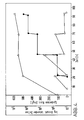
- Fig. 1 The influence of initial concentrations of 3% sodium chloride and different concentrations of ferrichloride on epidermin production is shown in Fig. 1.
- maltose gave the best results after malt extract. It is recommended to add glucose only in combination with other C sources.
- a combination of lactose with maltose or galactose with maltose also gave good results.
- a combination of glucose with maltose or lactose or galactose produced the same yield as the malt extract. All other conventional C sources produced little or no epidermin production.
- the fermentation takes place with good ventilation at temperatures between 34 and 37 ° C, preferably 36 ° C.
- the best course of production is obtained when the pH before fermentation is 6.0 to 7.0.
- carbonates or hydroxides of divalent cations such as calcium carbonate or calcium hydroxide
- only little production takes place.
- the pH shows a characteristic course with a drop in the acidic range, with only a small production taking place.
- the increases in activity at the time of maximum production by the strain DSM 3095 were determined by the plate diffusion test (determination of the inhibitor diameter in mm against Micrococcus luteus ATCC 9341) using a calibrated line, the activity in a brain-heart infusion nutrient solution according to the EP-A-0 027 710 was set to 100% as follows:
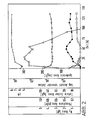
- Fig. 2 shows the course of the fermentation as described above under d); Fig. 1 shows the dependence of epidermin production on the addition of 3% sodium chloride and on different amounts of iron (III) chloride as indicated under e). All percentages mentioned above relate to percentages by weight.
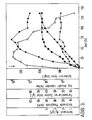
- Fig. 3 shows the course of the fermentation as described under point f), Fig. 4 shows the same course while switching on-line adsorption, as indicated above under point g).
- a comparison of the values obtained with the aid of the plate diffusion test or the HPLC shows, when using the method according to the invention and its variants, a significant increase in the epidermin yields, namely from 320% to up to 2780, compared to the methods known per se %.
- the fermentation can be carried out in suitable shake flasks; fermenters of 200 liters and more can also be used to produce larger quantities of substances.
- a 20 l fermenter (type b 20. Braun / Melsungen or Giovanola Freres, Monthey, Switzerland; with overturning system) was equipped with 15 l nutrient solution with the addition of 0.5 ml polyol (propylene glycol) and in Sterilized in situ at 121 ° C for 30 minutes.
- 150 ml of an 8-hour-old preculture were used as inoculation material.
- the fermentation took place at 35 to 37 ° C, 0.2 to 0.6 vvm and 700 to 1000 rpm, preferably at 36 ° C, 0.4 vvm and 900 rpm.
- the bioreactors used gave the best growth and the best yield of epidermin at 36 ° C., an aeration rate of 0.4 vvm and stirring at 900 revolutions per minute.
- Lower ventilation and slower Stirring reduced the yield of epidermin (Fig. 5).
- Stronger ventilation and stirring led to a slightly improved yield but also to extreme foaming. This is due to the strong surface activity of the antibiotic; mechanical or chemical foam suppression was not possible without loss of activity.
- Fig. 2 shows the course of a "batch" fermentation on a 20 l scale with the strong producing strain DSM 3095, in a nutrient solution containing 33 g meat extract, 30 g malt extract, 3.8 g calcium hydroxide in 1 liter.
- This strain produces epidermin in an amount up to 80 mg / l.
- Intensive growth combined with the utilization of the offered C sources with the formation of acetate can be recognized from the drop in the pH value.
- the maximum number of cells is reached after 30 hours. After this time, the main fermentable C sources, such as glucose and maltose, are exhausted.
- the added phosphate is used up after 8 hours.
- the maximum concentration of the antibiotic is reached after 48 hours and is 80 mg / l.
- This rapid epidermin production offers a good opportunity for the development of a continuous fermentation process with high throughputs of the medium used.
- the nitrogen concentration is above 150 mM throughout the fermentation, most of this content cannot be used by the microorganisms.
- Glucose is primarily metabolized to acetate, as the acidification of the medium shows. If the sugars become scarce, the organic acids are used as additional C sources, whereby the pH value of the medium changes to the alkaline pH range. The glucose is therefore added depending on the pH during the fermentation process. The pH is kept at pH 6.0, the acidification is not suppressed.
- Phosphates are added continuously.
- the addition rate was calculated on the basis of the consumption rate of the phosphates in "batch" fermentations in which 10 mM phosphate was added.
- the combined "feeding" fermentation was also transferred to the 200 l scale of a pilot plant while maintaining the same aeration rate, stirrer movement rate and the same addition conditions. Without additional optimizations, epidermin yields in the order of 80 to 90% of the yields obtained on the 20 l scale were obtained
- the free-flowing resin beads were filtered off with a sieve (diameter 0.25 mm), the fermentation broth with the biomass being returned to the reactor (Fig. 9).
- the course of a "feeding" fermentation with discontinuous adsorption of the epidermin is shown in Fig. 4.
- the fermentation parameters and addition conditions were identical to those described above.
- the maximum cell mass was reached after 46 hours with 4.1010 cells, the maximum epidermin yield after elution of resin was 500 mg / l.
- the total time of fermentation was the same as that of the "feeding" fermentation.
- the first cleaning or raw cleaning is simplified by including the first isolation step in the fermentation process; the yield of epidermin after carrying out this first purification step is 50% higher compared to the yield in the "feeding" fermentation before the purification.
- the continuous "on-line" adsorption of the epidermin during the fermentation process is achieved with a cross-flow filtration system.
- the retentate is returned to the reactor while the filtrate is adsorbed on an Amberlite XAD-1180 column.
- the eluate is also returned to the reactor (see Fig. 10).
- the adsorption is started after 12 to 15 hours fermentation time.
- Maximum epidermin yields after detachment of the antibiotic from the adsorber resin are achieved with amounts up to 500 mg / l after 80 to 90 hours.
- the optimized isolation scheme represents a great achievement in an attempt to increase the production of epidermin.
- the combination of the adsorption according to the invention with the ion exchange chromatography results in a product with a purity of 80%. .
- the use of both batch and on-line adsorption processes lead to a quick method for cleaning the epidermin.
- the growth could be followed by the increase in the number of live germs.
- 0.5 ml of sterile culture was diluted in saline and 0.1 ml thereof was plated on plates (medium: peptone 10 g, meat extract 8 g, table salt 3 g, disodium hydrogen phosphate 2 g, glucose 10 g per 1 liter). After 18 hours of incubation at 37 ° C, the individual colonies could be counted.
- the phosphate content in the culture filtrate was determined by the method of Itaya and Ui (1966) in Clin. Chim. Acta 14 , 361-366.
- the nitrogen concentration was measured using the micro-Kjeldahl method with an automatic distiller (Type Kjeldahl system II, Tecator).
Landscapes
- Chemical & Material Sciences (AREA)
- Organic Chemistry (AREA)
- Health & Medical Sciences (AREA)
- Life Sciences & Earth Sciences (AREA)
- Biochemistry (AREA)
- Biophysics (AREA)
- General Health & Medical Sciences (AREA)
- Genetics & Genomics (AREA)
- Medicinal Chemistry (AREA)
- Molecular Biology (AREA)
- Proteomics, Peptides & Aminoacids (AREA)
- Analytical Chemistry (AREA)
- Gastroenterology & Hepatology (AREA)
- Preparation Of Compounds By Using Micro-Organisms (AREA)
- Peptides Or Proteins (AREA)
- Medicines That Contain Protein Lipid Enzymes And Other Medicines (AREA)
- Medicines Containing Material From Animals Or Micro-Organisms (AREA)
- Details Of Garments (AREA)
- Telephonic Communication Services (AREA)
- Agricultural Chemicals And Associated Chemicals (AREA)
- Measuring Or Testing Involving Enzymes Or Micro-Organisms (AREA)
- Polyamides (AREA)
- Organic Low-Molecular-Weight Compounds And Preparation Thereof (AREA)
- Automatic Embroidering For Embroidered Or Tufted Products (AREA)
- Sewing Machines And Sewing (AREA)
Abstract
Description
- Die Erfindung bezieht sich auf Verfahren zur Gewinnung des Polypeptides Epidermin.
- Das Antibiotikum Epidermin ist bekannt durch die Europäische Patentanmeldung 85 113 908.9 (Veröffentlichungsnummer 0 181 578).
- Dort wird ein Verfahren zur Gewinnung, Isolierung und Reinigung dieser Substanz beschrieben, ausgehend von einer Kulturbrühe, die unter Mitwirkung eines resistenten Stammes von Staphylococcus epidermidis erhalten wurde. Der resistente Stamm wurde am 26.10.1984 unter der Nummer DSM 3095 bei der "Deutsche Sammlung von Mikroorganismen" hinterlegt. Die aktive Komponente wird zur Isolierung entweder durch Extraktion des von Zellen und Kalk befreiten Kulturfiltrats mit n-Butanol angereichert, der Butanolextrakt wird evaporiert, der Rückstand in Methanol gelöst und in eine überschüssige Menge kalten Diethylethers zur Abtrennung der lipidischen Begleitstoffe eingerührt, wobei die Aktivität im Niederschlag verbleibt, oder das zentrifugierte Kulturfiltrat wird zu Anreicherung des Epidermins an Amberlite XAD-8 oder an verwandte Typen dieses Polymers auf Acrylesterbasis (Firma Serva) adsorbiert, wobei das adsorbierte Epidermin mit Methanol/konz. Salzsäure (99:1) vom Harz gelöst und aus der salzsauren Methanollösung nach Neutralisation mit Ammoniak durch Eindampfen isoliert wird. Eine sich anschließende Chromatographie des Amberlite XAD-Eluats bzw. des von Lipiden befreiten Butanolextrakts an Sephadex LH-20 mit Methanol/Essigsäure (95:5) trennt eine große Zahl von kleinen Peptiden, Aminosäuren und Salzen aus dem Medium vom Antibiotikum ab. Bei einer sich anschließenden multiplikativen Gegenstromverteilung nach Craig bleibt in einer ersten Flüssig-Flüssig-Verteilung mit dem System n-Butanol/Essigester/0,1 N Essigsäure (3:1:3) das Antibiotikum am Start sitzen. Bei einer zweiten Craig-Verteilung mit dem neutralen System 2-Butanol/0,05 N Ammoniumacetat (1:1) findet sich das Antibiotikum in der Mitte der Apparatur. Das Ammoniumacetat wird durch Lyophilisation am Hochvakuum entfernt, das gebildete Epidermin fällt nach Gefriertrocknung als ein in allen verwendeten Dünnschichtsystemen einheitliches, weißes Pulver an. Auf diese Weise lassen sich aus 80 Liter Kulturfiltrat (bei Adsorption an Amberlite XAD-8, Gelchromatographie an Sephadex LH-20 und multiplikative Verteilung nach Craig) 2,6 g lyophylisiertes Epidermin gewinnen.
- Die Zucht des Produzenten Staphylococcus epidermidis DSM 3095 erfolgt, wie dort beschrieben, aerobisch bei 37°C in einem Komplexmedium der Zusammensetzung 2 bis 4 % Fleischextrakt, 1 bis 3 % Malzextrakt und 0,25 bis 1 % CaCO₃ oder 0,25 bis 0,5 % Ca(OH)₂ (Gewichtsprozente).Das Maximum an antibiotischer Aktivität wird dabei nach 18 bis 23 Stunden erreicht.
- Es wurde gefunden, daß sich das Antibiotikum Epidermin in wesentlich höheren Ausbeuten und auf einfachere Weise dadurch gewinnen läßt, daß das gebildete Antibiotikum in dem Kulturfiltrat oder in der Kulturbrühe, die noch den Mikroorganismus enthält, an Amberlite XAD-1180 oder Amberlite XAD-16 oder verwandte Polymertypen auf Basis von Styrol-divinyl-copolymerisaten entweder über eine Kolonne oder, im Falle der Kulturbrühe, auch durch schubweises Eintragen des Harzes adsorbiert wird. Die Wirkkomponente wird durch Elu tion mit Methanol/verdünnter insbesondere 0,01 N Salzsäure (9:1,v:v) vom Harz losgelöst, das Eluat auf einen pH-Wert von 5,3 bis 5,8 eingestellt und auf einen schwachen Kationenaustauscher, wie Amberlite IRC-50 oder verwandte Harze, wie z. B. Amberlite-IRC-84 gegeben, wobei der Ionenaustausch in einer Säule oder auch durch schubweises Eintragen erfolgen kann, im letzteren Fall vorzugsweise durch zweimaliges Zugeben einer Menge von jeweils 3 Volumenprozent des Harzes zum XAD-Eluat innerhalb von einer Stunde. Nach der Adsorption wird das Harz in eine Säule eingegeben, nichtgebundene Substanzen werden anschließend mit einer 0,05 N Natriumphosphatpufferlösung in Wasser bei pH 7,0 ausgewaschen, das Epidermin wird dann mit einer Lösung von 80 % des vorstehend genannten Natriumphosphatpuffers, die 1,5 N bezüglich Kochsalz ist und 20 Vol.-% Methanol enthält, bei einem PH-Wert zwischen 6,0 und 8,0 vorzugsweise 7,0 eluiert.
- Zur Entsalzung stellt man das Eluat auf einen pH-Wert von 6,0 und gibt dieses schubweise zur Adsorption auf ein Harz des obengenannten Styrol-divinyl-copolymerisat-Typs, z. B. auf Amberlite XAD-1180. Die Salze werden mit Wasser ausgewaschen und das gebundene Epidermin anschließend mit Methanol/50 %-ige Essigsäure (9:1, v:v) eluiert. Nach Entfernung des Lösungsmittels und Gefriertrocknung erhält man ein lyophilisiertes Roh-Epidermin. Aus diesem läßt sich durch präparative HPLC-Chromatographie (high performance liquid chromatography) mit Hilfe von Nucleosil 100 C-18 (10 |m) oder Lichro-Sorb RP Select B reines Epidermin isolieren. Das Epidermin wird zu diesem Zweck schrittweise ausgewaschen, zuerst mit einem Lösungsmittel A, bestehend aus Wasser mit 1 Gew.-% Ameisensäure, dann mit einem Lösungsmittel B, bestehend aus Methanol/Wasser (80:20, v:v) mit 1 Gew.-% Ameisensäure.
- Verfahrenstechnisch läßt sich die Epidermin-Erzeugung auf dem Wege einer "Batch"-Fermentation, einer hierzu verwandten "Feeding"-Fermentation, bei welcher einzelne Stoffe während der Fermentation zugegeben werden, einer Fermentation mit diskontinuierlicher Adsorption des gebildeten Epidermins als "on-line"-Adsorption und einer on-line-Adsorption, die kontinuierlich verläuft, durchführen.
- Bei der ansatzweisen sogenannten "Batch"-Fermentation wurden die besten Ergebnisse mit einer Nährstofflösung der folgenden Zusammensetzung erreicht: 3,3 % Fleischextrakt, 3 % Malzextrakt, 0,37 % Calciumhydroxid (Gew.-%). Vorteilhaft wirkt sich auf die Ausbeute ein Zusatz von 1 bis 6 Gew.-% Alkalichloride, wie Natriumchlorid, Kaliumchlorid und von 0,001 bis 0,002 Gew.-% Eisenionen, z. B. in Form von FeCl₃ und/oder FeSO₄, desweiteren von Ammoniumchlorid oder -sulfat (zwischen 57 und 200 m molar) aus; vorzugsweise angewandte Konzentrationen sind 3 Gew.-% Natriumchlorid und 0,00125 Gew.-% Ferrichlorid. Der Einfluß anfänglicher Konzentrationen von 3 % Kochsalz und unterschiedlicher Konzentrationen von Ferrichlorid auf die Epiderminproduktion wird durch Abb. 1 gezeigt. Von allen C-Quellen gab Maltose nach Malzextrakt die besten Ergebnisse. Es empfiehlt sich Glucose nur in Verbindung mit anderen C-Quellen zuzusetzen. Eine Kombination von Laktose mit Maltose oder Galaktose mit Maltose gab ebenfalls gute Ergebnisse. Eine Kombination von Glukose mit Maltose oder Laktose oder Galaktose erbrachte die gleiche Ausbeute wie der Malzextrakt. Alle anderen, konventionellen C-Quellen erbrachten keine oder nur eine geringe Epiderminproduktion.
- Die Fermentation erfolgt unter guter Belüftung bei Temperaturen zwischen 34 und 37°C vorzugsweise 36°C. Den besten Produktionsverlauf erhält man, wenn der pH-Wert vor der Fermentation bei 6,0 bis 7,0 liegt. Bei Fehlen von Carbonaten oder Hydroxiden zweiwertiger Kationen, wie Calciumcarbonat oder Calciumhydroxid, findet nur geringe Produktion statt. Nach der Zugabe von beispielsweise Calciumcarbonat zeigt der pH-Wert einen charakteristischen Verlauf mit Abfall in den sauren Bereich, dabei findet nur geringe Produktion statt.
- Beim anschließendem Anstieg des pH-Wertes in den alkalischen Bereich setzte die Produktion ein. Anstelle von Calciumcarbonat kann auch Magnesiumcarbonat verwendet werden, Calciumhydroxid lieferte bessere Ergebnisse als Calciumcarbonat. Mit 50 mM Calciumhydroxid konnte die Produktion gegenüber 25 mM Calciumcarbonat noch etwas gesteigert werden. Bei der Verwertung von C-Quellen (Zucker) durch den Stamm kommt es zur Bildung organischer Säuren wie z. B. Essigsäure, die durch zweiwertige Kationen komplexiert werden, wobei gleichzeitig eine Abpufferung des Mediums erfolgt. Die Aktivitätszunahmen zum Zeitpunkt der maximalen Produktion durch den Stamm DSM 3095 ergaben sich, ermittelt durch den Plattendiffusionstest (Bestimmung des Hemmhofdurchmessers in mm gegen Micrococcus luteus ATCC 9341), unter Benutzung einer kalibrierten Linie, wobei die Aktivität in einer Brain-Heart-Infusionsnährlösung gemäß der EP-A-0 027 710 gleich 100 % gesetzt wurde, wie folgt:


- Die Abb. 2 zeigt den Verlauf der Fermentation wie vorstehend unter d) beschrieben; die Abb. 1 zeigt die Abhängigkeit der Epiderminproduktion von der Zugabe von 3 % Natriumchlorid und von verschiedenen Mengen an Eisen(III)chlorid wie unter e) angegeben. Alle vorstehend genannten Prozentangaben betreffen Gewichtsprozente. Die Abb. 3 zeigt den Verlauf der Fermentation wie unter Punkt f) beschrieben, die Abb. 4 denselben Verlauf unter Einschaltung der on-line Adsorption, wie oben unter Punkt g) angegeben.
- Ein Vergleich der mit Hilfe des Platten-Diffusions-Tests oder der HPLC gewonnenen Werte zeigt bei der Anwendung des erfindungsgemäßen Verfahrens mit seinen Varianten im Vergleich zu den an sich bekannten Verfahren ein signifikantes Anwachsen der Epidermin-Ausbeuten, nämlich von 320 % auf bis zu 2780 %.
- Im folgenden sollen die einzelnen Schritte und Bedingungen für die Durchführung des erfindungsgemäßen Verfahrens genauer beschrieben werden.
- Der produzierende Stamm läßt sich am besten durch Tiefgefrieren (-18°C) in einem Medium, das 3,3 Gew.-% Fleischextrakt, 3 Gew.-% Malzextrakt, 0,37 Gew.-% Calciumhydroxid in 40 Gew.-%, Glyzerin (der Rest ist Wasser) enthält, lagern. Für jede Fermentation läßt man eine Praekultur 18 Stunden lang bei 36°C auf einem Agar-Medium (pH 7,2 bis 7,4), das pro Liter 8 g Lab Lemco Pulver (Firma Oxoid), 10 g Pepton, 3 g Kochsalz, 2 g Na₂HPO₄, 15 g Agar und 10 g sterilisierte Glucose enthält, wachsen.
- Die Fermentation läßt sich in dazu geeigneten Schüttelkolben durchführen, zur Herstellung größerer Substanzmengen können auch Fermenter von 200 Liter und mehr verwendet werden.
- Für Kolbenversuche werden 500 ml Erlenmeyerkolben mit einem seitlichen Einstich verwendet. Die Kolben werden mit 100 ml Nährlösung gefüllt und 20 Minuten bei 121°C autoklaviert. Als Impfmaterial dient 1 % einer 8 Stunden alten Vorkultur. Die Inkubation erfolgte bei 36°C auf der rotierenden Schüttelmaschine bei 160 Umdrehungen pro Minute (rpm).
- Für die Fermentation im 15 l Maßstab wurde ein 20 l Fermenter (Typ b 20. Braun/Melsungen bzw. Giovanola Freres, Monthey, Schweiz; mit Umwurfsystem) mit 15 l Nährlösung unter Zusatz von 0,5 ml Polyol (Propylenglykol) bestückt und in situ bei 121°C 30 Minuten sterilisiert. Als Impfmaterial dienten 150 ml einer 8 Stunden alten Vorkultur. Die Fermentation erfolgte bei 35 bis 37°C, 0,2 bis 0,6 vvm und 700 bis 1000 rpm, vorzugsweise bei 36°C, 0,4 vvm und 900 rpm.
- Bei den verwendeten Bioreaktoren ergab sich das beste Wachstum und die beste Ausbeute an Epidermin bei 36°C, einer Belüftungsrate von 0,4 vvm und einem Rühren mit 900 Umdrehungen pro Minute. Eine geringere Belüftung und ein langsameres Rühren verminderte die Ausbeute an Epidermin (Abb. 5). Stärkere Belüftung und Rühren führte zu einer leicht verbesserten Ausbeute aber auch zu einem extremen Schäumen. Dies rührt von der starken Oberflächenaktivität des Antibiotikums her; mechanische oder chemische Schaumunterdrückung war nicht ohne einen Verlust an Aktivität möglich.
- Die Abb. 2 zeigt den Verlauf einer "Batch"-Fermentation im 20 l Maßstab mit dem stark produzierenden Stamm DSM 3095, in einer Nährlösung, enthaltend 33 g Fleischextrakt, 30 g Malzextrakt, 3,8 g Calciumhydroxid in 1 Liter. Dieser Stamm erzeugt hierin Epidermin in einer Menge bis zu 80 mg/l. Intensives Wachstum verbunden mit der Verwertung der angebotenen C-Quellen unter Acetatbildung kann an Hand des Abfalls des pH-Wertes erkannt werden. Die maximale Zellzahl wird nach 30 Stunden erreicht. Nach dieser Zeit sind die hauptsächlichen, fermentierbaren C-Quellen, wie Glukose und Maltose, erschöpft. Das zugesetzte Phosphat ist nach 8 Stunden verbraucht. Die maximale Konzentration des Antibiotikums wird nach 48 Stunden erreicht und beträgt 80 mg/l.
- Sowohl die Zugabe von Chloriden, wie Natriumchlorid oder Kaliumchlorid, in einer Menge bis zu 70 g pro Liter und von FeCl₃ oder FeSO₄ bis zu 150 mM erhöhten die Epiderminausbeute ohne Verlängerung des Fermentationsprozesses (Abb. 1). Eine maximale Ausbeute an Epidermin von 310 mg/l ergab sich bei gleichzeitiger Zugabe von 3 % Natriumchlorid und 75 mM Eisen(III)chlorid zu dem Produktionsmedium.
- Diese rasche Epiderminproduktion bietet eine gute Möglichkeit für die Entwicklung eines kontinuierlichen Fermentationsverfahrens mit hohen Durchsatzmengen des angewandten Mediums.
-
- Um die Ausbeute an Epidermin durch die Ausdehnung der Wachstumsphase und durch das Erreichen einer höheren Zell-Dichte erhöhen zu können, waren höhere Konzentrationen sowohl der C-Quellen als auch des zugesetzten Phosphats erforderlich. Die Erzeugung des Epidermins unterliegt einer starken C-katabolischen Repression (Abb. 6) und wird auch durch den Phosphatgehalt des Mediums mitreguliert (Abb. 7).
- Die Stickstoffkonzentration liegt während des ganzen Verlaufs der Fermentation über 150 mM, der größte Teil dieses Gehalts kann von den Mikroorganismen nicht genutzt werden. In Flaschen-Kulturen führte die Zugabe von Ammoniumsalzen bis zu 150 mM, wie aus Abb. 8 hervorgeht (für Ammoniumchlorid), zu einer signifikanten Stimulierung der Epiderminproduktion.
- Glucose wird primär zu Acetat metabolisiert, wie die Ansäuerung des Mediums zeigt. Werden die Zucker knapp, so werden die organischen Säuren als weitere C-Quellen benutzt, wobei der pH-Wert des Mediums in den alkalischen pH-Bereich wechselt. Die Glucose wird deshalb pH-abhängig während des Fermentationsverlaufs zugegeben. Der pH-Wert wird bei pH 6,0 gehalten, die Ansäuerung wird nicht unterdrückt.
- Phosphate werden kontinuierlich zugegeben. Die Zugaberate wurde an Hand der Verbrauchsrate der Phosphate in "Batch"-Fermentationen, bei denen 10 mM Phosphat zugesetzt wurden, errechnet.
- Weder die Zugabe von Glucose und Phosphat allein noch zusammen führte zu einer signifikant höheren Ausbeute an Epidermin bei der Fermentation. Der höhere Gehalt an Epidermin, der bei der pH-regulierten Glucosezugabe während der Fermentation gefunden wurde, hängt nicht von zusätzlichen C-Quellen ab, er ist bedingt durch den langsameren Abbau des Antibiotikums im sauren Medium. Dies läßt sich durch Fermenta tionen, bei welchen der pH-Wert durch Zugabe von Schwefelsäure konstant gehalten wurde, zeigen. Erst die Entwicklung einer kombinierten "feeding"-Fermentation mit pH-abhängiger Glucosezugabe und kontinuierlicher Zugabe von Phosphaten und Ammoniumstickstoff führte sowohl zu einer signifikanten Erhöhung der Biomasse als auch zu einer Erhöhung der Antibiotikumausbeute. Die Abb. 3 zeigt den Verlauf einer kombinierten "feeding"-Fermentation.
- Die Zellmasse wächst um den dreifachen Betrag auf 2x10¹¹ Zellen pro ml an; die maximale Epiderminausbeute beträgt 350 mg/l. Obwohl die maximale Zellkonzentration bereits nach 24 Stunden erreicht ist, wird die maximale Epiderminausbeute erst während der stationären Phase nach 72 Stunden erreicht; im Verlauf der "feeding"-Fermentation verschwindet die Identität der Wachstums- und Produktionsphase, die kennzeichnend ist für die "Batch"-Fermentation. Trotzdem bleibt die Epiderminproduktion eng verbunden mit dem Wachstum der Organismen. Erstens werden 80 % der Totalausbeute während der log-Phase produziert, zweitens ergibt sich die Biomasse durch die Anzahl der lebenden Zellen, so daß die stationäre Phase als ein ausbalancierter Zustand, gegeben durch die wachsenden und lysierenden Zellen, zu betrachten ist.
- Die Zugabe von Natriumchlorid während der "feeding"-Fermentation erzeugt nicht dieselbe stimulierende Wirkung wie im Falle der "Batch"-Fermentation. Während der ersten 24 Stunden war die Produktionsrate um 40 %, die Wachstumsrate um 70 % höher als im Falle der "feeding"-Fermentation. Die spezifische Produktivität des Mikroorganismus liegt deshalb um 20 % niedriger; nach 24 Stunden hört die Epiderminproduktion auf, was entweder auf eine Nährstoff-Limitierung durch einen bis jetzt unbekannten Faktor oder auf eine Eigenvergiftung des Organismus durch auftretende metabolische Nebenprodukte zurückzuführen ist.
- Die kombinierte "feeding"-Fermentation wurde auch in den 200 l-Maßstab einer Pilotanlage übertragen unter Beibehaltung derselben Belüftungsrate, Rührerbewegungsrate und derselben Zugabebedingungen. Ohne zusätzliche Optimierungen erlangte man Epiderminausbeuten in der Größenordnung von 80 bis 90 % der im 20 l-Maßstab erhaltenen Ausbeuten
- Um feed-back Hemmung und andere mögliche Einflüsse auf die produzierenden Organismen zu umgehen und um das bereits gebildete Epidermin vor dem zersetzenden Einfluß von Proteasen und Wärme zu schützen, wurde das Epidermin diskontinuierlich aus der Fermentationsbrühe während des Verlaufs der Fermentation entfernt.
- Zu diesem Zwecke wurde die gesamte Fermentationsbrühe einschließlich der produzierenden Organismen unter Druck in eine kugelförmige Adsorptionskammer gesprüht, die mit Amberlite XAD-1180 befüllt war. Dies führte zu einer sehr wirkungsvollen Verwirbelung des Harzes und zu einer raschen Adsorption des Epidermins. Die frei fließenden Harzkügelchen wurden mit einem Sieb (Durchmesser 0,25 mm) abfiltriert, wobei die Fermentationsbrühe mit der Biomasse wieder dem Reaktor zugeführt wurde (Abb. 9). Der Verlauf einer "feeding"-Fermentation mit diskontinuierlicher Adsorption des Epidermins wird durch Abb. 4 gezeigt. Die Fermentationsparameter und Zugabebedingungen waren mit den oben beschriebenen identisch. Die maximale Zellmasse wurde nach 46 Stunden mit 4.10¹⁰ Zellen erreicht, die maximale Epiderminausbeute nach dem Eluieren von Harz betrug 500 mg/l. Die Gesamtzeit der Fermentation war dieselbe wie bei der "feeding"-Fermentation.
- Die erste Reinigung bzw. Rohreinigung wird durch die Einbeziehung des ersten Isolationsschrittes in das Fermentationsverfahren vereinfacht; die Ausbeute an Epidermin nach Vornahme dieses ersten Reinigungsschrittes liegt um 50 % höher im Vergleich zu der Ausbeute bei der "feeding"-Fermentation vor der Reinigung.
- Die kontinuierliche "on-line"-Adsorption des Epidermins während des Fermentationsprozesses wird mit einer cross-flow-Filtrationsanlage erreicht. Das Retentat wird in den Reaktor zurückgeführt während das Filtrat an einer Amberlite XAD-1180 Säule adsorbiert wird. Auch das Eluat wird in den Reaktor zurückgeführt (vgl. Abb. 10). Die Adsorption wird nach 12 bis 15 Stunden Fermentationszeit in Gang gesetzt. Maximale Epiderminausbeuten nach Loslösen des Antibiotikums vom Adsorberharz werden mit Mengen bis zu 500 mg/l nach 80 bis 90 Stunden erreicht.
- Das optimierte Schema der Isolation, wie aus Abb. 10 ersichtlich, stellt eine große Errungenschaft bei dem Versuch, die Produktion von Epidermin zu steigern, dar. Letztendlich ergibt sich aus der Verbindung der erfindungsgemäßen Adsorption mit der Ionenaustauschchromatographie ein Produkt mit einer Reinheit von 80 %. Die Anwendung sowohl der Batch-, als auch der on-line-Adsorptionsverfahren führen zu einer schnellen Methode zur Reinigung des Epidermins.
- Zur Kontrolle des Fermentationsverlaufes wurden zu verschiedenen Zeiten während der Fermentation steril Proben entnommen. Die Proben wurden folgendermaßen ausgewertet:
- Messung mit einem Labor-pH-Meter (Knick pH-mV-Meter)
- Das Wachstum konnte anhand der Zunahme der Lebendkeimzahl verfolgt werden.
Hierzu wurden 0,5 ml steril entnommene Kultur in Saline verdünnt und davon 0,1 ml auf Platten (Medium: Pepton 10 g, Fleischextrakt 8 g, Kochsalz 3 g, Dinatriumhydrogenphosphat 2 g, Glucose 10 g auf 1 Liter) ausplattiert. Nach 18 Stunden Inkubation bei 37°C konnten die Einzelkolonien ausgezählt werden. - Die Proben wurden in einer Eppendorf-Zentrifuge 3200 2 Minuten abzentrifugiert und entweder 10 µl des Überstandes im Plattendiffusionstest oder mittels HPLC, wie nachstehend beschrieben, getestet. Parallel wurde eine Eichkurve mit bekannten Konzentrationen erstellt.
-
Aufspritzvolumen : 10 µl Fließmittel : A : Wasser mit 0,05 % 70 %-iger Perchlorsäure B : Acetonitril Gradient : Minuten A B O 77,5 22,5 8 63,0 37,0 8,5 0 100 9,5 0 100 10 77,5 22,5 14 77,5 22,5 Fließrate : 2 ml/Min. Detektion : 210 nm Säule : Nucleosil 7 C-18 mit zugehöriger Vorsäule. - Der Phosphatgehalt im Kulturfiltrat wurde nach der Methode von Itaya und Ui (1966) in Clin. Chim. Acta 14, 361-366 gemessen.
- Die Stickstoffkonzentration wurde nach der Mikro-Kjeldahl-Methode mit einem automatischen Destilliergerät (Type Kjeldahlsystem II, Firma Tecator) gemessen.
- Der Gehalt an Glucose und Maltose im Medium wurde enzymatisch mit einem Test-Kit der Firma Boehringer, Mannheim gemessen.
- Diese Bestimmung erfolgte gaschromatographisch nach den Angaben von Platen und Schink (1987), Arch. Microbiol. 149, 136-141.
- Die Epiderminkonzentration in der Kulturbrühe wurde einmal durch Bioassay, das andere mal durch HPLC nach Fiedler et al., 1987, Chromatographia 24, 433-438, gemessen.
- Nach Erreichen des Produktionsmaximums wurde die Kulturflüssigkeit mittels kontinuierlicher Zentrifugation (Zentrifuge: Typ LA 7lb-4, Loher & Söhne, Ruhstorf/Rott) mit 1380 rpm abzentrifugiert. Für eine optimale Abtrennung der Zellen mußte die Durchflußrate sehr niedrig gehalten werden. Eine erste Anreicherung der aktiven Komponenten wurde mittels der eingangs geschilderten Adsorption an Styrol-divinyl-copolymerisate erreicht.
- Weitere Verfahren zur Adsorption des Antibiotikums, beispielsweise durch batch-Adsorption, diskontinuierliche und kontinuierliche Adsorptionsprozesse ohne und mit Abtrennung der Zellmasse wurden bereits vorne beschrieben.
- Die nachfolgenden Beispiele sollen die Erfindung noch besser erläutern:
- 3,3 Gew.-% Lab Lemco Pulver
3,0 Gew.-% Malzextrakt
0,38 Gew.-% Calciumhydroxid
pH 6,5 (mit 3 N H₂SO₄) - Typ b 20 (Giovanola) mit 15 l Medium
Belüftung: 0,4 vvm
Rührfrequenz: 900 U/min.
Temperatur; 36°C - Max. Epiderminausbeute: 80 mg/l nach 48 Stunden;
Ergebnisse siehe Abb. 2 - 3,3 Gew.-% Lab Lemco Pulver
3,0 Gew.-% Malzextrakt
0,38 Gew.-% Calciumhydroxid
pH 6,5 (Mit 3N H₂SO₄) - Typ b 20 (Giovanola) mit 15 l Medium
Belüftung: 0,4 vvm
Rührfrequenz: 900 U/min.
Temperatur: 36°C - Glucose 1 kg, Wasser 1 l, pH 6,0. Diese Lösung wurde pH-abhängig zugegeben, der pH-Wert der Fermentationslösung wurde auf 6,0 eingestellt.
- NH₄Cl 500 g, KH₂PO₄ 120 g, Wasser 1,5 l, pH 6,0 (eingestellt mit wasserfreiem NaOH). Die Lösung wurde konstant zugeführt mit einer Fließrate von 1 ml pro Liter und Stunde. Die Zugabe begann nach 4 Stunden.
- Maximale Epiderminausbeute: 350 mg/l nach 72 Stunden. Ergebnisse siehe auch Abb. 3.
-
Medium: siehe Beispiel 2 Reaktor: siehe Beispiel 2 Adsorption: an Amberlite XAD-1180; 150 g Trockengewicht Ergebnisse: Maximale Epiderminausbeute: 500 mg/l nach 72 Stunden; die Epiderminausbeute wurde nach dem 1. Isolierungsschritt (siehe auch Beispiel 4) gemessen. Ergebnisse siehe auch Abb. 4. -
- Nach "on-line"-Adsorption des Epidermins während des Fermentationsprozesses wurde das Harz (vgl. Beispiel 3) mit 150 l Wasser gewaschen und, wenn eine Adsorptionskammer benutzt wurde, in eine Säule für weiteres Waschen und Eluieren übertragen.
Waschen: 5 l Methanol/H₂O 1:1 (v:v) Elution: 5 l Methanol/0,01 N Salzsäure 9:1 (v:v). - Der pH-Wert des Eluats wurde auf 5,5 eingestellt; das Epidermin dwurde durch Zugabe von 2 Portionen, bestehend jeweils aus 45 g Amberlite IRC-50, innerhalb von 1 Stunde zum Eluat auf dieses Harz adsorbiert. Das Harz wurde zum Waschen und Eluieren in eine Säule übertragen.
Waschen: 2 l 0,05 N Na-Phosphatpuffer pH 7,0; Elution: 10 l 0,05 N Na-Phosphat, 1,5 N Kochsalz in Wasser/Methanol 8:2 (v:v), pH 7,0. - Zur Entsalzung wurde der pH-Wert des Eluats auf 6,0 eingestellt und Epidermin schubweise an Amberlite XAD-1180 adsorbiert, in 2 Chargen zu jeweils 75 g Trockengewicht innerhalb 1 Stunde. Zum Waschen und Eluieren wurde das Harz in eine Kolonne gepackt.
Waschen: 20 l Wasser Elution: 2,5 l Methanol/0,01 N Salzsäure 9:1 (v:v). - Nach dem Verdampfen des Lösungsmittels und Gefriertrocknung des Eluats erhielt man 6500 mg einer Substanz, die 5200 mg Epidermin (80 % Reinheit) enthielt. Die Endreinigung erfolgte durch präparative HPLC mit Gradient-Elution:
Kolonne: Nucleosil 100 C-18 (10µ) Lösungsmittel: A: Wasser mit 1 Gew.-% Ameisensäure B: Methanol/Wasser 8:2 enthaltend 1 % Ameisensäure. - Nach präparativer HPLC (high performance liquid chromatography) und Gefriertrocknung erhielt man 4,94 g reines Epidermin. Das Antibiotikum erwies sich bei allen damit durchgeführten Tests als einheitlich. Das Flußdiagramm ist in Abb. 10 dargestellt.
- Während der Herstellung und Isolierung des Epidermins wurde zur Kontrolle bzw. biologischen Charakterisierung der Plattendiffusionstest angewandt. Näheres hierzu kann aus der EP-A-85 113 908.8 entnommen werden. In dieser Publikation wird der Stamm Staphylococcus epidermidis DSM 3095 nähers definiert.
- Die durch den Stamm DSM 3095 erzeugte Kulturbrühe kann auch durch eine solche, die durch den Stamm NCIB 11536 (hinterlegt bei der National Collection of Industrial Bacteria, Aberdeen) erzeugt wurde, ausgetauscht werden, um darin Epidermin zu erzeugen, zu isolieren und es anschließend zu reinigen. Bezüglich der Epiderminproduktion ist aber der Stamm NCIB 11536 dem Stamm DSM 3095 unterlegen.
- Epidermin wirkt als Antibiotikum gegen Hautinfektionen wie Ekzeme, Impetigo, Cellulitis und Akne.
Claims (10)
Priority Applications (1)
| Application Number | Priority Date | Filing Date | Title |
|---|---|---|---|
| AT89112446T ATE95187T1 (de) | 1988-07-15 | 1989-07-07 | Verfahren zur gewinnung, isolierung und reinigung von epidermin. |
Applications Claiming Priority (2)
| Application Number | Priority Date | Filing Date | Title |
|---|---|---|---|
| US21969888A | 1988-07-15 | 1988-07-15 | |
| US219698 | 1998-12-23 |
Publications (3)
| Publication Number | Publication Date |
|---|---|
| EP0350810A2 true EP0350810A2 (de) | 1990-01-17 |
| EP0350810A3 EP0350810A3 (de) | 1991-09-25 |
| EP0350810B1 EP0350810B1 (de) | 1993-09-29 |
Family
ID=22820401
Family Applications (1)
| Application Number | Title | Priority Date | Filing Date |
|---|---|---|---|
| EP89112446A Expired - Lifetime EP0350810B1 (de) | 1988-07-15 | 1989-07-07 | Verfahren zur Gewinnung, Isolierung und Reinigung von Epidermin |
Country Status (12)
| Country | Link |
|---|---|
| EP (1) | EP0350810B1 (de) |
| JP (1) | JP2777205B2 (de) |
| KR (1) | KR970009289B1 (de) |
| AT (1) | ATE95187T1 (de) |
| AU (1) | AU630875B2 (de) |
| CA (1) | CA1336896C (de) |
| DE (1) | DE58905744D1 (de) |
| DK (1) | DK350689A (de) |
| ES (1) | ES2059645T3 (de) |
| IE (1) | IE62402B1 (de) |
| PT (1) | PT91171B (de) |
| ZA (1) | ZA895362B (de) |
Cited By (3)
| Publication number | Priority date | Publication date | Assignee | Title |
|---|---|---|---|---|
| GB2254852A (en) * | 1991-04-11 | 1992-10-21 | Thomae Gmbh Dr K | Isolation and purificatiion of lantibiotics |
| US6733758B1 (en) * | 1996-06-20 | 2004-05-11 | Bengt Guss | Fibrinogen binding protein originating from coagulase-negative staphylococcus |
| FR2954140A1 (fr) * | 2009-12-17 | 2011-06-24 | Oreal | Compositions cosmetiques ou dermatologiques a base de bacteriocines et de prebiotiques |
Families Citing this family (1)
| Publication number | Priority date | Publication date | Assignee | Title |
|---|---|---|---|---|
| KR100520450B1 (ko) * | 1999-06-08 | 2005-10-12 | 주식회사 코캣 | 반도체 식각공정용 할로겐족 폐가스 처리제 및 이를 이용한 할로겐족 폐가스의 처리방법 |
Family Cites Families (3)
| Publication number | Priority date | Publication date | Assignee | Title |
|---|---|---|---|---|
| JPH0226640B2 (de) * | 1979-10-12 | 1990-06-12 | Uiriamu Jeemuzu Kanrifue | |
| DE3583987D1 (de) * | 1984-11-06 | 1991-10-10 | Thomae Gmbh Dr K | Antibiotisches polypeptid, verfahren zu seiner herstellung und seine verwendung. |
| DE3440423A1 (de) * | 1984-11-06 | 1986-05-07 | Dr. Karl Thomae Gmbh, 7950 Biberach | Antibiotisches polypeptid, verfahren zu seiner herstellung, dieses polypeptid erzeugender stamm von staphylococcus epidermidis, dieses polypeptid enthaltende zubereitungsformen und seine verwendung zur bekaempfung infektioeser erkrankungen |
-
1989
- 1989-07-07 AT AT89112446T patent/ATE95187T1/de not_active IP Right Cessation
- 1989-07-07 ES ES89112446T patent/ES2059645T3/es not_active Expired - Lifetime
- 1989-07-07 EP EP89112446A patent/EP0350810B1/de not_active Expired - Lifetime
- 1989-07-07 DE DE89112446T patent/DE58905744D1/de not_active Expired - Fee Related
- 1989-07-14 AU AU38103/89A patent/AU630875B2/en not_active Ceased
- 1989-07-14 ZA ZA895362A patent/ZA895362B/xx unknown
- 1989-07-14 JP JP1182372A patent/JP2777205B2/ja not_active Expired - Lifetime
- 1989-07-14 CA CA000605673A patent/CA1336896C/en not_active Expired - Fee Related
- 1989-07-14 DK DK350689A patent/DK350689A/da not_active Application Discontinuation
- 1989-07-14 PT PT91171A patent/PT91171B/pt not_active IP Right Cessation
- 1989-07-14 IE IE228389A patent/IE62402B1/en not_active IP Right Cessation
- 1989-07-15 KR KR1019890010095A patent/KR970009289B1/ko not_active Expired - Fee Related
Cited By (6)
| Publication number | Priority date | Publication date | Assignee | Title |
|---|---|---|---|---|
| GB2254852A (en) * | 1991-04-11 | 1992-10-21 | Thomae Gmbh Dr K | Isolation and purificatiion of lantibiotics |
| GB2254852B (en) * | 1991-04-11 | 1995-04-05 | Thomae Gmbh Dr K | Lantibiotic isolation and purification by plural chromatography processes |
| US6733758B1 (en) * | 1996-06-20 | 2004-05-11 | Bengt Guss | Fibrinogen binding protein originating from coagulase-negative staphylococcus |
| US7160990B2 (en) | 1996-06-20 | 2007-01-09 | Biostapro Ab | Antibodies to a fibrinogen binding protein of staphylococcus epidermidis |
| FR2954140A1 (fr) * | 2009-12-17 | 2011-06-24 | Oreal | Compositions cosmetiques ou dermatologiques a base de bacteriocines et de prebiotiques |
| WO2011073437A3 (fr) * | 2009-12-17 | 2012-08-23 | L'oreal | Compositions cosmétiques ou dermatologiques à base de bactériocines et de prébiotiques |
Also Published As
| Publication number | Publication date |
|---|---|
| ATE95187T1 (de) | 1993-10-15 |
| AU3810389A (en) | 1990-01-18 |
| IE892283L (en) | 1990-01-15 |
| DE58905744D1 (de) | 1993-11-04 |
| DK350689D0 (da) | 1989-07-14 |
| ZA895362B (en) | 1991-03-27 |
| KR970009289B1 (ko) | 1997-06-10 |
| ES2059645T3 (es) | 1994-11-16 |
| IE62402B1 (en) | 1995-01-25 |
| AU630875B2 (en) | 1992-11-12 |
| JPH0284194A (ja) | 1990-03-26 |
| CA1336896C (en) | 1995-09-05 |
| KR910003112A (ko) | 1991-02-26 |
| EP0350810B1 (de) | 1993-09-29 |
| DK350689A (da) | 1990-01-16 |
| EP0350810A3 (de) | 1991-09-25 |
| PT91171A (pt) | 1990-02-08 |
| JP2777205B2 (ja) | 1998-07-16 |
| PT91171B (pt) | 1995-03-01 |
Similar Documents
| Publication | Publication Date | Title |
|---|---|---|
| DE69228239T2 (de) | A 83543 Verbindungen und Verfahren zu ihrer Herstellung | |
| EP0195944B1 (de) | Verfahren zur kontinuierlichen Herstellung von L-Carnitin | |
| DE69114574T2 (de) | Bazillus subtilis Mutant und Verfahren zur Herstellung von Surfactin durch Verwendung dieses Mutants. | |
| EP0366060A1 (de) | Glykosidase-Inhibitor Salbostatin, Verfahren zu seiner Herstellung und seine Verwendung | |
| EP0149744B1 (de) | Verfahren zur biotechnologischen Herstellung von Poly-D(-)-3-hydroxybuttersäure | |
| EP0575908A2 (de) | Pseudomonas aeruginosa und seine Verwendung zur Herstellung von L-Rhamnose | |
| EP0181578B1 (de) | Antibiotisches Polypeptid, Verfahren zu seiner Herstellung und seine Verwendung | |
| DE69122931T2 (de) | Verfahren zur Herstellung von Aminosäuren | |
| EP0362520A2 (de) | Ein neues Antibiotikum, Mersacidin, ein Verfahren zur seiner Herstellung und seine Verwendung als Arzneimittel | |
| DE3027380C2 (de) | ||
| EP0350810B1 (de) | Verfahren zur Gewinnung, Isolierung und Reinigung von Epidermin | |
| DE69021716T2 (de) | Verfahren zur herstellung von vancomycin. | |
| DE3027326C2 (de) | ||
| DE2445581C3 (de) | Verfahren zur Herstellung von D-Gluconsäure-dlactam | |
| CH576487A5 (en) | Validamycin a - from the hydrolysis ofvalidamycin c, e, and f | |
| EP0717111A1 (de) | Mikrobilles Verfahren zur Herstellung von Dihydroxyaceton unter Rückführung von Biomasse | |
| DE2456139C3 (de) | Verfahren zur Herstellung des Antibiotikums 20.798 R.P | |
| DE3003359C2 (de) | ||
| EP0015388A1 (de) | 1-Desoxynojirimycin-Herstellung | |
| DE69129924T2 (de) | Antibiotikum und Verfahren zu seiner Herstellung | |
| DE3878379T2 (de) | Verfahren zur herstellung von d-alanin. | |
| DE3019254C2 (de) | ||
| DE2202701C3 (de) | Verfahren zur biotechnischen Herstellung von Zitronensäure | |
| DE19821038A1 (de) | Neue Glykoside des Acarviosins, Synthese eines neuen Saccharase-Inhibitors durch Biotransformation der Acarbose | |
| DE1517837C (de) | Verfahren zur biochemischen Herstellung von delta-(N-Acetyl)-L-Ornithin |
Legal Events
| Date | Code | Title | Description |
|---|---|---|---|
| PUAI | Public reference made under article 153(3) epc to a published international application that has entered the european phase |
Free format text: ORIGINAL CODE: 0009012 |
|
| AK | Designated contracting states |
Kind code of ref document: A2 Designated state(s): AT BE CH DE ES FR GB GR IT LI LU NL SE |
|
| PUAL | Search report despatched |
Free format text: ORIGINAL CODE: 0009013 |
|
| AK | Designated contracting states |
Kind code of ref document: A3 Designated state(s): AT BE CH DE ES FR GB GR IT LI LU NL SE |
|
| 17P | Request for examination filed |
Effective date: 19911016 |
|
| 17Q | First examination report despatched |
Effective date: 19920925 |
|
| GRAA | (expected) grant |
Free format text: ORIGINAL CODE: 0009210 |
|
| AK | Designated contracting states |
Kind code of ref document: B1 Designated state(s): AT BE CH DE ES FR GB GR IT LI LU NL SE |
|
| REF | Corresponds to: |
Ref document number: 95187 Country of ref document: AT Date of ref document: 19931015 Kind code of ref document: T |
|
| REF | Corresponds to: |
Ref document number: 58905744 Country of ref document: DE Date of ref document: 19931104 |
|
| ITF | It: translation for a ep patent filed | ||
| GBT | Gb: translation of ep patent filed (gb section 77(6)(a)/1977) |
Effective date: 19931207 |
|
| ET | Fr: translation filed | ||
| REG | Reference to a national code |
Ref country code: GR Ref legal event code: FG4A Free format text: 3009962 |
|
| EPTA | Lu: last paid annual fee | ||
| PLBE | No opposition filed within time limit |
Free format text: ORIGINAL CODE: 0009261 |
|
| STAA | Information on the status of an ep patent application or granted ep patent |
Free format text: STATUS: NO OPPOSITION FILED WITHIN TIME LIMIT |
|
| ITTA | It: last paid annual fee | ||
| 26N | No opposition filed | ||
| REG | Reference to a national code |
Ref country code: ES Ref legal event code: FG2A Ref document number: 2059645 Country of ref document: ES Kind code of ref document: T3 |
|
| EAL | Se: european patent in force in sweden |
Ref document number: 89112446.3 |
|
| PGFP | Annual fee paid to national office [announced via postgrant information from national office to epo] |
Ref country code: GB Payment date: 19990614 Year of fee payment: 11 |
|
| PGFP | Annual fee paid to national office [announced via postgrant information from national office to epo] |
Ref country code: FR Payment date: 19990616 Year of fee payment: 11 |
|
| PGFP | Annual fee paid to national office [announced via postgrant information from national office to epo] |
Ref country code: CH Payment date: 19990617 Year of fee payment: 11 |
|
| PGFP | Annual fee paid to national office [announced via postgrant information from national office to epo] |
Ref country code: SE Payment date: 19990622 Year of fee payment: 11 Ref country code: AT Payment date: 19990622 Year of fee payment: 11 |
|
| PGFP | Annual fee paid to national office [announced via postgrant information from national office to epo] |
Ref country code: NL Payment date: 19990624 Year of fee payment: 11 |
|
| PGFP | Annual fee paid to national office [announced via postgrant information from national office to epo] |
Ref country code: DE Payment date: 19990626 Year of fee payment: 11 |
|
| PGFP | Annual fee paid to national office [announced via postgrant information from national office to epo] |
Ref country code: LU Payment date: 19990629 Year of fee payment: 11 |
|
| PGFP | Annual fee paid to national office [announced via postgrant information from national office to epo] |
Ref country code: BE Payment date: 19990706 Year of fee payment: 11 |
|
| PGFP | Annual fee paid to national office [announced via postgrant information from national office to epo] |
Ref country code: ES Payment date: 19990719 Year of fee payment: 11 |
|
| PGFP | Annual fee paid to national office [announced via postgrant information from national office to epo] |
Ref country code: GR Payment date: 19990728 Year of fee payment: 11 |
|
| PG25 | Lapsed in a contracting state [announced via postgrant information from national office to epo] |
Ref country code: LU Free format text: LAPSE BECAUSE OF NON-PAYMENT OF DUE FEES Effective date: 20000707 Ref country code: GB Free format text: LAPSE BECAUSE OF NON-PAYMENT OF DUE FEES Effective date: 20000707 Ref country code: AT Free format text: LAPSE BECAUSE OF NON-PAYMENT OF DUE FEES Effective date: 20000707 |
|
| PG25 | Lapsed in a contracting state [announced via postgrant information from national office to epo] |
Ref country code: SE Free format text: LAPSE BECAUSE OF NON-PAYMENT OF DUE FEES Effective date: 20000708 Ref country code: ES Free format text: LAPSE BECAUSE OF NON-PAYMENT OF DUE FEES Effective date: 20000708 |
|
| PG25 | Lapsed in a contracting state [announced via postgrant information from national office to epo] |
Ref country code: LI Free format text: LAPSE BECAUSE OF NON-PAYMENT OF DUE FEES Effective date: 20000731 Ref country code: GR Free format text: LAPSE BECAUSE OF NON-PAYMENT OF DUE FEES Effective date: 20000731 Ref country code: CH Free format text: LAPSE BECAUSE OF NON-PAYMENT OF DUE FEES Effective date: 20000731 Ref country code: BE Free format text: LAPSE BECAUSE OF NON-PAYMENT OF DUE FEES Effective date: 20000731 |
|
| BERE | Be: lapsed |
Owner name: KARL THOMAE G.M.B.H. Effective date: 20000731 |
|
| PG25 | Lapsed in a contracting state [announced via postgrant information from national office to epo] |
Ref country code: NL Free format text: LAPSE BECAUSE OF NON-PAYMENT OF DUE FEES Effective date: 20010201 |
|
| GBPC | Gb: european patent ceased through non-payment of renewal fee |
Effective date: 20000707 |
|
| REG | Reference to a national code |
Ref country code: CH Ref legal event code: PL |
|
| EUG | Se: european patent has lapsed |
Ref document number: 89112446.3 |
|
| PG25 | Lapsed in a contracting state [announced via postgrant information from national office to epo] |
Ref country code: FR Free format text: LAPSE BECAUSE OF NON-PAYMENT OF DUE FEES Effective date: 20010330 |
|
| NLV4 | Nl: lapsed or anulled due to non-payment of the annual fee |
Effective date: 20010201 |
|
| REG | Reference to a national code |
Ref country code: FR Ref legal event code: ST |
|
| PG25 | Lapsed in a contracting state [announced via postgrant information from national office to epo] |
Ref country code: DE Free format text: LAPSE BECAUSE OF NON-PAYMENT OF DUE FEES Effective date: 20010501 |
|
| REG | Reference to a national code |
Ref country code: ES Ref legal event code: FD2A Effective date: 20010810 |
|
| PG25 | Lapsed in a contracting state [announced via postgrant information from national office to epo] |
Ref country code: IT Free format text: LAPSE BECAUSE OF NON-PAYMENT OF DUE FEES;WARNING: LAPSES OF ITALIAN PATENTS WITH EFFECTIVE DATE BEFORE 2007 MAY HAVE OCCURRED AT ANY TIME BEFORE 2007. THE CORRECT EFFECTIVE DATE MAY BE DIFFERENT FROM THE ONE RECORDED. Effective date: 20050707 |