EP0351138A2 - DNS-Sequenzierung - Google Patents
DNS-Sequenzierung Download PDFInfo
- Publication number
- EP0351138A2 EP0351138A2 EP89306877A EP89306877A EP0351138A2 EP 0351138 A2 EP0351138 A2 EP 0351138A2 EP 89306877 A EP89306877 A EP 89306877A EP 89306877 A EP89306877 A EP 89306877A EP 0351138 A2 EP0351138 A2 EP 0351138A2
- Authority
- EP
- European Patent Office
- Prior art keywords
- dna
- series
- polymerase
- chain terminating
- band
- Prior art date
- Legal status (The legal status is an assumption and is not a legal conclusion. Google has not performed a legal analysis and makes no representation as to the accuracy of the status listed.)
- Granted
Links
Images





Classifications
-
- C—CHEMISTRY; METALLURGY
- C12—BIOCHEMISTRY; BEER; SPIRITS; WINE; VINEGAR; MICROBIOLOGY; ENZYMOLOGY; MUTATION OR GENETIC ENGINEERING
- C12Q—MEASURING OR TESTING PROCESSES INVOLVING ENZYMES, NUCLEIC ACIDS OR MICROORGANISMS; COMPOSITIONS OR TEST PAPERS THEREFOR; PROCESSES OF PREPARING SUCH COMPOSITIONS; CONDITION-RESPONSIVE CONTROL IN MICROBIOLOGICAL OR ENZYMOLOGICAL PROCESSES
- C12Q1/00—Measuring or testing processes involving enzymes, nucleic acids or microorganisms; Compositions therefor; Processes of preparing such compositions
- C12Q1/68—Measuring or testing processes involving enzymes, nucleic acids or microorganisms; Compositions therefor; Processes of preparing such compositions involving nucleic acids
-
- C—CHEMISTRY; METALLURGY
- C12—BIOCHEMISTRY; BEER; SPIRITS; WINE; VINEGAR; MICROBIOLOGY; ENZYMOLOGY; MUTATION OR GENETIC ENGINEERING
- C12Q—MEASURING OR TESTING PROCESSES INVOLVING ENZYMES, NUCLEIC ACIDS OR MICROORGANISMS; COMPOSITIONS OR TEST PAPERS THEREFOR; PROCESSES OF PREPARING SUCH COMPOSITIONS; CONDITION-RESPONSIVE CONTROL IN MICROBIOLOGICAL OR ENZYMOLOGICAL PROCESSES
- C12Q1/00—Measuring or testing processes involving enzymes, nucleic acids or microorganisms; Compositions therefor; Processes of preparing such compositions
- C12Q1/68—Measuring or testing processes involving enzymes, nucleic acids or microorganisms; Compositions therefor; Processes of preparing such compositions involving nucleic acids
- C12Q1/6869—Methods for sequencing
-
- Y—GENERAL TAGGING OF NEW TECHNOLOGICAL DEVELOPMENTS; GENERAL TAGGING OF CROSS-SECTIONAL TECHNOLOGIES SPANNING OVER SEVERAL SECTIONS OF THE IPC; TECHNICAL SUBJECTS COVERED BY FORMER USPC CROSS-REFERENCE ART COLLECTIONS [XRACs] AND DIGESTS
- Y10—TECHNICAL SUBJECTS COVERED BY FORMER USPC
- Y10S—TECHNICAL SUBJECTS COVERED BY FORMER USPC CROSS-REFERENCE ART COLLECTIONS [XRACs] AND DIGESTS
- Y10S435/00—Chemistry: molecular biology and microbiology
- Y10S435/803—Physical recovery methods, e.g. chromatography, grinding
-
- Y—GENERAL TAGGING OF NEW TECHNOLOGICAL DEVELOPMENTS; GENERAL TAGGING OF CROSS-SECTIONAL TECHNOLOGIES SPANNING OVER SEVERAL SECTIONS OF THE IPC; TECHNICAL SUBJECTS COVERED BY FORMER USPC CROSS-REFERENCE ART COLLECTIONS [XRACs] AND DIGESTS
- Y10—TECHNICAL SUBJECTS COVERED BY FORMER USPC
- Y10S—TECHNICAL SUBJECTS COVERED BY FORMER USPC CROSS-REFERENCE ART COLLECTIONS [XRACs] AND DIGESTS
- Y10S435/00—Chemistry: molecular biology and microbiology
- Y10S435/81—Packaged device or kit
-
- Y—GENERAL TAGGING OF NEW TECHNOLOGICAL DEVELOPMENTS; GENERAL TAGGING OF CROSS-SECTIONAL TECHNOLOGIES SPANNING OVER SEVERAL SECTIONS OF THE IPC; TECHNICAL SUBJECTS COVERED BY FORMER USPC CROSS-REFERENCE ART COLLECTIONS [XRACs] AND DIGESTS
- Y10—TECHNICAL SUBJECTS COVERED BY FORMER USPC
- Y10S—TECHNICAL SUBJECTS COVERED BY FORMER USPC CROSS-REFERENCE ART COLLECTIONS [XRACs] AND DIGESTS
- Y10S436/00—Chemistry: analytical and immunological testing
- Y10S436/807—Apparatus included in process claim, e.g. physical support structures
- Y10S436/808—Automated or kit
-
- Y—GENERAL TAGGING OF NEW TECHNOLOGICAL DEVELOPMENTS; GENERAL TAGGING OF CROSS-SECTIONAL TECHNOLOGIES SPANNING OVER SEVERAL SECTIONS OF THE IPC; TECHNICAL SUBJECTS COVERED BY FORMER USPC CROSS-REFERENCE ART COLLECTIONS [XRACs] AND DIGESTS
- Y10—TECHNICAL SUBJECTS COVERED BY FORMER USPC
- Y10T—TECHNICAL SUBJECTS COVERED BY FORMER US CLASSIFICATION
- Y10T436/00—Chemistry: analytical and immunological testing
- Y10T436/14—Heterocyclic carbon compound [i.e., O, S, N, Se, Te, as only ring hetero atom]
- Y10T436/142222—Hetero-O [e.g., ascorbic acid, etc.]
- Y10T436/143333—Saccharide [e.g., DNA, etc.]
Definitions
- This invention relates to DNA sequencing and in particular to automated methods for DNA sequencing.
- DNA sequencing is generally carried out by the method of Sanger et al. (Proc. Nat. Acad. Sci. USA 74 :5463, 1977) and involves enzymatic synthesis of single strands of DNA from a single stranded DNA template and a primer.
- a primer which hybridizes to the template.
- the primer is elongated using a DNA polymerase, and each reaction terminated at a specific base (guanine, G, adenine, A, thymine, T, or cytosine, C) via the incorporation of an appropriate chain terminating agent, for example, a dideoxynucleotide.
- Enzymes currently used for this method of sequencing include: the large fragment of Escherichia coli DNA polymerase I ("Klenow" fragment), reverse transcriptase, Taq polymerase, and a modified form of bacteriophage T7 DNA polymerase.
- the four DNA synthesis reactions result in formation of four series of DNA products, each product having one defined terminus and one variable terminus.
- the defined terminus starts with the primer molecule.
- the variable terminus ends with a chain terminating amount specific for the nucleotide base (either G, A, T, or C) at which the synthesis reaction terminated.
- the four different series of products are each separated on the basis of their molecular weight, in four separate lanes in a high resolution polyacrylamide gel, to form four series of bands, with each band on the gel corresponding sequentially to a specific nucleotide in the DNA sequence.
- the relative positions of the bands identify the positions in the DNA sequence of each given nucleotide base.
- the DNA products are labelled so that the bands produced are readily detected.
- the intensity of the bands is generally non-uniform, within a single lane, because band intensity is directly related to the total number or concentration of DNA products of the same molecular weight in a specific lane, and this number varies from one product to another even when they are of approximately the same molecular weight and even when they contain the same chain terminating agent.
- Kanbara et al., 6 Biotechnology 816, 1988 have replaced the 32P-labelled primer, described above, with a fluorescent labelled primer.
- the resulting fluorescently labelled products are excited with a laser at the bottom of the gel and the fluorescence detected with a CRT monitor. This procedure also requires four synthesis reactions and four lanes on the gel for each template to be sequenced.
- Applied Biosystems manufactures an instrument in which four different primers are used, each labelled with a different fluorescent marker. Smith et al., 13 NUC. Acid. Res. 2399, 1985; and 321 Nature 674, 1986. Each primer is used in a separate reaction containing one of four dideoxynucleotides. After the four reactions have been carried out they are combined together and run in a single lane on a gel. A laser at the bottom of the gel is used to detect fluorescent products after they have been permeated or electrophoresed through the gel. This system requires four separate annealing reactions and four separate synthesis reactions for each template, but only a single lane on the gel. Computer analysis of the sequence is made easier by having all four bands in a single lane.
- DuPont provides an instrument in which a different fluorescent marker is attached to each of four dideoxynucleoside triphosphates. Prober et al., 238 Science 336, 1987. A single annealing step, a single polymerase reaction (containing each of the four labelled dideoxynucleosides triphosphates) and a single lane in the sequencing gel are required. The four different fluorescent markers in the DNA products are detected separately as they are electrophoresed through the gel.
- Englert et al. U.S. Patent 4,707,237 (1987), describes a multichannel electrophoresis apparatus having a detection means, disposed substantially across the whole width of the gel, which can sense labelled DNA products as they migrate past the detector means in four separate lanes, and identifies the channel or lane in which the sample is located.
- a detection means disposed substantially across the whole width of the gel, which can sense labelled DNA products as they migrate past the detector means in four separate lanes, and identifies the channel or lane in which the sample is located.
- radioisotopic labels are used.
- the DNA products incorporating one chain terminating agent are distinguished from DNA products of approximately the same molecular weight incorporating other chain terminating agents in that they differ in number or amount; consequently, the bands of DNA products can be identified as to chain terminating agent simply by their intensity as compared to the intensities of nearby bands.
- two or more series of DNA products, each series having a different chain terminating agent can be subjected to gel permeation in a single lane and identified, i.e., distinguished from each other, by the intensity of each band as compared to the intensity of nearby bands.
- syntheses of DNA products incorporating different chain terminating agents need not be carried out separately, in separate containers, but may all be carried out simultaneously in a single reaction vessel, and the same label, e.g., radioisotopic, fluorescent, etc. can, if desired, be used for all chain terminating agents instead of a different label for each, thus simplifying the procedure.
- the same label e.g., radioisotopic, fluorescent, etc.
- nearby bands are meant those in the same lane within about 20-30mm either ahead of or behind the band in question, measured along the axis of permeation.
- the nearby bands include DNA products differing from the one in question by no more than 20 bases (i.e., with a mass differing by no more than about 6,000 daltons).
- the invention features a DNA polymerase for use in DNA sequencing reactions, which, in a sequencing reaction, causes DNA products of slightly different molecular weigh to be produced in approximately equal numbers Thus, when such DNA products are separated in a gel matrix they form bands, with nearby bands being of approximately the same intensity.
- this uniformity in intensity is due to the polymerase not discriminating between normal nucleoside triphosphates and chain terminating agents, such as dideoxynucleoside triphosphates.
- the invention features a method for sequencing a strand of DNA, including the steps of: providing the strand of DNA; annealing the strand with a primer able to hybridize to the strand to give an annealed mixture; incubating the annealed mixture with a deoxyribonucleoside triphosphate, a DNA polymerase, and a first chain terminating agent under conditions in which the polymerase causes the primer to be elongated to form a first series of first DNA products differing in length of the elongated primer, each first DNA product having a chain terminating agent at its elongated end; the number of each first DNA product being approximately the same for substantially all DNA products differing in length from 1 to 20 bases.
- the method further includes the steps of: separating the first DNA products by gel permeation according to molecular weight to form a first series of bands, each first series band representing a first DNA product of a given molecular weight, wherein the intensity of each nearby first series band is approximately the same for substantially all first series bands; and determining the position of each first band.
- substantially all is meant that at least 9 out of 10 (or 19 out of 20) nearby bands have approximately the same intensity. That is, only occasional bands will have a different intensity. This different intensity results from artifacts.
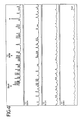
- One example of such an artifact is the compression of two or more DNA products of different molecular weight within one band. The result of two such compressions are shown in Fig. 2 where the artifactual bands are marked with an asterisk.
- band intensity varies by at most 2 fold, most preferably at most 1.2 fold.
- gel permeation is meant to include existing polyacrylamide gels used for DNA sequencing, and any other mechanism for separating DNA products according to their molecular weight.
- production of nearby bands of approximately the same intensity is achieved by incubating a DNA polymerase in a solution containing manganese or iron ions.
- the method further includes the steps of providing a second chain terminating agent in the annealed mixture at a concentration different from the first chain terminating agent, wherein the DNA polymerase causes production of a second series of second DNA products, each second DNA product having the second chain terminating agent at its elongated end, the number of each second DNA product being approximately the same for substantially all DNA products differing in length from 1 to 20 bases, wherein the number of substantially all the first and all the second DNA products differing in length from 1 to 20 bases is distinctly different.
- the second series of second DNA products form a second series of bands when separated by gel permeation according to molecular weight, wherein the intensity of substantially all nearby second series bands is approximately the same, and the intensity of substantially all bands of the first series is distinctly and distinguishably different from the intensity of each nearby band of the second series, and the method further includes the step of determining the position and intensity of each band, the intensity being representative of a particular band series.
- a band of one series can be distinguished from a nearby band (i.e., a band with a length differing from 1 to 20 bases) in the other series. That is, a machine which measures the number of DNA products of a specific molecular weight can distinguish the two series of DNA products from each other.
- the method includes providing two other chain terminating agents wherein the polymerase causes production of a second and third series of second and third DNA products, the number of each second and third DNA products being approximately the same for substantially all DNA products differing in length from 1 to 20 bases, wherein the number of substantially all the first, all the second and all the third DNA products differing in length from 1 to 20 bases is distinctly different.
- each second and third series of the second and third DNA products form a different series of second and third bands, when separated by gel permeation according to molecular weight, wherein the intensity of substantially all nearby second series bands is approximately the same, the intensity of substantially all nearby third series bands is approximately the same, and wherein the intensity of substantially all nearby bands of different series is distinctly different; and the method further includes the steps of determining the position and intensity of each band, the intensity being representative of a particular band series.
- the method includes providing in the annealed mixture four different deoxyribonucleoside triphosphates and four different chain terminating agents, wherein the DNA polymerase causes production of second, third and fourth series of second, third and fourth DNA products, the number of each second, third and fourth DNA products being approximately the same for substantially all DNA products differing in length from 1 to 20 bases, wherein the number of substantially all the first, all the second, all the third and all the fourth DNA products differing in length from 1 to 20 bases is distinctly different.
- each second, third and fourth series produce series of second, third and fourth bands, when separated by gel permation according to molecular weight, wherein the intensity of substantially all nearby second series bands, or substantially all nearby third series bands, or substantially all nearby fourth series bands is approximately the same, and wherein the intensity of substantially all nearby bands in a different series is distinctly different; most preferably, the method further includes the steps of determining the position and intensity of each band, the intensity being representative of a particular band series.
- the annealed mixture is provided with a manganese or iron ion, wherein the ion causes the polymerase to be non-discriminatory for a chain terminating agent; the DNA products are separated according to molecular weight in less than four lanes of a gel; the intensity of each band is measured by a gel reading apparatus; the DNA polymerase is chosen from a T7-type DNA polymerase, the large fragment of E. coli DNA polymerase I, and Taq polymerase; and the chain terminating agent is a dideoxynucleoside triphosphate.
- the invention features a method for sequencing a strand of DNA, including the steps of either (a) providing a DNA polymerase, and incubating the polymerase and the strand of DNA in a solution including an ion of manganese or iron and a chain terminating agent; or (b) providing a DNA polymerase which is substantially non-discriminating for a chain terminating agent.
- the invention features a method for producing a DNA polymerase for DNA sequencing, including the step of mixing the DNA polymerase in a solution including a manganese or iron ion.
- the invention features a solution including a T7-type DNA polymerase, or a Taq polymerase, and a manganese or iron ion.
- a T7-type DNA polymerase or a Taq polymerase
- a manganese or iron ion Preferably the ion is at a concentration from 0.005 to 100 millimolar.
- the invention features a kit for sequencing DNA having a DNA polymerase, a chain terminating agent, and a manganese or iron ion.
- the, polymerase is a T7-type DNA polymerase, the large fragments of E. coli DNA polymerase I, or Taq polymerase; the chain terminating agent is a dideoxynucleotide; and the kit further includes a deoxyribonucleoside triphosphate.
- the invention features a method for automated sequencing of DNA, including providing a polymerase which is substantially non-discriminating for a chain terminating agent and causes production of a series of DNA products differing in molecular weight and terminating with the same chain terminating agent, wherein the DNA products produce substantially all nearby bands of approximately the same intensity.
- substantially non-discriminating is meant that chain terminating agents are incorporated uniformly along the length of the DNA, regardless of the DNA sequence. By approximately the same is meant that the intensity differs by at most two- to three fold.
- the invention features an automated DNA sequencing apparatus having a reactor for providing at least two series of DNA products formed from a single primer and a DNA strand, each DNA product of a series differing in molecular weight and having a chain terminating agent at one end; separating means for separating the DNA products to form a series of bands, the intensity of substantially all nearby bands in a series being approximately the same, and the intensity of substantially all nearby bands in a different series being different, band reading means for determining the position and intensity of each band after separating; and computing means for determining the DNA sequence of the DNA strand directly from the position and intensity of the bands.
- the reactor includes a manganese or iron ion, and a T7-type DNA polymerase.
- the invention features a solution or kit including a pyrophosphatase, a DNA polymerase, and a chain terminating agent or dITP; and a method for DNA sequencing, including providing pyrophosphatase in the sequencing reaction. Inclusion of pyrophosphatase in a sequencing reaction reduces the level of pyrophosphate and improves the uniformity of band intensity of nearby bands.
- the manganese or iron ion may be provided in the presence of a chelate, such as citrate or isocitrate.
- a chelate such as citrate or isocitrate.
- Such chelates are thought to provide a more controlled level of the desired ion in a DNA sequencing reaction.
- the invention features a T7 DNA polymerase ⁇ Lys 118-Arg 145, and DNA encoding this polymerase.
- This polymerase has no detectable exonuclease activity.
- DNA polymerases can be modified to change their ability to incorporate a chain terminating agent at the elongating terminus of a primer DNA in the presence of a DNA template. This ability allows DNA sequencing to be performed with lower concentrations of chain terminating agents, thus greatly lowering the costs of a DNA sequencing reaction. Further, we have found that DNA polymerases having this ability produce nearby bands in a sequencing gel which are of approximately uniform intensity. That is, the polymerase is no longer discriminating, to any great extent, between incorporating chain terminating agents and normal deoxynucleoside triphosphates. We have shown that at least three polymerases can be modified in this way, including a modified T7 DNA polymerase, the large fragment of E. coli DNA polymerase I, and Taq polymerase. Other polymerases having homology to these polymerases will also work in the invention.
- Another advantage of this invention is that the concentration of any given chain terminating agent to be used in a sequencing reaction is readily calculated, since band intensity is directly related to the concentration of any chain terminating agent and is the same for each such agent.
- modified polymerases of this invention are particularly useful in DNA sequencing reactions since only a single sequencing reaction containing all four chain terminating agents at four different concentrations is necessary. Thus, less than four different sequencing reactions can be used for any particular DNA template.
- the DNA sequenced was mGP1-2 (encoding T7 RNA polymerase, Tabor et al., Proc. Nat. Acad. Sci. USA, 84:4767, 1987), and the primer was the fam primer of Applied Biosystems.
- the unprocessed (raw) output for the fam primer is shown. The start and end of each output are indicated.
- the positions of the sequences are shown, with respect to their corresponding position in wild type T7 DNA. (Dunn et al., J. Mol. Biol. 8:452, 1983)
- the points on each graph marked by an asterisk represent regions of compression, where at least two DNA products of different molecular weight migrate at the same position on the gel. Compressions are generally described by Tabor et al., Proc. Nat. Acad. Sci. USA, 84:4767, 1987.
- DNA polymerases useful in this invention include those belonging to a class of homologous polymerases including T7-type DNA polymerases (such as T7, T3, ⁇ I, ⁇ II, H, W31, gh-1, Y, A1122, or SP6), the large fragment of E. coli DNA polymerase I and Taq polymerase.
- T7-type DNA polymerases such as T7, T3, ⁇ I, ⁇ II, H, W31, gh-1, Y, A1122, or SP6
- homologous polymerases is meant an enzyme that discriminates against dideoxynucleoside triphosphates compared to deoxynucleoside triphosphates in the presence of magnesium; however, when magnesium is replaced by manganese the discrimination against dideoxynucleoside triphosphates is reduced.
- These polymerases are used in a DNA sequencing reaction under conditions in which they produce nearby bands of approximately uniform intensity (with about a 1.5- to 2.0-fold variation in intensity) when the DNA products of the sequencing reaction are run in a gel.
- nearby is meant to include bands representing DNA products of molecular weight differing by as much as 6000, i.e., 20 bases. The actual value of this intensity will decrease along the length of the gel, as described below and shown in the Figures.
- Band intensity reflects the number of DNA products within a certain band. Labels, such as fluorophores or radioisotopes, are used to produce a readily detectable band of intensity reflective of the number of such DNA products.
- nearby bands derived from one sequencing reaction with one chain terminating agent have approximately the same number of DNA products and thus a uniform band intensity.
- the sequencing conditions include incubation of the polymerase in the presence of specific divalent or trivalent cations such as manganese (II and III), ferrous and ferric ions; monovalent and divalent cations which have no detectable effect, or are detrimental to DNA synthesis, include: K, Na, Ba, Be, Ca, Ce, Cr, Co. Cu, Ni, Si and Zn.
- the anion is unimportant, for example, chloride, acetate, and sulfate are suitable.
- a chelator may also be provided in this solution in order to help regulate the concentration of available divalent metal ions.
- citrate or isocitrate may be provided. These chelates are thought to maintain the level of, for example, free manganese ions at a concentration of between 10 and 100 ⁇ M over a wide range of manganese concentrations. That is, the chelator acts as a buffer.
- the DNA polymerases of this invention do not discriminate significantly between dideoxynucleoside analogs and deoxynucleosides along the length of the DNA template. That is, in the presence of manganese or iron these polymerases are unable to discriminate between a nucleotide that has a 3′ hydroxyl group versus one that does not (i.e., has two hydrogens at the 3′ position of the ribose). However, these polymerases do discriminate against modifications at other positions on the nucleosides, even in the presence of manganese or iron. For example, the polymerases do discriminate against some dideoxynucleoside analogs which have fluorescent groups attached compared to deoxynucleosides.
- the polymerase do not discriminate to a different extent at neighboring, or nearby nucleotides, on the basis of the presence or absence of the modification to the dideoxynucleoside.
- the intensity of nearby bands will still be uniform. For example, there is a 10 fold discrimination against dideoxy ITP (ddITP), compared to dideoxy GTP (ddGTP), in the presence of Mn.
- ddITP dideoxy ITP
- ddGTP dideoxy GTP
- the polymerases of this invention provide a uniform efficiency of incorporation of chain terminating agents, even if they discriminate against overall incorporation.
- Chain terminating agents useful in this invention include dideoxynucleosides having a 2′, 3′ dideoxy structure.
- Other agents useful in the invention are those able to specifically terminate a DNA sequencing reaction at a specific base, and are not discriminated against by the polymerase under the above conditions.
- any particular DNA polymerase, in combination with any particular chain terminating agent, or other component of a sequencing reaction mixture, is useful in this invention a standard sequencing reaction is performed, as described below and shown in the drawings, and the extent of band formation, and the uniformity of nearby bands in a sequencing gel, reviewed. If the polymerase reaction does not extend the primer by at least 20 bases, it is not suitable under the conditions used. Adjacent band uniformity within a two fold or less range is useful in this invention, preferably the uniformity is within a 1.0-1.5 fold range. Similarly, determination of optimum cation concentration, or of other potential cations useful in the invention, is determined by use of this sequencing reaction under various conditions. For example, cations are tested in ranges from 0.005-100 mM. An example of such an experiment follows:
- DNA synthesis is measured using a 17-mer primer of sequence 5′-GTAAAACGACGGCCAGT-3′ (New England Biolabs catalog number 1211) that has been labeled with 32P at its 5′ end and annealed to single-stranded mGP1-2 DNA.
- Tabor et al. Proc. Nat Acad. Sci. USA 84 :4767 (1987) and Tabor et al., J. Biol Chem. 262 :16212 (1987). Any other template is equally useful in this reaction.
- This primer template is used in a reaction that contains a DNA polymerase in the presence of a range of concentrations of a metal ion.
- Reactions are carried out in the presence of a given concentration of all 4 deoxynucleotides (dNTPS, 20-200 ⁇ M), and over a range of concentrations of one dideoxynucleotide (ddNTP, in this example, ddGTP from 10-500 ⁇ M).
- dNTPS deoxynucleotides
- ddNTP dideoxynucleotide
- the DNA products are then analyzed by polyacrylamide gel electrophoresis, where DNA synthesis is detected as extensions of the primer producing bands, representing extensions of various molecular weights, in the gel.
- each reaction mixture (10 ⁇ l) contained 0.1 ⁇ g 32P-primer-template, 40 mM Tris-HCl pH 7.5, 5 mM dithiothreitol (DTT) 5 ⁇ M to 20mM metal ion, 10 to 500 ⁇ M 4dNTPs, 1 to 500 ⁇ M ddNTPs, and 2 units of a DNA polymerase. Incubation was at 37°C for 15 min. The reaction was stopped by addition of 10 ⁇ l of 90% formamide, 50 mM EDTA, and 0.1% bromophenol blue.
- DTT dithiothreitol
- the resulting samples were heated at 75°C for two minutes immediately prior to loading onto a polyacrylamide gel (8% acrylamide, 0.3% bisacrylamide) in 7M urea, 100 mM Tris-borate, pH 8.9. Electrophoresis was at 2000 volts for 2 hours. The gel was fixed in 50% methanol, 10% acetic acid for 30 min., dried, and exposed, for autoradiography. Band intensity in each lane of the resulting film was determined by scanning each lane with a densitometer. The densitometer used was a double beam recording instrument, model MkIIIC (Joyce, Loebl & Co., Ltd., Gateshead-on-tyne, II, England). Any suitable densitometer instrument for scanning gels will also work. Alternatively, the uniformity of the resulting bands can be determined by scanning the DNA products as they are electrophoresed within the gel.
- the ability to incorporate a given ddNTP compared to the corresponding dNTP for any one enzyme is measured as the ratio of ddNTP to dNTP necessary to allow DNA synthesis that terminates in a fixed range, detected as producing bands of no greater than a fixed molecular weight. That is, the bands produced in the reaction end within a specified range in the sequencing gel.
- one enzyme discriminates 1000-fold greater against a given ddNTP compared to another enzyme, a 1000 fold higher ratio of ddNTP to dNTP will be necessary to obtain bands terminating at the corresponding sites in the same range of the gel.
- the specific modified T7 DNA polymerase used in the following examples was genetically modified to have no detectable exonuclease activity.
- This genetically modified DNA polymerase is termed ⁇ Lys 118-Arg 145 ( ⁇ 28) since the amino acid region from Lys 118 through Arg 145 in T7 DNA polymerase is deleted.
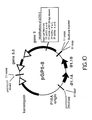
- the gene encoding this polymerase was constructed in a plasmid pGP5-8 as a variant of the plasmid pGP5-5 that is described in Tabor et al., U.S. Patent No. 4,795,699.
- pGP5-8 includes pACYC177 resected at Bam HI and Hin cII sites, T7 DNA from bases 5667 to 6166 containing ⁇ 1.1A and ⁇ 1.1B, and T7 DNA bases 14,306 to 16,869 containing gene 5 with modifications shown in Fig. 10.
- pGP5-8 was constructed by first synthesizing the 34 mer, 5′ CCGGCAAGTTGCCCGGGATGCTCGAGGAGCAGGG 3′. This oligonucleotide was used as a primer for DNA synthesis on the single-stranded DNA of M13 mGP5-2, that contains an insert that encodes T7 gene 5, and is described in Tabor et al., Id .
- DNA synthesis and mutant selection was performed as described in Tabor et al. Id .
- the appropriate region of T7 gene 5 that contains the 84 bp deletion was inserted into pGP5-5 by isolating an Eco RI to Hpa I fragment containing T7 DNA from positions 14,306 to 15,610, including the region including the 84 bp deletion, and ligating it into the comparable region of pGP5-5.
- the derivative pGP5-8 was confirmed to contain the deletion by the presence of the Sma I and Xho I sites that are created by the mutagenesis, and by DNA sequence analysis of the region containing the 84 bp deletion.
- pGP5-8 was transformed into the strain K38/pTrx-3, to create the strain K38/pTrx-3/pGP5-8.
- the genetically modified T7 DNA polymerase used in the examples below was a preparation with an activity of 1000 units/ml.
- DNA to be sequenced e.g., mGP1-2 DNA
- This solution was heated at 65°C 2 min, and slow cooled to room temperature.
- Annealing reaction mixture 10 ⁇ l Dithiothreitol 0.1 M 1 [35S]dATP, New England Nuclear NEG-034H 1 dTTP, dCTP, dGTP 1.5 ⁇ M each 2 Genetically mmodified T7 DNA polymerase, 1 unit/ ⁇ l ( ⁇ Lys118-Arg 145, as described above) 2 16 ⁇ l
- the termination mixtures were incubated at 37°C for 2 min, and then 3 ⁇ l aliquots of the completed labeling reaction added to each termination mixture. The resulting solution was incubated at 37°C for 5 min.
- the termination reactions were stopped with 5 ⁇ l of 90% formamide, 20 mM EDTA 0.2% bromophenol-blue, xylene-cyanol, pH 8.0.
- the resulting samples were heated at 75°C for two minutes, loaded onto a polyacrylamide gel (8% acrylamide, 0.3% bisacrylamide) in 7M urea 100 mM Tris borate pH 8.9, and electrophoresed at 2000 volts for 2 hours.
- the gel was fixed in 50% methanol, 10% acetic acid for 30 min, dried and used to expose film by autoradiography.
- the exposed gel was developed, and the intensity of radioactive bands in each lane was determined by scanning each lane with a densitometer (Joyce, Loebl & Co., Ltd., model number MkIIIC).
- Example 2 Sequencing reaction using manganese, 2X ddGTP and 1X ddCTP to differentiate between G and C by relative band intensities.
- mGP1-2 DNA (2.7 mM in 10 mM Tris-HCl pH 7.5, 0.1 mM EDTA) 8.6 ⁇ l 5X SeqBuf 4 Primer (ABI fam primer, 0.4 pm/ ⁇ l) 2 H2O 5.4 20 ⁇ l
- This solution was heated at 65°C 2 min, and slow cooled to room temperature.
- the fam primer is labelled with a fluorescent label which can be detected as it passes through a sequencing gel, using the ABI Model 370 A DNA Sequencing System.
- Annealing reaction mixture 20 ⁇ l Dithiothreitol 0.1 M 1 4 dNTP 3 mM 3 ddGTP 30 ⁇ M 3 ddCTP 30 ⁇ M 1.5 28.5 ⁇ l
- This solution was incubated at 37°C for 2 min, 1.5 ⁇ l of genetically modified T7 DNA polymerase ( ⁇ 28), 1 unit/ ⁇ l, added, and the solution incubated at 37°C, for 10 min.
- the reaction was stopped by adding 5 ⁇ l of 100 mM EDTA, pH 8.0.
- the resulting fragments were precipitated as follows: 3.5 ⁇ l 3M sodium acetate, and 100 ⁇ l 100% ethanol was added. After incubation on ice for 10 min, the mixture was centrifuged for 30 min at 4°C in a microcentrifuge. The pellet was washed with 500 ⁇ l 70% ethanol, and centrifuged again for 5 min. The supernatant was decanted, and the pellet dried by centrifuging under vacuum for several minutes. The sample was then resuspended in 5 ⁇ l 90% formamide, 50 mM EDTA pH 8.0, heated at 75°C for two minutes and loaded onto an ABI Model 370A DNA Sequencing System.
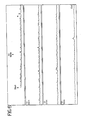
- Fig. 4 The output from this reaction is shown in Fig. 4.
- Each G is represented by a tall peak and each C by a short one.
- the sequence of G's and C's in the DNA is determinable from the peak height.
- Peak height becomes reduced along the length of a gel since products of higher molecular weight are present in lower amounts.
- the difference between a nearby G and C remains about 2 fold along the gel, while that of a pair of nearby G's or a pair of nearby C's is approximately uniform (varying about 1.1- to 1.4-fold), correcting for the decrease in intensity for each additional position along the sequence.
- the signal decreases 2 fold for a given series of bands over a period of approximately 60 bases.
- a compression is an artifact of gel electrophoresis, and not the DNA sequencing reaction itself, and is not eliminated by using manganese.
- One example of such a compression is marked by an asterisk (*) in Fig. 4. If one knows that such a compression represents the co-migration of two DNA products, as the one noted in Fig. 4, then that band is an accurate marker of a band of 2X intensity.
- the precise sequence in a region of compression cannot be determined. In order to determine this sequence, it is necessary either 1) to determine the sequence in the reverse orientation, 2) run the sequencing gel under stronger denaturing conditions, i.e., higher temperature, or by the addition of 50% formamide, or 3) use a nucleotide analog, e.g., dITP or deazaGTP, in place of dGTP. Compressions are due to the formation of stable hairpins in the DNA under the conditions of gel electrophoresis; incorporation of these nucleotide analogs destabilize most of these hairpins.
- a nucleotide analog e.g., dITP or deazaGTP
- Compressions due to hairpin structures can be of virtually any length, depending on the extent and strength of the hairpin.
- all nearby bands have an approximately equal numbers of DNA products of the same molecular weight, but do not necessarily have a similar band intensity due to compressions.
- Fig. 2 the above method was used with just ddGTP in the presence of manganese at a 1 mM final concentration.
- Each band on the resulting gel is represented in Fig. 2 as a peak.
- the intensity of a band is reflected by the height of each peak.
- nearby band intensity and thus peak height is approximately uniform along the gel, differing between nearby bands by less than 5 or 10%.
- each ddNTP By varying the concentration of each ddNTP in a sequencing reaction the complete nucleotide sequence of a strand of DNA can be determined.
- An example of such a procedure is shown in Fig. 7, where the concentration of each ddNTP differs by 30% intervals: ddGTP (4.5 ⁇ M 2.2x), ddATP (3.0 ⁇ M, 1.7x), ddTTP (2 ⁇ M, 1.3x) and ddCTP (1.4 ⁇ M, 1.0x).
- the DNA sequence determined from this graph is shown below the second line in the Figure. Only 6 mistakes (shown by a 'v') were made compared to the actual DNA sequence.
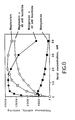
- the optimum concentration of manganese in a sequencing reaction is 1 mM, in the absence of a chelator such as citrate or isocitrate, compared to 20 mM for magnesium.
- a chelator such as citrate or isocitrate
- the optimal manganese concentration is 5 to 20 mM.
- the optimal isocitrate concentration is 40 mM, resulting in a 4 fold stimulation of polymerase activity.
- any amount of isocitrate has an inhibitory effect on polymerase.
- reactions 200 ⁇ l contained 40 mM Tris-HCl, pH7. 5, 5 mM dithiothreitol, 0.5 mM denatured calf thymus DNA, 0.3 mM dGTP, dATP, dCTP and [3H]dTTP (20 cpm/pm), 50 ug/ml BSA, and the indicated concentrations of MgCl2, MnCl2 or sodium isocitrate. Reactions were begun by the addition of 0.1 unit of genetically modified T7 DNA polymerase ( ⁇ Lys118-Arg145).
- This reaction has the effect of removing the block at the 3′ terminus, permitting synthesis to extend further along the template.
- PPi normally accumulates in a DNA synthesis reaction mixture, since it is a product of the polymerization reaction.
- the site of pyrophosphorolysis is DNA sequence dependent, and thus the holes described above are produced only at specific sites.
- pyrophosphorolysis reaction must be inhibited.
- One way to inhibit pyrophosphorolysis is to break down the pyrophosphate as it is generated in the polymerase reaction, by adding the enzyme pyrophosphatase.
- Other solutions include altering the pyrophosphate by other enzymatic reactions, or preventing the pyrophosphorolysis reaction by the addition of an analog that inhibits this activity of the DNA polymerase.
- T7 DNA polymerase ⁇ 28
- pyrophosphatase all bands are stable upon even prolonged incubation (up to 2 hours).
- Pyrophosphatase should be added whenever chemically or genetically modified T7 DNA polymerase or other polymerases are used for sequencing, at at least an amount sufficient to catalyze the hydrolysis of the PPi formed at a rate that will prevent the accumulation of PPi to a level that will lead to pyrophosphorolysis. This is particularly true when dITP is used in place of dGTP, in which case the appearance of holes due to pyrophosphorolysis reaction occurs to a greater extent.
- yeast inorganic pyrophosphatase was used.
- the source of the pyrophosatase is not important, however in this example we used Sigma yeast inorganic pyrophosphatase catalog number I-4503, without further purification or further purified on an FPLC mono Q column, and Worthington yeast inorganic pyrophosphatase without further purification.
- the pyrophosphatase was added to modified T7 DNA polymerase prior to adding the polymerase to the labeling reaction. Typically, 2 units (0.25 ⁇ g) of polymerase were used per sequencing reaction set, and 0.001 units of yeast inorganic pyrophosphatase (4 ng).
- a wide range of pyrophosphatase activity will work successfully: 0.01 ng to 1 ⁇ g of yeast pyrophosphatase per sequencing reaction have been tested with success.
- mGP1-2 DNA in 10 mM Tris-HCl pH7.5,0.1 mM EDTA
- 5X SeqBuf 2 Primer New England Biolabs-17mer, 0.5 pm/ ⁇ l Cat #1211
- This solution was heated at 65°C 2 min, and slow cooled to room temperature.
- Annealing reaction mixture 10 ⁇ l Dithiothreitol 0.1 M 1 35S dATP, New England Nuclear NEG-034H 1 3 dNTP (1.5 ⁇ M each dTTP, dCTP, 3 ⁇ M dITP) 2 Enzyme mixture (see below) 2 16 ⁇ l Enzyme mixture: Genetically modified T7 DNA polymerase, ⁇ Lys118-Arg145 1 unit/ ⁇ l Yeast inorganic pyrophosphatase in 20 mM Tris-HCl pH 7.5, 10 mM ⁇ -mercaptoethanol, 50 ⁇ g/ml bovine serum albumin 0.01 units ⁇ l This solution was incubated at room temperature for 5 min.
- termination mixtures were incubated at 37°C for 2 min, and 3 ⁇ l aliquots of the labeling reaction added to each termination mixture. The resulting solutions were incubated at 37°C for 60 min.
- Each termination reaction was stopped with 5 ⁇ l of 90% formamide, 20 mM EDTA, 0.2% bromophenol blue, xylene-cyanol, pH 8.0.
- the resulting samples were heated at 75°C for two minutes, loaded onto a polyacrylamide gel (8% polyacrylamide, 0.3% bisacrylamide) in 7M urea, 100 mM Tris-borate, pH 8.9, and electrophoresed at 2000 volts for 2 hours.
- the gel was fixed in 50% methanol, and 10% acetic acid for 30 min, dried, and used to expose film by autoradiography.
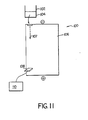
- apparatus 100 suitable for automated DNA sequencing, includes a reactor 102 including the above described reagents 104, for example, DNA polymerase, manganese or iron ions, chelators and pyrophosphatase.
- the apparatus is also provided with a gel box 106, for separating DNA products according to their molecular weights, and a gel reading means 108 for detecting the DNA products as they pass through the gel (shown by dashed arrows 107).
- a computing means 110 is provided to calculate the intensity of bands of DNA products, and the position of the bands relative to one another. If the DNA products are run in one lane, then the computer means is able to compute the DNA sequence from the band intensity and position. Standard computer programs are used to perform this function.
Landscapes
- Chemical & Material Sciences (AREA)
- Life Sciences & Earth Sciences (AREA)
- Organic Chemistry (AREA)
- Proteomics, Peptides & Aminoacids (AREA)
- Health & Medical Sciences (AREA)
- Wood Science & Technology (AREA)
- Zoology (AREA)
- Engineering & Computer Science (AREA)
- Immunology (AREA)
- Biochemistry (AREA)
- Microbiology (AREA)
- Molecular Biology (AREA)
- Physics & Mathematics (AREA)
- Biotechnology (AREA)
- Analytical Chemistry (AREA)
- Biophysics (AREA)
- Bioinformatics & Cheminformatics (AREA)
- General Engineering & Computer Science (AREA)
- General Health & Medical Sciences (AREA)
- Genetics & Genomics (AREA)
- Measuring Or Testing Involving Enzymes Or Micro-Organisms (AREA)
- Saccharide Compounds (AREA)
- Preparation Of Compounds By Using Micro-Organisms (AREA)
- Nitrogen And Oxygen Or Sulfur-Condensed Heterocyclic Ring Systems (AREA)
Applications Claiming Priority (2)
| Application Number | Priority Date | Filing Date | Title |
|---|---|---|---|
| US218103 | 1988-07-12 | ||
| US07/218,103 US4962020A (en) | 1988-07-12 | 1988-07-12 | DNA sequencing |
Publications (3)
| Publication Number | Publication Date |
|---|---|
| EP0351138A2 true EP0351138A2 (de) | 1990-01-17 |
| EP0351138A3 EP0351138A3 (de) | 1991-12-18 |
| EP0351138B1 EP0351138B1 (de) | 1995-03-08 |
Family
ID=22813763
Family Applications (1)
| Application Number | Title | Priority Date | Filing Date |
|---|---|---|---|
| EP89306877A Expired - Lifetime EP0351138B1 (de) | 1988-07-12 | 1989-07-06 | DNS-Sequenzierung |
Country Status (17)
| Country | Link |
|---|---|
| US (4) | US4962020A (de) |
| EP (1) | EP0351138B1 (de) |
| JP (1) | JP2870696B2 (de) |
| KR (1) | KR900001860A (de) |
| CN (1) | CN1039845A (de) |
| AT (1) | ATE119579T1 (de) |
| AU (1) | AU614245B2 (de) |
| CA (1) | CA1340851C (de) |
| DD (1) | DD284052A5 (de) |
| DE (2) | DE68921515T2 (de) |
| DK (1) | DK342289A (de) |
| ES (1) | ES2015853A4 (de) |
| GR (1) | GR900300159T1 (de) |
| HU (1) | HUT52543A (de) |
| IL (1) | IL90850A0 (de) |
| LT (1) | LTIP1515A (de) |
| NO (1) | NO892825L (de) |
Cited By (12)
| Publication number | Priority date | Publication date | Assignee | Title |
|---|---|---|---|---|
| US5075216A (en) * | 1988-09-23 | 1991-12-24 | Cetus Corporation | Methods for dna sequencing with thermus aquaticus dna polymerase |
| EP0535587A1 (de) * | 1991-09-30 | 1993-04-07 | Beckman Instruments, Inc. | Verfahren für die Verbesserung von Nucleotid-Sequenz-Feststellung |
| US5273638A (en) * | 1991-09-30 | 1993-12-28 | Beckman Instruments, Inc. | Nucleotide sequence determination employing matched dideoxynucleotide terminator concentrations |
| EP0655506A1 (de) * | 1994-10-17 | 1995-05-31 | President And Fellows Of Harvard College | DNS Polymerase mit veränderter Nukleotid-Bindungstelle |
| US5614365A (en) * | 1994-10-17 | 1997-03-25 | President & Fellow Of Harvard College | DNA polymerase having modified nucleotide binding site for DNA sequencing |
| WO1997023650A3 (en) * | 1995-12-22 | 1997-08-21 | Visible Genetics Inc | Method for evaluation of polymorphic genetic sequences, and the use thereof in identification of hla types |
| WO1998015655A1 (en) * | 1996-10-07 | 1998-04-16 | The Perkin-Elmer Corporation | Primer extension reaction utilizing a cosubstrate-enzyme pair for consuming pyrophosphate |
| US5948614A (en) * | 1995-09-08 | 1999-09-07 | Life Technologies, Inc. | Cloned DNA polymerases from thermotoga maritima and mutants thereof |
| US6015668A (en) * | 1994-09-30 | 2000-01-18 | Life Technologies, Inc. | Cloned DNA polymerases from thermotoga and mutants thereof |
| US6613508B1 (en) * | 1996-01-23 | 2003-09-02 | Qiagen Genomics, Inc. | Methods and compositions for analyzing nucleic acid molecules utilizing sizing techniques |
| US6815212B2 (en) * | 1996-01-23 | 2004-11-09 | Qiagen Genomics, Inc. | Methods and compositions for enhancing sensitivity in the analysis of biological-based assays |
| US8030066B2 (en) | 2000-12-11 | 2011-10-04 | Life Technologies Corporation | Methods and compositions for synthesis of nucleic acid molecules using multiple recognition sites |
Families Citing this family (159)
| Publication number | Priority date | Publication date | Assignee | Title |
|---|---|---|---|---|
| US4962020A (en) * | 1988-07-12 | 1990-10-09 | President And Fellows Of Harvard College | DNA sequencing |
| WO1991008465A1 (en) * | 1989-11-28 | 1991-06-13 | United States Biochemical Corporation | High resolution scanner |
| US6013431A (en) | 1990-02-16 | 2000-01-11 | Molecular Tool, Inc. | Method for determining specific nucleotide variations by primer extension in the presence of mixture of labeled nucleotides and terminators |
| US5888819A (en) * | 1991-03-05 | 1999-03-30 | Molecular Tool, Inc. | Method for determining nucleotide identity through primer extension |
| US6004744A (en) | 1991-03-05 | 1999-12-21 | Molecular Tool, Inc. | Method for determining nucleotide identity through extension of immobilized primer |
| WO1993002212A1 (en) * | 1991-07-24 | 1993-02-04 | University Partnerships Pty. Ltd. | Single step amplification and sequencing of nucleic acids |
| AU660484B2 (en) * | 1991-07-24 | 1995-06-29 | University Partnerships Pty Ltd | Single step amplification and sequencing of nucleic acids |
| JP2821050B2 (ja) * | 1991-10-31 | 1998-11-05 | 浜松ホトニクス株式会社 | 核酸塩基識別法 |
| USH1985H1 (en) | 1992-01-09 | 2001-08-07 | The United States Of America As Represented By The Secretary Of The Navy | Method for detecting biological toxins |
| US5213669A (en) * | 1992-01-31 | 1993-05-25 | Beckman Instruments, Inc. | Capillary column containing a dynamically cross-linked composition and method of use |
| GB9210176D0 (en) † | 1992-05-12 | 1992-06-24 | Cemu Bioteknik Ab | Chemical method |
| US5516664A (en) * | 1992-12-23 | 1996-05-14 | Hyman; Edward D. | Enzymatic synthesis of repeat regions of oligonucleotides |
| US5500339A (en) * | 1993-03-30 | 1996-03-19 | Amersham Life Science, Inc. | DNA denaturation method |
| US5547859A (en) * | 1993-08-02 | 1996-08-20 | Goodman; Myron F. | Chain-terminating nucleotides for DNA sequencing methods |
| JP3419850B2 (ja) * | 1993-10-26 | 2003-06-23 | 株式会社日立製作所 | 核酸分別方法 |
| US5545527A (en) * | 1994-07-08 | 1996-08-13 | Visible Genetics Inc. | Method for testing for mutations in DNA from a patient sample |
| US5861296A (en) * | 1994-10-25 | 1999-01-19 | New England Biolabs, Inc. | Purified thermostable inorganic pyprophosphatase obtainable from thermococcus litoralis |
| US5507934A (en) * | 1994-11-01 | 1996-04-16 | Visible Genetics Inc. | Apparatus for preparing gels for use in electrophoretic separations and similar applications |
| US5627022A (en) * | 1994-11-01 | 1997-05-06 | Visible Genetics Inc. | Microgels for use in medical diagnosis and holders useful in fabricating same |
| US5710628A (en) * | 1994-12-12 | 1998-01-20 | Visible Genetics Inc. | Automated electrophoresis and fluorescence detection apparatus and method |
| US6014213A (en) * | 1994-12-12 | 2000-01-11 | Visible Genetics Inc. | High dynamic range apparatus for separation and detection of polynucleotide fragments |
| US5543018A (en) * | 1995-02-13 | 1996-08-06 | Visible Genetics Inc. | Method and apparatus for automated electrophoresis using light polarization detector |
| WO1996036737A1 (en) * | 1995-05-19 | 1996-11-21 | Ely Michael Rabani | Parallel multiplex polynucleotide sequencing |
| US6077664A (en) * | 1995-06-07 | 2000-06-20 | Promega Corporation | Thermophilic DNA polymerases from Thermotoga neapolitana |
| US6001645A (en) * | 1995-06-07 | 1999-12-14 | Promega Corporation | Thermophilic DNA polymerases from thermotoga neapolitana |
| US5618398A (en) * | 1995-12-12 | 1997-04-08 | Visible Genetics Inc. | Electrophoresis gels and gel holders having fiber spacers and method of making same |
| US5599434A (en) * | 1995-12-12 | 1997-02-04 | Visible Genetics Inc. | Electrophoresis gels and gel holders having adhesive affixed fiber spacers and method of making same |
| US6265152B1 (en) | 1995-12-22 | 2001-07-24 | Visible Genetics Inc. | Method and kit for evaluation of HIV mutations |
| US5888736A (en) * | 1995-12-22 | 1999-03-30 | Visible Genetics, Inc. | Method, compositions and kit for detection and identification of microorganisms |
| US6007983A (en) * | 1995-12-22 | 1999-12-28 | Visible Genetics Inc. | Method and kit for evaluation of HIV mutations |
| US6312893B1 (en) | 1996-01-23 | 2001-11-06 | Qiagen Genomics, Inc. | Methods and compositions for determining the sequence of nucleic acid molecules |
| WO1997035033A1 (en) | 1996-03-19 | 1997-09-25 | Molecular Tool, Inc. | Method for determining the nucleotide sequence of a polynucleotide |
| US6043036A (en) * | 1996-04-23 | 2000-03-28 | Aclara Biosciences | Method of sequencing nucleic acids by shift registering |
| US6214555B1 (en) * | 1996-05-01 | 2001-04-10 | Visible Genetics Inc. | Method compositions and kit for detection |
| US6413718B1 (en) | 1996-05-01 | 2002-07-02 | Visible Genetics Inc. | Method for sequencing of nucleic acid polymers |
| US5871929A (en) * | 1996-07-23 | 1999-02-16 | Barnes; Wayne M. | Suppression of pyrophosphorolysis in DNA sequencing and in other applications involving DNA replication |
| EP2264045B1 (de) | 1996-08-14 | 2015-10-21 | Life Technologies Corporation | Stabile Zusammensetzungen zur Amplifizierung und Sequenzierung von Nukleinsäuren |
| GB9620209D0 (en) | 1996-09-27 | 1996-11-13 | Cemu Bioteknik Ab | Method of sequencing DNA |
| US6291164B1 (en) * | 1996-11-22 | 2001-09-18 | Invitrogen Corporation | Methods for preventing inhibition of nucleic acid synthesis by pyrophosphate |
| US6828094B2 (en) * | 1996-12-20 | 2004-12-07 | Roche Diagnostics Gmbh | Method for the uncoupled, direct, exponential amplification and sequencing of DNA molecules with the addition of a second thermostable DNA polymerase and its application |
| US20030215857A1 (en) * | 1996-12-20 | 2003-11-20 | Roche Diagnostics Gmbh | Method for the direct, exponential amplification and sequencing of DNA molecules and its application |
| DE19653494A1 (de) * | 1996-12-20 | 1998-06-25 | Svante Dr Paeaebo | Verfahren zur entkoppelten, direkten, exponentiellen Amplifikation und Sequenzierung von DNA Molekülen unter Zugabe einer zweiten thermostabilen DNA Polymerase und dessen Anwendung |
| DE19653439A1 (de) * | 1996-12-20 | 1998-07-02 | Svante Dr Paeaebo | Verfahren zur direkten, exponentiellen Amplifikation und Sequenzierung von DNA Molekülen und dessen Anwendung |
| US6399304B1 (en) | 1996-12-20 | 2002-06-04 | Roche Diagnostics Gmbh | Sequential activation of one or more enzymatic activities within a thermocycling reaction for synthesizing DNA molecules |
| US6605428B2 (en) | 1996-12-20 | 2003-08-12 | Roche Diagnostics Gmbh | Method for the direct, exponential amplification and sequencing of DNA molecules and its application |
| GB9626815D0 (en) | 1996-12-23 | 1997-02-12 | Cemu Bioteknik Ab | Method of sequencing DNA |
| US6306588B1 (en) * | 1997-02-07 | 2001-10-23 | Invitrogen Corporation | Polymerases for analyzing or typing polymorphic nucleic acid fragments and uses thereof |
| WO1998035012A2 (en) | 1997-02-12 | 1998-08-13 | Chan Eugene Y | Methods and products for analyzing polymers |
| US6117634A (en) * | 1997-03-05 | 2000-09-12 | The Reagents Of The University Of Michigan | Nucleic acid sequencing and mapping |
| US6830887B2 (en) | 1997-03-18 | 2004-12-14 | Bayer Healthcare Llc | Method and kit for quantitation and nucleic acid sequencing of nucleic acid analytes in a sample |
| ATE502043T1 (de) | 1997-08-29 | 2011-04-15 | Life Technologies Corp | Hochempfindliche polymerasen und ihre verwendungen |
| US7745142B2 (en) | 1997-09-15 | 2010-06-29 | Molecular Devices Corporation | Molecular modification assays |
| US7070921B2 (en) | 2000-04-28 | 2006-07-04 | Molecular Devices Corporation | Molecular modification assays |
| US7632651B2 (en) | 1997-09-15 | 2009-12-15 | Mds Analytical Technologies (Us) Inc. | Molecular modification assays |
| US6297018B1 (en) | 1998-04-17 | 2001-10-02 | Ljl Biosystems, Inc. | Methods and apparatus for detecting nucleic acid polymorphisms |
| US6982431B2 (en) | 1998-08-31 | 2006-01-03 | Molecular Devices Corporation | Sample analysis systems |
| US6787305B1 (en) | 1998-03-13 | 2004-09-07 | Invitrogen Corporation | Compositions and methods for enhanced synthesis of nucleic acid molecules |
| US6780591B2 (en) | 1998-05-01 | 2004-08-24 | Arizona Board Of Regents | Method of determining the nucleotide sequence of oligonucleotides and DNA molecules |
| US7875440B2 (en) | 1998-05-01 | 2011-01-25 | Arizona Board Of Regents | Method of determining the nucleotide sequence of oligonucleotides and DNA molecules |
| EP1175501A4 (de) * | 1999-05-12 | 2002-11-27 | Invitrogen Corp | Zusammensetzungen und verfahren zur erhöhung der empfindlichkeit und spezifität der nukleinsäuresynthese |
| US6818395B1 (en) | 1999-06-28 | 2004-11-16 | California Institute Of Technology | Methods and apparatus for analyzing polynucleotide sequences |
| KR100430310B1 (ko) * | 1999-11-26 | 2004-05-10 | (주)바이오니아 | 다양한 핵산 중합효소를 사용하는 핵산 염기 서열분석방법 및 이에 사용되는 키트 |
| US7435392B2 (en) * | 2000-02-03 | 2008-10-14 | Acclavis, Llc | Scalable continuous production system |
| US7413714B1 (en) | 2000-07-16 | 2008-08-19 | Ymc Co. Ltd. | Sequential reaction system |
| DE10036602A1 (de) * | 2000-07-27 | 2002-02-14 | Cpc Cellular Process Chemistry | Mikroreaktor für Reaktionen zwischen Gasen und Flüssigkeiten |
| US6548251B1 (en) | 2000-09-05 | 2003-04-15 | Fidelity Systems, Inc. | Inhibition of molecular and biological processes using modified oligonucleotides |
| US6835537B1 (en) * | 2000-09-29 | 2004-12-28 | Myriad Genetics, Inc. | Method for equalizing band intensities on sequencing gels |
| DE10054974A1 (de) * | 2000-11-06 | 2002-06-06 | Epigenomics Ag | Diagnose von mit Cdk4 assoziierten Krankheiten |
| AU2002227156A1 (en) | 2000-12-01 | 2002-06-11 | Visigen Biotechnologies, Inc. | Enzymatic nucleic acid synthesis: compositions and methods for altering monomer incorporation fidelity |
| JP2004523243A (ja) | 2001-03-12 | 2004-08-05 | カリフォルニア インスティチュート オブ テクノロジー | 非同期性塩基伸長によってポリヌクレオチド配列を分析するための方法および装置 |
| US6733485B1 (en) | 2001-05-25 | 2004-05-11 | Advanced Bionics Corporation | Microstimulator-based electrochemotherapy methods and systems |
| CA2450985A1 (en) * | 2001-06-28 | 2003-01-09 | Mountain View Pharmaceuticals, Inc. | Polymer stabilized proteinases |
| US20070020622A1 (en) * | 2001-09-14 | 2007-01-25 | Invitrogen Corporation | DNA Polymerases and mutants thereof |
| US7222059B2 (en) * | 2001-11-15 | 2007-05-22 | Siemens Medical Solutions Diagnostics | Electrophoretic trace simulator |
| ATE526418T1 (de) | 2002-08-05 | 2011-10-15 | Quanta Biosciences Inc | Verbesserte zusammensetzungen zur in-vitro- amplifikation von nukleinsäuren |
| US20040126765A1 (en) * | 2002-12-27 | 2004-07-01 | Adams Craig W. | Method and compositions for sequencing nucleic acid molecules |
| EP1618372A2 (de) * | 2003-04-14 | 2006-01-25 | Cellular Process Chemistry, Inc. | System und verfahren zur bestimmung der optimalen reaktionsparameter unter verwendung eines kontinuierlich laufenden prozesses |
| US7169560B2 (en) | 2003-11-12 | 2007-01-30 | Helicos Biosciences Corporation | Short cycle methods for sequencing polynucleotides |
| WO2005054438A2 (en) | 2003-12-01 | 2005-06-16 | Invitrogen Corporation | Nucleic acid molecules containing recombination sites and methods of using the same |
| WO2005073409A2 (en) * | 2004-01-26 | 2005-08-11 | Applera Corporation | Methods, compositions, and kits for amplifying and sequencing polynucleotides |
| WO2005080605A2 (en) | 2004-02-19 | 2005-09-01 | Helicos Biosciences Corporation | Methods and kits for analyzing polynucleotide sequences |
| US20060046258A1 (en) * | 2004-02-27 | 2006-03-02 | Lapidus Stanley N | Applications of single molecule sequencing |
| US20050239085A1 (en) * | 2004-04-23 | 2005-10-27 | Buzby Philip R | Methods for nucleic acid sequence determination |
| NZ582558A (en) * | 2004-05-13 | 2012-06-29 | Anita Goel | Nano-PCR: Methods and devices for nucleic acid amplification and detection |
| US20050260609A1 (en) * | 2004-05-24 | 2005-11-24 | Lapidus Stanley N | Methods and devices for sequencing nucleic acids |
| US7635562B2 (en) | 2004-05-25 | 2009-12-22 | Helicos Biosciences Corporation | Methods and devices for nucleic acid sequence determination |
| US7476734B2 (en) * | 2005-12-06 | 2009-01-13 | Helicos Biosciences Corporation | Nucleotide analogs |
| US7220549B2 (en) | 2004-12-30 | 2007-05-22 | Helicos Biosciences Corporation | Stabilizing a nucleic acid for nucleic acid sequencing |
| US7482120B2 (en) | 2005-01-28 | 2009-01-27 | Helicos Biosciences Corporation | Methods and compositions for improving fidelity in a nucleic acid synthesis reaction |
| CA2596495A1 (en) * | 2005-02-09 | 2006-08-17 | Pacific Biosciences Of California, Inc. | Nucleotide compositions and uses thereof |
| US20060292578A1 (en) * | 2005-06-28 | 2006-12-28 | Weidong Zheng | DNA polymerase blends and mutant DNA polymerases |
| US7666593B2 (en) | 2005-08-26 | 2010-02-23 | Helicos Biosciences Corporation | Single molecule sequencing of captured nucleic acids |
| US7998717B2 (en) | 2005-12-02 | 2011-08-16 | Pacific Biosciences Of California, Inc. | Mitigation of photodamage in analytical reactions |
| WO2007070642A2 (en) * | 2005-12-15 | 2007-06-21 | Helicos Biosciences Corporation | Methods for increasing accuracy of nucleic acid sequencing |
| US20080309926A1 (en) * | 2006-03-08 | 2008-12-18 | Aaron Weber | Systems and methods for reducing detected intensity non uniformity in a laser beam |
| US7397546B2 (en) * | 2006-03-08 | 2008-07-08 | Helicos Biosciences Corporation | Systems and methods for reducing detected intensity non-uniformity in a laser beam |
| CA2646309C (en) | 2006-04-21 | 2016-07-26 | Nanobiosym, Inc. | Single-molecule platform for drug discovery: methods and apparatuses for drug discovery, including discovery of anticancer and antiviral agents |
| EP1914303A1 (de) * | 2006-10-09 | 2008-04-23 | Qiagen GmbH | Thermus eggertssonii DNA Polymerasen |
| US7960116B2 (en) | 2007-09-28 | 2011-06-14 | Pacific Biosciences Of California, Inc. | Nucleic acid sequencing methods and systems |
| US8003330B2 (en) * | 2007-09-28 | 2011-08-23 | Pacific Biosciences Of California, Inc. | Error-free amplification of DNA for clonal sequencing |
| US20090203086A1 (en) * | 2008-02-06 | 2009-08-13 | 454 Life Sciences Corporation | System and method for improved signal detection in nucleic acid sequencing |
| US8652781B2 (en) | 2008-02-12 | 2014-02-18 | Pacific Biosciences Of California, Inc. | Cognate sampling kinetics |
| US8530164B2 (en) * | 2008-09-05 | 2013-09-10 | Pacific Biosciences Of California, Inc. | Method for sequencing using branching fraction of incorporatable nucleotides |
| EP4230747A3 (de) * | 2008-03-28 | 2023-11-15 | Pacific Biosciences Of California, Inc. | Zusammensetzungen und verfahren zur nukleinsäuresequenzierung |
| WO2009120374A2 (en) | 2008-03-28 | 2009-10-01 | Pacific Biosciences Of California, Inc. | Methods and compositions for nucleic acid sample preparation |
| US8628940B2 (en) | 2008-09-24 | 2014-01-14 | Pacific Biosciences Of California, Inc. | Intermittent detection during analytical reactions |
| US8420366B2 (en) * | 2008-03-31 | 2013-04-16 | Pacific Biosciences Of California, Inc. | Generation of modified polymerases for improved accuracy in single molecule sequencing |
| WO2009145828A2 (en) | 2008-03-31 | 2009-12-03 | Pacific Biosciences Of California, Inc. | Two slow-step polymerase enzyme systems and methods |
| EP2942404B1 (de) | 2008-03-31 | 2016-11-23 | Pacific Biosciences of California, Inc. | Erzeugung modifizierter polymerasen für erhöhte genauigkeit bei einzelmolekülsequenzierungen |
| US8999676B2 (en) | 2008-03-31 | 2015-04-07 | Pacific Biosciences Of California, Inc. | Recombinant polymerases for improved single molecule sequencing |
| US20090247426A1 (en) * | 2008-03-31 | 2009-10-01 | Pacific Biosciences Of California, Inc. | Focused library generation |
| EP2316030B1 (de) | 2008-07-25 | 2019-08-21 | Wagner, Richard W. | Proteinscreeningverfahren |
| US8795961B2 (en) * | 2008-09-05 | 2014-08-05 | Pacific Biosciences Of California, Inc. | Preparations, compositions, and methods for nucleic acid sequencing |
| US8383369B2 (en) * | 2008-09-24 | 2013-02-26 | Pacific Biosciences Of California, Inc. | Intermittent detection during analytical reactions |
| WO2010036287A1 (en) * | 2008-09-24 | 2010-04-01 | Pacific Biosciences Of California, Inc. | Intermittent detection during analytical reactions |
| US8986930B2 (en) | 2010-07-12 | 2015-03-24 | Pacific Biosciences Of California, Inc. | Sequencing reactions with alkali metal cations for pulse width control |
| WO2012018639A2 (en) | 2010-07-26 | 2012-02-09 | Biomatrica, Inc. | Compositions for stabilizing dna, rna and proteins in saliva and other biological samples during shipping and storage at ambient temperatures |
| EP2598660B1 (de) | 2010-07-26 | 2017-03-15 | Biomatrica, INC. | Zusammensetzungen zur stabilisierung von dna, rna und proteinen in blut- und anderen biologischen proben während des transports und der lagerung bei umgebungstemperaturen |
| WO2012021733A2 (en) | 2010-08-12 | 2012-02-16 | Pacific Biosciences Of California, Inc. | Photodamage mitigation compounds and systems |
| EP2689028B1 (de) | 2011-03-23 | 2017-08-30 | Pacific Biosciences Of California, Inc. | Isolierung von polymerase-nukleinsäurekomplexen und deren ladung auf substrate |
| US9803239B2 (en) | 2012-03-29 | 2017-10-31 | Complete Genomics, Inc. | Flow cells for high density array chips |
| GB2559073A (en) | 2012-06-08 | 2018-07-25 | Pacific Biosciences California Inc | Modified base detection with nanopore sequencing |
| US9399766B2 (en) | 2012-10-01 | 2016-07-26 | Pacific Biosciences Of California, Inc. | Recombinant polymerases for incorporation of protein shield nucleotide analogs |
| US9725703B2 (en) | 2012-12-20 | 2017-08-08 | Biomatrica, Inc. | Formulations and methods for stabilizing PCR reagents |
| US10933417B2 (en) | 2013-03-15 | 2021-03-02 | Nanobiosym, Inc. | Systems and methods for mobile device analysis of nucleic acids and proteins |
| AU2014270410B2 (en) | 2013-05-24 | 2020-07-16 | Illumina Cambridge Limited | Pyrophosphorolytic sequencing |
| ES2786373T3 (es) | 2014-06-10 | 2020-10-09 | Biomatrica Inc | Estabilización de trombocitos a temperaturas ambiente |
| US10302972B2 (en) | 2015-01-23 | 2019-05-28 | Pacific Biosciences Of California, Inc. | Waveguide transmission |
| CN108350487B (zh) | 2015-11-19 | 2022-05-27 | 加利福尼亚太平洋生物科学股份有限公司 | 用于改善信号检测的化合物和系统 |
| KR20250047404A (ko) | 2015-12-08 | 2025-04-03 | 바이오매트리카 인코포레이티드 | 적혈구 침강 속도의 감소 |
| US20200182884A1 (en) | 2016-06-27 | 2020-06-11 | Juno Therapeutics, Inc. | Method of identifying peptide epitopes, molecules that bind such epitopes and related uses |
| EP3475706B1 (de) | 2016-06-27 | 2021-08-11 | Juno Therapeutics, Inc. | Mhc-e-beschränkte epitopen, bindungsmoleküle, und zugehörige verfahren und verwendungen |
| EP3625240A4 (de) | 2017-05-18 | 2021-01-27 | Ultima Genomics, Inc. | Sequenzierung mit nichtnatürlichen nukleotiden |
| CA3067105C (en) | 2017-06-21 | 2025-05-27 | Lightcast Discovery Ltd | MICROFLUID ANALYSIS DEVICE |
| EP4450162A3 (de) | 2017-06-21 | 2025-01-08 | Lightcast Discovery Ltd | Mikrotröpfchenmanipulationsvorrichtung |
| WO2018234448A1 (en) * | 2017-06-21 | 2018-12-27 | Base4 Innovation Limited | Method for investigating molecules such as nucleic acids |
| EP3700856A4 (de) | 2017-10-26 | 2021-12-15 | Ultima Genomics, Inc. | Verfahren und systeme für sequenz-calling |
| US11851679B2 (en) | 2017-11-01 | 2023-12-26 | Juno Therapeutics, Inc. | Method of assessing activity of recombinant antigen receptors |
| US11499962B2 (en) | 2017-11-17 | 2022-11-15 | Ultima Genomics, Inc. | Methods and systems for analyte detection and analysis |
| US10344328B2 (en) | 2017-11-17 | 2019-07-09 | Ultima Genomics, Inc. | Methods for biological sample processing and analysis |
| WO2019191003A1 (en) | 2018-03-26 | 2019-10-03 | Ultima Genomics, Inc. | Methods of sequencing nucleic acid molecules |
| AU2019309870A1 (en) | 2018-07-26 | 2021-02-18 | Lexent Bio, Inc. | Multiple sequencing using a single flow cell |
| US11649493B1 (en) | 2018-07-31 | 2023-05-16 | Ultima Genomics, Inc. | Methods and systems for nucleic acid sequencing |
| US12239980B2 (en) | 2018-12-07 | 2025-03-04 | Ultima Genomics, Inc. | Implementing barriers for controlled environments during sample processing and detection |
| US10512911B1 (en) | 2018-12-07 | 2019-12-24 | Ultima Genomics, Inc. | Implementing barriers for controlled environments during sample processing and detection |
| KR20260033107A (ko) | 2019-02-19 | 2026-03-10 | 울티마 제노믹스, 인크. | 광학 검출 및 시퀀싱을 위한 링커 및 방법 |
| WO2020185790A1 (en) | 2019-03-10 | 2020-09-17 | Ultima Genomics, Inc. | Methods and systems for sequence calling |
| US10830703B1 (en) | 2019-03-14 | 2020-11-10 | Ultima Genomics, Inc. | Methods, devices, and systems for analyte detection and analysis |
| US11118223B2 (en) | 2019-03-14 | 2021-09-14 | Ultima Genomics, Inc. | Methods, devices, and systems for analyte detection and analysis |
| US10852518B1 (en) | 2019-03-14 | 2020-12-01 | Ultima Genomics, Inc. | Methods, devices, and systems for analyte detection and analysis |
| EP3938832A4 (de) | 2019-03-14 | 2023-03-22 | Ultima Genomics, Inc. | Verfahren, vorrichtungen und systeme zum nachweis und zur analyse von analyten |
| US10900078B2 (en) | 2019-03-14 | 2021-01-26 | Ultima Genomics, Inc. | Methods, devices, and systems for analyte detection and analysis |
| JP7556886B2 (ja) | 2019-05-03 | 2024-09-26 | ウルティマ・ゲノミクス・インコーポレーテッド | 核酸分子の配列決定方法 |
| US11807851B1 (en) | 2020-02-18 | 2023-11-07 | Ultima Genomics, Inc. | Modified polynucleotides and uses thereof |
| CN116419767A (zh) | 2020-08-18 | 2023-07-11 | 阿尔缇玛基因组学公司 | 用于标记生物分子的试剂 |
| WO2022072652A1 (en) | 2020-09-30 | 2022-04-07 | Ultima Genomics, Inc. | Methods, systems, and apparatus for high throughput sequencing |
| WO2022212408A1 (en) | 2021-03-30 | 2022-10-06 | Ultima Genomics, Inc. | Benign scar-forming cleavable linkers |
| AU2022317053B2 (en) | 2021-07-30 | 2025-01-02 | 10X Genomics, Inc. | Methods and compositions for synchronizing reactions in situ |
| AU2022328558A1 (en) | 2021-08-20 | 2024-04-04 | Ultima Genomics, Inc. | Systems and methods for sample preparation for sequencing |
Family Cites Families (23)
| Publication number | Priority date | Publication date | Assignee | Title |
|---|---|---|---|---|
| US3661893A (en) * | 1968-11-25 | 1972-05-09 | Univ Illinois | Synthesis in vitro of nucleic acids and products used therein and products produced therefrom |
| US4072574A (en) * | 1976-07-30 | 1978-02-07 | The Institute For Cancer Research | System for in vitro assay for mutagenicity and/or carcinogenicity of chemicals or other exogenous agents |
| DE3361649D1 (en) * | 1982-01-26 | 1986-02-13 | Imahori Kazutomo | Process for synthesizing peptides or peptide derivatives |
| US4729947A (en) * | 1984-03-29 | 1988-03-08 | The Board Of Regents Of The University Of Nebraska | DNA sequencing |
| US4870004A (en) * | 1984-06-08 | 1989-09-26 | Autoseq, Inc. | Apparatus and method of analyzing nucleic acid molecules |
| US4795700A (en) * | 1985-01-25 | 1989-01-03 | California Institute Of Technology | Nucleic acid probes and methods of using same |
| US4683202A (en) * | 1985-03-28 | 1987-07-28 | Cetus Corporation | Process for amplifying nucleic acid sequences |
| US4683195A (en) * | 1986-01-30 | 1987-07-28 | Cetus Corporation | Process for amplifying, detecting, and/or-cloning nucleic acid sequences |
| US4865968A (en) * | 1985-04-01 | 1989-09-12 | The Salk Institute For Biological Studies | DNA sequencing |
| US4863849A (en) * | 1985-07-18 | 1989-09-05 | New York Medical College | Automatable process for sequencing nucleotide |
| US4707235A (en) * | 1985-10-16 | 1987-11-17 | Pharmacia, Inc. | Electrophoresis method and apparatus having continuous detection means |
| US4800159A (en) * | 1986-02-07 | 1989-01-24 | Cetus Corporation | Process for amplifying, detecting, and/or cloning nucleic acid sequences |
| US4811218A (en) * | 1986-06-02 | 1989-03-07 | Applied Biosystems, Inc. | Real time scanning electrophoresis apparatus for DNA sequencing |
| US4889818A (en) * | 1986-08-22 | 1989-12-26 | Cetus Corporation | Purified thermostable enzyme |
| CA1338457C (en) * | 1986-08-22 | 1996-07-16 | Henry A. Erlich | Purified thermostable enzyme |
| JPS63115062A (ja) * | 1986-11-04 | 1988-05-19 | Hitachi Ltd | Dnaの塩基配列決定装置 |
| JPS63149563A (ja) * | 1986-12-12 | 1988-06-22 | Hitachi Ltd | 核酸塩基配列決定装置 |
| US4795699A (en) * | 1987-01-14 | 1989-01-03 | President And Fellows Of Harvard College | T7 DNA polymerase |
| US4942130A (en) * | 1987-01-14 | 1990-07-17 | President & Fellows Of Harvard College | T7 DNA polymerase |
| US4971671A (en) * | 1987-03-02 | 1990-11-20 | Xerox Corporation | Processes for separation of DNA fragments |
| US4971903A (en) * | 1988-03-25 | 1990-11-20 | Edward Hyman | Pyrophosphate-based method and apparatus for sequencing nucleic acids |
| US4962020A (en) * | 1988-07-12 | 1990-10-09 | President And Fellows Of Harvard College | DNA sequencing |
| DE3841565C2 (de) * | 1988-12-09 | 1998-07-09 | Europ Lab Molekularbiolog | Verfahren zur Sequenzierung von Nukleinsäuren |
-
1988
- 1988-07-12 US US07/218,103 patent/US4962020A/en not_active Expired - Lifetime
-
1989
- 1989-07-03 IL IL90850A patent/IL90850A0/xx unknown
- 1989-07-06 DE DE68921515T patent/DE68921515T2/de not_active Expired - Lifetime
- 1989-07-06 ES ES89306877T patent/ES2015853A4/es active Pending
- 1989-07-06 DE DE198989306877T patent/DE351138T1/de active Pending
- 1989-07-06 AT AT89306877T patent/ATE119579T1/de not_active IP Right Cessation
- 1989-07-06 EP EP89306877A patent/EP0351138B1/de not_active Expired - Lifetime
- 1989-07-07 NO NO89892825A patent/NO892825L/no unknown
- 1989-07-10 JP JP1175763A patent/JP2870696B2/ja not_active Expired - Lifetime
- 1989-07-10 AU AU37986/89A patent/AU614245B2/en not_active Ceased
- 1989-07-11 CA CA000605345A patent/CA1340851C/en not_active Expired - Lifetime
- 1989-07-11 DD DD89330683A patent/DD284052A5/de not_active IP Right Cessation
- 1989-07-11 HU HU893480A patent/HUT52543A/hu unknown
- 1989-07-11 DK DK342289A patent/DK342289A/da not_active Application Discontinuation
- 1989-07-11 CN CN89106712A patent/CN1039845A/zh active Pending
- 1989-07-12 KR KR1019890009897A patent/KR900001860A/ko not_active Ceased
-
1990
- 1990-07-03 US US07/547,870 patent/US5122345A/en not_active Expired - Lifetime
-
1991
- 1991-09-27 GR GR90300159T patent/GR900300159T1/el unknown
-
1992
- 1992-04-16 US US07/869,520 patent/US5409811A/en not_active Expired - Lifetime
-
1993
- 1993-12-03 LT LTIP1515A patent/LTIP1515A/xx not_active Application Discontinuation
-
1995
- 1995-04-13 US US08/422,147 patent/US5674716A/en not_active Expired - Lifetime
Cited By (16)
| Publication number | Priority date | Publication date | Assignee | Title |
|---|---|---|---|---|
| US5075216A (en) * | 1988-09-23 | 1991-12-24 | Cetus Corporation | Methods for dna sequencing with thermus aquaticus dna polymerase |
| EP0535587A1 (de) * | 1991-09-30 | 1993-04-07 | Beckman Instruments, Inc. | Verfahren für die Verbesserung von Nucleotid-Sequenz-Feststellung |
| US5273638A (en) * | 1991-09-30 | 1993-12-28 | Beckman Instruments, Inc. | Nucleotide sequence determination employing matched dideoxynucleotide terminator concentrations |
| EP0535586A3 (de) * | 1991-09-30 | 1994-08-03 | Beckman Instruments Inc | |
| US6015668A (en) * | 1994-09-30 | 2000-01-18 | Life Technologies, Inc. | Cloned DNA polymerases from thermotoga and mutants thereof |
| EP0655506A1 (de) * | 1994-10-17 | 1995-05-31 | President And Fellows Of Harvard College | DNS Polymerase mit veränderter Nukleotid-Bindungstelle |
| WO1996012042A3 (en) * | 1994-10-17 | 1996-08-01 | Harvard College | Dna polymerases having modified nucleotide binding site for dna sequencing |
| US5614365A (en) * | 1994-10-17 | 1997-03-25 | President & Fellow Of Harvard College | DNA polymerase having modified nucleotide binding site for DNA sequencing |
| CN100335621C (zh) * | 1994-10-17 | 2007-09-05 | 哈佛大学校长及研究员协会 | 用于dna测序的具有修饰的核苷酸结合位点的dna聚合酶 |
| EP0727496A3 (de) * | 1994-10-17 | 2000-09-20 | THE PRESIDENT & FELLOWS OF HARVARD COLLEGE | DNS Polymerasen |
| US5948614A (en) * | 1995-09-08 | 1999-09-07 | Life Technologies, Inc. | Cloned DNA polymerases from thermotoga maritima and mutants thereof |
| WO1997023650A3 (en) * | 1995-12-22 | 1997-08-21 | Visible Genetics Inc | Method for evaluation of polymorphic genetic sequences, and the use thereof in identification of hla types |
| US6613508B1 (en) * | 1996-01-23 | 2003-09-02 | Qiagen Genomics, Inc. | Methods and compositions for analyzing nucleic acid molecules utilizing sizing techniques |
| US6815212B2 (en) * | 1996-01-23 | 2004-11-09 | Qiagen Genomics, Inc. | Methods and compositions for enhancing sensitivity in the analysis of biological-based assays |
| WO1998015655A1 (en) * | 1996-10-07 | 1998-04-16 | The Perkin-Elmer Corporation | Primer extension reaction utilizing a cosubstrate-enzyme pair for consuming pyrophosphate |
| US8030066B2 (en) | 2000-12-11 | 2011-10-04 | Life Technologies Corporation | Methods and compositions for synthesis of nucleic acid molecules using multiple recognition sites |
Also Published As
| Publication number | Publication date |
|---|---|
| GR900300159T1 (en) | 1991-09-27 |
| CN1039845A (zh) | 1990-02-21 |
| DE351138T1 (de) | 1990-11-29 |
| NO892825L (no) | 1990-01-15 |
| US5409811A (en) | 1995-04-25 |
| DK342289D0 (da) | 1989-07-11 |
| EP0351138A3 (de) | 1991-12-18 |
| US4962020A (en) | 1990-10-09 |
| US5122345A (en) | 1992-06-16 |
| ES2015853A4 (es) | 1990-09-16 |
| ATE119579T1 (de) | 1995-03-15 |
| EP0351138B1 (de) | 1995-03-08 |
| HUT52543A (en) | 1990-07-28 |
| JPH02154699A (ja) | 1990-06-14 |
| NO892825D0 (no) | 1989-07-07 |
| DD284052A5 (de) | 1990-10-31 |
| JP2870696B2 (ja) | 1999-03-17 |
| CA1340851C (en) | 1999-12-14 |
| DE68921515T2 (de) | 1995-07-13 |
| AU3798689A (en) | 1990-01-18 |
| IL90850A0 (en) | 1990-02-09 |
| DK342289A (da) | 1990-01-15 |
| US5674716A (en) | 1997-10-07 |
| AU614245B2 (en) | 1991-08-22 |
| KR900001860A (ko) | 1990-02-27 |
| LTIP1515A (en) | 1995-06-26 |
| DE68921515D1 (de) | 1995-04-13 |
Similar Documents
| Publication | Publication Date | Title |
|---|---|---|
| EP0351138B1 (de) | DNS-Sequenzierung | |
| EP0655506B1 (de) | DNS Polymerase mit veränderter Nukleotid-Bindungstelle | |
| US5976802A (en) | Simultaneous sequencing of nucleic acids | |
| EP0727496B1 (de) | DNS Polymerasen | |
| EP0641390B2 (de) | Chemisches verfahren zur analyse von dns-sequenzen | |
| US6537748B1 (en) | Reagent for nucleic acid typing by primer extension | |
| US5849487A (en) | Nucleic acid detection by repetitive synthesis and degradation of a nucleotide on a nuclease resistant oligonucleotide | |
| US5888819A (en) | Method for determining nucleotide identity through primer extension | |
| EP0640146B1 (de) | Dns sequenzierungsverfahren | |
| US7598032B2 (en) | Thermostable DNA polymerases incorporating nucleoside triphosphates labeled with fluorescent dyes | |
| US6294336B1 (en) | Method for analyzing the nucleotide sequence of a polynucleotide by oligonucleotide extension on an array | |
| US5888778A (en) | High-throughput screening method for identification of genetic mutations or disease-causing microorganisms using segmented primers | |
| US20040110162A1 (en) | Primer extension methods for detecting nucleic acids | |
| EP0969103A2 (de) | Nukleinsäure-Sequenzanalyse durch die Methode der Parallelen Primerextension | |
| WO1996030545A1 (en) | Mutation detection by differential primer extension of mutant and wildtype target sequences | |
| WO1996030545A9 (en) | Mutation detection by differential primer extension of mutant and wildtype target sequences | |
| WO1996012042A9 (en) | Dna polymerases having modified nucleotide binding site for dna sequencing | |
| WO1993023564A1 (en) | Method of sequencing dna | |
| WO1992016657A1 (en) | Method of identifying a nucleotide present at a defined position in a nucleic acid | |
| JP3949378B2 (ja) | ポリヌクレオチド配列の変異を決定するための方法 | |
| EP3908677A1 (de) | Verfahren zur detektion von nukleinsäuresequenzen | |
| US20050053948A1 (en) | Methods for sequencing GC-rich and CCT repeat DNA templates | |
| Skinner et al. | Misincorporation by AMV reverse transcriptase shows strong dependence on the combination of template and substrate nucleotides | |
| WO1997020949A1 (en) | An improved method for dye-terminator (cycle) sequencing | |
| US8153403B1 (en) | Process for identifying existence of single nucleotide polymorphism without DNA sequencing |
Legal Events
| Date | Code | Title | Description |
|---|---|---|---|
| PUAI | Public reference made under article 153(3) epc to a published international application that has entered the european phase |
Free format text: ORIGINAL CODE: 0009012 |
|
| AK | Designated contracting states |
Kind code of ref document: A2 Designated state(s): AT BE CH DE ES FR GB GR IT LI LU NL SE |
|
| ITCL | It: translation for ep claims filed |
Representative=s name: BARZANO' E ZANARDO ROMA S.P.A. |
|
| TCNL | Nl: translation of patent claims filed | ||
| EL | Fr: translation of claims filed | ||
| TCAT | At: translation of patent claims filed | ||
| DET | De: translation of patent claims | ||
| PUAL | Search report despatched |
Free format text: ORIGINAL CODE: 0009013 |
|
| AK | Designated contracting states |
Kind code of ref document: A3 Designated state(s): AT BE CH DE ES FR GB GR IT LI LU NL SE |
|
| 17P | Request for examination filed |
Effective date: 19920127 |
|
| 17Q | First examination report despatched |
Effective date: 19921223 |
|
| GRAA | (expected) grant |
Free format text: ORIGINAL CODE: 0009210 |
|
| ITF | It: translation for a ep patent filed | ||
| AK | Designated contracting states |
Kind code of ref document: B1 Designated state(s): AT BE CH DE ES FR GB GR IT LI LU NL SE |
|
| PG25 | Lapsed in a contracting state [announced via postgrant information from national office to epo] |
Ref country code: GR Free format text: LAPSE BECAUSE OF FAILURE TO SUBMIT A TRANSLATION OF THE DESCRIPTION OR TO PAY THE FEE WITHIN THE PRESCRIBED TIME-LIMIT Effective date: 19950308 |
|
| REF | Corresponds to: |
Ref document number: 119579 Country of ref document: AT Date of ref document: 19950315 Kind code of ref document: T |
|
| REF | Corresponds to: |
Ref document number: 68921515 Country of ref document: DE Date of ref document: 19950413 |
|
| ET | Fr: translation filed | ||
| PG25 | Lapsed in a contracting state [announced via postgrant information from national office to epo] |
Ref country code: ES Free format text: LAPSE BECAUSE OF FAILURE TO SUBMIT A TRANSLATION OF THE DESCRIPTION OR TO PAY THE FEE WITHIN THE PRESCRIBED TIME-LIMIT Effective date: 19950619 |
|
| PG25 | Lapsed in a contracting state [announced via postgrant information from national office to epo] |
Ref country code: LU Free format text: LAPSE BECAUSE OF NON-PAYMENT OF DUE FEES Effective date: 19950731 |
|
| PLBE | No opposition filed within time limit |
Free format text: ORIGINAL CODE: 0009261 |
|
| STAA | Information on the status of an ep patent application or granted ep patent |
Free format text: STATUS: NO OPPOSITION FILED WITHIN TIME LIMIT |
|
| 26N | No opposition filed | ||
| REG | Reference to a national code |
Ref country code: GB Ref legal event code: IF02 |
|
| REG | Reference to a national code |
Ref country code: CH Ref legal event code: PFA Owner name: THE PRESIDENT AND FELLOWS OF HARVARD COLLEGE Free format text: THE PRESIDENT AND FELLOWS OF HARVARD COLLEGE#17 QUINCY STREET#CAMBRIDGE/MA (US) -TRANSFER TO- THE PRESIDENT AND FELLOWS OF HARVARD COLLEGE#17 QUINCY STREET#CAMBRIDGE/MA (US) |
|
| PGFP | Annual fee paid to national office [announced via postgrant information from national office to epo] |
Ref country code: CH Payment date: 20080730 Year of fee payment: 20 Ref country code: DE Payment date: 20080829 Year of fee payment: 20 |
|
| PGFP | Annual fee paid to national office [announced via postgrant information from national office to epo] |
Ref country code: NL Payment date: 20080724 Year of fee payment: 20 Ref country code: AT Payment date: 20080619 Year of fee payment: 20 Ref country code: IT Payment date: 20080728 Year of fee payment: 20 Ref country code: FR Payment date: 20080729 Year of fee payment: 20 |
|
| PGFP | Annual fee paid to national office [announced via postgrant information from national office to epo] |
Ref country code: GB Payment date: 20080729 Year of fee payment: 20 |
|
| PGFP | Annual fee paid to national office [announced via postgrant information from national office to epo] |
Ref country code: SE Payment date: 20080729 Year of fee payment: 20 Ref country code: BE Payment date: 20080818 Year of fee payment: 20 |
|
| REG | Reference to a national code |
Ref country code: CH Ref legal event code: PL |
|
| REG | Reference to a national code |
Ref country code: GB Ref legal event code: PE20 Expiry date: 20090705 |
|
| NLV7 | Nl: ceased due to reaching the maximum lifetime of a patent |
Effective date: 20090706 |
|
| EUG | Se: european patent has lapsed | ||
| PG25 | Lapsed in a contracting state [announced via postgrant information from national office to epo] |
Ref country code: GB Free format text: LAPSE BECAUSE OF EXPIRATION OF PROTECTION Effective date: 20090705 Ref country code: NL Free format text: LAPSE BECAUSE OF EXPIRATION OF PROTECTION Effective date: 20090706 |