EP0352474A2 - Glucose isomérase thermostable - Google Patents
Glucose isomérase thermostable Download PDFInfo
- Publication number
- EP0352474A2 EP0352474A2 EP89111287A EP89111287A EP0352474A2 EP 0352474 A2 EP0352474 A2 EP 0352474A2 EP 89111287 A EP89111287 A EP 89111287A EP 89111287 A EP89111287 A EP 89111287A EP 0352474 A2 EP0352474 A2 EP 0352474A2
- Authority
- EP
- European Patent Office
- Prior art keywords
- glucose
- fructose
- temperature
- isomerase
- enzyme
- Prior art date
- Legal status (The legal status is an assumption and is not a legal conclusion. Google has not performed a legal analysis and makes no representation as to the accuracy of the status listed.)
- Withdrawn
Links
Images


Classifications
-
- C—CHEMISTRY; METALLURGY
- C07—ORGANIC CHEMISTRY
- C07H—SUGARS; DERIVATIVES THEREOF; NUCLEOSIDES; NUCLEOTIDES; NUCLEIC ACIDS
- C07H19/00—Compounds containing a hetero ring sharing one ring hetero atom with a saccharide radical; Nucleosides; Mononucleotides; Anhydro-derivatives thereof
-
- C—CHEMISTRY; METALLURGY
- C12—BIOCHEMISTRY; BEER; SPIRITS; WINE; VINEGAR; MICROBIOLOGY; ENZYMOLOGY; MUTATION OR GENETIC ENGINEERING
- C12N—MICROORGANISMS OR ENZYMES; COMPOSITIONS THEREOF; PROPAGATING, PRESERVING, OR MAINTAINING MICROORGANISMS; MUTATION OR GENETIC ENGINEERING; CULTURE MEDIA
- C12N11/00—Carrier-bound or immobilised enzymes; Carrier-bound or immobilised microbial cells; Preparation thereof
- C12N11/02—Enzymes or microbial cells immobilised on or in an organic carrier
- C12N11/10—Enzymes or microbial cells immobilised on or in an organic carrier the carrier being a carbohydrate
- C12N11/12—Cellulose or derivatives thereof
-
- C—CHEMISTRY; METALLURGY
- C12—BIOCHEMISTRY; BEER; SPIRITS; WINE; VINEGAR; MICROBIOLOGY; ENZYMOLOGY; MUTATION OR GENETIC ENGINEERING
- C12N—MICROORGANISMS OR ENZYMES; COMPOSITIONS THEREOF; PROPAGATING, PRESERVING, OR MAINTAINING MICROORGANISMS; MUTATION OR GENETIC ENGINEERING; CULTURE MEDIA
- C12N9/00—Enzymes; Proenzymes; Compositions thereof; Processes for preparing, activating, inhibiting, separating or purifying enzymes
- C12N9/90—Isomerases (5.)
- C12N9/92—Glucose isomerase (5.3.1.5; 5.3.1.9; 5.3.1.18)
-
- C—CHEMISTRY; METALLURGY
- C12—BIOCHEMISTRY; BEER; SPIRITS; WINE; VINEGAR; MICROBIOLOGY; ENZYMOLOGY; MUTATION OR GENETIC ENGINEERING
- C12P—FERMENTATION OR ENZYME-USING PROCESSES TO SYNTHESISE A DESIRED CHEMICAL COMPOUND OR COMPOSITION OR TO SEPARATE OPTICAL ISOMERS FROM A RACEMIC MIXTURE
- C12P19/00—Preparation of compounds containing saccharide radicals
- C12P19/24—Preparation of compounds containing saccharide radicals produced by the action of an isomerase, e.g. fructose
Definitions
- the present invention relates to a process of converting glucose to fructose. More specifically, it relates to a process for the use of a novel class of glucose isomerases which are stable at high temperatures, and which are produced by thermophilic microorganisms.
- Fructose is one of the sweetest sugars known, even sweeter than the more commonly used and readily available sugar sucrose. It has long been known to use the less sweet and less expensive sugar glucose as a base for conversion to the more desirable fructose.
- the more preferred method of isomerization is now conversion of glucose into fructose utilizing an enzyme having glucose isomerase activity.
- the amount of fructose obtained from the isomerization reaction depends upon the equilibrium of the reaction.
- the yield of fructose can be significantly improved if the reaction is conducted at temperatures over 50°C, and preferably over 60°C.
- the higher temperatures which favor the production of higher yields of fructose may also have the unfortunate effect of denaturing the glucose isomerase, thus reducing the stability and activity of the enzyme. Therefore, for the use of a glucose isomerase to convert glucose to fructose to be exploited to its full potential, a type of enzyme with high resistance to thermal denaturation is necessary.
- a number of microorganisms are known producers of glucose isomerizing enzymes. Most of these organisms are mesophiles, i.e., they have a preferred growth temperature which is generally between 18°-45°C; the optimum temperatures for the functioning of their glucose isomerases is also usually correspondingly low.
- U.S. Patent No. 4,308,349 describes the use of the genus Ampullariella to produce an enzyme which can function at temperatures between 45°-85°C, although the preferred temperature for the isomerization reaction is 50°C. At least two strains of Bacillus licehniformis (ATCC 31604, U.S. Patent No. 4,348,480; and ATCC 31667, U.S. Patent No.
- thermophilic microorganisms i.e., those which routinely grow at temperatures of 50° or above, would produce more thermally stable glucose isomerases, and in fact a number of such useful microorganisms have been reported.
- Japanese Kokai 49(1974)-30588 notes the use of a series of thermophilic actinomycetes from the genera Thermoactinomyces and Pseudonocardia , all of which generally grow at temperatures of at least 50-60°C.
- the glucose isomerases produced by these organisms are reported to function with substantial retention of activity at 100°C.
- Bacillus stearothermophilus U.S. Patent No.
- 3,826,714 grows normally at 55°C, and produces a glucose isomerase which is active at temperatures up to 80°C.
- a mutant strain of Bacillus coagulans (U.S. Patent No. 3,979,261) grows optimally at 60-65°, and its glucose isomerase may be used from 55°-85°C. without substantial loss of activity.
- the organisms of the present invention have been found to grow easily at 60-70°C, and their glucose isomerases, in their natural state, are functional at temperatures between at least 90-105°C.
- This invention provides an enzyme capable of the isomerization of glucose to fructose characterized by possessing a half-life of twenty minutes (T20) at a temperature of at least 93°C and preferably of about 94°C and higher.
- This invention also provides the enzyme capable of the isomerization of glucose to fructose, isolatable from a member of the genus Bacillus , characterized in possessing a half-life of 20 minutes (T20) at a temperature of at least 93°C and immobilized onto an insoluble carrier.
- the invention provides a process for isomerizing glucose to fructose which comprises contacting a glucose-containing feed liquor containing from 20 to about 65 weight percent glucose with a glucose isomerase at a temperature of from about 90°C to about 130°C at a pH from about 3.5 to about 8 and a contact time of from about 10 seconds to about 5 hours to convert at least about 53 to about 60 weight percent of the glucose present in said liquor to fructose with no substantial formation of psicose, which comprises employing a glucose isomerase possessing a half-life of twenty minutes (T20) at a temperature of at least 93°C.
- T20 half-life of twenty minutes
- the invention provides an enzyme capable of the isomerization of glucose to fructose characterized by possessing a half-life of twenty minutes (T20) at a temperature of at least 93°C.
- the present invention provides a thermostable glucose isomerase which is useful in the high temperature conversion of glucose to fructose.
- fructose achievable by the isomerization of glucose with glucose isomerase is limited by the equilibrium of the isomerase reaction.
- the equilibrium of the reaction stands at approximately 51% fructose by weight from a starting substrate of pure dextrose.
- refined glucose liquor is used as the substrate (containing up to about 6% nonmonosaccharides by weight) and allowing for a reasonable residence time in the enzyme reactor, an approximately 50% fructose syrup is the highest fructose content which can be obtained (on a dry basis) by the prior procedures referred to.
- To attain syrups of higher fructose content fractiona tion systems must be employed which add greatly to the cost of the final product. At higher temperatures, however, the equilibrium becomes more favorable.
- an enzymatic glucose isomerase process capable of being operated at temperatures of from about 90°-130°C. could be used to directly provide high fructose corn syrups (HFCS) containing 53-60 weight percent fructose on a dry basis thereby eliminating the need for fractionation and recycle.
- HFCS high fructose corn syrups
- fructose-containing syrups are not manufactured from pure glucose. Rather, starch hydrolysates (as prepared in the above mentioned references) are used as the glucose source and these invariably contain non-glucose and non-fructose saccharides (hereinafter referred to as oligosaccharides of D.P. of up to about 5) derived from incomplete hydrolysis of starch, and the reversion of glucose. Typically these constitute from 3% to 8% of the total dry weight of the saccharides derived by starch hydrolysis.
- T isomerization temperature (°C)
- F e equilibrium fructose content (% based on total glucose + fructose) at temperature T.
- M % fructose dry basis required in the isomerized product.
- C % psicose + other degradation products formed during the effective isomerization contact time.
- Q % of equilibrium attained during isomerization reaction.
- P % oligosaccharide content of glucose liquor.
- HFCS high fructose corn syrup
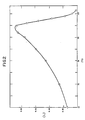
- Figure 1 shows an Arrhenius plot displaying the effects of temperature on the stability of glucose isomerase ( Streptomyces rubiginosus immobilized on DEAE-cellulose according to the teachings of U.S. Patent 3,788,945) under conditions normally used for isomerization, i.e., at optimum pH (6.5 - 7.5), 50% glucose + fructose concentration, 2mM Mg++ and 2-3 mM NaHSO3.
- pH 6.5 - 7.5
- glucose + fructose concentration 2mM Mg++
- 2-3 mM NaHSO3 mM NaHSO3
- the activation energy for thermal denaturation generally ranges from about 90 to 300 k cal/mole. In this region, a mere 1°C. increase in temperature more than doubles inactivation rate.
- U.S. Patents 4,410,627 4,411,996, and 4,567,142 set forth the minimum criteria for the high temperature isomerization of glucose to achieve 55 percent fructose by a direct isomerization process. The significance of achieving syrup compositions with 55% fructose dry basis is also discussed therein. Because of the influence of temperature on the glucose/fructose thermodynamic equilibrium, a minimum temperature of 87°C must be employed to reach 55% conversion starting with pure glucose and carrying the reaction to the equilibrium point.
- minimum temperature for achieving 55% fructose by direct isomerization is about 90°C and preferably about 100°C as disclosed in the above cited patents.
- various immobilization techniques and/or chemical modifications are capable of increasing the ability of isomerase to resist thermal denaturation such that the critical temperature range at which denaturation becomes the dominant mechanism of enzyme inactivation is shifted to a higher temperature by several degrees.
- the "T20" convention has been adopted.
- T20 is the temperature expressed in °C at which a 20 minute half-life is observed.
- a procedure for the determination of the T20 of glucose isomerase is set forth below.
- the T20 of S. rubiginosus C-3 isomerase as disclosed below is 89.7°C. After immobilization on DEAE-cellulose, the T20 is increased to 96°C.
- Other stratagems for increasing the resistance of enzymes to thermal denaturation are discussed in U.S. Patents 4,411,996 and 4,567,142. It is important to realize that such methods for stabilizing enzymes are limited with respect to the degree of stabilization that can be imparted in terms of the effect on T20.
- glucose isomerases that are inherently more thermostable to begin with (by virtue of their primary, secondary and tertiary protein structure) even by a few °C (in terms of T20) have enormous advantage over enzymes of lower inherent stability for purposes of constructing high temperature isomerization reaction systems for operation at 90°C and higher, since, as discussed above, an increase of only 1°C in T20 can result in a doubling of half-life.
- Table I shows the thermostabilities of the prior art glucose isomerases. The least thermostable of these displays a T20 of only 84.2°C. The most widely used glucose isomerases (from Streptomyces sp., Bacillus coagulans , Arthrobacter sp.
- thermostable isomerase from the prior art is from Ampullariella sp. with a T20 of 92.8°C.
- the effect of temperature on the inactivation rate of enzymes is exceedingly high in the temperature range where thermal denaturation effects are predominant.
- Activation energies for denaturation of 100-300 kilocalories/mole are the rule for the glucose isomerases investigated herein.
- the effect of temperature on the rate of isomerization on the other hand follows the usual pattern seen for chemical reactions and is most typically 13 kilocalories/mole for glucose isomerase catalyzed reactions.
- the extreme sensitivity of denaturation rate to temperature is used as the basis for ranking thermostability on a temperature scale.
- I degree of isomerization (mole fraction of fructose based on glucose + fructose)
- I e I at equilibrium
- k reaction rate constant for isomerization
- E concentration of isomerase
- dI dt isomerization rate
- dE dt isomerase inactivation rate
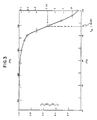
- Figure 2 shows a plot of L T vs. temperature based on the data shown in Fig. 1 for a 40 minute heating period. Isomerization increases as temperature is increased until the critical temperature range is reached after which isomerase denaturation becomes predominant and isomerization rate diminishes to near zero over a mere 5°C range.
- a r is a function only of the duration of the heating period, t, and of enzyme half-life.
- a plot of A r vs. temperature over the critical temperature range gives information on temperature vs. half-life.
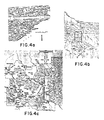
- Texas Along Route 45, approximately 20 miles from Houston, heading toward Galveston, in a plowed rice field with very black soil; the soil temperature at midday on a sunny day reached well over 100°F (Figure 4, Map A); June; 1982, and January, 1984.
- Wyoming/Montana In Yellowstone National Park, in the Mammoth area; within 1-2 miles from the main road, in the soil bordering the many hot springs in that area ( Figure 4, Map B); July, 1983.
- California In Lassen Volcanic National Park, in the soil bordering the hot springs in the valley of the Little Hot Springs Area, within Bumpass Hell (Figure 4, Map C); September, 1984.
- thermostable glucose isomerase-producing microorganisms are screened for the presence of thermostable glucose isomerase-producing microorganisms according to the following protocol: Medium used to propagate the isolates in primary, secondary and tertiary screening : Xylose 0.5% (autoclaved separately) Corn Steep Liquor (48% Solids) 1% Peptone 0.5% NaCl 0.2% yeast extract 0.1% MgSO47H2O 0.024% CoCl2 0.0024% Agar 2.5% K2HPO4 1.1% KH2PO4 0.6% pH 6.8%
- Samples are automatically injected into the HPLC, and the sugars are separated by a carbohydrate column (#84038 Waters Assoc. Inc.) using acetonitrile/water (80/20) as a mobile phase at 30°C.
- Enzymes possessing T20 values exceeding 93°C are useful in practicing the subject invention. Particularly useful are enzymes in the range from at least 93°C, or about 94°C, to about 125°C. Also particularly useful are enzymes in the range from about 94°C to about 115°C.
- thermophilic isolates of the present invention which indicates that they are of the genus Bacillus .
- the organisms of the present invention may be grown in a xylose/corn steep liquor medium.
- Xylose must be present in the medium for the production of glucose isomerase.
- magnesium to the medium is preferred to promote growth of the organism.
- the organisms are capable of growth at temperatures between about 24°C and 70°C, but optimal growth occurs between 50°C and 62°C. Under these conditions, yields of glucose isomerase range from about 0.5 to 1.6 IGIU/ml.
- the high temperatures at which the organism grows provide an added advantage in that they generally allow for a relatively short period of incubation. Usually 6-10 hours is a sufficient period of time for production of satisfactory levels of enzyme.
- the growth medium is prepared as follows: xylose 1% (filter sterilized) yeast extract 0.1% corn steep liquor (CSL) (48% solid) 2% NaCl 0.2 g casamino acid 1% MgSO47H2O 0.03% K2HPO4 1.1% KH2PO4 0.6% Pluronic L61 surfactant (BASF Wyandotte Corp.) 1 drop pH 6.0
- the organisms are grown in shake flasks at 200 RPM at a temperature of 55°C, followed by propagation in laboratory-scale fermentors with 1:1 v/v aeration, a temperature of 55°C, and agitation at 600 RPM.
- the enzyme so produced is operable at a wide range of temperatures. Its principle advantage, however, is that its optimum activity occurs at temperatures much higher than those associated with previously known organisms. Furthermore, the enzymes may be used in an immobilized state, for example, as in the processes described in U.S. Patent Nos. 4,411,996 or 4,410,627. Conditions under which isomerization may be carried out vary, but best results are obtained when the glucose containing solution is in the range of 5 to 60% by weight, and preferably in the range of from about 30 to 50%. The pH of the glucose containing solution should be maintained within the range of 6.0 to 7.0. In the glucose containing solution may also be included various ion activators and/or stabilizers such as magnesium, iron or cobalt, or combinations thereof.
- thermostable glucose isomerase useful in practicing the invention.
- An approximate estimate of purification across each purification step is as follows: Specific Activity Cells 2-5 IGIU/g wet cell paste Extraction 0.17 IGIU/mg protein Heat Treatment 0.6-0.8 IGIU/mg protein Ultrafiltration 1-1.2 IGIU/mg protein DEAE-Cellulose 2.7 IGIU/mg protein Gel Filtration n.d.
- the glucose isomerase was immobilized according to the procedures in U.S. Patent 4,355,717 and also tested for thermal stability as follows: 40 ml of the partial purified glucose isomerase with total activity 474 IGIU (11.85 IGIU/ml) was adjusted to pH 7.2, then 6.61g d.b GDC (Granular Derivatized Cellulose [DEAE]) was added to the enzyme and mixed for 19 hours at room temperature, in 0.02% sodium azide. When the enzyme was 100% adsorbed, the immobilized enzyme activity was found to be 72 IGIU/g dry weight basis.
- the immobilized glucose isomerase was tested for thermo-stability at 98°C and 100°C using 0.51 g/ml substrate (glucose), 10mM MgSO4, 10mM NaHSO3 and 0.5mM FeSO4, by monitoring the effluent with a polarimeter for fructose concentration. The results showed a halflife of 16.8 minutes at 100°C and 33.6 minutes at 98°C and Ea 100 Kcal/mole.
Landscapes
- Chemical & Material Sciences (AREA)
- Organic Chemistry (AREA)
- Life Sciences & Earth Sciences (AREA)
- Health & Medical Sciences (AREA)
- Engineering & Computer Science (AREA)
- Genetics & Genomics (AREA)
- Wood Science & Technology (AREA)
- Zoology (AREA)
- Bioinformatics & Cheminformatics (AREA)
- Biotechnology (AREA)
- Biochemistry (AREA)
- General Health & Medical Sciences (AREA)
- Microbiology (AREA)
- Molecular Biology (AREA)
- General Engineering & Computer Science (AREA)
- Biomedical Technology (AREA)
- Medicinal Chemistry (AREA)
- Chemical Kinetics & Catalysis (AREA)
- General Chemical & Material Sciences (AREA)
- Preparation Of Compounds By Using Micro-Organisms (AREA)
- Enzymes And Modification Thereof (AREA)
- Immobilizing And Processing Of Enzymes And Microorganisms (AREA)
- Micro-Organisms Or Cultivation Processes Thereof (AREA)
Applications Claiming Priority (2)
| Application Number | Priority Date | Filing Date | Title |
|---|---|---|---|
| US22116588A | 1988-07-19 | 1988-07-19 | |
| US221165 | 1988-07-19 |
Publications (2)
| Publication Number | Publication Date |
|---|---|
| EP0352474A2 true EP0352474A2 (fr) | 1990-01-31 |
| EP0352474A3 EP0352474A3 (fr) | 1992-04-29 |
Family
ID=22826633
Family Applications (1)
| Application Number | Title | Priority Date | Filing Date |
|---|---|---|---|
| EP19890111287 Withdrawn EP0352474A3 (fr) | 1988-07-19 | 1989-06-21 | Glucose isomérase thermostable |
Country Status (6)
| Country | Link |
|---|---|
| EP (1) | EP0352474A3 (fr) |
| JP (1) | JPH02242680A (fr) |
| KR (1) | KR910002890A (fr) |
| AU (1) | AU3720589A (fr) |
| DK (1) | DK358789A (fr) |
| PT (1) | PT91192A (fr) |
Cited By (2)
| Publication number | Priority date | Publication date | Assignee | Title |
|---|---|---|---|---|
| EP0483691A3 (en) * | 1990-10-29 | 1993-04-07 | Shigezo Udaka | Xyloseisomerase gene of thermus aquaticus, xyloseisomerase and process for preparation of fructose |
| CN104293759A (zh) * | 2014-09-19 | 2015-01-21 | 浙江工业大学 | 葡萄糖异构酶基因、编码酶、载体、工程菌及应用 |
Family Cites Families (3)
| Publication number | Priority date | Publication date | Assignee | Title |
|---|---|---|---|---|
| US4410627A (en) * | 1982-06-30 | 1983-10-18 | Nabisco Brands, Inc. | Glucose isomerase process |
| US4593001A (en) * | 1984-01-09 | 1986-06-03 | Nabisco Brands, Inc. | High temperature isomerization process |
| AU2421588A (en) * | 1987-08-11 | 1989-03-09 | Cetus Corporation | Procaryotic xylose isomerase muteins and method to increase protein stability |
-
1989
- 1989-06-21 EP EP19890111287 patent/EP0352474A3/fr not_active Withdrawn
- 1989-06-29 AU AU37205/89A patent/AU3720589A/en not_active Abandoned
- 1989-07-17 PT PT91192A patent/PT91192A/pt not_active Application Discontinuation
- 1989-07-18 JP JP1187188A patent/JPH02242680A/ja active Pending
- 1989-07-19 DK DK358789A patent/DK358789A/da not_active Application Discontinuation
- 1989-07-19 KR KR1019890010204A patent/KR910002890A/ko not_active Withdrawn
Cited By (3)
| Publication number | Priority date | Publication date | Assignee | Title |
|---|---|---|---|---|
| EP0483691A3 (en) * | 1990-10-29 | 1993-04-07 | Shigezo Udaka | Xyloseisomerase gene of thermus aquaticus, xyloseisomerase and process for preparation of fructose |
| US5411886A (en) * | 1990-10-29 | 1995-05-02 | Nihon Shokuhin Kako Co., Ltd. | Xylose isomerase gene of Thermus aquaticus |
| CN104293759A (zh) * | 2014-09-19 | 2015-01-21 | 浙江工业大学 | 葡萄糖异构酶基因、编码酶、载体、工程菌及应用 |
Also Published As
| Publication number | Publication date |
|---|---|
| DK358789D0 (da) | 1989-07-19 |
| KR910002890A (ko) | 1991-02-26 |
| PT91192A (pt) | 1990-02-08 |
| JPH02242680A (ja) | 1990-09-27 |
| DK358789A (da) | 1990-01-20 |
| EP0352474A3 (fr) | 1992-04-29 |
| AU3720589A (en) | 1990-01-25 |
Similar Documents
| Publication | Publication Date | Title |
|---|---|---|
| US4284722A (en) | Heat and acid-stable alpha-amylase enzymes and processes for producing the same | |
| Vandamme et al. | Microbial sucrose phosphorylase: fermentation process, properties, and biotechnical applications | |
| Izumori et al. | Production of xylitol from D-xylulose by Mycobacterium smegmatis | |
| US5935827A (en) | Maltose phosphorylase, trehalose phosphorylase, novel strain of genus plesiomonas capable of producing these enzymes and process for producing trehalose | |
| US4442207A (en) | Process for production of glucosone | |
| US3979261A (en) | Production of glucose isomerase by bacillus coagulans | |
| EP0184019B1 (fr) | Bactérie anaérobe thermophile, productrice d'une alpha-amylase thermostable, alpha-amylase thermostable et leur procédé de préparation | |
| CA1200521A (fr) | Methode d'isomerisation du glucose | |
| EP0405283A2 (fr) | Enzyme pullulanase thermostable et acido-résistant et procédé pour sa production | |
| US3843442A (en) | Immobilized glucose isomerase | |
| Yoshida et al. | Production and application of maltose phosphorylase and trehalose phosphorylase by a strain of Plesiomonas | |
| US4283496A (en) | Preparation and use of glucose isomerase | |
| EP0032987B1 (fr) | Asparatase thermophilique, procédés de préparation, culture utilisée et procédé de préparation d'acide L-aspartique utilisant celle-ci | |
| US4458017A (en) | Process for preparing fructose from starch | |
| US4061539A (en) | Preparation and use of glucose isomerase | |
| JP3761236B2 (ja) | 新規なβ−グルコシダーゼ、その製造法および用途 | |
| US5334524A (en) | Process for producing levan sucrase using Bacillus licheniformis | |
| US4593001A (en) | High temperature isomerization process | |
| WO1992007069A1 (fr) | Nouvelle enzyme d'isomerisation | |
| JPH06292578A (ja) | 耐熱性マンノースイソメラーゼ及びその製造法並びにこれを用いたマンノースの製造法 | |
| US4605619A (en) | Process for preparing fructose from starch | |
| AU595144B2 (en) | Process for producing glucose isomerase | |
| Hamilton et al. | Glucose isomerase: A case study of enzyme-catalyzed process technology | |
| US4431733A (en) | Process for preparing fructose from liquefied starch | |
| JPH02242680A (ja) | 耐熱性グルコースイソメラーゼ |
Legal Events
| Date | Code | Title | Description |
|---|---|---|---|
| PUAI | Public reference made under article 153(3) epc to a published international application that has entered the european phase |
Free format text: ORIGINAL CODE: 0009012 |
|
| AK | Designated contracting states |
Kind code of ref document: A2 Designated state(s): AT BE CH DE ES FR GB GR IT LI LU NL SE |
|
| RAP1 | Party data changed (applicant data changed or rights of an application transferred) |
Owner name: STABRA AG |
|
| PUAL | Search report despatched |
Free format text: ORIGINAL CODE: 0009013 |
|
| AK | Designated contracting states |
Kind code of ref document: A3 Designated state(s): AT BE CH DE ES FR GB GR IT LI LU NL SE |
|
| 17P | Request for examination filed |
Effective date: 19920904 |
|
| 17Q | First examination report despatched |
Effective date: 19921123 |
|
| STAA | Information on the status of an ep patent application or granted ep patent |
Free format text: STATUS: THE APPLICATION IS DEEMED TO BE WITHDRAWN |
|
| 18D | Application deemed to be withdrawn |
Effective date: 19930406 |