EP0353937A1 - Testmethode - Google Patents
Testmethode Download PDFInfo
- Publication number
- EP0353937A1 EP0353937A1 EP89307581A EP89307581A EP0353937A1 EP 0353937 A1 EP0353937 A1 EP 0353937A1 EP 89307581 A EP89307581 A EP 89307581A EP 89307581 A EP89307581 A EP 89307581A EP 0353937 A1 EP0353937 A1 EP 0353937A1
- Authority
- EP
- European Patent Office
- Prior art keywords
- specific binding
- optical structure
- binding partner
- ligand
- layer
- Prior art date
- Legal status (The legal status is an assumption and is not a legal conclusion. Google has not performed a legal analysis and makes no representation as to the accuracy of the status listed.)
- Pending
Links
- 238000000034 method Methods 0.000 title claims abstract description 56
- 238000003556 assay Methods 0.000 title claims abstract description 26
- 230000003287 optical effect Effects 0.000 claims description 90
- 230000009870 specific binding Effects 0.000 claims description 59
- 230000005855 radiation Effects 0.000 claims description 50
- 239000003446 ligand Substances 0.000 claims description 49
- 239000000758 substrate Substances 0.000 claims description 36
- 238000002198 surface plasmon resonance spectroscopy Methods 0.000 claims description 34
- 229910052751 metal Inorganic materials 0.000 claims description 27
- 239000002184 metal Substances 0.000 claims description 27
- VYPSYNLAJGMNEJ-UHFFFAOYSA-N Silicium dioxide Chemical compound O=[Si]=O VYPSYNLAJGMNEJ-UHFFFAOYSA-N 0.000 claims description 20
- BQCADISMDOOEFD-UHFFFAOYSA-N Silver Chemical compound [Ag] BQCADISMDOOEFD-UHFFFAOYSA-N 0.000 claims description 15
- 239000000463 material Substances 0.000 claims description 15
- 229910052709 silver Inorganic materials 0.000 claims description 15
- 239000004332 silver Substances 0.000 claims description 15
- 230000008878 coupling Effects 0.000 claims description 11
- 238000010168 coupling process Methods 0.000 claims description 11
- 238000005859 coupling reaction Methods 0.000 claims description 11
- 239000003989 dielectric material Substances 0.000 claims description 11
- 239000000377 silicon dioxide Substances 0.000 claims description 10
- 230000001678 irradiating effect Effects 0.000 claims description 8
- 230000009918 complex formation Effects 0.000 claims description 6
- 229910001635 magnesium fluoride Inorganic materials 0.000 claims description 6
- 239000003153 chemical reaction reagent Substances 0.000 claims description 4
- PCHJSUWPFVWCPO-UHFFFAOYSA-N gold Chemical compound [Au] PCHJSUWPFVWCPO-UHFFFAOYSA-N 0.000 claims description 4
- 229910052737 gold Inorganic materials 0.000 claims description 4
- 239000010931 gold Substances 0.000 claims description 4
- 238000012544 monitoring process Methods 0.000 claims description 4
- 230000000644 propagated effect Effects 0.000 claims description 4
- 238000012360 testing method Methods 0.000 claims description 4
- 230000009471 action Effects 0.000 claims description 3
- 239000007788 liquid Substances 0.000 claims description 3
- 230000015572 biosynthetic process Effects 0.000 claims description 2
- ORUIBWPALBXDOA-UHFFFAOYSA-L magnesium fluoride Chemical compound [F-].[F-].[Mg+2] ORUIBWPALBXDOA-UHFFFAOYSA-L 0.000 claims 2
- 230000035945 sensitivity Effects 0.000 abstract description 10
- 239000010410 layer Substances 0.000 description 50
- 239000000523 sample Substances 0.000 description 16
- 230000005284 excitation Effects 0.000 description 15
- 239000000243 solution Substances 0.000 description 13
- 239000011521 glass Substances 0.000 description 12
- 239000000427 antigen Substances 0.000 description 8
- 108091007433 antigens Proteins 0.000 description 8
- 102000036639 antigens Human genes 0.000 description 8
- 230000008901 benefit Effects 0.000 description 8
- 239000012634 fragment Substances 0.000 description 7
- 230000027455 binding Effects 0.000 description 6
- 230000008859 change Effects 0.000 description 5
- 229910021642 ultra pure water Inorganic materials 0.000 description 5
- 239000012498 ultrapure water Substances 0.000 description 5
- YBJHBAHKTGYVGT-ZKWXMUAHSA-N (+)-Biotin Chemical compound N1C(=O)N[C@@H]2[C@H](CCCCC(=O)O)SC[C@@H]21 YBJHBAHKTGYVGT-ZKWXMUAHSA-N 0.000 description 4
- 229930006000 Sucrose Natural products 0.000 description 4
- CZMRCDWAGMRECN-UGDNZRGBSA-N Sucrose Chemical compound O[C@H]1[C@H](O)[C@@H](CO)O[C@@]1(CO)O[C@@H]1[C@H](O)[C@@H](O)[C@H](O)[C@@H](CO)O1 CZMRCDWAGMRECN-UGDNZRGBSA-N 0.000 description 4
- 229940088597 hormone Drugs 0.000 description 4
- 239000005556 hormone Substances 0.000 description 4
- 230000035515 penetration Effects 0.000 description 4
- 102000004169 proteins and genes Human genes 0.000 description 4
- 108090000623 proteins and genes Proteins 0.000 description 4
- 239000005720 sucrose Substances 0.000 description 4
- 108090000790 Enzymes Proteins 0.000 description 3
- 102000004190 Enzymes Human genes 0.000 description 3
- 241000700605 Viruses Species 0.000 description 3
- 239000002390 adhesive tape Substances 0.000 description 3
- 239000004411 aluminium Substances 0.000 description 3
- 229910052782 aluminium Inorganic materials 0.000 description 3
- XAGFODPZIPBFFR-UHFFFAOYSA-N aluminium Chemical compound [Al] XAGFODPZIPBFFR-UHFFFAOYSA-N 0.000 description 3
- 239000003599 detergent Substances 0.000 description 3
- 230000000694 effects Effects 0.000 description 3
- 238000004519 manufacturing process Methods 0.000 description 3
- PYWVYCXTNDRMGF-UHFFFAOYSA-N rhodamine B Chemical compound [Cl-].C=12C=CC(=[N+](CC)CC)C=C2OC2=CC(N(CC)CC)=CC=C2C=1C1=CC=CC=C1C(O)=O PYWVYCXTNDRMGF-UHFFFAOYSA-N 0.000 description 3
- 229940043267 rhodamine b Drugs 0.000 description 3
- 210000002966 serum Anatomy 0.000 description 3
- BPSIOYPQMFLKFR-UHFFFAOYSA-N trimethoxy-[3-(oxiran-2-ylmethoxy)propyl]silane Chemical compound CO[Si](OC)(OC)CCCOCC1CO1 BPSIOYPQMFLKFR-UHFFFAOYSA-N 0.000 description 3
- 238000001771 vacuum deposition Methods 0.000 description 3
- 108090001008 Avidin Proteins 0.000 description 2
- 108010022366 Carcinoembryonic Antigen Proteins 0.000 description 2
- 102100025475 Carcinoembryonic antigen-related cell adhesion molecule 5 Human genes 0.000 description 2
- VYZAMTAEIAYCRO-UHFFFAOYSA-N Chromium Chemical compound [Cr] VYZAMTAEIAYCRO-UHFFFAOYSA-N 0.000 description 2
- XUIIKFGFIJCVMT-GFCCVEGCSA-N D-thyroxine Chemical compound IC1=CC(C[C@@H](N)C(O)=O)=CC(I)=C1OC1=CC(I)=C(O)C(I)=C1 XUIIKFGFIJCVMT-GFCCVEGCSA-N 0.000 description 2
- 102000012673 Follicle Stimulating Hormone Human genes 0.000 description 2
- 108010079345 Follicle Stimulating Hormone Proteins 0.000 description 2
- 108060003951 Immunoglobulin Proteins 0.000 description 2
- 108090001090 Lectins Proteins 0.000 description 2
- 102000004856 Lectins Human genes 0.000 description 2
- RJKFOVLPORLFTN-LEKSSAKUSA-N Progesterone Chemical compound C1CC2=CC(=O)CC[C@]2(C)[C@@H]2[C@@H]1[C@@H]1CC[C@H](C(=O)C)[C@@]1(C)CC2 RJKFOVLPORLFTN-LEKSSAKUSA-N 0.000 description 2
- PXIPVTKHYLBLMZ-UHFFFAOYSA-N Sodium azide Chemical compound [Na+].[N-]=[N+]=[N-] PXIPVTKHYLBLMZ-UHFFFAOYSA-N 0.000 description 2
- MUMGGOZAMZWBJJ-DYKIIFRCSA-N Testostosterone Chemical compound O=C1CC[C@]2(C)[C@H]3CC[C@](C)([C@H](CC4)O)[C@@H]4[C@@H]3CCC2=C1 MUMGGOZAMZWBJJ-DYKIIFRCSA-N 0.000 description 2
- 102000011923 Thyrotropin Human genes 0.000 description 2
- 108010061174 Thyrotropin Proteins 0.000 description 2
- 102000013529 alpha-Fetoproteins Human genes 0.000 description 2
- 108010026331 alpha-Fetoproteins Proteins 0.000 description 2
- 238000004458 analytical method Methods 0.000 description 2
- 230000000890 antigenic effect Effects 0.000 description 2
- 238000005842 biochemical reaction Methods 0.000 description 2
- 229960002685 biotin Drugs 0.000 description 2
- 235000020958 biotin Nutrition 0.000 description 2
- 239000011616 biotin Substances 0.000 description 2
- 150000001720 carbohydrates Chemical class 0.000 description 2
- 235000014633 carbohydrates Nutrition 0.000 description 2
- 229960004407 chorionic gonadotrophin Drugs 0.000 description 2
- 229910052804 chromium Inorganic materials 0.000 description 2
- 239000011651 chromium Substances 0.000 description 2
- 239000011248 coating agent Substances 0.000 description 2
- 238000000576 coating method Methods 0.000 description 2
- 238000001914 filtration Methods 0.000 description 2
- 239000012530 fluid Substances 0.000 description 2
- 229940028334 follicle stimulating hormone Drugs 0.000 description 2
- JYGXADMDTFJGBT-VWUMJDOOSA-N hydrocortisone Chemical compound O=C1CC[C@]2(C)[C@H]3[C@@H](O)C[C@](C)([C@@](CC4)(O)C(=O)CO)[C@@H]4[C@@H]3CCC2=C1 JYGXADMDTFJGBT-VWUMJDOOSA-N 0.000 description 2
- 238000003018 immunoassay Methods 0.000 description 2
- 102000018358 immunoglobulin Human genes 0.000 description 2
- 230000001965 increasing effect Effects 0.000 description 2
- 239000003112 inhibitor Substances 0.000 description 2
- NOESYZHRGYRDHS-UHFFFAOYSA-N insulin Chemical compound N1C(=O)C(NC(=O)C(CCC(N)=O)NC(=O)C(CCC(O)=O)NC(=O)C(C(C)C)NC(=O)C(NC(=O)CN)C(C)CC)CSSCC(C(NC(CO)C(=O)NC(CC(C)C)C(=O)NC(CC=2C=CC(O)=CC=2)C(=O)NC(CCC(N)=O)C(=O)NC(CC(C)C)C(=O)NC(CCC(O)=O)C(=O)NC(CC(N)=O)C(=O)NC(CC=2C=CC(O)=CC=2)C(=O)NC(CSSCC(NC(=O)C(C(C)C)NC(=O)C(CC(C)C)NC(=O)C(CC=2C=CC(O)=CC=2)NC(=O)C(CC(C)C)NC(=O)C(C)NC(=O)C(CCC(O)=O)NC(=O)C(C(C)C)NC(=O)C(CC(C)C)NC(=O)C(CC=2NC=NC=2)NC(=O)C(CO)NC(=O)CNC2=O)C(=O)NCC(=O)NC(CCC(O)=O)C(=O)NC(CCCNC(N)=N)C(=O)NCC(=O)NC(CC=3C=CC=CC=3)C(=O)NC(CC=3C=CC=CC=3)C(=O)NC(CC=3C=CC(O)=CC=3)C(=O)NC(C(C)O)C(=O)N3C(CCC3)C(=O)NC(CCCCN)C(=O)NC(C)C(O)=O)C(=O)NC(CC(N)=O)C(O)=O)=O)NC(=O)C(C(C)CC)NC(=O)C(CO)NC(=O)C(C(C)O)NC(=O)C1CSSCC2NC(=O)C(CC(C)C)NC(=O)C(NC(=O)C(CCC(N)=O)NC(=O)C(CC(N)=O)NC(=O)C(NC(=O)C(N)CC=1C=CC=CC=1)C(C)C)CC1=CN=CN1 NOESYZHRGYRDHS-UHFFFAOYSA-N 0.000 description 2
- 230000003993 interaction Effects 0.000 description 2
- 230000007246 mechanism Effects 0.000 description 2
- 239000000813 peptide hormone Substances 0.000 description 2
- 102000040430 polynucleotide Human genes 0.000 description 2
- 108091033319 polynucleotide Proteins 0.000 description 2
- 239000002157 polynucleotide Substances 0.000 description 2
- 239000012488 sample solution Substances 0.000 description 2
- 241000894007 species Species 0.000 description 2
- 239000002344 surface layer Substances 0.000 description 2
- XLYOFNOQVPJJNP-UHFFFAOYSA-N water Substances O XLYOFNOQVPJJNP-UHFFFAOYSA-N 0.000 description 2
- VOXZDWNPVJITMN-ZBRFXRBCSA-N 17β-estradiol Chemical compound OC1=CC=C2[C@H]3CC[C@](C)([C@H](CC4)O)[C@@H]4[C@@H]3CCC2=C1 VOXZDWNPVJITMN-ZBRFXRBCSA-N 0.000 description 1
- JKMHFZQWWAIEOD-UHFFFAOYSA-N 2-[4-(2-hydroxyethyl)piperazin-1-yl]ethanesulfonic acid Chemical compound OCC[NH+]1CCN(CCS([O-])(=O)=O)CC1 JKMHFZQWWAIEOD-UHFFFAOYSA-N 0.000 description 1
- SGAOZXGJGQEBHA-UHFFFAOYSA-N 82344-98-7 Chemical compound C1CCN2CCCC(C=C3C4(OC(C5=CC(=CC=C54)N=C=S)=O)C4=C5)=C2C1=C3OC4=C1CCCN2CCCC5=C12 SGAOZXGJGQEBHA-UHFFFAOYSA-N 0.000 description 1
- 208000030507 AIDS Diseases 0.000 description 1
- 241000894006 Bacteria Species 0.000 description 1
- 241000283707 Capra Species 0.000 description 1
- XPDXVDYUQZHFPV-UHFFFAOYSA-N Dansyl Chloride Chemical compound C1=CC=C2C(N(C)C)=CC=CC2=C1S(Cl)(=O)=O XPDXVDYUQZHFPV-UHFFFAOYSA-N 0.000 description 1
- LTMHDMANZUZIPE-AMTYYWEZSA-N Digoxin Natural products O([C@H]1[C@H](C)O[C@H](O[C@@H]2C[C@@H]3[C@@](C)([C@@H]4[C@H]([C@]5(O)[C@](C)([C@H](O)C4)[C@H](C4=CC(=O)OC4)CC5)CC3)CC2)C[C@@H]1O)[C@H]1O[C@H](C)[C@@H](O[C@H]2O[C@@H](C)[C@H](O)[C@@H](O)C2)[C@@H](O)C1 LTMHDMANZUZIPE-AMTYYWEZSA-N 0.000 description 1
- 239000007995 HEPES buffer Substances 0.000 description 1
- 102000004877 Insulin Human genes 0.000 description 1
- 108090001061 Insulin Proteins 0.000 description 1
- 241001465754 Metazoa Species 0.000 description 1
- 241000699670 Mus sp. Species 0.000 description 1
- 241000283973 Oryctolagus cuniculus Species 0.000 description 1
- 208000002606 Paramyxoviridae Infections Diseases 0.000 description 1
- 241001494479 Pecora Species 0.000 description 1
- 102000003946 Prolactin Human genes 0.000 description 1
- 108010057464 Prolactin Proteins 0.000 description 1
- BLRPTPMANUNPDV-UHFFFAOYSA-N Silane Chemical compound [SiH4] BLRPTPMANUNPDV-UHFFFAOYSA-N 0.000 description 1
- AUYYCJSJGJYCDS-LBPRGKRZSA-N Thyrolar Chemical compound IC1=CC(C[C@H](N)C(O)=O)=CC(I)=C1OC1=CC=C(O)C(I)=C1 AUYYCJSJGJYCDS-LBPRGKRZSA-N 0.000 description 1
- 230000002238 attenuated effect Effects 0.000 description 1
- 230000001580 bacterial effect Effects 0.000 description 1
- 229910052681 coesite Inorganic materials 0.000 description 1
- 230000000295 complement effect Effects 0.000 description 1
- 238000003271 compound fluorescence assay Methods 0.000 description 1
- 238000005260 corrosion Methods 0.000 description 1
- 230000007797 corrosion Effects 0.000 description 1
- 229910052906 cristobalite Inorganic materials 0.000 description 1
- 239000005331 crown glasses (windows) Substances 0.000 description 1
- 230000003247 decreasing effect Effects 0.000 description 1
- 230000001419 dependent effect Effects 0.000 description 1
- 238000001514 detection method Methods 0.000 description 1
- LTMHDMANZUZIPE-PUGKRICDSA-N digoxin Chemical compound C1[C@H](O)[C@H](O)[C@@H](C)O[C@H]1O[C@@H]1[C@@H](C)O[C@@H](O[C@@H]2[C@H](O[C@@H](O[C@@H]3C[C@@H]4[C@]([C@@H]5[C@H]([C@]6(CC[C@@H]([C@@]6(C)[C@H](O)C5)C=5COC(=O)C=5)O)CC4)(C)CC3)C[C@@H]2O)C)C[C@@H]1O LTMHDMANZUZIPE-PUGKRICDSA-N 0.000 description 1
- 229960005156 digoxin Drugs 0.000 description 1
- LTMHDMANZUZIPE-UHFFFAOYSA-N digoxine Natural products C1C(O)C(O)C(C)OC1OC1C(C)OC(OC2C(OC(OC3CC4C(C5C(C6(CCC(C6(C)C(O)C5)C=5COC(=O)C=5)O)CC4)(C)CC3)CC2O)C)CC1O LTMHDMANZUZIPE-UHFFFAOYSA-N 0.000 description 1
- 239000006185 dispersion Substances 0.000 description 1
- 229940079593 drug Drugs 0.000 description 1
- 239000003814 drug Substances 0.000 description 1
- 230000005684 electric field Effects 0.000 description 1
- 238000000295 emission spectrum Methods 0.000 description 1
- 230000002708 enhancing effect Effects 0.000 description 1
- 229960005309 estradiol Drugs 0.000 description 1
- 229930182833 estradiol Natural products 0.000 description 1
- 238000002474 experimental method Methods 0.000 description 1
- MHMNJMPURVTYEJ-UHFFFAOYSA-N fluorescein-5-isothiocyanate Chemical compound O1C(=O)C2=CC(N=C=S)=CC=C2C21C1=CC=C(O)C=C1OC1=CC(O)=CC=C21 MHMNJMPURVTYEJ-UHFFFAOYSA-N 0.000 description 1
- 230000005283 ground state Effects 0.000 description 1
- CPBQJMYROZQQJC-UHFFFAOYSA-N helium neon Chemical compound [He].[Ne] CPBQJMYROZQQJC-UHFFFAOYSA-N 0.000 description 1
- 208000006454 hepatitis Diseases 0.000 description 1
- 231100000283 hepatitis Toxicity 0.000 description 1
- 108091008039 hormone receptors Proteins 0.000 description 1
- 229960000890 hydrocortisone Drugs 0.000 description 1
- 206010022000 influenza Diseases 0.000 description 1
- 229940125396 insulin Drugs 0.000 description 1
- 239000002523 lectin Substances 0.000 description 1
- 230000001592 luteinising effect Effects 0.000 description 1
- 238000005259 measurement Methods 0.000 description 1
- 244000005700 microbiome Species 0.000 description 1
- 238000012986 modification Methods 0.000 description 1
- 230000004048 modification Effects 0.000 description 1
- 230000009871 nonspecific binding Effects 0.000 description 1
- 239000005365 phosphate glass Substances 0.000 description 1
- 238000002360 preparation method Methods 0.000 description 1
- 239000000186 progesterone Substances 0.000 description 1
- 229960003387 progesterone Drugs 0.000 description 1
- 229940097325 prolactin Drugs 0.000 description 1
- 230000002829 reductive effect Effects 0.000 description 1
- 238000006894 reductive elimination reaction Methods 0.000 description 1
- 230000000241 respiratory effect Effects 0.000 description 1
- 230000004044 response Effects 0.000 description 1
- -1 rhodamine isothiocyanate Chemical class 0.000 description 1
- 229910000077 silane Inorganic materials 0.000 description 1
- 235000012239 silicon dioxide Nutrition 0.000 description 1
- 238000004528 spin coating Methods 0.000 description 1
- 238000009987 spinning Methods 0.000 description 1
- 239000003270 steroid hormone Substances 0.000 description 1
- 229910052682 stishovite Inorganic materials 0.000 description 1
- 239000000126 substance Substances 0.000 description 1
- 235000000346 sugar Nutrition 0.000 description 1
- 150000008163 sugars Chemical class 0.000 description 1
- 229960003604 testosterone Drugs 0.000 description 1
- 239000005495 thyroid hormone Substances 0.000 description 1
- 229940036555 thyroid hormone Drugs 0.000 description 1
- 229940034208 thyroxine Drugs 0.000 description 1
- XUIIKFGFIJCVMT-UHFFFAOYSA-N thyroxine-binding globulin Natural products IC1=CC(CC([NH3+])C([O-])=O)=CC(I)=C1OC1=CC(I)=C(O)C(I)=C1 XUIIKFGFIJCVMT-UHFFFAOYSA-N 0.000 description 1
- 239000003053 toxin Substances 0.000 description 1
- 231100000765 toxin Toxicity 0.000 description 1
- 108700012359 toxins Proteins 0.000 description 1
- 229910052905 tridymite Inorganic materials 0.000 description 1
- 229940035722 triiodothyronine Drugs 0.000 description 1
- LENZDBCJOHFCAS-UHFFFAOYSA-N tris Chemical compound OCC(N)(CO)CO LENZDBCJOHFCAS-UHFFFAOYSA-N 0.000 description 1
- 239000011782 vitamin Substances 0.000 description 1
- 229940088594 vitamin Drugs 0.000 description 1
- 229930003231 vitamin Natural products 0.000 description 1
- 235000013343 vitamin Nutrition 0.000 description 1
Images




Classifications
-
- G—PHYSICS
- G01—MEASURING; TESTING
- G01N—INVESTIGATING OR ANALYSING MATERIALS BY DETERMINING THEIR CHEMICAL OR PHYSICAL PROPERTIES
- G01N21/00—Investigating or analysing materials by the use of optical means, i.e. using sub-millimetre waves, infrared, visible or ultraviolet light
- G01N21/62—Systems in which the material investigated is excited whereby it emits light or causes a change in wavelength of the incident light
- G01N21/63—Systems in which the material investigated is excited whereby it emits light or causes a change in wavelength of the incident light optically excited
- G01N21/64—Fluorescence; Phosphorescence
- G01N21/645—Specially adapted constructive features of fluorimeters
- G01N21/648—Specially adapted constructive features of fluorimeters using evanescent coupling or surface plasmon coupling for the excitation of fluorescence
-
- G—PHYSICS
- G01—MEASURING; TESTING
- G01N—INVESTIGATING OR ANALYSING MATERIALS BY DETERMINING THEIR CHEMICAL OR PHYSICAL PROPERTIES
- G01N21/00—Investigating or analysing materials by the use of optical means, i.e. using sub-millimetre waves, infrared, visible or ultraviolet light
- G01N21/17—Systems in which incident light is modified in accordance with the properties of the material investigated
- G01N21/55—Specular reflectivity
- G01N21/552—Attenuated total reflection
- G01N21/553—Attenuated total reflection and using surface plasmons
-
- G—PHYSICS
- G01—MEASURING; TESTING
- G01N—INVESTIGATING OR ANALYSING MATERIALS BY DETERMINING THEIR CHEMICAL OR PHYSICAL PROPERTIES
- G01N33/00—Investigating or analysing materials by specific methods not covered by groups G01N1/00 - G01N31/00
- G01N33/48—Biological material, e.g. blood, urine; Haemocytometers
- G01N33/50—Chemical analysis of biological material, e.g. blood, urine; Testing involving biospecific ligand binding methods; Immunological testing
- G01N33/53—Immunoassay; Biospecific binding assay; Materials therefor
- G01N33/543—Immunoassay; Biospecific binding assay; Materials therefor with an insoluble carrier for immobilising immunochemicals
- G01N33/54366—Apparatus specially adapted for solid-phase testing
- G01N33/54373—Apparatus specially adapted for solid-phase testing involving physiochemical end-point determination, e.g. wave-guides, FETS, gratings
Definitions
- This invention relates to assay techniques and to means for putting such techniques into effect.
- it relates to an improved assay technique which provides an enhanced signal to noise ratio and enhanced sensitivity.
- the assay techniques with which the present application is concerned are based on the affinity between the species which is to be assayed (hereinafter called “ligand”) and a specific binding material for the ligand (hereinafter called “specific binding partner”) which is coated on a particular type of surface.
- ligand species which is to be assayed
- specific binding partner a specific binding material for the ligand
- Such techniques are well known in the art, particularly in relation to coated optical structures whereby binding of the ligand to the specific binding partner results in a detectable change in the optical characteristics of said optical structure and have been described, for example, in EP-0112721 and EP-0178083.
- the present invention provides an alternative method of assay with considerable advantages over the conventional assays.
- the invention is concerned with improvements to a method of assaying for a ligand in a sample which involves
- generated radiation includes fluorescence and phosphorescence. Although the invention is described hereinafter with particular reference to fluorescence, it applies also to phosphorescence.
- the optical structure comprises a substrate and optionally one or more layers of material interposed between said substrate and the layer of specific binding partner carried on the surface of said optical structure.
- the layer of specific binding partner may be either continuous or discontinuous.
- a continuous layer of specific binding partner may be preferred.
- Direct sensing in the context of the present invention involves monitoring the modulation of a signal resulting from a biochemical reaction (e.g. antigen/antibody binding).
- Indirect sensing involves monitoring a label (e.g. a fluorophore) by a transducer in order to quantify a biochemical reaction.
- the technique makes it possible to enhance substantially the intensity of the electric field at the surface of the optical structure thereby enhancing the interaction between the exciting radiation and the ligand/specific binding partner complex, so maximising the response to complex formation at the surface of the optical structure and, in those embodiments employing indirect sensing techniques, significantly reducing the background signal levels.
- the method of the present invention may be applied to enhance the surface field intensity produced by the incident radiation source and to sharpen the resonance(s) associated with the coupling to modes which propagate in said surface layer.
- the invention provides a method of assaying for a ligand in a sample which method comprises the steps of
- the incident radiation may be coupled to a guided mode which can be supported by an optical structure of a particular geometry.
- Optical structures of suitable geometry have been previously disclosed in US4649280 in connection with a fluorescent immunoassay. However, it has not hitherto been appreciated that similar techniques could be applied to a direct sensing method of assay.
- the optical structure comprises a transparent (at least at the wavelength of radiation used) substrate coated with a thin metal layer such as silver or gold, which metal layer is itself coated with a layer of dielectric material such as silica.
- the layer of dielectric material is of a thickness, for example of the order of a wavelength of the incident radiation used, sufficient to support one or more guided modes but it is particularly preferred to employ a thickness of dielectric material which will support only a single guided TE or TM mode.
- a thickness of dielectric material which will support only a single guided TE or TM mode.
- the thickness of a dielectric layer of silica for a single transverse magnetic (TM) guided mode is from 350 nm to 750 nm.
- TM transverse magnetic
- a similar thickness is required to propagate a single guided mode of transverse electric (TE) radiation.
- the incident radiation is coupled to a long-range surface plasmon mode which results from the interaction of surface plasmons on each side of the metal layer.
- the optical structure may, for example, comprise a glass substrate and the layer of metal, such as silver or gold, is displaced from the substrate by a layer of dielectric having a refractive index lower than that of the substrate, for example MgF2.
- LRSPR Long-range surface plasmon resonance
- LRSPR can still be achieved when there is a modest index mis-match and that a range of sensitivities are possible by using layers of differing thicknesses and/or by selecting materials of appropriately mismatched refractive index.
- the metal layer thickness needs to be increased to optimise resonance coupling between the incident radiation and the long-range surface plasmon.
- the invention therefore further provides a sensor for detecting a ligand in a sample which comprises an optical structure having a substrate, a layer of metal and interposed therebetween a layer of dielectric material having a refractive index lower than that of said substrate, and a specific binding partner for the ligand it is desired to detect adsorbed on or bound to (directly or indirectly) the said metal layer, said layers being such that, in use, long range surface plasmon resonance may be propagated therein.
- the metal layer is of silver, 10-50 nm thick, more particularly 15.5 nm thick and the dielectric layer is of MgF2 of 10-2000 nm thick, more particularly 1500 nm thick.
- the sensitivity of direct sensing assays can be conveniently estimated from the resolution of the sensor.
- the resolution may be defined as the ratio of the angular shift in the resonance peak for a particular change in refractive index of the medium adjacent to the metal surface to the angular half width of the reflected resonance minimum.
- Angular half width as used herein means the angular range between those angles of incidence or reflectance, on either side of the angle of incidence or emergence associated with the resonance reflectance minimum at which the reflectance is at half its minimum value. The greater the resolution the greater is the sensitivity of the sensing system in resolving the changes in resonance due to ligand binding, hence improving the assay sensitivity.
- the preferred materials and dimensions described in the first embodiment above give an r value of greater than 5 and those in the second embodiment above give an r value of greater than 12 (with an angular half width of about one sixth of a degree) compared to an r value of 0.47-0.76 and an angular half width of about 1.5 degrees using a bare silver film.
- the method of the present invention is particularly advantageous when applied to an indirect sensing method of assay such as those techniques based on surface-bound fluorophores.
- the method may be used to enhance the surface field intensity produced by the incident radiation and to sharpen the resonance peaks produced. This in itself produces large improvements in the specificity and sensitivity of fluorescence assays because the bound fluorophores are excited by the evanescent field produced at the outer surface of the optical structure. This minimises excitation of unbound fluorophores and thus reduces background signal.
- the surface field intensity is greatly enhanced compared to both direct irradiation and evanescent irradiation via total internal reflection and thus the available energy is greater and the signal obtained from the bound fluorophore very significantly enhanced.
- the invention provides a method of assaying for a ligand in a sample which method comprises the steps of
- the evanescent field associated with total internal reflection can be used to excite fluorophores within about one micron of the optical structure - sample interface.
- the optical structure is irradiated with a single reflection in a plane substantially at right angles to the axis of the detection optics.
- fluorescent molecules which are suitable for use as labels are rhodamine isothiocyanate, dansyl chloride, FITC and XRITC.
- the invention provides A method of assaying for a ligand in a sample which method comprises the steps of
- the incident radiation is coupled into a surface plasmon resonance (SPR) mode generated between a thin metal layer, for example of silver or gold, and a dielectric layer which may, for example, be of silica, phosphate glasses or a silane (e.g. glycidoxypropyltrimethoxysilane).
- Silica can act as a passivating layer to protect the metal from corrosion and to provide a surface on which the specific binding partner can be conveniently immobilised, for example, covalently.
- the specific binding partner may be directly adsorbed onto the metal layer to itself form the layer of dielectric material and in this particular embodiment it is preferred that said specific binding partner forms a continuous layer, at least over a discrete region of the optical structure. It has been shown that a surface plasmon's evanescent field intensity is greatly enhanced, compared to that associated with total internal reflection, due to the focussing effect of coupling the incident radiation to a two-dimensional surface wave. The surface field intensity attainable using surface plasmon resonance is wavelength dependent, being greater at longer wavelengths within the optimised optical structure.
- Fluorophores within the evanescent field will be excited by a surface plasmon of the appropriate wavelength and enhanced emission will occur.
- the general advantages of enhanced surface field intensity and specificity of excitation are attained according to the method of the invention.
- these advantages can again be magnified greatly using a reciprocal optical arrangement whereby the excited fluorophore is able to return to the ground state by coupling its emission to a surface plasmon of the Stoke's shifted wavelength.
- enhanced fluorescent emission will occur over a narrow range of angles governed by the surface plasmon dispersion and the fluorophore emission spectrum (see, for example, Benner et al , Optics Communications 30 , 145-149 (1979)).
- the subsequent radiation of the surface plasmon energy can then be detected by an optical arrangement similar to that described in EP-0170376 mentioned hereinbefore.
- unbound solution fluorophore i.e. fluorophore which is at a distance from the surface which is substantially greater than the wavelength of the incident radiation being used
- any such solution signal will be still further attenuated bv the metal film and hence the background signal further reduced.
- the coupling probability of the excited fluorophore to the surface plasmons of the metal can be controlled by suitably spacing the specific binding partner layer away from the metal layer (see, for example, Weber and Eagan, Optics Letters 4 , 236 (1979)).
- the evanescent field associated with long range surface plasmon resonance is employed to excite surface-bound fluorophores.
- a sensor as described hereinbefore in which LRSPR may be propagated is suitable for use in such assays.
- the advantages of using LRSPR are the same as those previously discussed for surface plasmon resonance except that the surface field enhancement is greater (x10) than for surface plasmon resonance and the emission angles are narrower which is of particular advantage where the emitted light is itself coupled via LRSPR into the optical structure.
- the present invention further provides apparatus suitable for use in a method of assay hereinbefore described which comprises (a) a sensor, the said sensor comprising a specific binding partner for a ligand it is desired to assay carried on the surface of an optical structure comprising a substrate and one or more layers of material interposed between said substrate and said specific binding partner; (b) a collimated source of radiation which is capable of being arranged such that, in use, the radiation enters said optical structure at an angle suitable to produce total internal reflection and optionally resonance (said resonance being surface plasmon resonance, long-range surface plasmon resonance or resonant guided mode coupling) within said optical structure; and (c) means for in use analysing reflected or generated radiation.
- the radiation may be collimated, for example, to within one or two degrees and may, in use, be introduced into an optical structure positioned within said apparatus, for example, through an edge of the substrate of the optical structure or via a prism or a grating coupler.
- the source radiation is polarised, preferably transverse magnetic polarised, but an unpolarised radiation source may also be used.
- the sensitivity of the method may be further enhanced using apparatus wherein the angular range of view of the detector means is restricted, for example to about 3°, to correspond to the coupled fluorescence emission angles.
- the angular range of view of the detector means is restricted, for example to about 3°, to correspond to the coupled fluorescence emission angles.
- the present invention provides a specifically-reactive sample collecting and testing device possessing a cavity or cavities each having a dimension small enough to enable sample liquid to be drawn into the cavity by capillary action, and wherein at least one part of a wall of said cavity comprises a sensor for detecting a ligand in a sample, said sensor being of the type generally described herein.
- the optical structure comprises a planar waveguide.
- the wall of the capillary cavity which is remote from the wall comprising a sensor carries in dry releasable form a fluorescently or phosphorescently labelled ligand analogue or a further specific binding partner.
- optical structure used in the method of assay according to the invention is not limited to planar waveguides and includes within its scope other optical structures such as gratings, prisms, optical fibres and slides, provided that a suitable geometry can be chosen for introducing the incident radiation other than via the sample and at a suitable angle or range of angles such that resonance and/or total internal reflection can occur.
- the ligand is an antigen and the specific binding partner comprises an antibody to the said antigen.
- the invention is not to be taken as limited to assays of antibodies or antigens. Examples of ligands which may be assayed by the method of the invention are given in Table 1 below, together with an indication of a suitable specific binding partner in each instance.
- the method of the invention has very broad applicability but in particular may be used to assay: hormones, including peptide hormones (e.g. thyroid stimulating hormone (TSH), luteinising hormone (LH), human chorionic gonadotrophin (hCG), follicle stimulating hormone (FSH), insulin and prolactin) or non-peptide hormones (e.g. steroid hormones such as cortisol, estradiol, progesterone and testosterone, or thyroid hormones such as thyroxine (T4) and triiodothyronine), proteins (e.g. carcinoembryonic antigen (CEA) and alphafetoprotein (AFP)), drugs (e.g. digoxin), sugars, toxins, vitamins, viruses such as influenza, para-influenza, adeno-, hepatitis, respiratory and AIDS viruses, or microorganisms.
- hormones including peptide hormones (e.g. thyroid stimulating hormone (TSH), luteinising
- antigen as used herein will be understood to include both permanently antigenic species (for example, proteins, bacteria, bacterial fragments, cells, cell fragments and viruses) and haptens which may be rendered antigenic under suitable conditions.
- permanently antigenic species for example, proteins, bacteria, bacterial fragments, cells, cell fragments and viruses
- haptens which may be rendered antigenic under suitable conditions.
- the invention further provides a sensor for detecting a ligand in a sample by a method described hereinbefore which comprises an optical structure having a substrate coated with a thin layer of metal, which metal layer is itself coated with a layer of dielectric material of a thickness suitable to support one or more guided modes of radiation of wavelength employed when the sensor is in use and which dielectric layer carries a specific binding partner for the ligand it is desired to detect.
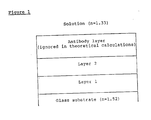
- Table 2 shows a comparison of the results theoretically obtainable using an optical structure as depicted schematically in Figure 1.
- the excitation wavelength for all mechanisms was 543 nm and the fluorophore was rhodamine B with a peak emission at 570 nm and a half width of 35 nm (from 555 nm to 590 nm).
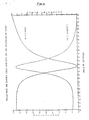
- Figure 4 shows the reflectance and surface field intensity of a 50 nm silver film in water irradiated at 543 nm. A twenty-five-fold enhancement of the field intensity results when compared with the intensity of the incident radiation.
- Table 2 Mechanism
- Layer 1 Layer 2 Excitation angle Emission peak angle Emission half width SPR Ag 50 nm SiO2 10 nm 72.80° 70.72° 1.92°
- LRSPR MgF2 1000 nm Ag 26 nm 65.67° 65.31° 0.39°
- Figure 5 shows a comparison of the excitation of a rhodamine B solution by surface plasmon resonance and total internal reflection. The emission intensity enhancement and narrow emission range for the SPR geometry can be clearly seen. The experimental details follow.
- a sample solution was made up using an appropriate concentration of a suitable protein labelled with rhodamine B.
- the experimental set up was as described in section (iii) of Example 5, below.
- Example 5 Assay for human chorionic gonadotrophin (hCG) using an indirect surface plasmon resonance technique
- a sandwich-type assay was performed using premixed solutions in horse serum of hCG and XRITC-labelled antibody immobilised in the capillary cell.
- concentration of XRITC-labelled antibody used was 2.5 ug/ml.
- Sample solutions were taken up by the capillary cells prepared as in section (i) and allowed to incubate for fifteen minutes before a reading was taken.
- the filled capillary cell under study was coupled to a hemicylindrical lens using a fluid of suitable refractive index.
- Light from a green helium-neon laser was then directed at the slide (i.e. the plate of the cell which carried the immobilised antibody) through the planar wall of the lens at an angle suitable for surface plasmon resonance to occur.
- Fluorescence emission was monitored by rotating a photomultiplier tube in a plane perpendicular to the plane of the incident/reflected light.
- the light reaching the PMT detector passed through a 610 nm bandpass filter to remove any scattered excitation light.
- a slit was placed behind the filter to give an angular resolution of 1°. Two lenses focussed the light passing through the slit onto the detector.
- a comparison of the fluorescence arising from surface plasmon resonance with that arising from total internal reflection was made by sliding the cell on the prism so that the silvered and unsilvered halves of the cell were interrogated in turn.
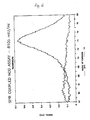
- Figure 6 shows a comparison of the signals obtained over the angular emission range 60-80° from a capillary cell containing 8105 mIU/ml hCG in serum, as obtained by SPR and TIR excitation. Particularly noticeable is the strong peak in signal around 74° for SPR excitation.
- the integrated signal between 70° and 78° is 5.2 times greater using SPR excitation than using TIR excitation.
- Optimisation of the metal layer and improved protein immobilisation techniques should enable greater enhancements to be achieved.
- Figure 7 shows signals over the same angular range, but this time from a cell filled with serum containing no hCG.
- the emission resulting from SPR excitation shows a slight peak at 76° due to non-specific binding of the XRITC-labelled antibody.
- Example 6 Demonstration of the sensitivity of a direct guided mode sensor to changes in refractive index.
- the filled capillary cell under study was optically coupled to a right angled crown glass prism using an appropriate fluid.
- the cell was illuminated through the glass substrate and onto the silver film with a TM polarised HeNe Laser, the reflected light intensity being measured with a photodiode device.
- the prism was rotated through a range of angles during the measurement.
- the cell was filled with ultrapure water (refractive index 1.3316) and the position of the reflectance minimum noted. Then ultrapure water was replaced by a 5% solution of sucrose (refractive index of 1.3382) and then by a 10% solution of sucrose (refractive index of 1.3450), the position of the minimum in reflected light intensity being measured in the presence of the sucrose solutions.
- Figure 8 shows the positions of the minima in reflected light intensity of the guided mode light in the optical structure. As the refactive index of the medium in contact with the optical structure increases there is a shift in the angle at which the minimum occurs, demonstrating that the device is sensitive to refractive index changes.
- a ligand e.g. an antigen
- an appropriate biological molecule e.g. an antibody
Landscapes
- Health & Medical Sciences (AREA)
- Life Sciences & Earth Sciences (AREA)
- Immunology (AREA)
- Chemical & Material Sciences (AREA)
- Engineering & Computer Science (AREA)
- Analytical Chemistry (AREA)
- Biochemistry (AREA)
- General Health & Medical Sciences (AREA)
- General Physics & Mathematics (AREA)
- Pathology (AREA)
- Physics & Mathematics (AREA)
- Biomedical Technology (AREA)
- Urology & Nephrology (AREA)
- Molecular Biology (AREA)
- Hematology (AREA)
- Cell Biology (AREA)
- Microbiology (AREA)
- Biotechnology (AREA)
- Nuclear Medicine, Radiotherapy & Molecular Imaging (AREA)
- Food Science & Technology (AREA)
- Medicinal Chemistry (AREA)
- Investigating Or Analysing Materials By Optical Means (AREA)
- Investigating, Analyzing Materials By Fluorescence Or Luminescence (AREA)
- Investigating Or Analysing Materials By The Use Of Chemical Reactions (AREA)
- Examining Or Testing Airtightness (AREA)
Applications Claiming Priority (2)
| Application Number | Priority Date | Filing Date | Title |
|---|---|---|---|
| GB888817710A GB8817710D0 (en) | 1988-07-25 | 1988-07-25 | Method of assay |
| GB8817710 | 1988-07-25 |
Publications (1)
| Publication Number | Publication Date |
|---|---|
| EP0353937A1 true EP0353937A1 (de) | 1990-02-07 |
Family
ID=10641075
Family Applications (2)
| Application Number | Title | Priority Date | Filing Date |
|---|---|---|---|
| EP89909006A Expired - Lifetime EP0382832B1 (de) | 1988-07-25 | 1989-07-25 | Testverfahren fuer einen in einer probe enthaltenden ligand |
| EP89307581A Pending EP0353937A1 (de) | 1988-07-25 | 1989-07-25 | Testmethode |
Family Applications Before (1)
| Application Number | Title | Priority Date | Filing Date |
|---|---|---|---|
| EP89909006A Expired - Lifetime EP0382832B1 (de) | 1988-07-25 | 1989-07-25 | Testverfahren fuer einen in einer probe enthaltenden ligand |
Country Status (11)
| Country | Link |
|---|---|
| EP (2) | EP0382832B1 (de) |
| JP (1) | JP2969177B2 (de) |
| AU (1) | AU638938B2 (de) |
| CA (1) | CA1339005C (de) |
| DE (1) | DE68914134T2 (de) |
| ES (1) | ES2050277T3 (de) |
| GB (1) | GB8817710D0 (de) |
| IL (1) | IL91105A0 (de) |
| NO (1) | NO177407C (de) |
| WO (1) | WO1990001166A1 (de) |
| ZA (1) | ZA895648B (de) |
Cited By (12)
| Publication number | Priority date | Publication date | Assignee | Title |
|---|---|---|---|---|
| WO1991017427A1 (en) * | 1990-05-02 | 1991-11-14 | Nederlandse Organisatie Voor Toegepast-Natuurwetenschappelijk Onderzoek Tno | Method for determining a specific ligand in a fluid sample with the aid of an evanescent field, and also a component of the requisite measuring equipment suitable for this purpose |
| EP0469377A3 (en) * | 1990-08-02 | 1992-08-12 | Boehringer Mannheim Gmbh | Analysis system and method for the determination of an analyte in a liquid sample |
| WO1992014140A1 (en) * | 1991-02-07 | 1992-08-20 | Fisons Plc | Analytical device |
| EP0575132A1 (de) * | 1992-06-17 | 1993-12-22 | Hewlett-Packard Company | Optische Messvorrichtung |
| US5341215A (en) * | 1991-06-08 | 1994-08-23 | Hewlett-Packard Company | Method and apparatus for detecting the presence and/or concentration of biomolecules |
| EP0707710A4 (de) * | 1993-07-06 | 1998-02-25 | Smithkline Beecham Corp | Oberflächen-plasmon-resonanz-detektor mit kollektor für ausgewaschenes ligat |
| EP0851230A1 (de) * | 1996-12-30 | 1998-07-01 | Diagnostic Products Corporation | Verfahren und Vorrichtung für Immunotest unter Verwendung von fluoreszensinduzierter Oberflächen-plasmonresonanz |
| EP0872733A1 (de) * | 1997-04-14 | 1998-10-21 | Roche Diagnostics GmbH | Methode zur gleichzeitigen Bestimmung von biomolekularen Wechselwirkungen mittels Plasmonenresonanz und Fluoreszenzdetektion |
| DE102004027957A1 (de) * | 2004-06-08 | 2005-12-29 | Carl Zeiss Jena Gmbh | Verfahren und Anordnung zur Untersuchung der Wechselwirkung von Biomolekülen |
| EP1813933A1 (de) * | 2006-01-27 | 2007-08-01 | Agilent Technologies, Inc. | Oberflächenplasmonen-Resonanzbiosensor mit gekoppelten Oberflächenplasmonen zur Reduzierung der Breite von Reflexionsabnahme |
| EP1903330A3 (de) * | 2006-09-21 | 2008-10-29 | FUJIFILM Corporation | Oberflächenplasmonverstärkter Fluoreszenzsensor und Verfahren zur Fluoreszenzdetektion |
| WO2017048687A1 (en) * | 2015-09-17 | 2017-03-23 | Gerhard Maale | Sensor device for biosensing and other applications |
Families Citing this family (7)
| Publication number | Priority date | Publication date | Assignee | Title |
|---|---|---|---|---|
| SE9301270D0 (sv) | 1993-04-19 | 1993-04-17 | Biosensor | |
| US5677196A (en) * | 1993-05-18 | 1997-10-14 | University Of Utah Research Foundation | Apparatus and methods for multi-analyte homogeneous fluoro-immunoassays |
| US5919712A (en) | 1993-05-18 | 1999-07-06 | University Of Utah Research Foundation | Apparatus and methods for multi-analyte homogeneous fluoro-immunoassays |
| US5814565A (en) | 1995-02-23 | 1998-09-29 | University Of Utah Research Foundation | Integrated optic waveguide immunosensor |
| US6611634B2 (en) | 1996-03-19 | 2003-08-26 | University Of Utah Research Foundation | Lens and associatable flow cell |
| US6222619B1 (en) | 1997-09-18 | 2001-04-24 | University Of Utah Research Foundation | Diagnostic device and method |
| EP1818668A1 (de) * | 2006-02-09 | 2007-08-15 | Max-Planck-Gesellschaft zur Förderung der Wissenschaften e.V. | Weitreichende Oberflächenplasmonenfluoreszenzspektroskopie für Bioaffinitätsuntersuchungen |
Citations (8)
| Publication number | Priority date | Publication date | Assignee | Title |
|---|---|---|---|---|
| EP0170376A1 (de) * | 1984-06-13 | 1986-02-05 | Ares-Serono Inc. | Photometrische Instrumente, ihre Verwendung in optischen Analysemethoden und dazu dienendes Zubehör |
| GB2174802A (en) * | 1985-04-12 | 1986-11-12 | Plessey Co Plc | Optic-waveguide biosensor |
| US4649280A (en) * | 1985-05-10 | 1987-03-10 | The University Of Rochester | Method and system for the enhancement of fluorescence |
| GB2185308A (en) * | 1986-01-10 | 1987-07-15 | Stc Plc | Optical waveguide material sensor |
| EP0075353B1 (de) * | 1981-09-18 | 1987-08-19 | Battelle Memorial Institute | Verfahren und Vorrichtung zur Bestimmung von gelösten Stoffen mit Hilfe eines optischen Wellenleiters |
| WO1988007202A1 (en) * | 1987-03-10 | 1988-09-22 | Ares-Serono Research & Development Limited Partner | Improved assay technique and apparatus therefor |
| EP0286195A2 (de) * | 1987-04-10 | 1988-10-12 | Nederlandse Organisatie Voor Toegepast-Natuurwetenschappelijk Onderzoek Tno | Verfahren und Anordnung zum Nachweis von schwachen Konzentrationen chemischer und biochemischer Komponenten in einem Untersuchungsmedium unter Verwendung der Oberflächenplasmon-Resonanz |
| EP0305109A1 (de) * | 1987-08-22 | 1989-03-01 | AMERSHAM INTERNATIONAL plc | Biologische Sensoren |
Family Cites Families (3)
| Publication number | Priority date | Publication date | Assignee | Title |
|---|---|---|---|---|
| GB8415018D0 (en) * | 1984-06-13 | 1984-07-18 | Unilever Plc | Chemical test procedures |
| NL8701998A (nl) * | 1987-08-26 | 1989-03-16 | Univ Leiden | Werkwijze voor het door hydrogenolyse ontleden van chemische afvalstoffen, in het bijzonder organische halogeenverbindingen. |
| GB8813307D0 (en) * | 1988-06-06 | 1988-07-13 | Amersham Int Plc | Biological sensors |
-
1988
- 1988-07-25 GB GB888817710A patent/GB8817710D0/en active Pending
-
1989
- 1989-07-25 CA CA000606539A patent/CA1339005C/en not_active Expired - Fee Related
- 1989-07-25 ZA ZA895648A patent/ZA895648B/xx unknown
- 1989-07-25 DE DE68914134T patent/DE68914134T2/de not_active Expired - Fee Related
- 1989-07-25 EP EP89909006A patent/EP0382832B1/de not_active Expired - Lifetime
- 1989-07-25 IL IL91105A patent/IL91105A0/xx unknown
- 1989-07-25 JP JP1508299A patent/JP2969177B2/ja not_active Expired - Fee Related
- 1989-07-25 EP EP89307581A patent/EP0353937A1/de active Pending
- 1989-07-25 WO PCT/GB1989/000844 patent/WO1990001166A1/en not_active Ceased
- 1989-07-25 ES ES89909006T patent/ES2050277T3/es not_active Expired - Lifetime
- 1989-07-25 AU AU40433/89A patent/AU638938B2/en not_active Ceased
-
1990
- 1990-03-23 NO NO901349A patent/NO177407C/no not_active IP Right Cessation
Patent Citations (9)
| Publication number | Priority date | Publication date | Assignee | Title |
|---|---|---|---|---|
| EP0075353B1 (de) * | 1981-09-18 | 1987-08-19 | Battelle Memorial Institute | Verfahren und Vorrichtung zur Bestimmung von gelösten Stoffen mit Hilfe eines optischen Wellenleiters |
| EP0170376A1 (de) * | 1984-06-13 | 1986-02-05 | Ares-Serono Inc. | Photometrische Instrumente, ihre Verwendung in optischen Analysemethoden und dazu dienendes Zubehör |
| EP0171148A1 (de) * | 1984-06-13 | 1986-02-12 | ARES-SERONO RESEARCH & DEVELOPMENT LIMITED PARTNERSHIP | Vorrichtungen zur Verwendung in chemischen Analyseverfahren |
| GB2174802A (en) * | 1985-04-12 | 1986-11-12 | Plessey Co Plc | Optic-waveguide biosensor |
| US4649280A (en) * | 1985-05-10 | 1987-03-10 | The University Of Rochester | Method and system for the enhancement of fluorescence |
| GB2185308A (en) * | 1986-01-10 | 1987-07-15 | Stc Plc | Optical waveguide material sensor |
| WO1988007202A1 (en) * | 1987-03-10 | 1988-09-22 | Ares-Serono Research & Development Limited Partner | Improved assay technique and apparatus therefor |
| EP0286195A2 (de) * | 1987-04-10 | 1988-10-12 | Nederlandse Organisatie Voor Toegepast-Natuurwetenschappelijk Onderzoek Tno | Verfahren und Anordnung zum Nachweis von schwachen Konzentrationen chemischer und biochemischer Komponenten in einem Untersuchungsmedium unter Verwendung der Oberflächenplasmon-Resonanz |
| EP0305109A1 (de) * | 1987-08-22 | 1989-03-01 | AMERSHAM INTERNATIONAL plc | Biologische Sensoren |
Non-Patent Citations (2)
| Title |
|---|
| OPTICS COMMUNICATIONS, vol. 30, no. 2, August 1979, pages 145-149; R.E. BENNER et al.: "Angular emission profiles of dye molecules excited by surface plasmon waves at a metal surface" * |
| OPTICS LETTERS, vol. 4, no. 8, August 1979, pages 236-238, Optical Society of America; W.H. WEBER et al.: "Energy transfer from an excited dye molecule to the surface plasmons of an adjacent metal" * |
Cited By (16)
| Publication number | Priority date | Publication date | Assignee | Title |
|---|---|---|---|---|
| WO1991017427A1 (en) * | 1990-05-02 | 1991-11-14 | Nederlandse Organisatie Voor Toegepast-Natuurwetenschappelijk Onderzoek Tno | Method for determining a specific ligand in a fluid sample with the aid of an evanescent field, and also a component of the requisite measuring equipment suitable for this purpose |
| EP0469377A3 (en) * | 1990-08-02 | 1992-08-12 | Boehringer Mannheim Gmbh | Analysis system and method for the determination of an analyte in a liquid sample |
| WO1992014140A1 (en) * | 1991-02-07 | 1992-08-20 | Fisons Plc | Analytical device |
| US5415842A (en) * | 1991-02-07 | 1995-05-16 | Fisons Plc | Surface plasmon resonance analytical device |
| US5341215A (en) * | 1991-06-08 | 1994-08-23 | Hewlett-Packard Company | Method and apparatus for detecting the presence and/or concentration of biomolecules |
| EP0575132A1 (de) * | 1992-06-17 | 1993-12-22 | Hewlett-Packard Company | Optische Messvorrichtung |
| EP0707710A4 (de) * | 1993-07-06 | 1998-02-25 | Smithkline Beecham Corp | Oberflächen-plasmon-resonanz-detektor mit kollektor für ausgewaschenes ligat |
| EP0851230A1 (de) * | 1996-12-30 | 1998-07-01 | Diagnostic Products Corporation | Verfahren und Vorrichtung für Immunotest unter Verwendung von fluoreszensinduzierter Oberflächen-plasmonresonanz |
| EP0872733A1 (de) * | 1997-04-14 | 1998-10-21 | Roche Diagnostics GmbH | Methode zur gleichzeitigen Bestimmung von biomolekularen Wechselwirkungen mittels Plasmonenresonanz und Fluoreszenzdetektion |
| US6194223B1 (en) | 1997-04-14 | 2001-02-27 | Roche Diagnostics Gmbh | Method for the simultaneous determination of biomolecular interactions by means of plasmon resonance and fluoresence detection |
| DE102004027957A1 (de) * | 2004-06-08 | 2005-12-29 | Carl Zeiss Jena Gmbh | Verfahren und Anordnung zur Untersuchung der Wechselwirkung von Biomolekülen |
| EP1813933A1 (de) * | 2006-01-27 | 2007-08-01 | Agilent Technologies, Inc. | Oberflächenplasmonen-Resonanzbiosensor mit gekoppelten Oberflächenplasmonen zur Reduzierung der Breite von Reflexionsabnahme |
| EP1903330A3 (de) * | 2006-09-21 | 2008-10-29 | FUJIFILM Corporation | Oberflächenplasmonverstärkter Fluoreszenzsensor und Verfahren zur Fluoreszenzdetektion |
| US7738107B2 (en) | 2006-09-21 | 2010-06-15 | Fujifilm Corporation | Surface plasmon enhanced fluorescence sensor and fluorescence detecting method |
| WO2017048687A1 (en) * | 2015-09-17 | 2017-03-23 | Gerhard Maale | Sensor device for biosensing and other applications |
| US11313787B2 (en) | 2015-09-17 | 2022-04-26 | Zyvex Labs, Llc | Sensor device for biosensing and other applications |
Also Published As
| Publication number | Publication date |
|---|---|
| NO901349D0 (no) | 1990-03-23 |
| GB8817710D0 (en) | 1988-09-01 |
| DE68914134D1 (de) | 1994-04-28 |
| ES2050277T3 (es) | 1994-05-16 |
| JPH03502604A (ja) | 1991-06-13 |
| DE68914134T2 (de) | 1994-08-11 |
| EP0382832B1 (de) | 1994-03-23 |
| IL91105A0 (en) | 1990-03-19 |
| AU638938B2 (en) | 1993-07-15 |
| NO901349L (no) | 1990-05-23 |
| JP2969177B2 (ja) | 1999-11-02 |
| ZA895648B (en) | 1990-06-27 |
| CA1339005C (en) | 1997-03-25 |
| WO1990001166A1 (en) | 1990-02-08 |
| EP0382832A1 (de) | 1990-08-22 |
| AU4043389A (en) | 1990-02-19 |
| NO177407C (no) | 1995-09-06 |
| NO177407B (no) | 1995-05-29 |
Similar Documents
| Publication | Publication Date | Title |
|---|---|---|
| US5478755A (en) | Long range surface plasma resonance immunoassay | |
| US5830766A (en) | Enhanced signal-to-noise ratio and sensitivity optical immunoassay | |
| AU625324B2 (en) | Sensor for optical assay | |
| EP0382832B1 (de) | Testverfahren fuer einen in einer probe enthaltenden ligand | |
| JP3100360B2 (ja) | 蛍光誘導された表面プラズマ放射を用いる免疫アッセイ法及び装置 | |
| US5081012A (en) | Waveguide sensor with input and reflecting gratings and its use in immunoassay | |
| US5814565A (en) | Integrated optic waveguide immunosensor | |
| CA2033168C (en) | Method of optical analysis | |
| US4877747A (en) | Optical assay: method and apparatus | |
| EP0075353B1 (de) | Verfahren und Vorrichtung zur Bestimmung von gelösten Stoffen mit Hilfe eines optischen Wellenleiters | |
| EP0321523B1 (de) | Wellenleitersensor | |
| Dahne et al. | Detection of antibody-antigen reactions at a glass-liquid interface: A novel fibre-optic sensor concept | |
| Christensen et al. | Optical immunoassay systems based upon evanescent wave interactions | |
| Ives et al. | Total internal reflection fluorescence surface sensors | |
| Zhou | The Development of an Optical Immunosensor Based on Ion-Exchanged Waveguides in Glass and Evanescent Excitation of Fluorescence |
Legal Events
| Date | Code | Title | Description |
|---|---|---|---|
| PUAI | Public reference made under article 153(3) epc to a published international application that has entered the european phase |
Free format text: ORIGINAL CODE: 0009012 |
|
| AK | Designated contracting states |
Kind code of ref document: A1 Designated state(s): ES GR |
|
| STAA | Information on the status of an ep patent application or granted ep patent |
Free format text: STATUS: REQUEST FOR EXAMINATION WAS MADE |
|
| 17P | Request for examination filed |
Effective date: 19900620 |
|
| RAP1 | Party data changed (applicant data changed or rights of an application transferred) |
Owner name: APPLIED RESEARCH SYSTEMS ARS HOLDING N.V. |
|
| XX | Miscellaneous (additional remarks) |
Free format text: VERFAHREN ABGESCHLOSSEN INFOLGE VERBINDUNG MIT 89909006.2/0382832 (EUROPAEISCHE ANMELDENUMMER/VEROEFFENTLICHUNGSNUMMER) VOM 30.01.92. |