EP0354061A2 - Vorrichtung zur Abtrennung von Plasma in vivo - Google Patents
Vorrichtung zur Abtrennung von Plasma in vivo Download PDFInfo
- Publication number
- EP0354061A2 EP0354061A2 EP89307973A EP89307973A EP0354061A2 EP 0354061 A2 EP0354061 A2 EP 0354061A2 EP 89307973 A EP89307973 A EP 89307973A EP 89307973 A EP89307973 A EP 89307973A EP 0354061 A2 EP0354061 A2 EP 0354061A2
- Authority
- EP
- European Patent Office
- Prior art keywords
- plasma
- fiber
- blood vessel
- fibers
- dimensioned
- Prior art date
- Legal status (The legal status is an assumption and is not a legal conclusion. Google has not performed a legal analysis and makes no representation as to the accuracy of the status listed.)
- Granted
Links
Images


Classifications
-
- A—HUMAN NECESSITIES
- A61—MEDICAL OR VETERINARY SCIENCE; HYGIENE
- A61B—DIAGNOSIS; SURGERY; IDENTIFICATION
- A61B5/00—Measuring for diagnostic purposes; Identification of persons
- A61B5/145—Measuring characteristics of blood in vivo, e.g. gas concentration or pH-value ; Measuring characteristics of body fluids or tissues, e.g. interstitial fluid or cerebral tissue
- A61B5/14525—Measuring characteristics of blood in vivo, e.g. gas concentration or pH-value ; Measuring characteristics of body fluids or tissues, e.g. interstitial fluid or cerebral tissue using microdialysis
- A61B5/14528—Measuring characteristics of blood in vivo, e.g. gas concentration or pH-value ; Measuring characteristics of body fluids or tissues, e.g. interstitial fluid or cerebral tissue using microdialysis invasively
-
- A—HUMAN NECESSITIES
- A61—MEDICAL OR VETERINARY SCIENCE; HYGIENE
- A61M—DEVICES FOR INTRODUCING MEDIA INTO, OR ONTO, THE BODY; DEVICES FOR TRANSDUCING BODY MEDIA OR FOR TAKING MEDIA FROM THE BODY; DEVICES FOR PRODUCING OR ENDING SLEEP OR STUPOR
- A61M1/00—Suction or pumping devices for medical purposes; Devices for carrying-off, for treatment of, or for carrying-over, body-liquids; Drainage systems
- A61M1/14—Dialysis systems; Artificial kidneys; Blood oxygenators ; Reciprocating systems for treatment of body fluids, e.g. single needle systems for hemofiltration or pheresis
- A61M1/16—Dialysis systems; Artificial kidneys; Blood oxygenators ; Reciprocating systems for treatment of body fluids, e.g. single needle systems for hemofiltration or pheresis with membranes
- A61M1/1621—Constructional aspects thereof
- A61M1/1643—Constructional aspects thereof with weighing of fresh and used dialysis fluid
-
- A—HUMAN NECESSITIES
- A61—MEDICAL OR VETERINARY SCIENCE; HYGIENE
- A61M—DEVICES FOR INTRODUCING MEDIA INTO, OR ONTO, THE BODY; DEVICES FOR TRANSDUCING BODY MEDIA OR FOR TAKING MEDIA FROM THE BODY; DEVICES FOR PRODUCING OR ENDING SLEEP OR STUPOR
- A61M1/00—Suction or pumping devices for medical purposes; Devices for carrying-off, for treatment of, or for carrying-over, body-liquids; Drainage systems
- A61M1/14—Dialysis systems; Artificial kidneys; Blood oxygenators ; Reciprocating systems for treatment of body fluids, e.g. single needle systems for hemofiltration or pheresis
- A61M1/16—Dialysis systems; Artificial kidneys; Blood oxygenators ; Reciprocating systems for treatment of body fluids, e.g. single needle systems for hemofiltration or pheresis with membranes
- A61M1/1678—Dialysis systems; Artificial kidneys; Blood oxygenators ; Reciprocating systems for treatment of body fluids, e.g. single needle systems for hemofiltration or pheresis with membranes intracorporal
-
- A—HUMAN NECESSITIES
- A61—MEDICAL OR VETERINARY SCIENCE; HYGIENE
- A61M—DEVICES FOR INTRODUCING MEDIA INTO, OR ONTO, THE BODY; DEVICES FOR TRANSDUCING BODY MEDIA OR FOR TAKING MEDIA FROM THE BODY; DEVICES FOR PRODUCING OR ENDING SLEEP OR STUPOR
- A61M1/00—Suction or pumping devices for medical purposes; Devices for carrying-off, for treatment of, or for carrying-over, body-liquids; Drainage systems
- A61M1/34—Filtering material out of the blood by passing it through a membrane, i.e. hemofiltration or diafiltration
- A61M1/3403—Regulation parameters
-
- A—HUMAN NECESSITIES
- A61—MEDICAL OR VETERINARY SCIENCE; HYGIENE
- A61M—DEVICES FOR INTRODUCING MEDIA INTO, OR ONTO, THE BODY; DEVICES FOR TRANSDUCING BODY MEDIA OR FOR TAKING MEDIA FROM THE BODY; DEVICES FOR PRODUCING OR ENDING SLEEP OR STUPOR
- A61M1/00—Suction or pumping devices for medical purposes; Devices for carrying-off, for treatment of, or for carrying-over, body-liquids; Drainage systems
- A61M1/34—Filtering material out of the blood by passing it through a membrane, i.e. hemofiltration or diafiltration
- A61M1/3403—Regulation parameters
- A61M1/3406—Physical characteristics of the filtrate, e.g. urea
-
- A—HUMAN NECESSITIES
- A61—MEDICAL OR VETERINARY SCIENCE; HYGIENE
- A61M—DEVICES FOR INTRODUCING MEDIA INTO, OR ONTO, THE BODY; DEVICES FOR TRANSDUCING BODY MEDIA OR FOR TAKING MEDIA FROM THE BODY; DEVICES FOR PRODUCING OR ENDING SLEEP OR STUPOR
- A61M1/00—Suction or pumping devices for medical purposes; Devices for carrying-off, for treatment of, or for carrying-over, body-liquids; Drainage systems
- A61M1/34—Filtering material out of the blood by passing it through a membrane, i.e. hemofiltration or diafiltration
- A61M1/3472—Filtering material out of the blood by passing it through a membrane, i.e. hemofiltration or diafiltration with treatment of the filtrate
- A61M1/3479—Filtering material out of the blood by passing it through a membrane, i.e. hemofiltration or diafiltration with treatment of the filtrate by dialysing the filtrate
-
- A—HUMAN NECESSITIES
- A61—MEDICAL OR VETERINARY SCIENCE; HYGIENE
- A61M—DEVICES FOR INTRODUCING MEDIA INTO, OR ONTO, THE BODY; DEVICES FOR TRANSDUCING BODY MEDIA OR FOR TAKING MEDIA FROM THE BODY; DEVICES FOR PRODUCING OR ENDING SLEEP OR STUPOR
- A61M1/00—Suction or pumping devices for medical purposes; Devices for carrying-off, for treatment of, or for carrying-over, body-liquids; Drainage systems
- A61M1/34—Filtering material out of the blood by passing it through a membrane, i.e. hemofiltration or diafiltration
- A61M1/3472—Filtering material out of the blood by passing it through a membrane, i.e. hemofiltration or diafiltration with treatment of the filtrate
- A61M1/3486—Biological, chemical treatment, e.g. chemical precipitation; treatment by absorbents
-
- A—HUMAN NECESSITIES
- A61—MEDICAL OR VETERINARY SCIENCE; HYGIENE
- A61B—DIAGNOSIS; SURGERY; IDENTIFICATION
- A61B5/00—Measuring for diagnostic purposes; Identification of persons
- A61B5/145—Measuring characteristics of blood in vivo, e.g. gas concentration or pH-value ; Measuring characteristics of body fluids or tissues, e.g. interstitial fluid or cerebral tissue
- A61B5/1455—Measuring characteristics of blood in vivo, e.g. gas concentration or pH-value ; Measuring characteristics of body fluids or tissues, e.g. interstitial fluid or cerebral tissue using optical sensors, e.g. spectral photometrical oximeters
- A61B5/14551—Measuring characteristics of blood in vivo, e.g. gas concentration or pH-value ; Measuring characteristics of body fluids or tissues, e.g. interstitial fluid or cerebral tissue using optical sensors, e.g. spectral photometrical oximeters for measuring blood gases
- A61B5/14557—Measuring characteristics of blood in vivo, e.g. gas concentration or pH-value ; Measuring characteristics of body fluids or tissues, e.g. interstitial fluid or cerebral tissue using optical sensors, e.g. spectral photometrical oximeters for measuring blood gases specially adapted to extracorporeal circuits
-
- A—HUMAN NECESSITIES
- A61—MEDICAL OR VETERINARY SCIENCE; HYGIENE
- A61M—DEVICES FOR INTRODUCING MEDIA INTO, OR ONTO, THE BODY; DEVICES FOR TRANSDUCING BODY MEDIA OR FOR TAKING MEDIA FROM THE BODY; DEVICES FOR PRODUCING OR ENDING SLEEP OR STUPOR
- A61M1/00—Suction or pumping devices for medical purposes; Devices for carrying-off, for treatment of, or for carrying-over, body-liquids; Drainage systems
- A61M1/14—Dialysis systems; Artificial kidneys; Blood oxygenators ; Reciprocating systems for treatment of body fluids, e.g. single needle systems for hemofiltration or pheresis
- A61M1/16—Dialysis systems; Artificial kidneys; Blood oxygenators ; Reciprocating systems for treatment of body fluids, e.g. single needle systems for hemofiltration or pheresis with membranes
- A61M1/1694—Dialysis systems; Artificial kidneys; Blood oxygenators ; Reciprocating systems for treatment of body fluids, e.g. single needle systems for hemofiltration or pheresis with membranes with recirculating dialysing liquid
- A61M1/1696—Dialysis systems; Artificial kidneys; Blood oxygenators ; Reciprocating systems for treatment of body fluids, e.g. single needle systems for hemofiltration or pheresis with membranes with recirculating dialysing liquid with dialysate regeneration
-
- A—HUMAN NECESSITIES
- A61—MEDICAL OR VETERINARY SCIENCE; HYGIENE
- A61M—DEVICES FOR INTRODUCING MEDIA INTO, OR ONTO, THE BODY; DEVICES FOR TRANSDUCING BODY MEDIA OR FOR TAKING MEDIA FROM THE BODY; DEVICES FOR PRODUCING OR ENDING SLEEP OR STUPOR
- A61M1/00—Suction or pumping devices for medical purposes; Devices for carrying-off, for treatment of, or for carrying-over, body-liquids; Drainage systems
- A61M1/34—Filtering material out of the blood by passing it through a membrane, i.e. hemofiltration or diafiltration
-
- A—HUMAN NECESSITIES
- A61—MEDICAL OR VETERINARY SCIENCE; HYGIENE
- A61M—DEVICES FOR INTRODUCING MEDIA INTO, OR ONTO, THE BODY; DEVICES FOR TRANSDUCING BODY MEDIA OR FOR TAKING MEDIA FROM THE BODY; DEVICES FOR PRODUCING OR ENDING SLEEP OR STUPOR
- A61M2202/00—Special media to be introduced, removed or treated
- A61M2202/04—Liquids
- A61M2202/0413—Blood
- A61M2202/0456—Lipoprotein
- A61M2202/046—Low-density lipoprotein
-
- A—HUMAN NECESSITIES
- A61—MEDICAL OR VETERINARY SCIENCE; HYGIENE
- A61M—DEVICES FOR INTRODUCING MEDIA INTO, OR ONTO, THE BODY; DEVICES FOR TRANSDUCING BODY MEDIA OR FOR TAKING MEDIA FROM THE BODY; DEVICES FOR PRODUCING OR ENDING SLEEP OR STUPOR
- A61M2205/00—General characteristics of the apparatus
- A61M2205/33—Controlling, regulating or measuring
- A61M2205/3331—Pressure; Flow
-
- A—HUMAN NECESSITIES
- A61—MEDICAL OR VETERINARY SCIENCE; HYGIENE
- A61M—DEVICES FOR INTRODUCING MEDIA INTO, OR ONTO, THE BODY; DEVICES FOR TRANSDUCING BODY MEDIA OR FOR TAKING MEDIA FROM THE BODY; DEVICES FOR PRODUCING OR ENDING SLEEP OR STUPOR
- A61M2205/00—General characteristics of the apparatus
- A61M2205/35—Communication
- A61M2205/3546—Range
- A61M2205/3553—Range remote, e.g. between patient's home and doctor's office
-
- A—HUMAN NECESSITIES
- A61—MEDICAL OR VETERINARY SCIENCE; HYGIENE
- A61M—DEVICES FOR INTRODUCING MEDIA INTO, OR ONTO, THE BODY; DEVICES FOR TRANSDUCING BODY MEDIA OR FOR TAKING MEDIA FROM THE BODY; DEVICES FOR PRODUCING OR ENDING SLEEP OR STUPOR
- A61M2205/00—General characteristics of the apparatus
- A61M2205/35—Communication
- A61M2205/3576—Communication with non implanted data transmission devices, e.g. using external transmitter or receiver
- A61M2205/3584—Communication with non implanted data transmission devices, e.g. using external transmitter or receiver using modem, internet or Bluetooth®
-
- A—HUMAN NECESSITIES
- A61—MEDICAL OR VETERINARY SCIENCE; HYGIENE
- A61M—DEVICES FOR INTRODUCING MEDIA INTO, OR ONTO, THE BODY; DEVICES FOR TRANSDUCING BODY MEDIA OR FOR TAKING MEDIA FROM THE BODY; DEVICES FOR PRODUCING OR ENDING SLEEP OR STUPOR
- A61M2205/00—General characteristics of the apparatus
- A61M2205/50—General characteristics of the apparatus with microprocessors or computers
Definitions
- the present invention relates to plasmapheresis, a technique for the separation of plasma from other blood components and its treatment. More particularly, the present invention is an apparatus and method for the continuous in vivo separation of plasma as well as a plasmapheresis system containing the apparatus.
- Plasmid refers to the soluble fluid portion of blood including organic substances, such as proteins, fats, sugars and other organic compounds, and inorganic substances, such as minerals.
- organic substances such as proteins, fats, sugars and other organic compounds, and inorganic substances, such as minerals.
- plasma does not include particulate components such as blood cells.
- Plasma Blood is composed of a number of different components. Approximately 45% of the volume is composed of cellular matter, including red cells (erythrocytes), white cells (leukocytes) and platelets, all of which are much larger in size than plasma components. Plasma is the fluid that suspends the cellular materials and makes up the remaining 55%. It consists of approximately 90% water, 7% protein, which includes antibodies, antigens, immune complexes, pathogens, toxins, and other molecules, and 3% of various other organic and inorganic matter.
- red cells erythrocytes
- white cells leukocytes
- platelets all of which are much larger in size than plasma components.
- Plasma is the fluid that suspends the cellular materials and makes up the remaining 55%. It consists of approximately 90% water, 7% protein, which includes antibodies, antigens, immune complexes, pathogens, toxins, and other molecules, and 3% of various other organic and inorganic matter.
- plasmapheresis is commonly defined as the removal of whole blood from the body, separation of its cellular elements by centrifugation, and reinfusion of cellular elements suspended in saline or some other plasma substitute, thus depleting the body's own plasma protein without depleting its cells (Stedman's Medical Dictionary, 24th Ed., 1982).
- blood is withdrawn from the patient, the plasma is separated, treated, admixed with an appropriate volume of replacement fluid, and subsequently returned to the body. This technique is useful for treatment of various disease states, as discussed more fully below.
- Plasma collection from donors is desirable for use in medical settings where a victim has lost large amounts of body fluids which need to be replenished.
- a bank or stored collection of plasma is a valuable asset to hospitals, especially those which have trauma centers or major surgery facilities.
- Treatment of the donor plasma to remove pathogens such as immune deficiency virus ("HIV”) which causes Acquired Immune Deficiency Syndrome (“AIDS”) is growing ever more important with the epidemic rise of AIDS and the increasing concern for the world's blood and plasma supply.
- Plasmapheresis can also be used as a diagnostic tool to detect disease-causing substances in the blood by analyzing the plasma fraction. This is especially valuable where a particular test or assay encounters interfering reactions from cellular components.
- a typical plasmapheresis system comprises a means for removing whole blood from a vein.
- the vein is used rather than an artery because of the high arterial pressure and surge within the vessel. Venous pressure is more constant, thereby providing a more convenient source of blood.
- the whole blood is then delivered outside the body, or "extracorporeally,” to a means for separating plasma from cellular components.
- the separated plasma is then delivered to a means for filtering, dialyzing or otherwise treating the plasma to remove undesirable components. In some cases desirable substances may be added to the plasma. If necessary, a volume of replacement fluid can be added to the plasma.
- the treated plasma is then reinfused into the patient.
- the plasmapheretic separation of plasma and cellular components occurs extracorporeally, after whole blood has been removed from the body. The separation is commonly done by centrifugation.
- U.S. Patent No. Re. 31,688 issued to Popovitch et al. discloses a method and apparatus for continuous plasmapheresis whereby whole blood is withdrawn from the body and separated by continuously ultrafiltering the patient's blood at specified shear stresses and membranes employing a membrane ultrafilter.
- the apparatus delivers whole blood for extracorporeal separation as compared to in vivo separation.
- the problems of contamination and damage to the red and white blood cells are present.
- the ultrafiltration chamber used in that invention adds additional mechanisms and the use of bulky machinery prevents an ambulatory concept from being employed.
- a problem in the prior art is that the plasmapheresis apparatus is large and difficult to transport. Because of this limitation, a patient with a chronic problem, such as a non-functioning kidney, must be treated periodically by travelling to an appropriate yet sometimes distant facility. Typically, the kidney patient will be treated when the toxic substances in the blood reach high levels. Thus, the typical kidney patient will cycle between low levels of toxic substances immediately after dialysis to high levels of toxic substances immediately before dialysis. This cycling of toxic substances is harmful to other organs in the body.
- a plasmapheresis method and apparatus is needed that is small and easily transportable.
- the plasmapheresis method and apparatus should be continuous in operation so that the concentration of toxic substances will not build up but can be continuously removed. Further, such plasmapheresis method and apparatus should reduce the manipulations that must be performed extracorporeally thereby reducing the opportunity for infection.
- an apparatus for the continuous in vivo separation of plasma from other blood components.
- the apparatus comprises at least one and preferably a plurality of microporous hollow fibers implantable in a blood vessel, such as the vena cava, and having a pore size sufficient to admit plasma while preventing other blood components from entering the membrane.
- the membrane can be composed of polypropylene or other appropriate material.
- the present invention also provides a method for on-line plasmapheresis with continuous removal and reinfusion of plasma, whereby plasma is continuously separated by an in vivo apparatus, and then treated by an extracorporeal treatment system. The treated plasma is then returned to the body.
- a plasmapheresis system is described using the apparatus to continuously separate plasma from other blood components in vivo .
- Such a system employs the apparatus to remove plasma from the body; the plasma is then passed through a filter or other plasma treatment means to remove or treat particular matter from the plasma. The treated plasma is then combined with a volume of replacement fluid and reinfused into the body.
- the system can be used in a number of situations with different modifications to the treatment means depending on the circumstances and the condition of the patient. For example, such a system can be useful in treating hypercholesterolemia by removing low density lipoproteins.
- breast cancer patients can have Staphylococcus aureus removed from their blood by passing the plasma through an enzyme column.
- toxins or pathogens can be removed by using the plasmapheresis system described herein, such as but not limited to viruses, bacteria, immune complexes, organic chemicals and the like.
- Fig. 1 shows an in vivo plasma separator apparatus 10 comprising at least one and preferably a plurality of hollow microporous fibers 20 each having a hollow interior disposed longitudinally therein.
- the fibers 20 can be made of any suitable material such as polymeric plastic, but are preferably polymeric polypropylene.
- the fibers 20 can be made by methods known to those skilled in the art. For example, polypropylene can be mixed with a solvent and the mixture spun. As the solvent and polymer phase are separated the fiber is formed.
- One suitable fiber commercially available is Plasmaphan ® membranes made from polypropylene polymer (ENKA AG, Wuppertal, West Germany).
- the fibers 20 possess a microporous structure having a very high void volume, low variation in pore distribution, and high reproducibility in production.
- the fiber pore size is sufficient to admit plasma to pass through the wall of the hollow fiber and into hollow center 22 (not shown), yet not significantly obstructing fluid flow through the blood vessel. Cellular components, however, are unable to diffuse through the fiber pores. Predominantly large molecules will pass around apparatus 10 and along within the vein fluid flow. The fluid flow also prevents the clogging of the pores.
- the fiber pore size can be from about 0.1 to 1.0 ⁇ m; preferably, from about 0.2 to 0.8 ⁇ m; and more preferably, from about 0.4 to 0.6 ⁇ m.
- the fibers 20 are longitudinally aligned to a generally parallel or radial orientation.
- the plurality of fibers 20 provide a large available surface area through which plasma can diffuse.
- the individual fibers can be arranged in a bundle to ensure adequate fluid-membrane contact along substantially the entire exterior surface of the membrane.
- the fibers 20 are preferably loosely bundled so as to improve surface area contact with blood.
- the inserted portion comprises a distal header 12 and a proximal header 13 .
- the apparatus 10 When introduced within the vein 11 , the apparatus 10 is situated with the proximal header 13 upstream from the distal header 12 with respect to blood flow.
- the fibers 20 are connected to the distal header 12 and the proximal header 13 by standard potting and cutoff techniques used in the medical industry in the manufacture of hollow fiber oxygenators and hollow fiber kidney dialysis membrane filters. In this process, the fibers are potted into a solid block of plastic or epoxy fixing their position and the block is cut transverse to the fibers exposing their open ends to a chamber for gas or fluid access.
- the connected fibers 20 describe a generally circular pattern at the headers 12 and 13 .
- a central lumen 18 which comprises a hollow tube disposed concentrically in a generally parallel orientation with the fibers 20 .
- the central lumen 18 carries treated plasma and replacement fluid from the extracorporeal plasmapheresis system back into the body where it exits the lumen 18 at a hole (now shown) in the distal header 12 downstream.
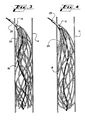
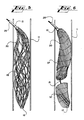
- the fibers 20 can be oriented by design in several different configurations, as illustrated by Figs. 3-6.
- Fig. 3 shows a free flow single-ended apparatus 10 inserted within the vein 11 .
- the distal header 12 need not be present, thereby allowing the closed distal ends of the fibers 20 and the open ended central lumen 18 to be suspended in the blood fluid.
- the central lumen 18 can be semipermeable along its length to permit diffusion of fluids back into the bloodstream.
- the distal ends of the fibers 20 are closed so that plasma can enter the fiber interior channel by diffusion through the fiber pores, yet not be drawn out the distal ends downstream.
- Fig. 4 shows a continuous loop design whereby both ends of each of the fibers is connected to the proximal header 13 .
- the central lumen 18 floats freely with its distal end open so as to return treated plasma downstream.
- Fig. 5 illustrates an expanded dual header apparatus 10 having the distal header 12 in place and connected to the central lumen 18 which can be perforated along its length.
- the fibers 20 are loosely intertwined.
- the central lumen 18 is open at its distal end and the connection to the distal header 12 permits fluid flow from the central lumen 18 downstream in the vein 11 from the fibers 20 .
- Fig. 6 depicts a preformed braided configuration where the fibers 20 are arranged in a spiral twist configuration.
- the fibers 20 are held together loosely by at least one and preferably a plurality of cross fibers 37 .
- the cross fibers 37 are preferably solid multifilament fibers disposed transverse to the fibers 20 .
- the fibers 20 and the central lumen 18 are placed prior to insertion within an insertion sheath 16 , which comprises a hollow tube open at both ends.
- the sheath 16 permits easier introduction within the vein 11 by containing the apparatus 10 in a semi-rigid position.
- a guide wire 17 disposed within the central lumen 18 enhances insertion of the apparatus 10 into the vein without additional perforation of the wall of the vein 11 .
- the wire 17 is a generally straight length of flexible yet stiff material such as plastic or metal.
- a hook 19 at one end of wire 17 is flexible so as to facilitate passage within the vein 11 , yet when pulled out the hook will flex to a more straightened orientation so as to avoid puncturing or embedding in the vein wall.
- a multi-lumen catheter 25 is connected to the proximal header 13 and in a preferred embodiment is composed of a hollow outer tube 26 in which resides coaxially a smaller concentric hollow inner tube 27 , as shown in Fig. 2A.
- the inner tube 27 is in fluid communication with the central lumen 18 .
- the outer compartments of the tube 26 are in fluid communication with the fibers 20 .
- Plasma from apparatus 10 passes from the body through the walls of fibers 20 and along the channel defined by the inner wall of the outer compartments of the tube 26 of the outer wall of the inner tube 27 .
- Fig. 2B illustrates the header 13 utilizing the two coaxial lumens 26 and 27 which connects the fibers 20 and the central lumen 18 to the catheter 25 .
- the catheter 25 is composed of any suitable non-reactive flexible impermeable material such as plastic, with silicone or polyurethane being preferred. It is to be understood that the fluid flow can be arranged so that plasma from the body could alternatively pass through the inner tube 26 and return through outer tube 27 .
- Located within the catheter 25 is at least one and preferably a plurality of anti-bacterial barriers 30 composed of a nonreactive porous material having a relatively uniform pore size sufficient to prevent bacteria from passing through the barriers yet permitting smaller molecules to pass therethrough.
- the barriers 30 minimize contamination of in vitro equipment.
- the apparatus 10 is placed in the superior vena cava via the subclavian vein or the cephalic vein using standard Brovial technique known in the art and not detailed here. Briefly, however, an incision is made in the skin and a second incision is made in the superior vena cava.
- the guide wire 17 which is placed within the distal header 12 opening of the central lumen 18 , is inserted in the vein 11 first as an insertion aid to lead the sheathed apparatus 10 into the vein 11 . After the apparatus is in place, the guide wire 17 is removed from the proximal header 13 end and the insertion sheath 16 is similarly removed.
- the fibers 20 separate from each other somewhat within vein 11 and increase the fiber surface area in contact with the blood.
- the apparatus 10 may be introduced via the femoral or jugular vein.
- Plasmapheresis is accomplished within the vein 11 by blood coming in contact with the fiber 20 .
- Plasma fluid and dissolved molecules can diffuse through the membrane and into the hollow center. Diffusion can occur passively or by means of external negative pressure such as a pumping means connected to the catheter 25 .
- FIG. 7 A general system for plasma treatment is shown in Fig. 7 wherein the plasma separator apparatus 10 located in the superior vena cava 11 continuously separates plasma from cellular components. After removal from the body, plasma travels through a connector 31 which places the catheter 25 in fluid communication with a tube 40 and through a flow control 41 , which can be a regulated pumping means to motivate the flow of fluid within the in vitro system.
- a microprocessor-controlled system 42 regulates and monitors fluid flow. Plasma is passed into a plasma treatment unit 43 , which can contain any of a number of different treatment or detoxification systems, as described more fully herein below.
- the underlying principal for the separation of subcomponents from plasma fluid is based on the difference in molecular size, charge, polarity, pH, structure or some other characteristic of the subcomponent to be separated.
- the treatment unit 43 can be any one of several filtration or treatment mechanisms, such as but not limited to filtration, exchange columns, dialysis, enzyme columns, a series of columns, or the like.
- filter membranes of defined pore size can be used to retain only molecules of a size corresponding to the pathogen of interest while permitting smaller molecules to pass through.
- the various separation procedures that can be used in conjunction with the plasmapheresis apparatus of the present invention are well known to those of ordinary skill in the art. Material removed from the plasma can be stored in a waste storage container 44 .
- an antibody directed against the pathogen can be immobilized on a solid surface and the plasma contacted therewith.
- the pathogen comes in contact or proximity with the immobilized antibody a complex is formed, thereby removing the pathogen from the plasma fluid.
- Examples of conventional plasma treatment methods useful in connection with the present invention include, but are not limited, to ion exchange, fractionation, single or multiple filtration, cryoprecipitation, salt precipitation, adsorption or dialysis. Any of these techniques can be designed for use with the plasma treatment unit 43 of the present invention.
- the processed plasma is passed to an optional flow control 45 where an optional replacement fluid 46 can be admixed with the plasma.
- the fluid 46 can be any neutral biocompatible fluid such as saline or the like.
- This plasma is then continuously returned to the body through the inner tube 26 which is in fluid communication with the central lumen 18 .
- the continuous nature of the process ensures a relatively constant body fluid level and alleviates trauma to the body which can occur with batch processes.
- Sample ports 47 and 48 are provided for removing aliquots of fluid for analysis.
- plasma is removed from the body via the plasma separator apparatus 10 and passed over a heparin-agarose or low density lipoprotein-antibody-linked sepharose column in treatment unit 43 resulting in selective binding of low density lipoproteins.
- the treatment unit 43 can be designed to treat neoplastic diseases by immunoadsorption. Circulating immunoglobulins or immune complexes have been implicated in the pathogenesis of cancer. These molecules are thought to act as "blocking factors" in animals and patients with tumors, suppressing the ability of the host's immune system to destroy tumor cells. It has been shown in a number of systems that sera from cancer patients and from tumor-bearing animals suppress a number of immunological functions in vitro and would therefore provide an atmosphere which should facilitate the growth of tumor cells. It is postulated that immunological mediation in cancer has a major role in a tumor's escape from host immunological control and that procedures to remove them might be therapeutically useful. Staphylococcus aureus Cowans I bears on its surface protein A that has the capacity to react with the Fc region of IgG from human and many mammalian species, and to combine with immune complexes in serum.
- Another preferred embodiment of the present invention is used in a cascade filtration system whereby plasma that has been removed from the vein via apparatus 10 is passed through one or more membranes of various porosities for use in the selective removal of macromolecules from the plasma.
- This embodiment allows for the selective removal of immune complexes, albumin or lower molecular weight plasma fractions, including low density lipoproteins.
- a wearable artificial kidney pack is designed incorporating the plasma separator apparatus 10 for use in various treatments such as hemodialysis with End Stage Renal Disease patients or the like.
- the pack comprises a small, hollow fiber dialyzer together with plasma and dialysatic pumps. After separation and removal from the body by apparatus 10 plasma is passed through a suitable cartridge such as Sorbtion and a concentrate infusate.
- the cartridge consists of five layers: an enzyme, such as urease; an adsorbent, such as activated carbon; a cation exchanger, such as zirconium phosphate; and an anion exchanger, such as hydrated zirconium oxide.
- Separated plasma is removed from the body through one lumen and treated plasma is re-infused into the patient's bloodstream through the other lumen.
- Continuous processing provides improved efficacy of drug therapy or treatment in an ambulatory system using a portable plasmapheresis device versus batch processing using expensive and bulky equipment. Less upset to the patient occurs with continuous processing than with batch because body fluid levels are kept more near to normal. In vivo plasma separation reduces damage to red blood cells and possible infection or contamination. Passive plasma diffusion through the membrane ensures gentle separation of fragile blood components.
- Continuous process permits downsizing of system components because the flow rate through the system is lower, thus reducing the capacity requirement for any component in terms of function per unit time.
- microchip processors permits accurate control over apparatus functions without consuming much space.
- Extracorporeal separation permits the use of agents which, if used in vivo , would be toxic or otherwise harmful. This invention allows for treatment modalities impractical by other means.
- tubes 26,27 of the dual lumen catheter may be disposed parallel to one another instead of co-axial.
- the amount of fluid 46 admixed with said treated plasma is sufficient to approximate the volume of plasma removed from said blood vessel prior to treatment by said plasma receiving means, whereby the volume of fluid in the body is kept approximately constant.
- the flow control 41 comprising pumping means motivates diffusion of said plasma through said fiber into said hollow interior of said fibers.
- the pumping means comprises means for generating a negative pressure within said hollow fibers, which means preferably comprise a vacuum pump which creates a pressure drop across said microporous fiber facilitating the passage of plasma through said fibers into said hollow interior of said fibers.
Landscapes
- Health & Medical Sciences (AREA)
- Heart & Thoracic Surgery (AREA)
- Life Sciences & Earth Sciences (AREA)
- Engineering & Computer Science (AREA)
- Biomedical Technology (AREA)
- Animal Behavior & Ethology (AREA)
- General Health & Medical Sciences (AREA)
- Veterinary Medicine (AREA)
- Public Health (AREA)
- Hematology (AREA)
- Vascular Medicine (AREA)
- Anesthesiology (AREA)
- Urology & Nephrology (AREA)
- Physics & Mathematics (AREA)
- Molecular Biology (AREA)
- Emergency Medicine (AREA)
- Medical Informatics (AREA)
- Optics & Photonics (AREA)
- Biophysics (AREA)
- Surgery (AREA)
- Pathology (AREA)
- Biodiversity & Conservation Biology (AREA)
- Cell Biology (AREA)
- External Artificial Organs (AREA)
Applications Claiming Priority (2)
| Application Number | Priority Date | Filing Date | Title |
|---|---|---|---|
| US07/229,007 US4950224A (en) | 1988-08-05 | 1988-08-05 | Apparatus and method for in vivo plasma separation |
| US229007 | 1994-04-18 |
Publications (3)
| Publication Number | Publication Date |
|---|---|
| EP0354061A2 true EP0354061A2 (de) | 1990-02-07 |
| EP0354061A3 EP0354061A3 (de) | 1991-09-04 |
| EP0354061B1 EP0354061B1 (de) | 1996-04-10 |
Family
ID=22859457
Family Applications (1)
| Application Number | Title | Priority Date | Filing Date |
|---|---|---|---|
| EP89307973A Expired - Lifetime EP0354061B1 (de) | 1988-08-05 | 1989-08-04 | Vorrichtung zur Abtrennung von Plasma in vivo |
Country Status (6)
| Country | Link |
|---|---|
| US (1) | US4950224A (de) |
| EP (1) | EP0354061B1 (de) |
| AT (1) | ATE136472T1 (de) |
| DE (1) | DE68926197T2 (de) |
| ES (1) | ES2088390T3 (de) |
| GR (1) | GR3020503T3 (de) |
Cited By (5)
| Publication number | Priority date | Publication date | Assignee | Title |
|---|---|---|---|---|
| US5182317A (en) * | 1988-06-08 | 1993-01-26 | Cardiopulmonics, Inc. | Multifunctional thrombo-resistant coatings and methods of manufacture |
| US5262451A (en) * | 1988-06-08 | 1993-11-16 | Cardiopulmonics, Inc. | Multifunctional thrombo-resistant coatings and methods of manufacture |
| US5338770A (en) * | 1988-06-08 | 1994-08-16 | Cardiopulmonics, Inc. | Gas permeable thrombo-resistant coatings and methods of manufacture |
| US5342693A (en) * | 1988-06-08 | 1994-08-30 | Cardiopulmonics, Inc. | Multifunctional thrombo-resistant coating and methods of manufacture |
| WO1998028064A1 (de) * | 1996-12-21 | 1998-07-02 | Akzo Nobel Nv | Membranmodul mit schichtförmig angeordneten hohlfasermembranen |
Families Citing this family (55)
| Publication number | Priority date | Publication date | Assignee | Title |
|---|---|---|---|---|
| US5224926A (en) * | 1988-08-05 | 1993-07-06 | Healthdyne, Inc. | Transvivo plasma extraction catheter device |
| US5098376A (en) * | 1989-12-22 | 1992-03-24 | Cardiopulmonics, Inc. | Apparatus and methods for furling and introducing an extrapulmonary blood gas exchange device |
| US5185001A (en) * | 1990-01-18 | 1993-02-09 | The Research Foundation Of State University Of New York | Method of preparing autologous plasma fibrin and application apparatus therefor |
| US5207640A (en) * | 1991-03-27 | 1993-05-04 | Hattler Brack G | Method of anesthetizing a patient |
| US5271743A (en) * | 1991-03-27 | 1993-12-21 | Hattler Brack G | System to optimize the transfer of gas through membranes |
| US5376069A (en) * | 1991-03-27 | 1994-12-27 | Hattler; Brack G. | Inflatable percutaneous oxygenator with internal support |
| US5336164A (en) * | 1992-01-06 | 1994-08-09 | The Pennsylvania Research Corporation | Intravascular membrane lung apparatus |
| US5558638A (en) * | 1993-04-30 | 1996-09-24 | Healthdyne, Inc. | Patient monitor and support system |
| US6251113B1 (en) | 1996-08-29 | 2001-06-26 | Bausch & Lomb Surgical, Inc. | Ophthalmic microsurgical system employing surgical module employing flash EEPROM and reprogrammable modules |
| US5997528A (en) * | 1996-08-29 | 1999-12-07 | Bausch & Lomb Surgical, Inc. | Surgical system providing automatic reconfiguration |
| US6086576A (en) * | 1996-08-29 | 2000-07-11 | Bausch & Lomb Surgical, Inc. | Automatically switching the termination of a communications bus |
| US6117126A (en) * | 1996-08-29 | 2000-09-12 | Bausch & Lomb Surgical, Inc. | Surgical module with independent microprocessor-based communication |
| US5910139A (en) * | 1996-08-29 | 1999-06-08 | Storz Instrument Co. | Numeric keypad simulated on touchscreen |
| US5735809A (en) * | 1996-12-05 | 1998-04-07 | Matria Healthcare, Inc. | Fiber assembly for in vivo plasma separation |
| US6055458A (en) * | 1997-08-28 | 2000-04-25 | Bausch & Lomb Surgical, Inc. | Modes/surgical functions |
| US5968004A (en) * | 1997-09-23 | 1999-10-19 | Matria Healthcare, Inc. | Microporous membrane sheet plasma extraction catheter |
| US5980478A (en) * | 1997-10-10 | 1999-11-09 | Transvivo, Inc. | Apparatus and method for the treatment of acute and chronic renal disease by continuous passive plasma ultrafiltration |
| US6561996B1 (en) | 1998-05-19 | 2003-05-13 | Transvivo, Inc. | Apparatus and method for in vivo hemodialysis |
| US6464628B1 (en) | 1999-08-12 | 2002-10-15 | Obtech Medical Ag | Mechanical anal incontinence |
| US6471635B1 (en) * | 2000-02-10 | 2002-10-29 | Obtech Medical Ag | Anal incontinence disease treatment with controlled wireless energy supply |
| WO2001047434A2 (en) | 2000-02-10 | 2001-07-05 | Potencia Medical Ag | Mechanical impotence treatment apparatus |
| DE60134585D1 (de) | 2000-02-10 | 2008-08-07 | Potencia Medical Ag | Kontrollierte Harninkontinenzbehandlung |
| US7442165B2 (en) | 2000-02-14 | 2008-10-28 | Obtech Medical Ag | Penile prosthesis |
| EP1255514B1 (de) | 2000-02-14 | 2006-04-26 | Potencia Medical AG | Männliche impotentzprothesevorrichtung mit drahtloser energieversorgung |
| US6802820B1 (en) * | 2000-04-13 | 2004-10-12 | Transvivo, Inc. | Specialized hollow fiber membranes for in-vivo plasmapheresis and ultrafiltration |
| US7195711B2 (en) | 2000-04-13 | 2007-03-27 | Transvivo Inc. | Specialized hollow fiber membranes for in-vivo plasmapheresis and ultrafiltration |
| US7585412B2 (en) * | 2000-04-13 | 2009-09-08 | Transvivo, Inc. | Specialized hollow fiber membranes for plasmapheresis and ultrafiltration |
| US7572374B2 (en) * | 2000-04-13 | 2009-08-11 | Transvivo, Inc. | Anticoagulant and thrombo-resistant hollow fiber membranes for in-vivo plasmapheresis and ultrafiltration |
| US7476210B2 (en) * | 2001-01-04 | 2009-01-13 | Transvivo Inc. | Apparatus and method for in-vivo plasmapheresis using periodic backflush containing anticoagulant |
| US6659973B2 (en) | 2001-01-04 | 2003-12-09 | Transvivo, Inc. | Apparatus and method for in-vivo plasmapheresis using periodic backflush |
| AU2002238147A1 (en) * | 2001-03-01 | 2002-09-19 | David A. Watson | Ingrowth preventing indwelling catheter assembly |
| US6632192B2 (en) | 2001-03-05 | 2003-10-14 | Transvivo, Inc. | Apparatus and method for selective reduction of segmental intracellular and extracellular edema |
| US6607501B2 (en) | 2001-05-14 | 2003-08-19 | Reynolds G. Gorsuch | Process and apparatus for utilization of in vivo extracted plasma with tissue engineering devices, bioreactors, artificial organs, and cell therapy applications |
| US7481936B2 (en) * | 2001-10-17 | 2009-01-27 | Transvivo Inc. | Method and apparatus for patient fluid management |
| US6849183B2 (en) * | 2002-08-13 | 2005-02-01 | Transvivo, Inc. | Method and apparatus for therapeutic apheresis |
| US6899692B2 (en) | 2001-10-17 | 2005-05-31 | Transvivo, Inc. | Plasmapheresis filter device and catheter assembly |
| US6913589B2 (en) * | 2002-01-14 | 2005-07-05 | Codman & Shurtleff, Inc. | Multi-catheter insertion device and method |
| US7435342B2 (en) * | 2003-12-24 | 2008-10-14 | Chemica Technologies, Inc. | Dialysate regeneration system for portable human dialysis |
| US7354392B2 (en) * | 2004-02-25 | 2008-04-08 | Transvivo Inc. | Structurally optimized hollow fiber membranes |
| US7128836B2 (en) * | 2004-03-08 | 2006-10-31 | Potito De Paolis | Dialysis device |
| US8177760B2 (en) | 2004-05-12 | 2012-05-15 | C. R. Bard, Inc. | Valved connector |
| US7967747B2 (en) * | 2005-05-10 | 2011-06-28 | Boston Scientific Scimed, Inc. | Filtering apparatus and methods of use |
| WO2010042045A1 (en) | 2008-10-10 | 2010-04-15 | Milux Holding S.A. | A system, an apparatus, and a method for treating a sexual dysfunctional female patient |
| CA2749771C (en) * | 2008-01-28 | 2018-05-01 | Milux Holding S.A. | A drainage device comprising an active filter |
| EP3476371B1 (de) | 2008-01-29 | 2022-03-09 | Implantica Patent Ltd. | Vorrichtung zur behandlung von refluxösophagitis |
| WO2010042012A1 (en) | 2008-10-10 | 2010-04-15 | Milux Holding Sa | Heart help device, system, and method |
| EP2349170B1 (de) | 2008-10-10 | 2023-09-27 | Implantica Patent Ltd. | Vorrichtung zur behandlung von weiblicher sexueller dysfunktion |
| AU2009302955B2 (en) | 2008-10-10 | 2017-01-05 | Implantica Patent Ltd. | Fastening means for implantable medical control assembly |
| WO2010042058A1 (en) | 2008-10-10 | 2010-04-15 | Milux Holding S.A. | An improved artificial valve |
| US10583234B2 (en) | 2008-10-10 | 2020-03-10 | Peter Forsell | Heart help device, system and method |
| US10952836B2 (en) | 2009-07-17 | 2021-03-23 | Peter Forsell | Vaginal operation method for the treatment of urinary incontinence in women |
| US9949812B2 (en) | 2009-07-17 | 2018-04-24 | Peter Forsell | Vaginal operation method for the treatment of anal incontinence in women |
| US9713699B2 (en) * | 2014-12-22 | 2017-07-25 | Neogenix, Llc | Transport and storage apparatus for wound care exudate |
| CN105597175B (zh) * | 2016-02-26 | 2017-06-23 | 陈锋 | 一种血液透析装置 |
| ES2722802B2 (es) * | 2018-02-14 | 2019-12-18 | Fund De Neurociencias | Dispositivo para la eliminacion selectiva de moleculas de tejidos o fluidos |
Family Cites Families (22)
| Publication number | Priority date | Publication date | Assignee | Title |
|---|---|---|---|---|
| US31688A (en) * | 1861-03-12 | Method of locking type-g-alleys | ||
| US4240907A (en) * | 1976-07-23 | 1980-12-23 | Bentley Laboratories, Inc. | Dialyzer and method of dialysis |
| USRE31688E (en) | 1977-09-23 | 1984-09-25 | Hemotherapy, Inc. | Method and apparatus for continuous plasmapheresis |
| US4389363A (en) * | 1980-11-03 | 1983-06-21 | Baxter Travenol Laboratories, Inc. | Method of potting microporous hollow fiber bundles |
| CA1177718A (en) * | 1981-04-16 | 1984-11-13 | Masaru Kawahashi | Line for use in body fluid treatment |
| SE427619B (sv) * | 1981-10-05 | 1983-04-25 | Gambro Lundia Ab | Filtreranordning |
| US4668399A (en) * | 1982-02-16 | 1987-05-26 | E. I. Du Pont De Nemours And Company | Hollow fiber plasmapheresis process |
| EP0111499A1 (de) * | 1982-06-14 | 1984-06-27 | Baxter Travenol Laboratories, Inc. | Befeuchtbare hydrophobe hohlfasern |
| DE3228438C2 (de) * | 1982-07-30 | 1985-01-17 | Karl Dr. 6301 Pohlheim Aigner | Doppellumiger Katheter |
| EP0129554B1 (de) * | 1982-12-28 | 1988-12-07 | BAXTER INTERNATIONAL INC. (a Delaware corporation) | Vorgepacktes flüssigkeitsbehandlungsmodul mit pumpe und ventilelementen betätigt als reaktion auf ausgeübten druck |
| US4604208A (en) * | 1983-12-29 | 1986-08-05 | Chaokang Chu | Liquid filtration using an anionic microporous membrane |
| US4631053A (en) * | 1984-03-19 | 1986-12-23 | Taheri Syde A | Oxygenator |
| US4583969A (en) * | 1984-06-26 | 1986-04-22 | Mortensen J D | Apparatus and method for in vivo extrapulmonary blood gas exchange |
| US4623327A (en) * | 1985-02-12 | 1986-11-18 | Mahurkar Sakharam D | Method and apparatus for using dual-lumen catheters for extracorporeal treatment |
| DE3600527A1 (de) * | 1986-01-10 | 1987-07-16 | Fresenius Ag | Filter zur gewinnung von plasma bzw. plasmawasser, sowie verfahren zu seiner herstellung |
| US4769037A (en) * | 1986-10-28 | 1988-09-06 | Midcalf Robert J | Artificial replacement kidney implant and method of dialyzing blood |
| FR2606642B1 (fr) * | 1986-11-14 | 1989-04-28 | Michel Camus | Element a implanter dans une veine et dispositif porteur de cet element |
| US4790331A (en) * | 1986-12-02 | 1988-12-13 | Sherwood Medical Company | Method for placement of catheter in a blood vessel |
| DE3705637A1 (de) * | 1987-02-21 | 1988-09-29 | Bissendorf Peptide Gmbh | Vorrichtung zur entfernung von lokal applizierten wirkstoffen gegen solide tumoren |
| FR2616666A1 (fr) * | 1987-06-22 | 1988-12-23 | Scit Sc | Dispositif genre catether pour extraire et repositionner les filtres genre greenfield ou apparente en malposition par voie veineuse |
| US4767400A (en) * | 1987-10-27 | 1988-08-30 | Cordis Corporation | Porous ventricular catheter |
| US4850950A (en) * | 1987-10-28 | 1989-07-25 | Ameritek Lasercut Dies, Inc. | Adjustable mounting for embossing die elements |
-
1988
- 1988-08-05 US US07/229,007 patent/US4950224A/en not_active Expired - Fee Related
-
1989
- 1989-08-04 ES ES89307973T patent/ES2088390T3/es not_active Expired - Lifetime
- 1989-08-04 DE DE68926197T patent/DE68926197T2/de not_active Expired - Fee Related
- 1989-08-04 AT AT89307973T patent/ATE136472T1/de not_active IP Right Cessation
- 1989-08-04 EP EP89307973A patent/EP0354061B1/de not_active Expired - Lifetime
-
1996
- 1996-07-10 GR GR960401872T patent/GR3020503T3/el unknown
Cited By (6)
| Publication number | Priority date | Publication date | Assignee | Title |
|---|---|---|---|---|
| US5182317A (en) * | 1988-06-08 | 1993-01-26 | Cardiopulmonics, Inc. | Multifunctional thrombo-resistant coatings and methods of manufacture |
| US5262451A (en) * | 1988-06-08 | 1993-11-16 | Cardiopulmonics, Inc. | Multifunctional thrombo-resistant coatings and methods of manufacture |
| US5338770A (en) * | 1988-06-08 | 1994-08-16 | Cardiopulmonics, Inc. | Gas permeable thrombo-resistant coatings and methods of manufacture |
| US5342693A (en) * | 1988-06-08 | 1994-08-30 | Cardiopulmonics, Inc. | Multifunctional thrombo-resistant coating and methods of manufacture |
| WO1998028064A1 (de) * | 1996-12-21 | 1998-07-02 | Akzo Nobel Nv | Membranmodul mit schichtförmig angeordneten hohlfasermembranen |
| US6214232B1 (en) | 1996-12-21 | 2001-04-10 | Akzo Nobel Nv | Membrane module with layered hollow-fiber membranes |
Also Published As
| Publication number | Publication date |
|---|---|
| DE68926197D1 (de) | 1996-05-15 |
| DE68926197T2 (de) | 1996-11-21 |
| GR3020503T3 (en) | 1996-10-31 |
| ATE136472T1 (de) | 1996-04-15 |
| ES2088390T3 (es) | 1996-08-16 |
| EP0354061B1 (de) | 1996-04-10 |
| EP0354061A3 (de) | 1991-09-04 |
| US4950224A (en) | 1990-08-21 |
Similar Documents
| Publication | Publication Date | Title |
|---|---|---|
| EP0354061B1 (de) | Vorrichtung zur Abtrennung von Plasma in vivo | |
| US5151082A (en) | Apparatus and method for kidney dialysis using plasma in lieu of blood | |
| US7267771B2 (en) | Apparatus for therapeutic apheresis | |
| US5858238A (en) | Salvage of autologous blood via selective membrane/sorption technologies | |
| US5152743A (en) | Apparatus and method for selective separation of blood cholesterol | |
| US6582385B2 (en) | Hemofiltration system including ultrafiltrate purification and re-infusion system | |
| CN101505811B (zh) | 从患者血液中除去液体的装置 | |
| JP6001660B2 (ja) | 制御された追従的な容積を有する流路を有する血液透析システム | |
| US5944684A (en) | Wearable peritoneum-based system for continuous renal function replacement and other biomedical applications | |
| TW389705B (en) | Affinity membrane system and method of using same | |
| JP4177898B2 (ja) | 腹腔内圧を制御した連続式フロースルー腹膜透析(cfpd)法 | |
| US4787974A (en) | Blood purification | |
| EP3852835B1 (de) | Peritonealdialysepatientenleitung mit sterilisierendem filter und abfluss-bypass | |
| US9138529B2 (en) | Anticoagulant-free dialysis systems and methods | |
| JP2011514182A (ja) | 流体分離装置、システム、及び方法 | |
| US8865172B2 (en) | Method for reducing the number of unwanted molecules in bodily fluids | |
| US9950103B2 (en) | Combination kidney and liver dialysis system and method | |
| WO2018020285A4 (en) | Flow capture device and method for removing cells from blood | |
| Malchesky | 8.3 EXTRACORPOREAL ARTIFICIAL ORGANS | |
| EP3753598B1 (de) | Vorrichtung zur selektiven entfernung von molekülen aus gewebe oder flüssigkeiten | |
| US20220176028A1 (en) | Blood perfusion device | |
| HK40043641B (en) | Device for the selective removal of molecules from tissues or fluids |
Legal Events
| Date | Code | Title | Description |
|---|---|---|---|
| PUAI | Public reference made under article 153(3) epc to a published international application that has entered the european phase |
Free format text: ORIGINAL CODE: 0009012 |
|
| AK | Designated contracting states |
Kind code of ref document: A2 Designated state(s): AT BE CH DE ES FR GB GR IT LI LU NL SE |
|
| PUAL | Search report despatched |
Free format text: ORIGINAL CODE: 0009013 |
|
| AK | Designated contracting states |
Kind code of ref document: A3 Designated state(s): AT BE CH DE ES FR GB GR IT LI LU NL SE |
|
| 17P | Request for examination filed |
Effective date: 19920221 |
|
| 17Q | First examination report despatched |
Effective date: 19930909 |
|
| GRAH | Despatch of communication of intention to grant a patent |
Free format text: ORIGINAL CODE: EPIDOS IGRA |
|
| GRAA | (expected) grant |
Free format text: ORIGINAL CODE: 0009210 |
|
| AK | Designated contracting states |
Kind code of ref document: B1 Designated state(s): AT BE CH DE ES FR GB GR IT LI LU NL SE |
|
| REF | Corresponds to: |
Ref document number: 136472 Country of ref document: AT Date of ref document: 19960415 Kind code of ref document: T |
|
| REF | Corresponds to: |
Ref document number: 68926197 Country of ref document: DE Date of ref document: 19960515 |
|
| ITF | It: translation for a ep patent filed | ||
| REG | Reference to a national code |
Ref country code: ES Ref legal event code: BA2A Ref document number: 2088390 Country of ref document: ES Kind code of ref document: T3 |
|
| ET | Fr: translation filed | ||
| REG | Reference to a national code |
Ref country code: ES Ref legal event code: FG2A Ref document number: 2088390 Country of ref document: ES Kind code of ref document: T3 |
|
| REG | Reference to a national code |
Ref country code: GR Ref legal event code: FG4A Free format text: 3020503 |
|
| PLBE | No opposition filed within time limit |
Free format text: ORIGINAL CODE: 0009261 |
|
| REG | Reference to a national code |
Ref country code: CH Ref legal event code: NV Representative=s name: R. A. EGLI & CO. PATENTANWAELTE |
|
| STAA | Information on the status of an ep patent application or granted ep patent |
Free format text: STATUS: NO OPPOSITION FILED WITHIN TIME LIMIT |
|
| 26N | No opposition filed | ||
| PGFP | Annual fee paid to national office [announced via postgrant information from national office to epo] |
Ref country code: FR Payment date: 20000807 Year of fee payment: 12 Ref country code: AT Payment date: 20000807 Year of fee payment: 12 |
|
| PGFP | Annual fee paid to national office [announced via postgrant information from national office to epo] |
Ref country code: GB Payment date: 20000811 Year of fee payment: 12 Ref country code: CH Payment date: 20000811 Year of fee payment: 12 |
|
| PGFP | Annual fee paid to national office [announced via postgrant information from national office to epo] |
Ref country code: SE Payment date: 20000814 Year of fee payment: 12 Ref country code: NL Payment date: 20000814 Year of fee payment: 12 |
|
| PGFP | Annual fee paid to national office [announced via postgrant information from national office to epo] |
Ref country code: GR Payment date: 20000823 Year of fee payment: 12 Ref country code: DE Payment date: 20000823 Year of fee payment: 12 |
|
| PGFP | Annual fee paid to national office [announced via postgrant information from national office to epo] |
Ref country code: LU Payment date: 20000905 Year of fee payment: 12 |
|
| PGFP | Annual fee paid to national office [announced via postgrant information from national office to epo] |
Ref country code: BE Payment date: 20000908 Year of fee payment: 12 |
|
| PGFP | Annual fee paid to national office [announced via postgrant information from national office to epo] |
Ref country code: ES Payment date: 20000911 Year of fee payment: 12 |
|
| PG25 | Lapsed in a contracting state [announced via postgrant information from national office to epo] |
Ref country code: LU Free format text: LAPSE BECAUSE OF NON-PAYMENT OF DUE FEES Effective date: 20010804 Ref country code: GB Free format text: LAPSE BECAUSE OF NON-PAYMENT OF DUE FEES Effective date: 20010804 Ref country code: AT Free format text: LAPSE BECAUSE OF NON-PAYMENT OF DUE FEES Effective date: 20010804 |
|
| PG25 | Lapsed in a contracting state [announced via postgrant information from national office to epo] |
Ref country code: SE Free format text: LAPSE BECAUSE OF NON-PAYMENT OF DUE FEES Effective date: 20010805 Ref country code: ES Free format text: LAPSE BECAUSE OF NON-PAYMENT OF DUE FEES Effective date: 20010805 |
|
| PG25 | Lapsed in a contracting state [announced via postgrant information from national office to epo] |
Ref country code: LI Free format text: LAPSE BECAUSE OF NON-PAYMENT OF DUE FEES Effective date: 20010831 Ref country code: CH Free format text: LAPSE BECAUSE OF NON-PAYMENT OF DUE FEES Effective date: 20010831 Ref country code: BE Free format text: LAPSE BECAUSE OF NON-PAYMENT OF DUE FEES Effective date: 20010831 |
|
| PG25 | Lapsed in a contracting state [announced via postgrant information from national office to epo] |
Ref country code: GR Free format text: LAPSE BECAUSE OF NON-PAYMENT OF DUE FEES Effective date: 20020209 |
|
| BERE | Be: lapsed |
Owner name: HEALTHDYNE INC. Effective date: 20010831 |
|
| PG25 | Lapsed in a contracting state [announced via postgrant information from national office to epo] |
Ref country code: NL Free format text: LAPSE BECAUSE OF NON-PAYMENT OF DUE FEES Effective date: 20020301 |
|
| GBPC | Gb: european patent ceased through non-payment of renewal fee |
Effective date: 20010804 |
|
| EUG | Se: european patent has lapsed |
Ref document number: 89307973.1 |
|
| REG | Reference to a national code |
Ref country code: CH Ref legal event code: PL |
|
| PG25 | Lapsed in a contracting state [announced via postgrant information from national office to epo] |
Ref country code: FR Free format text: LAPSE BECAUSE OF NON-PAYMENT OF DUE FEES Effective date: 20020430 |
|
| NLV4 | Nl: lapsed or anulled due to non-payment of the annual fee |
Effective date: 20020301 |
|
| PG25 | Lapsed in a contracting state [announced via postgrant information from national office to epo] |
Ref country code: DE Free format text: LAPSE BECAUSE OF NON-PAYMENT OF DUE FEES Effective date: 20020501 |
|
| REG | Reference to a national code |
Ref country code: FR Ref legal event code: ST |
|
| REG | Reference to a national code |
Ref country code: ES Ref legal event code: FD2A Effective date: 20020911 |
|
| PG25 | Lapsed in a contracting state [announced via postgrant information from national office to epo] |
Ref country code: IT Free format text: LAPSE BECAUSE OF NON-PAYMENT OF DUE FEES Effective date: 20050804 |