EP0356724A2 - Verfahren zur Steigerung der Menge eines Produktes, hergestellt von fragilen Zellen oder Gewebekulturen - Google Patents
Verfahren zur Steigerung der Menge eines Produktes, hergestellt von fragilen Zellen oder Gewebekulturen Download PDFInfo
- Publication number
- EP0356724A2 EP0356724A2 EP89114028A EP89114028A EP0356724A2 EP 0356724 A2 EP0356724 A2 EP 0356724A2 EP 89114028 A EP89114028 A EP 89114028A EP 89114028 A EP89114028 A EP 89114028A EP 0356724 A2 EP0356724 A2 EP 0356724A2
- Authority
- EP
- European Patent Office
- Prior art keywords
- cells
- medium
- emulsion
- cell
- tendency
- Prior art date
- Legal status (The legal status is an assumption and is not a legal conclusion. Google has not performed a legal analysis and makes no representation as to the accuracy of the status listed.)
- Withdrawn
Links
Images



Classifications
-
- C—CHEMISTRY; METALLURGY
- C12—BIOCHEMISTRY; BEER; SPIRITS; WINE; VINEGAR; MICROBIOLOGY; ENZYMOLOGY; MUTATION OR GENETIC ENGINEERING
- C12N—MICROORGANISMS OR ENZYMES; COMPOSITIONS THEREOF; PROPAGATING, PRESERVING, OR MAINTAINING MICROORGANISMS; MUTATION OR GENETIC ENGINEERING; CULTURE MEDIA
- C12N5/00—Undifferentiated human, animal or plant cells, e.g. cell lines; Tissues; Cultivation or maintenance thereof; Culture media therefor
- C12N5/0018—Culture media for cell or tissue culture
-
- C—CHEMISTRY; METALLURGY
- C12—BIOCHEMISTRY; BEER; SPIRITS; WINE; VINEGAR; MICROBIOLOGY; ENZYMOLOGY; MUTATION OR GENETIC ENGINEERING
- C12N—MICROORGANISMS OR ENZYMES; COMPOSITIONS THEREOF; PROPAGATING, PRESERVING, OR MAINTAINING MICROORGANISMS; MUTATION OR GENETIC ENGINEERING; CULTURE MEDIA
- C12N2501/00—Active agents used in cell culture processes, e.g. differentation
- C12N2501/999—Small molecules not provided for elsewhere
Definitions
- This invention relates to improved methods of suspending, protecting, and supplying oxygen to cells in cultivation systems of fragile cells and tissues.
- Cell cultures are used industrially to produce vaccines and certain therapeutic compounds. The importance of cell cultures is clearly indicated as new products derived from mammalian cells are introduced and the growing market sizes of these products are realized. Interferons, plasminogen activators, monoclonal antibodies, migration inhibition factors, tumor antigens, angiogenic factors, and certain hormones are examples of emerging products produced by cell cultures.
- anchorage-dependent cells cells that require a surface for growth
- suspension cells nonanchorage-dependent
- the traditional method used for large-scale production of anchorage-dependent cells employs the insides of rotating bottles as the surface area for growth. Rolling action of the bottles ensures that the cells are alternately exposed to growth medium and oxygen in the air space. This method is very cumbersome and expensive for production of large quantities of cells.
- Many roller bottles are needed to produce even a small number of cells since the surface area for growth is only a small percentage of the total bottle volume. Thus, roller bottles require extensive handling, labor, and a large quantity of medium to produce a high quantity of cells.
- cells produced from a series of roller bottles are highly variable between separate cultures.
- stirred-tank bioreactors Most contemporary industrial systems use either stirred-tank or column (airlift) bioreactors for large-scale cell cultures for both anchorage-dependent and suspension cells.
- suspension of cells and oxygenation are typically achieved by mechanical agitation and surface or direct sparge aeration, individually or in combination.
- mild agitation with surface aeration is usually sufficient for cell suspension and oxygenation.
- the maximum shear rate induced by such agitation is proportional to the impeller tip speed, ⁇ NDi, where N and Di are the agitation speed and the impeller diameter, respectively.
- the suspending and oxygen supply capabilities of the bioreactor decrease due to lower agitation speed.
- the present invention provides a method of improving suspension of fragile cells and tissues in in vitro cultivation systems by changing the density difference between cells or tissues and their surrounding environment and increasing the apparent viscosity of the culture medium.
- the first component alters the driving force for cells and tissues to settle or rise in the systems, while the second component substantially decreases the settling or rising velocity of cells and tissues.
- perfluorocarbon emulsions protect cells from deadly effects of excessive shear. While the exact mechanism for the protective effect of the perfluorocarbon emulsions is unknown, it is believed that oil-in-water emulsion droplets attach to the gas-liquid interface and protect the cells from being entrained in the circulating gas-liquid interface at the gas bubble surface, and carried at high velocities in the film until bubble break-up occurs. Perfluorocarbon emulsions can thus be used in cultivation systems of fragile cells as cell-protective agents.
- a mathematical model has been developed in accordance with aspects of this invention to describe changes in oxygen transfer rates in cell culture systems upon addition of oil-in-water emulsions.
- the change in oxygen transfer rate in an aerobic bioreactor has been shown to depend strongly on not only the oxygen solubility of the non-aqueous phase, but also the oxygen diffusion coefficient of the non-aqueous phase and the change in hydrodynamic property of the system due to the presence of the oil-in-water emulsion.
- D c and d c represent the equivalent diameter and the effective density of a microcarrier bead with the attached cells, respectively.
- a method of improving the cell-suspending ability i.e., lowering the velocity of cell settling or rising, has been discovered by increasing the apparent viscosity of the medium and/or decreasing density differences between the culture medium and the suspension cells or the microcarrier beads with attached anchorage-dependent cells.
- the former is accomplished by introducing medium apparent viscosity enhancers to the systems and the latter by making the overall medium density about the same as that of cells or microcarrier beads with attached cells via addition of medium effective density modifiers.
- an alternative method for reducing the density difference is to use microcarrier beads of different densities.
- perfluorocarbon emulsions and polymers including proteins, polysaccharides, polysaccharide-derivatives, other biopolymers, and synthetic polymers, are preferred.
- Many polymers dissolve in aqueous solutions and increase the solution viscosities dramatically with only trace amounts of polymers present. They are thus preferably used as cell-suspending agents in large-scale stirred-tank bioreactors and column bioreactors.
- cell lines have different densities. However, they all tend towards about 1.1 g/ cm3 and are higher than densities of ordinary aqueous media, i.e., about 1.0 g/ cm3 .
- the effective density of beads with attached cells is usually higher than that of the liquid medium, since microcarrier beads mostly comprise polymers having densities larger than the densities of aqueous media.
- One effective way of suspending cells is to increase the medium effective density to about the same as that of the suspension cells or the microcarrier beads with cells so that there is either none or only a slight tendency for cells to settle or rise.
- FC-40 FLUORINERT® Electronic Liquid 3M, St. Paul, MN, a perfluorocarbon with an average molecular weight of 650 and a density of 1.87 g/ cm3 , hereinafter referred to as "FC-40"
- FC-40 FLUORINERT® Electronic Liquid 3M, St. Paul, MN, a perfluorocarbon with an average molecular weight of 650 and a density of 1.87 g/ cm3 , hereinafter referred to as "FC-40”
- FC-40 FLUORINERT® Electronic Liquid 3M, St. Paul, MN, a perfluorocarbon with an average molecular weight of 650 and a density of 1.87 g/ cm3 , hereinafter referred to as "FC-40”
- FC-40 FLUORINERT® Electronic Liquid
- FC-40 perfluorocarbon with an average molecular weight of 650 and a density of 1.87 g/ cm3
- Hybridoma 14-4-4S ATCC HB32 was used as the sample cell line for this study, due to its well-documented optimal growth environments, monoclonal antibody production rate, and specific oxygen uptake rate. Derived by fusing SP2/O-Ag14 cells with lymphocytes of C3H cells, the cell line produces a cytotoxic monoclonal antibody (IgG 2a K) that reacts with the I-E k and C k determinants.
- IgG 2a K cytotoxic monoclonal antibody
- the base medium used in the study was supplemented Dulbecco's Modified Eagles Medium (DMEM) with glutamine and low glucose.
- DMEM Dulbecco's Modified Eagles Medium
- the medium was further supplemented with the following substances, added per liter of DMEM: 3.7 g sodium bicarbonate, 10 ml non-essential amino acids, 100,000 units penicillin, 100 mg streptomycin, 13.2 mg oxaloacetic acid, 0.8 mg insulin, 5.5 mg pyruvic acid, 3.0 g glucose, and 110 ml fetal bovine serum.
- Hybridoma culture was made in four column bioreactors, hereinafter R1, R2, R3, and R4, simultaneously, The columns had dimensions of 60 cm in length and 6.52 cm in diameter, and working volumes of 1.8 liters.
- Each bioreactor was equipped with a pH electrode and a dissolved oxygen electrode. pH values were controlled to range from 6.9 to 7.3 by altering the partial pressure of CO2 in the gas stream. The experiment was performed in a temperature-controlled room with the temperature well maintained at 37 ⁇ 0.1°C. A draft tube was suspended in R1 to make an airlift bioreactor.
- An oil-in-water emulsion comprising 40% (volume to volume) perfluorocarbon FC-40 and 60% (volume to volume) aqueous solution of 5% (weight to volume) PLURONIC® F-68 (BASF Wyandotte Corporation, Parsippany, NJ, a non-ionic surfactant having a mean molecular weight of about 8,350) was made by emulsifying the two immiscible phases with a MICROFLUIDIZER® M-110 (Microfluidics Corporation, Newton, MA). The emulsion was then diluted with concentrated culture medium to make at 11% in volume FC-40 emulsion in which the aqueous phase is the same as the predescribed, normal culture medium.
- the 11% FC-40 emulsion thus prepared was used in R3 and R4 in accordance with the invention, while the medium in R1 and R2 contained no perfluorocarbon emulsion.
- three sample lines were included in each column to collect sample from top, middle, and bottom parts of the bioreactor, respectively. Cell numbers were determined by the trypan blue exclusion method using a haemocytometer.
- the initial gas flow rate used in R3 and R4 was only 70 ml/hr, i.e., 0.039 vvh. It was then increased gradually to meet the increased oxygen requirement of the cells as they grew. Nevertheless, no cell sedimentation was observed throughout the run.
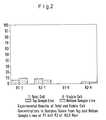
- Figure 3 shows results of total and viable cell concentrations in samples taken from top and bottom sampling lines of R3 and R4 at 65.55 hr. While the gas flow rates at that time are 400 ml/hr and 200 ml/hr in R3 and R4 respectively, no appreciable difference was noticed. This clearly indicates that cells were well suspended in the medium with 11% FC-40 emulsion, due to the fact that the overall density of the emulsion is about the same as that of hybridoma cells.
- FIG. 4 shows the experimental results obtained. While all the previous observations were maintained, the gas flow rate in R2a where 11% of FC-40 emulsion was applied, were gradually increased to as high as 840 ml/hr, i.e., 0.47 vvh, without noticeable damage to the cells. Cell damage caused by shear induced by gas bubbles was observed only after the gas flow rate had been further increased to an extraordinarily high value of 1700 ml/hr i.e., 0.94 vvh. The cell protective effect of 11% FC-40 emulsion was clearly shown when compared to the severe cell damage observed at gas flow rate of the lower value of 660 ml/hr in bioreactors without the emulsion.
- the maximum viable cell concentration achieved in bioreactors supplied with FC-40 emulsion was 2.3 x 10⁶ cells/ml, while that in bioreactors without FC-40 emulsion never reached 1 x 10⁵ cells/ml.
- emulsified perfluorinated compounds as artificial blood substitutes.
- Such artificial bloods utilize the emulsions as oxygen carriers. While it is mainly the thermodynamic property of high oxygen solubilities in these perfluorinated compounds that attracts the attention of others, our interest in applying emulsions in cell culture systems partially rests on the kinetic properties of oxygen transfer rates in the bioreactors.
- emulsions utilized in accordance with the present invention serve not as oxygen carriers but as oxygen transfer enhancers.
- OTR oxygen transfer rate
- k L , a, CO2*, CO2 are liquid-phase oxygen transfer coefficient, interfacial area per unit volume of medium, saturation concentration of dissolved oxygen at the gas-liquid interface, and bulk concentration, respectively;
- S, P g , and P1 are oxygen solubility, in terms of Henry's Law Constant, of the medium, and oxygen partial pressure of the gas phase and that in the bulk medium, respectively.
- Equation (4) is the result of the surface-renewal theory derived by Danckwerts in 1951.
- D oxygen diffusion coefficient
- s surface-renewal rate, i.e., the fraction of liquid surface renewed per unit time
- subscripts eff and o represent effective and original values with and without the presence of these additives, respectively.
- the oxygen-transfer enhancement factor depends strongly on changes in the effective oxygen diffusion coefficient and hydrodynamic conditions upon addition of these additives.
- E ⁇ 1 + (m - 1) ⁇ PFC (9) a linear relationship was developed as: E ⁇ 1 + (m - 1) ⁇ PFC (9) Nonetheless, as mentioned above, emulsion-forming generally raises the apparent liquid viscosity, depending upon the ratio of the volume of inner to outer phase, droplet size, size distribution, and viscosities of inner and outer phases, and, thus, decreases the surface-renewal rate, s.
- the best formulation for oxygen-transfer enhancers used in cell culture systems is far different from that applied in artificial blood substitutes.
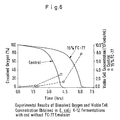
- the oxygen-transfer enhancement factor, E in the studied system by applying 15% FC-77 emulsion can be calculated as the ratio of the viable cell concentrations in samples taken when the dissolved oxygen content dropped down to zero, i.e.,
- the value of 2.55 is smaller than the value of 3.55 calculated by using equation (9) for oxygen-transfer enhancement factor in a system containing 15% FC-77 emulsion. This is mainly attributed to the lower surface-renewal rate in the system with FC-77 emulsion.
- the necessity of considering the overall transport property of PFC emulsions used in cell culture as oxygen-transfer enhancers rather than only oxygen solubility when used as artificial blood substitutes is clearly demonstrated.
Landscapes
- Health & Medical Sciences (AREA)
- Life Sciences & Earth Sciences (AREA)
- Engineering & Computer Science (AREA)
- Biomedical Technology (AREA)
- Biotechnology (AREA)
- Organic Chemistry (AREA)
- Chemical & Material Sciences (AREA)
- Genetics & Genomics (AREA)
- Bioinformatics & Cheminformatics (AREA)
- Wood Science & Technology (AREA)
- Zoology (AREA)
- Biochemistry (AREA)
- Microbiology (AREA)
- General Engineering & Computer Science (AREA)
- General Health & Medical Sciences (AREA)
- Cell Biology (AREA)
- Micro-Organisms Or Cultivation Processes Thereof (AREA)
- Medicines Containing Antibodies Or Antigens For Use As Internal Diagnostic Agents (AREA)
- Apparatus Associated With Microorganisms And Enzymes (AREA)
- Immobilizing And Processing Of Enzymes And Microorganisms (AREA)
Applications Claiming Priority (2)
| Application Number | Priority Date | Filing Date | Title |
|---|---|---|---|
| US22603788A | 1988-07-29 | 1988-07-29 | |
| US226037 | 1988-07-29 |
Publications (2)
| Publication Number | Publication Date |
|---|---|
| EP0356724A2 true EP0356724A2 (de) | 1990-03-07 |
| EP0356724A3 EP0356724A3 (de) | 1990-08-22 |
Family
ID=22847307
Family Applications (1)
| Application Number | Title | Priority Date | Filing Date |
|---|---|---|---|
| EP89114028A Withdrawn EP0356724A3 (de) | 1988-07-29 | 1989-07-29 | Verfahren zur Steigerung der Menge eines Produktes, hergestellt von fragilen Zellen oder Gewebekulturen |
Country Status (2)
| Country | Link |
|---|---|
| EP (1) | EP0356724A3 (de) |
| JP (1) | JPH02211866A (de) |
Cited By (1)
| Publication number | Priority date | Publication date | Assignee | Title |
|---|---|---|---|---|
| JPH03266979A (ja) * | 1990-03-15 | 1991-11-27 | Teijin Ltd | 細胞の培養方法 |
Families Citing this family (1)
| Publication number | Priority date | Publication date | Assignee | Title |
|---|---|---|---|---|
| JP7086617B2 (ja) * | 2018-01-29 | 2022-06-20 | 長瀬産業株式会社 | Otrシミュレータ |
Family Cites Families (4)
| Publication number | Priority date | Publication date | Assignee | Title |
|---|---|---|---|---|
| FR2513264A1 (fr) * | 1981-09-22 | 1983-03-25 | Pasteur Institut | Procede d'agitation de cultures cellulaires et dispositif pour sa mise en oeuvre |
| JPS6135782A (ja) * | 1984-07-27 | 1986-02-20 | Teijin Ltd | 細胞培養方法 |
| JPS6274284A (ja) * | 1985-09-27 | 1987-04-06 | Teijin Ltd | 動物細胞の培養方法 |
| JPH0728729B2 (ja) * | 1986-02-05 | 1995-04-05 | 帝人株式会社 | 動物細胞の培養方法 |
-
1989
- 1989-07-28 JP JP19644589A patent/JPH02211866A/ja active Pending
- 1989-07-29 EP EP89114028A patent/EP0356724A3/de not_active Withdrawn
Cited By (1)
| Publication number | Priority date | Publication date | Assignee | Title |
|---|---|---|---|---|
| JPH03266979A (ja) * | 1990-03-15 | 1991-11-27 | Teijin Ltd | 細胞の培養方法 |
Also Published As
| Publication number | Publication date |
|---|---|
| EP0356724A3 (de) | 1990-08-22 |
| JPH02211866A (ja) | 1990-08-23 |
Similar Documents
| Publication | Publication Date | Title |
|---|---|---|
| US5073491A (en) | Immobilization of cells in alginate beads containing cavities for growth of cells in airlift bioreactors | |
| EP2459697B1 (de) | Verfahren zur produktion eines polypetides oder virus in kontinuierliche zellkultur | |
| AU2005230916B2 (en) | Protein expression yield enhancement in cell-free protein synthesis systems by addition of antifoam agents | |
| Klein et al. | Biotransformation of glucose to gluconic acid by Aspergillus niger—study of mass transfer in an airlift bioreactor | |
| Rols et al. | Enhancement of oxygen transfer rates in fermentation using oxygen-vectors | |
| Margaritis et al. | Novel bioreactor systems and their applications | |
| Osman et al. | The response of GS‐NS0 myeloma cells to single and multiple pH perturbations | |
| EP2057265B1 (de) | Zusammensetzungen zur reduzierung der zellhaftung an blasen | |
| EP0318487A1 (de) | Serumfreies gewebekulturmedium, das ein polymerzellenschutzmittel enthält. | |
| Omasa et al. | The enhancement of specific antibody production rate in glucose-and glutamine-controlled fed-batch culture | |
| US4814278A (en) | Culture apparatus and method | |
| Wagner et al. | The growth and productivity of recombinant animal cells in a bubble-free aeration system | |
| EP4232557B1 (de) | Poloxamere für zellkultur | |
| Van Der Pol et al. | Effect of silicone antifoam on shear sensitivity of hybridoma cells in sparged cultures | |
| Bohmann et al. | The membrane dialysis bioreactor with integrated radial-flow fixed bed—a new approach for continuous cultivation of animal cells | |
| Miura | Transfer of oxygen and scale-up in submerged aerobic fermentation | |
| EP0191356B1 (de) | Vorrichtung für Zellkulturen und Verfahren | |
| JPH02211866A (ja) | 壊れやすい細胞および組織培養による生産物量を増す方法 | |
| Ju et al. | Enhancing oxygen transfer in surface‐aerated bioreactors by stable foams | |
| EP4261274B1 (de) | Meroxapolen für zellkultur | |
| JPH0375154B2 (de) | ||
| Kosseva et al. | Biotransformation of d-sorbitol to l-sorbose by immobilized cells Gluconobacter suboxydans in a bubble column | |
| JPH078265A (ja) | マイクロキャリア分離装置および分離方法 | |
| Ogbonna | Atomisation techniques for immobilisation of cells in micro gel beads | |
| JPH07135968A (ja) | 付着非依存性細胞のマイクロキャリアへの細胞接着方法 |
Legal Events
| Date | Code | Title | Description |
|---|---|---|---|
| PUAI | Public reference made under article 153(3) epc to a published international application that has entered the european phase |
Free format text: ORIGINAL CODE: 0009012 |
|
| AK | Designated contracting states |
Kind code of ref document: A2 Designated state(s): CH DE FR GB IT LI SE |
|
| PUAL | Search report despatched |
Free format text: ORIGINAL CODE: 0009013 |
|
| AK | Designated contracting states |
Kind code of ref document: A3 Designated state(s): CH DE FR GB IT LI SE |
|
| 17P | Request for examination filed |
Effective date: 19910206 |
|
| STAA | Information on the status of an ep patent application or granted ep patent |
Free format text: STATUS: THE APPLICATION IS DEEMED TO BE WITHDRAWN |
|
| 18D | Application deemed to be withdrawn |
Effective date: 19930202 |