EP0356725B1 - Polyetheramine oder Polyetheraminderivate enthaltende Kraftstoffe für Ottomotoren - Google Patents
Polyetheramine oder Polyetheraminderivate enthaltende Kraftstoffe für Ottomotoren Download PDFInfo
- Publication number
- EP0356725B1 EP0356725B1 EP89114029A EP89114029A EP0356725B1 EP 0356725 B1 EP0356725 B1 EP 0356725B1 EP 89114029 A EP89114029 A EP 89114029A EP 89114029 A EP89114029 A EP 89114029A EP 0356725 B1 EP0356725 B1 EP 0356725B1
- Authority
- EP
- European Patent Office
- Prior art keywords
- polyetheramine
- radical
- formula
- fuel
- carbon atoms
- Prior art date
- Legal status (The legal status is an assumption and is not a legal conclusion. Google has not performed a legal analysis and makes no representation as to the accuracy of the status listed.)
- Expired - Lifetime
Links
Classifications
-
- C—CHEMISTRY; METALLURGY
- C10—PETROLEUM, GAS OR COKE INDUSTRIES; TECHNICAL GASES CONTAINING CARBON MONOXIDE; FUELS; LUBRICANTS; PEAT
- C10L—FUELS NOT OTHERWISE PROVIDED FOR; NATURAL GAS; SYNTHETIC NATURAL GAS OBTAINED BY PROCESSES NOT COVERED BY SUBCLASSES C10G OR C10K; LIQUIFIED PETROLEUM GAS; USE OF ADDITIVES TO FUELS OR FIRES; FIRE-LIGHTERS
- C10L1/00—Liquid carbonaceous fuels
- C10L1/10—Liquid carbonaceous fuels containing additives
- C10L1/14—Organic compounds
- C10L1/22—Organic compounds containing nitrogen
- C10L1/234—Macromolecular compounds
- C10L1/238—Macromolecular compounds obtained otherwise than by reactions involving only carbon-to-carbon unsaturated bonds
-
- C—CHEMISTRY; METALLURGY
- C07—ORGANIC CHEMISTRY
- C07C—ACYCLIC OR CARBOCYCLIC COMPOUNDS
- C07C217/00—Compounds containing amino and etherified hydroxy groups bound to the same carbon skeleton
- C07C217/02—Compounds containing amino and etherified hydroxy groups bound to the same carbon skeleton having etherified hydroxy groups and amino groups bound to acyclic carbon atoms of the same carbon skeleton
- C07C217/50—Ethers of hydroxy amines of undetermined structure, e.g. obtained by reactions of epoxides with hydroxy amines
-
- C—CHEMISTRY; METALLURGY
- C08—ORGANIC MACROMOLECULAR COMPOUNDS; THEIR PREPARATION OR CHEMICAL WORKING-UP; COMPOSITIONS BASED THEREON
- C08G—MACROMOLECULAR COMPOUNDS OBTAINED OTHERWISE THAN BY REACTIONS ONLY INVOLVING UNSATURATED CARBON-TO-CARBON BONDS
- C08G65/00—Macromolecular compounds obtained by reactions forming an ether link in the main chain of the macromolecule
- C08G65/02—Macromolecular compounds obtained by reactions forming an ether link in the main chain of the macromolecule from cyclic ethers by opening of the heterocyclic ring
- C08G65/26—Macromolecular compounds obtained by reactions forming an ether link in the main chain of the macromolecule from cyclic ethers by opening of the heterocyclic ring from cyclic ethers and other compounds
- C08G65/2603—Macromolecular compounds obtained by reactions forming an ether link in the main chain of the macromolecule from cyclic ethers by opening of the heterocyclic ring from cyclic ethers and other compounds the other compounds containing oxygen
- C08G65/2606—Macromolecular compounds obtained by reactions forming an ether link in the main chain of the macromolecule from cyclic ethers by opening of the heterocyclic ring from cyclic ethers and other compounds the other compounds containing oxygen containing hydroxyl groups
- C08G65/2612—Macromolecular compounds obtained by reactions forming an ether link in the main chain of the macromolecule from cyclic ethers by opening of the heterocyclic ring from cyclic ethers and other compounds the other compounds containing oxygen containing hydroxyl groups containing aromatic or arylaliphatic hydroxyl groups
-
- C—CHEMISTRY; METALLURGY
- C08—ORGANIC MACROMOLECULAR COMPOUNDS; THEIR PREPARATION OR CHEMICAL WORKING-UP; COMPOSITIONS BASED THEREON
- C08G—MACROMOLECULAR COMPOUNDS OBTAINED OTHERWISE THAN BY REACTIONS ONLY INVOLVING UNSATURATED CARBON-TO-CARBON BONDS
- C08G65/00—Macromolecular compounds obtained by reactions forming an ether link in the main chain of the macromolecule
- C08G65/02—Macromolecular compounds obtained by reactions forming an ether link in the main chain of the macromolecule from cyclic ethers by opening of the heterocyclic ring
- C08G65/32—Polymers modified by chemical after-treatment
- C08G65/321—Polymers modified by chemical after-treatment with inorganic compounds
- C08G65/322—Polymers modified by chemical after-treatment with inorganic compounds containing hydrogen
-
- C—CHEMISTRY; METALLURGY
- C08—ORGANIC MACROMOLECULAR COMPOUNDS; THEIR PREPARATION OR CHEMICAL WORKING-UP; COMPOSITIONS BASED THEREON
- C08G—MACROMOLECULAR COMPOUNDS OBTAINED OTHERWISE THAN BY REACTIONS ONLY INVOLVING UNSATURATED CARBON-TO-CARBON BONDS
- C08G65/00—Macromolecular compounds obtained by reactions forming an ether link in the main chain of the macromolecule
- C08G65/02—Macromolecular compounds obtained by reactions forming an ether link in the main chain of the macromolecule from cyclic ethers by opening of the heterocyclic ring
- C08G65/32—Polymers modified by chemical after-treatment
- C08G65/321—Polymers modified by chemical after-treatment with inorganic compounds
- C08G65/325—Polymers modified by chemical after-treatment with inorganic compounds containing nitrogen
- C08G65/3255—Ammonia
-
- C—CHEMISTRY; METALLURGY
- C10—PETROLEUM, GAS OR COKE INDUSTRIES; TECHNICAL GASES CONTAINING CARBON MONOXIDE; FUELS; LUBRICANTS; PEAT
- C10L—FUELS NOT OTHERWISE PROVIDED FOR; NATURAL GAS; SYNTHETIC NATURAL GAS OBTAINED BY PROCESSES NOT COVERED BY SUBCLASSES C10G OR C10K; LIQUIFIED PETROLEUM GAS; USE OF ADDITIVES TO FUELS OR FIRES; FIRE-LIGHTERS
- C10L1/00—Liquid carbonaceous fuels
- C10L1/10—Liquid carbonaceous fuels containing additives
- C10L1/14—Organic compounds
- C10L1/22—Organic compounds containing nitrogen
- C10L1/234—Macromolecular compounds
- C10L1/238—Macromolecular compounds obtained otherwise than by reactions involving only carbon-to-carbon unsaturated bonds
- C10L1/2383—Polyamines or polyimines, or derivatives thereof (poly)amines and imines; derivatives thereof (substituted by a macromolecular group containing 30C)
-
- C—CHEMISTRY; METALLURGY
- C10—PETROLEUM, GAS OR COKE INDUSTRIES; TECHNICAL GASES CONTAINING CARBON MONOXIDE; FUELS; LUBRICANTS; PEAT
- C10L—FUELS NOT OTHERWISE PROVIDED FOR; NATURAL GAS; SYNTHETIC NATURAL GAS OBTAINED BY PROCESSES NOT COVERED BY SUBCLASSES C10G OR C10K; LIQUIFIED PETROLEUM GAS; USE OF ADDITIVES TO FUELS OR FIRES; FIRE-LIGHTERS
- C10L1/00—Liquid carbonaceous fuels
- C10L1/10—Liquid carbonaceous fuels containing additives
- C10L1/14—Organic compounds
- C10L1/22—Organic compounds containing nitrogen
- C10L1/234—Macromolecular compounds
- C10L1/238—Macromolecular compounds obtained otherwise than by reactions involving only carbon-to-carbon unsaturated bonds
- C10L1/2383—Polyamines or polyimines, or derivatives thereof (poly)amines and imines; derivatives thereof (substituted by a macromolecular group containing 30C)
- C10L1/2387—Polyoxyalkyleneamines (poly)oxyalkylene amines and derivatives thereof (substituted by a macromolecular group containing 30C)
-
- F—MECHANICAL ENGINEERING; LIGHTING; HEATING; WEAPONS; BLASTING
- F02—COMBUSTION ENGINES; HOT-GAS OR COMBUSTION-PRODUCT ENGINE PLANTS
- F02B—INTERNAL-COMBUSTION PISTON ENGINES; COMBUSTION ENGINES IN GENERAL
- F02B1/00—Engines characterised by fuel-air mixture compression
- F02B1/02—Engines characterised by fuel-air mixture compression with positive ignition
- F02B1/04—Engines characterised by fuel-air mixture compression with positive ignition with fuel-air mixture admission into cylinder
Definitions
- the invention relates to fuels for gasoline engines which contain small amounts of a polyetheramine and / or polyetheramine derivative, the polyetheramine being produced by reductive amination of alkylphenol-started polyethers and the polyetheramine derivatives being produced by reacting the polyetheramines with alkylene oxides or carboxylic acids.
- Polyetheramines are known as fuel additives for the cleanliness and cleaning of carburetors, injection nozzles and valves and e.g. Subject of the PCT application WO 85/01956 or EP-B1 0 100 665.
- the object was therefore to provide chlorine-free polyetheramines suitable as fuel additives. There was also the task of improving the effect of the known polyetheramines or of achieving the same effect with a lower dose.
- R 1 is an alkylphenol polyether radical of the general formula or an alkylcyclohexyl polyether radical of the general formula means
- R 2 and R 3 may be the same or different and for hydrogen, the alkylphenol polyether radical (Illa), the alkylcyclohexylpolyether radical (Illb), the acyl radical of a carboxylic acid having 2 to 24 carbon atoms or the hydroxyalkyl radical of the general formula stand or R 2 stands for an alkyl residue with 1 to 20 carbon atoms and R 3 stands for hydrogen, the alkylphenol polyether residue (Illa), the alkylcyclohexylpolyether residue (Illb), the acyl residue of a carboxylic acid
- the polyetheramines and polyetheramine derivatives to be used according to the invention are generally synthesized in several stages.
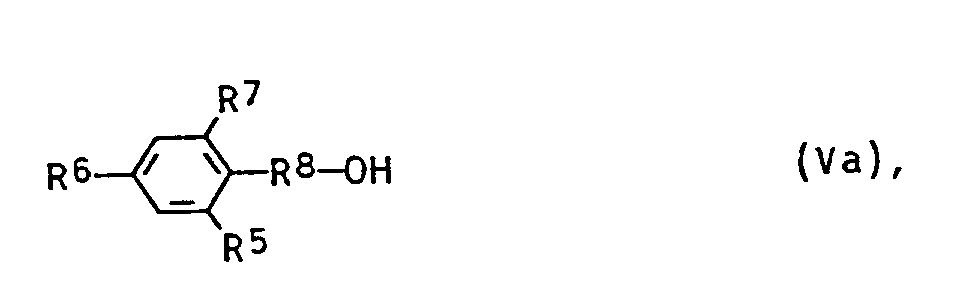
- a first step it is expedient to prepare by alkoxylation with alkene oxides having 3 to 8 carbon atoms or mixtures of these alkene oxides of alkylphenols of the general formula or of alkylcyclohexanols of the general formula in which R 5 , R 6 and R 7 have the meanings given above, in a manner known per se, alkylphenol polyethers of the general formula (Va) or alkylcyclohexyl polyethers of the general formula (Vb) ago.
- alkoxylation if appropriate in the presence of alkali such as potassium hydroxide solution, sodium hydroxide solution, sodium methylate, is advantageously carried out at elevated temperatures, for example at 80 to 140 ° C., preferably 100 to 120 ° C.
- alkali such as potassium hydroxide solution, sodium hydroxide solution, sodium methylate
- Suitable radicals R 5 , R 6 and R 7 are hydrogen and linear, but preferably branched hydrocarbon radicals having 1 to 30 carbon atoms, methyl radicals and branched hydrocarbon radicals having 3 to 16 carbon atoms being particularly preferred.
- alkylated phenols and cresols are particularly suitable as starters.
- Examples include isobutylphenol, -cresol, diisobutylphenol, -cresol, tert-butylphenol, -cresol, di-tert.-butylphenol, -cresol, isooctylphenol, diisooctylphenol, isononylphenol, diisononylphenol, isododecylphenol, diisododylphenol or diisodecyl phenol.
- the alkylphenols to be used as starters are obtained in a manner known per se, e.g. by alkylation of phenols, cresols or dimethylphenols with the corresponding olefins.
- the alkylcyclohexanols also to be used as starters are obtained, for example, by core hydrogenation of corresponding alkylphenols.
- a general manufacturing specification is given below.
- the reaction takes place only with an alkylene oxide, e.g. with propylene oxide or with butylene oxide, or with mixtures of alkylene oxides, e.g. a mixture of propylene oxide and butylene oxide.
- the reactions with the alkylene oxide, e.g. Propylene oxide or butylene oxide, or a mixture of alkylene oxides, e.g. a mixture of propylene oxide and butylene oxide can be carried out in one step.
- the amount of alkylene oxide, e.g. Propylene oxide or butylene oxide can fluctuate in other areas.
- alkylene oxide 3 to 100, preferably 5 to 30, moles of alkylene oxide are used per mole of starter.
- the amount used and the choice of alkylene oxide, generally propylene oxide or butylene oxide depends on which starter molecule was used. If the starter molecule contains a long-chain hydrophobic residue such as diisododecylphenol, larger amounts of low molecular weight alkylene oxides, preferably propylene oxide, can be used. On the other hand, if the starter molecule contains shorter-chain hydrophobic residues, it may be advantageous to use higher molecular weight alkylene oxides, preferably butylene oxide, or e.g. in mixtures of propylene oxide and / or butylene oxide to increase the proportion of butylene oxide.
- alkene oxides and their amount are selected so that a minimum solubility of 50% by weight in a hydrocarbon, e.g. Toluene or mineral oil SN 100, for the production of a master batch is guaranteed.
- a hydrocarbon e.g. Toluene or mineral oil SN 100
- the polyethers are generally subjected to amination according to methods known per se without further pretreatment.
- Amination is understood to mean the reaction of the polyethers (Va) and (Vb) with ammonia or primary amines, the terminal OH group in the polyether being replaced by an amino group with elimination of water.
- the methodology is described in detail in Houben-Weyl 11/1, Chapter Ilb, pages 108-134, to which reference is hereby made.
- the still free hydrogen atoms on the nitrogen of the amino group can be replaced by further polyether residues (111), so that a mixture of amines, e.g. in amination with ammonia a mixture of primary, secondary and tertiary amines, e.g. in a weight ratio of 6: 3: 1.
- Amination with primary amines accordingly forms a mixture of secondary and tertiary amines.
- the amination reaction is expediently carried out at temperatures between 160 and 250 ° C. and pressures up to 600 bar, preferably 80-300 bar.
- Preferred catalysts are cobalt- and nickel-containing catalysts on supports such as Si0 2 or A1 2 0 3 , but also Raney nickel or Raney cobalt itself.
- a quantitative conversion of the OH groups is not necessary for the intended use, especially if the polyethers used as starting compounds of the formula (Va) and (Vb) are also used as a carrier oil for the gasoline additive formulation. The partial conversion can even be advantageous because you get higher space-time yields.
- ammonia or the amine is used in excess in the amination, for example in a 10- to 60-fold, preferably 15- to 40-fold, molar excess.
- the use of ammonia is preferred.
- the primary amines for the amination are those with an alkyl radical having 1 to 20, preferably 1 to 13, in particular 1 to 8 carbon atoms used. Examples include methyl, ethyl and butylamine.
- the polyetheramines obtained by amination can be added to the fuels as such.
- polyetheramines are derivatized with alkylene oxides, those with 3 to 8, preferably 3 to 4, carbon atoms are used, for example propylene oxide, butylene oxide Temperatures, for example at 120 to 150 ° C.
- alkylene oxides those with 3 to 8, preferably 3 to 4, carbon atoms are used, for example propylene oxide, butylene oxide Temperatures, for example at 120 to 150 ° C.
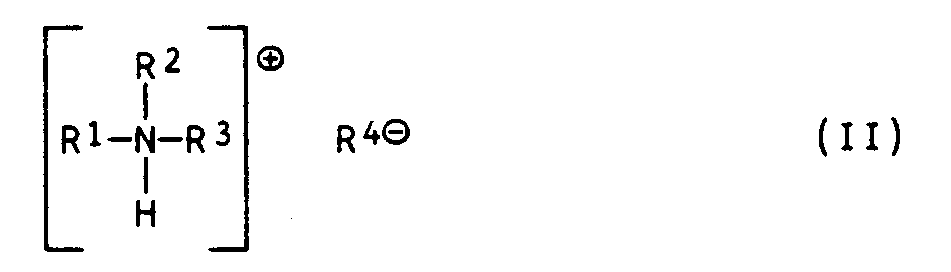
- the derivatization of the polyetheramines by reaction with carboxylic acids can, on the one hand, be carried out as a neutralization to form the corresponding ammonium salts, the polyetheramine derivatives of the formula (11) being obtained.
- the neutralization is carried out in a manner known per se. A general manufacturing specification is given below.
- the derivatization of the polyetheramines with carboxylic acids can also be carried out by amidation to form the carboxamides, ie to give polyetheramine derivatives of the formula (I) in which R 2 and / or R 3 are acyl radicals.
- the amidation takes place in a manner known per se. A general manufacturing specification is given below.
- Monocarboxylic acids having 2 to 24, preferably 2 to 10, carbon atoms are generally used as carboxylic acids for neutralization or amidation.
- Suitable carboxylic acids are, for example, acetic, propionic, valerian, capronic, caprylic, pelargonic, capric, lauric, palmitic, stearic, oleic, isononanoic and 2-ethylhexanoic acid.
- Leaded and unleaded regular and premium gasoline can be used as fuel.
- the gasolines can also contain components other than hydrocarbons, e.g. Alcohols such as methanol, ethanol, tert-butanol and ethers, e.g. Contain methyl tert-butyl ether.
- the fuels generally also contain additives such as corrosion inhibitors, stabilizers, antioxidants, detergents, etc.
- Corrosion inhibitors are usually ammonium salts of organic carboxylic acids, which tend to form films due to the structure of the starting compounds. Amines for raising the pH are also often found in corrosion inhibitors. Heterocyclic aromatics are mostly used as non-ferrous metal corrosion protection.
- Antioxidants or stabilizers include, in particular, amines such as para-phenylenediamine, dicyclohexylamine, morpholine or derivatives of these amines.
- Phenolic antioxidants such as 2,4-di-tert-butylphenol or 3,5-di-tert-butyl-4-hydroxyphenylpropionic acid and their derivatives are also added to fuels and lubricants.
- the gasifiers, injector and valve detergents may also contain amides and imides of polyisobutylene succinic anhydride, polybutenamines, polybutene polyamines and long-chain carbonamides and imides in the fuels.
- Mineral oils of the viscosity range SN 500-900 can be used as carrier oils for concentrates of the polyetheramines or their derivatives to be used according to the invention.
- the esters should contain long-chain, branched alcohols greater than C 8 , the polyethers preferably long-chain starters and high PO or BuO contents, based on the amount of alkylene oxide, in the molecule.
- the fuels generally contain the polyetheramines or polyetheramine derivatives of the formula (I) or (11) in amounts of 10 to 2000 ppm by weight, based on the pure polyetheramine or polyetheramine derivative. Usually, however, 20 to 1000 ppm by weight, preferably 40 to 400 ppm by weight, are sufficient.
- the polyethers are produced by known processes of alkoxylation with alkali.
- the polyethers prepared according to Preparation Example 1 are generally subjected to the subsequent amination with ammonia or a primary amine without further pretreatment.
- dilution with solvent preferably branched aliphatics such as isododecane
- solvent preferably branched aliphatics such as isododecane
- the polyethers are used as such or in solution with ammonia, which is generally used in excess, for example in 2 to 100 times, preferably 10 to 80 times, molar excess in the presence of a hydrogenation catalyst, for example Raney nickel.
- the polyetheramines prepared according to Examples 1 and 2 can be derivatized with alkene oxides or carboxylic acids by known processes.
- the amine number of the polyetheramine e.g. determined with 0.1 M HCl against bromophenol blue.
- the reaction with epoxides is generally carried out as described under 1 in the presence of alkaline catalysts such as KOH, NaOH, NaOCH 3 etc., which are used in amounts of 0.1 to 3% by weight, based on polyetheramine.
- alkaline catalysts such as KOH, NaOH, NaOCH 3 etc.
- the reaction temperatures are 120 to 150 ° C, the reaction times 3 to 6 hours, the pressures 3 to 6 bar.
- the reaction takes place in pressure stirred tanks with the epoxides being added in portions. If more than 1 to 2 moles of alkene oxide are to be added, the procedure is expediently multi-stage, preferably two-stage, as described below.
- the primary or secondary etheramine is first reacted in the presence of small amounts of water (3 to 5% by weight, based on etheramine) with 1 to 2 moles of epoxide at 100 to 120 ° C.
- the corresponding N-hydroxyalkyl compound is predominantly obtained, and in the case of primary amines the corresponding bis-OH-alkylamino derivative.
- vacuo for example 15 to 30 mbar
- the reaction with the remaining amount of epoxy is carried out as described under 1 or 3a.
- the products are characterized by their amine and hydroxyl numbers and their weight gain.
- reaction components are expediently reacted in stoichiometric amounts with stirring and gentle heating. Under certain circumstances, however, it is advantageous to submit the etheramine and to add the carboxylic acid in portions.
- the reaction is carried out at elevated temperatures, expediently at 100 to 180.degree. C., for example at 150 to 160.degree. C., with stirring of the reaction components used in stoichiometric amounts, with or without solvent, in an inert gas atmosphere (N 2 ), the amine advantageously being introduced and the Acid component is added in portions.
- the water of reaction is removed in a solvent-free reaction during the reaction in vacuo, for example at 10 to 100 mbar, or by azeotropic distillation with suitable entraining agents, for example aromatic or aliphatic hydrocarbons, such as toluene, xylene, heavy gasoline etc., in order to achieve the most complete possible reaction .
- the reaction time is generally 4 to 6 hours.
- the end of the reaction is determined by determining the acid number (less than 3), the amine number (less than 4) and the amount of the water of reaction.
- the running time was 60 hours, the number of cycles 800. Unleaded, alcohol-containing super gasoline (3% methanol, 2% tert. Butanol) was used as the fuel, and the reference oil of the Opel Kadett test CEC-F-02-T-79, RL as motor oil 51 used.
- the intake valves are evaluated gravimetrically.
- the inlet valves on the underside are carefully mechanically freed of deposits from the combustion chamber after removal. Afterwards, surface-adhering, easily soluble parts on the valves are removed by immersing them in cyclohexane and the valves are dried by swinging them in air. This treatment is done twice in total. The inlet valves are then weighed. The amount of deposits per inlet valve results from the weight difference between the valve weight before and after the test. The results of these tests are shown in Table 1.
Landscapes
- Chemical & Material Sciences (AREA)
- Organic Chemistry (AREA)
- Chemical Kinetics & Catalysis (AREA)
- Oil, Petroleum & Natural Gas (AREA)
- General Chemical & Material Sciences (AREA)
- Polymers & Plastics (AREA)
- Health & Medical Sciences (AREA)
- Medicinal Chemistry (AREA)
- Engineering & Computer Science (AREA)
- Inorganic Chemistry (AREA)
- Crystallography & Structural Chemistry (AREA)
- Polyethers (AREA)
- Organic Low-Molecular-Weight Compounds And Preparation Thereof (AREA)
Description
- Die Erfindung betrifft Kraftstoffe für Ottomotoren, die geringe Mengen eines Polyetheramins und/oder Polyetheraminderivats enthalten, wobei das Polyetheramin durch reduktive Aminierung von Alkylphenolgestarteten Polyethern und die Polyetheraminderivate durch Umsetzung der Polyetheramine mit Alkylenoxiden oder Carbonsäuren hergestellt sind.
- Polyetheramine sind als Kraftstoffadditive zur Reinhaltung und Reinigung von Vergasern, Einspritzdüsen und Ventilen bekannt und z.B. Gegenstand der PCT-Anmeldung WO 85/01956 oder der EP-B1 0 100 665.
- Dort sind Verbindungen beschrieben, die ausgehend von Ethylenchlorhydrin, Alkoxylierung, Verätherung der Endhydroxylgruppe und Ersatz des Chloratoms durch eine Aminogruppe hergestellt werden.
- Obgleich diese Polyetheramine ausgezeichnete Ventilreiniger mit ausgeprägtem Reinigungseffekt im Einlaßsystem des Motors sind, haben sie den Nachteil eines von der Herstellung verbleibenden Chlorgehalts. Kraftstoff- oder Ölzusätze, die Chlor enthalten, sind jedoch aus Gründen der Korrosion und des Umweltschutzes unerwünscht.
- Es bestand daher die Aufgabe chlorfreie, als Kraftstoffadditive geeignete Polyetheramine bereitzustellen. Es bestand weiterhin die Aufgabe, die bekannten Polyetheramine in ihrer Wirkung zu verbessern bzw. mit geringerer Dosis die gleiche Wirkung zu erzielen.
- Es wurde nun überraschenderweise gefunden, daß Kraftstoffe für Ottomotoren, die geringe Mengen Polyetheramine und/oder Polyetheraminderivate enthalten, eine sehr gute Ventil- und Vergaserreinigungswirkung haben und kein Chlor aufweisen, wenn die Polyetheramine und Polyetheraminderivate solche der allgemeinen Formel oder



- Die erfindungsgemäß Zu verwendenden Polyetheramine und Polyetheraminderivate werden im allgemeinen in mehreren Stufen synthetisiert. In einem ersten Schritt stellt man zweckmäßig durch Alkoxylierung mit Alkenoxiden mit 3 bis 8 Kohlenstoffatomen oder Gemischen dieser Alkenoxide von Alkylphenolen der allgemeinen Formel


- Als Reste R5, R6 und R7 kommen dabei Wasserstoff und lineare, vorzugsweise jedoch verzweigte Kohlenwasserstoffreste mit 1 bis 30 Kohlenstoffatomen in Betracht, wobei von den Kohlenwasserstoffresten Methylreste und verzweigte Kohlenwasserstoffreste mit 3 bis 16 Kohlenstoffatomen besonders bevorzugt werden. Im einzelnen kommen als Starter neben den Kresolen alkylierte Phenole und Kresole in Betracht.
- Beispielsweise seien genannt Isobutylphenol, -kresol, Diisobutylphenol, -kresol, tert-Butylphenol, -kresol, Di-tert.-butylphenol, -kresol, Isooctylphenol, Diisooctylphenol, Isononylphenol, Diisononylphenol, Isododecylphenol, Diisododecylphenol oder Mischungen daraus.
- Die als Starter zu verwendenden Alkylphenole erhält man in an sich bekannter Weise, z.B. durch Alkylierung von Phenolen, Kresolen oder Dimethylphenolen mit den entsprechenden Olefinen. Die ebenfalls als Starter zu verwendenden Alkylcyclohexanole erhält man beispielsweise durch Kernhydrierung von entsprechenden Alkylphenolen.
- Die Alkoxylierung von den Alkylphenolen bzw. von den Alkylcyclohexanolen mit den Alkenoxiden mit 3 bis 8, vorzugsweise 3 bis 6 Kohlenstoffatomen, insbesondere mit Propylenoxid und/oder Butylenoxid wie 1,2-Butylenoxid, 2,3-Butylenoxid, Isobutylenoxid, wobei die Umsetzung mit den Butylenoxiden bevorzugt ist, erfolgt in an sich bekannter Weise. Eine allgemeine Herstellvorschrift wird weiter unten angegeben. Beispielsweise erfolgt die Umsetzung nur mit einem Alkylenoxid, z.B. mit Propylenoxid oder mit Butylenoxid, oder mit Gemischen von Alkylenoxiden, z.B. einem Gemisch von Propylenoxid und Butylenoxid. Die Umsetzungen mit dem Alkylenoxid, z.B. Propylenoxid oder Butylenoxid, oder einem Gemisch von Alkylenoxiden, z.B. einem Gemisch von Propylenoxid und Butylenoxid, kann in einer Stufe durchgeführt werden. Es kann jedoch auch vorteilhaft sein, die in der ersten Stufe erhaltenen Verbindungen in einer zweiten Stufe oder mehr als zwei Stufen, wobei zwei Stufen bevorzugt werden, mit weiterem Alkylenoxid wie Propylenoxid oder Butylenoxid oder einem Gemisch von Alkylenoxiden, z.B. einem Gemisch von Propylenoxid und Butylenoxid, umzusetzen. Die Menge an Alkylenoxid, z.B. Propylenoxid bzw. Butylenoxid, kann in weiteren Bereichen schwanken. In der Regel verwendet man 3 bis 100, vorzugsweise 5 bis 30 Mol Alkylenoxid pro Mol Starter. Die angewandte Menge und die Wahl des Alkylenoxids, im allgemeinen Propylenoxid oder Butylenoxid, hängt jedoch davon ab, welches Startermolekül verwendet wurde. Enthält das Startermolekül einen langkettigen hydrophoben Rest wie Diisododecylphenol, können größere Mengen an niedermolekularen Alkylenoxiden, vorzugsweise Propylenoxid, zur Anwendung kommen. Enthält das Startermolekül dagegen kürzerkettige hydrophobe Reste, kann es vorteilhaft sein, höhermolekulare Alkylenoxide, vorzugsweise Butylenoxid, zu verwenden bzw., z.B. in Mischungen von Propylenoxid und/oder Butylenoxid, den Anteil von Butylenoxid zu erhöhen.
- Insgesamt gilt, daß die Alkenoxide und deren Menge so gewählt werden, daß eine Mindestlöslichkeit von 50 Gew.% in einem Kohlenwasserstoff, z.B. Toluol oder Mineralöl SN 100, zur Herstellung eines Master-batch gewährleistet ist.
- In einer zweiten Stufe werden dann die Polyether im allgemeinen ohne weitere Vorbehandlung einer Aminierung nach an sich bekannten Methoden unterworfen. Unter Aminierung wird dabei die Umsetzung der Polyether (Va) und (Vb) mit Ammoniak oder primären Aminen verstanden, wobei im Polyether die endständige OH-Gruppe unter Wasserabspaltung durch eine Aminogruppe ersetzt wird. Die Methodik ist im einzelnen in Houben-Weyl 11/1, Kapitel Ilb, Seiten 108 - 134 beschrieben, worauf hiermit Bezug genommen wird.
- Wie bei allen reduktiven Aminierungen können die noch freien Wasserstoffatome am Stickstoff der Aminogruppe durch weitere Polyetherreste (111) ersetzt werden, so daß in der Regel ein Gemisch von Aminen, z.B. bei der Aminierung mit Ammoniak ein Gemisch von primären, sekundären und tertiären Aminen, z.B. im Gewichtsverhältnis 6:3:1 entsteht. Bei der Aminierung mit primären Aminen bildet sich entsprechend ein Gemisch von sekundären und tertiären Aminen.
- Die Aminierungsreaktion wird zweckmäßig bei Temperaturen zwischen 160 und 250 ° C und Drücken bis zu 600 bar, vorzugsweise 80 - 300 bar durchgeführt. Als Katalysatoren kommen vorzugsweise kobalt- und nickelhaltige Katalysatoren auf Trägern wie Si02 oder A1203, aber auch Raney Nickel oder Raney Kobalt selbst in Frage. Ein quantitativer Umsatz der OH-Gruppen ist für den Anwendungszweck nicht erforderlich, besonders dann, wenn die als Ausgangsverbindungen der Formel (Va) und (Vb) benutzten Polyether auch als Trägeröl für die Benzinadditivformulierung verwendet werden. Der Teilumsatz kann sogar vorteilhaft sein, da man höhere Raum-Zeit-Ausbeuten erhält. Im allgemeinen wendet man bei der Aminierung das Ammoniak bzw. das Amin im überschuß, z.B. im 10- bis 60fachen, vorzugsweise 15- bis 40fachen molaren überschuß, an. Dabei ist die Verwendung von Ammoniak bevorzugt. Als primäre Amine für die Aminierung werden solche mit einem Alkylrest mit 1 bis 20, vorzugsweise 1 bis 13, insbesondere 1 bis 8 Kohlenstoffatomen verwendet. Beispielsweise seien genannt Methyl-, Ethyl-, Butylamin.
- Die durch Aminierung erhaltenen Polyetheramine können als solche den Kraftstoffen zugesetzt werden.
- Sie können aber auch durch Umsetzung mit Alkylenoxiden oder Carbonsäuren in an sich bekannter Weise in die entsprechenden Derivate übergeführt werden, um in Form der Derivate den Kraftstoffen zugesetzt zu werden.
- Bei der Derivatisierung der Polyetheramine mit Alkylenoxiden werden solche mit 3 bis 8, vorzugsweise 3 bis 4 Kohlenstoffatomen verwendet, beispielsweise Propylenoxid, Butylenoxid Die Alkoxilierung mit den Alkenoxiden erfolgt in an sich bekannter Weise, zweckmäßig in Gegenwart von Alkali wie Kalilauge, Natronlauge, Natriummethylat bei erhöhten Temperaturen, z.B. bei 120 bis 150°C. Eine allgemeine Herstellvorschrift wird weiter unten angegeben.
- In den dabei erhaltenen Derivaten mit den Hydroxyalkylresten gemäß der allgemeinen Formel (IV) entspricht m den Zahlen 0 bis 5, wobei Derivate mit einem Kettenglied (m = 0) bevorzugt werden.
- Die Derivatisierung der Polyetheramine durch Umsetzung mit Carbonsäuren kann einerseits als Neutralisation unter Bildung der entsprechenden Ammoniumsalze durchgeführt werden, wobei die Polyetheraminderivate gemäß der Formel (11) erhalten werden. Die Neutralisation erfolgt in an sich bekannter Weise. Eine allgemeine Herstellvorschrift wird weiter unten angegeben.
- Die Derivatisierung der Polyetheramine mit Carbonsäuren kann weiter durch Amidierung unter Bildung der Carbonsäureamide erfolgen, d.h. zu Polyetheraminderivaten der Formel (I), in der R2 und/oder R3 Acylreste darstellen. Die Amidierung erfolgt in an sich bekannter Weise. Eine allgemeine Herstellvorschrift wird weiter unten angegeben.
- Als Carbonsäuren für die Neutralisation oder Amidierung werden im allgemeinen Monocarbonsäuren mit 2 bis 24, vorzugsweise 2 bis 10 Kohlenstoffatomen verwendet. Geeignete Carbonsäuren sind beispielsweise Essig-, Propion-, Valerian-, Capron-, Capryl-, Pelargon-, Caprin-, Laurin-, Palmitin-, Stearin-, Ölsäure, Isononansäure und 2-Ethylhexansäure.
- Als Kraftstoff kommen verbleites und unverbleites Normal- und Superbenzin in Betracht. Die Benzine können auch andere Komponenten als Kohlenwasserstoffe, z.B. Alkohole wie Methanol, Ethanol, tert-Butanol sowie Ether, z.B. Methyltert-butylether enthalten. Neben den erfindungsgemäß zu verwendenden Polyetheraminen oder Polyetheraminderivaten enthalten die Kraftstoffe in der Regel noch weiter Zusätze wie Korrosionsinhibitoren, Stabilisatoren, Antioxydantien, Detergentien etc.
- Korrosionsinhibitoren sind meist Ammoniumsalze organischer Carbonsäuren, die durch entsprechende Struktur der Ausgangsverbindungen zur Filmbildung neigen. Auch Amine zur Anhebung des pH-Wertes finden sich häufig in Korrosionsinhibitoren. Als Buntmetallkorrosionsschutz werden meist heterocyclische Aromaten eingesetzt.
- Als Antioxidantien oder Stabilisatoren sind insbesondere Amine wie para-Phenylendiamin, Dicyclohexylamin, Morpholin oder Derivate dieser Amine zu nennen. Auch phenolische Antioxidantien wie 2,4-Di-tert-butylphenol oder 3,5-Di-tert-butyl-4-hydroxyphenylpropionsäure und deren Derivate werden Kraft- und Schmierstoffen zugesetzt.
- Als Vergaser-, Injector- und Ventildetergentien sind ferner gegebenenfalls Amide und Imide des Polyisobutylenbernsteinsäureanhydrids, Polybutenamine, Polybutenpolyamine sowie langkettige Carbonamide und -imide in den Kraftstoffen enthalten.
- Als Trägeröle für Konzentrate der erfindungsgemäß zu verwendenden Polyetheramine oder deren Derivate können Mineralöle des Viskositätsbereiches SN 500-900, aber auch Brightstock und Syntheseöle wie Polyalphaolefin, Trimellithsäureester oder Polyether, insbesondere solche auf Alkylphenol- und Butenoxidbasis, eingesetzt werden. Die Ester sollten möglichst langkettige, verzweigte Alkohole größer C8, die Polyether vorzugsweise langkettige Starter und hohe PO- oder BuO-Gehalte, bezogen auf die Alkylenoxidmenge, im Molekül enthalten.
- Die Kraftstoffe enthalten die Polyetheramine bzw. Polyetheraminderivate der Formel (I) oder (11) in der Regel in Mengen von 10 bis 2000 Gew.ppm bezogen auf das reine Polyetheramin oder Polyetheraminderivat. Meist sind aber bereits 20 bis 1000 Gew.ppm, vorzugsweise 40 bis 400 Gew.ppm, ausreichend.
- Im folgenden wird die Herstellung der Polyetheramine und Polyetheraminderivate und ihre Wirkung im Motor im einzelnen erläutert.
- Die Herstellung der Polyether erfolgt nach bekannten Verfahren der Oxalkylierung mit Alkali.
- In einem Autoklaven mit Rührer werden bezogen auf den gesamten Ansatz 0,1 Gew.% KOH fein pulverisiert im Alkylphenol unter Rühren verteilt und bei 200 mbar auf 130°C erhitzt. Dabei werden restliche Wasserspuren abgezogen. Dann wird der Autoklav geschlossen und Alkylenoxid so zudosiert, daß ein Druck von 6 bar nicht überschritten wird. Die Dosierung verschiedener Alkylenoxide kann gleichzeitig oder nacheinander erfolgen, so daß statistische Polyether oder Blöcke entstehen mit mehr oder minder scharfen Übergängen. Nach Zulaufende der Alkylenoxide fällt der Druck im Verlauf von 3 bis 10 h auf 2 bis 3 bar. Ist dieser Druck erreicht, kühlt man auf 80 ° C und entspannt über ein Membranventil und evakuiert bis auf 20 bis 30 mbar. Nach Aufrechterhalten des verminderten Drucks für ca. 1 h setzt man dann äquivalente Mengen sauren lonenaustauschers zur Entfernung von Kalium zu und filtriert.
- Die gemäß Herstellungsbeispiel 1 hergestellten Polyether werden im allgemeinen ohne weitere Vorbehandlung der nachfolgenden Aminierung mit Ammoniak oder einem primären Amin unterworfen. Bei höheren Polyetherviskositäten empfiehlt sich jedoch eine Verdünnung mit Lösemittel, vorzugsweise verzweigte Aliphaten wie Isododekan, so daß man eine Viskosität von 50 - 200 mm2/s bei 20 ° C erhält. Beispielsweise werden die Polyether als solche oder in Lösung mit Ammoniak, der im allgemeinen im überschuß, z.B. im 2- bis 100-fachen, vorzugsweise 10- bis 80-fachen molaren überschuß verwendet wird, in Gegenwart von einem Hydrierkatalysator, z.B. Raney-Nickel, bei erhöhtem Druck, z.B. bei Drucken von 10 bis 300 bar, vorzugsweise 50 bis 250 bar, in einem Druckreaktor, z.B. einem Rollautoklaven, bei erhöhten Temperaturen, z.B. 80 bis 300 ° C, vorzugsweise 120 bis 250 ° C, mit Wasserstoff behandelt, z.B. über einen Zeitraum von 10 Minuten bis 10 Stunden. Nach dem Abkühlen trennt man den Katalysator durch Filtrieren ab, verdampft überschüssiges Ammoniak und destilliert das Reaktionswasser azeotrop oder unter leichtem Stickstoffstrom ab.
- Die gemäß Beispielen 1 und 2 hergestellten Polyetheramine lassen sich nach bekannten Verfahren mit Alkenoxiden oder Carbonsäuren derivatisieren. Dazu wird zweckmäßig zunächst die Aminzahl des Polyetheramins, z.B. mit 0,1 m HCI gegen Bromphenolblau bestimmt.
- Die Umsetzung mit Epoxiden erfolgt im allgemeinen wie unter 1 beschrieben in Gegenwart alkalischer Katalysatoren wie KOH, NaOH, NaOCH3 usw., die in Mengen von 0,1 bis 3 Gew.% bezogen auf Polyetheramin eingesetzt werden. Die Reaktionstemperaturen liegen je nach Epoxid bei 120 bis 150°C, die Reaktionszeiten bei 3 bis 6 Stunden, die Drucke bei 3 bis 6 bar. Die Umsetzung erfolgt in Druckrührbehältern unter portionsweiser Zugabe der Epoxide. Soll mehr als 1 bis 2 Mol Alkenoxid addiert werden, wird zweckmäßig mehrstufig, vorzugsweise zweistufig wie nachfolgend beschrieben, gearbeitet. Das primäre oder sekundäre Etheramin wird zunächst in Gegenwart geringer Mengen Wasser (3 bis 5 Gew.% bez. auf Etheramin) mit 1 bis 2 Mol Epoxid bei 100 bis 120 ° C umgesetzt. Man erhält im Falle sekundärer Amine vorwiegend die entsprechende N-Hydroxialkylverbindung, im Falle primärer Amine das entsprechende Bis-OH-alkylaminoderivat. Dann wird im Vakuum (z.B. 15 bis 30 mbar) bei z.B. 80 bis 100°C entwässert, mit geringen Mengen alkalischer Katalysatoren versetzt und zur Umsetzung mit der restlichen Epoxidmenge wie unter 1 bzw. 3a beschrieben verfahren. Die Produkte werden durch Amin- und Hydroxylzahl sowie durch die Gewichtszunahme charakterisiert.
- Die Reaktionskomponenten werden zweckmäßig in stöchiometrischen Mengen unter Rühren und leichtem Erwärmen umgesetzt. Unter Umständen ist jedoch vorteilhaft, das Etheramin vorzulegen und die Carbonsäure portionsweise zuzugeben.
- Die Reaktion wird bei erhöhten Temperaturen, zweckmäßig bei 100 bis 180 ° C, z.B. bei 150 bis 160 ° C, unter Rühren der in stöchiometrischen Mengen eingesetzten Reaktionskomponenten mit oder ohne Lösemittel in Inertgasatmosphäre (N2) durchgeführt, wobei das Amin zweckmäßig vorgelegt und die Säurekomponente portionsweise zugegeben wird. Das Reaktionswasser wird bei lösungsmittelfreier Reaktionsführung während der Reaktion im Vakuum, z.B. bei 10 bis 100 mbar, oder durch azeotrope Destillation mit geeigneten Schleppmitteln, z.B. aromatische oder aliphatische Kohlenwasserstoffe, wie Toluol, Xylol, Schwerbenzin etc. entfernt, um eine möglichst vollständige Umsetzung zu erzielen.
- Die Reaktionszeit beträgt im allgemeinen 4 bis 6 Stunden. Das Reaktionsende wird durch Bestimmung der Säurezahl (kleiner 3), der Aminzahl (kleiner 4) und der Menge des Reaktionswassers ermittelt.
- Nach den vorstehend unter 1, 2 und 3 angegebenen Methoden wurden folgende Produkte hergestellt:
- A: Isononylphenol wird mit 1-Butenoxid im molaren Verhältnis 1:19 gemäß Herstellungsbeispiel 1 umgesetzt. Der erhaltene Polyether hat eine Viskosität von 220 mm2/s bei 40 ° C und ein rechnerisches Molekulargewicht von 1588. Dann wird entsprechend Herstellungsbeispiel 2 bei 100°C und 200 bar mit einem 50 molaren Ammoniak-überschuß an einem mit Nickel beschichteten Katalysator in Gegenwart von H2 aminiert und bei einer Verweilzeit von 20 min ein Polyetheramin in einer Ausbeute von 94 % erhalten. Die Viskosität des Produktes ist 190 mm2/s bei 40 ° C, das Molekulargewicht 1587 und die Aminzahl 30,4 (theoretisch 37,6).
- B: Isononylphenol wird mit 1-Butenoxid im molaren Verhältnis 1:8 gemäß Herstellungsbeispiel 1 umgesetzt. Der erhaltene Polyether hat eine Viskosität von 130 mm2/s bei 40 °C und ein rechnerisches Molekulargewicht von 796. Dieser wird wie unter A beschrieben reduktiv aminiert. Man erhält Polyetheramin in einer Ausbeute von 96 % mit einer Viskosität von 100 mm2/s bei 40 ° C und einer Aminzahl von 68.
- C: 2,6-Di-tert-butyl-p-kresol wird mit Propenoxid im molaren Verhältnis 1:9 gemäß Herstellungsbeispiel 1 umgesetzt. Der erhaltene Polyether hat eine Viskosität von 80 mm2/s bei 40 ° C und ein Molekulargewicht von 742. Dieser wird wie unter A beschrieben reduktiv aminiert, wobei die Ausbeute 93 % beträgt. Die Viskosität des Produktes ist 60 mm2/s bei 40 ° C, das Molekulargewicht 741 und die Aminzahl 70.
- D: Dinonylphenol wird mit Propenoxid im molaren Verhältnis 1:8 gemäß Herstellungsbeispiel 1 umgesetzt. Der erhaltene Polyether hat eine Viskosität von 95 mm2/s bei 40 ° C und ein Molekulargewicht von 810. Der so erhaltene Polyether wird mit Ammoniak gemäß Herstellungsbeispiel 2 wie unter A beschrieben reduktiv aminiert. Man erhält Polyetheramin in einer Ausbeute von 96 % mit einer Viskosität von 80 mm2/s bei 40 ° C und einer Aminzahl von 66.
- G: 100 Teile der gemäß Beispiel A hergestellten Verbindung werden mit 10 Teilen Isononansäure versetzt, wobei gemäß Methode 3b) ein Ammoniumsalz der überwiegend vorhandenen primären Amingruppen entsteht, d.h. das molare Verhältnis von Amin zu Isononansäure ist dabei 1:1.
- H: 100 Teile der gemäß Beispiel A hergestellten Verbindung werden mit 10 Teilen Isononansäure versetzt und gemäß Methode 3c) in das Amid überführt. Das molare Verhältnis von Amin zu Isononansäure ist dabei 1:1.
- Die motorischen Prüfungen mit den Additiven bzw. Additivpaketen wurden auf einem Daimler Benz M 102 E Motor mit nachstehend angegebenem Wechsellastprogramm durchgeführt.

- Die Laufzeit betrug 60 Stunden, die Zahl der Zyklen 800. Als Kraftstoff wurde unverbleites, alkoholhaltiges Superbenzin (3 % Methanol, 2 % tert. Butanol), als Motorenöl das Referenzöl des Opel Kadett Tests CEC-F-02-T-79, RL 51 verwendet.
- Die Auswertung der Einlaßventile erfolgt gravimetrisch. Dazu werden die Einlaßventile nach dem Ausbau an ihrer Unterseite sorgfältig mechanisch von Ablagerungen aus dem Verbrennungsraum befreit. Danach werden oberflächlich haftende, leicht lösliche Anteile auf den Ventilen durch Eintauchen in Cyclohexan entfernt und die Ventile durch Schwenken an der Luft getrocknet. Diese Behandlung wird insgesamt zweimal vorgenommen. Anschließend werden die Einlaßventile gewogen. Aus der Gewichtsdifferenz zwischen dem Ventilgewicht vor und nach dem Versuch ergibt sich die Menge an Ablagerungen pro Einlaßventil. Die Ergebnisse dieser Versuche sind in Tabelle 1 wiedergegeben.

Claims (9)



Applications Claiming Priority (2)
| Application Number | Priority Date | Filing Date | Title |
|---|---|---|---|
| DE3826608 | 1988-08-05 | ||
| DE3826608A DE3826608A1 (de) | 1988-08-05 | 1988-08-05 | Polyetheramine oder polyetheraminderivate enthaltende kraftstoffe fuer ottomotoren |
Publications (3)
| Publication Number | Publication Date |
|---|---|
| EP0356725A1 EP0356725A1 (de) | 1990-03-07 |
| EP0356725B1 true EP0356725B1 (de) | 1994-12-21 |
| EP0356725B2 EP0356725B2 (de) | 1999-02-03 |
Family
ID=6360286
Family Applications (1)
| Application Number | Title | Priority Date | Filing Date |
|---|---|---|---|
| EP89114029A Expired - Lifetime EP0356725B2 (de) | 1988-08-05 | 1989-07-29 | Polyetheramine oder Polyetheraminderivate enthaltende Kraftstoffe für Ottomotoren |
Country Status (6)
| Country | Link |
|---|---|
| US (1) | US5112364A (de) |
| EP (1) | EP0356725B2 (de) |
| CA (1) | CA1338968C (de) |
| DE (2) | DE3826608A1 (de) |
| DK (1) | DK175705B1 (de) |
| ES (1) | ES2065953T5 (de) |
Cited By (1)
| Publication number | Priority date | Publication date | Assignee | Title |
|---|---|---|---|---|
| US8814957B2 (en) | 2004-08-05 | 2014-08-26 | Basf Aktiengesellschaft | Heterocyclic compounds containing nitrogen as a fuel additive in order to reduce abrasion |
Families Citing this family (200)
| Publication number | Priority date | Publication date | Assignee | Title |
|---|---|---|---|---|
| DE4035609A1 (de) * | 1990-11-09 | 1992-05-14 | Basf Ag | Kraftstoffe fuer ottomotoren |
| DE4137852A1 (de) * | 1991-11-16 | 1993-05-19 | Basf Ag | Carbamidsaeureester, verfahren zu ihrer herstellung sowie kraft- und schmierstoffe, enthaltend die carbamidsaeureester |
| DE4142241A1 (de) * | 1991-12-20 | 1993-06-24 | Basf Ag | Kraftstoffe fuer ottomotoren |
| US5203879A (en) * | 1992-09-01 | 1993-04-20 | Texaco Inc. | Fuel composition |
| US5332407A (en) * | 1992-10-19 | 1994-07-26 | Texaco Inc. | Diesel fuel additive providing clean up detergency of fuel injectors |
| DE4309074A1 (de) * | 1993-03-20 | 1994-09-22 | Basf Ag | Als Kraftstoffadditiv geeignete Mischungen |
| US5306315A (en) * | 1993-04-01 | 1994-04-26 | Chevron Research And Technology Company | Poly(alkylene ether) amines and fuel compositions containing the same |
| US5383942A (en) * | 1993-06-22 | 1995-01-24 | Texaco Inc. | Fuel composition |
| US5538520A (en) * | 1994-03-25 | 1996-07-23 | Mobil Oil Corporation | Additives for fuels and lubricants |
| DE4425834A1 (de) | 1994-07-21 | 1996-01-25 | Basf Ag | Umsetzungsprodukte aus Polyisobutenen und Stickoxiden oder Gemischen aus Stickoxiden und Sauerstoff und ihre Verwendung als Kraft- und Schmierstoffadditive |
| DE4426003A1 (de) | 1994-07-22 | 1996-01-25 | Basf Ag | Umsetzungsprodukte von Polyolefinen mit Vinylestern und ihre Verwendung als Kraft- und Schmierstoffadditive |
| DE4432038A1 (de) * | 1994-09-09 | 1996-03-14 | Basf Ag | Polyetheramine enthaltende Kraftstoffe für Ottomotoren |
| US5853435A (en) * | 1994-12-30 | 1998-12-29 | Mobil Oil Corporation | Polymeric amine-heterocyclic reaction products as fuel and lubricant antiwear, detergency and cleanliness additives |
| US5817593A (en) * | 1995-06-02 | 1998-10-06 | The Dow Chemical Company | Catalyst and process for producing amines |
| AU7387896A (en) * | 1995-10-04 | 1997-04-28 | Dow Chemical Company, The | Amine capped polyethers and process for producing same |
| DE69608401T2 (de) * | 1995-12-19 | 2001-01-11 | Chevron Chemical Co. Llc, San Francisco | Alkylphenylpolyoxyalkylenamine mit sehr langen Ketten, und die selben enthaltende Kraftstoffzusammensetzungen |
| US5752991A (en) * | 1995-12-29 | 1998-05-19 | Chevron Chemical Company | Very long chain alkylphenyl polyoxyalkylene amines and fuel compositions containing the same |
| CA2191919C (en) | 1995-12-19 | 2006-02-21 | James A. Gray | Reductive amination process for manufacturing a fuel additive from polyoxybutylene alcohol with ethylene diamine |
| US5637119A (en) | 1995-12-29 | 1997-06-10 | Chevron Chemical Company | Substituted aromatic polyalkyl ethers and fuel compositions containing the same |
| WO1997030103A2 (en) * | 1996-02-15 | 1997-08-21 | The Dow Chemical Company | Preparation of polyetheramines and polyetheramine derivatives |
| US5669939A (en) * | 1996-05-14 | 1997-09-23 | Chevron Chemical Company | Polyalkylphenoxyaminoalkanes and fuel compositions containing the same |
| US5618320A (en) * | 1996-05-14 | 1997-04-08 | Chevron Chemical Company | Aromatic esters of polyalkylphenoxyalkanols and fuel compositions containing the same |
| US6221116B1 (en) | 1996-09-27 | 2001-04-24 | Chevron Chemical Company | Aminocarbamates of polyalkylphenoxyalkanols and fuel compositions containing the same |
| US5858029A (en) * | 1997-01-13 | 1999-01-12 | Mobil Oil Corporation | Friction reducing additives for fuels and lubricants |
| CN1046131C (zh) * | 1997-03-13 | 1999-11-03 | 陈祥科 | 多功能汽油添加剂组合物 |
| US5863302A (en) * | 1997-04-18 | 1999-01-26 | Mobil Oil Corporation | Friction reducing additives for fuels and lubricants |
| US5756435A (en) * | 1997-04-18 | 1998-05-26 | Mobil Oil Corporation | Friction reducing additives for fuels and lubricants |
| EP0887401B1 (de) * | 1997-06-27 | 2004-05-12 | Huntsman Petrochemical Corporation | Etheraminalkoxylate enthaltende Brennstoffzusammensetzungen |
| US6203584B1 (en) * | 1998-03-31 | 2001-03-20 | Chevron Chemical Company Llc | Fuel composition containing an amine compound and an ester |
| US6372000B1 (en) | 1998-06-04 | 2002-04-16 | Texaco Inc. | Hydrocarbyl polyoxyalkylene aminoalcohol and fuel composition containing same |
| EP0962479A1 (de) * | 1998-06-04 | 1999-12-08 | Texaco Development Corporation | Polyetheraminderivate und diese enthaltende Kraftstoffzusammensetzungen |
| US6117197A (en) * | 1998-11-25 | 2000-09-12 | Chevron Chemical Company Llc | Fuel compositions containing aromatic esters of polyalkylphenoxy alkanols, poly(oxyalkylene) amines and di- or tri-carboxylic acid esters |
| US6217624B1 (en) | 1999-02-18 | 2001-04-17 | Chevron Chemical Company Llc | Fuel compositions containing hydrocarbyl-substituted polyoxyalkylene amines |
| DE19916512A1 (de) * | 1999-04-13 | 2000-10-19 | Basf Ag | Polyalkenalkohol-Polyetheramine und deren Verwendung in Kraft- und Schmierstoffen |
| US6193767B1 (en) * | 1999-09-28 | 2001-02-27 | The Lubrizol Corporation | Fuel additives and fuel compositions comprising said fuel additives |
| US6346128B1 (en) * | 1999-11-30 | 2002-02-12 | Texaco Inc. | Two-cycle engine fuel composition and method for using same |
| PL191594B1 (pl) * | 2000-01-18 | 2006-06-30 | Wojciech Balcerowiak | Sposób otrzymywania komponentów pakietu dodatków do paliw silnikowych |
| US6210452B1 (en) | 2000-02-08 | 2001-04-03 | Hhntsman Petrochemical Corporation | Fuel additives |
| CA2334508A1 (en) * | 2000-03-01 | 2001-09-01 | Majid R. Ahmadi | Fuel additive compositions containing mannich condensation products and hydrocarbyl-substituted polyoxyalkylene amines |
| US6458172B1 (en) | 2000-03-03 | 2002-10-01 | The Lubrizol Corporation | Fuel additive compositions and fuel compositions containing detergents and fluidizers |
| WO2001072930A2 (en) | 2000-03-31 | 2001-10-04 | Texaco Development Corporation | Fuel additive composition for improving delivery of friction modifier |
| DE10021936A1 (de) * | 2000-05-05 | 2001-11-08 | Basf Ag | Kraftstoffadditivpakete für Ottokraftstoffe mit verbesserten Viskositätseigenschaften und guter IVD Performance |
| US6835217B1 (en) | 2000-09-20 | 2004-12-28 | Texaco, Inc. | Fuel composition containing friction modifier |
| US7112230B2 (en) | 2001-09-14 | 2006-09-26 | Afton Chemical Intangibles Llc | Fuels compositions for direct injection gasoline engines |
| US7204863B2 (en) * | 2001-12-11 | 2007-04-17 | Exxonmobil Research And Engineering Company | Gasoline additives for reducing the amount of internal combustion engine intake valve deposits and combustion chamber deposits |
| US7226489B2 (en) | 2001-12-12 | 2007-06-05 | Exxonmobil Research And Engineering Company | Gasoline additives for reducing the amount of internal combustion engine intake valve deposits and combustion chamber deposits |
| US20030150154A1 (en) * | 2001-12-21 | 2003-08-14 | Cherpeck Richard E. | Polyalkylphenoxyaminoalkanes and fuel compositions containing the same |
| EP1474602B1 (de) | 2002-01-23 | 2021-09-01 | Chevron Oronite Company LLC | Zuführvorrichtung zur entfernung von inneren motorablagerungen bei einem hublkolben-verbrennungsmotor |
| DE10209830A1 (de) | 2002-03-06 | 2003-09-18 | Basf Ag | Kraftstoffadditivgemische für Ottokraftstoffe mit synergistischer IVD-Performance |
| US6660050B1 (en) | 2002-05-23 | 2003-12-09 | Chevron U.S.A. Inc. | Method for controlling deposits in the fuel reformer of a fuel cell system |
| DE10239841A1 (de) * | 2002-08-29 | 2004-03-11 | Basf Ag | Additivgemische für Kraft- und Schmierstoffe |
| DE10314809A1 (de) | 2003-04-01 | 2004-10-14 | Basf Ag | Polyalkenamine mit verbesserten Anwendungseigenschaften |
| DE10316871A1 (de) | 2003-04-11 | 2004-10-21 | Basf Ag | Kraftstoffzusammensetzung |
| US7491248B2 (en) | 2003-09-25 | 2009-02-17 | Afton Chemical Corporation | Fuels compositions and methods for using same |
| US20050268540A1 (en) * | 2004-06-04 | 2005-12-08 | Chevron Oronite Company Llc | Fuel additive composition suitable for control and removal of tenacious engine deposits |
| KR20070049178A (ko) * | 2004-08-06 | 2007-05-10 | 바스프 악티엔게젤샤프트 | 연료 및 윤활유용 폴리아민 첨가제 |
| US7824454B2 (en) | 2004-08-17 | 2010-11-02 | Chevron Oronite Company Llc | Fuel composition for rectifying fuel gauge sending unit problems |
| PL1991643T3 (pl) | 2006-02-27 | 2020-05-18 | Basf Se | Zastosowanie wielopierścieniowych związków fenolowych jako stabilizatorów |
| KR101590447B1 (ko) * | 2006-11-17 | 2016-02-18 | 서머힐 바이오매스 시스템즈, 아이엔씨. | 분말 연료, 이의 분산물, 및 이와 관련된 연소장치 |
| JP5409396B2 (ja) | 2007-03-02 | 2014-02-05 | ビーエーエスエフ ソシエタス・ヨーロピア | 非生物有機材料の帯電防止処理と導電性改善に適した添加剤組成物 |
| US20080289249A1 (en) * | 2007-05-22 | 2008-11-27 | Peter Wangqi Hou | Fuel additive to control deposit formation |
| CN101743294B (zh) | 2007-07-16 | 2015-11-25 | 巴斯夫欧洲公司 | 协同增效混合物 |
| DE102008037662A1 (de) | 2007-08-17 | 2009-04-23 | Basf Se | Öllösliches Detergens und Verfahren zur Herstellung funktionalisierter Polyalkene |
| US7878160B2 (en) | 2007-09-24 | 2011-02-01 | Afton Chemical Corporation | Surface passivation and to methods for the reduction of fuel thermal degradation deposits |
| CN101861377B (zh) | 2007-10-19 | 2013-11-06 | 国际壳牌研究有限公司 | 用于内燃机的功能性流体 |
| US20090223612A1 (en) * | 2007-11-16 | 2009-09-10 | Mcknight James K | Powdered fuels and powdered fuel dispersions |
| JP2011511859A (ja) | 2008-02-01 | 2011-04-14 | ビーエーエスエフ ソシエタス・ヨーロピア | 特殊なポリイソブテンアミンおよび燃料中の洗剤としての該化合物の使用 |
| US8465560B1 (en) | 2009-02-05 | 2013-06-18 | Butamax Advanced Biofuels Llc | Gasoline deposit control additive composition |
| DE102010001408A1 (de) | 2009-02-06 | 2010-08-12 | Basf Se | Verwendung von Ketonen als Kraftstoffzusatz zur Verringerung des Kraftstoffverbrauches von Dieselmotoren |
| GB0909380D0 (en) | 2009-05-29 | 2009-07-15 | Innospec Ltd | Method and use |
| GB0909351D0 (en) * | 2009-06-01 | 2009-07-15 | Innospec Ltd | Improvements in efficiency |
| US8549897B2 (en) * | 2009-07-24 | 2013-10-08 | Chevron Oronite S.A. | System and method for screening liquid compositions |
| DE102010039039A1 (de) | 2009-08-24 | 2011-03-03 | Basf Se | Verwendung von organischen Verbindungen als Kraftstoffzusatz zur Verringerung des Kraftstoffverbrauchs von Dieselmotoren |
| WO2011079125A1 (en) * | 2009-12-22 | 2011-06-30 | Huntsman Petrochemical Llc | Etheramines containing flexible and rigid segments and their use as intermediates for polymer synthesis |
| US9178156B2 (en) | 2009-12-23 | 2015-11-03 | Merck Patent Gmbh | Compositions comprising polymeric binders |
| CN102858811B (zh) | 2010-04-27 | 2015-01-28 | 巴斯夫欧洲公司 | 季铵化三元共聚物 |
| US8790426B2 (en) | 2010-04-27 | 2014-07-29 | Basf Se | Quaternized terpolymer |
| GB201007756D0 (en) | 2010-05-10 | 2010-06-23 | Innospec Ltd | Composition, method and use |
| JP5882308B2 (ja) | 2010-06-01 | 2016-03-09 | ビーエーエスエフ ソシエタス・ヨーロピアBasf Se | 洗剤ブースターとしての低分子量のポリイソブチル置換したアミン |
| US8911516B2 (en) | 2010-06-25 | 2014-12-16 | Basf Se | Quaternized copolymer |
| PL2585498T3 (pl) | 2010-06-25 | 2018-10-31 | Basf Se | Kwaternizowany kopolimer |
| EP2591016B1 (de) | 2010-07-06 | 2015-01-21 | Basf Se | Säurefreie quaternisierte stickstoffverbindungen und deren verwendung als additive in kraft- und schmierstoffen |
| EP2640821B1 (de) | 2010-11-19 | 2019-05-01 | Chevron Oronite Company LLC | Verfahren zur reinigung von ablagerungen aus einem motorkraftstoffzufuhrsystem |
| EP4406982A3 (de) | 2010-11-30 | 2024-08-14 | Basf Se | Herstellung von isobutenhomo- oder -copolymer-derivaten |
| US9296841B2 (en) | 2010-11-30 | 2016-03-29 | Basf Se | Preparation of isobutene homo- or copolymer derivatives |
| CA2818837C (en) | 2010-12-02 | 2018-12-18 | Basf Se | Use of the reaction product formed from a hydrocarbyl-substituted dicarboxylic acid and a nitrogen compound to reduce fuel consumption |
| GB2486255A (en) | 2010-12-09 | 2012-06-13 | Innospec Ltd | Improvements in or relating to additives for fuels and lubricants |
| CN103261175B (zh) | 2010-12-09 | 2016-05-25 | 巴斯夫欧洲公司 | 聚四氢苯并噁嗪和双四氢苯并噁嗪及其作为燃料添加剂或润滑剂添加剂的用途 |
| US9006158B2 (en) | 2010-12-09 | 2015-04-14 | Basf Se | Polytetrahydrobenzoxazines and bistetrahydrobenzoxazines and use thereof as a fuel additive or lubricant additive |
| US20120304531A1 (en) | 2011-05-30 | 2012-12-06 | Shell Oil Company | Liquid fuel compositions |
| EP2540808A1 (de) | 2011-06-28 | 2013-01-02 | Basf Se | Quaternisierte Stickstoffverbindungen und deren Verwendung als Additive in Kraft- und Schmierstoffen |
| US20130133243A1 (en) | 2011-06-28 | 2013-05-30 | Basf Se | Quaternized nitrogen compounds and use thereof as additives in fuels and lubricants |
| EP2589647A1 (de) | 2011-11-04 | 2013-05-08 | Basf Se | Quaternisierte Polyetheramine und deren Verwendung als Additive in Kraft- und Schmierstoffen |
| EP2604674A1 (de) | 2011-12-12 | 2013-06-19 | Basf Se | Verwendung quaternisierter Alkylamine als Additive in Kraft- und Schmierstoffen |
| US10131859B2 (en) | 2011-12-30 | 2018-11-20 | Butamax Advanced Biofuels Llc | Corrosion inhibitor compositions for oxygenated gasolines |
| US9062266B2 (en) | 2012-02-10 | 2015-06-23 | Basf Se | Imidazolium salts as additives for fuels |
| TR201901211T4 (tr) | 2012-02-10 | 2019-02-21 | Basf Se | Yakitlar ve yakacak maddeler i̇çi̇n katki olarak i̇mi̇dazolyum tuzlari |
| EP2834332A1 (de) | 2012-04-04 | 2015-02-11 | The Lubrizol Corporation | Lagerschmiermittel für pulverisierungsanlage |
| SG11201407039QA (en) | 2012-05-25 | 2014-12-30 | Basf Se | Tertiary amines for reducing injector nozzle fouling in direct injection spark ignition engines |
| US9115237B2 (en) | 2012-07-18 | 2015-08-25 | Chevron Oronite Company Llc | Viscosity improver grafted with unsaturated acylating agent and an aryloxyalylkene monoamine |
| WO2014019911A1 (en) | 2012-08-01 | 2014-02-06 | Basf Se | Process for improving thermostability of lubricant oils in internal combustion engines |
| AU2013336727A1 (en) | 2012-10-23 | 2015-05-14 | Basf Se | Quaternized ammonium salts of hydrocarbyl epoxides and use thereof as additives in fuels and lubricants |
| MX2015004834A (es) | 2012-10-23 | 2015-08-20 | Lubrizol Corp | Detergente diesel sin penalizacion de bajo peso molecular. |
| WO2014023853A2 (en) | 2012-11-06 | 2014-02-13 | Basf Se | Tertiary amines for reducing injector nozzle fouling and modifying friction in direct injection spark ignition engines |
| US9388354B2 (en) | 2012-11-06 | 2016-07-12 | Basf Se | Tertiary amines for reducing injector nozzle fouling and modifying friction in direct injection spark ignition engines |
| US20140173972A1 (en) | 2012-12-21 | 2014-06-26 | Shell Oil Company | Liquid fuel compositions |
| WO2014184066A1 (en) | 2013-05-14 | 2014-11-20 | Basf Se | Polyalkenylsuccinimides for reducing injector nozzle fouling in direct injection spark ignition engines |
| EP2811007A1 (de) | 2013-06-07 | 2014-12-10 | Basf Se | Verwendung mit Alkylenoxid und Hydrocarbyl-substituierter Polycarbonsäure quaternisierter Alkylamine als Additive in Kraft- und Schmierstoffen |
| EP3205705B1 (de) | 2013-06-07 | 2020-08-12 | Basf Se | Mit alkylenoxid und hydrocarbyl-substituierter polycarbonsäure quaternisierte stickstoffverbindungen und ihre verwendung als additiv in kraft- und schmierstoffen |
| CN105378039B (zh) | 2013-07-12 | 2017-10-03 | 巴斯夫欧洲公司 | 烃基取代的二羧酸用于改善或促进从燃料油和汽油燃料中分离水的用途 |
| KR102222524B1 (ko) | 2013-07-17 | 2021-03-03 | 바스프 에스이 | 측쇄 내의 비닐리덴 이중 결합의 백분율이 높은 고반응성 폴리이소부틸렌 |
| GB201313423D0 (en) | 2013-07-26 | 2013-09-11 | Innospec Ltd | Compositions and methods |
| EP3483234B1 (de) | 2013-09-20 | 2021-06-02 | Basf Se | Verwendung spezieller derivate quaternisierter stickstoffverbindungen als additive in kraftstoffen |
| US20150113859A1 (en) | 2013-10-24 | 2015-04-30 | Basf Se | Use of polyalkylene glycol to reduce fuel consumption |
| US20150113867A1 (en) | 2013-10-24 | 2015-04-30 | Basf Se | Use of an alkoxylated polytetrahydrofuran to reduce fuel consumption |
| US20150113864A1 (en) | 2013-10-24 | 2015-04-30 | Basf Se | Use of a complex ester to reduce fuel consumption |
| EP2883944A1 (de) | 2013-12-13 | 2015-06-17 | Shell Internationale Research Maatschappij B.V. | Neue Verwendungen |
| EP3083905A1 (de) | 2013-12-16 | 2016-10-26 | Shell Internationale Research Maatschappij B.V. | Flüssigkraftstoffzusammensetzungen |
| EP2891699B1 (de) | 2013-12-31 | 2021-10-13 | Shell Internationale Research Maatschappij B.V. | Bleifreie Kraftstoffzusammensetzungen |
| PL3099768T3 (pl) | 2014-01-29 | 2020-02-28 | Basf Se | Inhibitory korozji dla paliw silnikowych |
| WO2015113681A1 (de) | 2014-01-29 | 2015-08-06 | Basf Se | Polycarbonsäure-basierte additive für kraft und schmierstoffe |
| EP2949733A1 (de) | 2014-05-28 | 2015-12-02 | Shell Internationale Research Maatschappij B.V. | Ottokraftstoffzusammensetzungen enthaltend als uv-absorber wirksame oxanilidverbindungen |
| JP5737730B1 (ja) * | 2014-11-07 | 2015-06-17 | 有限会社タービュランス・リミテッド | 内燃機関用の燃料の添加剤、及び、燃料組成物 |
| MY188310A (en) | 2014-11-12 | 2021-11-27 | Shell Int Research | Use of a fuel composition |
| WO2016083090A1 (de) | 2014-11-25 | 2016-06-02 | Basf Se | Korrosionsinhibitoren für kraft- und schmierstoffe |
| CN104387578B (zh) * | 2014-12-08 | 2016-07-13 | 广州腾威科技有限公司 | 聚醚胺组合物、制备方法及其用途 |
| RU2710548C2 (ru) | 2015-02-27 | 2019-12-27 | Шелл Интернэшнл Рисерч Маатсхаппий Б.В. | Применение смазочной композиции |
| JP5807833B1 (ja) * | 2015-05-16 | 2015-11-10 | 有限会社タービュランス・リミテッド | 潤滑油剤用の添加剤、及び潤滑油剤組成物 |
| RU2018105763A (ru) | 2015-07-16 | 2019-08-16 | Басф Се | Сополимеры в качестве добавок для топлив и смазочных веществ |
| WO2017016909A1 (de) | 2015-07-24 | 2017-02-02 | Basf Se | Korrosionsinhibitoren für kraft- und schmierstoffe |
| GB201513304D0 (en) | 2015-07-28 | 2015-09-09 | Innospec Ltd | Compositions and Methods |
| MY186778A (en) | 2015-09-22 | 2021-08-19 | Shell Int Research | Fuel compositions |
| DK3397734T3 (da) | 2015-11-30 | 2020-10-19 | Shell Int Research | Brændstofsammensætning |
| JP7083310B2 (ja) | 2015-12-03 | 2022-06-10 | 中国石油化工股▲ふん▼有限公司 | アミン系ポリマー、その製造方法、およびその用途 |
| EP3405554B1 (de) | 2016-01-22 | 2019-12-25 | Chevron Oronite Company LLC | Schmierölzusammensetzung mit einer mischung aus olefincopolymerdispergiermittel als viskositätsverbesserer und aminverbindung |
| WO2017144378A1 (de) | 2016-02-23 | 2017-08-31 | Basf Se | HYDROPHOBE POLYCARBONSÄUREN ALS REIBVERSCHLEIß-VERMINDERNDER ZUSATZ ZU KRAFTSTOFFEN |
| NL2018572B1 (en) * | 2016-03-25 | 2017-12-12 | Yozgat Kraft Torba Sanayi Ve Ticaret Anonim Sirketi | Progressions to kraft sacks that are used to store industrial-purpose dust and granule product |
| US10844308B2 (en) | 2016-07-05 | 2020-11-24 | Basf Se | Corrosion inhibitors for fuels and lubricants |
| ES2896694T3 (es) | 2016-07-05 | 2022-02-25 | Basf Se | Uso de inhibidores de la corrosión para combustibles y lubricantes |
| WO2018007445A1 (de) | 2016-07-07 | 2018-01-11 | Basf Se | Korrosionsinhibitoren für kraft- und schmierstoffe |
| WO2018007486A1 (de) | 2016-07-07 | 2018-01-11 | Basf Se | Polymere als additive für kraft und schmierstoffe |
| CN109312242A (zh) | 2016-07-07 | 2019-02-05 | 巴斯夫欧洲公司 | 作为用于燃料和润滑剂的添加剂的共聚物 |
| CN110088253B (zh) | 2016-12-15 | 2022-03-18 | 巴斯夫欧洲公司 | 作为燃料添加剂的聚合物 |
| WO2018114348A1 (de) | 2016-12-19 | 2018-06-28 | Basf Se | Additive zur verbesserung der thermischen stabilität von kraftstoffen |
| MY193114A (en) | 2016-12-20 | 2022-09-26 | Basf Se | Use of a mixture of a complex ester with a monocarboxylic acid to reduce friction |
| CN106832250A (zh) * | 2017-02-24 | 2017-06-13 | 刘骥 | 一种用腰果酚或氢化腰果酚合成的汽油清净剂主剂聚醚胺及其制备方法 |
| GB201705088D0 (en) | 2017-03-30 | 2017-05-17 | Innospec Ltd | Composition, method and use |
| US11130923B2 (en) | 2017-04-11 | 2021-09-28 | Basf Se | Alkoxylated amines as fuel additives |
| WO2018188986A1 (de) | 2017-04-13 | 2018-10-18 | Basf Se | Polymere als additive für kraft und schmierstoffe |
| GB201805238D0 (en) | 2018-03-29 | 2018-05-16 | Innospec Ltd | Composition, method and use |
| CN112368359B (zh) | 2018-07-02 | 2023-03-28 | 国际壳牌研究有限公司 | 液体燃料组合物 |
| US20200024536A1 (en) | 2018-07-20 | 2020-01-23 | Afton Chemical Corporation | Fuel-Soluble Synergistic Cleaning Mixture for High Pressure Gasoline Engines |
| WO2020023883A1 (en) * | 2018-07-27 | 2020-01-30 | Milliken & Company | Polymeric phenolic antioxidants |
| US10774722B2 (en) | 2018-09-04 | 2020-09-15 | Afton Chemical Corporation | Predictive methods for emissions control systems performance |
| US10774708B2 (en) | 2018-09-04 | 2020-09-15 | Afton Chemical Corporation | Gasoline particulate filters with high initial filtering efficiency and methods of making same |
| US11390821B2 (en) | 2019-01-31 | 2022-07-19 | Afton Chemical Corporation | Fuel additive mixture providing rapid injector clean-up in high pressure gasoline engines |
| CN114051527A (zh) | 2019-06-26 | 2022-02-15 | 巴斯夫欧洲公司 | 新的汽油燃料添加剂包 |
| EP4038166A1 (de) | 2019-09-30 | 2022-08-10 | Basf Se | Verwendung von stickstoffverbindungen, die mit alkylenoxid- und hydrocarbylsubstituierten polycarbonsäuren quaterniert sind, als additive in kraftstoffen und schmierstoffen |
| JP7650269B2 (ja) | 2019-10-22 | 2025-03-24 | シエル・インターナシヨネイル・リサーチ・マーチヤツピイ・ベー・ウイ | 吸気弁堆積物を低減するための方法 |
| GB201916248D0 (en) | 2019-11-08 | 2019-12-25 | Innospec Ltd | Compositions and methods and uses relating thereto |
| GB201916246D0 (en) | 2019-11-08 | 2019-12-25 | Innospec Ltd | Compositons, and methods and uses relating thereto |
| EP3825387A1 (de) | 2019-11-22 | 2021-05-26 | Afton Chemical Corporation | Kraftstofflöslicher kavitationsinhibitor für kraftstoffe, die in common-rail-einspritzmotoren verwendet werden |
| EP3933014A1 (de) | 2020-06-30 | 2022-01-05 | Basf Se | Additivierung von kraftstoffen zur verringerung unkontrollierter zündungen in verbrennungsmotoren |
| PL4179047T3 (pl) | 2020-07-07 | 2025-06-23 | Chevron Oronite Company Llc | Dodatki do paliwa do zmniejszania zanieczyszczenia dyszy wtryskiwacza i zmniejszania emisji cząstek stałych |
| ES2964845T3 (es) | 2020-07-14 | 2024-04-09 | Basf Se | Inhibidores de corrosión para combustibles y lubricantes |
| MX2023000822A (es) | 2020-07-20 | 2023-02-14 | Shell Int Research | Composicion de combustible. |
| EP3945126B1 (de) | 2020-07-31 | 2024-03-13 | Basf Se | Enttrübungszusammensetzungen für kraftstoffe |
| CN116490531A (zh) * | 2020-09-16 | 2023-07-25 | 亨斯迈石油化学有限责任公司 | 聚醚胺盐和其作为腐蚀抑制剂和减摩剂的用途 |
| MX2023003074A (es) | 2020-09-17 | 2023-05-19 | Chevron Oronite Co | Ariloxialquilaminas como aditivos de combustible para reducir el ensuciamiento de inyectores en motores de gasolina de encendido por chispa de inyección directa. |
| CN112410131B (zh) * | 2020-11-09 | 2022-04-12 | 3M中国有限公司 | 发动机进气阀沉积物清洗组合物及其制备方法,以及清洗发动机进气阀沉积物的方法 |
| WO2022106301A1 (en) | 2020-11-20 | 2022-05-27 | Basf Se | Mixtures for improving or boosting the separation of water from fuels |
| PL4263766T3 (pl) | 2020-12-16 | 2025-02-24 | Basf Se | Mieszaniny do poprawy stabilności pakietów dodatków |
| CN116829684A (zh) | 2021-01-27 | 2023-09-29 | 巴斯夫欧洲公司 | 支化烷基伯胺作为添加剂用于汽油燃料 |
| US12612569B2 (en) | 2021-04-26 | 2026-04-28 | Shell Usa, Inc. | Fuel compositions |
| US12338405B2 (en) | 2021-04-26 | 2025-06-24 | Shell Usa Inc. | Fuel compositions |
| PL4105301T3 (pl) | 2021-06-15 | 2025-03-03 | Basf Se | Paliwo benzynowe i pakiety dodatków do paliw zawierających związek amidowy |
| WO2022263244A1 (en) | 2021-06-16 | 2022-12-22 | Basf Se | Quaternized betaines as additives in fuels |
| US12516260B2 (en) | 2021-09-29 | 2026-01-06 | Shell Usa, Inc. | Fuel compositions |
| EP4163353A1 (de) | 2021-10-06 | 2023-04-12 | Basf Se | Verfahren zur verringerung von ablagerungen auf einlassventilen |
| KR20240076794A (ko) | 2021-10-06 | 2024-05-30 | 셰브런 오로나이트 컴퍼니 엘엘씨 | 퇴적물 및 미립자 배출물을 줄이기 위한 연료 첨가제 |
| KR20240121828A (ko) * | 2021-12-10 | 2024-08-09 | 헌츠만 페트로케미칼 엘엘씨 | 디알킬 페놀 개시된 폴리에테르아민 및 이의 용도 |
| GB202118103D0 (en) | 2021-12-14 | 2022-01-26 | Innospec Ltd | Fuel compositions |
| GB202118104D0 (en) | 2021-12-14 | 2022-01-26 | Innospec Ltd | Methods and uses relating to fuel compositions |
| GB202118107D0 (en) | 2021-12-14 | 2022-01-26 | Innospec Ltd | Fuel compositions |
| GB202118100D0 (en) | 2021-12-14 | 2022-01-26 | Innospec Ltd | Methods and uses relating to fuel compositions |
| EP4269541A1 (de) | 2022-04-29 | 2023-11-01 | Basf Se | Neue mischungen zur verbesserung oder verstärkung der wasserabscheidung aus brennstoffen |
| US20230383211A1 (en) | 2022-05-26 | 2023-11-30 | Afton Chemical Corporation | Engine oil formluation for controlling particulate emissions |
| EP4544006A1 (de) | 2022-06-24 | 2025-04-30 | Innospec Limited | Kraftstoffzusammensetzungen mit einem additiv sowie verfahren und verwendungen im zusammenhang damit |
| JP2025523919A (ja) | 2022-07-20 | 2025-07-25 | シエル・インターナシヨネイル・リサーチ・マーチヤツピイ・ベー・ウイ | 燃料組成物 |
| WO2024083782A1 (en) | 2022-10-21 | 2024-04-25 | Shell Internationale Research Maatschappij B.V. | Fuel compositions |
| EP4382588A1 (de) | 2022-12-06 | 2024-06-12 | Basf Se | Additive zur verbesserung der thermischen stabilität von kraftstoffen |
| AU2023392638A1 (en) | 2022-12-12 | 2025-06-12 | Innospec Limited | Composition, method and use |
| WO2024149635A1 (en) | 2023-01-12 | 2024-07-18 | Basf Se | Branched amines as additives for gasoline fuels |
| JP2026511712A (ja) | 2023-03-29 | 2026-04-14 | シェブロン・オロナイト・カンパニー・エルエルシー | 内燃機関で炭素堆積物を制御するための燃料添加組成物及び方法 |
| US12448582B2 (en) | 2023-04-06 | 2025-10-21 | Afton Chemical Corporation | Methods of improving the performance of combustion engine after-treatment devices |
| WO2024251585A1 (en) | 2023-06-08 | 2024-12-12 | Shell Internationale Research Maatschappij B.V. | Fuel composition |
| EP4556456A1 (de) | 2023-10-31 | 2025-05-21 | Basf Se | Verfahren zur herstellung von ethylenglykolen und ethoxylaten auf basis von nicht-fossiler energie |
| US20250304871A1 (en) | 2024-03-28 | 2025-10-02 | Afton Chemical Corporation | Multi-functional fuel additive to provide friction reduction and corrosion protection |
| WO2025230940A1 (en) * | 2024-04-30 | 2025-11-06 | Huntsman Petrochemical Llc | Polyether amine fuel additives and related methods and compositions |
| WO2026046756A1 (en) | 2024-08-29 | 2026-03-05 | Basf Se | Process for improving the injection of direct injection gasoline engines |
Family Cites Families (22)
| Publication number | Priority date | Publication date | Assignee | Title |
|---|---|---|---|---|
| US463256A (en) * | 1891-11-17 | Coin holder | ||
| FR821204A (fr) * | 1936-05-30 | 1937-11-30 | Oehme | Nouveau procédé pour la fabrication de glaces alimentaires, sorbets, etc. |
| NL46926C (de) * | 1936-07-31 | |||
| CH191406A (de) * | 1936-11-13 | 1937-06-15 | Ici Ltd | Verfahren zur Herstellung eines neuen Benetzungs-, Reinigungs-, Emulgierungs- und Dispergierungsmittels. |
| US2229024A (en) * | 1939-05-23 | 1941-01-21 | Rohm & Haas | Aromatic ether of polyalkoxyalkylalkylene polyamines and process for obtaining them |
| US3440029A (en) * | 1964-05-20 | 1969-04-22 | Dow Chemical Co | Gasoline containing anti-icing additive |
| DE2555895B2 (de) * | 1975-12-12 | 1978-11-09 | Hoechst Ag, 6000 Frankfurt | Sekundäre Ätheramine und Verfahren zu deren Herstellung |
| DE2555896C3 (de) * | 1975-12-12 | 1982-01-28 | Hoechst Ag, 6000 Frankfurt | Sekundäre Ätheraminacetate Verfahren zu deren Herstellung und deren Verwendung als Präparationsmittel für Synthesefasern |
| US4144035A (en) * | 1978-03-27 | 1979-03-13 | Texaco Development Corporation | Detergent and corrosion inhibited motor fuel composition |
| US4304690A (en) * | 1979-04-02 | 1981-12-08 | Texaco Development Corp. | Compounds from aminated alkoxylated aliphatic alcohol |
| US4261704A (en) * | 1979-06-22 | 1981-04-14 | Basf Wyandotte Corporation | Polyoxyalkylene polyamine detergent compositions |
| FR2489315A1 (fr) * | 1980-08-27 | 1982-03-05 | Rhone Poulenc Ind | Nouveaux aminoalcools polyoxaalkyles, leur procede de preparation et leur application comme agents de complexation de cations |
| US4332595A (en) * | 1980-12-05 | 1982-06-01 | Texaco Inc. | Ether amine detergent and motor fuel composition containing same |
| US4604103A (en) * | 1982-07-30 | 1986-08-05 | Chevron Research Company | Deposit control additives--polyether polyamine ethanes |
| EP0100665B1 (de) * | 1982-07-30 | 1987-04-08 | Chevron Research Company | Schlammkontrollierende Zusätze in Kohlenwasserstoffbrennstoffen und Schmiermitteln für Innenverbrennungsmotoren |
| US4564372A (en) * | 1983-07-29 | 1986-01-14 | Chevron Research Company | Quaternary deposit control additives |
| US4568358A (en) * | 1983-08-08 | 1986-02-04 | Chevron Research Company | Diesel fuel and method for deposit control in compression ignition engines |
| WO1985000827A1 (en) * | 1983-08-08 | 1985-02-28 | Chevron Research Company | Diesel fuel and method for deposit control in compression ignition engines |
| DE3479515D1 (en) * | 1983-10-31 | 1989-09-28 | Chevron Res | Deposit control additives - hydroxy polyether polyamines |
| US4609377A (en) * | 1985-10-07 | 1986-09-02 | Texaco Inc. | Aminated polyisopropoxylated polyethoxylated alkylphenol and ethanol/gasoline blend composition containing same |
| DE3711985A1 (de) * | 1987-04-09 | 1988-10-20 | Union Rheinische Braunkohlen | Verwendung von polyolethern zur verhinderung oder verminderung von ablagerungen in gemischaufbereitungssystemen |
| US4964879A (en) * | 1989-03-27 | 1990-10-23 | Texaco Inc. | Middle distillate fuel containing deposit inhibitor |
-
1988
- 1988-08-05 DE DE3826608A patent/DE3826608A1/de not_active Withdrawn
-
1989
- 1989-07-14 CA CA000605748A patent/CA1338968C/en not_active Expired - Fee Related
- 1989-07-29 ES ES89114029T patent/ES2065953T5/es not_active Expired - Lifetime
- 1989-07-29 DE DE58908792T patent/DE58908792D1/de not_active Expired - Fee Related
- 1989-07-29 EP EP89114029A patent/EP0356725B2/de not_active Expired - Lifetime
- 1989-08-04 DK DK198903830A patent/DK175705B1/da not_active IP Right Cessation
-
1991
- 1991-04-29 US US07/697,529 patent/US5112364A/en not_active Expired - Lifetime
Cited By (1)
| Publication number | Priority date | Publication date | Assignee | Title |
|---|---|---|---|---|
| US8814957B2 (en) | 2004-08-05 | 2014-08-26 | Basf Aktiengesellschaft | Heterocyclic compounds containing nitrogen as a fuel additive in order to reduce abrasion |
Also Published As
| Publication number | Publication date |
|---|---|
| EP0356725A1 (de) | 1990-03-07 |
| ES2065953T5 (es) | 1999-04-16 |
| US5112364A (en) | 1992-05-12 |
| EP0356725B2 (de) | 1999-02-03 |
| DE3826608A1 (de) | 1990-02-08 |
| DK175705B1 (da) | 2005-01-24 |
| DE58908792D1 (de) | 1995-02-02 |
| CA1338968C (en) | 1997-03-04 |
| DK383089D0 (da) | 1989-08-04 |
| ES2065953T3 (es) | 1995-03-01 |
| DK383089A (da) | 1990-02-06 |
Similar Documents
| Publication | Publication Date | Title |
|---|---|---|
| EP0356725B2 (de) | Polyetheramine oder Polyetheraminderivate enthaltende Kraftstoffe für Ottomotoren | |
| EP0310875A1 (de) | Polyetheramine enthaltende Kraftstoffe für Ottomotoren | |
| EP1226188B2 (de) | Verfahren zur herstellung polyisobutenphenol-haltiger mannichaddukte | |
| DE2727502C2 (de) | ||
| DE69819259T2 (de) | Zusammensetzungen mit niedrigem Chlorgehalt für Schmiermittel und Kraftstoffe | |
| EP0464489B1 (de) | Ester enthaltende Kraftstoffe für Ottomotoren und Dieselmotoren | |
| EP0356726B1 (de) | Kraftstoffzusammensetzungen, die Polycarbonsäureester langkettiger Alkohole enthalten | |
| EP1612257A2 (de) | Kraftstoffzusammensetzung | |
| EP0700985A1 (de) | Polyetheramine enthaltende Kraftstoffe für Ottomotoren | |
| EP0561214B1 (de) | Diaminoalkane, Verfahren zu deren Herstellung sowie Kraftstoffe und Schmierstoffe, enthaltend die Diaminoalkane | |
| EP0617056A1 (de) | Kraftstoffadditive, Verfahren zu ihrer Herstellung sowie Kraftstoffe für Ottomotoren, enthaltend die Additive | |
| DE2027129A1 (de) | Treibstoffgemisch | |
| EP2270119A1 (de) | Kraftstoffzusammensetzung | |
| EP0629638A1 (de) | Verfahren zur Herstellung von Polyisobutylbernsteinsäureanhydriden | |
| EP0398100B1 (de) | Kraftstoffzusammensetzungen mit einem Gehalt an Alkoxylierungsprodukten | |
| EP0568873B1 (de) | Beta-Aminonitrile und N-Alkyl-1,3-propylendiamine sowie deren Verwendung als Kraft- und Schmierstoffadditive | |
| EP1098953A1 (de) | Propoxilat enthaltende kraftstoffzusammensetzungen | |
| EP2782985A1 (de) | Amingemisch | |
| EP0489322A2 (de) | Alkoxylierte Polyetherdiamine, Verfahren zu ihrer Herstellung und Kraftstoffe für Ottomotoren, die diese enthalten | |
| DE69823742T2 (de) | Etheraminalkoxylate enthaltende Brennstoffzusammensetzungen | |
| EP1495096A1 (de) | Kraftstoffadditivgemisch f r ottokraftstoffe mit synergistis cher ivd-performance | |
| EP0543225B1 (de) | Carbamidsäureester, Verfahren zu ihrer Herstellung sowie Kraft- und Schmierstoffe, enthaltend die Carbamidsäureester | |
| DE69000136T2 (de) | Ori-gehemmte und niederschlagsbestaendige motorkraftstoffzusammensetzung. | |
| EP3609986B1 (de) | Alkoxylierte amine als kraftstoffadditive | |
| EP1177270B1 (de) | Polyalkenalkohol-polyetheramine und deren verwendung in kraft- und schmierstoffen |
Legal Events
| Date | Code | Title | Description |
|---|---|---|---|
| PUAI | Public reference made under article 153(3) epc to a published international application that has entered the european phase |
Free format text: ORIGINAL CODE: 0009012 |
|
| AK | Designated contracting states |
Kind code of ref document: A1 Designated state(s): BE DE ES FR GB IT NL |
|
| 17P | Request for examination filed |
Effective date: 19900125 |
|
| 17Q | First examination report despatched |
Effective date: 19920624 |
|
| GRAA | (expected) grant |
Free format text: ORIGINAL CODE: 0009210 |
|
| AK | Designated contracting states |
Kind code of ref document: B1 Designated state(s): BE DE ES FR GB IT NL |
|
| REF | Corresponds to: |
Ref document number: 58908792 Country of ref document: DE Date of ref document: 19950202 |
|
| GBT | Gb: translation of ep patent filed (gb section 77(6)(a)/1977) |
Effective date: 19950109 |
|
| ITF | It: translation for a ep patent filed | ||
| REG | Reference to a national code |
Ref country code: ES Ref legal event code: FG2A Ref document number: 2065953 Country of ref document: ES Kind code of ref document: T3 |
|
| ET | Fr: translation filed | ||
| PLBI | Opposition filed |
Free format text: ORIGINAL CODE: 0009260 |
|
| 26 | Opposition filed |
Opponent name: CHEVRON CHEMICAL COMPANY Effective date: 19950915 |
|
| NLR1 | Nl: opposition has been filed with the epo |
Opponent name: CHEVRON CHEMICAL COMPANY |
|
| PLBF | Reply of patent proprietor to notice(s) of opposition |
Free format text: ORIGINAL CODE: EPIDOS OBSO |
|
| PLBF | Reply of patent proprietor to notice(s) of opposition |
Free format text: ORIGINAL CODE: EPIDOS OBSO |
|
| PLAW | Interlocutory decision in opposition |
Free format text: ORIGINAL CODE: EPIDOS IDOP |
|
| PLAW | Interlocutory decision in opposition |
Free format text: ORIGINAL CODE: EPIDOS IDOP |
|
| PUAH | Patent maintained in amended form |
Free format text: ORIGINAL CODE: 0009272 |
|
| STAA | Information on the status of an ep patent application or granted ep patent |
Free format text: STATUS: PATENT MAINTAINED AS AMENDED |
|
| 27A | Patent maintained in amended form |
Effective date: 19990203 |
|
| AK | Designated contracting states |
Kind code of ref document: B2 Designated state(s): BE DE ES FR GB IT NL |
|
| GBTA | Gb: translation of amended ep patent filed (gb section 77(6)(b)/1977) | ||
| NLR2 | Nl: decision of opposition | ||
| ITF | It: translation for a ep patent filed | ||
| REG | Reference to a national code |
Ref country code: ES Ref legal event code: DC2A Kind code of ref document: T5 Effective date: 19990223 |
|
| ET3 | Fr: translation filed ** decision concerning opposition | ||
| NLR3 | Nl: receipt of modified translations in the netherlands language after an opposition procedure | ||
| REG | Reference to a national code |
Ref country code: GB Ref legal event code: IF02 |
|
| PGFP | Annual fee paid to national office [announced via postgrant information from national office to epo] |
Ref country code: ES Payment date: 20050818 Year of fee payment: 17 |
|
| PGFP | Annual fee paid to national office [announced via postgrant information from national office to epo] |
Ref country code: NL Payment date: 20060703 Year of fee payment: 18 |
|
| PGFP | Annual fee paid to national office [announced via postgrant information from national office to epo] |
Ref country code: FR Payment date: 20060719 Year of fee payment: 18 |
|
| PGFP | Annual fee paid to national office [announced via postgrant information from national office to epo] |
Ref country code: GB Payment date: 20060726 Year of fee payment: 18 |
|
| PGFP | Annual fee paid to national office [announced via postgrant information from national office to epo] |
Ref country code: DE Payment date: 20060727 Year of fee payment: 18 |
|
| PGFP | Annual fee paid to national office [announced via postgrant information from national office to epo] |
Ref country code: IT Payment date: 20060731 Year of fee payment: 18 |
|
| PGFP | Annual fee paid to national office [announced via postgrant information from national office to epo] |
Ref country code: BE Payment date: 20060912 Year of fee payment: 18 |
|
| BERE | Be: lapsed |
Owner name: *BASF A.G. Effective date: 20070731 |
|
| GBPC | Gb: european patent ceased through non-payment of renewal fee |
Effective date: 20070729 |
|
| NLV4 | Nl: lapsed or anulled due to non-payment of the annual fee |
Effective date: 20080201 |
|
| PG25 | Lapsed in a contracting state [announced via postgrant information from national office to epo] |
Ref country code: NL Free format text: LAPSE BECAUSE OF NON-PAYMENT OF DUE FEES Effective date: 20080201 Ref country code: DE Free format text: LAPSE BECAUSE OF NON-PAYMENT OF DUE FEES Effective date: 20080201 |
|
| PG25 | Lapsed in a contracting state [announced via postgrant information from national office to epo] |
Ref country code: GB Free format text: LAPSE BECAUSE OF NON-PAYMENT OF DUE FEES Effective date: 20070729 |
|
| REG | Reference to a national code |
Ref country code: FR Ref legal event code: ST Effective date: 20080331 |
|
| PG25 | Lapsed in a contracting state [announced via postgrant information from national office to epo] |
Ref country code: BE Free format text: LAPSE BECAUSE OF NON-PAYMENT OF DUE FEES Effective date: 20070731 |
|
| PG25 | Lapsed in a contracting state [announced via postgrant information from national office to epo] |
Ref country code: FR Free format text: LAPSE BECAUSE OF NON-PAYMENT OF DUE FEES Effective date: 20070731 |
|
| REG | Reference to a national code |
Ref country code: ES Ref legal event code: FD2A Effective date: 20070730 |
|
| PG25 | Lapsed in a contracting state [announced via postgrant information from national office to epo] |
Ref country code: ES Free format text: LAPSE BECAUSE OF NON-PAYMENT OF DUE FEES Effective date: 20070730 |
|
| PG25 | Lapsed in a contracting state [announced via postgrant information from national office to epo] |
Ref country code: IT Free format text: LAPSE BECAUSE OF NON-PAYMENT OF DUE FEES Effective date: 20070729 |