EP0356978B1 - Nylons renforcés caractérisés par une faible déposition de moulage - Google Patents
Nylons renforcés caractérisés par une faible déposition de moulage Download PDFInfo
- Publication number
- EP0356978B1 EP0356978B1 EP89115889A EP89115889A EP0356978B1 EP 0356978 B1 EP0356978 B1 EP 0356978B1 EP 89115889 A EP89115889 A EP 89115889A EP 89115889 A EP89115889 A EP 89115889A EP 0356978 B1 EP0356978 B1 EP 0356978B1
- Authority
- EP
- European Patent Office
- Prior art keywords
- weight percent
- ethylene
- ionomer
- nylon
- acid
- Prior art date
- Legal status (The legal status is an assumption and is not a legal conclusion. Google has not performed a legal analysis and makes no representation as to the accuracy of the status listed.)
- Expired - Lifetime
Links
- 229920001778 nylon Polymers 0.000 title description 2
- 239000000203 mixture Substances 0.000 claims description 80
- 229920000554 ionomer Polymers 0.000 claims description 69
- VGGSQFUCUMXWEO-UHFFFAOYSA-N Ethene Chemical compound C=C VGGSQFUCUMXWEO-UHFFFAOYSA-N 0.000 claims description 65
- 239000005977 Ethylene Substances 0.000 claims description 65
- -1 n-pentyl,n-hexyl Chemical group 0.000 claims description 33
- 229920006345 thermoplastic polyamide Polymers 0.000 claims description 33
- 229920002302 Nylon 6,6 Polymers 0.000 claims description 25
- CERQOIWHTDAKMF-UHFFFAOYSA-N Methacrylic acid Chemical compound CC(=C)C(O)=O CERQOIWHTDAKMF-UHFFFAOYSA-N 0.000 claims description 24
- 229920001577 copolymer Polymers 0.000 claims description 18
- 229920002292 Nylon 6 Polymers 0.000 claims description 17
- 150000001732 carboxylic acid derivatives Chemical class 0.000 claims description 17
- VZCYOOQTPOCHFL-UHFFFAOYSA-N trans-butenedioic acid Natural products OC(=O)C=CC(O)=O VZCYOOQTPOCHFL-UHFFFAOYSA-N 0.000 claims description 16
- 239000004952 Polyamide Substances 0.000 claims description 14
- 229920002647 polyamide Polymers 0.000 claims description 14
- VZCYOOQTPOCHFL-OWOJBTEDSA-N Fumaric acid Chemical compound OC(=O)\C=C\C(O)=O VZCYOOQTPOCHFL-OWOJBTEDSA-N 0.000 claims description 12
- 125000002843 carboxylic acid group Chemical group 0.000 claims description 12
- CQEYYJKEWSMYFG-UHFFFAOYSA-N butyl acrylate Chemical compound CCCCOC(=O)C=C CQEYYJKEWSMYFG-UHFFFAOYSA-N 0.000 claims description 10
- 229910021645 metal ion Inorganic materials 0.000 claims description 10
- NIXOWILDQLNWCW-UHFFFAOYSA-N 2-Propenoic acid Natural products OC(=O)C=C NIXOWILDQLNWCW-UHFFFAOYSA-N 0.000 claims description 9
- SMZOUWXMTYCWNB-UHFFFAOYSA-N 2-(2-methoxy-5-methylphenyl)ethanamine Chemical compound COC1=CC=C(C)C=C1CCN SMZOUWXMTYCWNB-UHFFFAOYSA-N 0.000 claims description 8
- JAHNSTQSQJOJLO-UHFFFAOYSA-N 2-(3-fluorophenyl)-1h-imidazole Chemical compound FC1=CC=CC(C=2NC=CN=2)=C1 JAHNSTQSQJOJLO-UHFFFAOYSA-N 0.000 claims description 8
- 125000004200 2-methoxyethyl group Chemical group [H]C([H])([H])OC([H])([H])C([H])([H])* 0.000 claims description 8
- OFOBLEOULBTSOW-UHFFFAOYSA-N Propanedioic acid Natural products OC(=O)CC(O)=O OFOBLEOULBTSOW-UHFFFAOYSA-N 0.000 claims description 8
- VZCYOOQTPOCHFL-UPHRSURJSA-N maleic acid Chemical compound OC(=O)\C=C/C(O)=O VZCYOOQTPOCHFL-UPHRSURJSA-N 0.000 claims description 8
- LVHBHZANLOWSRM-UHFFFAOYSA-N methylenebutanedioic acid Natural products OC(=O)CC(=C)C(O)=O LVHBHZANLOWSRM-UHFFFAOYSA-N 0.000 claims description 8
- 238000000465 moulding Methods 0.000 claims description 7
- PTFCDOFLOPIGGS-UHFFFAOYSA-N Zinc dication Chemical compound [Zn+2] PTFCDOFLOPIGGS-UHFFFAOYSA-N 0.000 claims description 6
- 238000000034 method Methods 0.000 claims description 6
- 238000002156 mixing Methods 0.000 claims description 6
- 238000006386 neutralization reaction Methods 0.000 claims description 6
- 229920005989 resin Polymers 0.000 claims description 6
- 239000011347 resin Substances 0.000 claims description 6
- QISOBCMNUJQOJU-UHFFFAOYSA-N 4-bromo-1h-pyrazole-5-carboxylic acid Chemical compound OC(=O)C=1NN=CC=1Br QISOBCMNUJQOJU-UHFFFAOYSA-N 0.000 claims description 4
- OYPRJOBELJOOCE-UHFFFAOYSA-N Calcium Chemical compound [Ca] OYPRJOBELJOOCE-UHFFFAOYSA-N 0.000 claims description 4
- DGAQECJNVWCQMB-PUAWFVPOSA-M Ilexoside XXIX Chemical compound C[C@@H]1CC[C@@]2(CC[C@@]3(C(=CC[C@H]4[C@]3(CC[C@@H]5[C@@]4(CC[C@@H](C5(C)C)OS(=O)(=O)[O-])C)C)[C@@H]2[C@]1(C)O)C)C(=O)O[C@H]6[C@@H]([C@H]([C@@H]([C@H](O6)CO)O)O)O.[Na+] DGAQECJNVWCQMB-PUAWFVPOSA-M 0.000 claims description 4
- FYYHWMGAXLPEAU-UHFFFAOYSA-N Magnesium Chemical compound [Mg] FYYHWMGAXLPEAU-UHFFFAOYSA-N 0.000 claims description 4
- ZLMJMSJWJFRBEC-UHFFFAOYSA-N Potassium Chemical compound [K] ZLMJMSJWJFRBEC-UHFFFAOYSA-N 0.000 claims description 4
- HCHKCACWOHOZIP-UHFFFAOYSA-N Zinc Chemical compound [Zn] HCHKCACWOHOZIP-UHFFFAOYSA-N 0.000 claims description 4
- 239000011575 calcium Substances 0.000 claims description 4
- 229910052791 calcium Inorganic materials 0.000 claims description 4
- 150000002148 esters Chemical class 0.000 claims description 4
- 239000001530 fumaric acid Substances 0.000 claims description 4
- 239000011777 magnesium Substances 0.000 claims description 4
- 229910052749 magnesium Inorganic materials 0.000 claims description 4
- 239000011976 maleic acid Substances 0.000 claims description 4
- 125000004108 n-butyl group Chemical group [H]C([H])([H])C([H])([H])C([H])([H])C([H])([H])* 0.000 claims description 4
- 125000003136 n-heptyl group Chemical group [H]C([H])([H])C([H])([H])C([H])([H])C([H])([H])C([H])([H])C([H])([H])C([H])([H])* 0.000 claims description 4
- 125000004123 n-propyl group Chemical group [H]C([H])([H])C([H])([H])C([H])([H])* 0.000 claims description 4
- 230000000737 periodic effect Effects 0.000 claims description 4
- 239000011591 potassium Substances 0.000 claims description 4
- 229910052700 potassium Inorganic materials 0.000 claims description 4
- 239000011734 sodium Substances 0.000 claims description 4
- 229910052708 sodium Inorganic materials 0.000 claims description 4
- 229910052725 zinc Inorganic materials 0.000 claims description 4
- 239000011701 zinc Substances 0.000 claims description 4
- 125000001280 n-hexyl group Chemical group C(CCCCC)* 0.000 claims description 3
- 125000000740 n-pentyl group Chemical group [H]C([H])([H])C([H])([H])C([H])([H])C([H])([H])C([H])([H])* 0.000 claims description 3
- 239000000523 sample Substances 0.000 description 32
- QHZOMAXECYYXGP-UHFFFAOYSA-N ethene;prop-2-enoic acid Chemical compound C=C.OC(=O)C=C QHZOMAXECYYXGP-UHFFFAOYSA-N 0.000 description 13
- 239000004615 ingredient Substances 0.000 description 6
- 239000000463 material Substances 0.000 description 5
- 239000013068 control sample Substances 0.000 description 4
- 238000004140 cleaning Methods 0.000 description 3
- 238000007334 copolymerization reaction Methods 0.000 description 3
- 238000012360 testing method Methods 0.000 description 3
- 239000012745 toughening agent Substances 0.000 description 3
- GOXQRTZXKQZDDN-UHFFFAOYSA-N 2-Ethylhexyl acrylate Chemical compound CCCCC(CC)COC(=O)C=C GOXQRTZXKQZDDN-UHFFFAOYSA-N 0.000 description 2
- FWWXYLGCHHIKNY-UHFFFAOYSA-N 2-ethoxyethyl prop-2-enoate Chemical compound CCOCCOC(=O)C=C FWWXYLGCHHIKNY-UHFFFAOYSA-N 0.000 description 2
- HFCUBKYHMMPGBY-UHFFFAOYSA-N 2-methoxyethyl prop-2-enoate Chemical compound COCCOC(=O)C=C HFCUBKYHMMPGBY-UHFFFAOYSA-N 0.000 description 2
- CFVWNXQPGQOHRJ-UHFFFAOYSA-N 2-methylpropyl prop-2-enoate Chemical compound CC(C)COC(=O)C=C CFVWNXQPGQOHRJ-UHFFFAOYSA-N 0.000 description 2
- IJGRMHOSHXDMSA-UHFFFAOYSA-N Atomic nitrogen Chemical compound N#N IJGRMHOSHXDMSA-UHFFFAOYSA-N 0.000 description 2
- VYPSYNLAJGMNEJ-UHFFFAOYSA-N Silicium dioxide Chemical compound O=[Si]=O VYPSYNLAJGMNEJ-UHFFFAOYSA-N 0.000 description 2
- GWEVSGVZZGPLCZ-UHFFFAOYSA-N Titan oxide Chemical compound O=[Ti]=O GWEVSGVZZGPLCZ-UHFFFAOYSA-N 0.000 description 2
- 238000009825 accumulation Methods 0.000 description 2
- 239000006229 carbon black Substances 0.000 description 2
- 238000001125 extrusion Methods 0.000 description 2
- 238000002347 injection Methods 0.000 description 2
- 239000007924 injection Substances 0.000 description 2
- 238000001746 injection moulding Methods 0.000 description 2
- 239000000155 melt Substances 0.000 description 2
- ULDDEWDFUNBUCM-UHFFFAOYSA-N pentyl prop-2-enoate Chemical compound CCCCCOC(=O)C=C ULDDEWDFUNBUCM-UHFFFAOYSA-N 0.000 description 2
- 230000000379 polymerizing effect Effects 0.000 description 2
- PNXMTCDJUBJHQJ-UHFFFAOYSA-N propyl prop-2-enoate Chemical compound CCCOC(=O)C=C PNXMTCDJUBJHQJ-UHFFFAOYSA-N 0.000 description 2
- 239000007870 radical polymerization initiator Substances 0.000 description 2
- 229920001897 terpolymer Polymers 0.000 description 2
- 229920001169 thermoplastic Polymers 0.000 description 2
- 239000004416 thermosoftening plastic Substances 0.000 description 2
- XLYOFNOQVPJJNP-UHFFFAOYSA-N water Substances O XLYOFNOQVPJJNP-UHFFFAOYSA-N 0.000 description 2
- LHEKBWMWMVRJMO-UHFFFAOYSA-N 3-methoxypropyl prop-2-enoate Chemical compound COCCCOC(=O)C=C LHEKBWMWMVRJMO-UHFFFAOYSA-N 0.000 description 1
- 235000002566 Capsicum Nutrition 0.000 description 1
- OKTJSMMVPCPJKN-UHFFFAOYSA-N Carbon Chemical compound [C] OKTJSMMVPCPJKN-UHFFFAOYSA-N 0.000 description 1
- 229920012753 Ethylene Ionomers Polymers 0.000 description 1
- 229920000271 Kevlar® Polymers 0.000 description 1
- 239000006057 Non-nutritive feed additive Substances 0.000 description 1
- 239000004677 Nylon Substances 0.000 description 1
- 239000006002 Pepper Substances 0.000 description 1
- 235000016761 Piper aduncum Nutrition 0.000 description 1
- 235000017804 Piper guineense Nutrition 0.000 description 1
- 244000203593 Piper nigrum Species 0.000 description 1
- 235000008184 Piper nigrum Nutrition 0.000 description 1
- 239000000853 adhesive Substances 0.000 description 1
- 230000001070 adhesive effect Effects 0.000 description 1
- 239000003963 antioxidant agent Substances 0.000 description 1
- 239000004760 aramid Substances 0.000 description 1
- 229920006231 aramid fiber Polymers 0.000 description 1
- 230000015572 biosynthetic process Effects 0.000 description 1
- QXJJQWWVWRCVQT-UHFFFAOYSA-K calcium;sodium;phosphate Chemical compound [Na+].[Ca+2].[O-]P([O-])([O-])=O QXJJQWWVWRCVQT-UHFFFAOYSA-K 0.000 description 1
- 229910052799 carbon Inorganic materials 0.000 description 1
- 239000004927 clay Substances 0.000 description 1
- 238000013329 compounding Methods 0.000 description 1
- 230000003247 decreasing effect Effects 0.000 description 1
- ZWEDFBKLJILTMC-UHFFFAOYSA-N ethyl 4,4,4-trifluoro-3-hydroxybutanoate Chemical compound CCOC(=O)CC(O)C(F)(F)F ZWEDFBKLJILTMC-UHFFFAOYSA-N 0.000 description 1
- 239000000835 fiber Substances 0.000 description 1
- 239000003063 flame retardant Substances 0.000 description 1
- 239000003365 glass fiber Substances 0.000 description 1
- 229920000578 graft copolymer Polymers 0.000 description 1
- 239000010439 graphite Substances 0.000 description 1
- 229910002804 graphite Inorganic materials 0.000 description 1
- 239000012760 heat stabilizer Substances 0.000 description 1
- 239000000314 lubricant Substances 0.000 description 1
- 230000014759 maintenance of location Effects 0.000 description 1
- 239000011159 matrix material Substances 0.000 description 1
- 238000002844 melting Methods 0.000 description 1
- 230000008018 melting Effects 0.000 description 1
- 125000005395 methacrylic acid group Chemical class 0.000 description 1
- 239000010445 mica Substances 0.000 description 1
- 229910052618 mica group Inorganic materials 0.000 description 1
- 239000012764 mineral filler Substances 0.000 description 1
- 239000012778 molding material Substances 0.000 description 1
- 229910052757 nitrogen Inorganic materials 0.000 description 1
- ANISOHQJBAQUQP-UHFFFAOYSA-N octyl prop-2-enoate Chemical compound CCCCCCCCOC(=O)C=C ANISOHQJBAQUQP-UHFFFAOYSA-N 0.000 description 1
- 238000012856 packing Methods 0.000 description 1
- 239000008188 pellet Substances 0.000 description 1
- 239000000049 pigment Substances 0.000 description 1
- 239000004014 plasticizer Substances 0.000 description 1
- 229920006122 polyamide resin Polymers 0.000 description 1
- 229920000573 polyethylene Polymers 0.000 description 1
- 229920000642 polymer Polymers 0.000 description 1
- 238000006116 polymerization reaction Methods 0.000 description 1
- 150000003839 salts Chemical class 0.000 description 1
- 239000000377 silicon dioxide Substances 0.000 description 1
- 125000001424 substituent group Chemical group 0.000 description 1
- 239000004408 titanium dioxide Substances 0.000 description 1
- 239000000326 ultraviolet stabilizing agent Substances 0.000 description 1
Classifications
-
- C—CHEMISTRY; METALLURGY
- C08—ORGANIC MACROMOLECULAR COMPOUNDS; THEIR PREPARATION OR CHEMICAL WORKING-UP; COMPOSITIONS BASED THEREON
- C08L—COMPOSITIONS OF MACROMOLECULAR COMPOUNDS
- C08L77/00—Compositions of polyamides obtained by reactions forming a carboxylic amide link in the main chain; Compositions of derivatives of such polymers
-
- Y—GENERAL TAGGING OF NEW TECHNOLOGICAL DEVELOPMENTS; GENERAL TAGGING OF CROSS-SECTIONAL TECHNOLOGIES SPANNING OVER SEVERAL SECTIONS OF THE IPC; TECHNICAL SUBJECTS COVERED BY FORMER USPC CROSS-REFERENCE ART COLLECTIONS [XRACs] AND DIGESTS
- Y10—TECHNICAL SUBJECTS COVERED BY FORMER USPC
- Y10S—TECHNICAL SUBJECTS COVERED BY FORMER USPC CROSS-REFERENCE ART COLLECTIONS [XRACs] AND DIGESTS
- Y10S525/00—Synthetic resins or natural rubbers -- part of the class 520 series
- Y10S525/919—Ionomer resins, carboxylate salt-containing copolymers
Definitions
- thermoplastic polyamide compositions which possess a unique combination of properties, namely they can be toughened at relatively low levels of toughener, achieving high toughness with high stiffness, and they have "freedom from mold deposit". "Freedom from mold deposit” is defined as significantly less mold deposit than what is generally observed in commercially available thermoplastic polyamide compositions toughened with ionomer. This "freedom from mold deposit” represents the level at which significantly less frequent cleaning of the molds and interruption of the molding process is required than what is now common with commercially available ionomer toughened thermoplastic polyamide compositions.
- the thermoplastic polyamide compositions of this invention contain thermoplastic polyamide(s) toughened with certain ionomers of ethylene and an unsaturated carboxylic acid.
- compositions give toughness levels as measured by notched Izod from about 140 to 1400 J/m and stiffness levels as measured by flexural modulus from about 1800 to 3000 MPa.
- the toughened compositions are useful in making molded and extruded parts. Such parts possess greater ductility, less reduction in toughness from scratches and molded-in notches, and reduced susceptibility to catastrophic failure when compared to known melt fabricated materials. Further, freedom from mold deposit results in parts with better surface appearance.
- U.S. Patent 4,690,981 granted September 1, 1987 to Statz, discloses ionomers of ethylene, unsaturated carboxylic acid and a softening comonomer that can be blended with nylon to produce a toughened thermoplastic.
- Statz's invention differs from the present invention in the amount of ionomer used.
- Statz discloses a level of ionomer of 30 weight percent; the composition of the present invention discloses ionomer from 10 - 25 weight percent. No freedom from mold deposit is disclosed in Statz.
- U.S. Patent 4,174,358, granted November 13, 1979 to Epstein discloses a toughened multi-phase thermoplastic composition containing 60 - 99 weight percent of a polyamide matrix resin and 1 - 40 weight percent of a toughener.
- the tougheners disclosed in Epstein are several ionomers.
- the ionomers specifcally disclosed and exemplified in Epstein are chemically different from those disclosed in the present invention.
- the compositions of the present invention are superior to the ionomer toughened compositions exemplified by Epstein; the compositions of the present invention have freedom from mold deposit and a better combination of toughness and stiffness.
- U.S. Patent 4,346,194, granted August 24, 1982 to Roura discloses a polyamide molding material having good impact strength at low temperature and comprising a 60-90 weight percent blend of nylon 66 (20 - 80 weight percent); nylon 6 (80 - 20 weight percent); and a toughening copolymer (3 - 40 weight percent).
- Roura shows that blends of nylon 66/6 have synergism with respect to toughness; however, the toughening copolymer is completely different than that used in the present invention.
- Roura is only concerned with good impact strength at low temperature, and makes no reference to flexural modulus and percent elongation.
- U.S. Patent 3,845,163, granted October 29, 1974 to Murch discloses from 60 - 85 weight percent of polyamide and from 15 - 40 weight percent of an ionomer, the composition having improved weld-line toughness.
- the compositions of the present invention contain a copolymer of three or more substituents, while no disclosure of such an ionic copolymer is made in the Murch reference. No mention is made of freedom from mold deposit in Murch.
- FR-A 2 372 202 published June 23, 1978, discloses compositions of nylon 6 and an ionomer of ethylene, n-butyl acrylate and acrylic or methacrylic acids. No mention is made of nylon 66 or nylon 66/6 blends nor of freedom from mold deposit.
- This invention relates to certain thermoplastic polyamide compositions which possess a unique combination of properties, namely they can be toughened at relatively low levels of toughener, achieving high toughness with high stiffness, and they have "freedom from mold deposit". "Freedom from mold deposit” is defined as significantly less mold deposit than what is generally observed in commercially available thermoplastic polyamide compositions toughened with ionomer. This freedom from mold deposit represents the level at which significantly less frequent cleaning of the molds and interruption of the molding process is required than what is now common with commercially available ionomer toughened thermoplastic polyamide compositions.
- the toughened compositions are useful in making molded and extruded parts. Such parts possess greater ductility, less reduction in toughness from scratches and molded-in notches and reduced susceptibility to catastrophic failure when compared to known melt fabricated materials. Also, freedom from mold deposit results in parts with better surface appearance.
- compositions of the present invention comprise thermoplastic polyamide compositions formed by melt blending under high shear the following components:
- compositions of the present invention comprise thermoplastic polyamide compositions formed by melt blending under high shear:
- thermoplastic polyamide composition consisting essentially of
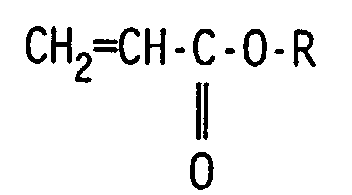
- Preferred uses of the present invention comprise the use wherein the ionomer of ethylene comprises from 55-83 weight percent ethylene, 7-15 weight percent of an unsaturated carboxylic acid selected from the groups consisting of acrylic acid and methacrylic acid, and 10-30 weight percent of at least one softening comonomer, wherein the softening comonomer is of the formula where R is selected from the group consisting of n-butyl, 2-ethylhexyl and 2-methoxyethyl, and further wherein the copolymer has from 35 to 75 percent of the carboxylic acid groups neutralized with metal ions selected from the group consisting of sodium, potassium, zinc, calcium and magnesium.
- thermoplastic polyamide compositions formed by melt blending under high shear wherein:
- the components described above are melt blended with each other under high shear.
- the various ingredients may first be combined with one another in what is commonly referred to as a "salt and pepper" blend, i.e., a pellet blend, of each of the ingredients, or they may be combined with one another via simultaneous or separate metering of the various components, or they may be divided and blended in one or more passes into one or more sections of mixing equipment such as an extruder, Banbury, Buess Kneader, Farrell Continuous Mixer or other mixing equipment.
- Polyamides suitable for use in the current invention include those desribed in U.S. Patent Nos. 4,174,358 and 4,346,194.
- the ionomers of ethylene of the present invention can be prepared by direct or graft copolymerization.
- the direct copolymerization process comprises polymerizing ethylene, unsaturated carboxylic acid and a softening comonomer in the presence of free radical polymerization initiator at elevated temperatures of from 100 to 200°C or from 130° to 145°C at high pressures, e.g., at least 140 MPa (20,000 psi) preferably from 140 MPa (20,000 psi) to 350 MPa (50,000 psi) followed by neutralization of the carboxylic acid groups of the resultant direct copolymer with metal ions.
- a suitable polymerization process is discussed in detail in U.S. Patent No. 3,264,272 and 4,690,981.
- the graft copolymerization process can be carried out by polymerizing ethylene and copolymer in the presence of free radical polymerization initiator at elevated temperatures of from 100° to 200°C, preferably from 140°C to 160°C and from 130° to 145°C, at high pressures, e.g., at least 140 MPa (20,000 psi), preferably from 140 MPa (20,000 psi) to 350 MPa (50,000 psi), and grafting unsaturated carboxylic acid onto the ethylene/comonomer polymer backbone followed by neutralization of the carboxylic acid groups of the resultant graft copolymer with metal ions.
- free radical polymerization initiator at elevated temperatures of from 100° to 200°C, preferably from 140°C to 160°C and from 130° to 145°C, at high pressures, e.g., at least 140 MPa (20,000 psi), preferably from 140 MPa (20,000 psi) to 350 MPa (50,000 psi),
- the ionomers of ethylene include ethylene/acrylic acid/n-butyl acrylate, ethylene/methacrylic acid/n-butyl acrylate, ethylene/methacrylic acid/2-ethoxyethyl acrylate, ethylene/methacrylic acid/n-propyl acrylate, ethylene/acrylic acid/2-ethoxyethyl acrylate, ethylene/acrylic acid/n-octyl acrylate, ethylene/methacrylic acid/n-pentyl acrylate, ethylene/acrylic acid/n-pentyl acrylate, ethylene/acrylic acid/2-ethylhexyl acrylate, ethylene/acrylic acid/n-propyl acrylate, ethylene/acrylic acid/n-heptyl acrylate, ethylene/acrylic acid/2-methoxyethyl acrylate, ethylene/acrylic acid/3-methoxypropyl acrylate and ethylene/acrylic acid/3-
- Preferred ionomers of ethylene for use in the compositions of the present invention include ethylene/methacrylic acid/n-butyl acrylate, ethylene/acrylic acid/n-butyl acrylate, ethylene/acrylic acid/2-methoxyethyl acrylate and ethylene/acrylic acid/ethylhexyl acrylate.
- the most preferred ionomer of ethylene for use in the compositions of the present invention is ethylene/methacrylic acid/n-butyl acrylate.
- thermoplastic polyamide compositions of the present invention may include other ingredients as are used in the conventional compounding of polyamide and/or ionomers of ethylene, provided that such additional ingredients are no more than 100 parts by weight per 100 parts of the total of thermoplastic polyamide plus ionomer of ethylene.
- additional ingredients include carbon black, glass fibers, graphite fibers, Kevlar® aramid fibers, glass spheres, plasticizers, lubricants, silica, titanium dioxide, pigments, clay, mica and other mineral fillers, flame retardants, antioxidants, ultraviolet stabilizers, heat stabilizers, processing aids, adhesives and tackifiers.
- compositions of the present invention and control compositions were prepared on a ten barrel 53 mm Werner & Pfleiderer twin screw extruder at 90 kg/hr feed rate and 250 rpm screw speed. All the ingredients for each composition were preblended and fed into barrel 1 with a screw feeder. A vacuum was applied at barrel 9. After exiting through a 4-hole die, the strands were quenched in an ambient water trough with circulating water. The strands were subsequently pelletized at 100-110°C cut temperature and allowed to cool under nitrogen sparge.
- the representative extrusion condition for samples 1-16 is: Barrel 1 2 3 4 5 6 7 8 9 10 Temp. Setting °C no heat 230 265 280 280 280 280 280 280 280 280 280 280 280 280 280 280 280 280
- the representative extrusion condition for samples 17-19 is: Barrel 1 2 3 4 5 6 7 8 9 10 Temp. Setting °C no heat 230 265 265 265 265 265 265 265 270
- the extruded material was molded into test bars on a 44.45 mm diameter injection molding machine, at 142 g/shot and 3.175 mm thick flex bars and tensile bars were molded, (ASTM D-647 127x12.7x 3.175 mm flex bars, and ASTM D-638 specimen Type I, 3.175 mm thick tensile bars).
- the temperatures of the molding machine extruder were set at 282°C and the melt temperature ranged from 271-299°C.
- the mold temperature was set at 66°C and the clamp force was 1600 kN.
- the overall cycle time was 45 seconds (clamp closed time was 40 seconds and the mold open time was 5 seconds).
- the injection hold time was 20 seconds.
- notched Izod (ASTM D-256, method A), flexural modulus (ASTM D-790M) and tensile/elongation properties (ASTM D-638) were tested on the molded bars which are described immediately above.
- the mold deposit study of the compositions of the present invention was done on a 200T Cincinnati Milacron injection molding machine having a clamp force of 1779 kN, and 236 cubic cm. maximum shot size, and a hopper dryer to assure that the compositions were dry.
- the mold was a one-cavity disk having a diameter of 101.6 mm and a wall thickness of 1.58 mm.
- the molding conditions were:
- the mold deposit study results were rated on photographs of the mold after 800 shots of each resin were run except for samples 4,5 and 14 where 1000 shots were run (see Table II for details).
- the 800 shots represent a standard number of shots used in testing mold deposit for commercial applications when a customer has a problem or question.
- the mold deposit rating scale ranges from 0-10 (see below) and acceptable levels of mold deposit were set at one-third (3.33) or less because samples that fell at 3.33 or below required significantly less frequent cleaning of the molds than what is now common with commercially available ionomer toughened thermoplastic polyamid compositions.
- Table II shows compositions containing nylon 66 as the thermoplastic polyamide with varying amounts of the ionomer of ethylene, as shown in Table I.
- Table II shows compositions containing nylon 66 as the thermoplastic polyamide with varying amounts of the ionomer of ethylene, as shown in Table I.
- samples 2 and 3 it can be seen from the notched Izod at 23°C and the flexural modulus that the composition is toughened yet demonstrates excellent stiffness.
- Samples 2 and 3 demonstrate compositions containing ionomer with n-BA are toughened at relatively low levels of the ionomer, 10% and 15%, respectively.
- Sample 2 at 10% ionomer (with n-BA) has equivalent toughness with control sample 15, which contains 15% ionomer without n-BA; and sample 2 is 9% stiffer than sample 15.
- sample 3 which contains the n-BA ionomer, achieves nearly twice the toughness of sample 15, which contains the ionomer without n-BA and sample 3 is only 5% less stiff than sample 15. Furthermore, sample 3 which has 15% of the n-BA ionomer, has equivalent toughness with control sample 20, which contains 20% of the ionomer without n-BA; sample 3 is 8% stiffer than sample 20. At 20% ionomer, compositions containing the n-BA ionomer of ethylene are dramatically tougher than compositions containing ionomer of ethylene without n-BA at the same level of ionomer, yet are only slightly less stiff.
- Samples 4 and 5 demonstrate excellent low temperature toughness and good stiffness with levels of the n-BA ionomer of ethylene at 20 and 25 weight percent.
- sample 4 which contains 20% of the n-BA ionomer of ethylene
- sample 20 which contains 20% of the ionomer of ethylene without n-BA.
- Sample 4 is slightly less stiff (6%) than sample 20.
- sample 5 has an excellent combination of toughness and stiffness, increasing significantly in toughness from sample 4, while decreasing less in stiffness, than would have been predicted by the relative stiffness of the control samples 15 and 20 (ionomer without n-BA).
- Samples 1-5 show slight or less mold deposit.
- control sample 15 which contains 15% ionomer of ethylene without n-BA, suffers from heavy mold deposit.
- the above demonstrates the criticality of using ethylene ionomer containing softening comonomer, e.g., n-BA to achieve freedom from mold deposit. Notched Izod(J/m) Flex Modulus MPa % Elong Tensile Str. Brk(MPa) Mold Dep.
- Table III shows compositions that contain nylon 66, nylon 6 and nylon 66/6 blends with an ionomer of ethylene.
- Blends with not more than 50 weight percent nylon 6 demonstrate a good combination of toughness and good stiffness, and have very low mold deposit levels, ranging from slight films to gate smears.
- Blends containing greater than 50 weight percent nylon 6 reveal mold deposit in a very significant amount, levels ranging from severe to very severe mold deposit, 9-10.
- Sample 14 containing all nylon 6 as thermoplastic polyamide resin, reveals a good combination of stiffness and toughness, and a very small mold deposit level, 2.0, provided that the melt temperature in molding is lowered to 252°C rather than 293°C due to the lower melting point of nylon 6.
- Sample 15 and 16 show that when no n-BA is present in the ionomer of ethylene mold deposit levels are very significant, 8.0 and 10.0, respectively.
- Sample 9 which has a very similar composition to sample 8, demonstrates carbon black can be added to the components of the present invention with retention of the good combination of toughness and stiffness, and the freedom from mold deposit. Notched Izod(J/m) Flex Modulus MPa % Elong Tensile Str. Brk(MPa) Mold Dep.
- Table IV shows compositions containing blends of nylon 66/6 with different ionomers of ethylene.
- Samples 17 and 19 show that a copolymer of ethylene without n-BA and a terpolymer containing i-BA instead of n-BA give dramatically lower toughness than the n-BA terpolymer of ethylene used in the present invention, sample 18. Also, sample 18 is stiffer than either sample 17 or 19.
- Sample 19 is the only sample in this set submitted for mold deposit study and reveals severe mold deposit formation, 10.0. From example 1, sample 18 is expected to have very low mold deposit. Notched Izod(J/m) Flex Modulus MPa % Elong Tensile Str. Brk(MPa) Mold Dep. Sample 23°C 0°C 17 266.9 - 2000 146 47 - 18 1025 112.1 2200 131 48 - 19 213.5 - 2069 142 48 10.0
Landscapes
- Chemical & Material Sciences (AREA)
- Health & Medical Sciences (AREA)
- Chemical Kinetics & Catalysis (AREA)
- Medicinal Chemistry (AREA)
- Polymers & Plastics (AREA)
- Organic Chemistry (AREA)
- Compositions Of Macromolecular Compounds (AREA)
- Addition Polymer Or Copolymer, Post-Treatments, Or Chemical Modifications (AREA)
Claims (13)
- Composition de polyamide thermoplastique composée essentiellement de:(a) 75-90% en poids d'un polyamide thermoplastique choisi parmi du nylon 66 et des mélanges de nylons 66/6 où les mélanges ne contiennent pas plus de 50% en poids de nylon 6 et où le polyamide possède un poids moléculaire moyen en nombre d'au moins 5.000; et(b) 10-25% en poids d'un ionomère d'éthylène, E/X/Y, où E est de l'éthylène compris entre 45 et 94% en poids, X représente de 1 à 20% en poids d'un acide carboxylique insaturé, dans lequel l'acide carboxylique insaturé est choisi parmi le groupe composé de l'acide acrylique, de l'acide méthacrylique, de l'acide maléique, de l'acide fumarique, de l'acide itaconique et de demi-esters des acides maléique, fumarique et itaconique, et Y représente de 5 à 35% en poids d'un comonomère adoucissant, dans lequel le comonomère adoucissant est de la formule:où R est choisi parmi le groupe composé de n-propyle, n-pentyle, n-hexyle, n-heptyle, n-octyle, n-nonyle, 2-éthylhexyle, 2-méthoxyéthyle, 2-éthoxyéthyle, 3-méthoxypropyle, 3-méthoxybutyle et 3-éthoxypropyle, et dans lequel en outre l'ionomère possède de 3 à 90% de groupes d'acide carboxylique neutralisés avec des ions métalliques choisis parmi les groupes Ia, IIa, IIb, IIIa, IVa, VIb et VIII du Tableau Périodique des Eléments.

- Composition de la revendication 1, dans laquelle les mélanges de nylons 66/6 ne contiennent pas plus de 40% en poids de nylon 6.
- Composition de la revendication 2, dans laquelle le composant (a) est un mélange de nylons 66/6 avec 24 à 40% en poids de nylon 6.
- Composition de la revendication 1, dans laquelle le polyamide thermoplastique est présent selon une quantité allant de 80 à 85% en poids.
- Composition de la revendication 4, dans laquelle le polyamide thermoplastique est présent selon une quantité d'environ 85% en poids.
- Composition de la revendication 1, dans laquelle l'ionomère d'éthylène comprend de 55 à 83% en poids d'éthylène, de 7 à 15% en poids d'un acide carboxylique insaturé choisi parmi les groupes composés de l'acide acrylique et de l'acide méthacrylique, et de 10 à 30% en poids d'au moins un comonomère adoucissant, dans lequel le comonomère adoucissant est de la formule:où R est choisi parmi le groupe composé de 2-éthylhexyle et de 2-méthoxyéthyle, et en outre dans lequel le copolymère possède de 35 à 75% de groupes d'acide carboxylique neutralisés avec des ions métalliques choisis parmi le groupe composé du sodium, du potassium, du zinc, du calcium et du magnésium.

- Composition de la revendication 1, dans laquelle l'ionomère d'éthylène est présent selon une quantité allant de 15 à 20% en poids.
- Composition de la revendication 7, dans laquelle l'ionomère d'éthylène est présent selon une quantité d'environ 15% en poids.
- Procédé de préparation de la composition de la revendication 1 en mélangeant par fusion sous un cisaillement élevé la résine de polyamide thermoplastique et de l'ionomère d'éthylène.
- Produits façonnés fabriqués à partir de la composition de la revendication 1.
- Utilisation d'une composition de polyamide thermoplastique composée essentiellement de:pour réduire le dépôt dans le moule pendant le moulage de la composition de polyamide thermoplastique à une valeur inférieure ou égale à 42% de dépôt dans le moule, évaluée sur des photographies, atteinte avec une composition de polyamide thermoplastique composée de 85% en poids de nylon 66 et de 15% en poids d'un copolymère de 90% en poids d'éthylène et de 10% en poids d'acide méthacrylique, ledit copolymère possédant un degré approximatif de neutralisation avec des ions de zinc de 71%.(a) 75-90% en poids d'un polyamide thermoplastique choisi parmi du nylon 66 et des mélanges de nylons 66/6 où les mélanges ne contiennent pas plus de 50% en poids de nylon 6 et où le polyamide possède un poids moléculaire moyen en nombre d'au moins 5.000; et(b) 10-25% en poids d'un ionomère d'éthylène, E/X/Y, où E est de l'éthylène compris entre 45 et 94% en poids, X représente de 1 à 20% en poids d'un acide carboxylique insaturé, dans lequel l'acide carboxylique insaturé est choisi parmi le groupe composé de l'acide acrylique, de l'acide méthacrylique, de l'acide maléique, de l'acide fumarique, de l'acide itaconique et de demi-esters des acides maléique, fumarique et itaconique, et Y représente de 5 à 35% en poids d'un comonomère adoucissant, dans lequel le comonomère adoucissant est de la formule:où R est choisi parmi le groupe composé de n-propyle, n-butyle, n-pentyle, n-hexyle, n-heptyle, n-octyle, n-nonyle, 2-éthylhexyle. 2-méthoxyéthyle, 2-éthoxyéthyle, 3-méthoxypropyle, 3-méthoxybutyle et 3-éthoxypropyle, et dans lequel en outre l'ionomère possède de 3 à 90% de groupes d'acide carboxylique neutralisés avec des ions métalliques choisis parmi les groupes Ia, IIa, IIb, IIIa, IVa, VIb et VIII du Tableau Périodique des Eléments,

- Utilisation de la revendication 11, dans laquelle l'ionomère d'éthylène comprend de 55 à 83% en poids d'éthylène, de 7 à 15% en poids d'un acide carboxylique insaturé choisi parmi les groupes composés de l'acide acrylique et de l'acide méthacrylique, et de 10 à 30% en poids d'au moins un comonomère adoucissant, dans lequel le comonomère adoucissant est de la formule:où R est choisi parmi le groupe composé de n-butyle, de 2-éthylhexyle et de 2-méthoxyéthyle, et en outre dans lequel le copolymère possède de 35 à 75% de groupes d'acide carboxylique neutralisés avec des ions métalliques choisis parmi le groupe composé du sodium, du potassium, du zinc, du calcium et du magnésium.
- Utilisation de la revendication 12, dans laquelle l'ionomère d'éthylène comprend de 61 à 77% en poids d'éthylène, X représente de 8 à 12% en poids d'acide méthacrylique et Y représente de 15 à 27% en poids d'acrylate de n-butyle, et dans lequel le copolymère possède en outre environ 70% de groupes d'acide carboxylique neutralisés avec l'ion zinc.
Applications Claiming Priority (2)
| Application Number | Priority Date | Filing Date | Title |
|---|---|---|---|
| US23716988A | 1988-08-29 | 1988-08-29 | |
| US237169 | 1988-08-29 |
Publications (3)
| Publication Number | Publication Date |
|---|---|
| EP0356978A2 EP0356978A2 (fr) | 1990-03-07 |
| EP0356978A3 EP0356978A3 (fr) | 1991-07-10 |
| EP0356978B1 true EP0356978B1 (fr) | 1999-05-06 |
Family
ID=22892610
Family Applications (1)
| Application Number | Title | Priority Date | Filing Date |
|---|---|---|---|
| EP89115889A Expired - Lifetime EP0356978B1 (fr) | 1988-08-29 | 1989-08-29 | Nylons renforcés caractérisés par une faible déposition de moulage |
Country Status (5)
| Country | Link |
|---|---|
| US (1) | US4977216A (fr) |
| EP (1) | EP0356978B1 (fr) |
| JP (1) | JPH0733482B2 (fr) |
| CA (1) | CA1338025C (fr) |
| DE (1) | DE68928986T2 (fr) |
Cited By (1)
| Publication number | Priority date | Publication date | Assignee | Title |
|---|---|---|---|---|
| US10077341B2 (en) | 2013-03-15 | 2018-09-18 | Ascend Performance Materials Operations Llc | Polymerization coupled compounding process |
Families Citing this family (12)
| Publication number | Priority date | Publication date | Assignee | Title |
|---|---|---|---|---|
| KR0133357B1 (ko) * | 1992-12-31 | 1998-04-13 | 전성원 | 자동차외장용 폴리아미드 수지조성물 |
| IT1272735B (it) * | 1993-10-19 | 1997-06-26 | Enichem Elastomers | Composizioni termoplastiche a base di nylon e gomma poliacrilica |
| US5631328A (en) * | 1993-10-27 | 1997-05-20 | Chevron Chemical Company | Low-haze ionomers of copolymers of alpha-olefins, carboxylic acid esters, and optional comonomers, and processes for making and acidifying these ionomers |
| US5589544A (en) * | 1994-07-06 | 1996-12-31 | Advanced Elastomer Systems, L.P. | Soft thermoplastic elastomers having improved resistance to oil swell and compression set |
| US5902869A (en) * | 1996-03-22 | 1999-05-11 | E. I. Du Pont De Nemours And Company | Thermally stable ethylene/acid copolymers |
| AU2020297A (en) * | 1996-03-25 | 1997-10-17 | Du Pont Canada Inc. | Polyamide formulations for embossed laminates |
| US5811490A (en) * | 1997-01-13 | 1998-09-22 | Judd Wire, Inc. | Polyamide coating compositions having a balance of resistance properties |
| CA2250011A1 (fr) * | 1997-02-28 | 1998-09-03 | E.I. Du Pont De Nemours And Company | Nouveaux ionomeres a base de copolymeres d'ethylene avec acides monocarboxyliques et dicarboxyliques et melanges polyamides contenant ces ionomeres |
| US6143383A (en) * | 1998-05-22 | 2000-11-07 | Hollister Incorporated | Multilayer chlorine-free film with barrier layer of a polyamide blend and ostomy pouches formed therefrom |
| FR2797880B1 (fr) * | 1999-08-27 | 2005-03-11 | Atofina | Resines thermoplastiques modifiees par des copolymeres a base d'acrylates lourds |
| WO2006060285A2 (fr) * | 2004-11-30 | 2006-06-08 | Arkema Inc. | Composition d'alliage utile pour des objets de transport de fluides |
| EP2410020B1 (fr) | 2010-07-23 | 2013-01-30 | Ems-Patent Ag | Compositions à mouler à base de polyamide partiellement aromatique et leurs utilisations |
Family Cites Families (11)
| Publication number | Priority date | Publication date | Assignee | Title |
|---|---|---|---|---|
| US3845163A (en) * | 1966-01-24 | 1974-10-29 | Du Pont | Blends of polyamides and ionic copolymer |
| CA1133164A (fr) * | 1975-05-23 | 1982-10-05 | Bennett N. Epstein | Matrice de polyamide thermoplastique durci, renfermant une dispersion de polymere doux de la taille du micron |
| US4174358A (en) * | 1975-05-23 | 1979-11-13 | E. I. Du Pont De Nemours And Company | Tough thermoplastic nylon compositions |
| FI68646C (fi) * | 1976-11-30 | 1985-10-10 | Bayer Ag | Polyamid-6-basefad pressmassa och formstycken framstaellda av denna |
| US4346194A (en) * | 1980-01-22 | 1982-08-24 | E. I. Du Pont De Nemours And Company | Toughened polyamide blends |
| US4404325A (en) * | 1981-05-11 | 1983-09-13 | Allied Corporation | High impact nylon composition containing copolymer esters and ionic copolymers |
| US4801649A (en) * | 1982-12-28 | 1989-01-31 | E. I. Du Pont De Nemours And Company | Ionomers having improved low temperature properties and blends thereof with thermoplastic resins |
| EP0115190B1 (fr) * | 1982-12-28 | 1987-09-30 | E.I. Du Pont De Nemours And Company | Ionomères ayant des propriétés améliorées à basse température |
| US4690981A (en) * | 1983-03-21 | 1987-09-01 | E. I. Du Pont De Nemours And Company | Ionomers having improved low temperature properties |
| CA1276341C (fr) * | 1985-01-15 | 1990-11-13 | James Francis Dunphy | Polyamide offrant une forte resistance aux impacts |
| DK35388A (da) * | 1987-01-27 | 1988-07-28 | Du Pont | Termoplastisk formgiveligt materiale samt anvendelse heraf |
-
1989
- 1989-08-25 CA CA000609496A patent/CA1338025C/fr not_active Expired - Fee Related
- 1989-08-29 EP EP89115889A patent/EP0356978B1/fr not_active Expired - Lifetime
- 1989-08-29 JP JP1220482A patent/JPH0733482B2/ja not_active Expired - Lifetime
- 1989-08-29 DE DE68928986T patent/DE68928986T2/de not_active Expired - Fee Related
-
1990
- 1990-04-05 US US07/506,490 patent/US4977216A/en not_active Expired - Lifetime
Cited By (4)
| Publication number | Priority date | Publication date | Assignee | Title |
|---|---|---|---|---|
| US10077341B2 (en) | 2013-03-15 | 2018-09-18 | Ascend Performance Materials Operations Llc | Polymerization coupled compounding process |
| US10081712B2 (en) | 2013-03-15 | 2018-09-25 | Ascend Performance Materials Operations Llc | Polymerization coupled compounding process |
| US10590245B2 (en) | 2013-03-15 | 2020-03-17 | Ascend Performance Materials Operations Llc | Polymerization coupled compounding process |
| US11447609B2 (en) | 2013-03-15 | 2022-09-20 | Ascend Performance Materials Operations Llc | Polymerization coupled compounded nylon |
Also Published As
| Publication number | Publication date |
|---|---|
| DE68928986D1 (de) | 1999-06-10 |
| DE68928986T2 (de) | 1999-12-09 |
| JPH02127468A (ja) | 1990-05-16 |
| EP0356978A2 (fr) | 1990-03-07 |
| EP0356978A3 (fr) | 1991-07-10 |
| CA1338025C (fr) | 1996-01-30 |
| US4977216A (en) | 1990-12-11 |
| JPH0733482B2 (ja) | 1995-04-12 |
Similar Documents
| Publication | Publication Date | Title |
|---|---|---|
| EP0285256B1 (fr) | Procédé de fabrication d'une composition de résine thermoplastique | |
| EP0034704B1 (fr) | Mélanges à base de polyamide à ténacité améliorée et procédé de préparation | |
| JP4309284B2 (ja) | 改良された流動性および耐衝撃性を有するアイオノマー/ポリアミドブレンド | |
| JP4302774B2 (ja) | 高性能アイオノマー配合物 | |
| EP0356978B1 (fr) | Nylons renforcés caractérisés par une faible déposition de moulage | |
| EP1506258B1 (fr) | Compositions de polyamide thermoplastique renforcees | |
| US4478978A (en) | Toughened polyamide blends | |
| EP0109145A2 (fr) | Mélanges compatibles de polymère acrylique imidé et de polyamide et leur utilisation pour la fabrication de produits de matière plastique | |
| JP2005516096A (ja) | 改良された耐衝撃性を有するアイオノマー/高密度ポリエチレンブレンド | |
| EP0355792B1 (fr) | Procédé pour la production de compositions de polyamides résistantes aux chocs | |
| GB1597478A (en) | Polyamide blends | |
| EP0049103B2 (fr) | Matériaux polymériques et compositions de résine thermoplastiques | |
| US5221712A (en) | Process for producing impact-resistant polyamide resin compositions | |
| EP0418068A2 (fr) | Fabrication de compositions élastomères thermoplastiques | |
| JPH06505521A (ja) | ナイロンを含んで成る可撓性の熱可塑性組成物 | |
| EP0536966B1 (fr) | Procédé pour la fabrication d'une composition plastique industrielle crystalline et renforcée | |
| US5939512A (en) | Fast cycling blended polymer material comprising Nylon-6 | |
| US5061757A (en) | High impact strength polyamide blends and method for preparation thereof | |
| JPS60112853A (ja) | ポリアミド組成物の製法 | |
| JPS623181B2 (fr) | ||
| EP0530210B1 (fr) | Polyamides resistant au choc avec cycles de moulage rapides | |
| JP2870540B2 (ja) | 熱可塑性成形配合物 | |
| JP3403771B2 (ja) | ポリアミド樹脂組成物 | |
| JP3295979B2 (ja) | 強化結晶性エンジニアリングプラスチックス組成物の製造方法 | |
| JPS63278964A (ja) | 耐衝撃性ポリアミド系樹脂組成物 |
Legal Events
| Date | Code | Title | Description |
|---|---|---|---|
| PUAI | Public reference made under article 153(3) epc to a published international application that has entered the european phase |
Free format text: ORIGINAL CODE: 0009012 |
|
| AK | Designated contracting states |
Kind code of ref document: A2 Designated state(s): BE CH DE FR GB IT LI NL |
|
| 17P | Request for examination filed |
Effective date: 19901227 |
|
| PUAL | Search report despatched |
Free format text: ORIGINAL CODE: 0009013 |
|
| AK | Designated contracting states |
Kind code of ref document: A3 Designated state(s): BE CH DE FR GB IT LI NL |
|
| 17Q | First examination report despatched |
Effective date: 19930211 |
|
| GRAG | Despatch of communication of intention to grant |
Free format text: ORIGINAL CODE: EPIDOS AGRA |
|
| GRAG | Despatch of communication of intention to grant |
Free format text: ORIGINAL CODE: EPIDOS AGRA |
|
| GRAH | Despatch of communication of intention to grant a patent |
Free format text: ORIGINAL CODE: EPIDOS IGRA |
|
| GRAH | Despatch of communication of intention to grant a patent |
Free format text: ORIGINAL CODE: EPIDOS IGRA |
|
| GRAA | (expected) grant |
Free format text: ORIGINAL CODE: 0009210 |
|
| AK | Designated contracting states |
Kind code of ref document: B1 Designated state(s): BE CH DE FR GB IT LI NL |
|
| REG | Reference to a national code |
Ref country code: CH Ref legal event code: EP |
|
| REF | Corresponds to: |
Ref document number: 68928986 Country of ref document: DE Date of ref document: 19990610 |
|
| REG | Reference to a national code |
Ref country code: CH Ref legal event code: NV Representative=s name: RITSCHER & SEIFERT |
|
| ET | Fr: translation filed | ||
| PLBE | No opposition filed within time limit |
Free format text: ORIGINAL CODE: 0009261 |
|
| STAA | Information on the status of an ep patent application or granted ep patent |
Free format text: STATUS: NO OPPOSITION FILED WITHIN TIME LIMIT |
|
| 26N | No opposition filed | ||
| REG | Reference to a national code |
Ref country code: GB Ref legal event code: IF02 |
|
| PGFP | Annual fee paid to national office [announced via postgrant information from national office to epo] |
Ref country code: NL Payment date: 20050803 Year of fee payment: 17 |
|
| PGFP | Annual fee paid to national office [announced via postgrant information from national office to epo] |
Ref country code: FR Payment date: 20050809 Year of fee payment: 17 |
|
| PGFP | Annual fee paid to national office [announced via postgrant information from national office to epo] |
Ref country code: GB Payment date: 20050824 Year of fee payment: 17 |
|
| PGFP | Annual fee paid to national office [announced via postgrant information from national office to epo] |
Ref country code: DE Payment date: 20050825 Year of fee payment: 17 |
|
| PGFP | Annual fee paid to national office [announced via postgrant information from national office to epo] |
Ref country code: CH Payment date: 20050830 Year of fee payment: 17 |
|
| PGFP | Annual fee paid to national office [announced via postgrant information from national office to epo] |
Ref country code: BE Payment date: 20051013 Year of fee payment: 17 |
|
| PG25 | Lapsed in a contracting state [announced via postgrant information from national office to epo] |
Ref country code: LI Free format text: LAPSE BECAUSE OF NON-PAYMENT OF DUE FEES Effective date: 20060831 Ref country code: CH Free format text: LAPSE BECAUSE OF NON-PAYMENT OF DUE FEES Effective date: 20060831 Ref country code: BE Free format text: LAPSE BECAUSE OF NON-PAYMENT OF DUE FEES Effective date: 20060831 |
|
| PGFP | Annual fee paid to national office [announced via postgrant information from national office to epo] |
Ref country code: IT Payment date: 20060831 Year of fee payment: 18 |
|
| PG25 | Lapsed in a contracting state [announced via postgrant information from national office to epo] |
Ref country code: NL Free format text: LAPSE BECAUSE OF NON-PAYMENT OF DUE FEES Effective date: 20070301 Ref country code: DE Free format text: LAPSE BECAUSE OF NON-PAYMENT OF DUE FEES Effective date: 20070301 |
|
| REG | Reference to a national code |
Ref country code: CH Ref legal event code: PL |
|
| GBPC | Gb: european patent ceased through non-payment of renewal fee |
Effective date: 20060829 |
|
| NLV4 | Nl: lapsed or anulled due to non-payment of the annual fee |
Effective date: 20070301 |
|
| REG | Reference to a national code |
Ref country code: FR Ref legal event code: ST Effective date: 20070430 |
|
| PG25 | Lapsed in a contracting state [announced via postgrant information from national office to epo] |
Ref country code: GB Free format text: LAPSE BECAUSE OF NON-PAYMENT OF DUE FEES Effective date: 20060829 |
|
| BERE | Be: lapsed |
Owner name: E.I. *DU PONT DE NEMOURS AND CY Effective date: 20060831 |
|
| PG25 | Lapsed in a contracting state [announced via postgrant information from national office to epo] |
Ref country code: FR Free format text: LAPSE BECAUSE OF NON-PAYMENT OF DUE FEES Effective date: 20060831 |
|
| PG25 | Lapsed in a contracting state [announced via postgrant information from national office to epo] |
Ref country code: IT Free format text: LAPSE BECAUSE OF NON-PAYMENT OF DUE FEES Effective date: 20070829 |