EP0358557B1 - Pflanzen, die mit einer lepidopteralen DNS-Sequenz aus Bazillus thuringiensis transformiert werden - Google Patents
Pflanzen, die mit einer lepidopteralen DNS-Sequenz aus Bazillus thuringiensis transformiert werden Download PDFInfo
- Publication number
- EP0358557B1 EP0358557B1 EP89402403A EP89402403A EP0358557B1 EP 0358557 B1 EP0358557 B1 EP 0358557B1 EP 89402403 A EP89402403 A EP 89402403A EP 89402403 A EP89402403 A EP 89402403A EP 0358557 B1 EP0358557 B1 EP 0358557B1
- Authority
- EP
- European Patent Office
- Prior art keywords
- gene
- dna
- plant
- transformed
- protoxin
- Prior art date
- Legal status (The legal status is an assumption and is not a legal conclusion. Google has not performed a legal analysis and makes no representation as to the accuracy of the status listed.)
- Expired - Lifetime
Links
Images












Classifications
-
- C—CHEMISTRY; METALLURGY
- C12—BIOCHEMISTRY; BEER; SPIRITS; WINE; VINEGAR; MICROBIOLOGY; ENZYMOLOGY; MUTATION OR GENETIC ENGINEERING
- C12N—MICROORGANISMS OR ENZYMES; COMPOSITIONS THEREOF; PROPAGATING, PRESERVING, OR MAINTAINING MICROORGANISMS; MUTATION OR GENETIC ENGINEERING; CULTURE MEDIA
- C12N15/00—Mutation or genetic engineering; DNA or RNA concerning genetic engineering, vectors, e.g. plasmids, or their isolation, preparation or purification; Use of hosts therefor
- C12N15/09—Recombinant DNA-technology
- C12N15/63—Introduction of foreign genetic material using vectors; Vectors; Use of hosts therefor; Regulation of expression
- C12N15/79—Vectors or expression systems specially adapted for eukaryotic hosts
- C12N15/82—Vectors or expression systems specially adapted for eukaryotic hosts for plant cells, e.g. plant artificial chromosomes (PACs)
- C12N15/8241—Phenotypically and genetically modified plants via recombinant DNA technology
- C12N15/8261—Phenotypically and genetically modified plants via recombinant DNA technology with agronomic (input) traits, e.g. crop yield
- C12N15/8271—Phenotypically and genetically modified plants via recombinant DNA technology with agronomic (input) traits, e.g. crop yield for stress resistance, e.g. heavy metal resistance
- C12N15/8279—Phenotypically and genetically modified plants via recombinant DNA technology with agronomic (input) traits, e.g. crop yield for stress resistance, e.g. heavy metal resistance for biotic stress resistance, pathogen resistance, disease resistance
- C12N15/8286—Phenotypically and genetically modified plants via recombinant DNA technology with agronomic (input) traits, e.g. crop yield for stress resistance, e.g. heavy metal resistance for biotic stress resistance, pathogen resistance, disease resistance for insect resistance
-
- C—CHEMISTRY; METALLURGY
- C07—ORGANIC CHEMISTRY
- C07K—PEPTIDES
- C07K14/00—Peptides having more than 20 amino acids; Gastrins; Somatostatins; Melanotropins; Derivatives thereof
- C07K14/195—Peptides having more than 20 amino acids; Gastrins; Somatostatins; Melanotropins; Derivatives thereof from bacteria
- C07K14/32—Peptides having more than 20 amino acids; Gastrins; Somatostatins; Melanotropins; Derivatives thereof from bacteria from Bacillus (G)
- C07K14/325—Bacillus thuringiensis crystal peptides, i.e. delta-endotoxins
-
- Y—GENERAL TAGGING OF NEW TECHNOLOGICAL DEVELOPMENTS; GENERAL TAGGING OF CROSS-SECTIONAL TECHNOLOGIES SPANNING OVER SEVERAL SECTIONS OF THE IPC; TECHNICAL SUBJECTS COVERED BY FORMER USPC CROSS-REFERENCE ART COLLECTIONS [XRACs] AND DIGESTS
- Y02—TECHNOLOGIES OR APPLICATIONS FOR MITIGATION OR ADAPTATION AGAINST CLIMATE CHANGE
- Y02A—TECHNOLOGIES FOR ADAPTATION TO CLIMATE CHANGE
- Y02A40/00—Adaptation technologies in agriculture, forestry, livestock or agroalimentary production
- Y02A40/10—Adaptation technologies in agriculture, forestry, livestock or agroalimentary production in agriculture
- Y02A40/146—Genetically Modified [GMO] plants, e.g. transgenic plants
Definitions
- This invention relates to a new DNA sequence (the " bt18 gene”) from the genome of the strain Bacillus thuringiensis var . darmstadiensis HD-146 (the “Bt HD-146 strain”) which is also publicly available from the Agricultural Research Culture Collection, U.S.A.
- the bt18 gene encodes a 130 kDa protein (the "Bt18 protoxin”).
- This invention also relates to a 62 kDa protein (the "Bt18 toxin”) which can be obtained by trypsin digestion of the Bt18 protoxin.
- the Bt18 toxin is the active ingredient in the crystallized protoxin produced by the Bt HD-146 strain, with a high activity against Lepidoptera species from the Noctuidae family such as Spodoptera species, as well as other Lepidoptera such as Manduca sexta .
- Bt B . thuringiensis
- Höfte et al (1988) has generally described three types of toxin-producing Lepidoptera-specific B . thuringiensis having the following characteristics:
- This invention further relates to a chimaeric gene that can be used to transform a plant cell and that contains the following, operably linked, DNA sequences:
- This invention still further relates to a plant that is regenerated from the transformed cell and that is resistant to Lepidoptera, particularly Sphingidae such as Manduca sexta and Noctuidae such as Spodoptera species which are major pests of economically important crops such as cotton, corn, soybean, alfalfa, tomato, tobacco, sugarbeet and other vegetables.
- Lepidoptera particularly Sphingidae such as Manduca sexta and Noctuidae such as Spodoptera species which are major pests of economically important crops such as cotton, corn, soybean, alfalfa, tomato, tobacco, sugarbeet and other vegetables.
- This invention yet further relates to: a method of locating the C-terminal end of the minimum toxic part or core of a B . thuringiensis protoxin which is like the Bt18 protoxin and is hereinafter referred to as a "Bt18-like protoxin"; a plant cell and plant transformed with a DNA sequence encoding a toxic part of a Bt18-like protoxin having a minimum-length C-terminal end; and a probe for identifying such a DNA sequence.
- a plant cell genome is transformed with the bt18 chimaeric gene containing all or part of the bt18 gene, preferably containing the truncated bt18 gene, whereby the resulting plant cell can be used to provide a plant which produces, in some or all of its tissues, all or at least a toxic part of the Bt18 protoxin, preferably the Bt18 toxin, thereby rendering the plant resistant to Lepidoptera.
- the transformed plant cells of this invention can also be used to produce, for recovery, the Bt toxins expressed by these cells.
- a process for rendering a plant resistant to Lepidoptera by transforming the plant cell genome with the bt18 chimaeric gene containing all or part of the bt18 gene, preferably the truncated bt18 gene.
- DNA sequences of the bt18 gene are provided that encode the Bt18 protoxin, respectively, and that include the DNA sequences of the truncated bt18 gene, which code for just the Bt18 toxin.
- a plant cell transformed with all or part of these DNA sequences of the bt18 gene is resistant to Lepidoptera.
- a method is provided to determine the C-terminus of the minimum toxic part of a Bt18-like protoxin against Lepidoptera, comprising the step of locating the following intact twelve-amino acid sequence in the protoxin: wherein X is any amino acid.
- a plant and plant cell the genome of which is transformed with a DNA sequence encoding a toxic part of a Bt18-like protoxin having a minimum length, C-terminal end that consists essentially of, and that preferably terminates with, said twelve-amino acid sequence.
- a nucleotide sequence encoding said twelve-amino acid sequence is utilized as a probe for: 1) identifying a nucleotide sequence, preferably a DNA sequence, encoding a toxic part, preferably the toxin, of a Bt18-like protoxin having a minimum length C-terminal end; and 2) for locating a nucleotide sequence encoding said C-terminal end in a larger nucleotide sequence encoding all or part of a Bt18-like protoxin.
- the bt18 gene can be isolated from its respective Bt HD-146 strain.
- the bt18 gene can be identified in its respective Bt strain, using the procedure described in European patent application 86300291.1 (which is incorporated herein by reference).
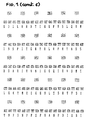
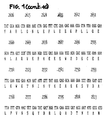
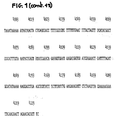
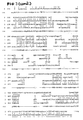
- the so-identified bt18 gene can then be sequenced in a conventional manner (Maxam and Gilbert, 1980), to obtain the DNA sequences shown in Fig. 1.
- the amino acid sequence of the Bt18 protoxin and toxin can be determined from the DNA sequences of the bt18 gene and truncated bt18 gene.
- All of the bt18 gene (encoding the Bt18 protoxin) or part of the bt18 gene (encoding a toxic part of the Bt18 protoxin), preferably the truncated bt18 gene (encoding the Bt18 toxin), can be stably inserted in a conventional manner into the nuclear genome of a single plant cell, and the so-transformed plant cell be used to produce a transformed plant that is insect-resistant.
- a disarmed Ti-plasmid, containing the bt18 chimaeric gene in Agrobacterium (e.g., A .
- tumefaciens can be used to transform the plant cell using the procedures described, for example, in European patent publications 116,718 and 270,822, PCT publication 84/02913 and European patent application 87400544.0 (which are also incorporated herein by reference).
- the genome of the resulting transformed plant cell and plant contains, integrated therein, the bt18 chimaeric gene.
- an insecticidally effective part or "a part” of the bt18 gene is meant a DNA sequence encoding a polypeptide which has fewer amino acids then the respective Bt18 protoxin but which is still toxic to Lepidoptera.
- Such a part of the bt18 gene can encode a Bt18 protoxin which has been truncated towards at least one trypsin cleavage site of the protoxin (U.S. patent application 821,582, filed January 22, 1986; European patent application 86300291.1)
- the resulting transformed plant can be used in a conventional breeding scheme to produce more transformed plants with the same Lepidoptera-resistant characteristics or to introduce all or part of the bt18 gene into other varieties of the same or related plant species.
- Seeds, which are obtained from the transformed plants, contain all or part of the bt18 gene as a stable genomic insert.
- Cells of the transformed plant can be cultured to produce the Bt18 toxin which can be recovered for use in conventional insecticide compositions against Leidoptera (U.S. patent application 821,582; European patent application 86300291.1).
- all or part of the bt18 gene is provided in the bt18 chimaeric gene and is inserted in a plant genome downstream (i.e., 3') of, and under the control of, a promoter which can direct the expression of the gene in the plant's cells.
- Preferred promoters include the strong constitutive 35S promoter (Odell et al, 1985) of the cauliflower mosaic virus. 35S promoters have been obtained from different isolates: CM1841 (Gardner et al, 1981), Cabb-JI (the "35S3 promoter") and CabbB-5 (Hull and Howell, 1987).
- TR1' promoter and TR2' promoter which drive the expression of the 1' and 2' genes, respectively, of the T-DNA (Velten et al, 1984) [the "TR1' promoter” and “TR2' promoter”, respectively].
- a promoter can be utilized which is not constitutive but rather is specific for one or more tissues or organs of the plant whereby all or a toxic part of the Bt18 protoxin is expressed only in cells of the specific tissue(s) or organ(s).
- all or part of the bt18 gene could be selectively expressed in the green tissues of a plant by placing the gene under the control of a light-inducible promoter such as the promoter of the ribulose-1,5-bisphosphate carborylase small unit gene of the plant itself or of another plant such as pea as disclosed in U.S. patent application 821,582 and European patent application 86300291.1 (which are also incorporated herein by reference).
- Another alternative is to use a promoter whose expression is inducible by temperature or chemical factors.
- bt18 gene be provided in the bt18 chimaeric gene and be inserted in a plant genome upstream (i.e., 5') of suitable 3' transcription regulation signals (i.e., transcription termination and polyadenylation signals) such as the 3' untranslated end of the octopine synthase ("ocs") gene (Gielen et al, 1984) or T-DNA gene 7 (Velten and Schell, 1985).
- suitable 3' transcription regulation signals i.e., transcription termination and polyadenylation signals
- ocs octopine synthase
- all or part of the bt18 gene be provided in the bt18 chimaeric gene and be inserted in a plant genome in the same transcriptional unit as, and under the control of, the same promoter as a selectable marker gene.
- This hybrid bt18 -marker gene will, thereby, be expressed in a transformed plant as a fusion protein (U.S. patent application 821,582; European patent application 86300291.1; Vaeck et al, 1987).
- Any conventional marker gene can be utilized, with which it is possible to make N-terminal gene fusions and the expression of which can be used to select transformed plant cells.
- a suitable selectable marker gene is an antibiotic resistance gene such as the neo gene coding for neomycin phosphotransferase II conferring kanamycin resistance (European patent application 87400544.0; U.S. patent application 821,582).
- Any DNA or RNA sequence, encoding the above-defined twelve-amino acid sequence, can be used in a conventional manner as a probe for identifying the location, in a gene encoding a Bt18-like protoxin, of the minimum length, C-terminal end of the protoxin.
- This probe can also be used to identify other homologous sequences present in other Bt. strains by means of conventional methods and by means of computer homology searches.
- This twelve-amino acid sequence also can be used in a conventional manner (Höfte et al, 1988) to prepare polyclonal and/or monoclonal antibodies which are directed against this sequence and which can be used to identify Bt18-like protoxins, preferably Bt18-like toxins.
- Trypsin digestion performed according to Höfte et al (1986), followed by SDS-PAGE, showed the presence of a single 62 kDa protein band that showed toxic activity against S . littoralis and M . sexta and that contained the toxic fragment of the Bt18 protoxin.
- Toxicity is expressed as 50 % lethal concentration in ng/cm2 (which is the concentration required to kill 50% of insects tested), followed by the 95% confidence intervals and the slope of the probit line (Finney, 1971).
- TABLE I Manduca sexta Spodoptera littoralis Mamestra brassicae 48.5(35.5-65.9)3.5 49.9(36.6-68.2)2.5 >1350
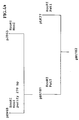
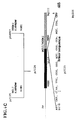
- a 300 bp Bam HI- Hpa I fragment from pJI20 (Figs. 1 and 2a) was used to screen for other hybridizing clones in the genomic library.
- the Bam HI-site was recreated upon ligation of the Mbo I fragment in the Bam HI-site of pUC18.
- One positive clone contained a plasmid "pJI21" which contained an insert of 3kb.
- the DNA sequence of the bt18 gene showed the presence of an ORF of 3512 bp (Fig. 1), and the amino acid sequence of the Bt18 protoxin was deduced therefrom. Comparison of the amino acid sequence of the Bt18 protoxin with the Bt2 protoxin (Höfte et al, 1986) and the Bt15 protoxin (Ho Pont et al, 1988) showed clearly that the C-terminal part is highly conserved (Fig. 3)
- the N-terminal sequence of the 62 kDa Bt18 toxin was determined. To this end, the toxic fragment of the trypsin-digested total crystal Bt18 proteins was blotted on polybrene-coated glass fiber (European patent application 86401933.6), and an approximately 62 kDa fragment was extracted for amino acid sequencing, using a gas phase sequenator (Applied Biosystems Inc., USA) operated as described by Hewick et al (1981). The determined N-terminal amino acid sequence corresponded with the amino acid sequence deduced from the nucleotide sequence between positions 138 and 164 (as indicated in Fig. 1).
- Example 2 Expression of the bt18 gene in E. coli
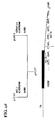
- a Nco I site was introduced at the ATG-initiation codon of the bt18 gene (Fig. 4a). This allowed the fusion of the Bt18 protoxin-encoding sequence to an ATG initiation codon of a plant expression vector or to an ATG initiation codon of other well expressed bacterial genes such as for example the cro -gene of phage lambda (Zabeau and Stanley, 1982).
- the Nco I site was introduced as follows (Fig. 4a).
- a 30-mer oligonucleotide with the following sequence: 5'GGAGGTATT CC ATGGAGATAGTGAATAATC3' was synthesized using an Applied Biosystems device according to the procedure of Itakura et al (1984). This allowed the change of the TT nucleotides (bp 52-53) ahead of the ATG (Fig. 1) into CC (underlined above in the oligonucleotide sequence) by site directed mutagenesis (Stanssens et al, 1987) yielding a Nco I site by the strategy shown in Fig. 4a.
- pJB65 is an E . coli expression vector carrying the strong regulatable lambda Pr promotor; in this vector, a Nco I site overlaps the ATG initiation codon of the lambda cro gene (Botterman and Zabeau, 1987).
- a polylinker was introduced in pBt181 downstream of the Eco RI site by exchanging an appropriate restriction fragment from pLK37 (Botterman and Zabeau, 1987) yielding the plasmid "pBt182".
- the presence of a polylinker region downstream of the N-terminal fragment of the bt18 gene in pBt182 allowed the reconstruction of the intact bt18 gene with an engineered Nco I site at the ATG initiation codon.
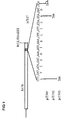
- a Eco RI- Hind III fragment of pJI21 and a Hind III- Dra I fragment from pJI20 were isolated and cloned in pBt182 which yielded the plasmid "pJI25".
- This plasmid contained the bt18 gene under the control of the lambda Pr promoter (Fig. 4b).
- the active toxic fragment of the Bt18 protoxin comprises a 62 kDa trypsin-digestion product.
- a Bt18 toxin-encoding gene fragment or derivatives thereof in plants.
- a truncated bt18 gene was constructed.
- a hybrid gene construction was also made with a gene encoding a selectable marker as described in U.S. patent application 821,582 and Vaeck et al (1987).
- Such a hybrid construction allowed the selection of transformed plants whose marker gene expression is sufficient so that one can predict that the bt18 gene expression also is sufficient to render transformants resistant to Lepidoptera (Höfte et al, 1988a). For this purpose, a bt18-neo hybrid gene was also constructed.
- a Bcl I site is localized (at positions 1967 to 1972 in Fig. 1) downstream of the nucleotide sequence encoding the Bt18 toxin.
- the filled Bcl I end was ligated to the filled Eco RI site of pLKM91 (Botterman, 1986) and the filled Hind III site of pLK94 (Botterman and Zabeau, 1987), yielding the plasmids "pJI26" and "pJI27", respectively (Figs. 4c and 4d).
- pLKM91 contained a 5' truncated neo gene fragment which coded for an enzymatically active C-terminal fragment of NPT II (Reiss et al, 1984), and pLK94 contained translation stopcodons in three reading frames (Botterman and Zabeau, 1987).
- pJI26 the neo gene was fused in frame to the bt18 gene at position 1976 (i.e., the Bcl I site in Fig. 1), and in pJI27, a translation stopcodon was positioned immediately downstream of the N-terminal bt18 gene fragment (Fig. 4d).
- Plasmid pJI25 from Example 2a was transformed into the E . coli strain K12 ⁇ H1 ⁇ Trp [the "NF1 strain") (Zabeau and Stanley, 1982). SDS-PAGE revealed that strain NF1 (pJI25) then produced a 130 kDa protein upon temperature induction of the Pr-promoter at 42°C as described by Zabeau and Stanley (1982). This 130 kDa protoxin was not present in a control NF1 strain without plasmid pJI25, grown in the same way. The expressed Bt18 protein showed a similar toxic activity against S . littoralis and M . sexta as the trypsin-treated crystals of the Bt HD-146 strain.
- This 130 kDa protein was purified from the E . coli clone using the procedure described for the Bt2 protoxin (Höfte et al, 1986) and contained the same 62 kDa tryptic fragment.
- the Bt18 protoxin is synthesized as a precursor in B . thuringiensis during crystal formation and also in the recombinant E . coli strain and that the Bt18 protoxin can be processed into the 62 kDa Bt18 toxin.
- plasmids pJI26 and pJI27 from Example 2b were transformed into the E . coli NF1 strain. Temperature induction of these strains at 42° C showed that pJI26 directed the expression of a Bt18-NPTII fusion protein which exhibited NPTII activity and which showed toxic activity against S . littoralis and M . sexta .
- pJI27 directed the expression of a 62 kDa protein, the migration on SDS-PAGE of which corresponded to that of the active Bt18 toxin and which showed in vitro toxic activity against S . littoralis and M . sexta .
- Example 3a-b The different bt18 gene cassettes of Example 3a-b are placed under the control of promoters active in plant cells in intermediate plant expression vectors as described below.
- the Nco I- Bgl II fragment from pJI25 which encodes the bt18 gene, the Nco I- Xba I fragment from pJI27 which encodes the truncated bt18 gene, and the Nco I- Bgl II fragment from pJI26, which encodes the bt18-neo hybrid gene, are isolated and are cloned in intermediate T-DNA vectors pGSH150 (DSM accession no. 4753) and pGSH160 between the vectors' T-DNA terminal border repeat sequences (Deblaere et al, 1988) and under the control of the vectors' TR2' promoter.
- pGSH160 differs from pGSH150 by the presence of a neo gene under the control of the TR1' promoter.
- the bt18 gene fragments from pJI25 and pJI27 are cloned between the Cla I and Bam HI sites immediately downstream of the TR2' promoter in pGSH150 and pGSH160. This yields the vectors "pGSTX60" and "pGSTX61", respectively.
- the bt18-neo hybrid gene is cloned between the Cla I and Bam HI sites of pGSH150, which yields the vector "pGSTX50".
- the same bt18 gene fragments are cloned in intermediate T-DNA vectors pDE160 and pDE150 containing the 35S3 promoter.
- the vectors pDE160 and pDE150 are similar to pGSH150 and pGSH160 but contain, instead of the TR2' promoter, the 35S3 promoter fragment from pDE90.
- pDE90 is derived from pUC18 (Yanish-Perron et al, 1985), into which is cloned the 35S3 promoter and which contains an Nco I site at the first ATG codon in the 35S3 transcript.
- pDE150 contains the 35S3 promoter fragment followed by the 3' untranslated end of T-DNA gene 7.
- pDE160 is identical to pDE150 except for the presence of the neo gene in a Pnos- neo -3'ocs chimaeric gene cassette (European patent application 89401194.9) as a selectable marker.
- the bt18 gene fragments from pJI25 and pJI27 are cloned between the Nco I and Bam HI sites of pDE160, and the bt18-neo hybrid gene is similarly cloned in pDE150. This yields the vectors "pGSTX62", “pGSTX63" and "pGSTX52", respectively. All vectors contain the neo gene as a selectable marker for plant transformations, either as an intact neo gene or in a hybrid gene.
- Example 4 Identification of the bt18 gene fragment encoding the toxic part of the Bt18 protoxin; based on a consensus sequence localized at the C-terminus of the toxic part
- a preferred strategy for expression in plants of B . thuringiensis toxin genes like the bt18 gene is the use of a gene fragment which encodes a toxic C-terminal truncated part of the B . thuringiensis protoxin.
- a suitable restriction site located downstream of the toxic part, can be used for introducing a translational stop codon as shown in Fig. 7.
- pJI27 contains a bt18 gene fragment encoding a C-terminal truncated toxic part of the Bt18 protoxin under the control of the lambda pR promoter.
- the Bcl I site localized 112 nucleotides downstream of the consensus sequence of Fig.6, was chosen for the construction of a truncated bt18 gene fragment.
- the mobility on SDS-PAGE of the polypeptide band corresponded with the calculated molecular weight for the truncated bt18 gene product.
- pJI27 directs the synthesis of a bt18 gene product which consists of the toxic fragment identified by the consensus sequence of Fig. 6, followed by 46 amino acids encoded by sequences ahead of the Bcl I site and linker derived sequences ahead of the translation stop codon.
- the twelve-amino acid consensus sequence (shown in Fig. 6) as part of a toxic part of a Bt protoxin
- two approaches can be envisaged: 1) site directed mutagenesis of the gene sequence at different places in the consensus sequence and 2) introduction of translational stop codons in the consensus sequence at different places by site directed mutagenesis. Both techniques will produce different amino acid substitutions, the toxic effects of which can then be evaluated.
- the second technique can be carried out by introducing three stopcodons at the following places: a) immediately downstream and flanking the consensus sequence; b) at the second last codon of the consensus sequence; and c) immediately upstream and flanking the consensus sequence as shown in Fig. 3.
- Example 3 the intermediate plant expression vectors (pGSTX50, pGSTX52 and pGSTX60-63) of Example 3 are transferred to the Agrobacterium strain C58C1Rif R (U.S. patent application 821,582; European patent application 86300291.1) carrying the disarmed Ti-plasmid pGV2260 (Deblaere et al, 1988).
- Transconjugants with cointegrate plasmids, consisting of pGV2260 and the respective intermediate plant expression vectors, are selected.
- These Agrobacterium strains are then used to transform tobacco plants ( Nicotiana tabacum var. Petit Havana SR-1) and tomato plants ( Licopersicon esculentum ) as described in European patent application 87400141.5.
- Example 6 Lepidoptera Resistance of the transformed tobacco and tomato plants of Example 5
- the insecticidal activity expressed in leaves of the transformed tomato and tobacco plants of Example 5, is evaluated by recording the growth rate and mortality of Spodoptera sp and Manduca sexta larvae fed on these leaves. These results are compared with the growth rate of larvae fed on untransformed leaves. Toxicity assays are performed as described in U.S. patent application 821,582 and European patent application 86300291.1. The mortality rate of Spodoptera sp. and M . sexta is significantly higher among those feeding on the transformed tomato and tobacco leaves.
- this invention is not limited to tobacco or tomato plants transformed with the bt18 gene or truncated bt18 gene. It also relates to any plant transformed with all or part of the bt18 gene, such as rapeseed, alfalfa, sunflowers, cotton, corn, soybeans, potato, brassicas, sugar beets and other vegetables.
- DNA sequences other than those shown in Fig. 1 for the bt18 and truncated bt18 genes can be used for transforming plants.
- the DNA sequence of Fig. 1 can be modified: 1) by replacing some codons with others that code either for the same amino acids or for other amino acids; and/or 2) by deleting or adding some codons; provided that such modifications do not substantially alter the insecticidal properties of the encoded proteins.
- DNA recombinants containing the aforementioned DNA sequences in association with other foreign DNA sequences are encompassed by this invention.
- this invention is not limited to the specific plasmids containing the bt18 or truncated bt18 gene, heretofore described, but rather encompasses any DNA recombinants containing a DNA sequence that is their equivalent.
- the bt18 chimaeric genes of this invention can be provided between the T-DNA border repeats of a binary vector as described in European patent publication 270,822 to produce binary vectors containing all or part of the bt18 gene under the control of the TR2' promoter.
- the invention relates to all DNA recombinants that include the bt18 or truncated bt18 gene and that are suitable for transforming microorganisms (e.g., plant-associated bacteria such as Pseudomonas , Xanthomonas or yeasts such as Streptomyces cerevisiae ) under conditions which enable the bt18 or truncated bt18 gene to be expressed and to be recoverable from said microorganisms or to be transferred to a plant cell.
- transforming microorganisms e.g., plant-associated bacteria such as Pseudomonas , Xanthomonas or yeasts such as Streptomyces cerevisiae
- the minimum length, C-terminal end of a toxic part of a Bt18-like protoxin of this invention can include up to about 100, preferably no more than about 25, particularly no more than about 10, additional amino acids after the intact twelve-amino acid sequence of Figure 6.
- the twelve-amino acid sequence need not be the last C-terminal amino acids of such a toxic part of a Bt18-like protoxin, provided that any additional C-terminal amino acids do not substantially alter the insecticidal properties of the toxic part of the Bt18-like protoxin.
Landscapes
- Health & Medical Sciences (AREA)
- Genetics & Genomics (AREA)
- Life Sciences & Earth Sciences (AREA)
- Chemical & Material Sciences (AREA)
- Organic Chemistry (AREA)
- Engineering & Computer Science (AREA)
- Molecular Biology (AREA)
- Bioinformatics & Cheminformatics (AREA)
- Wood Science & Technology (AREA)
- Biomedical Technology (AREA)
- Biophysics (AREA)
- Biotechnology (AREA)
- General Engineering & Computer Science (AREA)
- General Health & Medical Sciences (AREA)
- Biochemistry (AREA)
- Zoology (AREA)
- Pest Control & Pesticides (AREA)
- Gastroenterology & Hepatology (AREA)
- Physics & Mathematics (AREA)
- Cell Biology (AREA)
- Plant Pathology (AREA)
- Insects & Arthropods (AREA)
- Crystallography & Structural Chemistry (AREA)
- Microbiology (AREA)
- Medicinal Chemistry (AREA)
- Proteomics, Peptides & Aminoacids (AREA)
- Micro-Organisms Or Cultivation Processes Thereof (AREA)
- Preparation Of Compounds By Using Micro-Organisms (AREA)
- Peptides Or Proteins (AREA)
- Breeding Of Plants And Reproduction By Means Of Culturing (AREA)
- Measuring Or Testing Involving Enzymes Or Micro-Organisms (AREA)
Claims (18)
- Bt18-DNA, gekennzeichnet durcha) die DNA-Sequenz von Figur 1 von Nucleotid 54 bis Nucleotid 3566, insbesondere von Nucleotid 54 bis 1856, oderb) eine DNA-Sequenz, die das Bt18-Protein von Figur 1 von Aminosäureposition 1 bis Aminosäureposition 1171, insbesondere von Aminosäureposition 1 bis Aminosäureposition 601, codiert; odereine Variante der DNA-Sequenz a) oder b), bei der einige Codons gegen andere Codons ausgetauscht und/oder einige Codons zugefügt oder entfernt sind, mit der Maßgabe, daß das codierte Protein der Variante im wesentlichen die gleichen insektiziden Eigenschaften besitzt.
- Bt18-Protein, gekennzeichnet durch eine Aminosäuresequenz, die von der Bt18-DNA nach Anspruch 1, insbesondere der DNA-Sequenz von Figur 1 von Nucleotid 54 bis Nucleotid 3566, ganz besonders von Nucleotid 54 bis Nucleotid 1856, codiert wird.
- Chimäres Gen, das zur Transformation einer Pflanzenzelle verwendet werden kann, gekennzeichnet durch die folgenden operativ verknüpften DNA-Sequenzen:a) die gesamte oder ein insektizid wirksamer Teil, vorzugsweise ein verkürzter Teil, der Bt18-DNA nach Anspruch 1;b) ein zur Steuerung der Transkription der Bt18-DNA in der Pflanzenzelle befähigter Promotor; undc) geeignete 3'-Transkriptionsregulationssignale zur Expression der Bt18-DNA in der Pflanzenzelle.
- Transformierte Pflanzenzelle, gekennzeichnet durch das chimäre Gen nach Anspruch 3.
- Transformierte Pflanzenzelle, gekennzeichnet durch eine den toxischen Teil eines von der Bt18-DNA nach Anspruch 1 codierten Protoxins codierende DNA-Sequenz, wobei der C-Terminus des toxischen Teils im wesentlichen aus der folgenden intakten Sequenz von 12 Aminosäuren besteht und vorzugsweise damit endet:

- Pflanze, umfassend eine Vielfalt der transformierten Zellen nach Anspruch 4 oder 5.
- Same der Pflanze nach Anspruch 6.
- Pflanzengenom, das das chimäre Gen von Anspruch 3 darin integriert enthält.
- Pflanzengewebe, dessen Zellen das Pflanzengenom nach Anspruch 8 besitzen.
- Verfahren, um eine Pflanze resistent gegen Lepidoptera, insbesondere Noctuidae, ganz besonders gegen Spodopteraspecies und Manduca sexta, zu machen, gekennzeichnet durch den Schritt der Transformation des Pflanzengenoms mit dem chimären Gen nach Anspruch 3.
- Insektizide Zusammensetzung gegen Lepidoptera, insbesondere gegen Noctuidae, ganz besonders gegen Spodopteraspecies oder Manduca sexta, gekennzeichnet durch das Bt18-Protein nach Anspruch 2, insbesondere das Bt18-Toxin.
- Verfahren zur Lokalisierung des C-Terminus des toxischen Teils eines Bt18-Protoxins mit der Mindestlänge, gekennzeichnet durch den Schritt der Lokalisierung der Sequenz von 12 Aminosäuren nach Anspruch 5.
- Sonde zur Identifizierung einer Nucleotidsequenz, die einen toxischen Teil, vorzugsweise das Toxin, des C-terminalen Endes des Bt18-Protoxins mit einer Mindestlänge codiert, und zur Lokalisierung einer das C-terminale Ende codierenden Nucleotidsequenz in einer größeren Nucleotidsequenz, die das gesamte oder einen Teil eines Bt18-Protoxins codiert, gekennzeichnet durch eine Nucleotidsequenz, die die Sequenz von 12 Aminosäuren nach Anspruch 5 codiert.
- Verfahren zur Herstellung von Pflanzen und Reproduktionsmaterial dieser Pflanzen, beispielsweise Samen, die ein heterologes genetisches Material beinhalten, das stabil in deren Genom integriert ist und in diesem in Form eines für Insekten toxischen Proteins exprimert werden kann, umfassend die folgenden nicht-biologischen Schritte:a) Herstellen von transformierten Pflanzenzellen oder transformiertem Pflanzengewebe, die das heterologe genetische Material aus das Protein nicht exprimierenden Ausgangspflanzenzellen oder -pflanzengewebe beinhalten,b) Herstellen von regenerierten Pflanzen oder von Reproduktionsmaterial dieser Pflanzen oder beidem aus den transformierten Pflanzenzellen oder dem Pflanzengewebe, die das heterologe genetische Material beinhalten, undc) gegebenenfalls biologisches Replizieren der regenerierten Pflanzen oder des Reproduktionsmaterials oder beider, wobei der Schritt der Herstellung der transformierten Pflanzenzellen oder des Pflanzengewebes, die das heterologe genetische Material beinhalten, gekennzeichnet ist durch den Schritt der Transformation der Ausgangspflanzenzellen oder des Pflanzengewebes mit der gesamten oder einem insektizid wirksamen Teil der Bt18-DNA nach Anspruch 1, und außerdem regulatorischen Elementen, die die Expression der Bt18-DNA in den Pflanzenzellen oder dem Pflanzengewebe ermöglichen können, zur Bewirkung der stabilen Integration der Bt18-DNA in transformierte Pflanzenzellen oder Pflanzengewebe und außerdem in den davon hergestellten Generationen von Pflanzen und Reproduktionsmaterial.
- Transformierter Mikroorganismus, dadurch gekennzeichnet, daß der transformierte Mikroorganismus eine Bt18-DNA nach Anspruch 1 enthält.
- Transformierter Mikroorganismus nach Anspruch 15, wobei der Mikroorganismus E. coli ist.
- Transformierter Mikroorganismus nach Anspruch 15, wobei das Bt18-Protein als ein Fusionsprotein mit dem NPTII-Protein hergestellt wird.
- Plasmid, enthaltend die Bt18-DNA nach Anspruch 1.
Priority Applications (1)
| Application Number | Priority Date | Filing Date | Title |
|---|---|---|---|
| EP94114386A EP0647711B1 (de) | 1988-09-06 | 1989-09-04 | Pflanzen, die mit einer lepidopter-lethalen DNS-Sequenz aus Bazillus thuringiensis transformiert werden |
Applications Claiming Priority (4)
| Application Number | Priority Date | Filing Date | Title |
|---|---|---|---|
| EP88402241 | 1988-09-06 | ||
| EP88402241 | 1988-09-06 | ||
| EP89401500 | 1989-05-31 | ||
| EP89401500 | 1989-05-31 |
Related Child Applications (2)
| Application Number | Title | Priority Date | Filing Date |
|---|---|---|---|
| EP94114386.9 Division-Into | 1989-09-04 | ||
| EP94114386A Division EP0647711B1 (de) | 1988-09-06 | 1989-09-04 | Pflanzen, die mit einer lepidopter-lethalen DNS-Sequenz aus Bazillus thuringiensis transformiert werden |
Publications (3)
| Publication Number | Publication Date |
|---|---|
| EP0358557A2 EP0358557A2 (de) | 1990-03-14 |
| EP0358557A3 EP0358557A3 (en) | 1990-06-13 |
| EP0358557B1 true EP0358557B1 (de) | 1995-04-05 |
Family
ID=26117962
Family Applications (2)
| Application Number | Title | Priority Date | Filing Date |
|---|---|---|---|
| EP89402403A Expired - Lifetime EP0358557B1 (de) | 1988-09-06 | 1989-09-04 | Pflanzen, die mit einer lepidopteralen DNS-Sequenz aus Bazillus thuringiensis transformiert werden |
| EP94114386A Expired - Lifetime EP0647711B1 (de) | 1988-09-06 | 1989-09-04 | Pflanzen, die mit einer lepidopter-lethalen DNS-Sequenz aus Bazillus thuringiensis transformiert werden |
Family Applications After (1)
| Application Number | Title | Priority Date | Filing Date |
|---|---|---|---|
| EP94114386A Expired - Lifetime EP0647711B1 (de) | 1988-09-06 | 1989-09-04 | Pflanzen, die mit einer lepidopter-lethalen DNS-Sequenz aus Bazillus thuringiensis transformiert werden |
Country Status (8)
| Country | Link |
|---|---|
| US (1) | US5460963A (de) |
| EP (2) | EP0358557B1 (de) |
| JP (1) | JP3283255B2 (de) |
| AT (2) | ATE242327T1 (de) |
| CA (1) | CA1340251C (de) |
| DE (2) | DE68922050T2 (de) |
| ES (1) | ES2071671T3 (de) |
| WO (1) | WO1990002801A2 (de) |
Families Citing this family (35)
| Publication number | Priority date | Publication date | Assignee | Title |
|---|---|---|---|---|
| FR2525630B1 (fr) * | 1982-04-26 | 1985-07-05 | Pasteur Institut | Adn contenant une sequence codant pour une proteine du cristal ou un polypeptide doue de proprietes insecticides, micro-organismes transformes par de tels adn, compositions contenant lesdites proteines du cristal, polypeptide ou micro-organismes |
| EP0358557B1 (de) * | 1988-09-06 | 1995-04-05 | Plant Genetic Systems, N.V. | Pflanzen, die mit einer lepidopteralen DNS-Sequenz aus Bazillus thuringiensis transformiert werden |
| US5188960A (en) * | 1989-06-27 | 1993-02-23 | Mycogen Corporation | Bacillus thuringiensis isolate active against lepidopteran pests, and genes encoding novel lepidopteran-active toxins |
| US5430137A (en) * | 1989-10-25 | 1995-07-04 | Mycogen Corporation | Probes for the identification of Bacillus thuringiensis endotoxin genes |
| US5484956A (en) * | 1990-01-22 | 1996-01-16 | Dekalb Genetics Corporation | Fertile transgenic Zea mays plant comprising heterologous DNA encoding Bacillus thuringiensis endotoxin |
| WO1991010725A1 (en) * | 1990-01-22 | 1991-07-25 | Dekalb Plant Genetics | Fertile transgenic corn plants |
| US6329574B1 (en) | 1990-01-22 | 2001-12-11 | Dekalb Genetics Corporation | High lysine fertile transgenic corn plants |
| US6946587B1 (en) | 1990-01-22 | 2005-09-20 | Dekalb Genetics Corporation | Method for preparing fertile transgenic corn plants |
| TR26973A (tr) * | 1990-04-16 | 1994-09-12 | Ecogen Inc | Bacillus thuringiensis cryie geni ve lepidoptera takimindan böceklere karsi zehirli protein. |
| EP0461799A3 (en) * | 1990-06-14 | 1992-03-11 | Mycogen Corporation | Novel bacillus thuringiensis isolate having anti-protozoan activity |
| US5530197A (en) * | 1992-08-19 | 1996-06-25 | Plant Genetic Systems, N.V. | Control of ostrinia |
| ES2250962T3 (es) * | 1992-08-27 | 2006-04-16 | Bayer Bioscience N.V. | Nuevas cepas de bacillus thuringiensis y sus proteinas insecticidas. |
| US5356623A (en) * | 1993-03-17 | 1994-10-18 | Ecogen Inc. | Bacillus thuringiensis cryET1 toxin gene and protein toxic to lepidopteran insects |
| CA2160131C (en) * | 1993-04-09 | 2000-07-25 | Bart Lambert | New bacillus thuringiensis strains and their insecticidal proteins |
| US7569748B2 (en) | 1993-05-18 | 2009-08-04 | Wisconsin Alumni Research Foundation | Nucleic acid encoding an insecticidal protein toxin from photorhabdus |
| US6528484B1 (en) | 1993-05-18 | 2003-03-04 | Wisconsin Alumni Research Foundation | Insecticidal protein toxins from Photorhabdus |
| US5322687A (en) * | 1993-07-29 | 1994-06-21 | Ecogen Inc. | Bacillus thuringiensis cryet4 and cryet5 toxin genes and proteins toxic to lepidopteran insects |
| US6326527B1 (en) | 1993-08-25 | 2001-12-04 | Dekalb Genetics Corporation | Method for altering the nutritional content of plant seed |
| GB9318207D0 (en) * | 1993-09-02 | 1993-10-20 | Sandoz Ltd | Improvements in or relating to organic compounds |
| AUPM379294A0 (en) * | 1994-02-10 | 1994-03-03 | Commonwealth Scientific And Industrial Research Organisation | Expression of the glucose oxidase gene in transgenic organisms |
| GB9408466D0 (en) * | 1994-04-27 | 1994-06-22 | Univ Nottingham | Cloning and functional expression of neurotoxins |
| CA2234656C (en) * | 1995-10-13 | 2008-01-08 | Dow Agrosciences Llc | Modified bacillus thuringiensis gene for lepidopteran control in plants |
| US6391547B1 (en) * | 1997-09-09 | 2002-05-21 | Center For The Application Of Molecular Biology To International Agriculture | Microbial β-glucuronidase genes, gene products and uses thereof |
| US7087420B1 (en) | 1997-07-17 | 2006-08-08 | Cambia | Microbial β-glucuronidase genes, gene products and uses thereof |
| ATE553117T1 (de) * | 2000-02-29 | 2012-04-15 | Univ Auburn | Mehrfache genexpression zur einrichtung von neuen synthesewegen und überexpression von fremdproteinen in pflanzen |
| ATE495261T1 (de) * | 2001-02-22 | 2011-01-15 | Biogemma Fr | Konstitutiver promotor aus arabidopsis |
| CA2804953C (en) | 2003-12-23 | 2016-02-23 | Pioneer Hi-Bred International, Inc. | Plant activation of insect toxin |
| TW201142029A (en) | 2009-11-24 | 2011-12-01 | Univ Leuven Kath | Banana promoters |
| TW201542093A (zh) | 2014-03-21 | 2015-11-16 | 艾格里遺傳學股份有限公司 | 用於控制玉米穗蟲之Cry1D |
| CA2963702A1 (en) | 2014-10-16 | 2016-04-21 | Monsanto Technology Llc | Lepidopteran-active cry1da1 amino acid sequence variant proteins |
| CN106852153B (zh) | 2014-10-16 | 2023-06-06 | 先锋国际良种公司 | 具有广谱活性的杀昆虫多肽和其用途 |
| WO2018075197A1 (en) * | 2016-10-19 | 2018-04-26 | Pioneer Hi-Bred International, Inc. | Broad spectrum insecticidal polypeptide against lepidopteran pests and methods of use thereof |
| US11692013B2 (en) | 2016-10-19 | 2023-07-04 | Pioneer Hi-Bred International, Inc. | Broad spectrum insecticidal polypeptide against lepidopteran pests and methods of use thereof |
| US11878999B2 (en) | 2018-08-29 | 2024-01-23 | Pioneer Hi-Bred International, Inc. | Insecticidal proteins and methods for their use |
| CN112771068A (zh) * | 2018-09-11 | 2021-05-07 | 先锋国际良种公司 | 杀昆虫蛋白及其使用方法 |
Citations (1)
| Publication number | Priority date | Publication date | Assignee | Title |
|---|---|---|---|---|
| EP0358557A2 (de) * | 1988-09-06 | 1990-03-14 | Plant Genetic Systems, N.V. | Pflanzen, die mit einer lepidopteralen DNS-Sequenz aus Bazillus thuringiensis transformiert werden |
Family Cites Families (16)
| Publication number | Priority date | Publication date | Assignee | Title |
|---|---|---|---|---|
| JPH0795953B2 (ja) * | 1981-04-27 | 1995-10-18 | ワシントン・リサ−チ・ファンデ−ション | 大腸菌中のバシルス・ツリンギエンシス細晶性蛋白質 |
| BR8600161A (pt) * | 1985-01-18 | 1986-09-23 | Plant Genetic Systems Nv | Gene quimerico,vetores de plasmidio hibrido,intermediario,processo para controlar insetos em agricultura ou horticultura,composicao inseticida,processo para transformar celulas de plantas para expressar uma toxina de polipeptideo produzida por bacillus thuringiensis,planta,semente de planta,cultura de celulas e plasmidio |
| US4695462A (en) * | 1985-06-28 | 1987-09-22 | Mycogen Corporation | Cellular encapsulation of biological pesticides |
| EP0206613B1 (de) * | 1985-06-14 | 1992-08-19 | Repligen Corporation | Aktiviertes Bacillus thuringiensis-Delta-Endotoxin, hergestellt von einem manipulierten Hybrid-Gen |
| KR870004140A (ko) * | 1985-10-28 | 1987-05-07 | 모리 히데오 | 살충성 단백질 유전자의 숙주 세포내 발현에 의한 바실러스 튜린지엔시스아이자와이 ipl 아종의 살충성 단백질 제조방법 |
| WO1987006957A1 (en) * | 1986-05-12 | 1987-11-19 | The University Of Sheffield | Thixotropic materials |
| JPH0817705B2 (ja) * | 1986-08-19 | 1996-02-28 | 住友化学工業株式会社 | Bt殺虫性蛋白遺伝子 |
| US5024837A (en) * | 1987-05-06 | 1991-06-18 | Donovan William P | Coleopteran active microorganisms, related insecticide compositions and methods for their production and use |
| FR2616444B1 (fr) * | 1987-06-10 | 1990-03-02 | Pasteur Institut | Sequences nucleotidiques codant pour des polypeptides dotes d'une activite larvicide vis-a-vis de lepidopteres |
| US5045469A (en) * | 1988-10-27 | 1991-09-03 | Mycogen Corporation | Novel bacillus thuringiensis isolate denoted B. T. PS81F, active against lepidopteran pests, and a gene encoding a lepidopteran-active toxin |
| US5296368A (en) * | 1988-10-27 | 1994-03-22 | Mycogen Corporation | Bacillus thuringiensis isolate denoted B.t. PS81F, active against lepidopteran pests, and a gene encoding a lepidopteran-active toxin |
| US5246852A (en) * | 1989-06-27 | 1993-09-21 | Mycogen Corporation | Bacillus thuringiensis isolate active against lepidopteran pests, and genes encoding novel lepidopteran-active toxins |
| US5126133A (en) * | 1989-06-27 | 1992-06-30 | Mycogen Corporation | Bacillus thuringiensis isolate active against lepidopteran pests, and genes encoding novel lepidopteran-active toxins |
| US5188960A (en) * | 1989-06-27 | 1993-02-23 | Mycogen Corporation | Bacillus thuringiensis isolate active against lepidopteran pests, and genes encoding novel lepidopteran-active toxins |
| EP0461799A3 (en) * | 1990-06-14 | 1992-03-11 | Mycogen Corporation | Novel bacillus thuringiensis isolate having anti-protozoan activity |
| US5273746A (en) * | 1992-01-29 | 1993-12-28 | Mycogen Corporation | Bacillus thuringiensis isolates active against phthiraptera pests |
-
1989
- 1989-09-04 EP EP89402403A patent/EP0358557B1/de not_active Expired - Lifetime
- 1989-09-04 ES ES89402403T patent/ES2071671T3/es not_active Expired - Lifetime
- 1989-09-04 EP EP94114386A patent/EP0647711B1/de not_active Expired - Lifetime
- 1989-09-04 AT AT94114386T patent/ATE242327T1/de not_active IP Right Cessation
- 1989-09-04 AT AT89402403T patent/ATE120801T1/de not_active IP Right Cessation
- 1989-09-04 DE DE68922050T patent/DE68922050T2/de not_active Expired - Fee Related
- 1989-09-04 DE DE68929471T patent/DE68929471D1/de not_active Expired - Lifetime
- 1989-09-05 JP JP50897489A patent/JP3283255B2/ja not_active Expired - Fee Related
- 1989-09-05 WO PCT/EP1989/001036 patent/WO1990002801A2/en not_active Ceased
- 1989-09-06 CA CA000610487A patent/CA1340251C/en not_active Expired - Fee Related
-
1992
- 1992-09-24 US US07/950,199 patent/US5460963A/en not_active Expired - Lifetime
Patent Citations (1)
| Publication number | Priority date | Publication date | Assignee | Title |
|---|---|---|---|---|
| EP0358557A2 (de) * | 1988-09-06 | 1990-03-14 | Plant Genetic Systems, N.V. | Pflanzen, die mit einer lepidopteralen DNS-Sequenz aus Bazillus thuringiensis transformiert werden |
Also Published As
| Publication number | Publication date |
|---|---|
| US5460963A (en) | 1995-10-24 |
| DE68922050D1 (de) | 1995-05-11 |
| ATE120801T1 (de) | 1995-04-15 |
| CA1340251C (en) | 1998-12-15 |
| EP0358557A3 (en) | 1990-06-13 |
| AU4075589A (en) | 1990-04-02 |
| DE68922050T2 (de) | 1995-08-31 |
| JP3283255B2 (ja) | 2002-05-20 |
| DE68929471D1 (de) | 2003-07-10 |
| JPH03503123A (ja) | 1991-07-18 |
| EP0647711A1 (de) | 1995-04-12 |
| EP0647711B1 (de) | 2003-06-04 |
| WO1990002801A2 (en) | 1990-03-22 |
| ES2071671T3 (es) | 1995-07-01 |
| ATE242327T1 (de) | 2003-06-15 |
| AU622702B2 (en) | 1992-04-16 |
| WO1990002801A3 (en) | 1990-04-19 |
| EP0358557A2 (de) | 1990-03-14 |
Similar Documents
| Publication | Publication Date | Title |
|---|---|---|
| EP0358557B1 (de) | Pflanzen, die mit einer lepidopteralen DNS-Sequenz aus Bazillus thuringiensis transformiert werden | |
| EP0359472B1 (de) | Synthetisches Gen von einem insektiziden Kristallprotein | |
| EP0340197B1 (de) | Insektenresistente Salatpflanzen | |
| US6015891A (en) | Synthetic insecticidal crystal protein gene having a modified frequency of codon usage | |
| US5567862A (en) | Synthetic insecticidal crystal protein gene | |
| US5466597A (en) | Bacillus thuringiensis strains and their genes encoding insecticidal toxins | |
| DE3688334T2 (de) | Modifizierung von pflanzen mittels gentechnologischer verfahren, um insekten zu bekaempfen oder zu kontrollieren. | |
| US5567600A (en) | Synthetic insecticidal crystal protein gene | |
| JP3435159B2 (ja) | バチルス・チュリンゲンシスの新菌株及び殺虫作用をもつそのタンパク質 | |
| EP0305275A2 (de) | Pflanzen, die mit einer DNS-Sequenz aus Bacillus thuringiensis transformiert werden | |
| EP0458819B1 (de) | Pflanzen, transformiert zur herstellung von insektiziden toxinen von bacillus thuringiensis | |
| WO1997013402A1 (en) | Modified bacillus thuringiensis gene for lepidopteran control in plants | |
| EP0269601B1 (de) | Insektresistente Tomatenpflanzen | |
| AU622702C (en) | Plants transformed with a DNA sequence from bacillus thuringiensis lethal to lepidoptera |
Legal Events
| Date | Code | Title | Description |
|---|---|---|---|
| PUAI | Public reference made under article 153(3) epc to a published international application that has entered the european phase |
Free format text: ORIGINAL CODE: 0009012 |
|
| AK | Designated contracting states |
Kind code of ref document: A2 Designated state(s): AT BE CH DE ES FR GB GR IT LI LU NL SE |
|
| PUAL | Search report despatched |
Free format text: ORIGINAL CODE: 0009013 |
|
| AK | Designated contracting states |
Kind code of ref document: A3 Designated state(s): AT BE CH DE ES FR GB GR IT LI LU NL SE |
|
| 17P | Request for examination filed |
Effective date: 19901108 |
|
| 17Q | First examination report despatched |
Effective date: 19930304 |
|
| GRAA | (expected) grant |
Free format text: ORIGINAL CODE: 0009210 |
|
| AK | Designated contracting states |
Kind code of ref document: B1 Designated state(s): AT BE CH DE ES FR GB GR IT LI LU NL SE |
|
| REF | Corresponds to: |
Ref document number: 120801 Country of ref document: AT Date of ref document: 19950415 Kind code of ref document: T |
|
| XX | Miscellaneous (additional remarks) |
Free format text: TEILANMELDUNG 94114386.9 EINGEREICHT AM 04/09/89. |
|
| REF | Corresponds to: |
Ref document number: 68922050 Country of ref document: DE Date of ref document: 19950511 |
|
| ET | Fr: translation filed | ||
| ITF | It: translation for a ep patent filed | ||
| REG | Reference to a national code |
Ref country code: ES Ref legal event code: FG2A Ref document number: 2071671 Country of ref document: ES Kind code of ref document: T3 |
|
| REG | Reference to a national code |
Ref country code: GR Ref legal event code: FG4A Free format text: 3016141 |
|
| PLBE | No opposition filed within time limit |
Free format text: ORIGINAL CODE: 0009261 |
|
| STAA | Information on the status of an ep patent application or granted ep patent |
Free format text: STATUS: NO OPPOSITION FILED WITHIN TIME LIMIT |
|
| 26N | No opposition filed | ||
| REG | Reference to a national code |
Ref country code: GB Ref legal event code: IF02 |
|
| PGFP | Annual fee paid to national office [announced via postgrant information from national office to epo] |
Ref country code: NL Payment date: 20020815 Year of fee payment: 14 |
|
| PGFP | Annual fee paid to national office [announced via postgrant information from national office to epo] |
Ref country code: SE Payment date: 20020816 Year of fee payment: 14 |
|
| PGFP | Annual fee paid to national office [announced via postgrant information from national office to epo] |
Ref country code: AT Payment date: 20020820 Year of fee payment: 14 |
|
| PGFP | Annual fee paid to national office [announced via postgrant information from national office to epo] |
Ref country code: GR Payment date: 20020822 Year of fee payment: 14 |
|
| PGFP | Annual fee paid to national office [announced via postgrant information from national office to epo] |
Ref country code: ES Payment date: 20020826 Year of fee payment: 14 |
|
| PGFP | Annual fee paid to national office [announced via postgrant information from national office to epo] |
Ref country code: GB Payment date: 20020827 Year of fee payment: 14 |
|
| PGFP | Annual fee paid to national office [announced via postgrant information from national office to epo] |
Ref country code: BE Payment date: 20020902 Year of fee payment: 14 |
|
| PGFP | Annual fee paid to national office [announced via postgrant information from national office to epo] |
Ref country code: DE Payment date: 20020911 Year of fee payment: 14 Ref country code: CH Payment date: 20020911 Year of fee payment: 14 |
|
| PGFP | Annual fee paid to national office [announced via postgrant information from national office to epo] |
Ref country code: FR Payment date: 20020917 Year of fee payment: 14 |
|
| PGFP | Annual fee paid to national office [announced via postgrant information from national office to epo] |
Ref country code: LU Payment date: 20020920 Year of fee payment: 14 |
|
| PG25 | Lapsed in a contracting state [announced via postgrant information from national office to epo] |
Ref country code: LU Free format text: LAPSE BECAUSE OF NON-PAYMENT OF DUE FEES Effective date: 20030904 Ref country code: GB Free format text: LAPSE BECAUSE OF NON-PAYMENT OF DUE FEES Effective date: 20030904 Ref country code: AT Free format text: LAPSE BECAUSE OF NON-PAYMENT OF DUE FEES Effective date: 20030904 |
|
| PG25 | Lapsed in a contracting state [announced via postgrant information from national office to epo] |
Ref country code: SE Free format text: LAPSE BECAUSE OF NON-PAYMENT OF DUE FEES Effective date: 20030905 Ref country code: ES Free format text: LAPSE BECAUSE OF NON-PAYMENT OF DUE FEES Effective date: 20030905 |
|
| PG25 | Lapsed in a contracting state [announced via postgrant information from national office to epo] |
Ref country code: LI Free format text: LAPSE BECAUSE OF NON-PAYMENT OF DUE FEES Effective date: 20030930 Ref country code: CH Free format text: LAPSE BECAUSE OF NON-PAYMENT OF DUE FEES Effective date: 20030930 Ref country code: BE Free format text: LAPSE BECAUSE OF NON-PAYMENT OF DUE FEES Effective date: 20030930 |
|
| BERE | Be: lapsed |
Owner name: *PLANT GENETIC SYSTEMS N.V. Effective date: 20030930 |
|
| PG25 | Lapsed in a contracting state [announced via postgrant information from national office to epo] |
Ref country code: NL Free format text: LAPSE BECAUSE OF NON-PAYMENT OF DUE FEES Effective date: 20040401 Ref country code: DE Free format text: LAPSE BECAUSE OF NON-PAYMENT OF DUE FEES Effective date: 20040401 |
|
| PG25 | Lapsed in a contracting state [announced via postgrant information from national office to epo] |
Ref country code: GR Free format text: LAPSE BECAUSE OF NON-PAYMENT OF DUE FEES Effective date: 20040402 |
|
| GBPC | Gb: european patent ceased through non-payment of renewal fee | ||
| EUG | Se: european patent has lapsed | ||
| REG | Reference to a national code |
Ref country code: CH Ref legal event code: PL |
|
| PG25 | Lapsed in a contracting state [announced via postgrant information from national office to epo] |
Ref country code: FR Free format text: LAPSE BECAUSE OF NON-PAYMENT OF DUE FEES Effective date: 20040528 |
|
| NLV4 | Nl: lapsed or anulled due to non-payment of the annual fee |
Effective date: 20040401 |
|
| REG | Reference to a national code |
Ref country code: FR Ref legal event code: ST |
|
| REG | Reference to a national code |
Ref country code: ES Ref legal event code: FD2A Effective date: 20030905 |
|
| PG25 | Lapsed in a contracting state [announced via postgrant information from national office to epo] |
Ref country code: IT Free format text: LAPSE BECAUSE OF NON-PAYMENT OF DUE FEES;WARNING: LAPSES OF ITALIAN PATENTS WITH EFFECTIVE DATE BEFORE 2007 MAY HAVE OCCURRED AT ANY TIME BEFORE 2007. THE CORRECT EFFECTIVE DATE MAY BE DIFFERENT FROM THE ONE RECORDED. Effective date: 20050904 |