EP0358640B1 - Deshydratation de preparations vesiculaires pour stockage a longterme - Google Patents
Deshydratation de preparations vesiculaires pour stockage a longterme Download PDFInfo
- Publication number
- EP0358640B1 EP0358640B1 EP88902055A EP88902055A EP0358640B1 EP 0358640 B1 EP0358640 B1 EP 0358640B1 EP 88902055 A EP88902055 A EP 88902055A EP 88902055 A EP88902055 A EP 88902055A EP 0358640 B1 EP0358640 B1 EP 0358640B1
- Authority
- EP
- European Patent Office
- Prior art keywords
- phospholipid
- liposomes
- drying
- spray
- vesicles
- Prior art date
- Legal status (The legal status is an assumption and is not a legal conclusion. Google has not performed a legal analysis and makes no representation as to the accuracy of the status listed.)
- Expired - Lifetime
Links
- 238000002360 preparation method Methods 0.000 title claims abstract description 14
- 238000003860 storage Methods 0.000 title description 5
- 230000007774 longterm Effects 0.000 title description 2
- 150000003904 phospholipids Chemical class 0.000 claims abstract description 72
- 239000000654 additive Substances 0.000 claims abstract description 12
- 239000003814 drug Substances 0.000 claims abstract description 9
- 230000000996 additive effect Effects 0.000 claims abstract description 8
- 150000002016 disaccharides Chemical class 0.000 claims abstract description 6
- 229940124597 therapeutic agent Drugs 0.000 claims abstract description 5
- 229920000084 Gum arabic Polymers 0.000 claims abstract description 4
- 241000978776 Senegalia senegal Species 0.000 claims abstract description 4
- 239000000205 acacia gum Substances 0.000 claims abstract description 4
- 235000010489 acacia gum Nutrition 0.000 claims abstract description 4
- 150000001720 carbohydrates Chemical class 0.000 claims abstract description 4
- 102000004169 proteins and genes Human genes 0.000 claims abstract description 4
- 108090000623 proteins and genes Proteins 0.000 claims abstract description 4
- 230000001225 therapeutic effect Effects 0.000 claims abstract description 4
- LFQSCWFLJHTTHZ-UHFFFAOYSA-N Ethanol Chemical compound CCO LFQSCWFLJHTTHZ-UHFFFAOYSA-N 0.000 claims abstract 3
- 239000000032 diagnostic agent Substances 0.000 claims abstract 3
- 229940039227 diagnostic agent Drugs 0.000 claims abstract 3
- 150000002772 monosaccharides Chemical class 0.000 claims abstract 3
- 238000001694 spray drying Methods 0.000 claims description 56
- 238000000034 method Methods 0.000 claims description 46
- 239000002502 liposome Substances 0.000 claims description 37
- WTJKGGKOPKCXLL-RRHRGVEJSA-N phosphatidylcholine Chemical compound CCCCCCCCCCCCCCCC(=O)OC[C@H](COP([O-])(=O)OCC[N+](C)(C)C)OC(=O)CCCCCCCC=CCCCCCCCC WTJKGGKOPKCXLL-RRHRGVEJSA-N 0.000 claims description 28
- 229930006000 Sucrose Natural products 0.000 claims description 26
- 239000005720 sucrose Substances 0.000 claims description 26
- CZMRCDWAGMRECN-UGDNZRGBSA-N Sucrose Chemical compound O[C@H]1[C@H](O)[C@@H](CO)O[C@@]1(CO)O[C@@H]1[C@H](O)[C@@H](O)[C@H](O)[C@@H](CO)O1 CZMRCDWAGMRECN-UGDNZRGBSA-N 0.000 claims description 24
- 238000009826 distribution Methods 0.000 claims description 10
- TZCPCKNHXULUIY-RGULYWFUSA-N 1,2-distearoyl-sn-glycero-3-phosphoserine Chemical compound CCCCCCCCCCCCCCCCCC(=O)OC[C@H](COP(O)(=O)OC[C@H](N)C(O)=O)OC(=O)CCCCCCCCCCCCCCCCC TZCPCKNHXULUIY-RGULYWFUSA-N 0.000 claims description 6
- LYCAIKOWRPUZTN-UHFFFAOYSA-N Ethylene glycol Chemical compound OCCO LYCAIKOWRPUZTN-UHFFFAOYSA-N 0.000 claims description 6
- PEDCQBHIVMGVHV-UHFFFAOYSA-N Glycerine Chemical compound OCC(O)CO PEDCQBHIVMGVHV-UHFFFAOYSA-N 0.000 claims description 6
- ZWZWYGMENQVNFU-UHFFFAOYSA-N Glycerophosphorylserin Natural products OC(=O)C(N)COP(O)(=O)OCC(O)CO ZWZWYGMENQVNFU-UHFFFAOYSA-N 0.000 claims description 6
- HDTRYLNUVZCQOY-UHFFFAOYSA-N α-D-glucopyranosyl-α-D-glucopyranoside Natural products OC1C(O)C(O)C(CO)OC1OC1C(O)C(O)C(O)C(CO)O1 HDTRYLNUVZCQOY-UHFFFAOYSA-N 0.000 claims description 4
- HDTRYLNUVZCQOY-WSWWMNSNSA-N Trehalose Natural products O[C@@H]1[C@@H](O)[C@@H](O)[C@@H](CO)O[C@@H]1O[C@@H]1[C@H](O)[C@@H](O)[C@@H](O)[C@@H](CO)O1 HDTRYLNUVZCQOY-WSWWMNSNSA-N 0.000 claims description 4
- HDTRYLNUVZCQOY-LIZSDCNHSA-N alpha,alpha-trehalose Chemical compound O[C@@H]1[C@@H](O)[C@H](O)[C@@H](CO)O[C@@H]1O[C@@H]1[C@H](O)[C@@H](O)[C@H](O)[C@@H](CO)O1 HDTRYLNUVZCQOY-LIZSDCNHSA-N 0.000 claims description 4
- 210000004556 brain Anatomy 0.000 claims description 4
- FBPFZTCFMRRESA-KVTDHHQDSA-N D-Mannitol Chemical compound OC[C@@H](O)[C@@H](O)[C@H](O)[C@H](O)CO FBPFZTCFMRRESA-KVTDHHQDSA-N 0.000 claims description 3
- WQZGKKKJIJFFOK-GASJEMHNSA-N Glucose Natural products OC[C@H]1OC(O)[C@H](O)[C@@H](O)[C@@H]1O WQZGKKKJIJFFOK-GASJEMHNSA-N 0.000 claims description 3
- 229930195725 Mannitol Natural products 0.000 claims description 3
- 239000002612 dispersion medium Substances 0.000 claims description 3
- 239000008103 glucose Substances 0.000 claims description 3
- 239000000594 mannitol Substances 0.000 claims description 3
- 235000010355 mannitol Nutrition 0.000 claims description 3
- GUBGYTABKSRVRQ-XLOQQCSPSA-N Alpha-Lactose Chemical compound O[C@@H]1[C@@H](O)[C@@H](O)[C@@H](CO)O[C@H]1O[C@@H]1[C@@H](CO)O[C@H](O)[C@H](O)[C@H]1O GUBGYTABKSRVRQ-XLOQQCSPSA-N 0.000 claims description 2
- 229920002307 Dextran Polymers 0.000 claims description 2
- GUBGYTABKSRVRQ-QKKXKWKRSA-N Lactose Natural products OC[C@H]1O[C@@H](O[C@H]2[C@H](O)[C@@H](O)C(O)O[C@@H]2CO)[C@H](O)[C@@H](O)[C@H]1O GUBGYTABKSRVRQ-QKKXKWKRSA-N 0.000 claims description 2
- 239000003242 anti bacterial agent Substances 0.000 claims description 2
- 239000000729 antidote Substances 0.000 claims description 2
- 239000008101 lactose Substances 0.000 claims description 2
- 230000002503 metabolic effect Effects 0.000 claims description 2
- 125000000185 sucrose group Chemical group 0.000 claims 2
- 102000009027 Albumins Human genes 0.000 claims 1
- 108010088751 Albumins Proteins 0.000 claims 1
- 230000003115 biocidal effect Effects 0.000 claims 1
- 230000000973 chemotherapeutic effect Effects 0.000 claims 1
- 125000002791 glucosyl group Chemical group C1([C@H](O)[C@@H](O)[C@H](O)[C@H](O1)CO)* 0.000 claims 1
- 231100000331 toxic Toxicity 0.000 claims 1
- 230000002588 toxic effect Effects 0.000 claims 1
- 230000002776 aggregation Effects 0.000 abstract description 12
- 238000004220 aggregation Methods 0.000 abstract description 12
- 230000004927 fusion Effects 0.000 abstract description 12
- 230000018044 dehydration Effects 0.000 abstract description 11
- 238000006297 dehydration reaction Methods 0.000 abstract description 11
- 239000000463 material Substances 0.000 abstract description 10
- 238000001704 evaporation Methods 0.000 abstract description 5
- 230000008020 evaporation Effects 0.000 abstract description 5
- 238000010981 drying operation Methods 0.000 abstract 1
- 239000006185 dispersion Substances 0.000 description 52
- CIWBSHSKHKDKBQ-JLAZNSOCSA-N Ascorbic acid Chemical compound OC[C@H](O)[C@H]1OC(=O)C(O)=C1O CIWBSHSKHKDKBQ-JLAZNSOCSA-N 0.000 description 20
- 150000002632 lipids Chemical class 0.000 description 19
- 238000002523 gelfiltration Methods 0.000 description 11
- 235000010323 ascorbic acid Nutrition 0.000 description 10
- 239000011668 ascorbic acid Substances 0.000 description 10
- 239000008363 phosphate buffer Substances 0.000 description 10
- 229920002684 Sepharose Polymers 0.000 description 9
- 229940072107 ascorbate Drugs 0.000 description 9
- MUPFEKGTMRGPLJ-RMMQSMQOSA-N Raffinose Natural products O(C[C@H]1[C@@H](O)[C@H](O)[C@@H](O)[C@@H](O[C@@]2(CO)[C@H](O)[C@@H](O)[C@@H](CO)O2)O1)[C@@H]1[C@H](O)[C@@H](O)[C@@H](O)[C@@H](CO)O1 MUPFEKGTMRGPLJ-RMMQSMQOSA-N 0.000 description 8
- MUPFEKGTMRGPLJ-UHFFFAOYSA-N UNPD196149 Natural products OC1C(O)C(CO)OC1(CO)OC1C(O)C(O)C(O)C(COC2C(C(O)C(O)C(CO)O2)O)O1 MUPFEKGTMRGPLJ-UHFFFAOYSA-N 0.000 description 8
- 238000002474 experimental method Methods 0.000 description 8
- 238000010828 elution Methods 0.000 description 7
- 238000004108 freeze drying Methods 0.000 description 7
- 230000008569 process Effects 0.000 description 7
- MUPFEKGTMRGPLJ-ZQSKZDJDSA-N raffinose Chemical compound O[C@H]1[C@H](O)[C@@H](CO)O[C@@]1(CO)O[C@@H]1[C@H](O)[C@@H](O)[C@H](O)[C@@H](CO[C@@H]2[C@@H]([C@@H](O)[C@@H](O)[C@@H](CO)O2)O)O1 MUPFEKGTMRGPLJ-ZQSKZDJDSA-N 0.000 description 7
- 229920001202 Inulin Polymers 0.000 description 6
- 235000013601 eggs Nutrition 0.000 description 6
- 229940029339 inulin Drugs 0.000 description 6
- 238000004321 preservation Methods 0.000 description 6
- 239000000872 buffer Substances 0.000 description 5
- 238000001362 electron spin resonance spectrum Methods 0.000 description 5
- 235000010378 sodium ascorbate Nutrition 0.000 description 5
- PPASLZSBLFJQEF-RKJRWTFHSA-M sodium ascorbate Substances [Na+].OC[C@@H](O)[C@H]1OC(=O)C(O)=C1[O-] PPASLZSBLFJQEF-RKJRWTFHSA-M 0.000 description 5
- 229960005055 sodium ascorbate Drugs 0.000 description 5
- PPASLZSBLFJQEF-RXSVEWSESA-M sodium-L-ascorbate Chemical compound [Na+].OC[C@H](O)[C@H]1OC(=O)C(O)=C1[O-] PPASLZSBLFJQEF-RXSVEWSESA-M 0.000 description 5
- 238000000527 sonication Methods 0.000 description 5
- 239000002691 unilamellar liposome Substances 0.000 description 5
- 229920005654 Sephadex Polymers 0.000 description 4
- 239000012507 Sephadex™ Substances 0.000 description 4
- 239000003795 chemical substances by application Substances 0.000 description 4
- 229940079593 drug Drugs 0.000 description 4
- 238000001035 drying Methods 0.000 description 4
- 238000001493 electron microscopy Methods 0.000 description 4
- 239000012528 membrane Substances 0.000 description 4
- 239000000203 mixture Substances 0.000 description 4
- 235000000346 sugar Nutrition 0.000 description 4
- 238000005119 centrifugation Methods 0.000 description 3
- 238000000635 electron micrograph Methods 0.000 description 3
- 238000005516 engineering process Methods 0.000 description 3
- 239000010408 film Substances 0.000 description 3
- JYJIGFIDKWBXDU-MNNPPOADSA-N inulin Chemical compound O[C@H]1[C@H](O)[C@@H](CO)O[C@@]1(CO)OC[C@]1(OC[C@]2(OC[C@]3(OC[C@]4(OC[C@]5(OC[C@]6(OC[C@]7(OC[C@]8(OC[C@]9(OC[C@]%10(OC[C@]%11(OC[C@]%12(OC[C@]%13(OC[C@]%14(OC[C@]%15(OC[C@]%16(OC[C@]%17(OC[C@]%18(OC[C@]%19(OC[C@]%20(OC[C@]%21(OC[C@]%22(OC[C@]%23(OC[C@]%24(OC[C@]%25(OC[C@]%26(OC[C@]%27(OC[C@]%28(OC[C@]%29(OC[C@]%30(OC[C@]%31(OC[C@]%32(OC[C@]%33(OC[C@]%34(OC[C@]%35(OC[C@]%36(O[C@@H]%37[C@@H]([C@@H](O)[C@H](O)[C@@H](CO)O%37)O)[C@H]([C@H](O)[C@@H](CO)O%36)O)[C@H]([C@H](O)[C@@H](CO)O%35)O)[C@H]([C@H](O)[C@@H](CO)O%34)O)[C@H]([C@H](O)[C@@H](CO)O%33)O)[C@H]([C@H](O)[C@@H](CO)O%32)O)[C@H]([C@H](O)[C@@H](CO)O%31)O)[C@H]([C@H](O)[C@@H](CO)O%30)O)[C@H]([C@H](O)[C@@H](CO)O%29)O)[C@H]([C@H](O)[C@@H](CO)O%28)O)[C@H]([C@H](O)[C@@H](CO)O%27)O)[C@H]([C@H](O)[C@@H](CO)O%26)O)[C@H]([C@H](O)[C@@H](CO)O%25)O)[C@H]([C@H](O)[C@@H](CO)O%24)O)[C@H]([C@H](O)[C@@H](CO)O%23)O)[C@H]([C@H](O)[C@@H](CO)O%22)O)[C@H]([C@H](O)[C@@H](CO)O%21)O)[C@H]([C@H](O)[C@@H](CO)O%20)O)[C@H]([C@H](O)[C@@H](CO)O%19)O)[C@H]([C@H](O)[C@@H](CO)O%18)O)[C@H]([C@H](O)[C@@H](CO)O%17)O)[C@H]([C@H](O)[C@@H](CO)O%16)O)[C@H]([C@H](O)[C@@H](CO)O%15)O)[C@H]([C@H](O)[C@@H](CO)O%14)O)[C@H]([C@H](O)[C@@H](CO)O%13)O)[C@H]([C@H](O)[C@@H](CO)O%12)O)[C@H]([C@H](O)[C@@H](CO)O%11)O)[C@H]([C@H](O)[C@@H](CO)O%10)O)[C@H]([C@H](O)[C@@H](CO)O9)O)[C@H]([C@H](O)[C@@H](CO)O8)O)[C@H]([C@H](O)[C@@H](CO)O7)O)[C@H]([C@H](O)[C@@H](CO)O6)O)[C@H]([C@H](O)[C@@H](CO)O5)O)[C@H]([C@H](O)[C@@H](CO)O4)O)[C@H]([C@H](O)[C@@H](CO)O3)O)[C@H]([C@H](O)[C@@H](CO)O2)O)[C@@H](O)[C@H](O)[C@@H](CO)O1 JYJIGFIDKWBXDU-MNNPPOADSA-N 0.000 description 3
- 239000002609 medium Substances 0.000 description 3
- 239000000693 micelle Substances 0.000 description 3
- -1 ovoalbumin Chemical compound 0.000 description 3
- 239000002245 particle Substances 0.000 description 3
- 238000011160 research Methods 0.000 description 3
- 239000000126 substance Substances 0.000 description 3
- 238000012360 testing method Methods 0.000 description 3
- 238000010257 thawing Methods 0.000 description 3
- 238000009834 vaporization Methods 0.000 description 3
- 230000008016 vaporization Effects 0.000 description 3
- WTBFLCSPLLEDEM-JIDRGYQWSA-N 1,2-dioleoyl-sn-glycero-3-phospho-L-serine Chemical compound CCCCCCCC\C=C/CCCCCCCC(=O)OC[C@H](COP(O)(=O)OC[C@H](N)C(O)=O)OC(=O)CCCCCCC\C=C/CCCCCCCC WTBFLCSPLLEDEM-JIDRGYQWSA-N 0.000 description 2
- HEDRZPFGACZZDS-UHFFFAOYSA-N Chloroform Chemical compound ClC(Cl)Cl HEDRZPFGACZZDS-UHFFFAOYSA-N 0.000 description 2
- 238000004435 EPR spectroscopy Methods 0.000 description 2
- 230000004888 barrier function Effects 0.000 description 2
- WQZGKKKJIJFFOK-VFUOTHLCSA-N beta-D-glucose Chemical compound OC[C@H]1O[C@@H](O)[C@H](O)[C@@H](O)[C@@H]1O WQZGKKKJIJFFOK-VFUOTHLCSA-N 0.000 description 2
- 150000001732 carboxylic acid derivatives Chemical class 0.000 description 2
- 150000001875 compounds Chemical class 0.000 description 2
- 239000002577 cryoprotective agent Substances 0.000 description 2
- 238000007710 freezing Methods 0.000 description 2
- 230000008014 freezing Effects 0.000 description 2
- 238000001727 in vivo Methods 0.000 description 2
- 238000004519 manufacturing process Methods 0.000 description 2
- 238000005259 measurement Methods 0.000 description 2
- 239000008188 pellet Substances 0.000 description 2
- 239000000047 product Substances 0.000 description 2
- 239000000523 sample Substances 0.000 description 2
- 239000013049 sediment Substances 0.000 description 2
- 239000000243 solution Substances 0.000 description 2
- 230000000087 stabilizing effect Effects 0.000 description 2
- 239000010409 thin film Substances 0.000 description 2
- 241000208199 Buxus sempervirens Species 0.000 description 1
- 102000002322 Egg Proteins Human genes 0.000 description 1
- 108010000912 Egg Proteins Proteins 0.000 description 1
- 241000196324 Embryophyta Species 0.000 description 1
- 241000244206 Nematoda Species 0.000 description 1
- 229910019142 PO4 Inorganic materials 0.000 description 1
- OAICVXFJPJFONN-UHFFFAOYSA-N Phosphorus Chemical compound [P] OAICVXFJPJFONN-UHFFFAOYSA-N 0.000 description 1
- KEAYESYHFKHZAL-UHFFFAOYSA-N Sodium Chemical class [Na] KEAYESYHFKHZAL-UHFFFAOYSA-N 0.000 description 1
- 241000272534 Struthio camelus Species 0.000 description 1
- 238000010521 absorption reaction Methods 0.000 description 1
- 150000001298 alcohols Chemical class 0.000 description 1
- 238000004458 analytical method Methods 0.000 description 1
- 229940088710 antibiotic agent Drugs 0.000 description 1
- 229940075522 antidotes Drugs 0.000 description 1
- 239000002246 antineoplastic agent Substances 0.000 description 1
- 239000012736 aqueous medium Substances 0.000 description 1
- 229960005070 ascorbic acid Drugs 0.000 description 1
- 235000014633 carbohydrates Nutrition 0.000 description 1
- 230000015556 catabolic process Effects 0.000 description 1
- 238000006555 catalytic reaction Methods 0.000 description 1
- 210000004027 cell Anatomy 0.000 description 1
- 230000008859 change Effects 0.000 description 1
- 150000001793 charged compounds Chemical class 0.000 description 1
- 238000002144 chemical decomposition reaction Methods 0.000 description 1
- 238000006243 chemical reaction Methods 0.000 description 1
- 239000003638 chemical reducing agent Substances 0.000 description 1
- 229940044683 chemotherapy drug Drugs 0.000 description 1
- 238000001246 colloidal dispersion Methods 0.000 description 1
- 238000001816 cooling Methods 0.000 description 1
- 238000006731 degradation reaction Methods 0.000 description 1
- 238000010790 dilution Methods 0.000 description 1
- 239000012895 dilution Substances 0.000 description 1
- 238000012377 drug delivery Methods 0.000 description 1
- 238000002036 drum drying Methods 0.000 description 1
- 238000002296 dynamic light scattering Methods 0.000 description 1
- 230000000694 effects Effects 0.000 description 1
- 235000013345 egg yolk Nutrition 0.000 description 1
- 210000002969 egg yolk Anatomy 0.000 description 1
- 239000000839 emulsion Substances 0.000 description 1
- 238000005538 encapsulation Methods 0.000 description 1
- 239000012847 fine chemical Substances 0.000 description 1
- 239000012530 fluid Substances 0.000 description 1
- 238000007499 fusion processing Methods 0.000 description 1
- 239000011521 glass Substances 0.000 description 1
- 150000004676 glycans Chemical class 0.000 description 1
- 238000010438 heat treatment Methods 0.000 description 1
- XMBWDFGMSWQBCA-UHFFFAOYSA-N hydrogen iodide Chemical compound I XMBWDFGMSWQBCA-UHFFFAOYSA-N 0.000 description 1
- 230000002209 hydrophobic effect Effects 0.000 description 1
- 239000005457 ice water Substances 0.000 description 1
- 238000000338 in vitro Methods 0.000 description 1
- 230000003993 interaction Effects 0.000 description 1
- 150000002500 ions Chemical class 0.000 description 1
- 238000011005 laboratory method Methods 0.000 description 1
- 239000007788 liquid Substances 0.000 description 1
- 230000001404 mediated effect Effects 0.000 description 1
- 230000034217 membrane fusion Effects 0.000 description 1
- 210000001589 microsome Anatomy 0.000 description 1
- 239000003607 modifier Substances 0.000 description 1
- 239000003068 molecular probe Substances 0.000 description 1
- 230000007935 neutral effect Effects 0.000 description 1
- 239000012299 nitrogen atmosphere Substances 0.000 description 1
- 239000003960 organic solvent Substances 0.000 description 1
- JTJMJGYZQZDUJJ-UHFFFAOYSA-N phencyclidine Chemical class C1CCCCN1C1(C=2C=CC=CC=2)CCCCC1 JTJMJGYZQZDUJJ-UHFFFAOYSA-N 0.000 description 1
- NBIIXXVUZAFLBC-UHFFFAOYSA-K phosphate Chemical compound [O-]P([O-])([O-])=O NBIIXXVUZAFLBC-UHFFFAOYSA-K 0.000 description 1
- 239000010452 phosphate Substances 0.000 description 1
- 150000008105 phosphatidylcholines Chemical class 0.000 description 1
- 239000011574 phosphorus Substances 0.000 description 1
- 229910052698 phosphorus Inorganic materials 0.000 description 1
- 229920001282 polysaccharide Polymers 0.000 description 1
- 239000005017 polysaccharide Substances 0.000 description 1
- 239000000843 powder Substances 0.000 description 1
- 239000002244 precipitate Substances 0.000 description 1
- 239000002243 precursor Substances 0.000 description 1
- 150000003254 radicals Chemical class 0.000 description 1
- 230000009467 reduction Effects 0.000 description 1
- 239000011347 resin Substances 0.000 description 1
- 229920005989 resin Polymers 0.000 description 1
- 230000000717 retained effect Effects 0.000 description 1
- 230000002441 reversible effect Effects 0.000 description 1
- 238000002390 rotary evaporation Methods 0.000 description 1
- 210000001908 sarcoplasmic reticulum Anatomy 0.000 description 1
- 238000004062 sedimentation Methods 0.000 description 1
- 239000012064 sodium phosphate buffer Substances 0.000 description 1
- 238000001228 spectrum Methods 0.000 description 1
- 239000007921 spray Substances 0.000 description 1
- 239000003381 stabilizer Substances 0.000 description 1
- 150000008163 sugars Chemical class 0.000 description 1
- 230000008685 targeting Effects 0.000 description 1
- 210000001519 tissue Anatomy 0.000 description 1
- 239000003053 toxin Substances 0.000 description 1
- 231100000765 toxin Toxicity 0.000 description 1
- 238000002525 ultrasonication Methods 0.000 description 1
- 229960005486 vaccine Drugs 0.000 description 1
- XLYOFNOQVPJJNP-UHFFFAOYSA-N water Substances O XLYOFNOQVPJJNP-UHFFFAOYSA-N 0.000 description 1
Images

Classifications
-
- A—HUMAN NECESSITIES
- A61—MEDICAL OR VETERINARY SCIENCE; HYGIENE
- A61K—PREPARATIONS FOR MEDICAL, DENTAL OR TOILETRY PURPOSES
- A61K9/00—Medicinal preparations characterised by special physical form
- A61K9/10—Dispersions; Emulsions
- A61K9/127—Synthetic bilayered vehicles, e.g. liposomes or liposomes with cholesterol as the only non-phosphatidyl surfactant
Definitions
- the invention described relates generally to the preservation of vesicles during dehydration procedures in the presence of a preserving additive whereby the integrity of the vesicle bilayer is maintained, aggregation or fusion is avoided, and there is no sacrifice of the utility of the vesicles.
- Vesicles useful in the present invention include phospholipid vesicles inclusive of single unilamellar vesicles.
- the aforementioned preserved vesicles can be used, upon rehydration, for any purpose that vesicles not subjected to dehydration would be used.
- Liposomes are described quite widely in the literature and their structure is well known. Liposomes are unilamellar or multilamellar lipid vesicles which enclose a fluid space or spaces. The walls of the vesicles are formed by a bimolecular layer of one or more lipid components having polar heads and nonpolar tails. In an aqueous (or polar) solution, the polar heads of one layer orient outwardly to extend into the surrounding medium, and the non-polar tail portions of the lipid associate with each other, thus providing a polar surface and non-polar core in the wall of the vesicle. Unilamellar liposomes have one such bimolecular layer, whereas multilamellar liposomes generally have a plurality of substantially concentric bimolecular layers.
- liposomes In order for liposomes to be useful in commercial settings, it is desirable to extend the shelf-life of liposomal preparations. Such preparations must have long enough shelf-lives to allow them to be easily manufactured, shipped and stored by intermediate and ultimate users under a variety of temperature conditions. With particular regard to the pharmaceutical industry, it is important to be able to store liposomal preparations for long periods of time without incurring substantial leakage of the incorporated drug.
- Liposomal stability on storage is defined generally as the extent to which a given preparation retains both its original structure and size distribution and if applicable, its load of incorporated agent, whether therapeutic or diagnostic in nature. Instability can occur, for example, when vesicle size increases spontaneously upon standing as a result of fusion of colliding vesicles. The larger vesicles will exhibit drastically different pharmacokinetics in vivo because their size determines their clearance rates and tissue distribution; for instance, large liposomes are removed from the circulation more rapidly than smaller ones. In addition, liposomes in an aqueous liposome dispersion can aggregate and precipitate as a sediment.
- Lyophilization refers to the process whereby a substance is prepared in dry form by rapid freezing and dehydration under high vacuum. Traditional wisdom dictates that phospholipid vesicles cannot be lyophilized successfully. Recent studies done by Drs. John and Lois Crowe at the University of California at Davis indicate that the disaccharide, trehalose, functions as a cryoprotectant during lyophilization and the studies conclude that optimal results are achieved when the cryoprotectant is located inside as well as outside the liposome. L.M. Crowe, et al., 1 Archives of Biochemistry and Physics 242 (1985). See also J.H. Crowe, L.M.
- Lyophilization is an expensive procedure and would require considerable plant investment in order to produce dehydrated liposomal preparations on a commercial scale.
- Spray drying and scrape surface drying (drum-drying) techniques described generally in Hansen, Method of United States Patent No. 3,549,382 (Dec. 22, 1970), are less expensive to utilize commercially. Moreover, such techniques require the use of less energy than does the lyophilizing technique.
- Thin film evaporation constitutes an equivalent technology to spray-drying and scrape surface drying. Each of these three techniques is capable of causing flash evaporation, or rapid vaporization of a dispersion medium without damaging the integrity of the materials, in the present case liposomes, suspended in that medium. Such vaporization occurs in a temperature range of 60°C to 150°C.
- EP-A-140085 describes a drug-containing lipid vesicle preparation which is in the form of aggregations of vesicles which may be freeze-dried or spray-dried and subsequently reconstituted as aggregated emulsions.
- EP-A-87993 describes a process of spray-drying lipids (liposome precursors) which, when reconstituted may be used in the production of liposomes.
- JP-A-46921 describes drug-containing liposomes in which glucose or mannitol is used as a stabiliser.
- SUV egg phosphatidylcholine revert to large multilamellar structures upon freezing and thawing. G. Strauss and H. Hauser, Proc. Natl. Acad. Sci. USA 83, 2422 (1986), the disclosure of which is incorporated herein by reference. SUV are therefore an ideal system to test the stabilizing effect of various additives and to test dehydration by spray-drying
- the invention described herein is directed to the preservation of phospholipid vesicles through spray-drying in the presence of preserving additives.
- the present invention contemplates drying methods capable of causing flash evaporation, or rapid vaporization of a dispersion medium. Spray drying and other equivalent technologies such as scrape surface drying or thin film evaporation can be used in the present invention.
- small unilamellar phospholipid vesicles are preserved by spray-drying in the presence of 5-10% (0.15-0.3M) sucrose.
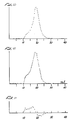
- Figure 1D graphically illustrates the typical elution profile of a sonicated phospholipid dispersion (1-palmitoyl-2-oleoyl-sn-phosphatidylcholine (POPC)/dioleoyl-sn-phosphatidyl-serine monosodium salt (DOPS), mole ratio 7:3 in buffer containing 10% (0.3M) sucrose.
- POPC palmitoyl-2-oleoyl-sn-phosphatidylcholine
- DOPS dioleoyl-sn-phosphatidyl-serine monosodium salt
- Figure 1E graphically illustrates the elution profile of the same sonicated dispersion after subjecting it to spray-drying.
- Figure 1F graphically illustrates the difference profile when the above two elution profiles (1D and 1E) are superimposed.
- Figure 2 shows electron micrographs of sonicated mixed phospholipid dispersions of POPC/DOPS (mole ratio 7:3).
- vesicle refers to a micelle which is in a generally spherical form with an internal aqueous compartment, often obtained from a lipid which forms a bilayered membrane and is referred to as a "liposome.”
- liposome refers to a particle which results from aggregation of amphiphilic molecules.
- preferred amphiphiles are biological lipids.
- Micelles are water-soluble aggregates of molecules with hydrophobic and hydrophilic portions (so-called amphiphilic molecules) which associate spontaneously.
- vesicles are, by now, very well known in the art. Typically, they are prepared from a phospholipid, for example, 1-Palmitoyl-2-oleoyl-sn-phosphatidylcholine and may include other materials such as neutral lipids, and also surface modifiers such as positively or negatively charged compounds.
- small unilamellar vesicle refers to a vesicle with a simple bilayered spherical shell in the size range of less than about 200 nm (2000 ⁇ ).
- Suitable for use as a preserving additive in the present invention are any of a number of materials, including various carbohydrates, including specifically dextran and certain disaccharides such as sucrose and lactose, alcohols such as glycerol, mannitol and ethylene glycol, proteins such as ovoalbumin, and gum arabic.
- sucrose is illustrative of a suitable disaccharide. It will be understood by those skilled in the art that other preserving additives can be utilized within the confines of the present invention.
- the vesicles of this invention are preferably in the form of small (less than 200 nm, 2000 ⁇ ) unilamellar phospholipid vesicles prepared by sonication as described by M. R. Mauk and R. C. Gamble, Anal . Bioc ., 94, p. 302-307 (1979), or by microemulsification using the procedures described in a co-pending application by R. Gamble filed January 31, 1985, now U.S. Patent No. 4,753,788 and assigned to the same assignee as this application; both incorporated by reference herein.
- vesicles Any of a variety of compounds can be enclosed in the internal aqueous compartment of the vesicles.
- Illustrative therapeutic agents include antibiotics, metabolic regulators, immune modulators, chemotherapeutic drugs, toxin antidotes, etc.
- the vesicles may be loaded with a diagnostic radionuclide and fluorescent materials or other materials that are detectable in in vitro and in vivo applications.
- the vesicles are preferably small unilamellar phospholipid vesicles which are subjected to spray-drying in the presence of preserving additives.
- the present invention is most advantageous as it preserves the vesicles during the dehydration and subsequent rehydration.
- preservation it is meant that average size and size distribution are not affected, that little or no fusion or aggregation is observed upon rehydration, that the vesicle bilayer integrity is maintained, and that there is no sacrifice of the utility of the vesicle.
- Dioleoyl-phosphatidylserine (1,2-Dioleoyl-sn-glycero-3-phospho-L-serine [DOPS]) was synthesized according to Hermetter et al., (1982) Chemistry and Physics of Lipids, Vol. 30, p. 35, or was a gift of Ciba-Geigy (Basel, Switzerland).
- 1-Palmitoyl-2-oleoyl-sn-phosphatidylcholine (POPC), 1,2-palmitoyl-sn-phosphatidylcholine, 1,2-dioleoyl-sn-phosphatidylcholine were all synthesized according to Paltauf et al., (1971) Biochimica Biophysica Acta Vol. 249, p. 539.
- Egg phosphatidylcholine and ox brain phosphatidylserine were purchased from Lipid Products (Surrey, U.K.). The phospholipids used were 99% pure as determined by TLC. Sucrose, trehalose and glucose were obtained from Sigma Chemical Company (St. Louis, Mo.).
- phospholipid e.g. POPC and DOPS, mole ratio 7:3
- CAT 16 if desirable
- the film was dried in high vacuum( ⁇ 10 ⁇ 3 torr), and the phospholipid dispersion was made by suspending the dry phospholipid film in 5 ml 10 mM sodium phosphate buffer pH7 containing 5-10% (0.15-0.3M) sucrose (usually 10% sucrose was used).
- the phospholipid concentration was 5Omg/ml unless otherwise stated, and the phospholipid to spin label (CAT 16) mole ratio was 100:1.
- the 5 ml dispersion was subjected to ultrasonication using a Branson B12 sonicator with a standard microtip.
- a Buchi spray-drying apparatus (Buchi Laboratory-Techniques, Flawil, Switzerland) was used. 45 ml of the diluted sonicated phospholipid dispersion were spray-dried (phospholipid concentration: - 5mg/ml). The following instrumental parameters were used: pressure:4bar; spray-flow:520; aspirator:position O; pump:position 1; heating rate:8.7-8.9; inlet temperature:140 ⁇ 5°C; outlet temperature:64° C.
- Phospholipid dispersion samples for freeze-fracture electron microscopy were cryofixated, fractured and replicated as described by Hauser et al. (1983), Biochemistry 22: 4775 and references cited therein, the disclosures of which are incorporated herein by reference.
- the spin label CAT 16 was incorporated in the phospholipid bilayer at a mole ratio of lipid to label of ⁇ 100:1.
- the free radical of this spin label is located in the polar group region of the bilayer.
- the label is randomly distributed between the outer and inner layer of the bilayer, i.e., about 65-70% of the label is located on the external bilayer surface, the remainder is present on the inner bilayer surface.
- the phospholipid dispersion was cooled to 0° and 3OmM sodium ascorbate was added.
- Sodium ascorbate which is a reducing agent impermeable to phospholipid bilayers at 0°C will interact with the spin label located on the external bilayer surface.
- 65-70% of the spin label intensity was quenched. Loss of the remaining "inner" ESR signal, which in intact membranes was ⁇ one-third of the total signal, is an indication that the bilayer becomes leaky for ascorbate.
- Phospholipids were quantified by determination of inorganic phosphorus using a slightly modified version of the method of Chen et al. (1956), Anal. Chem., Vol. 28, p. 1756.
- concentration of K3 Fe(CN)6 was determined by absorption measurement at 420 nm.
- 3H-raffinose and inulin [14 C] carboxylic acid were quantified by radio counting in a Beckman LS 7500 liquid scintillation counter.
- FIG. 1 A sonicated dispersion of POPC/DOPS, mole ratio 7:3 was prepared in 10mM phosphate buffer pH 7 containing 10% sucrose as described above. That the process of spray-drying did not change the morphology of the SUV dispersion (i.e. average vesicle size and size distribution) is illustrated in Fig.1.
- the gel filtration pattern of SUV before spray-drying and that after spray-drying and redispersing the phospholipids are shown in Figs. 1D and E, respectively.
- the elution patterns were very similar but not completely superimposable as evident from the difference pattern in Fig. 1F.
- the main peak of SUV Fig.
- Electron Microscopy of freeze-fractured samples revealed the presence of large mainly unilamellar vesicles of diameter ⁇ 0.2 to 2 ⁇ m which contain smaller vesicles entrapped in their aqueous cavity.
- phospholipids were employed instead of the synthetic phospholipids used in examples 1-3.
- the mole ratio of the naturally occurring phospholipid mixture was the same as that of the synthetic phospholipid mixture used in examples 1-3.
- the sonicated phospholipid dispersion of egg phosphatidylcholine and ox brain phosphatidylserine in a 0.01M phosphate buffer, 10% sucrose was prepared in the same way as in examples 1-3.
- the sonicated phospholipid dispersion thus obtained was analyzed for the average vesicle size and size distribution using gel filtration on Sepharose 4B.
- the dispersion was chromatographed on Sepharose 4B before and after spray-drying.
- the results obtained were very similar to those discussed in examples 1 and 3. The conclusion is that the mixture of naturally occurring phospholipids behaved like that of the synthetic phospholipids.
- Phospholipid SUV were prepared in exactly the same way as described in example 5.
- a sonicated POPC/DOPS dispersion in phosphate buffer plus 10% sucrose (mole ratio 7:3) is prepared as described previously.
- 3H - labeled raffinose is entrapped in the vesicle cavity and external [3H,] raffinose is removed by gel filtration on Sephadex G-50 as described previously.
- the lipid dispersion consisting of SUV with entrapped raffinose was chromatographed on Sepharose 4B before and after spray-drying. Before spray-drying it was found that 95% of the raffinose eluted together with the vesicle peak. After spray-drying 85% of the raffinose was eluted together with SUV. This experiment thus demonstrates that raffinose remains essentially entrapped during spray-drying at least to 90%.
- example 7 The experiment described in example 7 was carried out in the same way except that [14C] inulin carboxylic acid was encapsulated instead of raffinose.
- example 8 showed that inulin encapsulated in the vesicle cavity remained encapsulated during spray-drying.
- 0.1M K3 Fe (CN) was added to the buffer in order to encapsulate K3 Fe (CN)6.
- Externally present K3 Fe (CN)6 was removed by gel filtration on Sephadex G-50.
- the experiment was then conducted as that described in example 7. After spray-drying the phospholipid dispersion of SUV containing K3 Fe (CN)6, about 90% of the K3 Fe (CN)6 was eluted with the SUV. This experiment allows the conclusion that the bilayer barrier remains intact and ions do not penetrate the phospholipid bilayer during spray-drying.
- the present invention provides for the preservation of vesicles during the dehydration techniques. Specifically, in the presence of 5-10% (0.15-0.3 M) sucrose, SUV made of phospholipids (POPC/DOPS, mole ratio 7:3) were preserved during spray-drying. in the absence of the sugar, spray-drying led to aggregation and fusion of SUV. In the case of SUV of charged phospholipids large unilamellar vesicles were formed.
- the vesicles can be stored for extended periods of time and aggregation or fusion of the vesicles is avoided without sacrifice of the utility of the vesicles or leakage of any enclosed material.
Landscapes
- Health & Medical Sciences (AREA)
- Chemical & Material Sciences (AREA)
- General Health & Medical Sciences (AREA)
- Public Health (AREA)
- Pharmacology & Pharmacy (AREA)
- Epidemiology (AREA)
- Life Sciences & Earth Sciences (AREA)
- Animal Behavior & Ethology (AREA)
- Dispersion Chemistry (AREA)
- Medicinal Chemistry (AREA)
- Veterinary Medicine (AREA)
- Medicinal Preparation (AREA)
- Medicines That Contain Protein Lipid Enzymes And Other Medicines (AREA)
- Manufacturing Of Micro-Capsules (AREA)
- Acyclic And Carbocyclic Compounds In Medicinal Compositions (AREA)
- Medicines Containing Antibodies Or Antigens For Use As Internal Diagnostic Agents (AREA)
- Agricultural Chemicals And Associated Chemicals (AREA)
Abstract
Claims (17)
- Procédé de déshydratation d'une préparation de liposomes dans lequel on sèche par pulvérisation des liposomes en suspension dans un milieu de dispersion aqueux en présence d'un additif de conservation à une température de 60°C à 150°C pour produire une préparation de liposomes qui, après reconstitution, présente sensiblement la même taille, la même distribution de taille et la même intégrité que les liposomes de départ.
- Procédé selon la revendication 1, dans lequel les liposomes ont des dimensions d'au moins 200 nm (2000 Å).
- Procédé selon la revendication 1 ou 2, dans lequel lesdits liposomes sont unilamellaires.
- Procédé selon l'une quelconque des revendications 1 à 3, dans lequel lesdits liposomes sont des vésicules de phospholipide et ledit phospholipide est une phosphatidylcholine ou phosphatidylsérine.
- Procédé selon la revendication 4, dans lequel ladite phosphatidylcholine est une phosphatidylcholine d'oeuf, la 1-palmitoyl-2-oléoyl-sn-phosphatidylcholine, la 1,2-palmitoyl-sn-phosphatidylcholine ou la 1,2-dioléoyl-sn-phosphatidylcholine.
- Procédé selon la revendication 4 dans lequel ladite phosphatidylsérine est la dioléoyl-sn-phosphatidyl-sérine, la 1,2-dioléoyl-sn-glycérol-3-phospho-L-sérine ou la phosphatidylsérine d'encéphale de boeuf.
- Procédé selon la revendication 1 ou 2, dans lequel ledit additif de conservation est un hydrate de carbone, un alcool, une protéine ou la gomme arabique.
- Procédé selon la revendication 7, dans lequel ledit hydrate de carbone est le dextrane, un monosaccharide ou un disaccharide.
- Procédé selon la revendication 8, dans lequel ledit disaccharide est le saccharose, le lactose ou le tréhalose.
- Procédé selon la revendication 8, dans lequel ledit monosaccharide est le glucose.
- Procédé selon la revendication 9, dans lequel ledit additif de conservation est le saccharose.
- Procédé selon la revendication 11, dans lequel ledit saccharose est présent en une quantité de 5% à 10% de saccharose.
- Procédé selon la revendication 7, dans lequel ledit alcool est choisi dans le groupe constitué par le glycérol, le mannitol est l'éthylèneglycol.
- Procédé selon la revendication 7, dans lequel ledit additif de conservation est l'albumine ou la gomme arabique.
- Procédé selon l'une quelconque des revendications précédentes, dans lequel lesdits liposomes sont incorporés avec un agent thérapeutique ou diagnostique.
- Procédé selon l'une quelconque des revendications 1 à 14, dans lequel lesdits liposomes après reconstitution sont incorporés avec un agent thérapeutique ou diagnostique.
- Procédé selon la revendication 15 ou 16, dans lequel ledit agent thérapeutique est un agent antibiotique, un agent régulateur du métabolisme, un agent immunomodulateur, un agent chimiothérapeutique ou un agent antitoxine.
Priority Applications (1)
| Application Number | Priority Date | Filing Date | Title |
|---|---|---|---|
| AT88902055T ATE80552T1 (de) | 1987-02-24 | 1988-02-22 | Dehydrierung vesikulaerer praeparate zur langzeitigen lagerung. |
Applications Claiming Priority (2)
| Application Number | Priority Date | Filing Date | Title |
|---|---|---|---|
| US1819087A | 1987-02-24 | 1987-02-24 | |
| US18190 | 1998-02-04 |
Publications (3)
| Publication Number | Publication Date |
|---|---|
| EP0358640A4 EP0358640A4 (fr) | 1989-11-27 |
| EP0358640A1 EP0358640A1 (fr) | 1990-03-21 |
| EP0358640B1 true EP0358640B1 (fr) | 1992-09-16 |
Family
ID=21786713
Family Applications (1)
| Application Number | Title | Priority Date | Filing Date |
|---|---|---|---|
| EP88902055A Expired - Lifetime EP0358640B1 (fr) | 1987-02-23 | 1988-02-22 | Deshydratation de preparations vesiculaires pour stockage a longterme |
Country Status (8)
| Country | Link |
|---|---|
| EP (1) | EP0358640B1 (fr) |
| JP (1) | JP2677647B2 (fr) |
| AU (1) | AU612631B2 (fr) |
| CA (1) | CA1321351C (fr) |
| ES (1) | ES2006576A6 (fr) |
| GR (1) | GR1000070B (fr) |
| IE (1) | IE62673B1 (fr) |
| WO (1) | WO1988006441A1 (fr) |
Cited By (1)
| Publication number | Priority date | Publication date | Assignee | Title |
|---|---|---|---|---|
| DE102005026489A1 (de) * | 2005-06-09 | 2006-12-28 | Wilhelm Karmann Gmbh | Cabriolet-Fahrzeug mit einem in einem Verdeckkasten ablegbaren Dach |
Families Citing this family (12)
| Publication number | Priority date | Publication date | Assignee | Title |
|---|---|---|---|---|
| IL97681A (en) * | 1990-04-03 | 1996-01-31 | Ciba Geigy Ag | Parenterally administrable liposome formulation comprising synthetic lipids |
| JP3329554B2 (ja) * | 1993-03-10 | 2002-09-30 | 千葉製粉株式会社 | 乾燥小胞体 |
| CH689139A5 (de) * | 1995-04-03 | 1998-10-30 | Cerbios Pharma Sa | Verfahren zur Herstellung einer liposomalen, in Wasser dispergierbaren, oral zu verabreichenden, festen, trockenen therapeutischen Formulierung. |
| GB9813100D0 (en) * | 1998-06-18 | 1998-08-19 | Secr Defence | Method of forming liposomes |
| DE10205362A1 (de) * | 2002-02-08 | 2003-08-21 | Abbott Gmbh & Co Kg | Verfahren zur Herstellung wasserdispergierbarer Trockenpulver von in Wasser schwer löslichen Verbindungen |
| WO2008000534A1 (fr) * | 2006-06-30 | 2008-01-03 | Gertrud Langhoff | Formulations de solubilisât |
| US9468668B2 (en) | 2011-08-11 | 2016-10-18 | Allergy Research Group, Llc | Flavored chewable lipid supplements for maintaining health and the treatment of acute and chronic disorders |
| US9095507B2 (en) | 2011-08-11 | 2015-08-04 | Allergy Research Group, Llc | Chewable wafers containing lipid supplements for maintaining health and the treatment of acute and chronic disorders |
| US20140161876A1 (en) * | 2011-07-15 | 2014-06-12 | Konica Minolta, Inc. | Liposome-containing preparation utilizing dissolution aid, and method for producing same |
| US11253531B2 (en) | 2011-08-11 | 2022-02-22 | Nutritional Therapeutics, Inc. | Lipid supplements for reducing nerve action potentials |
| US10117885B2 (en) | 2011-08-11 | 2018-11-06 | Allergy Research Group, Llc | Chewable lipid supplements for treating pain and fibromyalgia |
| CN118767319B (zh) * | 2024-07-01 | 2025-04-22 | 中国科学院杭州医学研究所 | 一种传递体复合糖微针贴片及其制备方法和应用 |
Citations (1)
| Publication number | Priority date | Publication date | Assignee | Title |
|---|---|---|---|---|
| JPS5746921A (en) * | 1980-09-02 | 1982-03-17 | Green Cross Corp:The | Oral preparation of human blood coagulation factor |
Family Cites Families (8)
| Publication number | Priority date | Publication date | Assignee | Title |
|---|---|---|---|---|
| CH621479A5 (fr) * | 1977-08-05 | 1981-02-13 | Battelle Memorial Institute | |
| US4275088A (en) * | 1979-02-07 | 1981-06-23 | General Mills, Inc. | Dry mix for layer cake containing citrus juice vesicle solids |
| FR2521565B1 (fr) * | 1982-02-17 | 1985-07-05 | Dior Sa Parfums Christian | Melange pulverulent de constituants lipidiques et de constituants hydrophobes, procede pour le preparer, phases lamellaires lipidiques hydratees et procede de fabrication, compositions pharmaceutiques ou cosmetiques comportant des phases lamellaires lipidiques hydratees |
| US4515736A (en) * | 1983-05-12 | 1985-05-07 | The Regents Of The University Of California | Method for encapsulating materials into liposomes |
| JPS6058915A (ja) * | 1983-09-12 | 1985-04-05 | Fujisawa Pharmaceut Co Ltd | 薬物含有脂質小胞体製剤 |
| JPS6121449A (ja) * | 1984-07-07 | 1986-01-30 | Ito Kosakusho:Kk | 駆動部構造 |
| JPS62501631A (ja) * | 1985-01-11 | 1987-07-02 | ザ・リ−ジェンツ・オブ・ジ・ユニバ−シィティ・オブ・カリフォルニア | リポソ−ムの保持法 |
| US4830858A (en) * | 1985-02-11 | 1989-05-16 | E. R. Squibb & Sons, Inc. | Spray-drying method for preparing liposomes and products produced thereby |
-
1988
- 1988-02-22 WO PCT/US1988/000408 patent/WO1988006441A1/fr not_active Ceased
- 1988-02-22 EP EP88902055A patent/EP0358640B1/fr not_active Expired - Lifetime
- 1988-02-22 CA CA000559437A patent/CA1321351C/fr not_active Expired - Lifetime
- 1988-02-22 JP JP63502149A patent/JP2677647B2/ja not_active Expired - Lifetime
- 1988-02-22 AU AU13619/88A patent/AU612631B2/en not_active Expired
- 1988-02-23 GR GR880100098A patent/GR1000070B/el not_active IP Right Cessation
- 1988-02-23 ES ES8800515A patent/ES2006576A6/es not_active Expired
- 1988-02-23 IE IE49388A patent/IE62673B1/en not_active IP Right Cessation
Patent Citations (1)
| Publication number | Priority date | Publication date | Assignee | Title |
|---|---|---|---|---|
| JPS5746921A (en) * | 1980-09-02 | 1982-03-17 | Green Cross Corp:The | Oral preparation of human blood coagulation factor |
Cited By (2)
| Publication number | Priority date | Publication date | Assignee | Title |
|---|---|---|---|---|
| DE102005026489A1 (de) * | 2005-06-09 | 2006-12-28 | Wilhelm Karmann Gmbh | Cabriolet-Fahrzeug mit einem in einem Verdeckkasten ablegbaren Dach |
| DE102005026489B4 (de) * | 2005-06-09 | 2017-11-30 | Valmet Automotive Oy | Cabriolet-Fahrzeug mit einem in einem Verdeckkasten ablegbaren Dach |
Also Published As
| Publication number | Publication date |
|---|---|
| ES2006576A6 (es) | 1989-05-01 |
| JP2677647B2 (ja) | 1997-11-17 |
| GR880100098A (en) | 1988-12-16 |
| AU1361988A (en) | 1988-09-26 |
| AU612631B2 (en) | 1991-07-18 |
| CA1321351C (fr) | 1993-08-17 |
| EP0358640A4 (fr) | 1989-11-27 |
| IE62673B1 (en) | 1995-02-22 |
| WO1988006441A1 (fr) | 1988-09-07 |
| EP0358640A1 (fr) | 1990-03-21 |
| GR1000070B (el) | 1990-10-31 |
| IE880493L (en) | 1988-08-23 |
| JPH02502348A (ja) | 1990-08-02 |
Similar Documents
| Publication | Publication Date | Title |
|---|---|---|
| US5089181A (en) | Method of dehydrating vesicle preparations for long term storage | |
| Anwekar et al. | Liposome-as drug carriers. | |
| EP1259225B1 (fr) | Procede de deshydradation/rehydratation pour faire des liposomes | |
| Laouini et al. | Preparation, characterization and applications of liposomes: state of the art | |
| RU2216315C2 (ru) | Способ получения липосом | |
| AU612285B2 (en) | Method of making liposomes with improved stability during drying | |
| US5776486A (en) | Methods and apparatus for making liposomes containing hydrophobic drugs | |
| KR101984454B1 (ko) | 친유성 화합물의 개선된 리포좀 제형 | |
| US4857319A (en) | Method for preserving liposomes | |
| Watwe et al. | Manufacture of liposomes: a review | |
| AU612631B2 (en) | Dehydrating vesicule preparations for long-term storage | |
| Dwivedi et al. | Review on preparation and characterization of liposomes with application | |
| KR101474577B1 (ko) | 미토콘드리아 기능의 향상을 위한 카디오리핀 포함 리포좀 | |
| JPH05504150A (ja) | 封入すべき外来物質に対する取り込み容量が増加されたリポソームの製造方法 | |
| JPH0753661B2 (ja) | プロ―リポソーム組成物及びリポソームの水性分散物を作る方法 | |
| Tasi et al. | Microcalorimetric investigation of the interaction of polysorbate surfactants with unilamellar phosphatidylcholines liposomes | |
| CZ292599A3 (cs) | Farmaceutický přípravek obsahující lyofilizované liposomy enkapsulující aktivní substanci, která je vysoce nerozpustná ve vodě a způsob přípravy tohoto přípravku | |
| Crommelin et al. | Liposomes as carriers for drugs and antigens: approaches to preserve their long term stability | |
| Wang et al. | Preparation of submicron liposomes exhibiting efficient entrapment of drugs by freeze-drying water-in-oil emulsions | |
| Goswami et al. | A brief review on liposomal drug delivery system | |
| Sirisha et al. | Liposomes-the potential drug carriers | |
| HANDA et al. | Lyophilized liposomes prepared by a modified reversed-phase evaporation method | |
| DE3874736T2 (de) | Dehydrierung vesikulaerer praeparate zur langzeitigen lagerung. | |
| US20210322315A1 (en) | Process for the production of lipidic vehicles | |
| WO2002038128A1 (fr) | Procede de preparation d'une dispersion de microsome |
Legal Events
| Date | Code | Title | Description |
|---|---|---|---|
| PUAI | Public reference made under article 153(3) epc to a published international application that has entered the european phase |
Free format text: ORIGINAL CODE: 0009012 |
|
| 17P | Request for examination filed |
Effective date: 19890823 |
|
| AK | Designated contracting states |
Kind code of ref document: A1 Designated state(s): AT BE CH DE FR GB IT LI LU NL SE |
|
| 17Q | First examination report despatched |
Effective date: 19910212 |
|
| GRAA | (expected) grant |
Free format text: ORIGINAL CODE: 0009210 |
|
| AK | Designated contracting states |
Kind code of ref document: B1 Designated state(s): AT BE CH DE FR GB IT LI LU NL SE |
|
| REF | Corresponds to: |
Ref document number: 80552 Country of ref document: AT Date of ref document: 19921015 Kind code of ref document: T |
|
| ITF | It: translation for a ep patent filed | ||
| REF | Corresponds to: |
Ref document number: 3874736 Country of ref document: DE Date of ref document: 19921022 |
|
| ET | Fr: translation filed | ||
| PLBI | Opposition filed |
Free format text: ORIGINAL CODE: 0009260 |
|
| 26 | Opposition filed |
Opponent name: THE LIPOSOME COMPANY INC. Effective date: 19930614 |
|
| NLR1 | Nl: opposition has been filed with the epo |
Opponent name: THE LIPOSOME COMPANY INC. |
|
| EPTA | Lu: last paid annual fee | ||
| EAL | Se: european patent in force in sweden |
Ref document number: 88902055.8 |
|
| PLBM | Termination of opposition procedure: date of legal effect published |
Free format text: ORIGINAL CODE: 0009276 |
|
| STAA | Information on the status of an ep patent application or granted ep patent |
Free format text: STATUS: OPPOSITION PROCEDURE CLOSED |
|
| 27C | Opposition proceedings terminated |
Effective date: 19950212 |
|
| NLR2 | Nl: decision of opposition | ||
| REG | Reference to a national code |
Ref country code: CH Ref legal event code: PUE Owner name: VESTAR, INC. TRANSFER- NEXSTAR PHARMACEUTICALS, IN |
|
| REG | Reference to a national code |
Ref country code: GB Ref legal event code: 732E |
|
| NLS | Nl: assignments of ep-patents |
Owner name: NEXSTAR PHARMACEUTICALS, INC. |
|
| NLS | Nl: assignments of ep-patents |
Owner name: NEXSTAR PHARMACEUTICALS, INC. |
|
| REG | Reference to a national code |
Ref country code: FR Ref legal event code: TP |
|
| REG | Reference to a national code |
Ref country code: GB Ref legal event code: IF02 |
|
| PGFP | Annual fee paid to national office [announced via postgrant information from national office to epo] |
Ref country code: AT Payment date: 20070201 Year of fee payment: 20 |
|
| PGFP | Annual fee paid to national office [announced via postgrant information from national office to epo] |
Ref country code: NL Payment date: 20070222 Year of fee payment: 20 |
|
| PGFP | Annual fee paid to national office [announced via postgrant information from national office to epo] |
Ref country code: GB Payment date: 20070223 Year of fee payment: 20 |
|
| PGFP | Annual fee paid to national office [announced via postgrant information from national office to epo] |
Ref country code: CH Payment date: 20070227 Year of fee payment: 20 Ref country code: SE Payment date: 20070227 Year of fee payment: 20 |
|
| PGFP | Annual fee paid to national office [announced via postgrant information from national office to epo] |
Ref country code: LU Payment date: 20070305 Year of fee payment: 20 |
|
| PGFP | Annual fee paid to national office [announced via postgrant information from national office to epo] |
Ref country code: BE Payment date: 20070327 Year of fee payment: 20 |
|
| PGFP | Annual fee paid to national office [announced via postgrant information from national office to epo] |
Ref country code: DE Payment date: 20070330 Year of fee payment: 20 |
|
| PGFP | Annual fee paid to national office [announced via postgrant information from national office to epo] |
Ref country code: IT Payment date: 20070523 Year of fee payment: 20 |
|
| BE20 | Be: patent expired |
Owner name: *NEXSTAR PHARMACEUTICALS INC. Effective date: 20080222 |
|
| REG | Reference to a national code |
Ref country code: GB Ref legal event code: PE20 |
|
| REG | Reference to a national code |
Ref country code: CH Ref legal event code: PL |
|
| NLV7 | Nl: ceased due to reaching the maximum lifetime of a patent |
Effective date: 20080222 |
|
| EUG | Se: european patent has lapsed | ||
| PG25 | Lapsed in a contracting state [announced via postgrant information from national office to epo] |
Ref country code: NL Free format text: LAPSE BECAUSE OF EXPIRATION OF PROTECTION Effective date: 20080222 |
|
| PGFP | Annual fee paid to national office [announced via postgrant information from national office to epo] |
Ref country code: FR Payment date: 20070221 Year of fee payment: 20 |
|
| PG25 | Lapsed in a contracting state [announced via postgrant information from national office to epo] |
Ref country code: GB Free format text: LAPSE BECAUSE OF EXPIRATION OF PROTECTION Effective date: 20080221 |