EP0358659B1 - Teilnehmereinheit für ein sprach/daten-fernleitungskommunikationssystem - Google Patents
Teilnehmereinheit für ein sprach/daten-fernleitungskommunikationssystem Download PDFInfo
- Publication number
- EP0358659B1 EP0358659B1 EP88903553A EP88903553A EP0358659B1 EP 0358659 B1 EP0358659 B1 EP 0358659B1 EP 88903553 A EP88903553 A EP 88903553A EP 88903553 A EP88903553 A EP 88903553A EP 0358659 B1 EP0358659 B1 EP 0358659B1
- Authority
- EP
- European Patent Office
- Prior art keywords
- data
- channel
- voice
- subscriber
- control channel
- Prior art date
- Legal status (The legal status is an assumption and is not a legal conclusion. Google has not performed a legal analysis and makes no representation as to the accuracy of the status listed.)
- Expired - Lifetime
Links
- 238000004891 communication Methods 0.000 title claims description 52
- 230000000694 effects Effects 0.000 claims abstract description 15
- 238000000034 method Methods 0.000 claims description 21
- 238000012544 monitoring process Methods 0.000 claims description 12
- 230000000977 initiatory effect Effects 0.000 claims description 3
- 230000005540 biological transmission Effects 0.000 abstract description 15
- 108091006146 Channels Proteins 0.000 description 218
- 238000010586 diagram Methods 0.000 description 7
- 238000012360 testing method Methods 0.000 description 5
- 230000011664 signaling Effects 0.000 description 3
- 230000003595 spectral effect Effects 0.000 description 3
- 230000008901 benefit Effects 0.000 description 2
- 230000000994 depressogenic effect Effects 0.000 description 2
- 238000012545 processing Methods 0.000 description 2
- 230000003466 anti-cipated effect Effects 0.000 description 1
- 230000001413 cellular effect Effects 0.000 description 1
- 238000001514 detection method Methods 0.000 description 1
- 238000009434 installation Methods 0.000 description 1
- 230000003993 interaction Effects 0.000 description 1
- 238000005192 partition Methods 0.000 description 1
- 238000001228 spectrum Methods 0.000 description 1
- 238000004148 unit process Methods 0.000 description 1
Images





Classifications
-
- H—ELECTRICITY
- H04—ELECTRIC COMMUNICATION TECHNIQUE
- H04B—TRANSMISSION
- H04B7/00—Radio transmission systems, i.e. using radiation field
-
- H—ELECTRICITY
- H04—ELECTRIC COMMUNICATION TECHNIQUE
- H04W—WIRELESS COMMUNICATION NETWORKS
- H04W84/00—Network topologies
- H04W84/02—Hierarchically pre-organised networks, e.g. paging networks, cellular networks, WLAN [Wireless Local Area Network] or WLL [Wireless Local Loop]
- H04W84/04—Large scale networks; Deep hierarchical networks
- H04W84/08—Trunked mobile radio systems
Definitions
- This invention relates generally to trunked communications systems and more particularly to trunked communication systems that transceive both voice and data.
- a subscriber unit transmits a data packet called an "inbound signalling word” (ISW) on a control channel that is maintained for such purposes.
- the ISW contains at least the requesting unit's unique ID code, which may contain or be used to obtain the requesting subscriber's current talk-group.
- the request is forwarded to a central controller, which decodes the request, and transmits on the control channel a data packet called an "outbound signalling word" (OSW) to all subscriber units, which continuously monitor the control channel when not participating in a voice conversation.
- the OSW is a channel grant which contains the talk-group code of the requesting unit, and the voice channel number assigned for the conversation.
- the OSW causes the requesting unit to move to the voice channel and commence transmitting, while simultaneously causing all other subscriber units in the same talk-group to move to the voice channel as listening units. In this way a group call is set up. If, however, all voice channels are in use when a subscriber unit transmits an ISW, the central controller typically sends the requesting subscriber a "busy OSW".
- a subscriber unit obtains a trunked data communication channel via the same procedure used to obtain a voice channel.
- this practice is inefficient and spectrally wasteful, due to the time it takes for a requesting subscriber to transmit an ISW and receive a channel grant OSW from the central and the time it takes to set up and clean-down calls on a voice channel.
- an entire typical data message would take substantially less time to transmit than the time required to set-up a channel (approximately .5 seconds).
- assigning a data channel pursuant to the same procedure as assigning a voice channel would be wasteful of spectrum and consume precious system time that could be better used to transmit data messages.
- trunked communication systems desirous to accommodate data traffic have permanently dedicated one or more channels to handling data traffic. While this avoids the access time problem noted above, this technique is contrary to the basic principles of trunked communication systems, which strive to allocate channel resources across a plurality of users as required. Therefore, the practice of having dedicated data channels, permanently removed from the channel allocation "pool" of frequencies, is wasteful of spectral resources and leads to inefficient system operation. Moreover, the dedicated data channel systems lack the capacity to dynamically redistribute or allocate the data traffic load across the available data channels. Such systems typically permanently assign a subscriber unit to a data channel thereby building in future problems as the number of data subscribers increases on a particular channel.
- WO-A-86/00775 describes a method of implementing a cellular telecommunications system to support both circuit-switched telephone voice and circuit-switched individual data messaging.
- a method of operating a trunked voice/data communication system having a plurality of voice/data subscriber units for communicating over a plurality of communication channels, some of which may be allocated for data traffic, and a particular one of which is reserved as a control channel, the method characterised by the steps of: in at least one of said plurality of voice/data subscriber units: determining whether at least one of the communication channels has been allocated for data traffic; transmitting, over the control channel, a data channel request for a data channel to be allocated for use by multiple data users if no data channels are currently allocated; receiving, over the control channel, a data channel grant which identifies a particular communication channel as a data channel for use by multiple data users; operating, thereafter, on said data channel until a predetermined event occurs; wherein said predetermined event comprises one of the following: receiving a command over said data channel to monitor said control channel; or the expiration of a predetermined time interval during which there was no data activity;or initiating a
- a method of operating a trunked voice/data communication system having a plurality of voice/data subscriber units for communicating over a plurality of communication channels, some of which may be allocated for data traffic, and a particular one of which is reserved as a control channel, the method characterised by the steps of: in at least one of said plurality of voice/data subscriber units: determining whether at least one of the communication channels has been allocated for data traffic; transmitting, over the control channel, a data channel request for a data channel to be allocated for use by multiple data users if no data channels are currently allocated; receiving, over the control channel, a data channel grant, which identifies at least one of said plurality of communication channels as data channels for use by multiple data users, and further identifies a particular one of said at least one of said plurality of communication channels as a first allocated data channel; operating on a data channel selected from said at least one of said plurality of communication channels until commanded to otherwise operate according to one of the group of commands: monitor said control
- the present invention advantageously provides an improved trunked communication system capable of accommodating both voice and data traffic, which data traffic is accommodated without permanently removing one or more channels from the trunked channel resources.
- the present invention may accommodate prior voice-only or data-only subscribers.
- the present invention advantageously permits prior data-only subscribers to communicate notwithstanding the absence of an assigned data channel.
- a further benefit arising from the present invention is that, while providing trunked data communication, spectrally wasteful access time is minimised.
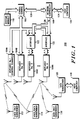
- the centralized or fixed-end equipment comprises a central controller 102, which is responsible for allocating the channel resources (represented here by repeaters 104a-104N) amongst the many subscriber units.
- the channel resources represented here by repeaters 104a-104N
- one (repeater 104a) is selected to be a voice control channel, which will communicate with any trunked subscriber capable of transmitting voice traffic.
- the particular repeater selected to be the control channel (104a) is periodically changed as a control measure.
- each of the repeaters 104a-N are capable of operating as a voice channel, control channel, or data channel.
- Such repeaters are equipped with a data interface 122.
- the data interfaces 122 are responsible for encoding outbound data, decoding and error correcting inbound data, repeater control, and providing an interface between the repeater and the network controller 108.
- a predetermined subset of the total number of repeaters may be equipped for data or use as a control channel.
- the data network comprises at least one host computer 106, which is coupled (i.e., wireline host) to a network controller 108.
- the network controller 108 is responsible for data traffic routing and communicating with the central controller 102 to request the allocation of a data channel.
- the trunked voice/data communication system 100 may employ one or more radio frequency (RF) coupled host computers 118.
- the RF host 118 communicates as a trunked control station via any suitable data transceiver 120.
- the primary difference between the wireline host 106 and the RF host 118 is that the data subscribers communicate directly (i.e., via both the inbound and outbound frequencies of a data equipped repeater) with the RF host, whereas the wireline host 106 transceives all information via the inbound or outbound frequency of a data equipped repeater.
- the data network of the present invention may employ several computers in either a centralized or distributed processing arrangement.
- the fixed-end equipment also includes a system manager console 110 that enables the supervisor of a communication service provider to set a number of operational parameters that control the operation of the trunked communication system.
- Typical examples of such parameters include the maximum number of assignable data channels (if any), whether voice or data will be the priority traffic, and various threshold values that control when data channels may be added or reallocated to voice traffic.
- the trunked communication system of the present invention need not have any channels allocated for data traffic. Conversely, if voice traffic is low, or if data traffic enjoys a priority status or is particularly heavy, one or more channels may be allocated for data communication.
- a predetermined channel ordinarily comprises the first channel to be allocated for data.
- this first assigned data channel (hereinafter “the master data channel") has the same frequency as any single frequency data-only subscribers (116) to provide maximum compatibility with existing data equipment.
- a random channel may be the first assigned data channel; however, the multi-channel data-only subscribers may have to scan the available channels to find it.
- the present invention prefers to first assign a selected channel, and, thereafter, assign any other data equipped (122) channel as an additional data channel.
- the present invention allocates data channels for a time interval determined by either the system manager or a default parameter.
- the length of the allocation period may vary with the time of day, system loading or other such parameters.
- the goal of any trunked communication system is to effectively allocate the limited channel resources amongst a plurality of subscriber units.
- the present invention contemplates three classes of subscriber units: voice-only subscribers 112, voice/data subscribers 114, and data-only subscribers 116.
- the voice-only subscribers 112 are contemplated to be any existing trunked subscriber unit having a compatible signalling protocol to allow interaction with the system (100).
- the data-only subscribers (116) are contemplated to be any multiple or single channel data transceivers such as the KDT 800 TM , manufactured by Motorola, Inc., or functional equivalent.
- receive-only data devices such as any of the Motorola family of display pagers, may also operate to receive paging data over an assigned data channel.
- the present system contemplates a voice/data subscriber 114 capable of operating within the trunked system 100.
- Subscriber units are typically comprised of either mobile, portable or control stations.
- mobile units are understood to be transceivers designed to operate in a vehicle.
- a portable unit is typically understood to be a transceiving or receive-only device designed primarily to be carried on or about the person.
- Control stations are usually permanent or semi-permanent installations in buildings or other such fixed locations. These are collectively referred to herein as subscriber units, which communicate with one another through the fixed-end equipment.
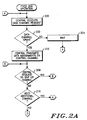
- the central 102 receives a data channel request either from the network controller 108 or from a voice/data subscriber 114.
- the voice/data subscriber 114 may communicate such a data channel request via the control channel 104a when the subscriber has data to transmit.
- the network controller 108 may communicate a similar request over the connection 126 to the central controller in several circumstances to be hereinafter described.
- a request may be made over the master data channel to the network controller since the data-only subscribers cannot transceive on the voice control channel.
- the data-only subscribers may communicate with the network controller irrespective of the fact that no data channels are currently assigned. The reason for this is that a de-keyed repeater continues to operate as a receive-only device.
- the network controller 108 can "hear" a data channel request from a data-only subscriber 116 and repeat it to the central controller 102. If a data channel is available, the central controller will format and return a data channel grant both over the control channel 104a (to the voice/data subscribers 114) and to the network controller 108 via the connection 126.
- decision 202 tests to determine whether a data channel has been granted by the central. If not, the routine proceeds to step 204, where the network controller (or data subscriber) waits a predetermined time interval before returning to reference letter A of Fig. 2a to again request a data channel. If the central 102 grants a data channel, the routine proceeds to step 206, where the central transmits the data channel assignment over the control channel 104a and to the network controller 108. Thereafter, data-only subscribers 116 and voice/data subscribers 114 operating in the data mode may communicate over any of the assigned data channels.
- Data operation may continue without further data channel requests for the allocated time period, which may be determined by the system manager 110.
- the central controller 102 transmits an instruction to the network controller 108 to relinquish the data channel.
- decision 208 tests to see whether the central has so instructed. If so, the routine proceeds to reference letter B of Fig. 2b where the channel is relinquished. If not, the routine proceeds to decision 210, which tests to see whether an additional data channel is needed.
- the network controller 108 may request an additional data channel from the central controller 102. To do this, the network controller proceeds to reference letter A of Fig. 2a to transmit another data channel request to the central. If another data channel is available for data traffic, the central may assign an additional data channel.
- the present invention contemplates leveling the data load among the available data channels to maximize data communication.
- Two preferred methods for allocating data channels and leveling the data traffic load is described in two co-pending applications filed on an even date herewith. The first is by Garry Hess (U.S. Patent 4,831,373, granted May 16, 1989), and the second is by Ken Zdunek (U.S. Patent 4,870,408, granted September 26, 1989), and both are entitled "Method For Dynamically Allocating Data Channels On A Trunked Communication System", with each being assigned to the same assignee as the present invention. These cases are hereby incorporated by reference as if fully set forth herein.
- step 2b the steps executed to relinquish a data channel are shown. Assuming that the central controller 102 has requested the network controller 108 to give up a data channel, the network controller transmits a "return to control channel" command 212 over the data channel to be relinquished. All data compatible subscribers receiving this command return to the control channel 104a. Of course, single channel data-only subscribers continue to monitor their particular single frequency.
- step 214 the network controller 108 releases the data channel to the central controller.
- step 216 the central 102 may now assign this channel for a voice call.
- decision 218 determines whether there are remaining data channels. If the network controller 108 has released only one of several data channels, the routine proceeds to reference letter D of Figure 2a to continue data operation. However, if the sole data channel was relinquished, the routine proceeds to reference letter C of Figure 2c.
- the network controller 108 after relinquishing the sole data channel, starts a request timer in step 220. Decision 222 determines whether this timer has expired. If so, the routine returns to reference letter A of Fig. 2a, to request a data channel. If the timer has not expired, the network controller 108 determines whether the host computer 106 has any data for transmission. If the determination of decision 224 is that the host has data to transmit, the routine proceeds to reference letter A of Fig. 2a to request a data channel. Otherwise, the network controller determines in decision 226 whether a data message has been received from a data-only subscriber or an RF host computer.
- the network controller 108 If the determination of decision 226 is that such a data message was received, the network controller 108 "knows" that the channel which carried the data is idle and that a data-only subscriber wishes to communicate. Accordingly, the routine returns to reference letter A of Fig. 2a, where the network controller requests a data channel to allow it to communicate with the data-only subscriber. However, if the network controller 108 has received no such data message, the routine continues by returning to reference letter C of Fig. 2c, which forms a waiting loop until either the request timer expires or some data activity occurs.
- step 300 the subscriber unit powers up. During power up, the subscriber unit may execute any self-check routines and initialize operational flags and variables. During this time, the subscriber unit determines in decision 302 whether to operate primarily in the voice mode. If so decision 302 transfers control to reference letter E of Fig. 3b for voice mode operation. If not, decision 304 tests whether the subscriber operates primarily in the data mode. If decision 304 determines that the subscriber normally operates in the data mode, the routine proceeds to reference letter F of Fig. 3d for data mode operation.
- the subscriber unit may use its last mode of operation. Thus, if the last communication was a voice call, the subscriber unit would operate in the voice mode. Conversely, if the last communication was a data transmission, the subscriber would operate in the data mode.
- Decision 306 determines if the last mode operational option is selected. If not, the routine proceeds to step 308, which signals that a unit fault has occurred for failure to determine one of the only three available modes of operation. However, if the determination of decision 306 is that the last mode was selected, decision 310 determines whether the last activity was a voice call. If so, the routine proceeds to reference letter E of Fig. 3b for voice mode operation. If the determination of decision 310 was that a data transmission was last made, the routine proceeds to reference letter F of Fig. 3d for data mode operation.
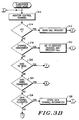
- step 312 the subscriber unit monitors the control channel.
- the voice mode subscriber unit must at all times be either monitoring the control channel, or participating in a voice call on one of the available voice channels. Accordingly, the voice mode subscriber continuously monitors the control channel until a command is received or the operator transmits.
- decision 314 determines whether the subscriber operator has pressed the push-to-talk (PTT) switch. If so, step 316 transmits a voice call request over the control channel to the central controller 102. Following this, the subscriber returns to reference letter E of Fig. 3b to monitor the control channel. If the PTT switch was not newly depressed, the routine proceeds to decision 318 to determine whether a channel assignment has been received over the control channel.
- PTT push-to-talk
- step 320 the subscriber goes to the assigned voice channel to participate in the call. After the completion of the call, the routine returns to reference letter E of Fig. 3b to again monitor the control channel.
- decision 322 changes the subscriber's operating mode to the data mode and the routine proceeds to reference letter F of Fig. 3d.
- Decision 324 determines whether the voice mode subscriber has received a command over the control channel to go to the data mode to receive a message from the host computer 106.
- the central 102 keeps track of the subscribers operating in the voice mode.
- the network controller 108 thereby avoids wasted transmission time by not transmitting a data message to a subscriber known not to be monitoring one of the assigned data channels.
- the network controller may request the central to command a voice mode subscriber, whether on a voice channel or the control channel, to move to an assigned data channel to receive a data message.
- the central may wait until the conclusion of the voice call and transmit the data channel command via the voice control channel.
- decision 324 routes the program to reference letter G of Fig. 3d to participate in the data transmission.
- any subscriber unit monitoring the control channel may receive any data channel allocation information transmitted from the central 102 over the control channel. Accordingly, decision 326 tests to determine if such data channel allocation information has been received. If so, the routine proceeds to step 328, where the information is stored for later use. If not, decision 326 routes the program to reference letter E of Fig. 3b, where the subscriber continues to operate in the loop of Figure 3b.
- a voice/data subscriber may operate in the data mode in any one of three ways: the data monitor mode, the voice monitor mode, and the last channel mode.
- the data monitor mode the subscriber unit monitors one of the assigned data channels until commanded to return to the control channel or the voice mode.
- the voice monitor data mode a subscriber unit may operate in the data mode, while monitoring the control channel, thereby enabling rapid participation in any voice messages.
- the voice monitor mode a subscriber may momentarily go to the data channel to transceive data and thereafter immediately return to the control channel upon completion of the transmission or reception.
- the last channel mode comprises the subscriber monitoring either the data channel or the control channel depending upon the last communication type.
- decision 330 determines whether the subscriber should monitor the data channel. An affirmative decision results for a data monitor mode subscriber, or a last mode subscriber that had previously transmitted or received on the data channel. In all other cases, the determination of decision 330 causes the subscriber to monitor the control channel, step 332 of Fig. 3c. This is also designated as reference letter L in Fig. 3c. Referring now to Fig. 3c, once monitoring the control channel, the subscriber continuously attempts to decode commands and channel assignments. Accordingly, decision 334 determines whether a voice mode command has been received. A voice mode command causes the subscriber to revert to the voice mode as illustrated in Figure 3b. Failing this, decision 336 determines whether a data channel assignment has been received from the central controller 102.
- the central 102 keeps track of the subscribers operating in the voice mode.
- the network controller 108 avoids wasted transmission time by not transmitting a data message to a subscriber known not to be monitoring one of the assigned data channels.
- the network controller requests the central to command a voice mode subscriber to an assigned data channel to receive a data message.
- decision 336 determines that a data channel command has been received
- control reverts to reference letter F of Fig. 3d, wherein the subscriber moves to monitor the data channel.
- the routine proceeds to decision 338, which determines whether new data channel allocation information has been received. If so, the information is conveniently stored in step 340 and the routine returns to the reference letter H to again monitor the control channel.
- Decision 342 determines whether the operator has activated the push-to-talk switch to initiate a voice conversation. If the determination of decision 342 is that the push-to-talk switch has been depressed, the routine proceeds to reference letter E of Figure 3b, thereby switching to the voice mode of operation to participate in a voice call.
- a high degree of flexibility is afforded in the present invention by allowing the subscriber unit to operate in the data mode, while monitoring the control channel.
- decision 344 the subscriber determines whether a voice channel grant has been received on the control channel. If so, subscriber unit operates (step 346) to process the call and then returns to the data mode of operation to monitor the control channel (reference letter H of Fig. 3c).
- decision 348 determines whether the subscriber has data to transmit. If so, the routine proceeds to reference letter F of Fig. 3d, where the subscriber goes to the data channel to await data transmission. If a subscriber has no data to transmit, the routine reverts to reference letter H of Fig. 3c to continually monitor the control channel, while checking for commands and assignments in the subscriber unit's operational loop.
- Step 350 the subscriber unit monitors an assigned data channel (step 350).
- Step 352 starts an inactivity timer, which causes the subscriber to revert to the control channel if there has been no data activity by any subscriber for the predetermined timer interval.
- decision 354 determines whether there is any current activity on the data channel. If so, the routine proceeds to reference letter I of Fig. 3e, where the subscriber unit operates to receive the data and process it. If there is no activity, the routine proceeds to decision 356, which determines if the subscriber has any data to transmit to the host computer 106 (or 118). If so, the routine proceeds to reference letter J of Fig. 3f for the subscriber data mode transmission routine.
- decision 358 determines whether the subscriber's operator has activated the PTT switch. If so, the routine proceeds to reference letter E, thereby changing to the voice mode. If the PTT was not activated, decision 359 determines whether the timer has expired. If the determination of decision 359 is that the timer has not expired, the routine proceeds to reference letter K of Fig. 3d to form a loop checking for data channel activity. If, however, there has been no data activity for the period of the timer, decision 359 routes control to reference letter H of Fig. 3c, where the subscriber unit begins to monitor the control channel (step 332), while remaining in the data mode.
- step 360 the data is extracted from the data channel and received by the subscriber unit.
- Decision 362 determines whether the received data has an ID portion corresponding to the subscriber's ID. If not, either the data has been received in error or the data was not addressed to this subscriber unit. Accordingly, step 364 resets the activity timer and control is returned to reference letter K of Fig. 3d to again monitor activity on the data channel.
- decision 362 determines whether the ID is valid. If the determination of decision 362 is that the ID is valid, the subscriber unit processes the information to receive the data and/or commands from the host computer 106. Decision 366 determines whether a voice mode command has been received. If so, the routine proceeds to reference letter E of Figure 3b, where the subscriber unit switches to operate in the voice mode. If the determination of decision 366 is that a voice mode command was not received, decision 368 determines whether a "go-to control channel" command was received. If so, subscriber unit remains in the data mode, but adapts to monitor the control channel. Accordingly, program control is routed to reference letter H of Fig. 3c.
- the routine proceeds to decision 370, which determines if the subscriber operator has pressed the push-to-talk switch to initiate a voice call. If the subscriber has initiated a voice call, the routine proceeds to step 371, which stores any received data for later processing, and returns control to reference letter E of Figure 3b to process the voice call.
- step 372 processes the received data in accordance with any instructions previously received or contained in the received data.
- step 374 resets the data activity timer since data activity was recently received.
- Decision 376 determines whether the subscriber unit operates in the voice monitor mode. If so, the routine proceeds to reference letter H of Fig. 3c to monitor the control channel. However, if the subscriber is a data monitor subscriber or a last mode subscriber, decision 376 returns control to reference letter F of Fig. 3d, and the data channel is monitored (step 350).
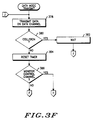
- step 378 the subscriber unit transmits the data onto the data channel using any suitable form of data modulation.
- Decision 380 determines whether the subscriber's transmission has collided with the transmission of another subscriber. Such collision detection schemes are well known in the art and the selection of any particular one scheme is not essential to the understanding of the invention. Assuming the determination of decision 380 was that a collision had occurred, the routine proceeds to step 382, which waits an arbitrary interval before returning control to reference letter J of Fig. 3f to retransmit the data. If, however, no collision was detected, the routine proceeds to step 384, which resets the activity timer since the subscriber has just transmitted on the data channel.
- step 386 the subscriber determines whether it operates in the voice monitor mode or whether it should continue to monitor the data channel (i.e., either last used mode or the data monitor mode). If the determination of decision 386 is that the subscriber should monitor the control channel, the routine proceeds to reference letter H of Fig. 3c. Otherwise, the routine proceeds to reference letter F of Fig. 3d to monitor the data channel.
- a state diagram 400 illustrating the operation of the subscriber unit is shown.
- the subscriber unit must always be on either the control channel, an assigned voice channel or an assigned data channel.
- the subscriber In state 402, the subscriber is operating in the voice mode on the control channel.
- the subscriber unit may participate in the voice call in state 404 by receiving a channel grant, and returns to the control channel state 402 by receiving a disconnect or timing out at the end of the call. Additionally, the subscriber may receive priority messages while participating in a voice call. Accordingly, if the subscriber receives a priority data mode command, the subscriber may abandon the voice call and either enter state 406, or go directly to state 408.
- state 406 the subscriber operates in the data mode, while monitoring the control channel.
- the subscriber may enter and leave this state via command of the host computer via the network controller and central controller.
- the commands can either return the subscriber to the voice mode in state 402 or remain in the data mode monitoring the data channel in state 408.
- a push-to-talk command returns the subscriber to state 402.
- receiving a channel grant rapidly moves the subscriber from state 406 directly to state 404 to participate in a voice call.
- the voice/data subscriber may move from one state to another state along any of the defined paths of the state diagram 400.
Landscapes
- Engineering & Computer Science (AREA)
- Computer Networks & Wireless Communication (AREA)
- Signal Processing (AREA)
- Mobile Radio Communication Systems (AREA)
- Telephonic Communication Services (AREA)
- Communication Control (AREA)
- Data Exchanges In Wide-Area Networks (AREA)
- Time-Division Multiplex Systems (AREA)
- Selective Calling Equipment (AREA)
- Financial Or Insurance-Related Operations Such As Payment And Settlement (AREA)
Claims (5)
- Ein Verfahren zum Betreiben eines Sprach/Daten-Fernleitungskommunikationssystems (100), das eine Mehrzahl von Sprech/Daten-Teilnehmereinheiten (114) zum Kommunizieren über eine Mehrzahl von Übertragungskanälen (104A-104N) hat, von denen einige Datenverkehr zugeteilt werden können, und ein bestimmter von ihnen als ein Steuerkanal (104A) reserviert wird, wobei das Verfahren durch die Schritte gekennzeichnet ist:
in wenigstens einer der genannten Mehrzahl von Sprech/Daten-Teilnehmereinheiten:(a) Bestimmen (338), ob wenigstens einer der Übertragungskanäle für Datenverkehr zugeteilt worden ist;(b) Übertragen eine Datenkanalanforderung nach einem Datenkanal über den Steuerkanal, der zur Verwendung durch mehrere Datenbenutzer zuzuteilen ist, wenn keine Datenkanäle gegenwärtig zugeteilt sind;(c) Empfangen (338) einer Datenkanalerlaubnis über den Datenkanal, die einen bestimmten Übertragungskanal als einen Datenkanal zur Verwendung von mehreren Datenbenutzern kennzeichnet;(d) danach Betreiben (352-386) auf dem genannten Datenkanal, bis ein vorbestimmtes Ereignis auftritt;
wobei das genannte vorbestimmte Ereignis eines der folgenden umfaßt:(i) Empfangen (368) eines Befehls über dem genannten Datenkanal, den genannten Steuerkanal zu überwachen; oder(ii) das Ablaufen eines vorbestimmten Zeitintervalls, während dessen es keine Datenaktivität gab; oder(iii) Initiieren (316) einer Sprechkanalanforderung;und(e) danach Überwachen des genannten Steuerkanals. - Das Verfahren des Anspruchs 1, das ferner den Schritt des Empfangens (372) einer Informationsnachricht über den genannten Datenkanal enthält, die zusätzliche Übertragungskanäle der genannten Mehrzahl von Übertragungskanälen als Datenkanäle kennzeichnet.
- Das Verfahren des Anspruchs 2, das den Schritt des Empfangens (312) einer Informationsnachricht über den genannten Steuerkanal enthält, die andere der genannten Mehrzahl von Übertragungskanälen als Datenkanäle kennzeichnet.
- Das Verfahren des Anspruchs 1, 2 oder 3, in dem: eine Datenkanalerlaubnis (im Schritt (c) beschrieben) ferner einen bestimmten des genannten wenigstens einen gekennzeichneten Übertragungskanals als einen ersten, zugeteilten Datenkanal kennzeichnet; und
der Arbeitsschritt (d) einen vorausgehenden Schritt des Auswählens von einem der genannten Datenkanäle aus den genannten wenigstens einen gekennzeichneten Übertragungskanälen einschließt. - Ein Verfahren zum Betreiben eines Sprach/Daten-Fernleitungskommunikationssystems (100), das eine Mehrzahl von Sprech/Daten-Teilnehmereinheiten (114) zum Kommunizieren über eine Mehrzahl von Übertragungskanälen (104A-104N) hat, von denen einige Datenverkehr zugeteilt werden können, und ein bestimmter von ihnen als ein Steuerkanal (104A) reserviert wird, wobei das Verfahren durch die Schritte gekennzeichnet ist:
in wenigstens einer der genannten Mehrzahl von Sprech/Daten-Teilnehmereinheiten:(a) Bestimmen (338), ob wenigstens einer der Übertragungskanäle für Datenverkehr zugeteilt worden ist;(b) Übertragen eine Datenkanalanforderung nach einem Datenkanal über den Steuerkanal, der zur Verwendung durch mehrere Datenbenutzer zuzuteilen ist, wenn keine Datenkanäle gegenwärtig zugeteilt sind;(c) Empfangen (338) einer Datenkanalerlaubnis über den Steuerkanal, die wenigstens einen der genannten Mehrzahl von Übertragungskanälen als Datenkanäle zur Verwendung durch mehrere Datenbenutzer kennzeichnet, und ferner einen bestimmten der genannten wenigstens einen der genannten Mehrzahl von Übertragungskanälen als einen ersten, zugeteilten Datenkanal kennzeichnet; (d) Arbeiten (352-386) auf einem Datenkanal, der von den genannten wenigstens einen der genannten Mehrzahl von Übertragungskanälen ausgewählt worden ist, bis befohlen wird, anders gemäß einem der Gruppe von Befehlen zu arbeiten:(i) Überwachen (368) des genannten Steuerkanals;(ii) Überwachen des genannten ersten, zugeteilten Datenkanals; oder(iii) Erzeugen (370, 371, 316) einer Sprechanrufanforderung; und(e) danach Arbeiten (312, 332) gemäß dem genannten Befehl.
Applications Claiming Priority (3)
| Application Number | Priority Date | Filing Date | Title |
|---|---|---|---|
| US07/044,392 US4837858A (en) | 1987-04-30 | 1987-04-30 | Subscriber unit for a trunked voice/data communication system |
| US44392 | 1987-04-30 | ||
| PCT/US1988/000822 WO1988008647A1 (en) | 1987-04-30 | 1988-02-29 | Subscriber unit for a trunked voice/data communication system |
Publications (3)
| Publication Number | Publication Date |
|---|---|
| EP0358659A1 EP0358659A1 (de) | 1990-03-21 |
| EP0358659A4 EP0358659A4 (en) | 1992-02-05 |
| EP0358659B1 true EP0358659B1 (de) | 1995-05-17 |
Family
ID=21932136
Family Applications (1)
| Application Number | Title | Priority Date | Filing Date |
|---|---|---|---|
| EP88903553A Expired - Lifetime EP0358659B1 (de) | 1987-04-30 | 1988-02-29 | Teilnehmereinheit für ein sprach/daten-fernleitungskommunikationssystem |
Country Status (11)
| Country | Link |
|---|---|
| US (1) | US4837858A (de) |
| EP (1) | EP0358659B1 (de) |
| JP (1) | JP2583448B2 (de) |
| KR (1) | KR960006139B1 (de) |
| AT (1) | ATE122829T1 (de) |
| BR (1) | BR8801404A (de) |
| CA (1) | CA1275746C (de) |
| DE (1) | DE3853821T2 (de) |
| HK (1) | HK99797A (de) |
| IL (1) | IL85280A (de) |
| WO (1) | WO1988008647A1 (de) |
Families Citing this family (66)
| Publication number | Priority date | Publication date | Assignee | Title |
|---|---|---|---|---|
| US4965825A (en) | 1981-11-03 | 1990-10-23 | The Personalized Mass Media Corporation | Signal processing apparatus and methods |
| US7831204B1 (en) | 1981-11-03 | 2010-11-09 | Personalized Media Communications, Llc | Signal processing apparatus and methods |
| USRE47642E1 (en) | 1981-11-03 | 2019-10-08 | Personalized Media Communications LLC | Signal processing apparatus and methods |
| US5274837A (en) * | 1987-06-03 | 1993-12-28 | Ericsson Ge Mobile Communications Inc. | Trunked radio repeater system with multigroup calling feature |
| US5079628A (en) * | 1987-12-28 | 1992-01-07 | Kabushiki Kaisha Toshiba | Network system for transmitting data by radio signals |
| US5115233A (en) * | 1988-03-31 | 1992-05-19 | Motorola, Inc. | Shared data/voice communication system with programmable data priority |
| DE68922337T2 (de) * | 1988-05-17 | 1995-08-31 | Casio Computer Co Ltd | Funkruf-Kommunikationssystem. |
| US5117501A (en) * | 1988-08-08 | 1992-05-26 | General Electric Company | Dynamic regrouping in a trunked radio communications system |
| DE3889221T2 (de) * | 1988-10-20 | 1994-11-17 | Ibm | Kommunikationsnetzwerk. |
| US5726984A (en) * | 1989-01-31 | 1998-03-10 | Norand Corporation | Hierarchical data collection network supporting packetized voice communications among wireless terminals and telephones |
| US5701297A (en) * | 1989-09-27 | 1997-12-23 | Motorola, Inc. | Data over cellular |
| US4972355A (en) * | 1989-10-02 | 1990-11-20 | Motorola, Inc. | Method for radiotelephone autonomous registration |
| US5047762A (en) * | 1989-12-06 | 1991-09-10 | Motorola, Inc. | Method and apparatus for increasing co-channel utilization in a multi-station data communications network with overlapping coverage |
| US6389010B1 (en) * | 1995-10-05 | 2002-05-14 | Intermec Ip Corp. | Hierarchical data collection network supporting packetized voice communications among wireless terminals and telephones |
| US5101502A (en) * | 1990-04-02 | 1992-03-31 | Motorola, Inc. | Wide area trunked channel busy override |
| US5119397A (en) * | 1990-04-26 | 1992-06-02 | Telefonaktiebolaget L M Ericsson | Combined analog and digital cellular telephone system having a secondary set of control channels |
| SE466230B (sv) * | 1990-05-23 | 1992-01-13 | Ericsson Telefon Ab L M | Foerfarande att i ett mobilradiosystem maeta en egen trafikfoerbindelses oeverfoeringskvalite |
| US6431451B1 (en) * | 1991-02-25 | 2002-08-13 | Intermec Ip Corp. | Hand-held data capture system with interchangeable modules |
| JP3015417B2 (ja) * | 1990-07-09 | 2000-03-06 | 株式会社東芝 | 移動無線通信システムとその無線移動局装置 |
| US5420574A (en) * | 1990-09-04 | 1995-05-30 | Motorola, Inc. | Channel allocation mechanism |
| JP2500963B2 (ja) | 1990-10-29 | 1996-05-29 | インターナショナル・ビジネス・マシーンズ・コーポレイション | 双方向情報通信方法 |
| US5239673A (en) * | 1990-10-29 | 1993-08-24 | International Business Machines Corporation | Scheduling methods for efficient frequency reuse in a multi-cell wireless network served by a wired local area network |
| US5212806A (en) * | 1990-10-29 | 1993-05-18 | International Business Machines Corporation | Distributed control methods for management of migrating data stations in a wireless communications network |
| US5274841A (en) * | 1990-10-29 | 1993-12-28 | International Business Machines Corporation | Methods for polling mobile users in a multiple cell wireless network |
| US5287551A (en) * | 1990-11-13 | 1994-02-15 | Motorola, Inc. | Radio communication apparatus and method for voice channel busy call back |
| US5214790A (en) * | 1991-03-11 | 1993-05-25 | Motorola, Inc. | Enhanced talkgroup scan algorithm |
| US7558557B1 (en) * | 1991-11-12 | 2009-07-07 | Broadcom Corporation | Low-power messaging in a network supporting roaming terminals |
| US5708680A (en) * | 1991-05-14 | 1998-01-13 | Norand Corporation | Network utilizing a controller and base transceivers to route voice packets |
| CA2112594A1 (en) * | 1991-07-01 | 1993-01-21 | Robert Louis Breeden | Personal communication system providing supplemental information mode |
| CA2120520A1 (en) * | 1991-10-01 | 1993-04-15 | Robert C. Meier | A radio frequency local area network |
| US5349631A (en) * | 1991-11-21 | 1994-09-20 | Airtouch Communications | Inbuilding telephone communication system |
| AU661512B2 (en) * | 1991-11-21 | 1995-07-27 | Motorola Solutions, Inc. | Method of assigning a voice/data channel or a temporary control channel |
| US5239678A (en) * | 1991-11-21 | 1993-08-24 | Motorola, Inc. | Method of assigning a control channel as a temporary voice/data channel in a radio communications system |
| US5282204A (en) * | 1992-04-13 | 1994-01-25 | Racotek, Inc. | Apparatus and method for overlaying data on trunked radio |
| US5799251A (en) * | 1992-08-18 | 1998-08-25 | Nokia Telecommunications Oy | Radio system having additional signalling channel dedicated for user data transmission otherwise carried on control channel |
| FI95093C (fi) * | 1992-08-18 | 1995-12-11 | Nokia Telecommunications Oy | Radiojärjestelmä ja menetelmä datan siirtämiseksi radiojärjestelmässä |
| SE470520B (sv) * | 1992-11-09 | 1994-06-27 | Ericsson Telefon Ab L M | Radiomodul ingående i en primär radiostation jämte radiostruktur innehållande sådana moduler |
| US5448759A (en) * | 1993-08-20 | 1995-09-05 | Motorola, Inc. | Method for efficient bandwidth utilization when transceiving varying bandwidth messages |
| US5960344A (en) | 1993-12-20 | 1999-09-28 | Norand Corporation | Local area network having multiple channel wireless access |
| US5613207A (en) * | 1994-05-27 | 1997-03-18 | Motorola, Inc. | Method for transmitting messages in a communication system |
| US5548805A (en) * | 1994-08-23 | 1996-08-20 | Racotek, Inc. | Data communication system using spectral overlay |
| US5515374A (en) * | 1995-03-31 | 1996-05-07 | Motorola, Inc. | Method and apparatus for hopping digital packet data signals |
| US6016428A (en) * | 1995-10-18 | 2000-01-18 | Telefonaktiebolaget Lm Ericsson | Registration control of mobile stations in a wireless communication system |
| US5812952A (en) * | 1995-11-08 | 1998-09-22 | Motorola, Inc. | Method for transmitting voice and data in a communication system |
| DE69632575T2 (de) * | 1995-11-20 | 2005-06-09 | Koninklijke Philips Electronics N.V. | System, verfahren und station für sprach- und nicht-sprach-verbindungen |
| US5784388A (en) * | 1996-01-04 | 1998-07-21 | Knox; Gregory D. | Methods and apparatus for decoding control signals in dispatch trunked radio system |
| US5940383A (en) * | 1996-01-29 | 1999-08-17 | Qualcomm Incorporated | Automatic data service selection |
| US6697415B1 (en) * | 1996-06-03 | 2004-02-24 | Broadcom Corporation | Spread spectrum transceiver module utilizing multiple mode transmission |
| US6144645A (en) | 1998-05-26 | 2000-11-07 | Nera Wireless Broadband Access As | Method and system for an air interface for providing voice, data, and multimedia services in a wireless local loop system |
| US6131012A (en) * | 1998-05-26 | 2000-10-10 | Nera Wireless Broadband Access As | Method and system for a micro-channel bank for providing voice, data, and multimedia services in a wireless local loop system |
| US20030009464A1 (en) * | 1998-10-02 | 2003-01-09 | Campbell Rene L. | System and method for managing computer and phone network resources |
| US6563793B1 (en) * | 1998-11-25 | 2003-05-13 | Enron Warpspeed Services, Inc. | Method and apparatus for providing guaranteed quality/class of service within and across networks using existing reservation protocols and frame formats |
| US6434129B1 (en) | 1999-12-01 | 2002-08-13 | Nera Wireless Broadband Access As | Method and system for an air interface for providing voice, data, and multimedia services in a wireless local loop system |
| AUPQ457899A0 (en) * | 1999-12-10 | 2000-01-13 | Windhover Technology Management Pty Ltd. | A transmission system |
| JP4588537B2 (ja) * | 2005-05-27 | 2010-12-01 | 株式会社ケンウッド | トランク無線中継システム及びその方法 |
| US8559443B2 (en) | 2005-07-22 | 2013-10-15 | Marvell International Ltd. | Efficient message switching in a switching apparatus |
| US8937911B2 (en) * | 2006-08-31 | 2015-01-20 | Futurewei Technologies, Inc. | Method and system for sharing resources in a wireless communication network |
| US9008003B2 (en) * | 2006-12-08 | 2015-04-14 | Futurewei Technologies, Inc. | Method for negotiating the maximum resource for sharing in OFDMA-based communications system |
| US7953439B2 (en) * | 2006-12-19 | 2011-05-31 | Broadcom Corporation | Voice-data-RF integrated circuit |
| CN101051850B (zh) * | 2007-03-23 | 2010-07-14 | 中国电子科技集团公司第二十八研究所 | 空中不同频率半双工电台的频率耦合方法及系统 |
| US20080311946A1 (en) * | 2007-06-13 | 2008-12-18 | Motorola, Inc. | System and method for dynamically providing control plane capacity |
| US8300619B2 (en) * | 2007-11-12 | 2012-10-30 | Motorola Solutions, Inc. | System and method for providing scheduled data communications in a communication system |
| US9055562B2 (en) | 2012-09-28 | 2015-06-09 | Motorola Solutions, Inc. | Real time traffic adaptive data channel bandwidth control among agency access groups |
| US9271257B2 (en) | 2013-12-13 | 2016-02-23 | Motorola Solutions, Inc. | Method and apparatus for informing a radio of a group-call started while the radio was away from a control channel |
| US9420450B2 (en) | 2014-08-27 | 2016-08-16 | Motorola Solutions, Inc. | Methods and systems for talkgroup-state-dependent routing of group data |
| JP6781392B2 (ja) * | 2019-11-28 | 2020-11-04 | アイコム株式会社 | 無線通信システム、無線機、無線通信方法、パケットの生成方法およびパケットからのデータ再生方法 |
Family Cites Families (18)
| Publication number | Priority date | Publication date | Assignee | Title |
|---|---|---|---|---|
| US4012597A (en) * | 1975-11-24 | 1977-03-15 | Motorola, Inc. | Transmission trunk multichannel dispatch system with priority queuing |
| US4409687A (en) * | 1978-10-30 | 1983-10-11 | General Electric Company | Arrangement and method for establishing radio communication in a system |
| GB2063011B (en) * | 1979-11-09 | 1983-10-12 | Philips Electronic Associated | Information transmission system |
| DE3246742C1 (de) * | 1982-12-17 | 1984-07-05 | Philips Kommunikations Industrie AG, 8500 Nürnberg | Verfahren zur Verteilung der Verkehrsmenge auf verschiedene Organisationskanaele eines Funkuebertragungssystems |
| US4534061A (en) * | 1983-09-06 | 1985-08-06 | General Electric Company | Deterministic multi-access method for a decentralized mobile radio system |
| US4574163A (en) * | 1983-11-22 | 1986-03-04 | Zenith Electronics Corporation | Digital radio telephone |
| US4553262A (en) * | 1983-11-25 | 1985-11-12 | Motorola, Inc. | Communications system enabling radio link access for non-trunked radio units to a multifrequency trunked two-way communications systems |
| US4593389A (en) * | 1984-06-28 | 1986-06-03 | Henry Wurzburg | Simultaneous voice and asynchronous data telephone |
| AU577742B2 (en) * | 1984-07-13 | 1988-09-29 | Motorola, Inc. | Cellular voice and data radiotelephone system |
| US4697281A (en) * | 1986-03-14 | 1987-09-29 | Spectrum Cellular Communications Corporation, Inc. | Cellular telephone data communication system and method |
| US4609778A (en) * | 1984-09-27 | 1986-09-02 | Franklin Andrew D | Trunk call processing services for host computer interconnections |
| US4672601A (en) * | 1984-12-06 | 1987-06-09 | Motorola, Inc. | Duplex interconnect/dispatch trunked radio system |
| US4675863A (en) * | 1985-03-20 | 1987-06-23 | International Mobile Machines Corp. | Subscriber RF telephone system for providing multiple speech and/or data signals simultaneously over either a single or a plurality of RF channels |
| US4707832A (en) * | 1985-04-10 | 1987-11-17 | Harris Corporation | Switched point-to-point local area network control mechanism |
| US4685123A (en) * | 1985-09-13 | 1987-08-04 | American Telephone And Telegraph Company | Communication system having voice and data capability |
| US4689788A (en) * | 1985-11-04 | 1987-08-25 | Motorola, Inc. | Method and apparatus for implementing a cost efficient voice/data communication system with a conventional PBX switch |
| US4682367A (en) * | 1985-11-13 | 1987-07-21 | General Electric Company | Mobile radio communications system with join feature |
| JPS63136731A (ja) * | 1986-11-28 | 1988-06-08 | Fujitsu Ltd | Mca無線によるデ−タ通信方式 |
-
1987
- 1987-04-30 US US07/044,392 patent/US4837858A/en not_active Expired - Lifetime
-
1988
- 1988-01-27 CA CA000557449A patent/CA1275746C/en not_active Expired - Lifetime
- 1988-02-01 IL IL85280A patent/IL85280A/xx not_active IP Right Cessation
- 1988-02-29 DE DE3853821T patent/DE3853821T2/de not_active Expired - Fee Related
- 1988-02-29 WO PCT/US1988/000822 patent/WO1988008647A1/en not_active Ceased
- 1988-02-29 AT AT88903553T patent/ATE122829T1/de not_active IP Right Cessation
- 1988-02-29 EP EP88903553A patent/EP0358659B1/de not_active Expired - Lifetime
- 1988-02-29 JP JP63503193A patent/JP2583448B2/ja not_active Expired - Lifetime
- 1988-02-29 KR KR1019880701754A patent/KR960006139B1/ko not_active Expired - Lifetime
- 1988-03-25 BR BR8801404A patent/BR8801404A/pt not_active IP Right Cessation
-
1997
- 1997-06-26 HK HK99797A patent/HK99797A/en not_active IP Right Cessation
Also Published As
| Publication number | Publication date |
|---|---|
| HK99797A (en) | 1997-08-08 |
| IL85280A (en) | 1991-11-21 |
| EP0358659A1 (de) | 1990-03-21 |
| US4837858A (en) | 1989-06-06 |
| IL85280A0 (en) | 1988-07-31 |
| CA1275746C (en) | 1990-10-30 |
| DE3853821D1 (de) | 1995-06-22 |
| BR8801404A (pt) | 1988-11-08 |
| EP0358659A4 (en) | 1992-02-05 |
| KR960006139B1 (ko) | 1996-05-09 |
| DE3853821T2 (de) | 1995-12-07 |
| WO1988008647A1 (en) | 1988-11-03 |
| KR890700975A (ko) | 1989-04-28 |
| JP2583448B2 (ja) | 1997-02-19 |
| ATE122829T1 (de) | 1995-06-15 |
| JPH02503975A (ja) | 1990-11-15 |
Similar Documents
| Publication | Publication Date | Title |
|---|---|---|
| US4837858A (en) | Subscriber unit for a trunked voice/data communication system | |
| EP0358688B1 (de) | Verfahren zur dynamischen kanalzuteilung in einem relaisstellen-verbindungssystem | |
| US4831373A (en) | Method for dynamically allocating data channels on a trunked communication system | |
| US5680398A (en) | Multichannel random access communications system | |
| HK1000359B (en) | Method for dynamically allocating data channels on a trunked communication system | |
| KR0131141B1 (ko) | 무선 통신 시스템에서의 제어 채널을 임시 음성/데이타 채널로서 지정하는 방법 | |
| US5491835A (en) | Method for maintaining audience continuity of a communication group call | |
| KR960016383B1 (ko) | 중계 통신 신호 전달 방법 | |
| US5408680A (en) | Single channel autonomous digitally trunked RF communications system | |
| JP3299746B2 (ja) | 無線通信システムにおける一時的な制御チャネルとしての音声/データチャネルの割当て方法 | |
| KR960012087B1 (ko) | 채널 할당 메시지 디코딩 방법과 전송 및 수신 통신 주파수 할당 방법 및 장치 | |
| US6804529B1 (en) | Trunked radio repeater communication system including home channel aliasing and call grouping | |
| WO1999004514A1 (en) | A method and apparatus for direct communication between mobile stations | |
| CA2364860A1 (en) | Communication channel structure and method | |
| US5512884A (en) | User requested communication resource allocation | |
| CA1296773C (en) | Trunked communication system for voice and data | |
| CA2108324A1 (en) | Communications system | |
| US6510145B1 (en) | Method and apparatus for providing packet data service in a communication system | |
| KR20050070020A (ko) | 대역 확산 통신 시스템 내의 액세스 노이즈를 감소시키는방법 | |
| US5329574A (en) | Method for improving telephone resource access in a communication system network | |
| WO1997025825A2 (en) | Method and apparatus for locating mobile radio units in a multisite radio system | |
| US5513378A (en) | Maintaining communications after control breaks in a trunked communication system | |
| JP2675374B2 (ja) | 無線通信制御方式 | |
| KR19990008910A (ko) | 패킷 서비스 제공을 위한 제어 패킷 구조 및 이를 이용한 사용자 데이터 전송방법 | |
| GB2324931A (en) | Channel selection in a two way communication system |
Legal Events
| Date | Code | Title | Description |
|---|---|---|---|
| PUAI | Public reference made under article 153(3) epc to a published international application that has entered the european phase |
Free format text: ORIGINAL CODE: 0009012 |
|
| 17P | Request for examination filed |
Effective date: 19891026 |
|
| AK | Designated contracting states |
Kind code of ref document: A1 Designated state(s): AT BE CH DE FR GB IT LI LU NL SE |
|
| A4 | Supplementary search report drawn up and despatched |
Effective date: 19911216 |
|
| AK | Designated contracting states |
Kind code of ref document: A4 Designated state(s): AT BE CH DE FR GB IT LI LU NL SE |
|
| 17Q | First examination report despatched |
Effective date: 19930518 |
|
| ITF | It: translation for a ep patent filed | ||
| GRAA | (expected) grant |
Free format text: ORIGINAL CODE: 0009210 |
|
| AK | Designated contracting states |
Kind code of ref document: B1 Designated state(s): AT BE CH DE FR GB IT LI LU NL SE |
|
| REF | Corresponds to: |
Ref document number: 122829 Country of ref document: AT Date of ref document: 19950615 Kind code of ref document: T |
|
| ET | Fr: translation filed | ||
| REF | Corresponds to: |
Ref document number: 3853821 Country of ref document: DE Date of ref document: 19950622 |
|
| PLBE | No opposition filed within time limit |
Free format text: ORIGINAL CODE: 0009261 |
|
| STAA | Information on the status of an ep patent application or granted ep patent |
Free format text: STATUS: NO OPPOSITION FILED WITHIN TIME LIMIT |
|
| 26N | No opposition filed | ||
| PGFP | Annual fee paid to national office [announced via postgrant information from national office to epo] |
Ref country code: GB Payment date: 19961219 Year of fee payment: 10 |
|
| PGFP | Annual fee paid to national office [announced via postgrant information from national office to epo] |
Ref country code: FR Payment date: 19970129 Year of fee payment: 10 |
|
| PGFP | Annual fee paid to national office [announced via postgrant information from national office to epo] |
Ref country code: DE Payment date: 19970130 Year of fee payment: 10 |
|
| PGFP | Annual fee paid to national office [announced via postgrant information from national office to epo] |
Ref country code: BE Payment date: 19970211 Year of fee payment: 10 Ref country code: CH Payment date: 19970211 Year of fee payment: 10 |
|
| PG25 | Lapsed in a contracting state [announced via postgrant information from national office to epo] |
Ref country code: LU Free format text: LAPSE BECAUSE OF NON-PAYMENT OF DUE FEES Effective date: 19970228 |
|
| PGFP | Annual fee paid to national office [announced via postgrant information from national office to epo] |
Ref country code: NL Payment date: 19970228 Year of fee payment: 10 |
|
| PGFP | Annual fee paid to national office [announced via postgrant information from national office to epo] |
Ref country code: AT Payment date: 19980112 Year of fee payment: 11 |
|
| PG25 | Lapsed in a contracting state [announced via postgrant information from national office to epo] |
Ref country code: LI Free format text: LAPSE BECAUSE OF NON-PAYMENT OF DUE FEES Effective date: 19980228 Ref country code: CH Free format text: LAPSE BECAUSE OF NON-PAYMENT OF DUE FEES Effective date: 19980228 Ref country code: GB Free format text: LAPSE BECAUSE OF NON-PAYMENT OF DUE FEES Effective date: 19980228 Ref country code: FR Free format text: THE PATENT HAS BEEN ANNULLED BY A DECISION OF A NATIONAL AUTHORITY Effective date: 19980228 Ref country code: BE Free format text: LAPSE BECAUSE OF NON-PAYMENT OF DUE FEES Effective date: 19980228 |
|
| PGFP | Annual fee paid to national office [announced via postgrant information from national office to epo] |
Ref country code: LU Payment date: 19980710 Year of fee payment: 9 |
|
| BERE | Be: lapsed |
Owner name: MOTOROLA INC. Effective date: 19980228 |
|
| PG25 | Lapsed in a contracting state [announced via postgrant information from national office to epo] |
Ref country code: NL Free format text: LAPSE BECAUSE OF NON-PAYMENT OF DUE FEES Effective date: 19980901 |
|
| REG | Reference to a national code |
Ref country code: CH Ref legal event code: PL |
|
| GBPC | Gb: european patent ceased through non-payment of renewal fee |
Effective date: 19980228 |
|
| NLV4 | Nl: lapsed or anulled due to non-payment of the annual fee |
Effective date: 19980901 |
|
| PG25 | Lapsed in a contracting state [announced via postgrant information from national office to epo] |
Ref country code: DE Free format text: LAPSE BECAUSE OF NON-PAYMENT OF DUE FEES Effective date: 19981103 |
|
| REG | Reference to a national code |
Ref country code: FR Ref legal event code: ST |
|
| PG25 | Lapsed in a contracting state [announced via postgrant information from national office to epo] |
Ref country code: AT Free format text: LAPSE BECAUSE OF NON-PAYMENT OF DUE FEES Effective date: 19990228 |
|
| PG25 | Lapsed in a contracting state [announced via postgrant information from national office to epo] |
Ref country code: IT Free format text: LAPSE BECAUSE OF NON-PAYMENT OF DUE FEES;WARNING: LAPSES OF ITALIAN PATENTS WITH EFFECTIVE DATE BEFORE 2007 MAY HAVE OCCURRED AT ANY TIME BEFORE 2007. THE CORRECT EFFECTIVE DATE MAY BE DIFFERENT FROM THE ONE RECORDED. Effective date: 20050228 |
|
| PGFP | Annual fee paid to national office [announced via postgrant information from national office to epo] |
Ref country code: SE Payment date: 20070205 Year of fee payment: 20 |
|
| EUG | Se: european patent has lapsed | ||
| P01 | Opt-out of the competence of the unified patent court (upc) registered |
Effective date: 20230520 |