EP0361204B1 - Matériaux d'enregistrement optiques, méthode pour leur fabrication et cartes optiques utilisant ces matériaux - Google Patents
Matériaux d'enregistrement optiques, méthode pour leur fabrication et cartes optiques utilisant ces matériaux Download PDFInfo
- Publication number
- EP0361204B1 EP0361204B1 EP89116876A EP89116876A EP0361204B1 EP 0361204 B1 EP0361204 B1 EP 0361204B1 EP 89116876 A EP89116876 A EP 89116876A EP 89116876 A EP89116876 A EP 89116876A EP 0361204 B1 EP0361204 B1 EP 0361204B1
- Authority
- EP
- European Patent Office
- Prior art keywords
- recording material
- optical recording
- silver
- metal
- compound
- Prior art date
- Legal status (The legal status is an assumption and is not a legal conclusion. Google has not performed a legal analysis and makes no representation as to the accuracy of the status listed.)
- Expired - Lifetime
Links
- 230000003287 optical effect Effects 0.000 title claims description 357
- 239000000463 material Substances 0.000 title claims description 302
- 238000000034 method Methods 0.000 title claims description 63
- 229910052709 silver Inorganic materials 0.000 claims description 112
- 239000004332 silver Substances 0.000 claims description 112
- BQCADISMDOOEFD-UHFFFAOYSA-N Silver Chemical compound [Ag] BQCADISMDOOEFD-UHFFFAOYSA-N 0.000 claims description 103
- 229910052751 metal Inorganic materials 0.000 claims description 98
- 239000002184 metal Substances 0.000 claims description 98
- 239000011248 coating agent Substances 0.000 claims description 67
- 238000000576 coating method Methods 0.000 claims description 67
- 150000002736 metal compounds Chemical class 0.000 claims description 60
- 238000002310 reflectometry Methods 0.000 claims description 60
- -1 fold Substances 0.000 claims description 53
- 238000010438 heat treatment Methods 0.000 claims description 50
- 239000010408 film Substances 0.000 claims description 46
- KDLHZDBZIXYQEI-UHFFFAOYSA-N Palladium Chemical compound [Pd] KDLHZDBZIXYQEI-UHFFFAOYSA-N 0.000 claims description 40
- 239000000758 substrate Substances 0.000 claims description 38
- 239000013528 metallic particle Substances 0.000 claims description 34
- 239000000203 mixture Substances 0.000 claims description 34
- 150000001875 compounds Chemical class 0.000 claims description 31
- 239000011230 binding agent Substances 0.000 claims description 24
- 230000002209 hydrophobic effect Effects 0.000 claims description 23
- 239000012528 membrane Substances 0.000 claims description 23
- 239000000975 dye Substances 0.000 claims description 22
- 229910052763 palladium Inorganic materials 0.000 claims description 20
- BASFCYQUMIYNBI-UHFFFAOYSA-N platinum Chemical compound [Pt] BASFCYQUMIYNBI-UHFFFAOYSA-N 0.000 claims description 18
- 239000004065 semiconductor Substances 0.000 claims description 18
- GGCZERPQGJTIQP-UHFFFAOYSA-N sodium;9,10-dioxoanthracene-2-sulfonic acid Chemical compound [Na+].C1=CC=C2C(=O)C3=CC(S(=O)(=O)O)=CC=C3C(=O)C2=C1 GGCZERPQGJTIQP-UHFFFAOYSA-N 0.000 claims description 17
- PXHVJJICTQNCMI-UHFFFAOYSA-N Nickel Chemical compound [Ni] PXHVJJICTQNCMI-UHFFFAOYSA-N 0.000 claims description 16
- 229940100890 silver compound Drugs 0.000 claims description 14
- 150000003379 silver compounds Chemical class 0.000 claims description 14
- 239000006096 absorbing agent Substances 0.000 claims description 13
- XLYOFNOQVPJJNP-UHFFFAOYSA-N water Substances O XLYOFNOQVPJJNP-UHFFFAOYSA-N 0.000 claims description 13
- 239000003795 chemical substances by application Substances 0.000 claims description 12
- VYZAMTAEIAYCRO-UHFFFAOYSA-N Chromium Chemical compound [Cr] VYZAMTAEIAYCRO-UHFFFAOYSA-N 0.000 claims description 11
- PCHJSUWPFVWCPO-UHFFFAOYSA-N gold Chemical compound [Au] PCHJSUWPFVWCPO-UHFFFAOYSA-N 0.000 claims description 11
- 229910052737 gold Inorganic materials 0.000 claims description 11
- 239000010931 gold Substances 0.000 claims description 11
- 229910052804 chromium Inorganic materials 0.000 claims description 10
- 239000011651 chromium Substances 0.000 claims description 10
- VNWKTOKETHGBQD-UHFFFAOYSA-N methane Chemical compound C VNWKTOKETHGBQD-UHFFFAOYSA-N 0.000 claims description 10
- 239000010409 thin film Substances 0.000 claims description 10
- RYGMFSIKBFXOCR-UHFFFAOYSA-N Copper Chemical compound [Cu] RYGMFSIKBFXOCR-UHFFFAOYSA-N 0.000 claims description 9
- 239000002253 acid Substances 0.000 claims description 9
- 229910052802 copper Inorganic materials 0.000 claims description 9
- 239000010949 copper Substances 0.000 claims description 9
- 229920000620 organic polymer Polymers 0.000 claims description 9
- 229910052697 platinum Inorganic materials 0.000 claims description 9
- 125000004169 (C1-C6) alkyl group Chemical group 0.000 claims description 8
- RTAQQCXQSZGOHL-UHFFFAOYSA-N Titanium Chemical compound [Ti] RTAQQCXQSZGOHL-UHFFFAOYSA-N 0.000 claims description 8
- 239000013522 chelant Substances 0.000 claims description 8
- 239000010941 cobalt Substances 0.000 claims description 8
- 229910017052 cobalt Inorganic materials 0.000 claims description 8
- GUTLYIVDDKVIGB-UHFFFAOYSA-N cobalt atom Chemical compound [Co] GUTLYIVDDKVIGB-UHFFFAOYSA-N 0.000 claims description 8
- 229910052759 nickel Inorganic materials 0.000 claims description 8
- 239000004417 polycarbonate Substances 0.000 claims description 8
- 229920000515 polycarbonate Polymers 0.000 claims description 8
- 239000010936 titanium Substances 0.000 claims description 8
- 229910052719 titanium Inorganic materials 0.000 claims description 8
- HVLLSGMXQDNUAL-UHFFFAOYSA-N triphenyl phosphite Chemical compound C=1C=CC=CC=1OP(OC=1C=CC=CC=1)OC1=CC=CC=C1 HVLLSGMXQDNUAL-UHFFFAOYSA-N 0.000 claims description 8
- QSHDDOUJBYECFT-UHFFFAOYSA-N mercury Chemical compound [Hg] QSHDDOUJBYECFT-UHFFFAOYSA-N 0.000 claims description 7
- 229910052753 mercury Inorganic materials 0.000 claims description 7
- 229920000642 polymer Polymers 0.000 claims description 7
- 125000004209 (C1-C8) alkyl group Chemical group 0.000 claims description 6
- SMZOUWXMTYCWNB-UHFFFAOYSA-N 2-(2-methoxy-5-methylphenyl)ethanamine Chemical compound COC1=CC=C(C)C=C1CCN SMZOUWXMTYCWNB-UHFFFAOYSA-N 0.000 claims description 6
- NIXOWILDQLNWCW-UHFFFAOYSA-N 2-Propenoic acid Natural products OC(=O)C=C NIXOWILDQLNWCW-UHFFFAOYSA-N 0.000 claims description 6
- CERQOIWHTDAKMF-UHFFFAOYSA-N Methacrylic acid Chemical compound CC(=C)C(O)=O CERQOIWHTDAKMF-UHFFFAOYSA-N 0.000 claims description 6
- MUBZPKHOEPUJKR-UHFFFAOYSA-N Oxalic acid Chemical compound OC(=O)C(O)=O MUBZPKHOEPUJKR-UHFFFAOYSA-N 0.000 claims description 6
- ISWSIDIOOBJBQZ-UHFFFAOYSA-N Phenol Chemical compound OC1=CC=CC=C1 ISWSIDIOOBJBQZ-UHFFFAOYSA-N 0.000 claims description 6
- 229910052784 alkaline earth metal Inorganic materials 0.000 claims description 6
- 125000003118 aryl group Chemical group 0.000 claims description 6
- 229910052797 bismuth Inorganic materials 0.000 claims description 6
- JCXGWMGPZLAOME-UHFFFAOYSA-N bismuth atom Chemical compound [Bi] JCXGWMGPZLAOME-UHFFFAOYSA-N 0.000 claims description 6
- ABDBNWQRPYOPDF-UHFFFAOYSA-N carbonofluoridic acid Chemical compound OC(F)=O ABDBNWQRPYOPDF-UHFFFAOYSA-N 0.000 claims description 6
- 239000011133 lead Substances 0.000 claims description 6
- 229910052703 rhodium Inorganic materials 0.000 claims description 6
- 239000010948 rhodium Substances 0.000 claims description 6
- MHOVAHRLVXNVSD-UHFFFAOYSA-N rhodium atom Chemical compound [Rh] MHOVAHRLVXNVSD-UHFFFAOYSA-N 0.000 claims description 6
- 229910052714 tellurium Inorganic materials 0.000 claims description 6
- PORWMNRCUJJQNO-UHFFFAOYSA-N tellurium atom Chemical compound [Te] PORWMNRCUJJQNO-UHFFFAOYSA-N 0.000 claims description 6
- 229910052799 carbon Inorganic materials 0.000 claims description 5
- 125000000113 cyclohexyl group Chemical group [H]C1([H])C([H])([H])C([H])([H])C([H])(*)C([H])([H])C1([H])[H] 0.000 claims description 5
- 239000011521 glass Substances 0.000 claims description 5
- 229910052736 halogen Inorganic materials 0.000 claims description 5
- 150000002367 halogens Chemical class 0.000 claims description 5
- 230000008018 melting Effects 0.000 claims description 5
- 238000002844 melting Methods 0.000 claims description 5
- 150000003839 salts Chemical class 0.000 claims description 5
- 125000000008 (C1-C10) alkyl group Chemical group 0.000 claims description 4
- 125000004191 (C1-C6) alkoxy group Chemical group 0.000 claims description 4
- 125000006374 C2-C10 alkenyl group Chemical group 0.000 claims description 4
- 125000004432 carbon atom Chemical group C* 0.000 claims description 4
- 150000001732 carboxylic acid derivatives Chemical class 0.000 claims description 4
- 238000000354 decomposition reaction Methods 0.000 claims description 4
- 125000004435 hydrogen atom Chemical group [H]* 0.000 claims description 4
- IJAPPYDYQCXOEF-UHFFFAOYSA-N phthalazin-1(2H)-one Chemical compound C1=CC=C2C(=O)NN=CC2=C1 IJAPPYDYQCXOEF-UHFFFAOYSA-N 0.000 claims description 4
- 239000001007 phthalocyanine dye Substances 0.000 claims description 4
- 229920003229 poly(methyl methacrylate) Polymers 0.000 claims description 4
- 229920000058 polyacrylate Polymers 0.000 claims description 4
- 239000004926 polymethyl methacrylate Substances 0.000 claims description 4
- KZJPVUDYAMEDRM-UHFFFAOYSA-M silver;2,2,2-trifluoroacetate Chemical compound [Ag+].[O-]C(=O)C(F)(F)F KZJPVUDYAMEDRM-UHFFFAOYSA-M 0.000 claims description 4
- 239000002904 solvent Substances 0.000 claims description 4
- KJCVRFUGPWSIIH-UHFFFAOYSA-N 1-naphthol Chemical compound C1=CC=C2C(O)=CC=CC2=C1 KJCVRFUGPWSIIH-UHFFFAOYSA-N 0.000 claims description 3
- CDAWCLOXVUBKRW-UHFFFAOYSA-N 2-aminophenol Chemical compound NC1=CC=CC=C1O CDAWCLOXVUBKRW-UHFFFAOYSA-N 0.000 claims description 3
- FHVDTGUDJYJELY-UHFFFAOYSA-N 6-{[2-carboxy-4,5-dihydroxy-6-(phosphanyloxy)oxan-3-yl]oxy}-4,5-dihydroxy-3-phosphanyloxane-2-carboxylic acid Chemical compound O1C(C(O)=O)C(P)C(O)C(O)C1OC1C(C(O)=O)OC(OP)C(O)C1O FHVDTGUDJYJELY-UHFFFAOYSA-N 0.000 claims description 3
- YCKRFDGAMUMZLT-UHFFFAOYSA-N Fluorine atom Chemical compound [F] YCKRFDGAMUMZLT-UHFFFAOYSA-N 0.000 claims description 3
- 229920002367 Polyisobutene Polymers 0.000 claims description 3
- KJTLSVCANCCWHF-UHFFFAOYSA-N Ruthenium Chemical compound [Ru] KJTLSVCANCCWHF-UHFFFAOYSA-N 0.000 claims description 3
- UCKMPCXJQFINFW-UHFFFAOYSA-N Sulphide Chemical compound [S-2] UCKMPCXJQFINFW-UHFFFAOYSA-N 0.000 claims description 3
- 229920002433 Vinyl chloride-vinyl acetate copolymer Polymers 0.000 claims description 3
- 229940072056 alginate Drugs 0.000 claims description 3
- 235000010443 alginic acid Nutrition 0.000 claims description 3
- 229920000615 alginic acid Polymers 0.000 claims description 3
- 239000003513 alkali Substances 0.000 claims description 3
- 239000000956 alloy Substances 0.000 claims description 3
- 229910045601 alloy Inorganic materials 0.000 claims description 3
- AEMOLEFTQBMNLQ-BKBMJHBISA-N alpha-D-galacturonic acid Chemical compound O[C@H]1O[C@H](C(O)=O)[C@H](O)[C@H](O)[C@H]1O AEMOLEFTQBMNLQ-BKBMJHBISA-N 0.000 claims description 3
- 239000002738 chelating agent Substances 0.000 claims description 3
- 229910052801 chlorine Inorganic materials 0.000 claims description 3
- 229910052731 fluorine Inorganic materials 0.000 claims description 3
- 239000011737 fluorine Substances 0.000 claims description 3
- 230000009477 glass transition Effects 0.000 claims description 3
- 125000005843 halogen group Chemical group 0.000 claims description 3
- 229920003023 plastic Polymers 0.000 claims description 3
- 239000004033 plastic Substances 0.000 claims description 3
- 229920002037 poly(vinyl butyral) polymer Polymers 0.000 claims description 3
- 230000009467 reduction Effects 0.000 claims description 3
- 229910052707 ruthenium Inorganic materials 0.000 claims description 3
- AQRYNYUOKMNDDV-UHFFFAOYSA-M silver behenate Chemical compound [Ag+].CCCCCCCCCCCCCCCCCCCCCC([O-])=O AQRYNYUOKMNDDV-UHFFFAOYSA-M 0.000 claims description 3
- 229910052716 thallium Inorganic materials 0.000 claims description 3
- BKVIYDNLLOSFOA-UHFFFAOYSA-N thallium Chemical compound [Tl] BKVIYDNLLOSFOA-UHFFFAOYSA-N 0.000 claims description 3
- 125000000027 (C1-C10) alkoxy group Chemical group 0.000 claims description 2
- 229920000049 Carbon (fiber) Polymers 0.000 claims description 2
- 229920002230 Pectic acid Polymers 0.000 claims description 2
- 125000000217 alkyl group Chemical group 0.000 claims description 2
- 125000003710 aryl alkyl group Chemical group 0.000 claims description 2
- 239000004917 carbon fiber Substances 0.000 claims description 2
- 239000000919 ceramic Substances 0.000 claims description 2
- 125000001309 chloro group Chemical group Cl* 0.000 claims description 2
- 125000000753 cycloalkyl group Chemical group 0.000 claims description 2
- 125000001153 fluoro group Chemical group F* 0.000 claims description 2
- 239000003365 glass fiber Substances 0.000 claims description 2
- 235000006408 oxalic acid Nutrition 0.000 claims description 2
- 230000000737 periodic effect Effects 0.000 claims description 2
- 125000001997 phenyl group Chemical group [H]C1=C([H])C([H])=C(*)C([H])=C1[H] 0.000 claims description 2
- NDGRWYRVNANFNB-UHFFFAOYSA-N pyrazolidin-3-one Chemical compound O=C1CCNN1 NDGRWYRVNANFNB-UHFFFAOYSA-N 0.000 claims description 2
- GPNIJXACCBKBEP-UHFFFAOYSA-M silver;2,2,3,3,4,4,4-heptafluorobutanoate Chemical compound [Ag+].[O-]C(=O)C(F)(F)C(F)(F)C(F)(F)F GPNIJXACCBKBEP-UHFFFAOYSA-M 0.000 claims description 2
- FFGBONIXSFSIPS-UHFFFAOYSA-M silver;carbamothioate Chemical compound [Ag+].NC([O-])=S FFGBONIXSFSIPS-UHFFFAOYSA-M 0.000 claims description 2
- BUUPQKDIAURBJP-UHFFFAOYSA-N sulfinic acid Chemical compound OS=O BUUPQKDIAURBJP-UHFFFAOYSA-N 0.000 claims description 2
- 238000010030 laminating Methods 0.000 claims 2
- 229910001507 metal halide Inorganic materials 0.000 claims 2
- 150000005309 metal halides Chemical class 0.000 claims 2
- 239000007769 metal material Substances 0.000 claims 2
- GEYOCULIXLDCMW-UHFFFAOYSA-N 1,2-phenylenediamine Chemical compound NC1=CC=CC=C1N GEYOCULIXLDCMW-UHFFFAOYSA-N 0.000 claims 1
- DVWQNBIUTWDZMW-UHFFFAOYSA-N 1-naphthalen-1-ylnaphthalen-2-ol Chemical group C1=CC=C2C(C3=C4C=CC=CC4=CC=C3O)=CC=CC2=C1 DVWQNBIUTWDZMW-UHFFFAOYSA-N 0.000 claims 1
- MQCPOLNSJCWPGT-UHFFFAOYSA-N 2,2'-Bisphenol F Chemical compound OC1=CC=CC=C1CC1=CC=CC=C1O MQCPOLNSJCWPGT-UHFFFAOYSA-N 0.000 claims 1
- MOXDGMSQFFMNHA-UHFFFAOYSA-N 2-hydroxybenzenesulfonamide Chemical compound NS(=O)(=O)C1=CC=CC=C1O MOXDGMSQFFMNHA-UHFFFAOYSA-N 0.000 claims 1
- LSNNMFCWUKXFEE-UHFFFAOYSA-M Bisulfite Chemical compound OS([O-])=O LSNNMFCWUKXFEE-UHFFFAOYSA-M 0.000 claims 1
- AVXURJPOCDRRFD-UHFFFAOYSA-N Hydroxylamine Chemical compound ON AVXURJPOCDRRFD-UHFFFAOYSA-N 0.000 claims 1
- 239000012433 hydrogen halide Substances 0.000 claims 1
- 229910000039 hydrogen halide Inorganic materials 0.000 claims 1
- 125000004356 hydroxy functional group Chemical group O* 0.000 claims 1
- 239000010410 layer Substances 0.000 description 109
- 239000002932 luster Substances 0.000 description 70
- 239000000725 suspension Substances 0.000 description 35
- 239000000243 solution Substances 0.000 description 26
- 239000004615 ingredient Substances 0.000 description 23
- 229920000139 polyethylene terephthalate Polymers 0.000 description 16
- 239000005020 polyethylene terephthalate Substances 0.000 description 16
- 238000001035 drying Methods 0.000 description 14
- SQGYOTSLMSWVJD-UHFFFAOYSA-N silver(1+) nitrate Chemical compound [Ag+].[O-]N(=O)=O SQGYOTSLMSWVJD-UHFFFAOYSA-N 0.000 description 14
- 239000007864 aqueous solution Substances 0.000 description 13
- 239000002245 particle Substances 0.000 description 12
- 150000003378 silver Chemical class 0.000 description 12
- 239000000853 adhesive Substances 0.000 description 11
- 230000001070 adhesive effect Effects 0.000 description 11
- 239000000706 filtrate Substances 0.000 description 10
- 239000004800 polyvinyl chloride Substances 0.000 description 10
- 229920000915 polyvinyl chloride Polymers 0.000 description 10
- 239000011148 porous material Substances 0.000 description 9
- JOYRKODLDBILNP-UHFFFAOYSA-N Ethyl urethane Chemical compound CCOC(N)=O JOYRKODLDBILNP-UHFFFAOYSA-N 0.000 description 8
- QIGBRXMKCJKVMJ-UHFFFAOYSA-N Hydroquinone Chemical compound OC1=CC=C(O)C=C1 QIGBRXMKCJKVMJ-UHFFFAOYSA-N 0.000 description 8
- 150000002739 metals Chemical class 0.000 description 8
- 230000005540 biological transmission Effects 0.000 description 7
- 239000003638 chemical reducing agent Substances 0.000 description 7
- LKKPNUDVOYAOBB-UHFFFAOYSA-N naphthalocyanine Chemical compound N1C(N=C2C3=CC4=CC=CC=C4C=C3C(N=C3C4=CC5=CC=CC=C5C=C4C(=N4)N3)=N2)=C(C=C2C(C=CC=C2)=C2)C2=C1N=C1C2=CC3=CC=CC=C3C=C2C4=N1 LKKPNUDVOYAOBB-UHFFFAOYSA-N 0.000 description 7
- 229910001961 silver nitrate Inorganic materials 0.000 description 7
- CIWBSHSKHKDKBQ-JLAZNSOCSA-N Ascorbic acid Chemical compound OC[C@H](O)[C@H]1OC(=O)C(O)=C1O CIWBSHSKHKDKBQ-JLAZNSOCSA-N 0.000 description 6
- PPBRXRYQALVLMV-UHFFFAOYSA-N Styrene Chemical compound C=CC1=CC=CC=C1 PPBRXRYQALVLMV-UHFFFAOYSA-N 0.000 description 6
- 230000035945 sensitivity Effects 0.000 description 6
- 238000003860 storage Methods 0.000 description 6
- 238000000498 ball milling Methods 0.000 description 5
- 230000008859 change Effects 0.000 description 5
- 239000007789 gas Substances 0.000 description 5
- 238000003756 stirring Methods 0.000 description 5
- 239000000126 substance Substances 0.000 description 5
- WFKWXMTUELFFGS-UHFFFAOYSA-N tungsten Chemical compound [W] WFKWXMTUELFFGS-UHFFFAOYSA-N 0.000 description 5
- 229910052721 tungsten Inorganic materials 0.000 description 5
- 239000010937 tungsten Substances 0.000 description 5
- TXUICONDJPYNPY-UHFFFAOYSA-N (1,10,13-trimethyl-3-oxo-4,5,6,7,8,9,11,12,14,15,16,17-dodecahydrocyclopenta[a]phenanthren-17-yl) heptanoate Chemical compound C1CC2CC(=O)C=C(C)C2(C)C2C1C1CCC(OC(=O)CCCCCC)C1(C)CC2 TXUICONDJPYNPY-UHFFFAOYSA-N 0.000 description 4
- 229910021626 Tin(II) chloride Inorganic materials 0.000 description 4
- 150000007513 acids Chemical class 0.000 description 4
- 239000000654 additive Substances 0.000 description 4
- 239000003822 epoxy resin Substances 0.000 description 4
- 230000036541 health Effects 0.000 description 4
- 150000002989 phenols Chemical class 0.000 description 4
- 229920000647 polyepoxide Polymers 0.000 description 4
- 239000000047 product Substances 0.000 description 4
- 229920005989 resin Polymers 0.000 description 4
- 239000011347 resin Substances 0.000 description 4
- 235000011150 stannous chloride Nutrition 0.000 description 4
- 239000001119 stannous chloride Substances 0.000 description 4
- ZWEHNKRNPOVVGH-UHFFFAOYSA-N 2-Butanone Chemical compound CCC(C)=O ZWEHNKRNPOVVGH-UHFFFAOYSA-N 0.000 description 3
- CSCPPACGZOOCGX-UHFFFAOYSA-N Acetone Chemical compound CC(C)=O CSCPPACGZOOCGX-UHFFFAOYSA-N 0.000 description 3
- XEKOWRVHYACXOJ-UHFFFAOYSA-N Ethyl acetate Chemical compound CCOC(C)=O XEKOWRVHYACXOJ-UHFFFAOYSA-N 0.000 description 3
- UFHFLCQGNIYNRP-UHFFFAOYSA-N Hydrogen Chemical compound [H][H] UFHFLCQGNIYNRP-UHFFFAOYSA-N 0.000 description 3
- KFZMGEQAYNKOFK-UHFFFAOYSA-N Isopropanol Chemical compound CC(C)O KFZMGEQAYNKOFK-UHFFFAOYSA-N 0.000 description 3
- OKKJLVBELUTLKV-UHFFFAOYSA-N Methanol Chemical compound OC OKKJLVBELUTLKV-UHFFFAOYSA-N 0.000 description 3
- LRHPLDYGYMQRHN-UHFFFAOYSA-N N-Butanol Chemical compound CCCCO LRHPLDYGYMQRHN-UHFFFAOYSA-N 0.000 description 3
- 239000004793 Polystyrene Substances 0.000 description 3
- XBDQKXXYIPTUBI-UHFFFAOYSA-M Propionate Chemical compound CCC([O-])=O XBDQKXXYIPTUBI-UHFFFAOYSA-M 0.000 description 3
- YXFVVABEGXRONW-UHFFFAOYSA-N Toluene Chemical compound CC1=CC=CC=C1 YXFVVABEGXRONW-UHFFFAOYSA-N 0.000 description 3
- 235000010323 ascorbic acid Nutrition 0.000 description 3
- 239000011668 ascorbic acid Substances 0.000 description 3
- 229960005070 ascorbic acid Drugs 0.000 description 3
- 238000005452 bending Methods 0.000 description 3
- GDTBXPJZTBHREO-UHFFFAOYSA-N bromine Chemical compound BrBr GDTBXPJZTBHREO-UHFFFAOYSA-N 0.000 description 3
- 150000001735 carboxylic acids Chemical class 0.000 description 3
- 238000010586 diagram Methods 0.000 description 3
- RAXXELZNTBOGNW-UHFFFAOYSA-N imidazole Natural products C1=CNC=N1 RAXXELZNTBOGNW-UHFFFAOYSA-N 0.000 description 3
- PIBWKRNGBLPSSY-UHFFFAOYSA-L palladium(II) chloride Chemical compound Cl[Pd]Cl PIBWKRNGBLPSSY-UHFFFAOYSA-L 0.000 description 3
- IEQIEDJGQAUEQZ-UHFFFAOYSA-N phthalocyanine Chemical compound N1C(N=C2C3=CC=CC=C3C(N=C3C4=CC=CC=C4C(=N4)N3)=N2)=C(C=CC=C2)C2=C1N=C1C2=CC=CC=C2C4=N1 IEQIEDJGQAUEQZ-UHFFFAOYSA-N 0.000 description 3
- 229920002223 polystyrene Polymers 0.000 description 3
- 239000011241 protective layer Substances 0.000 description 3
- 230000002441 reversible effect Effects 0.000 description 3
- 238000012360 testing method Methods 0.000 description 3
- 229910052724 xenon Inorganic materials 0.000 description 3
- FHNFHKCVQCLJFQ-UHFFFAOYSA-N xenon atom Chemical compound [Xe] FHNFHKCVQCLJFQ-UHFFFAOYSA-N 0.000 description 3
- IXPNQXFRVYWDDI-UHFFFAOYSA-N 1-methyl-2,4-dioxo-1,3-diazinane-5-carboximidamide Chemical compound CN1CC(C(N)=N)C(=O)NC1=O IXPNQXFRVYWDDI-UHFFFAOYSA-N 0.000 description 2
- IRPGOXJVTQTAAN-UHFFFAOYSA-N 2,2,3,3,3-pentafluoropropanal Chemical compound FC(F)(F)C(F)(F)C=O IRPGOXJVTQTAAN-UHFFFAOYSA-N 0.000 description 2
- JYYNAJVZFGKDEQ-UHFFFAOYSA-N 2,4-Dimethylpyridine Chemical compound CC1=CC=NC(C)=C1 JYYNAJVZFGKDEQ-UHFFFAOYSA-N 0.000 description 2
- LLPKQRMDOFYSGZ-UHFFFAOYSA-N 2,5-dimethyl-1h-imidazole Chemical compound CC1=CN=C(C)N1 LLPKQRMDOFYSGZ-UHFFFAOYSA-N 0.000 description 2
- SGWZVZZVXOJRAQ-UHFFFAOYSA-N 2,6-Dimethyl-1,4-benzenediol Chemical compound CC1=CC(O)=CC(C)=C1O SGWZVZZVXOJRAQ-UHFFFAOYSA-N 0.000 description 2
- OEPOKWHJYJXUGD-UHFFFAOYSA-N 2-(3-phenylmethoxyphenyl)-1,3-thiazole-4-carbaldehyde Chemical compound O=CC1=CSC(C=2C=C(OCC=3C=CC=CC=3)C=CC=2)=N1 OEPOKWHJYJXUGD-UHFFFAOYSA-N 0.000 description 2
- HZAXFHJVJLSVMW-UHFFFAOYSA-N 2-Aminoethan-1-ol Chemical compound NCCO HZAXFHJVJLSVMW-UHFFFAOYSA-N 0.000 description 2
- BSKHPKMHTQYZBB-UHFFFAOYSA-N 2-methylpyridine Chemical compound CC1=CC=CC=N1 BSKHPKMHTQYZBB-UHFFFAOYSA-N 0.000 description 2
- JWAZRIHNYRIHIV-UHFFFAOYSA-N 2-naphthol Chemical compound C1=CC=CC2=CC(O)=CC=C21 JWAZRIHNYRIHIV-UHFFFAOYSA-N 0.000 description 2
- WPMYUUITDBHVQZ-UHFFFAOYSA-M 3-(3,5-ditert-butyl-4-hydroxyphenyl)propanoate Chemical compound CC(C)(C)C1=CC(CCC([O-])=O)=CC(C(C)(C)C)=C1O WPMYUUITDBHVQZ-UHFFFAOYSA-M 0.000 description 2
- OWLPCALGCHDBCN-UHFFFAOYSA-N 4,4,4-trifluoro-1-(furan-2-yl)butane-1,3-dione Chemical compound FC(F)(F)C(=O)CC(=O)C1=CC=CO1 OWLPCALGCHDBCN-UHFFFAOYSA-N 0.000 description 2
- NLHHRLWOUZZQLW-UHFFFAOYSA-N Acrylonitrile Chemical compound C=CC#N NLHHRLWOUZZQLW-UHFFFAOYSA-N 0.000 description 2
- KLZUFWVZNOTSEM-UHFFFAOYSA-K Aluminum fluoride Inorganic materials F[Al](F)F KLZUFWVZNOTSEM-UHFFFAOYSA-K 0.000 description 2
- NLXLAEXVIDQMFP-UHFFFAOYSA-N Ammonium chloride Substances [NH4+].[Cl-] NLXLAEXVIDQMFP-UHFFFAOYSA-N 0.000 description 2
- VHUUQVKOLVNVRT-UHFFFAOYSA-N Ammonium hydroxide Chemical compound [NH4+].[OH-] VHUUQVKOLVNVRT-UHFFFAOYSA-N 0.000 description 2
- XKRFYHLGVUSROY-UHFFFAOYSA-N Argon Chemical compound [Ar] XKRFYHLGVUSROY-UHFFFAOYSA-N 0.000 description 2
- KAKZBPTYRLMSJV-UHFFFAOYSA-N Butadiene Chemical compound C=CC=C KAKZBPTYRLMSJV-UHFFFAOYSA-N 0.000 description 2
- CURLTUGMZLYLDI-UHFFFAOYSA-N Carbon dioxide Chemical compound O=C=O CURLTUGMZLYLDI-UHFFFAOYSA-N 0.000 description 2
- HEDRZPFGACZZDS-UHFFFAOYSA-N Chloroform Chemical compound ClC(Cl)Cl HEDRZPFGACZZDS-UHFFFAOYSA-N 0.000 description 2
- RTZKZFJDLAIYFH-UHFFFAOYSA-N Diethyl ether Chemical compound CCOCC RTZKZFJDLAIYFH-UHFFFAOYSA-N 0.000 description 2
- LFQSCWFLJHTTHZ-UHFFFAOYSA-N Ethanol Chemical compound CCO LFQSCWFLJHTTHZ-UHFFFAOYSA-N 0.000 description 2
- CPELXLSAUQHCOX-UHFFFAOYSA-N Hydrogen bromide Chemical compound Br CPELXLSAUQHCOX-UHFFFAOYSA-N 0.000 description 2
- TWRXJAOTZQYOKJ-UHFFFAOYSA-L Magnesium chloride Chemical compound [Mg+2].[Cl-].[Cl-] TWRXJAOTZQYOKJ-UHFFFAOYSA-L 0.000 description 2
- SECXISVLQFMRJM-UHFFFAOYSA-N N-Methylpyrrolidone Chemical compound CN1CCCC1=O SECXISVLQFMRJM-UHFFFAOYSA-N 0.000 description 2
- PCLIMKBDDGJMGD-UHFFFAOYSA-N N-bromosuccinimide Chemical compound BrN1C(=O)CCC1=O PCLIMKBDDGJMGD-UHFFFAOYSA-N 0.000 description 2
- 229920001328 Polyvinylidene chloride Polymers 0.000 description 2
- WCUXLLCKKVVCTQ-UHFFFAOYSA-M Potassium chloride Chemical compound [Cl-].[K+] WCUXLLCKKVVCTQ-UHFFFAOYSA-M 0.000 description 2
- JUJWROOIHBZHMG-UHFFFAOYSA-N Pyridine Chemical compound C1=CC=NC=C1 JUJWROOIHBZHMG-UHFFFAOYSA-N 0.000 description 2
- FAPWRFPIFSIZLT-UHFFFAOYSA-M Sodium chloride Chemical compound [Na+].[Cl-] FAPWRFPIFSIZLT-UHFFFAOYSA-M 0.000 description 2
- XTXRWKRVRITETP-UHFFFAOYSA-N Vinyl acetate Chemical compound CC(=O)OC=C XTXRWKRVRITETP-UHFFFAOYSA-N 0.000 description 2
- BZHJMEDXRYGGRV-UHFFFAOYSA-N Vinyl chloride Chemical compound ClC=C BZHJMEDXRYGGRV-UHFFFAOYSA-N 0.000 description 2
- 150000001338 aliphatic hydrocarbons Chemical class 0.000 description 2
- 229910052782 aluminium Inorganic materials 0.000 description 2
- XAGFODPZIPBFFR-UHFFFAOYSA-N aluminium Chemical compound [Al] XAGFODPZIPBFFR-UHFFFAOYSA-N 0.000 description 2
- VSCWAEJMTAWNJL-UHFFFAOYSA-K aluminium trichloride Chemical compound Cl[Al](Cl)Cl VSCWAEJMTAWNJL-UHFFFAOYSA-K 0.000 description 2
- QGZKDVFQNNGYKY-UHFFFAOYSA-N ammonia Natural products N QGZKDVFQNNGYKY-UHFFFAOYSA-N 0.000 description 2
- 235000011114 ammonium hydroxide Nutrition 0.000 description 2
- 230000015572 biosynthetic process Effects 0.000 description 2
- YKYOUMDCQGMQQO-UHFFFAOYSA-L cadmium dichloride Chemical compound Cl[Cd]Cl YKYOUMDCQGMQQO-UHFFFAOYSA-L 0.000 description 2
- YCIMNLLNPGFGHC-UHFFFAOYSA-N catechol Chemical compound OC1=CC=CC=C1O YCIMNLLNPGFGHC-UHFFFAOYSA-N 0.000 description 2
- 229920002301 cellulose acetate Polymers 0.000 description 2
- 238000006243 chemical reaction Methods 0.000 description 2
- 239000011247 coating layer Substances 0.000 description 2
- 239000000084 colloidal system Substances 0.000 description 2
- 238000012790 confirmation Methods 0.000 description 2
- 230000003247 decreasing effect Effects 0.000 description 2
- 238000003745 diagnosis Methods 0.000 description 2
- 238000007772 electroless plating Methods 0.000 description 2
- 235000019441 ethanol Nutrition 0.000 description 2
- 125000001495 ethyl group Chemical group [H]C([H])([H])C([H])([H])* 0.000 description 2
- 238000001704 evaporation Methods 0.000 description 2
- ZXEKIIBDNHEJCQ-UHFFFAOYSA-N isobutanol Chemical compound CC(C)CO ZXEKIIBDNHEJCQ-UHFFFAOYSA-N 0.000 description 2
- 239000003446 ligand Substances 0.000 description 2
- KWGKDLIKAYFUFQ-UHFFFAOYSA-M lithium chloride Chemical compound [Li+].[Cl-] KWGKDLIKAYFUFQ-UHFFFAOYSA-M 0.000 description 2
- 238000004519 manufacturing process Methods 0.000 description 2
- 239000011159 matrix material Substances 0.000 description 2
- 238000005259 measurement Methods 0.000 description 2
- 239000002609 medium Substances 0.000 description 2
- 229910001510 metal chloride Inorganic materials 0.000 description 2
- 239000002923 metal particle Substances 0.000 description 2
- 125000002496 methyl group Chemical group [H]C([H])([H])* 0.000 description 2
- 239000000178 monomer Substances 0.000 description 2
- VLKZOEOYAKHREP-UHFFFAOYSA-N n-Hexane Chemical compound CCCCCC VLKZOEOYAKHREP-UHFFFAOYSA-N 0.000 description 2
- XNLICIUVMPYHGG-UHFFFAOYSA-N pentan-2-one Chemical compound CCCC(C)=O XNLICIUVMPYHGG-UHFFFAOYSA-N 0.000 description 2
- CMCWWLVWPDLCRM-UHFFFAOYSA-N phenidone Chemical compound N1C(=O)CCN1C1=CC=CC=C1 CMCWWLVWPDLCRM-UHFFFAOYSA-N 0.000 description 2
- 230000010287 polarization Effects 0.000 description 2
- 229920001495 poly(sodium acrylate) polymer Polymers 0.000 description 2
- 239000005033 polyvinylidene chloride Substances 0.000 description 2
- 230000002829 reductive effect Effects 0.000 description 2
- CQLFBEKRDQMJLZ-UHFFFAOYSA-M silver acetate Chemical compound [Ag+].CC([O-])=O CQLFBEKRDQMJLZ-UHFFFAOYSA-M 0.000 description 2
- 229940071536 silver acetate Drugs 0.000 description 2
- 229940071575 silver citrate Drugs 0.000 description 2
- NDVLTYZPCACLMA-UHFFFAOYSA-N silver oxide Chemical compound [O-2].[Ag+].[Ag+] NDVLTYZPCACLMA-UHFFFAOYSA-N 0.000 description 2
- WXENESFPQCWDHY-UHFFFAOYSA-M silver;2-ethylhexanoate Chemical compound [Ag+].CCCCC(CC)C([O-])=O WXENESFPQCWDHY-UHFFFAOYSA-M 0.000 description 2
- 239000000661 sodium alginate Substances 0.000 description 2
- 235000010413 sodium alginate Nutrition 0.000 description 2
- 229940005550 sodium alginate Drugs 0.000 description 2
- NNMHYFLPFNGQFZ-UHFFFAOYSA-M sodium polyacrylate Chemical compound [Na+].[O-]C(=O)C=C NNMHYFLPFNGQFZ-UHFFFAOYSA-M 0.000 description 2
- 230000003068 static effect Effects 0.000 description 2
- 125000000999 tert-butyl group Chemical group [H]C([H])([H])C(*)(C([H])([H])[H])C([H])([H])[H] 0.000 description 2
- HNKJADCVZUBCPG-UHFFFAOYSA-N thioanisole Chemical compound CSC1=CC=CC=C1 HNKJADCVZUBCPG-UHFFFAOYSA-N 0.000 description 2
- QUTYHQJYVDNJJA-UHFFFAOYSA-K trisilver;2-hydroxypropane-1,2,3-tricarboxylate Chemical compound [Ag+].[Ag+].[Ag+].[O-]C(=O)CC(O)(CC([O-])=O)C([O-])=O QUTYHQJYVDNJJA-UHFFFAOYSA-K 0.000 description 2
- 229920002554 vinyl polymer Polymers 0.000 description 2
- 238000005406 washing Methods 0.000 description 2
- JIAARYAFYJHUJI-UHFFFAOYSA-L zinc dichloride Chemical compound [Cl-].[Cl-].[Zn+2] JIAARYAFYJHUJI-UHFFFAOYSA-L 0.000 description 2
- BVPKYBMUQDZTJH-UHFFFAOYSA-N 1,1,1-trifluoro-5,5-dimethylhexane-2,4-dione Chemical compound CC(C)(C)C(=O)CC(=O)C(F)(F)F BVPKYBMUQDZTJH-UHFFFAOYSA-N 0.000 description 1
- SHXHPUAKLCCLDV-UHFFFAOYSA-N 1,1,1-trifluoropentane-2,4-dione Chemical compound CC(=O)CC(=O)C(F)(F)F SHXHPUAKLCCLDV-UHFFFAOYSA-N 0.000 description 1
- SCYULBFZEHDVBN-UHFFFAOYSA-N 1,1-Dichloroethane Chemical compound CC(Cl)Cl SCYULBFZEHDVBN-UHFFFAOYSA-N 0.000 description 1
- VNQNXQYZMPJLQX-UHFFFAOYSA-N 1,3,5-tris[(3,5-ditert-butyl-4-hydroxyphenyl)methyl]-1,3,5-triazinane-2,4,6-trione Chemical compound CC(C)(C)C1=C(O)C(C(C)(C)C)=CC(CN2C(N(CC=3C=C(C(O)=C(C=3)C(C)(C)C)C(C)(C)C)C(=O)N(CC=3C=C(C(O)=C(C=3)C(C)(C)C)C(C)(C)C)C2=O)=O)=C1 VNQNXQYZMPJLQX-UHFFFAOYSA-N 0.000 description 1
- RYHBNJHYFVUHQT-UHFFFAOYSA-N 1,4-Dioxane Chemical compound C1COCCO1 RYHBNJHYFVUHQT-UHFFFAOYSA-N 0.000 description 1
- CBCKQZAAMUWICA-UHFFFAOYSA-N 1,4-phenylenediamine Chemical compound NC1=CC=C(N)C=C1 CBCKQZAAMUWICA-UHFFFAOYSA-N 0.000 description 1
- FVVXNNNQOJXKMP-UHFFFAOYSA-N 1-cyclohexyl-2,4-dimethylcyclohexa-2,4-dien-1-ol Chemical compound CC1=CCC(C(=C1)C)(O)C1CCCCC1 FVVXNNNQOJXKMP-UHFFFAOYSA-N 0.000 description 1
- PZHIWRCQKBBTOW-UHFFFAOYSA-N 1-ethoxybutane Chemical compound CCCCOCC PZHIWRCQKBBTOW-UHFFFAOYSA-N 0.000 description 1
- MCTWTZJPVLRJOU-UHFFFAOYSA-N 1-methyl-1H-imidazole Chemical compound CN1C=CN=C1 MCTWTZJPVLRJOU-UHFFFAOYSA-N 0.000 description 1
- PVRZMTHMPKVOBP-UHFFFAOYSA-N 1-n,4-n-dimethylbenzene-1,4-diamine Chemical compound CNC1=CC=C(NC)C=C1 PVRZMTHMPKVOBP-UHFFFAOYSA-N 0.000 description 1
- KGRVJHAUYBGFFP-UHFFFAOYSA-N 2,2'-Methylenebis(4-methyl-6-tert-butylphenol) Chemical compound CC(C)(C)C1=CC(C)=CC(CC=2C(=C(C=C(C)C=2)C(C)(C)C)O)=C1O KGRVJHAUYBGFFP-UHFFFAOYSA-N 0.000 description 1
- KYPWHXRHVCYESU-UHFFFAOYSA-N 2,2,3,4,4,4-hexafluoro-3-(trifluoromethyl)butanoic acid Chemical compound OC(=O)C(F)(F)C(F)(C(F)(F)F)C(F)(F)F KYPWHXRHVCYESU-UHFFFAOYSA-N 0.000 description 1
- JFZFRIKFAXTVMP-UHFFFAOYSA-N 2,4-bis(3-tert-butyl-2-hydroxy-5-methylphenyl)-3-methylbicyclo[3.1.1]hepta-1,3,5-trien-6-ol Chemical compound C1C2=C(C1=C(C(=C2C1=C(C(=CC(=C1)C)C(C)(C)C)O)C)C1=C(C(=CC(=C1)C)C(C)(C)C)O)O JFZFRIKFAXTVMP-UHFFFAOYSA-N 0.000 description 1
- KMHSUNDEGHRBNV-UHFFFAOYSA-N 2,4-dichloropyrimidine-5-carbonitrile Chemical compound ClC1=NC=C(C#N)C(Cl)=N1 KMHSUNDEGHRBNV-UHFFFAOYSA-N 0.000 description 1
- FLLRQABPKFCXSO-UHFFFAOYSA-N 2,5-ditert-butyl-4-methoxyphenol Chemical compound COC1=CC(C(C)(C)C)=C(O)C=C1C(C)(C)C FLLRQABPKFCXSO-UHFFFAOYSA-N 0.000 description 1
- TZBPTJYGDOKUQE-UHFFFAOYSA-N 2,6-bis[(6-tert-butyl-6-hydroxy-3-methylcyclohexa-2,4-dien-1-yl)methyl]-4-methylphenol Chemical compound OC1(C(CC2=C(C(=CC(=C2)C)CC2C(C=CC(=C2)C)(O)C(C)(C)C)O)C=C(C=C1)C)C(C)(C)C TZBPTJYGDOKUQE-UHFFFAOYSA-N 0.000 description 1
- HBZXUGZNUSHGGF-UHFFFAOYSA-N 2,6-ditert-butyl-4-(ethoxyphosphonoyloxymethyl)phenol Chemical compound CCOP(=O)OCC1=CC(C(C)(C)C)=C(O)C(C(C)(C)C)=C1 HBZXUGZNUSHGGF-UHFFFAOYSA-N 0.000 description 1
- DUUBQTCYVNKWFW-UHFFFAOYSA-N 2-(1-hydroxy-4-methoxynaphthalen-2-yl)-4-methoxynaphthalen-1-ol Chemical group C1=CC=CC2=C(O)C(C=3C=C(C4=CC=CC=C4C=3O)OC)=CC(OC)=C21 DUUBQTCYVNKWFW-UHFFFAOYSA-N 0.000 description 1
- AGUJUBACOOIWDV-UHFFFAOYSA-N 2-(1-hydroxynaphthalen-2-yl)naphthalen-1-ol Chemical group C1=CC=CC2=C(O)C(C3=C(C4=CC=CC=C4C=C3)O)=CC=C21 AGUJUBACOOIWDV-UHFFFAOYSA-N 0.000 description 1
- OTDZDMSLXORVOV-UHFFFAOYSA-N 2-(hydroxyiminomethyl)-4-nitrophenol silver Chemical compound [Ag].ON=CC1=CC([N+]([O-])=O)=CC=C1O OTDZDMSLXORVOV-UHFFFAOYSA-N 0.000 description 1
- RPWDFMGIRPZGTI-UHFFFAOYSA-N 2-[1-(2-hydroxy-3,5-dimethylphenyl)-3,5,5-trimethylhexyl]-4,6-dimethylphenol Chemical compound C=1C(C)=CC(C)=C(O)C=1C(CC(C)CC(C)(C)C)C1=CC(C)=CC(C)=C1O RPWDFMGIRPZGTI-UHFFFAOYSA-N 0.000 description 1
- PHXLONCQBNATSL-UHFFFAOYSA-N 2-[[2-hydroxy-5-methyl-3-(1-methylcyclohexyl)phenyl]methyl]-4-methyl-6-(1-methylcyclohexyl)phenol Chemical compound OC=1C(C2(C)CCCCC2)=CC(C)=CC=1CC(C=1O)=CC(C)=CC=1C1(C)CCCCC1 PHXLONCQBNATSL-UHFFFAOYSA-N 0.000 description 1
- JKFYKCYQEWQPTM-UHFFFAOYSA-N 2-azaniumyl-2-(4-fluorophenyl)acetate Chemical compound OC(=O)C(N)C1=CC=C(F)C=C1 JKFYKCYQEWQPTM-UHFFFAOYSA-N 0.000 description 1
- MARXMDRWROUXMD-UHFFFAOYSA-N 2-bromoisoindole-1,3-dione Chemical compound C1=CC=C2C(=O)N(Br)C(=O)C2=C1 MARXMDRWROUXMD-UHFFFAOYSA-N 0.000 description 1
- PQAMFDRRWURCFQ-UHFFFAOYSA-N 2-ethyl-1h-imidazole Chemical compound CCC1=NC=CN1 PQAMFDRRWURCFQ-UHFFFAOYSA-N 0.000 description 1
- DCCXSCIRSRPUJX-UHFFFAOYSA-N 2-oxopropanoic acid;silver Chemical compound [Ag].CC(=O)C(O)=O DCCXSCIRSRPUJX-UHFFFAOYSA-N 0.000 description 1
- GPNYZBKIGXGYNU-UHFFFAOYSA-N 2-tert-butyl-6-[(3-tert-butyl-5-ethyl-2-hydroxyphenyl)methyl]-4-ethylphenol Chemical compound CC(C)(C)C1=CC(CC)=CC(CC=2C(=C(C=C(CC)C=2)C(C)(C)C)O)=C1O GPNYZBKIGXGYNU-UHFFFAOYSA-N 0.000 description 1
- GYCJCACZEIJMML-UHFFFAOYSA-N 2-tert-butyl-6-[1-(3-tert-butyl-2-hydroxy-5-methylphenyl)pentyl]-4-methylphenol Chemical compound C=1C(C)=CC(C(C)(C)C)=C(O)C=1C(CCCC)C1=CC(C)=CC(C(C)(C)C)=C1O GYCJCACZEIJMML-UHFFFAOYSA-N 0.000 description 1
- HCILJBJJZALOAL-UHFFFAOYSA-N 3-(3,5-ditert-butyl-4-hydroxyphenyl)-n'-[3-(3,5-ditert-butyl-4-hydroxyphenyl)propanoyl]propanehydrazide Chemical compound CC(C)(C)C1=C(O)C(C(C)(C)C)=CC(CCC(=O)NNC(=O)CCC=2C=C(C(O)=C(C=2)C(C)(C)C)C(C)(C)C)=C1 HCILJBJJZALOAL-UHFFFAOYSA-N 0.000 description 1
- IFSSSYDVRQSDSG-UHFFFAOYSA-N 3-ethenylaniline Chemical compound NC1=CC=CC(C=C)=C1 IFSSSYDVRQSDSG-UHFFFAOYSA-N 0.000 description 1
- ATVJXMYDOSMEPO-UHFFFAOYSA-N 3-prop-2-enoxyprop-1-ene Chemical compound C=CCOCC=C ATVJXMYDOSMEPO-UHFFFAOYSA-N 0.000 description 1
- QRLSTWVLSWCGBT-UHFFFAOYSA-N 4-((4,6-bis(octylthio)-1,3,5-triazin-2-yl)amino)-2,6-di-tert-butylphenol Chemical compound CCCCCCCCSC1=NC(SCCCCCCCC)=NC(NC=2C=C(C(O)=C(C=2)C(C)(C)C)C(C)(C)C)=N1 QRLSTWVLSWCGBT-UHFFFAOYSA-N 0.000 description 1
- BOTGCZBEERTTDQ-UHFFFAOYSA-N 4-Methoxy-1-naphthol Chemical compound C1=CC=C2C(OC)=CC=C(O)C2=C1 BOTGCZBEERTTDQ-UHFFFAOYSA-N 0.000 description 1
- ABJQKDJOYSQVFX-UHFFFAOYSA-N 4-aminonaphthalen-1-ol Chemical compound C1=CC=C2C(N)=CC=C(O)C2=C1 ABJQKDJOYSQVFX-UHFFFAOYSA-N 0.000 description 1
- KXIXZZRUFWKXKM-UHFFFAOYSA-N 4-chloro-2-(hydroxyiminomethyl)phenol silver Chemical compound [Ag].ON=CC1=CC(Cl)=CC=C1O KXIXZZRUFWKXKM-UHFFFAOYSA-N 0.000 description 1
- ZFIQGRISGKSVAG-UHFFFAOYSA-N 4-methylaminophenol Chemical compound CNC1=CC=C(O)C=C1 ZFIQGRISGKSVAG-UHFFFAOYSA-N 0.000 description 1
- SQNZLBOJCWQLGQ-UHFFFAOYSA-N 6,6,7,7,8,8,8-heptafluoro-2,2-dimethyloctane-3,5-dione Chemical compound CC(C)(C)C(=O)CC(=O)C(F)(F)C(F)(F)C(F)(F)F SQNZLBOJCWQLGQ-UHFFFAOYSA-N 0.000 description 1
- ZCYVEMRRCGMTRW-UHFFFAOYSA-N 7553-56-2 Chemical group [I] ZCYVEMRRCGMTRW-UHFFFAOYSA-N 0.000 description 1
- GVNWZKBFMFUVNX-UHFFFAOYSA-N Adipamide Chemical compound NC(=O)CCCCC(N)=O GVNWZKBFMFUVNX-UHFFFAOYSA-N 0.000 description 1
- IJGRMHOSHXDMSA-UHFFFAOYSA-N Atomic nitrogen Chemical compound N#N IJGRMHOSHXDMSA-UHFFFAOYSA-N 0.000 description 1
- NLZUEZXRPGMBCV-UHFFFAOYSA-N Butylhydroxytoluene Chemical compound CC1=CC(C(C)(C)C)=C(O)C(C(C)(C)C)=C1 NLZUEZXRPGMBCV-UHFFFAOYSA-N 0.000 description 1
- AZDDKJNURWNQEI-UHFFFAOYSA-N CC(C)(C)C(C=C(COP(O)=O)C=C1C(C)(C)C)=C1O Chemical compound CC(C)(C)C(C=C(COP(O)=O)C=C1C(C)(C)C)=C1O AZDDKJNURWNQEI-UHFFFAOYSA-N 0.000 description 1
- ZHHVLMYIZDFPLR-UHFFFAOYSA-N CC(CCCCC(C1=C(C(=CC(=C1)C)C)O)C1=C(C(=CC(=C1)C)C)O)(C)C Chemical compound CC(CCCCC(C1=C(C(=CC(=C1)C)C)O)C1=C(C(=CC(=C1)C)C)O)(C)C ZHHVLMYIZDFPLR-UHFFFAOYSA-N 0.000 description 1
- OYPRJOBELJOOCE-UHFFFAOYSA-N Calcium Chemical compound [Ca] OYPRJOBELJOOCE-UHFFFAOYSA-N 0.000 description 1
- UXVMQQNJUSDDNG-UHFFFAOYSA-L Calcium chloride Chemical compound [Cl-].[Cl-].[Ca+2] UXVMQQNJUSDDNG-UHFFFAOYSA-L 0.000 description 1
- OKTJSMMVPCPJKN-UHFFFAOYSA-N Carbon Chemical compound [C] OKTJSMMVPCPJKN-UHFFFAOYSA-N 0.000 description 1
- 229920008347 Cellulose acetate propionate Polymers 0.000 description 1
- KZBUYRJDOAKODT-UHFFFAOYSA-N Chlorine Chemical compound ClCl KZBUYRJDOAKODT-UHFFFAOYSA-N 0.000 description 1
- VMQMZMRVKUZKQL-UHFFFAOYSA-N Cu+ Chemical compound [Cu+] VMQMZMRVKUZKQL-UHFFFAOYSA-N 0.000 description 1
- XDTMQSROBMDMFD-UHFFFAOYSA-N Cyclohexane Chemical compound C1CCCCC1 XDTMQSROBMDMFD-UHFFFAOYSA-N 0.000 description 1
- ZAFNJMIOTHYJRJ-UHFFFAOYSA-N Diisopropyl ether Chemical compound CC(C)OC(C)C ZAFNJMIOTHYJRJ-UHFFFAOYSA-N 0.000 description 1
- MYMOFIZGZYHOMD-UHFFFAOYSA-N Dioxygen Chemical compound O=O MYMOFIZGZYHOMD-UHFFFAOYSA-N 0.000 description 1
- VGGSQFUCUMXWEO-UHFFFAOYSA-N Ethene Chemical compound C=C VGGSQFUCUMXWEO-UHFFFAOYSA-N 0.000 description 1
- 239000005977 Ethylene Substances 0.000 description 1
- VEXZGXHMUGYJMC-UHFFFAOYSA-N Hydrochloric acid Chemical compound Cl VEXZGXHMUGYJMC-UHFFFAOYSA-N 0.000 description 1
- FYYHWMGAXLPEAU-UHFFFAOYSA-N Magnesium Chemical compound [Mg] FYYHWMGAXLPEAU-UHFFFAOYSA-N 0.000 description 1
- 229910021380 Manganese Chloride Inorganic materials 0.000 description 1
- GLFNIEUTAYBVOC-UHFFFAOYSA-L Manganese chloride Chemical compound Cl[Mn]Cl GLFNIEUTAYBVOC-UHFFFAOYSA-L 0.000 description 1
- CERQOIWHTDAKMF-UHFFFAOYSA-M Methacrylate Chemical compound CC(=C)C([O-])=O CERQOIWHTDAKMF-UHFFFAOYSA-M 0.000 description 1
- NTIZESTWPVYFNL-UHFFFAOYSA-N Methyl isobutyl ketone Chemical compound CC(C)CC(C)=O NTIZESTWPVYFNL-UHFFFAOYSA-N 0.000 description 1
- UIHCLUNTQKBZGK-UHFFFAOYSA-N Methyl isobutyl ketone Natural products CCC(C)C(C)=O UIHCLUNTQKBZGK-UHFFFAOYSA-N 0.000 description 1
- VVQNEPGJFQJSBK-UHFFFAOYSA-N Methyl methacrylate Chemical compound COC(=O)C(C)=C VVQNEPGJFQJSBK-UHFFFAOYSA-N 0.000 description 1
- CKRZKMFTZCFYGB-UHFFFAOYSA-N N-phenylhydroxylamine Chemical compound ONC1=CC=CC=C1 CKRZKMFTZCFYGB-UHFFFAOYSA-N 0.000 description 1
- 229930192627 Naphthoquinone Natural products 0.000 description 1
- 229910021586 Nickel(II) chloride Inorganic materials 0.000 description 1
- CTQNGGLPUBDAKN-UHFFFAOYSA-N O-Xylene Chemical compound CC1=CC=CC=C1C CTQNGGLPUBDAKN-UHFFFAOYSA-N 0.000 description 1
- 239000005062 Polybutadiene Substances 0.000 description 1
- 239000004698 Polyethylene Substances 0.000 description 1
- 239000004642 Polyimide Substances 0.000 description 1
- ZLMJMSJWJFRBEC-UHFFFAOYSA-N Potassium Chemical compound [K] ZLMJMSJWJFRBEC-UHFFFAOYSA-N 0.000 description 1
- 239000002262 Schiff base Substances 0.000 description 1
- 150000004753 Schiff bases Chemical class 0.000 description 1
- 229910021607 Silver chloride Inorganic materials 0.000 description 1
- 229910021612 Silver iodide Inorganic materials 0.000 description 1
- FOIXSVOLVBLSDH-UHFFFAOYSA-N Silver ion Chemical class [Ag+] FOIXSVOLVBLSDH-UHFFFAOYSA-N 0.000 description 1
- 229920007962 Styrene Methyl Methacrylate Polymers 0.000 description 1
- BGNXCDMCOKJUMV-UHFFFAOYSA-N Tert-Butylhydroquinone Chemical compound CC(C)(C)C1=CC(O)=CC=C1O BGNXCDMCOKJUMV-UHFFFAOYSA-N 0.000 description 1
- DTQVDTLACAAQTR-UHFFFAOYSA-M Trifluoroacetate Chemical compound [O-]C(=O)C(F)(F)F DTQVDTLACAAQTR-UHFFFAOYSA-M 0.000 description 1
- 239000007983 Tris buffer Substances 0.000 description 1
- QYKIQEUNHZKYBP-UHFFFAOYSA-N Vinyl ether Chemical compound C=COC=C QYKIQEUNHZKYBP-UHFFFAOYSA-N 0.000 description 1
- HCHKCACWOHOZIP-UHFFFAOYSA-N Zinc Chemical compound [Zn] HCHKCACWOHOZIP-UHFFFAOYSA-N 0.000 description 1
- SJOOOZPMQAWAOP-UHFFFAOYSA-N [Ag].BrCl Chemical compound [Ag].BrCl SJOOOZPMQAWAOP-UHFFFAOYSA-N 0.000 description 1
- 229910052946 acanthite Inorganic materials 0.000 description 1
- 230000001133 acceleration Effects 0.000 description 1
- KXKVLQRXCPHEJC-UHFFFAOYSA-N acetic acid trimethyl ester Natural products COC(C)=O KXKVLQRXCPHEJC-UHFFFAOYSA-N 0.000 description 1
- 230000000996 additive effect Effects 0.000 description 1
- 239000012790 adhesive layer Substances 0.000 description 1
- 150000001298 alcohols Chemical class 0.000 description 1
- HUVXQFBFIFIDDU-UHFFFAOYSA-N aluminum phthalocyanine Chemical compound [Al+3].C12=CC=CC=C2C(N=C2[N-]C(C3=CC=CC=C32)=N2)=NC1=NC([C]1C=CC=CC1=1)=NC=1N=C1[C]3C=CC=CC3=C2[N-]1 HUVXQFBFIFIDDU-UHFFFAOYSA-N 0.000 description 1
- XIWMTQIUUWJNRP-UHFFFAOYSA-N amidol Chemical compound NC1=CC=C(O)C(N)=C1 XIWMTQIUUWJNRP-UHFFFAOYSA-N 0.000 description 1
- 150000001412 amines Chemical class 0.000 description 1
- 239000001000 anthraquinone dye Substances 0.000 description 1
- VEQOALNAAJBPNY-UHFFFAOYSA-N antipyrine Chemical compound CN1C(C)=CC(=O)N1C1=CC=CC=C1 VEQOALNAAJBPNY-UHFFFAOYSA-N 0.000 description 1
- 229910052786 argon Inorganic materials 0.000 description 1
- 150000004945 aromatic hydrocarbons Chemical class 0.000 description 1
- 239000012298 atmosphere Substances 0.000 description 1
- WDIHJSXYQDMJHN-UHFFFAOYSA-L barium chloride Chemical compound [Cl-].[Cl-].[Ba+2] WDIHJSXYQDMJHN-UHFFFAOYSA-L 0.000 description 1
- 229910001626 barium chloride Inorganic materials 0.000 description 1
- QRUDEWIWKLJBPS-UHFFFAOYSA-N benzotriazole Chemical compound C1=CC=C2N[N][N]C2=C1 QRUDEWIWKLJBPS-UHFFFAOYSA-N 0.000 description 1
- 239000012964 benzotriazole Substances 0.000 description 1
- WDEQGLDWZMIMJM-UHFFFAOYSA-N benzyl 4-hydroxy-2-(hydroxymethyl)pyrrolidine-1-carboxylate Chemical compound OCC1CC(O)CN1C(=O)OCC1=CC=CC=C1 WDEQGLDWZMIMJM-UHFFFAOYSA-N 0.000 description 1
- UUZYBYIOAZTMGC-UHFFFAOYSA-M benzyl(trimethyl)azanium;bromide Chemical compound [Br-].C[N+](C)(C)CC1=CC=CC=C1 UUZYBYIOAZTMGC-UHFFFAOYSA-M 0.000 description 1
- LRRJQNMXIDXNIM-UHFFFAOYSA-M benzyl(trimethyl)azanium;iodide Chemical compound [I-].C[N+](C)(C)CC1=CC=CC=C1 LRRJQNMXIDXNIM-UHFFFAOYSA-M 0.000 description 1
- YXVFYQXJAXKLAK-UHFFFAOYSA-N biphenyl-4-ol Chemical compound C1=CC(O)=CC=C1C1=CC=CC=C1 YXVFYQXJAXKLAK-UHFFFAOYSA-N 0.000 description 1
- 230000036760 body temperature Effects 0.000 description 1
- 229910052794 bromium Inorganic materials 0.000 description 1
- FAMUPMBATZGWOV-UHFFFAOYSA-M bromo(triphenyl)stannane Chemical compound C=1C=CC=CC=1[Sn](C=1C=CC=CC=1)(Br)C1=CC=CC=C1 FAMUPMBATZGWOV-UHFFFAOYSA-M 0.000 description 1
- OQROAIRCEOBYJA-UHFFFAOYSA-N bromodiphenylmethane Chemical compound C=1C=CC=CC=1C(Br)C1=CC=CC=C1 OQROAIRCEOBYJA-UHFFFAOYSA-N 0.000 description 1
- 235000010354 butylated hydroxytoluene Nutrition 0.000 description 1
- 229910052791 calcium Inorganic materials 0.000 description 1
- 239000011575 calcium Substances 0.000 description 1
- 239000001110 calcium chloride Substances 0.000 description 1
- 229910001628 calcium chloride Inorganic materials 0.000 description 1
- 238000004364 calculation method Methods 0.000 description 1
- 150000001721 carbon Chemical group 0.000 description 1
- 239000001569 carbon dioxide Substances 0.000 description 1
- 229910002092 carbon dioxide Inorganic materials 0.000 description 1
- 230000003197 catalytic effect Effects 0.000 description 1
- 229920006217 cellulose acetate butyrate Polymers 0.000 description 1
- 239000000460 chlorine Substances 0.000 description 1
- AJPXTSMULZANCB-UHFFFAOYSA-N chlorohydroquinone Chemical compound OC1=CC=C(O)C(Cl)=C1 AJPXTSMULZANCB-UHFFFAOYSA-N 0.000 description 1
- RCTYPNKXASFOBE-UHFFFAOYSA-M chloromercury Chemical compound [Hg]Cl RCTYPNKXASFOBE-UHFFFAOYSA-M 0.000 description 1
- BFGKITSFLPAWGI-UHFFFAOYSA-N chromium(3+) Chemical compound [Cr+3] BFGKITSFLPAWGI-UHFFFAOYSA-N 0.000 description 1
- GVPFVAHMJGGAJG-UHFFFAOYSA-L cobalt dichloride Chemical compound [Cl-].[Cl-].[Co+2] GVPFVAHMJGGAJG-UHFFFAOYSA-L 0.000 description 1
- MPMSMUBQXQALQI-UHFFFAOYSA-N cobalt phthalocyanine Chemical compound [Co+2].C12=CC=CC=C2C(N=C2[N-]C(C3=CC=CC=C32)=N2)=NC1=NC([C]1C=CC=CC1=1)=NC=1N=C1[C]3C=CC=CC3=C2[N-]1 MPMSMUBQXQALQI-UHFFFAOYSA-N 0.000 description 1
- XLJKHNWPARRRJB-UHFFFAOYSA-N cobalt(2+) Chemical compound [Co+2] XLJKHNWPARRRJB-UHFFFAOYSA-N 0.000 description 1
- 230000000052 comparative effect Effects 0.000 description 1
- 229920001577 copolymer Polymers 0.000 description 1
- 238000007334 copolymerization reaction Methods 0.000 description 1
- KBLWLMPSVYBVDK-UHFFFAOYSA-N cyclohexyl prop-2-enoate Chemical compound C=CC(=O)OC1CCCCC1 KBLWLMPSVYBVDK-UHFFFAOYSA-N 0.000 description 1
- 125000001511 cyclopentyl group Chemical group [H]C1([H])C([H])([H])C([H])([H])C([H])(*)C1([H])[H] 0.000 description 1
- 238000006114 decarboxylation reaction Methods 0.000 description 1
- 238000000151 deposition Methods 0.000 description 1
- 238000001514 detection method Methods 0.000 description 1
- 238000011161 development Methods 0.000 description 1
- OCXGTPDKNBIOTF-UHFFFAOYSA-N dibromo(triphenyl)-$l^{5}-phosphane Chemical compound C=1C=CC=CC=1P(Br)(C=1C=CC=CC=1)(Br)C1=CC=CC=C1 OCXGTPDKNBIOTF-UHFFFAOYSA-N 0.000 description 1
- ZBCBWPMODOFKDW-UHFFFAOYSA-N diethanolamine Chemical compound OCCNCCO ZBCBWPMODOFKDW-UHFFFAOYSA-N 0.000 description 1
- 229940116901 diethyldithiocarbamate Drugs 0.000 description 1
- LMBWSYZSUOEYSN-UHFFFAOYSA-N diethyldithiocarbamic acid Chemical compound CCN(CC)C(S)=S LMBWSYZSUOEYSN-UHFFFAOYSA-N 0.000 description 1
- 229910001873 dinitrogen Inorganic materials 0.000 description 1
- 229910001882 dioxygen Inorganic materials 0.000 description 1
- 239000006185 dispersion Substances 0.000 description 1
- 239000002612 dispersion medium Substances 0.000 description 1
- 239000012153 distilled water Substances 0.000 description 1
- 229940079593 drug Drugs 0.000 description 1
- 239000003814 drug Substances 0.000 description 1
- 238000005516 engineering process Methods 0.000 description 1
- 150000002148 esters Chemical class 0.000 description 1
- 150000002170 ethers Chemical class 0.000 description 1
- UMSGVWVBUHUHEH-UHFFFAOYSA-M ethyl(trimethyl)azanium;bromide Chemical compound [Br-].CC[N+](C)(C)C UMSGVWVBUHUHEH-UHFFFAOYSA-M 0.000 description 1
- 238000011156 evaluation Methods 0.000 description 1
- VEPSWGHMGZQCIN-UHFFFAOYSA-H ferric oxalate Chemical compound [Fe+3].[Fe+3].[O-]C(=O)C([O-])=O.[O-]C(=O)C([O-])=O.[O-]C(=O)C([O-])=O VEPSWGHMGZQCIN-UHFFFAOYSA-H 0.000 description 1
- WBJINCZRORDGAQ-UHFFFAOYSA-N formic acid ethyl ester Natural products CCOC=O WBJINCZRORDGAQ-UHFFFAOYSA-N 0.000 description 1
- RBTKNAXYKSUFRK-UHFFFAOYSA-N heliogen blue Chemical compound [Cu].[N-]1C2=C(C=CC=C3)C3=C1N=C([N-]1)C3=CC=CC=C3C1=NC([N-]1)=C(C=CC=C3)C3=C1N=C([N-]1)C3=CC=CC=C3C1=N2 RBTKNAXYKSUFRK-UHFFFAOYSA-N 0.000 description 1
- 239000001307 helium Substances 0.000 description 1
- 229910052734 helium Inorganic materials 0.000 description 1
- SWQJXJOGLNCZEY-UHFFFAOYSA-N helium atom Chemical compound [He] SWQJXJOGLNCZEY-UHFFFAOYSA-N 0.000 description 1
- 150000002391 heterocyclic compounds Chemical class 0.000 description 1
- QAMFBRUWYYMMGJ-UHFFFAOYSA-N hexafluoroacetylacetone Chemical compound FC(F)(F)C(=O)CC(=O)C(F)(F)F QAMFBRUWYYMMGJ-UHFFFAOYSA-N 0.000 description 1
- XXMIOPMDWAUFGU-UHFFFAOYSA-N hexane-1,6-diol Chemical compound OCCCCCCO XXMIOPMDWAUFGU-UHFFFAOYSA-N 0.000 description 1
- 239000001257 hydrogen Substances 0.000 description 1
- 229910052739 hydrogen Inorganic materials 0.000 description 1
- 229910000042 hydrogen bromide Inorganic materials 0.000 description 1
- IXCSERBJSXMMFS-UHFFFAOYSA-N hydrogen chloride Substances Cl.Cl IXCSERBJSXMMFS-UHFFFAOYSA-N 0.000 description 1
- 229910000041 hydrogen chloride Inorganic materials 0.000 description 1
- XMBWDFGMSWQBCA-UHFFFAOYSA-N hydrogen iodide Chemical compound I XMBWDFGMSWQBCA-UHFFFAOYSA-N 0.000 description 1
- 229910000043 hydrogen iodide Inorganic materials 0.000 description 1
- DOUHZFSGSXMPIE-UHFFFAOYSA-N hydroxidooxidosulfur(.) Chemical compound [O]SO DOUHZFSGSXMPIE-UHFFFAOYSA-N 0.000 description 1
- 125000002887 hydroxy group Chemical group [H]O* 0.000 description 1
- 150000002443 hydroxylamines Chemical class 0.000 description 1
- JJIKCECWEYPAGR-UHFFFAOYSA-N icosanoic acid;silver Chemical compound [Ag].CCCCCCCCCCCCCCCCCCCC(O)=O JJIKCECWEYPAGR-UHFFFAOYSA-N 0.000 description 1
- 238000009776 industrial production Methods 0.000 description 1
- PNDPGZBMCMUPRI-UHFFFAOYSA-N iodine Chemical compound II PNDPGZBMCMUPRI-UHFFFAOYSA-N 0.000 description 1
- 229910052740 iodine Inorganic materials 0.000 description 1
- CBEQRNSPHCCXSH-UHFFFAOYSA-N iodine monobromide Chemical compound IBr CBEQRNSPHCCXSH-UHFFFAOYSA-N 0.000 description 1
- FBAFATDZDUQKNH-UHFFFAOYSA-M iron chloride Chemical compound [Cl-].[Fe] FBAFATDZDUQKNH-UHFFFAOYSA-M 0.000 description 1
- 229940035429 isobutyl alcohol Drugs 0.000 description 1
- 125000000959 isobutyl group Chemical group [H]C([H])([H])C([H])(C([H])([H])[H])C([H])([H])* 0.000 description 1
- 125000001972 isopentyl group Chemical group [H]C([H])([H])C([H])(C([H])([H])[H])C([H])([H])C([H])([H])* 0.000 description 1
- 150000002576 ketones Chemical class 0.000 description 1
- 229910052743 krypton Inorganic materials 0.000 description 1
- DNNSSWSSYDEUBZ-UHFFFAOYSA-N krypton atom Chemical compound [Kr] DNNSSWSSYDEUBZ-UHFFFAOYSA-N 0.000 description 1
- 238000003475 lamination Methods 0.000 description 1
- HWSZZLVAJGOAAY-UHFFFAOYSA-L lead(II) chloride Chemical compound Cl[Pb]Cl HWSZZLVAJGOAAY-UHFFFAOYSA-L 0.000 description 1
- 229910052749 magnesium Inorganic materials 0.000 description 1
- 239000011777 magnesium Substances 0.000 description 1
- 229910001629 magnesium chloride Inorganic materials 0.000 description 1
- LBAIJNRSTQHDMR-UHFFFAOYSA-N magnesium phthalocyanine Chemical compound [Mg].C12=CC=CC=C2C(N=C2NC(C3=CC=CC=C32)=N2)=NC1=NC([C]1C=CC=CC1=1)=NC=1N=C1[C]3C=CC=CC3=C2N1 LBAIJNRSTQHDMR-UHFFFAOYSA-N 0.000 description 1
- 239000000696 magnetic material Substances 0.000 description 1
- FPYJFEHAWHCUMM-UHFFFAOYSA-N maleic anhydride Chemical compound O=C1OC(=O)C=C1 FPYJFEHAWHCUMM-UHFFFAOYSA-N 0.000 description 1
- 239000011565 manganese chloride Substances 0.000 description 1
- 235000002867 manganese chloride Nutrition 0.000 description 1
- 229940099607 manganese chloride Drugs 0.000 description 1
- KEMQGTRYUADPNZ-UHFFFAOYSA-M margarate Chemical compound CCCCCCCCCCCCCCCCC([O-])=O KEMQGTRYUADPNZ-UHFFFAOYSA-M 0.000 description 1
- 229940100892 mercury compound Drugs 0.000 description 1
- 150000002731 mercury compounds Chemical class 0.000 description 1
- BRMYZIKAHFEUFJ-UHFFFAOYSA-L mercury diacetate Chemical compound CC(=O)O[Hg]OC(C)=O BRMYZIKAHFEUFJ-UHFFFAOYSA-L 0.000 description 1
- VSQYNPJPULBZKU-UHFFFAOYSA-N mercury xenon Chemical compound [Xe].[Hg] VSQYNPJPULBZKU-UHFFFAOYSA-N 0.000 description 1
- DZVCFNFOPIZQKX-LTHRDKTGSA-M merocyanine Chemical compound [Na+].O=C1N(CCCC)C(=O)N(CCCC)C(=O)C1=C\C=C\C=C/1N(CCCS([O-])(=O)=O)C2=CC=CC=C2O\1 DZVCFNFOPIZQKX-LTHRDKTGSA-M 0.000 description 1
- 229910001509 metal bromide Inorganic materials 0.000 description 1
- 229910001511 metal iodide Inorganic materials 0.000 description 1
- ADFPJHOAARPYLP-UHFFFAOYSA-N methyl 2-methylprop-2-enoate;styrene Chemical compound COC(=O)C(C)=C.C=CC1=CC=CC=C1 ADFPJHOAARPYLP-UHFFFAOYSA-N 0.000 description 1
- 238000000386 microscopy Methods 0.000 description 1
- OTVPURYEWXIAKH-UHFFFAOYSA-N n,n-dibromobenzenesulfonamide Chemical compound BrN(Br)S(=O)(=O)C1=CC=CC=C1 OTVPURYEWXIAKH-UHFFFAOYSA-N 0.000 description 1
- CSOYVKQCJFQSMZ-OUCADQQQSA-N n-[9-[(2r,4s,5r)-4-hydroxy-5-(hydroxymethyl)oxolan-2-yl]-6-oxo-3h-purin-2-yl]-2-phenoxyacetamide Chemical compound C1[C@H](O)[C@@H](CO)O[C@H]1N1C(N=C(NC(=O)COC=2C=CC=CC=2)NC2=O)=C2N=C1 CSOYVKQCJFQSMZ-OUCADQQQSA-N 0.000 description 1
- LVCDXCQFSONNDO-UHFFFAOYSA-N n-benzylhydroxylamine Chemical compound ONCC1=CC=CC=C1 LVCDXCQFSONNDO-UHFFFAOYSA-N 0.000 description 1
- VBTQNRFWXBXZQR-UHFFFAOYSA-N n-bromoacetamide Chemical compound CC(=O)NBr VBTQNRFWXBXZQR-UHFFFAOYSA-N 0.000 description 1
- 125000004108 n-butyl group Chemical group [H]C([H])([H])C([H])([H])C([H])([H])C([H])([H])* 0.000 description 1
- 150000004780 naphthols Chemical class 0.000 description 1
- 150000002791 naphthoquinones Chemical class 0.000 description 1
- QMMRZOWCJAIUJA-UHFFFAOYSA-L nickel dichloride Chemical compound Cl[Ni]Cl QMMRZOWCJAIUJA-UHFFFAOYSA-L 0.000 description 1
- YCWSUKQGVSGXJO-NTUHNPAUSA-N nifuroxazide Chemical group C1=CC(O)=CC=C1C(=O)N\N=C\C1=CC=C([N+]([O-])=O)O1 YCWSUKQGVSGXJO-NTUHNPAUSA-N 0.000 description 1
- 229910052757 nitrogen Inorganic materials 0.000 description 1
- QJGQUHMNIGDVPM-UHFFFAOYSA-N nitrogen group Chemical class [N] QJGQUHMNIGDVPM-UHFFFAOYSA-N 0.000 description 1
- SSDSCDGVMJFTEQ-UHFFFAOYSA-N octadecyl 3-(3,5-ditert-butyl-4-hydroxyphenyl)propanoate Chemical compound CCCCCCCCCCCCCCCCCCOC(=O)CCC1=CC(C(C)(C)C)=C(O)C(C(C)(C)C)=C1 SSDSCDGVMJFTEQ-UHFFFAOYSA-N 0.000 description 1
- 150000002894 organic compounds Chemical class 0.000 description 1
- 150000002896 organic halogen compounds Chemical class 0.000 description 1
- 239000003960 organic solvent Substances 0.000 description 1
- NWVVVBRKAWDGAB-UHFFFAOYSA-N p-methoxyphenol Chemical compound COC1=CC=C(O)C=C1 NWVVVBRKAWDGAB-UHFFFAOYSA-N 0.000 description 1
- SWELZOZIOHGSPA-UHFFFAOYSA-N palladium silver Chemical compound [Pd].[Ag] SWELZOZIOHGSPA-UHFFFAOYSA-N 0.000 description 1
- 150000004986 phenylenediamines Chemical class 0.000 description 1
- 229920002285 poly(styrene-co-acrylonitrile) Polymers 0.000 description 1
- 229920002857 polybutadiene Polymers 0.000 description 1
- 229920000728 polyester Polymers 0.000 description 1
- 229920000573 polyethylene Polymers 0.000 description 1
- 229920001721 polyimide Polymers 0.000 description 1
- 229920001470 polyketone Polymers 0.000 description 1
- 229920001184 polypeptide Polymers 0.000 description 1
- 229920002635 polyurethane Polymers 0.000 description 1
- 239000004814 polyurethane Substances 0.000 description 1
- 229920005749 polyurethane resin Polymers 0.000 description 1
- 229920002689 polyvinyl acetate Polymers 0.000 description 1
- 239000011118 polyvinyl acetate Substances 0.000 description 1
- 239000011591 potassium Substances 0.000 description 1
- 229910052700 potassium Inorganic materials 0.000 description 1
- 239000001103 potassium chloride Substances 0.000 description 1
- 235000011164 potassium chloride Nutrition 0.000 description 1
- 238000002360 preparation method Methods 0.000 description 1
- 230000008569 process Effects 0.000 description 1
- 102000004196 processed proteins & peptides Human genes 0.000 description 1
- 108090000765 processed proteins & peptides Proteins 0.000 description 1
- 238000012545 processing Methods 0.000 description 1
- 230000001681 protective effect Effects 0.000 description 1
- UMJSCPRVCHMLSP-UHFFFAOYSA-N pyridine Natural products COC1=CC=CN=C1 UMJSCPRVCHMLSP-UHFFFAOYSA-N 0.000 description 1
- 230000003014 reinforcing effect Effects 0.000 description 1
- CVHZOJJKTDOEJC-UHFFFAOYSA-N saccharin Chemical compound C1=CC=C2C(=O)NS(=O)(=O)C2=C1 CVHZOJJKTDOEJC-UHFFFAOYSA-N 0.000 description 1
- 229940081974 saccharin Drugs 0.000 description 1
- 235000019204 saccharin Nutrition 0.000 description 1
- 239000000901 saccharin and its Na,K and Ca salt Substances 0.000 description 1
- 125000002914 sec-butyl group Chemical group [H]C([H])([H])C([H])([H])C([H])(*)C([H])([H])[H] 0.000 description 1
- ADZWSOLPGZMUMY-UHFFFAOYSA-M silver bromide Chemical compound [Ag]Br ADZWSOLPGZMUMY-UHFFFAOYSA-M 0.000 description 1
- ZUNKMNLKJXRCDM-UHFFFAOYSA-N silver bromoiodide Chemical compound [Ag].IBr ZUNKMNLKJXRCDM-UHFFFAOYSA-N 0.000 description 1
- 229940045105 silver iodide Drugs 0.000 description 1
- HKZLPVFGJNLROG-UHFFFAOYSA-M silver monochloride Chemical compound [Cl-].[Ag+] HKZLPVFGJNLROG-UHFFFAOYSA-M 0.000 description 1
- XNGYKPINNDWGGF-UHFFFAOYSA-L silver oxalate Chemical compound [Ag+].[Ag+].[O-]C(=O)C([O-])=O XNGYKPINNDWGGF-UHFFFAOYSA-L 0.000 description 1
- 229910001923 silver oxide Inorganic materials 0.000 description 1
- FJOLTQXXWSRAIX-UHFFFAOYSA-K silver phosphate Chemical compound [Ag+].[Ag+].[Ag+].[O-]P([O-])([O-])=O FJOLTQXXWSRAIX-UHFFFAOYSA-K 0.000 description 1
- 229940019931 silver phosphate Drugs 0.000 description 1
- 229910000161 silver phosphate Inorganic materials 0.000 description 1
- 229940056910 silver sulfide Drugs 0.000 description 1
- XUARKZBEFFVFRG-UHFFFAOYSA-N silver sulfide Chemical compound [S-2].[Ag+].[Ag+] XUARKZBEFFVFRG-UHFFFAOYSA-N 0.000 description 1
- YRSQDSCQMOUOKO-KVVVOXFISA-M silver;(z)-octadec-9-enoate Chemical compound [Ag+].CCCCCCCC\C=C/CCCCCCCC([O-])=O YRSQDSCQMOUOKO-KVVVOXFISA-M 0.000 description 1
- XAYJXAUUXJTOSI-UHFFFAOYSA-M silver;2,2,3,3,3-pentafluoropropanoate Chemical compound [Ag+].[O-]C(=O)C(F)(F)C(F)(F)F XAYJXAUUXJTOSI-UHFFFAOYSA-M 0.000 description 1
- DETLHHWRQDZRCW-UHFFFAOYSA-M silver;2,3,3,3-tetrafluoro-2-(trifluoromethyl)propanoate Chemical compound [Ag+].[O-]C(=O)C(F)(C(F)(F)F)C(F)(F)F DETLHHWRQDZRCW-UHFFFAOYSA-M 0.000 description 1
- OSNHRSNSYVMPMU-UHFFFAOYSA-M silver;3,3,3-trifluoro-2,2-bis(trifluoromethyl)propanoate Chemical compound [Ag+].[O-]C(=O)C(C(F)(F)F)(C(F)(F)F)C(F)(F)F OSNHRSNSYVMPMU-UHFFFAOYSA-M 0.000 description 1
- CLDWGXZGFUNWKB-UHFFFAOYSA-M silver;benzoate Chemical compound [Ag+].[O-]C(=O)C1=CC=CC=C1 CLDWGXZGFUNWKB-UHFFFAOYSA-M 0.000 description 1
- MNMYRUHURLPFQW-UHFFFAOYSA-M silver;dodecanoate Chemical compound [Ag+].CCCCCCCCCCCC([O-])=O MNMYRUHURLPFQW-UHFFFAOYSA-M 0.000 description 1
- BDAZBZUQNUAZTB-UHFFFAOYSA-M silver;hexacosanoate Chemical compound [Ag+].CCCCCCCCCCCCCCCCCCCCCCCCCC([O-])=O BDAZBZUQNUAZTB-UHFFFAOYSA-M 0.000 description 1
- LTYHQUJGIQUHMS-UHFFFAOYSA-M silver;hexadecanoate Chemical compound [Ag+].CCCCCCCCCCCCCCCC([O-])=O LTYHQUJGIQUHMS-UHFFFAOYSA-M 0.000 description 1
- DOQQTKLDEQSKIE-UHFFFAOYSA-N silver;isocyanate Chemical compound [Ag+].[N-]=C=O DOQQTKLDEQSKIE-UHFFFAOYSA-N 0.000 description 1
- ORYURPRSXLUCSS-UHFFFAOYSA-M silver;octadecanoate Chemical compound [Ag+].CCCCCCCCCCCCCCCCCC([O-])=O ORYURPRSXLUCSS-UHFFFAOYSA-M 0.000 description 1
- OHGHHPYRRURLHR-UHFFFAOYSA-M silver;tetradecanoate Chemical compound [Ag+].CCCCCCCCCCCCCC([O-])=O OHGHHPYRRURLHR-UHFFFAOYSA-M 0.000 description 1
- 239000011780 sodium chloride Substances 0.000 description 1
- 229910052979 sodium sulfide Inorganic materials 0.000 description 1
- GRVFOGOEDUUMBP-UHFFFAOYSA-N sodium sulfide (anhydrous) Chemical compound [Na+].[Na+].[S-2] GRVFOGOEDUUMBP-UHFFFAOYSA-N 0.000 description 1
- 229940080262 sodium tetrachloroaurate Drugs 0.000 description 1
- PDEFQWNXOUGDJR-UHFFFAOYSA-M sodium;2,2-dichloropropanoate Chemical compound [Na+].CC(Cl)(Cl)C([O-])=O PDEFQWNXOUGDJR-UHFFFAOYSA-M 0.000 description 1
- 239000010935 stainless steel Substances 0.000 description 1
- 229910001220 stainless steel Inorganic materials 0.000 description 1
- 229920003048 styrene butadiene rubber Polymers 0.000 description 1
- 125000005504 styryl group Chemical group 0.000 description 1
- 238000000859 sublimation Methods 0.000 description 1
- 230000008022 sublimation Effects 0.000 description 1
- 150000003455 sulfinic acids Chemical class 0.000 description 1
- 150000003460 sulfonic acids Chemical class 0.000 description 1
- 239000004250 tert-Butylhydroquinone Substances 0.000 description 1
- 235000019281 tert-butylhydroquinone Nutrition 0.000 description 1
- RNJPWBVOCUGBGY-UHFFFAOYSA-J tetraiodoplatinum Chemical compound [I-].[I-].[I-].[I-].[Pt+4] RNJPWBVOCUGBGY-UHFFFAOYSA-J 0.000 description 1
- TXBBUSUXYMIVOS-UHFFFAOYSA-N thenoyltrifluoroacetone Chemical compound FC(F)(F)C(=O)CC(=O)C1=CC=CS1 TXBBUSUXYMIVOS-UHFFFAOYSA-N 0.000 description 1
- 229920002803 thermoplastic polyurethane Polymers 0.000 description 1
- ANRHNWWPFJCPAZ-UHFFFAOYSA-M thionine Chemical compound [Cl-].C1=CC(N)=CC2=[S+]C3=CC(N)=CC=C3N=C21 ANRHNWWPFJCPAZ-UHFFFAOYSA-M 0.000 description 1
- RLGKSXCGHMXELQ-ZRDIBKRKSA-N trans-2-styrylquinoline Chemical compound C=1C=C2C=CC=CC2=NC=1\C=C\C1=CC=CC=C1 RLGKSXCGHMXELQ-ZRDIBKRKSA-N 0.000 description 1
- APEJMQOBVMLION-VOTSOKGWSA-N trans-cinnamamide Chemical compound NC(=O)\C=C\C1=CC=CC=C1 APEJMQOBVMLION-VOTSOKGWSA-N 0.000 description 1
- ZIBGPFATKBEMQZ-UHFFFAOYSA-N triethylene glycol Chemical compound OCCOCCOCCO ZIBGPFATKBEMQZ-UHFFFAOYSA-N 0.000 description 1
- AAAQKTZKLRYKHR-UHFFFAOYSA-N triphenylmethane Chemical compound C1=CC=CC=C1C(C=1C=CC=CC=1)C1=CC=CC=C1 AAAQKTZKLRYKHR-UHFFFAOYSA-N 0.000 description 1
- 239000001018 xanthene dye Substances 0.000 description 1
- 239000008096 xylene Substances 0.000 description 1
- 229910052725 zinc Inorganic materials 0.000 description 1
- 239000011701 zinc Substances 0.000 description 1
- 239000011592 zinc chloride Substances 0.000 description 1
- 235000005074 zinc chloride Nutrition 0.000 description 1
Images


Classifications
-
- G—PHYSICS
- G11—INFORMATION STORAGE
- G11B—INFORMATION STORAGE BASED ON RELATIVE MOVEMENT BETWEEN RECORD CARRIER AND TRANSDUCER
- G11B7/00—Recording or reproducing by optical means, e.g. recording using a thermal beam of optical radiation by modifying optical properties or the physical structure, reproducing using an optical beam at lower power by sensing optical properties; Record carriers therefor
- G11B7/24—Record carriers characterised by shape, structure or physical properties, or by the selection of the material
- G11B7/241—Record carriers characterised by shape, structure or physical properties, or by the selection of the material characterised by the selection of the material
- G11B7/242—Record carriers characterised by shape, structure or physical properties, or by the selection of the material characterised by the selection of the material of recording layers
- G11B7/244—Record carriers characterised by shape, structure or physical properties, or by the selection of the material characterised by the selection of the material of recording layers comprising organic materials only
- G11B7/246—Record carriers characterised by shape, structure or physical properties, or by the selection of the material characterised by the selection of the material of recording layers comprising organic materials only containing dyes
- G11B7/248—Record carriers characterised by shape, structure or physical properties, or by the selection of the material characterised by the selection of the material of recording layers comprising organic materials only containing dyes porphines; azaporphines, e.g. phthalocyanines
-
- G—PHYSICS
- G11—INFORMATION STORAGE
- G11B—INFORMATION STORAGE BASED ON RELATIVE MOVEMENT BETWEEN RECORD CARRIER AND TRANSDUCER
- G11B7/00—Recording or reproducing by optical means, e.g. recording using a thermal beam of optical radiation by modifying optical properties or the physical structure, reproducing using an optical beam at lower power by sensing optical properties; Record carriers therefor
- G11B7/002—Recording, reproducing or erasing systems characterised by the shape or form of the carrier
- G11B7/0033—Recording, reproducing or erasing systems characterised by the shape or form of the carrier with cards or other card-like flat carriers, e.g. flat sheets of optical film
-
- G—PHYSICS
- G11—INFORMATION STORAGE
- G11B—INFORMATION STORAGE BASED ON RELATIVE MOVEMENT BETWEEN RECORD CARRIER AND TRANSDUCER
- G11B7/00—Recording or reproducing by optical means, e.g. recording using a thermal beam of optical radiation by modifying optical properties or the physical structure, reproducing using an optical beam at lower power by sensing optical properties; Record carriers therefor
- G11B7/24—Record carriers characterised by shape, structure or physical properties, or by the selection of the material
-
- G—PHYSICS
- G11—INFORMATION STORAGE
- G11B—INFORMATION STORAGE BASED ON RELATIVE MOVEMENT BETWEEN RECORD CARRIER AND TRANSDUCER
- G11B7/00—Recording or reproducing by optical means, e.g. recording using a thermal beam of optical radiation by modifying optical properties or the physical structure, reproducing using an optical beam at lower power by sensing optical properties; Record carriers therefor
- G11B7/24—Record carriers characterised by shape, structure or physical properties, or by the selection of the material
- G11B7/241—Record carriers characterised by shape, structure or physical properties, or by the selection of the material characterised by the selection of the material
- G11B7/242—Record carriers characterised by shape, structure or physical properties, or by the selection of the material characterised by the selection of the material of recording layers
- G11B7/243—Record carriers characterised by shape, structure or physical properties, or by the selection of the material characterised by the selection of the material of recording layers comprising inorganic materials only, e.g. ablative layers
-
- G—PHYSICS
- G11—INFORMATION STORAGE
- G11B—INFORMATION STORAGE BASED ON RELATIVE MOVEMENT BETWEEN RECORD CARRIER AND TRANSDUCER
- G11B7/00—Recording or reproducing by optical means, e.g. recording using a thermal beam of optical radiation by modifying optical properties or the physical structure, reproducing using an optical beam at lower power by sensing optical properties; Record carriers therefor
- G11B7/24—Record carriers characterised by shape, structure or physical properties, or by the selection of the material
- G11B7/241—Record carriers characterised by shape, structure or physical properties, or by the selection of the material characterised by the selection of the material
- G11B7/242—Record carriers characterised by shape, structure or physical properties, or by the selection of the material characterised by the selection of the material of recording layers
- G11B7/251—Record carriers characterised by shape, structure or physical properties, or by the selection of the material characterised by the selection of the material of recording layers comprising inorganic materials dispersed in an organic matrix
-
- G—PHYSICS
- G11—INFORMATION STORAGE
- G11B—INFORMATION STORAGE BASED ON RELATIVE MOVEMENT BETWEEN RECORD CARRIER AND TRANSDUCER
- G11B7/00—Recording or reproducing by optical means, e.g. recording using a thermal beam of optical radiation by modifying optical properties or the physical structure, reproducing using an optical beam at lower power by sensing optical properties; Record carriers therefor
- G11B7/24—Record carriers characterised by shape, structure or physical properties, or by the selection of the material
- G11B7/26—Apparatus or processes specially adapted for the manufacture of record carriers
-
- G—PHYSICS
- G11—INFORMATION STORAGE
- G11B—INFORMATION STORAGE BASED ON RELATIVE MOVEMENT BETWEEN RECORD CARRIER AND TRANSDUCER
- G11B7/00—Recording or reproducing by optical means, e.g. recording using a thermal beam of optical radiation by modifying optical properties or the physical structure, reproducing using an optical beam at lower power by sensing optical properties; Record carriers therefor
- G11B7/24—Record carriers characterised by shape, structure or physical properties, or by the selection of the material
- G11B7/241—Record carriers characterised by shape, structure or physical properties, or by the selection of the material characterised by the selection of the material
- G11B7/242—Record carriers characterised by shape, structure or physical properties, or by the selection of the material characterised by the selection of the material of recording layers
- G11B7/243—Record carriers characterised by shape, structure or physical properties, or by the selection of the material characterised by the selection of the material of recording layers comprising inorganic materials only, e.g. ablative layers
- G11B2007/24302—Metals or metalloids
- G11B2007/24308—Metals or metalloids transition metal elements of group 11 (Cu, Ag, Au)
-
- G—PHYSICS
- G11—INFORMATION STORAGE
- G11B—INFORMATION STORAGE BASED ON RELATIVE MOVEMENT BETWEEN RECORD CARRIER AND TRANSDUCER
- G11B7/00—Recording or reproducing by optical means, e.g. recording using a thermal beam of optical radiation by modifying optical properties or the physical structure, reproducing using an optical beam at lower power by sensing optical properties; Record carriers therefor
- G11B7/24—Record carriers characterised by shape, structure or physical properties, or by the selection of the material
- G11B7/24003—Shapes of record carriers other than disc shape
- G11B7/24012—Optical cards
-
- G—PHYSICS
- G11—INFORMATION STORAGE
- G11B—INFORMATION STORAGE BASED ON RELATIVE MOVEMENT BETWEEN RECORD CARRIER AND TRANSDUCER
- G11B7/00—Recording or reproducing by optical means, e.g. recording using a thermal beam of optical radiation by modifying optical properties or the physical structure, reproducing using an optical beam at lower power by sensing optical properties; Record carriers therefor
- G11B7/24—Record carriers characterised by shape, structure or physical properties, or by the selection of the material
- G11B7/241—Record carriers characterised by shape, structure or physical properties, or by the selection of the material characterised by the selection of the material
- G11B7/242—Record carriers characterised by shape, structure or physical properties, or by the selection of the material characterised by the selection of the material of recording layers
- G11B7/244—Record carriers characterised by shape, structure or physical properties, or by the selection of the material characterised by the selection of the material of recording layers comprising organic materials only
- G11B7/249—Record carriers characterised by shape, structure or physical properties, or by the selection of the material characterised by the selection of the material of recording layers comprising organic materials only containing organometallic compounds
-
- G—PHYSICS
- G11—INFORMATION STORAGE
- G11B—INFORMATION STORAGE BASED ON RELATIVE MOVEMENT BETWEEN RECORD CARRIER AND TRANSDUCER
- G11B7/00—Recording or reproducing by optical means, e.g. recording using a thermal beam of optical radiation by modifying optical properties or the physical structure, reproducing using an optical beam at lower power by sensing optical properties; Record carriers therefor
- G11B7/24—Record carriers characterised by shape, structure or physical properties, or by the selection of the material
- G11B7/241—Record carriers characterised by shape, structure or physical properties, or by the selection of the material characterised by the selection of the material
- G11B7/252—Record carriers characterised by shape, structure or physical properties, or by the selection of the material characterised by the selection of the material of layers other than recording layers
- G11B7/253—Record carriers characterised by shape, structure or physical properties, or by the selection of the material characterised by the selection of the material of layers other than recording layers of substrates
- G11B7/2533—Record carriers characterised by shape, structure or physical properties, or by the selection of the material characterised by the selection of the material of layers other than recording layers of substrates comprising resins
-
- G—PHYSICS
- G11—INFORMATION STORAGE
- G11B—INFORMATION STORAGE BASED ON RELATIVE MOVEMENT BETWEEN RECORD CARRIER AND TRANSDUCER
- G11B7/00—Recording or reproducing by optical means, e.g. recording using a thermal beam of optical radiation by modifying optical properties or the physical structure, reproducing using an optical beam at lower power by sensing optical properties; Record carriers therefor
- G11B7/24—Record carriers characterised by shape, structure or physical properties, or by the selection of the material
- G11B7/241—Record carriers characterised by shape, structure or physical properties, or by the selection of the material characterised by the selection of the material
- G11B7/252—Record carriers characterised by shape, structure or physical properties, or by the selection of the material characterised by the selection of the material of layers other than recording layers
- G11B7/253—Record carriers characterised by shape, structure or physical properties, or by the selection of the material characterised by the selection of the material of layers other than recording layers of substrates
- G11B7/2533—Record carriers characterised by shape, structure or physical properties, or by the selection of the material characterised by the selection of the material of layers other than recording layers of substrates comprising resins
- G11B7/2535—Record carriers characterised by shape, structure or physical properties, or by the selection of the material characterised by the selection of the material of layers other than recording layers of substrates comprising resins polyesters, e.g. PET, PETG or PEN
Definitions
- the present invention relates to novel optical recording materials suitable for, mainly, laser recording and reading, a method for preparing the same and optical cards having the same.
- optical disks can be mentioned.
- optical card materials made from high capacity flexible digital recording materials like optical disks (for example, U.S. Patent Nos. 4,278,756; 4,463,089; and 4,692,402).
- the recording material in which higher capacity information can be recorded more compactly compared with optical disks there have been proposed optical tapes and further, optical floppy disk systems which are less expensive than optical disk systems.
- various optical recording materials have been developed.
- optical recording materials When these optical recording materials are made more compact in shape or form for carrying, they are expected be exposed to very sever conditions affected by, for example, sunlight, open air temperatures, high temperatures within automobiles in summertime and high humidities due to body temperature and perspiration.
- various properties required for them such as recording sensitivity, storage stability, recording density and error bit ratio are still not sufficient.
- novel recording materials having storage stability and reliability, which can be produced by a continuous coating step suitable for mass production at low cost are eagerly desired.
- US-A-4 343 879 relates to a laser recording medium consisting of silver particles in a colloid matrix having at least one superposed layer of colloid matrix containing dispersed metal particles other than silver to lower the reflectivity of the medium.
- the reflective metal particles have diameters in the range of 5 to 35 nm and are dispersed in a hydrophilic dispersion medium.
- An object of the present invention is to provide an optical recording material having excellent storage stability at high temperatures in an atmosphere of high humidity and sufficient resistance to severe usage conditions such as bending.
- Another object of the present invention is to provide an optical recording material having excellent flexibility which can be processed in various forms such as optical cards, optical tapes, optical floppy disks and optical disks.
- a further object of the present invention is to provide a method for preparing such an optical recording material at low cost.
- a still further object of the present invention is to provide an optical card having such an optical recording material.
- an optical recording material comprising: a thin film or membrane of a hydrophobic binding agent; and metallic particles having a diameter of 0.003 ⁇ m to 3 ⁇ m dispersed in said film or membrane wherein the density of said metallic particles is higher near at least one surface of said film or membrane as compared with another portion of said film or membrane, each metallic particle having a nucleus and an outer coating, said outer coating containing at least one metal having a melting point of 250 °C to 1800 °C and a thermal conductivity at 0 °C of 5 W ⁇ m ⁇ 1 ⁇ K-1 to 450 W ⁇ m ⁇ 1 ⁇ K ⁇ 1 wherein the reflectivity of the surface of said film or membrane where the density of said metallic particles is higher is 10 to 90 %, a method for preparing the optical recording material and an optical card containing the optical recording material.
- FIGS. 1-(a) and 1-(b) are transmission electron microscopic photographs of the cross section of one of the optical recording materials of the present invention at different magnifications.
- FIGS. 2-(a) and 2-(b) are transmission electron microscopic photographs of another optical recording material of the present invention at different magnifications.
- FIGS. 3-(a) and 3-(d) are plan views of one side of optical cards, respectively, according to the present invention and FIGS. 3-(b) and 3-(c) are plan views of the other side of optical cards, respectively, according to the present invention.
- FIG. 4 is a diagram of optical, mechanical and electrical components of an information recording apparatus.
- FIG. 5 is a block summarizing the use of an optical card of the present invention.
- FIGS. 6-(a) and 6-(b) are flow charts for operation systems for using an optical card of the present invention.
- FIGS. 7-(a) and 7-(b) are diagrams of optical, mechanical and electrical components of information reading apparatus for a ROM optical card and a ROM optical card as a voice card of the present invention, respectively.
- the reflectivity of the metallic luster layer of the optical recording material of this invention is preferably high from the viewpoint of designing a detection system.
- the metallic layer cannot efficiently absorb the laser power. Accordingly, the reflectivity is typically 10 to 90 % for practical purposes and preferably 25 to 60 %.
- the optical difference between the recorded portion and the surrounding unrecorded portion is greater.
- the metallic luster layer of the optical recording material of the present invention and the layer contiguous to the metallic luster layer has the following relationship; 0.03 ⁇ X - Y X + Y ⁇ 0.9 wherein
- the value X-Y/X+Y is less than 0.03, the optical contrast between the recorded portion and the surrounding unrecorded portion is low and error tends to occur in reading the recorded portion.
- the value X-Y/X+Y is preferably greater in recording information but it is difficult to obtain optical recording material having a value of X-Y/X+Y of above 0.9 and at the same time recordable sensitivity for practical purposes.
- the metallic luster layer of the recording material of the present invention and the layer contiguous to the metallic luster layer has the following relationship; 0.2 ⁇ X - Y X + Y ⁇ 0.8
- the reflectivity is represented by a ratio of the percentage of the intensity of a reflected beam at a right reflected angle of -75 degrees to that of an incident beam at an incident angle of 75 degrees, and the wavelength of the beam which is employed for the measurement of the reflectivity is 830 nm.
- the thin film or membrane of a hydrophobic binding agent may contain a light absorber in the range of wavelengths of a semiconductor laser to increase the sensitivity and ⁇ -value in laser recording and to increase the optical contrast.
- the light absorber may be provided as a layer on the metallic luster layer.
- the thin film or membrane of a hydrophobic binding agent may contain a silver halide or silver halide-forming agent and additives such as a toning agent, an anti-fogging agent and a sensitizer.
- optical recording material of the present invention can be used by itself or can be provided on a substrate which may be transparent, translucent or opaque and rigid or flexible.
- a transparent protective layer can be laminated on the optical recording material by heating or with an adhesive.
- a reinforcing layer can be laminated on the substrate.
- the metallic particles have a nucleus and an outer coating and the metal of the outer coating of the metallic particles which can be employed in the present invention has a melting point of 250 °C to 1800 °C and a thermal conductivity at 0 °C of 5 W ⁇ m ⁇ 1 ⁇ K ⁇ 1 to 450 W ⁇ m ⁇ 1 ⁇ K ⁇ 1.
- the melting point of the metal is below 250 °C, the stability of the metallic luster layer tends to decrease.
- the melting point is above 1800 °C, the sensitivity of the metallic luster layer in laser recording or writing is decreased.
- the thermal conductivity at 0 °C is less than 5 W ⁇ m ⁇ 1 ⁇ K ⁇ 1, the shape of pits becomes disturbed in laser recording to increase bit error ratio for practical purposes and when the thermal conductivity at 0 °C is greater than 450 W ⁇ m ⁇ 1 ⁇ K ⁇ 1, the sensitivity of the metallic luster layer in laser recording is remarkably decreased.
- Exemplary metals of the outer coating of the metallic particles include silver, gold, copper, tellurium, bismuth, palladium, cobalt, nickel, lead, chromium and titanium. Of these metals silver is preferred.
- the metal of the nucleus of the metallic particles is a metal of the outer coating, a metal more precious than the metal of the outer coating, an alloy thereof, a sulfide thereof or an oxide thereof.
- Exemplary metals more precious than the metal of the outer coating include silver, palladium, platinum, gold, rhodium, ruthenium thallium, mercury. Of these metals, silver is preferred.
- a uniform solution or suspension of the composition for the optical recording material of the present invention is prepared by uniformly dissolving or dispersing an organic metal compound capable of forming metallic particles alone or together with a compound capable of reducing the organic metal compound (herein referred to as "reducing agent"), and a hydrophobic binding agent in a solvent.
- reducing agent a compound capable of reducing the organic metal compound
- organic metal compounds capable of forming metallic particles which can be employed in the present invention include organic metal salts, organic metal complexes and organic metal chelate compounds whose metal is silver, gold, copper, tellurium, bismuth, palladium, platinum, rhodium, cobalt, nickel, lead, chromium or titanium. Of these compounds, organic silver compounds are preferred.
- the organic silver compounds capable of forming metallic silver by reduction which can be employed in the present invention include low molecular weight silver compounds which may be soluble or insoluble in an organic solvent or the hydrophobic binding agent and high molecular weight silver compounds.
- Exemplary low molecular weight silver compounds include silver salts of carboxylic acids such as silver acetate, silver pyruvate, silver citrate, silver oxalate, silver benzoate and silver 2-ethylhexanoate; silver salts of long chain carboxylic acids such as silver behenate, silver stearate, silver palmitate, silver myristate, silver laurate, silver oleate, silver margarate, silver arachidate, silver cerotate and silver milissinate; silver salts of perfluorocarboxylic acids such as silver trifluoroacetate, silver pentafluoropropionate, silver heptafluoro-n-butyrate, silver heptafluoroisobutyrate, silver nonafluoropivalate, silver nonafluoro-n-valerate and nona-fluoroisovalerate; silver salts of perfluorocarboxylic acids whose fluorine atoms are partially substituted with chlorine atom; silver salts of
- Exemplary high molecular weight silver compounds include silver salts of high molecular weight polycarboxylic acids derived from silver ion compounds such as silver nitrate and polymers of acrylic acid, methacrylic acid or an alkali or alkaline earth metal salt of acrylic acid or methacrylic acid or copolymers of acrylic acid, methacrylic acid or the alkali or alkaline earth metal salt of acrylic acid or methacrylic acid with a copolymerizable monomeric compound such as styrene, a C1 ⁇ 8 alkyl acrylate, a C1 ⁇ 8 alkyl methacrylate, acrylonitrile, vinyl acetate, vinyl chloride and vinylidene chloride; silver salts of polycarboxylic acids such as silver alginate and silver pectate; and high molecular weight silver chelate compounds such as polymers having a chelate-forming ligand in the main chain or in the side chain including a ⁇ -diketone ligand represented by the formula, aromatic poly
- the whole or part of the hydrophobic binding agent can be replaced by them. Also when the silver salts of the polycarboxylic acids are employed, metallic silver is formed by heating and at the same time the polymer skeleton becomes hydrophobic by decarboxylation.
- the organic metal compounds whose metal is a metal other than silver that is, gold, copper, tellurium, bismuth, palladium, platinum, rhodium, cobalt, nickel, lead, chromium or titanium and which can be employed in the present invention are the above described organic silver compounds whose metal is replaced by the metal other than silver.
- the organic metal compounds whose metal is more precious than silver that is, gold, palladium, platinum or rhodium are employed together with a reducing agent having an equal or weaker reducibility against the organic silver compound
- those whose metal is less precious than silver that is, copper, tellurium, bismuth, cobalt, nickel, lead, chromium or titanium are employed together with a reducing agent having a stronger reducibility against the organic silver compound such as ascorbic acid and stannous chloride.
- the latter can be reduced to metals by the photo reducibility of ferric oxalate or by self-decomposition under heating in the form of the metal salts of oxalic acid.
- the reducing agents which can be employed in the present invention can be chosen depending upon the kind of the organic metal compound employed in combination therewith and include monohydroxybenzenes such as p-phenylphenol and p-methoxyphenol; polyhydroxybenzenes such as hydroquinone, tert-butylhydroquinone, 2,6-dimethylhydroquinone, chlorohydroquinone and catechol; naphthols such as ⁇ -naphthol, ⁇ -naphthol, 4-aminonaphthol and 4-methoxynaphthol; hydroxybinaphthyls such as 1,1′-dihydroxy-2,2′-binaphthyl and 4,4′-dimethoxy-1,1′-dihydroxy-2,2′-binaphthyl; hydroxylamines such as phenylhydroxylamine and benzylhydroxylamine; pyrazolidones such as 1-phenyl-3-pyrazolidone
- hindered phenols examples include 2,6-di-tert-butyl-4-methylphenol, 2,5-di-tert-butyl-4-methoxyphenol, 2,2′-methylenebis(4-methyl-6-tert-butylphenol), 2,2′-methylenebis(4-ethyl-6-tert-butylphenol), trimethylpentylbis(2-hydroxy-3,5-dimethylphenyl) methane, 2,6-methylenebis(2-hydroxy-3-tert-butyl-5-methylphenyl)-4-methylphenol, 2,2′-methylenebis[4-methyl-6-(1-methylcyclohexyl)phenol], 1,1-bis(2-hydroxy-3,5-dimethylphenyl)-3,5,5-trimethylhexane, 2,6-bis(2′-hydroxy-2′-tert-butyl-5′-methylbenzyl)-4-methylphenol and 1,1-bis(2-hydroxy-3-tert-butyl-5-methylphenyl)p
- suitable examples of the C1 ⁇ 8 alkyl groups include a methyl, ethyl, sec-butyl, tert-butyl, cyclohexyl group, cyclopentyl group, iso-amyl, tert-amyl and 2-ethylhexyl group and suitable examples of the halogen atoms include a chlorine, bromine and iodine atom.
- Exemplary compounds represented by formula [I] include: and and
- Exemplary compounds represented by formula [II] include: Of these reducing agents, preferred are phenols and more preferred are hindered phenols.
- the amount of the reducing agent should be selected depending upon the organic metal compound employed and is typically 0.01 to 10 mols, preferably 0.1 to 3 mols per mol of the organic metal compound.
- the hydrophobic binding agent which can be employed in the present invention is an organic polymeric compound which is insoluble in water or warm water of 60 °C and has a glass transition temperature of, typically, 10 °C to 140 °C and, preferably, 40 °C to 110 °C.
- Exemplary organic polymeric compounds include polyvinyl formal, polyvinyl butyral, polyvinyl acetate, vinyl chloride-vinyl acetate copolymer, cellulose acetate, cellulose acetate propionate, cellulose acetate butyrate, polystyrene, styrene-acrylonitrile copolymer, styrene-methyl methacrylate copolymer, styrene-butadiene copolymer, polybutadiene, linear polyurethane, polyvinyl chloride, polyvinylidene chloride, polycarbonate, polyisobutylene, polyethylene adipamide, a variety of linear polyesters such as polyethylene terephthalate and poly-1,4-butylene terephthalate, polymethyl methacrylate and its similar resins of methyl, ethyl, n-butyl, isobutyl, tert-butyl, 2-ethylhexyl, is
- the amount of the hydrophobic binding agent which can be employed in the present invention is typically 10 to 1000 parts by weight based on 100 parts by weight of the organic metal compound.
- Suitable examples of the solvent include alcohols such as methyl alcohol, ethyl alcohol, isopropyl alcohol, n-butyl alcohol, isobutyl alcohol; ketones such as methyl ethyl ketone, methyl propyl ketone, methyl isobutyl ketone, acetone; ethers such as ethyl ether, isopropyl ether, ethyl-n-butyl ether, dioxane; esters such as ethyl formate, methyl acetate, ethyl acetate; aliphatic hydrocarbons such as n-hexane, n-hepatane, cyclohexane; aromatic hydrocarbons such as toluene, xylene; and halogenated aliphatic hydrocarbons such as chloroform, dichloroethane.
- alcohols such as methyl alcohol, ethyl alcohol, isopropyl alcohol, n-but
- composition for the optical recording material may contain a silver halide or a silver halide-forming compound.
- the silver halides or the silver halide-forming compounds which can be employed in the present invention include silver halides such as silver chloride, silver bromide, silver iodide, silver iodobromide, silver chlorobromide; hydrogen halides such as hydrogen chloride, hydrogen bromide, hydrogen iodide; metal chlorides such as lithium chloride, sodium chloride, potassium chloride, calcium chloride, barium chloride, aluminum chloride, iron chloride, zinc chloride, cobalt chloride, lead chloride, mercury chloride, nickel chloride, cadmium chloride, manganese chloride, magnesium chloride; metal bromides and metal iodide corresponding to these metal chlorides; halogen molecules such as molecular iodine, molecular bromine, bromine iodide and organic complexes of halogen molecules; organic N-haloamides such as N-bromosuccinimide, N-bromoacetamide, N-bromophthalazone, N-bro
- the amount of the silver halide or the silver halide forming compound which can be employed in the present invention is typically 0.01 to 0.5 mol per mol of the organic metal compound.
- the composition for the optical recording material may contain a light absorber in the range of wavelengths of semiconductor lasers, i.e., 650 nm to 900 nm.
- Examples of such light absobers include cyanine dyes, merocyanine dyes, oxonol dyes, styryl dyes, rhodacyanine dyes, hemicyanine dyes, styryl quinoline dyes, phthalocyanine dyes, naphthalocyanine dyes, xanthene dyes, anthraquinone dyes, triphenylmethane dyes, naphthoquinone dyes, azulenium dyes, squarylium dyes, croconylium dyes and nickel-dithiol complexes.
- phthalocyanine dyes phthalocyanine dyes, naphthalocyanine dyes, nickel-thiol complexes and azulenium dyes are preferred since these dyes are light absorbers having good weatherability against the light having a wavelength of semiconductor lasers.
- Exemplary dyes include aluminum phthalocyanine, copper phthalocyanine, iron phthalocyanine, cobalt phthalocyanine, nickel phthalocyanine, zinc phthalocyanine, titanium phthalocyanine, aluminum fluoride phthalocyanine, magnesium phthalocyanine, cobalt naphthalocyanine, nickel naphthalocyanine, titanium naphthalocyanine, magnesium naphthalocyanine, aluminum fluoride naphthalocyanine and ethylene-1,2-dithiol nickel complex.
- the amount of the light absorber which can be employed in the present invention is 2 to 50 parts by weight based on 100 parts by weight of the organic metal compound.
- the light absorber may be formed as a thin film having a thickness of 50 nm to 5 ⁇ m.
- the composition for the optical recording material may contain a variety of additives in order to improve the property of the optical recording materials.
- a toning agent such as phthalazone
- an anti-fogging agent such as a mercury compound and a light decomposable organic halogen compound such as 1,1,1′,1′,-tetrabromo-o-xylene and 1,2,3,4,-meso-tetrabromobutane
- a sensitizer such as 2,3-dimethyl-1-phenyl-3-pyrazolin-5-one and N-methyl-2-pyrrolidone can be added as the additive.
- the amount of each of the additives is typically 0.01 to 0.5 mol per mol of the organic metal compound.
- the solution or suspension of the composition for the optical recording material is coated on a substrate and dried.
- the substrate may be any film, sheet or plate capable of guaranteeing the smoothness of the surface of the optical recording material and may be transparent, translucent or opaque and rigid or flexible.
- Examples of such rigid sheets or plates include sheets or plates of metals such as aluminum and copper or glass, and examples of such flexible films or sheets include films or sheets of plastics such as polyethylene terephthalate, polyimide, cellulose acetate or polyfluoroethylene.
- the drying of the coated layer is typically conducted in air at a temperature of 15 °C to 130 °C or in a stream of a gas inert to the composition for the optical recording material such as air, nitrogen gas, carbon dioxide gas, hydrogen gas, oxygen gas, helium gas or argon gas at room temperature of 15 °C to 130 °C.
- a gas inert such as air, nitrogen gas, carbon dioxide gas, hydrogen gas, oxygen gas, helium gas or argon gas at room temperature of 15 °C to 130 °C.
- a thin layer of the metal of the organic metal compound or a metal more precious than the metal of the organic metal compound a sulfide thereof, an oxide thereof or an alloy of at least two of said metals is formed on the surface of the coated layer of the composition for the optical recording material.
- the metal more precious than the metal of the organic metal compound means a metal capable of acting as a reaction site or as a catalytic nucleus for the metal of the organic metal compound to form metallic particles. More specifically, the formation of metallic particles by self-decomposition under heating or by reduction under heating remarkably progresses at the site where the metal more precious than the metal of the organic compound is present and as the result, the metallic particles can be formed at a higher density at the site where the metal more precious than the metal of the organic metal compound is present compared with another site where it is absent.
- Exemplary metals more precious than the metal of the organic metal compound which can be employed in the present invention include silver, palladium, platinum, gold, rhodium, ruthenium, thallium, mercury.
- the organic metal compound is an organic silver compound
- silver palladium, platinum, gold, silver oxide and silver sulfide can be employed as the metal more precious than the metal of the organic metal compound.
- Exemplary methods of forming the thin layer of the metal of the organic metal compound or the metal more precious than the metal of the organic metal compound on the surface of the layer of the composition for the optical recording material which can be employed in the present invention include (1) an electroless plating deposition method of providing, for example, palladium on the surface of the layer by immersing the layer in, first, an aqueous stannous chloride solution and, second, an aqueous palladium chloride solution or of providing, for example, silver on the surface of the layer by immersing the layer in, first, an aqueous stannous chloride solution and second, an aqueous silver nitrate solution; (2) a method of vacuum-evaporating a metal such as platinum, gold, silver or palladium on the surface of the layer; (3) a method of coating a dispersion of the metal of the organic metal compound or the metal more precious than the metal of the organic metal compound in a solvent containing an appropriate binding agent on the surface of the layer; (4) a method of fogging the surface of
- the layer of the composition for the optical recording material having the thin layer of the metal of the organic metal compound or the metal more precious than the metal of the organic metal compound in its surface is subjected to heating typically at a temperature of 50 °C to 200 °C for one second to 10 minutes, preferably at a temperature of 70 °C to 160 °C for two seconds to 100 seconds, resulting in a metallic luster layer of metallic particles having a diameter of 0.003 ⁇ m to 3 ⁇ m at a higher density in the surface of the layer.
- the heating conditions should be optimally controlled for satisfying the necessary properties of the optical recording material of the present inventions.
- the metallic luster layer can be formed at the interface between the substrate and the layer of the composition by forming a thin layer of the metal more precious than the metal of the organic metal compound on the substrate in the same manner as described above and subsequently coating the solution or suspension of the composition for the optical recording material on the substrate in the same manner as described above.
- two metallic luster layers can be formed at the surface of the layer of the composition and at the interface between the substrate and the layer of the composition, respectively, by, first, forming a thin layer of the metal more precious than the metal of the organic metal compound on the substrate, second, coating the solution or suspension of the composition for the optical recording material on the substrate and, third, forming a thin layer of the metal more precious than the metal of the organic metal compound on the surface of the coated layer in the same manner as described above.
- Light sources which can be employed in the light exposure include a super high pressure mercury lamp, a halogen lamp, a xenon-mercury lamp, a tungsten lamp, a xenon flash lamp, an electrodeless lamp and a krypton lamp and lasers.
- a xenon flash lamp is preferred from the viewpoint of obtaining a high exposure energy at a short period of time and an excellent resolution, resulting in a high producibility of photo-recording in the light exposure of the metallic luster layer in at least one surface of the optical recording material.
- a transparent protective layer can be laminated on the metallic luster layer of the optical recording material by heating or with an adhesive such as a urethane resin and an epoxy resin.
- Exemplary transparent protective layers include films or sheets of organic polymeric compounds such as polycarbonate, polystyrene, polymethyl methacrylate, polyvinyl chloride, polyvinylidene chloride and polyethylene terephthalate.
- the substrate in order to reinforce the optical recording material against bending, can be laminated with a sheet or film of a metal such as stainless steel, aluminum and copper, a glass fiber reinforced sheet or film, a carbon fiber sheet or film or a ceramic sheet or film.
- a metal such as stainless steel, aluminum and copper
- a glass fiber reinforced sheet or film a carbon fiber sheet or film or a ceramic sheet or film.
- optical recording materials having a metallic luster layer in its at least one surface can be employed with the substrate or without the substrate by removing the substrate after the heating procedure.
- the optical recording material of the present invention may be in the form of a card, a disk or a tape.
- optical recording materials of the present invention are recordable by a variety of laser beam sources having an appropriate power, and typically by a He-Ne laser and a semiconductor laser having an emission power of 5 to 15 mW and a beam diameter of 1 to 10 ⁇ m at a scanning rate of 10 cm per second to 3 m per second.
- the recording or writing of information can be conducted either from the side of a higher reflectivity of the optical recording material or from the side of a lower reflectivity of the optical recording material.
- the pits formed may be holes where part of the optical recording material is ablated, concaves formed by difference in surface tension or bubbles so as to change the reflectivity before or after the irradiation by at least 10 %.
- the optical recording material of the present invention can be prepared in a continuous manner at low cost. More specifically, industrial production means such as continuous coating of the solution or suspension of the composition for the optical recording material on a substrate by a roll coater and continuous heating of the coated layer by a heat roll or a hot air stream can be employed in the production of the optical recording material of the present invention and as the result, the cost of the optical recording material can be reduced.
- optical recording materials of the present invention are especially suitable for optical cards, and optical cards having the optical recording materials of the present invention will be explained with reference to the drawings.
- numeral 1 is an optical recording material of the present invention
- numeral 2 is a magnetic material
- numeral 3 is analog information
- numeral 4 is an integrated circuit unit having 8 terminals whose positions are provided in accordance with JBMS-38-1988 of Japan Business Machine Makers Association.
- the optical card When the optical card is employed as a financial transaction card such as a banking card, the name of the subject, the account number and the personal code number is prerecorded on the stripe of the magnetic recording material 2 and numeral 3 is any analog information such as a notified seal or signature, a face photograph or a fingerprint and any other information which can identify the owner of the optical card. By presentation of the optical card at a teller's window of a bank, the owner can be confirmed by this analog information.
- the optical card When the optical card is employed at a bank, the information such as the date of deposit or withdrawal of a bank account, the amount of money and the balance information is recorded on the stripe of the optical recoding material 1 as a dot, pit or spot row by a laser beam.
- the optical card When the optical card is employed as a medical information card such as a health examination card, the owner's name, the health examination number and the owner's code number are prerecorded on the stripe of the magnetic recording material 2 and also analog information such as the owner's name, the address and the telephone number and the health examination number can be provided on the same side of the stripe of the magnetic recording material 2.
- a medical information card such as a health examination card
- the owner's name, the health examination number and the owner's code number are prerecorded on the stripe of the magnetic recording material 2 and also analog information such as the owner's name, the address and the telephone number and the health examination number can be provided on the same side of the stripe of the magnetic recording material 2.
- an encoder 46 converts the information such as article numbers, article names and prices provided from the control circuits 45 into binary signals suitable for recording and in accordance with the signals the laser beam is emitted to form a bit row in the optical recording material.
- the binary signals corresponding to the bit rows sent from the RF sensor 18 is fed to the control circuits 45 through an decoder 47.
- the optical card 10 moves in the X-axis direction by using a feeding roller 42 and a motor 43, and in the y-axis direction by the movement of an optical unit 22.
- a magnetic recording and reading device 41 is used for reading the information in the magnetic recording material 2 of the optical card. Further, when the optical card has an IC as shown in FIG. 3-(d), an IC reader writer 51 is used.
- the card reader writer 31 is a device for recording information and reading the information recorded.
- the keyboard 35 is to input the purchased article number at shopping in a control unit 32.
- a printer 33 is connected to the control unit 32.
- FIG. 6-(a) is a flow chart of this system.
- an image input device 36 is additionally employed.
- a voice generator 37 is additionally employed.
- a card reader writer 31 is an apparatus for recording and reading the information in an optical recording material and for recording, reading and erasing the information in IC by a laser beam. Medical information is inputted into a control part 32 through a keyboard 35. In order to input image information an image input device 36 which is typically a charge coupled device sensor, is provided. A printer 33 for outputting a variety of medical information recorded is connected with the control part 32.
- FIG. 6-(b) One embodiment of using this system is shown by a flow chart in FIG. 6-(b).
- An optical IC card is inserted into a card reader writer 31 and the prsonal code number is inputted from the keyboard 35 to confirm the identification of the owner of the card in the IC. After the confirmation the necessary medical information stored is reproduced and outputted on a display 34 or by a printer 33. Doctors, nurses, or pharmacists can use the information in diagnosis and then the result of the medical examination, the kind and amount of drug to be prescribed and the medical fee are inputted from the keyboard 35 or an image input device 35 and are recorded in the IC or the optical recording material.
- the calculation of the medical fee is conducted in the IC to relieve the work load of the host computer.
- the optical IC card is discharged from the card reader writer 31.
- a very large amount of information can be recorded on the optical recording material and accordingly, if necessary or desired, the information stored in the IC can be recorded and stored in the optical recording material.
- the newest data can be stored in the IC. Any time, if necessary, the information recorded in the optical IC card can be outputted on a sheet of paper by the printer 33.
- the data to be recorded in an optical recording material and those in an IC be separated.
- Image information such as X-ray photographs, X-ray computerized tomographic images are preferably recorded on the optical recording material while information such as simple diagnosis results and medical fee are preferably memorized in the IC. Since the memory capacity of the IC is small, it is necessary to erase the information except the minimal necessary information.
- the optical IC card can be used as a personal information and identification card of a company which cover in one card all the information such as a face photograph, a family make-up, a record of attendance, an internal savings account and business experience. Further the optical IC card can be used as a banking card for recording the information of deposit and withdrawal and as a membership card for shopping such as a sports club membership card, golf club membership card, a leisure club membership card and a travelers' club membership card.
- Numeral 61 is a light source and a variety of light sources can be employed and a typical light source is a laser or a light-emitting diode, and here a laser is employed.
- the laser beam emitted from a laser 61 is focused on the optical recording material of an optical card 10 through a focusing lens 63.
- the reflected laser beam is condensed through an objective lens 64 to a line sensor 62 and converted to binary electric signals and passes through a decoder 47 and reaches control circuit 20, resulting in reading the information in the optical recording material.
- the digital information can be converted to voice data by providing a voice converter and a voice generator with the control circuit.
- the recorded information is read by a modified apparatus as shown in FIG. 7-(b).
- the reflected laser beam is collected to a line sensor 62 and is demodulated by an eight to fourteen modulator 72 and passes through a decoder 48, a de-interleave 73 and a decoder 47 and is digital-to-analog converted by a digital-to-analog converter 74 to give audio output signals.
- a voice card is explained with reference to FIG. 5.
- numeral 31 is a card reader writer which reads the information recorded in the optical recording material of a voice card of the present invention
- numeral 35 is a keyboard for inputting signals into a control unit 32
- numeral 37 is a voice generator for converting the audio output signals to voice.
- the diameter of the metallic particles in the metallic luster layer of an optical recording material and the average interparticle distance between two metallic particles were obtained as follows:
- An optical recording material was embedded in an epoxy resin (product of Nissan EM Co., Ltd., tradename "Quetol-812") and cut into an ultrathin section by an ultramicrotome (manufactured by LKB Co., Ltd., tradename "LKB-V”).
- the ultrathin section was placed on a grid adhered with a collodion support film and carbon was vacuum evaporated on the ultrathin section to give a sample for microscopy. Photographs by a transmission electron microscope were taken under the follows conditions:
- the diameters of the metallic particles were measured by using the photographs.
- the average interparticle distance between two metallic particles was calculated from the measurements of distances of 100 metallic particles.
- the uniformity of a metallic luster layer is compared by the standard deviation, and the uniformity is better with smaller standard deviations.
- Chromium (III) phenyldiazosulfonate, cobalt (II) phenyldiazosulfonate and copper (I) phenyldiazosulfonate were prepared by reacting phenyldiazosulfonic acid with metal chromium, metal cobalt and metal copper, respectively.
- the suspensions were rendered uniform by ball-milling for about 15 hours and passed through a filter having an average pore diameter of 1.5 ⁇ m to remove undispersed substances. Then the filtrate suspensions were uniformly coated on a 100 ⁇ m-thick polyethylene terephthalate film by a small-size applicator whose slit was selected so as to form a 9.5 ⁇ m-thick coating after drying, and dried at 22 °C and a relative humidity of 50 % for about 12 hours.
- silver was vacuum-evaporated on the surface of the dried coating under a vacuum of 10 ⁇ 6 mmHg at a rate of 1 ⁇ per second to a thickness of 10 ⁇ , followed by heating at 135 °C for 10 seconds by a block heater to give an optical recording material having a metallic luster layer in its surface.
- the diameters of the metallic particles in the metallic luster layer were as follows ;
- the average interparticle distance between two metallic particles in the surface of the metallic luster layer was 5 nm to 9 nm with the three types of the optical recording materials.
- Example 1 The procedures of Example 1 were repeated except that sulfinic acid was employed instead of the phenyldiazosulfonic acid and hydroquinone was employed instead of the 1-phenyl-3-pyrazolidone.
- the reflectivities of the optical recording materials thus obtained were as follows ;
- the diameters of the metallic particles in the metallic luster layer were as follows ;
- the average interparticle distance between two metallic particles in the surface of the metallic luster layer was 6 nm to 8 nm.
- a suspension having the following ingredients was prepared.
- the suspension was rendered uniform by ball-milling about 12 hours and then passed through a filter having an average pore diameter of 1.5 ⁇ m to remove undispersed substances. Under safety light the filtrate suspension was uniformly coated on a 100 ⁇ m-thick polyethylene terephthalate film by a small-size applicator whose slit was selected so as to obtain a 6 ⁇ m-thick coating after drying and dried at 22 °C at a relative humidity of 50 % for about 12 hours to give an intermediate optical recording material (I).
- One of the intermediate optical recording materials (I) thus obtained was immersed in an aqueous solution (1) having the ingredients as set forth below for 10 seconds, washed with water and dried in air and then in an aqueous solution (2) having the ingredients as set forth below for 10 seconds, washed with water and dried in air to give an intermediate optical recording material (II).
- the intermediate optical recording materials (I) and (II) were subjected to heating at 130 °C for 10 seconds to give optical recording materials (I) and (II), respectively.
- the intermediate optical recording material (I) was blackened while the optical recording material (II) had a silver luster layer in its surface of the coating and the reflectivity was 36 %.
- the diameter of the silver particles in the silver luster layer was in the range of 15 nm to 35 nm.
- the average interparticle distance between two silver particles in the surface of the silver luster layer was 6 nm.
- the optical recording material (II) after the laser recording was kept at 70 °C at a relative humidity of 80 % for one week. As a result, hardly any change in the reflectivity, the shape of the pits and the appearance was observed and it was found that the optical recording material of the present invention had an excellent storage stability.
- one of the intermediate optical recording materials (I) and one of the intermediate optical recording materials (II) were subjected to heating at 130 °C for 300 seconds.
- the entire surface of the coating of the intermediate optical recoding material (I) was blackened, while the surface of the coating of the optical recording material obtained from the intermediate optical recording material (II) had a silver luster layer and the surface at the side of the substrate was blackened.
- the reflectivities were as follows ;
- Example 3 The surface of one of the same intermediate optical recording materials (I) as obtained in Example 3 was spin-coated with a solution having the ingredients as set forth below so as to obtain a 0.6 ⁇ m-thick coating after drying, dried at room temperature (22 °C) and vacuum-dried at 50 °C for 24 hours to give an intermediate optical recording material (II).
- the intermediate optical recording material (II) was subjected to heating at 130 °C for 10 seconds to give an optical recording material having a silver luster layer in its surface.
- the reflectivity was 45 %.
- the same semiconductor laser beam recording as in Example 3 was conducted to form pits of 3 ⁇ m.
- the optical recording material after the laser recording was kept at 70 °C at a relative humidity of 80 % for one week. As a result, hardly any change in the reflectivity, the shape of the pits and the appearance was observed and the optical recording material of the present invention was found to have an excellent storage stability.
- one of the intermediate optical recording materials (II) was subjected to heating at 130 °C for 300 seconds to give an optical recording material having a reflectivity at the side of the coating of 51 % and a reflectivity at the side of the substrate of 13 %.
- Example 4 The same procedures as in Example 4 were repeated to give an intermediate optical recording material (II) except that 100 mg of mercury (II) acetate and 100 mg of hydroquinone were employed instead of the sodium tetrachloroaurate (III).
- the intermediate optical recording material (II) was subjected to heating at 130 °C for 5 seconds to give an optical recording material having a silver luster layer in its surface.
- the reflectivity was 21 %.
- Example 3 The same procedures as in Example 3 were repeated to give an intermediate optical recording material (II) except that 0.1 g of potassium tetraiodoplatinate (II) was employed instead of palladium (II) chloride in the aqueous solution (2).
- the intermediate optical recording material (II) thus obtained was subjected to heating at 130 °C for 5 seconds to give an optical recording material having a silver luster layer in its surface.
- the reflectivity was 23 %.
- a suspension having the following ingredients was prepared.
- the suspension was rendered uniform by ball milling for about 12 hours and then passed through a filter having an average pore diameter of 1.5 ⁇ m to remove undispersed substances.
- Example 3 In the same manner as in Example 3, the filtrate suspension was uniformly coated on the polyethylene terephthalate film so as to form a 11 ⁇ m-thick coating after drying and dried under safety light to give an intermediate optical recording material (I).
- the intermediate optical recording material (II) thus obtained was subjected to heating at 150 °C for 10 seconds by a block heater to give an optical recording material having a silver luster layer in its surface.
- FIGS. 1-(a) and 1-(b) are transmission electron microscopic photographs of the optical recording material thus obtained.
- A is an epoxy resin layer
- B is a silver luster layer
- C is a layer of the composition for the optical recording material.
- the diameter of the silver particles in the silver luster layer was 15 nm to 50 nm and the percentage of diameters of the silver particles larger than 40 nm was at most 3 %.
- the average distance between two silver particles in the surface of the silver luster layer was 7 nm.
- Example 7 The same procedures as in Example 7 for preparing an intermediate optical recording material (II) were repeated except that the suspension additionally had 0.2 g of 1,1,1′,1′-tetrabromo-o-xylene, the coating was dried at 50 °C for 10 minutes and then the intermediate optical recording material (I) was kept at 22 °C at a relative humidity of 50 % and the entire procedures were conducted under safety lamp.
- the intermediate optical recording material (II) was subjected to heating at 140 °C for 10 seconds to give an optical recording material.
- the reflectivity was 47 %.
- a suspension having the following ingredients was prepared in a dark room.
- Example 3 The same procedure as in Example 3 for preparing an intermediate optical recording material (II) were repeated using the suspension except that the entire procedures were conducted under safety light.
- the intermediate optical recording material (II) was exposed to a 300 W high pressure mercury lamp for 10 seconds through a chromium mask bearing 2 ⁇ m-wide grooves at 10 ⁇ m-wide intervals and immediately the entire intermediate optical recording material was subjected to heating at 130 °C for 4 seconds to give an optical recording material having a silver luster layer with 2 ⁇ m-wide non-luster portions formed in the exposed areas in its surface.
- the non-luster portions were yellowish transparent and can be used as tracking guides.
- the reflectivity of the silver luster layer was 40 %.
- Laser recording was conducted by a testing machine for optical cards carrying a semiconductor laser having an output of 10 mW at a scanning rate of 45 cm per second. As a result, pits were formed in the optical recording material and read.
- the optical recording material after the laser recording was kept at 70 °C at a relative humidity of 80 % for one week. As a result, hardly any change in the reflectivity, the shape of the pits and the appearance was observed and the optical recording material of the present invention was found to have an excellent storage stability.
- the solution was rendered uniform by stirring for about one hour and then passed through a filter having an average pore diameter of 1.5 ⁇ m.
- the filtrate solution was uniformly coated on a 100 ⁇ m-thick polyethylene terephthalate film by a smallsize applicator whose slit was selected so as to form a 6 ⁇ m-thick coating after drying, and dried at 22 °C at a relative humidity of 50 % to give an intermediate optical recording material (I).
- palladium nuclei were formed on the surface of the coating of one of the intermediate optical recording materials (I) as obtained above by an electroless plating process, i.e., immersing the intermediate optical recording material (I) in an aqueous solution (1) as shown below for 10 seconds washing, the material (I) thus treated with water and drying the material (I) thus washed, and then immersing the material (I) thus obtained in an aqueous solution (2) as shown below for 10 seconds, washing the material (I) thus treated with water and drying the material (I) thus washed, in air to give an intermediate optical recording material (II).
- an electroless plating process i.e., immersing the intermediate optical recording material (I) in an aqueous solution (1) as shown below for 10 seconds washing, the material (I) thus treated with water and drying the material (I) thus washed, and then immersing the material (I) thus obtained in an aqueous solution (2) as shown below for 10 seconds, washing the material (I) thus treated with water and drying the
- the intermediate optical recording material (II) thus obtained was subjected to heating at 150 °C for 60 seconds to give an optical recording material having a silver luster layer in its surface.
- the reflectivity of the optical recording material thus prepared was 50.5 %.
- FIGS. 2-(a) and 2-(b) are transmission electron microscopic photographs of the optical recording material thus obtained.
- D is an epoxy resin layer
- E is a silver luster layer
- F is a layer of the composition for the optical recording material.
- Example 3 The same laser beam recording as in Example 3 was conducted with the optical recording material to form pits of about 3 ⁇ m.
- An optical recording material having a silver luster layer on its surface was prepared in the same manner as in Example 10 except that the heating was conducted at 140 °C for 60 seconds.
- the reflectivity of the optical recording material was 62 %.
- Example 10 The same laser beam recording as in Example 10 was conducted with the optical recording material and as a result, it was confirmed that pits could be formed.
- Example 11 The surface of the same intermediate optical recording material as obtained in Example 11 was contacted with hydrogen gas to reduce the silver trifluoroacetate in the surface of the intermediate optical recording material to form silver nuclei.
- the intermediate optical recording material thus treated was subjected to heating at 150 °C for 80 seconds to give an optical recording material having a silver luster layer in its surface.
- the reflectivity was 50 %.
- Example 10 The same laser beam recording as in Example 10 was conducted with the optical recording material and as a result, it was confirmed that pits could be formed.
- the solution was rendered uniform by stirring for about two hours and then passed through a filter having an average pore diameter of 1.5 ⁇ m.
- Example 10 The same procedures as in Example 10 for preparing the intermediate optical recording material (II) except that under safety light the coating of the filtrate solution on the substrate was conducted so as to form a 11 ⁇ m-thick coating after drying and dried.
- the intermediate recording material (II) was subjected to heating at 150 °C for 40 seconds by a block heater to give an optical recording material having a silver luster layer in its surface.
- the reflectivity was 75 %.
- a photomask was tightly placed on the surface of the coating of the optical recording material and the coating was irradiated through the photomask with a 300 W high pressure mercury lamp for two seconds and subsequently the entire optical recording material was heated at 150 °C for 25 seconds to give an optical material having a silver luster layer in its surface.
- the reflectivity at the exposed areas was 9.7 %, while that at the unexposed areas was 58 %.
- Example 10 The same laser beam recording as in Example 10 was conducted with the unexposed areas of the optical recording material and as a result, it was confirmed that pits could be formed.
- the solution was rendered unifiorm by stirring for about two hours and then passed through a filter having a pore diameter of 1.5 ⁇ m.
- the filtrate solution was uniformly coated on a 100 ⁇ m-thick polyethylene terephthalate film by a small-size blade coated to form a 10 ⁇ m-thick coating, and the coating was dried at 50 °C for 10 minutes to give an intermediate optical recording material (I).
- the intermediate optical recording material (I) was kept at 22 °C at a relative humidity of 50 % under safety light.
- a suspension having the following ingredients was prepared.
- the suspension was rendered uniform by ball milling for about 12 hours and was passed through a filter having an average pore diameter of 1.5 ⁇ m to remove undispersed substances. Then the filtrate suspension was uniformly coated on a 125 ⁇ m-thick polyethylene terephthalate film as a substrate film by a small-size applicator whose slit was selected so as to give a 6 ⁇ m-thick coating after drying, and dried in air at room temperature (22 °C) to give an intermediate optical recording material (I).
- the polyethylene terephthalate film as a substrate film was immersed in an aqueous solution (1) having the ingredients as shown below for 120 seconds, washed with water and dried in air and then immersed in an aqueous solution (2) having the ingredients as shown below for 120 seconds, washed with water and dried in air.
- the filtrate suspension was coated on the polyethylene terephthalate film thus treated in the same manner as described above to give an intermediate recording material (II).
- the intermediate optical recording material (I) and (II) were subjected to heating at 130 °C for 200 seconds to give optical recording materials (I) and (II), respectively.
- the optical recording material (I) was blackened and its reflectivity was 8 %, while the optical recording material had silver luster at the interface between the substrate film and the coating and the reflectivities at the side of surface of the substrated film and at the side of the surface of the coating were 46 % and 11 %, respectively.
- Example 15 The surface of one of the same intermediate optical recording materials (I) as obtained in Example 15 was spin-coated with a solution having the following ingredients so as to obtain a 0.2 ⁇ m-thick coating after drying, at room temperature (22 °C) and vacuum-dried at 50 °C for 24 hours.
- Example 15 Then the same suspension as in Example 15 was uniformly coated on the surface of the coating as obtained above to give a 6 ⁇ m-thick coating and dried in air at room temperature (22 °C) to give an intermediate optical recording material.
- the material thus obtained was subjected to heating at 130 °C for 30 seconds to give an optical recording material.
- the reflectivity at the side of the surface of the polyethylene terephthalate film was 46 % while that at the side of the surface of the coating was 12 %.
- a suspension having the following ingredients was prepared in a dark room.
- An intermediate optical recording material (II) was prepared using the suspension in the same manner as in Example 15 under safety light.
- the intermediate optical recording material (II) was exposed to a 300 W high pressure mercury lamp for 10 seconds through a chromium mask bearing 2 ⁇ m-wide grooves at 10 ⁇ m-wide intervals and immediately the entire intermediate optical recording material was subjected to heating at 130 °C for 200 seconds to give an optical recording material having a silver luster layer with 2 ⁇ m-wide non-luster portions having a reflectivity of 13 % formed in the exposed areas.
- the reflectivity of the silver luster layer was 33 %.
- Laser recording was conducted by a testing machine for optical cards carrying a semiconductor laser having an output of 10 mW at a scanning rate of 95 cm per second. As a result, pits could be formed in the optical recording material and read.
- Example 17 The surface of one of the same intermediate optical recording materials (II) as obtained in Example 17 was spin-coated with a solution having the following ingredients so as to form a 2 ⁇ m-thick coating after drying.
- the coating was dried at 120 °C for only three seconds to form a silver luster layer alone and was cooled to room temperature (22 °C) before the formation of black silver particles.
- Example 17 the same laser beam recording as in Example 17 was conducted in the surface of the dyestuff coating layer.
- the recording of pits was confirmed in the silver luster layer by an increase in the reflectivity of the pits due to the sublimation or decomposition of the dyestuff coating layer.
- Each of the suspension was rendered uniform by ball milling for about 12 hours and passed through a filter having an average pore diameter of 1.5 ⁇ m to remove undispersed substances.
- a mask film bearing a preformat was tightly placed on the coating of the intermediate optical recording material (II) thus obtained and the coating was irradiated through the mask film with a 500 W tungsten light for one second and subsequently the entire intermediate optical recording material (II) thus exposed was subjected to heating at 140 °C for 10 seconds to give an optical recording material having a surface of a high reflectivity in the unexposed areas and a surface of a low reflectivity in the exposed areas, accordingly having a preformat.
- the uniformity of the surface of the optical recording materials is shown in Table 1.
- the uniformity of the surface of the optical recording materials is shown in Table 2.
- Example 19 The same procedures as in Example 19 for preparing optical recording materials having a preformat were repeated using each of the suspensions.
- the uniformity of the surface of the optical recording materials is shown in Table 3.
- Example 19 The same procedures as in Example 19 for preparing intermediate optical recording materials (II) were repeated using each of the suspensions except that an aqueous ammonia solution of silver nitrate having the composition of 4 g of silver nitrate, 500 ml of distilled water and 50 ml of a 30 % by weight aqueous ammonia solution was employed instead of the aqueous solution (2) containing palladium (II) chloride to form silver nuclei on the surface of the intermediate recording material (I).
- an aqueous ammonia solution of silver nitrate having the composition of 4 g of silver nitrate, 500 ml of distilled water and 50 ml of a 30 % by weight aqueous ammonia solution was employed instead of the aqueous solution (2) containing palladium (II) chloride to form silver nuclei on the surface of the intermediate recording material (I).
- a chromium mask bearing digital information was tightly placed on the coating of the intermediate optical recording material (II) thus prepared and the coating was irradiated through the mask with a 500 W tungsten lamp for 3 seconds at a distance of about 30 cm and subsequently the entire intermediate optical recording material (II) thus exposed was subjected to heating at 130 °C for 30 seconds to give an optical recording material having information, i.e., so-called ROM.
- bit error ratio BER was measured. The results are shown in Table 4.
- Example 19 The same procedures as in Example 19 for preparing optical recording materials having a preformat were repeated using each of the suspensions except that the heating was conducted at 130 °C for 10 seconds instead of the heating at 140 °C for 10 seconds.
- Example 5 Then the same laser beam recording as in Example 3 was conducted to form pits. Also the C/N ratio of reproducing signals were measured and the bit error ratio (BER) was measured by an error detector with a reproducing power of 0.5 mW. The results are shown in Table 5.
- a comparative optical recording material was prepared by repeating the above described procedures except that the light absorber was deleted from the suspension employed and the properties of the optical recording material thus obtained are also shown in Table 5.
- Example 14 The same procedures as in Example 14 were repeated to give an optical recording material except that a 100 ⁇ m-thick polyfluoroethylene sheet was employed as a substrate instead of the polyethylene terephthalate film.
- Example 14 The same laser recording as in Example 14 was conducted by placing the optical recording material thus stamped out on the laser recording apparatus to form pits.
- optical recording material was inserted between two polyvinyl chloride sheets for lamination and laminated.
- An optical card having an optical recording material was prepared by stamping out the laminated sheet by a stamper for cards.
- One of the same intermediate recording materials (II) as obtained in Example 15 was further treated in the same aqueous solutions (1) and (2) in the same manner as in Example 15 to give an intermediate optical recording material (II′) having palladium nuclei both at the interface between the substrate film and the coating and on the surface of the coating.
- the intermediate optical recording material (II′) thus prepared was subjected to heating at 130 °C for 200 seconds to give an optical recording material having silver luster layers both at the interface between the substrate film and the coating and on the surface of the coating.
- the reflectivities at the side of the substrate and at the side of the coating were 44 % and 47 %, respectively.
- Example 15 The same laser recording as in Example 15 was conducted and it was confirmed that both sides of the optical recording material thus obtained could be recorded.
- a 10 % by weight aqueous solution of sodium polyacrylate having a number average molecular weight of 15,000 was coated on a glass plate and dried in air at 50 °C for 12 hours to give a 7 ⁇ m-thick coating. Then the glass plate having the coating was immersed in a 5 % by weight aqueous solution of silver nitrate for three minutes to convert the coating of sodium polyacrylate to a silver polyacrylate membrane and dried in air at 50 °C for 12 hours. Then the glass plate having the silver polyacrylate membrane was immersed in a 5 % by weight aqueous solution of hydroquinone for three minutes and dried in air at 40 °C for 6 hours.
- Palladium metal was vacuum-evaporated on the surface of the silver polyacrylate membrane thus treated in a thickness of 30 ⁇ and the membrane thus obtained was subjected to heating at 135 °C for 100 seconds to form a silver luster layer on its surface.
- the reflectivity was 37 %.
- the solution was rendered uniform by stirring for about one hour by stirring and then passed through a filter having an average pore diameter of 1.5 ⁇ m.
- the filtrate solution was uniformly coated on a 100 ⁇ m-thick polyethylene terephthalate film by a small-size applicator whose slit was selected so as to obtain a 6 ⁇ m-thick coating after drying and dried at 22 °C at a relative humidity of 50 % for about 12 hours. Then the coating was immersed in an aqueous 0.1 N silver nitrate solution for three minutes to convert the coating of the sodium alginate to a silver alginate membrane and dried in air at 50 °C for 12 hours to give intermediate optical recording materials (I).
- One of the intermediate optical recording materials (I) was further treated with the same aqueous solutions (1) and (2) in the same manner as in Example 10 to give an intermediate optical recording material (II) having palladium nuclei in its surface.
- the intermediate optical recording materials (I) and (II) were subjected to heating at 150 °C for 100 seconds.
- the entire surface of the intermediate optical recording material (I) was turned to be reddish brown and had a reflectivity of 8.5 %, while the optical recording material obtained from the intermediate optical recording material (II) had a silver luster layer in its surface having a reflectivity of 50.5 %.
- Example 10 On the silver luster layer of the same optical recording material as obtained in Example 10 was tightly placed a chromium photomask bearing tracking guides of 3 ⁇ m-wide grooves at 12 ⁇ m-wide intervals, and then the silver luster layer was exposed to a light from a xenon flash lamp having an exposure energy of 50 J/cm2 for 10 mseconds to form tracking guides having a low reflectivity of 24 %.
- Example 8 The same procedures as in Example 8 for preparing intermediate optical recording materials (II) were repeated except that the thickness of the coating of the composition for the optical recording material was changed to 6 ⁇ m and the coating was dried at 55 °C for 10 minutes.
- a photomask bearing data for a catalog of the numbers, names and prices of articles in a certain shop in dot rows with a preformat was tightly placed on one of the intermediate optical recording materials (II) which was then exposed to a 500 W tungsten light for one second through the photomask and heated at 130 °C for 10 seconds to give an optical recording material having a silver luster layer in its surface.
- a 0.4 mm-thick polycarbonate sheet was laminated on the silver luster layer of the optical recording material with a urethane adhesive and a 0.25 mm-thick polyvinyl chloride sheet was laminated on the substrate with a urethane adhesive.
- the laminated product thus obtained was stamped out in the form of a card to give an optical card as a purchase card. Further, on the surface of the card the names of the card and the shop were printed.
- Example 29 On one of the same intermediate optical recording materials (II) as obtained in Example 29 was tightly placed a photomask bearing a preformat and through the photomask the optical recording material (II) was exposed to 500 W tungsten light for one second and then heated at 130 °C for 10 seconds to give an optical recording material having a silver luster layer in its surface.
- a magnetic recording material and information such as a seal or a signature of the subject and an account number were adhered on to the polyvinyl chloride sheet and a 0.05 mm polyvinyl chloride film as a transparent protective film was laminated on the magnetic recording material and the information. Then the laminated product was stamped out in the form of a card to give an optical magnetic card as a banking card. Further on the card were printed the names of the card and the bank.
- An IC chip of one chip type having a surface area of 20 mm2 and a thickness of 0.3 mm in which a central processing unit (CPU) and an electrically erasable and programmable read only memory (EEPROM) were integrated was prepared.
- the reverse side of the chip was finished like a mirror surface.
- the IC chip was adhered to a module substrate with a urethane adhesive and the substrate was electrically connected with the IC chip by wire-bonding and the remaining portions of the IC chip and substrate were sealed with a polyurethane resin and further, the reverse side of the IC module was polished and rendered smooth.
- the thickness of the IC module thus obtained was 0.6 mm.
- a hole having the same size of the IC module was made in a 0.2 mm-thick polyvinyl chloride sheet and a 0.4 mm-thick polycarbonate sheet and in the hole between these two sheets the IC module was inserted with a urethane adhesive. Then the same optical recording material as obtained in Example 30 was inserted between these two sheets with a urethane adhesive and further, a 0.1 mm-thick polyvinyl chloride sheet was laminated on the entire surface of the 0.2 mm-thick polyvinyl chloride with an adhesive and the laminated product thus obtained was stamped out in the form of a card to give an optical IC card as a banking card.
Landscapes
- Chemical & Material Sciences (AREA)
- Inorganic Chemistry (AREA)
- Physics & Mathematics (AREA)
- Dispersion Chemistry (AREA)
- Mathematical Physics (AREA)
- Engineering & Computer Science (AREA)
- Manufacturing & Machinery (AREA)
- Thermal Transfer Or Thermal Recording In General (AREA)
- Optical Record Carriers And Manufacture Thereof (AREA)
Claims (58)
- Support d'enregistrement optique comprenant : une mince pellicule ou membrane d'un agent liant; et des particules métalliques d'un diamètre de 0,003 µm à 3 µm dispersées dans la pellicule ou membrane, caractérisé en ce que l'agent liant est hydrophobe et la densité de particules métalliques est plus grande à proximité d'au moins une face de la pellicule ou membrane que d'une autre partie de la pellicule ou membrane, chaque particule métallique ayant un noyau et un enrobage extérieur, l'enrobage extérieur consistant en au moins un métal ayant un point de fusion de 250°C à 1800°C et une conductivité thermique à 0°C de 5 W.m⁻¹.K⁻¹ à 450 W.m⁻¹.K⁻¹, le pouvoir réfléchissant de la face de la pellicule ou membrane où la densité des particules métalliques est la plus grande étant compris entre 10 et 90 %.
- Support d'enregistrement optique suivant la revendication 1, dans lequel le pouvoir réfléchissant est compris entre 25 et 60 %.
- Support d'enregistrement optique suivant l'une des revendications 1 ou 2, dans lequel le pouvoir réfléchissant de la face (a) du support d'enregistrement optique où la densité des particules métalliques est plus grande que dans une autre partie de la pellicule ou membrane et celui d'une partie (b) contigüe à la surface (a) répondent à la relation suivante :
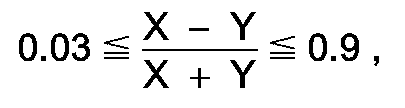

X est le pouvoir réfléchissant de la face (a); et
Y est le pouvoir réfléchissant de la partie (b). - Support d'enregistrement optique suivant l'une quelconque des revendications 1 à 3, dans lequel l'enrobage extérieur comprend au moins un métal choisi parmi l'argent, l'or, le cuivre, le tellure, le bismuth, le palladium, le cobalt, le nickel, le plomb, le chrome et le titane, de préférence l'argent.
- Support d'enregistrement optique suivant l'une quelconque des revendications 1 à 4, dans lequel le noyau est au moins un métal de l'enrobage extérieur ou au moins un métal ou une substance métallique plus précieuse que le métal de l'enrobage extérieur, de préférence de l'argent ou un métal plus précieux que l'argent et, d'une manière tout particulièrement préférée, de l'argent.
- Support d'enregistrement optique suivant la revendication 5, dans lequel le métal ou la substance métallique plus précieux que l'argent est le palladium, le platine, l'or, le rhodium, le ruthénium, le thallium, le mercure, l'un de leurs alliages, l'un de leurs sulfures ou l'un de leurs oxydes, de préférence du palladium ou de l'or ou du platine.
- Support d'enregistrement optique suivant l'une quelconque des revendications 1 à 6, dans lequel l'agent liant hydrophobe est un composé polymère organique insoluble dans l'eau ou dans l'eau tiède à 60°C.
- Support d'enregistrement optique suivant la revendication 7, dans lequel l'agent liant hydrophobe a une température de transition vitreuse de 10°C à 120°C, de préférence de 40°C à 110°C.
- Support d'enregistrement optique suivant la revendication 7, dans lequel l'agent liant hydrophobe est du polyvinylbutyral, du poly(méthacrylate de méthyle), du polycarbonate, un copolymère de chlorure de vinyle et d'acétate de vinyle ou du polyisobutylène.
- Support d'enregistrement optique suivant l'une quelconque des revendications 1 à 9, dans lequel la mince pellicule ou membrane de l'agent liant hydrophobe comprend un halogénure d'argent ou un agent formant un halogénure d'argent.
- Support d'enregistrement optique suivant la revendication 10, qui renferme un agent formant un halogénure d'argent et dans lequel l'agent formant un halogénure d'argent est un halogénure d'hydrogène, un halogénure métallique, une molécule d'halogène, un N-haloamide organique, un diarylhalométhane, un halogénure d'ammonium, un halogénure organique d'un élément des groupes IV, V et VI de la classification périodique des éléments ou un dihalogénure de triphénylphosphate, de préférence un halogénure métallique.
- Support d'enregistrement optique suivant l'une quelconque des revendications 1 à 11, dans lequel la mince pellicule ou membrane de l'agent liant hydrophobe comprend un agent absorbant la lumière dans le domaine de longueur d'onde d'un laser à semiconducteurs.
- Support d'enregistrement optique suivant l'une quelconque des revendications 1 à 12, qui comprend une mince couche d'un agent absorbant la lumière dans le domaine de longueur d'onde d'un laser à semiconducteur en surface, cette mince couche ayant de préférence une épaisseur de 50 nm à 5 mm.
- Support d'enregistrement optique suivant l'une quelconque des revendications 12 à 13, dans lequel l'agent absorbant la lumière est un colorant à la phtalocyanine ou un colorant à l'azulénium ou un complexe nickel-dithiol.
- Support d'enregistrement optique suivant l'une quelconque des revendications 1 à 14, dans lequel la mince pellicule ou membrane de l'agent liant hydrophobe comprend un agent de nuançage, de préférence une phtalazone.
- Support d'enregistrement optique suivant l'une quelconque des revendications 1 à 15, dans lequel la mince pellicule ou membrane de l'agent liant hydrophobe comprend un agent anti-buée, de préférence du 1,1,1′,1′-tétrabromo-o-xylène.
- Support d'enregistrement optique suivant l'une quelconque des revendications 1 à 16, dans lequel l'épaisseur du support d'enregistrement optique est comprise entre 1 et 20 mm.
- Support d'enregistrement optique suivant l'une quelconque des revendications 1 à 17, qui est prévu sur un substrat, de préférence sur une pellicule, une feuille ou une plaque en métal, en verre ou en matière plastique.
- Support d'enregistrement optique suivant la revendication 18, dans lequel une pellicule ou une feuille d'une matière plastique est appliquée sur le substrat.
- Support d'enregistrement optique suivant l'une quelconque des revendications 1 à 19, dans lequel une pellicule, une feuille ou une plaque transparente est appliquée sur la face du support d'enregistrement optique.
- Support d'enregistrement optique suivant l'une quelconque des revendications 1 à 20, dans lequel l'information à lire est préenregistrée dans le support d'enregistrement optique.
- Support d'enregistrement optique suivant la revendication 21, dans lequel l'information à lire est préenregistrée dans une partie du support d'enregistrement optique ou dans tout le support d'enregistrement optique.
- Procédé de fabrication du support d'enregistrement optique suivant l'une quelconque des revendications 1 à 22, qui comprend les stades de :
formation d'une couche d'une composition pour le support d'enregistrement optique sur un substrat, cette composition comprenant un composé organo-métallique susceptible de former des particules métalliques d'un diamètre de 0,003 mm à 3 mm seul ou avec un composé capable de réduire ce composé organométallique, et un agent liant hydrophobe;
apport d'une mince couche du métal de ce composé organométallique ou d'un métal plus précieux que le métal de ce composé organométallique sur la face de cette couche de la composition pour le support d'enregistrement optique; et
chauffage de cette couche de la composition ayant cette mince couche du métal du composé organométallique ou du métal plus précieux que le métal du composé organométallique en surface à une température de 50°C à 200°C pendant une seconde à 10 minutes. - Procédé suivant l'une quelconque des revendications 1 à 22, qui comprend les stades de :
apport d'une mince couche d'un métal d'un composé organométallique ou d'un métal plus précieux que le métal du composé organométallique capable de former des particules métalliques d'un diamètre de 0,003 µm à 3 µm sur une face d'un substrat;
formation d'une couche d'une composition pour le support d'enregistrement optique, cette composition comprenant le composé organométallique seul ou avec un composé susceptible de réduire le composé organo-métallique, et un agent liant hydrophobe; et
chauffage de la couche de la composition ayant cette mince couche du métal du composé organométallique ou du métal plus précieux que le métal du composé organométallique en surface du côté du substrat à une température de 50°C à 200°C pendant une seconde à 10 minutes. - Procédé suivant la revendication 24, qui comprend un stade d'apport d'une mince couche du métal du composé organométallique ou du métal plus précieux que le métal du composé organométallique sur la face de la couche de la composition pour le support d'enregistrement optique avant le stade de chauffage.
- Procédé suivant l'une quelconque des revendications 23 à 25, qui consiste à effectuer le stade de chauffage à une température de 70°C à 160°C pendant une seconde à 100 secondes.
- Procédé suivant l'une quelconque des revendications 23 à 26, dans lequel l'épaisseur de la couche de la composition pour le support d'enregistrement optique est comprise entre 1 et 20 mm.
- Procédé suivant l'une quelconque des revendications 23 à 27, dans lequel l'épaisseur de la mince couche du métal du composé organométallique ou du métal plus précieux que le métal du composé organométallique est comprise entre 0,2 et 100 nm, de préférence entre 1 et 20 nm.
- Procédé suivant l'une quelconque des revendications 23 à 28, qui comprend un stade de formation d'une mince couche d'un agent absorbant la lumière dans le domaine de longueurs d'onde d'un laser à semiconducteur de 650 nm à 900 nm, cette mince couche ayant de préférence une épaisseur de 150 nm à 5 µm.
- Procédé suivant l'une quelconque des revendications 23 à 29, qui comprend un stade d'exposition d'une partie du support d'enregistrement optique ou de tout le support d'enregistrement optique à travers un photomasque portant de l'information à préenregistrer à une lumière ayant une énergie d'exposition de 10⁻⁷ J/cm² à 10⁻² J/cm² pendant 5 à 20 secondes avant le stade de chauffage ou à une lumière ayant une énergie d'exposition de 10⁻¹ J/cm² à 10⁵ J/cm² pendant 100 msecondes à 10 secondes après le stade de chauffage.
- Procédé suivant l'une quelconque des revendications 23 à 30, qui comprend un stade d'application d'une pellicule ou d'une feuille d'un composé polymère organique transparent sur le support d'enregistrement optique après le stade de chauffage, ce composé polymère organique transparent étant de préférence un polycarbonate.
- Procédé suivant l'une quelconque des revendications 23 à 31, qui comprend un stade d'application d'une pellicule ou d'une feuille d'un métal, d'une céramique, d'un composé organique polymère, d'un matériau renforcé de fibres de verre ou d'une fibre de carbone sur le substrat après le stade de chauffage.
- Procédé suivant l'une quelconque des revendications 23 à 32, qui comprend un stade d'élimination du substrat après un stade de chauffage ou après un stade d'exposition après le stade de chauffage.
- Procédé suivant l'une quelconque des revendications 23 à 33, dans lequel l'agent liant hydrophobe est un composé polymère organique insoluble dans l'eau ou dans l'eau tiède à 60°C ayant de préférence une température de transition vitreuse de 10°C à 120°C et mieux, de 40°C à 110°C.
- Procédé suivant la revendication 34, dans lequel le composé organique polymère est du polyvinylbutyral, du poly(méthacrylate de méthyle), du polycarbonate, un copolymère de chlorure de vinyle et d'acétate de vinyle ou du polyisobutylène.
- Procédé suivant la revendication 34 ou 35, dans lequel la quantité de l'agent liant hydrophobe représente de 10 à 100 parties en poids pour 100 parties en poids du composé organométallique.
- Procédé suivant l'une quelconque des revendications 23 à 36, dans lequel le composé organo-métallique est un composé susceptible de former les particules métalliques par auto-décomposition par chauffage à une température de 50°C à 200°C en la présence du métal du composé organométallique ou d'un métal plus précieux que le métal du composé organométallique ou est un composé susceptible de former les particules métalliques par réduction et la composition comprend un composé organo-métallique susceptible de réduire le composé organo-métallique.
- Procédé suivant la revendication 37, dans lequel le composé organométallique est un sel métallique de l'acide oxalique, le métal de ce sel métallique étant l'agent, l'or, le cuivre, le tellure, le bismuth, le palladium, le cobalt, le nickel, le plomb, le chrome ou le titane.
- Procédé suivant l'une quelconque des revendications 23 à 38, dans lequel le composé organo-métallique est un composé organique d'argent à bas poids moléculaire, de préférence un sel d'argent d'un acide carboxylique, un sel d'argent d'un acide carboxylique à longue chaîne, un sel d'argent d'un acide perfluorocarboxylique, un sel d'argent d'un acide perfluorocarboxylique dont des atomes de fluor sont remplacés partiellement par un atome de chlore, un sel d'argent d'un acide sulfonique, un sel d'argent d'un acide sulfinique, un chélate d'argent formé par un agent de chélation fluoré, un thiocarbamate d'argent, un chélate d'argent, un sel d'argent d'un composé nitré ou un sel d'argent complexé par un composé de coordination, de préférence un sel d'argent d'un acide carboxylique à chaîne longue et mieux encore, du béhénate d'argent.
- Procédé suivant la revendication 39, dans lequel le composé organique d'argent est un composé soluble dans un solvant ou dans l'agent liant hydrophobe, de préférence un sel d'argent d'un acide perfluorocarboxylique, mieux encore, du trifluoroacétate d'argent ou de l'heptafluorobutyrate d'argent.
- Procédé suivant la revendication 39, dans lequel le chélate d'argent formé par un agent de chélation fluoré est du trifluoroacétylacétonate d'argent.
- Procédé suivant l'une quelconque des revendications 23 à 38, dans lequel le composé organo-métallique est un composé organique d'argent à haut poids moléculaire, de préférence un sel d'argent d'un acide polycarboxylique à haut poids moléculaire, un sel d'argent d'un acide polycarboxylique ou un chélate d'argent à haut poids moléculaire, mieux encore un sel d'argent provenant d'un composé à ion argent et d'un polymère d'acide acrylique, d'acide méthacrylique ou d'un sel de métal alcalin ou de métal alcalino-terreux de l'acide acrylique ou de l'acide méthacrylique avec ou sans composé monomère copolymérisable et d'une manière tout à fait préférée, du polyacrylate d'argent.
- Procédé suivant la revendication 42, dans lequel le sel d'argent d'un acide polycarboxylique est un alginate d'argent ou un pectate d'argent.
- Procédé suivant l'une quelconque des revendications 23 à 43, dans lequel le composé capable de réduire le composé organométallique est un monohydroxybenzène, un polyhydroxybenzène, un naphtol, un hydroxybinaphtyle, une hydroxylamine, une pyrazolidone, une phénylènediamine, un aminophénol, un sulfonamidophénol, un méthylbisphénol ou un phénol à empêchement stérique dans lequel un ou deux groupes volumineux d'un point de vue stérique sont liés à l'atome de carbone ou à des atomes de carbone contigus de l'atome de carbone lié au groupe hydroxy, de préférence un phénol à empêchement stérique, et mieux encore, un composé représenté par la formule

R³, R⁴, R⁵ et R⁶ sont chacun un groupe alcoyle ayant de 1 à 8 atomes de carbone et un atome d'halogène; et
R⁷ et R⁸ sont chacun un atome d'hydrogène, un groupe phényle ou un groupe alcoyle ayant de 1 à 8 atomes de carbone ou un composé représenté par la formule
R⁹ est un groupe alcoyle secondaire ou tertiaire ayant de 4 à 10 atomes de carbone, un groupe cyclohexyle ou un groupe cyclohexyle substitué par un groupe alcoyle ayant de 1 à 6 atomes de carbone;
R¹⁰ est un groupe alcoyle ayant de 1 à 6 atomes de carbone;
R¹¹ est un groupe alcoyle ayant de 1 à 10 atomes de carbone, un groupe alcoxy ayant de 1 à 10 atomes de carbone, à un groupe aryle ayant de 6 à 12 atomes de carbone, à un groupe alcényle ayant de 2 à 10 atomes de carbone ou à un groupe relié à un groupe alcoyle ayant de 1 à 10 atomes de carbone, à un groupe cycloalcoyle ayant de 6 à 12 atomes de carbone, un groupe alcényle ayant de 2 à 10 atomes de carbone, un groupe aryle ayant de 6 à 12 atomes de carbone ou un groupe aralcoyle ayant de 7 à 12 atomes de carbone par une liaison ester;
R¹² est un groupe alcoyle ayant de 1 à 6 atomes de carbone, un groupe alcoxy ayant de 1 à 6 atomes de carbone;
R¹³ est un groupe alcoyle ayant de 1 à 6 atomes de carbone; et
R¹⁴ est un atome d'hydrogène ou un groupe alcoxy ayant de 1 à 6 atomes de carbone. - Procédé suivant l'une quelconque des revendications 23 à 44, dans lequel la composition comprend un halogénure d'argent ou un composé formant un halogénure d'argent présent, de préférence, en une quantité de 0,01 à 0,5 mole par mole du composé organométallique.
- Procédé suivant l'une quelconque des revendications 23 à 45, dans lequel la composition comprend un agent absorbant la lumière dans le domaine de longueur d'onde d'un laser à semiconducteur de 650 nm à 900 nm en une quantité de 2 à 50 parties en poids pour 100 parties en poids du composé organométallique.
- Procédé suivant la revendication 46, dans lequel l'agent absorbant la lumière est un colorant à la phtalocyanine ou un colorant à l'azulénium ou un complexe nickel-dithiol.
- Procédé suivant l'une quelconque des revendications 23 à 47, dans lequel la composition comprend un agent de nuançage, de préférence une phtalazone, ou mieux encore une phtalazone en une quantité de 0,01 à 0,5 mole par mole du composé organométallique.
- Procédé suivant l'une quelconque des revendications 23 à 48, dans lequel la composition comprend un agent anti-buée, de préférence du 1,1,1′,1′-tétrabromo-o-xylène, et mieux encore, une quantité de 0,01 à 0,5 mole par mole du composé organométallique.
- Carte optique ayant le support d'enregistrement optique suivant l'une quelconque des revendications 1 à 22.
- Carte optique suivant la revendication 50, dans laquelle l'information à lire est préenregistrée dans le support d'enregistrement optique, de préférence dans une partie du support d'enregistrement optique.
- Carte optique suivant la revendication 50, comprenant en outre de l'information analogique, de préférence l'information permettant d'identifier le titulaire de la carte optique.
- Carte optique suivant la revendication 52, dans laquelle le support d'enregistrement optique est prévu sur une face de la carte optique et l'information analogique est prévue sur l'autre face de la carte optique.
- Carte optique suivant l'une quelconque des revendications 50 à 53, comprenant en outre un support d'enregistrement magnétique.
- Carte optique suivant la revendication 54, dans laquelle le support d'enregistrement optique est prévu sur une face de la carte optique et le support d'enregistrement magnétique est prévu sur l'autre face de la carte optique.
- Carte optique suivant l'une quelconque des revendications 50 à 55, dans laquelle le support d'enregistrement optique est prévu sur une face de la carte optique et l'information analogique et le support d'enregistrement magnétique sont prévus sur l'autre face de la carte optique.
- Carte optique suivant l'une quelconque des revendications 54 à 56, dans laquelle l'information à lire est préenregistrée dans le support d'enregistrement magnétique.
- Carte optique suivant l'une quelconque des revendications 50 à 57, comprenant en outre un circuit intégré.
Applications Claiming Priority (36)
| Application Number | Priority Date | Filing Date | Title |
|---|---|---|---|
| JP63226448A JP2686984B2 (ja) | 1988-09-12 | 1988-09-12 | 新光学記録材料 |
| JP226448/88 | 1988-09-12 | ||
| JP294656/88 | 1988-11-24 | ||
| JP63294656A JP2706708B2 (ja) | 1988-11-24 | 1988-11-24 | 新規な光学記録材料 |
| JP63310059A JP2694459B2 (ja) | 1988-12-09 | 1988-12-09 | 新レーザー感材 |
| JP310059/88 | 1988-12-09 | ||
| JP313683/88 | 1988-12-14 | ||
| JP313681/88 | 1988-12-14 | ||
| JP63313681A JPH02160582A (ja) | 1988-12-14 | 1988-12-14 | 新規光学記録材料 |
| JP31368288 | 1988-12-14 | ||
| JP31368388 | 1988-12-14 | ||
| JP313682/88 | 1988-12-14 | ||
| JP314984/88 | 1988-12-15 | ||
| JP31498488 | 1988-12-15 | ||
| JP3503989 | 1989-02-16 | ||
| JP35038/89 | 1989-02-16 | ||
| JP35039/89 | 1989-02-16 | ||
| JP3503889 | 1989-02-16 | ||
| JP3631289 | 1989-02-17 | ||
| JP36313/89 | 1989-02-17 | ||
| JP3631389 | 1989-02-17 | ||
| JP36312/89 | 1989-02-17 | ||
| JP40316/89 | 1989-02-22 | ||
| JP40315/89 | 1989-02-22 | ||
| JP4031589 | 1989-02-22 | ||
| JP4031689 | 1989-02-22 | ||
| JP4182189 | 1989-02-23 | ||
| JP4182389 | 1989-02-23 | ||
| JP41823/89 | 1989-02-23 | ||
| JP41821/89 | 1989-02-23 | ||
| JP139252/89 | 1989-06-02 | ||
| JP1139252A JPH035746A (ja) | 1989-06-02 | 1989-06-02 | 新規記録材料 |
| JP1141172A JPH036553A (ja) | 1989-06-05 | 1989-06-05 | 新規な記録材料 |
| JP141172/89 | 1989-06-05 | ||
| JP1146794A JPH0312646A (ja) | 1989-06-12 | 1989-06-12 | 新規色素記録材料 |
| JP146794/89 | 1989-06-12 |
Publications (3)
| Publication Number | Publication Date |
|---|---|
| EP0361204A2 EP0361204A2 (fr) | 1990-04-04 |
| EP0361204A3 EP0361204A3 (en) | 1990-09-12 |
| EP0361204B1 true EP0361204B1 (fr) | 1994-11-30 |
Family
ID=27586121
Family Applications (1)
| Application Number | Title | Priority Date | Filing Date |
|---|---|---|---|
| EP89116876A Expired - Lifetime EP0361204B1 (fr) | 1988-09-12 | 1989-09-12 | Matériaux d'enregistrement optiques, méthode pour leur fabrication et cartes optiques utilisant ces matériaux |
Country Status (3)
| Country | Link |
|---|---|
| EP (1) | EP0361204B1 (fr) |
| CA (1) | CA1336312C (fr) |
| DE (1) | DE68919621T2 (fr) |
Families Citing this family (4)
| Publication number | Priority date | Publication date | Assignee | Title |
|---|---|---|---|---|
| EP0875889B1 (fr) * | 1997-04-29 | 2002-03-27 | Agfa-Gevaert | Couche d'enregistrement mince et métallique établie à partir d'un milieu aqueux |
| US6132927A (en) * | 1997-04-29 | 2000-10-17 | Agfa-Gevaert, N.V. | Thin metal recording layer coated from aqueous medium |
| EP0982090B1 (fr) * | 1998-08-27 | 2003-05-02 | Agfa-Gevaert | Procédé de préparation d'éléments d'enregistrement |
| US6245494B1 (en) | 1998-08-27 | 2001-06-12 | Agfa-Gevaert | Method of imaging a heat mode recording element comprising highly dispersed metal alloys |
Family Cites Families (1)
| Publication number | Priority date | Publication date | Assignee | Title |
|---|---|---|---|---|
| US4343879A (en) * | 1980-08-22 | 1982-08-10 | Drexler Technology Corporation | Multiple layer optical data storage and recording media |
-
1989
- 1989-09-08 CA CA000610789A patent/CA1336312C/fr not_active Expired - Fee Related
- 1989-09-12 DE DE68919621T patent/DE68919621T2/de not_active Expired - Fee Related
- 1989-09-12 EP EP89116876A patent/EP0361204B1/fr not_active Expired - Lifetime
Also Published As
| Publication number | Publication date |
|---|---|
| CA1336312C (fr) | 1995-07-18 |
| DE68919621D1 (de) | 1995-01-12 |
| EP0361204A2 (fr) | 1990-04-04 |
| EP0361204A3 (en) | 1990-09-12 |
| DE68919621T2 (de) | 1995-07-20 |
Similar Documents
| Publication | Publication Date | Title |
|---|---|---|
| US5578415A (en) | Optical recording materials, method for preparing the same and optical cards having the same | |
| EP0158906B1 (fr) | Carte optique | |
| US4884260A (en) | Data recording system for optical memory tape | |
| US4298684A (en) | Reflective data storage medium made by silver diffusion transfer in silver-halide emulsion incorporating nuclei | |
| US4837134A (en) | Optical memory card with versatile storage medium | |
| JPS61232448A (ja) | 発色団/ポリマ−配位型情報記録層を有する光デ−タ記憶媒体 | |
| CA1297581C (fr) | Bande d'enregistrement optique a fort contraste | |
| EP0097929A1 (fr) | Milieu enregistreur optique d'information pour laser semi-conducteur | |
| EP0361204B1 (fr) | Matériaux d'enregistrement optiques, méthode pour leur fabrication et cartes optiques utilisant ces matériaux | |
| US4762770A (en) | High contrast optical memory disk | |
| US4753864A (en) | High contrast optical memory tape | |
| WO1984002586A1 (fr) | Support reflecteur optique de stockage de donnees et d'enregistrement au laser | |
| KR920009199B1 (ko) | 광학 기록재 및 그 제조방법 | |
| JPH0312646A (ja) | 新規色素記録材料 | |
| JPS61103287A (ja) | 情報カ−ド | |
| JP2706708B2 (ja) | 新規な光学記録材料 | |
| JPH05303781A (ja) | 光磁気記録媒体 | |
| JPH02262650A (ja) | 感レーザー光記録材料 | |
| JPH02289938A (ja) | 光カードシステム | |
| JPH04141489A (ja) | 光学記録媒体 | |
| JPS61214151A (ja) | 光カ−ド | |
| JP2694459B2 (ja) | 新レーザー感材 | |
| JPH02297485A (ja) | 光カードとその記録再生方法 | |
| JPS60214995A (ja) | 光カ−ド | |
| JPH06342485A (ja) | 情報カード |
Legal Events
| Date | Code | Title | Description |
|---|---|---|---|
| PUAI | Public reference made under article 153(3) epc to a published international application that has entered the european phase |
Free format text: ORIGINAL CODE: 0009012 |
|
| AK | Designated contracting states |
Kind code of ref document: A2 Designated state(s): BE DE FR GB IT NL |
|
| PUAL | Search report despatched |
Free format text: ORIGINAL CODE: 0009013 |
|
| AK | Designated contracting states |
Kind code of ref document: A3 Designated state(s): BE DE FR GB IT NL |
|
| 17P | Request for examination filed |
Effective date: 19901019 |
|
| 17Q | First examination report despatched |
Effective date: 19921022 |
|
| GRAA | (expected) grant |
Free format text: ORIGINAL CODE: 0009210 |
|
| AK | Designated contracting states |
Kind code of ref document: B1 Designated state(s): BE DE FR GB IT NL |
|
| ITF | It: translation for a ep patent filed | ||
| REF | Corresponds to: |
Ref document number: 68919621 Country of ref document: DE Date of ref document: 19950112 |
|
| ET | Fr: translation filed | ||
| PLBE | No opposition filed within time limit |
Free format text: ORIGINAL CODE: 0009261 |
|
| STAA | Information on the status of an ep patent application or granted ep patent |
Free format text: STATUS: NO OPPOSITION FILED WITHIN TIME LIMIT |
|
| 26N | No opposition filed | ||
| PGFP | Annual fee paid to national office [announced via postgrant information from national office to epo] |
Ref country code: GB Payment date: 19990908 Year of fee payment: 11 |
|
| PGFP | Annual fee paid to national office [announced via postgrant information from national office to epo] |
Ref country code: FR Payment date: 19990909 Year of fee payment: 11 |
|
| PGFP | Annual fee paid to national office [announced via postgrant information from national office to epo] |
Ref country code: DE Payment date: 19990910 Year of fee payment: 11 |
|
| PGFP | Annual fee paid to national office [announced via postgrant information from national office to epo] |
Ref country code: NL Payment date: 19990930 Year of fee payment: 11 |
|
| PGFP | Annual fee paid to national office [announced via postgrant information from national office to epo] |
Ref country code: BE Payment date: 19991119 Year of fee payment: 11 |
|
| PG25 | Lapsed in a contracting state [announced via postgrant information from national office to epo] |
Ref country code: GB Free format text: LAPSE BECAUSE OF NON-PAYMENT OF DUE FEES Effective date: 20000912 |
|
| PG25 | Lapsed in a contracting state [announced via postgrant information from national office to epo] |
Ref country code: BE Free format text: LAPSE BECAUSE OF NON-PAYMENT OF DUE FEES Effective date: 20000930 |
|
| BERE | Be: lapsed |
Owner name: ASAHI KASEI KOGYO K.K. Effective date: 20000930 |
|
| PG25 | Lapsed in a contracting state [announced via postgrant information from national office to epo] |
Ref country code: NL Free format text: LAPSE BECAUSE OF NON-PAYMENT OF DUE FEES Effective date: 20010401 |
|
| GBPC | Gb: european patent ceased through non-payment of renewal fee |
Effective date: 20000912 |
|
| PG25 | Lapsed in a contracting state [announced via postgrant information from national office to epo] |
Ref country code: FR Free format text: LAPSE BECAUSE OF NON-PAYMENT OF DUE FEES Effective date: 20010531 |
|
| NLV4 | Nl: lapsed or anulled due to non-payment of the annual fee |
Effective date: 20010401 |
|
| PG25 | Lapsed in a contracting state [announced via postgrant information from national office to epo] |
Ref country code: DE Free format text: LAPSE BECAUSE OF NON-PAYMENT OF DUE FEES Effective date: 20010601 |
|
| REG | Reference to a national code |
Ref country code: FR Ref legal event code: ST |
|
| PG25 | Lapsed in a contracting state [announced via postgrant information from national office to epo] |
Ref country code: IT Free format text: LAPSE BECAUSE OF NON-PAYMENT OF DUE FEES;WARNING: LAPSES OF ITALIAN PATENTS WITH EFFECTIVE DATE BEFORE 2007 MAY HAVE OCCURRED AT ANY TIME BEFORE 2007. THE CORRECT EFFECTIVE DATE MAY BE DIFFERENT FROM THE ONE RECORDED. Effective date: 20050912 |