EP0362143B1 - Images en relief électriquement conductrices et anti-statiques, procédé pour leur fabrication, matériau d'enduction et polymères sensibles au rayonnement - Google Patents
Images en relief électriquement conductrices et anti-statiques, procédé pour leur fabrication, matériau d'enduction et polymères sensibles au rayonnement Download PDFInfo
- Publication number
- EP0362143B1 EP0362143B1 EP89810720A EP89810720A EP0362143B1 EP 0362143 B1 EP0362143 B1 EP 0362143B1 EP 89810720 A EP89810720 A EP 89810720A EP 89810720 A EP89810720 A EP 89810720A EP 0362143 B1 EP0362143 B1 EP 0362143B1
- Authority
- EP
- European Patent Office
- Prior art keywords
- alkyl
- phenyl
- process according
- formula
- substituted
- Prior art date
- Legal status (The legal status is an assumption and is not a legal conclusion. Google has not performed a legal analysis and makes no representation as to the accuracy of the status listed.)
- Expired - Lifetime
Links
- 229920000642 polymer Polymers 0.000 title claims description 86
- 238000000034 method Methods 0.000 title claims description 51
- 230000008569 process Effects 0.000 title claims description 41
- 239000000463 material Substances 0.000 title claims description 37
- 230000005855 radiation Effects 0.000 title claims description 28
- 239000011248 coating agent Substances 0.000 title claims description 9
- 238000004519 manufacturing process Methods 0.000 title claims description 6
- 238000000576 coating method Methods 0.000 title claims description 4
- -1 4-methoxyphenylthio Chemical group 0.000 claims description 125
- 239000000460 chlorine Substances 0.000 claims description 116
- 229910052801 chlorine Inorganic materials 0.000 claims description 106
- 229920001577 copolymer Polymers 0.000 claims description 104
- 125000001997 phenyl group Chemical group [H]C1=C([H])C([H])=C(*)C([H])=C1[H] 0.000 claims description 88
- 229910052794 bromium Inorganic materials 0.000 claims description 76
- 229910052739 hydrogen Inorganic materials 0.000 claims description 54
- 229910052731 fluorine Inorganic materials 0.000 claims description 43
- 125000001797 benzyl group Chemical group [H]C1=C([H])C([H])=C(C([H])=C1[H])C([H])([H])* 0.000 claims description 37
- 150000001875 compounds Chemical class 0.000 claims description 37
- 239000000203 mixture Substances 0.000 claims description 36
- 230000009021 linear effect Effects 0.000 claims description 32
- 125000002496 methyl group Chemical group [H]C([H])([H])* 0.000 claims description 31
- 229910052740 iodine Inorganic materials 0.000 claims description 30
- 125000001931 aliphatic group Chemical group 0.000 claims description 28
- 229910052736 halogen Inorganic materials 0.000 claims description 27
- 150000002367 halogens Chemical group 0.000 claims description 26
- VGGSQFUCUMXWEO-UHFFFAOYSA-N Ethene Chemical class C=C VGGSQFUCUMXWEO-UHFFFAOYSA-N 0.000 claims description 24
- 125000002346 iodo group Chemical group I* 0.000 claims description 24
- 125000004169 (C1-C6) alkyl group Chemical group 0.000 claims description 23
- 150000002009 diols Chemical class 0.000 claims description 23
- 125000001246 bromo group Chemical group Br* 0.000 claims description 19
- 125000002887 hydroxy group Chemical group [H]O* 0.000 claims description 18
- 239000011368 organic material Substances 0.000 claims description 18
- 229920001169 thermoplastic Polymers 0.000 claims description 18
- 125000001309 chloro group Chemical group Cl* 0.000 claims description 16
- 125000006839 xylylene group Chemical group 0.000 claims description 16
- 239000005977 Ethylene Substances 0.000 claims description 14
- 125000004956 cyclohexylene group Chemical group 0.000 claims description 14
- 239000000126 substance Substances 0.000 claims description 14
- 239000011230 binding agent Substances 0.000 claims description 12
- 239000004642 Polyimide Substances 0.000 claims description 11
- 125000003118 aryl group Chemical group 0.000 claims description 11
- 229920001721 polyimide Polymers 0.000 claims description 11
- 239000000758 substrate Substances 0.000 claims description 11
- 239000000370 acceptor Substances 0.000 claims description 9
- 125000004642 (C1-C12) alkoxy group Chemical group 0.000 claims description 8
- 125000004178 (C1-C4) alkyl group Chemical group 0.000 claims description 8
- 229920001519 homopolymer Polymers 0.000 claims description 8
- RBIIKVXVYVANCQ-CUWPLCDZSA-N (2s,4s,5s)-5-amino-n-(3-amino-2,2-dimethyl-3-oxopropyl)-6-[4-(2-chlorophenyl)-2,2-dimethyl-5-oxopiperazin-1-yl]-4-hydroxy-2-propan-2-ylhexanamide Chemical compound C1C(C)(C)N(C[C@H](N)[C@@H](O)C[C@@H](C(C)C)C(=O)NCC(C)(C)C(N)=O)CC(=O)N1C1=CC=CC=C1Cl RBIIKVXVYVANCQ-CUWPLCDZSA-N 0.000 claims description 7
- OFOBLEOULBTSOW-UHFFFAOYSA-N Malonic acid Chemical compound OC(=O)CC(O)=O OFOBLEOULBTSOW-UHFFFAOYSA-N 0.000 claims description 7
- JYNZIOFUHBJABQ-UHFFFAOYSA-N allyl-{6-[3-(4-bromo-phenyl)-benzofuran-6-yloxy]-hexyl-}-methyl-amin Chemical compound C=1OC2=CC(OCCCCCCN(C)CC=C)=CC=C2C=1C1=CC=C(Br)C=C1 JYNZIOFUHBJABQ-UHFFFAOYSA-N 0.000 claims description 7
- 125000003700 epoxy group Chemical group 0.000 claims description 7
- 229910052751 metal Inorganic materials 0.000 claims description 7
- 239000002184 metal Substances 0.000 claims description 7
- 239000003960 organic solvent Substances 0.000 claims description 7
- 125000000843 phenylene group Chemical group C1(=C(C=CC=C1)*)* 0.000 claims description 7
- 229910052717 sulfur Inorganic materials 0.000 claims description 7
- 239000004215 Carbon black (E152) Substances 0.000 claims description 6
- 125000003917 carbamoyl group Chemical group [H]N([H])C(*)=O 0.000 claims description 6
- 125000004435 hydrogen atom Chemical group [H]* 0.000 claims description 6
- 150000002894 organic compounds Chemical class 0.000 claims description 6
- UBOXGVDOUJQMTN-UHFFFAOYSA-N 1,1,2-trichloroethane Chemical compound ClCC(Cl)Cl UBOXGVDOUJQMTN-UHFFFAOYSA-N 0.000 claims description 5
- ZAMOUSCENKQFHK-UHFFFAOYSA-N Chlorine atom Chemical compound [Cl] ZAMOUSCENKQFHK-UHFFFAOYSA-N 0.000 claims description 5
- IMROMDMJAWUWLK-UHFFFAOYSA-N Ethenol Chemical compound OC=C IMROMDMJAWUWLK-UHFFFAOYSA-N 0.000 claims description 5
- 230000009471 action Effects 0.000 claims description 5
- 229910052711 selenium Inorganic materials 0.000 claims description 5
- CFXQEHVMCRXUSD-UHFFFAOYSA-N 1,2,3-Trichloropropane Chemical compound ClCC(Cl)CCl CFXQEHVMCRXUSD-UHFFFAOYSA-N 0.000 claims description 4
- SUNMBRGCANLOEG-UHFFFAOYSA-N 1,3-dichloroacetone Chemical compound ClCC(=O)CCl SUNMBRGCANLOEG-UHFFFAOYSA-N 0.000 claims description 4
- IBYHHJPAARCAIE-UHFFFAOYSA-N 1-bromo-2-chloroethane Chemical compound ClCCBr IBYHHJPAARCAIE-UHFFFAOYSA-N 0.000 claims description 4
- NIXOWILDQLNWCW-UHFFFAOYSA-N 2-Propenoic acid Natural products OC(=O)C=C NIXOWILDQLNWCW-UHFFFAOYSA-N 0.000 claims description 4
- OAKJQQAXSVQMHS-UHFFFAOYSA-N Hydrazine Chemical compound NN OAKJQQAXSVQMHS-UHFFFAOYSA-N 0.000 claims description 4
- LQZMLBORDGWNPD-UHFFFAOYSA-N N-iodosuccinimide Chemical compound IN1C(=O)CCC1=O LQZMLBORDGWNPD-UHFFFAOYSA-N 0.000 claims description 4
- DIKBFYAXUHHXCS-UHFFFAOYSA-N bromoform Chemical compound BrC(Br)Br DIKBFYAXUHHXCS-UHFFFAOYSA-N 0.000 claims description 4
- 125000004122 cyclic group Chemical group 0.000 claims description 4
- 125000004979 cyclopentylene group Chemical group 0.000 claims description 4
- 150000002148 esters Chemical class 0.000 claims description 4
- 125000003356 phenylsulfanyl group Chemical group [*]SC1=C([H])C([H])=C([H])C([H])=C1[H] 0.000 claims description 4
- 125000002924 primary amino group Chemical group [H]N([H])* 0.000 claims description 4
- HJUGFYREWKUQJT-UHFFFAOYSA-N tetrabromomethane Chemical compound BrC(Br)(Br)Br HJUGFYREWKUQJT-UHFFFAOYSA-N 0.000 claims description 4
- UGNWTBMOAKPKBL-UHFFFAOYSA-N tetrachloro-1,4-benzoquinone Chemical compound ClC1=C(Cl)C(=O)C(Cl)=C(Cl)C1=O UGNWTBMOAKPKBL-UHFFFAOYSA-N 0.000 claims description 4
- SMZOUWXMTYCWNB-UHFFFAOYSA-N 2-(2-methoxy-5-methylphenyl)ethanamine Chemical compound COC1=CC=C(C)C=C1CCN SMZOUWXMTYCWNB-UHFFFAOYSA-N 0.000 claims description 3
- ZCYVEMRRCGMTRW-UHFFFAOYSA-N 7553-56-2 Chemical compound [I] ZCYVEMRRCGMTRW-UHFFFAOYSA-N 0.000 claims description 3
- LFQSCWFLJHTTHZ-UHFFFAOYSA-N Ethanol Chemical compound CCO LFQSCWFLJHTTHZ-UHFFFAOYSA-N 0.000 claims description 3
- CERQOIWHTDAKMF-UHFFFAOYSA-N Methacrylic acid Chemical compound CC(=C)C(O)=O CERQOIWHTDAKMF-UHFFFAOYSA-N 0.000 claims description 3
- PCLIMKBDDGJMGD-UHFFFAOYSA-N N-bromosuccinimide Chemical compound BrN1C(=O)CCC1=O PCLIMKBDDGJMGD-UHFFFAOYSA-N 0.000 claims description 3
- JRNVZBWKYDBUCA-UHFFFAOYSA-N N-chlorosuccinimide Chemical compound ClN1C(=O)CCC1=O JRNVZBWKYDBUCA-UHFFFAOYSA-N 0.000 claims description 3
- GDTBXPJZTBHREO-UHFFFAOYSA-N bromine Substances BrBr GDTBXPJZTBHREO-UHFFFAOYSA-N 0.000 claims description 3
- 150000001768 cations Chemical class 0.000 claims description 3
- 125000004185 ester group Chemical group 0.000 claims description 3
- VFDYKPARTDCDCU-UHFFFAOYSA-N hexachloropropene Chemical compound ClC(Cl)=C(Cl)C(Cl)(Cl)Cl VFDYKPARTDCDCU-UHFFFAOYSA-N 0.000 claims description 3
- 125000002768 hydroxyalkyl group Chemical group 0.000 claims description 3
- 239000011630 iodine Substances 0.000 claims description 3
- 238000012546 transfer Methods 0.000 claims description 3
- WLIADPFXSACYLS-RQOWECAXSA-N (z)-1,3-dichlorobut-2-ene Chemical compound C\C(Cl)=C\CCl WLIADPFXSACYLS-RQOWECAXSA-N 0.000 claims description 2
- POJPQMDDRCILHJ-UHFFFAOYSA-N 1,1,1,2,2,2-hexabromoethane Chemical compound BrC(Br)(Br)C(Br)(Br)Br POJPQMDDRCILHJ-UHFFFAOYSA-N 0.000 claims description 2
- QQAHAGNPDBPSJP-UHFFFAOYSA-N 1,1,1,2,2,3,3,3-octachloropropane Chemical compound ClC(Cl)(Cl)C(Cl)(Cl)C(Cl)(Cl)Cl QQAHAGNPDBPSJP-UHFFFAOYSA-N 0.000 claims description 2
- RVHSTXJKKZWWDQ-UHFFFAOYSA-N 1,1,1,2-tetrabromoethane Chemical compound BrCC(Br)(Br)Br RVHSTXJKKZWWDQ-UHFFFAOYSA-N 0.000 claims description 2
- AVFQBLKYJWKKJP-UHFFFAOYSA-N 1,1,2,2,3,3-hexachlorocyclopropane Chemical compound ClC1(Cl)C(Cl)(Cl)C1(Cl)Cl AVFQBLKYJWKKJP-UHFFFAOYSA-N 0.000 claims description 2
- CDHLQZJRWKQATP-UHFFFAOYSA-N 1,1-dichloro-2,2-diethoxyethane Chemical compound CCOC(C(Cl)Cl)OCC CDHLQZJRWKQATP-UHFFFAOYSA-N 0.000 claims description 2
- GTQHJCOHNAFHRE-UHFFFAOYSA-N 1,10-dibromodecane Chemical compound BrCCCCCCCCCCBr GTQHJCOHNAFHRE-UHFFFAOYSA-N 0.000 claims description 2
- ZJJATABWMGVVRZ-UHFFFAOYSA-N 1,12-dibromododecane Chemical compound BrCCCCCCCCCCCCBr ZJJATABWMGVVRZ-UHFFFAOYSA-N 0.000 claims description 2
- BLZOHTXDDOAASQ-UHFFFAOYSA-N 1,2,3,3-tetrachlorocyclopropene Chemical compound ClC1=C(Cl)C1(Cl)Cl BLZOHTXDDOAASQ-UHFFFAOYSA-N 0.000 claims description 2
- DEIGXXQKDWULML-UHFFFAOYSA-N 1,2,5,6,9,10-hexabromocyclododecane Chemical compound BrC1CCC(Br)C(Br)CCC(Br)C(Br)CCC1Br DEIGXXQKDWULML-UHFFFAOYSA-N 0.000 claims description 2
- VEFLKXRACNJHOV-UHFFFAOYSA-N 1,3-dibromopropane Chemical compound BrCCCBr VEFLKXRACNJHOV-UHFFFAOYSA-N 0.000 claims description 2
- RBZMSGOBSOCYHR-UHFFFAOYSA-N 1,4-bis(bromomethyl)benzene Chemical group BrCC1=CC=C(CBr)C=C1 RBZMSGOBSOCYHR-UHFFFAOYSA-N 0.000 claims description 2
- ZZHIDJWUJRKHGX-UHFFFAOYSA-N 1,4-bis(chloromethyl)benzene Chemical group ClCC1=CC=C(CCl)C=C1 ZZHIDJWUJRKHGX-UHFFFAOYSA-N 0.000 claims description 2
- OTEKOJQFKOIXMU-UHFFFAOYSA-N 1,4-bis(trichloromethyl)benzene Chemical compound ClC(Cl)(Cl)C1=CC=C(C(Cl)(Cl)Cl)C=C1 OTEKOJQFKOIXMU-UHFFFAOYSA-N 0.000 claims description 2
- SGRHVVLXEBNBDV-UHFFFAOYSA-N 1,6-dibromohexane Chemical compound BrCCCCCCBr SGRHVVLXEBNBDV-UHFFFAOYSA-N 0.000 claims description 2
- YMHXXJJTAGKFBA-UHFFFAOYSA-N 1-bromo-2-chloropropane Chemical compound CC(Cl)CBr YMHXXJJTAGKFBA-UHFFFAOYSA-N 0.000 claims description 2
- HZNVUJQVZSTENZ-UHFFFAOYSA-N 2,3-dichloro-5,6-dicyano-1,4-benzoquinone Chemical compound ClC1=C(Cl)C(=O)C(C#N)=C(C#N)C1=O HZNVUJQVZSTENZ-UHFFFAOYSA-N 0.000 claims description 2
- NJQJGRGGIUNVAB-UHFFFAOYSA-N 2,4,4,6-tetrabromocyclohexa-2,5-dien-1-one Chemical compound BrC1=CC(Br)(Br)C=C(Br)C1=O NJQJGRGGIUNVAB-UHFFFAOYSA-N 0.000 claims description 2
- ZLCKDYMZBZNBMJ-UHFFFAOYSA-N 2-bromoethyl carbonochloridate Chemical compound ClC(=O)OCCBr ZLCKDYMZBZNBMJ-UHFFFAOYSA-N 0.000 claims description 2
- OYUNTGBISCIYPW-UHFFFAOYSA-N 2-chloroprop-2-enenitrile Chemical compound ClC(=C)C#N OYUNTGBISCIYPW-UHFFFAOYSA-N 0.000 claims description 2
- VODKOOOHHCAWFR-UHFFFAOYSA-N 2-iodoacetonitrile Chemical compound ICC#N VODKOOOHHCAWFR-UHFFFAOYSA-N 0.000 claims description 2
- DXKHBLYQXDEINJ-UHFFFAOYSA-N 3,4,5,6-tetrabromocyclohexa-3,5-diene-1,2-dione Chemical compound BrC1=C(Br)C(=O)C(=O)C(Br)=C1Br DXKHBLYQXDEINJ-UHFFFAOYSA-N 0.000 claims description 2
- XVEASTGLHPVZNA-UHFFFAOYSA-N 3,4-dichlorobut-1-ene Chemical compound ClCC(Cl)C=C XVEASTGLHPVZNA-UHFFFAOYSA-N 0.000 claims description 2
- AGULWIQIYWWFBJ-UHFFFAOYSA-N 3,4-dichlorofuran-2,5-dione Chemical compound ClC1=C(Cl)C(=O)OC1=O AGULWIQIYWWFBJ-UHFFFAOYSA-N 0.000 claims description 2
- YWHXSJOSFZIVON-UHFFFAOYSA-N 4,5,6-tris(trichloromethyl)triazine Chemical compound ClC(Cl)(Cl)C1=NN=NC(C(Cl)(Cl)Cl)=C1C(Cl)(Cl)Cl YWHXSJOSFZIVON-UHFFFAOYSA-N 0.000 claims description 2
- CPELXLSAUQHCOX-UHFFFAOYSA-M Bromide Chemical compound [Br-] CPELXLSAUQHCOX-UHFFFAOYSA-M 0.000 claims description 2
- WKBOTKDWSSQWDR-UHFFFAOYSA-N Bromine atom Chemical compound [Br] WKBOTKDWSSQWDR-UHFFFAOYSA-N 0.000 claims description 2
- RWNKSTSCBHKHTB-UHFFFAOYSA-N Hexachloro-1,3-butadiene Chemical compound ClC(Cl)=C(Cl)C(Cl)=C(Cl)Cl RWNKSTSCBHKHTB-UHFFFAOYSA-N 0.000 claims description 2
- CYTYCFOTNPOANT-UHFFFAOYSA-N Perchloroethylene Chemical group ClC(Cl)=C(Cl)Cl CYTYCFOTNPOANT-UHFFFAOYSA-N 0.000 claims description 2
- XSTXAVWGXDQKEL-UHFFFAOYSA-N Trichloroethylene Chemical group ClC=C(Cl)Cl XSTXAVWGXDQKEL-UHFFFAOYSA-N 0.000 claims description 2
- 229950005228 bromoform Drugs 0.000 claims description 2
- NRDQFWXVTPZZAZ-UHFFFAOYSA-N butyl carbonochloridate Chemical compound CCCCOC(Cl)=O NRDQFWXVTPZZAZ-UHFFFAOYSA-N 0.000 claims description 2
- DJKGDNKYTKCJKD-UHFFFAOYSA-N chlorendic acid Chemical compound ClC1=C(Cl)C2(Cl)C(C(=O)O)C(C(O)=O)C1(Cl)C2(Cl)Cl DJKGDNKYTKCJKD-UHFFFAOYSA-N 0.000 claims description 2
- 229940114081 cinnamate Drugs 0.000 claims description 2
- 125000001142 dicarboxylic acid group Chemical group 0.000 claims description 2
- SJMLNDPIJZBEKY-UHFFFAOYSA-N ethyl 2,2,2-trichloroacetate Chemical compound CCOC(=O)C(Cl)(Cl)Cl SJMLNDPIJZBEKY-UHFFFAOYSA-N 0.000 claims description 2
- ZCLGVXACCAZJOX-UHFFFAOYSA-N ethyl 3-chloropropanoate Chemical compound CCOC(=O)CCCl ZCLGVXACCAZJOX-UHFFFAOYSA-N 0.000 claims description 2
- MFFXVVHUKRKXCI-UHFFFAOYSA-N ethyl iodoacetate Chemical compound CCOC(=O)CI MFFXVVHUKRKXCI-UHFFFAOYSA-N 0.000 claims description 2
- 238000010438 heat treatment Methods 0.000 claims description 2
- CAYGQBVSOZLICD-UHFFFAOYSA-N hexabromobenzene Chemical compound BrC1=C(Br)C(Br)=C(Br)C(Br)=C1Br CAYGQBVSOZLICD-UHFFFAOYSA-N 0.000 claims description 2
- VUNCWTMEJYMOOR-UHFFFAOYSA-N hexachlorocyclopentadiene Chemical compound ClC1=C(Cl)C(Cl)(Cl)C(Cl)=C1Cl VUNCWTMEJYMOOR-UHFFFAOYSA-N 0.000 claims description 2
- VHHHONWQHHHLTI-UHFFFAOYSA-N hexachloroethane Chemical compound ClC(Cl)(Cl)C(Cl)(Cl)Cl VHHHONWQHHHLTI-UHFFFAOYSA-N 0.000 claims description 2
- 125000005350 hydroxycycloalkyl group Chemical group 0.000 claims description 2
- 239000012442 inert solvent Substances 0.000 claims description 2
- 230000001678 irradiating effect Effects 0.000 claims description 2
- 125000005439 maleimidyl group Chemical group C1(C=CC(N1*)=O)=O 0.000 claims description 2
- JLEJCNOTNLZCHQ-UHFFFAOYSA-N methyl 2-chloropropanoate Chemical compound COC(=O)C(C)Cl JLEJCNOTNLZCHQ-UHFFFAOYSA-N 0.000 claims description 2
- 229920006395 saturated elastomer Polymers 0.000 claims description 2
- 229950011008 tetrachloroethylene Drugs 0.000 claims description 2
- FQDIANVAWVHZIR-OWOJBTEDSA-N trans-1,4-Dichlorobutene Chemical compound ClC\C=C\CCl FQDIANVAWVHZIR-OWOJBTEDSA-N 0.000 claims description 2
- WBYWAXJHAXSJNI-VOTSOKGWSA-M trans-cinnamate Chemical compound [O-]C(=O)\C=C\C1=CC=CC=C1 WBYWAXJHAXSJNI-VOTSOKGWSA-M 0.000 claims description 2
- 125000003866 trichloromethyl group Chemical group ClC(Cl)(Cl)* 0.000 claims description 2
- 125000004427 diamine group Chemical group 0.000 claims 2
- 125000000951 phenoxy group Chemical group [H]C1=C([H])C([H])=C(O*)C([H])=C1[H] 0.000 claims 2
- 125000000229 (C1-C4)alkoxy group Chemical group 0.000 claims 1
- HRMLMRIORGNUSV-UHFFFAOYSA-N 2-amino-2-(1-benzothiophen-3-yl)acetic acid Chemical compound C1=CC=C2C(C(C(O)=O)N)=CSC2=C1 HRMLMRIORGNUSV-UHFFFAOYSA-N 0.000 claims 1
- DOJXGHGHTWFZHK-UHFFFAOYSA-N Hexachloroacetone Chemical compound ClC(Cl)(Cl)C(=O)C(Cl)(Cl)Cl DOJXGHGHTWFZHK-UHFFFAOYSA-N 0.000 claims 1
- XNNQFQFUQLJSQT-UHFFFAOYSA-N bromo(trichloro)methane Chemical compound ClC(Cl)(Cl)Br XNNQFQFUQLJSQT-UHFFFAOYSA-N 0.000 claims 1
- FKRCODPIKNYEAC-UHFFFAOYSA-N propionic acid ethyl ester Natural products CCOC(=O)CC FKRCODPIKNYEAC-UHFFFAOYSA-N 0.000 claims 1
- 125000000467 secondary amino group Chemical class [H]N([*:1])[*:2] 0.000 claims 1
- 125000000217 alkyl group Chemical group 0.000 description 53
- PPBRXRYQALVLMV-UHFFFAOYSA-N Styrene Chemical compound C=CC1=CC=CC=C1 PPBRXRYQALVLMV-UHFFFAOYSA-N 0.000 description 52
- 125000004400 (C1-C12) alkyl group Chemical group 0.000 description 25
- YMWUJEATGCHHMB-UHFFFAOYSA-N Dichloromethane Chemical compound ClCCl YMWUJEATGCHHMB-UHFFFAOYSA-N 0.000 description 23
- 229910052757 nitrogen Inorganic materials 0.000 description 23
- 125000000753 cycloalkyl group Chemical group 0.000 description 20
- 125000002993 cycloalkylene group Chemical group 0.000 description 18
- 229920002857 polybutadiene Polymers 0.000 description 18
- HEDRZPFGACZZDS-UHFFFAOYSA-N Chloroform Chemical compound ClC(Cl)Cl HEDRZPFGACZZDS-UHFFFAOYSA-N 0.000 description 17
- ZMXDDKWLCZADIW-UHFFFAOYSA-N N,N-Dimethylformamide Chemical compound CN(C)C=O ZMXDDKWLCZADIW-UHFFFAOYSA-N 0.000 description 16
- 125000002947 alkylene group Chemical group 0.000 description 16
- WYURNTSHIVDZCO-UHFFFAOYSA-N Tetrahydrofuran Chemical compound C1CCOC1 WYURNTSHIVDZCO-UHFFFAOYSA-N 0.000 description 14
- NLHHRLWOUZZQLW-UHFFFAOYSA-N Acrylonitrile Chemical compound C=CC#N NLHHRLWOUZZQLW-UHFFFAOYSA-N 0.000 description 13
- 229920006324 polyoxymethylene Polymers 0.000 description 13
- 229910052799 carbon Inorganic materials 0.000 description 12
- 229920000915 polyvinyl chloride Polymers 0.000 description 12
- 239000000243 solution Substances 0.000 description 12
- 229920001684 low density polyethylene Polymers 0.000 description 11
- 239000004702 low-density polyethylene Substances 0.000 description 11
- 239000004800 polyvinyl chloride Substances 0.000 description 11
- 150000003254 radicals Chemical class 0.000 description 11
- 239000004743 Polypropylene Substances 0.000 description 10
- 239000004417 polycarbonate Substances 0.000 description 10
- 239000005062 Polybutadiene Substances 0.000 description 9
- 238000006243 chemical reaction Methods 0.000 description 9
- 150000001993 dienes Chemical class 0.000 description 9
- RWRIWBAIICGTTQ-UHFFFAOYSA-N difluoromethane Chemical compound FCF RWRIWBAIICGTTQ-UHFFFAOYSA-N 0.000 description 9
- 229920000573 polyethylene Polymers 0.000 description 9
- 239000002904 solvent Substances 0.000 description 9
- 125000004432 carbon atom Chemical group C* 0.000 description 8
- 229920001155 polypropylene Polymers 0.000 description 8
- 239000004814 polyurethane Substances 0.000 description 8
- XYLMUPLGERFSHI-UHFFFAOYSA-N alpha-Methylstyrene Chemical compound CC(=C)C1=CC=CC=C1 XYLMUPLGERFSHI-UHFFFAOYSA-N 0.000 description 7
- 238000011161 development Methods 0.000 description 7
- 150000004985 diamines Chemical class 0.000 description 7
- 125000001495 ethyl group Chemical group [H]C([H])([H])C([H])([H])* 0.000 description 7
- 229920001903 high density polyethylene Polymers 0.000 description 7
- 239000004700 high-density polyethylene Substances 0.000 description 7
- 229920000728 polyester Polymers 0.000 description 7
- 239000011734 sodium Substances 0.000 description 7
- 125000006702 (C1-C18) alkyl group Chemical group 0.000 description 6
- IJGRMHOSHXDMSA-UHFFFAOYSA-N Atomic nitrogen Chemical compound N#N IJGRMHOSHXDMSA-UHFFFAOYSA-N 0.000 description 6
- 229920002396 Polyurea Polymers 0.000 description 6
- 150000001298 alcohols Chemical class 0.000 description 6
- 125000003055 glycidyl group Chemical group C(C1CO1)* 0.000 description 6
- RMVRSNDYEFQCLF-UHFFFAOYSA-N thiophenol Chemical compound SC1=CC=CC=C1 RMVRSNDYEFQCLF-UHFFFAOYSA-N 0.000 description 6
- JUJWROOIHBZHMG-UHFFFAOYSA-N Pyridine Chemical compound C1=CC=NC=C1 JUJWROOIHBZHMG-UHFFFAOYSA-N 0.000 description 5
- IISBACLAFKSPIT-UHFFFAOYSA-N bisphenol A Chemical compound C=1C=C(O)C=CC=1C(C)(C)C1=CC=C(O)C=C1 IISBACLAFKSPIT-UHFFFAOYSA-N 0.000 description 5
- 239000013078 crystal Substances 0.000 description 5
- 125000000113 cyclohexyl group Chemical group [H]C1([H])C([H])([H])C([H])([H])C([H])(*)C([H])([H])C1([H])[H] 0.000 description 5
- 125000001511 cyclopentyl group Chemical group [H]C1([H])C([H])([H])C([H])([H])C([H])(*)C1([H])[H] 0.000 description 5
- 239000011521 glass Substances 0.000 description 5
- 229920000092 linear low density polyethylene Polymers 0.000 description 5
- 239000004707 linear low-density polyethylene Substances 0.000 description 5
- 229920001200 poly(ethylene-vinyl acetate) Polymers 0.000 description 5
- 229920000058 polyacrylate Polymers 0.000 description 5
- 239000000047 product Substances 0.000 description 5
- XLYOFNOQVPJJNP-UHFFFAOYSA-N water Substances O XLYOFNOQVPJJNP-UHFFFAOYSA-N 0.000 description 5
- NYYNAVMKBFRKHB-UHFFFAOYSA-N 2-methyltetracene Chemical compound C1=CC=CC2=CC3=CC4=CC(C)=CC=C4C=C3C=C21 NYYNAVMKBFRKHB-UHFFFAOYSA-N 0.000 description 4
- 229920002943 EPDM rubber Polymers 0.000 description 4
- 239000004593 Epoxy Substances 0.000 description 4
- 239000004721 Polyphenylene oxide Substances 0.000 description 4
- 239000004793 Polystyrene Substances 0.000 description 4
- NINIDFKCEFEMDL-UHFFFAOYSA-N Sulfur Chemical compound [S] NINIDFKCEFEMDL-UHFFFAOYSA-N 0.000 description 4
- KKEYFWRCBNTPAC-UHFFFAOYSA-N Terephthalic acid Chemical compound OC(=O)C1=CC=C(C(O)=O)C=C1 KKEYFWRCBNTPAC-UHFFFAOYSA-N 0.000 description 4
- 239000002253 acid Substances 0.000 description 4
- 150000001252 acrylic acid derivatives Chemical class 0.000 description 4
- 244000309464 bull Species 0.000 description 4
- 150000001991 dicarboxylic acids Chemical class 0.000 description 4
- 238000001704 evaporation Methods 0.000 description 4
- 150000004820 halides Chemical class 0.000 description 4
- 239000011159 matrix material Substances 0.000 description 4
- QSHDDOUJBYECFT-UHFFFAOYSA-N mercury Chemical compound [Hg] QSHDDOUJBYECFT-UHFFFAOYSA-N 0.000 description 4
- 150000005673 monoalkenes Chemical class 0.000 description 4
- 239000000178 monomer Substances 0.000 description 4
- XHXFXVLFKHQFAL-UHFFFAOYSA-N phosphoryl trichloride Chemical compound ClP(Cl)(Cl)=O XHXFXVLFKHQFAL-UHFFFAOYSA-N 0.000 description 4
- XNGIFLGASWRNHJ-UHFFFAOYSA-N phthalic acid Chemical compound OC(=O)C1=CC=CC=C1C(O)=O XNGIFLGASWRNHJ-UHFFFAOYSA-N 0.000 description 4
- 229920000515 polycarbonate Polymers 0.000 description 4
- 229920006380 polyphenylene oxide Polymers 0.000 description 4
- 229920002635 polyurethane Polymers 0.000 description 4
- 150000003141 primary amines Chemical class 0.000 description 4
- 230000009467 reduction Effects 0.000 description 4
- 238000003756 stirring Methods 0.000 description 4
- UFDHBDMSHIXOKF-UHFFFAOYSA-N tetrahydrophthalic acid Natural products OC(=O)C1=C(C(O)=O)CCCC1 UFDHBDMSHIXOKF-UHFFFAOYSA-N 0.000 description 4
- 239000004416 thermosoftening plastic Substances 0.000 description 4
- 125000003837 (C1-C20) alkyl group Chemical group 0.000 description 3
- PBKONEOXTCPAFI-UHFFFAOYSA-N 1,2,4-trichlorobenzene Chemical compound ClC1=CC=C(Cl)C(Cl)=C1 PBKONEOXTCPAFI-UHFFFAOYSA-N 0.000 description 3
- XEKOWRVHYACXOJ-UHFFFAOYSA-N Ethyl acetate Chemical compound CCOC(C)=O XEKOWRVHYACXOJ-UHFFFAOYSA-N 0.000 description 3
- PEEHTFAAVSWFBL-UHFFFAOYSA-N Maleimide Chemical compound O=C1NC(=O)C=C1 PEEHTFAAVSWFBL-UHFFFAOYSA-N 0.000 description 3
- SJRJJKPEHAURKC-UHFFFAOYSA-N N-Methylmorpholine Chemical compound CN1CCOCC1 SJRJJKPEHAURKC-UHFFFAOYSA-N 0.000 description 3
- 229920002845 Poly(methacrylic acid) Polymers 0.000 description 3
- 239000004698 Polyethylene Substances 0.000 description 3
- YXFVVABEGXRONW-UHFFFAOYSA-N Toluene Chemical compound CC1=CC=CC=C1 YXFVVABEGXRONW-UHFFFAOYSA-N 0.000 description 3
- 229920002877 acrylic styrene acrylonitrile Polymers 0.000 description 3
- 125000002252 acyl group Chemical group 0.000 description 3
- JFDZBHWFFUWGJE-UHFFFAOYSA-N benzonitrile Chemical compound N#CC1=CC=CC=C1 JFDZBHWFFUWGJE-UHFFFAOYSA-N 0.000 description 3
- 125000003178 carboxy group Chemical group [H]OC(*)=O 0.000 description 3
- 150000001732 carboxylic acid derivatives Chemical class 0.000 description 3
- 229920002678 cellulose Polymers 0.000 description 3
- 239000001913 cellulose Substances 0.000 description 3
- LPIQUOYDBNQMRZ-UHFFFAOYSA-N cyclopentene Chemical compound C1CC=CC1 LPIQUOYDBNQMRZ-UHFFFAOYSA-N 0.000 description 3
- GYZLOYUZLJXAJU-UHFFFAOYSA-N diglycidyl ether Chemical class C1OC1COCC1CO1 GYZLOYUZLJXAJU-UHFFFAOYSA-N 0.000 description 3
- 229930195733 hydrocarbon Natural products 0.000 description 3
- FPYJFEHAWHCUMM-UHFFFAOYSA-N maleic anhydride Chemical compound O=C1OC(=O)C=C1 FPYJFEHAWHCUMM-UHFFFAOYSA-N 0.000 description 3
- 229910052753 mercury Inorganic materials 0.000 description 3
- 125000004108 n-butyl group Chemical group [H]C([H])([H])C([H])([H])C([H])([H])C([H])([H])* 0.000 description 3
- 125000004123 n-propyl group Chemical group [H]C([H])([H])C([H])([H])C([H])([H])* 0.000 description 3
- 150000002790 naphthalenes Chemical class 0.000 description 3
- 229920001643 poly(ether ketone) Polymers 0.000 description 3
- 229920002492 poly(sulfone) Polymers 0.000 description 3
- 229920002480 polybenzimidazole Polymers 0.000 description 3
- 229920006393 polyether sulfone Polymers 0.000 description 3
- 229920001195 polyisoprene Polymers 0.000 description 3
- 229920000193 polymethacrylate Polymers 0.000 description 3
- 229920002223 polystyrene Polymers 0.000 description 3
- 238000002360 preparation method Methods 0.000 description 3
- 150000003335 secondary amines Chemical class 0.000 description 3
- 229920000638 styrene acrylonitrile Polymers 0.000 description 3
- KDYFGRWQOYBRFD-UHFFFAOYSA-N succinic acid Chemical compound OC(=O)CCC(O)=O KDYFGRWQOYBRFD-UHFFFAOYSA-N 0.000 description 3
- 239000011593 sulfur Substances 0.000 description 3
- 150000003518 tetracenes Chemical class 0.000 description 3
- YLQBMQCUIZJEEH-UHFFFAOYSA-N tetrahydrofuran Natural products C=1C=COC=1 YLQBMQCUIZJEEH-UHFFFAOYSA-N 0.000 description 3
- 125000000391 vinyl group Chemical group [H]C([*])=C([H])[H] 0.000 description 3
- QPFMBZIOSGYJDE-UHFFFAOYSA-N 1,1,2,2-tetrachloroethane Chemical compound ClC(Cl)C(Cl)Cl QPFMBZIOSGYJDE-UHFFFAOYSA-N 0.000 description 2
- JHHIIVZIQDVYSP-UHFFFAOYSA-N 1,2-dichlorotetracene Chemical compound C1=CC=CC2=CC3=CC4=C(Cl)C(Cl)=CC=C4C=C3C=C21 JHHIIVZIQDVYSP-UHFFFAOYSA-N 0.000 description 2
- RYHBNJHYFVUHQT-UHFFFAOYSA-N 1,4-Dioxane Chemical compound C1COCCO1 RYHBNJHYFVUHQT-UHFFFAOYSA-N 0.000 description 2
- XUNLTYLWCMUZFO-UHFFFAOYSA-N 1,4-dihydropyrazine-2,3-dithione Chemical compound S=C1NC=CNC1=S XUNLTYLWCMUZFO-UHFFFAOYSA-N 0.000 description 2
- CRSBERNSMYQZNG-UHFFFAOYSA-N 1-dodecene Chemical class CCCCCCCCCCC=C CRSBERNSMYQZNG-UHFFFAOYSA-N 0.000 description 2
- FHTDDANQIMVWKZ-UHFFFAOYSA-N 1h-pyridine-4-thione Chemical compound SC1=CC=NC=C1 FHTDDANQIMVWKZ-UHFFFAOYSA-N 0.000 description 2
- HPRNMZAQFRJVCM-UHFFFAOYSA-N 2,3,8,9-tetrafluorotetracene Chemical compound FC1=C(F)C=C2C=C(C=C3C(C=C(C(=C3)F)F)=C3)C3=CC2=C1 HPRNMZAQFRJVCM-UHFFFAOYSA-N 0.000 description 2
- OZAIFHULBGXAKX-UHFFFAOYSA-N 2-(2-cyanopropan-2-yldiazenyl)-2-methylpropanenitrile Chemical compound N#CC(C)(C)N=NC(C)(C)C#N OZAIFHULBGXAKX-UHFFFAOYSA-N 0.000 description 2
- XLLIQLLCWZCATF-UHFFFAOYSA-N 2-methoxyethyl acetate Chemical compound COCCOC(C)=O XLLIQLLCWZCATF-UHFFFAOYSA-N 0.000 description 2
- KQOJSYWAVQSKRJ-UHFFFAOYSA-N 2-methyl-1,2-dihydrotetracene-5,12-dione Chemical compound C1=CC=C2C=C(C(C=3CC(C=CC=3C3=O)C)=O)C3=CC2=C1 KQOJSYWAVQSKRJ-UHFFFAOYSA-N 0.000 description 2
- WHGMHGPIJZTKTI-UHFFFAOYSA-N 3h-1,2-benzodithiole Chemical compound C1=CC=C2CSSC2=C1 WHGMHGPIJZTKTI-UHFFFAOYSA-N 0.000 description 2
- NIFAOMSJMGEFTQ-UHFFFAOYSA-N 4-methoxybenzenethiol Chemical compound COC1=CC=C(S)C=C1 NIFAOMSJMGEFTQ-UHFFFAOYSA-N 0.000 description 2
- WLHCBQAPPJAULW-UHFFFAOYSA-N 4-methylbenzenethiol Chemical compound CC1=CC=C(S)C=C1 WLHCBQAPPJAULW-UHFFFAOYSA-N 0.000 description 2
- QSBCFGBFOZFHQO-UHFFFAOYSA-N 5,5,6,11,12,12-hexachloro-2,3,8,9-tetramethyl-1,2-dihydrotetracene Chemical compound CC1=C(C)C=C2C(Cl)=C(C(C=3CC(C(=CC=3C3(Cl)Cl)C)C)(Cl)Cl)C3=C(Cl)C2=C1 QSBCFGBFOZFHQO-UHFFFAOYSA-N 0.000 description 2
- FJTUWIHRHXZPPL-UHFFFAOYSA-N 5,6,11,12-tetrachloro-2-methyltetracene Chemical compound C1=CC=CC2=C(Cl)C3=C(Cl)C4=CC(C)=CC=C4C(Cl)=C3C(Cl)=C21 FJTUWIHRHXZPPL-UHFFFAOYSA-N 0.000 description 2
- OZJPLYNZGCXSJM-UHFFFAOYSA-N 5-valerolactone Chemical compound O=C1CCCCO1 OZJPLYNZGCXSJM-UHFFFAOYSA-N 0.000 description 2
- WOBZMIAQEOHSNW-UHFFFAOYSA-N 6,11-dihydroxy-2,3,8,9-tetramethyltetracene-5,12-dione Chemical compound CC1=C(C)C=C2C(O)=C(C(=O)C3=C(C=C(C(=C3)C)C)C3=O)C3=C(O)C2=C1 WOBZMIAQEOHSNW-UHFFFAOYSA-N 0.000 description 2
- IZNGNOPGQYPSNI-UHFFFAOYSA-N 6,7-dimethylnaphthalene-2,3-diol Chemical compound OC1=C(O)C=C2C=C(C)C(C)=CC2=C1 IZNGNOPGQYPSNI-UHFFFAOYSA-N 0.000 description 2
- QTBSBXVTEAMEQO-UHFFFAOYSA-N Acetic acid Chemical compound CC(O)=O QTBSBXVTEAMEQO-UHFFFAOYSA-N 0.000 description 2
- NIXOWILDQLNWCW-UHFFFAOYSA-M Acrylate Chemical compound [O-]C(=O)C=C NIXOWILDQLNWCW-UHFFFAOYSA-M 0.000 description 2
- PAYRUJLWNCNPSJ-UHFFFAOYSA-N Aniline Chemical compound NC1=CC=CC=C1 PAYRUJLWNCNPSJ-UHFFFAOYSA-N 0.000 description 2
- XKRFYHLGVUSROY-UHFFFAOYSA-N Argon Chemical compound [Ar] XKRFYHLGVUSROY-UHFFFAOYSA-N 0.000 description 2
- BVKZGUZCCUSVTD-UHFFFAOYSA-M Bicarbonate Chemical compound OC([O-])=O BVKZGUZCCUSVTD-UHFFFAOYSA-M 0.000 description 2
- LCFVJGUPQDGYKZ-UHFFFAOYSA-N Bisphenol A diglycidyl ether Chemical compound C=1C=C(OCC2OC2)C=CC=1C(C)(C)C(C=C1)=CC=C1OCC1CO1 LCFVJGUPQDGYKZ-UHFFFAOYSA-N 0.000 description 2
- KAKZBPTYRLMSJV-UHFFFAOYSA-N Butadiene Chemical compound C=CC=C KAKZBPTYRLMSJV-UHFFFAOYSA-N 0.000 description 2
- NLZUEZXRPGMBCV-UHFFFAOYSA-N Butylhydroxytoluene Chemical compound CC1=CC(C(C)(C)C)=C(O)C(C(C)(C)C)=C1 NLZUEZXRPGMBCV-UHFFFAOYSA-N 0.000 description 2
- RTZKZFJDLAIYFH-UHFFFAOYSA-N Diethyl ether Chemical compound CCOCC RTZKZFJDLAIYFH-UHFFFAOYSA-N 0.000 description 2
- IAZDPXIOMUYVGZ-UHFFFAOYSA-N Dimethylsulphoxide Chemical compound CS(C)=O IAZDPXIOMUYVGZ-UHFFFAOYSA-N 0.000 description 2
- SNRUBQQJIBEYMU-UHFFFAOYSA-N Dodecane Natural products CCCCCCCCCCCC SNRUBQQJIBEYMU-UHFFFAOYSA-N 0.000 description 2
- LYCAIKOWRPUZTN-UHFFFAOYSA-N Ethylene glycol Chemical compound OCCO LYCAIKOWRPUZTN-UHFFFAOYSA-N 0.000 description 2
- IAYPIBMASNFSPL-UHFFFAOYSA-N Ethylene oxide Chemical compound C1CO1 IAYPIBMASNFSPL-UHFFFAOYSA-N 0.000 description 2
- RRHGJUQNOFWUDK-UHFFFAOYSA-N Isoprene Chemical compound CC(=C)C=C RRHGJUQNOFWUDK-UHFFFAOYSA-N 0.000 description 2
- VVQNEPGJFQJSBK-UHFFFAOYSA-N Methyl methacrylate Chemical compound COC(=O)C(C)=C VVQNEPGJFQJSBK-UHFFFAOYSA-N 0.000 description 2
- GYCMBHHDWRMZGG-UHFFFAOYSA-N Methylacrylonitrile Chemical compound CC(=C)C#N GYCMBHHDWRMZGG-UHFFFAOYSA-N 0.000 description 2
- YNAVUWVOSKDBBP-UHFFFAOYSA-N Morpholine Chemical compound C1COCCN1 YNAVUWVOSKDBBP-UHFFFAOYSA-N 0.000 description 2
- ATHHXGZTWNVVOU-UHFFFAOYSA-N N-methylformamide Chemical compound CNC=O ATHHXGZTWNVVOU-UHFFFAOYSA-N 0.000 description 2
- 229910019213 POCl3 Inorganic materials 0.000 description 2
- 229930040373 Paraformaldehyde Natural products 0.000 description 2
- NQRYJNQNLNOLGT-UHFFFAOYSA-N Piperidine Chemical compound C1CCNCC1 NQRYJNQNLNOLGT-UHFFFAOYSA-N 0.000 description 2
- 229920002367 Polyisobutene Polymers 0.000 description 2
- 239000004734 Polyphenylene sulfide Substances 0.000 description 2
- ATUOYWHBWRKTHZ-UHFFFAOYSA-N Propane Chemical compound CCC ATUOYWHBWRKTHZ-UHFFFAOYSA-N 0.000 description 2
- QQONPFPTGQHPMA-UHFFFAOYSA-N Propene Chemical compound CC=C QQONPFPTGQHPMA-UHFFFAOYSA-N 0.000 description 2
- KAESVJOAVNADME-UHFFFAOYSA-N Pyrrole Chemical compound C=1C=CNC=1 KAESVJOAVNADME-UHFFFAOYSA-N 0.000 description 2
- QROGIFZRVHSFLM-QHHAFSJGSA-N [(e)-prop-1-enyl]benzene Chemical compound C\C=C\C1=CC=CC=C1 QROGIFZRVHSFLM-QHHAFSJGSA-N 0.000 description 2
- 150000007513 acids Chemical class 0.000 description 2
- 229920000800 acrylic rubber Polymers 0.000 description 2
- WNLRTRBMVRJNCN-UHFFFAOYSA-N adipic acid Chemical compound OC(=O)CCCCC(O)=O WNLRTRBMVRJNCN-UHFFFAOYSA-N 0.000 description 2
- 229910052784 alkaline earth metal Inorganic materials 0.000 description 2
- 150000001336 alkenes Chemical class 0.000 description 2
- 125000005250 alkyl acrylate group Chemical group 0.000 description 2
- XXROGKLTLUQVRX-UHFFFAOYSA-N allyl alcohol Chemical compound OCC=C XXROGKLTLUQVRX-UHFFFAOYSA-N 0.000 description 2
- GSCLMSFRWBPUSK-UHFFFAOYSA-N beta-Butyrolactone Chemical compound CC1CC(=O)O1 GSCLMSFRWBPUSK-UHFFFAOYSA-N 0.000 description 2
- PXKLMJQFEQBVLD-UHFFFAOYSA-N bisphenol F Chemical compound C1=CC(O)=CC=C1CC1=CC=C(O)C=C1 PXKLMJQFEQBVLD-UHFFFAOYSA-N 0.000 description 2
- 238000009835 boiling Methods 0.000 description 2
- WERYXYBDKMZEQL-UHFFFAOYSA-N butane-1,4-diol Chemical compound OCCCCO WERYXYBDKMZEQL-UHFFFAOYSA-N 0.000 description 2
- 150000004649 carbonic acid derivatives Chemical class 0.000 description 2
- 229920002301 cellulose acetate Polymers 0.000 description 2
- 229920003086 cellulose ether Polymers 0.000 description 2
- 238000005660 chlorination reaction Methods 0.000 description 2
- MVPPADPHJFYWMZ-UHFFFAOYSA-N chlorobenzene Chemical compound ClC1=CC=CC=C1 MVPPADPHJFYWMZ-UHFFFAOYSA-N 0.000 description 2
- DHZSIQDUYCWNSB-UHFFFAOYSA-N chloroethene;1,1-dichloroethene Chemical compound ClC=C.ClC(Cl)=C DHZSIQDUYCWNSB-UHFFFAOYSA-N 0.000 description 2
- 239000008199 coating composition Substances 0.000 description 2
- 229920001940 conductive polymer Polymers 0.000 description 2
- 150000004292 cyclic ethers Chemical class 0.000 description 2
- QSAWQNUELGIYBC-UHFFFAOYSA-N cyclohexane-1,2-dicarboxylic acid Chemical compound OC(=O)C1CCCCC1C(O)=O QSAWQNUELGIYBC-UHFFFAOYSA-N 0.000 description 2
- HPXRVTGHNJAIIH-UHFFFAOYSA-N cyclohexanol Chemical compound OC1CCCCC1 HPXRVTGHNJAIIH-UHFFFAOYSA-N 0.000 description 2
- 125000002704 decyl group Chemical group [H]C([H])([H])C([H])([H])C([H])([H])C([H])([H])C([H])([H])C([H])([H])C([H])([H])C([H])([H])C([H])([H])C([H])([H])* 0.000 description 2
- VAYGXNSJCAHWJZ-UHFFFAOYSA-N dimethyl sulfate Chemical compound COS(=O)(=O)OC VAYGXNSJCAHWJZ-UHFFFAOYSA-N 0.000 description 2
- 238000004821 distillation Methods 0.000 description 2
- 125000003438 dodecyl group Chemical group [H]C([H])([H])C([H])([H])C([H])([H])C([H])([H])C([H])([H])C([H])([H])C([H])([H])C([H])([H])C([H])([H])C([H])([H])C([H])([H])C([H])([H])* 0.000 description 2
- 238000001035 drying Methods 0.000 description 2
- 150000002118 epoxides Chemical group 0.000 description 2
- 150000002170 ethers Chemical class 0.000 description 2
- MTZQAGJQAFMTAQ-UHFFFAOYSA-N ethyl benzoate Chemical compound CCOC(=O)C1=CC=CC=C1 MTZQAGJQAFMTAQ-UHFFFAOYSA-N 0.000 description 2
- 239000005038 ethylene vinyl acetate Substances 0.000 description 2
- 229920006226 ethylene-acrylic acid Polymers 0.000 description 2
- 230000008020 evaporation Effects 0.000 description 2
- 229920000578 graft copolymer Polymers 0.000 description 2
- 125000005843 halogen group Chemical group 0.000 description 2
- 230000026030 halogenation Effects 0.000 description 2
- 238000005658 halogenation reaction Methods 0.000 description 2
- 125000003187 heptyl group Chemical group [H]C([*])([H])C([H])([H])C([H])([H])C([H])([H])C([H])([H])C([H])([H])C([H])([H])[H] 0.000 description 2
- 125000000623 heterocyclic group Chemical group 0.000 description 2
- AHAREKHAZNPPMI-UHFFFAOYSA-N hexa-1,3-diene Chemical compound CCC=CC=C AHAREKHAZNPPMI-UHFFFAOYSA-N 0.000 description 2
- 125000004051 hexyl group Chemical group [H]C([H])([H])C([H])([H])C([H])([H])C([H])([H])C([H])([H])C([H])([H])* 0.000 description 2
- 229920005669 high impact polystyrene Polymers 0.000 description 2
- 239000004797 high-impact polystyrene Substances 0.000 description 2
- 125000000959 isobutyl group Chemical group [H]C([H])([H])C([H])(C([H])([H])[H])C([H])([H])* 0.000 description 2
- 125000001449 isopropyl group Chemical group [H]C([H])([H])C([H])(*)C([H])([H])[H] 0.000 description 2
- VZCYOOQTPOCHFL-UPHRSURJSA-N maleic acid Chemical compound OC(=O)\C=C/C(O)=O VZCYOOQTPOCHFL-UPHRSURJSA-N 0.000 description 2
- 150000002734 metacrylic acid derivatives Chemical class 0.000 description 2
- CKFGINPQOCXMAZ-UHFFFAOYSA-N methanediol Chemical compound OCO CKFGINPQOCXMAZ-UHFFFAOYSA-N 0.000 description 2
- 229920000609 methyl cellulose Polymers 0.000 description 2
- 239000001923 methylcellulose Substances 0.000 description 2
- 235000010981 methylcellulose Nutrition 0.000 description 2
- 238000000465 moulding Methods 0.000 description 2
- JRNGUTKWMSBIBF-UHFFFAOYSA-N naphthalene-2,3-diol Chemical compound C1=CC=C2C=C(O)C(O)=CC2=C1 JRNGUTKWMSBIBF-UHFFFAOYSA-N 0.000 description 2
- LQNUZADURLCDLV-UHFFFAOYSA-N nitrobenzene Chemical compound [O-][N+](=O)C1=CC=CC=C1 LQNUZADURLCDLV-UHFFFAOYSA-N 0.000 description 2
- BDJRBEYXGGNYIS-UHFFFAOYSA-N nonanedioic acid Chemical compound OC(=O)CCCCCCCC(O)=O BDJRBEYXGGNYIS-UHFFFAOYSA-N 0.000 description 2
- 125000001400 nonyl group Chemical group [H]C([*])([H])C([H])([H])C([H])([H])C([H])([H])C([H])([H])C([H])([H])C([H])([H])C([H])([H])C([H])([H])[H] 0.000 description 2
- 125000002347 octyl group Chemical group [H]C([*])([H])C([H])([H])C([H])([H])C([H])([H])C([H])([H])C([H])([H])C([H])([H])C([H])([H])[H] 0.000 description 2
- 239000012074 organic phase Substances 0.000 description 2
- 230000003647 oxidation Effects 0.000 description 2
- 238000007254 oxidation reaction Methods 0.000 description 2
- 125000001147 pentyl group Chemical group C(CCCC)* 0.000 description 2
- NFBAXHOPROOJAW-UHFFFAOYSA-N phenindione Chemical class O=C1C2=CC=CC=C2C(=O)C1C1=CC=CC=C1 NFBAXHOPROOJAW-UHFFFAOYSA-N 0.000 description 2
- ISWSIDIOOBJBQZ-UHFFFAOYSA-N phenol group Chemical group C1(=CC=CC=C1)O ISWSIDIOOBJBQZ-UHFFFAOYSA-N 0.000 description 2
- 150000002989 phenols Chemical class 0.000 description 2
- RLOWWWKZYUNIDI-UHFFFAOYSA-N phosphinic chloride Chemical compound ClP=O RLOWWWKZYUNIDI-UHFFFAOYSA-N 0.000 description 2
- UHZYTMXLRWXGPK-UHFFFAOYSA-N phosphorus pentachloride Chemical compound ClP(Cl)(Cl)(Cl)Cl UHZYTMXLRWXGPK-UHFFFAOYSA-N 0.000 description 2
- 239000012994 photoredox catalyst Substances 0.000 description 2
- 229920001627 poly(4-methyl styrene) Polymers 0.000 description 2
- 229920003227 poly(N-vinyl carbazole) Polymers 0.000 description 2
- 229920002037 poly(vinyl butyral) polymer Polymers 0.000 description 2
- 229920002239 polyacrylonitrile Polymers 0.000 description 2
- 229920001515 polyalkylene glycol Polymers 0.000 description 2
- 229920001748 polybutylene Polymers 0.000 description 2
- 229920000069 polyphenylene sulfide Polymers 0.000 description 2
- 229920001451 polypropylene glycol Polymers 0.000 description 2
- 229920002689 polyvinyl acetate Polymers 0.000 description 2
- 229920002620 polyvinyl fluoride Polymers 0.000 description 2
- 229920002981 polyvinylidene fluoride Polymers 0.000 description 2
- UMJSCPRVCHMLSP-UHFFFAOYSA-N pyridine Natural products COC1=CC=CN=C1 UMJSCPRVCHMLSP-UHFFFAOYSA-N 0.000 description 2
- GHMLBKRAJCXXBS-UHFFFAOYSA-N resorcinol Chemical compound OC1=CC=CC(O)=C1 GHMLBKRAJCXXBS-UHFFFAOYSA-N 0.000 description 2
- 150000003839 salts Chemical class 0.000 description 2
- CXMXRPHRNRROMY-UHFFFAOYSA-N sebacic acid Chemical compound OC(=O)CCCCCCCCC(O)=O CXMXRPHRNRROMY-UHFFFAOYSA-N 0.000 description 2
- 239000007858 starting material Substances 0.000 description 2
- 150000003457 sulfones Chemical class 0.000 description 2
- 125000000999 tert-butyl group Chemical group [H]C([H])([H])C(*)(C([H])([H])[H])C([H])([H])[H] 0.000 description 2
- IFLREYGFSNHWGE-UHFFFAOYSA-N tetracene Chemical compound C1=CC=CC2=CC3=CC4=CC=CC=C4C=C3C=C21 IFLREYGFSNHWGE-UHFFFAOYSA-N 0.000 description 2
- PCCVSPMFGIFTHU-UHFFFAOYSA-N tetracyanoquinodimethane Chemical compound N#CC(C#N)=C1C=CC(=C(C#N)C#N)C=C1 PCCVSPMFGIFTHU-UHFFFAOYSA-N 0.000 description 2
- 150000003568 thioethers Chemical class 0.000 description 2
- VZCYOOQTPOCHFL-UHFFFAOYSA-N trans-butenedioic acid Natural products OC(=O)C=CC(O)=O VZCYOOQTPOCHFL-UHFFFAOYSA-N 0.000 description 2
- 125000002948 undecyl group Chemical group [H]C([*])([H])C([H])([H])C([H])([H])C([H])([H])C([H])([H])C([H])([H])C([H])([H])C([H])([H])C([H])([H])C([H])([H])C([H])([H])[H] 0.000 description 2
- 229920002554 vinyl polymer Polymers 0.000 description 2
- 239000008096 xylene Substances 0.000 description 2
- PUPZLCDOIYMWBV-UHFFFAOYSA-N (+/-)-1,3-Butanediol Chemical group CC(O)CCO PUPZLCDOIYMWBV-UHFFFAOYSA-N 0.000 description 1
- MEFKFJOEVLUFAY-UHFFFAOYSA-N (2,2,2-trichloroacetyl) 2,2,2-trichloroacetate Chemical compound ClC(Cl)(Cl)C(=O)OC(=O)C(Cl)(Cl)Cl MEFKFJOEVLUFAY-UHFFFAOYSA-N 0.000 description 1
- OJOWICOBYCXEKR-KRXBUXKQSA-N (5e)-5-ethylidenebicyclo[2.2.1]hept-2-ene Chemical compound C1C2C(=C/C)/CC1C=C2 OJOWICOBYCXEKR-KRXBUXKQSA-N 0.000 description 1
- WOGITNXCNOTRLK-VOTSOKGWSA-N (e)-3-phenylprop-2-enoyl chloride Chemical compound ClC(=O)\C=C\C1=CC=CC=C1 WOGITNXCNOTRLK-VOTSOKGWSA-N 0.000 description 1
- MQUNPMBEKMVOHA-UHFFFAOYSA-N (sodiodiselanyl)sodium Chemical compound [Na][Se][Se][Na] MQUNPMBEKMVOHA-UHFFFAOYSA-N 0.000 description 1
- UOCLXMDMGBRAIB-UHFFFAOYSA-N 1,1,1-trichloroethane Chemical compound CC(Cl)(Cl)Cl UOCLXMDMGBRAIB-UHFFFAOYSA-N 0.000 description 1
- AVQQQNCBBIEMEU-UHFFFAOYSA-N 1,1,3,3-tetramethylurea Chemical compound CN(C)C(=O)N(C)C AVQQQNCBBIEMEU-UHFFFAOYSA-N 0.000 description 1
- BQCIDUSAKPWEOX-UHFFFAOYSA-N 1,1-Difluoroethene Chemical compound FC(F)=C BQCIDUSAKPWEOX-UHFFFAOYSA-N 0.000 description 1
- RMCLVYNUTRHDDI-UHFFFAOYSA-N 1,1-dichloroethene;ethenyl acetate Chemical compound ClC(Cl)=C.CC(=O)OC=C RMCLVYNUTRHDDI-UHFFFAOYSA-N 0.000 description 1
- WSLDOOZREJYCGB-UHFFFAOYSA-N 1,2-Dichloroethane Chemical compound ClCCCl WSLDOOZREJYCGB-UHFFFAOYSA-N 0.000 description 1
- LYHOXXIAOMFHBS-UHFFFAOYSA-N 1,3-bis(oxiran-2-ylmethyl)-5-propan-2-ylimidazolidine-2,4-dione Chemical compound O=C1N(CC2OC2)C(=O)C(C(C)C)N1CC1CO1 LYHOXXIAOMFHBS-UHFFFAOYSA-N 0.000 description 1
- 125000005838 1,3-cyclopentylene group Chemical group [H]C1([H])C([H])([H])C([H])([*:2])C([H])([H])C1([H])[*:1] 0.000 description 1
- WZCQRUWWHSTZEM-UHFFFAOYSA-N 1,3-phenylenediamine Chemical compound NC1=CC=CC(N)=C1 WZCQRUWWHSTZEM-UHFFFAOYSA-N 0.000 description 1
- 125000004955 1,4-cyclohexylene group Chemical group [H]C1([H])C([H])([H])C([H])([*:1])C([H])([H])C([H])([H])C1([H])[*:2] 0.000 description 1
- CBCKQZAAMUWICA-UHFFFAOYSA-N 1,4-phenylenediamine Chemical compound NC1=CC=C(N)C=C1 CBCKQZAAMUWICA-UHFFFAOYSA-N 0.000 description 1
- NIOYEYDJTAEDFH-UHFFFAOYSA-N 1-(2-hydroxyethoxy)-2-methylpropan-2-ol Chemical compound CC(C)(O)COCCO NIOYEYDJTAEDFH-UHFFFAOYSA-N 0.000 description 1
- LIRNFNXOTBZTPP-UHFFFAOYSA-N 1-[2-(2-hydroxyethoxy)ethoxy]-2-methylpropan-2-ol Chemical compound CC(C)(O)COCCOCCO LIRNFNXOTBZTPP-UHFFFAOYSA-N 0.000 description 1
- YLHUPYSUKYAIBW-UHFFFAOYSA-N 1-acetylpyrrolidin-2-one Chemical compound CC(=O)N1CCCC1=O YLHUPYSUKYAIBW-UHFFFAOYSA-N 0.000 description 1
- DURPTKYDGMDSBL-UHFFFAOYSA-N 1-butoxybutane Chemical compound CCCCOCCCC DURPTKYDGMDSBL-UHFFFAOYSA-N 0.000 description 1
- RRQYJINTUHWNHW-UHFFFAOYSA-N 1-ethoxy-2-(2-ethoxyethoxy)ethane Chemical compound CCOCCOCCOCC RRQYJINTUHWNHW-UHFFFAOYSA-N 0.000 description 1
- HECLRDQVFMWTQS-RGOKHQFPSA-N 1755-01-7 Chemical compound C1[C@H]2[C@@H]3CC=C[C@@H]3[C@@H]1C=C2 HECLRDQVFMWTQS-RGOKHQFPSA-N 0.000 description 1
- GKFWNPPZHDYVLI-UHFFFAOYSA-N 2,3-dichloropropanoic acid Chemical compound OC(=O)C(Cl)CCl GKFWNPPZHDYVLI-UHFFFAOYSA-N 0.000 description 1
- OEPOKWHJYJXUGD-UHFFFAOYSA-N 2-(3-phenylmethoxyphenyl)-1,3-thiazole-4-carbaldehyde Chemical compound O=CC1=CSC(C=2C=C(OCC=3C=CC=CC=3)C=CC=2)=N1 OEPOKWHJYJXUGD-UHFFFAOYSA-N 0.000 description 1
- YLAXZGYLWOGCBF-UHFFFAOYSA-N 2-dodecylbutanedioic acid Chemical compound CCCCCCCCCCCCC(C(O)=O)CC(O)=O YLAXZGYLWOGCBF-UHFFFAOYSA-N 0.000 description 1
- SVONRAPFKPVNKG-UHFFFAOYSA-N 2-ethoxyethyl acetate Chemical compound CCOCCOC(C)=O SVONRAPFKPVNKG-UHFFFAOYSA-N 0.000 description 1
- VHSHLMUCYSAUQU-UHFFFAOYSA-N 2-hydroxypropyl methacrylate Chemical compound CC(O)COC(=O)C(C)=C VHSHLMUCYSAUQU-UHFFFAOYSA-N 0.000 description 1
- OVEUFHOBGCSKSH-UHFFFAOYSA-N 2-methyl-n,n-bis(oxiran-2-ylmethyl)aniline Chemical compound CC1=CC=CC=C1N(CC1OC1)CC1OC1 OVEUFHOBGCSKSH-UHFFFAOYSA-N 0.000 description 1
- VSKJLJHPAFKHBX-UHFFFAOYSA-N 2-methylbuta-1,3-diene;styrene Chemical compound CC(=C)C=C.C=CC1=CC=CC=C1.C=CC1=CC=CC=C1 VSKJLJHPAFKHBX-UHFFFAOYSA-N 0.000 description 1
- ULKFLOVGORAZDI-UHFFFAOYSA-N 3,3-dimethyloxetan-2-one Chemical compound CC1(C)COC1=O ULKFLOVGORAZDI-UHFFFAOYSA-N 0.000 description 1
- ANJPOJHAFDDAHX-UHFFFAOYSA-N 3,4-dichloro-2,5-dioxopyrrole-1-carbonyl chloride Chemical compound ClC(=O)N1C(=O)C(Cl)=C(Cl)C1=O ANJPOJHAFDDAHX-UHFFFAOYSA-N 0.000 description 1
- PYSRRFNXTXNWCD-UHFFFAOYSA-N 3-(2-phenylethenyl)furan-2,5-dione Chemical compound O=C1OC(=O)C(C=CC=2C=CC=CC=2)=C1 PYSRRFNXTXNWCD-UHFFFAOYSA-N 0.000 description 1
- ZAMLGGRVTAXBHI-UHFFFAOYSA-N 3-(4-bromophenyl)-3-[(2-methylpropan-2-yl)oxycarbonylamino]propanoic acid Chemical compound CC(C)(C)OC(=O)NC(CC(O)=O)C1=CC=C(Br)C=C1 ZAMLGGRVTAXBHI-UHFFFAOYSA-N 0.000 description 1
- KTFJPMPXSYUEIP-UHFFFAOYSA-N 3-benzoylphthalic acid Chemical compound OC(=O)C1=CC=CC(C(=O)C=2C=CC=CC=2)=C1C(O)=O KTFJPMPXSYUEIP-UHFFFAOYSA-N 0.000 description 1
- YBRVSVVVWCFQMG-UHFFFAOYSA-N 4,4'-diaminodiphenylmethane Chemical compound C1=CC(N)=CC=C1CC1=CC=C(N)C=C1 YBRVSVVVWCFQMG-UHFFFAOYSA-N 0.000 description 1
- KWRQZPMPXUTWBM-UHFFFAOYSA-N 4,4-diethyl-1-methylpiperidine Chemical compound CCC1(CC)CCN(C)CC1 KWRQZPMPXUTWBM-UHFFFAOYSA-N 0.000 description 1
- OLKCGPLSPVMXAT-UHFFFAOYSA-N 4-(3,4-dichloro-2,5-dioxopyrrol-1-yl)benzoyl chloride Chemical compound C1=CC(C(=O)Cl)=CC=C1N1C(=O)C(Cl)=C(Cl)C1=O OLKCGPLSPVMXAT-UHFFFAOYSA-N 0.000 description 1
- ZYEDGEXYGKWJPB-UHFFFAOYSA-N 4-[2-(4-aminophenyl)propan-2-yl]aniline Chemical compound C=1C=C(N)C=CC=1C(C)(C)C1=CC=C(N)C=C1 ZYEDGEXYGKWJPB-UHFFFAOYSA-N 0.000 description 1
- CDBAMNGURPMUTG-UHFFFAOYSA-N 4-[2-(4-hydroxycyclohexyl)propan-2-yl]cyclohexan-1-ol Chemical compound C1CC(O)CCC1C(C)(C)C1CCC(O)CC1 CDBAMNGURPMUTG-UHFFFAOYSA-N 0.000 description 1
- YKGQQPWBCPLNSE-UHFFFAOYSA-N 4-[[4-[bis(oxiran-2-ylmethyl)amino]phenyl]methoxymethyl]-n,n-bis(oxiran-2-ylmethyl)aniline Chemical compound C=1C=C(N(CC2OC2)CC2OC2)C=CC=1COCC(C=C1)=CC=C1N(CC1OC1)CC1CO1 YKGQQPWBCPLNSE-UHFFFAOYSA-N 0.000 description 1
- KJBUGNUGYMJHOQ-UHFFFAOYSA-N 4-ethenylpyridine;styrene Chemical compound C=CC1=CC=CC=C1.C=CC1=CC=CC=C1.C=CC1=CC=NC=C1 KJBUGNUGYMJHOQ-UHFFFAOYSA-N 0.000 description 1
- HXDOZKJGKXYMEW-UHFFFAOYSA-N 4-ethylphenol Chemical compound CCC1=CC=C(O)C=C1 HXDOZKJGKXYMEW-UHFFFAOYSA-N 0.000 description 1
- YWVFNWVZBAWOOY-UHFFFAOYSA-N 4-methylcyclohexane-1,2-dicarboxylic acid Chemical compound CC1CCC(C(O)=O)C(C(O)=O)C1 YWVFNWVZBAWOOY-UHFFFAOYSA-N 0.000 description 1
- YIROYDNZEPTFOL-UHFFFAOYSA-N 5,5-Dimethylhydantoin Chemical compound CC1(C)NC(=O)NC1=O YIROYDNZEPTFOL-UHFFFAOYSA-N 0.000 description 1
- AXXCMMDHXJCEON-UHFFFAOYSA-N 5,5-dimethyl-1,3-bis(oxiran-2-ylmethyl)-6-propan-2-yl-1,3-diazinane-2,4-dione Chemical compound O=C1N(CC2OC2)C(=O)C(C)(C)C(C(C)C)N1CC1CO1 AXXCMMDHXJCEON-UHFFFAOYSA-N 0.000 description 1
- RZJKZTPKSRPUFJ-UHFFFAOYSA-N 5,5-dimethyl-1,3-bis(oxiran-2-ylmethyl)imidazolidine-2,4-dione Chemical compound O=C1N(CC2OC2)C(=O)C(C)(C)N1CC1CO1 RZJKZTPKSRPUFJ-UHFFFAOYSA-N 0.000 description 1
- IKLCAHDGSGDQAG-UHFFFAOYSA-N 5,5-dimethyl-1-(oxiran-2-ylmethyl)imidazolidine-2,4-dione propan-2-ol Chemical compound CC(C)O.O=C1NC(=O)C(C)(C)N1CC1OC1 IKLCAHDGSGDQAG-UHFFFAOYSA-N 0.000 description 1
- IZEUNSNECKZMNL-UHFFFAOYSA-N 5,5-dimethyl-6-propan-2-yl-1,3-diazinane-2,4-dione Chemical compound CC(C)C1NC(=O)NC(=O)C1(C)C IZEUNSNECKZMNL-UHFFFAOYSA-N 0.000 description 1
- NICRLTKXEAUXOD-UHFFFAOYSA-N 5,6,11,12-tetrachloro-2,3,8,9-tetrafluorotetracene Chemical compound FC1=C(F)C=C2C(Cl)=C(C(Cl)=C3C(C=C(C(=C3)F)F)=C3Cl)C3=C(Cl)C2=C1 NICRLTKXEAUXOD-UHFFFAOYSA-N 0.000 description 1
- ULSOWUBMELTORB-UHFFFAOYSA-N 5,6-dichloro-2-benzofuran-1,3-dione Chemical compound C1=C(Cl)C(Cl)=CC2=C1C(=O)OC2=O ULSOWUBMELTORB-UHFFFAOYSA-N 0.000 description 1
- CMQYISATYUYSAC-UHFFFAOYSA-N 5,6-dimethyl-2-benzofuran-1,3-dione Chemical compound C1=C(C)C(C)=CC2=C1C(=O)OC2=O CMQYISATYUYSAC-UHFFFAOYSA-N 0.000 description 1
- OJOWICOBYCXEKR-UHFFFAOYSA-N 5-ethylidenebicyclo[2.2.1]hept-2-ene Chemical compound C1C2C(=CC)CC1C=C2 OJOWICOBYCXEKR-UHFFFAOYSA-N 0.000 description 1
- JDCCCHBBXRQRGU-UHFFFAOYSA-N 5-phenylpenta-2,4-dienenitrile Chemical compound N#CC=CC=CC1=CC=CC=C1 JDCCCHBBXRQRGU-UHFFFAOYSA-N 0.000 description 1
- PBNUQCWZHRMSMS-UHFFFAOYSA-N 5-propan-2-ylimidazolidine-2,4-dione Chemical compound CC(C)C1NC(=O)NC1=O PBNUQCWZHRMSMS-UHFFFAOYSA-N 0.000 description 1
- OLVDOUNOZRQVGQ-UHFFFAOYSA-N 7,7a-difluoro-3ah-2-benzofuran-1,3-dione Chemical compound FC1=CC=CC2C(=O)OC(=O)C12F OLVDOUNOZRQVGQ-UHFFFAOYSA-N 0.000 description 1
- 229920003026 Acene Polymers 0.000 description 1
- QGZKDVFQNNGYKY-UHFFFAOYSA-O Ammonium Chemical compound [NH4+] QGZKDVFQNNGYKY-UHFFFAOYSA-O 0.000 description 1
- ADAHGVUHKDNLEB-UHFFFAOYSA-N Bis(2,3-epoxycyclopentyl)ether Chemical compound C1CC2OC2C1OC1CCC2OC21 ADAHGVUHKDNLEB-UHFFFAOYSA-N 0.000 description 1
- 125000004406 C3-C8 cycloalkylene group Chemical group 0.000 description 1
- OKTJSMMVPCPJKN-UHFFFAOYSA-N Carbon Chemical compound [C] OKTJSMMVPCPJKN-UHFFFAOYSA-N 0.000 description 1
- PAFZNILMFXTMIY-UHFFFAOYSA-N Cyclohexylamine Natural products NC1CCCCC1 PAFZNILMFXTMIY-UHFFFAOYSA-N 0.000 description 1
- RPNUMPOLZDHAAY-UHFFFAOYSA-N Diethylenetriamine Chemical compound NCCNCCN RPNUMPOLZDHAAY-UHFFFAOYSA-N 0.000 description 1
- BRLQWZUYTZBJKN-UHFFFAOYSA-N Epichlorohydrin Chemical compound ClCC1CO1 BRLQWZUYTZBJKN-UHFFFAOYSA-N 0.000 description 1
- 244000043261 Hevea brasiliensis Species 0.000 description 1
- WOBHKFSMXKNTIM-UHFFFAOYSA-N Hydroxyethyl methacrylate Chemical compound CC(=C)C(=O)OCCO WOBHKFSMXKNTIM-UHFFFAOYSA-N 0.000 description 1
- 229920010126 Linear Low Density Polyethylene (LLDPE) Polymers 0.000 description 1
- RJUFJBKOKNCXHH-UHFFFAOYSA-N Methyl propionate Chemical compound CCC(=O)OC RJUFJBKOKNCXHH-UHFFFAOYSA-N 0.000 description 1
- SECXISVLQFMRJM-UHFFFAOYSA-N N-Methylpyrrolidone Chemical compound CN1CCCC1=O SECXISVLQFMRJM-UHFFFAOYSA-N 0.000 description 1
- ZWXPDGCFMMFNRW-UHFFFAOYSA-N N-methylcaprolactam Chemical compound CN1CCCCCC1=O ZWXPDGCFMMFNRW-UHFFFAOYSA-N 0.000 description 1
- 125000000520 N-substituted aminocarbonyl group Chemical group [*]NC(=O)* 0.000 description 1
- UFWIBTONFRDIAS-UHFFFAOYSA-N Naphthalene Chemical compound C1=CC=CC2=CC=CC=C21 UFWIBTONFRDIAS-UHFFFAOYSA-N 0.000 description 1
- CTQNGGLPUBDAKN-UHFFFAOYSA-N O-Xylene Chemical compound CC1=CC=CC=C1C CTQNGGLPUBDAKN-UHFFFAOYSA-N 0.000 description 1
- FPVIQINKLUHSOA-UHFFFAOYSA-N O=C1C=2C=C3C=CC=CC3=CC2C(C2=CC=CC=C12)=O.C(C)O Chemical compound O=C1C=2C=C3C=CC=CC3=CC2C(C2=CC=CC=C12)=O.C(C)O FPVIQINKLUHSOA-UHFFFAOYSA-N 0.000 description 1
- 229920007019 PC/ABS Polymers 0.000 description 1
- 229920006778 PC/PBT Polymers 0.000 description 1
- 239000002033 PVDF binder Substances 0.000 description 1
- 229920003171 Poly (ethylene oxide) Polymers 0.000 description 1
- 229920001283 Polyalkylene terephthalate Polymers 0.000 description 1
- 239000004952 Polyamide Substances 0.000 description 1
- 239000004693 Polybenzimidazole Substances 0.000 description 1
- 229920003006 Polybutadiene acrylonitrile Polymers 0.000 description 1
- 239000004695 Polyether sulfone Substances 0.000 description 1
- 229920001328 Polyvinylidene chloride Polymers 0.000 description 1
- XBDQKXXYIPTUBI-UHFFFAOYSA-N Propionic acid Chemical class CCC(O)=O XBDQKXXYIPTUBI-UHFFFAOYSA-N 0.000 description 1
- PMZURENOXWZQFD-UHFFFAOYSA-L Sodium Sulfate Chemical compound [Na+].[Na+].[O-]S([O-])(=O)=O PMZURENOXWZQFD-UHFFFAOYSA-L 0.000 description 1
- 229920002125 Sokalan® Polymers 0.000 description 1
- 229920000147 Styrene maleic anhydride Polymers 0.000 description 1
- 239000002174 Styrene-butadiene Substances 0.000 description 1
- XBDYBAVJXHJMNQ-UHFFFAOYSA-N Tetrahydroanthracene Natural products C1=CC=C2C=C(CCCC3)C3=CC2=C1 XBDYBAVJXHJMNQ-UHFFFAOYSA-N 0.000 description 1
- 239000004433 Thermoplastic polyurethane Substances 0.000 description 1
- 229910010061 TiC13 Inorganic materials 0.000 description 1
- 229910021626 Tin(II) chloride Inorganic materials 0.000 description 1
- XSQUKJJJFZCRTK-UHFFFAOYSA-N Urea Chemical compound NC(N)=O XSQUKJJJFZCRTK-UHFFFAOYSA-N 0.000 description 1
- BZHJMEDXRYGGRV-UHFFFAOYSA-N Vinyl chloride Chemical compound ClC=C BZHJMEDXRYGGRV-UHFFFAOYSA-N 0.000 description 1
- QYKIQEUNHZKYBP-UHFFFAOYSA-N Vinyl ether Chemical class C=COC=C QYKIQEUNHZKYBP-UHFFFAOYSA-N 0.000 description 1
- VOVDYPSBXVIIAH-UHFFFAOYSA-N [3-[(dimethylamino)methyl]phenyl]methanamine Chemical compound CN(C)CC1=CC=CC(CN)=C1 VOVDYPSBXVIIAH-UHFFFAOYSA-N 0.000 description 1
- GTDPSWPPOUPBNX-UHFFFAOYSA-N ac1mqpva Chemical compound CC12C(=O)OC(=O)C1(C)C1(C)C2(C)C(=O)OC1=O GTDPSWPPOUPBNX-UHFFFAOYSA-N 0.000 description 1
- 150000001241 acetals Chemical class 0.000 description 1
- 150000001242 acetic acid derivatives Chemical class 0.000 description 1
- 229940081735 acetylcellulose Drugs 0.000 description 1
- 230000002378 acidificating effect Effects 0.000 description 1
- 150000001253 acrylic acids Chemical class 0.000 description 1
- 239000001361 adipic acid Substances 0.000 description 1
- 235000011037 adipic acid Nutrition 0.000 description 1
- 239000003513 alkali Substances 0.000 description 1
- 150000001342 alkaline earth metals Chemical class 0.000 description 1
- 239000012670 alkaline solution Substances 0.000 description 1
- 125000003545 alkoxy group Chemical group 0.000 description 1
- 150000003973 alkyl amines Chemical class 0.000 description 1
- 125000006177 alkyl benzyl group Chemical group 0.000 description 1
- 125000005037 alkyl phenyl group Chemical group 0.000 description 1
- 125000001118 alkylidene group Chemical group 0.000 description 1
- IYABWNGZIDDRAK-UHFFFAOYSA-N allene Chemical group C=C=C IYABWNGZIDDRAK-UHFFFAOYSA-N 0.000 description 1
- 150000001408 amides Chemical class 0.000 description 1
- 239000003963 antioxidant agent Substances 0.000 description 1
- 235000006708 antioxidants Nutrition 0.000 description 1
- 239000000010 aprotic solvent Substances 0.000 description 1
- 229910052786 argon Inorganic materials 0.000 description 1
- 150000004984 aromatic diamines Chemical class 0.000 description 1
- QVGXLLKOCUKJST-UHFFFAOYSA-N atomic oxygen Chemical compound [O] QVGXLLKOCUKJST-UHFFFAOYSA-N 0.000 description 1
- 239000002585 base Substances 0.000 description 1
- 230000008901 benefit Effects 0.000 description 1
- 150000001555 benzenes Chemical class 0.000 description 1
- WPYMKLBDIGXBTP-UHFFFAOYSA-N benzoic acid Chemical compound OC(=O)C1=CC=CC=C1 WPYMKLBDIGXBTP-UHFFFAOYSA-N 0.000 description 1
- 229920001400 block copolymer Polymers 0.000 description 1
- CODNYICXDISAEA-UHFFFAOYSA-N bromine monochloride Chemical compound BrCl CODNYICXDISAEA-UHFFFAOYSA-N 0.000 description 1
- 230000001680 brushing effect Effects 0.000 description 1
- KFJIKMQQWOUHGU-UHFFFAOYSA-N but-3-enoic acid;1,1-dichloroethene Chemical compound ClC(Cl)=C.OC(=O)CC=C KFJIKMQQWOUHGU-UHFFFAOYSA-N 0.000 description 1
- WMFJYFYTNMFICM-UHFFFAOYSA-N but-3-enoic acid;chloroethene Chemical compound ClC=C.OC(=O)CC=C WMFJYFYTNMFICM-UHFFFAOYSA-N 0.000 description 1
- FACXGONDLDSNOE-UHFFFAOYSA-N buta-1,3-diene;styrene Chemical compound C=CC=C.C=CC1=CC=CC=C1.C=CC1=CC=CC=C1 FACXGONDLDSNOE-UHFFFAOYSA-N 0.000 description 1
- MTAZNLWOLGHBHU-UHFFFAOYSA-N butadiene-styrene rubber Chemical compound C=CC=C.C=CC1=CC=CC=C1 MTAZNLWOLGHBHU-UHFFFAOYSA-N 0.000 description 1
- OWBTYPJTUOEWEK-UHFFFAOYSA-N butane-2,3-diol Chemical compound CC(O)C(C)O OWBTYPJTUOEWEK-UHFFFAOYSA-N 0.000 description 1
- KDYFGRWQOYBRFD-NUQCWPJISA-N butanedioic acid Chemical compound O[14C](=O)CC[14C](O)=O KDYFGRWQOYBRFD-NUQCWPJISA-N 0.000 description 1
- 150000004648 butanoic acid derivatives Chemical class 0.000 description 1
- 125000000484 butyl group Chemical class [H]C([*])([H])C([H])([H])C([H])([H])C([H])([H])[H] 0.000 description 1
- DVECBJCOGJRVPX-UHFFFAOYSA-N butyryl chloride Chemical compound CCCC(Cl)=O DVECBJCOGJRVPX-UHFFFAOYSA-N 0.000 description 1
- 239000004202 carbamide Substances 0.000 description 1
- 150000001733 carboxylic acid esters Chemical class 0.000 description 1
- 150000001735 carboxylic acids Chemical class 0.000 description 1
- 229920001727 cellulose butyrate Polymers 0.000 description 1
- 229920006218 cellulose propionate Polymers 0.000 description 1
- 239000000919 ceramic Substances 0.000 description 1
- 239000003795 chemical substances by application Substances 0.000 description 1
- HGAZMNJKRQFZKS-UHFFFAOYSA-N chloroethene;ethenyl acetate Chemical compound ClC=C.CC(=O)OC=C HGAZMNJKRQFZKS-UHFFFAOYSA-N 0.000 description 1
- 229910052804 chromium Inorganic materials 0.000 description 1
- 230000005494 condensation Effects 0.000 description 1
- 239000007859 condensation product Substances 0.000 description 1
- 239000000470 constituent Substances 0.000 description 1
- 238000001816 cooling Methods 0.000 description 1
- 229910052802 copper Inorganic materials 0.000 description 1
- 150000001925 cycloalkenes Chemical class 0.000 description 1
- FNIATMYXUPOJRW-UHFFFAOYSA-N cyclohexylidene Chemical group [C]1CCCCC1 FNIATMYXUPOJRW-UHFFFAOYSA-N 0.000 description 1
- 125000002933 cyclohexyloxy group Chemical group C1(CCCCC1)O* 0.000 description 1
- PWAPCRSSMCLZHG-UHFFFAOYSA-N cyclopentylidene Chemical group [C]1CCCC1 PWAPCRSSMCLZHG-UHFFFAOYSA-N 0.000 description 1
- 230000003247 decreasing effect Effects 0.000 description 1
- 150000001470 diamides Chemical group 0.000 description 1
- 150000008056 dicarboxyimides Chemical class 0.000 description 1
- 125000000118 dimethyl group Chemical group [H]C([H])([H])* 0.000 description 1
- BTVWZWFKMIUSGS-UHFFFAOYSA-N dimethylethyleneglycol Natural products CC(C)(O)CO BTVWZWFKMIUSGS-UHFFFAOYSA-N 0.000 description 1
- 239000000975 dye Substances 0.000 description 1
- 229920001971 elastomer Polymers 0.000 description 1
- 238000005868 electrolysis reaction Methods 0.000 description 1
- 125000006575 electron-withdrawing group Chemical group 0.000 description 1
- 238000000921 elemental analysis Methods 0.000 description 1
- 230000008030 elimination Effects 0.000 description 1
- 238000003379 elimination reaction Methods 0.000 description 1
- QHZOMAXECYYXGP-UHFFFAOYSA-N ethene;prop-2-enoic acid Chemical compound C=C.OC(=O)C=C QHZOMAXECYYXGP-UHFFFAOYSA-N 0.000 description 1
- BXOUVIIITJXIKB-UHFFFAOYSA-N ethene;styrene Chemical group C=C.C=CC1=CC=CC=C1 BXOUVIIITJXIKB-UHFFFAOYSA-N 0.000 description 1
- FIVTZOVNYCKXOB-UHFFFAOYSA-N ethenyl 2-(3,4-dimethyl-2,5-dioxopyrrol-1-yl)-2-methylpropanoate Chemical compound CC(C(OC=C)=O)(C)N1C(C(=C(C1=O)C)C)=O FIVTZOVNYCKXOB-UHFFFAOYSA-N 0.000 description 1
- 125000000816 ethylene group Chemical group [H]C([H])([*:1])C([H])([H])[*:2] 0.000 description 1
- 230000007717 exclusion Effects 0.000 description 1
- 230000002349 favourable effect Effects 0.000 description 1
- 239000000945 filler Substances 0.000 description 1
- 239000003063 flame retardant Substances 0.000 description 1
- XUCNUKMRBVNAPB-UHFFFAOYSA-N fluoroethene Chemical compound FC=C XUCNUKMRBVNAPB-UHFFFAOYSA-N 0.000 description 1
- 235000019256 formaldehyde Nutrition 0.000 description 1
- 238000007429 general method Methods 0.000 description 1
- 230000009477 glass transition Effects 0.000 description 1
- 229910052737 gold Inorganic materials 0.000 description 1
- 150000008282 halocarbons Chemical class 0.000 description 1
- 150000002366 halogen compounds Chemical class 0.000 description 1
- 125000005842 heteroatom Chemical group 0.000 description 1
- GNOIPBMMFNIUFM-UHFFFAOYSA-N hexamethylphosphoric triamide Chemical compound CN(C)P(=O)(N(C)C)N(C)C GNOIPBMMFNIUFM-UHFFFAOYSA-N 0.000 description 1
- 230000007062 hydrolysis Effects 0.000 description 1
- 238000006460 hydrolysis reaction Methods 0.000 description 1
- WGCNASOHLSPBMP-UHFFFAOYSA-N hydroxyacetaldehyde Natural products OCC=O WGCNASOHLSPBMP-UHFFFAOYSA-N 0.000 description 1
- 125000005113 hydroxyalkoxy group Chemical group 0.000 description 1
- 229920002681 hypalon Polymers 0.000 description 1
- YAMHXTCMCPHKLN-UHFFFAOYSA-N imidazolidin-2-one Chemical compound O=C1NCCN1 YAMHXTCMCPHKLN-UHFFFAOYSA-N 0.000 description 1
- 229910052741 iridium Inorganic materials 0.000 description 1
- KFZMGEQAYNKOFK-UHFFFAOYSA-N isopropyl alcohol Natural products CC(C)O KFZMGEQAYNKOFK-UHFFFAOYSA-N 0.000 description 1
- 150000003951 lactams Chemical class 0.000 description 1
- 150000002596 lactones Chemical class 0.000 description 1
- 239000004611 light stabiliser Substances 0.000 description 1
- 239000011976 maleic acid Substances 0.000 description 1
- 238000002844 melting Methods 0.000 description 1
- 230000008018 melting Effects 0.000 description 1
- 150000001247 metal acetylides Chemical class 0.000 description 1
- 229910001092 metal group alloy Inorganic materials 0.000 description 1
- 150000002739 metals Chemical class 0.000 description 1
- 125000005397 methacrylic acid ester group Chemical group 0.000 description 1
- 125000005395 methacrylic acid group Chemical class 0.000 description 1
- NYBDEQVBEYXMHK-UHFFFAOYSA-N methyl prop-2-enoate;5-phenylpenta-2,4-dienenitrile Chemical compound COC(=O)C=C.N#CC=CC=CC1=CC=CC=C1 NYBDEQVBEYXMHK-UHFFFAOYSA-N 0.000 description 1
- 238000013508 migration Methods 0.000 description 1
- 230000005012 migration Effects 0.000 description 1
- 238000002156 mixing Methods 0.000 description 1
- 239000006082 mold release agent Substances 0.000 description 1
- 125000000896 monocarboxylic acid group Chemical group 0.000 description 1
- KVKFRMCSXWQSNT-UHFFFAOYSA-N n,n'-dimethylethane-1,2-diamine Chemical compound CNCCNC KVKFRMCSXWQSNT-UHFFFAOYSA-N 0.000 description 1
- MDKQJOKKKZNQDG-UHFFFAOYSA-N n,n'-dimethylhexane-1,6-diamine Chemical compound CNCCCCCCNC MDKQJOKKKZNQDG-UHFFFAOYSA-N 0.000 description 1
- JAYXSROKFZAHRQ-UHFFFAOYSA-N n,n-bis(oxiran-2-ylmethyl)aniline Chemical compound C1OC1CN(C=1C=CC=CC=1)CC1CO1 JAYXSROKFZAHRQ-UHFFFAOYSA-N 0.000 description 1
- AJFDBNQQDYLMJN-UHFFFAOYSA-N n,n-diethylacetamide Chemical compound CCN(CC)C(C)=O AJFDBNQQDYLMJN-UHFFFAOYSA-N 0.000 description 1
- 229920003052 natural elastomer Polymers 0.000 description 1
- 229920001194 natural rubber Polymers 0.000 description 1
- 229910052759 nickel Inorganic materials 0.000 description 1
- 150000004767 nitrides Chemical class 0.000 description 1
- 125000004433 nitrogen atom Chemical group N* 0.000 description 1
- 229910000510 noble metal Inorganic materials 0.000 description 1
- JFNLZVQOOSMTJK-KNVOCYPGSA-N norbornene Chemical compound C1[C@@H]2CC[C@H]1C=C2 JFNLZVQOOSMTJK-KNVOCYPGSA-N 0.000 description 1
- QIQXTHQIDYTFRH-UHFFFAOYSA-N octadecanoic acid Chemical compound CCCCCCCCCCCCCCCCCC(O)=O QIQXTHQIDYTFRH-UHFFFAOYSA-N 0.000 description 1
- 239000003921 oil Substances 0.000 description 1
- 150000002896 organic halogen compounds Chemical class 0.000 description 1
- 125000002524 organometallic group Chemical group 0.000 description 1
- 229910052760 oxygen Inorganic materials 0.000 description 1
- 239000001301 oxygen Substances 0.000 description 1
- 239000000123 paper Substances 0.000 description 1
- 239000002245 particle Substances 0.000 description 1
- RGSFGYAAUTVSQA-UHFFFAOYSA-N pentamethylene Natural products C1CCCC1 RGSFGYAAUTVSQA-UHFFFAOYSA-N 0.000 description 1
- IMACFCSSMIZSPP-UHFFFAOYSA-N phenacyl chloride Chemical compound ClCC(=O)C1=CC=CC=C1 IMACFCSSMIZSPP-UHFFFAOYSA-N 0.000 description 1
- 239000011941 photocatalyst Substances 0.000 description 1
- 239000003504 photosensitizing agent Substances 0.000 description 1
- XNGIFLGASWRNHJ-UHFFFAOYSA-L phthalate(2-) Chemical compound [O-]C(=O)C1=CC=CC=C1C([O-])=O XNGIFLGASWRNHJ-UHFFFAOYSA-L 0.000 description 1
- XKJCHHZQLQNZHY-UHFFFAOYSA-N phthalimide Chemical compound C1=CC=C2C(=O)NC(=O)C2=C1 XKJCHHZQLQNZHY-UHFFFAOYSA-N 0.000 description 1
- 239000000049 pigment Substances 0.000 description 1
- 239000004014 plasticizer Substances 0.000 description 1
- 229910052697 platinum Inorganic materials 0.000 description 1
- 229920001084 poly(chloroprene) Polymers 0.000 description 1
- 229920002647 polyamide Polymers 0.000 description 1
- 229920006149 polyester-amide block copolymer Polymers 0.000 description 1
- 229920000570 polyether Polymers 0.000 description 1
- 229920001228 polyisocyanate Polymers 0.000 description 1
- 239000005056 polyisocyanate Substances 0.000 description 1
- 229920001470 polyketone Polymers 0.000 description 1
- 238000006116 polymerization reaction Methods 0.000 description 1
- 229920005862 polyol Polymers 0.000 description 1
- 150000003077 polyols Chemical class 0.000 description 1
- 229920005996 polystyrene-poly(ethylene-butylene)-polystyrene Polymers 0.000 description 1
- 239000011118 polyvinyl acetate Substances 0.000 description 1
- 229920002451 polyvinyl alcohol Polymers 0.000 description 1
- 235000019422 polyvinyl alcohol Nutrition 0.000 description 1
- 239000005033 polyvinylidene chloride Substances 0.000 description 1
- 159000000001 potassium salts Chemical class 0.000 description 1
- 239000000843 powder Substances 0.000 description 1
- 230000001376 precipitating effect Effects 0.000 description 1
- 238000001556 precipitation Methods 0.000 description 1
- 239000002243 precursor Substances 0.000 description 1
- 238000012545 processing Methods 0.000 description 1
- WXNYILVTTOXAFR-UHFFFAOYSA-N prop-2-en-1-ol;styrene Chemical compound OCC=C.C=CC1=CC=CC=C1 WXNYILVTTOXAFR-UHFFFAOYSA-N 0.000 description 1
- SCUZVMOVTVSBLE-UHFFFAOYSA-N prop-2-enenitrile;styrene Chemical compound C=CC#N.C=CC1=CC=CC=C1 SCUZVMOVTVSBLE-UHFFFAOYSA-N 0.000 description 1
- 239000001294 propane Substances 0.000 description 1
- 125000001436 propyl group Chemical class [H]C([*])([H])C([H])([H])C([H])([H])[H] 0.000 description 1
- 125000004805 propylene group Chemical group [H]C([H])([H])C([H])([*:1])C([H])([H])[*:2] 0.000 description 1
- 125000001453 quaternary ammonium group Chemical group 0.000 description 1
- 239000005060 rubber Substances 0.000 description 1
- 125000003198 secondary alcohol group Chemical group 0.000 description 1
- 239000010703 silicon Substances 0.000 description 1
- 229910052710 silicon Inorganic materials 0.000 description 1
- 229910052709 silver Inorganic materials 0.000 description 1
- QDRKDTQENPPHOJ-UHFFFAOYSA-N sodium ethoxide Chemical compound [Na+].CC[O-] QDRKDTQENPPHOJ-UHFFFAOYSA-N 0.000 description 1
- VPQBLCVGUWPDHV-UHFFFAOYSA-N sodium selenide Chemical compound [Na+].[Na+].[Se-2] VPQBLCVGUWPDHV-UHFFFAOYSA-N 0.000 description 1
- 229910052938 sodium sulfate Inorganic materials 0.000 description 1
- 235000011152 sodium sulphate Nutrition 0.000 description 1
- 239000011343 solid material Substances 0.000 description 1
- 239000003381 stabilizer Substances 0.000 description 1
- 239000011115 styrene butadiene Substances 0.000 description 1
- 229920003048 styrene butadiene rubber Polymers 0.000 description 1
- 229920000468 styrene butadiene styrene block copolymer Polymers 0.000 description 1
- 238000006467 substitution reaction Methods 0.000 description 1
- 239000001384 succinic acid Substances 0.000 description 1
- 150000003462 sulfoxides Chemical class 0.000 description 1
- 229920003051 synthetic elastomer Polymers 0.000 description 1
- 239000005061 synthetic rubber Substances 0.000 description 1
- 238000010345 tape casting Methods 0.000 description 1
- 229910052714 tellurium Inorganic materials 0.000 description 1
- 229920001897 terpolymer Polymers 0.000 description 1
- NLDYACGHTUPAQU-UHFFFAOYSA-N tetracyanoethylene Chemical group N#CC(C#N)=C(C#N)C#N NLDYACGHTUPAQU-UHFFFAOYSA-N 0.000 description 1
- 229920002803 thermoplastic polyurethane Polymers 0.000 description 1
- AXZWODMDQAVCJE-UHFFFAOYSA-L tin(II) chloride (anhydrous) Chemical compound [Cl-].[Cl-].[Sn+2] AXZWODMDQAVCJE-UHFFFAOYSA-L 0.000 description 1
- 150000004992 toluidines Chemical class 0.000 description 1
- DQFBYFPFKXHELB-VAWYXSNFSA-N trans-chalcone Chemical group C=1C=CC=CC=1C(=O)\C=C\C1=CC=CC=C1 DQFBYFPFKXHELB-VAWYXSNFSA-N 0.000 description 1
- BVZHHYGKLICOLC-UHFFFAOYSA-N trichloro-$l^{3}-bromane Chemical compound ClBr(Cl)Cl BVZHHYGKLICOLC-UHFFFAOYSA-N 0.000 description 1
- 229920001567 vinyl ester resin Polymers 0.000 description 1
- 239000002023 wood Substances 0.000 description 1
- 229910052724 xenon Inorganic materials 0.000 description 1
- FHNFHKCVQCLJFQ-UHFFFAOYSA-N xenon atom Chemical compound [Xe] FHNFHKCVQCLJFQ-UHFFFAOYSA-N 0.000 description 1
Classifications
-
- C—CHEMISTRY; METALLURGY
- C08—ORGANIC MACROMOLECULAR COMPOUNDS; THEIR PREPARATION OR CHEMICAL WORKING-UP; COMPOSITIONS BASED THEREON
- C08K—Use of inorganic or non-macromolecular organic substances as compounding ingredients
- C08K5/00—Use of organic ingredients
- C08K5/36—Sulfur-, selenium-, or tellurium-containing compounds
- C08K5/48—Selenium- or tellurium-containing compounds
-
- H—ELECTRICITY
- H01—ELECTRIC ELEMENTS
- H01B—CABLES; CONDUCTORS; INSULATORS; SELECTION OF MATERIALS FOR THEIR CONDUCTIVE, INSULATING OR DIELECTRIC PROPERTIES
- H01B1/00—Conductors or conductive bodies characterised by the conductive materials; Selection of materials as conductors
- H01B1/06—Conductors or conductive bodies characterised by the conductive materials; Selection of materials as conductors mainly consisting of other non-metallic substances
- H01B1/12—Conductors or conductive bodies characterised by the conductive materials; Selection of materials as conductors mainly consisting of other non-metallic substances organic substances
- H01B1/121—Charge-transfer complexes
-
- Y—GENERAL TAGGING OF NEW TECHNOLOGICAL DEVELOPMENTS; GENERAL TAGGING OF CROSS-SECTIONAL TECHNOLOGIES SPANNING OVER SEVERAL SECTIONS OF THE IPC; TECHNICAL SUBJECTS COVERED BY FORMER USPC CROSS-REFERENCE ART COLLECTIONS [XRACs] AND DIGESTS
- Y10—TECHNICAL SUBJECTS COVERED BY FORMER USPC
- Y10S—TECHNICAL SUBJECTS COVERED BY FORMER USPC CROSS-REFERENCE ART COLLECTIONS [XRACs] AND DIGESTS
- Y10S430/00—Radiation imagery chemistry: process, composition, or product thereof
- Y10S430/001—Electric or magnetic imagery, e.g., xerography, electrography, magnetography, etc. Process, composition, or product
- Y10S430/10—Donor-acceptor complex photoconductor
Definitions
- the invention relates to a coated material in which a relief image of a) a photostructured and photopolymerized or photocrosslinked organic material is applied to at least one surface of a substrate, and b) a needle felt made of a charge transfer complex (CT complex) from a contains optionally substituted tetrathio-, tetraseleno- or tetratelluronaphthalene or -tetracen; a process for its manufacture; a coating agent and radiation sensitive polymers.
- CT complex charge transfer complex
- DE-A-3005849 describes electrically conductive molding compositions made from a thermoplastic and a CT complex, these CT complexes being fibrous or needle-shaped.
- Compounds containing N, 0 and / or S are used as electron donors and polycyan compounds are used as electron acceptors.
- the molding compositions can be prepared by adding the acceptor to a polymer solution in which the donor is dissolved and then evaporating the solvent.
- M. Kryszewski et al. describe in Pure and Applied Chemistry, Vol. 56, No.
- electrically conductive polymer compositions which contain, as CT complexes, those of tetrathiotetracene as electron donor and tetracyanoquinodimethane, tetracyanoethylene or chloranil as electron acceptor.
- CT complexes those of tetrathiotetracene as electron donor and tetracyanoquinodimethane, tetracyanoethylene or chloranil as electron acceptor.
- the electrical conductivity of these systems is low due to the relatively low conductivity of the pure CT complexes.
- Component b) is preferably present in an amount of 0.01 to 10% by weight, particularly 0.05 to 5% by weight and in particular 0.5 to 3% by weight, based on component a).
- CT complexes of component b) are those which are formed from compounds of the formula Ia and which are formed in particular from tetrathiotetracene, tetraselenotetracene, 2-fluoro- or 2,3-difluorotetraselenotetracene.
- the CT complex is particularly preferably formed from CI and a compound of the formula Ia.
- the CT complex of component b) is (tetraselenotetracene) 2 Cl-In a preferred embodiment, the CT complex of component b) is in the form of a needle network made of crystal needles.
- H can be a metal or ammonium cation.
- metal cations are those of the alkali and alkaline earth metals, for example Li ⁇ , Na ", K", Mg 2 ⁇ , Ca 211 , Sr 2 "and Ba 2 ⁇ . Zn 2 ⁇ and Cd 2 ⁇ are also suitable.
- NH 4 B and primary, secondary, tertiary or quaternary ammonium which can preferably contain C 1 -C 12 alkyl, cyclohexyl, cyclopentyl, phenyl or benzyl groups, may also be used Derive 6-membered heterocyclic amines, for example piperidine, pyrrole and morpholine.
- R 9 as the residue of an alcohol is preferably C 1 -C 6 alkoxy or C 2 -C 6 hydroxyalkoxy, benzyloxy, phenoxy, cyclopentyloxy or cyclohexyloxy.
- R 9 as the residue of a primary or secondary amine is preferably derived from alkyl amines with one or 2 C 1 -C 6 alkyl groups.
- R 10 preferably represents H, C 1 -C 18 alkyl, phenyl or benzyl.
- R 10 preferably contains 1 to 12 and in particular 1 to 6 carbon atoms.
- alkyl which can be linear or branched are: methyl, ethyl, n- or i-propyl, n-, i- or t-butyl, pentyl, hexyl, 2-ethylhexyl, heptyl, octyl, nonyl, decyl, Undecyl and dodecyl.
- alkoxy and hydroxyalkoxy are: methoxy, ethoxy, propoxy, butoxy, pentoxy, hexoxy, ß-hydroxyethoxy, y-hydroxypropoxy, 8-hydroxybutoxy and ⁇ -hydroxyhexoxy.
- the organic material can contain up to 95% by weight, based on this material, of a binder, e.g. Polymers such as thermoplastic or elastomeric polymers. In particular, up to 80% by weight of the binder is contained.
- a binder e.g. Polymers such as thermoplastic or elastomeric polymers.
- the binders are preferably inert towards the compounds of component b).
- the binders therefore preferably contain essentially no strongly acidic groups, e.g. Carboxy groups or strongly basic groups, e.g. primary or secondary amine groups.
- a preferred embodiment is characterized in that the binder is a polymer of mono- and diolefins; Copolymers of mono- and / or diolefins; Polystyrene, poly- (p-methylstyrene), poly- (a-methylstyrene); Copolymers of styrene or a-methylstyrene; Graft copolymers of styrene or a-methylstyrene; halogen-containing polymers; Polymers and copolymers of derivatives a, ⁇ -unsaturated acids; Polymers derived from acyl derivatives or acetates of unsaturated alcohols; Homopolymers and copolymers of cyclic ethers; Polyacetals; Polyphenylene oxides and sulfides and their mixtures with styrene polymers; Polyurethanes; Polyureas; Polyimides; Polybenzimidazoles; Polycarbonates; Polyester; Polyester carbon
- Component a) is a photopolymerized or photocrosslinked organic material. It is particularly preferred that component a) is obtained from a non-volatile monomeric, oligomeric or polymeric substance with photopolymerizable or photodimerizable ethylenically unsaturated groups; from cationically curable systems or from photocrosslinkable polyimides. Photosensitive polyimides are e.g. in DE-A-1 962 588, EP-A-0 132 221, EP-A-0 134 752, EP-A-0 162 017, EP-A-0 181 837 and EP-A-0 182 745.
- a preferred embodiment is characterized in that the substrate is transparent and the needle network partially protrudes from the surface of the relief image and is metallized.
- Such materials can be obtained by irradiating through the transparent substrate under an image mask and, during development (wet development), also removing the partially uncrosslinked or unpolymerized material on the surface of the relief image and cathodically exposing the exposed network of needle-shaped crystals (needle felt) Metallized electrolysis bath containing metal salt.
- the metal is a semi-precious or noble metal, e.g. Cu, Ag, Au, Pt, Ir, Co, Ni or Cr.
- component a) is a homopolymer or copolymer, to the polymer backbone of which a 3,4-dichloromaleimidyl radical and optionally other photodimerizable groups are bonded via a bridging group.
- Suitable bridge groups are, for example, linear or branched C 2 -C 12 -, in particular C 2 -C 6 -alkylene, cyclohexylene, phenylene, benzylene and xylylene. They can be bonded to the polymer backbone via groups -O-, -CO-O-, -CO-OR 22- O-CO- or - CO-O-.
- a preferred embodiment of the method is characterized in that the polymer backbone consists of a homo- or copolymer of vinyl alcohol or its hydroxyalkyl ethers, a homo- or copolymer of methacrylic and / or acrylic acid or its hydroxyalkyl or hydroxycycloalkyl esters; or a polyadduct of an epoxy compound with on average more than one epoxy group in the molecule and a diol, a primary monoamine, a secondary diamine, a linear or cyclic secondary dicarboxylic acid diamide; a dicarboxylic acid or its hydroxyalkyl ethers is formed.
- the (additional) photodimerizable group is selected from cinnamate and maleimidyl substituted with C 1 -C 4 alkyl.
- Another preferred embodiment is characterized in that the radiation-sensitive organic material of component a) is mixed with a halogen-containing organic compound which splits off halogen with the application of heat.
- the halogen compounds can be used individually or in mixtures.
- the organic compound is preferably chlorinated, brominated and / or iodinated.
- the compounds can be simply halogenated, such as N-brominated or N-chlorinated dicarboximides.
- C-halogenated compounds expediently have a higher degree of halogenation; these compounds are preferably at least 80% C-halogenated, especially C-brominated and / or C-chlorinated.
- Compounds whose halogen atoms are activated by electron-withdrawing groups are particularly favorable.
- the halogen-containing compound is particularly preferably perchlorinated C 3 -C 5 -alkanes, C 3 -C 5 -alkenes or a compound with trichloromethyl groups.
- halogenated organic compounds are tetrabromomethane, bromoform and trichlorobromine than, hexachloropropene, hexachlorocyclopropane, hexachloroethane, octachloropropane, n-octachlorobutane, n-decachlorobutane, tetrabromoethane, hexabromoethane, tetrabromo-o-benzoquinone, 2,4,4,6-tetrabromo-2,5-cyclohexadienone, hexabromobenzene, chloro Hexachloroacetone, 1,4,5,6,7,7-hexachloro-5-norbornene-2,3-dicarboxylic acid, 1,2,5,6,9,10-hexabromocyclododecane, tetrachlorethylene, perchlorocyclopentadiene
- the radiation-sensitive material is a photopolymerizable or photocrosslinkable organic material, and in particular in that the material is a non-volatile monomeric, oligomeric or polymeric substance with photopolymerizable or photodimerizable ethylenically unsaturated groups; is a cationically curable system or a photocrosslinkable polyimide.
- the radiation-sensitive material is mixed with a thermoplastic polymer which is soluble in an inert organic solvent and which is attached to a polymer backbone via a group -O-, -O-CO-, -CO-OR 22 Contains OCO- or -CO-O- linked aliphatic or cycloaliphatic side groups which contain at least one Cl, Br or I atom in the a, ⁇ , y or ⁇ position, where R 22 is unsubstituted or with OH, CI, Br or phenyl substituted C 2 -C 12 alkylene, C 4 -C 12 cycloalkylene, C 4 -C 12 cycloalkylene-CH 2 -, C 4 -C 12 cycloalkylene (CH 2 ) 2 , benzylene or xylylene represents.
- thermoplastic polymers can have a degree of polymerization of 5 to 10,000, preferably 10 to 5000 and in particular 10 to 1000.
- the aliphatic and cycloaliphatic side groups of component a) are substituted with Cl, Br or I, especially in the a, ⁇ or y position, especially in the a and / or ⁇ position.
- the aliphatic group preferably contains 1 to 4 carbon atoms, which is partially or completely substituted by Cl, Br or 1. The substitution with CI is particularly preferred.
- the aliphatic side group which can be linear or cyclic, can be, for example, linear or branched C 1 -C 12 -, in particular C 1 -C 6 - and in particular C 1 -C 4 -alkyl.
- Examples are methyl, ethyl and the isomers of propyl, butyl, pentyl, hexyl, heptyl, octyl, nonyl, decyl, undecyl and dodecyl.
- Examples of cycloaliphatic groups are especially cyclopentyl and cyclohexyl.
- X 2 preferably represents Cl, m preferably 1 to 6, particularly 1 to 4, n preferably 0 or 1 to 12, particularly 1 to 8, preferably 1 to
- thermoplastic polymers can be based on different hydroxyl groups or carboxyl group-containing polymers or mixtures thereof, for example polyesters, polyester amides, polyurethanes, polyamides, polycarbonates and polyimides from monomers containing hydroxyl groups, saponified and optionally hydroxyalkylated polymers of vinyl esters or ethers, hydroxylated polydiolefins such as, for example Polybutadiene or polyisoprene, polyacrylates or polymethacrylates with hydroxyalkyl radicals in the ester group, polyacrylic or polymethacrylic acids, or reduced polyketones or copolymers thereof; and copolymers of optionally hydroxyalkylated vinyl alcohol, allyl alcohol, acrylates or methacrylates or acrylic acids or methacrylic acids or diolefins with comonomers such as acrylonitrile, olefins, diolefins, vinyl chloride, vinylidene chloride, vinyl fluoride
- the polyadducts are preferably based on glycidyl compounds with an average of two epoxy groups in the molecule.
- the glycidyl compounds can be reacted with aliphatic, cycloaliphatic or aromatic diols to give the preferred polyadducts, a secondary alcohol group which can be modified being formed by addition to the glycidyl group.
- the glycidyl compounds can also be reacted with primary, aliphatic, cycloaliphatic or aromatic monoamines (for example aniline, toluidine, C 1 -C 12 -alkylamines, C 2 -C 12 -hydroxyalkylamines), aliphatic, cycloaliphatic or aromatic dicarboxylic acids (for example maleic acid, adipic acid, trimic acid , Sebacic acid, azelaic acid, succinic acid, dodecylsuccinic acid, phthalic acid, terephthalic acid, A 4- tetrahydrophthalic acid, hexahydrophthalic acid, 4-methylhexahydrophthalic acid, 3,6-endomethylene-A 4- tetrahydrophthalic acid, 4-methyl-3,6-endomethylene-A 4- tetrahydrophthalic acid or aliphatic, cycloaliphatic, heterocyclic or aromatic bite-secondary amines or bite-secondary
- R 24 and R 25 represent identical radicals.
- R 24 and R 25, as a radical with aliphatic diol groups preferably contains 2 to 12, especially 2 to 8, carbon atoms.
- the hydroxyl groups can be bound to open-chain or cyclic aliphatic radicals.
- Suitable aliphatic radicals are, for example, linear or branched C 2 -C 12 alkylene, C 3 -C 8 cycloalkylene, C 1 -C 4 alkyl-C 5 -C 8 cycloalkyl, cyclohexylmethylene or cyclohexyldimethylene.
- Examples are ethylene, 1,2- or 1,3-propylene, 1,2-, 1,3- or 1,4-butylene, 1,2-, 1,3-, 1,4- or 1,5- Pentylene, 1,2-, 1,3-, 1,4-, 1,5 or 1,6-hexylene, heptylene, octylene, nonylene, decylene, undecylene, dodecylene, 1,3-cyclopentylene, 1,3-or 1,4-cyclohexylene, 2-methyl-1,4-cyclohexylene and cyclohexyl-1,4-dimethylene.
- the aromatic diol groups of the diols used for the polyadducts are especially phenolic groups.
- the diol residues with phenolic groups preferably contain 6-30, especially 6-20, carbon atoms.
- a preferred embodiment are compositions in which R 24 and R 25 independently of one another are a radical of the formula represent in which X 1 is a direct bond, C 1 -C 4 alkylene, C 2 -C 12 alkylidene, C 5 -C 8 cycloalkylidene, -O-, -S-, -SO-, -S0 2 -, -CO-, -C0 2 -, -N (C 1 -C 4 alkyl) - or -Si (CH 3 ) 2 - means, R 27 and R 28 independently of one another H, halogen, C 1 -C 4 alkyl or are C 1 -C 4 alkoxy, and x is 0, 1 or 2 and y is 0 or 1.
- X 1 preferably represents a direct bond, methylene, ethylene, C 2 -C 6 alkylidene, cyclohexylidene or cyclopentylidene, -0- or -S-.
- R 27 and R 28 preferably represent H or methyl and y preferably represents 1 .
- R 24 and R 25 mean the rest
- R 26 as ethylene substituted with alkyl preferably contains C 1 -C 4 - and especially C 1 - or C 2 -alkyl. Ethylene, 1,2-propylene and 1,2- or 2,3-butylene are particularly preferred.
- R 'in the meaning of C 1 -C 20 alkyl can be linear or branched.
- R 'in the meaning of acyl can be, for example, C 1 -C 20 -alkyl-CO-, C 5 -C 8 -cycloalkyl-CO-, C 1 -C 15 -alkyl-C 5 -C 8 -cycloalkyl-CO-, C 5 -C 8 cycloalkyl-CH 2 -CO-, C 1 -C 14 alkyl-C 5 -C 8 cycloalkyl-CH 2 -CO-, phenyl-CO-, benzyl-CO-, C 1 -C 14 -Alphenyl-CO- or -benzyl-CO.
- the hydrocarbon radical in the aminocarbonyl can be, for example, C 1 -C 20 alkyl, C 5 -C 8 cycloalkyl, C 1 -C 15 alkyl C 5 -C 8 cycloalkyl, C 5 -C 8 -Cycloalkyl-CH 2 -, C 1 -C 14 -alkyl-C 5 -C 8 -cycloalkyl-CH 2 -, phenyl-, benzyl-, C 1 -C 14 -alkylphenyl- or -benzyl.
- R ' preferably stands for H.
- thermoplastic polymer is a homo- or copolymer of an acrylic or methacrylic acid ester which contains chlorinated, brominated and / or iodinated aliphatic or cycloaliphatic groups in the ester group.
- R 17 preferably represents methyl.
- the preferences given above apply to X 2 , m, n and o and z preferably denotes 1.
- R 22 is preferably unsubstituted or substituted with OH or CI.
- R 22 preferably contains 2 to 6 C atoms as alkylene.
- the alkylene can be linear or branched. Examples are ethylene and the isomers of propylene, butylene, pentylene, hexylene, heptylene, octylene, nonylene, decylene, undecylene and dodecylene.
- R 22 as cycloalkylene is especially cyclohexylene and cyclohexylene in the radicals containing cycloalkylene is preferred.
- R 23 can be linear or branched C 1 -C 18 -, preferably C 1 -C 12 - and especially C 1 -C 6 alkyl.
- R 23 as cycloalkyl is especially cyclopentyl or cyclohexyl.
- the cycloalkyl is especially cyclopentyl or cyclohexyl and the alkyl group can be linear or branched and preferably contains 1 to 6, particularly 1 up to 4 carbon atoms.
- R 23 is alkylphenyl or alkylbenzyl, the alkyl group can be linear or branched and preferably contains 1 to 6, especially 1 to 4, carbon atoms.
- R 19 preferably represents H. If R 19 is alkyl, it is preferably methyl or ethyl. If R 19 is -COOR 23 , then R 23 is preferably C 1 -C 12 -, especially C 1 -C 6 -alkyl.
- R 20 is alkyl, it is preferably C 1 -C 4 alkyl, for example methyl, ethyl, n-propyl and n-butyl.
- R 20 preferably represents H, CI or C 1 -C 4 alkyl.
- R 21 represents the group R 23 -O-, then R 23 preferably represents C 1 -C 12 -, especially C 1 -C 6 -alkyl. If R 21 represents alkyl, it preferably contains 1 to 6, particularly 1 to 4 C atoms. If R 21 represents the group -COOR 23 , then R 23 preferably represents C 1-12 -, especially C 1 -C 6 alkyl, cyclopentyl or cyclohexyl. If R 21 represents the group -OCO-R 23 , R 23 preferably represents C 1 -C 12 -, especially C 1 -C 6 alkyl, phenyl or benzyl.
- R 19 is H
- R 20 is H, F, Cl, methyl or ethyl
- R 21 is F, Cl, CN, C 1 -C 4 alkyl, C 1 -C 6 alkoxy, COO-C 1 -C 6 alkyl, -COO-R 22- OH, -OOC-C 1 -C 6 alkyl or phenyl.
- R 19 represents H;
- R 20 is H, F, CI or C 1 -C 4 alkyl; and
- R 21 H, F, Cl, CN, R 23 -O-, C 1 -C 6 alkyl, -COOR 23 , -O-CO-R 23 , -COOR 22- OH, or represents phenyl
- R 22 has the meaning given above and R 23 are C 1 -C 6 alkyl, C 5 - or C 6 cycloalkyl, phenyl or benzyl.
- R 17 is methyl
- R 22 represents linear C 2 -C 6 alkylene or -CH2CHOHCH2-;
- R 19 and R 20 are H;
- R 21 is -COOR 22 0H or -COOR 23 , in which R 22 has the meaning given above and R 23 is C 1 -C 6 -alkyl.
- compositions are particularly preferred in which in formula IR 17 is H or CH 3 and R 22 is linear or branched C 2 -C 6 -alkylene, cyclopentylene or cyclohexylene, and in formula IV R 19 is H, R 20 is H or methyl , and R 21 -COOR 23 or -COOR 22 0H, and R 22 and R 23 have the meanings given above.
- Copolymers are preferably included.
- R 29 preferably represents H, F, CI, CN, OH, R 23 -O-, C 1 -C 4 -alkyl, -COOR 23 , O-CO-R 23 , phenyl, -OCH 2 CH 2 OH or - OCH 2 CH (CH 3 ) OH, where R 23 is C 1 -C 6 alkyl.
- compositions are preferred in which R 19 and R 20 are H and R 29 is -OCOR 23 , in which R 23 is C 1 -C 18 alkyl, C 5 -C 7 cycloalkyl, (C 1 -C 12 alkyl) -C 5 -C 7 cycloalkyl, phenyl, benzyl, (C 1 -C 12 -Al represents kyl) phenyl or (C 1 -C 12 alkyl) benzyl.
- a preferred embodiment of the process according to the invention is characterized in that the radiation-sensitive material containing Cl, Br and / or I atoms is a copolymer which contains photodimerizable groups in the polymer backbone or as side groups, and which is attached to a polymer backbone via a group.
- the radiation-sensitive material containing Cl, Br and / or I atoms is a copolymer which contains photodimerizable groups in the polymer backbone or as side groups, and which is attached to a polymer backbone via a group.
- R 22 is unsubstituted or substituted with OH, Cl, Br or phenyl, C 2 -C 12 alkylene, C 4 -C 12 cycloalkylene, C 4 -C 12 cycloalkylene-CH 2 -, C 4 -C 12 cycloalkylene - (CH 2 ) 2 , benzylene or xylylene.
- the photodimerizable groups are an imidyl group of the formula IX, wherein R 30 and R 31 independently of one another are Cl, Br, phenyl or C 1 -C 4 alkyl or R 30 and R 31 together are (CH 2 ) 3 , (CH 2 or mean, and stands for unsubstituted or substituted with hydroxyl, linear or branched C 2 -C 12 alkylene, or cyclohexylene or phenylene, or that it is a cinnamoyl group of the formula where R 32 is H, C 1 -C 12 alkoxy, phenyloxy or C 1 -C 12 alkyl-CO-O-, R 33 is C 2 -C 6 alkylene and b is 0 or 1.
- R 30 and R 31 may represent linear or branched alkyl, e.g. methyl, ethyl, n- and i-propyl and n-, i- or t-butyl. R 30 and R 31 are preferably methyl.
- A preferably represents C 2 -C 6 alkylene. Examples of alkylene are ethylene and the isomers of propylene, butylene, pentylene, hexylene, heptylene, octylene, nonylene, decylene, undecylene and dodecylene.
- R 32 preferably represents H, C 1 -C 4 alkoxy, phenyloxy or C 1 -C 6 alkyl-CO-O-.
- polyadducts which contain chalcone groups in the polymer chain for example those with structural elements of the formulas V and IV, where R 24 in formula V is a radical of the formula means.
- thermoplastic polymers can be prepared in a manner known per se by esterifying a polymer containing carboxyl groups or its ester-forming derivatives (for example polymethacrylic acid or ester thereof) with a Cl-, Br- and / or I-substituted alcohol, or containing a hydroxyl group
- Polymer eg polyadducts from compounds with 2 epoxy groups or their hydroxyalkylated derivatives, polymethacrylic acid hydroxylalkyl esters, styrene-allyl alcohol copolymers, polyvinyl alcohols or their hydroxyalkylated derivatives
- etherified with a Cl-, Br- or I-substituted alcohol, or a Cl-, Br- or I-substituted carboxylic acid or its ester-forming derivatives such as Esters or acid halides, esterified.
- the reaction is conveniently carried out in a solvent and at temperatures from -20 ° C to 100 ° C.
- the desired polymer can e.g. can be isolated by evaporating the volatile constituents, if appropriate in vacuo, or by precipitating the polymer from the reaction solution with water and drying it.
- halogenated carboxylic acid residues can in part be split off again by hydrolysis. If alcohols or carboxylic acids (or ester-forming derivatives) with photodimerizable groups are also used, appropriate radiation-sensitive copolymers are obtained.
- Another object of the invention is a radiation-sensitive, activated Cl, Br or I atom-containing copolymer which contains photodimerizable groups in the polymer backbone or as side groups, and which is attached to a polymer backbone via a group -O-, -O-CO-, Contains -CO-OR 22- OCO- or -CO-O- bound aliphatic or cycloaliphatic side groups which contain at least one Cl, Br or I atom in the a, ⁇ , y or ⁇ position, where R 22 unsubstituted or substituted by OH, Cl, Br or phenyl, C 2 -C 12 alkylene, C 4 -C 12 cycloalkylene, C 4 -C 12 cycloalkylene-CH 2 -, C 4 -C 12 cycloalkylene CH 2 , Represents benzylene or xylylene.
- a copolymer is preferred which is characterized in that the photodimerizable groups are an imidyl group of the formula IX, wherein R 30 and R 31 independently of one another are Cl, Br, phenyl or C 1 -C 4 alkyl or R 30 and R 31 together are CH 2 , CH 2 or mean, and A is unsubstituted or branched or hydroxyl-substituted linear C 2 -C 12 alkylene, or cyclohexylene or phenylene, or that it is a cinnamoyl group of the formula X.
- R 32 is H, C 1 -C 12 alkoxy, phenyloxy or C 1 -C 12 alkyl-CO-O-
- R 33 is C 2 -C 6 alkylene and b is 0 or 1.
- the content of component a) in the polymers according to the invention is preferably 0.1 to 50, particularly 0.1 to 20 mol%, and the content of component b) 99.9 to 50 mol%, particularly 99.9 to 80 mol -%.
- Component c) can be contained in an amount of 0.1 to 40 mol%.
- the coating agent according to the invention can additionally contain a solvent for a soluble polymer and component b).
- Suitable solvents are e.g. polar, aprotic solvents that can be used alone or in mixtures of at least two solvents. Examples are: ethers such as dibutyl ether, tetrahydrofuran, dioxane, methylene glycol, dimethylethylene glycol, dimethyldiethylene glycol, diethyldiethylene glycol, dimethyltriethylene glycol, halogenated hydrocarbons such as methylene chloride, chloroform, 1,2-dichloroethane, 1,1,1-trichloroethane, 1,1,2,2- Tetrachloroethane, carboxylic acid esters and lactones such as ethyl acetate, propionic acid methyl ester, ethyl benzoate, 2-methoxyethyl acetate, y-butyrolactone, ⁇ -valerolactone and pival
- the coating composition according to the invention can additionally contain auxiliaries required for processing and application, e.g. Plasticizers, leveling agents, mold release agents, fillers, flame retardants, antioxidants and light stabilizers, stabilizers, dyes, pigments, photoinitiators, photosensitizers, and photocatalysts.
- auxiliaries e.g. Plasticizers, leveling agents, mold release agents, fillers, flame retardants, antioxidants and light stabilizers, stabilizers, dyes, pigments, photoinitiators, photosensitizers, and photocatalysts.
- the coating agent according to the invention can additionally contain a binder.
- binders have been described previously.
- the proportion of the binder can e.g. up to 95% by weight, preferably up to 80% by weight, based on component a1, a2 or a3.
- the halogen-containing substance of component a) in the process or coating agent according to the invention is expediently contained in at least such an amount that it is sufficient to form CT complexes (donor) (halogen) a from the compounds of component b), 0.3 > a ⁇ 0.9.
- the amount to be used depends essentially on the degree of halogenation of the halogen-containing substance or the side groups of the polymer and the proportion of such side groups in the polymer.
- the amount can be chosen such that 0.5 to 2, especially 1 to 2, moles of halogen (CI, Br) are contained in the halogen-containing substance in the side groups of the polymer of component a) per mole of compound of the formula Ia. An excess is advantageously used.
- Component b) is preferably present in an amount of 0.01 to 10% by weight, particularly 0.05 to 5% by weight and in particular 0.1 to 3% by weight, based on component a).
- composition according to the invention is produced by simply mixing the components, optionally with the use of a solvent.
- substrates for example metals and metal alloys, carbides, nitrides, semimetals such as silicon, glass, ceramics, wood, paper and optionally ver strengthened polymers. Glass is preferably used.
- the coating can be applied by known methods, e.g. by brushing, pouring or knife coating.
- the applied layer is heated, volatile substances being removed and a network of needle-shaped crystals (needle felt) of the CT complexes being formed.
- Heating can mean a temperature of from room temperature to 300 ° C., preferably 50 to 250 ° C. and in particular 80 to 180 ° C. Thereafter, the irradiation takes place under an image mask.
- Light sources with a high proportion of short-wave light e.g.
- Light sources with a high proportion of short-wave light are available for this today. Examples are carbon arc lamps, xenon arc lamps, mercury vapor lamps, metal-halogen lamps, fluorescent lamps, argon lamps or photographic floodlights.
- Laser light sources have also recently been used. These have the advantage that no photo masks are necessary; the controlled laser beam writes directly on the photocurable layer.
- Development can take place depending on the radiation-sensitive material used, e.g. mechanical development or wet or dry development. If the needle networks of the CT complexes cannot be completely removed with the development at the exposed locations, mechanical post-treatment can be carried out. If the irradiation is carried out in terms of area, antistatic or electrically conductive coatings are obtained.
- compositions according to the invention containing a CT complex are distinguished by high chemical stability and temperature resistance and low migration of the CT complexes. Furthermore, surprisingly high conductivities are achieved, which can be up to 25% of the conductivity of the pure CT complexes.
- the CT complexes form a network of electrically conductive crystal needles (needle felt) in the polymer matrix. The high stability causes little or no loss of electrical conductivity during use.
- the antistatic or electrically conductive relief structures according to the invention and their metallized embodiments can be used as (transparent) electrodes or conductive connections for e.g. electronic components are used.
- TeT tetraselenotetracene
- tetraselenotetracene 1.6 mg are prepared together with 100 mg of polyimide (from benzophenonedicarboxylic acid dianhydride, diaminodurol and 3,3'-dimethyl-5,5'-diethyl-4,4'-diaminodiphenylmethane, inherent viscosity 0.6 dl / g in DMF) dissolved in 10 ml DMF at 120 ° C, then 3.5 ml perchloropropene are added and the solution is poured onto a preheated glass plate.
- polyimide from benzophenonedicarboxylic acid dianhydride, diaminodurol and 3,3'-dimethyl-5,5'-diethyl-4,4'-diaminodiphenylmethane, inherent viscosity 0.6 dl / g in DMF
- a transparent film with a needle network of electrically conductive (TSeT) 2 -chloride crystallites remains in a polymer matrix.
- the film is irradiated under a photographic mask (Stauffer Resolution Guide) with a 5000 W high pressure mercury lamp (30 sec) and then developed with 3-butyrolactone. What remains is a relief image with unchanged electrical conductivity, which is 1.8 ⁇ -1 cm -1 .
Landscapes
- Chemical & Material Sciences (AREA)
- Health & Medical Sciences (AREA)
- Chemical Kinetics & Catalysis (AREA)
- Medicinal Chemistry (AREA)
- Polymers & Plastics (AREA)
- Organic Chemistry (AREA)
- Physics & Mathematics (AREA)
- Spectroscopy & Molecular Physics (AREA)
- Compositions Of Macromolecular Compounds (AREA)
- Paints Or Removers (AREA)
- Epoxy Resins (AREA)
- Indole Compounds (AREA)
Claims (45)


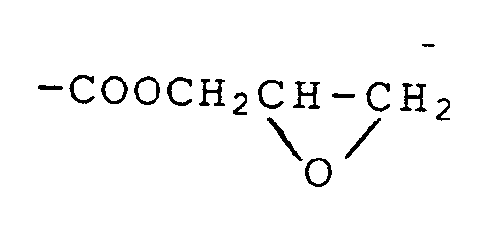


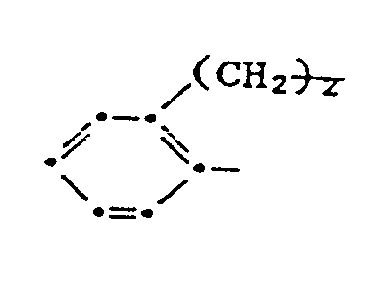

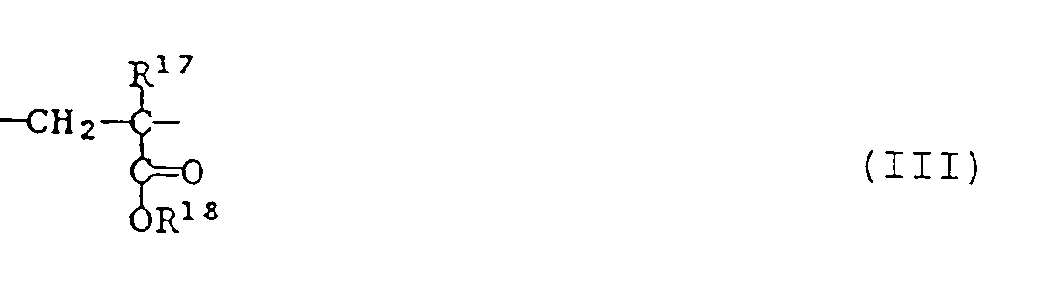


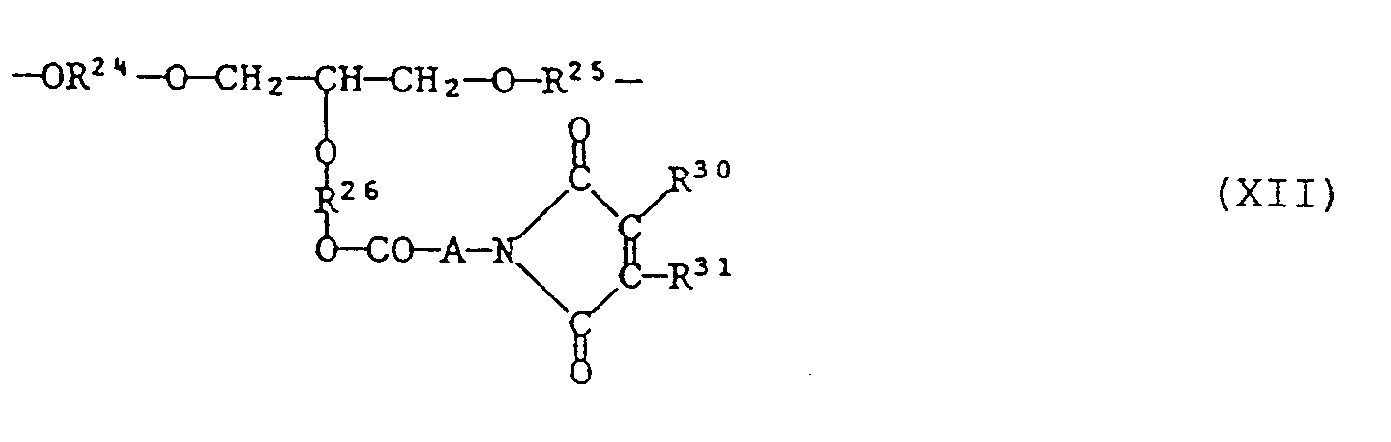
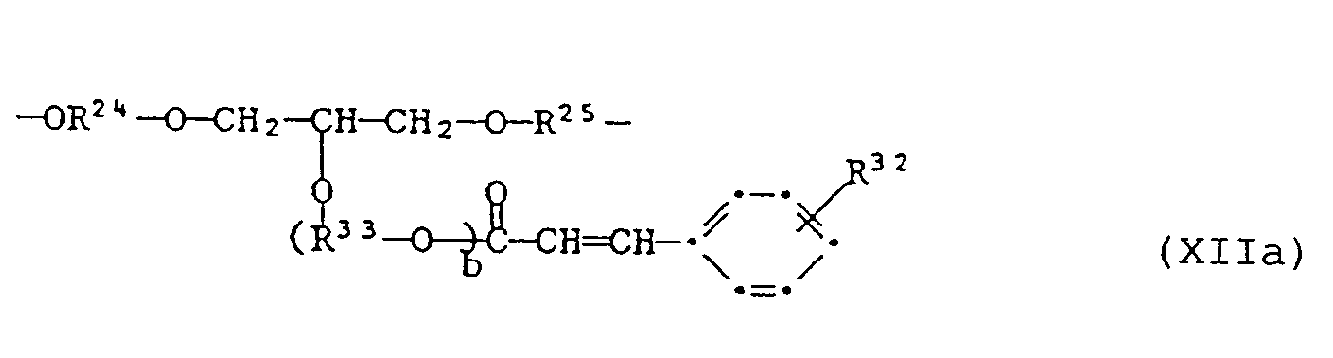


Applications Claiming Priority (2)
| Application Number | Priority Date | Filing Date | Title |
|---|---|---|---|
| CH364688 | 1988-09-30 | ||
| CH3646/88 | 1988-09-30 |
Publications (3)
| Publication Number | Publication Date |
|---|---|
| EP0362143A2 EP0362143A2 (fr) | 1990-04-04 |
| EP0362143A3 EP0362143A3 (en) | 1990-11-07 |
| EP0362143B1 true EP0362143B1 (fr) | 1995-11-15 |
Family
ID=4260462
Family Applications (1)
| Application Number | Title | Priority Date | Filing Date |
|---|---|---|---|
| EP89810720A Expired - Lifetime EP0362143B1 (fr) | 1988-09-30 | 1989-09-21 | Images en relief électriquement conductrices et anti-statiques, procédé pour leur fabrication, matériau d'enduction et polymères sensibles au rayonnement |
Country Status (5)
| Country | Link |
|---|---|
| US (1) | US5077156A (fr) |
| EP (1) | EP0362143B1 (fr) |
| JP (1) | JPH02180967A (fr) |
| CA (1) | CA1338966C (fr) |
| DE (1) | DE58909497D1 (fr) |
Families Citing this family (4)
| Publication number | Priority date | Publication date | Assignee | Title |
|---|---|---|---|---|
| DE59202440D1 (de) * | 1991-07-02 | 1995-07-13 | Ciba Geigy Ag | Verfahren zur Herstellung von elektrisch leitenden Schichten. |
| GB9418955D0 (en) * | 1994-09-21 | 1994-11-09 | Ciba Geigy Ag | Novel electroconductive composition |
| TWI744302B (zh) * | 2016-05-19 | 2021-11-01 | 日商捷恩智股份有限公司 | 聚合性組成物、液晶複合體、光學各向異性體、液晶顯示元件及其用途 |
| US11320263B2 (en) | 2019-01-25 | 2022-05-03 | Stanley Black & Decker Inc. | Laser level system |
Citations (4)
| Publication number | Priority date | Publication date | Assignee | Title |
|---|---|---|---|---|
| US3403165A (en) * | 1963-11-19 | 1968-09-24 | American Cyanamid Co | Tetrathiotetracene ion-radical salts |
| US4158730A (en) * | 1975-06-18 | 1979-06-19 | Ciba-Geigy Corporation | Crosslinkage polymeric compounds |
| EP0023988A2 (fr) * | 1979-08-09 | 1981-02-18 | International Business Machines Corporation | Utilisation d'un matériau organique conducteur de transfert de charge comme composition photorésistante sensible au rayon électronique et procédé de fabrication d'images photorésistantes positives et négatives |
| EP0285564A1 (fr) * | 1987-04-03 | 1988-10-05 | Ciba-Geigy Ag | Polymères et matériaux à mouler antistatiques et conducteurs |
Family Cites Families (9)
| Publication number | Priority date | Publication date | Assignee | Title |
|---|---|---|---|---|
| US3636048A (en) * | 1970-07-15 | 1972-01-18 | American Cyanamid Co | Chloronaphtho dithiole compounds and a method for their preparatio |
| US4152152A (en) * | 1973-10-04 | 1979-05-01 | Eastman Kodak Company | Additives for contrast control in organic photoconductor compositions and elements |
| CH612964A5 (fr) * | 1975-09-19 | 1979-08-31 | Ciba Geigy Ag | |
| US4106934A (en) * | 1976-06-14 | 1978-08-15 | Eastman Kodak Company | Photoconductive compositions and elements with charge transfer complexes |
| US4522754A (en) * | 1982-11-12 | 1985-06-11 | Ciba Geigy Corporation | Metallically conducting (2-fluoro-5,6,11,12-tetraselenotetracene)2 -bromide |
| US4601853A (en) * | 1984-02-13 | 1986-07-22 | Ciba-Geigy Corporation | (2-fluoro-5,6,11,12-tetraselenotetracene)2 chloride |
| CH662567A5 (de) * | 1984-03-23 | 1987-10-15 | Ciba Geigy Ag | In 2-stellung substituiertes 5,6,11,12-tetrathio- und 5,6,11,12-tetraselenotetracene, verfahren zu ihrer herstellung und ihre verwendung. |
| DE3429615C1 (de) * | 1984-08-11 | 1985-12-12 | Du Pont de Nemours (Deutschland) GmbH, 4000 Düsseldorf | Verfahren zur Erzeugung von aus Pulvern bestehenden Mustern |
| CH664963A5 (de) * | 1985-10-18 | 1988-04-15 | Ciba Geigy Ag | Difluorierte (5,6,11,12-tetraselenotetracen)2-halogenide, verfahren zu deren herstellung und deren verwendung. |
-
1989
- 1989-09-21 DE DE58909497T patent/DE58909497D1/de not_active Expired - Fee Related
- 1989-09-21 EP EP89810720A patent/EP0362143B1/fr not_active Expired - Lifetime
- 1989-09-25 US US07/411,947 patent/US5077156A/en not_active Expired - Fee Related
- 1989-09-25 CA CA000612798A patent/CA1338966C/fr not_active Expired - Fee Related
- 1989-09-29 JP JP1252523A patent/JPH02180967A/ja active Pending
Patent Citations (4)
| Publication number | Priority date | Publication date | Assignee | Title |
|---|---|---|---|---|
| US3403165A (en) * | 1963-11-19 | 1968-09-24 | American Cyanamid Co | Tetrathiotetracene ion-radical salts |
| US4158730A (en) * | 1975-06-18 | 1979-06-19 | Ciba-Geigy Corporation | Crosslinkage polymeric compounds |
| EP0023988A2 (fr) * | 1979-08-09 | 1981-02-18 | International Business Machines Corporation | Utilisation d'un matériau organique conducteur de transfert de charge comme composition photorésistante sensible au rayon électronique et procédé de fabrication d'images photorésistantes positives et négatives |
| EP0285564A1 (fr) * | 1987-04-03 | 1988-10-05 | Ciba-Geigy Ag | Polymères et matériaux à mouler antistatiques et conducteurs |
Also Published As
| Publication number | Publication date |
|---|---|
| JPH02180967A (ja) | 1990-07-13 |
| DE58909497D1 (de) | 1995-12-21 |
| EP0362143A3 (en) | 1990-11-07 |
| CA1338966C (fr) | 1997-03-04 |
| US5077156A (en) | 1991-12-31 |
| EP0362143A2 (fr) | 1990-04-04 |
Similar Documents
| Publication | Publication Date | Title |
|---|---|---|
| EP0285564B1 (fr) | Polymères et matériaux à mouler antistatiques et conducteurs | |
| DE69110922T2 (de) | Organisch elektrolumineszente Vorrichtung. | |
| DE69412568T2 (de) | Antistatisches mittel und verfahren zum unterdrücken von electrifizierung | |
| EP0450189B1 (fr) | Réserve négative stable à haute température et procédé d'obtention de structures en relief stables à la chaleur | |
| DE69327564T2 (de) | Elektrisch leitfähige Zusammensetzung | |
| EP0103225B1 (fr) | Photoréserve pour réaliser des structures en relief sur polymères résistant à la haute température | |
| JPH09120709A (ja) | 自己ドーピング機能を有する高分子導電体及びその製造方法 | |
| EP0382046A2 (fr) | Composition de réserve électroconductrice, procédé de formation et utilisation | |
| KR102613317B1 (ko) | 도전성 고분자 조성물, 피복품, 및 패턴 형성 방법 | |
| EP0362142B1 (fr) | Composition conductrice et antistatique | |
| DE69504115T2 (de) | Hitzebeständige, negativ-arbeitende Photoresistzusammensetzung, lichtempfindliches Substrat und Verfahren zur Herstellung eines negativen Musters | |
| EP0362143A2 (fr) | Images en relief électriquement conductrices et anti-statiques, procédé pour leur fabrication, matériau d'enduction et polymères sensibles au rayonnement | |
| US5153321A (en) | Antistatic and electrically conducting polymers and moulding materials | |
| EP0521826B1 (fr) | Procédé pour la fabrication de couches électroconductrices | |
| EP0362141B1 (fr) | Support électriquement conducteur et films polymères et leur procédé de fabrication | |
| EP0588759A1 (fr) | Dérivés de dithiopentacène, leur préparation et leur utilisation dans des complexes de transfer de charge | |
| EP0554219A1 (fr) | Composition de résine contenant des complexes à transfert de charges, leur préparation et leur application | |
| US5871670A (en) | Electroconductive composition | |
| DE60023001T2 (de) | Leitende polymere | |
| EP0023988A2 (fr) | Utilisation d'un matériau organique conducteur de transfert de charge comme composition photorésistante sensible au rayon électronique et procédé de fabrication d'images photorésistantes positives et négatives | |
| EP0344109A2 (fr) | Naphtacènes-5,12-dione substitués et leur utilisation | |
| DE2109624B2 (de) | Lichtempfindliches gemisch | |
| CA1339945C (fr) | Composition conductrice antistatique | |
| JP2007161794A (ja) | ポリアニリン、ポリアニリン組成物及び成形体 | |
| DE4009309A1 (de) | Polykondensationsprodukte, verfahren zu ihrer herstellung und ihre verwendung |
Legal Events
| Date | Code | Title | Description |
|---|---|---|---|
| PUAI | Public reference made under article 153(3) epc to a published international application that has entered the european phase |
Free format text: ORIGINAL CODE: 0009012 |
|
| 17P | Request for examination filed |
Effective date: 19890923 |
|
| AK | Designated contracting states |
Kind code of ref document: A2 Designated state(s): CH DE FR GB IT LI |
|
| PUAL | Search report despatched |
Free format text: ORIGINAL CODE: 0009013 |
|
| AK | Designated contracting states |
Kind code of ref document: A3 Designated state(s): CH DE FR GB IT LI |
|
| 17Q | First examination report despatched |
Effective date: 19930503 |
|
| GRAA | (expected) grant |
Free format text: ORIGINAL CODE: 0009210 |
|
| ITF | It: translation for a ep patent filed | ||
| AK | Designated contracting states |
Kind code of ref document: B1 Designated state(s): CH DE FR GB IT LI |
|
| REF | Corresponds to: |
Ref document number: 58909497 Country of ref document: DE Date of ref document: 19951221 |
|
| GBT | Gb: translation of ep patent filed (gb section 77(6)(a)/1977) |
Effective date: 19960108 |
|
| ET | Fr: translation filed | ||
| PGFP | Annual fee paid to national office [announced via postgrant information from national office to epo] |
Ref country code: FR Payment date: 19960730 Year of fee payment: 8 |
|
| PGFP | Annual fee paid to national office [announced via postgrant information from national office to epo] |
Ref country code: GB Payment date: 19960816 Year of fee payment: 8 |
|
| PGFP | Annual fee paid to national office [announced via postgrant information from national office to epo] |
Ref country code: DE Payment date: 19960819 Year of fee payment: 8 |
|
| PLBE | No opposition filed within time limit |
Free format text: ORIGINAL CODE: 0009261 |
|
| STAA | Information on the status of an ep patent application or granted ep patent |
Free format text: STATUS: NO OPPOSITION FILED WITHIN TIME LIMIT |
|
| PGFP | Annual fee paid to national office [announced via postgrant information from national office to epo] |
Ref country code: CH Payment date: 19961001 Year of fee payment: 8 |
|
| 26N | No opposition filed | ||
| REG | Reference to a national code |
Ref country code: CH Ref legal event code: PFA Free format text: CIBA-GEIGY AG TRANSFER- NOVARTIS AG |
|
| PG25 | Lapsed in a contracting state [announced via postgrant information from national office to epo] |
Ref country code: GB Free format text: LAPSE BECAUSE OF NON-PAYMENT OF DUE FEES Effective date: 19970921 |
|
| PG25 | Lapsed in a contracting state [announced via postgrant information from national office to epo] |
Ref country code: LI Free format text: LAPSE BECAUSE OF NON-PAYMENT OF DUE FEES Effective date: 19970930 Ref country code: FR Free format text: THE PATENT HAS BEEN ANNULLED BY A DECISION OF A NATIONAL AUTHORITY Effective date: 19970930 Ref country code: CH Free format text: LAPSE BECAUSE OF NON-PAYMENT OF DUE FEES Effective date: 19970930 |
|
| GBPC | Gb: european patent ceased through non-payment of renewal fee |
Effective date: 19970921 |
|
| REG | Reference to a national code |
Ref country code: CH Ref legal event code: PL |
|
| PG25 | Lapsed in a contracting state [announced via postgrant information from national office to epo] |
Ref country code: DE Free format text: LAPSE BECAUSE OF NON-PAYMENT OF DUE FEES Effective date: 19980603 |
|
| REG | Reference to a national code |
Ref country code: FR Ref legal event code: ST |
|
| PG25 | Lapsed in a contracting state [announced via postgrant information from national office to epo] |
Ref country code: IT Free format text: LAPSE BECAUSE OF NON-PAYMENT OF DUE FEES;WARNING: LAPSES OF ITALIAN PATENTS WITH EFFECTIVE DATE BEFORE 2007 MAY HAVE OCCURRED AT ANY TIME BEFORE 2007. THE CORRECT EFFECTIVE DATE MAY BE DIFFERENT FROM THE ONE RECORDED. Effective date: 20050921 |