EP0364123B1 - Antagonistes des récepteurs muscariniques - Google Patents
Antagonistes des récepteurs muscariniques Download PDFInfo
- Publication number
- EP0364123B1 EP0364123B1 EP89309697A EP89309697A EP0364123B1 EP 0364123 B1 EP0364123 B1 EP 0364123B1 EP 89309697 A EP89309697 A EP 89309697A EP 89309697 A EP89309697 A EP 89309697A EP 0364123 B1 EP0364123 B1 EP 0364123B1
- Authority
- EP
- European Patent Office
- Prior art keywords
- dichloromethane
- alkyl
- concentrated
- vacuo
- preparation
- Prior art date
- Legal status (The legal status is an assumption and is not a legal conclusion. Google has not performed a legal analysis and makes no representation as to the accuracy of the status listed.)
- Expired - Lifetime
Links
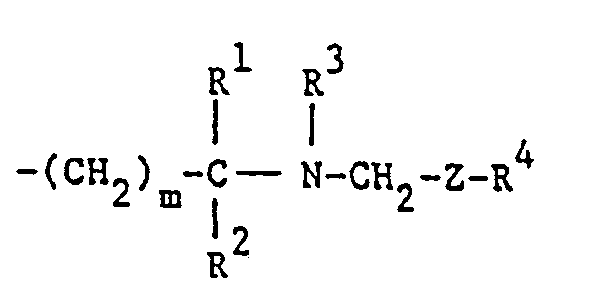
- 0 CC(*)(*)N(C)* Chemical compound CC(*)(*)N(C)* 0.000 description 6
- XVHYSMVSLDIUCM-UHFFFAOYSA-N Cc(cc1F)ccc1I Chemical compound Cc(cc1F)ccc1I XVHYSMVSLDIUCM-UHFFFAOYSA-N 0.000 description 1
- AFTNTUHLDNHBJH-UHFFFAOYSA-N NC1C(C2)C2C1 Chemical compound NC1C(C2)C2C1 AFTNTUHLDNHBJH-UHFFFAOYSA-N 0.000 description 1
Classifications
-
- C—CHEMISTRY; METALLURGY
- C07—ORGANIC CHEMISTRY
- C07D—HETEROCYCLIC COMPOUNDS
- C07D307/00—Heterocyclic compounds containing five-membered rings having one oxygen atom as the only ring hetero atom
- C07D307/77—Heterocyclic compounds containing five-membered rings having one oxygen atom as the only ring hetero atom ortho- or peri-condensed with carbocyclic rings or ring systems
- C07D307/78—Benzo [b] furans; Hydrogenated benzo [b] furans
- C07D307/79—Benzo [b] furans; Hydrogenated benzo [b] furans with only hydrogen atoms, hydrocarbon or substituted hydrocarbon radicals, directly attached to carbon atoms of the hetero ring
-
- A—HUMAN NECESSITIES
- A61—MEDICAL OR VETERINARY SCIENCE; HYGIENE
- A61P—SPECIFIC THERAPEUTIC ACTIVITY OF CHEMICAL COMPOUNDS OR MEDICINAL PREPARATIONS
- A61P25/00—Drugs for disorders of the nervous system
- A61P25/02—Drugs for disorders of the nervous system for peripheral neuropathies
-
- C—CHEMISTRY; METALLURGY
- C07—ORGANIC CHEMISTRY
- C07C—ACYCLIC OR CARBOCYCLIC COMPOUNDS
- C07C237/00—Carboxylic acid amides, the carbon skeleton of the acid part being further substituted by amino groups
- C07C237/02—Carboxylic acid amides, the carbon skeleton of the acid part being further substituted by amino groups having the carbon atoms of the carboxamide groups bound to acyclic carbon atoms of the carbon skeleton
- C07C237/20—Carboxylic acid amides, the carbon skeleton of the acid part being further substituted by amino groups having the carbon atoms of the carboxamide groups bound to acyclic carbon atoms of the carbon skeleton the carbon skeleton containing six-membered aromatic rings
-
- C—CHEMISTRY; METALLURGY
- C07—ORGANIC CHEMISTRY
- C07C—ACYCLIC OR CARBOCYCLIC COMPOUNDS
- C07C237/00—Carboxylic acid amides, the carbon skeleton of the acid part being further substituted by amino groups
- C07C237/24—Carboxylic acid amides, the carbon skeleton of the acid part being further substituted by amino groups having the carbon atom of at least one of the carboxamide groups bound to a carbon atom of a ring other than a six-membered aromatic ring of the carbon skeleton
-
- C—CHEMISTRY; METALLURGY
- C07—ORGANIC CHEMISTRY
- C07C—ACYCLIC OR CARBOCYCLIC COMPOUNDS
- C07C255/00—Carboxylic acid nitriles
- C07C255/01—Carboxylic acid nitriles having cyano groups bound to acyclic carbon atoms
- C07C255/32—Carboxylic acid nitriles having cyano groups bound to acyclic carbon atoms having cyano groups bound to acyclic carbon atoms of a carbon skeleton containing at least one six-membered aromatic ring
- C07C255/42—Carboxylic acid nitriles having cyano groups bound to acyclic carbon atoms having cyano groups bound to acyclic carbon atoms of a carbon skeleton containing at least one six-membered aromatic ring the carbon skeleton being further substituted by singly-bound nitrogen atoms, not being further bound to other hetero atoms
-
- C—CHEMISTRY; METALLURGY
- C07—ORGANIC CHEMISTRY
- C07C—ACYCLIC OR CARBOCYCLIC COMPOUNDS
- C07C255/00—Carboxylic acid nitriles
- C07C255/45—Carboxylic acid nitriles having cyano groups bound to carbon atoms of rings other than six-membered aromatic rings
- C07C255/47—Carboxylic acid nitriles having cyano groups bound to carbon atoms of rings other than six-membered aromatic rings to carbon atoms of rings being part of condensed ring systems
-
- C—CHEMISTRY; METALLURGY
- C07—ORGANIC CHEMISTRY
- C07C—ACYCLIC OR CARBOCYCLIC COMPOUNDS
- C07C255/00—Carboxylic acid nitriles
- C07C255/49—Carboxylic acid nitriles having cyano groups bound to carbon atoms of six-membered aromatic rings of a carbon skeleton
- C07C255/58—Carboxylic acid nitriles having cyano groups bound to carbon atoms of six-membered aromatic rings of a carbon skeleton containing cyano groups and singly-bound nitrogen atoms, not being further bound to other hetero atoms, bound to the carbon skeleton
-
- C—CHEMISTRY; METALLURGY
- C07—ORGANIC CHEMISTRY
- C07C—ACYCLIC OR CARBOCYCLIC COMPOUNDS
- C07C311/00—Amides of sulfonic acids, i.e. compounds having singly-bound oxygen atoms of sulfo groups replaced by nitrogen atoms, not being part of nitro or nitroso groups
- C07C311/01—Sulfonamides having sulfur atoms of sulfonamide groups bound to acyclic carbon atoms
- C07C311/02—Sulfonamides having sulfur atoms of sulfonamide groups bound to acyclic carbon atoms of an acyclic saturated carbon skeleton
- C07C311/08—Sulfonamides having sulfur atoms of sulfonamide groups bound to acyclic carbon atoms of an acyclic saturated carbon skeleton having the nitrogen atom of at least one of the sulfonamide groups bound to a carbon atom of a six-membered aromatic ring
-
- C—CHEMISTRY; METALLURGY
- C07—ORGANIC CHEMISTRY
- C07D—HETEROCYCLIC COMPOUNDS
- C07D213/00—Heterocyclic compounds containing six-membered rings, not condensed with other rings, with one nitrogen atom as the only ring hetero atom and three or more double bonds between ring members or between ring members and non-ring members
- C07D213/02—Heterocyclic compounds containing six-membered rings, not condensed with other rings, with one nitrogen atom as the only ring hetero atom and three or more double bonds between ring members or between ring members and non-ring members having three double bonds between ring members or between ring members and non-ring members
- C07D213/04—Heterocyclic compounds containing six-membered rings, not condensed with other rings, with one nitrogen atom as the only ring hetero atom and three or more double bonds between ring members or between ring members and non-ring members having three double bonds between ring members or between ring members and non-ring members having no bond between the ring nitrogen atom and a non-ring member or having only hydrogen or carbon atoms directly attached to the ring nitrogen atom
- C07D213/24—Heterocyclic compounds containing six-membered rings, not condensed with other rings, with one nitrogen atom as the only ring hetero atom and three or more double bonds between ring members or between ring members and non-ring members having three double bonds between ring members or between ring members and non-ring members having no bond between the ring nitrogen atom and a non-ring member or having only hydrogen or carbon atoms directly attached to the ring nitrogen atom with substituted hydrocarbon radicals attached to ring carbon atoms
- C07D213/36—Radicals substituted by singly-bound nitrogen atoms
- C07D213/38—Radicals substituted by singly-bound nitrogen atoms having only hydrogen or hydrocarbon radicals attached to the substituent nitrogen atom
-
- C—CHEMISTRY; METALLURGY
- C07—ORGANIC CHEMISTRY
- C07D—HETEROCYCLIC COMPOUNDS
- C07D317/00—Heterocyclic compounds containing five-membered rings having two oxygen atoms as the only ring hetero atoms
- C07D317/08—Heterocyclic compounds containing five-membered rings having two oxygen atoms as the only ring hetero atoms having the hetero atoms in positions 1 and 3
- C07D317/44—Heterocyclic compounds containing five-membered rings having two oxygen atoms as the only ring hetero atoms having the hetero atoms in positions 1 and 3 ortho- or peri-condensed with carbocyclic rings or ring systems
- C07D317/46—Heterocyclic compounds containing five-membered rings having two oxygen atoms as the only ring hetero atoms having the hetero atoms in positions 1 and 3 ortho- or peri-condensed with carbocyclic rings or ring systems condensed with one six-membered ring
- C07D317/48—Methylenedioxybenzenes or hydrogenated methylenedioxybenzenes, unsubstituted on the hetero ring
- C07D317/50—Methylenedioxybenzenes or hydrogenated methylenedioxybenzenes, unsubstituted on the hetero ring with only hydrogen atoms, hydrocarbon or substituted hydrocarbon radicals, directly attached to atoms of the carbocyclic ring
- C07D317/58—Radicals substituted by nitrogen atoms
-
- C—CHEMISTRY; METALLURGY
- C07—ORGANIC CHEMISTRY
- C07D—HETEROCYCLIC COMPOUNDS
- C07D319/00—Heterocyclic compounds containing six-membered rings having two oxygen atoms as the only ring hetero atoms
- C07D319/10—1,4-Dioxanes; Hydrogenated 1,4-dioxanes
- C07D319/14—1,4-Dioxanes; Hydrogenated 1,4-dioxanes condensed with carbocyclic rings or ring systems
- C07D319/16—1,4-Dioxanes; Hydrogenated 1,4-dioxanes condensed with carbocyclic rings or ring systems condensed with one six-membered ring
-
- C—CHEMISTRY; METALLURGY
- C07—ORGANIC CHEMISTRY
- C07C—ACYCLIC OR CARBOCYCLIC COMPOUNDS
- C07C2602/00—Systems containing two condensed rings
- C07C2602/02—Systems containing two condensed rings the rings having only two atoms in common
- C07C2602/04—One of the condensed rings being a six-membered aromatic ring
- C07C2602/08—One of the condensed rings being a six-membered aromatic ring the other ring being five-membered, e.g. indane
-
- C—CHEMISTRY; METALLURGY
- C07—ORGANIC CHEMISTRY
- C07C—ACYCLIC OR CARBOCYCLIC COMPOUNDS
- C07C2603/00—Systems containing at least three condensed rings
- C07C2603/02—Ortho- or ortho- and peri-condensed systems
- C07C2603/04—Ortho- or ortho- and peri-condensed systems containing three rings
- C07C2603/38—Ortho- or ortho- and peri-condensed systems containing three rings containing rings with at least nine members
Definitions
- the compounds of the invention are muscarinic receptor antagonists which are selective for smooth muscle muscarinic sites over cardiac muscarinic sites and do not have any significant antihistaminic activity.
- the compounds are useful in the treatment of diseases associated with altered motility and/or tone of smooth muscle which can, for example, be found in the gut, trachea and bladder.
- diseases include irritable bowel syndrome, diverticular disease, urinary incontinence, oesophageal achalasia and chronic obstructive airways disease.
- Halo means F, Cl, Br or I.
- Alkyl and alkoxy groups of 3 or 4 carbon atoms can be straight or branched chain.
- the preferred alkyl and alkoxy groups are methyl, ethyl, methoxy and ethoxy.
- the preferred compounds are those of the formula (IA).
- Z is a direct link, -CH 2 -, -CH 2 0- or -CH 2 S-
- the compounds of the formula (IA) and (IB) are preparable from the compounds of the formulae: and their pharmaceutically acceptable salts, where X and Y are as defined for formulae (IA) and (IB). These compounds are not only useful intermediates to the compounds of the formulae (IA) and (IB), but are also muscarinic receptor antagonists.
- the pharmaceutically acceptable salts of the compounds of formula (I) include acid addition salts such as the hydrochloride, hydrobromide, sulphate or bisulphate, phosphate or hydrogen phosphate, acetate, besylate, citrate, fumarate, gluconate, lactate, maleate, mesylate, succinate and tartrate salts.
- acid addition salts such as the hydrochloride, hydrobromide, sulphate or bisulphate, phosphate or hydrogen phosphate, acetate, besylate, citrate, fumarate, gluconate, lactate, maleate, mesylate, succinate and tartrate salts.
- the compounds of the formulae (IA) and (IB) can be prepared by a number of routes, including the following :
- This route involves the hydrolysis of the nitriles of the formula (IIA) and (IIB) in a conventional manner, e.g. using concentrated aqueous mineral acid (typically concentrated aqueous H 2 S0 4 ), aqueous alkali (e.g. aqueous potassium hydroxide) or alkaline hydrogen peroxide (typically H 2 O 2 /NaOH).
- concentrated aqueous mineral acid typically concentrated aqueous H 2 S0 4
- aqueous alkali e.g. aqueous potassium hydroxide
- alkaline hydrogen peroxide typically H 2 O 2 /NaOH
- the hydrolysis is preferably carried out using concentrated sulphuric acid, preferably 80-98% sulphuric acid and most preferably 90% H 2 S0 4 , with heating at e.g. 80-110°C and most preferably at about 100°C.
- the product (IA) or (IB) can then be isolated and purified by conventional procedures.
- any cyano substituents on R 4 are also likely to be hydrolysed to carbamoyl or carboxy, any alkanoyloxy substituents to hydroxy, and any alkoxycarbonyl substituents to carboxy.
- R 1 , R 2 , R 3 , R 4 , m and Z are as defined for formulae (IA) and (IB) and Q is a leaving group, e.g. Br, Cl, I, C 1 -C 4 alkanesulfonyloxy (e.g. methanesulfonyloxy), benzenesulfonyloxy, toluenesulfonyloxy (e.g. p-toluenesulfonyloxy) or trifluoromethanesulfonyloxy.
- Q is Cl, Br, I or methanesulfonyloxy.
- the reaction is preferably carried out in the presence of an acid acceptor such as sodium bicarbonate, sodium or potassium carbonate or triethylamine, and in a suitable organic solvent, e.g. acetonitrile or dioxan, at up to the reflux temperature.
- an acid acceptor such as sodium bicarbonate, sodium or potassium carbonate or triethylamine
- a suitable organic solvent e.g. acetonitrile or dioxan
- the starting materials (IVA) and (IVB) can be prepared by the debenzylation of the corresponding compounds of the formula (IA) and (IB) in which Z is a direct link and R 4 is phenyl, these being preparable, of course, by Route A.
- the debenzylation is typically carried out by catalytic hydrogenation, e.g. using H 2 /Pd/C in ethanol, or by the use of formic acid in methanol in the presence of Pd/C.
- This route can be illustrated as follows :
- R 1 , R2, R 3 , R4, Z and m are as defined for formulae (IA) and (IB) and Q is a leaving group.
- the reaction is carried out conventionally, e.g. in an organic solvent such as toluene at 60-110°C, preferably under reflux, and in the presence of a strong base such as sodium hydride or sodamide.
- organic solvent such as toluene at 60-110°C, preferably under reflux
- a strong base such as sodium hydride or sodamide.
- Q is preferably Cl, Br or I.
- the starting materials can be obtained conventionally (see e.g. Route A).
- the compounds of the formulae (IA) and (IB) in which Z is CH 2 and R 4 is 2- or 4-pyridyl or pyrazinyl can also be prepared by reacting a compound of the formula (IVA) or (IVB) (see Route B) with 2- or 4-vinylpyridine or 2-vinylpyrazine.
- the reaction is typically carried out in a suitable organic solvent, e.g. dioxan, with heating, typically at about 60°-110°C and preferably under reflux.
- a basic preferably a strong base which is soluble in an organic solvent, such as N-benzyltrimethylammonium hydroxide ["Triton B”]
- acidic preferably a C l -C 4 alkanoic acid
- the selectivity of the compounds as muscarinic receptor antagonists can be measured as follows.
- Dose-response curves to either acetylcholine (ileum) or carbachol (trachea, bladder and right atrium) are determined using a 1-5 minute contact time for each dose of agonist until the maximum response is achieved.
- the organ bath is drained and refilled with physiological salt solution containing the lowest dose of the test compound.
- the test compound is allowed to equilibrate with the tissue for 20 minutes and the agonist dose-response curve is repeated until the maximum response is obtained.
- the organ bath is drained and refilled with physiological salt solution containing the second concentration of test compound and the above procedure is repeated. Typically four concentrations of the test compound are evaluated on each tissue.
- the concentration of the test compound which causes a doubling of the agonist concentration to produce the original response is determined (pA 2 value - Arunlakshana and Schild 1959), Brit. J. Pharmacol., 14, 48-58).
- tissue selectivity for muscarinic receptor antagonists is determined.
- Activity against agonist induced bronchoconstriction, gut or bladder contractility in comparison with changes in heart rate is determined in the anaesthetised dog. Oral activity is assessed in the conscious dog determining compound effects on, for example, heart rate, pupil diameter and gut motility.
- Compound affinity for other cholinergic sites is assessed in the mouse after either intravenous or intraperitoneal administration.
- the dose to cause a doubling of pupil size is determined as well as the dose to inhibit by 50% the salivation and tremor responses to intravenous oxotremorine.
- oral dosages of the compounds will generally be in the range of from 3.5 to 350 mg daily for an average adult patient (70 kg).
- individual tablets or capsules will typically contain from 1 to 250 mg of active compound, in a suitable pharmaceutically acceptable vehicle orcarrierfor administration singly or in multiple doses, once or several times a day.
- Dosages for intravenous administration will typically be within the range 0.35 to 35 mg per single dose as required.
- the compounds of the formula (I) can be administered alone, but will generally be administered in admixture with a pharmaceutical carrier selected with regard to the intended route of administration and standard pharmaceutical practice.
- a pharmaceutical carrier selected with regard to the intended route of administration and standard pharmaceutical practice.
- they may be administered orally in the form of tablets containing such excipients as starch or lactose, or in capsules or ovules either alone or in admixture with excipients, or in the form of elixirs or suspensions containing flavouring or colouring agents.
- They may be injected parenterally, for example, intravenously, intramuscularly or subcutaneously.
- parenteral administration they are best used in the form of a sterile aqueous solution which may contain other substances, for example, enough salts or glucose to make the solution isotonic with blood.
- the invention provides a pharmaceutical composition
- a pharmaceutical composition comprising a compound of the formula (I), or a pharmaceutically acceptable salt thereof, together with a pharmaceutically acceptable diluent or carrier.
- the invention also includes a compound of the formula (I) or a pharmaceutically acceptable salt thereof, for use as a medicament, particularly for use in the treatment of irritable bowel syndrome.
- the invention further includes the use of a compound of the formula (I), or of a pharmaceutically acceptable salt thereof, for the manufacture of a medicamentfor the treatment of diseases associated with the altered motility and/or tone of smooth muscle, such as irritable bowel syndrome, diverticular disease, urinary incontinence, oesophageal achalasia and chronic obstructive airways disease.
- diseases associated with the altered motility and/or tone of smooth muscle such as irritable bowel syndrome, diverticular disease, urinary incontinence, oesophageal achalasia and chronic obstructive airways disease.
- the combined dichloromethane extracts were dried (MgS0 4 ) and concentrated in vacuo to give an oil which was purified by column chromatography on silica eluting with dichloromethane containing methanol (0% up to 5%).
- the product-containing fractions were combined and concentrated in vacuo to give a foam which was further purified by column chromatography on alumina eluting with dichloromethane containing methanol (0% up to 5%).
- the product-containing fractions were combined and concentrated in vacuo to give the title compound as a foam, yield 0.11 g.
- the combined dichloromethane extracts were concentrated in vacuo to give an oil which was purified by column chromatography on silica eluting with dichloromethane containing methanol (0% up to 10%).
- the product-containing fractions were combined and concentrated in vacuo to give a foam which was further purified by column chromatography on alumina eluting with dichloromethane containing methanol (0% up to 10%).
- the product-containing fractions were combined and concentrated in vacuo to give the title compound as a foam, yield 0.09 g .
- the combined dichloromethane extracts were dried (MgS0 4 ) and concentrated in vacuo to give an oil which was purified by column chromatography on silica eluting with dichloromethane containing methanol (0% up to 6%).
- the product-containing fractions were combined and concentrated in vacuo to give an oil which was further purified by column chromatography on silica eluting with dichloromethane containing methanol (0% up to 4%).
- the product-containing fractions were combined and concentrated in vacuo to give the title compound as an oil, yield 0.22 g.
- the gum was purified by column chromatogrpahy on silica eluting with hexane containing dichloromethane (25% up to 100%) followed by dichloromethane containing methanol (0% up to 5%). The product-containing fractions were combined and concentrated in vacuo to give the title compound as a gum, yield, 0.16 g.
- the gum was purified by column chromatography on silica eluting with hexane containing dichloromethane (25% up to 100%) and then with dichloromethane containing methanol (0% up to 5%). The product-containing fractions were combined and concentrated in vacuo to give the title compound as a viscous gum, yield, 0.25 g .
- the resulting colourless oil was purified by column chromatography on silica gel eluting with dichloromethane containing methanol (0% up to 5%). The product-containing fractions were combined and concentrated in vacuo. The resulting gum was crystallised from hexane/ether to give the title compound, yield 25 g, m.p. 75-77°.
- Phosphorus tribromide (3.5 ml) was added, dropwise, to a solution of 5-(2-hydroxyethyl)indane (14.0 g) (FR-A-2139628) in carbon tetrachloride (100 ml). The mixture was stirred at room temperature for 0.5 hour and then heated under reflux for 2 hours. Ice (100 g) was added and the mixture partitioned between dichloromethane and 10% aqueous sodium carbonate. The layers were separated and the aqueous layer extracted with dichloromethane (2 x 100 ml).
- Phosphorus tribromide (1.3 ml) was added, dropwise, to a solution of 4-chlorophenethyl alcohol (5.0 g) in carbon tetrachloride (30 ml). The mixture was stirred at room temperature for 10 minutes then heated under reflux for 2 hours. Ice (50 g) was added and the mixture partitioned between dichloromethane (50 ml) and 10% aqueous sodium carbonate (50 ml). The layers were separated and the aqueous layer extracted with dichloromethane (2 x 50 ml).
- Methanesulphonyl chloride (50.4 g) was added dropwise to a stirred solution of 4-aminophenethyl alcohol (27.44 g) in dry pyridine (300 ml) at 0° and the solution was stirred at 0° for 30 minutes and then at room temperature for 2.5 hours. It was then poured into water and the solid was filtered off, washed with water, dried and crystallised from ethyl acetate to give the title compound (39.0 g, 66%), m.p. 136-137°.
- Phosphorus tribromide (0.37 g) was added to a solution of 5-(2-hydroxyethyl)-2,3-dihydrobenzofuran (0.612 g - see Preparation 19) in carbon tetrachloride (3 ml) and the mixture heated under reflux for 3 hours. On cooling to room temperature, the mixture was partitioned between 10% aqueous sodium carbonate (20 ml) and dichloromethane (20 ml). The layers were separated and the aqueous layer extracted with dichloromethane (2 x 10 ml). The combined dichloromethane extracts were dried (MgS0 4 ) and concentrated in vacuo to give the title compound as an oil which crystallised on standing, yield 0.584 g, m.p. 60-62°.
- Phosphorus tribromide (1.42 g) was added, dropwise, to a solution of methyl 4-(2-hydroxyethyl)phenylacetate (2.7 g - see Preparation 21) in carbon tetrachloride (20 ml) at 0°.
- the addition was complete, the mixture was allowed to warm to room temperature and then heated under reflux for 2 hours. Ice (100 g) was added and the mixture was partitioned between dichloromethane (50 ml) and saturated aqueous sodium bicarbonate (50 ml). The layers were separated and the aqueous layer extracted with dichloromethane (3 x 50 ml).
- the dichloromethane layer was dried (Na 2 S0 4 ) and concentrated in vacuo to give a gum which was purified by column chromatography on silica eluting with hexane containing dichloromethane (25% up to 40%) and then with dichloromethane containing methanol (0% up to 5%). The product-containing fractions were combined and concentrated in vacuo to give the title compound as a gum, yield, 0.25 g.
Landscapes
- Chemical & Material Sciences (AREA)
- Organic Chemistry (AREA)
- Health & Medical Sciences (AREA)
- Animal Behavior & Ethology (AREA)
- Public Health (AREA)
- Neurosurgery (AREA)
- Biomedical Technology (AREA)
- Chemical Kinetics & Catalysis (AREA)
- General Chemical & Material Sciences (AREA)
- Medicinal Chemistry (AREA)
- Nuclear Medicine, Radiotherapy & Molecular Imaging (AREA)
- Bioinformatics & Cheminformatics (AREA)
- Pharmacology & Pharmacy (AREA)
- Life Sciences & Earth Sciences (AREA)
- Engineering & Computer Science (AREA)
- General Health & Medical Sciences (AREA)
- Neurology (AREA)
- Veterinary Medicine (AREA)
- Pharmaceuticals Containing Other Organic And Inorganic Compounds (AREA)
- Acyclic And Carbocyclic Compounds In Medicinal Compositions (AREA)
- Organic Low-Molecular-Weight Compounds And Preparation Thereof (AREA)
- Medicines That Contain Protein Lipid Enzymes And Other Medicines (AREA)
- Pyridine Compounds (AREA)
- Pyrane Compounds (AREA)
- Heterocyclic Compounds That Contain Two Or More Ring Oxygen Atoms (AREA)
- Furan Compounds (AREA)
- Steroid Compounds (AREA)
- Hydrogenated Pyridines (AREA)
Claims (13)



Priority Applications (1)
| Application Number | Priority Date | Filing Date | Title |
|---|---|---|---|
| AT89309697T ATE64373T1 (de) | 1988-10-04 | 1989-09-22 | Muscarin-rezeptor-antagonisten. |
Applications Claiming Priority (2)
| Application Number | Priority Date | Filing Date | Title |
|---|---|---|---|
| GB888823203A GB8823203D0 (en) | 1988-10-04 | 1988-10-04 | Therapeutic agents |
| GB8823203 | 1988-10-04 |
Publications (2)
| Publication Number | Publication Date |
|---|---|
| EP0364123A1 EP0364123A1 (fr) | 1990-04-18 |
| EP0364123B1 true EP0364123B1 (fr) | 1991-06-12 |
Family
ID=10644648
Family Applications (1)
| Application Number | Title | Priority Date | Filing Date |
|---|---|---|---|
| EP89309697A Expired - Lifetime EP0364123B1 (fr) | 1988-10-04 | 1989-09-22 | Antagonistes des récepteurs muscariniques |
Country Status (19)
| Country | Link |
|---|---|
| US (2) | US5219871A (fr) |
| EP (1) | EP0364123B1 (fr) |
| JP (1) | JPH0653716B2 (fr) |
| KR (1) | KR900006276A (fr) |
| CN (1) | CN1041583A (fr) |
| AT (1) | ATE64373T1 (fr) |
| AU (1) | AU4258389A (fr) |
| CA (1) | CA1338416C (fr) |
| DD (1) | DD284874A5 (fr) |
| DE (1) | DE68900117D1 (fr) |
| DK (1) | DK485489A (fr) |
| ES (1) | ES2031691T3 (fr) |
| FI (1) | FI894675A7 (fr) |
| GB (1) | GB8823203D0 (fr) |
| GR (1) | GR3002140T3 (fr) |
| IE (1) | IE60447B1 (fr) |
| IL (1) | IL91817A0 (fr) |
| NO (1) | NO893939L (fr) |
| PT (1) | PT91871B (fr) |
Families Citing this family (10)
| Publication number | Priority date | Publication date | Assignee | Title |
|---|---|---|---|---|
| US5236956A (en) * | 1988-11-04 | 1993-08-17 | Kabi Pharmacia Aktiebolag | Compounds for the treatment of urinary incontinence |
| US5340826A (en) * | 1993-02-04 | 1994-08-23 | Pfizer Inc. | Pharmaceutical agents for treatment of urinary incontinence |
| US6861053B1 (en) * | 1999-08-11 | 2005-03-01 | Cedars-Sinai Medical Center | Methods of diagnosing or treating irritable bowel syndrome and other disorders caused by small intestinal bacterial overgrowth |
| US7048906B2 (en) | 1995-05-17 | 2006-05-23 | Cedars-Sinai Medical Center | Methods of diagnosing and treating small intestinal bacterial overgrowth (SIBO) and SIBO-related conditions |
| US6562629B1 (en) | 1999-08-11 | 2003-05-13 | Cedars-Sinai Medical Center | Method of diagnosing irritable bowel syndrome and other disorders caused by small intestinal bacterial overgrowth by detecting the presence of anti-saccharomyces cerivisiae antibodies (asca) in human serum |
| CN1049432C (zh) * | 1996-05-20 | 2000-02-16 | 中国石油化工总公司 | 吗啉化合物的制备方法 |
| US5760246A (en) | 1996-12-17 | 1998-06-02 | Biller; Scott A. | Conformationally restricted aromatic inhibitors of microsomal triglyceride transfer protein and method |
| CN1268938A (zh) * | 1997-07-24 | 2000-10-04 | 三菱东京制药株式会社 | 氨基环烷烃化合物 |
| GB0427965D0 (en) * | 2004-12-22 | 2005-01-26 | Cambridge Display Technology O | Process for the synthesis of arylfluorenes and analogues thereof |
| CN102030682A (zh) * | 2010-11-02 | 2011-04-27 | 常州康普药业有限公司 | 溴乙基二苯乙腈的制备方法 |
Family Cites Families (9)
| Publication number | Priority date | Publication date | Assignee | Title |
|---|---|---|---|---|
| CA795330A (en) * | 1968-09-24 | A. Davis Martin | Dibenzocycloheptadiene-5-carboxamide derivatives | |
| NL302258A (fr) * | 1962-12-19 | |||
| GB1129955A (en) * | 1966-03-03 | 1968-10-09 | Wyeth John & Brother Ltd | Unsaturated nitriles and esters and derivatives thereof |
| US4335122A (en) * | 1981-03-18 | 1982-06-15 | Hoechst-Roussel Pharmaceuticals Inc. | Dihydro-dibenzoxepines-thiepines and -morphanthridones, compositions and use |
| US4552982A (en) * | 1983-08-01 | 1985-11-12 | Eli Lilly And Company | Synthesis of 9-carbamoyl-9-(3-aminopropyl)fluorenes |
| DE3603032A1 (de) * | 1986-01-31 | 1987-08-06 | Basf Ag | Basisch substituierte phenylacetonitrile, ihre herstellung und diese enthaltende arzneimittel |
| HU200591B (en) * | 1986-07-11 | 1990-07-28 | Chinoin Gyogyszer Es Vegyeszet | Process for producing new diphenyl propylamine derivatives and pharmaceutical compositions comprising such compounds |
| DE3642331A1 (de) * | 1986-12-11 | 1988-06-23 | Basf Ag | Basisch substituierte phenylacetonitrile, ihre herstellung und diese enthaltende arzneimittel |
| JPS63270678A (ja) * | 1987-04-30 | 1988-11-08 | Mitsui Petrochem Ind Ltd | 新規含窒素化合物 |
-
1988
- 1988-10-04 GB GB888823203A patent/GB8823203D0/en active Pending
-
1989
- 1989-09-21 CA CA000612266A patent/CA1338416C/fr not_active Expired - Fee Related
- 1989-09-22 EP EP89309697A patent/EP0364123B1/fr not_active Expired - Lifetime
- 1989-09-22 DE DE8989309697T patent/DE68900117D1/de not_active Expired - Lifetime
- 1989-09-22 AT AT89309697T patent/ATE64373T1/de not_active IP Right Cessation
- 1989-09-22 ES ES198989309697T patent/ES2031691T3/es not_active Expired - Lifetime
- 1989-09-28 IL IL91817A patent/IL91817A0/xx unknown
- 1989-09-29 KR KR1019890013998A patent/KR900006276A/ko not_active Ceased
- 1989-10-02 PT PT91871A patent/PT91871B/pt not_active IP Right Cessation
- 1989-10-03 NO NO89893939A patent/NO893939L/no unknown
- 1989-10-03 IE IE315189A patent/IE60447B1/en not_active IP Right Cessation
- 1989-10-03 DK DK485489A patent/DK485489A/da not_active Application Discontinuation
- 1989-10-03 FI FI894675A patent/FI894675A7/fi not_active Application Discontinuation
- 1989-10-03 DD DD89333274A patent/DD284874A5/de not_active IP Right Cessation
- 1989-10-04 JP JP1259880A patent/JPH0653716B2/ja not_active Expired - Fee Related
- 1989-10-04 AU AU42583/89A patent/AU4258389A/en not_active Abandoned
- 1989-10-04 CN CN89107630A patent/CN1041583A/zh active Pending
- 1989-10-04 US US07/416,894 patent/US5219871A/en not_active Expired - Fee Related
-
1991
- 1991-06-13 GR GR91400817T patent/GR3002140T3/el unknown
-
1993
- 1993-01-06 US US08/002,498 patent/US5302595A/en not_active Expired - Fee Related
Also Published As
| Publication number | Publication date |
|---|---|
| CA1338416C (fr) | 1996-06-25 |
| DD284874A5 (de) | 1990-11-28 |
| PT91871A (pt) | 1990-04-30 |
| US5219871A (en) | 1993-06-15 |
| GR3002140T3 (en) | 1992-12-30 |
| NO893939L (no) | 1990-04-05 |
| IE893151L (en) | 1990-04-04 |
| PT91871B (pt) | 1995-05-31 |
| FI894675A7 (fi) | 1990-04-05 |
| DE68900117D1 (de) | 1991-07-18 |
| FI894675A0 (fi) | 1989-10-03 |
| NO893939D0 (no) | 1989-10-03 |
| ATE64373T1 (de) | 1991-06-15 |
| DK485489A (da) | 1990-04-05 |
| JPH02134350A (ja) | 1990-05-23 |
| ES2031691T3 (es) | 1992-12-16 |
| US5302595A (en) | 1994-04-12 |
| KR900006276A (ko) | 1990-05-07 |
| JPH0653716B2 (ja) | 1994-07-20 |
| IL91817A0 (en) | 1990-06-10 |
| EP0364123A1 (fr) | 1990-04-18 |
| IE60447B1 (en) | 1994-07-13 |
| AU4258389A (en) | 1990-06-14 |
| DK485489D0 (da) | 1989-10-03 |
| GB8823203D0 (en) | 1988-11-09 |
| CN1041583A (zh) | 1990-04-25 |
Similar Documents
| Publication | Publication Date | Title |
|---|---|---|
| US5340831A (en) | Muscarinic receptor antagonists | |
| EP0388054B1 (fr) | Dérivés de la pyrrolidine | |
| US5281601A (en) | Muscarinic receptor antagonists | |
| US5233053A (en) | Pyrrolidine derivatives | |
| EP0350309B1 (fr) | Dérivés de pipéridine | |
| EP0510003B1 (fr) | Derives de piperidine et de pyrrolidine | |
| US5219871A (en) | Muscarinic receptor antagonists | |
| EP0441852B1 (fr) | Antagonistes recepteurs muscariniques | |
| US5932594A (en) | Muscarinic receptor antagonists | |
| EP0365093A1 (fr) | Antagonistes des récepteurs muscariniques | |
| EP0505379A1 (fr) | Antagonistes de rectepteurs muscariniques. | |
| EP0509005A1 (fr) | Antagonistes de recepteurs muscariniques a base de diphenylsulphoximine |
Legal Events
| Date | Code | Title | Description |
|---|---|---|---|
| PUAI | Public reference made under article 153(3) epc to a published international application that has entered the european phase |
Free format text: ORIGINAL CODE: 0009012 |
|
| 17P | Request for examination filed |
Effective date: 19891004 |
|
| AK | Designated contracting states |
Kind code of ref document: A1 Designated state(s): AT BE CH DE ES FR GB GR IT LI LU NL SE |
|
| 17Q | First examination report despatched |
Effective date: 19901025 |
|
| GRAA | (expected) grant |
Free format text: ORIGINAL CODE: 0009210 |
|
| AK | Designated contracting states |
Kind code of ref document: B1 Designated state(s): AT BE CH DE ES FR GB GR IT LI LU NL SE |
|
| REF | Corresponds to: |
Ref document number: 64373 Country of ref document: AT Date of ref document: 19910615 Kind code of ref document: T |
|
| REF | Corresponds to: |
Ref document number: 68900117 Country of ref document: DE Date of ref document: 19910718 |
|
| ET | Fr: translation filed | ||
| ITF | It: translation for a ep patent filed | ||
| PLBE | No opposition filed within time limit |
Free format text: ORIGINAL CODE: 0009261 |
|
| STAA | Information on the status of an ep patent application or granted ep patent |
Free format text: STATUS: NO OPPOSITION FILED WITHIN TIME LIMIT |
|
| 26N | No opposition filed | ||
| REG | Reference to a national code |
Ref country code: GR Ref legal event code: FG4A Free format text: 3002140 |
|
| REG | Reference to a national code |
Ref country code: ES Ref legal event code: FG2A Ref document number: 2031691 Country of ref document: ES Kind code of ref document: T3 |
|
| EPTA | Lu: last paid annual fee | ||
| EAL | Se: european patent in force in sweden |
Ref document number: 89309697.4 |
|
| REG | Reference to a national code |
Ref country code: GB Ref legal event code: IF02 |
|
| PGFP | Annual fee paid to national office [announced via postgrant information from national office to epo] |
Ref country code: FR Payment date: 20020610 Year of fee payment: 14 |
|
| PGFP | Annual fee paid to national office [announced via postgrant information from national office to epo] |
Ref country code: DE Payment date: 20020611 Year of fee payment: 14 |
|
| PGFP | Annual fee paid to national office [announced via postgrant information from national office to epo] |
Ref country code: SE Payment date: 20020612 Year of fee payment: 14 |
|
| PGFP | Annual fee paid to national office [announced via postgrant information from national office to epo] |
Ref country code: NL Payment date: 20020613 Year of fee payment: 14 |
|
| PGFP | Annual fee paid to national office [announced via postgrant information from national office to epo] |
Ref country code: GB Payment date: 20020622 Year of fee payment: 14 |
|
| PGFP | Annual fee paid to national office [announced via postgrant information from national office to epo] |
Ref country code: GR Payment date: 20020626 Year of fee payment: 14 |
|
| PGFP | Annual fee paid to national office [announced via postgrant information from national office to epo] |
Ref country code: BE Payment date: 20020703 Year of fee payment: 14 |
|
| PGFP | Annual fee paid to national office [announced via postgrant information from national office to epo] |
Ref country code: AT Payment date: 20020716 Year of fee payment: 14 |
|
| PGFP | Annual fee paid to national office [announced via postgrant information from national office to epo] |
Ref country code: LU Payment date: 20020801 Year of fee payment: 14 |
|
| PGFP | Annual fee paid to national office [announced via postgrant information from national office to epo] |
Ref country code: CH Payment date: 20020820 Year of fee payment: 14 |
|
| PGFP | Annual fee paid to national office [announced via postgrant information from national office to epo] |
Ref country code: ES Payment date: 20020906 Year of fee payment: 14 |
|
| PG25 | Lapsed in a contracting state [announced via postgrant information from national office to epo] |
Ref country code: LU Free format text: LAPSE BECAUSE OF NON-PAYMENT OF DUE FEES Effective date: 20030922 Ref country code: GB Free format text: LAPSE BECAUSE OF NON-PAYMENT OF DUE FEES Effective date: 20030922 Ref country code: AT Free format text: LAPSE BECAUSE OF NON-PAYMENT OF DUE FEES Effective date: 20030922 |
|
| PG25 | Lapsed in a contracting state [announced via postgrant information from national office to epo] |
Ref country code: SE Free format text: LAPSE BECAUSE OF NON-PAYMENT OF DUE FEES Effective date: 20030923 Ref country code: ES Free format text: LAPSE BECAUSE OF NON-PAYMENT OF DUE FEES Effective date: 20030923 |
|
| PG25 | Lapsed in a contracting state [announced via postgrant information from national office to epo] |
Ref country code: LI Free format text: LAPSE BECAUSE OF NON-PAYMENT OF DUE FEES Effective date: 20030930 Ref country code: CH Free format text: LAPSE BECAUSE OF NON-PAYMENT OF DUE FEES Effective date: 20030930 Ref country code: BE Free format text: LAPSE BECAUSE OF NON-PAYMENT OF DUE FEES Effective date: 20030930 |
|
| BERE | Be: lapsed |
Owner name: *PFIZER INC. Effective date: 20030930 |
|
| PG25 | Lapsed in a contracting state [announced via postgrant information from national office to epo] |
Ref country code: NL Free format text: LAPSE BECAUSE OF NON-PAYMENT OF DUE FEES Effective date: 20040401 Ref country code: DE Free format text: LAPSE BECAUSE OF NON-PAYMENT OF DUE FEES Effective date: 20040401 |
|
| PG25 | Lapsed in a contracting state [announced via postgrant information from national office to epo] |
Ref country code: GR Free format text: LAPSE BECAUSE OF NON-PAYMENT OF DUE FEES Effective date: 20040402 |
|
| EUG | Se: european patent has lapsed | ||
| GBPC | Gb: european patent ceased through non-payment of renewal fee |
Effective date: 20030922 |
|
| REG | Reference to a national code |
Ref country code: CH Ref legal event code: PL |
|
| PG25 | Lapsed in a contracting state [announced via postgrant information from national office to epo] |
Ref country code: FR Free format text: LAPSE BECAUSE OF NON-PAYMENT OF DUE FEES Effective date: 20040528 |
|
| NLV4 | Nl: lapsed or anulled due to non-payment of the annual fee |
Effective date: 20040401 |
|
| REG | Reference to a national code |
Ref country code: FR Ref legal event code: ST |
|
| REG | Reference to a national code |
Ref country code: ES Ref legal event code: FD2A Effective date: 20030923 |
|
| PG25 | Lapsed in a contracting state [announced via postgrant information from national office to epo] |
Ref country code: IT Free format text: LAPSE BECAUSE OF NON-PAYMENT OF DUE FEES;WARNING: LAPSES OF ITALIAN PATENTS WITH EFFECTIVE DATE BEFORE 2007 MAY HAVE OCCURRED AT ANY TIME BEFORE 2007. THE CORRECT EFFECTIVE DATE MAY BE DIFFERENT FROM THE ONE RECORDED. Effective date: 20050922 |