EP0364176B1 - System und Methode zur Formatierung Aufzeichnungsmedien mit hoher Speicherungsdichte - Google Patents
System und Methode zur Formatierung Aufzeichnungsmedien mit hoher Speicherungsdichte Download PDFInfo
- Publication number
- EP0364176B1 EP0364176B1 EP89310273A EP89310273A EP0364176B1 EP 0364176 B1 EP0364176 B1 EP 0364176B1 EP 89310273 A EP89310273 A EP 89310273A EP 89310273 A EP89310273 A EP 89310273A EP 0364176 B1 EP0364176 B1 EP 0364176B1
- Authority
- EP
- European Patent Office
- Prior art keywords
- formatting
- disk
- subdivision
- subdivisions
- data storage
- Prior art date
- Legal status (The legal status is an assumption and is not a legal conclusion. Google has not performed a legal analysis and makes no representation as to the accuracy of the status listed.)
- Expired - Lifetime
Links
- 238000000034 method Methods 0.000 title claims abstract description 46
- 238000013500 data storage Methods 0.000 claims description 35
- 230000005381 magnetic domain Effects 0.000 claims description 22
- 230000010287 polarization Effects 0.000 claims description 5
- 238000010438 heat treatment Methods 0.000 claims description 4
- 230000001427 coherent effect Effects 0.000 claims 5
- 230000005670 electromagnetic radiation Effects 0.000 claims 3
- 230000003247 decreasing effect Effects 0.000 abstract description 2
- 230000008569 process Effects 0.000 description 32
- 238000012360 testing method Methods 0.000 description 11
- 238000010586 diagram Methods 0.000 description 8
- 238000012937 correction Methods 0.000 description 6
- 102100022463 Alpha-1-acid glycoprotein 1 Human genes 0.000 description 4
- 101710186701 Alpha-1-acid glycoprotein 1 Proteins 0.000 description 4
- 238000012545 processing Methods 0.000 description 4
- 230000000694 effects Effects 0.000 description 3
- 238000012795 verification Methods 0.000 description 3
- 230000008859 change Effects 0.000 description 2
- 230000002950 deficient Effects 0.000 description 2
- 238000004519 manufacturing process Methods 0.000 description 2
- 238000013507 mapping Methods 0.000 description 2
- 230000003287 optical effect Effects 0.000 description 2
- 230000004044 response Effects 0.000 description 2
- 230000005374 Kerr effect Effects 0.000 description 1
- 238000004891 communication Methods 0.000 description 1
- 230000006870 function Effects 0.000 description 1
- 239000000696 magnetic material Substances 0.000 description 1
- 229920000515 polycarbonate Polymers 0.000 description 1
- 239000004417 polycarbonate Substances 0.000 description 1
- 239000010409 thin film Substances 0.000 description 1
- 238000012546 transfer Methods 0.000 description 1
Images



Classifications
-
- G—PHYSICS
- G11—INFORMATION STORAGE
- G11B—INFORMATION STORAGE BASED ON RELATIVE MOVEMENT BETWEEN RECORD CARRIER AND TRANSDUCER
- G11B20/00—Signal processing not specific to the method of recording or reproducing; Circuits therefor
- G11B20/10—Digital recording or reproducing
- G11B20/12—Formatting, e.g. arrangement of data block or words on the record carriers
- G11B20/1217—Formatting, e.g. arrangement of data block or words on the record carriers on discs
-
- G—PHYSICS
- G11—INFORMATION STORAGE
- G11B—INFORMATION STORAGE BASED ON RELATIVE MOVEMENT BETWEEN RECORD CARRIER AND TRANSDUCER
- G11B11/00—Recording on or reproducing from the same record carrier wherein for these two operations the methods are covered by different main groups of groups G11B3/00 - G11B7/00 or by different subgroups of group G11B9/00; Record carriers therefor
- G11B11/10—Recording on or reproducing from the same record carrier wherein for these two operations the methods are covered by different main groups of groups G11B3/00 - G11B7/00 or by different subgroups of group G11B9/00; Record carriers therefor using recording by magnetic means or other means for magnetisation or demagnetisation of a record carrier, e.g. light induced spin magnetisation; Demagnetisation by thermal or stress means in the presence or not of an orienting magnetic field
- G11B11/105—Recording on or reproducing from the same record carrier wherein for these two operations the methods are covered by different main groups of groups G11B3/00 - G11B7/00 or by different subgroups of group G11B9/00; Record carriers therefor using recording by magnetic means or other means for magnetisation or demagnetisation of a record carrier, e.g. light induced spin magnetisation; Demagnetisation by thermal or stress means in the presence or not of an orienting magnetic field using a beam of light or a magnetic field for recording by change of magnetisation and a beam of light for reproducing, i.e. magneto-optical, e.g. light-induced thermomagnetic recording, spin magnetisation recording, Kerr or Faraday effect reproducing
- G11B11/10502—Recording on or reproducing from the same record carrier wherein for these two operations the methods are covered by different main groups of groups G11B3/00 - G11B7/00 or by different subgroups of group G11B9/00; Record carriers therefor using recording by magnetic means or other means for magnetisation or demagnetisation of a record carrier, e.g. light induced spin magnetisation; Demagnetisation by thermal or stress means in the presence or not of an orienting magnetic field using a beam of light or a magnetic field for recording by change of magnetisation and a beam of light for reproducing, i.e. magneto-optical, e.g. light-induced thermomagnetic recording, spin magnetisation recording, Kerr or Faraday effect reproducing characterised by the transducing operation to be executed
- G11B11/10517—Overwriting or erasing
-
- G—PHYSICS
- G11—INFORMATION STORAGE
- G11B—INFORMATION STORAGE BASED ON RELATIVE MOVEMENT BETWEEN RECORD CARRIER AND TRANSDUCER
- G11B11/00—Recording on or reproducing from the same record carrier wherein for these two operations the methods are covered by different main groups of groups G11B3/00 - G11B7/00 or by different subgroups of group G11B9/00; Record carriers therefor
- G11B11/10—Recording on or reproducing from the same record carrier wherein for these two operations the methods are covered by different main groups of groups G11B3/00 - G11B7/00 or by different subgroups of group G11B9/00; Record carriers therefor using recording by magnetic means or other means for magnetisation or demagnetisation of a record carrier, e.g. light induced spin magnetisation; Demagnetisation by thermal or stress means in the presence or not of an orienting magnetic field
- G11B11/105—Recording on or reproducing from the same record carrier wherein for these two operations the methods are covered by different main groups of groups G11B3/00 - G11B7/00 or by different subgroups of group G11B9/00; Record carriers therefor using recording by magnetic means or other means for magnetisation or demagnetisation of a record carrier, e.g. light induced spin magnetisation; Demagnetisation by thermal or stress means in the presence or not of an orienting magnetic field using a beam of light or a magnetic field for recording by change of magnetisation and a beam of light for reproducing, i.e. magneto-optical, e.g. light-induced thermomagnetic recording, spin magnetisation recording, Kerr or Faraday effect reproducing
- G11B11/10502—Recording on or reproducing from the same record carrier wherein for these two operations the methods are covered by different main groups of groups G11B3/00 - G11B7/00 or by different subgroups of group G11B9/00; Record carriers therefor using recording by magnetic means or other means for magnetisation or demagnetisation of a record carrier, e.g. light induced spin magnetisation; Demagnetisation by thermal or stress means in the presence or not of an orienting magnetic field using a beam of light or a magnetic field for recording by change of magnetisation and a beam of light for reproducing, i.e. magneto-optical, e.g. light-induced thermomagnetic recording, spin magnetisation recording, Kerr or Faraday effect reproducing characterised by the transducing operation to be executed
- G11B11/10526—Bulk initialisation or erasing, e.g. at least one whole information track with a single action
-
- G—PHYSICS
- G11—INFORMATION STORAGE
- G11B—INFORMATION STORAGE BASED ON RELATIVE MOVEMENT BETWEEN RECORD CARRIER AND TRANSDUCER
- G11B11/00—Recording on or reproducing from the same record carrier wherein for these two operations the methods are covered by different main groups of groups G11B3/00 - G11B7/00 or by different subgroups of group G11B9/00; Record carriers therefor
- G11B11/10—Recording on or reproducing from the same record carrier wherein for these two operations the methods are covered by different main groups of groups G11B3/00 - G11B7/00 or by different subgroups of group G11B9/00; Record carriers therefor using recording by magnetic means or other means for magnetisation or demagnetisation of a record carrier, e.g. light induced spin magnetisation; Demagnetisation by thermal or stress means in the presence or not of an orienting magnetic field
- G11B11/105—Recording on or reproducing from the same record carrier wherein for these two operations the methods are covered by different main groups of groups G11B3/00 - G11B7/00 or by different subgroups of group G11B9/00; Record carriers therefor using recording by magnetic means or other means for magnetisation or demagnetisation of a record carrier, e.g. light induced spin magnetisation; Demagnetisation by thermal or stress means in the presence or not of an orienting magnetic field using a beam of light or a magnetic field for recording by change of magnetisation and a beam of light for reproducing, i.e. magneto-optical, e.g. light-induced thermomagnetic recording, spin magnetisation recording, Kerr or Faraday effect reproducing
- G11B11/10595—Control of operating function
-
- G—PHYSICS
- G11—INFORMATION STORAGE
- G11B—INFORMATION STORAGE BASED ON RELATIVE MOVEMENT BETWEEN RECORD CARRIER AND TRANSDUCER
- G11B19/00—Driving, starting, stopping record carriers not specifically of filamentary or web form, or of supports therefor; Control thereof; Control of operating function ; Driving both disc and head
- G11B19/02—Control of operating function, e.g. switching from recording to reproducing
-
- G—PHYSICS
- G11—INFORMATION STORAGE
- G11B—INFORMATION STORAGE BASED ON RELATIVE MOVEMENT BETWEEN RECORD CARRIER AND TRANSDUCER
- G11B20/00—Signal processing not specific to the method of recording or reproducing; Circuits therefor
- G11B20/10—Digital recording or reproducing
- G11B20/18—Error detection or correction; Testing, e.g. of drop-outs
-
- G—PHYSICS
- G11—INFORMATION STORAGE
- G11B—INFORMATION STORAGE BASED ON RELATIVE MOVEMENT BETWEEN RECORD CARRIER AND TRANSDUCER
- G11B27/00—Editing; Indexing; Addressing; Timing or synchronising; Monitoring; Measuring tape travel
- G11B27/10—Indexing; Addressing; Timing or synchronising; Measuring tape travel
- G11B27/11—Indexing; Addressing; Timing or synchronising; Measuring tape travel by using information not detectable on the record carrier
-
- G—PHYSICS
- G11—INFORMATION STORAGE
- G11B—INFORMATION STORAGE BASED ON RELATIVE MOVEMENT BETWEEN RECORD CARRIER AND TRANSDUCER
- G11B2220/00—Record carriers by type
- G11B2220/20—Disc-shaped record carriers
- G11B2220/25—Disc-shaped record carriers characterised in that the disc is based on a specific recording technology
- G11B2220/2525—Magneto-optical [MO] discs
Definitions
- This invention relates to a computer system comprising a system for formatting a high-density data storage media and to a formatting method. More particularly, this invention relates to improving the performance of magneto-optical data storage media.
- Disk drives have been included as data storage devices in computers for some time. There are various types of disk drives and media.
- the so-called “floppy” disk is a removable, relatively fragile magnetic data storage medium which has a relatively low data density. Higher data densities are available on so-called “hard” disk drives (also known as “fixed” or “Winchester” drives), which are also magnetic.
- a disk medium Whenever a disk medium is used for the first time, it must be formatted. Formatting involves the testing by the computer of every area of the disk to make sure it can be accurately written to and read from. In addition, sector header information is written to disks which are soft-sectored. If during the formatting process a subdivision (i.e., track, sector or cylinder) of a disk is determined to be defective (i.e., information cannot accurately be written to and read from the subdivision), information is written to the disk to identify the defective subdivision so that it is not used. Formatting can be a relatively lengthy process, and it becomes more lengthy as the density, or data storage capacity, of the disk increases.
- magnetic-optical information is stored magnetically, but is written and read with a laser.
- magnetic-optical disk drives have longer format times than magnetic disk drives. Formatting a 250-megabytes magneto-optical disk can take several hours, which may be many times the format time for a magnetic disk of comparable capacity. Not only are format times increased for magneto-optical disks but the time needed to store data on such disks is also increased. The reason for these increases is that data cannot be written onto a location on a magneto-optical disk unless that location has first been erased.
- EP-A-328240 is comprised in the state of the art by virtue of Article 54(3) EPC.
- This document discloses a computer system in which a volume table of contents is maintained which indicates which of the data storage tracks on a large capacity disk surface are unformatted.
- the formatting of unformatted tracks is carried out (a) when there is a need for the system to access a formatted track and there exists no available formatted track, or (b) when the disk is idle.
- the period of time between the beginning of a disk idle phase and the formatting is not predetermined; it varies depending on possible higher priority programs which must be executed before the formatting can start.
- a computer system having at least one high density data storage medium, said data storage medium having a large number of data storage subdivisions and requiring lengthy format times, comprising a system for formatting said medium on a time-distributed basis, said formatting system comprising means for maintaining a record of status information for each of said subdivisions, said status information including an indication of whether or not said subdivision has been formatted and including
- FIG. 1 The surface of a magneto-optical disk 10 of a type with which the present invention may be used is shown in FIG. 1.
- the disk is divided into subdivisions, and when files are stored on the disk, a record is kept of which subdivision or subdivisions contain the file.
- these subdivisions have been organized as tracks and sectors.
- a track in a magnetic disk is one of a number of concentric rings of data storage areas on the disk.
- the disk is also divided radially into geometric sectors.
- a particular memory subdivision can then be located by giving its track number to fix its radial distance from the center of the disk and its geometric sector number to fix its angular position.
- a sector is the smallest addressable subdivision, and is capable of storing many bytes of data.
- tracks and sectors are fixed magnetically at the time of formatting. Such disks are "soft-sectored”.
- the sectors and tracks of magneto-optical disks can be arranged in different ways, in a preferred embodiment of a magneto-optical disk such as disk 10, the geometric sectors 11 are "hard" -- i.e., they are formed in the surface of disk 10 at the time of manufacture.
- a magneto-optical hard-sectored disk of the type with which the present invention may be used, is the Model OMD-1 Magneto-Optical Disk Drive manufactured by Canon Inc., of Tokyo, Japan. Whereas the sectors of a soft-sectored disk are not visible to the user, the lines 12 forming geometric sectors 11 on a hard-sectored magneto-optical disk are visible.
- tracks 13 of magneto-optical disk 10 in the preferred embodiment are really one spiral, with every 360-degree turn of the spiral defined as a track 13.
- Magneto-optical disk 10 is read and written by a laser, as discussed more fully below. The laser can be very finely focused, so that tracks 13 are actually much narrower than shown schematially in FIG. 1.
- tracks 13 are 1 micrometer wide and there are 15,625 such tracks in a 5.25"-diameter removable disk cartridge.
- Each track 13 is subdivided into sixteen sectors 11, with each sector having a formatted data storage capacity of 1,024 bytes, exclusive of overhead such as sector identification and error correction bytes.
- FIG. 2 schematically shows individual magnetic domains 14 in the cross section of disk 10. As in the cause of tracks 13, magnetic domains 14 are actually quite small because of the fineness of the laser which reads and writes disk 10. In the OMD-1 magneto-optical disk, there are 336 million magnetic domains per square inch of disk 10. The orientation of each magnetic domain is represented in FIG. 2 by an arrow. When a magnetic domain 14 is oriented up, it is deemed to represent a logical 1. When it is oriented down, it is deemed to represent a logical 0. Actual data is encoded using a two-out-of-seven code. Such a code has the property, useful for higher storage density, that only two out of seven bits of encoded data are 1 for every valid code combination.
- Disk 10 is made of polycarbonate coated with a thin film of magnetic material in which magnetic domains 14 are stable at room temperature even in the presence of a sizable magnetic field. In a blank disk, all magnetic domains 14 point in the same direction. At room temperature, a coercive force of about 400,000 amps/meter is required to change the orientation of magnetic domains 14. However, above a threshold temperature, the force required to reorient a magnetic domain 14 reduces to a negligible amount. Disk 10 is therefore written by heating each domain to be written to the threshold temperature and applying a magnetic field in the desired direction. The domain cools quickly once heat is removed, fixing its orientation. Only the heated domain assumes the desired orientation. Spot heating of individual domains, which are on the order of 1 micrometer wide, is achieved using a laser. A suitable laser would be an infrared laser with a wavelength of about 825 nanometers.
- Reading of disk 10 is accomplished using the same laser, but at lower power.
- a magneto-optic effect known as the Kerr Effect when the laser beam is reflected from a particular magnetic domain 14, its polarization depends on the orientation of magnetic domain 14. The polarization of the reflected beam can be detected, and if the original polarization is known, the orientation of magnetic domain 14 -- and hence the data represented by the domain -- can be deduced.
- any type of disk storage device When any type of disk storage device is formatted (be it magnetic or magneto-optical), all magnetic domains are erased, and then predetermined data patterns of 1's and 0's are written to the disk. The data is then read back to verify that it was stored accurately. Error correction logic is provided, and some errors in the raw data read from the disk are tolerated during verification if they can be corrected by the error correction logic. Any areas or sectors having data errors that cannot be corrected by error correction logic and verified are marked as bad. Formatting also reserves space on the disk for various tables. For example, a bitmap table is set up in which the status of each sector is indicated. The table includes two bits per half-track.
- An entry of 00 indicates that the half-track is untested (not yet attempted to be formatted); an entry of 01 indicates that part or all of the half-track failed the formatting process and the half-track is bad (as discussed above); an entry of 10 indicates that the half-track is written; and an entry of 11 indicates that the half-track is erased.
- ar alternate half-track is assigned, if available, from among a pool of extra half-tracks on the disk, and an associative table (called the "bad block table") of allocation of alternates is also created on the disk. If a bad block (half-track) is encountered, the bad block table is used to allocate an alternate block, preferably nearby, to substitute for the bad one.
- these tables are kept for half-tracks, each of which contains eight sectors, primarily to reduce the size of the various tables.
- the table can be kept on a sector or other basis, as may be convenient.
- the formatting process involves a lot of activity, not the least of which is the writing of each magnetic domain 14, as discussed above. Formatting an entire disk thus can take several hours for a magneto-optical disk 10 with a capacity of 256 megabytes, as stated above. The time required to format a complete hard magnetic disk of like capacity is also substantial. Formatting times obviously increase as the storage capacity of disks increases.
- the formatting process is spread out over time.
- the total time needed for formatting generally is not much more than formatting all at once, but by formatting in a time-distributed manner, the user or system manufacturer does not have to wait for the entire process to be complete before using disk 10.
- an unformatted disk (whether magnetic, magneto-optical, or other kind) is formatted from a predetermined time after the computer is turned on until there is a disk request from an application program.
- the user thus can perform normal computing activities requiring disk access.
- the computer will keep track (in the status table referred to above) of which subdivisions (half-tracks or sectors) have, and which have not yet, been formatted.
- a timer detects when the computer has been disk-idle for a predetermined time -- e.g., ten seconds (although the time may be set to any different value as may be desired) -- based on lack of disk requests.
- the computer selects unformatted areas of the disk and proceeds to format those areas until interrupted by a disk request from a user application. Eventually, all of the disk will have been formatted in a background operation. The process does not, however, prevent a regular disk request. If a user application is so disk-intensive that it uses up all of the formatted areas, or if the disk is new and so little of it is formatted by the time a user application makes a disk request that no formatted space is available, the system immediately formats additional space, rather than wait for disk-idle time. When this occurs, the user application is forced to wait, but this should happen only rarely.
- the formatting process is a built-in feature of the operating system which takes place during disk-idle periods as long as the power is on and there are unformatted areas on disk 10, the user has the option of formatting the entire disk in advance by simply leaving the computer turned on for several hours -- e.g., overnight -- without performing any other disk functions.
- the present invention allows a user of a computer equipped with high density magneto-optical disk drives to use a disk without waiting the time necessary to format the entire disk, while still achieving complete formatting of the disk. Further, although the time-distributed formatting of the present invention was developed in connection with magneto-optical disks 10, it can be used with any data storage medium.
- An embodiment of the present invention also relieves the second speed disadvantage of magneto-optical disks referred to above -- i.e., the need to erase old data before writing new data.
- This requirement of present magneto-optical disks means that every disk write operation takes at least two passes over a particular area of the disk, one for erasing and one for writing.
- a third pass for verifying generally also is required, but may be skipped by drives which can write reliably. While it is not possible at present to dispense with the erase step, the embodiment reduces the time needed for a write operation by performing the erase step ahead of time where possible.
- the computer keeps track of half-tracks to be pre-erased.
- a list or table of half-tracks to be pre-erased is maintained by the operating system in the main memory of the computer, although it also may be maintained on the disk itself.
- the list is updated by the operating system whenever a disk file is deleted by the user or by an application program leaving half-tracks available for storage of new data.
- the timing out of a background timer causes the computer to select designated half-tracks on the disk and to erase those half-tracks until interrupted by a disk request from a user application.
- any half-tracks on the pre-erase list that have not been pre-erased before the system is turned off or reset will not be pre-erased.
- the duration of the write operation is significantly reduced from about 60 msec to about 40 msec.
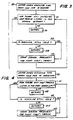
- FIG. 3 is a flow diagram of the formatting process.
- the system enters the formatting process based upon the timing out of a conventional timer, which indicates that the system is disk-idle because no disk requests have been issued for a predetermined time period.
- the timer generates an interrupt every second, causing system software to increment a counter and then to check whether or not the counter value corresponds to the passage of the predetermined period. As shown in FIG. 3, that period is ten seconds, although another period may be selected. Because there is little machine overhead involved in terminating the formatting process (or the pre-erase process of FIG. 4), the period chosen can be relatively short.
- the system determines whether or not there are any unformatted (i.e., untested) half-tracks listed in the status bitmap (the table showing the status -- untested, bad, written, erase -- of each half-track, kept on the disk). If there are no unformatted half-tracks listed (indicating that the disk is completely formatted), the system returns at step 32. If unformatted half-tracks are listed in the status bitmap, the system tests at step 33 to make sure no disk requests were issued during step 31. If at step 33 the machine is determined to be no longer idle, the program returns at step 34. Otherwise, an erase request is issued at step 35 for the half-track in question, and the system loops back to step 31 to check for additional unformatted half-tracks. The handling of the erase request at step 35 is diagrammed in FIG. 5, discussed below.
- FIG. 4 is a flow diagram of the pre-erase process. This process is logically similar to the formatting process, so that FIG. 4 is similar in structure to FIG. 3, and the software implementing the process uses many of the same routines as the formatting process.
- the system enters the pre-erase process based on an indication from the software timer that the machine is idle because no disk requests have been issued for a predetermined period, here 10 seconds, although, as above, other periods may be selected.
- the system tests for half-tracks to be erased in the pre-erase list. (As discussed above, when a file is deleted, its half-tracks are marked in a conventional manner as not being needed and placed on the pre-erase list.
- a pre-erase cannot be performed on a particular half-track unless the entire half-track belongs to a single deleted file.) If the pre-erase list contains no half-tracks, the program returns at step 42. In half-tracks are listed in the pre-erase list, the system tests at step 43 to make sure no disk requests were issued during step 41. If at step 43 the machine is determined to be no longer idle, the program returns at step 44. Otherwise, an erase request is issued at 45 for the half-track in question, and the system loops back to step 41 to check for additional half-tracks in need of being pre-erased. As stated above, the handling of the erase request is diagrammed in FIG. 5.
- FIG. 5 is a flow diagram illustrating the process by which the system implements the three possible types of disk requests -- read, write, and erase.
- the system enters the disk request handling process at step 50 on issuance of a disk request.
- the program determines to which half-track the request pertains, and at step 52 it examines the status bitmap to determine the current status of that half-track. From step 52, any of four branches may be taken depending on which of four possibilities represents the status of the half-track: "untested,” “bad,” “erased,” or “written.” If the half-track status is "untested,” the half-track has never been formatted and the process branches to step 53, where the half-track is formatted.
- Formatting involves (1) erasing the half-track, (2) writing a test pattern of data to the half-track, and (3) reading the stored test pattern data from the half-track and verifying that those data correspond to the data that were written.
- the three-step cycle may be repeated several times using different data patterns to test different parameters of the disk drive system.
- the test pattern may be a string of 0's, a string of 1's or some other pattern. For example, in a preferred embodiment of the invention, a test pattern which modulates the laser in a "worst case" manner is used. If the half-track passes the verification test at step 53, the process branches to step 54 where the half-track is erased.
- the status bitmap is then updated at step 55 to show that the half-track is erased, and the system loops back to step 51 to continue processing the original request. If the half-track fails the verification test at step 53, the program branches to step 56 where it searches the bad block table of the disk for an available alternate half-track to substitute for the failed half-track. At step 57, the system determines whether or not an alternate half-track exists. If so, the empty entry in the bad block table corresponding to the available alternate half-track is set at step 58 to the current half-track, resulting in a mapping of the current (bad) half-track to the alternate (good) half-track. The system sets the status bitmap to "bad" at step 580 and then loops back to step 51 to continue processing the original request. If no alternate half-tracks are determined to be available at step 57, then at step 59 the system recognizes an error condition and exits the disk request handling process at step 500.
- step 501 the bad block table is searched for an entry mapping the current half-track to an alternate half-track.
- step 502 the system determines whether or not such an entry was found. If so, the current half-track is set at step 503 to the alternate half-track and the system loops back to step 51 to continue processing the original request. If no entry is found at step 502, the system recognizes ar error condition at step 504 because a bad half-track was not assigned an alternate half-track, and exits the disk request handling process at step 505.
- step 506 the system branches to step 506 where the type of request is determined. If the request is an erase request, the system branches to step 507, where it returns to complete the process. If the request is a read request, the system branches to step 508 where it performs the read, and returns at step 507. If the request is a write request, the system branches to step 509, where it performs the write. It then verifies the write at step 510 by reading it back, sets the status bitmap entry for that half-track at step 511 to "written,” and returns at step 507.
- step 512 the type of request is determined. If the request is an erase request, the system branches to step 513 where it performs the erase. It then sets the status bitmap entry for that half-track at step 514 to "erased,” and returns at step 515. If the request is a read request, the system branches to step 516 where it performs the read, and returns at 515. If the request is a write request, the system branches to step 517 where it first erases the half-track (the status at step 52 was "written,” meaning that the system had not previously found time to pre-erase the half-track it now wants to write on). It then performs the write at step 518, verifies the write at step 519 by reading it back, and returns at step 515.
- FIG. 6 An exemplary hardware system 600 on which the present invention is implemented is shown in FIG. 6.
- the system includes a central processing unit (CPU) 601, such as a Motorola 68030 microprocessor, and a user interface such as conventional monitor and keyboard 602.
- a conventional hardware timer 603 supplies various timing signals, including the interrupts referred to above in connection with FIG. 3, to CPU 601.
- the system also includes main memory (dynamic random access memory) 604, which CPU 601 can read from and write to.
- Main memory 604 is also in two-way communication with direct memory access (DMA) channels 605 which in turn communicate with other channels on the system bus (not shown).
- DMA direct memory access
- An OMD-1 disk drive 606 as described above is connected in two-way communicating relationships with both CPU 601 and DMA channels 605 through a magneto-optical disk controller 607, which includes an error correction controller which implements the error correction logic referred to above.
Landscapes
- Engineering & Computer Science (AREA)
- Signal Processing (AREA)
- Signal Processing For Digital Recording And Reproducing (AREA)
Claims (8)
- Computersystem, das wenigstens ein Datenspeichermedium hoher Dichte (10) hat, wobei das Datenspeichermedium eine große Anzahl von Datenspeicher-Unterteilungen hat und sehr lange Formatierungszeiten benötigt, das ein System zum Formatieren des Mediums auf einer zeitverteilten Basis aufweist, wobei das Formatierungssystem eine Einrichtung zum Unterhalten eines Datensatzes von Statusinformationen für jede der Unterteilungen aufweist, wobei die Statusinformationen eine Anzeige darüber enthalten, ob die Unterteilung formatiert worden ist oder nicht, und das folgendes enthält:eine Einrichtung (603), die zum Messen des Verstreichens von Zeit angeordnet ist;eine Einrichtung (601, 30) zum Bestimmen eines Plattenruhezustands miteiner Einrichtung zum Erfassen, wenn das Computersystem nach einem Zugriff auf das Datenspeichermedium sucht; undeiner Einrichtung, die auf die Einrichtung zum Messen des Verstreichens von Zeit und auf die Zugriffs-Erfassungseinrichtung antwortet, zum Durchführen einer Bestimmung eines Plattenruhezustands, wenn eine vorbestimmte Zeitperiode verstreicht, ohne daß das Computersystem nach einem Zugriff auf das Datenspeichermedium sucht;eine Einrichtung (601, 53) zum Formatieren einer Unformatierten der Unterteilungen; undeine Einrichtung (601, 51), die auf die Einrichtung zum Bestimmen eines Plattenruhezustands und auf die Einrichtung zum Unterhalten eines Datensatzes von Statusinformationen antwortet, zum Auswählen einer Unformatierten der Unterteilungen, wenn das Computersystem im Plattenruhezustand ist; und wobei die Einrichtung (601, 53) zum Formatieren einer Unformatierten der Unterteilungen antwortet auf entweder (a) eine Auswahl durch die Auswahleinrichtung der Unformatierten der Unterteilungen auf eine Bestimmung durch die Bestimmungseinrichtung hin, daß das Computersystem im Plattenruhezustand ist, oder (b) eine Notwendigkeit durch das Computersystem für einen Zugriff auf eine Formatierte der Unterteilungen, wenn die Einrichtung zum Unterhalten eines Datensatzes von Statusinformationen anzeigt, daß keine verfügbaren formatierten Unterteilungen existieren.
- Formatierungssystem nach Anspruch 1, wobei die Einrichtung zum Unterhalten eines Datensatzes von Statusinformationen eine Einrichtung zum Speichern einer Tabelle auf dem Medium aufweist, wobei die Tabelle den Status jeder der Unterteilungen anzeigt.
- Formatierungssystem nach Anspruch 1 oder 2, wobei:das Datenspeichermedium ein magneto-optisches Datenspeichermedium mit magnetischen Domänen ist;und das Formatierungssystem folgendes aufweist:eine Einrichtung zum Vergleichen von von der Unterteilung gelesenen Daten mit dem vorbestimmten Muster;eine Einrichtung zum Aufzeichnen in der Einrichtung zum Unterhalten eines Datensatzes von Statusinformationen, daß die Unterteilung formatiert ist, wenn die von der Unterteilung gelesenen Daten dem vorbestimmten Muster gleichgestellt sind, und zum Aufzeichnen, daß die Unterteilung schlecht ist, wenn die Daten nicht gleichgestellt sind; undeine Einrichtung zum erneuten Löschen der Unterteilung, wenn die Daten dem vorbestimmten Muster gleichgestellt sind.
- Formatierungssystem nach Anspruch 3, wobei die Formatierungseinrichtung weiterhin eine Einrichtung zum Zuordnen einer alternativen Unterteilung anstelle einer schlechten Unterteilung und zum Aufzeichnen der Zuordnung in der Einrichtung zum Unterhalten eines Datensatzes von Statusinformationen aufweist.
- Verfahren zum Formatieren wenigstens eines Datenspeichermediums hoher Dichte eines Computersystems auf einer zeitverteilten Basis, wobei das Datenspeichermedium eine große Anzahl von Datenspeicherunterteilung hat und sehr lange Formatierungszeiten benötigt, wobei das Formatierungsverfahren folgende Schritte aufweist:Unterhalten eines Datensatzes von Statusinformationen für jede der Unterteilungen, wobei die Statusinformationen eine Anzeige darüber enthalten, ob die Unterteilung formatiert worden ist oder nicht;Messen des Verstreichens von Zeit;Bestimmen, wenn das Computersystem in einem Zustand ist, in welchem auf das Datenspeichermedium für eine vorbestimmte Zeitdauer, wie es durch das Messen des Verstreichens von Zeit bestimmt wird, nicht zum Schreiben oder Lesen von Daten zugegriffen worden ist; undAuswählen einer Unformatierten der Unterteilungen, wenn das Computersystem in dem Zustand ist; und Formatieren der unformatierten Unterteilung, wobei der Schritt zum Formatieren antwortet entweder auf (a) eine Auswahl der Unformatierten der Unterteilungen auf eine Bestimmung hin, daß das Computersystem in dem Zustand ist, oder (b) eine Notwendigkeit durch das Computersystem nach einem Zugriff auf eine Formatierte der Unterteilungen, wenn der Statusinformationen-Datensatz anzeigt, daß keine verfügbaren formatierten Unterteilungen existieren.
- Formatierungsverfahren nach Anspruch 5, wobei der Schritt zum Unterhalten eines Datensatzes von Statusinformationen ein Speichern einer Tabelle auf dem Medium aufweist, wobei die Tabelle den Status jeder Tabelle auf dem Medium anzeigt, wobei die Tabelle den Status jeder der Unterteilungen anzeigt.
- Formatierungssystem nach Anspruch 1, wobeidas Datenspeichermedium ein magneto-optisches Datenspeichermedium mit magnetischen Domänen ist, die in einer von zwei Richtungen ausgerichtet sind, die logisch 0 und logisch 1 darstellen und einen Magneten zum Anlegen eines magnetischen Basisfeldes haben, wobei die Ausrichtung der magnetischen Domänen im wesentlichen bei Raumtemperatur fixiert wird, wobei sich die magnetischen Domänen bei Temperaturen oberhalb einer Schwellentemperatur selbst mit dem magnetischen Basisfeld ausrichten, wobei zum Datenspeichermedium weiterhin eine Einrichtung gehört zum Erzeugen eines Strahls einer kohärenten elektromagnetischen Strahlung zum Erhitzen des Mediums auf die Schwellentemperatur zum Ausrichten der Domänen, wie es erwünscht ist, und zum Lesen von Daten, die durch die Ausrichtung der Domänen dargestellt sind; und wobeidie Formatierungseinrichtung folgendes enthält:eine Einrichtung zum Ausrichten des magnetischen Basisfeldes in der Richtung, die logisch 0 darstellt;eine Einrichtung zum Veranlassen, daß die Kohärenzstrahl-Erzeugungseinrichtung einen ersten Kohärenzstrahl einer elektro-magnetischen Strahlung erzeugt, der auf die Ausgewählte der Unterteilungen zum Erhitzen der Ausgewählten der Unterteilungen über die Schwellentemperatur fokussiert ist, um dadurch jede magnetische Domäne in der Unterteilung zu veranlassen, eine logische 0 darzustellen, wobei die Unterteilung dadurch gelöscht wird;eine Einrichtung zum Ausrichten des magnetischen Basisfeldes in der Richtung, die logisch 1 darstellt;eine Einrichtung zum Modulieren der Strahlen zum Schreiben eines vorbestimmten Musters von vorbestimmten Bits in die Unterteilung;eine Einrichtung zum Veranlassen, daß die Kohärenzstrahl-Erzeugungseinrichtung einen zweiten Kohärenzstrahl einer elektro-magnetischen Strahlung mit einer ersten vorbestimmten Polarisation erzeugt, und zum Reflektieren des zweiten Strahls von den magnetischen Domänen in der Unterteilung, wobei der Strahl nach einer Reflexion von einer der magnetischen Domänen eine zweite Polarisation hat, die die Richtung der Ausrichtung der magnetischen Domäne anzeigt, zum Lesen der Unterteilung;eine Einrichtung zum Vergleichen von von der Unterteilung gelesenen Daten mit dem vorbestimmten Muster;eine Einrichtung zum Aufzeichnen in der Einrichtung zum Unterhalten eines Datensatzes von Statusinformationen, daß die Unterteilung formatiert ist, wenn die von der Unterteilung gelesenen Daten dem vorbestimmten Muster gleichgestellt sind, und zum Aufzeichnen, daß die Unterteilung schlecht ist, wenn die Daten nicht gleichgestellt sind; undeine Einrichtung zum erneuten Löschen der Unterteilung, wenn die Daten dem vorbestimmten Muster gleichgestellt sind.
- Formatierungssystem nach Anspruch 7, wobei die Formatierungseinrichtung weiterhin eine Einrichtung zum Zuordnen einer alternativen Unterteilung anstelle einer schlechten Unterteilung und eine Einrichtung zum Aufzeichnen der Zuordnung im Statusinformationen-Datensatz enthält.
Applications Claiming Priority (2)
| Application Number | Priority Date | Filing Date | Title |
|---|---|---|---|
| US255337 | 1988-10-11 | ||
| US07/255,337 US4924330A (en) | 1988-10-11 | 1988-10-11 | System and method for improving the performance of high-density data storage media |
Publications (3)
| Publication Number | Publication Date |
|---|---|
| EP0364176A2 EP0364176A2 (de) | 1990-04-18 |
| EP0364176A3 EP0364176A3 (de) | 1991-12-27 |
| EP0364176B1 true EP0364176B1 (de) | 1998-06-03 |
Family
ID=22967867
Family Applications (1)
| Application Number | Title | Priority Date | Filing Date |
|---|---|---|---|
| EP89310273A Expired - Lifetime EP0364176B1 (de) | 1988-10-11 | 1989-10-06 | System und Methode zur Formatierung Aufzeichnungsmedien mit hoher Speicherungsdichte |
Country Status (4)
| Country | Link |
|---|---|
| US (2) | US4924330A (de) |
| EP (1) | EP0364176B1 (de) |
| JP (2) | JP2848868B2 (de) |
| DE (1) | DE68928689T2 (de) |
Families Citing this family (49)
| Publication number | Priority date | Publication date | Assignee | Title |
|---|---|---|---|---|
| US5132853A (en) * | 1988-02-08 | 1992-07-21 | International Business Machines Corporation | Allocation procedures for optical disk recorders |
| US4924330A (en) * | 1988-10-11 | 1990-05-08 | Next, Inc. | System and method for improving the performance of high-density data storage media |
| US5184341A (en) * | 1989-03-03 | 1993-02-02 | Matsushita Electric Industrial Co., Ltd. | Information recording method having successive data write and data verify operations |
| US5255270A (en) * | 1990-11-07 | 1993-10-19 | Emc Corporation | Method of assuring data write integrity on a data storage device |
| JP3256981B2 (ja) * | 1991-04-05 | 2002-02-18 | ソニー株式会社 | データ記録方法 |
| JP2536984B2 (ja) * | 1991-09-26 | 1996-09-25 | インターナショナル・ビジネス・マシーンズ・コーポレイション | 周辺装置の制御方法、フロッピ・ディスク装置の制御方法、周辺装置、フロッピ・ディスク装置、及び、デ―タ処理システム |
| JP2562753B2 (ja) * | 1991-10-29 | 1996-12-11 | 三洋電機株式会社 | 光磁気ディスク装置の読出し制御方式 |
| US5740349A (en) * | 1993-02-19 | 1998-04-14 | Intel Corporation | Method and apparatus for reliably storing defect information in flash disk memories |
| JP2590722B2 (ja) * | 1993-12-06 | 1997-03-12 | 日本電気株式会社 | 光ディスク制御装置 |
| JP2950181B2 (ja) * | 1995-02-16 | 1999-09-20 | 日本電気株式会社 | 光磁気ディスク記録装置 |
| JP3749312B2 (ja) * | 1995-09-19 | 2006-02-22 | ヒタチグローバルストレージテクノロジーズネザーランドビーブイ | データ記憶ディスクのデータ・セクタのフォーマット操作方法及びディスク記憶システム |
| US6009058A (en) | 1997-05-13 | 1999-12-28 | Hewlett-Packard Company | Method of reducing formatting time for rewritable compact disks by pre-formatting less than the entire standard logical format |
| JP3474110B2 (ja) | 1997-08-25 | 2003-12-08 | 株式会社リコー | 光ディスク記録再生装置と光ディスク記録再生方法とコンピュータ読み取り可能な記録媒体 |
| JP4006184B2 (ja) * | 2001-01-30 | 2007-11-14 | 株式会社リコー | 情報記録再生方法、情報記録再生装置、情報処理装置及びコンピュータ・プログラム |
| US6823326B2 (en) * | 2001-03-30 | 2004-11-23 | International Business Machines Corporation | Method and system for performing asynchronous preformatting in a database system |
| JP2002324363A (ja) * | 2001-04-25 | 2002-11-08 | Ricoh Co Ltd | 情報記録再生装置 |
| JP3878442B2 (ja) | 2001-07-30 | 2007-02-07 | 株式会社リコー | 情報記録再生装置とプログラム |
| JP3595550B1 (ja) * | 2003-08-21 | 2004-12-02 | 株式会社リコー | 情報記録再生装置と情報記録再生方法とプログラム |
| US7992203B2 (en) | 2006-05-24 | 2011-08-02 | Red Hat, Inc. | Methods and systems for secure shared smartcard access |
| US8364952B2 (en) * | 2006-06-06 | 2013-01-29 | Red Hat, Inc. | Methods and system for a key recovery plan |
| US7822209B2 (en) | 2006-06-06 | 2010-10-26 | Red Hat, Inc. | Methods and systems for key recovery for a token |
| US8495380B2 (en) | 2006-06-06 | 2013-07-23 | Red Hat, Inc. | Methods and systems for server-side key generation |
| US8098829B2 (en) * | 2006-06-06 | 2012-01-17 | Red Hat, Inc. | Methods and systems for secure key delivery |
| US8332637B2 (en) | 2006-06-06 | 2012-12-11 | Red Hat, Inc. | Methods and systems for nonce generation in a token |
| US8180741B2 (en) | 2006-06-06 | 2012-05-15 | Red Hat, Inc. | Methods and systems for providing data objects on a token |
| US8707024B2 (en) * | 2006-06-07 | 2014-04-22 | Red Hat, Inc. | Methods and systems for managing identity management security domains |
| US8412927B2 (en) | 2006-06-07 | 2013-04-02 | Red Hat, Inc. | Profile framework for token processing system |
| US9769158B2 (en) * | 2006-06-07 | 2017-09-19 | Red Hat, Inc. | Guided enrollment and login for token users |
| US8589695B2 (en) * | 2006-06-07 | 2013-11-19 | Red Hat, Inc. | Methods and systems for entropy collection for server-side key generation |
| US8099765B2 (en) | 2006-06-07 | 2012-01-17 | Red Hat, Inc. | Methods and systems for remote password reset using an authentication credential managed by a third party |
| US8787566B2 (en) * | 2006-08-23 | 2014-07-22 | Red Hat, Inc. | Strong encryption |
| US8806219B2 (en) | 2006-08-23 | 2014-08-12 | Red Hat, Inc. | Time-based function back-off |
| US8074265B2 (en) * | 2006-08-31 | 2011-12-06 | Red Hat, Inc. | Methods and systems for verifying a location factor associated with a token |
| US9038154B2 (en) * | 2006-08-31 | 2015-05-19 | Red Hat, Inc. | Token Registration |
| US8977844B2 (en) * | 2006-08-31 | 2015-03-10 | Red Hat, Inc. | Smartcard formation with authentication keys |
| US8356342B2 (en) * | 2006-08-31 | 2013-01-15 | Red Hat, Inc. | Method and system for issuing a kill sequence for a token |
| US8693690B2 (en) * | 2006-12-04 | 2014-04-08 | Red Hat, Inc. | Organizing an extensible table for storing cryptographic objects |
| KR100884239B1 (ko) * | 2007-01-02 | 2009-02-17 | 삼성전자주식회사 | 메모리 카드 시스템 및 그것의 백그라운드 정보 전송 방법 |
| US8813243B2 (en) * | 2007-02-02 | 2014-08-19 | Red Hat, Inc. | Reducing a size of a security-related data object stored on a token |
| US8639940B2 (en) * | 2007-02-28 | 2014-01-28 | Red Hat, Inc. | Methods and systems for assigning roles on a token |
| US8832453B2 (en) | 2007-02-28 | 2014-09-09 | Red Hat, Inc. | Token recycling |
| US9081948B2 (en) * | 2007-03-13 | 2015-07-14 | Red Hat, Inc. | Configurable smartcard |
| WO2009084071A1 (ja) * | 2007-12-27 | 2009-07-09 | Fujitsu Limited | Raid制御装置及びraidシステム |
| TWI489466B (zh) * | 2011-06-15 | 2015-06-21 | Phison Electronics Corp | 記憶體抹除方法、記憶體控制器與記憶體儲存裝置 |
| CN104598167B (zh) * | 2011-06-27 | 2018-01-05 | 群联电子股份有限公司 | 存储器抹除方法、存储器控制器与存储器储存装置 |
| CN102855192B (zh) * | 2011-06-27 | 2016-01-20 | 群联电子股份有限公司 | 存储器抹除方法、存储器控制器与存储器储存装置 |
| JP2020047105A (ja) * | 2018-09-20 | 2020-03-26 | 株式会社日立製作所 | ストレージ制御装置および障害トラックの回復方法 |
| US10978097B1 (en) * | 2020-01-16 | 2021-04-13 | International Business Machines Corporation | Indicating tracks as erased without deleting data for the tracks |
| WO2023050147A1 (zh) | 2021-09-29 | 2023-04-06 | 长江存储科技有限责任公司 | 用于存储器的数据保护方法及其存储装置 |
Citations (2)
| Publication number | Priority date | Publication date | Assignee | Title |
|---|---|---|---|---|
| US4924330A (en) * | 1988-10-11 | 1990-05-08 | Next, Inc. | System and method for improving the performance of high-density data storage media |
| US4939598A (en) * | 1988-02-08 | 1990-07-03 | International Business Machines Corporation | Managing data storage space on large capacity record media |
Family Cites Families (5)
| Publication number | Priority date | Publication date | Assignee | Title |
|---|---|---|---|---|
| JPH065500B2 (ja) * | 1984-09-07 | 1994-01-19 | キヤノン株式会社 | 情報記録再生装置 |
| JPH077329B2 (ja) * | 1985-07-29 | 1995-01-30 | 株式会社日立製作所 | 光ディスクメモリの情報書換え制御方法及び装置 |
| AU600280B2 (en) * | 1986-07-02 | 1990-08-09 | Sony Corporation | Apparatus for optically recording and reproducing information in record tracks on a rotatable record disc |
| JP2575120B2 (ja) * | 1986-07-31 | 1997-01-22 | ソニー株式会社 | 光磁気記録装置 |
| JPS6453368A (en) * | 1987-08-24 | 1989-03-01 | Nec Corp | Magneto-optical information recording and reproducing device |
-
1988
- 1988-10-11 US US07/255,337 patent/US4924330A/en not_active Expired - Lifetime
-
1989
- 1989-08-14 US US07/393,134 patent/US4924327A/en not_active Expired - Lifetime
- 1989-10-06 EP EP89310273A patent/EP0364176B1/de not_active Expired - Lifetime
- 1989-10-06 DE DE68928689T patent/DE68928689T2/de not_active Expired - Fee Related
- 1989-10-11 JP JP1270574A patent/JP2848868B2/ja not_active Expired - Lifetime
-
1995
- 1995-07-17 JP JP7180411A patent/JP2975288B2/ja not_active Expired - Lifetime
Patent Citations (2)
| Publication number | Priority date | Publication date | Assignee | Title |
|---|---|---|---|---|
| US4939598A (en) * | 1988-02-08 | 1990-07-03 | International Business Machines Corporation | Managing data storage space on large capacity record media |
| US4924330A (en) * | 1988-10-11 | 1990-05-08 | Next, Inc. | System and method for improving the performance of high-density data storage media |
Also Published As
| Publication number | Publication date |
|---|---|
| JPH02183473A (ja) | 1990-07-18 |
| DE68928689T2 (de) | 1998-09-24 |
| US4924330A (en) | 1990-05-08 |
| JP2848868B2 (ja) | 1999-01-20 |
| EP0364176A3 (de) | 1991-12-27 |
| EP0364176A2 (de) | 1990-04-18 |
| JP2975288B2 (ja) | 1999-11-10 |
| US4924327A (en) | 1990-05-08 |
| DE68928689D1 (de) | 1998-07-09 |
| JPH08152974A (ja) | 1996-06-11 |
Similar Documents
| Publication | Publication Date | Title |
|---|---|---|
| US4924327A (en) | System and method for improving the performance of high-density data storage media | |
| US5812512A (en) | Data reproducing apparatus which prohibits illegitimate access to data using an internal ID | |
| US4775969A (en) | Optical disk storage format, method and apparatus for emulating a magnetic tape drive | |
| US6408406B1 (en) | Hard disk drive infant mortality test | |
| US6243796B1 (en) | Recording medium and recording or reproduction apparatus that provides protection from unauthorized use of the medium | |
| US5694576A (en) | Cache control by adding record identification information to partial write request | |
| JP2776486B2 (ja) | 再書き込み可能記録媒体及びその利用制御 | |
| US6298016B1 (en) | Recording media including auxiliary memory of different types | |
| EP0328240A2 (de) | Behandlung eines Datenspeicherraums auf einem Aufzeichnungsträger mit grosser Kapazität | |
| US6738877B1 (en) | Access control method, storage apparatus and storage medium | |
| US6834033B2 (en) | Optical disk and optical disk drive device | |
| US5132853A (en) | Allocation procedures for optical disk recorders | |
| US4833663A (en) | Information recording/reproducing apparatus for handling defective sectors on an optical disk | |
| US5615368A (en) | System having table storing plurality of optimal patrol seek schemes for respective disk drives and executing associated scheme based upon inputted disk device name | |
| US5422871A (en) | Method and apparatus for producing an optical disk having a read-only area and a rewritable area | |
| US6345385B2 (en) | Storage unit, storage medium and identification information recording method | |
| US7012866B2 (en) | Rotation control method for CAV system based on sequential or random access request and on zone access based on access request of recording medium | |
| JPH03217972A (ja) | ファイル検索装置 | |
| JPH07192409A (ja) | 光学式情報記録再生装置 | |
| JPH09198846A (ja) | 光磁気記録装置 | |
| JP3107028B2 (ja) | 円盤状記録媒体の記録制御装置及び光磁気ディスク装置のデータの記録方法 | |
| EP0460916A2 (de) | Format und Verfahren zur Speicherung von digitalen Daten auf Platten mit vorausgehendem Löschvorgang, unter Einsparung zusätzlicher Umdrehungen | |
| JPH03147571A (ja) | 光磁気ディスク記録装置 | |
| CA1314100C (en) | Managing data storage space on large capacity record media | |
| JP2746311B2 (ja) | 情報記録装置 |
Legal Events
| Date | Code | Title | Description |
|---|---|---|---|
| PUAI | Public reference made under article 153(3) epc to a published international application that has entered the european phase |
Free format text: ORIGINAL CODE: 0009012 |
|
| AK | Designated contracting states |
Kind code of ref document: A2 Designated state(s): BE DE FR GB IT LU NL |
|
| RAP1 | Party data changed (applicant data changed or rights of an application transferred) |
Owner name: NEXT COMPUTER, INC. |
|
| PUAL | Search report despatched |
Free format text: ORIGINAL CODE: 0009013 |
|
| AK | Designated contracting states |
Kind code of ref document: A3 Designated state(s): BE DE FR GB IT LU NL |
|
| 17P | Request for examination filed |
Effective date: 19920616 |
|
| 111Z | Information provided on other rights and legal means of execution |
Free format text: BE DE FR GB IT LU NL |
|
| 17Q | First examination report despatched |
Effective date: 19931029 |
|
| RAP1 | Party data changed (applicant data changed or rights of an application transferred) |
Owner name: CANON INC. |
|
| GRAG | Despatch of communication of intention to grant |
Free format text: ORIGINAL CODE: EPIDOS AGRA |
|
| GRAG | Despatch of communication of intention to grant |
Free format text: ORIGINAL CODE: EPIDOS AGRA |
|
| GRAH | Despatch of communication of intention to grant a patent |
Free format text: ORIGINAL CODE: EPIDOS IGRA |
|
| GRAH | Despatch of communication of intention to grant a patent |
Free format text: ORIGINAL CODE: EPIDOS IGRA |
|
| GRAA | (expected) grant |
Free format text: ORIGINAL CODE: 0009210 |
|
| AK | Designated contracting states |
Kind code of ref document: B1 Designated state(s): BE DE FR GB IT LU NL |
|
| PG25 | Lapsed in a contracting state [announced via postgrant information from national office to epo] |
Ref country code: BE Free format text: LAPSE BECAUSE OF FAILURE TO SUBMIT A TRANSLATION OF THE DESCRIPTION OR TO PAY THE FEE WITHIN THE PRESCRIBED TIME-LIMIT Effective date: 19980603 |
|
| REF | Corresponds to: |
Ref document number: 68928689 Country of ref document: DE Date of ref document: 19980709 |
|
| ITF | It: translation for a ep patent filed | ||
| PG25 | Lapsed in a contracting state [announced via postgrant information from national office to epo] |
Ref country code: LU Free format text: LAPSE BECAUSE OF NON-PAYMENT OF DUE FEES Effective date: 19981006 |
|
| ET | Fr: translation filed | ||
| PLBE | No opposition filed within time limit |
Free format text: ORIGINAL CODE: 0009261 |
|
| STAA | Information on the status of an ep patent application or granted ep patent |
Free format text: STATUS: NO OPPOSITION FILED WITHIN TIME LIMIT |
|
| 26N | No opposition filed | ||
| REG | Reference to a national code |
Ref country code: GB Ref legal event code: IF02 |
|
| PGFP | Annual fee paid to national office [announced via postgrant information from national office to epo] |
Ref country code: NL Payment date: 20071015 Year of fee payment: 19 Ref country code: DE Payment date: 20071004 Year of fee payment: 19 |
|
| PGFP | Annual fee paid to national office [announced via postgrant information from national office to epo] |
Ref country code: IT Payment date: 20071026 Year of fee payment: 19 |
|
| PGFP | Annual fee paid to national office [announced via postgrant information from national office to epo] |
Ref country code: GB Payment date: 20071003 Year of fee payment: 19 Ref country code: FR Payment date: 20071009 Year of fee payment: 19 |
|
| GBPC | Gb: european patent ceased through non-payment of renewal fee |
Effective date: 20081006 |
|
| NLV4 | Nl: lapsed or anulled due to non-payment of the annual fee |
Effective date: 20090501 |
|
| REG | Reference to a national code |
Ref country code: FR Ref legal event code: ST Effective date: 20090630 |
|
| PG25 | Lapsed in a contracting state [announced via postgrant information from national office to epo] |
Ref country code: NL Free format text: LAPSE BECAUSE OF NON-PAYMENT OF DUE FEES Effective date: 20090501 |
|
| PG25 | Lapsed in a contracting state [announced via postgrant information from national office to epo] |
Ref country code: IT Free format text: LAPSE BECAUSE OF NON-PAYMENT OF DUE FEES Effective date: 20081006 Ref country code: DE Free format text: LAPSE BECAUSE OF NON-PAYMENT OF DUE FEES Effective date: 20090501 |
|
| PG25 | Lapsed in a contracting state [announced via postgrant information from national office to epo] |
Ref country code: FR Free format text: LAPSE BECAUSE OF NON-PAYMENT OF DUE FEES Effective date: 20081031 |
|
| PG25 | Lapsed in a contracting state [announced via postgrant information from national office to epo] |
Ref country code: GB Free format text: LAPSE BECAUSE OF NON-PAYMENT OF DUE FEES Effective date: 20081006 |