EP0364594A1 - Verfahren zum unlöslichmachen von schweren metallen aus der flugasche von müllverbrennungsöfen - Google Patents
Verfahren zum unlöslichmachen von schweren metallen aus der flugasche von müllverbrennungsöfen Download PDFInfo
- Publication number
- EP0364594A1 EP0364594A1 EP89902821A EP89902821A EP0364594A1 EP 0364594 A1 EP0364594 A1 EP 0364594A1 EP 89902821 A EP89902821 A EP 89902821A EP 89902821 A EP89902821 A EP 89902821A EP 0364594 A1 EP0364594 A1 EP 0364594A1
- Authority
- EP
- European Patent Office
- Prior art keywords
- molecular compound
- fly ash
- water
- chelating agent
- heavy metals
- Prior art date
- Legal status (The legal status is an assumption and is not a legal conclusion. Google has not performed a legal analysis and makes no representation as to the accuracy of the status listed.)
- Withdrawn
Links
Images
Classifications
-
- A—HUMAN NECESSITIES
- A62—LIFE-SAVING; FIRE-FIGHTING
- A62D—CHEMICAL MEANS FOR EXTINGUISHING FIRES OR FOR COMBATING OR PROTECTING AGAINST HARMFUL CHEMICAL AGENTS; CHEMICAL MATERIALS FOR USE IN BREATHING APPARATUS
- A62D3/00—Processes for making harmful chemical substances harmless or less harmful, by effecting a chemical change in the substances
- A62D3/30—Processes for making harmful chemical substances harmless or less harmful, by effecting a chemical change in the substances by reacting with chemical agents
- A62D3/33—Processes for making harmful chemical substances harmless or less harmful, by effecting a chemical change in the substances by reacting with chemical agents by chemical fixing the harmful substance, e.g. by chelation or complexation
-
- C—CHEMISTRY; METALLURGY
- C04—CEMENTS; CONCRETE; ARTIFICIAL STONE; CERAMICS; REFRACTORIES
- C04B—LIME, MAGNESIA; SLAG; CEMENTS; COMPOSITIONS THEREOF, e.g. MORTARS, CONCRETE OR LIKE BUILDING MATERIALS; ARTIFICIAL STONE; CERAMICS; REFRACTORIES; TREATMENT OF NATURAL STONE
- C04B18/00—Use of agglomerated or waste materials or refuse as fillers for mortars, concrete or artificial stone; Treatment of agglomerated or waste materials or refuse, specially adapted to enhance their filling properties in mortars, concrete or artificial stone
- C04B18/04—Waste materials; Refuse
- C04B18/06—Combustion residues, e.g. purification products of smoke, fumes or exhaust gases
- C04B18/10—Burned or pyrolised refuse
- C04B18/105—Gaseous combustion products or dusts collected from waste incineration, e.g. sludge resulting from the purification of gaseous combustion products of waste incineration
- C04B18/106—Fly ash from waste incinerators
-
- A—HUMAN NECESSITIES
- A62—LIFE-SAVING; FIRE-FIGHTING
- A62D—CHEMICAL MEANS FOR EXTINGUISHING FIRES OR FOR COMBATING OR PROTECTING AGAINST HARMFUL CHEMICAL AGENTS; CHEMICAL MATERIALS FOR USE IN BREATHING APPARATUS
- A62D2101/00—Harmful chemical substances made harmless, or less harmful, by effecting chemical change
- A62D2101/08—Toxic combustion residues, e.g. toxic substances contained in fly ash from waste incineration
-
- A—HUMAN NECESSITIES
- A62—LIFE-SAVING; FIRE-FIGHTING
- A62D—CHEMICAL MEANS FOR EXTINGUISHING FIRES OR FOR COMBATING OR PROTECTING AGAINST HARMFUL CHEMICAL AGENTS; CHEMICAL MATERIALS FOR USE IN BREATHING APPARATUS
- A62D2101/00—Harmful chemical substances made harmless, or less harmful, by effecting chemical change
- A62D2101/40—Inorganic substances
- A62D2101/43—Inorganic substances containing heavy metals, in the bonded or free state
-
- Y—GENERAL TAGGING OF NEW TECHNOLOGICAL DEVELOPMENTS; GENERAL TAGGING OF CROSS-SECTIONAL TECHNOLOGIES SPANNING OVER SEVERAL SECTIONS OF THE IPC; TECHNICAL SUBJECTS COVERED BY FORMER USPC CROSS-REFERENCE ART COLLECTIONS [XRACs] AND DIGESTS
- Y02—TECHNOLOGIES OR APPLICATIONS FOR MITIGATION OR ADAPTATION AGAINST CLIMATE CHANGE
- Y02W—CLIMATE CHANGE MITIGATION TECHNOLOGIES RELATED TO WASTEWATER TREATMENT OR WASTE MANAGEMENT
- Y02W30/00—Technologies for solid waste management
- Y02W30/50—Reuse, recycling or recovery technologies
- Y02W30/91—Use of waste materials as fillers for mortars or concrete
Definitions
- the present invention relates to a method for making insoluble detrimental heavy metals contained in a fly ash collected from an exhaust gas discharged from an incinerator.
- An exhaust gas produced by incineration of wastes in an incinerator contains detrimental components such as hydrogen chloride and sulfur oxide.
- a fly ash collected from the exhaust gas contains detrimental heavy metals such as zinc, lead and cadmium. It is the conventional practice therefore to collect a fly ash from the above-mentioned exhaust gas discharged from the incinerator by means of a dust collector, then remove detrimental components such as hydrogen chloride and sulfur oxide contained in the exhaust gas by means of a wet type gas cleaner using, for example, caustic soda, and then release the thus treated exhaust gas through a chimney to the open air.
- the method (1) above of forming the fly ash into a lump by means of cement has the following problem: because of the high alkalinity of cement, after dumping heavy metals such as lead, which are easily soluble into a liquid having a high pH value, may be dissolved from the lumpy fly ash under the effect of rain water, for example. An increased amount of added cement results in the dissolution of salts contained in the fly ash in rain fall, thus making the lumpy fly ash porous. The lumpy fly ash tends therefore to easily collapse.
- the method (2) above of forming the fly ash into a lump by means of molten asphalt has the following problem: when the fly ash has a high alkalinity, after dumping, heavy metals may be dissolved from the lumpy fly ash as described above under the effect of rain water.
- the method (3) above of treating heavy metals contained in the fly ash through neutralization has the following problem: the steps for neutralizing, dewatering and treating waste water produced in dewatering require complicated facilities, thus leading to a high cost.
- the method (4) above of treating heavy metals contained in the fly ash by means of an acid has the following problem: the steps for acid treatment, dewatering and treating waste water produced in dewatering require complicated facilities, consuming much acid, thus resulting in a high cost.
- An object of the present invention is therefore to provide a method for making insoluble heavy metals contained in a fly ash, as collected from an exhaust gas discharged from an incinerator, easily and economically and stably for a long period of time.
- a method for making insoluble heavy metals contained in a fly ash discharged from an incinerator characterized by comprising the steps of:
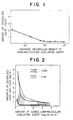
- Fig. 1 is a graph illustrating, in a kneaded mass formed by adding a high-molecular chelating agent comprising a high-molecular compound, together with water, to a fly ash and kneading the mixture, the effect of an average molecular weight of the high-molecular chelating agent on an amount of dissolved lead from the kneaded mass; and Fig.
- FIG. 2 is a graph illustrating, in a kneaded mass formed in accordance with the method of the present invention, by adding a low-molecular chelating agent comprising a low-molecular compound, together with a high-molecular compound and water, to a fly ash and kneading the mixture, the effect of an amount of the added low-molecular chelating agent on an amount of dissolved lead and zinc from the kneaded mass.
- the present invention was developed on the basis of the above-mentioned findings.
- the method of the present invention for making insoluble heavy metals contained in a fly ash discharged from an incinerator is described below.
- the chelating agent used in the present invention is as follows:
- a water-soluble low-molecular compound or a water-soluble high-molecular compound which has at least one chelate-forming radical and converts the heavy metals contained in a fly ash into the water-insoluble chelate compounds through the reactions with the above-mentioned heavy metals.
- a low-molecular compound or a high-molecular compound which contains, for example, at least one of dithiocarbamate radical, thiol radical, xanthate radical and thioureide radical, is used.
- a water-insoluble low-molecular compound or a water-insoluble high-molecular compound which has at least one chelate-forming radical and converts the heavy metals contained in a fly ash into the water-insoluble chelate compounds through the reactions with the above-mentioned heavy metals.
- a low-molecular compound or a high-molecular compound which contains, for example, at least one of amino acid radical (such as glycine radical and iminodiacetate radical), polyamino radical and phosphomethylamino radical, is used.
- amino acid radical such as glycine radical and iminodiacetate radical
- polyamino radical such as polyamino radical and phosphomethylamino radical
- a chelating agent comprising a high-molecular compound selected from among the above-mentioned chelating agents, and water are added to a fly ash containing heavy metals, as collected from an exhaust gas discharged from an incinerator, and these substances are kneaded to form a kneaded mass.
- the chelating agent comprising the above-mentioned low-molecular compound or the above-mentioned high-molecular compound, a high-molecular compound and water are added to such a fly ash, and these substances are kneaded to form a kneaded mass.
- the particles of the chelate compounds may be dissolved if the particles of the chelate compounds are fine in size.
- a fly ash is collected from an exhaust gas discharged from an incinerator prior to adding an alkaline substance to the exhaust gas to remove detrimental components such as hydrogen chloride and sulfur oxide contained in the exhaust gas, it is highly probable that fine particles of the chelate compounds are dissolved.
- the particles of the chelate compounds are captured into the network of the high-molecular compound, thus leading to coarsening of the chelate compounds. It is therefore possible to prevent dissolution of the particles of the chelate compounds.
- the chelating agent When adding the chelating agent comprising a high-molecular compound to the fly ash, the chelating agent should preferably have an average molecular weight of at least 10,000.
- the chelating agent comprising such a high-molecular compound for example, a chelating agent, in which a dithiocarbamate radical is combined with polyethylene or the like, is used.
- Fig. 1 is a graph illustrating, in a kneaded mass formed by adding a high-molecular chelating agent comprising a high-molecular compound, together with water, to a fly ash and kneading the mixture, the effect of an average molecular weight of the high-molecular chelating agent on an amount of dissolved lead from the kneaded mass.
- a plurality of kinds of chelating agent having a dithiocarbamate radical and having different average molecular weights were added in an amount of 0.5 equivalents relative to the amount of heavy metals contained in the fly ash, together with water, to the fly ash to form a plurality of kinds of kneaded mass, and an amount of dissolved lead from the kneaded mass was investigated for each of the thus formed . plurality of kinds of kneaded mass.
- the amount of dissolved lead remarkably decreased in the case of a chelating agent comprising a high-molecular compound having an average molecular weight of at least 10.000.
- Use of a plurality of kinds of chelating agent so .as to be adapted to individual ones of a plurality of kinds of heavy metal contained in the fly ash, can promote formation of the chelate compounds and permits reduction of the amount of added chelating agents.
- the amounts of dissolved heavy metals were investigated, for each of a kneaded mass formed by adding two kinds of chelating agent, i.e., sodium diethyldithiocarbamate and amylxanthate, each in an amount of 0.5 equivalents relative to the amount of respective heavy metals contained in the fly ash, a kneaded mass formed by adding a single kind of chelating agent, i.e., sodium diethyldithiocarbamate in an amount of one equivalent relative to the amount of heavy metals contained in the fly ash, and a kneaded mass formed without adding any chelating agent.
- Table 2 The results are shown in Table 2.
- an ordinary waste liquid except for special ones containing a complexing agent, has relatively low contents of heavy metals, and there are relatively small differences in concentration between a plurality of heavy metals to be subjected to a treatment to make insoluble, except only for mercury.
- a fly ash discharged from an incinerator has high contents of heavy metals, with considerable differences in concentration between a plurality of heavy metals to be subjected to a treatment to make insoluble.
- a water-soluble high-molecular compound or a latex-state high-molecular compound is used, which has the function of coarsening the chelate compounds and of making the fly ash water-insoluble or hard-water-soluble through the reactions with components of the fly ash.
- Applicable water-soluble high-molecular compounds include, for example, polyvinyl alcohol, sodium alginate, polyacryl or compounds thereof, polyacrylamide or compounds thereof, chitosan or compounds thereof, polyamine or compounds thereof, cellulose or compounds thereof, aluminum polychloride and water glass.
- Applicable latex-state high-molecular compounds include, for example, latex polymers of polyacryl or compounds thereof, polyacrylamide or compounds thereof, polyamine or compounds thereof, and stylene-butadiene or compounds thereof.
- the network of the high-molecular compound is reinforced with the bridging agent. It is thus possible to further improve the coarsening effect of the chelate compounds brought by the high-molecular compound as described above.
- glyoxal is used as the bridging agent.
- the amount of the chelating agent added to the fly ash may usually be up to one equivalent relative to the amount of heavy metals contained in the fly ash, while increasing the amount of the added chelating agent to over one equivalent relative to the amount of heavy metals, permits further reduction of the amount of dissolved heavy metals.
- the amount of the added chelating agent may therefore be increased as required to over one equivalent relative to the amount of heavy metals.
- the amount of the added chelating agent over a certain limit may rather cause the increase in the amount of dissolved heavy metals.
- Fig. 2 is a graph illustrating, in a kneaded mass formed in accordance with the method of the presnet invention, by adding a low-molecular chelating agent comprising a low-molecular compound, together with a high-molecular compound and water, to a fly ash and kneading the mixture, the effect of an amount of the added low-molecular chelating agent on an amount of dissolved lead and zinc from the kneaded mass.
- the amount of dissolved lead and zinc decreases according as the amount of the added low-molecular chelating agent increases.
- the kneading time may be within the range of from about 3 to about 20 minutes if the chelating agent and the high-molecular compound are in a liquid state.
- the steps comprise adding the powdery chelating agent to the fly ash, mixing same, then adding water to the resultant mixture, and kneading the mixture.
- the mixing and kneading time in this case may be within the range of from about 5 to about 50 minutes in total.
- the high-molecular compound to be added together with the powdery chelating agent should preferably be in a liquid state.
- hydration heat may cause the increase in temperature of the kneaded mass to about 80°C, but this does not affect the chelating reaction and the effect of making insoluble the resultant kneaded mass.
- the chelating agent comprising the high-molecular compound as the chelating agent to the fly ash, or adding the high-molecular compound to the fly ash together with the chelating agent, as described above, it is possible to coarsen the chelate compounds. Furthermore, the chelating agent comprising the high-molecular compound or the high-molecular compound added together with the chelating agent makes it easier for the kneaded mass to solidify, thus permitting prevention of outflow or splash of the kneaded mass after dumping thereof.
- the amount of water added during forming the kneaded mass may be appropriately determined considering handling and transportation of the formed kneaded mass.
- a kneaded mass (hereinafter referred to as the "sample of the invention No. 1") was prepared by adding a solution of a high-molecular chelating agent, in which a dithiocarbamate radical was combined with polyethylene, in an amount of 0.8 equivalents relative to the amount of heavy metals contained in a fly ash, and water in an amount of 250 ml, to 1 kg of the fly ash having the chemical composition shown in Table 3, as collected from an exhaust gas discharged from an incinerator, and kneading the mixture for five minutes by means of a mixer.
- a high-molecular chelating agent in which a dithiocarbamate radical was combined with polyethylene
- sample of the invention No. 2 Another kneaded mass (hereinafter referred to as the "sample of the invention No. 2") was prepared by adding a solution of a low-molecular chelating agent comprising sodium diethyldithiocarbamate in an amount of 0.8 equivalents relative to the amount of heavy metals contained in a fly ash, a solution of a high-molecular compound comprising polyvinyl alcohol in an amount of 10 g, glyoxal as the bridging agent in an amount of 2 g, and water in an amount of 250 ml, to 1 kg of the above-mentioned fly ash, and kneading the mixture for five minutes by means of.a mixer.
- a low-molecular chelating agent comprising sodium diethyldithiocarbamate in an amount of 0.8 equivalents relative to the amount of heavy metals contained in a fly ash
- a solution of a high-molecular compound comprising polyvinyl
- a kneaded mass for comparison (hereinaftrr referred to as the "sample for comparison") was prepared by adding only water in an amount of 250 mt to 1 kg of the above-mentioned fly ash, and kneading the mixture for five minutes by means of a mixer.
- the samples of the invention Nos. 1 and 2 and the samples for comparison prepared as described above were exposed outdoors for certain periods of time. The exposure periods were for one day, 10 days, 20 days, and 30 days. Each of the samples of the invention Nos. 1 and 2 and the samples for comparison exposed for different periods was placed in water, and the amounts of dissolved heavy metals from each of these samples were investigated. The results are shown in Table 4.
Landscapes
- Engineering & Computer Science (AREA)
- Chemical & Material Sciences (AREA)
- Ceramic Engineering (AREA)
- Combustion & Propulsion (AREA)
- Environmental & Geological Engineering (AREA)
- Organic Chemistry (AREA)
- Materials Engineering (AREA)
- Structural Engineering (AREA)
- Civil Engineering (AREA)
- Health & Medical Sciences (AREA)
- General Health & Medical Sciences (AREA)
- Toxicology (AREA)
- Chemical Kinetics & Catalysis (AREA)
- General Chemical & Material Sciences (AREA)
- Business, Economics & Management (AREA)
- Emergency Management (AREA)
- Processing Of Solid Wastes (AREA)
Applications Claiming Priority (2)
| Application Number | Priority Date | Filing Date | Title |
|---|---|---|---|
| JP46987/88 | 1988-02-29 | ||
| JP63046987A JPH01218673A (ja) | 1988-02-29 | 1988-02-29 | 飛灰の処理方法 |
Publications (2)
| Publication Number | Publication Date |
|---|---|
| EP0364594A1 true EP0364594A1 (de) | 1990-04-25 |
| EP0364594A4 EP0364594A4 (en) | 1992-03-11 |
Family
ID=12762557
Family Applications (1)
| Application Number | Title | Priority Date | Filing Date |
|---|---|---|---|
| EP19890902821 Withdrawn EP0364594A4 (en) | 1988-02-29 | 1989-02-27 | Method of insolubilizing heavy metals contained in fly ash discharged from garbage incinerator |
Country Status (5)
| Country | Link |
|---|---|
| US (1) | US5092931A (de) |
| EP (1) | EP0364594A4 (de) |
| JP (1) | JPH01218673A (de) |
| DK (1) | DK539189D0 (de) |
| WO (1) | WO1989007991A1 (de) |
Cited By (3)
| Publication number | Priority date | Publication date | Assignee | Title |
|---|---|---|---|---|
| AT396104B (de) * | 1991-10-25 | 1993-06-25 | Waagner Biro Ag | Verfahren zur umwandlung von wasserloeslichen in in wasser schwer- oder nichtloesliche schwermetallverbindungen |
| WO1996037263A1 (en) * | 1995-05-24 | 1996-11-28 | Asset Associates Limited | Process for producing products from waste material |
| CN109745653A (zh) * | 2019-01-04 | 2019-05-14 | 南京鑫豪高分子材料有限公司 | 一种二次螯合系统 |
Families Citing this family (8)
| Publication number | Priority date | Publication date | Assignee | Title |
|---|---|---|---|---|
| US5346549A (en) * | 1992-10-23 | 1994-09-13 | Johnson William B | Environmentally stabilized products formed from ash and papermill waste |
| US5362319A (en) * | 1992-10-23 | 1994-11-08 | Johnson William B | Process for treating fly ash and bottom ash and the resulting product |
| US5366637A (en) * | 1993-05-24 | 1994-11-22 | Betz Laboratories, Inc. | Method for dewatering municipal solid waste refuse |
| KR100478538B1 (ko) * | 2001-03-27 | 2005-03-23 | 주식회사 대현테크 | 안정화제를 첨가한 폐비닐과 소각분진을 이용한 재활용합성수지의 제조방법 |
| JP5214843B2 (ja) * | 2004-03-16 | 2013-06-19 | 日本曹達株式会社 | 重金属固定剤 |
| JP4596565B2 (ja) * | 2004-05-28 | 2010-12-08 | ミヨシ油脂株式会社 | 重金属固定化処理剤組成物及び重金属固定化処理方法 |
| JP2014136180A (ja) * | 2013-01-16 | 2014-07-28 | Kanazawa Hodo:Kk | 焼却灰の再資源化方法 |
| CN116726438B (zh) * | 2023-06-14 | 2024-12-03 | 宝武集团环境资源科技有限公司 | 一种用于处理飞灰中重金属的复配螯合剂及其应用 |
Family Cites Families (7)
| Publication number | Priority date | Publication date | Assignee | Title |
|---|---|---|---|---|
| JPS5162186A (en) * | 1974-11-29 | 1976-05-29 | Nichireki Chem Ind Co | Odeino shorihoho |
| DE3024076A1 (de) * | 1980-02-11 | 1981-08-20 | Anders Marius Holte Vognsen | Verfahren zur herstellung eines mineralstoffhaltigen praeparats |
| JPS5755473A (en) * | 1980-09-19 | 1982-04-02 | Omron Tateisi Electronics Co | Electronic cash register |
| JPS5787811A (en) * | 1980-11-21 | 1982-06-01 | Chichibu Cement Co Ltd | Filter for treating waste water |
| DE3225472A1 (de) * | 1982-07-08 | 1984-01-26 | Cassella Ag, 6000 Frankfurt | Verfahren zur herstellung von 2-amino-5-nitro-thiazol |
| JPS63205192A (ja) * | 1987-02-20 | 1988-08-24 | Mitsubishi Heavy Ind Ltd | 焼却飛灰の処理方法 |
| JPH062275B2 (ja) * | 1987-05-11 | 1994-01-12 | 大阪市 | 飛灰の無害化処理方法 |
-
1988
- 1988-02-29 JP JP63046987A patent/JPH01218673A/ja active Pending
-
1989
- 1989-02-27 WO PCT/JP1989/000197 patent/WO1989007991A1/ja not_active Ceased
- 1989-02-27 US US07/442,331 patent/US5092931A/en not_active Expired - Lifetime
- 1989-02-27 EP EP19890902821 patent/EP0364594A4/en not_active Withdrawn
- 1989-10-27 DK DK539189A patent/DK539189D0/da not_active Application Discontinuation
Cited By (3)
| Publication number | Priority date | Publication date | Assignee | Title |
|---|---|---|---|---|
| AT396104B (de) * | 1991-10-25 | 1993-06-25 | Waagner Biro Ag | Verfahren zur umwandlung von wasserloeslichen in in wasser schwer- oder nichtloesliche schwermetallverbindungen |
| WO1996037263A1 (en) * | 1995-05-24 | 1996-11-28 | Asset Associates Limited | Process for producing products from waste material |
| CN109745653A (zh) * | 2019-01-04 | 2019-05-14 | 南京鑫豪高分子材料有限公司 | 一种二次螯合系统 |
Also Published As
| Publication number | Publication date |
|---|---|
| WO1989007991A1 (fr) | 1989-09-08 |
| JPH01218673A (ja) | 1989-08-31 |
| US5092931A (en) | 1992-03-03 |
| DK539189A (da) | 1989-10-27 |
| EP0364594A4 (en) | 1992-03-11 |
| DK539189D0 (da) | 1989-10-27 |
Similar Documents
| Publication | Publication Date | Title |
|---|---|---|
| EP0364595B1 (de) | Verfahren zum unlöslichmachen schwerer metalle in flugasche aus einem müllverbrenner | |
| JP3391173B2 (ja) | 飛灰中の重金属の固定化方法及び重金属固定化処理剤 | |
| EP0364594A1 (de) | Verfahren zum unlöslichmachen von schweren metallen aus der flugasche von müllverbrennungsöfen | |
| CN111228712A (zh) | 重金属稳定化螯合剂及其水溶液及它们的制备方法 | |
| JP4529191B2 (ja) | 重金属の安定化処理方法、重金属の安定化剤 | |
| US5049285A (en) | Solidification process with enhancement of heavy metals insolubilization | |
| JPH09187752A (ja) | 廃棄物焼却灰及び溶融飛灰の処理方法 | |
| JP3271534B2 (ja) | 鉛、六価クロム、ヒ素及びセレンを含有する灰の処理方法 | |
| JPH0679254A (ja) | 飛灰の無害化処理方法 | |
| CN102335494A (zh) | 含重金属粉尘的重金属稳定化处理方法 | |
| JPH09136072A (ja) | 飛灰の処理方法 | |
| JPH1099814A (ja) | 廃棄物処理方法 | |
| KR100258773B1 (ko) | 폐기물 처리방법 | |
| JPH10113634A (ja) | 飛灰の固化処理方法 | |
| JPH09239340A (ja) | 廃棄物処理材および廃棄物処理方法 | |
| JP2001347278A (ja) | 飛灰と飛灰の有効利用方法 | |
| JPH10202226A (ja) | 焼却飛灰処理方法 | |
| Jacobs et al. | Sludge management at the Middlesex County Utilities Authority | |
| JP3392293B2 (ja) | 中性飛灰の処理方法 | |
| JPH0577477B2 (de) | ||
| EP0680372B1 (de) | Verfahren und vorrichtung zur reinigung von rückständen aus abgasreinigungsanlagen | |
| JPH0975897A (ja) | 廃棄物中の金属固定化方法 | |
| JPH06226238A (ja) | 飛灰の処理方法 | |
| JPH0924355A (ja) | 飛灰の処理方法 | |
| JPH078935A (ja) | ゴミの焼却により発生する飛灰に含まれる有害重金属類の無害化処理法 |
Legal Events
| Date | Code | Title | Description |
|---|---|---|---|
| PUAI | Public reference made under article 153(3) epc to a published international application that has entered the european phase |
Free format text: ORIGINAL CODE: 0009012 |
|
| 17P | Request for examination filed |
Effective date: 19891121 |
|
| AK | Designated contracting states |
Kind code of ref document: A1 Designated state(s): CH DE FR IT LI SE |
|
| A4 | Supplementary search report drawn up and despatched |
Effective date: 19920122 |
|
| AK | Designated contracting states |
Kind code of ref document: A4 Designated state(s): CH DE FR IT LI SE |
|
| 17Q | First examination report despatched |
Effective date: 19930407 |
|
| STAA | Information on the status of an ep patent application or granted ep patent |
Free format text: STATUS: THE APPLICATION IS DEEMED TO BE WITHDRAWN |
|
| 18D | Application deemed to be withdrawn |
Effective date: 19930818 |