EP0365008B1 - Composés azotés contenant un groupe silylé hydrolysable, leur procédé de préparation et polymères de vinyl contenant un groupe silylé préparés à partir de ceux-ci - Google Patents
Composés azotés contenant un groupe silylé hydrolysable, leur procédé de préparation et polymères de vinyl contenant un groupe silylé préparés à partir de ceux-ci Download PDFInfo
- Publication number
- EP0365008B1 EP0365008B1 EP89119423A EP89119423A EP0365008B1 EP 0365008 B1 EP0365008 B1 EP 0365008B1 EP 89119423 A EP89119423 A EP 89119423A EP 89119423 A EP89119423 A EP 89119423A EP 0365008 B1 EP0365008 B1 EP 0365008B1
- Authority
- EP
- European Patent Office
- Prior art keywords
- group
- silyl group
- hydrolyzable silyl
- hydrolyzable
- integer
- Prior art date
- Legal status (The legal status is an assumption and is not a legal conclusion. Google has not performed a legal analysis and makes no representation as to the accuracy of the status listed.)
- Expired - Lifetime
Links
- 0 C*1C(C2)C2CC1 Chemical compound C*1C(C2)C2CC1 0.000 description 3
Images

Classifications
-
- C—CHEMISTRY; METALLURGY
- C08—ORGANIC MACROMOLECULAR COMPOUNDS; THEIR PREPARATION OR CHEMICAL WORKING-UP; COMPOSITIONS BASED THEREON
- C08F—MACROMOLECULAR COMPOUNDS OBTAINED BY REACTIONS ONLY INVOLVING CARBON-TO-CARBON UNSATURATED BONDS
- C08F8/00—Chemical modification by after-treatment
- C08F8/42—Introducing metal atoms or metal-containing groups
-
- C—CHEMISTRY; METALLURGY
- C07—ORGANIC CHEMISTRY
- C07F—ACYCLIC, CARBOCYCLIC OR HETEROCYCLIC COMPOUNDS CONTAINING ELEMENTS OTHER THAN CARBON, HYDROGEN, HALOGEN, OXYGEN, NITROGEN, SULFUR, SELENIUM OR TELLURIUM
- C07F7/00—Compounds containing elements of Groups 4 or 14 of the Periodic Table
- C07F7/02—Silicon compounds
- C07F7/08—Compounds having one or more C—Si linkages
- C07F7/18—Compounds having one or more C—Si linkages as well as one or more C—O—Si linkages
- C07F7/1804—Compounds having Si-O-C linkages
-
- C—CHEMISTRY; METALLURGY
- C08—ORGANIC MACROMOLECULAR COMPOUNDS; THEIR PREPARATION OR CHEMICAL WORKING-UP; COMPOSITIONS BASED THEREON
- C08F—MACROMOLECULAR COMPOUNDS OBTAINED BY REACTIONS ONLY INVOLVING CARBON-TO-CARBON UNSATURATED BONDS
- C08F4/00—Polymerisation catalysts
- C08F4/04—Azo-compounds
-
- Y—GENERAL TAGGING OF NEW TECHNOLOGICAL DEVELOPMENTS; GENERAL TAGGING OF CROSS-SECTIONAL TECHNOLOGIES SPANNING OVER SEVERAL SECTIONS OF THE IPC; TECHNICAL SUBJECTS COVERED BY FORMER USPC CROSS-REFERENCE ART COLLECTIONS [XRACs] AND DIGESTS
- Y10—TECHNICAL SUBJECTS COVERED BY FORMER USPC
- Y10S—TECHNICAL SUBJECTS COVERED BY FORMER USPC CROSS-REFERENCE ART COLLECTIONS [XRACs] AND DIGESTS
- Y10S534/00—Organic compounds -- part of the class 532-570 series
- Y10S534/03—Polymeric azo compounds or azo compounds containing polymeric moieties
Definitions
- This invention relates to hydrolyzable silyl group-containing azo compounds, a process for producing the same and hydrolyzable silyl group-containing vinyl polymers produced by polymerizing vinyl monomer(s) with the use of said hydrolyzable silyl group-containing azo compound as a radical polymerization initiator.
- JP-B-43-16147 (the term "JP-B” as used herein means an "examined Japanese patent publication”), for example, an acrylic copolymer having a terminal carboxyl group is synthesized by using 4,4′-azobis(cyanovaleric acid) and thioglycolic acid as a polymerization initiator and a chain transfer agent respectively in order to stabilize or crosslink said copolymer.
- US-A-4,316,041 relates to silicon based liquid crystal compounds produced by the reaction of an isocyanato silane with a Schiff base, aromatic ester, azo compound or cholesteryl compound.
- the present invention relates to hydrolyzable silyl group-containing azo compounds represented by the general formula (I): wherein A represents a group originating from an azo compound having one or more active hydrogen groups; R1 represents a monovalent organic group; R2 represents a divalent organic group; X represents a hydrolyzable group; Y represents -O-, -S-, m is an integer of 1 to 3; and n is an integer of 1 or 2, with the proviso that A is not a group of the formula wherein R d is an unsubstituted or substituted phenyl, naphthyl or anthracenyl group.
- the present invention also relates to hydrolyzable silyl group-containing vinyl polymers which are produced by polymerizing vinyl monomer(s) in the presence of the hydrolyzable silyl group-containing azo compounds as a radical polymerization initiator.
- Fig. 1 is a chart showing the infrared absorption spectrum of the azo compound obtained in Example 1 according to the present invention.
- the hydrolyzable silyl group-containing azo compounds of the present invention have the general formula (I).
- A is a group originating from an azo compound having one or more active hydrogen groups when the azo compound is reacted with an isocyanate group, with the proviso that A is not a group of the formula wherein R d is an unsubstituted or substituted phenyl, naphthyl or anthracenyl group.
- the azo compound having one or more active hydrogen groups, from which the group A originates, is not particularly restricted so long as it has one or more active hydrogen groups (groups containing active hydrogen atoms). Such groups include primary amino, secondary amino, hydroxyl, carboxyl, thiol and amide groups. It is preferable that the azo compound has 1 to 8 active hydrogen groups.
- R1 is a monovalent organic group , e.g. an alkyl group having 1 to 10 carbon atoms, an aryl or aralkyl group .
- R1 groups may be either the same or different.
- alkyl groups having 1 to 10 carbon atoms include methyl, ethyl, butyl and cyclohexyl groups.
- An example of the aryl group is a phenyl group, and an example of the aralkyl group is a benzyl group.
- R2 is a divalent organic group , e.g. an alkylene group having 1 to 10 carbon atoms, an arylene group or a divalent aralkyl group.
- alkylene groups having 1 to 10 carbon atoms examples include methylene, ethylene and propylene groups.
- X is a hydrolyzable group such as a halogen atom or an alkoxy, phenoxy, acyloxy or RS-group, wherein R is an alkyl group and alkenyloxy group .
- R is an alkyl group and alkenyloxy group .
- alkoxy groups examples include methoxy and ethoxy groups.
- n is an integer of 1 or greater but does not exceed the number of the active hydrogen groups contained in the azo compound having one or more active hydrogen groups from which group A originates. Generally, "n” is usually 1 or 2.
- the compounds represented by the general formula (I) may be obtained, for example, by reacting an azo compound having one or more active hydrogen groups with a hydrolyzable silyl group-containing compound having an isocyanate group represented by the general formula (II): wherein R1, R2, X, and m are as defined above.
- Examples of compounds represented by the general formula (II) include ⁇ -isocyanatopropyl trimethoxysilane, ⁇ -isocyanatopropyl triethoxysilane, ⁇ -isocyanatopropylmethyl dimethoxysilane and ⁇ -isocyanatopropylmethyl diethoxysilane, though it is not restricted thereby.
- the azo compound having one or more active hydrogen groups is preferably reacted with the compound of the general formula (II) at a temperature lower than the temperature of the 10 hours half-life time and as low as possible so as to minimize the radical decomposition of the azo compound.
- a catalyst which accelerates the reaction between the active hydrogen groups and the isocyanato group may be used.
- a catalyst include tertiary amines such as dimethyldodecylamine, triethylamine and triethylenediamine and organotin compounds such as dibutyltin dilaurate and tin octylate.
- the molar ratio of the isocyanato group contained in the compound of the general formula (II) relative to the active hydrogen group contained in the azo compound ranges from 0.8 : 1 to 1.2 : 1.
- the above reaction may be conducted either with or without a solvent.
- a solvent it is preferable that the solvent is free of active hydrogen groups.
- examples of such a solvent include toluene, xylene, butyl acetate and methyl ethyl ketone.
- an aromatic solvent such as toluene is used, it is moisture present can be removed by azeotropic distillation prior to the reaction.
- the silyl group of the resulting hydrolyzable silyl group-containing azo compound is bound to the azo compound by various bonds depending on the active hydrogen groups in the azo compound used.
- an active hydrogen group is a primary or secondary amino group, for example, the bond created is a urea bond.
- the bond created is a urethane or a thiocarbamate bond respectively.
- hydrolyzable silyl group-containing azo compound of the present invention can be synthesized.
- hydrolyzable silyl group-containing azo compounds of the present invention are novel compounds. When they are used as a radical polymerization initiator optionally together with a chain transfer agent having hydrolyzable silyl group(s), which will be called a specific chain transfer agent hereinafter, novel telechelic vinyl polymers having terminal hydrolyzable silyl groups can be obtained.
- a telechelic structure is characterized in that a uniform crosslinked structure can be obtained from a crosslinked polymer having the same; and that a crosslinkable functional group located at a molecular end can efficiently contribute to crosslinking.
- a hydrolyzable silyl group forms a crosslinked structure via a two-stage reaction comprising hydrolysis and condensation to thereby form a more stable siloxane bond.
- the weathering and thermal resistance of the resulting crosslinked polymers can be improved.
- the hydrolyzable silyl group-containing vinyl polymers of the present invention can be obtained by radical polymerizing or radical copolymerizing vinyl monomer(s) in the presence of the hydrolyzable silyl group-containing azo compound of the present invention as a polymerization initiator optionally together with a specific chain transfer agent.
- the polymerization may be either bulk, solution, nonaqueous dispersion or emulsion polymerization.
- the vinyl monomers to be used in the production of the vinyl polymers of the present invention are not particularly restricted.
- unsaturated carboxylates such as methyl (meth)acrylate [(meth)acrylate means an acrylate or a methacrylate, the same will apply hereinafter], ethyl (meth)acrylate, butyl (meth)acrylate, isobutyl (meth)acrylate, tert-butyl (meth)acrylate, 2-ethylhexyl (meth)acrylate, lauryl (meth)acrylate, stearyl (meth)acrylate, benzyl (meth)acrylate, cyclohexyl (meth)acrylate, trifluoroethyl (meth)acrylate, pentafluoropropyl (meth)acrylate and diesters or half esters of unsaturated polycarboxylates such as maleic, fumaric and itaconic acids with straight or branched-chain alcohols having
- any one of these vinyl monomers or a mixture of two or more of them may be used.
- a hydrolyzable silyl group-containing vinyl compound makes it possible to introduce a hydrolyzable silyl group to a side chain of the vinyl polymers of the present invention.
- hydrolyzable silyl group-containing vinyl compounds represented by the general formula (III) examples include Examples of the hydrolyzable silyl group-containing chain transfer agents described above include ⁇ -mercaptopropyl trimethoxysilane, ⁇ -mercaptopropyl triethoxysilane, ⁇ -mercaptopropylmethyl dimethoxysilane, ⁇ -mercaptopropylmethyl diethoxysilane, ⁇ -mercaptopropyl triisopropenyloxysilane, (CH3O)3-Si-S-S-Si(OCH3)3 and (CH3O)3Si-(CH2)3-S-S-(CH2)3-Si(OCH3)3 and trichlorosilane.
- the azo compound represented by formula (I) may be preferably used in an amount of 0.1 to 20 parts by weight per 100 parts by weight of the monomer mixture. Further, the specific chain transfer agent described above may be preferably used, if required, in an amount of 0.1 to 10 parts by weight per 100 parts by weight of the monomer mixture.
- the polymerization temperature may be selected depending on the decomposition point of the azo compound of the present invention which is used as a polymerization initiator. It generally ranges from 0 to 200°C.
- the solvent may be selected from among hydrocarbon solvents such as toluene, xylene, cyclohexane and n-octane; esters such as ethyl acetate and butyl acetate; ketones such as acetone, methyl ethyl ketone and methyl isobutyl ketone; amides such as dimethylformamide and dimethylacetamide; alcohols such as methanol, ethanol, isopropanol, n-butanol and ethylene glycol monoalkyl ethers; and mixtures thereof. It is particularly preferable to use an alcohol solvent, since the stability of the resulting polymer upon storage can be improved thereby.
- hydrocarbon solvents such as toluene, xylene, cyclohexane and n-octane
- esters such as ethyl acetate and butyl acetate
- ketones such as acetone, methyl ethyl ketone
- the vinyl polymer of the present invention is a novel vinyl polymer in which hydrolyzable silyl groups are introduced by the above-mentioned novel radical polymerization initiator optionally together with a specific chain transfer agent.
- a hydrolyzable silyl group is quantatively introduced into a molecular end of the vinyl polymer of the present invention, namely, telechelic reaction is to be conducted
- a telechelic vinyl polymer comprising vinyl monomer(s) capable of recombination such as styrene, butadiene, acryonitrile or fluoroolefin/vinyl ether may be obtained by using the azo compound of the present invention as a radical polymerization initiator.
- a vinyl polymer of a telechelic structure may be obtained by polymerizing a monomer where disproportionation is prior to recombination such as acrylic monomers with the use of the azo compound of the present invention together with a specific chain transfer agent to thereby elevate the ratio of the introduction of a silyl group to a molecular end of the polymer.
- its number-average molecular weight preferably ranges from 1,000 to 10,000, still preferably from 1,000 to 50,000.
- its number-average molecular weight preferably ranges from 4,000 to 100,000, still preferably from 6,000 to 100,000.
- a polymer having a crosslinkable functional group at a molecular end of one having such a functional group of a telechelic structure would form a uniform crosslinked structure when hardened.
- these polymers which would impart an excellent rubber elasticity to the resulting hardened product, are useful in combination with materials having a rubber elasticity such as rubber materials or sealants.
- a crosslinkable functional group located at a molecular end more efficiently contributes to crosslinking than functional groups located at a side chain.
- the vinyl polymer of the present invention is available as, for example, rubber materials, sealants, films, coatings, adhesives, pressure-sensitive adhesives, potting materials or molding materials, since it would be crosslinked and hardened while forming a stable siloxane bond.
- the vinyl polymer of the present invention may be hardened either with or without a hardening catalyst.
- a hardening catalyst if used, may be selected from among alkyl titanates; acidic compounds such as phosphoric acid, p-toluenesulfonic acid and acidic phosphates; amines such as ethylenediamine and tetraethylenepentamine; organotin compounds such as dibutyltin dilaurate and dibutyltin maleate; basic compounds such as sodium hydroxide and sodium methylate; and others disclosed in JP-A-57-105446, and JP-A-59-124945.
- the hardening catalyst may be used in amounts of 0.005 to 10 parts by weight, preferably 0.1 to 8 parts by weight, per 100 parts by weight of the polymer to be hardened.
- the hardening proceeds at room temperature, it may be completed within a short period of time at an elevated temperature of 100 to 200°C.
- the adhesiveness of the vinyl polymer of the present invention to various substrates may be improved by adding an aminosilane such as ⁇ -aminopropyl trimethoxysilane or N-[ ⁇ -aminoethyl]- ⁇ -aminopropyl trimethoxysilane; an epoxysilane such as ⁇ -glycidoxypropyl trimethoxysilane; a product obtained by reacting aminosilane with an epoxy compound such as Epikote 828 or epoxysilane; or a partial hydrolyzate such as methyl orthosilicate, ethyl orthosilicate or methyl trimethoxysilane thereto.
- an aminosilane such as ⁇ -aminopropyl trimethoxysilane or N-[ ⁇ -aminoethyl]- ⁇ -aminopropyl trimethoxysilane
- an epoxysilane such as ⁇ -glycidoxypropyl trimethoxysilane
- a hydrolyzable ester may be used in the vinyl polymer of the present invention as a dehydrating agent.
- the hydrolyzable ester include methyl orthoformate, methyl orthoacetate, methyl orthosilicate, ethyl orthosilicate and methyl trimethoxysilane.
- the vinyl polymer of the present invention is useful as, for example, rubber materials, sealants, coatings, adhesives, pressure-sensitive adhesives, films, potting materials and molding materials.
- the hydrolyzable silyl group-containing azo compound of the present invention is a novel compound and is available as a radical polymerization initiator.
- the hydrolyzable silyl group-containing vinyl polymer of the present invention which is preferably a telechelic polymer, can be readily produced.
- the polymer thus obtained has a high weathering resistance and is useful as, for example, rubber materials, sealants, coatings, adhesives, pressure-sensitive adhesives, films, potting materials and molding materials.
- the obtained solution was analyzed by infrared spectrometry. As a result, a peak of the isocyanato group at 2270 cm ⁇ 1 disappeared.
- Fig. 1 shows the infrared absorption spectrum of the azo compound (A) determined on a rock salt plate.
- the azo compound (A) was analyzed by GPC. As a result, it showed a single peak of 92% of an area ratio. Furthermore, the molecular weight of the azo compound (A) determined by VPO (vapor pressure osmometry) was 775.
- hydrolyzable silyl group-containing azo compound (A) has the following structure. Molecular weight (calculated): 783.
- the degree of polymerization was 99% while the number-average molecular weight of the obtained polymer was 18,000.
- a hardening catalyst which was a mixture of 2-ethylhexyl acid phosphate and N,N-dimethyldodecylamine at a ratio by weight of 2 : 1.
- the mixture was formulated into a film of approximately 100 ⁇ m in thickness on a TEFLON plate with a spatula and then baked at 120°C for 60 minutes.
- the hardened film was colorless and transparent.
- the degree of gelation determined by acetone extraction was 75%.
- a film which bad been allowed to stand at room temperature for 24 hours without baking was also hardened.
- the number-average molecular weight of the obtained polymer was 12,000.
- the hardened film thus obtained was colorless and transparent and had a high rubber-like strength.
- the degree of gelation determined by acetone extraction was 95%.
- a film which had been allowed to stand at room temperature for 24 hours without baking was also hardened.
Landscapes
- Chemical & Material Sciences (AREA)
- Organic Chemistry (AREA)
- Health & Medical Sciences (AREA)
- Chemical Kinetics & Catalysis (AREA)
- Medicinal Chemistry (AREA)
- Polymers & Plastics (AREA)
- General Chemical & Material Sciences (AREA)
- Engineering & Computer Science (AREA)
- Materials Engineering (AREA)
- Addition Polymer Or Copolymer, Post-Treatments, Or Chemical Modifications (AREA)
- Polymerization Catalysts (AREA)
Claims (9)
- Composés azo contenant un groupe silyle hydrolysable représenté par la formule générale (I):

R¹ représente un groupe organique monovalent;
R² représente un groupe organique bivalent;
X représente un groupe hydrolysable;
Y représente -O-, -S-,
n est un entier valant 1 ou 2, avec la condition que A ne soit pas un groupe de formule
- Procédé pour préparer les composés azo contenant un groupe silyle hydrolysable représenté par la formule générale (I):

R¹ représente un groupe organique monovalent;
R² représente un groupe organique bivalent;
X représente un groupe hydrolysable;
Y représente -O-, -S-,
n est un entier valant 1 ou 2, avec la condition que A ne soit pas un groupe de formule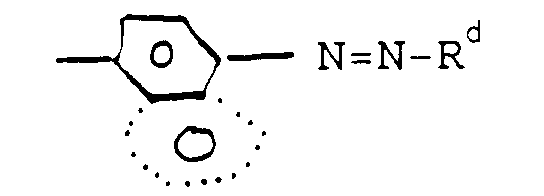
qui comprend la réaction entre un compose azo présentant un ou plusieurs groupes à hydrogène actif, et un composé d'isocyanate représenté par la formule générale (II):
- Procédé selon la revendication 2, dans lequel le composé d'isocyanate représenté par la formule (II) est le γ-isocyanate propyl triméthoxysilane.
- Procédé selon la revendication 2, dans lequel le composé d'isocyanate représenté par la formule (II) est le γ-isocyanate propyl triéthoxysilane.
- Procédé selon la revendication 2, dans lequel le composé d'isocyanate représenté par la formule (II) est le γ-isocyanate propylméthyl diméthoxysilane.
- Polymères vinyliques contenant un groupe silyle hydrolysable pouvant être obtenu par polymérisation de monomère(s) de vinyle en utilisant un composé azo contenant un groupe silyle hydrolysable représenté par la formule générale (I):

R¹ représente un groupe organique monovalent;
R² représente un groupe organique bivalent;
X représente un groupe hydrolysable;
Y représente -O-, -S-,
n est un entier valant 1 ou 2, comme initiateur de polymérisation radicalaire. - Polymères vinyliques contenant un groupe silyle hydrolysable selon la revendication 6, qui sont produits en utilisant de plus un agent de transfert de chaîne contenant un groupe silyle hydrolysable durant la polymérisation dudit ou desdits monomères vinyliques.
- Utilisation de composé azo contenant un groupe silyle hydrolysable représenté par la formule générale (I) :

R¹ représente un groupe organique monovalent;
R² représente un groupe organique bivalent;
X représente un groupe hydrolysable;
Y représente -O-, -S-,
n est un entier valant 1 ou 2, comme initiateur de polymérisation radicalaire pour la polymérisation de monomère(s) de vinyle. - Utilisation selon la revendication 8, dans laquelle un agent de transfert de chaîne contenant un groupe silyle hydrolysable est de plus utilisé durant la polymérisation dudit ou desdits monomères vinyliques.
Applications Claiming Priority (2)
| Application Number | Priority Date | Filing Date | Title |
|---|---|---|---|
| JP265662/88 | 1988-10-20 | ||
| JP63265662 | 1988-10-20 |
Publications (3)
| Publication Number | Publication Date |
|---|---|
| EP0365008A2 EP0365008A2 (fr) | 1990-04-25 |
| EP0365008A3 EP0365008A3 (fr) | 1991-04-03 |
| EP0365008B1 true EP0365008B1 (fr) | 1996-05-08 |
Family
ID=17420249
Family Applications (1)
| Application Number | Title | Priority Date | Filing Date |
|---|---|---|---|
| EP89119423A Expired - Lifetime EP0365008B1 (fr) | 1988-10-20 | 1989-10-19 | Composés azotés contenant un groupe silylé hydrolysable, leur procédé de préparation et polymères de vinyl contenant un groupe silylé préparés à partir de ceux-ci |
Country Status (4)
| Country | Link |
|---|---|
| US (1) | US5136029A (fr) |
| EP (1) | EP0365008B1 (fr) |
| CA (1) | CA2001034C (fr) |
| DE (1) | DE68926426T2 (fr) |
Families Citing this family (10)
| Publication number | Priority date | Publication date | Assignee | Title |
|---|---|---|---|---|
| US20140141262A1 (en) * | 2011-06-29 | 2014-05-22 | Sun Chemical Corporation | Vinyl alcohol polymers with silane side chains and compositions comprising the same |
| US8691925B2 (en) | 2011-09-23 | 2014-04-08 | Az Electronic Materials (Luxembourg) S.A.R.L. | Compositions of neutral layer for directed self assembly block copolymers and processes thereof |
| US8686109B2 (en) | 2012-03-09 | 2014-04-01 | Az Electronic Materials (Luxembourg) S.A.R.L. | Methods and materials for removing metals in block copolymers |
| US8835581B2 (en) * | 2012-06-08 | 2014-09-16 | Az Electronic Materials (Luxembourg) S.A.R.L. | Neutral layer polymer composition for directed self assembly and processes thereof |
| US10457088B2 (en) | 2013-05-13 | 2019-10-29 | Ridgefield Acquisition | Template for self assembly and method of making a self assembled pattern |
| US9093263B2 (en) | 2013-09-27 | 2015-07-28 | Az Electronic Materials (Luxembourg) S.A.R.L. | Underlayer composition for promoting self assembly and method of making and using |
| US9181449B2 (en) | 2013-12-16 | 2015-11-10 | Az Electronic Materials (Luxembourg) S.A.R.L. | Underlayer composition for promoting self assembly and method of making and using |
| EP3500637B1 (fr) | 2016-08-18 | 2022-06-22 | Merck Patent GmbH | Compositions polymères pour applications d'auto-assemblage |
| CN110114377B (zh) | 2016-12-21 | 2022-06-03 | 默克专利有限公司 | 嵌段共聚物自组装的新组合物和方法 |
| SG11202103809PA (en) | 2018-12-07 | 2021-05-28 | Merck Patent Gmbh | Rapid cross-linkable neutral underlayers for contact hole self-assembly of polystyrene-b- poly(methyl methacrylate) diblock copolymers and their formulation thereof |
Family Cites Families (5)
| Publication number | Priority date | Publication date | Assignee | Title |
|---|---|---|---|---|
| US3775386A (en) * | 1971-05-25 | 1973-11-27 | Du Pont | Polymers having silicon containing end groups and a process for their preparation |
| US3778430A (en) * | 1971-05-25 | 1973-12-11 | Du Pont | Silicon substituted azonitriles |
| GB1538256A (en) * | 1976-02-06 | 1979-01-17 | Malaysian Rubber Producers | Azosilanes and their use in reinforced rubber |
| US4316041A (en) * | 1980-02-19 | 1982-02-16 | Union Carbide Corporation | Liquid crystal silanes |
| JPS60228517A (ja) * | 1984-04-26 | 1985-11-13 | Kanegafuchi Chem Ind Co Ltd | 新規重合体の製造法 |
-
1989
- 1989-10-17 US US07/422,719 patent/US5136029A/en not_active Expired - Fee Related
- 1989-10-19 CA CA002001034A patent/CA2001034C/fr not_active Expired - Fee Related
- 1989-10-19 EP EP89119423A patent/EP0365008B1/fr not_active Expired - Lifetime
- 1989-10-19 DE DE68926426T patent/DE68926426T2/de not_active Expired - Fee Related
Also Published As
| Publication number | Publication date |
|---|---|
| EP0365008A3 (fr) | 1991-04-03 |
| CA2001034A1 (fr) | 1990-04-20 |
| DE68926426T2 (de) | 1997-01-02 |
| DE68926426D1 (de) | 1996-06-13 |
| US5136029A (en) | 1992-08-04 |
| CA2001034C (fr) | 1996-04-23 |
| EP0365008A2 (fr) | 1990-04-25 |
Similar Documents
| Publication | Publication Date | Title |
|---|---|---|
| US7129294B2 (en) | Functional groups-terminated vinyl polymers | |
| EP0307954B1 (fr) | Composition durcissable à température ambiante | |
| US4143089A (en) | Silylated polymers | |
| JP3688897B2 (ja) | 接着性硬化性組成物 | |
| JPH06172631A (ja) | 硬化性組成物 | |
| US7202310B2 (en) | Polymers, processes for producing the same, and curable compositions produced therefrom | |
| JPS63112642A (ja) | 硬化性組成物 | |
| JPS63443B2 (fr) | ||
| EP0673972A1 (fr) | Composition durcissable | |
| US5136029A (en) | Hydrolyzable silyl group-containing azo compound | |
| JPH0615594B2 (ja) | 新規硬化性樹脂 | |
| JP4098890B2 (ja) | 重合体及び用途 | |
| EP0424000B1 (fr) | Polymères silicones, copolymères et bloc-copolymères et méthode de leur préparation séquencée | |
| JP3895460B2 (ja) | 重合体、該重合体の製造方法、及び、該重合体を用いた硬化性組成物 | |
| US6072013A (en) | Silicone-grafted vinyl polymer and method for the preparation thereof | |
| US5185418A (en) | Hydrolyzable silyl group-containing azo compound, process for producing the same and silyl group-containing vinyl polymer produced by using the same | |
| EP0205096B1 (fr) | Procédé de préparation de polymère ayant la structure en peigne et contenant du silicium | |
| JP4044177B2 (ja) | 末端に架橋性シリル基を有する(メタ)アクリル系重合 体の製造方法 | |
| JP2788076B2 (ja) | 加水分解性シリル基含有アゾ系化合物 | |
| JP2719420B2 (ja) | 加水分解性シリル基含有ビニル系重合体の製造方法 | |
| JP2763677B2 (ja) | キュア可能な樹脂およびその製造方法ならびに該樹脂を含む組成物 | |
| JP3004223B2 (ja) | 一液型組成物 | |
| JP2892112B2 (ja) | 一液型組成物 | |
| EP1158006B1 (fr) | Polymere, procede de preparation du polymere, et composition durcissable contenant le polymere | |
| JP2754254B2 (ja) | 加水分解性シリル基含有ビニル系重合体 |
Legal Events
| Date | Code | Title | Description |
|---|---|---|---|
| PUAI | Public reference made under article 153(3) epc to a published international application that has entered the european phase |
Free format text: ORIGINAL CODE: 0009012 |
|
| AK | Designated contracting states |
Kind code of ref document: A2 Designated state(s): BE DE FR GB IT NL SE |
|
| PUAL | Search report despatched |
Free format text: ORIGINAL CODE: 0009013 |
|
| AK | Designated contracting states |
Kind code of ref document: A3 Designated state(s): BE DE FR GB IT NL SE |
|
| 17P | Request for examination filed |
Effective date: 19910826 |
|
| 17Q | First examination report despatched |
Effective date: 19931215 |
|
| GRAH | Despatch of communication of intention to grant a patent |
Free format text: ORIGINAL CODE: EPIDOS IGRA |
|
| GRAA | (expected) grant |
Free format text: ORIGINAL CODE: 0009210 |
|
| AK | Designated contracting states |
Kind code of ref document: B1 Designated state(s): BE DE FR GB IT NL SE |
|
| ITF | It: translation for a ep patent filed | ||
| REF | Corresponds to: |
Ref document number: 68926426 Country of ref document: DE Date of ref document: 19960613 |
|
| PG25 | Lapsed in a contracting state [announced via postgrant information from national office to epo] |
Ref country code: SE Effective date: 19960808 |
|
| ET | Fr: translation filed | ||
| PLBE | No opposition filed within time limit |
Free format text: ORIGINAL CODE: 0009261 |
|
| STAA | Information on the status of an ep patent application or granted ep patent |
Free format text: STATUS: NO OPPOSITION FILED WITHIN TIME LIMIT |
|
| 26N | No opposition filed | ||
| REG | Reference to a national code |
Ref country code: GB Ref legal event code: IF02 |
|
| PGFP | Annual fee paid to national office [announced via postgrant information from national office to epo] |
Ref country code: FR Payment date: 20021008 Year of fee payment: 14 |
|
| PGFP | Annual fee paid to national office [announced via postgrant information from national office to epo] |
Ref country code: GB Payment date: 20021016 Year of fee payment: 14 |
|
| PGFP | Annual fee paid to national office [announced via postgrant information from national office to epo] |
Ref country code: DE Payment date: 20021024 Year of fee payment: 14 |
|
| PGFP | Annual fee paid to national office [announced via postgrant information from national office to epo] |
Ref country code: NL Payment date: 20021031 Year of fee payment: 14 |
|
| PGFP | Annual fee paid to national office [announced via postgrant information from national office to epo] |
Ref country code: BE Payment date: 20021219 Year of fee payment: 14 |
|
| PG25 | Lapsed in a contracting state [announced via postgrant information from national office to epo] |
Ref country code: GB Free format text: LAPSE BECAUSE OF NON-PAYMENT OF DUE FEES Effective date: 20031019 |
|
| PG25 | Lapsed in a contracting state [announced via postgrant information from national office to epo] |
Ref country code: BE Free format text: LAPSE BECAUSE OF NON-PAYMENT OF DUE FEES Effective date: 20031031 |
|
| BERE | Be: lapsed |
Owner name: *KANEGAFUCHI KAGAKU KOGYO K.K. Effective date: 20031031 |
|
| PG25 | Lapsed in a contracting state [announced via postgrant information from national office to epo] |
Ref country code: NL Free format text: LAPSE BECAUSE OF NON-PAYMENT OF DUE FEES Effective date: 20040501 Ref country code: DE Free format text: LAPSE BECAUSE OF NON-PAYMENT OF DUE FEES Effective date: 20040501 |
|
| GBPC | Gb: european patent ceased through non-payment of renewal fee |
Effective date: 20031019 |
|
| PG25 | Lapsed in a contracting state [announced via postgrant information from national office to epo] |
Ref country code: FR Free format text: LAPSE BECAUSE OF NON-PAYMENT OF DUE FEES Effective date: 20040630 |
|
| NLV4 | Nl: lapsed or anulled due to non-payment of the annual fee |
Effective date: 20040501 |
|
| REG | Reference to a national code |
Ref country code: FR Ref legal event code: ST |
|
| PG25 | Lapsed in a contracting state [announced via postgrant information from national office to epo] |
Ref country code: IT Free format text: LAPSE BECAUSE OF NON-PAYMENT OF DUE FEES;WARNING: LAPSES OF ITALIAN PATENTS WITH EFFECTIVE DATE BEFORE 2007 MAY HAVE OCCURRED AT ANY TIME BEFORE 2007. THE CORRECT EFFECTIVE DATE MAY BE DIFFERENT FROM THE ONE RECORDED. Effective date: 20051019 |