EP0365820B1 - Verwendung optisch aktiver Carbonsäureester von Sauerstoff enthaltenden Heterocyclen als Dotierstoffe in Flüssigkristallmischungen und diese enthaltende Flüssigkristallmischungen - Google Patents
Verwendung optisch aktiver Carbonsäureester von Sauerstoff enthaltenden Heterocyclen als Dotierstoffe in Flüssigkristallmischungen und diese enthaltende Flüssigkristallmischungen Download PDFInfo
- Publication number
- EP0365820B1 EP0365820B1 EP89117264A EP89117264A EP0365820B1 EP 0365820 B1 EP0365820 B1 EP 0365820B1 EP 89117264 A EP89117264 A EP 89117264A EP 89117264 A EP89117264 A EP 89117264A EP 0365820 B1 EP0365820 B1 EP 0365820B1
- Authority
- EP
- European Patent Office
- Prior art keywords
- formula
- optically active
- carboxylic acid
- alkyl
- zero
- Prior art date
- Legal status (The legal status is an assumption and is not a legal conclusion. Google has not performed a legal analysis and makes no representation as to the accuracy of the status listed.)
- Expired - Lifetime
Links
- 239000000203 mixture Substances 0.000 title claims abstract description 20
- 229910052760 oxygen Inorganic materials 0.000 title claims abstract description 8
- 150000002148 esters Chemical class 0.000 title claims description 11
- 239000001301 oxygen Substances 0.000 title claims description 7
- QVGXLLKOCUKJST-UHFFFAOYSA-N atomic oxygen Chemical compound [O] QVGXLLKOCUKJST-UHFFFAOYSA-N 0.000 title claims description 6
- 239000002019 doping agent Substances 0.000 title abstract description 6
- -1 heterocyclic carboxylic acids Chemical class 0.000 title abstract description 6
- 239000007788 liquid Substances 0.000 title description 3
- HAIBGXNWAUQCEG-UHFFFAOYSA-N 1,3-dioxolane-4-carboxylic acid Chemical class OC(=O)C1COCO1 HAIBGXNWAUQCEG-UHFFFAOYSA-N 0.000 claims abstract description 13
- OTGHWLKHGCENJV-UHFFFAOYSA-N glycidic acid Chemical class OC(=O)C1CO1 OTGHWLKHGCENJV-UHFFFAOYSA-N 0.000 claims abstract description 13
- 229910052717 sulfur Inorganic materials 0.000 claims abstract description 3
- 150000001875 compounds Chemical class 0.000 claims description 15
- 125000004432 carbon atom Chemical group C* 0.000 claims description 14
- 125000000217 alkyl group Chemical group 0.000 claims description 11
- 239000004973 liquid crystal related substance Substances 0.000 claims description 6
- RGSFGYAAUTVSQA-UHFFFAOYSA-N Cyclopentane Chemical compound C1CCCC1 RGSFGYAAUTVSQA-UHFFFAOYSA-N 0.000 claims description 5
- 125000003545 alkoxy group Chemical group 0.000 claims description 4
- 125000000113 cyclohexyl group Chemical group [H]C1([H])C([H])([H])C([H])([H])C([H])(*)C([H])([H])C1([H])[H] 0.000 claims description 3
- WVIIMZNLDWSIRH-UHFFFAOYSA-N cyclohexylcyclohexane Chemical group C1CCCCC1C1CCCCC1 WVIIMZNLDWSIRH-UHFFFAOYSA-N 0.000 claims description 3
- 125000004435 hydrogen atom Chemical group [H]* 0.000 claims description 3
- WNXJIVFYUVYPPR-UHFFFAOYSA-N 1,3-dioxolane Chemical group C1COCO1 WNXJIVFYUVYPPR-UHFFFAOYSA-N 0.000 claims description 2
- XDTMQSROBMDMFD-UHFFFAOYSA-N Cyclohexane Chemical compound C1CCCCC1 XDTMQSROBMDMFD-UHFFFAOYSA-N 0.000 claims description 2
- NINIDFKCEFEMDL-UHFFFAOYSA-N Sulfur Chemical compound [S] NINIDFKCEFEMDL-UHFFFAOYSA-N 0.000 claims description 2
- 125000003342 alkenyl group Chemical group 0.000 claims description 2
- 125000003302 alkenyloxy group Chemical group 0.000 claims description 2
- 125000004429 atom Chemical group 0.000 claims description 2
- 125000000582 cycloheptyl group Chemical group [H]C1([H])C([H])([H])C([H])([H])C([H])([H])C([H])(*)C([H])([H])C1([H])[H] 0.000 claims description 2
- DMEGYFMYUHOHGS-UHFFFAOYSA-N heptamethylene Natural products C1CCCCCC1 DMEGYFMYUHOHGS-UHFFFAOYSA-N 0.000 claims description 2
- 239000011593 sulfur Substances 0.000 claims description 2
- 239000000126 substance Substances 0.000 claims 1
- 230000002269 spontaneous effect Effects 0.000 abstract description 9
- 238000002844 melting Methods 0.000 abstract description 4
- 230000008018 melting Effects 0.000 abstract description 4
- 125000001997 phenyl group Chemical group [H]C1=C([H])C([H])=C(*)C([H])=C1[H] 0.000 abstract description 2
- 125000002496 methyl group Chemical group [H]C([H])([H])* 0.000 abstract 1
- YMWUJEATGCHHMB-UHFFFAOYSA-N Dichloromethane Chemical compound ClCCl YMWUJEATGCHHMB-UHFFFAOYSA-N 0.000 description 20
- 230000010287 polarization Effects 0.000 description 8
- HEDRZPFGACZZDS-UHFFFAOYSA-N Chloroform Chemical compound ClC(Cl)Cl HEDRZPFGACZZDS-UHFFFAOYSA-N 0.000 description 6
- WYURNTSHIVDZCO-UHFFFAOYSA-N Tetrahydrofuran Chemical compound C1CCOC1 WYURNTSHIVDZCO-UHFFFAOYSA-N 0.000 description 4
- 238000000819 phase cycle Methods 0.000 description 4
- XEKOWRVHYACXOJ-UHFFFAOYSA-N Ethyl acetate Chemical compound CCOC(C)=O XEKOWRVHYACXOJ-UHFFFAOYSA-N 0.000 description 3
- ZMANZCXQSJIPKH-UHFFFAOYSA-N Triethylamine Chemical compound CCN(CC)CC ZMANZCXQSJIPKH-UHFFFAOYSA-N 0.000 description 3
- 239000002253 acid Substances 0.000 description 3
- VLKZOEOYAKHREP-UHFFFAOYSA-N n-Hexane Chemical compound CCCCCC VLKZOEOYAKHREP-UHFFFAOYSA-N 0.000 description 3
- IBYIRCIVTGUDNK-UHFFFAOYSA-N 2-(4-butoxyphenyl)-5-octoxypyrimidine Chemical compound N1=CC(OCCCCCCCC)=CN=C1C1=CC=C(OCCCC)C=C1 IBYIRCIVTGUDNK-UHFFFAOYSA-N 0.000 description 2
- XYGUNTNTTDQAGL-UHFFFAOYSA-N 2-(4-decoxyphenyl)-5-octoxypyrimidine Chemical compound C1=CC(OCCCCCCCCCC)=CC=C1C1=NC=C(OCCCCCCCC)C=N1 XYGUNTNTTDQAGL-UHFFFAOYSA-N 0.000 description 2
- HOAGGFRICQSSLG-UHFFFAOYSA-N 2-(4-hexoxyphenyl)-5-octoxypyrimidine Chemical compound N1=CC(OCCCCCCCC)=CN=C1C1=CC=C(OCCCCCC)C=C1 HOAGGFRICQSSLG-UHFFFAOYSA-N 0.000 description 2
- IETWSNMXSKALFY-UHFFFAOYSA-N 5-octoxy-2-(4-octoxyphenyl)pyrimidine Chemical compound C1=CC(OCCCCCCCC)=CC=C1C1=NC=C(OCCCCCCCC)C=N1 IETWSNMXSKALFY-UHFFFAOYSA-N 0.000 description 2
- 0 CC(COC1(CCCCC1)O)*(c(cc1)ccc1*(c(ccc(*)c1F)c1F)=O)=O Chemical compound CC(COC1(CCCCC1)O)*(c(cc1)ccc1*(c(ccc(*)c1F)c1F)=O)=O 0.000 description 2
- UFZWYOALCMXFLS-FBSWEULCSA-N CCCCCCCCCCC1=CN=C(C2=CC=C([C@H]3CC[C@H](CCCCC)CC3)C=C2)N=C1 Chemical compound CCCCCCCCCCC1=CN=C(C2=CC=C([C@H]3CC[C@H](CCCCC)CC3)C=C2)N=C1 UFZWYOALCMXFLS-FBSWEULCSA-N 0.000 description 2
- VYPSYNLAJGMNEJ-UHFFFAOYSA-N Silicium dioxide Chemical compound O=[Si]=O VYPSYNLAJGMNEJ-UHFFFAOYSA-N 0.000 description 2
- 239000004990 Smectic liquid crystal Substances 0.000 description 2
- LPPDAXMZOIJDJJ-POURPWNDSA-N [2-[2-(4-decoxy-2,3-difluorobenzoyl)oxyphenyl]pyrimidin-5-yl] (2r,3r)-3-propyloxirane-2-carboxylate Chemical compound FC1=C(F)C(OCCCCCCCCCC)=CC=C1C(=O)OC1=CC=CC=C1C(N=C1)=NC=C1OC(=O)[C@H]1[C@@H](CCC)O1 LPPDAXMZOIJDJJ-POURPWNDSA-N 0.000 description 2
- MLGHFFXVPMDMBK-SHQCIBLASA-N [4-(4-decoxy-2,3-difluorobenzoyl)oxyphenyl] (2r,3r)-3-propyloxirane-2-carboxylate Chemical compound FC1=C(F)C(OCCCCCCCCCC)=CC=C1C(=O)OC(C=C1)=CC=C1OC(=O)[C@H]1[C@@H](CCC)O1 MLGHFFXVPMDMBK-SHQCIBLASA-N 0.000 description 2
- 230000015572 biosynthetic process Effects 0.000 description 2
- 238000004587 chromatography analysis Methods 0.000 description 2
- 238000005352 clarification Methods 0.000 description 2
- 125000000623 heterocyclic group Chemical group 0.000 description 2
- 125000004528 pyrimidin-5-yl group Chemical group N1=CN=CC(=C1)* 0.000 description 2
- 238000001953 recrystallisation Methods 0.000 description 2
- YLQBMQCUIZJEEH-UHFFFAOYSA-N tetrahydrofuran Natural products C=1C=COC=1 YLQBMQCUIZJEEH-UHFFFAOYSA-N 0.000 description 2
- ZUXGVGARWYYZKY-RFZPGFLSSA-N (2r,3r)-3-propyloxirane-2-carboxylic acid Chemical compound CCC[C@H]1O[C@H]1C(O)=O ZUXGVGARWYYZKY-RFZPGFLSSA-N 0.000 description 1
- XTOHWTVYNPBPTG-UHFFFAOYSA-N 2-(1,3-dioxolan-4-yl)acetic acid Chemical compound OC(=O)CC1COCO1 XTOHWTVYNPBPTG-UHFFFAOYSA-N 0.000 description 1
- ZVNYKZKUBKIIAH-UHFFFAOYSA-N 2-(oxiran-2-yl)acetic acid Chemical compound OC(=O)CC1CO1 ZVNYKZKUBKIIAH-UHFFFAOYSA-N 0.000 description 1
- QOSSAOTZNIDXMA-UHFFFAOYSA-N Dicylcohexylcarbodiimide Chemical compound C1CCCCC1N=C=NC1CCCCC1 QOSSAOTZNIDXMA-UHFFFAOYSA-N 0.000 description 1
- MYMOFIZGZYHOMD-UHFFFAOYSA-N Dioxygen Chemical compound O=O MYMOFIZGZYHOMD-UHFFFAOYSA-N 0.000 description 1
- 239000002262 Schiff base Substances 0.000 description 1
- 150000004753 Schiff bases Chemical class 0.000 description 1
- DVTASCHDEJXYFM-UYAOXDASSA-N [2-[4-(2,3-difluorobenzoyl)oxyphenyl]pyrimidin-5-yl] (2R,3R)-3-propyloxirane-2-carboxylate Chemical compound FC1=C(C(=O)OC2=CC=C(C=C2)C2=NC=C(C=N2)OC(=O)[C@@H]2O[C@@H]2CCC)C=CC=C1F DVTASCHDEJXYFM-UYAOXDASSA-N 0.000 description 1
- ILUURIRFZMUVMP-WOJBJXKFSA-N [2-[4-(2,4-difluorobenzoyl)oxyphenyl]pyrimidin-5-yl] (2R,3R)-3-propyloxirane-2-carboxylate Chemical compound FC1=C(C(=O)OC2=CC=C(C=C2)C2=NC=C(C=N2)OC(=O)[C@@H]2O[C@@H]2CCC)C=CC(=C1)F ILUURIRFZMUVMP-WOJBJXKFSA-N 0.000 description 1
- AXCFBFQCPBVKCP-KAYWLYCHSA-N [4-(3-chloro-4-decoxybenzoyl)oxyphenyl] (2R,3R)-3-propyloxirane-2-carboxylate Chemical compound C(CC)[C@@H]1[C@@H](O1)C(=O)OC1=CC=C(C=C1)OC(C1=CC(=C(C=C1)OCCCCCCCCCC)Cl)=O AXCFBFQCPBVKCP-KAYWLYCHSA-N 0.000 description 1
- XZUATOQZUNAQCY-UHFFFAOYSA-N [4-(5-hydroxypyrimidin-2-yl)phenyl] 2,4-difluorobenzoate Chemical compound OC=1C=NC(=NC1)C1=CC=C(C=C1)OC(C1=C(C=C(C=C1)F)F)=O XZUATOQZUNAQCY-UHFFFAOYSA-N 0.000 description 1
- 150000007513 acids Chemical class 0.000 description 1
- 235000010290 biphenyl Nutrition 0.000 description 1
- 150000004074 biphenyls Chemical class 0.000 description 1
- 150000001733 carboxylic acid esters Chemical class 0.000 description 1
- 230000003098 cholesteric effect Effects 0.000 description 1
- 150000001840 cholesterol esters Chemical class 0.000 description 1
- 150000001851 cinnamic acid derivatives Chemical class 0.000 description 1
- 229910052681 coesite Inorganic materials 0.000 description 1
- 239000000470 constituent Substances 0.000 description 1
- 238000001816 cooling Methods 0.000 description 1
- 229910052906 cristobalite Inorganic materials 0.000 description 1
- 239000013078 crystal Substances 0.000 description 1
- IGARGHRYKHJQSM-UHFFFAOYSA-N cyclohexylbenzene Chemical class C1CCCCC1C1=CC=CC=C1 IGARGHRYKHJQSM-UHFFFAOYSA-N 0.000 description 1
- 239000005262 ferroelectric liquid crystals (FLCs) Substances 0.000 description 1
- 239000000706 filtrate Substances 0.000 description 1
- 238000004519 manufacturing process Methods 0.000 description 1
- PSHKMPUSSFXUIA-UHFFFAOYSA-N n,n-dimethylpyridin-2-amine Chemical compound CN(C)C1=CC=CC=N1 PSHKMPUSSFXUIA-UHFFFAOYSA-N 0.000 description 1
- 238000000746 purification Methods 0.000 description 1
- 150000003230 pyrimidines Chemical class 0.000 description 1
- 239000000377 silicon dioxide Substances 0.000 description 1
- 235000012239 silicon dioxide Nutrition 0.000 description 1
- 238000003756 stirring Methods 0.000 description 1
- 229910052682 stishovite Inorganic materials 0.000 description 1
- 239000000725 suspension Substances 0.000 description 1
- 150000001911 terphenyls Chemical class 0.000 description 1
- 229910052905 tridymite Inorganic materials 0.000 description 1
Classifications
-
- C—CHEMISTRY; METALLURGY
- C09—DYES; PAINTS; POLISHES; NATURAL RESINS; ADHESIVES; COMPOSITIONS NOT OTHERWISE PROVIDED FOR; APPLICATIONS OF MATERIALS NOT OTHERWISE PROVIDED FOR
- C09K—MATERIALS FOR MISCELLANEOUS APPLICATIONS, NOT PROVIDED FOR ELSEWHERE
- C09K19/00—Liquid crystal materials
- C09K19/02—Liquid crystal materials characterised by optical, electrical or physical properties of the components, in general
-
- C—CHEMISTRY; METALLURGY
- C07—ORGANIC CHEMISTRY
- C07D—HETEROCYCLIC COMPOUNDS
- C07D317/00—Heterocyclic compounds containing five-membered rings having two oxygen atoms as the only ring hetero atoms
- C07D317/08—Heterocyclic compounds containing five-membered rings having two oxygen atoms as the only ring hetero atoms having the hetero atoms in positions 1 and 3
- C07D317/72—Heterocyclic compounds containing five-membered rings having two oxygen atoms as the only ring hetero atoms having the hetero atoms in positions 1 and 3 spiro-condensed with carbocyclic rings
-
- C—CHEMISTRY; METALLURGY
- C07—ORGANIC CHEMISTRY
- C07D—HETEROCYCLIC COMPOUNDS
- C07D303/00—Compounds containing three-membered rings having one oxygen atom as the only ring hetero atom
- C07D303/02—Compounds containing oxirane rings
- C07D303/48—Compounds containing oxirane rings with hetero atoms or with carbon atoms having three bonds to hetero atoms with at the most one bond to halogen, directly attached to ring carbon atoms, e.g. ester or nitrile radicals
-
- C—CHEMISTRY; METALLURGY
- C07—ORGANIC CHEMISTRY
- C07D—HETEROCYCLIC COMPOUNDS
- C07D405/00—Heterocyclic compounds containing both one or more hetero rings having oxygen atoms as the only ring hetero atoms, and one or more rings having nitrogen as the only ring hetero atom
- C07D405/02—Heterocyclic compounds containing both one or more hetero rings having oxygen atoms as the only ring hetero atoms, and one or more rings having nitrogen as the only ring hetero atom containing two hetero rings
- C07D405/12—Heterocyclic compounds containing both one or more hetero rings having oxygen atoms as the only ring hetero atoms, and one or more rings having nitrogen as the only ring hetero atom containing two hetero rings linked by a chain containing hetero atoms as chain links
-
- C—CHEMISTRY; METALLURGY
- C09—DYES; PAINTS; POLISHES; NATURAL RESINS; ADHESIVES; COMPOSITIONS NOT OTHERWISE PROVIDED FOR; APPLICATIONS OF MATERIALS NOT OTHERWISE PROVIDED FOR
- C09K—MATERIALS FOR MISCELLANEOUS APPLICATIONS, NOT PROVIDED FOR ELSEWHERE
- C09K19/00—Liquid crystal materials
- C09K19/52—Liquid crystal materials characterised by components which are not liquid crystals, e.g. additives with special physical aspect: solvents, solid particles
- C09K19/58—Dopants or charge transfer agents
-
- C—CHEMISTRY; METALLURGY
- C09—DYES; PAINTS; POLISHES; NATURAL RESINS; ADHESIVES; COMPOSITIONS NOT OTHERWISE PROVIDED FOR; APPLICATIONS OF MATERIALS NOT OTHERWISE PROVIDED FOR
- C09K—MATERIALS FOR MISCELLANEOUS APPLICATIONS, NOT PROVIDED FOR ELSEWHERE
- C09K19/00—Liquid crystal materials
- C09K19/52—Liquid crystal materials characterised by components which are not liquid crystals, e.g. additives with special physical aspect: solvents, solid particles
- C09K19/58—Dopants or charge transfer agents
- C09K19/586—Optically active dopants; chiral dopants
- C09K19/588—Heterocyclic compounds
Definitions
- optically active carboxylic acid esters according to the invention of heterocycles containing oxygen in the terminal acyl radical are characterized in that at least one of the radicals -A1, -A2 and -A3 is at least once represented by F, Cl, Br, CN and / or a lateral alkyl or alkyloxy group with 1 is substituted up to 10 carbon atoms.
- esters according to the invention also have a large negative ⁇ , ie they are dielectric negative.
- liquid crystal mixtures according to the invention consist of 2 to 20, preferably 2 to 15 components, including at least one of the chiral dopants claimed according to the invention.
- the other constituents are preferably selected from the known compounds with nematic, cholesteric and / or smectic phases; These include, for example, Schiff bases, biphenyls, terphenyls, phenylcyclohexanes, cyclohexylbiphenyls, N-, S- or O-containing heterocycles, for example pyrimidines, cinnamic acid esters, cholesterol esters or differently bridged, terminally polar, multinuclear esters of p-alkylbenzoic acids.
- the commercially available liquid crystal mixtures are present before the addition of the optically active compound (s) as mixtures of a wide variety of components, at least one of which is mesogenic, ie as a compound, in a derivatized form or in a mixture with certain co-components which shows a liquid crystal phase which at least one enantiotropic (clarification temperature> melting temperature) or monotropic (clarification temperature ⁇ melting temperature) mesophase formation can be expected.
- the compound exhibits a spontaneous polarization of 9 nC / cm2 at 60 ° C. with 5 mol% doping.
- a ferroelectric liquid-crystalline mixture consists of 6 components 5-octyloxy-2- (4-butyloxyphenyl) pyrimidine 25.4 mol% 5-octyloxy-2- (4-hexyloxyphenyl) pyrimidine 24.1 mol% 5-octyloxy-2- (4-octyloxyphenyl) pyrimidine 11.1 mol% 5-octyloxy-2- (4-decyloxyphenyl) pyrimidine 20.2 mol% [4- (5-decyl-pyrimidin-2-yl)] phenyl trans-4-pentyl-cyclohexane carboxylic acid 14.2 mol% (2R, 3R) -3-propyloxirane-2-carboxylic acid [2- (4-decyloxy-2,3-difluorobenzoyloxy) phenyl pyrimidin-5-yl] ester 5 mol% shows the following liquid crystalline phase ranges: S *
- a ferroelectric liquid-crystalline mixture consists of 6 components 5-octyloxy-2- (4-butyloxyphenyl) pyrimidine 24 mol% 5-octyloxy-2- (4-hexyloxyphenyl) pyrimidine 22.8 mol% 5-octyloxy-2- (4-octyloxyphenyl) pyrimidine 10.5 mol% 5-octyloxy-2- (4-decyloxyphenyl) pyrimidine 19.2 mol% [4- (5-decyl-pyrimidin-2-yl)] phenyl trans-4-pentyl-cyclohexane carboxylic acid 13.5 mol% (2R, 3R) -3-propyloxirane-2-carboxylic acid [4- (4-decyloxy-2,3-difluorobenzoyloxy) phenyl] ester 10 mol% shows the following liquid crystalline phase ranges: S * c 73 p * A
- liquid-crystalline mixture claimed in DE-A-38 31 226.3 which differs from the above-mentioned ferroelectric mixture only in that it contains no dopant, has the following phase ranges S c 84 S A 93 N 105 I
Landscapes
- Chemical & Material Sciences (AREA)
- Organic Chemistry (AREA)
- Crystallography & Structural Chemistry (AREA)
- Engineering & Computer Science (AREA)
- Materials Engineering (AREA)
- Liquid Crystal Substances (AREA)
- Plural Heterocyclic Compounds (AREA)
- Organic Low-Molecular-Weight Compounds And Preparation Thereof (AREA)
- Heterocyclic Compounds That Contain Two Or More Ring Oxygen Atoms (AREA)
- Epoxy Compounds (AREA)
Description
- In den prioritätsälteren, nicht-vorveröffentlichten DE-A-37 13 273 und 37 18 174 werden optisch aktive 1,3-Dioxolan-4-carbonsäureester bzw. Oxiran-2-carbonsäureester vorgestellt, die sich durch die folgende allgemeine Formel (I) beschreiben lassen:
R¹(-A¹)j(-M¹)k(-A²)l(-M²)m(-A³)n-X-Ac (I)
in der bedeuten:
R¹ -X-Ac; H;
eine geradkettige oder verzweigte Alkyl- oder Alkyloxykette mit 1-16 C-Atomen; eine geradkettige oder verzweigte Alkenyl- oder Alkenyloxykette mit 3-16 C-Atomen, wobei eine oder mehrere nicht benachbarte -CH₂-Gruppen durch -O-, -S-, -CO-, -O-CO- oder -CO-O-ersetzt sein können und wobei ein oder mehrere H-Atome durch F, Cl, Br oder CN ersetzt sein können;
oder F, Cl, Br oder CN
-A¹, -A²

-A³
-M¹, -M² -CO-O, -O-CO, -CH₂CH₂, -CH=CH, -CH₂O, -OCH₂
j und l null, 1 oder 2
k und m null oder 1
n null, 1 oder 2 mit folgender Maßgabe: wenn j und/oder l = null sind, ist - k =
- null; wenn n = null ist, ist m = null; die Summe j+l+n ist minimal 1 und maximal 3,
- X
- Sauerstoff oder Schwefel
- Ac
- der Acylrest einer Oxiran-2-carbonsäure (II)


- R²
- H oder Alkyl mit C₁-C₁₆, oder Cyclohexyl oder Bicyclohexyl, die auch jeweils in Position 4 bzw. 4' durch eine Alkylkette mit 1 bis 16 C-Atomen substituiert sein können,
- R³
- H oder Alkyl mit 1 bis 16 C-Atomen
- R⁴
- H oder ein Alkylrest mit 1 bis 10 oder ein Alkenylrest mit 2 bis 10 C-Atomen
- R⁵ und R⁶
- jeweils H oder ein Alkylrest mit 1 bis 10 C-Atomen, wobei ein oder mehrere H des Alkylrestes durch F ersetzt sein können, oder R² und R³ bilden zusammen mit dem C(2)-Atom des Dioxolanrings einen Cyclopentan-, Cyclohexan- oder Cycloheptanring.
- Die erfindungsgemäßen optische aktiven Carbonsäureester von im endständigen Acylrest Sauerstoff enthaltenden Heterocyclen sind dadurch gekennzeichnet, daß mindestens einer der Reste -A¹, -A² und -A³ mindestens einmal durch F, Cl, Br, CN und/oder eine laterale Alkyl- oder Alkyloxygruppe mit 1 bis 10 C-Atomen substituiert ist.
- Man erhält diese Verbindungen durch Umsetzung von Oxiran-2-carbonsäuren der Formel (IIa) bzw. 1,3-Dioxolan-4-carbonsäuren der Formel (IIIa)

oder ihrer zur Esterbildung befähigten Derivate mit Verbindungen (IV)
R¹(-A¹)j(-M¹)k(-A²)l(-M²)m(-A³)n-XH (IV)
in an sich bekannter Weise. - Sie dienen insbesondere als Dotierstoffe zur Erzeugung ferroelektrischer Flüssigkristallmischungen.
In geneigt-smektischen Flüssigkristallphasen induzieren sie eine hohe spontane Polarisation und bewirken eine starke Schmelzpunkterniedrigung. Die erfindungsgemäßen Ester besitzen ferner ein großes negatives Δε, d.h. sie sind dielektrisch negativ. - Besonders geeignet sind optisch aktive Ester der Formel (I) bei denen
-A¹, -A², -A³ =
-M¹, M² =
-CO-O , -O-CO , -CH₂O , -OCH₂ ;
X = Sauerstoff
Ac = der Acylrest einer Oxiran-2-carbonsäure der Formel (II) oder einer 1,3-Dioxolan-4-carbonsäure der Formel (III) bedeuten und
R¹, R², R³, R⁴, R⁵, R⁶, j, k, l, m, n die oben genannten Bedeutungen tragen. - Die erfindungsgemäßen Flüssigkristallmischungen bestehen aus 2 bis 20, vorzugsweise 2 bis 15 Komponenten, darunter mindestens einer der erfindungsgemäß beanspruchten chiralen Dotierstoffe.
- Die anderen Bestandteile werden vorzugsweise ausgewählt aus den bekannten Verbindungen mit nematischen, cholesterischen und/oder smektischen Phasen; dazu gehören beispielsweise Schiffsche Basen, Biphenyle, Terphenyle, Phenylcyclohexane, Cyclohexylbiphenyle, N-, S- oder O-haltige Heterocyclen, z.B. Pyrimidine, Zimtsäureester, Cholesterinester oder verschieden überbrückte, terminalpolar mehrkernige Ester von p-Alkylbenzoesäuren. Im allgemeinen liegen die im Handel erhältlichen Flüssigkristallmischungen bereits vor der Zugabe der optisch aktiven Verbindung(en) als Gemische verschiedenster Komponenten vor, von denen mindestens eine mesogen ist, d.h. als Verbindung, in derivatisierter Form oder im Gemisch mit bestimmten Cokomponenten eine Flüssigkristallphase zeigt, die mindestens eine enantiotrope (Klärtemperatur > Schmelztemperatur) oder monotrope (Klärtemperatur < Schmelztemperatur) Mesophasenbildung erwarten läßt.
-

- 984 mg (3 mmol) 2,4-Difluorbenzoesäure[4-(5-hydroxypyrimidin-2-yl)phenyl]ester werden in 25 ml Dichlormethan vorgelegt. Man versetzte die gerührte Suspension mit 680 mg (3,3 mmol) Dicyclohexylcarbodiimid, 430 mg (2R,3R)-3-Propyloxiran-2-carbonsäure sowie 40 mg Dimethylaminopyridin und rührte 20 h bei Raumtemperatur weiter. Nach Chromatographie und mehrmaligem Umkristallisieren erhält man farblose Kristalle vom Schmp. 94,1 °C mit 64,2 J/g.
[α]
- In einer nicht-chiralen Testmischung mit der Phasenfolge K12,5Sc83SA95N100 I weist die Verbindung bei 5 Mol-% Dotierung eine spontane Polarisation von 9 nC/cm² auf bei 60 °C.
- Analog wurden synthetisiert:
-

-
Schmp. 97 °C mit 70 J/g
[α]
Spontanpolarisation: 19 nC/cm² -

- Schmp. 66,4 °C mit 61,2 J/g
[α]
Spontanpolarisation: 14,5 nC/cm² -

- Zu einer Lösung von 4,6 g 4-[4-(3-Chlor-4-decyloxybenzoyloxy)]phenol in 50 ml Tetrahydrofuran werden 1,6 ml Triethylamin gegeben. Nach Kühlung auf 0 °C wird binnen 5 min mit einer Lösung von 2,33 g (4R)-2,2-Pentamethylen-1,3-dioxolan-4-carbonsäurechlorid in 15 ml Tetrahydrofuran versetzt. Nach 2 h wird filtriert, das Filtrat zur Trockne gebracht und chromatographisch (SiO₂, Dichlormethan/Ethylacetat 97:3) gereinigt. Eine weitere Reinigung erfolgt durch Umkristallisation aus Hexan.
Schmp. 81,3 °C mit 69,1 J/g
[α]
- In einer nicht-chiralen Testmischung mit der Phasenfolge K12,5Sc83SA95N100 I bei 10 Mol-% Dotierung weist die Verbindung bei 40 °C eine spontane Polarisation von 25 nC/cm² auf.
- Analog werden erhalten:
-

- Schmp. 140,7 °C mit 79,5 J/g
[α]
Spontane Polarisation: 9,5 nC/cm² bei 60 °C (10 Mol-%) -

- Schmp. 161 °C mit 83,1 J/g
[α]
Analog zu Beispiel 1 werden erhalten: -

- Schmp. 119 °C
[α]
-

- [α]

Phasenfolge: K 55 I - Analog zu Beispiel 4 werden erhalten:
-

- Schmp. 86,7 °C
[α]
-

- [α]

Phasenfolge K(104Sx133) 149 N* 162 I -
a) Eine ferroelektrische flüssigkristalline Mischung besteht aus 6 Komponenten5-Octyloxy-2-(4-butyloxy-phenyl)-pyrimidin 25,4 Mol-% 5-Octyloxy-2-(4-hexyloxy-phenyl)-pyrimidin 24,1 Mol-% 5-Octyloxy-2-(4-octyloxy-phenyl)-pyrimidin 11,1 Mol-% 5-Octyloxy-2-(4-decyloxy-phenyl)-pyrimidin 20,2 Mol-% trans-4-Pentyl-cyclohexancarbonsäure-[4-(5-decyl-pyrimidin-2-yl)]-phenylester 14,2 Mol-% (2R,3R)-3-Propyloxiran-2-carbonsäure-[2-(4-decyloxy-2,3-difluorbenzoyloxy)-phenyl-pyrimidin-5-yl]ester 5 Mol-%
S
und weist bei 40 °C eine spontane Polarisation von 36 nC·cm⁻² und eine Schaltzeit von 42,6 µs auf.
b) Im Vergleich dazu weist die, in DE 38 31 226.3 beanspruchte flüssigkristalline Mischung, die sich von der obengenannten ferroelektrischen Mischung nur dadurch unterscheidet, daß sie keinen Dotierstoff enthält, folgende Phasenbereiche auf
Sc 84 SA 93 N 105 I -
a) Eine ferroelektrische flüssigkristalline Mischung besteht aus 6 Komponenten5-Octyloxy-2-(4-butyloxy-phenyl)-pyrimidin 24 Mol-% 5-Octyloxy-2-(4-hexyloxy-phenyl)-pyrimidin 22,8 Mol-% 5-Octyloxy-2-(4-octyloxy-phenyl)-pyrimidin 10,5 Mol-% 5-Octyloxy-2-(4-decyloxy-phenyl)-pyrimidin 19,2 Mol-% trans-4-Pentyl-cyclohexancarbonsäure-[4-(5-decyl-pyrimidin-2-yl)]-phenylester 13,5 Mol-% (2R,3R)-3-Propyloxiran-2-carbonsäure-[4-(4-decyloxy-2,3-difluorbenzoyloxy)-phenyl]ester 10 Mol-%
S

und weist bei 40 °C eine spontane Polarisation von 38 nC·cm⁻² und eine Schaltzeit von 23,2 µs auf.
b) Im Vergleich dazu weist die, in DE-A-38 31 226.3 beanspruchte flüssigkristalline Mischung, die sich von der obengenannten ferroelektrischen Mischung nur dadurch unterscheidet, daß sie keinen Dotierstoff enthält, folgende Phasenbereiche auf
Sc 84 SA 93 N 105 I
Claims (10)
- Verwendung von Verbindungen der allgemeinen Formel (I)
R¹(-A¹)j(-M¹)k(-A²)l(-M²)m(-A³) n-X-Ac (I)
in der bedeutenR¹ -X-Ac; H;
eine geradkettige oder verzweigte Alkyl- oder Alkyloxykette mit 1-16 C-Atomen; eine geradkettige oder verzweigte Alkenyl- oder Alkenyloxykette mit 3-16 C-Atomen, wobei eine oder mehrere nicht benachbarte -CH₂-Gruppen durch -O-, -S-, -CO-, -O-CO- oder -CO-O-ersetzt sein können und wobei ein oder mehrere H-Atome durch F, Cl, Br oder CN ersetzt sein können; oder F, Cl, Br oder CN-A¹, -A² -A³
-A³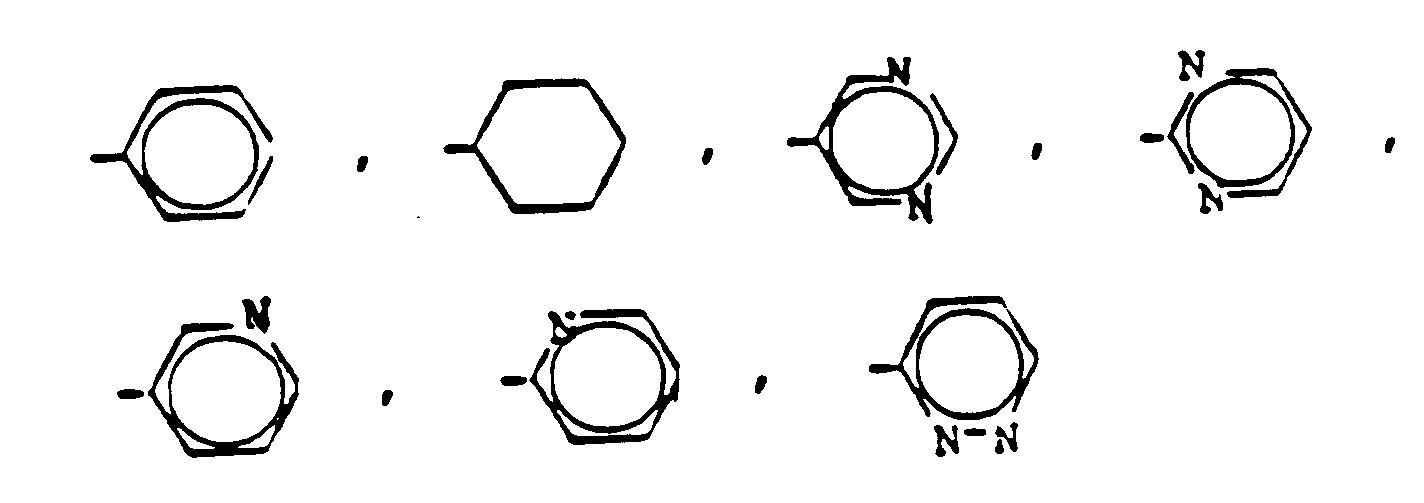 -M¹, -M² -CO-O, -O-CO, -CH₂CH₂, -CH=CH, -CH₂O, -OCH₂j und l null, 1 oder 2k und m null oder 1n null, 1 oder 2mit folgender Maßgabe: wenn j und/oder l = null sind, ist k = null; wenn n = null ist, ist m = null; die Summe j+l+n ist minimal 1 und maximal 3,X Sauerstoff oder SchwefelAc der Acylrest einer Oxiran-2-carbonsäure (II)oder einer 1,3-Dioxolan-4-carbonsäure (III)
 R² H oder Alkyl mit C₁-C₁₆, oder Cyclohexyl oder Bicyclohexyl, die auch jeweils in Position 4 bzw. 4' durch eine Alkylkette mit 1 bis 16 C-Atomen substituiert sein können,R³ H oder Alkyl mit 1 bis 16 C-AtomenR⁴ H oder ein Alkylrest mit 1 bis 10 oder ein Alkenylrest mit 2 bis 10 C-AtomenR⁵ und R⁶ jeweils H oder ein Alkylrest mit 1 bis 10 C-Atomen, wobei ein oder mehrere H des Alkylrestes, durch F ersetzt sein können, oder R² und R³ bilden zusammen mit dem C(2)-Atom des Dioxolanrings einen Cyclopentan-, Cyclohexan- oder Cycloheptanring,mit der Maßgabe, daß mindestens einer der Reste -A¹, -A² und -A³ mindestens einmal durch F, Cl, Br, CN und/oder eine laterale Alkyl- oder Alkyloxygruppe mit 1 bis 10 C-Atomen substituiert ist, als Dotierstoffe in Flüssigkristallmischungen.
 - Verwendung von optisch aktiven Verbindungen der Formel (I), wobei die Symbole folgende Bedeutungen haben:-A¹, -A², -A³ =
 -M¹, M² =
-CO-O , -O-CO , -CH₂O , -OCH₂ ;X = SauerstoffAc = der Acylrest einer Oxiran-2-carbonsäure der Formel (II) oder einer 1,3-Dioxolan-4-carbonsäure der Formel (III)und R¹, R², R³, R⁴, R⁵, R⁶, j, k, l, m, n die in Anspruch 1 genannten Bedeutungen tragen. - Verwendung von optisch aktiven Verbindungen der Formel (I) nach Anspruch 2, dadurch gekennzeichnet, daß Ac der Acylrest einer Oxiran-2-carbonsäure der Formel (II) ist.
- Verwendung von optisch aktiven Verbindung en der Formel (I) nach Anspruch 2, dadurch gekennzeichnet, daß Ac der Acylrest einer 1,3-Dioxolan-4-carbonsäure der Formel (III) ist.
- Flüssigkristallmischung enthaltend mindestens einen Ester der Formel (I) nach Anspruch 1.
- Flüssigkristallmischung enthaltend mindestens einen Ester der Formel (I) nach Anspruch 2.
- Optisch aktive Verbindung der Formel (I) nach Anspruch 1.
- Optisch aktive Verbindung der Formel (I) nach Anspruch 2.
- Optisch aktive Verbindung der Formel (I) nach Anspruch 3.
- Optisch aktive Verbindung der Formel (I) nach Anspruch 4.
Priority Applications (1)
| Application Number | Priority Date | Filing Date | Title |
|---|---|---|---|
| AT89117264T ATE99299T1 (de) | 1988-09-24 | 1989-09-19 | Verwendung optisch aktiver carbonsaeureester von sauerstoff enthaltenden heterocyclen als dotierstoffe in fluessigkristallmischungen und diese enthaltende fluessigkristallmischungen. |
Applications Claiming Priority (2)
| Application Number | Priority Date | Filing Date | Title |
|---|---|---|---|
| DE3832502A DE3832502A1 (de) | 1988-09-24 | 1988-09-24 | Verwendung von optisch aktiven oxiran-2-carbonsaeureestern und von optisch aktiven 1,3-dioxolan-4-carbonsaeureestern als dotierstoffe in fluessigkristallmischungen, diese enthaltende fluessigkristallmischungen und neue optisch aktive oxiran-2-carbonsaeureester und 1,3-dioxolan-4-carbonsaeureester |
| DE3832502 | 1988-09-24 |
Publications (2)
| Publication Number | Publication Date |
|---|---|
| EP0365820A1 EP0365820A1 (de) | 1990-05-02 |
| EP0365820B1 true EP0365820B1 (de) | 1993-12-29 |
Family
ID=6363646
Family Applications (1)
| Application Number | Title | Priority Date | Filing Date |
|---|---|---|---|
| EP89117264A Expired - Lifetime EP0365820B1 (de) | 1988-09-24 | 1989-09-19 | Verwendung optisch aktiver Carbonsäureester von Sauerstoff enthaltenden Heterocyclen als Dotierstoffe in Flüssigkristallmischungen und diese enthaltende Flüssigkristallmischungen |
Country Status (6)
| Country | Link |
|---|---|
| EP (1) | EP0365820B1 (de) |
| JP (1) | JPH072729B2 (de) |
| KR (1) | KR900004913A (de) |
| AT (1) | ATE99299T1 (de) |
| DE (2) | DE3832502A1 (de) |
| NO (1) | NO893779L (de) |
Families Citing this family (4)
| Publication number | Priority date | Publication date | Assignee | Title |
|---|---|---|---|---|
| DE4311968A1 (de) * | 1993-04-10 | 1994-10-20 | Hoechst Ag | Smektische Flüssigkristallmischung |
| DE4311967A1 (de) * | 1993-04-10 | 1994-10-13 | Hoechst Ag | Smektische Flüssigkristallmischung |
| KR100457548B1 (ko) * | 1997-07-31 | 2005-06-10 | 주식회사 휴비스 | 균제도가 우수한 항필링성 폴리에스테르 섬유의 제조방법 |
| US20020030654A1 (en) * | 2000-09-14 | 2002-03-14 | Hitachi, Ltd. | Liquid crystal display |
Family Cites Families (5)
| Publication number | Priority date | Publication date | Assignee | Title |
|---|---|---|---|---|
| US4638073A (en) * | 1985-10-01 | 1987-01-20 | Walba David M | Synthesis of new liquid crystal materials possessing phenylbenzoate or biphenyl core units and (2,3)-epoxyalkyloxiranemethanol chiral tails |
| DE3604899A1 (de) * | 1986-02-17 | 1987-08-20 | Hoechst Ag | Chirale umsetzungsprodukte aus mesogenen molekuelbausteinen und bifunktionell reaktionsfaehigen butantetraolderivaten und ihre verwendung als dotierstoff in fluessigkristall-phasen |
| DE3633968A1 (de) * | 1986-10-06 | 1988-04-07 | Hoechst Ag | Chirale aryl-2,3-epoxyalkyl-ether und deren entsprechende thioverbindungen und ihre verwendung als dotierstoff in fluessigkristall-phasen |
| DE3644522A1 (de) * | 1986-12-24 | 1988-07-14 | Hoechst Ag | Verwendung von optisch aktiven 1-acylprolinestern als dotierstoffe in fluessigkristallmischungen und neue optisch aktive 1-acyl-prolinester |
| DE3713273A1 (de) * | 1987-04-18 | 1988-11-03 | Hoechst Ag | Verwendung von optisch aktiven 1,3-dioxolan-4-carbonsaeureestern als dotierstoffe in fluessigkristallmischungen, diese enthaltende fluessigkristallmischungen und neue optisch aktive 1,3-dioxolan-4-carbonsaeureester |
-
1988
- 1988-09-24 DE DE3832502A patent/DE3832502A1/de not_active Withdrawn
-
1989
- 1989-09-19 AT AT89117264T patent/ATE99299T1/de active
- 1989-09-19 EP EP89117264A patent/EP0365820B1/de not_active Expired - Lifetime
- 1989-09-19 DE DE89117264T patent/DE58906564D1/de not_active Expired - Fee Related
- 1989-09-21 JP JP1243571A patent/JPH072729B2/ja not_active Expired - Lifetime
- 1989-09-22 NO NO89893779A patent/NO893779L/no unknown
- 1989-09-24 KR KR1019890013632A patent/KR900004913A/ko not_active Abandoned
Also Published As
| Publication number | Publication date |
|---|---|
| ATE99299T1 (de) | 1994-01-15 |
| EP0365820A1 (de) | 1990-05-02 |
| KR900004913A (ko) | 1990-04-13 |
| DE3832502A1 (de) | 1990-03-29 |
| JPH02262579A (ja) | 1990-10-25 |
| NO893779D0 (no) | 1989-09-22 |
| JPH072729B2 (ja) | 1995-01-18 |
| NO893779L (no) | 1990-03-26 |
| DE58906564D1 (de) | 1994-02-10 |
Similar Documents
| Publication | Publication Date | Title |
|---|---|---|
| EP0355008B1 (de) | Organosilylalkyl- oder -alkenyl- Verbindungen, Verfahren zu ihrer Herstellung und ihre Verwendung in flüssigkristallinen Mischungen | |
| EP0318423B1 (de) | Flüssigkristalline Cyclopropyl-alkyl- oder -alkenyl-Heterocyclen, Verfahren zu ihrer Herstellung und ihre Verwendung in flüssig-kristallinen Mischungen | |
| EP0217240A1 (de) | Chirale Ester mesogener Carbonsäuren, ein Verfahren zu deren Herstellung und ihre Verwendung als Dotierstoff in Flüssigkristall-Phasen | |
| EP0351746B1 (de) | Optisch aktive, in 4-Stellung einen mesogenen Rest tragende 1,3-Dioxolan-Derivate, ein Verfahren zu ihrer Herstellung und ihre Verwendung als Dotierstoffe in Flüssigkristallmischungen | |
| EP0292954B1 (de) | Verwendung von optisch aktiven Oxiran-2-carbonsäureestern als Dotierstoffe in Flüssigkristallmischungen, diese enthaltende Flüssigkristallmischungen und neue optisch aktive Oxiran-2-carbonsäureester | |
| EP0217239A2 (de) | Chirale Phenolester mesogener Carbonsäuren und ihre Verwendung als Dotierstoff in Flüssigkristal-Phasen | |
| EP0541081A2 (de) | Verbindungen mit nur einer Seitenkette zur Verwendung in Flüssigkristallmischungen | |
| EP0234437B1 (de) | Chirale Umsetzungsprodukte aus mesogenen Molekülbausteinen und bifunktionell reaktionsfähigen Weinsäurederivaten und ihre Verwendung als Dotierstoff in Flüssigkristall-Phasen | |
| EP0248335A2 (de) | Chirale Ester aus alpha-substituierten Carbonsäuren und mesogenen Pyrimidin-5-yl-phenolen und ihre Verwendung als Dotierstoff in Flüssigkristall-Phasen | |
| EP0471201A1 (de) | Neue Oxazolidinon-Derivate und ihre Verwendung als Dotierstoffe in Flüssigkristallmischungen | |
| EP0233602A2 (de) | Chirale Umsetzungsprodukte aus mesogenen Molekülbausteinen und bifunktionell reaktionsfähigen Butantetraolderivaten und ihre Verwendung als Dotierstoff in Flüssigkristall-Phasen | |
| EP0398155A2 (de) | Cyclopropylalkyl oder -alkenylverbindungen, Verfahren zu ihrer Herstellung und ihre Verwendung in flüssigkristallinen Mischungen | |
| EP0321504B1 (de) | Chirale aryloxypropionsäureester und ihre verwendung als dotierstoff in flüssigkristall-phasen | |
| EP0288813B1 (de) | Verwendung von optisch aktiven 1,3-Dioxolan-4-carbonsäureestern als Dotierstoffe in Flüssigkristallmischungen, diese enthaltende Flüssigkristallmischungen und neue optisch aktive 1,3-Dioxolan-4-carbonsäureester | |
| EP0365820B1 (de) | Verwendung optisch aktiver Carbonsäureester von Sauerstoff enthaltenden Heterocyclen als Dotierstoffe in Flüssigkristallmischungen und diese enthaltende Flüssigkristallmischungen | |
| EP0361272B1 (de) | Optische aktive Ester der 5-Ethyl- und der 5-Vinyl-1,3-dioxolan-4-carbonsäure, ihre Verwendung als Dotierstoffe in Flüssigkristallmischungen und die Ester enthaltende Flüssigkristallmischungen | |
| EP0552658A1 (de) | Derivate der 3-Cyclohexylpropionsäure und ihre Verwendung in ferroelektrischen Flüssigkristallmischungen | |
| EP0639189B1 (de) | Pyridylpyrimidine, verfahren zu ihrer herstellung und ihre verwendung in flüssigkristallinen mischungen | |
| DE3617826A1 (de) | Chirale ester mesogener carbonsaeuren und zweiwertiger alkohole, ein verfahren zu deren herstellung und ihre verwendung als dotierstoff in fluessigkristall-phasen | |
| EP0532916B1 (de) | 2-Fluorpyrazine, Verfahren zu ihrer Herstellung und ihre Verwendung in flüssigkristallinen Mischungen | |
| EP0475444B1 (de) | Die Verwendung von 4-Fluor-pyrimidin-Derivaten als Komponente für ferroelektrische Flüssigkristallmischungen und ihre Herstellung | |
| EP0438811A2 (de) | Ester von 3-Halogen- bzw. 3-Cyano-substituierten 2-Methylalkancarbonsäuren und ihre Verwendung als Dotierstoffe in flüssigkristallinen Mischungen | |
| US5354500A (en) | Optically active carboxylic esters of oxygen-containing heterocycles as doping substances in liquid crystal mixtures and liquid crystal mixtures containing them | |
| WO1993020068A1 (de) | Chirale oxiranderivate und ihre verwendung als dotierstoffe in flüssigkristallmischungen | |
| EP0513069A1 (de) | Geminale dimethylalkyl-verbindungen, verfahren zu ihrer herstellung und ihre verwendung in flüssigkristallinen mischungen |
Legal Events
| Date | Code | Title | Description |
|---|---|---|---|
| PUAI | Public reference made under article 153(3) epc to a published international application that has entered the european phase |
Free format text: ORIGINAL CODE: 0009012 |
|
| AK | Designated contracting states |
Kind code of ref document: A1 Designated state(s): AT BE CH DE FR GB IT LI NL SE |
|
| 17P | Request for examination filed |
Effective date: 19900928 |
|
| 17Q | First examination report despatched |
Effective date: 19930311 |
|
| GRAA | (expected) grant |
Free format text: ORIGINAL CODE: 0009210 |
|
| AK | Designated contracting states |
Kind code of ref document: B1 Designated state(s): AT BE CH DE FR GB IT LI NL SE |
|
| PG25 | Lapsed in a contracting state [announced via postgrant information from national office to epo] |
Ref country code: SE Effective date: 19931229 Ref country code: BE Effective date: 19931229 |
|
| REF | Corresponds to: |
Ref document number: 99299 Country of ref document: AT Date of ref document: 19940115 Kind code of ref document: T |
|
| REF | Corresponds to: |
Ref document number: 58906564 Country of ref document: DE Date of ref document: 19940210 |
|
| ITF | It: translation for a ep patent filed | ||
| GBT | Gb: translation of ep patent filed (gb section 77(6)(a)/1977) |
Effective date: 19940307 |
|
| ET | Fr: translation filed | ||
| PG25 | Lapsed in a contracting state [announced via postgrant information from national office to epo] |
Ref country code: AT Effective date: 19940919 |
|
| PLBE | No opposition filed within time limit |
Free format text: ORIGINAL CODE: 0009261 |
|
| STAA | Information on the status of an ep patent application or granted ep patent |
Free format text: STATUS: NO OPPOSITION FILED WITHIN TIME LIMIT |
|
| 26N | No opposition filed | ||
| PG25 | Lapsed in a contracting state [announced via postgrant information from national office to epo] |
Ref country code: NL Effective date: 19950401 |
|
| NLV4 | Nl: lapsed or anulled due to non-payment of the annual fee | ||
| PGFP | Annual fee paid to national office [announced via postgrant information from national office to epo] |
Ref country code: CH Payment date: 19950821 Year of fee payment: 7 |
|
| PG25 | Lapsed in a contracting state [announced via postgrant information from national office to epo] |
Ref country code: LI Effective date: 19960930 Ref country code: CH Effective date: 19960930 |
|
| REG | Reference to a national code |
Ref country code: CH Ref legal event code: PL |
|
| PGFP | Annual fee paid to national office [announced via postgrant information from national office to epo] |
Ref country code: FR Payment date: 19970815 Year of fee payment: 9 |
|
| PGFP | Annual fee paid to national office [announced via postgrant information from national office to epo] |
Ref country code: GB Payment date: 19970901 Year of fee payment: 9 |
|
| PGFP | Annual fee paid to national office [announced via postgrant information from national office to epo] |
Ref country code: DE Payment date: 19971128 Year of fee payment: 9 |
|
| PG25 | Lapsed in a contracting state [announced via postgrant information from national office to epo] |
Ref country code: GB Free format text: LAPSE BECAUSE OF NON-PAYMENT OF DUE FEES Effective date: 19980919 |
|
| GBPC | Gb: european patent ceased through non-payment of renewal fee |
Effective date: 19980919 |
|
| PG25 | Lapsed in a contracting state [announced via postgrant information from national office to epo] |
Ref country code: FR Free format text: LAPSE BECAUSE OF NON-PAYMENT OF DUE FEES Effective date: 19990531 |
|
| PG25 | Lapsed in a contracting state [announced via postgrant information from national office to epo] |
Ref country code: DE Free format text: LAPSE BECAUSE OF NON-PAYMENT OF DUE FEES Effective date: 19990701 |
|
| REG | Reference to a national code |
Ref country code: FR Ref legal event code: ST |
|
| PG25 | Lapsed in a contracting state [announced via postgrant information from national office to epo] |
Ref country code: IT Free format text: LAPSE BECAUSE OF NON-PAYMENT OF DUE FEES Effective date: 20050919 |