EP0475444B1 - Die Verwendung von 4-Fluor-pyrimidin-Derivaten als Komponente für ferroelektrische Flüssigkristallmischungen und ihre Herstellung - Google Patents
Die Verwendung von 4-Fluor-pyrimidin-Derivaten als Komponente für ferroelektrische Flüssigkristallmischungen und ihre Herstellung Download PDFInfo
- Publication number
- EP0475444B1 EP0475444B1 EP91115584A EP91115584A EP0475444B1 EP 0475444 B1 EP0475444 B1 EP 0475444B1 EP 91115584 A EP91115584 A EP 91115584A EP 91115584 A EP91115584 A EP 91115584A EP 0475444 B1 EP0475444 B1 EP 0475444B1
- Authority
- EP
- European Patent Office
- Prior art keywords
- independently
- alkyl
- liquid crystal
- another
- zero
- Prior art date
- Legal status (The legal status is an assumption and is not a legal conclusion. Google has not performed a legal analysis and makes no representation as to the accuracy of the status listed.)
- Expired - Lifetime
Links
- 239000000203 mixture Substances 0.000 title claims description 30
- 239000005262 ferroelectric liquid crystals (FLCs) Substances 0.000 title claims description 14
- 238000000034 method Methods 0.000 title claims description 7
- 230000008569 process Effects 0.000 title claims description 7
- 150000005744 4-fluoropyrimidines Chemical class 0.000 title claims description 6
- 150000001875 compounds Chemical class 0.000 title description 10
- -1 2,5-pyridinediyl Chemical group 0.000 claims description 15
- 125000000217 alkyl group Chemical group 0.000 claims description 13
- 125000004432 carbon atom Chemical group C* 0.000 claims description 10
- 239000004973 liquid crystal related substance Substances 0.000 claims description 10
- ZBCSZYVDLLOFMU-UHFFFAOYSA-N 4-fluoropyrimidine Chemical compound FC1=CC=NC=N1 ZBCSZYVDLLOFMU-UHFFFAOYSA-N 0.000 claims description 5
- 125000006527 (C1-C5) alkyl group Chemical group 0.000 claims description 4
- 125000004955 1,4-cyclohexylene group Chemical group [H]C1([H])C([H])([H])C([H])([*:1])C([H])([H])C([H])([H])C1([H])[*:2] 0.000 claims description 4
- 125000001140 1,4-phenylene group Chemical group [H]C1=C([H])C([*:2])=C([H])C([H])=C1[*:1] 0.000 claims description 4
- 229910052760 oxygen Inorganic materials 0.000 claims description 4
- 238000002360 preparation method Methods 0.000 claims description 4
- WSFSSNUMVMOOMR-UHFFFAOYSA-N Formaldehyde Chemical compound O=C WSFSSNUMVMOOMR-UHFFFAOYSA-N 0.000 claims description 3
- 125000003342 alkenyl group Chemical group 0.000 claims description 3
- 125000000008 (C1-C10) alkyl group Chemical group 0.000 claims 1
- XVEFAFPICKTHBB-UHFFFAOYSA-N N[SH3] Chemical compound N[SH3] XVEFAFPICKTHBB-UHFFFAOYSA-N 0.000 claims 1
- 150000005699 fluoropyrimidines Chemical class 0.000 claims 1
- 125000001424 substituent group Chemical group 0.000 claims 1
- 239000012071 phase Substances 0.000 description 27
- 238000000819 phase cycle Methods 0.000 description 16
- YMWUJEATGCHHMB-UHFFFAOYSA-N Dichloromethane Chemical compound ClCCl YMWUJEATGCHHMB-UHFFFAOYSA-N 0.000 description 9
- 239000004990 Smectic liquid crystal Substances 0.000 description 8
- CSJLBAMHHLJAAS-UHFFFAOYSA-N diethylaminosulfur trifluoride Chemical compound CCN(CC)S(F)(F)F CSJLBAMHHLJAAS-UHFFFAOYSA-N 0.000 description 8
- CZPWVGJYEJSRLH-UHFFFAOYSA-N Pyrimidine Chemical compound C1=CN=CN=C1 CZPWVGJYEJSRLH-UHFFFAOYSA-N 0.000 description 5
- 239000007788 liquid Substances 0.000 description 5
- DNCYBUMDUBHIJZ-UHFFFAOYSA-N 1h-pyrimidin-6-one Chemical class O=C1C=CN=CN1 DNCYBUMDUBHIJZ-UHFFFAOYSA-N 0.000 description 4
- HMSWAIKSFDFLKN-UHFFFAOYSA-N Hexacosane Natural products CCCCCCCCCCCCCCCCCCCCCCCCCC HMSWAIKSFDFLKN-UHFFFAOYSA-N 0.000 description 4
- 230000000052 comparative effect Effects 0.000 description 4
- 125000001997 phenyl group Chemical group [H]C1=C([H])C([H])=C(*)C([H])=C1[H] 0.000 description 4
- WEVYAHXRMPXWCK-UHFFFAOYSA-N Acetonitrile Chemical compound CC#N WEVYAHXRMPXWCK-UHFFFAOYSA-N 0.000 description 3
- 239000004642 Polyimide Substances 0.000 description 3
- 150000002148 esters Chemical class 0.000 description 3
- 238000003682 fluorination reaction Methods 0.000 description 3
- 229910052731 fluorine Inorganic materials 0.000 description 3
- 239000011737 fluorine Substances 0.000 description 3
- 125000001153 fluoro group Chemical group F* 0.000 description 3
- 238000002844 melting Methods 0.000 description 3
- 230000008018 melting Effects 0.000 description 3
- 230000010287 polarization Effects 0.000 description 3
- 229920001721 polyimide Polymers 0.000 description 3
- 230000002269 spontaneous effect Effects 0.000 description 3
- 238000006467 substitution reaction Methods 0.000 description 3
- IBYIRCIVTGUDNK-UHFFFAOYSA-N 2-(4-butoxyphenyl)-5-octoxypyrimidine Chemical compound N1=CC(OCCCCCCCC)=CN=C1C1=CC=C(OCCCC)C=C1 IBYIRCIVTGUDNK-UHFFFAOYSA-N 0.000 description 2
- XYGUNTNTTDQAGL-UHFFFAOYSA-N 2-(4-decoxyphenyl)-5-octoxypyrimidine Chemical compound C1=CC(OCCCCCCCCCC)=CC=C1C1=NC=C(OCCCCCCCC)C=N1 XYGUNTNTTDQAGL-UHFFFAOYSA-N 0.000 description 2
- CZVGOAPQSLSDNN-UHFFFAOYSA-N 2-(4-decoxyphenyl)-5-octylpyrimidine Chemical compound C1=CC(OCCCCCCCCCC)=CC=C1C1=NC=C(CCCCCCCC)C=N1 CZVGOAPQSLSDNN-UHFFFAOYSA-N 0.000 description 2
- HOAGGFRICQSSLG-UHFFFAOYSA-N 2-(4-hexoxyphenyl)-5-octoxypyrimidine Chemical compound N1=CC(OCCCCCCCC)=CN=C1C1=CC=C(OCCCCCC)C=C1 HOAGGFRICQSSLG-UHFFFAOYSA-N 0.000 description 2
- ATZLPEPWPJQANQ-UHFFFAOYSA-N 2-(4-hexoxyphenyl)-5-octylpyrimidine Chemical compound N1=CC(CCCCCCCC)=CN=C1C1=CC=C(OCCCCCC)C=C1 ATZLPEPWPJQANQ-UHFFFAOYSA-N 0.000 description 2
- YSLLSTYBZAIXMY-UHFFFAOYSA-N 2-(4-octoxyphenyl)-5-octylpyrimidine Chemical compound C1=CC(OCCCCCCCC)=CC=C1C1=NC=C(CCCCCCCC)C=N1 YSLLSTYBZAIXMY-UHFFFAOYSA-N 0.000 description 2
- RAWZOXRFHKUFPX-UHFFFAOYSA-N 2-butyl-3-methyloxirane Chemical compound CCCCC1OC1C RAWZOXRFHKUFPX-UHFFFAOYSA-N 0.000 description 2
- XUAKGNYPVBMXEK-UHFFFAOYSA-N 4,5,6,7,8,9-hexaoxa-1,10-diazabicyclo[8.8.8]hexacosane Chemical compound C1CCCCCCCN2CCCCCCCCN1OOOOOOCC2 XUAKGNYPVBMXEK-UHFFFAOYSA-N 0.000 description 2
- SCURLSPHKAXIFS-UHFFFAOYSA-N 4-fluoro-2-(4-octoxyphenyl)-5-octylpyrimidine Chemical compound C1=CC(OCCCCCCCC)=CC=C1C1=NC=C(CCCCCCCC)C(F)=N1 SCURLSPHKAXIFS-UHFFFAOYSA-N 0.000 description 2
- PAYVXRFQOJOUMR-UHFFFAOYSA-N 4-fluoro-5-octoxy-2-(4-octoxyphenyl)pyrimidine Chemical compound C1=CC(OCCCCCCCC)=CC=C1C1=NC=C(OCCCCCCCC)C(F)=N1 PAYVXRFQOJOUMR-UHFFFAOYSA-N 0.000 description 2
- IETWSNMXSKALFY-UHFFFAOYSA-N 5-octoxy-2-(4-octoxyphenyl)pyrimidine Chemical compound C1=CC(OCCCCCCCC)=CC=C1C1=NC=C(OCCCCCCCC)C=N1 IETWSNMXSKALFY-UHFFFAOYSA-N 0.000 description 2
- LCGLNKUTAGEVQW-UHFFFAOYSA-N Dimethyl ether Chemical compound COC LCGLNKUTAGEVQW-UHFFFAOYSA-N 0.000 description 2
- SVIHKRXLXDVXJL-UHFFFAOYSA-N N[SH2]F Chemical compound N[SH2]F SVIHKRXLXDVXJL-UHFFFAOYSA-N 0.000 description 2
- UIIMBOGNXHQVGW-UHFFFAOYSA-M Sodium bicarbonate Chemical compound [Na+].OC([O-])=O UIIMBOGNXHQVGW-UHFFFAOYSA-M 0.000 description 2
- 230000015572 biosynthetic process Effects 0.000 description 2
- 229910052799 carbon Inorganic materials 0.000 description 2
- 239000013078 crystal Substances 0.000 description 2
- 239000012025 fluorinating agent Substances 0.000 description 2
- 229910052739 hydrogen Inorganic materials 0.000 description 2
- VLKZOEOYAKHREP-UHFFFAOYSA-N n-Hexane Chemical compound CCCCCC VLKZOEOYAKHREP-UHFFFAOYSA-N 0.000 description 2
- 238000001953 recrystallisation Methods 0.000 description 2
- 239000013558 reference substance Substances 0.000 description 2
- 230000001629 suppression Effects 0.000 description 2
- NIBRAYHIFUGIHI-UHFFFAOYSA-N (4-octoxyphenyl) pyrimidine-5-carboxylate Chemical compound C(CCCCCCC)OC1=CC=C(C=C1)OC(=O)C=1C=NC=NC=1 NIBRAYHIFUGIHI-UHFFFAOYSA-N 0.000 description 1
- WSLDOOZREJYCGB-UHFFFAOYSA-N 1,2-Dichloroethane Chemical compound ClCCCl WSLDOOZREJYCGB-UHFFFAOYSA-N 0.000 description 1
- FNTMXYQHXOKZPV-UHFFFAOYSA-N 2-(4-ethoxyphenyl)-4-fluoro-5-octoxypyrimidine Chemical compound N1=C(F)C(OCCCCCCCC)=CN=C1C1=CC=C(OCC)C=C1 FNTMXYQHXOKZPV-UHFFFAOYSA-N 0.000 description 1
- VPLJEZVXHRAUSR-UHFFFAOYSA-N 2-(4-hydroxyphenyl)-5-octoxy-1H-pyrimidin-6-one Chemical compound CCCCCCCCOc1cnc([nH]c1=O)-c1ccc(O)cc1 VPLJEZVXHRAUSR-UHFFFAOYSA-N 0.000 description 1
- VSQSTXKFPGWJNB-UHFFFAOYSA-N 2-[4-(4-cyclopropylbutoxy)phenyl]-4-fluoro-5-octoxypyrimidine Chemical compound N1=C(F)C(OCCCCCCCC)=CN=C1C(C=C1)=CC=C1OCCCCC1CC1 VSQSTXKFPGWJNB-UHFFFAOYSA-N 0.000 description 1
- MNXMLQDBQDXDDC-UHFFFAOYSA-N 2-[4-(8-cyclopropyloctoxy)phenyl]-4-fluoro-5-octoxypyrimidine Chemical compound N1=C(F)C(OCCCCCCCC)=CN=C1C(C=C1)=CC=C1OCCCCCCCCC1CC1 MNXMLQDBQDXDDC-UHFFFAOYSA-N 0.000 description 1
- WAVYAFBQOXCGSZ-UHFFFAOYSA-N 2-fluoropyrimidine Chemical compound FC1=NC=CC=N1 WAVYAFBQOXCGSZ-UHFFFAOYSA-N 0.000 description 1
- QOQLRJAGMWSOPK-UHFFFAOYSA-N 4-fluoro-2-phenylpyrimidine Chemical class FC1=CC=NC(C=2C=CC=CC=2)=N1 QOQLRJAGMWSOPK-UHFFFAOYSA-N 0.000 description 1
- FGYWFVDWTAMIBX-UHFFFAOYSA-N 4-fluoro-5-heptyl-2-(4-octoxyphenyl)pyrimidine Chemical compound C1=CC(OCCCCCCCC)=CC=C1C1=NC=C(CCCCCCC)C(F)=N1 FGYWFVDWTAMIBX-UHFFFAOYSA-N 0.000 description 1
- LSJWWULAALLHGP-UHFFFAOYSA-N 4-fluoro-5-nonyl-2-(4-octoxyphenyl)pyrimidine Chemical compound N1=C(F)C(CCCCCCCCC)=CN=C1C1=CC=C(OCCCCCCCC)C=C1 LSJWWULAALLHGP-UHFFFAOYSA-N 0.000 description 1
- RVLAXPQGTRTHEV-UHFFFAOYSA-N 4-pentylcyclohexane-1-carboxylic acid Chemical compound CCCCCC1CCC(C(O)=O)CC1 RVLAXPQGTRTHEV-UHFFFAOYSA-N 0.000 description 1
- QLLIFGVUUOHHBK-UHFFFAOYSA-N 5-decyl-4-fluoro-2-(4-octoxyphenyl)pyrimidine Chemical compound N1=C(F)C(CCCCCCCCCC)=CN=C1C1=CC=C(OCCCCCCCC)C=C1 QLLIFGVUUOHHBK-UHFFFAOYSA-N 0.000 description 1
- FWABCBYRBQSLME-UHFFFAOYSA-N 5-octoxy-2-(4-octoxyphenyl)-1h-pyrimidin-6-one Chemical compound C1=CC(OCCCCCCCC)=CC=C1C1=NC=C(OCCCCCCCC)C(=O)N1 FWABCBYRBQSLME-UHFFFAOYSA-N 0.000 description 1
- QOSSAOTZNIDXMA-UHFFFAOYSA-N Dicylcohexylcarbodiimide Chemical compound C1CCCCC1N=C=NC1CCCCC1 QOSSAOTZNIDXMA-UHFFFAOYSA-N 0.000 description 1
- ZIIKHYUMWDNFLJ-TZIWHRDSSA-N [4-(4-fluoro-5-octoxypyrimidin-2-yl)phenyl] (2r,3r)-3-propyloxirane-2-carboxylate Chemical compound N1=C(F)C(OCCCCCCCC)=CN=C1C(C=C1)=CC=C1OC(=O)[C@H]1[C@@H](CCC)O1 ZIIKHYUMWDNFLJ-TZIWHRDSSA-N 0.000 description 1
- CHNHKWJACPNPSS-UHFFFAOYSA-N [4-(5-octylpyrimidin-2-yl)phenyl] pyrimidine-5-carboxylate Chemical compound C(CCCCCCC)C=1C=NC(=NC=1)C1=CC=C(C=C1)OC(=O)C=1C=NC=NC=1 CHNHKWJACPNPSS-UHFFFAOYSA-N 0.000 description 1
- 239000002253 acid Substances 0.000 description 1
- 150000007513 acids Chemical class 0.000 description 1
- 239000000853 adhesive Substances 0.000 description 1
- 230000001070 adhesive effect Effects 0.000 description 1
- 230000003667 anti-reflective effect Effects 0.000 description 1
- 230000004888 barrier function Effects 0.000 description 1
- 230000008901 benefit Effects 0.000 description 1
- 235000010290 biphenyl Nutrition 0.000 description 1
- 150000004074 biphenyls Chemical class 0.000 description 1
- IAHGHWYMEWXXET-UHFFFAOYSA-N butyl-[4-[4-fluoro-2-(4-octoxyphenyl)pyrimidin-5-yl]oxybutyl]-dimethylsilane Chemical compound C1=CC(OCCCCCCCC)=CC=C1C1=NC=C(OCCCC[Si](C)(C)CCCC)C(F)=N1 IAHGHWYMEWXXET-UHFFFAOYSA-N 0.000 description 1
- 230000008859 change Effects 0.000 description 1
- 238000006243 chemical reaction Methods 0.000 description 1
- 239000003153 chemical reaction reagent Substances 0.000 description 1
- 238000005660 chlorination reaction Methods 0.000 description 1
- 239000000460 chlorine Substances 0.000 description 1
- 150000001805 chlorine compounds Chemical class 0.000 description 1
- 230000003098 cholesteric effect Effects 0.000 description 1
- 150000001840 cholesterol esters Chemical class 0.000 description 1
- 238000004587 chromatography analysis Methods 0.000 description 1
- 150000001851 cinnamic acid derivatives Chemical class 0.000 description 1
- 238000002425 crystallisation Methods 0.000 description 1
- 230000008025 crystallization Effects 0.000 description 1
- IGARGHRYKHJQSM-UHFFFAOYSA-N cyclohexylbenzene Chemical class C1CCCCC1C1=CC=CC=C1 IGARGHRYKHJQSM-UHFFFAOYSA-N 0.000 description 1
- 125000004212 difluorophenyl group Chemical group 0.000 description 1
- YCWDQAKDVQNVAR-UHFFFAOYSA-N ethyl pyrimidine-5-carboxylate Chemical compound CCOC(=O)C1=CN=CN=C1 YCWDQAKDVQNVAR-UHFFFAOYSA-N 0.000 description 1
- 239000012530 fluid Substances 0.000 description 1
- 150000002222 fluorine compounds Chemical class 0.000 description 1
- 150000005754 fluoropyridines Chemical class 0.000 description 1
- 239000011521 glass Substances 0.000 description 1
- 239000012535 impurity Substances 0.000 description 1
- 229910052751 metal Inorganic materials 0.000 description 1
- 239000002184 metal Substances 0.000 description 1
- 230000003287 optical effect Effects 0.000 description 1
- 239000012074 organic phase Substances 0.000 description 1
- 238000002161 passivation Methods 0.000 description 1
- RLOWWWKZYUNIDI-UHFFFAOYSA-N phosphinic chloride Chemical compound ClP=O RLOWWWKZYUNIDI-UHFFFAOYSA-N 0.000 description 1
- 239000004033 plastic Substances 0.000 description 1
- 150000003222 pyridines Chemical class 0.000 description 1
- 150000003230 pyrimidines Chemical class 0.000 description 1
- 230000009467 reduction Effects 0.000 description 1
- 229910000030 sodium bicarbonate Inorganic materials 0.000 description 1
- 235000017557 sodium bicarbonate Nutrition 0.000 description 1
- 125000006850 spacer group Chemical group 0.000 description 1
- 239000000126 substance Substances 0.000 description 1
- 239000000725 suspension Substances 0.000 description 1
- 150000001911 terphenyls Chemical class 0.000 description 1
- VLLMWSRANPNYQX-UHFFFAOYSA-N thiadiazole Chemical compound C1=CSN=N1.C1=CSN=N1 VLLMWSRANPNYQX-UHFFFAOYSA-N 0.000 description 1
- 239000010409 thin film Substances 0.000 description 1
- UFXIRMVZNARBDL-UHFFFAOYSA-N trifluoro(morpholin-4-yl)-$l^{4}-sulfane Chemical compound FS(F)(F)N1CCOCC1 UFXIRMVZNARBDL-UHFFFAOYSA-N 0.000 description 1
Classifications
-
- C—CHEMISTRY; METALLURGY
- C09—DYES; PAINTS; POLISHES; NATURAL RESINS; ADHESIVES; COMPOSITIONS NOT OTHERWISE PROVIDED FOR; APPLICATIONS OF MATERIALS NOT OTHERWISE PROVIDED FOR
- C09K—MATERIALS FOR MISCELLANEOUS APPLICATIONS, NOT PROVIDED FOR ELSEWHERE
- C09K19/00—Liquid crystal materials
- C09K19/04—Liquid crystal materials characterised by the chemical structure of the liquid crystal components, e.g. by a specific unit
- C09K19/42—Mixtures of liquid crystal compounds covered by two or more of the preceding groups C09K19/06 - C09K19/40
-
- C—CHEMISTRY; METALLURGY
- C09—DYES; PAINTS; POLISHES; NATURAL RESINS; ADHESIVES; COMPOSITIONS NOT OTHERWISE PROVIDED FOR; APPLICATIONS OF MATERIALS NOT OTHERWISE PROVIDED FOR
- C09K—MATERIALS FOR MISCELLANEOUS APPLICATIONS, NOT PROVIDED FOR ELSEWHERE
- C09K19/00—Liquid crystal materials
- C09K19/02—Liquid crystal materials characterised by optical, electrical or physical properties of the components, in general
-
- C—CHEMISTRY; METALLURGY
- C07—ORGANIC CHEMISTRY
- C07D—HETEROCYCLIC COMPOUNDS
- C07D239/00—Heterocyclic compounds containing 1,3-diazine or hydrogenated 1,3-diazine rings
- C07D239/02—Heterocyclic compounds containing 1,3-diazine or hydrogenated 1,3-diazine rings not condensed with other rings
- C07D239/24—Heterocyclic compounds containing 1,3-diazine or hydrogenated 1,3-diazine rings not condensed with other rings having three or more double bonds between ring members or between ring members and non-ring members
- C07D239/28—Heterocyclic compounds containing 1,3-diazine or hydrogenated 1,3-diazine rings not condensed with other rings having three or more double bonds between ring members or between ring members and non-ring members with hetero atoms or with carbon atoms having three bonds to hetero atoms with at the most one bond to halogen, directly attached to ring carbon atoms
- C07D239/32—One oxygen, sulfur or nitrogen atom
- C07D239/34—One oxygen atom
-
- C—CHEMISTRY; METALLURGY
- C07—ORGANIC CHEMISTRY
- C07D—HETEROCYCLIC COMPOUNDS
- C07D405/00—Heterocyclic compounds containing both one or more hetero rings having oxygen atoms as the only ring hetero atoms, and one or more rings having nitrogen as the only ring hetero atom
- C07D405/02—Heterocyclic compounds containing both one or more hetero rings having oxygen atoms as the only ring hetero atoms, and one or more rings having nitrogen as the only ring hetero atom containing two hetero rings
- C07D405/12—Heterocyclic compounds containing both one or more hetero rings having oxygen atoms as the only ring hetero atoms, and one or more rings having nitrogen as the only ring hetero atom containing two hetero rings linked by a chain containing hetero atoms as chain links
-
- C—CHEMISTRY; METALLURGY
- C07—ORGANIC CHEMISTRY
- C07F—ACYCLIC, CARBOCYCLIC OR HETEROCYCLIC COMPOUNDS CONTAINING ELEMENTS OTHER THAN CARBON, HYDROGEN, HALOGEN, OXYGEN, NITROGEN, SULFUR, SELENIUM OR TELLURIUM
- C07F7/00—Compounds containing elements of Groups 4 or 14 of the Periodic Table
- C07F7/02—Silicon compounds
- C07F7/08—Compounds having one or more C—Si linkages
- C07F7/0803—Compounds with Si-C or Si-Si linkages
- C07F7/081—Compounds with Si-C or Si-Si linkages comprising at least one atom selected from the elements N, O, halogen, S, Se or Te
- C07F7/0812—Compounds with Si-C or Si-Si linkages comprising at least one atom selected from the elements N, O, halogen, S, Se or Te comprising a heterocyclic ring
-
- C—CHEMISTRY; METALLURGY
- C09—DYES; PAINTS; POLISHES; NATURAL RESINS; ADHESIVES; COMPOSITIONS NOT OTHERWISE PROVIDED FOR; APPLICATIONS OF MATERIALS NOT OTHERWISE PROVIDED FOR
- C09K—MATERIALS FOR MISCELLANEOUS APPLICATIONS, NOT PROVIDED FOR ELSEWHERE
- C09K19/00—Liquid crystal materials
- C09K19/04—Liquid crystal materials characterised by the chemical structure of the liquid crystal components, e.g. by a specific unit
- C09K19/06—Non-steroidal liquid crystal compounds
- C09K19/34—Non-steroidal liquid crystal compounds containing at least one heterocyclic ring
- C09K19/3441—Non-steroidal liquid crystal compounds containing at least one heterocyclic ring having nitrogen as hetero atom
- C09K19/345—Non-steroidal liquid crystal compounds containing at least one heterocyclic ring having nitrogen as hetero atom the heterocyclic ring being a six-membered aromatic ring containing two nitrogen atoms
- C09K19/3458—Uncondensed pyrimidines
-
- C—CHEMISTRY; METALLURGY
- C09—DYES; PAINTS; POLISHES; NATURAL RESINS; ADHESIVES; COMPOSITIONS NOT OTHERWISE PROVIDED FOR; APPLICATIONS OF MATERIALS NOT OTHERWISE PROVIDED FOR
- C09K—MATERIALS FOR MISCELLANEOUS APPLICATIONS, NOT PROVIDED FOR ELSEWHERE
- C09K19/00—Liquid crystal materials
- C09K19/04—Liquid crystal materials characterised by the chemical structure of the liquid crystal components, e.g. by a specific unit
- C09K19/06—Non-steroidal liquid crystal compounds
- C09K19/34—Non-steroidal liquid crystal compounds containing at least one heterocyclic ring
- C09K19/3441—Non-steroidal liquid crystal compounds containing at least one heterocyclic ring having nitrogen as hetero atom
- C09K19/345—Non-steroidal liquid crystal compounds containing at least one heterocyclic ring having nitrogen as hetero atom the heterocyclic ring being a six-membered aromatic ring containing two nitrogen atoms
- C09K19/3458—Uncondensed pyrimidines
- C09K19/3466—Pyrimidine with at least another heterocycle in the chain
-
- C—CHEMISTRY; METALLURGY
- C09—DYES; PAINTS; POLISHES; NATURAL RESINS; ADHESIVES; COMPOSITIONS NOT OTHERWISE PROVIDED FOR; APPLICATIONS OF MATERIALS NOT OTHERWISE PROVIDED FOR
- C09K—MATERIALS FOR MISCELLANEOUS APPLICATIONS, NOT PROVIDED FOR ELSEWHERE
- C09K19/00—Liquid crystal materials
- C09K19/04—Liquid crystal materials characterised by the chemical structure of the liquid crystal components, e.g. by a specific unit
- C09K19/40—Liquid crystal materials characterised by the chemical structure of the liquid crystal components, e.g. by a specific unit containing elements other than carbon, hydrogen, halogen, oxygen, nitrogen or sulfur, e.g. silicon, metals
- C09K19/406—Liquid crystal materials characterised by the chemical structure of the liquid crystal components, e.g. by a specific unit containing elements other than carbon, hydrogen, halogen, oxygen, nitrogen or sulfur, e.g. silicon, metals containing silicon
Definitions
- liquid crystal liquid crystal
- Ferroelectric liquid crystalline mixtures have been of particular interest in recent years (see, for example, Lagerall et al. "Ferroelectric Liquid Crystals for Display", SID Symposium; October Meeting 1985, San Diego, Ca. USA).
- chiral, inclined-smectic phases such as S * / c phases are required [see RB Meyer, L. Liebért, L, Strzelecki and P. Keller, J. Physique 36 , L-69 (1975)], which are stable over a wide temperature range.
- This goal can be achieved with compounds which themselves form such phases, for example S * / c phases, or by doping compounds which do not form chiral inclined-smectic phases with optically active compounds [see M. Brunet, Cl. Williams, Ann. Phys. 3 , 237 (1978)].
- EP-B 0 158 137 4-fluoropyrimidines are used as compounds and generally described as blend components. she however have no or only a slight tendency to Training smectic phases.
- the present invention relates to the use of special 4-fluoropyrimidine derivatives as a component for a liquid crystal mixture, at least one 4-fluoropyrimidine of the general formula (I) being used as a component in a ferroelectric liquid crystal mixture consisting of 2 to 20, preferably 2 to 15, components starts.
- the invention further relates to a ferroelectric Liquid crystal mixture consisting of 2 to 20 components, which as a component at least one 4-fluoropyrimidine contains the general formula (I).
- This FLC mixture generally contains 0.1 to 80, preferably 1 to 60, in particular 1 to 20 mol% of the Compound of formula (I). Are several of the connections contained in the mixture, the total content is 0.1 to 80 mol%, preferably 1 to 60 mol%.
- the other components of the mixtures are preferred selected from the known compounds with nematic, cholesteric and / or inclined / smectic phases include, for example, thiadiazole, difluorophenyls, Fluoropyridines, pyridines, biphenyls, terphenyls, Phenylcyclohexanes, cyclohexylbiphenyls, pyrimidines, Cinnamic acid esters, cholesterol esters or various bridged esters of p-alkylbenzoic acids.
- the liquid crystal mixtures described can be in electro-optical switching and display devices (FLC light valves or displays) can be used advantageously and lead e.g. to shorten the switching time and to Spreads of the nematic phase.
- FLC light valves or displays can be used advantageously and lead e.g. to shorten the switching time and to Spreads of the nematic phase.
- These include the following components: a liquid crystalline mixture (containing a 4-fluoropyrimidine), carrier plates (e.g. from Glass or plastic), coated with transparent electrodes (two electrodes), at least one orientation layer, Spacers, adhesive frames, polarizers, as well as for Color displays thin color filter layers.
- Other possible Components are anti-reflective, passivation, compensation and Barrier layers and electrically non-linear elements, such as. Thin film transistors (TFT) and metal-insulator-metal (MIM) elements.
- TFT Thin film transistors
- MIM metal-insulator-metal
- the 4-fluoropyrimidines of the formula (I) are chemically, photochemically and thermally stable; they preferably have both S c phases and nematic phases. Particularly preferred are the 5-alkyloxy-2- (4-alkyloxy) phenyl-4-fluoropyrimidines which, in addition to the S c phase, also have lower melting points than their non-fluorinated analogs. Preferably, the fluorine substitution also suppresses the formation of higher order phases.
- Preferred fluorinating agents are aminofluorosulfurans in which, in formula (III), R 5 and R 6 are C 1 -C 3 -alkyl, or R 5 and R 6 together form the group - (CH 2 ) 2 -O- (CH 2 ) 2 - mean (see, for example, M. Hudlicky in Org. Reactions 53, 513). Diethylaminosulfur trifluoride and morpholinosulfur trifluoride are particularly preferably used.
- the unfluorinated comparison compound has a temperature of 51 ° C Melting point, which is 7 ° C higher.
- the unfluorinated reference substance shows a higher ordered smectic phase up to 83 ° C.
- the fluorine substitution obviously leads to a suppression of the higher-order smectic phase and thus to an expansion of the S c phase after low temperatures.
- the unfluorinated reference substance shows at 74 ° C a higher order smectic phase that is obvious is suppressed by fluorination.
- the substance according to the invention has a low melting point and an S c phase is observed instead of the S A phase.
- the fluorine substitution leads to a suppression of the orthogonal S A phase and an intensification of the inclined S c phase.
- a ferroelectric mixture consists of the following components and has the following phase sequence S * / c 84 S * / A 97 N * 125 I.
- This mixture switches at a temperature of 60 ° C with a field strength of 10 V ⁇ m -1 in a 2 ⁇ m thick cell with a switching time of 140 ⁇ sec.
- a mixture consists of the components 5-octyloxy-2- (4-hexyloxyphenyl) pyrimidine 8.6 mol% 5-octyloxy-2- (4-butyloxyphenyl) pyrimidine 9.0 mol% 5-octyloxy-2- (4-decyloxyphenyl) pyrimidine 7.2 mol% 5-octyloxy-2- (4-octyloxyphenyl) pyrimidine 4.0 mol% 5-octyl-2- (4-hexyloxyphenyl) pyrimidine 13.7 mol% 5-octyl-2- (4-octyloxyphenyl) pyrimidine 12.3 mol% 5-octyl-2- (4-decyloxy-phenyl) pyrimidine 9.2 mol% (4 '- (5-dodecylpyrimidin-2-yl) phenyl trans-4-pentyl-cyclohexanecarboxylic acid 13.6
- the ferroelectric mixture switches in a 2 ⁇ m thick polyimide-coated cell with an applied pulse field strength of 10 V ⁇ m -1 with a pulse width of 114 ⁇ s.
- the ferroelectric mixture switches in a 2 ⁇ m thick cell coated with polyimide with an applied pulse field strength of 10 V ⁇ m -1 with a pulse width of 115 ⁇ s.
- This example proves that the compounds according to the invention contribute to a reduction in the switching time in ferroelectric mixtures.
Landscapes
- Chemical & Material Sciences (AREA)
- Organic Chemistry (AREA)
- Crystallography & Structural Chemistry (AREA)
- Engineering & Computer Science (AREA)
- Materials Engineering (AREA)
- Liquid Crystal Substances (AREA)
- Plural Heterocyclic Compounds (AREA)
Description
Für die praktische Verwendung von ferroelektrischen Flüssigkristallen in elektrooptischen Anzeigen werden chirale, geneigt-smektische Phasen wie z.B. S * / c Phasen benötigt [siehe R.B. Meyer, L. Liebért, L, Strzelecki und P. Keller, J. Physique 36, L-69 (1975)], die über einen großen Temperaturbereich stabil sind. Dieses Ziel kann man mit Verbindungen erreichen, die selbst solche Phasen, z.B. S * / c Phasen, ausbilden oder aber, indem man nicht chirale geneigt-smektische Phasen ausbildende Verbindungen mit optisch aktiven Verbindungen dotiert [siehe M. Brunet, Cl. Williams, Ann. Phys. 3, 237 (1978)].

- R1, R2
- unabhängig voneinander geradkettiges oder verzweigtes
Alkyl mit 1 bis 16 C-Atomen, wobei ein oder zwei
nicht benachbarte -CH2-Gruppen durch -O-,-S-, -CO-,
-CO-O-, -O-CO-, -CH=CH-, -OC(O)O-, -C=C-, oder -Si(CH3)2- ersetzt sein können, oder eine der folgenden Gruppen:


- R3, R4
- unabhängig voneinander H oder Alkyl mit 1 bis 16 oder Alkenyl mit 2 bis 16 C-Atomen, oder R3 und R4 zusammen -(CH2)4 oder -(CH2)5
- -M1-
- -CO-O, -O-CO-, -CH2-O-, -O-CH2-, -C≡C-, -CH=CH-, -CH2-CH2-, -CH2CH2CH2CH2-, -CH2CH2CH2O-
- -M2-
- -CH2-O-,
eine Einfachbindung, -O-CH2-,


- a, b
- unabhängig voneinander Null oder Eins, unter der Bedingung, daß a Null ist, wenn b Null ist,

- R1, R2
- unabhängig voneinander Alkyl mit 1 bis 16 C-Atomen,
wobei eine -CH2-Gruppe durch -O-, -CO-O-, -O-CO-, oder Si(CH3)2- ersetzt sein kann, oder


- -M1-
- CO-O, O-CO, CH2O oder OCH2
- -M2-
- CO-O, CH2O

- R3, R4
- beide H oder C1-C5-Alkyl oder R3 und R4 zusammen -(CH2)5-
- a, b
- unabhängig voneinander Null oder Eins, unter der Bedingung, daß a Null ist, wenn b Null ist.


- -M1-
- CO-O oder O-CO,

- R3, R4
- beide gleich H oder C1-C5-Alkyl oder R3 und R4 zusammen -(CH2)5- und
- a=b
- Null oder Eins.


R5 und R6 unabhängig voneinander C1- bis C10-Alkyl, oder R5 und R6 zusammen (-CH2)c(-O)d(-CH2)e bedeuten, wobei
c = eine ganze Zahl von 1 bis 5,
d = Null oder 1 und
e = eine ganze Zahl von 1 bis 5 sind. Dabei wird eine

Phasenfolge X 40 N 43.8 I
Phasenfolge X 37 N 41,5 I
Phasenfolge X 34 N 45 I
Phasenfolge X 36 N 43 I
Phasenfolge X 70,5 (N) 55 I
Phasenfolge: X 12.4 N 16 I
Phasenfolge X 71 (Sc) 61 N 148 I
Phasenfolge X (45 N) 62 I
Phasenfolge X 51 (Sc 45 N 55) I

Phasenfolge X 80 Sc 87 N 173 I
Diese Sc-Phase ist bis zur Kristallisation bei 60 existent.
Phasenfolge X 78 N 137 I
Drehwert [α]D 20= -24.9° (c = 2, 1,2-Dichlorethan)
Phasenfolge X 90 I
Phasenfolge: X 61 Sc 77 N 188 I
Phasenfolge: X 90 SA 185 N 188
X 37 I
X 80 Sc 98 SA 118 N 143 I
X 120 N 233 I

| 5-Octyloxy-2-(4-hexyloxy-phenyl)-pyrimidin | 8,6 Mol-% |
| 5-Octyloxy-2-(4-butyloxy-phenyl)-pyrimidin | 9,0 Mol.-% |
| 5-Octyloxy-2-(4-decyloxy-phenyl)-pyrimidin | 7,2 Mol.-% |
| 5-Octyloxy-2-(4-octyloxy-phenyl)-pyrimidin | 4,0 Mol.-% |
| 5-Octyl-2-(4-hexyloxy-phenyl)-pyrimidin | 13,7 Mol.-% |
| 5-Octyl-2-(4-octyloxy-phenyl)-pyrimidin | 12,3 Mol.-% |
| 5-Octyl-2-(4-decyloxy-phenyl)-pyrimidin | 9,2 Mol.-% |
| trans-4-Pentyl-cyclohexancarbonsäure-(4'-(5-dodecylpyrimidin-2-yl)-phenylester | 13,6 Mol.-% |
| 4-Fluor-5-octyloxy-2-(4-octyloxy-phenyl)-pyrimidin | 4,9 Mol.-% Mol.-% |
| (2S,3S)-2-(4-Octyl-pyrimidin-2yl-)-phenyloxy)-methyl-3-butyl-oxiran | 5,7 Mol.-% |
| (2R,3R)-3-propyl-oxiran-2-arbonsäure-(4-(2-Octyloxy-pyrimidin-5-yl)-phenyl)ester | 6,4 Mol.-% |
| (S)-4-(2-Octyloxypyrimidin-5-yl)-phenylspiro-(1,3-dioxolan-2,1-cyclohexan)4-yl)-methylether | 3,4 Mol.-% |
| 4,7,13,16,21,24,Hexaoxa-1,10-diazabicyclo-(8,8,8)hexacosan | 1,0 Mol.-% |
| 2,5,8,15,18,21-Hexaoxatricyclo(20,4,0,0)hexacosan | 1,0 Mol.-% |
Sc 58 SA 62N 80 I
und weist bei 25°C eine spontane Polarisation von 27,5 nC/cm auf.
| 5-Octyloxy-2-(4-hexyloxy-phenyl)-pyrimidin | 8,6 Mol-% |
| 5-Octyloxy-2-(4-butyloxy-phenyl)-pyrimidin | 9,0 Mol.-% |
| 5-Octyloxy-2-(4-decyloxy-phenyl)-pyrimidin | 7,2 Mol.-% |
| 5-Octyloxy-2-(4-octyloxy-phenyl)-pyrimidin | 4,0 Mol.-% |
| 5-Octyl-2-(4-hexyloxy-phenyl)-pyrimidin | 13,7 Mol.-% |
| 5-Octyl-2-(4-octyloxy-phenyl)-pyrimidin | 12,3 Mol.-% |
| 5-Octyl-2-(4-decyloxy-phenyl)-pyrimidin | 9,2 Mol.-% |
| trans-4-Pentyl-cyclohexancarbonsäure-(4'-(5-dodecylpyrimidin-2-yl)-phenylester | 13,6 Mol.-% |
| 4-Fluor-5-octyl-2-(4-octyloxy-phenyl)-pyrimidin | 4,9 Mol.-% Mol.-% |
| (2S,3S)-2-(4-Octyl-pyrimidin-2yl-)-phenyloxy)-methyl-3-butyl-oxiran | 5,7 Mol.-% |
| (2R,3R)-3-propyl-oxiran-2-arbonsäure-(4-(2-Octyloxy-pyrimidin-5-yl)-phenyl)ester | 6,4 Mol.-% |
| (S)-4-(2-Octyloxypyrimidin-5-yl)-phenylspiro-(1,3-dioxolan-2,1-cyclohexan)4-yl)-methylether | 3,4 Mol.-% |
| 4,7,13,16,21,24,Hexaoxa-1,10-diazabicyclo(8,8,8)hexacosan | 1,0 Mol.-% |
| 2,5,8,15,18,21-Hexaoxatricyclo(20,4,0,0)hexacosan | 1,0 Mol.-% |
X -4 Sc 57 SA 63 N 82 I
und weistbei25°C eine spontane Polarisation von 27 nC/cm auf. Die ferroelektrische Mischung schaltet in einer 2 µm dicken mit Polyimid beschichteten Zelle bei einem angelegte Pulsfeldstärke von 10 Vµm-1 mit einer Pulsbreite von 93 µs.
X -4 Sc 57 SA 68 N 83 I
Claims (8)
- Verwendung eines Fluor-pyrimidin-Derivates als Komponente für Flüssigkristallmischungen, wobei man mindestens ein 4-Fluor-pyrimidin der allgemeinen Formel (I) als Komponente in einer ferroelektrischen Flüssigkristallmischung bestehend aus 2 bis 20 Komponenten einsetzt,wobei die Symbole folgende Bedeutung tragen:

- R1, R2
- unabhängig voneinander geradkettiges oder verzweigtes
Alkyl mit 1 bis 16 C-Atomen, wobei eine oder zwei
nicht benachbarte -CH2-Gruppen durch -O-,-S-, -CO-,
-CO-O-, -O-CO-, -CH=CH-, -OC(O)O-, -C≡C-, oder -Si(CH3)2- ersetzt sein können,
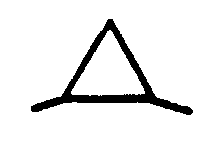
oder eine der folgenden Gruppen: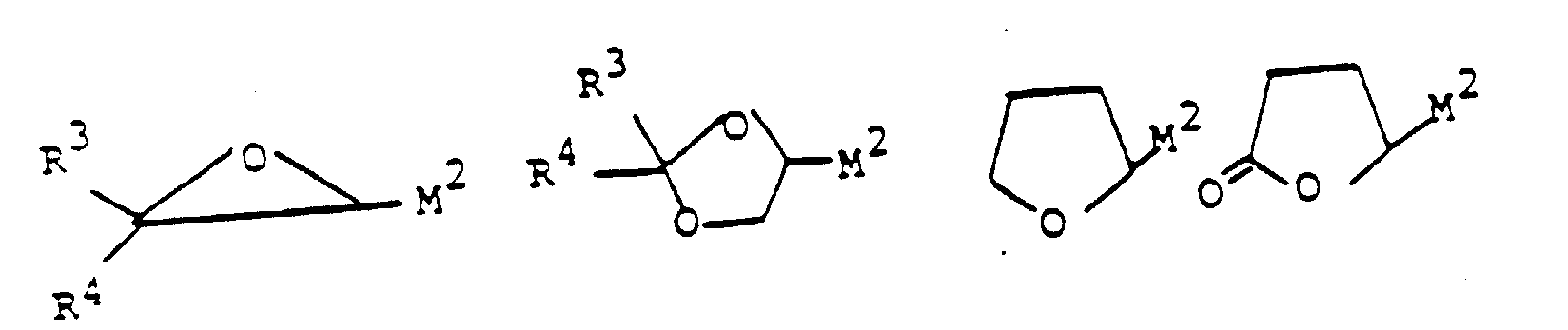
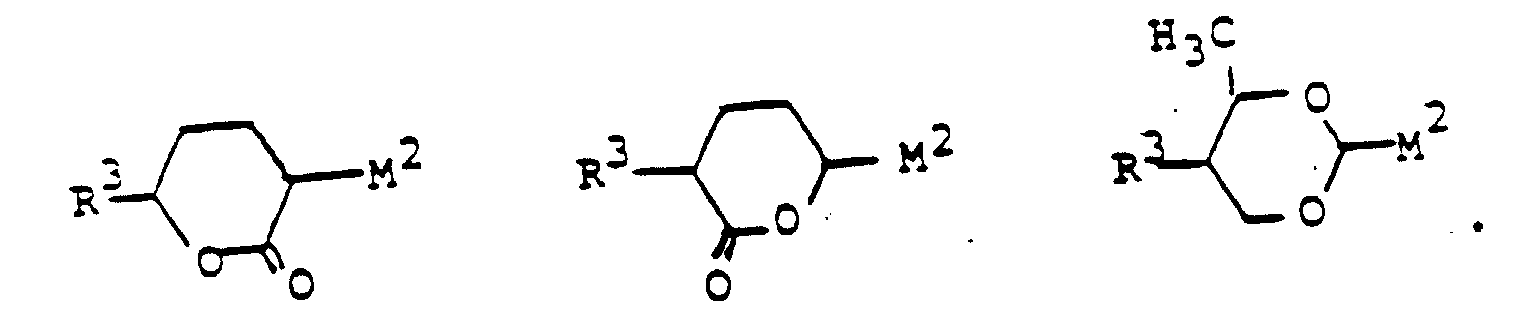
- R3, R4
- unabhängig voneinander H oder Alkyl mit 1 bis 16 oder Alkenyl mit 2 bis 16 C-Atomen, oder R3 und R4 zusammen -(CH2-)4- oder -(CH2)5-
- -M1-
- -CO-O, -O-CO-, -CH2-O-, -O-CH2-, -C≡C-, -CH=CH-, -CH2-CH2-, -CH2CH2CH2CH2-, -CH2CH2CH2O-
- -M2-
- -CH2-O-, -O-CH2,
eine Einfachbindung

- a, b
- unabhängig voneinander Null oder Eins, unter der Bedingung, daß a Null ist, wenn b Null ist,
unabhängig voneinander 1,4-Phenylen, 1,4-Cyclohexylen, 2,5-Pyridin-diyl, (1,3,4)Thiadiazol-2,5-diyl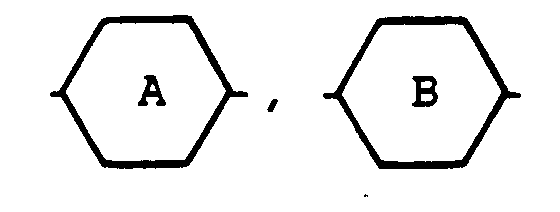
- Verwendung gemäß Anspruch 1, dadurch gekennzeichnet, daß in Formel (I) die Symbole folgende Bedeutung haben:
- R1, R2
- unabhängig voneinander Alkyl mit 1 bis 16 C-Atomen,
wobei die -CH2-Gruppe durch -O-, -CO-O-, -O-CO-, oder -Si(CH3)2- ersetzt sein kann, oder

- -M1-
- -CO-O, O-CO-, CH2O oder -OCH2-
- -M2-
- -CO-O-, oder -CH2O-
unabhängig voneinander 1,4-Phenylen oder 1,4-Cyclohexylen
- R3, R4
- beide H oder C1-C5-Alkyl oder R3 und R4 zusammen -(CH2)5-
- a, b
- unabhängig voneinander Null oder Eins, unter der Bedingung, daß a Null ist, wenn b Null ist.
- Verwendung gemäß Anspruch 1, dadurch gekennzeichnet, daß in Formel (I) die Symbole folgende Bedeutung haben:
- R1, R2
- unabhängig voneinander Alkyl mit 5 bis 12 C-Atomen,
wobei eine -CH2-Gruppe durch -O- und eine weitere
Gruppe durch

- -M1-
- -CO-O- oder -O-CO-,

- R3, R4
- beide gleich H oder C1-C5-Alkyl oder R3 und R4 zusammen -(CH2)5- und
- a=b
- Null oder Eins.
- Verwendung gemäß Anspruch 1, dadurch gekennzeichnet, daß in Formel (I) die Gruppen R1 und R2 unabhängig voneinander Alkyl mit 5 bis 12 C-Atomen bedeuten, wobei eine -CH2-Gruppe durch -CO-O-, -O-CO- oder -O- ersetzt sein kann und wobei die terminale -CH2-Gruppe durch
- Ferroelektrische Flüssigkristallmischung bestehend aus 2 bis 20 Komponenten, dadurch gekennzeichnet, daß sie als eine Komponente mindestens ein 4-Fluor-pyrimidin der allgemeinen Formel (I) aus Anspruch 1 enthält.
- Ferroelektrisches Flüssigkristall-Schalt- und -Anzeigeelement enthaltend Trägerplatten, Elektroden, mindestens eine Orientierungsschicht, ein ferroelektrisches flüssigkristallines Medium sowie gegebenenfalls weitere Komponenten, dadurch gekennzeichnet, daß es als flüssigkristallines Medium eine ferroelektrische Flüssigkristallmischung gemäß Anspruch 5 enthält.
- Verfahren zur Herstellung von 4-Fluor-pyrimidin-Derivaten der Formel (I) gemäß Anspruch 1, dadurch gekennzeichnet, daß man Pyrimidin-4-on-Verbindungen der Formel (II) mit einem Aminosulfuran der Formel (III) zur Reaktion bringt,
 wobei
wobei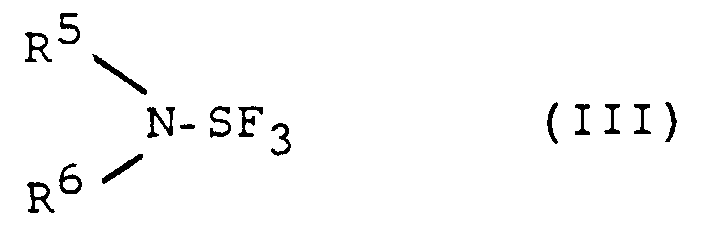
R5 und R6 unabhängig voneinander C1- bis C10-Alkyl, oder R5 und R6 zusammen (-CH2)c(-O)d(-CH2)e bedeuten, wobei
c = eine ganze Zahl von 1 bis 5,
d = Null oder 1 und
e = eine ganze Zahl von 1 bis 5 sind
und die Substituenten R1, M1, R2, a, b,die in Anspruch 1 genannten Bedeutungen haben.
- Verfahren gemäß Anspruch 7, dadurch gekennzeichnet, daß in Formel (III) R5 und R6 C1- bis C3-Alkyl, oder R5 und R6 zusammen die Gruppe -(CH2)2-O-(CH2)2- bedeuten.
Applications Claiming Priority (4)
| Application Number | Priority Date | Filing Date | Title |
|---|---|---|---|
| DE4029165 | 1990-09-14 | ||
| DE19904029165 DE4029165A1 (de) | 1990-09-14 | 1990-09-14 | Verwendung von 4-fluor-pyrimidinen als komponente fuer ferroelektrische fluessigkristallmischungen |
| DE4030582 | 1990-09-27 | ||
| DE4030582 | 1990-09-27 |
Publications (2)
| Publication Number | Publication Date |
|---|---|
| EP0475444A1 EP0475444A1 (de) | 1992-03-18 |
| EP0475444B1 true EP0475444B1 (de) | 1999-07-14 |
Family
ID=25896853
Family Applications (1)
| Application Number | Title | Priority Date | Filing Date |
|---|---|---|---|
| EP91115584A Expired - Lifetime EP0475444B1 (de) | 1990-09-14 | 1991-09-13 | Die Verwendung von 4-Fluor-pyrimidin-Derivaten als Komponente für ferroelektrische Flüssigkristallmischungen und ihre Herstellung |
Country Status (5)
| Country | Link |
|---|---|
| US (1) | US5344585A (de) |
| EP (1) | EP0475444B1 (de) |
| JP (1) | JP3070992B2 (de) |
| KR (1) | KR920006479A (de) |
| DE (1) | DE59109140D1 (de) |
Families Citing this family (5)
| Publication number | Priority date | Publication date | Assignee | Title |
|---|---|---|---|---|
| JPH04124190A (ja) * | 1990-09-17 | 1992-04-24 | Canon Inc | 液晶性化合物、それを含有する液晶組成物およびそれを使用した液晶素子 |
| DE4211563A1 (de) * | 1992-04-07 | 1993-10-14 | Hoechst Ag | Chirale Oxiranderivate und ihre Verwendung als Dotierstoffe in Flüssigkristallmischungen |
| ATE198195T1 (de) * | 1992-06-09 | 2001-01-15 | Aventis Res & Tech Gmbh & Co | 3-fluorpyridine, verfahren zu ihrer herstellung und ihre verwendung in flüssigkristallmischungen |
| JP4432123B2 (ja) * | 1997-01-22 | 2010-03-17 | チッソ株式会社 | 液晶性化合物、およびこれを含む液晶組成物、およびこれを用いた液晶表示素子 |
| DE19825488A1 (de) | 1998-06-08 | 1999-12-09 | Aventis Res & Tech Gmbh & Co | Monostabiles ferroelektrisches Aktivmatrix-Display |
Family Cites Families (7)
| Publication number | Priority date | Publication date | Assignee | Title |
|---|---|---|---|---|
| EP0084194B1 (de) * | 1982-01-14 | 1986-04-30 | MERCK PATENT GmbH | Flüssigkristallmischungen |
| DE3405914A1 (de) * | 1984-02-18 | 1985-08-22 | Merck Patent Gmbh, 6100 Darmstadt | Fluessigkristalline verbindungen |
| DE3411571A1 (de) * | 1984-03-29 | 1985-10-10 | Merck Patent Gmbh, 6100 Darmstadt | Pyrimidine |
| JP2554473B2 (ja) * | 1986-08-18 | 1996-11-13 | チッソ株式会社 | シアノ基を有する新規光学活性液晶化合物 |
| JPS63137983A (ja) * | 1986-11-28 | 1988-06-09 | Chisso Corp | ゲストホスト型表示素子用強誘電性液晶混合物 |
| JPH07107011B2 (ja) * | 1987-02-05 | 1995-11-15 | チッソ株式会社 | 光学活性−2−置換プロピルエ−テル類および液晶組成物 |
| JP2691405B2 (ja) * | 1987-11-06 | 1997-12-17 | チッソ株式会社 | 強誘電性液晶組成物 |
-
1991
- 1991-09-12 US US07/758,633 patent/US5344585A/en not_active Expired - Fee Related
- 1991-09-13 DE DE59109140T patent/DE59109140D1/de not_active Expired - Fee Related
- 1991-09-13 KR KR1019910015957A patent/KR920006479A/ko not_active Withdrawn
- 1991-09-13 EP EP91115584A patent/EP0475444B1/de not_active Expired - Lifetime
- 1991-09-13 JP JP3235117A patent/JP3070992B2/ja not_active Expired - Fee Related
Also Published As
| Publication number | Publication date |
|---|---|
| DE59109140D1 (de) | 1999-08-19 |
| EP0475444A1 (de) | 1992-03-18 |
| KR920006479A (ko) | 1992-04-27 |
| US5344585A (en) | 1994-09-06 |
| JP3070992B2 (ja) | 2000-07-31 |
| JPH04331285A (ja) | 1992-11-19 |
Similar Documents
| Publication | Publication Date | Title |
|---|---|---|
| EP0318423B1 (de) | Flüssigkristalline Cyclopropyl-alkyl- oder -alkenyl-Heterocyclen, Verfahren zu ihrer Herstellung und ihre Verwendung in flüssig-kristallinen Mischungen | |
| EP0355008B1 (de) | Organosilylalkyl- oder -alkenyl- Verbindungen, Verfahren zu ihrer Herstellung und ihre Verwendung in flüssigkristallinen Mischungen | |
| EP0541081B1 (de) | Verbindungen mit nur einer Seitenkette zur Verwendung in Flüssigkristallmischungen | |
| EP0563146B1 (de) | 2-fluorpyridine, verfahren zu ihrer herstellung und ihre verwendung in flüssigkristallmischungen | |
| EP0398155B1 (de) | Cyclopropylalkyl oder -alkenylverbindungen, Verfahren zu ihrer Herstellung und ihre Verwendung in flüssigkristallinen Mischungen | |
| EP0573878B1 (de) | 3-Fluorpyridine, Verfahren zu ihrer Herstellung und ihre Verwendung in Flüssigkristallmischungen | |
| EP0308794B1 (de) | Flüssigkristalline Cyclohexancarbonsäurephenylpyrimidinester mit smektischer Phase in Flüssigkristall-Mischungen und ihre Verwendung | |
| EP0295370B1 (de) | Flüssigkristalline 5-Phenylpyrimidin-Derivate mit Sc- oder Sc(Stern)-Phase und Verfahren zu ihrer Herstellung | |
| EP0475444B1 (de) | Die Verwendung von 4-Fluor-pyrimidin-Derivaten als Komponente für ferroelektrische Flüssigkristallmischungen und ihre Herstellung | |
| EP0618914B1 (de) | Chirale oxiranylmethyl-ether und ihre verwendung als dotierstoffe in flüssigkristallmischungen | |
| DE4030579A1 (de) | Cyclohexylphenylpyrimidine, verfahren zu ihrer herstellung und ihre verwendung in fluessigkristallinen mischungen | |
| EP0552658B1 (de) | Derivate der 3-Cyclohexylpropionsäure und ihre Verwendung in ferroelektrischen Flüssigkristallmischungen | |
| EP0883618B1 (de) | Difluorphenylpyrimidylpyridin-derivate und ihre verwendung in flüssigkristallinen mischungen | |
| EP0532916B1 (de) | 2-Fluorpyrazine, Verfahren zu ihrer Herstellung und ihre Verwendung in flüssigkristallinen Mischungen | |
| EP0743971B1 (de) | Phenanthridin-derivate und ihre verwendung in flüssigkristallinen mischungen | |
| DE4029165A1 (de) | Verwendung von 4-fluor-pyrimidinen als komponente fuer ferroelektrische fluessigkristallmischungen | |
| EP0438811A2 (de) | Ester von 3-Halogen- bzw. 3-Cyano-substituierten 2-Methylalkancarbonsäuren und ihre Verwendung als Dotierstoffe in flüssigkristallinen Mischungen | |
| EP0821049B1 (de) | Cyclopentyl-Verbindungen | |
| EP0513069A1 (de) | Geminale dimethylalkyl-verbindungen, verfahren zu ihrer herstellung und ihre verwendung in flüssigkristallinen mischungen | |
| DE19538404B4 (de) | Difluorchinolin-Derivate und diese enthaltenden Flüssigkristallmischungen sowie Schalt- und/oder Anzeigevorrichtung | |
| DE4240041A1 (de) | Neue Derivate des Naphthalins zur Verwendung in ferroelektrischen Flüssigkristallmischungen | |
| DE4116751A1 (de) | Cyclohexylphenylpyrimidine, verfahren zu ihrer herstellung und ihre verwendung in fluessigkristallinen mischungen | |
| DE4211563A1 (de) | Chirale Oxiranderivate und ihre Verwendung als Dotierstoffe in Flüssigkristallmischungen | |
| DE4211562A1 (de) | Chirale Oxiranderivate und ihre Verwendung als Dotierstoffe in Flüssigkristallmischungen | |
| DE3630933A1 (de) | Chirale ester aus (alpha)-substituierten carbonsaeuren und mesogenen phenolen und ihre verwendung als dotierstoff in fluessigkristall-phasen |
Legal Events
| Date | Code | Title | Description |
|---|---|---|---|
| PUAI | Public reference made under article 153(3) epc to a published international application that has entered the european phase |
Free format text: ORIGINAL CODE: 0009012 |
|
| AK | Designated contracting states |
Kind code of ref document: A1 Designated state(s): CH DE DK ES FR GB IT LI NL |
|
| 17P | Request for examination filed |
Effective date: 19920523 |
|
| 17Q | First examination report despatched |
Effective date: 19940502 |
|
| GRAG | Despatch of communication of intention to grant |
Free format text: ORIGINAL CODE: EPIDOS AGRA |
|
| GRAG | Despatch of communication of intention to grant |
Free format text: ORIGINAL CODE: EPIDOS AGRA |
|
| GRAG | Despatch of communication of intention to grant |
Free format text: ORIGINAL CODE: EPIDOS AGRA |
|
| GRAH | Despatch of communication of intention to grant a patent |
Free format text: ORIGINAL CODE: EPIDOS IGRA |
|
| GRAH | Despatch of communication of intention to grant a patent |
Free format text: ORIGINAL CODE: EPIDOS IGRA |
|
| GRAA | (expected) grant |
Free format text: ORIGINAL CODE: 0009210 |
|
| AK | Designated contracting states |
Kind code of ref document: B1 Designated state(s): CH DE DK ES FR GB IT LI NL |
|
| PG25 | Lapsed in a contracting state [announced via postgrant information from national office to epo] |
Ref country code: IT Free format text: LAPSE BECAUSE OF FAILURE TO SUBMIT A TRANSLATION OF THE DESCRIPTION OR TO PAY THE FEE WITHIN THE PRE;WARNING: LAPSES OF ITALIAN PATENTS WITH EFFECTIVE DATE BEFORE 2007 MAY HAVE OCCURRED AT ANY TIME BEFORE 2007. THE CORRECT EFFECTIVE DATE MAY BE DIFFERENT FROM THE ONE RECORDED.SCRIBED TIME-LIMIT Effective date: 19990714 Ref country code: FR Free format text: LAPSE BECAUSE OF FAILURE TO SUBMIT A TRANSLATION OF THE DESCRIPTION OR TO PAY THE FEE WITHIN THE PRESCRIBED TIME-LIMIT Effective date: 19990714 Ref country code: GB Free format text: LAPSE BECAUSE OF FAILURE TO SUBMIT A TRANSLATION OF THE DESCRIPTION OR TO PAY THE FEE WITHIN THE PRESCRIBED TIME-LIMIT Effective date: 19990714 Ref country code: NL Free format text: LAPSE BECAUSE OF FAILURE TO SUBMIT A TRANSLATION OF THE DESCRIPTION OR TO PAY THE FEE WITHIN THE PRESCRIBED TIME-LIMIT Effective date: 19990714 Ref country code: ES Free format text: THE PATENT HAS BEEN ANNULLED BY A DECISION OF A NATIONAL AUTHORITY Effective date: 19990714 |
|
| REG | Reference to a national code |
Ref country code: CH Ref legal event code: EP |
|
| REF | Corresponds to: |
Ref document number: 59109140 Country of ref document: DE Date of ref document: 19990819 |
|
| PG25 | Lapsed in a contracting state [announced via postgrant information from national office to epo] |
Ref country code: LI Free format text: LAPSE BECAUSE OF NON-PAYMENT OF DUE FEES Effective date: 19990930 Ref country code: CH Free format text: LAPSE BECAUSE OF NON-PAYMENT OF DUE FEES Effective date: 19990930 |
|
| RAP2 | Party data changed (patent owner data changed or rights of a patent transferred) |
Owner name: AVENTIS RESEARCH & TECHNOLOGIES GMBH & CO. KG |
|
| PG25 | Lapsed in a contracting state [announced via postgrant information from national office to epo] |
Ref country code: DK Free format text: LAPSE BECAUSE OF FAILURE TO SUBMIT A TRANSLATION OF THE DESCRIPTION OR TO PAY THE FEE WITHIN THE PRESCRIBED TIME-LIMIT Effective date: 19991014 |
|
| NLT2 | Nl: modifications (of names), taken from the european patent patent bulletin |
Owner name: AVENTIS RESEARCH & TECHNOLOGIES GMBH & CO. KG |
|
| EN | Fr: translation not filed | ||
| NLV1 | Nl: lapsed or annulled due to failure to fulfill the requirements of art. 29p and 29m of the patents act | ||
| GBV | Gb: ep patent (uk) treated as always having been void in accordance with gb section 77(7)/1977 [no translation filed] |
Effective date: 19990714 |
|
| PLBE | No opposition filed within time limit |
Free format text: ORIGINAL CODE: 0009261 |
|
| STAA | Information on the status of an ep patent application or granted ep patent |
Free format text: STATUS: NO OPPOSITION FILED WITHIN TIME LIMIT |
|
| REG | Reference to a national code |
Ref country code: CH Ref legal event code: PL |
|
| 26N | No opposition filed | ||
| PGFP | Annual fee paid to national office [announced via postgrant information from national office to epo] |
Ref country code: DE Payment date: 20040804 Year of fee payment: 14 |
|
| PG25 | Lapsed in a contracting state [announced via postgrant information from national office to epo] |
Ref country code: DE Free format text: LAPSE BECAUSE OF NON-PAYMENT OF DUE FEES Effective date: 20060401 |