EP0366313A1 - Méthode de préparation de matériaux à base d'oxydes métalliques mélangés, et de fabrication d'un corps comprenant ledit matériau - Google Patents
Méthode de préparation de matériaux à base d'oxydes métalliques mélangés, et de fabrication d'un corps comprenant ledit matériau Download PDFInfo
- Publication number
- EP0366313A1 EP0366313A1 EP89310511A EP89310511A EP0366313A1 EP 0366313 A1 EP0366313 A1 EP 0366313A1 EP 89310511 A EP89310511 A EP 89310511A EP 89310511 A EP89310511 A EP 89310511A EP 0366313 A1 EP0366313 A1 EP 0366313A1
- Authority
- EP
- European Patent Office
- Prior art keywords
- powder
- metal oxide
- mixture
- mixed metal
- reaction
- Prior art date
- Legal status (The legal status is an assumption and is not a legal conclusion. Google has not performed a legal analysis and makes no representation as to the accuracy of the status listed.)
- Granted
Links
- 238000000034 method Methods 0.000 title claims abstract description 33
- 229910003455 mixed metal oxide Inorganic materials 0.000 title claims abstract description 22
- 239000000463 material Substances 0.000 title claims description 31
- 238000006243 chemical reaction Methods 0.000 claims abstract description 42
- 239000000203 mixture Substances 0.000 claims abstract description 27
- 150000003839 salts Chemical class 0.000 claims abstract description 27
- 229910052751 metal Inorganic materials 0.000 claims abstract description 20
- 239000003638 chemical reducing agent Substances 0.000 claims abstract description 19
- 239000002243 precursor Substances 0.000 claims abstract description 19
- 239000007800 oxidant agent Substances 0.000 claims abstract description 18
- 150000001242 acetic acid derivatives Chemical class 0.000 claims abstract description 12
- 238000010438 heat treatment Methods 0.000 claims abstract description 12
- QVGXLLKOCUKJST-UHFFFAOYSA-N atomic oxygen Chemical compound [O] QVGXLLKOCUKJST-UHFFFAOYSA-N 0.000 claims abstract description 10
- 239000001301 oxygen Substances 0.000 claims abstract description 10
- 229910052760 oxygen Inorganic materials 0.000 claims abstract description 10
- 239000011872 intimate mixture Substances 0.000 claims abstract description 9
- 229910000859 α-Fe Inorganic materials 0.000 claims abstract description 9
- 238000005245 sintering Methods 0.000 claims abstract 2
- NHNBFGGVMKEFGY-UHFFFAOYSA-N nitrate group Chemical group [N+](=O)([O-])[O-] NHNBFGGVMKEFGY-UHFFFAOYSA-N 0.000 claims description 14
- 229910002651 NO3 Inorganic materials 0.000 claims description 13
- XBDQKXXYIPTUBI-UHFFFAOYSA-N Propionic acid Chemical class CCC(O)=O XBDQKXXYIPTUBI-UHFFFAOYSA-N 0.000 claims description 8
- 150000004675 formic acid derivatives Chemical class 0.000 claims description 7
- 238000001035 drying Methods 0.000 claims description 2
- 150000002333 glycines Chemical class 0.000 claims description 2
- 235000004279 alanine Nutrition 0.000 claims 1
- 150000001295 alanines Chemical class 0.000 claims 1
- 239000012736 aqueous medium Substances 0.000 claims 1
- 239000000843 powder Substances 0.000 abstract description 49
- 239000002184 metal Substances 0.000 abstract description 18
- 239000002887 superconductor Substances 0.000 abstract description 11
- 150000002823 nitrates Chemical class 0.000 abstract description 10
- 238000006479 redox reaction Methods 0.000 abstract description 4
- 230000001590 oxidative effect Effects 0.000 abstract description 3
- 239000000470 constituent Substances 0.000 abstract description 2
- 238000003825 pressing Methods 0.000 abstract description 2
- 239000000243 solution Substances 0.000 description 16
- MUBZPKHOEPUJKR-UHFFFAOYSA-N Oxalic acid Chemical compound OC(=O)C(O)=O MUBZPKHOEPUJKR-UHFFFAOYSA-N 0.000 description 14
- 229910044991 metal oxide Inorganic materials 0.000 description 11
- 150000004706 metal oxides Chemical class 0.000 description 11
- XLYOFNOQVPJJNP-UHFFFAOYSA-N water Substances O XLYOFNOQVPJJNP-UHFFFAOYSA-N 0.000 description 11
- QTBSBXVTEAMEQO-UHFFFAOYSA-M Acetate Chemical compound CC([O-])=O QTBSBXVTEAMEQO-UHFFFAOYSA-M 0.000 description 8
- XTVVROIMIGLXTD-UHFFFAOYSA-N copper(II) nitrate Chemical compound [Cu+2].[O-][N+]([O-])=O.[O-][N+]([O-])=O XTVVROIMIGLXTD-UHFFFAOYSA-N 0.000 description 8
- 238000000113 differential scanning calorimetry Methods 0.000 description 7
- 239000008188 pellet Substances 0.000 description 7
- 239000011833 salt mixture Substances 0.000 description 7
- 230000015572 biosynthetic process Effects 0.000 description 6
- 238000004519 manufacturing process Methods 0.000 description 6
- 229910052788 barium Inorganic materials 0.000 description 5
- 239000010949 copper Substances 0.000 description 5
- 150000002739 metals Chemical class 0.000 description 5
- 238000000975 co-precipitation Methods 0.000 description 4
- 150000001875 compounds Chemical class 0.000 description 4
- 238000000354 decomposition reaction Methods 0.000 description 4
- 235000006408 oxalic acid Nutrition 0.000 description 4
- 239000000047 product Substances 0.000 description 4
- 229910052727 yttrium Inorganic materials 0.000 description 4
- NGDQQLAVJWUYSF-UHFFFAOYSA-N 4-methyl-2-phenyl-1,3-thiazole-5-sulfonyl chloride Chemical compound S1C(S(Cl)(=O)=O)=C(C)N=C1C1=CC=CC=C1 NGDQQLAVJWUYSF-UHFFFAOYSA-N 0.000 description 3
- QTBSBXVTEAMEQO-UHFFFAOYSA-N Acetic acid Chemical compound CC(O)=O QTBSBXVTEAMEQO-UHFFFAOYSA-N 0.000 description 3
- 239000007864 aqueous solution Substances 0.000 description 3
- IWOUKMZUPDVPGQ-UHFFFAOYSA-N barium nitrate Inorganic materials [Ba+2].[O-][N+]([O-])=O.[O-][N+]([O-])=O IWOUKMZUPDVPGQ-UHFFFAOYSA-N 0.000 description 3
- 239000011324 bead Substances 0.000 description 3
- KRKNYBCHXYNGOX-UHFFFAOYSA-N citric acid Chemical compound OC(=O)CC(O)(C(O)=O)CC(O)=O KRKNYBCHXYNGOX-UHFFFAOYSA-N 0.000 description 3
- 239000000356 contaminant Substances 0.000 description 3
- 238000007796 conventional method Methods 0.000 description 3
- 229910052802 copper Inorganic materials 0.000 description 3
- 239000002360 explosive Substances 0.000 description 3
- 238000002360 preparation method Methods 0.000 description 3
- 239000007921 spray Substances 0.000 description 3
- 239000007858 starting material Substances 0.000 description 3
- 229910021521 yttrium barium copper oxide Inorganic materials 0.000 description 3
- IJGRMHOSHXDMSA-UHFFFAOYSA-N Atomic nitrogen Chemical compound N#N IJGRMHOSHXDMSA-UHFFFAOYSA-N 0.000 description 2
- 229910014454 Ca-Cu Inorganic materials 0.000 description 2
- 229910005802 NiMn2O4 Inorganic materials 0.000 description 2
- 238000002441 X-ray diffraction Methods 0.000 description 2
- 159000000021 acetate salts Chemical class 0.000 description 2
- 150000001450 anions Chemical class 0.000 description 2
- AYJRCSIUFZENHW-UHFFFAOYSA-L barium carbonate Chemical compound [Ba+2].[O-]C([O-])=O AYJRCSIUFZENHW-UHFFFAOYSA-L 0.000 description 2
- 230000008901 benefit Effects 0.000 description 2
- 150000001768 cations Chemical class 0.000 description 2
- 239000000919 ceramic Substances 0.000 description 2
- 239000003795 chemical substances by application Substances 0.000 description 2
- 239000012535 impurity Substances 0.000 description 2
- 229910052746 lanthanum Inorganic materials 0.000 description 2
- 229910021645 metal ion Inorganic materials 0.000 description 2
- 229910001960 metal nitrate Inorganic materials 0.000 description 2
- 239000002245 particle Substances 0.000 description 2
- 239000002244 precipitate Substances 0.000 description 2
- 238000011160 research Methods 0.000 description 2
- 239000012266 salt solution Substances 0.000 description 2
- 239000007787 solid Substances 0.000 description 2
- 239000000126 substance Substances 0.000 description 2
- 241000238366 Cephalopoda Species 0.000 description 1
- XTEGARKTQYYJKE-UHFFFAOYSA-M Chlorate Chemical class [O-]Cl(=O)=O XTEGARKTQYYJKE-UHFFFAOYSA-M 0.000 description 1
- KRKNYBCHXYNGOX-UHFFFAOYSA-K Citrate Chemical compound [O-]C(=O)CC(O)(CC([O-])=O)C([O-])=O KRKNYBCHXYNGOX-UHFFFAOYSA-K 0.000 description 1
- 229910052692 Dysprosium Inorganic materials 0.000 description 1
- 229910052691 Erbium Inorganic materials 0.000 description 1
- 229910052693 Europium Inorganic materials 0.000 description 1
- BDAGIHXWWSANSR-UHFFFAOYSA-M Formate Chemical compound [O-]C=O BDAGIHXWWSANSR-UHFFFAOYSA-M 0.000 description 1
- 229910052688 Gadolinium Inorganic materials 0.000 description 1
- 229910052689 Holmium Inorganic materials 0.000 description 1
- QNAYBMKLOCPYGJ-REOHCLBHSA-N L-alanine Chemical class C[C@H](N)C(O)=O QNAYBMKLOCPYGJ-REOHCLBHSA-N 0.000 description 1
- 229910052765 Lutetium Inorganic materials 0.000 description 1
- 229910017163 MnFe2O4 Inorganic materials 0.000 description 1
- 229910017920 NH3OH Inorganic materials 0.000 description 1
- 229910052779 Neodymium Inorganic materials 0.000 description 1
- 229910052772 Samarium Inorganic materials 0.000 description 1
- 229910052775 Thulium Inorganic materials 0.000 description 1
- 229910052769 Ytterbium Inorganic materials 0.000 description 1
- HCHKCACWOHOZIP-UHFFFAOYSA-N Zinc Chemical compound [Zn] HCHKCACWOHOZIP-UHFFFAOYSA-N 0.000 description 1
- 239000002253 acid Substances 0.000 description 1
- 150000007513 acids Chemical class 0.000 description 1
- 229910052782 aluminium Inorganic materials 0.000 description 1
- 150000001413 amino acids Chemical class 0.000 description 1
- 238000004458 analytical method Methods 0.000 description 1
- 125000000129 anionic group Chemical group 0.000 description 1
- 230000003466 anti-cipated effect Effects 0.000 description 1
- 238000013459 approach Methods 0.000 description 1
- ITHZDDVSAWDQPZ-UHFFFAOYSA-L barium acetate Chemical compound [Ba+2].CC([O-])=O.CC([O-])=O ITHZDDVSAWDQPZ-UHFFFAOYSA-L 0.000 description 1
- RQPZNWPYLFFXCP-UHFFFAOYSA-L barium dihydroxide Chemical compound [OH-].[OH-].[Ba+2] RQPZNWPYLFFXCP-UHFFFAOYSA-L 0.000 description 1
- 229910001863 barium hydroxide Inorganic materials 0.000 description 1
- UXFOSWFWQAUFFZ-UHFFFAOYSA-L barium(2+);diformate Chemical compound [Ba+2].[O-]C=O.[O-]C=O UXFOSWFWQAUFFZ-UHFFFAOYSA-L 0.000 description 1
- UCMIRNVEIXFBKS-UHFFFAOYSA-N beta-alanine Chemical class NCCC(O)=O UCMIRNVEIXFBKS-UHFFFAOYSA-N 0.000 description 1
- 230000005540 biological transmission Effects 0.000 description 1
- 238000009835 boiling Methods 0.000 description 1
- 238000001354 calcination Methods 0.000 description 1
- 150000004649 carbonic acid derivatives Chemical class 0.000 description 1
- 238000002144 chemical decomposition reaction Methods 0.000 description 1
- 229910001914 chlorine tetroxide Inorganic materials 0.000 description 1
- 238000004891 communication Methods 0.000 description 1
- OPQARKPSCNTWTJ-UHFFFAOYSA-L copper(ii) acetate Chemical compound [Cu+2].CC([O-])=O.CC([O-])=O OPQARKPSCNTWTJ-UHFFFAOYSA-L 0.000 description 1
- 230000001419 dependent effect Effects 0.000 description 1
- 238000001514 detection method Methods 0.000 description 1
- 230000000694 effects Effects 0.000 description 1
- 238000004146 energy storage Methods 0.000 description 1
- 238000001704 evaporation Methods 0.000 description 1
- 238000010304 firing Methods 0.000 description 1
- 230000004927 fusion Effects 0.000 description 1
- 229910052733 gallium Inorganic materials 0.000 description 1
- 150000004679 hydroxides Chemical class 0.000 description 1
- 229910052738 indium Inorganic materials 0.000 description 1
- 150000002500 ions Chemical class 0.000 description 1
- 229910052745 lead Inorganic materials 0.000 description 1
- 239000007788 liquid Substances 0.000 description 1
- 238000007885 magnetic separation Methods 0.000 description 1
- MIVBAHRSNUNMPP-UHFFFAOYSA-N manganese(II) nitrate Inorganic materials [Mn+2].[O-][N+]([O-])=O.[O-][N+]([O-])=O MIVBAHRSNUNMPP-UHFFFAOYSA-N 0.000 description 1
- 238000005272 metallurgy Methods 0.000 description 1
- NFSAPTWLWWYADB-UHFFFAOYSA-N n,n-dimethyl-1-phenylethane-1,2-diamine Chemical compound CN(C)C(CN)C1=CC=CC=C1 NFSAPTWLWWYADB-UHFFFAOYSA-N 0.000 description 1
- KBJMLQFLOWQJNF-UHFFFAOYSA-N nickel(II) nitrate Inorganic materials [Ni+2].[O-][N+]([O-])=O.[O-][N+]([O-])=O KBJMLQFLOWQJNF-UHFFFAOYSA-N 0.000 description 1
- 229910052757 nitrogen Inorganic materials 0.000 description 1
- 230000033116 oxidation-reduction process Effects 0.000 description 1
- VLTRZXGMWDSKGL-UHFFFAOYSA-M perchlorate Chemical compound [O-]Cl(=O)(=O)=O VLTRZXGMWDSKGL-UHFFFAOYSA-M 0.000 description 1
- 231100000572 poisoning Toxicity 0.000 description 1
- 230000000607 poisoning effect Effects 0.000 description 1
- 238000000634 powder X-ray diffraction Methods 0.000 description 1
- 238000012545 processing Methods 0.000 description 1
- 238000013341 scale-up Methods 0.000 description 1
- 229910052706 scandium Inorganic materials 0.000 description 1
- 241000894007 species Species 0.000 description 1
- 229910052596 spinel Inorganic materials 0.000 description 1
- 239000011029 spinel Substances 0.000 description 1
- 238000001694 spray drying Methods 0.000 description 1
- 238000010561 standard procedure Methods 0.000 description 1
- 229910052712 strontium Inorganic materials 0.000 description 1
- 239000000758 substrate Substances 0.000 description 1
- 239000000725 suspension Substances 0.000 description 1
- 229910052716 thallium Inorganic materials 0.000 description 1
- 229910052718 tin Inorganic materials 0.000 description 1
- 230000007704 transition Effects 0.000 description 1
- 229910052723 transition metal Inorganic materials 0.000 description 1
- 150000003624 transition metals Chemical class 0.000 description 1
Images

Classifications
-
- C—CHEMISTRY; METALLURGY
- C01—INORGANIC CHEMISTRY
- C01G—COMPOUNDS CONTAINING METALS NOT COVERED BY SUBCLASSES C01D OR C01F
- C01G3/00—Compounds of copper
- C01G3/006—Compounds containing copper, with or without oxygen or hydrogen, and containing two or more other elements
-
- C—CHEMISTRY; METALLURGY
- C04—CEMENTS; CONCRETE; ARTIFICIAL STONE; CERAMICS; REFRACTORIES
- C04B—LIME, MAGNESIA; SLAG; CEMENTS; COMPOSITIONS THEREOF, e.g. MORTARS, CONCRETE OR LIKE BUILDING MATERIALS; ARTIFICIAL STONE; CERAMICS; REFRACTORIES; TREATMENT OF NATURAL STONE
- C04B35/00—Shaped ceramic products characterised by their composition; Ceramics compositions; Processing powders of inorganic compounds preparatory to the manufacturing of ceramic products
- C04B35/01—Shaped ceramic products characterised by their composition; Ceramics compositions; Processing powders of inorganic compounds preparatory to the manufacturing of ceramic products based on oxide ceramics
- C04B35/26—Shaped ceramic products characterised by their composition; Ceramics compositions; Processing powders of inorganic compounds preparatory to the manufacturing of ceramic products based on oxide ceramics based on ferrites
-
- C—CHEMISTRY; METALLURGY
- C04—CEMENTS; CONCRETE; ARTIFICIAL STONE; CERAMICS; REFRACTORIES
- C04B—LIME, MAGNESIA; SLAG; CEMENTS; COMPOSITIONS THEREOF, e.g. MORTARS, CONCRETE OR LIKE BUILDING MATERIALS; ARTIFICIAL STONE; CERAMICS; REFRACTORIES; TREATMENT OF NATURAL STONE
- C04B35/00—Shaped ceramic products characterised by their composition; Ceramics compositions; Processing powders of inorganic compounds preparatory to the manufacturing of ceramic products
- C04B35/01—Shaped ceramic products characterised by their composition; Ceramics compositions; Processing powders of inorganic compounds preparatory to the manufacturing of ceramic products based on oxide ceramics
- C04B35/45—Shaped ceramic products characterised by their composition; Ceramics compositions; Processing powders of inorganic compounds preparatory to the manufacturing of ceramic products based on oxide ceramics based on copper oxide or solid solutions thereof with other oxides
-
- C—CHEMISTRY; METALLURGY
- C01—INORGANIC CHEMISTRY
- C01P—INDEXING SCHEME RELATING TO STRUCTURAL AND PHYSICAL ASPECTS OF SOLID INORGANIC COMPOUNDS
- C01P2002/00—Crystal-structural characteristics
- C01P2002/30—Three-dimensional structures
- C01P2002/32—Three-dimensional structures spinel-type (AB2O4)
-
- C—CHEMISTRY; METALLURGY
- C01—INORGANIC CHEMISTRY
- C01P—INDEXING SCHEME RELATING TO STRUCTURAL AND PHYSICAL ASPECTS OF SOLID INORGANIC COMPOUNDS
- C01P2002/00—Crystal-structural characteristics
- C01P2002/80—Crystal-structural characteristics defined by measured data other than those specified in group C01P2002/70
- C01P2002/88—Crystal-structural characteristics defined by measured data other than those specified in group C01P2002/70 by thermal analysis data, e.g. TGA, DTA, DSC
-
- Y—GENERAL TAGGING OF NEW TECHNOLOGICAL DEVELOPMENTS; GENERAL TAGGING OF CROSS-SECTIONAL TECHNOLOGIES SPANNING OVER SEVERAL SECTIONS OF THE IPC; TECHNICAL SUBJECTS COVERED BY FORMER USPC CROSS-REFERENCE ART COLLECTIONS [XRACs] AND DIGESTS
- Y10—TECHNICAL SUBJECTS COVERED BY FORMER USPC
- Y10S—TECHNICAL SUBJECTS COVERED BY FORMER USPC CROSS-REFERENCE ART COLLECTIONS [XRACs] AND DIGESTS
- Y10S420/00—Alloys or metallic compositions
- Y10S420/901—Superconductive
-
- Y—GENERAL TAGGING OF NEW TECHNOLOGICAL DEVELOPMENTS; GENERAL TAGGING OF CROSS-SECTIONAL TECHNOLOGIES SPANNING OVER SEVERAL SECTIONS OF THE IPC; TECHNICAL SUBJECTS COVERED BY FORMER USPC CROSS-REFERENCE ART COLLECTIONS [XRACs] AND DIGESTS
- Y10—TECHNICAL SUBJECTS COVERED BY FORMER USPC
- Y10S—TECHNICAL SUBJECTS COVERED BY FORMER USPC CROSS-REFERENCE ART COLLECTIONS [XRACs] AND DIGESTS
- Y10S505/00—Superconductor technology: apparatus, material, process
- Y10S505/725—Process of making or treating high tc, above 30 k, superconducting shaped material, article, or device
- Y10S505/737—From inorganic salt precursors, e.g. nitrates
-
- Y—GENERAL TAGGING OF NEW TECHNOLOGICAL DEVELOPMENTS; GENERAL TAGGING OF CROSS-SECTIONAL TECHNOLOGIES SPANNING OVER SEVERAL SECTIONS OF THE IPC; TECHNICAL SUBJECTS COVERED BY FORMER USPC CROSS-REFERENCE ART COLLECTIONS [XRACs] AND DIGESTS
- Y10—TECHNICAL SUBJECTS COVERED BY FORMER USPC
- Y10T—TECHNICAL SUBJECTS COVERED BY FORMER US CLASSIFICATION
- Y10T156/00—Adhesive bonding and miscellaneous chemical manufacture
- Y10T156/10—Methods of surface bonding and/or assembly therefor
- Y10T156/1052—Methods of surface bonding and/or assembly therefor with cutting, punching, tearing or severing
- Y10T156/1056—Perforating lamina
-
- Y—GENERAL TAGGING OF NEW TECHNOLOGICAL DEVELOPMENTS; GENERAL TAGGING OF CROSS-SECTIONAL TECHNOLOGIES SPANNING OVER SEVERAL SECTIONS OF THE IPC; TECHNICAL SUBJECTS COVERED BY FORMER USPC CROSS-REFERENCE ART COLLECTIONS [XRACs] AND DIGESTS
- Y10—TECHNICAL SUBJECTS COVERED BY FORMER USPC
- Y10T—TECHNICAL SUBJECTS COVERED BY FORMER US CLASSIFICATION
- Y10T156/00—Adhesive bonding and miscellaneous chemical manufacture
- Y10T156/12—Surface bonding means and/or assembly means with cutting, punching, piercing, severing or tearing
- Y10T156/1317—Means feeding plural workpieces to be joined
- Y10T156/1322—Severing before bonding or assembling of parts
- Y10T156/1339—Delivering cut part in sequence to serially conveyed articles
Definitions
- This invention pertains to methods of producing mixed metal oxide material, and of making a body that comprises the material.
- the body is a superconductive body.
- One class of metal oxide superconductors has nominal composition Ba 2-y (M 1-x M ′ x ) 1+y Cu3O 9- ⁇ , where M and M′ are chosen from Y, Eu, Nd, Sm, Gd, Dy, Ho, Er, Tm, Yb, Lu, Sc, Sr or combinations thereof. Typically, 0 ⁇ x ⁇ 1, 0 ⁇ y ⁇ 1, and 1 ⁇ ⁇ ⁇ 3. This class will be referred to as the Ba-cuprate system. Many members of the Ba-cuprate system have T c greater than 77K, the boiling point of liquid nitrogen.
- Exemplary of the Ba-cuprate system are YBa2Cu3O7 (frequently referred to as the "1:2:3" compound), EuBa2Cu3O7, and La 1.5 Ba 1.5 Cu3O7. (It will be understood that chemical formulae of oxide superconductors and other mixed metal oxides herein are approximate only, and that deviations my occur. For instance, the optimal oxygen content in YBa2Cu3O7 frequently is not7 but about 6.9.)
- Tl-Ba-Ca-Cu oxides exemplified by Tl2Ba2CaCuO8, see, for instance, Nature Vol. 332, March 31, 1988, page 420
- Bi-Sr-Ca-Cu oxides exemplified by Bi 2.2 Sr2Ca 0.8 Cu2O 8+ ⁇ ; ibid, page 422
- copper-free bismates exemplified by Ba .6 K .4 BiO3
- bulk superconducting bodies are made from a starting material that comprises a powder of the appropriate metal oxide or oxides.
- bulk bodies of non-superconductive metal oxides e.g., ferrite bodies
- the overall metal composition of the starting material corresponds directly to the desired metal composition of the body to be produced, but the powder can be a mixture of metal oxides.
- the oxygen content of the powder typically does not correspond to the desired final oxygen content.
- Oxalic acid co-precipitation of aqueous metal nitrate solutions is also reported by A. Koyanagi et al, Seissan Kenkyu (Japan), Vol. 39(11), 1987, page 8, M. Hirabayashi et al, Japanese Journal of Applied Physics , Vol. 26(4), 1987, page L454, K. Kaneko et al, ibid, Vol. 26(5), 1987, page L734, D. W. Capone et al, Applied Physics Letters , Vol. 50(9), 1987, page 543, and by T. Kawai et al, Japanese Journal of Applied Physics , Vol. 26(5), 1987, page 736.
- a "metal” herein is an element that forms positive ions when its compounds are in solution, and whose oxides form hydroxides rather than acids with water.
- salt we mean herein a compound which dissolves in water and is composed of one or more anions and one or more cations.
- a “mixed metal oxide” herein is a compound of oxygen and two or more metals, an intimate mixture of the oxides of two or more metals, or a combination of the above.
- an article e.g., a superconductive magnet or a microwave component
- a body that comprises a mixed metal oxide.
- the body is a superconductive wire or tape, or is a ferrite bead.
- the mixed oxide has nominal composition M x M ′ y ...O z , where M, M′.... are metal elements (exemplarily chosen from the alkalis, alkaline earths, the transition metals of atomic number 21-30,39-48,57-80, the column III elements Al, Ga, In, and Tl, and the column IV elements Sn and Pb), and x, y, ... and z can have any appropriate (not necessarily integer) non-negative value, with at least x, y, and z being non-zero.
- M, M′.... are metal elements (exemplarily chosen from the alkalis, alkaline earths, the transition metals of atomic number 21-30,39-48,57-80, the column III elements Al, Ga, In, and Tl, and the column IV elements Sn and Pb), and x, y, ... and z can have any appropriate (not necessarily integer) non-negative value, with at least x, y, and z being non-zero.
- the method comprises forming a mixture of salts that comprises at least one salt of each of M, M′.... At least one of the salts is an oxidizing agent with respect to at least one of the other salts, such that an oxidation-reduction reaction (in which the reactive anion species are essentially completely consumed to give gaseous decomposition products, leaving essentially no residue as an impurity) can occur in the mixture at an appropriate reaction temperature.
- This oxidation-reduction (redox) reaction will also be referred to as a "self-propagating chemical decomposition" (SCD).
- SCD self-propagating chemical decomposition
- the metal ions are present in the mixture in proportions such that the final oxide has the desired composition. Typically, this means that the metals M, M′,... are present in atomic ratio x:y: ....
- one or more metal nitrates serve as the oxidizing agent
- one or more metal formates, acetates, propionates. and/or other appropriate metal-organic salts serve as the reducing agent.
- the ratio of oxidizing agent (or agents) to reducing agent (or agents) is chosen such that the oxidation-reduction reaction proceeds at a desired rate at a desired reaction temperature. It is to be noted that the results generally do not depend on which metal is associated with the oxidizing agent or with the reducing agent. Instead, the results generally depend, for a given oxidizing agent and reducing agent, only on the ratio of oxidizing agent to reducing agent.
- the method typically comprises forming a (non-explosive) aqueous solution of the salts, drying the solution (resulting in formation of a residue that comprises a mixture of the salts), and heating the residue to the reaction temperature such that the SCD occurs, with the metal oxide or, more typically, a precursor material of the mixed metal oxide being formed. If precursor material was formed then the method further comprises heating the precursor material in an oxygen-containing atmosphere such the desired mixed metal oxide powder is formed from the precursor material.
- the typical product of the SCD the precursor material of the desired mixed metal oxide, typically is a mixture of oxides of M, M′.... that can be essentially free of contaminants.
- the reaction can be carried out at a relatively low temperature, due to its exothermic character.
- the precursor material for YBa2Cu3O z (z ⁇ 7) from a mixture of nitrates and acetates at 270°C, which is significantly lower than the decomposition temperature of the acetate or nitrate salts alone.
- the precursor material typically is heated in an oxygen-containing atmosphere such that the desired mixed metal oxide results.
- an oxygen-containing atmosphere such that the desired mixed metal oxide results.
- maintaining the above referred to precursor material at 910°C for 5-10 minutes in air resulted in essentially single phase (> 90%, frequently > 95%) YBa2Cu3O z .
- the mixed oxide powder produced according to the invention can be used in the same way as such powders produced by prior art methods are used. For instance, they can in a conventional manner be formed into a desired body, and the body can be incorporated into an appropriate article, also in conventional manner.
- the mixed oxide is an appropriate ferrite then the body can be a ferrite bead or other ferrite body, and the article can be a microwave device or apparatus; if the oxide powder is high T c superconductive powder then the body can be magnetic tape or wire and the article can be a superconductive magnet.
- the oxidizing agent is a nitrate or nitrates and the reducing agent is one or more acetates, formates, and/or propionates.
- the discussion below will be primarily in terms of these particular salts.
- a significant aspect of the invention is the ability to, at least to some extent, control the heat of reaction and the reaction temperature of the SCD by simple means, namely, appropriate choice of oxidizing and reducing agents, and of the molar ratio of oxidizing to reducing agents.
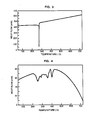
- FIG. 2 shows the heat of reaction - ⁇ H as a function of the nitrate/acetate ratio in the mixture of salts.
- the reaction is exothermic for a significant range of the ratio, with the heat of reaction strongly dependent on the ratio of oxidizing agent to reducing agent.
- ⁇ H through, inter alia, the oxidizing agent/reducing agent ratio offers the possibility of control of the rate of reaction, such that the SCD can be chosen to proceed substantially at any desired rate.
- this rate will be non-explosive, under appropriate conditions (e.g., small quantities, confined space) even an explosive reaction may be useful, since it can be expected to result in especially well mixed small grained powder.
- Choice of the organic salts also affects the reaction temperature. For instance, for a particular NO3/organic salt ratio the reaction temperatures were 240°C, 270°C, and greater than 270°C if the organic salts were formates, acetates, or propionates, respectively (the metal ratios were Y:2Ba:3Cu).
- appropriate choice of oxidizing agent/reducing agent ratio, together with appropriate choice of reducing agent makes possible control of the reaction rate and, at least to some extent, of the reaction temperature.
- the metal salts are dissolved in water and the solution is spray dried by conventional means, resulting in an intimate mixture of metal salts.
- the quantities to be dissolved are selected such that the solution contains the metal ions in the same ratio as is desired to be present in the mixed metal oxide. For instance, in order to produce "1:2:3: material (YBa2Cu3O z ), x moles of yttrium nitrate; 2x moles of barium formate, and 3x moles of copper nitrate are dissolved.
- nitrates are the currently preferred oxidizers the invention is not so limited, and other oxidizers (e.g., chlorates) are also contemplated.
- the mixture After formation of the intimate mixture of metal salts (e.g., by spray drying of the solution) the mixture is heated to the reaction temperature, whereby the reaction is initiated. Heating can be, but need not be, in air. Due to its exothermic nature, the reaction typically readily goes to completion, with the mixture of salts being transformed into a mixed metal oxide which, typically, comprises an intimate mixture of metal oxides.
- the salts are advantageously chosen such that their anionic portions readily decompose at the reaction temperature, with the products of the decompositions being volatile at that temperature. Such a choice of salts can result in a mixed metal oxide that is substantially free of impurities. This is considered to be a significant advantage of the inventive method.
- the resulting material is typically subjected to a heat treatment in an oxygen-containing atmosphere such that the desired mixed oxide results.
- a heat treatment in an oxygen-containing atmosphere such that the desired mixed oxide results.
- the production of superconductive (T c ⁇ 91K) "1:2:3" powder exemplarily comprised heating of oxidic precursor material to 910°C for 5-10 minutes.
- the salt mixture is heated in O2 to about 900°C, with the reaction occurring at an intermediate temperature, and formation of the 1:2:3 powder occurring at the final temperature.
- Enough solution to make 250 g of "1:2:3" powder was spray dried using a commercially available conical type laboratory spray drier, resulting in formation of a light blue powder that was an intimate mixture of acetates and nitrates of Y, Ba, and Cu.
- a sample of the powder wash analyzed by differential scanning calorimetry (DSC) in flowing O2, with the result of the analysis shown in FIG. 3.
- DSC differential scanning calorimetry
- a strongly exothermic reaction (- ⁇ H > 1162 kJ/mole) occurred at about 270°C.
- the remainder of the salt mixture was put into ceramic boats and placed under flowing O2 into a furnace that was kept at about 400°C.
- the SCD reaction occurred as anticipated and yielded a mixed oxide powder.
- the powder was then heated to 900°C and maintained at that temperature for 10 minutes under flowing O2, followed by a slow cool to room temperature, also under flowing O2.
- Sintered superconducting disks were prepared substantially as in Example 1, except that the salt mixture was placed, under flowing O2, into a furnace at 900°C and maintained at that temperature for 10 minutes. The SCD reaction occurred at an intermediate temperature.
- the salt solution was prepared to contain the metals in the indicated ratios and the indicated reducing agent/oxidizing agent ratio.
- the preparation procedures were standard and do not require recitation.
- the powder resulting from the 5:8 (acetate:nitrate) mixture comprised, in addition to YBa2Cu3O x , about 2% BaCuO2, and the 4:9 (acetate:nitrate) powder comprised, in addition to the YBa2Cu3O x , about 2% BaCuO2 and less than 1% of BaCO3.
- NiMn2O4 A spinel powder (NiMn2O4) was produced by a method substantially as described in Example 1, except that Ni(NO3)2 and Mn(CH3COO)2 were dissolved in water, with the Ni:Mn ratio being 1:2.
- the intimate salt mixture was heated on a hot plate, and an exothermic reaction occurred.
- the resulting precursor material was ground and fired in a Pt boat at 920°C for 6 hours under O2.
- the resulting mixed oxide powder was essentially single phase NiMn2O4, as determined by X-ray diffraction.
- a ferrite powder (MnFe2O4) is produced substantially as described in Example 1, except that Mn(NO3)2 and Fe(CH3-COO)2 were dissolved in water with the Mn:Fe ratio being 1:2.
- the salt mixture is reacted in a furnace under O2, and the resulting precursor material is heated to 920°C and fired under O2 for 6 hours.
- the resulting powder is essentially single phase.
- a bead is formed from the powder by a conventional technique.
- a superconducting oxide powder (Tl2Ba2Ca2Cu3O10) is produced substantially as described in Example 1, except that two molar units each of Tl(NO3), Ba(CH3-COO)2, and Ca(CH3-COO)2, and three molar units of Cu(NO3)2 are dissolved in water.
- 1:2:3 powder is produced substantially as described in Example 1, except that one half molar unit each of Ba(NO3)2 and Ba(ClO4)2, one molar unit each of Y(CH3-COO)3 and Ba(CH3-COO)2, and 3 molar units of Cu(NO3)2 are dissolved in water.
- the SCD reaction is relatively vigorous.
Landscapes
- Chemical & Material Sciences (AREA)
- Engineering & Computer Science (AREA)
- Organic Chemistry (AREA)
- Ceramic Engineering (AREA)
- Manufacturing & Machinery (AREA)
- Materials Engineering (AREA)
- Structural Engineering (AREA)
- Inorganic Chemistry (AREA)
- Inorganic Compounds Of Heavy Metals (AREA)
- Compositions Of Oxide Ceramics (AREA)
- Compounds Of Iron (AREA)
- Oxygen, Ozone, And Oxides In General (AREA)
Applications Claiming Priority (3)
| Application Number | Priority Date | Filing Date | Title |
|---|---|---|---|
| US261656 | 1988-10-24 | ||
| US07/261,656 US4996189A (en) | 1988-10-24 | 1988-10-24 | Method of producing mixed metal oxide material, and of producing a body comprising the material |
| SG26094A SG26094G (en) | 1988-10-24 | 1994-02-21 | Method of producing mixed metal oxide material, and of producing a body comprising the material |
Publications (2)
| Publication Number | Publication Date |
|---|---|
| EP0366313A1 true EP0366313A1 (fr) | 1990-05-02 |
| EP0366313B1 EP0366313B1 (fr) | 1993-09-29 |
Family
ID=26663900
Family Applications (1)
| Application Number | Title | Priority Date | Filing Date |
|---|---|---|---|
| EP89310511A Expired - Lifetime EP0366313B1 (fr) | 1988-10-24 | 1989-10-13 | Méthode de préparation de matériaux à base d'oxydes métalliques mélangés, et de fabrication d'un corps comprenant ledit matériau |
Country Status (6)
| Country | Link |
|---|---|
| US (1) | US4996189A (fr) |
| EP (1) | EP0366313B1 (fr) |
| JP (1) | JP2603343B2 (fr) |
| CA (1) | CA1327698C (fr) |
| DE (1) | DE68909558T2 (fr) |
| SG (1) | SG26094G (fr) |
Cited By (3)
| Publication number | Priority date | Publication date | Assignee | Title |
|---|---|---|---|---|
| EP0703188A1 (fr) * | 1994-09-22 | 1996-03-27 | ABB Management AG | Méthode de préparation d'une poudre mixte d'oxyde métallique et poudre mixte d'oxyde métallique obtenue selon cette méthode |
| US6986879B2 (en) * | 2000-10-16 | 2006-01-17 | Sumitomo Chemical Company, Limited | Method for producing complex metal oxide powder |
| CN110282806A (zh) * | 2019-07-26 | 2019-09-27 | 西南石油大学 | 一种磁性过渡金属颗粒活化过硫酸盐废水处理技术 |
Families Citing this family (3)
| Publication number | Priority date | Publication date | Assignee | Title |
|---|---|---|---|---|
| US5162299A (en) * | 1990-12-14 | 1992-11-10 | Hughes Aircraft Company | Preparation of superconducting oxide precursor materials by pyrolysis from concentrated nitric acid solution |
| IT1249817B (it) * | 1991-07-23 | 1995-03-28 | Sviluppo Materiali Spa | Procedimento per la produzione di polveri per materiali ceramici superconduttori |
| KR100529602B1 (ko) * | 2003-07-18 | 2005-11-17 | 한국산업기술대학교 | 희토류원소계 초전도 산화물을 이용하는 유기금속증착용 전구용액 제조방법 및 유기금속증착법에 의한 박막형 초전도체 제조방법 |
Citations (2)
| Publication number | Priority date | Publication date | Assignee | Title |
|---|---|---|---|---|
| WO1988010009A1 (fr) * | 1987-06-09 | 1988-12-15 | E.I. Du Pont De Nemours And Company | Procede ameliore de fabrication de supraconducteurs |
| EP0309322A1 (fr) * | 1987-09-18 | 1989-03-29 | Rhone-Poulenc Chimie | Matériaux supraconducteurs et leur procédé de préparation |
Family Cites Families (8)
| Publication number | Priority date | Publication date | Assignee | Title |
|---|---|---|---|---|
| JPS5137918A (ja) * | 1974-09-27 | 1976-03-30 | Nippon Kayaku Kk | Perirentetorakarubonsanimidokeisenryono seizoho |
| US4751070A (en) * | 1986-04-15 | 1988-06-14 | Martin Marietta Corporation | Low temperature synthesis |
| JPH0638914B2 (ja) * | 1986-07-14 | 1994-05-25 | 株式会社日本触媒 | 耐熱性触媒担体組成物の製造方法 |
| DE3702036A1 (de) * | 1987-01-24 | 1988-08-04 | Basf Ag | Feststoff zur herstellung hexagonaler ferrite |
| JPH01230405A (ja) * | 1987-10-09 | 1989-09-13 | Mitsubishi Electric Corp | 酸化物超電導厚膜の製造方法 |
| US4804649A (en) * | 1987-10-16 | 1989-02-14 | Akzo America Inc. | Alkaline oxalate precipitation process for forming metal oxide ceramic superconductors |
| US4839339A (en) * | 1988-02-25 | 1989-06-13 | The United States Of America As Represented By The United States Department Of Energy | Superconductor precursor mixtures made by precipitation method |
| US4900715A (en) * | 1988-02-29 | 1990-02-13 | The United States Of America As Represented By The Secretary Of The Navy | Method of preparing superconducting "orthorhomibic"-type compounds in bulk using C1 -C6 alkanoic acid salts |
-
1988
- 1988-10-24 US US07/261,656 patent/US4996189A/en not_active Expired - Lifetime
-
1989
- 1989-08-28 CA CA000609583A patent/CA1327698C/fr not_active Expired - Fee Related
- 1989-10-13 EP EP89310511A patent/EP0366313B1/fr not_active Expired - Lifetime
- 1989-10-13 DE DE89310511T patent/DE68909558T2/de not_active Expired - Fee Related
- 1989-10-23 JP JP1273893A patent/JP2603343B2/ja not_active Expired - Lifetime
-
1994
- 1994-02-21 SG SG26094A patent/SG26094G/en unknown
Patent Citations (2)
| Publication number | Priority date | Publication date | Assignee | Title |
|---|---|---|---|---|
| WO1988010009A1 (fr) * | 1987-06-09 | 1988-12-15 | E.I. Du Pont De Nemours And Company | Procede ameliore de fabrication de supraconducteurs |
| EP0309322A1 (fr) * | 1987-09-18 | 1989-03-29 | Rhone-Poulenc Chimie | Matériaux supraconducteurs et leur procédé de préparation |
Non-Patent Citations (1)
| Title |
|---|
| NATURE, vol. 329, 22nd October 1987, pages 701-703; "Synthesis of the high-Tc superconducter YBa2Cu3O7-delta in small particle size" * |
Cited By (6)
| Publication number | Priority date | Publication date | Assignee | Title |
|---|---|---|---|---|
| EP0703188A1 (fr) * | 1994-09-22 | 1996-03-27 | ABB Management AG | Méthode de préparation d'une poudre mixte d'oxyde métallique et poudre mixte d'oxyde métallique obtenue selon cette méthode |
| US5728362A (en) * | 1994-09-22 | 1998-03-17 | Asea Brown Boveri Ag | Method of producing a mixed metal oxide powder and mixed metal oxide powder produced according to the method |
| CN1041614C (zh) * | 1994-09-22 | 1999-01-13 | 亚瑞亚·勃朗勃威力有限公司 | 生产混合金属氧化物粉末的方法及由此法生产的混合粉末 |
| US6986879B2 (en) * | 2000-10-16 | 2006-01-17 | Sumitomo Chemical Company, Limited | Method for producing complex metal oxide powder |
| CN110282806A (zh) * | 2019-07-26 | 2019-09-27 | 西南石油大学 | 一种磁性过渡金属颗粒活化过硫酸盐废水处理技术 |
| CN110282806B (zh) * | 2019-07-26 | 2022-03-08 | 西南石油大学 | 一种磁性过渡金属颗粒CoO/MnFe2O4的制备及其用于活化过硫酸盐废水处理方法 |
Also Published As
| Publication number | Publication date |
|---|---|
| US4996189A (en) | 1991-02-26 |
| SG26094G (en) | 1995-03-17 |
| CA1327698C (fr) | 1994-03-15 |
| EP0366313B1 (fr) | 1993-09-29 |
| DE68909558T2 (de) | 1994-01-27 |
| JPH02157110A (ja) | 1990-06-15 |
| DE68909558D1 (de) | 1993-11-04 |
| JP2603343B2 (ja) | 1997-04-23 |
Similar Documents
| Publication | Publication Date | Title |
|---|---|---|
| EP0313148A1 (fr) | Procédé de précipitation d'oxalate en milieu alcalin pour la production de supraconducteurs d'oxydes métalliques | |
| US4956340A (en) | Process for preparing compound metal oxides of yttrium, barium and copper | |
| US4898851A (en) | Process for making 90 k superconductors using a spray dried oxalate precursor | |
| CA1337373C (fr) | Procede pour la fabrication de supraconducteurs 90 k | |
| US4861753A (en) | Process for making superconductors using barium nitrate | |
| EP0366313B1 (fr) | Méthode de préparation de matériaux à base d'oxydes métalliques mélangés, et de fabrication d'un corps comprenant ledit matériau | |
| EP0423241B1 (fr) | Procede de fabricatioon de supraconducteurs et leurs precurseurs | |
| US5066636A (en) | Citrate/ethylenediamine gel method for forming high temperature superconductors | |
| US5210069A (en) | Preparation method of high purity 115 K Tl-based superconductor | |
| EP0452423B1 (fr) | Preparation d'un oxyde metallique melange uniforme | |
| WO1988010515A1 (fr) | Procede ameliore de fabrication de supraconducteurs 90 k | |
| HK26794A (en) | Method of producing mixed metal oxide material, and of producing a body comprising the material | |
| US4923849A (en) | Process for forming metal oxide superconductors from a precursor material of the general formula YBa2 Cu3 (OH)3 (Ox)2 O3 H2 O (where Ox is an oxalate) | |
| Kim et al. | Optimization of critical current density of bulk YBCO superconductor prepared by coprecipitation in oxalic acid | |
| US5036043A (en) | Process for making 90 K superconductors | |
| EP0337656A2 (fr) | Antenne à rendement élevé | |
| EP0433006B1 (fr) | Procédé pour la fabrication d'un supraconducteur du type métal-oxyde | |
| US5418214A (en) | Cuprate-titanate superconductor and method for making | |
| EP0400666A2 (fr) | Supraconducteurs du système Bi-Pb-Sr-Ca-Cu-O | |
| Koo et al. | Characterization and preparation of Y (Ba1− xSrx) 2Cu4O8 superconductor through homogeneous coprecipitation | |
| EP0459359A2 (fr) | Supraconducteurs de système Bi-Pb-Sr-Ca-Cu-O | |
| Asaka et al. | Preparation of high‐T c superconducting oxides through a decomposition of citric acid salt | |
| JPH01305812A (ja) | Y−Ba−Cu−O系超伝導体粉末の製造方法 | |
| JPH0753212A (ja) | 高温超伝導体およびその作製法 | |
| ACHD | United States Patent po |
Legal Events
| Date | Code | Title | Description |
|---|---|---|---|
| PUAI | Public reference made under article 153(3) epc to a published international application that has entered the european phase |
Free format text: ORIGINAL CODE: 0009012 |
|
| AK | Designated contracting states |
Kind code of ref document: A1 Designated state(s): DE FR GB |
|
| 17P | Request for examination filed |
Effective date: 19901024 |
|
| 17Q | First examination report despatched |
Effective date: 19920221 |
|
| GRAA | (expected) grant |
Free format text: ORIGINAL CODE: 0009210 |
|
| AK | Designated contracting states |
Kind code of ref document: B1 Designated state(s): DE FR GB |
|
| REF | Corresponds to: |
Ref document number: 68909558 Country of ref document: DE Date of ref document: 19931104 |
|
| ET | Fr: translation filed | ||
| RAP4 | Party data changed (patent owner data changed or rights of a patent transferred) |
Owner name: AT&T CORP. |
|
| PLBE | No opposition filed within time limit |
Free format text: ORIGINAL CODE: 0009261 |
|
| STAA | Information on the status of an ep patent application or granted ep patent |
Free format text: STATUS: NO OPPOSITION FILED WITHIN TIME LIMIT |
|
| 26N | No opposition filed | ||
| PGFP | Annual fee paid to national office [announced via postgrant information from national office to epo] |
Ref country code: FR Payment date: 19980915 Year of fee payment: 10 |
|
| PGFP | Annual fee paid to national office [announced via postgrant information from national office to epo] |
Ref country code: GB Payment date: 19980930 Year of fee payment: 10 |
|
| PGFP | Annual fee paid to national office [announced via postgrant information from national office to epo] |
Ref country code: DE Payment date: 19981231 Year of fee payment: 10 |
|
| PG25 | Lapsed in a contracting state [announced via postgrant information from national office to epo] |
Ref country code: GB Free format text: LAPSE BECAUSE OF NON-PAYMENT OF DUE FEES Effective date: 19991013 |
|
| GBPC | Gb: european patent ceased through non-payment of renewal fee |
Effective date: 19991013 |
|
| PG25 | Lapsed in a contracting state [announced via postgrant information from national office to epo] |
Ref country code: FR Free format text: LAPSE BECAUSE OF NON-PAYMENT OF DUE FEES Effective date: 20000630 |
|
| PG25 | Lapsed in a contracting state [announced via postgrant information from national office to epo] |
Ref country code: DE Free format text: LAPSE BECAUSE OF NON-PAYMENT OF DUE FEES Effective date: 20000801 |
|
| REG | Reference to a national code |
Ref country code: FR Ref legal event code: ST |