EP0367666A1 - Spezifische Nukleinsäurefragmente des menschlichen Villingens, ihre Anwendung für diagnostische Zwecke - Google Patents
Spezifische Nukleinsäurefragmente des menschlichen Villingens, ihre Anwendung für diagnostische Zwecke Download PDFInfo
- Publication number
- EP0367666A1 EP0367666A1 EP89402984A EP89402984A EP0367666A1 EP 0367666 A1 EP0367666 A1 EP 0367666A1 EP 89402984 A EP89402984 A EP 89402984A EP 89402984 A EP89402984 A EP 89402984A EP 0367666 A1 EP0367666 A1 EP 0367666A1
- Authority
- EP
- European Patent Office
- Prior art keywords
- mrna
- nucleic acid
- sequence
- villin
- primer
- Prior art date
- Legal status (The legal status is an assumption and is not a legal conclusion. Google has not performed a legal analysis and makes no representation as to the accuracy of the status listed.)
- Granted
Links
- 108090000195 villin Proteins 0.000 title claims abstract description 71
- 150000007523 nucleic acids Chemical group 0.000 title claims abstract description 38
- 238000000034 method Methods 0.000 claims abstract description 29
- 239000012634 fragment Substances 0.000 claims abstract description 23
- 239000002773 nucleotide Substances 0.000 claims abstract description 23
- 125000003729 nucleotide group Chemical group 0.000 claims abstract description 23
- 230000000295 complement effect Effects 0.000 claims abstract description 22
- 108020004414 DNA Proteins 0.000 claims abstract description 19
- 108020004707 nucleic acids Proteins 0.000 claims abstract description 18
- 102000039446 nucleic acids Human genes 0.000 claims abstract description 18
- 108091032973 (ribonucleotides)n+m Proteins 0.000 claims abstract description 16
- 238000000338 in vitro Methods 0.000 claims abstract description 10
- 108091028664 Ribonucleotide Proteins 0.000 claims abstract description 4
- 239000002336 ribonucleotide Substances 0.000 claims abstract description 4
- 125000002652 ribonucleotide group Chemical group 0.000 claims abstract description 4
- 108091028043 Nucleic acid sequence Proteins 0.000 claims abstract description 3
- 108020004999 messenger RNA Proteins 0.000 claims description 43
- 108090000623 proteins and genes Proteins 0.000 claims description 25
- 238000001514 detection method Methods 0.000 claims description 19
- 238000003786 synthesis reaction Methods 0.000 claims description 18
- 239000002299 complementary DNA Substances 0.000 claims description 17
- 238000013518 transcription Methods 0.000 claims description 14
- 230000035897 transcription Effects 0.000 claims description 14
- 239000012472 biological sample Substances 0.000 claims description 13
- 230000015572 biosynthetic process Effects 0.000 claims description 13
- 238000006116 polymerization reaction Methods 0.000 claims description 9
- 108091026890 Coding region Proteins 0.000 claims description 8
- 230000001939 inductive effect Effects 0.000 claims description 8
- 239000000523 sample Substances 0.000 claims description 8
- 239000001226 triphosphate Substances 0.000 claims description 7
- 235000011178 triphosphate Nutrition 0.000 claims description 7
- 206010027476 Metastases Diseases 0.000 claims description 6
- 239000003795 chemical substances by application Substances 0.000 claims description 6
- 238000009396 hybridization Methods 0.000 claims description 6
- 239000011159 matrix material Substances 0.000 claims description 6
- 239000002777 nucleoside Substances 0.000 claims description 6
- -1 nucleoside triphosphates Chemical class 0.000 claims description 6
- 206010028980 Neoplasm Diseases 0.000 claims description 5
- 238000004519 manufacturing process Methods 0.000 claims description 5
- 108010014303 DNA-directed DNA polymerase Proteins 0.000 claims description 4
- 102000016928 DNA-directed DNA polymerase Human genes 0.000 claims description 4
- 102100034343 Integrase Human genes 0.000 claims description 4
- 108010092799 RNA-directed DNA polymerase Proteins 0.000 claims description 4
- 239000003153 chemical reaction reagent Substances 0.000 claims description 3
- 230000000977 initiatory effect Effects 0.000 claims description 3
- 239000002253 acid Substances 0.000 claims description 2
- 238000001574 biopsy Methods 0.000 claims description 2
- 230000036425 denaturation Effects 0.000 claims description 2
- 238000004925 denaturation Methods 0.000 claims description 2
- 230000008030 elimination Effects 0.000 claims description 2
- 238000003379 elimination reaction Methods 0.000 claims description 2
- 230000009401 metastasis Effects 0.000 claims description 2
- 125000002264 triphosphate group Chemical class [H]OP(=O)(O[H])OP(=O)(O[H])OP(=O)(O[H])O* 0.000 claims description 2
- 239000005549 deoxyribonucleoside Substances 0.000 claims 1
- 239000013615 primer Substances 0.000 description 35
- 102000004169 proteins and genes Human genes 0.000 description 13
- 210000004027 cell Anatomy 0.000 description 9
- 230000000968 intestinal effect Effects 0.000 description 8
- 108091034117 Oligonucleotide Proteins 0.000 description 6
- 230000001079 digestive effect Effects 0.000 description 5
- 238000012163 sequencing technique Methods 0.000 description 5
- 125000003275 alpha amino acid group Chemical group 0.000 description 4
- 230000008901 benefit Effects 0.000 description 4
- 239000000499 gel Substances 0.000 description 4
- 210000000056 organ Anatomy 0.000 description 4
- 210000001519 tissue Anatomy 0.000 description 4
- 241000206602 Eukaryota Species 0.000 description 3
- WSFSSNUMVMOOMR-UHFFFAOYSA-N Formaldehyde Chemical compound O=C WSFSSNUMVMOOMR-UHFFFAOYSA-N 0.000 description 3
- 238000004458 analytical method Methods 0.000 description 3
- 238000001962 electrophoresis Methods 0.000 description 3
- 210000000110 microvilli Anatomy 0.000 description 3
- CSCPPACGZOOCGX-UHFFFAOYSA-N Acetone Chemical compound CC(C)=O CSCPPACGZOOCGX-UHFFFAOYSA-N 0.000 description 2
- 102000004190 Enzymes Human genes 0.000 description 2
- 108090000790 Enzymes Proteins 0.000 description 2
- ZHNUHDYFZUAESO-UHFFFAOYSA-N Formamide Chemical compound NC=O ZHNUHDYFZUAESO-UHFFFAOYSA-N 0.000 description 2
- 206010071602 Genetic polymorphism Diseases 0.000 description 2
- ZRALSGWEFCBTJO-UHFFFAOYSA-N Guanidine Chemical compound NC(N)=N ZRALSGWEFCBTJO-UHFFFAOYSA-N 0.000 description 2
- 238000000636 Northern blotting Methods 0.000 description 2
- 238000012300 Sequence Analysis Methods 0.000 description 2
- 230000004075 alteration Effects 0.000 description 2
- 150000001413 amino acids Chemical class 0.000 description 2
- 230000003321 amplification Effects 0.000 description 2
- 230000027455 binding Effects 0.000 description 2
- 239000008366 buffered solution Substances 0.000 description 2
- 238000012512 characterization method Methods 0.000 description 2
- 238000006243 chemical reaction Methods 0.000 description 2
- 239000003184 complementary RNA Substances 0.000 description 2
- 238000009833 condensation Methods 0.000 description 2
- 230000005494 condensation Effects 0.000 description 2
- 238000001914 filtration Methods 0.000 description 2
- 239000012530 fluid Substances 0.000 description 2
- 239000012528 membrane Substances 0.000 description 2
- 125000000896 monocarboxylic acid group Chemical group 0.000 description 2
- 238000003199 nucleic acid amplification method Methods 0.000 description 2
- 150000004713 phosphodiesters Chemical class 0.000 description 2
- 230000008569 process Effects 0.000 description 2
- 125000006239 protecting group Chemical group 0.000 description 2
- 239000000243 solution Substances 0.000 description 2
- 210000004881 tumor cell Anatomy 0.000 description 2
- YLBAGJYQBOPFCD-UHFFFAOYSA-N 4-ethenyl-1-methyl-2h-pyridine Chemical compound CN1CC=C(C=C)C=C1 YLBAGJYQBOPFCD-UHFFFAOYSA-N 0.000 description 1
- 108010085238 Actins Proteins 0.000 description 1
- 102000007469 Actins Human genes 0.000 description 1
- 241000972773 Aulopiformes Species 0.000 description 1
- 241000271566 Aves Species 0.000 description 1
- OYPRJOBELJOOCE-UHFFFAOYSA-N Calcium Chemical compound [Ca] OYPRJOBELJOOCE-UHFFFAOYSA-N 0.000 description 1
- 208000005623 Carcinogenesis Diseases 0.000 description 1
- VEXZGXHMUGYJMC-UHFFFAOYSA-M Chloride anion Chemical compound [Cl-] VEXZGXHMUGYJMC-UHFFFAOYSA-M 0.000 description 1
- 108020004394 Complementary RNA Proteins 0.000 description 1
- 108010037414 Cytoskeletal Proteins Proteins 0.000 description 1
- 102000010831 Cytoskeletal Proteins Human genes 0.000 description 1
- 102000004594 DNA Polymerase I Human genes 0.000 description 1
- 108010017826 DNA Polymerase I Proteins 0.000 description 1
- 108020001019 DNA Primers Proteins 0.000 description 1
- 239000003155 DNA primer Substances 0.000 description 1
- 238000001712 DNA sequencing Methods 0.000 description 1
- 230000006820 DNA synthesis Effects 0.000 description 1
- QOSSAOTZNIDXMA-UHFFFAOYSA-N Dicylcohexylcarbodiimide Chemical compound C1CCCCC1N=C=NC1CCCCC1 QOSSAOTZNIDXMA-UHFFFAOYSA-N 0.000 description 1
- 208000002699 Digestive System Neoplasms Diseases 0.000 description 1
- KCXVZYZYPLLWCC-UHFFFAOYSA-N EDTA Chemical compound OC(=O)CN(CC(O)=O)CCN(CC(O)=O)CC(O)=O KCXVZYZYPLLWCC-UHFFFAOYSA-N 0.000 description 1
- 241000588724 Escherichia coli Species 0.000 description 1
- 102000004878 Gelsolin Human genes 0.000 description 1
- 108090001064 Gelsolin Proteins 0.000 description 1
- 108091027305 Heteroduplex Proteins 0.000 description 1
- 108010058683 Immobilized Proteins Proteins 0.000 description 1
- 208000005016 Intestinal Neoplasms Diseases 0.000 description 1
- 108010040897 Microfilament Proteins Proteins 0.000 description 1
- 102000002151 Microfilament Proteins Human genes 0.000 description 1
- CHJJGSNFBQVOTG-UHFFFAOYSA-N N-methyl-guanidine Natural products CNC(N)=N CHJJGSNFBQVOTG-UHFFFAOYSA-N 0.000 description 1
- 239000000020 Nitrocellulose Substances 0.000 description 1
- 108020005187 Oligonucleotide Probes Proteins 0.000 description 1
- 102000055027 Protein Methyltransferases Human genes 0.000 description 1
- 108700040121 Protein Methyltransferases Proteins 0.000 description 1
- 108020004518 RNA Probes Proteins 0.000 description 1
- 239000003391 RNA probe Substances 0.000 description 1
- 241001468001 Salmonella virus SP6 Species 0.000 description 1
- 229930006000 Sucrose Natural products 0.000 description 1
- CZMRCDWAGMRECN-UGDNZRGBSA-N Sucrose Chemical compound O[C@H]1[C@H](O)[C@@H](CO)O[C@@]1(CO)O[C@@H]1[C@H](O)[C@@H](O)[C@H](O)[C@@H](CO)O1 CZMRCDWAGMRECN-UGDNZRGBSA-N 0.000 description 1
- 101710136739 Teichoic acid poly(glycerol phosphate) polymerase Proteins 0.000 description 1
- 239000007984 Tris EDTA buffer Substances 0.000 description 1
- 239000007983 Tris buffer Substances 0.000 description 1
- JLCPHMBAVCMARE-UHFFFAOYSA-N [3-[[3-[[3-[[3-[[3-[[3-[[3-[[3-[[3-[[3-[[3-[[5-(2-amino-6-oxo-1H-purin-9-yl)-3-[[3-[[3-[[3-[[3-[[3-[[5-(2-amino-6-oxo-1H-purin-9-yl)-3-[[5-(2-amino-6-oxo-1H-purin-9-yl)-3-hydroxyoxolan-2-yl]methoxy-hydroxyphosphoryl]oxyoxolan-2-yl]methoxy-hydroxyphosphoryl]oxy-5-(5-methyl-2,4-dioxopyrimidin-1-yl)oxolan-2-yl]methoxy-hydroxyphosphoryl]oxy-5-(6-aminopurin-9-yl)oxolan-2-yl]methoxy-hydroxyphosphoryl]oxy-5-(6-aminopurin-9-yl)oxolan-2-yl]methoxy-hydroxyphosphoryl]oxy-5-(6-aminopurin-9-yl)oxolan-2-yl]methoxy-hydroxyphosphoryl]oxy-5-(6-aminopurin-9-yl)oxolan-2-yl]methoxy-hydroxyphosphoryl]oxyoxolan-2-yl]methoxy-hydroxyphosphoryl]oxy-5-(5-methyl-2,4-dioxopyrimidin-1-yl)oxolan-2-yl]methoxy-hydroxyphosphoryl]oxy-5-(4-amino-2-oxopyrimidin-1-yl)oxolan-2-yl]methoxy-hydroxyphosphoryl]oxy-5-(5-methyl-2,4-dioxopyrimidin-1-yl)oxolan-2-yl]methoxy-hydroxyphosphoryl]oxy-5-(5-methyl-2,4-dioxopyrimidin-1-yl)oxolan-2-yl]methoxy-hydroxyphosphoryl]oxy-5-(6-aminopurin-9-yl)oxolan-2-yl]methoxy-hydroxyphosphoryl]oxy-5-(6-aminopurin-9-yl)oxolan-2-yl]methoxy-hydroxyphosphoryl]oxy-5-(4-amino-2-oxopyrimidin-1-yl)oxolan-2-yl]methoxy-hydroxyphosphoryl]oxy-5-(4-amino-2-oxopyrimidin-1-yl)oxolan-2-yl]methoxy-hydroxyphosphoryl]oxy-5-(4-amino-2-oxopyrimidin-1-yl)oxolan-2-yl]methoxy-hydroxyphosphoryl]oxy-5-(6-aminopurin-9-yl)oxolan-2-yl]methoxy-hydroxyphosphoryl]oxy-5-(4-amino-2-oxopyrimidin-1-yl)oxolan-2-yl]methyl [5-(6-aminopurin-9-yl)-2-(hydroxymethyl)oxolan-3-yl] hydrogen phosphate Polymers Cc1cn(C2CC(OP(O)(=O)OCC3OC(CC3OP(O)(=O)OCC3OC(CC3O)n3cnc4c3nc(N)[nH]c4=O)n3cnc4c3nc(N)[nH]c4=O)C(COP(O)(=O)OC3CC(OC3COP(O)(=O)OC3CC(OC3COP(O)(=O)OC3CC(OC3COP(O)(=O)OC3CC(OC3COP(O)(=O)OC3CC(OC3COP(O)(=O)OC3CC(OC3COP(O)(=O)OC3CC(OC3COP(O)(=O)OC3CC(OC3COP(O)(=O)OC3CC(OC3COP(O)(=O)OC3CC(OC3COP(O)(=O)OC3CC(OC3COP(O)(=O)OC3CC(OC3COP(O)(=O)OC3CC(OC3COP(O)(=O)OC3CC(OC3COP(O)(=O)OC3CC(OC3COP(O)(=O)OC3CC(OC3COP(O)(=O)OC3CC(OC3CO)n3cnc4c(N)ncnc34)n3ccc(N)nc3=O)n3cnc4c(N)ncnc34)n3ccc(N)nc3=O)n3ccc(N)nc3=O)n3ccc(N)nc3=O)n3cnc4c(N)ncnc34)n3cnc4c(N)ncnc34)n3cc(C)c(=O)[nH]c3=O)n3cc(C)c(=O)[nH]c3=O)n3ccc(N)nc3=O)n3cc(C)c(=O)[nH]c3=O)n3cnc4c3nc(N)[nH]c4=O)n3cnc4c(N)ncnc34)n3cnc4c(N)ncnc34)n3cnc4c(N)ncnc34)n3cnc4c(N)ncnc34)O2)c(=O)[nH]c1=O JLCPHMBAVCMARE-UHFFFAOYSA-N 0.000 description 1
- 230000002159 abnormal effect Effects 0.000 description 1
- 125000002777 acetyl group Chemical group [H]C([H])([H])C(*)=O 0.000 description 1
- 150000007513 acids Chemical class 0.000 description 1
- 239000011543 agarose gel Substances 0.000 description 1
- 238000003277 amino acid sequence analysis Methods 0.000 description 1
- 125000004391 aryl sulfonyl group Chemical group 0.000 description 1
- 239000013060 biological fluid Substances 0.000 description 1
- 210000004556 brain Anatomy 0.000 description 1
- 229910052791 calcium Inorganic materials 0.000 description 1
- 239000011575 calcium Substances 0.000 description 1
- 230000036952 cancer formation Effects 0.000 description 1
- 231100000504 carcinogenesis Toxicity 0.000 description 1
- 239000001913 cellulose Substances 0.000 description 1
- 229920002678 cellulose Polymers 0.000 description 1
- 238000003776 cleavage reaction Methods 0.000 description 1
- 238000006482 condensation reaction Methods 0.000 description 1
- 239000000470 constituent Substances 0.000 description 1
- 238000010276 construction Methods 0.000 description 1
- 230000008878 coupling Effects 0.000 description 1
- 238000010168 coupling process Methods 0.000 description 1
- 238000005859 coupling reaction Methods 0.000 description 1
- 238000004132 cross linking Methods 0.000 description 1
- 238000012217 deletion Methods 0.000 description 1
- 230000037430 deletion Effects 0.000 description 1
- 239000005547 deoxyribonucleotide Substances 0.000 description 1
- 125000002637 deoxyribonucleotide group Chemical group 0.000 description 1
- 238000011161 development Methods 0.000 description 1
- 230000004069 differentiation Effects 0.000 description 1
- SWSQBOPZIKWTGO-UHFFFAOYSA-N dimethylaminoamidine Natural products CN(C)C(N)=N SWSQBOPZIKWTGO-UHFFFAOYSA-N 0.000 description 1
- BNIILDVGGAEEIG-UHFFFAOYSA-L disodium hydrogen phosphate Chemical compound [Na+].[Na+].OP([O-])([O-])=O BNIILDVGGAEEIG-UHFFFAOYSA-L 0.000 description 1
- 229910000397 disodium phosphate Inorganic materials 0.000 description 1
- 235000019800 disodium phosphate Nutrition 0.000 description 1
- 238000009826 distribution Methods 0.000 description 1
- 230000009977 dual effect Effects 0.000 description 1
- 230000000694 effects Effects 0.000 description 1
- 210000001842 enterocyte Anatomy 0.000 description 1
- 210000002919 epithelial cell Anatomy 0.000 description 1
- 239000000284 extract Substances 0.000 description 1
- 230000002349 favourable effect Effects 0.000 description 1
- ZFKJVJIDPQDDFY-UHFFFAOYSA-N fluorescamine Chemical compound C12=CC=CC=C2C(=O)OC1(C1=O)OC=C1C1=CC=CC=C1 ZFKJVJIDPQDDFY-UHFFFAOYSA-N 0.000 description 1
- 125000000524 functional group Chemical group 0.000 description 1
- 230000002496 gastric effect Effects 0.000 description 1
- 238000001502 gel electrophoresis Methods 0.000 description 1
- 238000012239 gene modification Methods 0.000 description 1
- 230000002068 genetic effect Effects 0.000 description 1
- 230000005017 genetic modification Effects 0.000 description 1
- 235000013617 genetically modified food Nutrition 0.000 description 1
- 239000003365 glass fiber Substances 0.000 description 1
- 238000004128 high performance liquid chromatography Methods 0.000 description 1
- 238000001727 in vivo Methods 0.000 description 1
- 239000003112 inhibitor Substances 0.000 description 1
- 230000003993 interaction Effects 0.000 description 1
- 201000009019 intestinal benign neoplasm Diseases 0.000 description 1
- 210000000936 intestine Anatomy 0.000 description 1
- 238000002955 isolation Methods 0.000 description 1
- 150000002540 isothiocyanates Chemical class 0.000 description 1
- 210000003734 kidney Anatomy 0.000 description 1
- 210000003292 kidney cell Anatomy 0.000 description 1
- 210000004072 lung Anatomy 0.000 description 1
- 239000003550 marker Substances 0.000 description 1
- 210000004379 membrane Anatomy 0.000 description 1
- 230000011987 methylation Effects 0.000 description 1
- 238000007069 methylation reaction Methods 0.000 description 1
- 210000003632 microfilament Anatomy 0.000 description 1
- 230000035772 mutation Effects 0.000 description 1
- 230000001613 neoplastic effect Effects 0.000 description 1
- 229920001220 nitrocellulos Polymers 0.000 description 1
- 150000003833 nucleoside derivatives Chemical class 0.000 description 1
- 239000002751 oligonucleotide probe Substances 0.000 description 1
- 230000008520 organization Effects 0.000 description 1
- 238000004806 packaging method and process Methods 0.000 description 1
- 239000002245 particle Substances 0.000 description 1
- 230000007170 pathology Effects 0.000 description 1
- 239000013612 plasmid Substances 0.000 description 1
- 229920002401 polyacrylamide Polymers 0.000 description 1
- 239000002685 polymerization catalyst Substances 0.000 description 1
- 230000006337 proteolytic cleavage Effects 0.000 description 1
- 210000000512 proximal kidney tubule Anatomy 0.000 description 1
- 238000013138 pruning Methods 0.000 description 1
- 238000000746 purification Methods 0.000 description 1
- 210000005084 renal tissue Anatomy 0.000 description 1
- 235000019515 salmon Nutrition 0.000 description 1
- 230000007017 scission Effects 0.000 description 1
- 239000007858 starting material Substances 0.000 description 1
- 239000000126 substance Substances 0.000 description 1
- 239000005720 sucrose Substances 0.000 description 1
- 238000012546 transfer Methods 0.000 description 1
- LENZDBCJOHFCAS-UHFFFAOYSA-N tris Chemical compound OCC(N)(CO)CO LENZDBCJOHFCAS-UHFFFAOYSA-N 0.000 description 1
- 238000005406 washing Methods 0.000 description 1
Images




Classifications
-
- C—CHEMISTRY; METALLURGY
- C12—BIOCHEMISTRY; BEER; SPIRITS; WINE; VINEGAR; MICROBIOLOGY; ENZYMOLOGY; MUTATION OR GENETIC ENGINEERING
- C12Q—MEASURING OR TESTING PROCESSES INVOLVING ENZYMES, NUCLEIC ACIDS OR MICROORGANISMS; COMPOSITIONS OR TEST PAPERS THEREFOR; PROCESSES OF PREPARING SUCH COMPOSITIONS; CONDITION-RESPONSIVE CONTROL IN MICROBIOLOGICAL OR ENZYMOLOGICAL PROCESSES
- C12Q1/00—Measuring or testing processes involving enzymes, nucleic acids or microorganisms; Compositions therefor; Processes of preparing such compositions
- C12Q1/68—Measuring or testing processes involving enzymes, nucleic acids or microorganisms; Compositions therefor; Processes of preparing such compositions involving nucleic acids
- C12Q1/6844—Nucleic acid amplification reactions
- C12Q1/686—Polymerase chain reaction [PCR]
-
- C—CHEMISTRY; METALLURGY
- C07—ORGANIC CHEMISTRY
- C07K—PEPTIDES
- C07K14/00—Peptides having more than 20 amino acids; Gastrins; Somatostatins; Melanotropins; Derivatives thereof
- C07K14/435—Peptides having more than 20 amino acids; Gastrins; Somatostatins; Melanotropins; Derivatives thereof from animals; from humans
- C07K14/46—Peptides having more than 20 amino acids; Gastrins; Somatostatins; Melanotropins; Derivatives thereof from animals; from humans from vertebrates
- C07K14/47—Peptides having more than 20 amino acids; Gastrins; Somatostatins; Melanotropins; Derivatives thereof from animals; from humans from vertebrates from mammals
- C07K14/4701—Peptides having more than 20 amino acids; Gastrins; Somatostatins; Melanotropins; Derivatives thereof from animals; from humans from vertebrates from mammals not used
- C07K14/4735—Villin
-
- C—CHEMISTRY; METALLURGY
- C12—BIOCHEMISTRY; BEER; SPIRITS; WINE; VINEGAR; MICROBIOLOGY; ENZYMOLOGY; MUTATION OR GENETIC ENGINEERING
- C12Q—MEASURING OR TESTING PROCESSES INVOLVING ENZYMES, NUCLEIC ACIDS OR MICROORGANISMS; COMPOSITIONS OR TEST PAPERS THEREFOR; PROCESSES OF PREPARING SUCH COMPOSITIONS; CONDITION-RESPONSIVE CONTROL IN MICROBIOLOGICAL OR ENZYMOLOGICAL PROCESSES
- C12Q1/00—Measuring or testing processes involving enzymes, nucleic acids or microorganisms; Compositions therefor; Processes of preparing such compositions
- C12Q1/68—Measuring or testing processes involving enzymes, nucleic acids or microorganisms; Compositions therefor; Processes of preparing such compositions involving nucleic acids
- C12Q1/6876—Nucleic acid products used in the analysis of nucleic acids, e.g. primers or probes
- C12Q1/6883—Nucleic acid products used in the analysis of nucleic acids, e.g. primers or probes for diseases caused by alterations of genetic material
- C12Q1/6886—Nucleic acid products used in the analysis of nucleic acids, e.g. primers or probes for diseases caused by alterations of genetic material for cancer
-
- C—CHEMISTRY; METALLURGY
- C12—BIOCHEMISTRY; BEER; SPIRITS; WINE; VINEGAR; MICROBIOLOGY; ENZYMOLOGY; MUTATION OR GENETIC ENGINEERING
- C12Q—MEASURING OR TESTING PROCESSES INVOLVING ENZYMES, NUCLEIC ACIDS OR MICROORGANISMS; COMPOSITIONS OR TEST PAPERS THEREFOR; PROCESSES OF PREPARING SUCH COMPOSITIONS; CONDITION-RESPONSIVE CONTROL IN MICROBIOLOGICAL OR ENZYMOLOGICAL PROCESSES
- C12Q2600/00—Oligonucleotides characterized by their use
- C12Q2600/156—Polymorphic or mutational markers
Definitions
- the invention relates to nucleic acid fragments whose sequence is specific for the human villin gene.
- specific sequence of the human villin gene is meant any sequence contained in the coding sequence of this gene, any sequence contained in the messenger RNA resulting from the transcription of said coding sequence, or a sequence complementary to the preceding ones .
- the invention also relates to the use of these nucleic acid fragments for detecting the expression of the human villin gene.
- This application of the nucleic acid fragments of the invention makes it possible inter alia to detect in vitro the presence of tumor cells derived from primary tumors of the gastric or intestinal region or of metastases, from a biological sample (biological tissue or fluid ) taken from a patient in organs other than those of the digestive or intestinal sphere.
- Another application of these fragments consists in the detection of the polymorphism of the restriction fragments of the human genome.
- Villin generally belongs to the class of proteins with actin binding activity. Villin has its own specificity within the group of proteins capable of binding to actin. This specificity relates on the one hand to its dual function in vitro in relation to the concentration of calcium in the medium, on the other hand to its very specific tissue distribution. However, villin presents in certain regions of its amino acid sequence certain sequence homologies with another protein present in higher eukaryotes, gelsolin.
- the invention results from the discovery after sequencing of the regions coding for villin that, against all expectations, the organizing community of villin and gelsoline and the homology of their amino acid sequences had no equivalent in terms of the nucleic acids coding for villin and gelsoline respectively.
- the inventors have taken advantage of these observations to develop new means for specifically detecting the expression of the gene encoding human villin. These means make it possible in particular to early detect the presence of messenger RNA (mRNA) resulting from the transcription of the human villin gene.
- mRNA messenger RNA
- the means according to the invention for detecting the expression of the gene encoding human villin consist of nucleic acid fragments, specific for the coding sequence of the human villin gene or for the transcription of this gene.
- nucleic acid fragment comprising at least 8 nucleotides and derived from the DNA coding for the human villin or messenger RNA transcribed from this coding DNA, may be specific for the human villin gene, in particular distinguished from corresponding fragments of the DNA coding for gelsoline.
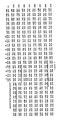
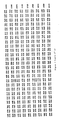
- the invention therefore relates to any nucleic acid fragment comprising a sequence of 8 to 40, preferably 20 to 40 nucleotides, characterized in that its sequence is contained in the DNA sequence coding for the human villin gene shown in the Figure I. It also relates to any DNA fragment which is exactly complementary to one of the preceding ones and which therefore contains the same number of deoxyribonucleotides as well as any corresponding RNA fragment and which contains the same number of ribonucleotides.
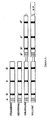
- the invention relates in particular to any nucleic acid fragment characterized in that it comprises from 8 to 40 nucleotides and that its sequence is contained in the part external to the "head piece" of DNA or RNA specific for the human villin gene, as defined above.
- the invention relates more particularly to the sequences defined above in single-stranded form but also in the case of DNA, in double-stranded form.
- the previously defined fragments can be isolated by cleavage and, if necessary, pruning with an appropriate enzyme, for example Bal 31, from the gene coding for human villin, or from cDNA prepared from the mRNA resulting from the transcription of this gene. These fragments can also be synthesized chemically or enzymatically from the sequence given in FIG. I which represents the coding sequence of the human villin gene.
- an appropriate enzyme for example Bal 31, from the gene coding for human villin, or from cDNA prepared from the mRNA resulting from the transcription of this gene.
- the phosphate-5 ′ end of one of the nucleotides after protection of the functional groups, reacts (condensation reaction) with the hydroxyl-3 ′ end of another nucleoside or nucleotide also protected by using dicyclohexylcarbodiimide or a chloride of arylsulphonyl.
- the nucleotide chain is thus lengthened by implementing similar condensation steps.
- Protective groups for the nucleotide functions can for example consist of a monomethoxytrityl group (MMTr), an acetyl group (Ac) or an anisoyl group (An).
- MMTr monomethoxytrityl group
- Ac acetyl group
- An anisoyl group
- the synthesis by chemical route can also be carried out by the "phosphotriester” method which makes it possible to block each phosphodiester internucleotide function during the course of the synthesis of the sequence.
- a completely protected mononucleotide which contains a masked phosphotriester-3 ′ group.
- a third method allowing the chemical synthesis of a nucleic acid fragment is the "phosphite-triester" method.
- this method is implemented with the help of an insoluble support on which the 3 ′ end of the oligonucleotide to be synthesized is fixed.
- This immobilization of the oligonucleotide by coupling makes it possible to avoid purification steps after each condensation cycle.
- the appropriate mononucleotides previously blocked are added sequentially and the reagents, the unwanted starting materials are eliminated by filtration.
- the filtration steps can be replaced by washing.
- any region of the coding sequence or of the corresponding mRNA can serve as a basis for obtaining a nucleic acid fragment of the invention identical or complementary to these sequences as soon as the specificity of the sequence of the nucleotides of the fragment with respect to the coding DNA or the mRNA of villin is respected.
- the invention also relates to the particular application which constitutes the use of the fragments of defined nucleic acids, for the constitution of nucleotide primers (also designated by primers), capable of inducing, under determined conditions, the initiation the synthesis of all or part of a nucleic acid specific for the villin gene.
- nucleotide primers also designated by primers
- primer is intended to mean a sequence of nucleotides (oligonucleotide) advantageously consisting of a nucleic acid fragment defined above, in particular any fragment advantageously comprising from 8 to 40 nucleotides and preferably from 20 to 40 nucleotides and having the following properties: - it is capable, depending on its nature, of hybridizing specifically with a corresponding complementary sequence either of the DNA coding for the villin gene or of the mRNA corresponding to this gene, or a sequence which is complementary to them, - it is capable of inducing the synthesis of a nucleic acid complementary to that to which it hybridizes (the latter is then called matrix) within a buffered solution and under pH and temperature conditions suitable for this synthesis , in the presence of an agent inducing synthesis, in particular a polymerase or a reverse transcriptase and in the presence of appropriate nucleotides.
- the synthetic product obtained from the primer fragment is called the primer extension product.
- Buffered solutions and conditions of pH and temperature suitable for the production of the "primer extension product” can be determined by reference to the teachings of the following patents: US.4683202 and US.4683195 the content of which is incorporated in the this request.
- the primer comes in double or single stranded form. This second form is generally more favorable to the quality required for hybridization with the nucleic acid so that the synthesis of the elongation product can start from the primer and in contact with the matrix.
- the use of a double-stranded primer, denatured before the hybridization step, can generate a competition between, on the one hand, the rehybridization of the primer with the complementary strand and, on the other hand, the nucleic acid matrix likely to match one of the strands of the primer.
- the invention relates more particularly to the application of primers in accordance with the invention to initiating the synthesis of an amount sufficient to be detected, of primer extension products in contact with a nucleic acid coding for the human villin, present in the sequence of FIG. I, or from a mRNA sequence for transcription of the human villin gene or from the sequences complementary to the preceding ones, present in a biological sample, these sequences then acting as matrices respectively complementary to said primers.
- Such an application allows, for example, the detection of an alteration (mutation, deletion, etc.) on the nucleic acid fragment constituting the primer extension product.
- Such a method can be used for example for the in vitro detection of the presence of tumor cells or tumors, or also of metastases of tumors, as long as they are characterized by the abnormal presence of human villin mRNA.
- a method can be used for example for the in vitro detection of the presence of tumor cells or tumors, or also of metastases of tumors, as long as they are characterized by the abnormal presence of human villin mRNA.
- cells originating from the tumorigenesis of intestinal or renal tissues are examples of cells originating from the tumorigenesis of intestinal or renal tissues.
- the implementation of the above detection method is carried out from a biological sample taken from a patient and constituted for example by a biopsy, an operating part, a biological fluid.
- the primer, or the first and second primers as well as the nucleotides are added from the first step in an amount sufficient to carry out several cycles of synthesis of the extension product (s), by implementing the steps of the process defined above in order to obtain a desired level of amplification of the mRNA initially present in the biological sample.
- these constituents are incorporated throughout the completion of the process steps, as often as necessary.
- the nucleotides introduced in the initial step of the above detection method consist of deoxynucleotides or of ribonucleotides depending on whether there are primers consisting respectively of DNA or RNA.
- the polymerization-inducing agent starting from the primer hybridized to the nucleic acid serving as template is generally constituted by a DNA polymerase when it comes to inducing DNA synthesis, or by a reverse transcriptase to synthesize DNA from an RNA template.
- a DNA polymerase when it comes to inducing DNA synthesis
- a reverse transcriptase to synthesize DNA from an RNA template.
- polymerases which can be used, mention may be made of DNA polymerase from E. coli, the Klenow fragment of this DNA polymerase, Tag polymerase or reverse transcriptase. This list is of course not exhaustive.
- the duplex obtained after polymerization from a primer, when the primer extension product and the synthesis matrix are of different nature, that is to say when the mRNA is initially present in the sample biological is a heteroduplex when the extension product of the DNA primer is cDNA, complementary to mRNA.
- the implementation of the method described above can result, if necessary, in the amplification of a determined part of the sequence of the mRNA for transcription of the villin gene.
- the size of the sequence to be amplified is chosen to allow detection of the presence of the desired mRNA. Polymerization from a primer can therefore be deliberately limited by any suitable means.
- the detection of the extension products of the primers can be done by conventional detection techniques.
- the method for detecting the presence of mRNA is characterized in that the nucleotides incorporated for the purposes of carrying out the method are radioactively labeled and that the detection of the presence of mRNA sought corresponds to the detection of the radioactivity of the extension products synthesized after elimination of the non-incorporated nucleotides during the polymerization from the primers.
- Another application of the fragments in accordance with the invention relates to their use for the detection of human genetic polymorphism.
- detection of human genetic polymorphism is meant both the genetic identification of an individual and the detection of certain pathologies linked to genetic modifications concerning the gene villin or a genetically linked gene.
- the identification of an individual may include the analysis of restriction fragments containing all or part of the villin gene.
- nucleic acid fragments defined above are used as a probe.
- probes are used on a biological sample, for example a tissue or a fluid prepared to be accessible to said probes.
- RNA was isolated from a subclone of an HT-29 cell line (HT29-18-C1; Huet et al., 1987) by the isothiocyanate method of guanidine (Chirgwin et al., 1979) and enriched in polyadenylated RNA (poly A+ RNA) by passage through a column of cellulose oligodT (Aviv and Leder, 1972).
- the polyadenylated RNA was fractionated according to size on a 5% -20% sucrose gradient and the fractions containing the villin mRNA were identified by Northern blot analysis using a cRNA probe (complementary RNA) corresponding to the part carboxy-terminal of human villin (Pringault et al. 1986, reference 1).
- the cDNA was synthesized from 1 ⁇ g of polyadenylated RNA according to the method described by Gubler and Hoffmann (1983). After methylation of the cDNA with an EcoR1 methylase, EcoR1 linkers were ligated to the blunt ends of the cDNA, digested with EcoR1 and separated on an Ultrogel AcA34 (LKB) column in TE buffer (20 mM Tris, 1 mM EDTA). 30 ng of cDNA were ligated with 1 ⁇ g of the DNA of a vector ⁇ gt10 digested with EcoR1 and the particles were packaged in vitro ("in vitro packaging") to give a cDNA library containing 106 independent recombinants.
- LLB Ultrogel AcA34
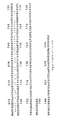
- oligonucleotide sequences complementary to the villin mRNA 3 extensions from successive primers were carried out using oligonucleotide sequences complementary to the villin mRNA.
- the oligonucleotide probes are underlined in Figure II.
- the oligonucleotides were hybridized in a molar ratio of 10: 1 with 2 ⁇ g of polyA+ mRNA fractionated according to size.
- the synthesis of cDNA was then carried out in accordance with the conditions already described.
- the ⁇ gt10 library was screened with cRNA probes obtained by in vitro transcription (Melton et al. 1984 reference 2) of the cDNA clones already characterized.
- RNA (1.5 ⁇ g) isolated from the HT29-18-C1 cell line was fractionated by electrophoresis on 1% agarose gels in the presence of 1M formaldehyde (Lehrach et al. 1977 reference 3) and transferred to nitrocellulose.
- the imprints were pre-hybridized at 55 ° C for 16 hours in 50% formamide, 4 x SSC, 0.05 M Na2HPO4 at pH 7.4 in 1 x Denhardt's solution, 250 ⁇ g / ml of salmon sperm DNA denatured and 500 ⁇ g / ml of tRNA.
- Hybridization with a P32-labeled RNA probe (2x10⁶ c.p.m / ml) was carried out for 24 hours at 55 ° C in the same solution devoid of tRNA.
- the impressions were washed twice in 1xSSC, 0.1% SDS, once in 0.2 x SSC, 0.1% SDS at 65 ° C and finally once in 0.1 x SSC, 0.1% SDS for 30 min at 70 ° C.
- the immobilized protein was detected by a diluted fluorescamine dye (1 mg / l of acetone), detached from the membrane and transferred to the reaction chamber of a protein sequencer in the gas phase, Applied Biosystems 470A operating according to the manufacturer's instructions.
Landscapes
- Chemical & Material Sciences (AREA)
- Life Sciences & Earth Sciences (AREA)
- Health & Medical Sciences (AREA)
- Organic Chemistry (AREA)
- Proteomics, Peptides & Aminoacids (AREA)
- Zoology (AREA)
- Wood Science & Technology (AREA)
- Genetics & Genomics (AREA)
- Engineering & Computer Science (AREA)
- General Health & Medical Sciences (AREA)
- Biochemistry (AREA)
- Biophysics (AREA)
- Molecular Biology (AREA)
- Analytical Chemistry (AREA)
- Immunology (AREA)
- Biotechnology (AREA)
- Chemical Kinetics & Catalysis (AREA)
- Bioinformatics & Cheminformatics (AREA)
- Pathology (AREA)
- Physics & Mathematics (AREA)
- Microbiology (AREA)
- General Engineering & Computer Science (AREA)
- Gastroenterology & Hepatology (AREA)
- Medicinal Chemistry (AREA)
- Hospice & Palliative Care (AREA)
- Oncology (AREA)
- Toxicology (AREA)
- Measuring Or Testing Involving Enzymes Or Micro-Organisms (AREA)
- Investigating Or Analysing Biological Materials (AREA)
- Saccharide Compounds (AREA)
- Medicines Containing Antibodies Or Antigens For Use As Internal Diagnostic Agents (AREA)
Applications Claiming Priority (2)
| Application Number | Priority Date | Filing Date | Title |
|---|---|---|---|
| FR8814208 | 1988-10-28 | ||
| FR8814208A FR2638464B1 (fr) | 1988-10-28 | 1988-10-28 | Fragments d'acide nucleique specifiques du gene de la villine humaine, leur utilisation aux fins de diagnostic |
Publications (2)
| Publication Number | Publication Date |
|---|---|
| EP0367666A1 true EP0367666A1 (de) | 1990-05-09 |
| EP0367666B1 EP0367666B1 (de) | 1994-07-20 |
Family
ID=9371435
Family Applications (1)
| Application Number | Title | Priority Date | Filing Date |
|---|---|---|---|
| EP89402984A Expired - Lifetime EP0367666B1 (de) | 1988-10-28 | 1989-10-27 | Spezifische Nukleinsäurefragmente des menschlichen Villingens, ihre Anwendung für diagnostische Zwecke |
Country Status (8)
| Country | Link |
|---|---|
| US (1) | US5652101A (de) |
| EP (1) | EP0367666B1 (de) |
| JP (1) | JPH02283285A (de) |
| AT (1) | ATE108834T1 (de) |
| DE (1) | DE68916905T2 (de) |
| ES (1) | ES2057164T3 (de) |
| FR (1) | FR2638464B1 (de) |
| HK (1) | HK74595A (de) |
Families Citing this family (2)
| Publication number | Priority date | Publication date | Assignee | Title |
|---|---|---|---|---|
| US5830729A (en) * | 1996-04-18 | 1998-11-03 | Institut Pasteur | I Sce I-induced gene replacement and gene conversion in embryonic stem cells |
| US9075065B2 (en) * | 2008-09-12 | 2015-07-07 | Dako Denmark A/S | Prostate cancer biomarker |
Citations (3)
| Publication number | Priority date | Publication date | Assignee | Title |
|---|---|---|---|---|
| US4683202A (en) * | 1985-03-28 | 1987-07-28 | Cetus Corporation | Process for amplifying nucleic acid sequences |
| US4683195A (en) * | 1986-01-30 | 1987-07-28 | Cetus Corporation | Process for amplifying, detecting, and/or-cloning nucleic acid sequences |
| EP0206849B1 (de) * | 1985-05-02 | 1993-09-29 | Institut Pasteur | Verfahren zur in vitro-Diagnose von bösartigen Zellen aus dem Verdauungstrakt |
Family Cites Families (2)
| Publication number | Priority date | Publication date | Assignee | Title |
|---|---|---|---|---|
| IS1355B6 (is) * | 1984-11-12 | 1989-04-19 | Lister Institute Of Preventive Medicine | Fjölkjarna kannar |
| US5188967A (en) * | 1985-05-02 | 1993-02-23 | Institut Pasteur | Agents for the in vitro diagnosis of malignant cells originating in the digestive tract |
-
1988
- 1988-10-28 FR FR8814208A patent/FR2638464B1/fr not_active Expired - Lifetime
-
1989
- 1989-10-27 ES ES89402984T patent/ES2057164T3/es not_active Expired - Lifetime
- 1989-10-27 EP EP89402984A patent/EP0367666B1/de not_active Expired - Lifetime
- 1989-10-27 AT AT89402984T patent/ATE108834T1/de not_active IP Right Cessation
- 1989-10-27 DE DE68916905T patent/DE68916905T2/de not_active Expired - Fee Related
- 1989-10-30 JP JP1282817A patent/JPH02283285A/ja active Pending
-
1994
- 1994-12-09 US US08/355,224 patent/US5652101A/en not_active Expired - Fee Related
-
1995
- 1995-05-11 HK HK74595A patent/HK74595A/xx not_active IP Right Cessation
Patent Citations (5)
| Publication number | Priority date | Publication date | Assignee | Title |
|---|---|---|---|---|
| US4683202A (en) * | 1985-03-28 | 1987-07-28 | Cetus Corporation | Process for amplifying nucleic acid sequences |
| US4683202B1 (de) * | 1985-03-28 | 1990-11-27 | Cetus Corp | |
| EP0206849B1 (de) * | 1985-05-02 | 1993-09-29 | Institut Pasteur | Verfahren zur in vitro-Diagnose von bösartigen Zellen aus dem Verdauungstrakt |
| US4683195A (en) * | 1986-01-30 | 1987-07-28 | Cetus Corporation | Process for amplifying, detecting, and/or-cloning nucleic acid sequences |
| US4683195B1 (de) * | 1986-01-30 | 1990-11-27 | Cetus Corp |
Non-Patent Citations (7)
| Title |
|---|
| HUMAN GENETICS, vol. 78, 1988, pages 130-133, Springer-Verlag; M.F. ROUSSEAU-MERCK et al.: "Localization of the villin gene on human chromosome 2q35-q36 and on mouse chromosome 1" * |
| JOURNAL OF CELL BIOLOGY, (USA), vol. 107, no. 5, novembre 1988, Rockefeller University Press, New York, N.Y. US; M. ARPIN et al.: "Sequence of human villin a large duplicated domain homologous with other actin-severing proteins and a unique small carboxyl-terminal domain related to villin specificity", pages 1759-1766 * |
| JOURNAL OF CELL BIOLOGY, vol. 105, no. 4, 1987, page 112A, no . 623, New York, NY., US; W.L. BAZARI et al.: "Villin cDNA sequence correlates with functional domains" * |
| PROCEEDINGS OF THE NATIONAL ACADEMY OF SCIENCES OF THE UNITED STATES OF AMERICA, vol. 82, décembre 1985, pages 8488-8492, Washington, D.C., US; S. ROBINE et al.: "Can villin be used to identify malignant and undifferentiated normal digestive epithelial cells;" * |
| PROCEEDINGS OF THE NATIONAL ACADEMY OF SCIENCES OF THE UNITED STATES OF AMERICA, vol. 85, no. 14, juillet 1988, pages 4986-4990, Washington, US; W.L. BAZARI et al.: "Villin sequence and peptide map identify six homologous domains" * |
| THE EMBO JOURNAL, vol. 5, no. 12, 1986, pages 3119-3124, IRL Press Limited, Oxford, GB; E. PRINGAULT et al.: "A human villin cDNA clone to investigate the differentiation of intestinal and kidney cells in vivo and in culture" * |
| THE JOURNAL OF BIOLOGICAL CHEMISTRY, vol. 263, no. 2, 15 janvier 1988, pages 722-723, The American Society for Biochemistry and Molecular Biology, Inc., Washington, D.C., US; E. ANDRE et al.: "Severin, gelsolin, and villin share a homologous sequence in regions presumed to contain F-actin severing domains" * |
Also Published As
| Publication number | Publication date |
|---|---|
| ATE108834T1 (de) | 1994-08-15 |
| DE68916905T2 (de) | 1995-01-05 |
| DE68916905D1 (de) | 1994-08-25 |
| HK74595A (en) | 1995-05-19 |
| ES2057164T3 (es) | 1994-10-16 |
| JPH02283285A (ja) | 1990-11-20 |
| FR2638464B1 (fr) | 1992-01-03 |
| FR2638464A1 (fr) | 1990-05-04 |
| EP0367666B1 (de) | 1994-07-20 |
| US5652101A (en) | 1997-07-29 |
Similar Documents
| Publication | Publication Date | Title |
|---|---|---|
| Kayne et al. | Extremely conserved histone H4 N terminus is dispensable for growth but essential for repressing the silent mating loci in yeast | |
| EP0158758B1 (de) | Sonde, die eine Nukleinsäure enthält und die durch spezifische Antikörper erkennbar ist, und deren Anwendung zum Nachweisen und Charakterisieren einer homologen DNS-Sequenz | |
| EP0388466B1 (de) | Für das menschliche angiotension-umformungsenzym (ace) kodierende nukleinsäure und ihre anwendungen, insbesondere zur in-vitro-diagnose von bluthochdruck | |
| FR2691475A1 (fr) | Séquence d'ADN des produits de fusion résultant de la translocation chromosomique récurrente t(11;22) (q24;q12) associée au développement d'un groupe de tumeurs cancéreuses. | |
| EP0367666B1 (de) | Spezifische Nukleinsäurefragmente des menschlichen Villingens, ihre Anwendung für diagnostische Zwecke | |
| WO1994009130A1 (fr) | Polypeptides ayant une activite de recepteur serotoninergique (5ht2c) et utilisations | |
| WO1997028186A1 (fr) | PROTEINE PURIFIEE SR-p70 | |
| CA2298834C (fr) | Sequences retroviraux endogenes, associees a des maladies auto-immunes et/ou a des perturbations de la grossesse | |
| EP0176396A1 (de) | Modifizierte Adeninegruppe enthaltende Sonde, ihre Herstellung und Verwendungen | |
| WO1994001555A1 (fr) | Polypeptides ayant une activite de recepteur serotoninergique (5ht5a), acides nucleiques codant pour ces polypeptides et utilisations | |
| EP0206849B1 (de) | Verfahren zur in vitro-Diagnose von bösartigen Zellen aus dem Verdauungstrakt | |
| FR2601034A1 (fr) | Inhibiteur de l'activite de la c1-esterase plasmatique (c1-inhibiteur) et d'autres enzymes proteolytiques du groupe des proteases a serine, son procede de preparation, acides nucleiques codant pour cet inhibiteur, methodes de detection d'affections correlees aux defauts dudit inhibiteur a l'aide d'anticorps ou de sondes nucleotidiques et medicaments contenant ledit inhibiteur de synthese | |
| FR2633639A1 (fr) | Nouvelles sequences d'acides amines, acides nucleiques codant pour ces sequences d'acides amines et leurs applications, notamment pour le diagnostic, in vitro, de pathologies liees a l'action de facteurs oncogenes | |
| EP1007532B1 (de) | Oligonukleotide zur identifizierung von amidierten polypeptid-hormonvorläufern | |
| FR2722209A1 (fr) | Recepteur opioide kappa humain, acides nucleiques et utilisations | |
| WO1994001556A1 (fr) | Polypeptides ayant une activite de recepteur serotoninergique (5ht6), acides nucleiques codant pour ces polypeptides et utilisations | |
| CA1340868C (fr) | Acide nucleique codant pour l'enzyme de conversion de l'angiotensine (eca) humaine, et ses applications, notamment pour le diagnostic in vitro de l'hypertension arterielle | |
| FR2701265A1 (fr) | Nouveaux polypeptides ayant une activité de récepteur sérotoninergique, acides nucléiques codant pour ces polypeptides et utilisations. | |
| WO1991006671A1 (fr) | Moyens pour la detection de cellules hautement proliferatives | |
| WO1991013987A2 (fr) | Adnc codante pour le gene n du virus de la septicemie hemorragique virale et ses utilisations | |
| FR2641792A1 (fr) | Sequences de nucleotides codant pour la calmoduline chez l'homme et leurs applications biologiques | |
| EP1399586A2 (de) | Methode zur identifizierung von genen, welche mit chronisch-myeloischer leukämie assoziiert sind | |
| WO1998034637A1 (fr) | Utilisation d'un polypeptide, pour obtenir une composition pour detecter, prevenir ou traiter une maladie degenerative et/ou auto-immune | |
| FR2635116A1 (fr) | Procede pour la determination du sexe d'embryons de ruminants, kit ou necessaire pour la mise en oeuvre du procede | |
| FR2711672A1 (fr) | Procédé de sélection et/ou d'obtention de sondes capables de détecter de nouvelles régions à nombre variable de répétitions en tandem, sondes pouvant être ainsi obtenues et leurs utilisations. |
Legal Events
| Date | Code | Title | Description |
|---|---|---|---|
| PUAI | Public reference made under article 153(3) epc to a published international application that has entered the european phase |
Free format text: ORIGINAL CODE: 0009012 |
|
| AK | Designated contracting states |
Kind code of ref document: A1 Designated state(s): AT BE CH DE ES FR GB GR IT LI LU NL SE |
|
| 17P | Request for examination filed |
Effective date: 19901102 |
|
| 17Q | First examination report despatched |
Effective date: 19921209 |
|
| GRAA | (expected) grant |
Free format text: ORIGINAL CODE: 0009210 |
|
| AK | Designated contracting states |
Kind code of ref document: B1 Designated state(s): AT BE CH DE ES FR GB GR IT LI LU NL SE |
|
| REF | Corresponds to: |
Ref document number: 108834 Country of ref document: AT Date of ref document: 19940815 Kind code of ref document: T |
|
| REF | Corresponds to: |
Ref document number: 68916905 Country of ref document: DE Date of ref document: 19940825 |
|
| ITF | It: translation for a ep patent filed | ||
| REG | Reference to a national code |
Ref country code: ES Ref legal event code: FG2A Ref document number: 2057164 Country of ref document: ES Kind code of ref document: T3 |
|
| GBT | Gb: translation of ep patent filed (gb section 77(6)(a)/1977) |
Effective date: 19940919 |
|
| REG | Reference to a national code |
Ref country code: GR Ref legal event code: FG4A Free format text: 3013660 |
|
| EAL | Se: european patent in force in sweden |
Ref document number: 89402984.2 |
|
| PLBE | No opposition filed within time limit |
Free format text: ORIGINAL CODE: 0009261 |
|
| STAA | Information on the status of an ep patent application or granted ep patent |
Free format text: STATUS: NO OPPOSITION FILED WITHIN TIME LIMIT |
|
| 26N | No opposition filed | ||
| PGFP | Annual fee paid to national office [announced via postgrant information from national office to epo] |
Ref country code: GB Payment date: 19980916 Year of fee payment: 10 |
|
| PGFP | Annual fee paid to national office [announced via postgrant information from national office to epo] |
Ref country code: AT Payment date: 19980922 Year of fee payment: 10 |
|
| PGFP | Annual fee paid to national office [announced via postgrant information from national office to epo] |
Ref country code: NL Payment date: 19980923 Year of fee payment: 10 |
|
| PGFP | Annual fee paid to national office [announced via postgrant information from national office to epo] |
Ref country code: ES Payment date: 19981001 Year of fee payment: 10 |
|
| PGFP | Annual fee paid to national office [announced via postgrant information from national office to epo] |
Ref country code: BE Payment date: 19981009 Year of fee payment: 10 |
|
| PGFP | Annual fee paid to national office [announced via postgrant information from national office to epo] |
Ref country code: LU Payment date: 19981012 Year of fee payment: 10 |
|
| PGFP | Annual fee paid to national office [announced via postgrant information from national office to epo] |
Ref country code: DE Payment date: 19981014 Year of fee payment: 10 |
|
| PGFP | Annual fee paid to national office [announced via postgrant information from national office to epo] |
Ref country code: FR Payment date: 19981020 Year of fee payment: 10 Ref country code: CH Payment date: 19981020 Year of fee payment: 10 |
|
| PGFP | Annual fee paid to national office [announced via postgrant information from national office to epo] |
Ref country code: SE Payment date: 19981021 Year of fee payment: 10 |
|
| PGFP | Annual fee paid to national office [announced via postgrant information from national office to epo] |
Ref country code: GR Payment date: 19981030 Year of fee payment: 10 |
|
| PG25 | Lapsed in a contracting state [announced via postgrant information from national office to epo] |
Ref country code: LU Free format text: LAPSE BECAUSE OF NON-PAYMENT OF DUE FEES Effective date: 19991027 Ref country code: GB Free format text: LAPSE BECAUSE OF NON-PAYMENT OF DUE FEES Effective date: 19991027 Ref country code: AT Free format text: LAPSE BECAUSE OF NON-PAYMENT OF DUE FEES Effective date: 19991027 |
|
| PG25 | Lapsed in a contracting state [announced via postgrant information from national office to epo] |
Ref country code: ES Free format text: LAPSE BECAUSE OF NON-PAYMENT OF DUE FEES Effective date: 19991028 |
|
| PG25 | Lapsed in a contracting state [announced via postgrant information from national office to epo] |
Ref country code: SE Free format text: THE PATENT HAS BEEN ANNULLED BY A DECISION OF A NATIONAL AUTHORITY Effective date: 19991030 |
|
| PG25 | Lapsed in a contracting state [announced via postgrant information from national office to epo] |
Ref country code: LI Free format text: LAPSE BECAUSE OF NON-PAYMENT OF DUE FEES Effective date: 19991031 Ref country code: GR Free format text: LAPSE BECAUSE OF NON-PAYMENT OF DUE FEES Effective date: 19991031 Ref country code: CH Free format text: LAPSE BECAUSE OF NON-PAYMENT OF DUE FEES Effective date: 19991031 Ref country code: BE Free format text: LAPSE BECAUSE OF NON-PAYMENT OF DUE FEES Effective date: 19991031 |
|
| BERE | Be: lapsed |
Owner name: INSTITUT PASTEUR Effective date: 19991031 |
|
| PG25 | Lapsed in a contracting state [announced via postgrant information from national office to epo] |
Ref country code: NL Free format text: LAPSE BECAUSE OF NON-PAYMENT OF DUE FEES Effective date: 20000501 |
|
| GBPC | Gb: european patent ceased through non-payment of renewal fee |
Effective date: 19991027 |
|
| REG | Reference to a national code |
Ref country code: CH Ref legal event code: PL |
|
| EUG | Se: european patent has lapsed |
Ref document number: 89402984.2 |
|
| PG25 | Lapsed in a contracting state [announced via postgrant information from national office to epo] |
Ref country code: FR Free format text: LAPSE BECAUSE OF NON-PAYMENT OF DUE FEES Effective date: 20000630 |
|
| NLV4 | Nl: lapsed or anulled due to non-payment of the annual fee |
Effective date: 20000501 |
|
| PG25 | Lapsed in a contracting state [announced via postgrant information from national office to epo] |
Ref country code: DE Free format text: LAPSE BECAUSE OF NON-PAYMENT OF DUE FEES Effective date: 20000801 |
|
| REG | Reference to a national code |
Ref country code: FR Ref legal event code: ST |
|
| REG | Reference to a national code |
Ref country code: ES Ref legal event code: FD2A Effective date: 20001113 |
|
| PG25 | Lapsed in a contracting state [announced via postgrant information from national office to epo] |
Ref country code: IT Free format text: LAPSE BECAUSE OF NON-PAYMENT OF DUE FEES;WARNING: LAPSES OF ITALIAN PATENTS WITH EFFECTIVE DATE BEFORE 2007 MAY HAVE OCCURRED AT ANY TIME BEFORE 2007. THE CORRECT EFFECTIVE DATE MAY BE DIFFERENT FROM THE ONE RECORDED. Effective date: 20051027 |