EP0374778A2 - Méthode pour l'immobilisation d'une protéine sur une phase solide, la phase solide portant la protéine et son utilisation - Google Patents
Méthode pour l'immobilisation d'une protéine sur une phase solide, la phase solide portant la protéine et son utilisation Download PDFInfo
- Publication number
- EP0374778A2 EP0374778A2 EP89123321A EP89123321A EP0374778A2 EP 0374778 A2 EP0374778 A2 EP 0374778A2 EP 89123321 A EP89123321 A EP 89123321A EP 89123321 A EP89123321 A EP 89123321A EP 0374778 A2 EP0374778 A2 EP 0374778A2
- Authority
- EP
- European Patent Office
- Prior art keywords
- protein
- solid phase
- solution
- immobilized
- proteins
- Prior art date
- Legal status (The legal status is an assumption and is not a legal conclusion. Google has not performed a legal analysis and makes no representation as to the accuracy of the status listed.)
- Granted
Links
Images

Classifications
-
- G—PHYSICS
- G01—MEASURING; TESTING
- G01N—INVESTIGATING OR ANALYSING MATERIALS BY DETERMINING THEIR CHEMICAL OR PHYSICAL PROPERTIES
- G01N33/00—Investigating or analysing materials by specific methods not covered by groups G01N1/00 - G01N31/00
- G01N33/48—Biological material, e.g. blood, urine; Haemocytometers
- G01N33/50—Chemical analysis of biological material, e.g. blood, urine; Testing involving biospecific ligand binding methods; Immunological testing
- G01N33/53—Immunoassay; Biospecific binding assay; Materials therefor
- G01N33/543—Immunoassay; Biospecific binding assay; Materials therefor with an insoluble carrier for immobilising immunochemicals
-
- Y—GENERAL TAGGING OF NEW TECHNOLOGICAL DEVELOPMENTS; GENERAL TAGGING OF CROSS-SECTIONAL TECHNOLOGIES SPANNING OVER SEVERAL SECTIONS OF THE IPC; TECHNICAL SUBJECTS COVERED BY FORMER USPC CROSS-REFERENCE ART COLLECTIONS [XRACs] AND DIGESTS
- Y10—TECHNICAL SUBJECTS COVERED BY FORMER USPC
- Y10S—TECHNICAL SUBJECTS COVERED BY FORMER USPC CROSS-REFERENCE ART COLLECTIONS [XRACs] AND DIGESTS
- Y10S530/00—Chemistry: natural resins or derivatives; peptides or proteins; lignins or reaction products thereof
- Y10S530/81—Carrier - bound or immobilized peptides or proteins and the preparation thereof, e.g. biological cell or cell fragment as carrier
- Y10S530/812—Peptides or proteins is immobilized on, or in, an organic carrier
-
- Y—GENERAL TAGGING OF NEW TECHNOLOGICAL DEVELOPMENTS; GENERAL TAGGING OF CROSS-SECTIONAL TECHNOLOGIES SPANNING OVER SEVERAL SECTIONS OF THE IPC; TECHNICAL SUBJECTS COVERED BY FORMER USPC CROSS-REFERENCE ART COLLECTIONS [XRACs] AND DIGESTS
- Y10—TECHNICAL SUBJECTS COVERED BY FORMER USPC
- Y10S—TECHNICAL SUBJECTS COVERED BY FORMER USPC CROSS-REFERENCE ART COLLECTIONS [XRACs] AND DIGESTS
- Y10S530/00—Chemistry: natural resins or derivatives; peptides or proteins; lignins or reaction products thereof
- Y10S530/81—Carrier - bound or immobilized peptides or proteins and the preparation thereof, e.g. biological cell or cell fragment as carrier
- Y10S530/812—Peptides or proteins is immobilized on, or in, an organic carrier
- Y10S530/813—Carrier is a saccharide
-
- Y—GENERAL TAGGING OF NEW TECHNOLOGICAL DEVELOPMENTS; GENERAL TAGGING OF CROSS-SECTIONAL TECHNOLOGIES SPANNING OVER SEVERAL SECTIONS OF THE IPC; TECHNICAL SUBJECTS COVERED BY FORMER USPC CROSS-REFERENCE ART COLLECTIONS [XRACs] AND DIGESTS
- Y10—TECHNICAL SUBJECTS COVERED BY FORMER USPC
- Y10S—TECHNICAL SUBJECTS COVERED BY FORMER USPC CROSS-REFERENCE ART COLLECTIONS [XRACs] AND DIGESTS
- Y10S530/00—Chemistry: natural resins or derivatives; peptides or proteins; lignins or reaction products thereof
- Y10S530/81—Carrier - bound or immobilized peptides or proteins and the preparation thereof, e.g. biological cell or cell fragment as carrier
- Y10S530/812—Peptides or proteins is immobilized on, or in, an organic carrier
- Y10S530/813—Carrier is a saccharide
- Y10S530/814—Cellulose or derivatives thereof
-
- Y—GENERAL TAGGING OF NEW TECHNOLOGICAL DEVELOPMENTS; GENERAL TAGGING OF CROSS-SECTIONAL TECHNOLOGIES SPANNING OVER SEVERAL SECTIONS OF THE IPC; TECHNICAL SUBJECTS COVERED BY FORMER USPC CROSS-REFERENCE ART COLLECTIONS [XRACs] AND DIGESTS
- Y10—TECHNICAL SUBJECTS COVERED BY FORMER USPC
- Y10S—TECHNICAL SUBJECTS COVERED BY FORMER USPC CROSS-REFERENCE ART COLLECTIONS [XRACs] AND DIGESTS
- Y10S530/00—Chemistry: natural resins or derivatives; peptides or proteins; lignins or reaction products thereof
- Y10S530/81—Carrier - bound or immobilized peptides or proteins and the preparation thereof, e.g. biological cell or cell fragment as carrier
- Y10S530/812—Peptides or proteins is immobilized on, or in, an organic carrier
- Y10S530/815—Carrier is a synthetic polymer
-
- Y—GENERAL TAGGING OF NEW TECHNOLOGICAL DEVELOPMENTS; GENERAL TAGGING OF CROSS-SECTIONAL TECHNOLOGIES SPANNING OVER SEVERAL SECTIONS OF THE IPC; TECHNICAL SUBJECTS COVERED BY FORMER USPC CROSS-REFERENCE ART COLLECTIONS [XRACs] AND DIGESTS
- Y10—TECHNICAL SUBJECTS COVERED BY FORMER USPC
- Y10S—TECHNICAL SUBJECTS COVERED BY FORMER USPC CROSS-REFERENCE ART COLLECTIONS [XRACs] AND DIGESTS
- Y10S530/00—Chemistry: natural resins or derivatives; peptides or proteins; lignins or reaction products thereof
- Y10S530/81—Carrier - bound or immobilized peptides or proteins and the preparation thereof, e.g. biological cell or cell fragment as carrier
- Y10S530/812—Peptides or proteins is immobilized on, or in, an organic carrier
- Y10S530/815—Carrier is a synthetic polymer
- Y10S530/817—Entrapped within the carrier, e.g. gel, hollow fibre
Definitions
- the invention relates to a method for protein immobilization on a solid phase, a protein-carrying solid phase produced in this way and the use thereof.
- Proteins immobilized on solid phases are of great importance in various fields of technology.
- the use of immobilized proteins in biotechnology for example in bioreactors or in biochemical production, e.g. B. for affinity chromatography.
- Immobilized proteins have become particularly important for analysis. Bioaffine reactions play an important role, particularly in the detection methods of parameters relevant to medical diagnostics in body fluids, such as blood, plasma, serum, urine, saliva, liquor, etc., ie those reactions in which a certain substance is specifically bound to a protein.
- Known substance / protein pairs that enter into such bioaffine reactions are in general form, for. B. antigen / antibody, carbohydrate / lectin, biotin / avidin etc. If the protein is immobilized on a solid phase, corresponding substances present in a sample that are specifically bindable to the protein can be bound to it and removed from the sample and qualitatively and / or be determined quantitatively.
- heterogeneous immunoassays were developed for the detection of a partner of the antigen / antibody pair.
- Many variants are known to the person skilled in the art. Common to all is that a partner of the antigen / antibody pair is bound to a solid phase and with this immobilized partner, at least part of the corresponding binding partner is separated from the rest of the sample. The amount of the separated binding partner or the part of the binding partner that has not been separated but remains in the sample is then determined on the solid phase or in the rest of the sample.
- a number of methods are known from the prior art for the immobilization of proteins on solid phases.
- a protein can be fixed to a solid phase by chemical or physical forces.
- Methods for producing covalent bonds between a solid support material and proteins to be bound to it have long been known.
- EP-A-0 274 911 describes the use of chemically reactive plastic membranes which are able to covalently bind proteins directly.
- this method for producing protein-carrying solid phases requires a long contact time between the membrane and the protein to be bound in order to allow the chemical reaction to proceed to completion.
- active sites that are not saturated with protein must be coated with an inert protein in a second subsequent step, so that there are no longer any free membrane active sites that could negatively influence the later use of the protein-laden solid phase.
- GB-A-1 505 400 proposes crosslinking an immunologically active protein and then adsorbing it onto polystyrene latex particles.
- the adsorption is carried out in the latex emulsion. After part of the protein has bound to the latex particles, these are centrifuged off and washed several times.
- the protein-bearing polystyrene particles are stored in a buffered aqueous solution as a suspension and used for separation reactions.
- EP-A-0 122 209 describes a method for binding biological macromolecules to solid phases, which consists in polymerizing the macromolecules to be fixed, for several hours together with hydrophobic carrier materials, such as e.g. B. incubate polystyrene and wash several times after binding some of the polymerized macromolecules to the carrier material before use or storage.
- hydrophobic carrier materials such as e.g. B. incubate polystyrene and wash several times after binding some of the polymerized macromolecules to the carrier material before use or storage.
- EP-A-0 269 092 relates to a method which is said to improve liability compared to the two aforementioned.
- the protein to be fixed is covalently bound to a hydrophobic carrier protein and this complex is adsorbed onto a hydrophobic solid phase, with the use of the hydrophobic interactions between solid phase and carrier protein being used to achieve a particularly advantageous fixation.
- the present invention is based on the object of firmly binding proteins to support materials which are essentially insoluble in water by means of a process which is simple and fast, even on an industrial scale, in order to obtain protein-carrying solid phases which have a wide range of uses offer the binding and possible separation of specifically bindable substances from liquid samples.
- the method according to the invention for immobilizing a protein on a solid phase is characterized in that the protein to be fixed is aggregated, contacted in a liquid with a hydrophilic solid phase and the solid phase is dried after the contact has taken place.
- proteins that can be chemically or physically aggregated to higher molecular weights can be immobilized using the method according to the invention.
- Chemical aggregation is understood to mean any increase in molecular weight that is achieved by means of chemical agents.
- proteins. B. be homopolymerized by adding carbodiimides.
- linkers can also be linked or crosslinked, for example, by multifunctional molecules, so-called linkers.
- the range of chemical linkers opens up the possibility of high variability of the aggregates e.g. B. with regard to the accessibility of certain protein sites, so-called epitopes, for substances specifically bindable with the protein or with regard to the adhesiveness of the protein aggregate to the solid phase.
- linkers such as. B. disuccinidyl suberate, S-acetyl-mercapto-succinic anhydride or maleinimido-hexanoyl-hydroxysuccinimide have been found to be advantageous.
- Disuccinidyl s appreciatedate for the aggregation of human albumin is particularly suitable for the present invention.
- Physical aggregation is understood to mean any increase in molecular weight that is achieved without chemical agents.
- proteins such as e.g. B. thermally aggregate albumin and so increase the molecular weight (EP-A-0 269 092).
- Thermally aggregated albumin is a particularly well immobilizable protein in the sense of the present invention.
- the protein aggregates produced prior to their application to solid phases such. B. should be lyophilized for storage, it may be advisable, as is often the case with the lyophilization of protein solutions, to add a stabilizer to this before the lyophilization, which increases the shelf life of the lyophilized protein aggregate and its solubility when reconstituted with water or buffer.
- the type and amount of these substances are depending on the type of protein. In general, these substances, if any, added to the protein aggregate solution must not have any negative influence on the immobilization process, in particular the ability of the protein aggregate to bind to the solid phase. Suitable substances are e.g. B.
- Sucrose has proven to be particularly advantageous, especially in the case of human albumin crosslinked with disuccinidyl suberate.
- a typical concentration range for the stabilizers and / or solubilizers which may be added to the protein aggregate solution to be lyophilized is 2 to 20% by weight.
- the preferred concentration is between 4 and 10% by weight.
- the concentration of stabilizer and / or solubilizer must not be so high that the Binding ability of the protein aggregate to the solid phase is adversely affected.
- the concentration of sucrose in the protein aggregate solution should be less than 2% by weight.
- proteins not only naturally occurring proteins isolated from natural sources can be immobilized by the method according to the invention, but also synthetically produced proteins.
- proteins which can be immobilized particularly well according to the invention are albumin, immunoglobulins, transferrin and collagen.
- Proteins which contain a non-protein part, such as, for example, biotin or a carbohydrate, can also be fixed to a solid phase according to the invention. In this way, non-proteins can also be immobilized on solid phases according to the invention if they are previously bound to a protein which can act as an anchor on the solid phase for the non-protein part.
- proteins can of course also be bound to another protein acting as an anchor on the solid phase.
- the strength of the immobilization of the protein according to the invention on the solid phase depends on various factors: on the one hand on the particular protein to be fixed, on the other hand on the type of carrier material. With regard to the protein, it has been shown that the adhesion to the solid phase increases with increasing molecular weight. No general minimum size for achieving a certain bond strength can be specified. It depends on the type of protein to be bound in each case and is easy for the person skilled in the art to determine. For albumin, for example, an aggregate of 4 to 5 albumin units has already proven to be well immobilizable in the sense of the invention, an aggregate of at least 10 albumin units is particularly advantageous.
- Preferred solid phases in the sense of the invention are all those materials which are essentially insoluble in water and which are more hydrophilic than the aggregated protein to be immobilized. Suitable materials are e.g. As polyester, sulphite pulp, cellulose, linters, nitrocellulose, cellulose acetate or solid phases based on nylon. They can be in any form, such as powder, granules, fibers, nonwovens or foils. Nonwovens based on cellulose are particularly preferred as solid phases in the sense of the invention.
- the aggregated protein is contacted in a liquid with the solid phase.
- the aggregated protein is in dissolved form, preferably in an aqueous liquid, for example a buffer solution. If nonwovens are used as solid phases, it has proven particularly advantageous to soak them with a solution of the aggregated protein by immersing them in the solution and saturating them therein with the solution.
- phosphate or HEPES buffers with a pH between about 6 and about 9, preferably between about 7 and about 8, have proven to be particularly suitable as solvents for human albumin.
- a hydrophilic solid phase with a residual moisture content of less than 7% at 20 ° C. and 50% relative humidity is generally referred to as dry in the sense of the invention.
- the residual moisture content, from which one can speak of "dry" depends in a special case on the selected solid phase. So z. B. cellulosic nonwovens with residual moisture contents of less than 7%, mixed nonwovens of cellulose and polyester fibers in a weight ratio of 50:50 of less than 5% as dry.
- the drying of protein-bearing nonwovens is advantageously carried out at temperatures between 30 and 80 ° C according to the inventive method. If the drying times are not decisive for the choice of the method, the drying can also be carried out at room temperature, e.g. B. be carried out in an air stream.
- the particular advantage of the method according to the invention lies in its simplicity. It is sufficient to immerse the hydrophilic carrier material, in particular hydrophilic nonwovens, in a solution of the aggregated protein to be fixed in order to saturate it with liquid. After impregnation, the carrier material is removed from the protein solution and dried. After drying, the protein aggregate is firmly bound to the solid phase. In this way it is possible to achieve a homogeneous loading density of the solid phase with protein, the amount of immobilized protein being precisely known.
- the amount of protein that can be bound to a solid phase is much higher than can be explained by adsorption.
- no protein can be eluted from the solid phase, without drying, ie. H. if a simple adsorption of the protein aggregate on the solid phase was made possible, the majority of the adsorbed protein can be eluted again by washing.
- a washing step is therefore unnecessary if the concentration of the protein solution is chosen so that the entire protein is immobilized after drying. This protein concentration depends on the type of carrier material. The limit concentration, which is just completely immobilized, can easily be determined by simple experiments.
- composition of the impregnation solution can be freely selected in a wide range without adversely affecting the binding properties of the protein to be immobilized.
- the type and concentration of the buffer, pH, ionic strength and, if appropriate, stabilizers and / or solubilizers to be added are predominantly selected according to aspects which relate solely to the properties of the particular protein aggregate in solution. This choice usually has no influence on the strength of the binding of the immobilized protein aggregate.
- Solid phases produced by the process according to the invention are very suitable for binding substances which are specifically bindable with the immobilized protein and, if appropriate, removing them from liquids.
- a wide variety of applications are conceivable, such as. B. for biochemical production as a carrier of immobilized proteins in bioreactors or for affinity chromatography for the enrichment and / or separation of specifically bindable substances.
- Protein-bearing solid phases produced according to the invention are particularly preferably used for analytical determinations of ingredients in liquid samples. They are very particularly preferred for bioaffine determinations of ingredients in body fluids, such as. B. blood, plasma, serum, urine, cerebrospinal fluid, saliva, etc., as described in the introduction.
- the protein-carrying solid phases according to the invention are particularly suitable for heterogeneous immunoassays, in particular for those which are generally carrier-bound, e.g. B. be carried out on a test strip.
- HSA human serum albumin
- DSS disuccinidyl suberate
- pHSA poly human serum albumin
- HSA high molecular weight fraction
- the washing centrifugates for a) and b) are combined in each case and 300 mU anti-HSA-IgG- ⁇ -galactosidase conjugate (160 ⁇ l) are added to each and shaken for 10 minutes. Then 200 ⁇ l are transferred to microtiter plate holes, the wall of which is loaded with HSA. After incubation for one hour, the mixture is washed with phosphate-buffered physiological saline, developed with o-nitrophenylgalactoside and, after 10 minutes, the absorbance is measured at 405 nm. The quantitative determination of the pHSA eluted from the fleece is carried out using a calibration curve.
- the amount of pHSA with which each piece of fleece was contacted was 3.75 ⁇ g. After elution, the following amounts were determined in the combined washing centrifugates: method pHSA in the eluate Eluate based on watering solution a) 0.012 ⁇ g 0.3% b) 2.64 ⁇ g 71%
- the protein immobilized according to the invention is bound to the solid phase much more firmly than the merely adsorbed protein, which for the most part can be washed off the solid phase again.
- 3 g of rabbit IgG are dissolved in 300 ml of potassium phosphate buffer, 100 mM, pH 8.5 and with a solution of 58 mg of N-tert-butyloxycarbonyl-triiodothyronine-N'-hydroxysuccinimide ester (BOC-T3-N ' -hydroxysuccinimide ester) in 30 ml of dioxane.
- BOC-T3-N ' -hydroxysuccinimide ester N-tert-butyloxycarbonyl-triiodothyronine-N'-hydroxysuccinimide ester
- the protein solution is dialyzed against a 200-fold volume of 20 mM potassium phosphate buffer, pH 7.8 and adjusted to a concentration of 50 mg / ml via ultrafiltration (Amicon YM 100 R membrane).
- disuccinidyl suberate concentration 10 mg disuccinidyl suberate / ml dioxane
- dialysis is carried out against 500 times the volume of potassium phosphate buffer, 50 mM, pH 7.2 and the fraction eluted on Superose 6 R in the exclusion volume is separated off and stabilized with sucrose (concentration 6 mg sucrose / mg IgG) and lyophilized.
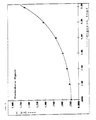
- a fleece made of 60% sulfite pulp and 40% linters is soaked with crosslinked rabbit IgG-T3 conjugate from Example 3 a) in a concentration of 250 ⁇ g / ml in 50 mM potassium phosphate buffer, pH 7.2 and after complete Saturation dried at 50 ° C for 60 minutes in a forced air cabinet. 50 ⁇ l each of sheep anti-T3-IgG- ⁇ -galactosidase conjugate (prepared analogously to the methods described in J.
- Immunoassay 4 (1983) 209-327) (120 mU in phosphate-buffered saline, 5 g / l bovine serum albumin) Incubated for 5 minutes with 50 ⁇ l of a standard T3 series and then pipetted onto the pieces of nonwoven fabric (8 ⁇ 8 mm, thickness 0.5 mm) of the T3 matrix prepared above. After an incubation time of 5 minutes, the fleece pieces are centrifuged out and the ⁇ -galactosidase activity of the filtrate is determined at 408 mM chlorphenol red galactoside solution (produced according to EP-A 0 146 866).
- the standard curve shown in FIG. 1 is obtained, which can be used for testing solutions with an unknown T3 content.
- disuccinidyl suberate solution concentration 10 mg disuccinidyl suberate / ml dioxane
- dialysis is carried out against 500 times the volume of potassium phosphate buffer 50 mM, pH 7.2, the fraction eluted on Superose 6 R in the exclusion volume is separated off, stabilized with sucrose (concentration 6 mg sucrose / mg IgG) and lyophilized.
- a fleece made of 60% sulfite pulp and 40% linters is soaked with crosslinked rabbit-IgG-digoxigenin conjugate from Example 4 a) (250 ⁇ g / ml in 50 mM potassium phosphate buffer, pH 7.2) and saturated Dried at 50 ° C for 60 minutes in a forced air cabinet.
- each of sheep anti-digoxin-IgG- ⁇ -galactosidase conjugate (prepared analogously to the methods described in J. Immunoassay 4 (1983) 209-327) (120 mU in phosphate-buffered saline, 5 g / l bovine serum albumin ) are incubated for 5 minutes with 50 ⁇ l of a standard Digoxin series and then onto the pieces of fleece (8 x 8 mm, thickness 0.5 mm) of the Digoxin matrix prepared above pipetted.
- the nonwoven pieces are spun out in a centrifuge and the ⁇ -galactosidase activity of the centrifugate is determined with 40 mM chlorophenol red galactoside solution (produced according to EP-A 0 146 866) at 578 nm.
- the standard curve of FIG. 2 is obtained, by means of which the unknown digoxin content in a solution can be determined.
- a fleece produced under 1. is agitated for 15 minutes in 1 ml of 50 mM potassium phosphate buffer, pH 7.0. The supernatant is transferred to a 1 ml Enzymun plastic tube (Boehringer Mannheim GmbH, Mannheim, Federal Republic of Germany), which is coated on the inside with 1 ⁇ g / ml tBSA-Biotin 1: 1 (Boehringer Mannheim GmbH, Mannheim, Federal Republic of Germany), and one Incubated for one hour. After washing twice with water, 1 ml of a peroxidase-biotin conjugate solution (200 mU / ml, Boehringer Mannheim GmbH, Mannheim, Federal Republic of Germany) is added to the tube and incubated for 30 minutes.
- a peroxidase-biotin conjugate solution 200 mU / ml, Boehringer Mannheim GmbH, Mannheim, Federal Republic of Germany
- 2,2′-azino-di- [3-ethylbenzthiazoline sulfonate (6)] is added to the tube and the reaction solution is measured at 405 nm.
- the system is calibrated with a standard range of solutions of known tBSA-SA concentration.
Landscapes
- Health & Medical Sciences (AREA)
- Immunology (AREA)
- Life Sciences & Earth Sciences (AREA)
- Engineering & Computer Science (AREA)
- Molecular Biology (AREA)
- Biomedical Technology (AREA)
- Chemical & Material Sciences (AREA)
- Hematology (AREA)
- Urology & Nephrology (AREA)
- Biotechnology (AREA)
- Biochemistry (AREA)
- Cell Biology (AREA)
- Food Science & Technology (AREA)
- Medicinal Chemistry (AREA)
- Physics & Mathematics (AREA)
- Analytical Chemistry (AREA)
- Microbiology (AREA)
- General Health & Medical Sciences (AREA)
- General Physics & Mathematics (AREA)
- Pathology (AREA)
- Peptides Or Proteins (AREA)
- Immobilizing And Processing Of Enzymes And Microorganisms (AREA)
- Investigating Or Analysing Biological Materials (AREA)
Priority Applications (1)
| Application Number | Priority Date | Filing Date | Title |
|---|---|---|---|
| AT89123321T ATE103936T1 (de) | 1988-12-19 | 1989-12-16 | Verfahren zur proteinimmobilisierung an einer festphase, so hergestellte protein tragende festphase sowie deren verwendung. |
Applications Claiming Priority (2)
| Application Number | Priority Date | Filing Date | Title |
|---|---|---|---|
| DE3842700A DE3842700A1 (de) | 1988-12-19 | 1988-12-19 | Verfahren zur proteinimmobilisierung an einer festphase, so hergestellte protein tragende festphase sowie deren verwendung |
| DE3842700 | 1988-12-19 |
Publications (3)
| Publication Number | Publication Date |
|---|---|
| EP0374778A2 true EP0374778A2 (fr) | 1990-06-27 |
| EP0374778A3 EP0374778A3 (fr) | 1991-10-09 |
| EP0374778B1 EP0374778B1 (fr) | 1994-04-06 |
Family
ID=6369520
Family Applications (1)
| Application Number | Title | Priority Date | Filing Date |
|---|---|---|---|
| EP89123321A Expired - Lifetime EP0374778B1 (fr) | 1988-12-19 | 1989-12-16 | Méthode pour l'immobilisation d'une protéine sur une phase solide, la phase solide portant la protéine et son utilisation |
Country Status (8)
| Country | Link |
|---|---|
| US (1) | US5310885A (fr) |
| EP (1) | EP0374778B1 (fr) |
| JP (1) | JPH087213B2 (fr) |
| AT (1) | ATE103936T1 (fr) |
| AU (1) | AU607088B2 (fr) |
| CA (1) | CA2005926C (fr) |
| DE (2) | DE3842700A1 (fr) |
| ES (1) | ES2051977T3 (fr) |
Cited By (1)
| Publication number | Priority date | Publication date | Assignee | Title |
|---|---|---|---|---|
| WO1998058259A1 (fr) * | 1997-06-19 | 1998-12-23 | Savyon Diagnostics Ltd. | Stabilisation de polypeptides a utiliser dans des procedes de dosage immunologique |
Families Citing this family (50)
| Publication number | Priority date | Publication date | Assignee | Title |
|---|---|---|---|---|
| US5512169A (en) * | 1992-12-30 | 1996-04-30 | Dow Corning Corporation | Liquid column packing materials |
| US5599660A (en) * | 1993-01-19 | 1997-02-04 | Pharmacia Biotech Inc. | Method and preparation for sequential delivery of wax-embedded, inactivated biological and chemical reagents |
| JPH11501996A (ja) * | 1995-03-14 | 1999-02-16 | キンバリー クラーク ワールドワイド インコーポレイテッド | 湿潤可能物品 |
| JP3394262B2 (ja) * | 1997-02-06 | 2003-04-07 | セラセンス、インク. | 小体積インビトロ被検体センサー |
| US8974386B2 (en) | 1998-04-30 | 2015-03-10 | Abbott Diabetes Care Inc. | Analyte monitoring device and methods of use |
| US8465425B2 (en) | 1998-04-30 | 2013-06-18 | Abbott Diabetes Care Inc. | Analyte monitoring device and methods of use |
| US9066695B2 (en) | 1998-04-30 | 2015-06-30 | Abbott Diabetes Care Inc. | Analyte monitoring device and methods of use |
| US6949816B2 (en) | 2003-04-21 | 2005-09-27 | Motorola, Inc. | Semiconductor component having first surface area for electrically coupling to a semiconductor chip and second surface area for electrically coupling to a substrate, and method of manufacturing same |
| US6175752B1 (en) | 1998-04-30 | 2001-01-16 | Therasense, Inc. | Analyte monitoring device and methods of use |
| US8480580B2 (en) | 1998-04-30 | 2013-07-09 | Abbott Diabetes Care Inc. | Analyte monitoring device and methods of use |
| US8688188B2 (en) | 1998-04-30 | 2014-04-01 | Abbott Diabetes Care Inc. | Analyte monitoring device and methods of use |
| US8346337B2 (en) | 1998-04-30 | 2013-01-01 | Abbott Diabetes Care Inc. | Analyte monitoring device and methods of use |
| US6251260B1 (en) | 1998-08-24 | 2001-06-26 | Therasense, Inc. | Potentiometric sensors for analytic determination |
| US6591125B1 (en) | 2000-06-27 | 2003-07-08 | Therasense, Inc. | Small volume in vitro analyte sensor with diffusible or non-leachable redox mediator |
| US6338790B1 (en) | 1998-10-08 | 2002-01-15 | Therasense, Inc. | Small volume in vitro analyte sensor with diffusible or non-leachable redox mediator |
| KR100307294B1 (ko) * | 1998-12-29 | 2001-12-17 | 김영환 | 반도체장치의제조방법 |
| EP1192269A2 (fr) | 1999-06-18 | 2002-04-03 | Therasense, Inc. | CAPTEUR D'ANALYTE i IN VIVO /i A TRANSFERT DE MASSE LIMITE |
| US6616819B1 (en) | 1999-11-04 | 2003-09-09 | Therasense, Inc. | Small volume in vitro analyte sensor and methods |
| GB0016836D0 (en) * | 2000-07-07 | 2000-08-30 | Lee Helen | Improved dipstick assays (1) |
| US6528325B1 (en) * | 2000-10-13 | 2003-03-04 | Dexall Biomedical Labs, Inc. | Method for the visual detection of specific antibodies in human serum by the use of lateral flow assays |
| US6560471B1 (en) | 2001-01-02 | 2003-05-06 | Therasense, Inc. | Analyte monitoring device and methods of use |
| EP1397068A2 (fr) | 2001-04-02 | 2004-03-17 | Therasense, Inc. | Dispositif et procede de recherche de glucose dans le sang |
| US7811231B2 (en) | 2002-12-31 | 2010-10-12 | Abbott Diabetes Care Inc. | Continuous glucose monitoring system and methods of use |
| US7587287B2 (en) | 2003-04-04 | 2009-09-08 | Abbott Diabetes Care Inc. | Method and system for transferring analyte test data |
| FR2855177B1 (fr) * | 2003-05-23 | 2005-07-08 | Raymond Robert | Composition contenant des acides nucleiques lyophilises en presence de collagene et de disaccharides |
| US8066639B2 (en) | 2003-06-10 | 2011-11-29 | Abbott Diabetes Care Inc. | Glucose measuring device for use in personal area network |
| WO2005089103A2 (fr) | 2004-02-17 | 2005-09-29 | Therasense, Inc. | Procede et systeme de communication de donnees dans un systeme de controle et de gestion de glucose en continu |
| US7393453B2 (en) * | 2004-06-23 | 2008-07-01 | Kham Lin | Method for analysis of perchlorate |
| US8112240B2 (en) | 2005-04-29 | 2012-02-07 | Abbott Diabetes Care Inc. | Method and apparatus for providing leak detection in data monitoring and management systems |
| US7766829B2 (en) | 2005-11-04 | 2010-08-03 | Abbott Diabetes Care Inc. | Method and system for providing basal profile modification in analyte monitoring and management systems |
| US7885698B2 (en) | 2006-02-28 | 2011-02-08 | Abbott Diabetes Care Inc. | Method and system for providing continuous calibration of implantable analyte sensors |
| US8226891B2 (en) | 2006-03-31 | 2012-07-24 | Abbott Diabetes Care Inc. | Analyte monitoring devices and methods therefor |
| US7620438B2 (en) | 2006-03-31 | 2009-11-17 | Abbott Diabetes Care Inc. | Method and system for powering an electronic device |
| US7920907B2 (en) | 2006-06-07 | 2011-04-05 | Abbott Diabetes Care Inc. | Analyte monitoring system and method |
| US8732188B2 (en) | 2007-02-18 | 2014-05-20 | Abbott Diabetes Care Inc. | Method and system for providing contextual based medication dosage determination |
| US8930203B2 (en) | 2007-02-18 | 2015-01-06 | Abbott Diabetes Care Inc. | Multi-function analyte test device and methods therefor |
| US8123686B2 (en) | 2007-03-01 | 2012-02-28 | Abbott Diabetes Care Inc. | Method and apparatus for providing rolling data in communication systems |
| US8461985B2 (en) | 2007-05-08 | 2013-06-11 | Abbott Diabetes Care Inc. | Analyte monitoring system and methods |
| US7928850B2 (en) | 2007-05-08 | 2011-04-19 | Abbott Diabetes Care Inc. | Analyte monitoring system and methods |
| US8456301B2 (en) | 2007-05-08 | 2013-06-04 | Abbott Diabetes Care Inc. | Analyte monitoring system and methods |
| US8665091B2 (en) | 2007-05-08 | 2014-03-04 | Abbott Diabetes Care Inc. | Method and device for determining elapsed sensor life |
| US8103456B2 (en) | 2009-01-29 | 2012-01-24 | Abbott Diabetes Care Inc. | Method and device for early signal attenuation detection using blood glucose measurements |
| US20100213057A1 (en) | 2009-02-26 | 2010-08-26 | Benjamin Feldman | Self-Powered Analyte Sensor |
| US9226701B2 (en) | 2009-04-28 | 2016-01-05 | Abbott Diabetes Care Inc. | Error detection in critical repeating data in a wireless sensor system |
| WO2010138856A1 (fr) | 2009-05-29 | 2010-12-02 | Abbott Diabetes Care Inc. | Systèmes d'antenne de dispositif médical comportant des configurations d'antenne externe |
| EP2473098A4 (fr) | 2009-08-31 | 2014-04-09 | Abbott Diabetes Care Inc | Dispositif et procédés de traitement de signal d'analyte |
| US8993331B2 (en) | 2009-08-31 | 2015-03-31 | Abbott Diabetes Care Inc. | Analyte monitoring system and methods for managing power and noise |
| US9320461B2 (en) | 2009-09-29 | 2016-04-26 | Abbott Diabetes Care Inc. | Method and apparatus for providing notification function in analyte monitoring systems |
| EP3677182B1 (fr) | 2011-11-07 | 2022-05-04 | Abbott Diabetes Care Inc. | Dispositif et procédés de surveillance d'analyte |
| US9968306B2 (en) | 2012-09-17 | 2018-05-15 | Abbott Diabetes Care Inc. | Methods and apparatuses for providing adverse condition notification with enhanced wireless communication range in analyte monitoring systems |
Family Cites Families (17)
| Publication number | Priority date | Publication date | Assignee | Title |
|---|---|---|---|---|
| US4004979A (en) * | 1968-03-29 | 1977-01-25 | Agence Nationale De Valorisation De La Recherche (Anvar) | Preparation of active proteins cross-linked to inactive proteins |
| US4081329A (en) * | 1972-12-08 | 1978-03-28 | Boehringer Mannheim Gmbh | Preparation of carrier-bound macromolecular compounds |
| BE821053A (fr) * | 1974-08-01 | 1975-04-14 | Produit pour diagnostic par determination immunochimique | |
| CA1056746A (fr) * | 1974-09-06 | 1979-06-19 | Chung J. Lai | Membrane a activite biologique |
| JPS6057127B2 (ja) * | 1976-09-28 | 1985-12-13 | 富士写真フイルム株式会社 | 磁気記録媒体 |
| US4338398A (en) * | 1979-03-20 | 1982-07-06 | Kabushiki Kaisha Hayashibara Seibutsu Kagaku Kenkyujo | Immobilization of starch degrading enzymes |
| US4410634A (en) * | 1979-10-26 | 1983-10-18 | Dynasciences Corporation | Method of passively adsorbing immuno-reactive haptens to solid phases |
| US4461829A (en) * | 1981-09-14 | 1984-07-24 | Miles Laboratories, Inc. | Homogeneous specific binding assay element and lyophilization production method |
| JPS5875063A (ja) * | 1981-10-30 | 1983-05-06 | Japan Synthetic Rubber Co Ltd | 免疫学的診断試薬の製造方法 |
| FR2543972B1 (fr) * | 1983-04-06 | 1985-12-27 | Immunotech Sa | Procede de fixation de macromolecules biologiques sur des supports |
| JPS59224565A (ja) * | 1983-04-28 | 1984-12-17 | Morinaga Milk Ind Co Ltd | 抗原検出用試薬 |
| IL75828A (en) * | 1985-07-17 | 1991-06-10 | Univ Ramot | Immobilization by biologically active proteins |
| US4742158A (en) * | 1986-04-25 | 1988-05-03 | Merck & Co., Inc. | Purification of hepatitis pre-S antigens by polymerized serum albumin affinity binding |
| US4794090A (en) * | 1986-09-26 | 1988-12-27 | W. R. Grace & Co.-Conn. | Immobilization support for biologicals |
| DE3640412A1 (de) * | 1986-11-26 | 1988-06-09 | Boehringer Mannheim Gmbh | Verfahren zur bestimmung einer spezifisch bindefaehigen substanz |
| DE3725504A1 (de) * | 1987-07-31 | 1989-02-09 | Thraenhart Olaf Priv Doz Dr | Verfahren und vorrichtung zum nachweis von antikoerpern und antigenen |
| EP0438534A4 (en) * | 1988-10-11 | 1991-09-11 | Coulter Corporation | Immunoreactant carriers having a novel biocompatible intermediate coating and process of making same |
-
1988
- 1988-12-19 DE DE3842700A patent/DE3842700A1/de not_active Withdrawn
-
1989
- 1989-12-12 AU AU46165/89A patent/AU607088B2/en not_active Ceased
- 1989-12-16 DE DE89123321T patent/DE58907404D1/de not_active Expired - Lifetime
- 1989-12-16 EP EP89123321A patent/EP0374778B1/fr not_active Expired - Lifetime
- 1989-12-16 ES ES89123321T patent/ES2051977T3/es not_active Expired - Lifetime
- 1989-12-16 AT AT89123321T patent/ATE103936T1/de not_active IP Right Cessation
- 1989-12-19 CA CA002005926A patent/CA2005926C/fr not_active Expired - Lifetime
- 1989-12-19 JP JP1327506A patent/JPH087213B2/ja not_active Expired - Lifetime
-
1992
- 1992-05-19 US US07/887,239 patent/US5310885A/en not_active Expired - Lifetime
Cited By (1)
| Publication number | Priority date | Publication date | Assignee | Title |
|---|---|---|---|---|
| WO1998058259A1 (fr) * | 1997-06-19 | 1998-12-23 | Savyon Diagnostics Ltd. | Stabilisation de polypeptides a utiliser dans des procedes de dosage immunologique |
Also Published As
| Publication number | Publication date |
|---|---|
| DE3842700A1 (de) | 1990-06-21 |
| ES2051977T3 (es) | 1994-07-01 |
| US5310885A (en) | 1994-05-10 |
| ATE103936T1 (de) | 1994-04-15 |
| CA2005926C (fr) | 1999-11-16 |
| CA2005926A1 (fr) | 1990-06-19 |
| JPH02262600A (ja) | 1990-10-25 |
| AU607088B2 (en) | 1991-02-21 |
| DE58907404D1 (de) | 1994-05-11 |
| AU4616589A (en) | 1990-06-21 |
| JPH087213B2 (ja) | 1996-01-29 |
| EP0374778A3 (fr) | 1991-10-09 |
| EP0374778B1 (fr) | 1994-04-06 |
Similar Documents
| Publication | Publication Date | Title |
|---|---|---|
| EP0374778B1 (fr) | Méthode pour l'immobilisation d'une protéine sur une phase solide, la phase solide portant la protéine et son utilisation | |
| DE3105768C2 (de) | Verwendung eines Trägers für die Immobilisierung von bioaktiven Materialien | |
| EP0269092B1 (fr) | Procédé pour la détermination d'une substance de liaison spécifique | |
| EP0353570B1 (fr) | Matrice de support imprégnée de réactifs pouvant être libérés | |
| EP0397113B1 (fr) | Méthode de détection de substances capables de se lier spécifiquement dans les fluides corporels | |
| DE3882058T2 (de) | Immunoreaktives Reagens, Verfahren zu seiner Herstellung und seine Verwendung zur Bestimmung einer immunoreaktiven Spezies. | |
| DE69218471T2 (de) | Verfahren zur Herstellung von biologisch aktiven Reagentien aus Succinimid enthaltenden Polymeren, analytisches Element und Verwendungsmethoden | |
| EP0235526A2 (fr) | Solides polymères activés et leur procédé de préparation | |
| DE2953449A1 (de) | Verfahren und ausruestung fuer die enzym-immunoassay von biologischen substanzen | |
| DE2206103B2 (de) | Verfahren zum Nachweisen und Bestimmen einer Komponente der Reaktion zwischen spezifisch bindenden Proteinen und den Substanzen, die von diesen Proteinen spezifisch gebunden werden | |
| EP0491362B1 (fr) | Utilisation de paires de peptides ayant une affinité spécifique réciproque extrêmement élevée dans le domaine du diagnostic in vitro | |
| DE3715485A1 (de) | Stabilisierung von ss-galactosidase | |
| EP0226182B1 (fr) | Papier à réactif pour l'analyse immunologique et son procédé de fabrication | |
| EP0185372B1 (fr) | Procédé pour la préparation d'une matière immunoréactive et poreuse pour supports | |
| DE69619257T2 (de) | Die konjugation von liganden an immobilisierte proteine in einem organischen lösungsmittel | |
| DE3346795A1 (de) | Enzymimmunoassay und entsprechendes diagnostikum | |
| DE2163318C3 (de) | Verfahren zur Herstellung von zur passiven Agglutination geeigneten Tra gerteilchen aus mit Formaldehyd be handelten Mikroorganismen | |
| DE3909456A1 (de) | Verbessertes verfahren zur herstellung immobilisierter antikoerper | |
| WO2020174032A1 (fr) | Procédé de fonctionnalisation d'une surface, produit ayant une surface fonctionnalisée selon le procédé et leurs utilisations | |
| DE69929248T2 (de) | Behälter für immunoassays | |
| DE2755689A1 (de) | Verfahren zur bestimmung der anwesenheit einer komponente einer immunchemischen reaktion und diagnostisches immunchemisches testmaterial zur durchfuehrung des verfahrens | |
| DE3804244A1 (de) | Verfahren zur bestimmung einer immunologisch aktiven substanz | |
| EP0249877A2 (fr) | Procédé pour la préparation d'un support immunoréactif pour l'analyse immunologique hétérogène | |
| EP0322742A2 (fr) | Procédé pour préparer une matrice de polysaccharide haptènisé | |
| EP0312907B1 (fr) | Matière de support immunoréactive |
Legal Events
| Date | Code | Title | Description |
|---|---|---|---|
| PUAI | Public reference made under article 153(3) epc to a published international application that has entered the european phase |
Free format text: ORIGINAL CODE: 0009012 |
|
| 17P | Request for examination filed |
Effective date: 19891216 |
|
| AK | Designated contracting states |
Kind code of ref document: A2 Designated state(s): AT BE CH DE ES FR GB GR IT LI LU NL SE |
|
| PUAL | Search report despatched |
Free format text: ORIGINAL CODE: 0009013 |
|
| AK | Designated contracting states |
Kind code of ref document: A3 Designated state(s): AT BE CH DE ES FR GB GR IT LI LU NL SE |
|
| 17Q | First examination report despatched |
Effective date: 19930608 |
|
| GRAA | (expected) grant |
Free format text: ORIGINAL CODE: 0009210 |
|
| AK | Designated contracting states |
Kind code of ref document: B1 Designated state(s): AT BE CH DE ES FR GB GR IT LI LU NL SE |
|
| REF | Corresponds to: |
Ref document number: 103936 Country of ref document: AT Date of ref document: 19940415 Kind code of ref document: T |
|
| REF | Corresponds to: |
Ref document number: 58907404 Country of ref document: DE Date of ref document: 19940511 |
|
| ITF | It: translation for a ep patent filed | ||
| GBT | Gb: translation of ep patent filed (gb section 77(6)(a)/1977) |
Effective date: 19940519 |
|
| ET | Fr: translation filed | ||
| REG | Reference to a national code |
Ref country code: ES Ref legal event code: FG2A Ref document number: 2051977 Country of ref document: ES Kind code of ref document: T3 |
|
| REG | Reference to a national code |
Ref country code: GR Ref legal event code: FG4A Free format text: 3011782 |
|
| EAL | Se: european patent in force in sweden |
Ref document number: 89123321.5 |
|
| PLBE | No opposition filed within time limit |
Free format text: ORIGINAL CODE: 0009261 |
|
| STAA | Information on the status of an ep patent application or granted ep patent |
Free format text: STATUS: NO OPPOSITION FILED WITHIN TIME LIMIT |
|
| 26N | No opposition filed | ||
| PGFP | Annual fee paid to national office [announced via postgrant information from national office to epo] |
Ref country code: LU Payment date: 20001201 Year of fee payment: 12 |
|
| PGFP | Annual fee paid to national office [announced via postgrant information from national office to epo] |
Ref country code: SE Payment date: 20001206 Year of fee payment: 12 |
|
| PGFP | Annual fee paid to national office [announced via postgrant information from national office to epo] |
Ref country code: GR Payment date: 20001221 Year of fee payment: 12 |
|
| PGFP | Annual fee paid to national office [announced via postgrant information from national office to epo] |
Ref country code: NL Payment date: 20001231 Year of fee payment: 12 |
|
| PGFP | Annual fee paid to national office [announced via postgrant information from national office to epo] |
Ref country code: BE Payment date: 20010315 Year of fee payment: 12 |
|
| PG25 | Lapsed in a contracting state [announced via postgrant information from national office to epo] |
Ref country code: LU Free format text: LAPSE BECAUSE OF NON-PAYMENT OF DUE FEES Effective date: 20011216 |
|
| PG25 | Lapsed in a contracting state [announced via postgrant information from national office to epo] |
Ref country code: SE Free format text: LAPSE BECAUSE OF NON-PAYMENT OF DUE FEES Effective date: 20011217 |
|
| PG25 | Lapsed in a contracting state [announced via postgrant information from national office to epo] |
Ref country code: GR Free format text: LAPSE BECAUSE OF NON-PAYMENT OF DUE FEES Effective date: 20011231 Ref country code: BE Free format text: LAPSE BECAUSE OF NON-PAYMENT OF DUE FEES Effective date: 20011231 |
|
| REG | Reference to a national code |
Ref country code: GB Ref legal event code: IF02 |
|
| BERE | Be: lapsed |
Owner name: BOEHRINGER MANNHEIM G.M.B.H. Effective date: 20011231 |
|
| PG25 | Lapsed in a contracting state [announced via postgrant information from national office to epo] |
Ref country code: NL Free format text: LAPSE BECAUSE OF NON-PAYMENT OF DUE FEES Effective date: 20020701 |
|
| EUG | Se: european patent has lapsed |
Ref document number: 89123321.5 |
|
| NLV4 | Nl: lapsed or anulled due to non-payment of the annual fee |
Effective date: 20020701 |
|
| REG | Reference to a national code |
Ref country code: CH Ref legal event code: PFA Owner name: BOEHRINGER MANNHEIM GMBH Free format text: BOEHRINGER MANNHEIM GMBH#SANDHOFERSTRASSE 112-132 POSTFACH 31 01 20#D-68298 MANNHEIM (DE) -TRANSFER TO- BOEHRINGER MANNHEIM GMBH#SANDHOFERSTRASSE 112-132 POSTFACH 31 01 20#D-68298 MANNHEIM (DE) |
|
| PGFP | Annual fee paid to national office [announced via postgrant information from national office to epo] |
Ref country code: CH Payment date: 20081028 Year of fee payment: 20 |
|
| PGFP | Annual fee paid to national office [announced via postgrant information from national office to epo] |
Ref country code: AT Payment date: 20081110 Year of fee payment: 20 Ref country code: ES Payment date: 20081217 Year of fee payment: 20 |
|
| PGFP | Annual fee paid to national office [announced via postgrant information from national office to epo] |
Ref country code: IT Payment date: 20081212 Year of fee payment: 20 |
|
| PGFP | Annual fee paid to national office [announced via postgrant information from national office to epo] |
Ref country code: FR Payment date: 20081205 Year of fee payment: 20 |
|
| PGFP | Annual fee paid to national office [announced via postgrant information from national office to epo] |
Ref country code: DE Payment date: 20081230 Year of fee payment: 20 |
|
| PGFP | Annual fee paid to national office [announced via postgrant information from national office to epo] |
Ref country code: GB Payment date: 20081110 Year of fee payment: 20 |
|
| REG | Reference to a national code |
Ref country code: CH Ref legal event code: PL |
|
| REG | Reference to a national code |
Ref country code: GB Ref legal event code: PE20 Expiry date: 20091215 |
|
| REG | Reference to a national code |
Ref country code: ES Ref legal event code: FD2A Effective date: 20091217 |
|
| PG25 | Lapsed in a contracting state [announced via postgrant information from national office to epo] |
Ref country code: ES Free format text: LAPSE BECAUSE OF EXPIRATION OF PROTECTION Effective date: 20091217 Ref country code: GB Free format text: LAPSE BECAUSE OF EXPIRATION OF PROTECTION Effective date: 20091215 |