EP0376067A2 - Transdermales therapeutisches System mit Physostigmin als wirksamen Bestandteil und Verfahren zu seiner Herstellung - Google Patents
Transdermales therapeutisches System mit Physostigmin als wirksamen Bestandteil und Verfahren zu seiner Herstellung Download PDFInfo
- Publication number
- EP0376067A2 EP0376067A2 EP89123085A EP89123085A EP0376067A2 EP 0376067 A2 EP0376067 A2 EP 0376067A2 EP 89123085 A EP89123085 A EP 89123085A EP 89123085 A EP89123085 A EP 89123085A EP 0376067 A2 EP0376067 A2 EP 0376067A2
- Authority
- EP
- European Patent Office
- Prior art keywords
- therapeutic system
- transdermal therapeutic
- polymer material
- physostigmine
- reservoir layer
- Prior art date
- Legal status (The legal status is an assumption and is not a legal conclusion. Google has not performed a legal analysis and makes no representation as to the accuracy of the status listed.)
- Granted
Links
- PIJVFDBKTWXHHD-UHFFFAOYSA-N Physostigmine Natural products C12=CC(OC(=O)NC)=CC=C2N(C)C2C1(C)CCN2C PIJVFDBKTWXHHD-UHFFFAOYSA-N 0.000 title claims abstract description 26
- PIJVFDBKTWXHHD-HIFRSBDPSA-N physostigmine Chemical compound C12=CC(OC(=O)NC)=CC=C2N(C)[C@@H]2[C@@]1(C)CCN2C PIJVFDBKTWXHHD-HIFRSBDPSA-N 0.000 title claims abstract description 26
- 229960001697 physostigmine Drugs 0.000 title claims abstract description 26
- 230000001225 therapeutic effect Effects 0.000 title claims abstract description 25
- 239000004480 active ingredient Substances 0.000 title abstract description 17
- 238000000034 method Methods 0.000 title description 7
- 239000010410 layer Substances 0.000 claims abstract description 26
- 229920000642 polymer Polymers 0.000 claims abstract description 17
- 150000002148 esters Chemical class 0.000 claims abstract description 15
- 239000004014 plasticizer Substances 0.000 claims abstract description 15
- PPBRXRYQALVLMV-UHFFFAOYSA-N Styrene Chemical compound C=CC1=CC=CC=C1 PPBRXRYQALVLMV-UHFFFAOYSA-N 0.000 claims abstract description 10
- 239000002861 polymer material Substances 0.000 claims abstract description 10
- RSWGJHLUYNHPMX-UHFFFAOYSA-N Abietic-Saeure Natural products C12CCC(C(C)C)=CC2=CCC2C1(C)CCCC2(C)C(O)=O RSWGJHLUYNHPMX-UHFFFAOYSA-N 0.000 claims abstract description 9
- KHPCPRHQVVSZAH-HUOMCSJISA-N Rosin Natural products O(C/C=C/c1ccccc1)[C@H]1[C@H](O)[C@@H](O)[C@@H](O)[C@@H](CO)O1 KHPCPRHQVVSZAH-HUOMCSJISA-N 0.000 claims abstract description 9
- KHPCPRHQVVSZAH-UHFFFAOYSA-N trans-cinnamyl beta-D-glucopyranoside Natural products OC1C(O)C(O)C(CO)OC1OCC=CC1=CC=CC=C1 KHPCPRHQVVSZAH-UHFFFAOYSA-N 0.000 claims abstract description 9
- 239000011241 protective layer Substances 0.000 claims abstract description 8
- 229920001400 block copolymer Polymers 0.000 claims abstract description 5
- CERQOIWHTDAKMF-UHFFFAOYSA-M Methacrylate Chemical compound CC(=C)C([O-])=O CERQOIWHTDAKMF-UHFFFAOYSA-M 0.000 claims abstract description 4
- 229920002367 Polyisobutene Polymers 0.000 claims abstract description 4
- 229930195733 hydrocarbon Natural products 0.000 claims abstract description 3
- 150000002430 hydrocarbons Chemical class 0.000 claims abstract description 3
- IMNFDUFMRHMDMM-UHFFFAOYSA-N N-Heptane Chemical compound CCCCCCC IMNFDUFMRHMDMM-UHFFFAOYSA-N 0.000 claims description 20
- ZWEHNKRNPOVVGH-UHFFFAOYSA-N 2-Butanone Chemical compound CCC(C)=O ZWEHNKRNPOVVGH-UHFFFAOYSA-N 0.000 claims description 15
- 238000004519 manufacturing process Methods 0.000 claims description 15
- 239000002904 solvent Substances 0.000 claims description 9
- PEDCQBHIVMGVHV-UHFFFAOYSA-N Glycerol Natural products OCC(O)CO PEDCQBHIVMGVHV-UHFFFAOYSA-N 0.000 claims description 7
- 229920001577 copolymer Polymers 0.000 claims description 7
- 238000009835 boiling Methods 0.000 claims description 6
- 150000003626 triacylglycerols Chemical class 0.000 claims description 6
- NIXOWILDQLNWCW-UHFFFAOYSA-M Acrylate Chemical compound [O-]C(=O)C=C NIXOWILDQLNWCW-UHFFFAOYSA-M 0.000 claims description 5
- -1 glycerol ester Chemical class 0.000 claims description 5
- 239000011877 solvent mixture Substances 0.000 claims description 5
- SMZOUWXMTYCWNB-UHFFFAOYSA-N 2-(2-methoxy-5-methylphenyl)ethanamine Chemical compound COC1=CC=C(C)C=C1CCN SMZOUWXMTYCWNB-UHFFFAOYSA-N 0.000 claims description 4
- GOXQRTZXKQZDDN-UHFFFAOYSA-N 2-Ethylhexyl acrylate Chemical compound CCCCC(CC)COC(=O)C=C GOXQRTZXKQZDDN-UHFFFAOYSA-N 0.000 claims description 4
- NIXOWILDQLNWCW-UHFFFAOYSA-N 2-Propenoic acid Natural products OC(=O)C=C NIXOWILDQLNWCW-UHFFFAOYSA-N 0.000 claims description 4
- 239000004820 Pressure-sensitive adhesive Substances 0.000 claims description 4
- XTXRWKRVRITETP-UHFFFAOYSA-N Vinyl acetate Chemical compound CC(=O)OC=C XTXRWKRVRITETP-UHFFFAOYSA-N 0.000 claims description 4
- JKNCOURZONDCGV-UHFFFAOYSA-N 2-(dimethylamino)ethyl 2-methylprop-2-enoate Chemical compound CN(C)CCOC(=O)C(C)=C JKNCOURZONDCGV-UHFFFAOYSA-N 0.000 claims description 3
- XTJFFFGAUHQWII-UHFFFAOYSA-N Dibutyl adipate Chemical compound CCCCOC(=O)CCCCC(=O)OCCCC XTJFFFGAUHQWII-UHFFFAOYSA-N 0.000 claims description 3
- 239000000470 constituent Substances 0.000 claims description 3
- 238000004132 cross linking Methods 0.000 claims description 3
- 125000005397 methacrylic acid ester group Chemical group 0.000 claims description 3
- 230000007935 neutral effect Effects 0.000 claims description 3
- 229920000346 polystyrene-polyisoprene block-polystyrene Polymers 0.000 claims description 3
- BODMYPYTCKYRSP-UHFFFAOYSA-N 1,1-dioctylcyclohexane Chemical compound CCCCCCCCC1(CCCCCCCC)CCCCC1 BODMYPYTCKYRSP-UHFFFAOYSA-N 0.000 claims description 2
- HIQIXEFWDLTDED-UHFFFAOYSA-N 4-hydroxy-1-piperidin-4-ylpyrrolidin-2-one Chemical compound O=C1CC(O)CN1C1CCNCC1 HIQIXEFWDLTDED-UHFFFAOYSA-N 0.000 claims description 2
- RTAQQCXQSZGOHL-UHFFFAOYSA-N Titanium Chemical compound [Ti] RTAQQCXQSZGOHL-UHFFFAOYSA-N 0.000 claims description 2
- 239000013522 chelant Substances 0.000 claims description 2
- 150000001993 dienes Chemical class 0.000 claims description 2
- 150000002734 metacrylic acid derivatives Chemical class 0.000 claims description 2
- 150000004702 methyl esters Chemical class 0.000 claims description 2
- 239000010936 titanium Substances 0.000 claims description 2
- 229910052719 titanium Inorganic materials 0.000 claims description 2
- 229920000468 styrene butadiene styrene block copolymer Polymers 0.000 claims 1
- 239000000853 adhesive Substances 0.000 abstract description 2
- 230000001070 adhesive effect Effects 0.000 abstract description 2
- XEKOWRVHYACXOJ-UHFFFAOYSA-N Ethyl acetate Chemical compound CCOC(C)=O XEKOWRVHYACXOJ-UHFFFAOYSA-N 0.000 description 12
- 239000000203 mixture Substances 0.000 description 10
- 238000003860 storage Methods 0.000 description 10
- OKKJLVBELUTLKV-UHFFFAOYSA-N Methanol Chemical compound OC OKKJLVBELUTLKV-UHFFFAOYSA-N 0.000 description 6
- 238000001035 drying Methods 0.000 description 5
- 239000010408 film Substances 0.000 description 5
- 239000011347 resin Substances 0.000 description 5
- 229920005989 resin Polymers 0.000 description 5
- 239000000243 solution Substances 0.000 description 5
- LFQSCWFLJHTTHZ-UHFFFAOYSA-N Ethanol Chemical compound CCO LFQSCWFLJHTTHZ-UHFFFAOYSA-N 0.000 description 4
- 241000283984 Rodentia Species 0.000 description 4
- 238000013270 controlled release Methods 0.000 description 4
- GHVNFZFCNZKVNT-UHFFFAOYSA-N decanoic acid Chemical class CCCCCCCCCC(O)=O GHVNFZFCNZKVNT-UHFFFAOYSA-N 0.000 description 4
- 239000007857 degradation product Substances 0.000 description 4
- 238000004128 high performance liquid chromatography Methods 0.000 description 4
- WWZKQHOCKIZLMA-UHFFFAOYSA-N octanoic acid Chemical compound CCCCCCCC(O)=O WWZKQHOCKIZLMA-UHFFFAOYSA-N 0.000 description 4
- 239000002504 physiological saline solution Substances 0.000 description 4
- 239000011505 plaster Substances 0.000 description 4
- 238000003756 stirring Methods 0.000 description 4
- 239000000126 substance Substances 0.000 description 4
- 239000000654 additive Substances 0.000 description 3
- 229920005601 base polymer Polymers 0.000 description 3
- 238000009792 diffusion process Methods 0.000 description 3
- 239000011888 foil Substances 0.000 description 3
- 238000009472 formulation Methods 0.000 description 3
- 239000012458 free base Substances 0.000 description 3
- 239000000463 material Substances 0.000 description 3
- 230000001681 protective effect Effects 0.000 description 3
- 150000003839 salts Chemical class 0.000 description 3
- WYURNTSHIVDZCO-UHFFFAOYSA-N Tetrahydrofuran Chemical compound C1CCOC1 WYURNTSHIVDZCO-UHFFFAOYSA-N 0.000 description 2
- 235000019864 coconut oil Nutrition 0.000 description 2
- 239000003240 coconut oil Substances 0.000 description 2
- 239000013039 cover film Substances 0.000 description 2
- 229940079593 drug Drugs 0.000 description 2
- 239000003814 drug Substances 0.000 description 2
- 230000007717 exclusion Effects 0.000 description 2
- 125000002887 hydroxy group Chemical group [H]O* 0.000 description 2
- 239000011159 matrix material Substances 0.000 description 2
- 229940057917 medium chain triglycerides Drugs 0.000 description 2
- 239000012528 membrane Substances 0.000 description 2
- 238000002156 mixing Methods 0.000 description 2
- 230000035515 penetration Effects 0.000 description 2
- 238000002360 preparation method Methods 0.000 description 2
- 238000003892 spreading Methods 0.000 description 2
- 208000024827 Alzheimer disease Diseases 0.000 description 1
- 0 CC(C)*=Br=CC Chemical compound CC(C)*=Br=CC 0.000 description 1
- 229920000298 Cellophane Polymers 0.000 description 1
- 239000004971 Cross linker Substances 0.000 description 1
- UFHFLCQGNIYNRP-UHFFFAOYSA-N Hydrogen Chemical compound [H][H] UFHFLCQGNIYNRP-UHFFFAOYSA-N 0.000 description 1
- OFOBLEOULBTSOW-UHFFFAOYSA-N Malonic acid Chemical compound OC(=O)CC(O)=O OFOBLEOULBTSOW-UHFFFAOYSA-N 0.000 description 1
- 239000004698 Polyethylene Substances 0.000 description 1
- 229920002125 Sokalan® Polymers 0.000 description 1
- 239000013543 active substance Substances 0.000 description 1
- 239000002313 adhesive film Substances 0.000 description 1
- 239000012790 adhesive layer Substances 0.000 description 1
- 229930013930 alkaloid Natural products 0.000 description 1
- 150000003797 alkaloid derivatives Chemical class 0.000 description 1
- 229910052782 aluminium Inorganic materials 0.000 description 1
- XAGFODPZIPBFFR-UHFFFAOYSA-N aluminium Chemical compound [Al] XAGFODPZIPBFFR-UHFFFAOYSA-N 0.000 description 1
- 230000004888 barrier function Effects 0.000 description 1
- 230000015572 biosynthetic process Effects 0.000 description 1
- 150000001732 carboxylic acid derivatives Chemical class 0.000 description 1
- 150000001735 carboxylic acids Chemical class 0.000 description 1
- 239000000969 carrier Substances 0.000 description 1
- 229920003118 cationic copolymer Polymers 0.000 description 1
- 238000005119 centrifugation Methods 0.000 description 1
- 239000002131 composite material Substances 0.000 description 1
- 150000001875 compounds Chemical class 0.000 description 1
- 238000005520 cutting process Methods 0.000 description 1
- 238000000354 decomposition reaction Methods 0.000 description 1
- 230000003111 delayed effect Effects 0.000 description 1
- 150000005690 diesters Chemical class 0.000 description 1
- 238000010790 dilution Methods 0.000 description 1
- 239000012895 dilution Substances 0.000 description 1
- 229920001971 elastomer Polymers 0.000 description 1
- 239000004744 fabric Substances 0.000 description 1
- 239000000945 filler Substances 0.000 description 1
- 238000010579 first pass effect Methods 0.000 description 1
- 239000011521 glass Substances 0.000 description 1
- 150000002314 glycerols Chemical class 0.000 description 1
- 229910052739 hydrogen Inorganic materials 0.000 description 1
- 239000001257 hydrogen Substances 0.000 description 1
- 230000007062 hydrolysis Effects 0.000 description 1
- 238000006460 hydrolysis reaction Methods 0.000 description 1
- 238000000338 in vitro Methods 0.000 description 1
- 229910052751 metal Inorganic materials 0.000 description 1
- 239000002184 metal Substances 0.000 description 1
- 125000002496 methyl group Chemical group [H]C([H])([H])* 0.000 description 1
- FBUKVWPVBMHYJY-UHFFFAOYSA-N nonanoic acid Chemical compound CCCCCCCCC(O)=O FBUKVWPVBMHYJY-UHFFFAOYSA-N 0.000 description 1
- 230000000704 physical effect Effects 0.000 description 1
- 229920000058 polyacrylate Polymers 0.000 description 1
- 239000004584 polyacrylic acid Substances 0.000 description 1
- 229920006267 polyester film Polymers 0.000 description 1
- 229920000573 polyethylene Polymers 0.000 description 1
- 229920001296 polysiloxane Polymers 0.000 description 1
- 229920001343 polytetrafluoroethylene Polymers 0.000 description 1
- 239000004810 polytetrafluoroethylene Substances 0.000 description 1
- 229920000915 polyvinyl chloride Polymers 0.000 description 1
- 239000004800 polyvinyl chloride Substances 0.000 description 1
- 230000001105 regulatory effect Effects 0.000 description 1
- 239000005060 rubber Substances 0.000 description 1
- 230000008591 skin barrier function Effects 0.000 description 1
- 239000003381 stabilizer Substances 0.000 description 1
- 229920003048 styrene butadiene rubber Polymers 0.000 description 1
- 239000000758 substrate Substances 0.000 description 1
- YLQBMQCUIZJEEH-UHFFFAOYSA-N tetrahydrofuran Natural products C=1C=COC=1 YLQBMQCUIZJEEH-UHFFFAOYSA-N 0.000 description 1
- 239000004753 textile Substances 0.000 description 1
- 238000009966 trimming Methods 0.000 description 1
- 239000003981 vehicle Substances 0.000 description 1
Images





Classifications
-
- A—HUMAN NECESSITIES
- A61—MEDICAL OR VETERINARY SCIENCE; HYGIENE
- A61K—PREPARATIONS FOR MEDICAL, DENTAL OR TOILETRY PURPOSES
- A61K9/00—Medicinal preparations characterised by special physical form
- A61K9/70—Web, sheet or filament bases ; Films; Fibres of the matrix type containing drug
- A61K9/7023—Transdermal patches and similar drug-containing composite devices, e.g. cataplasms
- A61K9/703—Transdermal patches and similar drug-containing composite devices, e.g. cataplasms characterised by shape or structure; Details concerning release liner or backing; Refillable patches; User-activated patches
- A61K9/7038—Transdermal patches of the drug-in-adhesive type, i.e. comprising drug in the skin-adhesive layer
- A61K9/7046—Transdermal patches of the drug-in-adhesive type, i.e. comprising drug in the skin-adhesive layer the adhesive comprising macromolecular compounds
- A61K9/7053—Transdermal patches of the drug-in-adhesive type, i.e. comprising drug in the skin-adhesive layer the adhesive comprising macromolecular compounds obtained by reactions only involving carbon to carbon unsaturated bonds, e.g. polyvinyl, polyisobutylene, polystyrene
-
- A—HUMAN NECESSITIES
- A61—MEDICAL OR VETERINARY SCIENCE; HYGIENE
- A61K—PREPARATIONS FOR MEDICAL, DENTAL OR TOILETRY PURPOSES
- A61K31/00—Medicinal preparations containing organic active ingredients
- A61K31/33—Heterocyclic compounds
- A61K31/395—Heterocyclic compounds having nitrogen as a ring hetero atom, e.g. guanethidine or rifamycins
- A61K31/40—Heterocyclic compounds having nitrogen as a ring hetero atom, e.g. guanethidine or rifamycins having five-membered rings with one nitrogen as the only ring hetero atom, e.g. sulpiride, succinimide, tolmetin, buflomedil
-
- A—HUMAN NECESSITIES
- A61—MEDICAL OR VETERINARY SCIENCE; HYGIENE
- A61K—PREPARATIONS FOR MEDICAL, DENTAL OR TOILETRY PURPOSES
- A61K9/00—Medicinal preparations characterised by special physical form
- A61K9/70—Web, sheet or filament bases ; Films; Fibres of the matrix type containing drug
-
- A—HUMAN NECESSITIES
- A61—MEDICAL OR VETERINARY SCIENCE; HYGIENE
- A61K—PREPARATIONS FOR MEDICAL, DENTAL OR TOILETRY PURPOSES
- A61K9/00—Medicinal preparations characterised by special physical form
- A61K9/70—Web, sheet or filament bases ; Films; Fibres of the matrix type containing drug
- A61K9/7023—Transdermal patches and similar drug-containing composite devices, e.g. cataplasms
- A61K9/703—Transdermal patches and similar drug-containing composite devices, e.g. cataplasms characterised by shape or structure; Details concerning release liner or backing; Refillable patches; User-activated patches
- A61K9/7038—Transdermal patches of the drug-in-adhesive type, i.e. comprising drug in the skin-adhesive layer
- A61K9/7046—Transdermal patches of the drug-in-adhesive type, i.e. comprising drug in the skin-adhesive layer the adhesive comprising macromolecular compounds
- A61K9/7053—Transdermal patches of the drug-in-adhesive type, i.e. comprising drug in the skin-adhesive layer the adhesive comprising macromolecular compounds obtained by reactions only involving carbon to carbon unsaturated bonds, e.g. polyvinyl, polyisobutylene, polystyrene
- A61K9/7061—Polyacrylates
-
- A—HUMAN NECESSITIES
- A61—MEDICAL OR VETERINARY SCIENCE; HYGIENE
- A61P—SPECIFIC THERAPEUTIC ACTIVITY OF CHEMICAL COMPOUNDS OR MEDICINAL PREPARATIONS
- A61P25/00—Drugs for disorders of the nervous system
- A61P25/28—Drugs for disorders of the nervous system for treating neurodegenerative disorders of the central nervous system, e.g. nootropic agents, cognition enhancers, drugs for treating Alzheimer's disease or other forms of dementia
Definitions
- the invention relates to a transdermal therapeutic system which contains physostigmine as an active ingredient and a process for its preparation.
- the physostigmine or one of its pharmaceutically acceptable salts is contained in a reservoir layer of a transdermal therapeutic system consisting of specially selected material, the components of this reservoir layer, namely polymers, resins and plasticizers, containing neither free hydroxyl groups nor polyethoxy groups.
- the resin and plasticizer constituents of the polymer layer were therefore those from the compound class of the esters or carbons selected hydrogen.
- the active ingredient-impermeable cover layer can consist of flexible or non-flexible material.
- Substances that can be used in their manufacture are polymer foils or metal foils, such as aluminum foil, which are used alone or coated with a polymeric substrate. Textile fabrics can also be used if the components of the reservoir cannot pass through them due to their physical nature.
- the cover layer is a composite material, made of an aluminum-vapor-coated film.
- the reservoir layer consists of a polymer matrix and the active ingredient, the polymer matrix having the property of ensuring the cohesion of the system. It consists of a base polymer and, if necessary, the usual additives.
- the choice of the base polymer depends on the chemical and physical properties of the physostigmine.
- Exemplary polymers are rubber, rubber-like, synthetic homo-, co- or block polymers, polyacrylic acid esters and their copolymers. In principle, all polymers are suitable which are used in the production of pressure sensitive adhesives, are physiologically harmless and do not decompose physostigmine.
- Acrylate-based polymers of 2-ethylhexyl acrylate, vinyl acetate and acrylic acid with or without titanium chelate esters are preferred as the acrylate-based polymers.
- Copolymers based on dimethylaminoethyl methacrylates and neutral methacrylic acid esters are preferred as methacrylates.
- ester of hydrogenated rosin its methyl and glycerol esters in particular are preferably used.
- the type of possible additives depends on the polymer used and the active ingredient: according to their function, they can be divided into plasticizers, tackifiers, stabilizers, carriers, diffusion and penetration regulating additives or fillers.
- plasticizers plasticizers
- tackifiers stabilizers
- carriers diffusion and penetration regulating additives or fillers.
- physiologically harmless substances that are suitable for this are known to the person skilled in the art.
- the reservoir layer has such inherent stickiness that permanent contact with the skin is ensured.
- plasticizers are diesters of dicarboxylic acid, e.g. Di-n-butyl adipate and triglycerides, in particular medium-chain triglycerides of caprylic / capric acid of coconut oil. Further examples of a suitable plasticizer are isopropyl myristate, dioctylcyclohexane and others.
- the removable protective layer which is in contact with the reservoir layer and which is removed prior to use consists, for example, of the same materials as are used to produce the cover layer, provided that they are made removable, e.g. through a silicone treatment.
- Other removable protective layers are e.g. Polytetrafluoroethylene, treated paper, cellophane, polyvinyl chloride and the like If the laminate according to the invention is divided into therapy-appropriate formats (plaster) before the protective layer is applied, the protective layer formats then to be applied can have a protruding end, with the aid of which they can be removed more easily from the plaster.
- the transdermal therapeutic system according to the invention is produced by homogeneously mixing the active ingredient together with the constituents of the pressure-sensitive adhesive reservoir layer, if appropriate in solution, and spreading it on the active ingredient-impermeable cover layer, whereupon the solvent or the solvents is / are removed. Then the adhesive layer is provided with an appropriate protective layer.
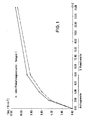
- the release graphics of recipe example 1 are shown in FIGS. 1-2.
- the graphics show the controlled release of the active ingredient both in a physiological saline solution and by excised rodent skin.
- Example 2 The procedure is as in Example 1, with the difference that 3.2 g of di-n-butyl adipate are used instead of 5.6 g of triglycerides of caprylic / capric acids.
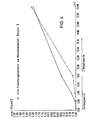
- the release graphics of formulation example 2 are shown in FIGS. 3-4. The graphics show the controlled release of the active ingredient both in a physiological saline solution and through exited rodent skin.
- the curve with the solid line shows the release of the samples immediately after production. The broken curve comes from releases of samples that were stored at room temperature for three months. Even with these patterns, the curves run almost congruent, so that stable plasters are also obtained in this example were.
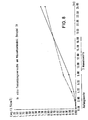
- the curve with the solid line shows the release of the samples directly after production. Unlike in the previous samples, the release was determined not only after three months, but after six months. All three curves are almost congruent again, so that even after half a year of storage, the same release is achieved as directly after production.
- 8.5 g of physostigmine, free base, are dissolved in 21.4 g of ethyl acetate together with 21.3 g of a cationic copolymer based on dimethylaminoethyl methacrylate and neutral methacrylic acid esters.
- 8.5 triglycerides of caprylic / capric acids and 68.3 g of a non-self-crosslinking acrylate copolymer of 2-ethylhexyl acrylate, vinyl acetate and acrylic acid (50% in ethyl acetate) are added with stirring. After stirring for at most half an hour at room temperature, the adhesive is homogeneous. Further processing is carried out as described in Example 1.
- the release data are shown in FIGS. 7-8.
- the graphics show the controlled release of the active ingredient both in a physiological saline solution and by excised rodent skin.
- Example 4 The procedure is as described in Example 4, with the difference that the acrylate copolymer is not 50% in ethyl acetate, but 40% in a solvent mixture (ethyl acetate: ethanol: heptane: methanol 64: 25: 9: 2) and contains a crosslinker.
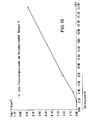
- the release graphics are shown in FIGS. 9-10.
- the polymers, resins and plasticizers used contain neither free hydroxyl groups nor polyethoxy groups, since the proportion of active ingredient which is present in solution would otherwise be subject to hydrolysis. Resins and plasticizers from the ester class were therefore chosen.
Landscapes
- Health & Medical Sciences (AREA)
- Engineering & Computer Science (AREA)
- Bioinformatics & Cheminformatics (AREA)
- General Health & Medical Sciences (AREA)
- Veterinary Medicine (AREA)
- Public Health (AREA)
- Chemical & Material Sciences (AREA)
- Pharmacology & Pharmacy (AREA)
- Animal Behavior & Ethology (AREA)
- Medicinal Chemistry (AREA)
- Life Sciences & Earth Sciences (AREA)
- Dermatology (AREA)
- Epidemiology (AREA)
- Neurosurgery (AREA)
- Neurology (AREA)
- Biomedical Technology (AREA)
- Organic Chemistry (AREA)
- Nuclear Medicine, Radiotherapy & Molecular Imaging (AREA)
- General Chemical & Material Sciences (AREA)
- Chemical Kinetics & Catalysis (AREA)
- Psychiatry (AREA)
- Hospice & Palliative Care (AREA)
- Medicinal Preparation (AREA)
- Pharmaceuticals Containing Other Organic And Inorganic Compounds (AREA)
- Materials For Medical Uses (AREA)
- Media Introduction/Drainage Providing Device (AREA)
Abstract
Description
- Die Erfindung betrifft ein transdermales therapeutisches System, das Physostigmin als wirksamen Bestandteil enthält und ein Verfahren zu seiner Herstellung.
- Die Applikation von Physostigmin zur Behandlung der Alzheimer Krankheit ist in der Literatur beschrieben, wobei die Wirksamkeit der Substanz von verschiedenen Autoren unterschiedlich beurteilt wird. Da das Alkaloid einen hohen first pass effect besitzt - die Bioverfügbarkeit des Physostigmins nach oraler Gabe liegt bei 5 % - müssen die abweichenden Ergebnisse auf Varianten der Applikation zurückgeführt werden.
- In der DE-OS 35 28 979 wird eine Zusammensetzung beschrieben, die neben Physostigmin eine Carbonsäure mittlerer Kettenlänge enthält; diese Zusammensetzung kann auf einer Bandage, Einlage oder Kompresse getragen werden, die mittels Verband aufgebracht wird. Diese Applikationsart stellt an sich kein therapeutisches System dar, weshalb vorgesehen ist, die Bandage, Kompresse oder Einlage mit einer ReservoirInnenschicht einer undurchlässigen Schutzsperrfolie oder einem undurchlässigen Schutzfilm zu versehen und zwischen Reservoir und der Haut eine nicht näher beschriebene Diffusionssteuermembran anzubringen. Weder die Diffusionssteuermembran, noch die Schutzfolien sind näher beschrieben. Die Carbonsäuren werden ausdrücklich als ein wirksames Transportvehikel für die Verabreichung des Arzneimittels durch die Haut bezeichnet, das sonst nicht durch die Hautbarriere hindurchtreten könnte. Diese Aussage ist jedoch wissenschaftlich nicht haltbar.
- In der DE-PS 36 06 892 wird eine retardierte Applikation von Physostigmin und anderen Wirkstoffen beschrieben, die transdermal erfolgen kann. Eine spezielle Formulierung wird nicht offenbart, vielmehr wird auf eine bereits beschriebene Formulierung (US-PS 3,921,363) verwiesen.
- Neben den nur vagen Ausführungen der transdermalen therapeutischen Systeme wird in keiner der beiden vorstehend erwähnten Offenlegungsschriften auf die Instabilität von Physostigmin eingegangen, die schon früh erkannt wurde (Eber, W., Pharmaz. Ztg 37, 483 (1888); Herzig, J., Mayer, H., Mh.Chem 18, 379 (1897); Herzig J., Lieb, H., ebenda 39, 285 (1918); Solvay, A.A., J. chem. Soc. (London) 101, 978 (1912); Instabilität aufgrund einer raschen Zersetzung setzt dem Einsatz des Physostigmins in der Pharmazie enge Grenzen.
- Aufgabe der Erfindung ist daher die Bereitstellung von Physostigmin oder eines seiner pharmazeutisch verträglichen Salze in Form eines transdermalen therapeutischen Systems, das Physostigmin oder dessen pharmazeutisch verträgliches Salz über einen Zeitraum von 24 Stunden kontrolliert abgibt und gewährleistet, daß das Physostigmin sich während der Lagerung des vorgefertigten transdermalen therapeutischen Systems nicht merklich zersetzt.
- Diese Aufgabe wird erfindungsgemäß dadurch gelöst, daß das Physostigmin oder eines seiner pharmazeutisch akzeptablen Salze in einer aus besonders ausgewähltem Material bestehenden Reservoirschicht eines transdermalen therapeutischen Systems enthalten ist, wobei die Bestandteile dieser Reservoirschicht, nämlich Polymere, Harze und Weichmacher weder freie Hydroxylgruppen noch Polyethoxygruppen enthalten. Als Harz- und Weichmacherbestandteile der Polymerschicht wurden daher solche aus der Verbindungsklasse der Ester oder Kohlen wasserstoffe ausgewählt.
- Die Stabilität des Wirkstoffes kann weiter durch die Wahl eines geeigneten Lösemittels bzw. Lösemittelgemisches bei der Herstellung des transdermalen therapeutischen Systems verbessert werden. Hier werden bevorzugt Lösemittel bzw. Lösemittelgemische eingesetzt, die bei niedrigem Siedepunkt und dadurch schonender Trocknung die Erzielung einer äußerst geringen Restfeuchte von kleiner als 0,5, vorzugsweise kleiner als 0,4 % ermöglichen.
- Gegenstand der Erfindung ist somit ein transdermales therapeutisches System zur Verabreichung von Physostigmin an die Haut aus einer wirkstoffundurchlässigen Deckschicht, einer haftklebenden Reservoirschicht und gegebenenfalls einer wieder ablösbaren Schutzschicht, dessen Reservoirschicht 10 - 90 Gew.-% Polymermaterial, ausgewählt aus den Gruppen, bestehend aus Blockcopolymeren auf Basis von Styrol und 1,3 Dienen, Polyisobutylenen, Polymeren auf Acrylat- und/oder Methacrylatbasis und Estern hydrierten Kolophoniums, 0-30 Gew.-% Weichmacher auf Basis von Kohlenwasserstoffen und/oder Estern und 0,1 - 20 Gew.-% Physostigmin enthält.
- Dabei kann die wirkstoffundurchlässige Deckschicht aus flexiblem oder nicht flexiblen Material bestehen. Substanzen, die zu ihrer Herstellung verwendet werden können, sind Polymerfolien oder Metallfolien, wie Aluminiumfolie, die allein oder mit einem polymeren Substrat beschichtet, angewandt werden. Es können auch textile Flächengebilde verwendet werden, wenn die Bestandteile des Reservoirs aufgrund ihrer physikalischen Beschaffenheit durch sie nicht hindurch treten können. Bei einer bevorzugten Ausführungsform ist die Deckschicht ein Verbundstoff, aus einer mit Aluminium bedampften Folie.
- Die Reservoirschicht besteht aus einer Polymermatrix und dem Wirkstoff, wobei die Polymermatrix die Eigenschaft besitzt, den Zusammenhalt des Systems zu gewährleisten. Sie besteht aus einem Grundpolymer und gegebenenfalls den üblichen Zusätzen. Die Auswahl des Grundpolymers richtet sich nach den chemischen und physikalischen Eigenschaften des Physostigmins. Beispielhafte Polymere sind Kautschuk, kautschukähnliche, synthetische Homo-, Co- oder Blockpolymere, Polyacrylsäureester und deren Copolymere. Grundsätzlich kommen alle Polymere in Frage, die bei der Herstellung von Haftklebern eingesetzt werden, physiologisch unbedenklich sind und Physostigmin nicht zersetzen. Besonders bevorzugt sind solche, die aus Blockcopolymeren auf Basis von Styrol und 1,3-Dienen, Polyisobutylenen oder Polymeren aus Acrylat- und/oder Methacrylat bestehen. Von den Blockcopolymeren auf Basis von Styrol und 1,3-Dienen werden ganz besonders lineare Styrol-Isopren-Blockcopolymere eingesetzt.
- Als Polymere auf Acrylatbasis werden Acrylatcopolymere aus 2-Ethylhexylacrylat, Vinylacetat und Acrylsäure mit bzw. ohne Titanchelatester bevorzugt. Als Methacrylate werden Copolymere auf Basis von Dimethylaminoethylmethacrylate und neutralen Methacrylsäureestern bevorzugt. Als Ester von hydriertem Kolophonium werden vorzugsweise insbesondere dessen Methyl- und Glycerinester verwendet.
- Die Art der möglichen Zusätze hängt vom eingesetzten Polymer und dem Wirkstoff ab: Nach ihrer Funktion lassen sie sich einteilen in Weichmacher, Klebrigmacher, Stabilisatoren, Trägerstoffe, diffusions- und penetrationsregulierende Zusätze oder Füllstoffe. Die hierfür in Frage kommenden physiologisch unbedenklichen Substanzen sind dem Fachmann bekannt. Die Reservoirschicht besitzt eine solche Eigenklebrigkeit, daß ein dauernder Kontakt zur Haut sichergestellt ist.
- Beispiele für geeignete Weichmacher sind Diester von Dicarbonsäure, z.B. Di-n-butyladipat sowie Triglyceride, insbesondere mittelkettige Triglyceride der Capryl/Caprinsäure des Kokosöls zu nennen. Weitere Beispiele für einen geeigneten Weichmacher sind Isopropylmyristat, Dioctylcyclohexan u.a.
- Die ablösbare Schutzschicht, die mit der Reservoirschicht in Berührung steht, und vor der Anwendung entfernt wird, besteht beispielsweise aus den selben Materialien, wie sie zur Herstellung der Deckschicht benutzt werden, vorausgesetzt, daß sie ablösbar gemacht werden, wie z.B. durch eine Silikonbehandlung. Andere ablösbare Schutzschichten sind z.B. Polytetrafluorethylen, behandeltes Papier, Cellophan, Polyvinylchlorid u.ä. Wird das erfindungsgemäße Laminat vor Aufbringen der Schutzschicht in therapiegerechte Formate (Pflaster) aufgeteilt, so können die dann aufzubringenden Schutzschichtformate ein überstehendes Ende aufweisen, mit dessen Hilfe sie leichter von dem Pflaster abgezogen werden können.
- Das erfindungsgemäße transdermale therapeutische System wird hergestellt, in dem der Wirkstoff zusammen mit den Bestandteilen der haftklebenden Reservoirschicht gegebenenfalls in Lösung homogen vermischt und auf die wirkstoffundurchlässige Deckschicht aufgestrichen wird, worauf gegebenenfalls das Lösemittel oder die Lösemittel entfernt wird/werden. Anschließend wird die Klebeschicht mit einer entsprechenden Schutzschicht versehen.
- Die Erfindung wird durch die folgenden Beispiele erläutert:
- 20 g n-Heptan und 80 g Methylethylketon werden gemischt. In 90 g dieser Mischung löst man 7,2 g Physostigmin, freie Base. Nach vollständiger Auflösung des Wirkstoffes gibt man portionsweise 40 g eines Glycerinesters von völlig hydriertem Kolophonium und portionsweise 40,0 g eines linearen Styrol-Isopren-Styrol-Blockcopolymers sowie 5,6 g Triglyceride der Capryl/Caprinsäuren des Kokosöls ("Mittelkettige Triglyceride", DAB 8) zu. Unter Lichtausschluß rührt man bei Raumtemperatur 8 Stunden lang bis zur vollständigen Auflösung und streicht die erhaltene Lösung mit einem 250 µm Rakel auf eine aluminisierte und silikonisierte Polyethylen-Folie.
- Nachdem das Lösemittel durch 25 minütiges Trocknen bei 50°C entfernt wurde, deckt man den Klebefilm mit einer Polyesterfolie 15 µ ab. Mit geeigneten Schneidewerkzeugen stanzt man eine Fläche von 16 cm² aus und entfernt die Ränder durch Abgittern. Die Freisetzungsgraphiken des Rezepturbeispiels 1 sind in den Figuren 1 - 2 wiedergegeben. Die Graphiken zeigen die kontrollierte Freisetzung des Wirkstoffs sowohl in eine physiologische Kochsalz-Lösung als auch durch exzidierte Nagetierhaut.
- Dabei stammt die Kurve in Figur 1, deren Linie nicht unterbrochen ist, von in-vitro-Freisetzungen durch Muster, die unmittelbar nach ihrer Fertigung untersucht wurden. Die unterbrochene Kurve wurde erhalten durch Freisetzung durch Mustern nach dreimonatiger Lagerung bei Raumtemperatur. Da beide Kurven annähernd deckungsgleich sind, kann die oben erwähnte Stabilität eindrucksvoll demonstriert werden. Figur 2 zeigt, daß die Penetrationsrate von Mustern, die direkt nach Fertigung bzw. nach dreimonatiger Lagerung untersucht wurden, ebenfalls annähernd gleich sind.
- Die Stabilität des Wirkstoffes im System wurde aber auch noch durch Gehaltsbestimmungen direkt nach der Fertigung bzw. nach dreimonatiger Lagerung aufgezeigt. Dabei konnten weder die aus der Literatur bekannten Abbauprodukte Eserolin und Rubreserin noch andere bisher nicht beschriebene detektiert werden. Dazu wurde folgende Methode verwandt:
- 1 Pflaster mit Abdeckfolie wird mittels Schere geviertelt, die Abdeckfolie entfernt und zusammen mit den Pflasterteilen in einem verschließbaren, lichtgeschützten Glasgefäß mit 50,0 ml Tetrahydrofuran (p.a.) mindestens 2 Stunden geschüttelt, 10 Minuten ultrabeschallt und anschließend zentrifugiert. Verdünnung für HPLC mit Methanol und nochmalige Zentrifugation.
- Anschließend wird der Gehalt des Physostigmins im Zentrifugat per HPLC bestimmt.
- Die Ausführung erfolgt wie beim Beispiel 1 mit dem Unterschied, daß statt 5,6 g Triglyceriden der Capryl/Caprinsäuren 3,2 g Di-n-butyladipat eingesetzt werden. Die Freisetzungsgraphiken des Rezepturbeispiels 2 sind in den Figuren 3-4 wiedergegeben. Die Graphiken zeigen die kontrollierte Freisetzung des Wirkstoffes sowohl in eine physiologische Kochsalz-Lösung als auch durch exidierte Nagetierhaut. Wie bei Beispiel 1 zeigt die Kurve mit der durchgehenden Linie die Freisetzung der Muster direkt nach der Fertigung. Die unterbrochene Kurve stammt von Freisetzungen von Mustern, die drei Monate bei Raumtemperatur gelagert wurden. Auch bei diesen Mustern, laufen die Kurven fast deckungsgleich, so daß auch bei diesem Beispiel stabile Pflaster erhalten wurden.
- Wie in Beispiel 1 wurde auch der Gehalt an Physostigmin bestimmt, ohne daß ein Abbauprodukt nach dreimonatiger Lagerung nachgewiesen werden konnte.
- 2,0 g Physostigmin, freie Base, werden in einen Kolben eingewogen. Unter Rühren gibt man 25 g einer 60 %igen Lösung von Glycerinkolophonium-Ester in Butanon und 25 g einer 40%igen Lösung eines Styrol-Butadien-Blockcopolymer, in einer Mischung aus n-Heptan und Butanon im Verhältnis 1: 2 hinzu. Nach inniger Vermischung werden unter Rühren noch 2,5 g Methylester von hydriertem Kolophonium, und 1,95 g Triglyceride von Capryl/Caprinsäuren zugesetzt. Die weitere Ausführung erfolgt wie unter Beispiel 1 beschrieben, die Freisetzungsgraphiken sind in den Figuren 5-6 dargestellt. Die Graphiken zeigen die kontrollierte Freisetzung des Wirkstoffs sowohl in eine physiologische Kochsalz-Lösung als auch durch exidierte Nagetierhaut.
- Wie bei Beispiel 1 und 2 zeigt die Kurve mit der durchgehenden Linie die Freisetzung der Muster direkt nach Fertigung. Anders aber als in den vorangestellten Mustern wurde die Freisetzung nicht nur nach dreimonatiger, sondern nach sechsmonatiger Lagerung bestimmt. Alle drei Kurven laufen wieder annähernd deckungsgleich, so daß auch nach einem halben Jahr Lagerzeit die gleiche Freisetzung erzielt wird wie direkt nach der Fertigung.
- Wie in den Beispielen 1 und 2 konnte per HPLC kein Abbauprodukt nach sechsmonatiger Lagerung nachgewiesen werden.
- 8,5 g Physostigmin, freie Base, werden zusammen mit 21,3 g eines kationischen Copolymerisats auf Basis Dimethylaminoethylmethacrylat und neutralen Methacrylsäureestern in 21,4 g Ethylacetat gelöst. Unter Rühren werden 8,5 Triglyceride der Capryl/Caprinsäuren, und 68,3 g eines nicht selbstvernetzendes Acrylatcopolymers aus 2-Ethylhexylacrylat, Vinylacetat und Acrylsäure (50 %ig in Ethylacetat) zugegeben. Nach höchstens halbstündigem Rühren bei Raumtemperatur ist die Klebemasse homogen. Die weitere Bearbeitung erfolgt wie unter Beispiel 1 beschrieben. Die Freisetzungsdaten sind in den Figuren 7 - 8 wiedergegeben. Die Graphiken zeigen die kontrollierte Freisetzung des Wirkstoffs sowohl in eine physiologische Kochsalz-Lösung als auch durch exzidierte Nagetierhaut.
- Wie in den vorangegangenen Beispielen zeigt die Kurve mit der durchgehenden Linie die Freisetzung der Muster direkt nach der Fertigung. Anders aber als in den vorangestellten Mustern wurde die Freisetzung nicht nur nach dreimonatiger, sondern auch nach sechsmonatiger Lagerung bestimmt. Alle drei Kurven laufen wieder annähernd deckungsgleich, so daß auch nach einem halben Jahr Lagerzeit die gleiche Freisetzung erzielt wird, wie direkt nach der Fertigung.
- Wie in den vorangegangenen Beispielen konnte mit der bei Beispiel 1 beschriebenen HPLC-Methode kein Abbauprodukt nach sechsmonatiger Lagerung erfasst werden.
- Die Ausführung erfolgt wie in Beispiel 4 beschrieben mit dem Unterschied, daß das Acrylatcopolymer nicht 50 %ig in Ethyl acetat, sondern 40 %ig in einem Lösungsmittelgemisch (Ethylacetat: Ethanol: Heptan: Methanol 64:25:9:2) gelöst ist und einen Vernetzer enthält. Die Freisetzungsgraphiken sind in den Figuren 9 - 10 wiedergegeben.
- Wie in den vorangegangenen Beispielen zeigt die Kurve mit der durchgehenden Linie die Freisetzung der Muster direkt nach der Fertigung. Anders aber als in den vorangestellten Mustern wurde die Freisetzung nicht nur nach dreimonatiger, sondern auch nach sechsmonatiger Lagerung bestimmt. Alle drei Kurven laufen wieder annähernd deckungsgleich, so daß auch nach einem halben Jahr Lagerzeit die gleiche Freisetzung erzielt wird wie direkt nach der Fertigung.
- Anzumerken ist bei Beispiel 5 noch, daß Physostigmin zwar einem Lösemittel - nämlich Ethanol - ausgesetzt wird, das diesen Wirkstoff hydrolytisch spalten kann (Pfeifer, S.; Behnsen, G. und Kühn., L., Pharmazie 27, 639 (1972); entscheidend ist aber, daß dies nur kurz und unter Lichtausschluß einwirkt, da es nach dem Ausstreichen durch schonende Trocknung restlos entfernt wird. Aus schon dargelegten Gründen greifen weder das Grundpolymer, noch das Hartharz oder der Weichmacher den Wirkstoff an.
- Für die Stabilität des Wirkstoffes ist entscheidend, daß die eingesetzten Polymere, Harze und Weichmacher weder freie Hydroxylgruppen noch Polyethoxygruppen enthalten, da der Anteil an Wirkstoff, der gelöst vorliegt, sonst der Hydrolyse unterliegen würde. Daher wurden Harze und Weichmacher der Verbindungsklasse Ester gewählt.
- Für die Stabilität des Wirkstoffes ist auch die Wahl des Lösemittels bzw. des Lösemittelgemisches entscheidend. Wenn dieses vor der Trocknung über Stunden auf Physostigin ein wirkt. Der Anteil des zur Unterdrückung der Blasenbildung gegebenenfalls erforderlichen höher siedenden Lösemittels muß gering sein. Dies wird in der vorliegenden Erfindung bei den Beispielen 1 bis 3 dadurch erreicht, daß eine Mischung aus Butanon und n-Heptan gewählt wurde, die ein azeotropes Gemisch (Verhältnis Butanon: n-Heptan 70:30, Siedepunkt: 77°C; Siedepunkt Butanon: 79,6°C, Siedepunkt n-Heptan: 98,5°C bilden. Dadurch kann trotz schonender Trocknung eine maximale Restfeuchte kleiner als 0,4 % erreicht werden.
- Da Polyacrylate nicht zur Blasenbildung neigen, war dieses Vorgehen bei den Beispielen 4 und 5 nicht erforderlich.
Claims (14)
Priority Applications (1)
| Application Number | Priority Date | Filing Date | Title |
|---|---|---|---|
| AT8989123085T ATE105488T1 (de) | 1988-12-22 | 1989-12-14 | Transdermales therapeutisches system mit physostigmin als wirksamen bestandteil und verfahren zu seiner herstellung. |
Applications Claiming Priority (2)
| Application Number | Priority Date | Filing Date | Title |
|---|---|---|---|
| DE3843239 | 1988-12-22 | ||
| DE3843239A DE3843239C1 (de) | 1988-12-22 | 1988-12-22 |
Publications (3)
| Publication Number | Publication Date |
|---|---|
| EP0376067A2 true EP0376067A2 (de) | 1990-07-04 |
| EP0376067A3 EP0376067A3 (en) | 1990-12-27 |
| EP0376067B1 EP0376067B1 (de) | 1994-05-11 |
Family
ID=6369855
Family Applications (1)
| Application Number | Title | Priority Date | Filing Date |
|---|---|---|---|
| EP89123085A Expired - Lifetime EP0376067B1 (de) | 1988-12-22 | 1989-12-14 | Transdermales therapeutisches System mit Physostigmin als wirksamen Bestandteil und Verfahren zu seiner Herstellung |
Country Status (29)
| Country | Link |
|---|---|
| US (1) | US5089267A (de) |
| EP (1) | EP0376067B1 (de) |
| JP (1) | JPH0784379B2 (de) |
| KR (1) | KR950015058B1 (de) |
| CN (1) | CN1045355A (de) |
| AT (1) | ATE105488T1 (de) |
| AU (1) | AU614209B2 (de) |
| CA (1) | CA2006404C (de) |
| CS (1) | CS277066B6 (de) |
| DD (1) | DD290580A5 (de) |
| DE (2) | DE3843239C1 (de) |
| DK (1) | DK651289A (de) |
| ES (1) | ES2056185T3 (de) |
| FI (1) | FI95775C (de) |
| GE (1) | GEP19960440B (de) |
| HU (1) | HU205252B (de) |
| IE (1) | IE64200B1 (de) |
| IL (1) | IL92680A (de) |
| LT (1) | LT3785B (de) |
| MY (1) | MY104491A (de) |
| NO (1) | NO180072C (de) |
| NZ (1) | NZ231907A (de) |
| PH (1) | PH25853A (de) |
| PL (1) | PL162690B1 (de) |
| PT (1) | PT92652B (de) |
| RU (1) | RU2011384C1 (de) |
| UA (1) | UA18868A (de) |
| YU (1) | YU47077B (de) |
| ZA (1) | ZA899878B (de) |
Cited By (1)
| Publication number | Priority date | Publication date | Assignee | Title |
|---|---|---|---|---|
| WO1994010999A1 (de) * | 1992-11-12 | 1994-05-26 | Lts Lohmann Therapie-Systeme Gmbh & Co. Kg | Transdermales therapeutisches system zur verabreichung von physostigmin an die haut und verfahren zu dessen herstellung |
Families Citing this family (40)
| Publication number | Priority date | Publication date | Assignee | Title |
|---|---|---|---|---|
| DE3843238C1 (de) * | 1988-12-22 | 1990-02-22 | Lohmann Therapie Syst Lts | |
| US5332577A (en) * | 1988-12-27 | 1994-07-26 | Dermamed | Transdermal administration to humans and animals |
| US5241925A (en) * | 1988-12-27 | 1993-09-07 | Dermamed | Apparatus and techniques for administering veterinary medicaments |
| US5324521A (en) * | 1989-12-18 | 1994-06-28 | Dermamed | Systems for transdermal administration of medicaments |
| NZ237241A (en) * | 1990-03-02 | 1993-11-25 | Pharmetrix Corp | Method for increasing the storage stability of physostigmine |
| DE4010079A1 (de) * | 1990-03-29 | 1991-10-02 | Lohmann Therapie Syst Lts | Pharmazeutische formulierung zur behandlung des alkoholismus |
| WO1991015176A1 (en) * | 1990-04-06 | 1991-10-17 | Pharmetrix Corporation | Device and method for enhanced administration of physostigmine |
| DE4020144A1 (de) * | 1990-06-25 | 1992-01-09 | Lohmann Therapie Syst Lts | Pflaster mit hohem gehalt an weichmachenden inhaltsstoffen |
| US5409948A (en) * | 1992-11-23 | 1995-04-25 | The United States Of America As Represented By The Secretary Of The Department Of Health And Human Services | Method for treating cognitive disorders with phenserine |
| DE4301782C1 (de) * | 1993-01-23 | 1994-08-25 | Lohmann Therapie Syst Lts | Verwendung von Galanthamin zur Behandlung der Nicotinabhängigkeit |
| DE4301783C1 (de) * | 1993-01-23 | 1994-02-03 | Lohmann Therapie Syst Lts | Transdermales therapeutisches System mit Galanthamin als wirksamem Bestandteil |
| DE4342174C1 (de) | 1993-12-10 | 1995-05-11 | Lohmann Therapie Syst Lts | Transdermales therapeutisches System sowie ein Verfahren zur Herstellung eines transdermalen therapeutischen Systems zur kombinierten transdermalen Anwendung von Physostigmin und Scopolamin für die Prophylaxe und zur Vorbehandlung einer Vergiftung durch hochtoxische phosphororganische Nervengifte, insbesondere Soman und seine Verwendung |
| DE4400770C1 (de) * | 1994-01-13 | 1995-02-02 | Lohmann Therapie Syst Lts | Wirkstoffhaltiges Pflaster zur Abgabe von Estradiol mit mindestens einem Penetrationsverstärker, Verfahren zu seiner Herstellung und seine Verwendung |
| WO1996013238A1 (en) | 1994-10-28 | 1996-05-09 | Kimberly-Clark Worldwide, Inc. | Self-adhering absorbent article |
| TW304167B (de) * | 1995-01-30 | 1997-05-01 | Lilly Co Eli | |
| US5810960A (en) * | 1995-03-08 | 1998-09-22 | Nitto Denko Corporation | Paint film-protective sheet |
| DE19706824C1 (de) * | 1997-02-21 | 1998-03-26 | Lohmann Therapie Syst Lts | Transdermales oder topisches Plastersystem mit Polyacrylatmatrix mit verbesserten physikalischen Eigenschaften |
| GB2336310B (en) * | 1998-04-14 | 2003-09-10 | Stowic Resources Ltd | Method of manufacturing transdermal patches |
| DE19906979B4 (de) | 1999-02-19 | 2004-07-08 | Lts Lohmann Therapie-Systeme Ag | Verwendung von Desoxypeganin zur Behandlung der Nikotinabhängigkeit |
| DE10119862A1 (de) | 2001-04-24 | 2002-11-07 | Hf Arzneimittelforsch Gmbh | Verwendung von Galanthamin zur Behandlung von Krankheitserscheinungen des zentralen Nervensystems aufgrund von Intoxikationen mit psychotropen Substanzen |
| DE10119863A1 (de) * | 2001-04-24 | 2002-11-07 | Hf Arzneimittelforsch Gmbh | Verwendung von Desoxypeganin zur Behandlung von psychiatrischen oder zerebralen Krankheitserscheinungen |
| DE10129265A1 (de) * | 2001-06-18 | 2003-01-02 | Hf Arzneimittelforsch Gmbh | Wirkstoff-Kombination zur medikamentösen Sucht- oder Rauschmitteltherapie |
| DE10134038A1 (de) * | 2001-07-12 | 2003-02-06 | Hf Arzneimittelforsch Gmbh | Wirkstoff-Kombination zur medikamentösen Therapie der Nikotinabhängigkeit |
| DE10159745A1 (de) | 2001-12-05 | 2003-07-03 | Lohmann Therapie Syst Lts | Transdermales Therapeutisches System mit verbessertem Langzeittragekomfort |
| DE60325486D1 (de) | 2002-08-30 | 2009-02-05 | Alza Corp | Prägbare und beschreibbare verbundrückschicht |
| DE10318714B4 (de) * | 2003-04-25 | 2006-03-23 | Hf Arzneimittelforschung Gmbh | Wirkstoff-Kombinationen und Therapien zur Bekämpfung des Alkoholmissbrauches |
| US20050182044A1 (en) * | 2004-02-17 | 2005-08-18 | Bruinsma Gosse B. | Combinatorial therapy with an acetylcholinesterase inhibitor and (3aR)-1,3a,8-trimethyl-1,2,3,3a,8,8a-hexahydropyrrolo[2,3,-b]indol-5-yl phenylcarbamate |
| AT500143A1 (de) * | 2004-04-22 | 2005-11-15 | Sanochemia Pharmazeutika Ag | Cholinesterase-inhibitoren in liposomen sowie deren herstellung und verwendung |
| CA2508585A1 (en) * | 2004-06-01 | 2005-12-01 | Axonyx, Inc. | Transdermal delivery system for treatment of cognitive disorders |
| EP1604686A1 (de) * | 2004-06-08 | 2005-12-14 | Axonyx, Inc. | Verwendung von Phenserine und einem HMG CoA reduktase Hemmer zur Verzögerung der Alzheimer Krankheit |
| CN1320008C (zh) * | 2005-03-24 | 2007-06-06 | 上海交通大学 | 包含酯基部分带羧基基团的丙烯酸酯的组合物 |
| CN1320005C (zh) * | 2005-03-24 | 2007-06-06 | 上海交通大学 | 包含酯基部分带烷烃基的丙烯酸酯的组合物 |
| CN1320009C (zh) * | 2005-03-24 | 2007-06-06 | 上海交通大学 | 包含酯基部分带羟基基团的丙烯酸酯的组合物 |
| CN1320006C (zh) * | 2005-03-24 | 2007-06-06 | 上海交通大学 | 包含酯基部分带酯基基团的丙烯酸酯的组合物 |
| CN1326894C (zh) * | 2005-03-24 | 2007-07-18 | 上海交通大学 | 包含酯基部分带烷氧基的丙烯酸酯的组合物 |
| CN1994290B (zh) * | 2006-01-04 | 2011-03-16 | 上海医药工业研究院 | 卡巴拉汀透皮贴剂及其制备方法 |
| GB0809905D0 (en) * | 2008-06-02 | 2008-07-09 | Secr Defence | A Transdermal drug delivery device |
| KR101317158B1 (ko) | 2011-02-18 | 2013-10-15 | 조선대학교산학협력단 | 갈란타민 또는 그의 염을 함유하는 경피흡수제제 |
| DE102019201430A1 (de) | 2019-02-05 | 2020-08-06 | Lts Lohmann Therapie-Systeme Ag | Transdermales Therapeutisches System (TTS) mit Transportmedium |
| DE102019201431A1 (de) | 2019-02-05 | 2020-08-06 | Lts Lohmann Therapie-Systeme Ag | Transdermales Therapeutisches System (TTS) mit Feststoffreservoir |
Citations (3)
| Publication number | Priority date | Publication date | Assignee | Title |
|---|---|---|---|---|
| US3921363A (en) | 1974-05-17 | 1975-11-25 | Preston Metal & Roofing Prod | Cross member with end connector |
| DE3528979A1 (de) | 1984-08-14 | 1986-02-27 | State Of Israel Represented By The Prime Minister's Office Israel Institute For Biological Research, Ness-Ziona | Arzneimittelfreigabesystem |
| DE3606892A1 (de) | 1985-03-05 | 1986-09-18 | Ciba-Geigy Ag, Basel | Pharmazeutische formulierungen und verfahren zur behandlung von gedaechtnisstoerungen |
Family Cites Families (13)
| Publication number | Priority date | Publication date | Assignee | Title |
|---|---|---|---|---|
| US3996934A (en) * | 1971-08-09 | 1976-12-14 | Alza Corporation | Medical bandage |
| JPS5620514A (en) * | 1979-07-27 | 1981-02-26 | Nitto Electric Ind Co Ltd | Plaster for remedy of skin disease |
| JPS596285B2 (ja) * | 1980-09-22 | 1984-02-10 | 日東電工株式会社 | 外用部材 |
| JPS57116011A (en) * | 1981-01-08 | 1982-07-19 | Nitto Electric Ind Co Ltd | Pharmaceutical preparation |
| JPS6066758A (ja) * | 1983-09-21 | 1985-04-16 | 日東電工株式会社 | 医薬製剤 |
| DE3344691A1 (de) * | 1983-12-10 | 1985-06-20 | Bayer Ag, 5090 Leverkusen | Wirkstoffabgasesysteme |
| GB2156215B (en) * | 1984-03-05 | 1988-03-02 | Nitto Electric Ind Co | Percutaneous absorption type adhesive pharmaceutical preparation |
| US4765985A (en) * | 1985-03-05 | 1988-08-23 | Ciba-Geigy Corporation | Devices and methods for treating memory impairment |
| US4668506A (en) * | 1985-08-16 | 1987-05-26 | Bausch & Lomb Incorporated | Sustained-release formulation containing and amino acid polymer |
| DE3629304A1 (de) * | 1986-08-28 | 1988-03-24 | Lohmann Gmbh & Co Kg | Transdermales therapeutisches system, seine verwendung und verfahren zu seiner herstellung |
| US4911707A (en) * | 1987-02-13 | 1990-03-27 | Ciba-Geigy Corporation | Monolithic user-activated transdermal therapeutic system |
| DE3743945A1 (de) * | 1987-09-01 | 1989-03-09 | Lohmann Gmbh & Co Kg | Vorrichtung zur abgabe von stoffen, verfahren zu ihrer herstellung sowie ihre verwendung |
| DE3843238C1 (de) * | 1988-12-22 | 1990-02-22 | Lohmann Therapie Syst Lts |
-
1988
- 1988-12-22 DE DE3843239A patent/DE3843239C1/de not_active Expired - Lifetime
-
1989
- 1989-12-13 IL IL92680A patent/IL92680A/xx unknown
- 1989-12-14 MY MYPI89001753A patent/MY104491A/en unknown
- 1989-12-14 DE DE58907647T patent/DE58907647D1/de not_active Expired - Lifetime
- 1989-12-14 EP EP89123085A patent/EP0376067B1/de not_active Expired - Lifetime
- 1989-12-14 ES ES89123085T patent/ES2056185T3/es not_active Expired - Lifetime
- 1989-12-14 AT AT8989123085T patent/ATE105488T1/de not_active IP Right Cessation
- 1989-12-18 AU AU46845/89A patent/AU614209B2/en not_active Ceased
- 1989-12-18 US US07/452,529 patent/US5089267A/en not_active Expired - Fee Related
- 1989-12-19 YU YU240789A patent/YU47077B/sh unknown
- 1989-12-19 IE IE407989A patent/IE64200B1/en not_active IP Right Cessation
- 1989-12-19 CS CS897191A patent/CS277066B6/cs not_active IP Right Cessation
- 1989-12-19 FI FI896099A patent/FI95775C/fi not_active IP Right Cessation
- 1989-12-20 DK DK651289A patent/DK651289A/da not_active Application Discontinuation
- 1989-12-20 NZ NZ231907A patent/NZ231907A/xx unknown
- 1989-12-20 PH PH39751A patent/PH25853A/en unknown
- 1989-12-21 HU HU896713A patent/HU205252B/hu not_active IP Right Cessation
- 1989-12-21 CA CA002006404A patent/CA2006404C/en not_active Expired - Fee Related
- 1989-12-21 PT PT92652A patent/PT92652B/pt not_active IP Right Cessation
- 1989-12-21 DD DD89336083A patent/DD290580A5/de not_active IP Right Cessation
- 1989-12-21 NO NO895171A patent/NO180072C/no not_active IP Right Cessation
- 1989-12-21 ZA ZA899878A patent/ZA899878B/xx unknown
- 1989-12-21 RU SU894742793A patent/RU2011384C1/ru active
- 1989-12-21 UA UA4742793A patent/UA18868A/uk unknown
- 1989-12-22 CN CN89109818A patent/CN1045355A/zh active Pending
- 1989-12-22 JP JP1331444A patent/JPH0784379B2/ja not_active Expired - Lifetime
- 1989-12-22 PL PL28294989A patent/PL162690B1/pl unknown
- 1989-12-22 KR KR1019890019756A patent/KR950015058B1/ko not_active Expired - Fee Related
-
1993
- 1993-09-17 GE GEAP19931588A patent/GEP19960440B/en unknown
-
1994
- 1994-01-31 LT LTIP1842A patent/LT3785B/lt not_active IP Right Cessation
Patent Citations (3)
| Publication number | Priority date | Publication date | Assignee | Title |
|---|---|---|---|---|
| US3921363A (en) | 1974-05-17 | 1975-11-25 | Preston Metal & Roofing Prod | Cross member with end connector |
| DE3528979A1 (de) | 1984-08-14 | 1986-02-27 | State Of Israel Represented By The Prime Minister's Office Israel Institute For Biological Research, Ness-Ziona | Arzneimittelfreigabesystem |
| DE3606892A1 (de) | 1985-03-05 | 1986-09-18 | Ciba-Geigy Ag, Basel | Pharmazeutische formulierungen und verfahren zur behandlung von gedaechtnisstoerungen |
Non-Patent Citations (5)
| Title |
|---|
| HERZIG J.; LIEB, H., EBENDA, vol. 39, 1918, pages 285 |
| HERZIG, J.; MAYER, H., MH.CHEM, vol. 18, 1897, pages 379 |
| PFEIFER, S.; BEHNSEN, G.; KÜHN., L., PHARMAZIE, vol. 27, 1972, pages 639 |
| SOLVAY, A.A., J. CHEM. SOC., vol. 101, 1912, pages 978 |
| W., PHARMAZ. ZTG, vol. 37, pages 483 |
Cited By (1)
| Publication number | Priority date | Publication date | Assignee | Title |
|---|---|---|---|---|
| WO1994010999A1 (de) * | 1992-11-12 | 1994-05-26 | Lts Lohmann Therapie-Systeme Gmbh & Co. Kg | Transdermales therapeutisches system zur verabreichung von physostigmin an die haut und verfahren zu dessen herstellung |
Also Published As
Similar Documents
| Publication | Publication Date | Title |
|---|---|---|
| EP0376067B1 (de) | Transdermales therapeutisches System mit Physostigmin als wirksamen Bestandteil und Verfahren zu seiner Herstellung | |
| EP0377147B1 (de) | Transdermales therapeutisches System mit Physostigmin als wirksamem Bestandteil und Verfahren zu seiner Herstellung | |
| DE4301783C1 (de) | Transdermales therapeutisches System mit Galanthamin als wirksamem Bestandteil | |
| EP0430019B1 (de) | Transdermales therapeutisches System mit Buprenorphin als aktivem Bestandteil | |
| DE69916492T2 (de) | Pflaster zur transdermalen applikation von flüchtigen, flüssigen wirkstoffen | |
| EP0720474B1 (de) | Lösemittelfrei herstellbares wirkstoffpflaster enthaltend flüchtige inhaltsstoffe | |
| EP2111857A1 (de) | Transdermales therapeutisches System zur Verabreichung von Fentanyl oder einem Analogstoff hiervon | |
| WO1992020339A1 (de) | Mittel zur transdermalen applikation enthaltend ergolin-derivate | |
| WO2006094681A1 (de) | Faserfreies transdermales therapeutisches system und verfahren zu seiner herstellung | |
| DE19906977C1 (de) | Desoxypeganin-TTS und seine Verwendung | |
| EP0379933B1 (de) | Superfizielles therapeutisches System mit einem Gehalt an einem antineoplastischen Wirkstoff, insbesondere 5-Fluoruracil | |
| DE19642043A1 (de) | Transdermales therapeutisches System (TTS) für die Verabreichung von Wirkstoffen zur Behandlung von Drogenabhängigkeit oder Drogensucht | |
| DE69103459T2 (de) | Transdermale absorbierbare Eperison- oder Tolperison-Arzneizubereitung. | |
| DE3843237C2 (de) | ||
| EP0742716B1 (de) | Pharmazeutische zusammensetzung zur systemischen transdermalen verabreichung mit dem wirkstoff morphin-6-glucuronid | |
| EP0667774B1 (de) | Transdermales therapeutisches system zur verabreichung von physostigmin an die haut und verfahren zu dessen herstellung | |
| EP2366388A1 (de) | Nicht-okklusives transdermales therapeutisches System zur Verabreichung von Buprenorphin | |
| DE4229230C2 (de) | Transdermales therapeutisches System mit Pentetrazol als Wirkstoff | |
| EP3651744B1 (de) | Fampridin-tts | |
| EP3829550A1 (de) | Transdermales therapeutisches system zur abgabe von scopolamin ohne membran |
Legal Events
| Date | Code | Title | Description |
|---|---|---|---|
| PUAI | Public reference made under article 153(3) epc to a published international application that has entered the european phase |
Free format text: ORIGINAL CODE: 0009012 |
|
| 17P | Request for examination filed |
Effective date: 19891214 |
|
| AK | Designated contracting states |
Kind code of ref document: A2 Designated state(s): AT BE CH DE ES FR GB GR IT LI LU NL SE |
|
| PUAL | Search report despatched |
Free format text: ORIGINAL CODE: 0009013 |
|
| AK | Designated contracting states |
Kind code of ref document: A3 Designated state(s): AT BE CH DE ES FR GB GR IT LI LU NL SE |
|
| 17Q | First examination report despatched |
Effective date: 19920203 |
|
| GRAA | (expected) grant |
Free format text: ORIGINAL CODE: 0009210 |
|
| AK | Designated contracting states |
Kind code of ref document: B1 Designated state(s): AT BE CH DE ES FR GB GR IT LI LU NL SE |
|
| REF | Corresponds to: |
Ref document number: 105488 Country of ref document: AT Date of ref document: 19940515 Kind code of ref document: T |
|
| REF | Corresponds to: |
Ref document number: 58907647 Country of ref document: DE Date of ref document: 19940616 |
|
| ITF | It: translation for a ep patent filed | ||
| GBT | Gb: translation of ep patent filed (gb section 77(6)(a)/1977) |
Effective date: 19940801 |
|
| ET | Fr: translation filed | ||
| REG | Reference to a national code |
Ref country code: ES Ref legal event code: FG2A Ref document number: 2056185 Country of ref document: ES Kind code of ref document: T3 |
|
| REG | Reference to a national code |
Ref country code: GR Ref legal event code: FG4A Free format text: 3012925 |
|
| EAL | Se: european patent in force in sweden |
Ref document number: 89123085.6 |
|
| PLBE | No opposition filed within time limit |
Free format text: ORIGINAL CODE: 0009261 |
|
| STAA | Information on the status of an ep patent application or granted ep patent |
Free format text: STATUS: NO OPPOSITION FILED WITHIN TIME LIMIT |
|
| 26N | No opposition filed | ||
| PGFP | Annual fee paid to national office [announced via postgrant information from national office to epo] |
Ref country code: CH Payment date: 19991115 Year of fee payment: 11 |
|
| PGFP | Annual fee paid to national office [announced via postgrant information from national office to epo] |
Ref country code: NL Payment date: 19991122 Year of fee payment: 11 |
|
| PGFP | Annual fee paid to national office [announced via postgrant information from national office to epo] |
Ref country code: FR Payment date: 19991123 Year of fee payment: 11 Ref country code: DE Payment date: 19991123 Year of fee payment: 11 |
|
| PGFP | Annual fee paid to national office [announced via postgrant information from national office to epo] |
Ref country code: AT Payment date: 19991124 Year of fee payment: 11 |
|
| PGFP | Annual fee paid to national office [announced via postgrant information from national office to epo] |
Ref country code: SE Payment date: 19991125 Year of fee payment: 11 |
|
| PGFP | Annual fee paid to national office [announced via postgrant information from national office to epo] |
Ref country code: LU Payment date: 19991126 Year of fee payment: 11 |
|
| PGFP | Annual fee paid to national office [announced via postgrant information from national office to epo] |
Ref country code: ES Payment date: 19991216 Year of fee payment: 11 Ref country code: BE Payment date: 19991216 Year of fee payment: 11 |
|
| PGFP | Annual fee paid to national office [announced via postgrant information from national office to epo] |
Ref country code: GR Payment date: 19991222 Year of fee payment: 11 |
|
| PGFP | Annual fee paid to national office [announced via postgrant information from national office to epo] |
Ref country code: GB Payment date: 20001115 Year of fee payment: 12 |
|
| PG25 | Lapsed in a contracting state [announced via postgrant information from national office to epo] |
Ref country code: DE Free format text: LAPSE BECAUSE OF THE APPLICANT RENOUNCES Effective date: 20001123 |
|
| PG25 | Lapsed in a contracting state [announced via postgrant information from national office to epo] |
Ref country code: LU Free format text: LAPSE BECAUSE OF NON-PAYMENT OF DUE FEES Effective date: 20001214 Ref country code: AT Free format text: LAPSE BECAUSE OF NON-PAYMENT OF DUE FEES Effective date: 20001214 |
|
| PG25 | Lapsed in a contracting state [announced via postgrant information from national office to epo] |
Ref country code: SE Free format text: LAPSE BECAUSE OF NON-PAYMENT OF DUE FEES Effective date: 20001215 |
|
| PG25 | Lapsed in a contracting state [announced via postgrant information from national office to epo] |
Ref country code: LI Free format text: LAPSE BECAUSE OF NON-PAYMENT OF DUE FEES Effective date: 20001231 Ref country code: GR Free format text: LAPSE BECAUSE OF NON-PAYMENT OF DUE FEES Effective date: 20001231 Ref country code: CH Free format text: LAPSE BECAUSE OF NON-PAYMENT OF DUE FEES Effective date: 20001231 Ref country code: BE Free format text: LAPSE BECAUSE OF NON-PAYMENT OF DUE FEES Effective date: 20001231 |
|
| BERE | Be: lapsed |
Owner name: KLINGE PHARMA G.M.B.H. Effective date: 20001231 Owner name: LOHMANN THERAPIE-SYSTEME G.M.B.H. & CO. K.G. LTS Effective date: 20001231 |
|
| PG25 | Lapsed in a contracting state [announced via postgrant information from national office to epo] |
Ref country code: NL Free format text: LAPSE BECAUSE OF NON-PAYMENT OF DUE FEES Effective date: 20010701 |
|
| EUG | Se: european patent has lapsed |
Ref document number: 89123085.6 |
|
| REG | Reference to a national code |
Ref country code: CH Ref legal event code: PL |
|
| PG25 | Lapsed in a contracting state [announced via postgrant information from national office to epo] |
Ref country code: FR Free format text: LAPSE BECAUSE OF NON-PAYMENT OF DUE FEES Effective date: 20010831 |
|
| NLV4 | Nl: lapsed or anulled due to non-payment of the annual fee |
Effective date: 20010701 |
|
| REG | Reference to a national code |
Ref country code: FR Ref legal event code: ST |
|
| PG25 | Lapsed in a contracting state [announced via postgrant information from national office to epo] |
Ref country code: GB Free format text: LAPSE BECAUSE OF NON-PAYMENT OF DUE FEES Effective date: 20011214 |
|
| PG25 | Lapsed in a contracting state [announced via postgrant information from national office to epo] |
Ref country code: ES Free format text: LAPSE BECAUSE OF NON-PAYMENT OF DUE FEES Effective date: 20011215 |
|
| REG | Reference to a national code |
Ref country code: GB Ref legal event code: IF02 |
|
| GBPC | Gb: european patent ceased through non-payment of renewal fee |
Effective date: 20011214 |
|
| REG | Reference to a national code |
Ref country code: ES Ref legal event code: FD2A Effective date: 20020112 |
|
| PG25 | Lapsed in a contracting state [announced via postgrant information from national office to epo] |
Ref country code: IT Free format text: LAPSE BECAUSE OF NON-PAYMENT OF DUE FEES;WARNING: LAPSES OF ITALIAN PATENTS WITH EFFECTIVE DATE BEFORE 2007 MAY HAVE OCCURRED AT ANY TIME BEFORE 2007. THE CORRECT EFFECTIVE DATE MAY BE DIFFERENT FROM THE ONE RECORDED. Effective date: 20051214 |