EP0376323A2 - Aromatisches Polyester, aromatisches Polyesteramid, Fasern und Zusammensetzungen daraus, welche einen anorganischen Füllstoff oder magnetisches Pulver enthalten - Google Patents
Aromatisches Polyester, aromatisches Polyesteramid, Fasern und Zusammensetzungen daraus, welche einen anorganischen Füllstoff oder magnetisches Pulver enthalten Download PDFInfo
- Publication number
- EP0376323A2 EP0376323A2 EP89124098A EP89124098A EP0376323A2 EP 0376323 A2 EP0376323 A2 EP 0376323A2 EP 89124098 A EP89124098 A EP 89124098A EP 89124098 A EP89124098 A EP 89124098A EP 0376323 A2 EP0376323 A2 EP 0376323A2
- Authority
- EP
- European Patent Office
- Prior art keywords
- unit
- mol
- amount
- iii
- units
- Prior art date
- Legal status (The legal status is an assumption and is not a legal conclusion. Google has not performed a legal analysis and makes no representation as to the accuracy of the status listed.)
- Ceased
Links
- LRUKODMSINLJKX-UHFFFAOYSA-N CN(C(CC1)CCC1OC)O Chemical compound CN(C(CC1)CCC1OC)O LRUKODMSINLJKX-UHFFFAOYSA-N 0.000 description 2
- 0 COC1C=CC(C(C=CC2)=*C=C2OC)=CC1 Chemical compound COC1C=CC(C(C=CC2)=*C=C2OC)=CC1 0.000 description 2
- VCHOFVSNWYPAEF-UHFFFAOYSA-N CC(c1cccc(C(C)=O)c1)=O Chemical compound CC(c1cccc(C(C)=O)c1)=O VCHOFVSNWYPAEF-UHFFFAOYSA-N 0.000 description 1
- HPVHOALTIKMVKP-UHFFFAOYSA-N CN(C(CCC1)CC1N(C)O)O Chemical compound CN(C(CCC1)CC1N(C)O)O HPVHOALTIKMVKP-UHFFFAOYSA-N 0.000 description 1
Images




Classifications
-
- C—CHEMISTRY; METALLURGY
- C08—ORGANIC MACROMOLECULAR COMPOUNDS; THEIR PREPARATION OR CHEMICAL WORKING-UP; COMPOSITIONS BASED THEREON
- C08G—MACROMOLECULAR COMPOUNDS OBTAINED OTHERWISE THAN BY REACTIONS ONLY INVOLVING UNSATURATED CARBON-TO-CARBON BONDS
- C08G69/00—Macromolecular compounds obtained by reactions forming a carboxylic amide link in the main chain of the macromolecule
- C08G69/44—Polyester-amides
-
- C—CHEMISTRY; METALLURGY
- C08—ORGANIC MACROMOLECULAR COMPOUNDS; THEIR PREPARATION OR CHEMICAL WORKING-UP; COMPOSITIONS BASED THEREON
- C08G—MACROMOLECULAR COMPOUNDS OBTAINED OTHERWISE THAN BY REACTIONS ONLY INVOLVING UNSATURATED CARBON-TO-CARBON BONDS
- C08G63/00—Macromolecular compounds obtained by reactions forming a carboxylic ester link in the main chain of the macromolecule
- C08G63/02—Polyesters derived from hydroxycarboxylic acids or from polycarboxylic acids and polyhydroxy compounds
- C08G63/60—Polyesters derived from hydroxycarboxylic acids or from polycarboxylic acids and polyhydroxy compounds derived from the reaction of a mixture of hydroxy carboxylic acids, polycarboxylic acids and polyhydroxy compounds
- C08G63/605—Polyesters derived from hydroxycarboxylic acids or from polycarboxylic acids and polyhydroxy compounds derived from the reaction of a mixture of hydroxy carboxylic acids, polycarboxylic acids and polyhydroxy compounds the hydroxy and carboxylic groups being bound to aromatic rings
-
- C—CHEMISTRY; METALLURGY
- C08—ORGANIC MACROMOLECULAR COMPOUNDS; THEIR PREPARATION OR CHEMICAL WORKING-UP; COMPOSITIONS BASED THEREON
- C08K—Use of inorganic or non-macromolecular organic substances as compounding ingredients
- C08K3/00—Use of inorganic substances as compounding ingredients
- C08K3/18—Oxygen-containing compounds, e.g. metal carbonyls
- C08K3/20—Oxides; Hydroxides
- C08K3/22—Oxides; Hydroxides of metals
-
- C—CHEMISTRY; METALLURGY
- C08—ORGANIC MACROMOLECULAR COMPOUNDS; THEIR PREPARATION OR CHEMICAL WORKING-UP; COMPOSITIONS BASED THEREON
- C08L—COMPOSITIONS OF MACROMOLECULAR COMPOUNDS
- C08L77/00—Compositions of polyamides obtained by reactions forming a carboxylic amide link in the main chain; Compositions of derivatives of such polymers
- C08L77/12—Polyester-amides
-
- D—TEXTILES; PAPER
- D01—NATURAL OR MAN-MADE THREADS OR FIBRES; SPINNING
- D01F—CHEMICAL FEATURES IN THE MANUFACTURE OF ARTIFICIAL FILAMENTS, THREADS, FIBRES, BRISTLES OR RIBBONS; APPARATUS SPECIALLY ADAPTED FOR THE MANUFACTURE OF CARBON FILAMENTS
- D01F6/00—Monocomponent artificial filaments or the like of synthetic polymers; Manufacture thereof
- D01F6/78—Monocomponent artificial filaments or the like of synthetic polymers; Manufacture thereof from copolycondensation products
- D01F6/82—Monocomponent artificial filaments or the like of synthetic polymers; Manufacture thereof from copolycondensation products from polyester amides or polyether amides
-
- D—TEXTILES; PAPER
- D01—NATURAL OR MAN-MADE THREADS OR FIBRES; SPINNING
- D01F—CHEMICAL FEATURES IN THE MANUFACTURE OF ARTIFICIAL FILAMENTS, THREADS, FIBRES, BRISTLES OR RIBBONS; APPARATUS SPECIALLY ADAPTED FOR THE MANUFACTURE OF CARBON FILAMENTS
- D01F6/00—Monocomponent artificial filaments or the like of synthetic polymers; Manufacture thereof
- D01F6/78—Monocomponent artificial filaments or the like of synthetic polymers; Manufacture thereof from copolycondensation products
- D01F6/84—Monocomponent artificial filaments or the like of synthetic polymers; Manufacture thereof from copolycondensation products from copolyesters
-
- Y—GENERAL TAGGING OF NEW TECHNOLOGICAL DEVELOPMENTS; GENERAL TAGGING OF CROSS-SECTIONAL TECHNOLOGIES SPANNING OVER SEVERAL SECTIONS OF THE IPC; TECHNICAL SUBJECTS COVERED BY FORMER USPC CROSS-REFERENCE ART COLLECTIONS [XRACs] AND DIGESTS
- Y10—TECHNICAL SUBJECTS COVERED BY FORMER USPC
- Y10T—TECHNICAL SUBJECTS COVERED BY FORMER US CLASSIFICATION
- Y10T428/00—Stock material or miscellaneous articles
- Y10T428/24—Structurally defined web or sheet [e.g., overall dimension, etc.]
- Y10T428/24942—Structurally defined web or sheet [e.g., overall dimension, etc.] including components having same physical characteristic in differing degree
- Y10T428/2495—Thickness [relative or absolute]
- Y10T428/24967—Absolute thicknesses specified
- Y10T428/24975—No layer or component greater than 5 mils thick
-
- Y—GENERAL TAGGING OF NEW TECHNOLOGICAL DEVELOPMENTS; GENERAL TAGGING OF CROSS-SECTIONAL TECHNOLOGIES SPANNING OVER SEVERAL SECTIONS OF THE IPC; TECHNICAL SUBJECTS COVERED BY FORMER USPC CROSS-REFERENCE ART COLLECTIONS [XRACs] AND DIGESTS
- Y10—TECHNICAL SUBJECTS COVERED BY FORMER USPC
- Y10T—TECHNICAL SUBJECTS COVERED BY FORMER US CLASSIFICATION
- Y10T428/00—Stock material or miscellaneous articles
- Y10T428/31504—Composite [nonstructural laminate]
- Y10T428/31678—Of metal
- Y10T428/31688—Next to aldehyde or ketone condensation product
-
- Y—GENERAL TAGGING OF NEW TECHNOLOGICAL DEVELOPMENTS; GENERAL TAGGING OF CROSS-SECTIONAL TECHNOLOGIES SPANNING OVER SEVERAL SECTIONS OF THE IPC; TECHNICAL SUBJECTS COVERED BY FORMER USPC CROSS-REFERENCE ART COLLECTIONS [XRACs] AND DIGESTS
- Y10—TECHNICAL SUBJECTS COVERED BY FORMER USPC
- Y10T—TECHNICAL SUBJECTS COVERED BY FORMER US CLASSIFICATION
- Y10T428/00—Stock material or miscellaneous articles
- Y10T428/31504—Composite [nonstructural laminate]
- Y10T428/31678—Of metal
- Y10T428/31692—Next to addition polymer from unsaturated monomers
Definitions
- the above-mentioned wholly aromatic liquid crystalline polyesters involve several problems to be solved. That is, they need a molding temperature as high as 345-370° C, which causes the thermal decomposition of resin in the spinning apparatus and molding machine, therefore a special molding or spinning apparatus which have the ability of molding or spinning continuouslly at high temperature is needed.
- liquid crystalline polyester containing 2,6-naphthalene dicarboxylic acid is disclosed in Japanese Patent Laid-open No. 284221/1988 (U.S. Patent No. 4,851,497).
- the liquid crystalline polyester has a disadvantage that it provides filament having a low modulus of 72 GPa even after heat treatment. Therefore, it can not provide improved high regid filament.
- liquid crystalline polyester amides do not have the problems associated with anistropy which are common in the above-mentioned aromatic polyesters. Nevertheless, they still have disadvantages resulting from the introduction of amide groups. That is, they are poor in heat resistance and thermal stability (in other words, they decrease in mechanical strength when exposed to an environment at a high temperature for a long time). They are poor in weather resistance (in other words, they decrease in physical properties upon exposure to ultraviolet rays). They have a high melt viscosity (which leads to poor flowability and hence poor moldability). These drawbacks are more significant as the content of the amide component increases. In fact, the above-mentioned characteristic properties are considerably deteriorated when the content of amide linkage is high enough to relax the anisotropism sufficiently. Therefore, liquid crystalline polyester amide is of less practical use than liquid crystalline polyester.
- the present invention also provides, as its fourth embodiment, an aromatic polyester amide filament comprising the aromatic polyester amide of the second embodiment of the present invention.
- the unit (I) is represented by the formula below.
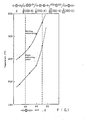
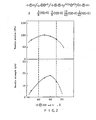
- copolymer polyesters composed of the following units were prepared, with the value of x varied, and the resulting polyesters were tested for melting point and Vicat softening point, and were also spun into filaments which were tested for tensile strength and tensile modulus after heat treatment.
- the measured data were plotted in Figs. 1 and 2.
- the amount of unit (IV) should be 5-25 mol%, preferably 10-20 mol%, of the total amount of units (I) to (V). With the amount of unit (IV) less than 5 mol%, the resulting polyester has a high melting point and is poor in spinnability, moldability and tensile modulous. With the amount of unit (IV) more than 25 mol%, the resulting polyester is poor in heat resistance.
- the amount of 2,6-naphthalene group contained in unit (V) should be up to 5 mol%.
- the filament comprising the above mentioned aromatic polyester reveals remarkably low tensile strength and low tensile modulus.
- the amount of unit (I) should be 40-70 mol%, preferably 50-65 mol%, of the total amount of units (I) to (VI). If the amount of unit (I) is less than 40 mol%, the resulting polyester amide is poor in heat resistance and provides fibers and molded articles having low mechanical strength. If the amount of unit (I) is more than 70 mol%, the resulting polyester amide has such a high melting point that it is difficult to synthesize and it is poor in spinnability and moldability.
- the total amount of units (II) and (III) should be 15-30 mol%, preferably 17-25 mol%, of the total amount of units (I) to (VI). With a total amount less than 15 mol%, the resulting polyester amide has a high melting point and is poor in spinnability and moldability. With a total amount more than 30 mol%, the resulting polyester amide is poor in heat resistance and provides fibers and molded articles having low mechanical strength.
- unit (VI) is -NH-R-CO- (where R denotes a p-phenylene group and/or 2,6-naphthalene group)
- the amounts of units (II) and (III) should be such that the molar ratio of unit (III) to [unit (II) + unit (III)] is in the range of from 0.15 to 0.85, preferably from 0.25 to 0.75.
- Units (IV) and (V) are represented by the formulas below. (where Ar denotes a p-phenylene group and/or 2,6-naphthalene group.)
- the amount of unit (IV) should be 5-25 mol%, preferably 10-20 mol%, of the total amount of units (I) to (VI). With the amount of unit (IV) less than 5 mol%, the resulting polyester amide has a high melting point and is poor in spinnability, moldability and tensile modulous. With the amount of unit (IV) more than 25 mol%, the resulting polyester is poor in heat resistance.
- the amount of 2,6-naphthalene group contained in unit (V) should be up to 5 mol%.
- the filament comprising the above mentioned aromatic polyester reveals remarkably low tensile strength and low tensile modulus.
- Unit (VI) is represented by the formula -NH-R-Z- (where R denotes a p-phenylene group and/or m-phenylene group; and Z denotes one or more groups selected from -NH-, -0-, and/or - c -.) 0
- the amount of unit (VI) should be 0.1 to 10 mol% of the total amount of units (I) to (VI). With an amount less than 0.1 mol%, the resulting polyester amide is not sufficiently improved in anisotropy. With an amount more than 10 mol%, the resulting polyester amide has a high melt viscosity and is poor in moldability, heat resistance, and mechanical strength.
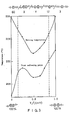
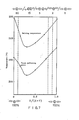
- Copolymer polyester amides composed of the following units were prepared, with the value of X varied, or and the resulting polyester amides were made into molded articles by injection molding.
- the molded articles were tested for Izod impact strength, flexural strength, melting point and Vicat softening point, and anisotropy (in terms of the ratio of flexural strength in the MD direction to that in the TD direction).
- the results are shown in Figs. 9 to 12, respectively.
- the results are also shown in Table 4 (whose detailed description will be given later in reference to Examples).
- Each of the polymers shown in Figs. 9 to 12 is composed of unit (I) which is p-acetoxybenzoic acid, unit (II) which is 2,6-diacetoxynaphthalene, unit (III) which is 4,4'-diacetoxybiphenyl, unit (IV) which is isophthalic acid, unit (V) which is terephthalic acid, and unit (VI) which is p-acetamidebenzoic acid and/or p-acetamidephenol.
- the aromatic polyester and aromatic polyester amide of the present invention are not specifically limited in the method of production. They may be synthesized by the reaction commonly employed for ester formation, such as melt polymerization, heated solution polymerization, heated suspension polymerization, low-temperature solution polymerization, and interfacial polymerization. The melt polymerization by ester interchange is desirable.
- polymerization is carried out by heating p-acetoxybenzoic acid, 2,6-naphthalenediacetate, 4,4 -diacetoxybiphenyl, isophthalic acid, terephthalic acid or 2,6-naphthalenedicarboxylic acid, and p-acetamidebenzoic acid corresponding to the units (I) to (V) or the units (I) to (VI), while removing acetic acid which is formed as a by-product.
- a catalyst may be used for the polymerization, if necessary.
- the catalyst may be previously added to the starting materials; alternatively it may be added to the reaction system when the reaction starts.
- the catalyst include germanium oxide, stannous oxalate, stannous acetate, dialkyl tin oxide, diaryl tin oxide, titanium dioxide, titanium alkoxide, antimony trioxide, antimony acetate, sodium acetate, potassium acetate, calcium acetate, rubidium acetate, ferrous acetate, aluminum chloride, amines, amides, and p-toluenesulfonic acid.
- Preferable among them are sodium acetate and rubidium acetate.
- the polymerization temperature is not specifically limited; but usually it is from 180°C to 400 °C, preferably from 200 C to 370 C. Polymerization at temperatures lower than 180 C is slow, and polymerization at temperatures higher than 400° C causes discoloration and thermal decomposition.
- the polymerization is not specifically limited in pressure; however, the polymerization should preferably be carried out such that the pressure in the initial stage is close to the atmospheric pressure and then it is reduced as the polymerization proceeds.
- the aromatic polyester and aromatic polyester amide of the present invention may be incorporated with a proper amount of stabilizer, coloration inhibitor, metal deactivator, and/or UV light absorber, according to need.
- Preferred examples of the stabilizer and coloration inhibitor include triaryl phosphite ester, trialkyl phosphite ester, triaryl phosphate ester, trialkyl phosphate ester, and hindered phenol.
- Preferred examples of the UV light absorber include benzotriazoles.
- filaments and molded articles have polymer molecules which remain highly oriented as they are oriented at the time of spinning or molding. This is the reason why they exhibit high strength, high modulus, and high heat resistance.
- the aromatic polyester amide of the present invention has the following features in addition to the above-mentioned features of the aromatic polyester.
- the inorganic filler-containing aromatic polyester amide composition according to the sixth embodiment of the present invention is composed of 100 parts by weight of the aromatic polyester amide resin in the second embodiment and 1-400 parts by weight, preferably 10-250 parts by weight, of the above-mentioned inorganic filler.
- the magnetic powder should be used in an amount of 100-1900 parts by weight, preferably 400-1150 parts by weight, for 100 parts by weight of the binder resin. With an amount less than 100 parts by weight, the resulting molded article is poor in magnetic properties and does not function as a magnet. With an amount in excess of 1900 parts by weight, the resulting composition is poor in flowability and hence moldability and provides molded articles having low mechanical strength.
- This aromatic polyester was tested for melting temperature using a flow tester equipped with a nozzle (0.5 mm in diameter and 1.0 mm long) and operated under a load of 10 kgf.
- This aromatic polyester was subjected to melt spinning using a nitrogen-pressed spinning apparatus equipped with a single capillary nozzle (spinneret) 3.0 mm long and 0.3 mm in diameter.
- the resulting filaments were found to have a tensile strength of 11.6 g/d and a tensile modulus of 77.9 GPa.
- Example 19 The same procedure as in Example 19 was repeated to prepare aromatic polyester amides of different compositions as shown in Table 4.
- the polymers were tested for physical properties in the same manner as mentioned above. The results are shown in Table 4 and Figs. 9 to 12.
- the aromatic polyester (700 g) obtained in Example 1 was incorporated with 300 g of glass fiber, 11 j.Lm in average diameter and 3 mm long (FE-S-03-1208 PE, made by Fuji Fiberglass Co., Ltd.) and the mixture was pelletized.
- the pellets were tested for injection molding temperature and were also injection-molded into test pieces, which were tested for anisotropism, heat distortion temperature, and surface scratch resistance. The results are shown in Table 5.
- magnetic powder-containing aromatic polyesters and magnetic powder-containing aromatic polyester amides pertaining to the seventh and eighth embodiments of the present invention.
- Tables 5 and 7 apparently show, the magnetic powder-containing aromatic polyesters and magnetic powder-containing aromatic polyester amides in Examples are superior in mechanical strength, moldability, and heat resistance.
- the magnetic powder-containing compositions in Comparative Examples all lack these characteristic properties.
Landscapes
- Chemical & Material Sciences (AREA)
- Chemical Kinetics & Catalysis (AREA)
- Medicinal Chemistry (AREA)
- Organic Chemistry (AREA)
- Polymers & Plastics (AREA)
- Health & Medical Sciences (AREA)
- Engineering & Computer Science (AREA)
- Textile Engineering (AREA)
- General Chemical & Material Sciences (AREA)
- Compositions Of Macromolecular Compounds (AREA)
- Polyamides (AREA)
- Polyesters Or Polycarbonates (AREA)
- Artificial Filaments (AREA)
Applications Claiming Priority (2)
| Application Number | Priority Date | Filing Date | Title |
|---|---|---|---|
| JP33427388 | 1988-12-29 | ||
| JP334273/88 | 1988-12-29 |
Publications (2)
| Publication Number | Publication Date |
|---|---|
| EP0376323A2 true EP0376323A2 (de) | 1990-07-04 |
| EP0376323A3 EP0376323A3 (de) | 1992-02-19 |
Family
ID=18275494
Family Applications (1)
| Application Number | Title | Priority Date | Filing Date |
|---|---|---|---|
| EP19890124098 Ceased EP0376323A3 (de) | 1988-12-29 | 1989-12-28 | Aromatisches Polyester, aromatisches Polyesteramid, Fasern und Zusammensetzungen daraus, welche einen anorganischen Füllstoff oder magnetisches Pulver enthalten |
Country Status (5)
| Country | Link |
|---|---|
| US (1) | US5049295A (de) |
| EP (1) | EP0376323A3 (de) |
| JP (1) | JPH02276819A (de) |
| KR (2) | KR940003760B1 (de) |
| CA (1) | CA2006761C (de) |
Cited By (14)
| Publication number | Priority date | Publication date | Assignee | Title |
|---|---|---|---|---|
| EP0599231A1 (de) * | 1992-11-24 | 1994-06-01 | Hoechst Celanese Corporation | Gefüllte Faser |
| EP0588330A3 (en) * | 1992-09-16 | 1994-06-01 | Toyo Seikan Kaisha Ltd | Composition for molding with liquid crystal resin |
| WO1995031593A1 (en) * | 1994-05-16 | 1995-11-23 | Hoechst Celanese Corporation | Filled cut-resistant fiber |
| EP0747415A3 (de) * | 1995-06-05 | 1997-05-21 | Hoechst Celanese Corp | Verfahren zur Herstellung von flüssigkristallinem Polymer |
| US5851668A (en) * | 1992-11-24 | 1998-12-22 | Hoechst Celanese Corp | Cut-resistant fiber containing a hard filler |
| US6162538A (en) * | 1992-11-24 | 2000-12-19 | Clemson University Research Foundation | Filled cut-resistant fibers |
| EP1116736A3 (de) * | 2000-01-14 | 2001-11-07 | Ticona LLC | Verfahren zur Herstellung von amorphen anisotropen schmelzbildenden Polymeren mit erhöhter Dehnbarkeit und nach diesem Verfahren hergestellte Polymere |
| EP1116738A3 (de) * | 2000-01-14 | 2001-11-07 | Ticona LLC | Verfahren zur Herstellung von amorphen anisotropen schmelzbildenden Polymeren mit erhöhter Dehnbarkeit und nach diesem Verfahren hergestellte Polymere |
| EP1116739A3 (de) * | 2000-01-14 | 2001-11-07 | Ticona LLC | Zusammensetzung und Verfahren zur Herstellung von dehnbaren Polymeren und dadurch geformte Gegenstände |
| EP1616894A1 (de) * | 2004-07-14 | 2006-01-18 | Kabushiki Kaisha Ueno Seiyaku Oyo Kenkyujo | Kristallflüssiges Polyesterharz und Verfahren zu ihrer Herstellung |
| EP1555279A4 (de) * | 2002-10-21 | 2006-02-08 | Polyplastics Co | Nichtkristallines, vollaromatisches polyesteramid |
| US8524796B2 (en) | 2008-08-13 | 2013-09-03 | Dow Global Technologies Llc | Active polymer compositions |
| US8609751B2 (en) | 2008-11-25 | 2013-12-17 | Dow Global Technologies Llc | Polymer microfiller composites |
| US8784988B2 (en) | 2008-11-25 | 2014-07-22 | Dow Global Technologies Llc | Polymer inorganic-particulate composite fibers |
Families Citing this family (6)
| Publication number | Priority date | Publication date | Assignee | Title |
|---|---|---|---|---|
| WO1994022936A1 (en) * | 1993-03-26 | 1994-10-13 | Hoechst Celanese Corporation | Rapid heat treatment of liquid crystalline fibers |
| JP2616877B2 (ja) * | 1993-08-25 | 1997-06-04 | チッソ株式会社 | 有機繊維系プロピレン樹脂組成物 |
| US5468798A (en) * | 1994-02-18 | 1995-11-21 | Whitford Corporation | Basecoat for a coating system |
| US6740728B2 (en) | 2002-05-24 | 2004-05-25 | Praxair Technology, Inc. | Methods for the preparation of polyesters, poly(ester amide)s and poly(ester imide)s and uses of the materials obtained therefrom |
| US6989194B2 (en) * | 2002-12-30 | 2006-01-24 | E. I. Du Pont De Nemours And Company | Flame retardant fabric |
| JP2007002384A (ja) * | 2004-09-30 | 2007-01-11 | Fujiyama:Kk | 溶岩パウダーおよび/または火山灰入り繊維及びその製造方法 |
Family Cites Families (17)
| Publication number | Priority date | Publication date | Assignee | Title |
|---|---|---|---|---|
| US4184996A (en) * | 1977-09-12 | 1980-01-22 | Celanese Corporation | Melt processable thermotropic wholly aromatic polyester |
| US4339375A (en) * | 1981-06-04 | 1982-07-13 | Celanese Corporation | Poly(ester-amide) capable of forming an anisotropic melt phase derived from p-hydroxybenzoic acid, 2,6-dihydroxynaphthalene, carbocyclic dicarboxylic acid, aromatic monomer capable of forming an amide linkage, and, optionally, additional aromatic diol |
| US4910057A (en) * | 1982-04-02 | 1990-03-20 | Hoechst Celanese Corporation | Melt extruded elongated member suitable for improved service as a stiffening support in an optical fiber cable |
| CA1220889A (en) * | 1982-06-08 | 1987-04-21 | Dart Industries Inc. | Process for the production of aromatic polyesters |
| US4457962A (en) * | 1982-09-01 | 1984-07-03 | Celanese Corporation | Molded article comprised of a thermotropic liquid crystal line polymer with an inherently weak weld line incorporated therein |
| US4581399A (en) * | 1982-09-30 | 1986-04-08 | Celanese Corporation | Method for the melt processing of thermotropic liquid crystal polymers |
| US4540737A (en) * | 1983-02-07 | 1985-09-10 | Celanese Corporation | Method for the formation of composite articles comprised of thermotropic liquid crystalline polymers and articles produced thereby |
| US4539386A (en) * | 1983-07-27 | 1985-09-03 | Celanese Corporation | Process for forming thermally stable thermotropic liquid crystalline polyesters of predetermined chain length |
| US4863767A (en) * | 1984-04-13 | 1989-09-05 | Hoechst Celanese Corporation | Method of adhesive bonding by use of thermotropic liquid crystal polymers |
| US4719250A (en) * | 1984-06-18 | 1988-01-12 | Hoechst Celanese Corporation | Encapsulation of electronic components |
| JPS61130046A (ja) * | 1984-11-28 | 1986-06-17 | ポリプラスチックス株式会社 | ラミネ−トフイルムの製造法 |
| JPS61130041A (ja) * | 1984-11-28 | 1986-06-17 | ポリプラスチックス株式会社 | 寸法安定性の良好な成形品の製造方法 |
| WO1988000955A1 (fr) * | 1986-07-28 | 1988-02-11 | Toray Industries, Inc. | Polyesters aromatiques ayant une bonne resistance a la chaleur |
| JP2517568B2 (ja) * | 1986-11-13 | 1996-07-24 | ポリプラスチックス株式会社 | 分子鎖末端が封止された液晶性コポリエステル |
| JPH0717748B2 (ja) * | 1986-12-19 | 1995-03-01 | 川崎製鉄株式会社 | 芳香族ポリエステルアミド |
| GB8700923D0 (en) * | 1987-01-16 | 1987-02-18 | Ici Plc | Aromatic copolyesters |
| US4746694A (en) * | 1987-07-06 | 1988-05-24 | Hoechst Celanese Corporation | Melt processable polyester capable of forming an anisotropic melt comprising a relatively low concentration of 6-oxy-2-naphthoyl moiety, 4-oxybenzoyl moiety, 2,6-dioxynaphthalene moiety, and terephthaloyl moiety |
-
1989
- 1989-12-22 JP JP1333846A patent/JPH02276819A/ja active Pending
- 1989-12-27 US US07/457,559 patent/US5049295A/en not_active Expired - Fee Related
- 1989-12-28 EP EP19890124098 patent/EP0376323A3/de not_active Ceased
- 1989-12-28 CA CA002006761A patent/CA2006761C/en not_active Expired - Fee Related
- 1989-12-29 KR KR1019890020643A patent/KR940003760B1/ko not_active Expired - Fee Related
-
1993
- 1993-07-19 KR KR1019930013524A patent/KR940003761B1/ko not_active Expired - Fee Related
Cited By (25)
| Publication number | Priority date | Publication date | Assignee | Title |
|---|---|---|---|---|
| EP0588330A3 (en) * | 1992-09-16 | 1994-06-01 | Toyo Seikan Kaisha Ltd | Composition for molding with liquid crystal resin |
| US6210798B1 (en) | 1992-11-24 | 2001-04-03 | Honeywell International, Inc. | Cut-resistant gloves |
| US6103372A (en) * | 1992-11-24 | 2000-08-15 | Hoechst Celanese Corporation | Filled cut-resistant fiber |
| EP1092793A1 (de) * | 1992-11-24 | 2001-04-18 | Honeywell International, Inc. | Gefüllte Faser |
| US5851668A (en) * | 1992-11-24 | 1998-12-22 | Hoechst Celanese Corp | Cut-resistant fiber containing a hard filler |
| US6162538A (en) * | 1992-11-24 | 2000-12-19 | Clemson University Research Foundation | Filled cut-resistant fibers |
| US5976998A (en) * | 1992-11-24 | 1999-11-02 | Hoechst Celanese Corporation | Cut resistant non-woven fabrics |
| EP0599231A1 (de) * | 1992-11-24 | 1994-06-01 | Hoechst Celanese Corporation | Gefüllte Faser |
| US6127028A (en) * | 1992-11-24 | 2000-10-03 | Hoechst Celanese Corporation | Composite yarn comprising filled cut-resistant fiber |
| US6126879A (en) * | 1992-11-24 | 2000-10-03 | Honeywell International Inc. | Method of making a cut-resistant fiber and fabrics, and the fabric made thereby |
| US6159599A (en) * | 1992-11-24 | 2000-12-12 | Honeywell International, Inc. | Cut-resistant sheath/core fiber |
| WO1995031593A1 (en) * | 1994-05-16 | 1995-11-23 | Hoechst Celanese Corporation | Filled cut-resistant fiber |
| AU704915B2 (en) * | 1994-05-16 | 1999-05-06 | Honeywell International, Inc. | Filled cut-resistant fiber |
| CN1089815C (zh) * | 1994-05-16 | 2002-08-28 | 赫希斯特人造丝公司 | 抗切纤维、含有它的纱、抗切织物及其制法和安全手套 |
| KR100363633B1 (ko) * | 1994-05-16 | 2003-02-17 | 씨엔에이 홀딩즈 인코포레이티드 | 충진된 내절단성 섬유 |
| EP0747415A3 (de) * | 1995-06-05 | 1997-05-21 | Hoechst Celanese Corp | Verfahren zur Herstellung von flüssigkristallinem Polymer |
| EP1116736A3 (de) * | 2000-01-14 | 2001-11-07 | Ticona LLC | Verfahren zur Herstellung von amorphen anisotropen schmelzbildenden Polymeren mit erhöhter Dehnbarkeit und nach diesem Verfahren hergestellte Polymere |
| EP1116739A3 (de) * | 2000-01-14 | 2001-11-07 | Ticona LLC | Zusammensetzung und Verfahren zur Herstellung von dehnbaren Polymeren und dadurch geformte Gegenstände |
| EP1116738A3 (de) * | 2000-01-14 | 2001-11-07 | Ticona LLC | Verfahren zur Herstellung von amorphen anisotropen schmelzbildenden Polymeren mit erhöhter Dehnbarkeit und nach diesem Verfahren hergestellte Polymere |
| EP1555279A4 (de) * | 2002-10-21 | 2006-02-08 | Polyplastics Co | Nichtkristallines, vollaromatisches polyesteramid |
| EP1616894A1 (de) * | 2004-07-14 | 2006-01-18 | Kabushiki Kaisha Ueno Seiyaku Oyo Kenkyujo | Kristallflüssiges Polyesterharz und Verfahren zu ihrer Herstellung |
| US7304121B2 (en) | 2004-07-14 | 2007-12-04 | Kabushiki Kaisha Ueno Seiyaku Oyo Kenkyujo | Liquid-crystalline polyester resin and method for producing it |
| US8524796B2 (en) | 2008-08-13 | 2013-09-03 | Dow Global Technologies Llc | Active polymer compositions |
| US8609751B2 (en) | 2008-11-25 | 2013-12-17 | Dow Global Technologies Llc | Polymer microfiller composites |
| US8784988B2 (en) | 2008-11-25 | 2014-07-22 | Dow Global Technologies Llc | Polymer inorganic-particulate composite fibers |
Also Published As
| Publication number | Publication date |
|---|---|
| EP0376323A3 (de) | 1992-02-19 |
| CA2006761C (en) | 1995-11-07 |
| CA2006761A1 (en) | 1990-06-29 |
| US5049295A (en) | 1991-09-17 |
| JPH02276819A (ja) | 1990-11-13 |
| KR940003761B1 (ko) | 1994-04-30 |
| KR940003760B1 (ko) | 1994-04-30 |
| KR910011981A (ko) | 1991-08-07 |
Similar Documents
| Publication | Publication Date | Title |
|---|---|---|
| EP0376323A2 (de) | Aromatisches Polyester, aromatisches Polyesteramid, Fasern und Zusammensetzungen daraus, welche einen anorganischen Füllstoff oder magnetisches Pulver enthalten | |
| EP0271929A2 (de) | Aromatische Polyester, Polyesteramide und Zusammensetzungen daraus | |
| EP0044175B2 (de) | Zusammensetzung aus Polycarbonat und ganz aromatischem Polyester | |
| CA1110376A (en) | Polyester composition | |
| EP0271327B1 (de) | Flüssigkristallpolyester enthaltende Harzzusammensetzung | |
| US4933386A (en) | Polyarylene sulfide resin composition | |
| KR920003419B1 (ko) | 폴리에스테르 수지조성물 | |
| EP1195408B1 (de) | Flüssigkristalline polyesterharzzusammensetzung | |
| KR920002618B1 (ko) | 공중합 폴리에스테르 아미드, 이를 사용한 사출성형재의 제조방법 및 이의 조성물 | |
| US4885321A (en) | Polyarylene sulfide resin composition and molded article for light reflection | |
| US4861515A (en) | Polyester composition | |
| JPH0335058A (ja) | ポリ(アリーレンスルフィド)組成物 | |
| JPH05239354A (ja) | ポリ(アリーレンスルフィド)組成物 | |
| JPH0684472B2 (ja) | 無機フィラー含有共重合ポリエステルアミド組成物 | |
| JP3410253B2 (ja) | 射出成形材料 | |
| JPH0694504B2 (ja) | 共重合ポリエステルアミド | |
| JPH0922969A (ja) | 電子部品封止材 | |
| JP3043570B2 (ja) | ポリアリーレンサルファイド樹脂組成物 | |
| JPH03243648A (ja) | 強化液晶樹脂組成物 | |
| JPH02292365A (ja) | ガラス充填芳香族スルフィド/スルホンポリマー組成物および方法 | |
| JP3029542B2 (ja) | ポリアリーレンサルファイド樹脂組成物 | |
| JP3034573B2 (ja) | ポリフェニレンスルフィド樹脂組成物 | |
| WO2024204593A1 (ja) | 液晶性樹脂組成物 | |
| WO1991010707A1 (en) | Improved process for forming poly[co(4-oxybenzoate/paraphenyleneisophthalate)] and resulting product | |
| JPH05194849A (ja) | ポリフェニレンスルフィド樹脂組成物 |
Legal Events
| Date | Code | Title | Description |
|---|---|---|---|
| PUAI | Public reference made under article 153(3) epc to a published international application that has entered the european phase |
Free format text: ORIGINAL CODE: 0009012 |
|
| 17P | Request for examination filed |
Effective date: 19891228 |
|
| AK | Designated contracting states |
Kind code of ref document: A2 Designated state(s): DE FR GB IT NL |
|
| PUAL | Search report despatched |
Free format text: ORIGINAL CODE: 0009013 |
|
| AK | Designated contracting states |
Kind code of ref document: A3 Designated state(s): DE FR GB IT NL |
|
| 17Q | First examination report despatched |
Effective date: 19941028 |
|
| GRAG | Despatch of communication of intention to grant |
Free format text: ORIGINAL CODE: EPIDOS AGRA |
|
| STAA | Information on the status of an ep patent application or granted ep patent |
Free format text: STATUS: THE APPLICATION HAS BEEN REFUSED |
|
| 18R | Application refused |
Effective date: 19961222 |