EP0377340B1 - Dispositif d'enregistrement/de reproduction - Google Patents
Dispositif d'enregistrement/de reproduction Download PDFInfo
- Publication number
- EP0377340B1 EP0377340B1 EP89313712A EP89313712A EP0377340B1 EP 0377340 B1 EP0377340 B1 EP 0377340B1 EP 89313712 A EP89313712 A EP 89313712A EP 89313712 A EP89313712 A EP 89313712A EP 0377340 B1 EP0377340 B1 EP 0377340B1
- Authority
- EP
- European Patent Office
- Prior art keywords
- recording
- reproducing
- information
- reproducing device
- recording medium
- Prior art date
- Legal status (The legal status is an assumption and is not a legal conclusion. Google has not performed a legal analysis and makes no representation as to the accuracy of the status listed.)
- Expired - Lifetime
Links
Images

Classifications
-
- G—PHYSICS
- G11—INFORMATION STORAGE
- G11B—INFORMATION STORAGE BASED ON RELATIVE MOVEMENT BETWEEN RECORD CARRIER AND TRANSDUCER
- G11B27/00—Editing; Indexing; Addressing; Timing or synchronising; Monitoring; Measuring tape travel
- G11B27/10—Indexing; Addressing; Timing or synchronising; Measuring tape travel
- G11B27/19—Indexing; Addressing; Timing or synchronising; Measuring tape travel by using information detectable on the record carrier
- G11B27/28—Indexing; Addressing; Timing or synchronising; Measuring tape travel by using information detectable on the record carrier by using information signals recorded by the same method as the main recording
- G11B27/32—Indexing; Addressing; Timing or synchronising; Measuring tape travel by using information detectable on the record carrier by using information signals recorded by the same method as the main recording on separate auxiliary tracks of the same or an auxiliary record carrier
- G11B27/327—Table of contents
- G11B27/329—Table of contents on a disc [VTOC]
-
- G—PHYSICS
- G11—INFORMATION STORAGE
- G11B—INFORMATION STORAGE BASED ON RELATIVE MOVEMENT BETWEEN RECORD CARRIER AND TRANSDUCER
- G11B20/00—Signal processing not specific to the method of recording or reproducing; Circuits therefor
- G11B20/10—Digital recording or reproducing
- G11B20/14—Digital recording or reproducing using self-clocking codes
-
- G—PHYSICS
- G11—INFORMATION STORAGE
- G11B—INFORMATION STORAGE BASED ON RELATIVE MOVEMENT BETWEEN RECORD CARRIER AND TRANSDUCER
- G11B11/00—Recording on or reproducing from the same record carrier wherein for these two operations the methods are covered by different main groups of groups G11B3/00 - G11B7/00 or by different subgroups of group G11B9/00; Record carriers therefor
- G11B11/10—Recording on or reproducing from the same record carrier wherein for these two operations the methods are covered by different main groups of groups G11B3/00 - G11B7/00 or by different subgroups of group G11B9/00; Record carriers therefor using recording by magnetic means or other means for magnetisation or demagnetisation of a record carrier, e.g. light induced spin magnetisation; Demagnetisation by thermal or stress means in the presence or not of an orienting magnetic field
- G11B11/105—Recording on or reproducing from the same record carrier wherein for these two operations the methods are covered by different main groups of groups G11B3/00 - G11B7/00 or by different subgroups of group G11B9/00; Record carriers therefor using recording by magnetic means or other means for magnetisation or demagnetisation of a record carrier, e.g. light induced spin magnetisation; Demagnetisation by thermal or stress means in the presence or not of an orienting magnetic field using a beam of light or a magnetic field for recording by change of magnetisation and a beam of light for reproducing, i.e. magneto-optical, e.g. light-induced thermomagnetic recording, spin magnetisation recording, Kerr or Faraday effect reproducing
- G11B11/10502—Recording on or reproducing from the same record carrier wherein for these two operations the methods are covered by different main groups of groups G11B3/00 - G11B7/00 or by different subgroups of group G11B9/00; Record carriers therefor using recording by magnetic means or other means for magnetisation or demagnetisation of a record carrier, e.g. light induced spin magnetisation; Demagnetisation by thermal or stress means in the presence or not of an orienting magnetic field using a beam of light or a magnetic field for recording by change of magnetisation and a beam of light for reproducing, i.e. magneto-optical, e.g. light-induced thermomagnetic recording, spin magnetisation recording, Kerr or Faraday effect reproducing characterised by the transducing operation to be executed
-
- G—PHYSICS
- G11—INFORMATION STORAGE
- G11B—INFORMATION STORAGE BASED ON RELATIVE MOVEMENT BETWEEN RECORD CARRIER AND TRANSDUCER
- G11B11/00—Recording on or reproducing from the same record carrier wherein for these two operations the methods are covered by different main groups of groups G11B3/00 - G11B7/00 or by different subgroups of group G11B9/00; Record carriers therefor
- G11B11/10—Recording on or reproducing from the same record carrier wherein for these two operations the methods are covered by different main groups of groups G11B3/00 - G11B7/00 or by different subgroups of group G11B9/00; Record carriers therefor using recording by magnetic means or other means for magnetisation or demagnetisation of a record carrier, e.g. light induced spin magnetisation; Demagnetisation by thermal or stress means in the presence or not of an orienting magnetic field
- G11B11/105—Recording on or reproducing from the same record carrier wherein for these two operations the methods are covered by different main groups of groups G11B3/00 - G11B7/00 or by different subgroups of group G11B9/00; Record carriers therefor using recording by magnetic means or other means for magnetisation or demagnetisation of a record carrier, e.g. light induced spin magnetisation; Demagnetisation by thermal or stress means in the presence or not of an orienting magnetic field using a beam of light or a magnetic field for recording by change of magnetisation and a beam of light for reproducing, i.e. magneto-optical, e.g. light-induced thermomagnetic recording, spin magnetisation recording, Kerr or Faraday effect reproducing
- G11B11/1055—Disposition or mounting of transducers relative to record carriers
- G11B11/10556—Disposition or mounting of transducers relative to record carriers with provision for moving or switching or masking the transducers in or out of their operative position
- G11B11/10563—Access of indexed parts
-
- G—PHYSICS
- G11—INFORMATION STORAGE
- G11B—INFORMATION STORAGE BASED ON RELATIVE MOVEMENT BETWEEN RECORD CARRIER AND TRANSDUCER
- G11B11/00—Recording on or reproducing from the same record carrier wherein for these two operations the methods are covered by different main groups of groups G11B3/00 - G11B7/00 or by different subgroups of group G11B9/00; Record carriers therefor
- G11B11/10—Recording on or reproducing from the same record carrier wherein for these two operations the methods are covered by different main groups of groups G11B3/00 - G11B7/00 or by different subgroups of group G11B9/00; Record carriers therefor using recording by magnetic means or other means for magnetisation or demagnetisation of a record carrier, e.g. light induced spin magnetisation; Demagnetisation by thermal or stress means in the presence or not of an orienting magnetic field
- G11B11/105—Recording on or reproducing from the same record carrier wherein for these two operations the methods are covered by different main groups of groups G11B3/00 - G11B7/00 or by different subgroups of group G11B9/00; Record carriers therefor using recording by magnetic means or other means for magnetisation or demagnetisation of a record carrier, e.g. light induced spin magnetisation; Demagnetisation by thermal or stress means in the presence or not of an orienting magnetic field using a beam of light or a magnetic field for recording by change of magnetisation and a beam of light for reproducing, i.e. magneto-optical, e.g. light-induced thermomagnetic recording, spin magnetisation recording, Kerr or Faraday effect reproducing
- G11B11/10595—Control of operating function
-
- G—PHYSICS
- G11—INFORMATION STORAGE
- G11B—INFORMATION STORAGE BASED ON RELATIVE MOVEMENT BETWEEN RECORD CARRIER AND TRANSDUCER
- G11B19/00—Driving, starting, stopping record carriers not specifically of filamentary or web form, or of supports therefor; Control thereof; Control of operating function ; Driving both disc and head
- G11B19/20—Driving; Starting; Stopping; Control thereof
- G11B19/24—Arrangements for providing constant relative speed between record carrier and head
-
- G—PHYSICS
- G11—INFORMATION STORAGE
- G11B—INFORMATION STORAGE BASED ON RELATIVE MOVEMENT BETWEEN RECORD CARRIER AND TRANSDUCER
- G11B27/00—Editing; Indexing; Addressing; Timing or synchronising; Monitoring; Measuring tape travel
- G11B27/005—Reproducing at a different information rate from the information rate of recording
- G11B27/007—Reproducing at a different information rate from the information rate of recording reproducing continuously a part of the information, i.e. repeating
-
- G—PHYSICS
- G11—INFORMATION STORAGE
- G11B—INFORMATION STORAGE BASED ON RELATIVE MOVEMENT BETWEEN RECORD CARRIER AND TRANSDUCER
- G11B27/00—Editing; Indexing; Addressing; Timing or synchronising; Monitoring; Measuring tape travel
- G11B27/02—Editing, e.g. varying the order of information signals recorded on, or reproduced from, record carriers
- G11B27/031—Electronic editing of digitised analogue information signals, e.g. audio or video signals
- G11B27/036—Insert-editing
-
- G—PHYSICS
- G11—INFORMATION STORAGE
- G11B—INFORMATION STORAGE BASED ON RELATIVE MOVEMENT BETWEEN RECORD CARRIER AND TRANSDUCER
- G11B27/00—Editing; Indexing; Addressing; Timing or synchronising; Monitoring; Measuring tape travel
- G11B27/10—Indexing; Addressing; Timing or synchronising; Measuring tape travel
-
- G—PHYSICS
- G11—INFORMATION STORAGE
- G11B—INFORMATION STORAGE BASED ON RELATIVE MOVEMENT BETWEEN RECORD CARRIER AND TRANSDUCER
- G11B27/00—Editing; Indexing; Addressing; Timing or synchronising; Monitoring; Measuring tape travel
- G11B27/10—Indexing; Addressing; Timing or synchronising; Measuring tape travel
- G11B27/102—Programmed access in sequence to addressed parts of tracks of operating record carriers
- G11B27/105—Programmed access in sequence to addressed parts of tracks of operating record carriers of operating discs
-
- G—PHYSICS
- G11—INFORMATION STORAGE
- G11B—INFORMATION STORAGE BASED ON RELATIVE MOVEMENT BETWEEN RECORD CARRIER AND TRANSDUCER
- G11B27/00—Editing; Indexing; Addressing; Timing or synchronising; Monitoring; Measuring tape travel
- G11B27/10—Indexing; Addressing; Timing or synchronising; Measuring tape travel
- G11B27/11—Indexing; Addressing; Timing or synchronising; Measuring tape travel by using information not detectable on the record carrier
-
- G—PHYSICS
- G11—INFORMATION STORAGE
- G11B—INFORMATION STORAGE BASED ON RELATIVE MOVEMENT BETWEEN RECORD CARRIER AND TRANSDUCER
- G11B27/00—Editing; Indexing; Addressing; Timing or synchronising; Monitoring; Measuring tape travel
- G11B27/10—Indexing; Addressing; Timing or synchronising; Measuring tape travel
- G11B27/19—Indexing; Addressing; Timing or synchronising; Measuring tape travel by using information detectable on the record carrier
- G11B27/22—Means responsive to presence or absence of recorded information signals
-
- G—PHYSICS
- G11—INFORMATION STORAGE
- G11B—INFORMATION STORAGE BASED ON RELATIVE MOVEMENT BETWEEN RECORD CARRIER AND TRANSDUCER
- G11B27/00—Editing; Indexing; Addressing; Timing or synchronising; Monitoring; Measuring tape travel
- G11B27/10—Indexing; Addressing; Timing or synchronising; Measuring tape travel
- G11B27/19—Indexing; Addressing; Timing or synchronising; Measuring tape travel by using information detectable on the record carrier
- G11B27/28—Indexing; Addressing; Timing or synchronising; Measuring tape travel by using information detectable on the record carrier by using information signals recorded by the same method as the main recording
- G11B27/30—Indexing; Addressing; Timing or synchronising; Measuring tape travel by using information detectable on the record carrier by using information signals recorded by the same method as the main recording on the same track as the main recording
- G11B27/3027—Indexing; Addressing; Timing or synchronising; Measuring tape travel by using information detectable on the record carrier by using information signals recorded by the same method as the main recording on the same track as the main recording used signal is digitally coded
-
- G—PHYSICS
- G11—INFORMATION STORAGE
- G11B—INFORMATION STORAGE BASED ON RELATIVE MOVEMENT BETWEEN RECORD CARRIER AND TRANSDUCER
- G11B27/00—Editing; Indexing; Addressing; Timing or synchronising; Monitoring; Measuring tape travel
- G11B27/10—Indexing; Addressing; Timing or synchronising; Measuring tape travel
- G11B27/34—Indicating arrangements
-
- G—PHYSICS
- G11—INFORMATION STORAGE
- G11B—INFORMATION STORAGE BASED ON RELATIVE MOVEMENT BETWEEN RECORD CARRIER AND TRANSDUCER
- G11B7/00—Recording or reproducing by optical means, e.g. recording using a thermal beam of optical radiation by modifying optical properties or the physical structure, reproducing using an optical beam at lower power by sensing optical properties; Record carriers therefor
- G11B7/004—Recording, reproducing or erasing methods; Read, write or erase circuits therefor
- G11B7/0055—Erasing
- G11B7/00557—Erasing involving phase-change media
-
- G—PHYSICS
- G11—INFORMATION STORAGE
- G11B—INFORMATION STORAGE BASED ON RELATIVE MOVEMENT BETWEEN RECORD CARRIER AND TRANSDUCER
- G11B2220/00—Record carriers by type
- G11B2220/20—Disc-shaped record carriers
- G11B2220/21—Disc-shaped record carriers characterised in that the disc is of read-only, rewritable, or recordable type
- G11B2220/215—Recordable discs
- G11B2220/216—Rewritable discs
-
- G—PHYSICS
- G11—INFORMATION STORAGE
- G11B—INFORMATION STORAGE BASED ON RELATIVE MOVEMENT BETWEEN RECORD CARRIER AND TRANSDUCER
- G11B2220/00—Record carriers by type
- G11B2220/20—Disc-shaped record carriers
- G11B2220/25—Disc-shaped record carriers characterised in that the disc is based on a specific recording technology
- G11B2220/2525—Magneto-optical [MO] discs
-
- G—PHYSICS
- G11—INFORMATION STORAGE
- G11B—INFORMATION STORAGE BASED ON RELATIVE MOVEMENT BETWEEN RECORD CARRIER AND TRANSDUCER
- G11B2220/00—Record carriers by type
- G11B2220/20—Disc-shaped record carriers
- G11B2220/25—Disc-shaped record carriers characterised in that the disc is based on a specific recording technology
- G11B2220/2537—Optical discs
- G11B2220/2545—CDs
-
- G—PHYSICS
- G11—INFORMATION STORAGE
- G11B—INFORMATION STORAGE BASED ON RELATIVE MOVEMENT BETWEEN RECORD CARRIER AND TRANSDUCER
- G11B2220/00—Record carriers by type
- G11B2220/60—Solid state media
- G11B2220/65—Solid state media wherein solid state memory is used for storing indexing information or metadata
-
- G—PHYSICS
- G11—INFORMATION STORAGE
- G11B—INFORMATION STORAGE BASED ON RELATIVE MOVEMENT BETWEEN RECORD CARRIER AND TRANSDUCER
- G11B2220/00—Record carriers by type
- G11B2220/90—Tape-like record carriers
- G11B2220/91—Helical scan format, wherein tracks are slightly tilted with respect to tape direction, e.g. VHS, DAT, DVC, AIT or exabyte
- G11B2220/913—Digital audio tape [DAT] format
-
- G—PHYSICS
- G11—INFORMATION STORAGE
- G11B—INFORMATION STORAGE BASED ON RELATIVE MOVEMENT BETWEEN RECORD CARRIER AND TRANSDUCER
- G11B27/00—Editing; Indexing; Addressing; Timing or synchronising; Monitoring; Measuring tape travel
- G11B27/02—Editing, e.g. varying the order of information signals recorded on, or reproduced from, record carriers
- G11B27/031—Electronic editing of digitised analogue information signals, e.g. audio or video signals
- G11B27/034—Electronic editing of digitised analogue information signals, e.g. audio or video signals on discs
-
- G—PHYSICS
- G11—INFORMATION STORAGE
- G11B—INFORMATION STORAGE BASED ON RELATIVE MOVEMENT BETWEEN RECORD CARRIER AND TRANSDUCER
- G11B27/00—Editing; Indexing; Addressing; Timing or synchronising; Monitoring; Measuring tape travel
- G11B27/36—Monitoring, i.e. supervising the progress of recording or reproducing
Definitions
- the present invention relates to a recording/reproducing device for recording and reproducing on a recording medium, more specifically on a rewritable disk-shaped recording medium comprising absolute address parts formed therein for providing position information in recording or reproducing on the medium.
- CD compact disks
- a plurality of music programs (hereinafter called programs) are successively recorded from inner side to outer side track in an information recording region of the disk, and at the innermost area of the disk, a so-called lead-in area, there is also preset an area called TOC(Table Of Contents) area.
- TOC Table Of Contents
- program numbers for identifying each program, recording start positions of each program and the like are predeterminately recorded.
- a conventional reproducing device used only for reproduction when a CD is placed in the device to reproduce information recorded therein, by reading out the information in the TOC area and storing same at first, the number of programs as well as a recording start position for each program recorded in the CD is recognized. Next, when the reproducing procedures are instructed by the user, the above-mentioned device can execute accesses to desired programs by using the information of the TOC area at high speed. More specifically, by using the information recorded in the TOC area, the above-mentioned reproduction dedicated device permits carrying out various modes of reproducing such as: a reproduction of any one of programs; or reproductions of a plurality of programs according to an order and the number of times for repeated reproductions instructed by the user; and the like.
- the above-mentioned CD is used only for reproducing, another type of recording/reproducing device and its recording medium which permits the user to freely record music information or the like has been desired.
- the device there is a recording/reproducing device employing the magneto-optical disk as the rewritable disk-shaped recording medium.
- the above-mentioned recording/reproducing device permits the absolute address as information of the recording start position for each program newly recorded in the information recording region of the magneto-optical disk to be recorded in the above-mentioned TOC area in accordance with the program numbers.
- the above-mentioned magneto-optical disk having the capacity of sixty minutes in terms of recording time usually can afford to record about twenty melodies, supposing each recording time of them is about three minutes.
- a method is supposed to be applied, wherein reproducing procedures information is stored in memory means of the recording/reproducing device in order to permit the device to automatically perform successive reproductions in accordance with desired reproducing procedures, as is the same function used in conventional reproducing devices used only for reproduction.
- the above mentioned reproducing procedures information includes that of the program numbers, reproducing orders and reproducing number of times concerning a plurality of desired melodies specified by the user among about twenty programs recorded in the disk.
- the reproducing procedures information stored in the above-mentioned memory means is reset when the above-mentioned magneto-optical disk is taken out of the recording/reproducing device.
- the reason is that the same disk is not necessarily placed in repeatedly every time, and the contents of memory stored in the above-mentioned memory means differ in different disks.
- EP-A-0 281 415 and EP-A-0 310 678 which corresponds to WO 88/08197, from which there are known apparatus capable of recording updated TOC data on an optically-recordable disc under certain operating conditions.
- the object of the present invention is to improve the versatility of the known recording/reproducing apparatus.
- the present invention is defined by independent claim 1, whose preamble relates to the disclosure of EP-A-0 310 678.
- the dependent claims are directed to embodiments of the present invention.
- Fig. 1 to Fig. 4 relate to one preferred embodiment of the present invention.
- Fig. 1 is a block diagram showing the recording/reproducing device.
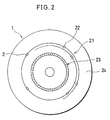
- Fig. 2 is a schematic plan view showing a magneto-optical disk.
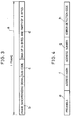
- Fig. 3 is a schematic illustration showing a data format of data signals concerning recording information.
- Fig. 4 is a schematic illustration showing a data format of digital signals concerning absolute addresses.
- the recording/reproducing device of the embodiment of the present invention which employs a magneto-optical disk as a rewritable recording medium and adopts data formats standardized in CD's, performs recording as well as reproducing music programs(hereinafter simply called programs) as information.
- this track 21 As will be mentioned later, there are predeterminately formed absolute address parts 22 in physically uneven pit-like shape with certain intervals.
- a TOC area 23 As a lead-in region, and a lead-out region(not shown) both of which are made of magneto-optical recording layer(not shown).
- a program region 24 as an information recording region made of the same magneto-optical layer.
- additional information can be recorded concerning program numbers as identification numbers and recording start positions for each program which have already been recorded or are going to be recorded in above-mentioned program region 24.
- Data formats adopted for recording information in the program region 24 and TOC area 23 are the same as those adopted in the conventional CD's used only for reproducing. Accordingly, as is shown in Fig. 3, information a of one frame is composed of a frame synchronizing signal b , a data field d of 24 bytes for programs, etc. with an additional parity of 8 bytes for error detection and correction and a sub-code c for recording program numbers, time information, etc. for each data field d .
- the above-mentioned information a is successively recorded in the TOC area 23, the program region 24 and the lead-out region.
- the sub-code "c" is not particularly necessary and its contents can be freely set.
- each of digital signals detected from the absolute address parts 22 and converted consists of a preamble "e” for reproduction synchronization, an address mark “f” for showing the head of respective absolute address parts 22, an address number “g” for showing each address being successively incremented one by one from the innermost track of the magneto-optical disk 1(more specifically, for instance in a magneto-optical disk 1, it shows the time for recording/reproducing every one second from the beginning of program region 24) and an error detection code "h” for detecting errors when the address numbers "g" are detected.
- the intervals between the above-mentioned absolute addresses 22 to 22 are preset so that each absolute address can be read once every one second at a certain constant linear velocity on the magneto-optical disk in recording or reproducing.
- Fig. 1 shows one example of recording/reproducing device which performs recording/reproducing in a magneto-optical disk 1.
- A/D converter 15 is installed in an input stage wherein analog signals, S in of outside information such as music information, etc. are entered.
- This A/D converter is composed so that it can convert analog signals, S in entered thereto into digital signals and release the converted digital signals to a recorded signal processing circuit 16 in the following stage.
- This recorded signal processing circuit 16 is composed so that it can convert the digital signals entered thereto from the A/D converter 15 as well as reproducing procedure signals entered thereto from a TOC memory 11, which will be mentioned later, into recording signals with a format shown in Fig. 3, and can enter the signals to a coil driver 17 connected thereto as the following stage.
- This coil driver 17 is composed so that it can generate magnetic fields on a magnetic coil 18 corresponding to the variation of the recording signals entered thereto from the recorded signal processing circuit 16, and can also drive the magnetic coil 18 to the recording part of the magneto-optical disk 1.
- These coil driver 17 and magnetic coil 18 form recording means together with an optical head 3 as well as an optical head driver 19 both of which will be described later.
- the magneto-optical disk 1 is rotationally driven by a spindle motor 2 centering the axis o of rotation, as is indicated by arrow in the drawing. Having the magneto-optical disk 1 in-between, the magnetic coil 18 and the optical head 3 are located in the opposite positions so as to record information in an operative relation with the magneto-optical disk 1 being rotationally driven.
- the magnetic coil 18 driven by the coil driver 17 and the optical head 3 driven by the optical head driver 19 are assembled so that after being located to the recording part of the magneto-optical disk 1, they can perform magneto-optical recording which will be mentioned later.
- the above-mentioned optical head 3 and optical head driver 19 also serve as reproducing means for reproducing information recorded in the magneto-optical disk 1.
- the optical head driver 19 to which the above-mentioned optical head 3 is secured is assembled so that it can apply light beam from the optical head 3 with output required for recording/reproducing according to instructions from a controller 6, and drive the optical head 3 to the recording/reproducing position for applying the light beam focussed on the specified spot of the track 21.
- the output of the optical head 3 is entered to a reproducing amplifier 9, and the amplifier 9 amplifies signals corresponding to each program, etc. (hereinafter called audio signal elements) among signals reproduced by the optical head 3.
- the output of the reproducing amplifier 9 is entered to a reproduced signal processing circuit 10.
- This reproduced signal processing circuit 10 is composed so that it can extract desired data, sort them and convert them into digital signals again with a data format shown in Fig. 3, after performing an error correction process, if there are any errors.
- the output of the reproduced signal processing circuit 10 is entered to a D/A converter 14.
- This D/A converter 14 is composed so that it can convert digital signal data sequences sent from the recorded signal processing circuit 10 into analog signals, releasing them as analog signals, S out .
- the output of the optical head 3 is also entered to an uneven signal reproducing amplifier 4.
- the uneven signal reproducing amplifier 4 extracts and amplifies signals corresponding to those detected from the absolute address parts 22(hereinafter called uneven signal elements), which are physically formed as pit-shaped uneven patterns, among signals reproduced by the optical head 3.
- the output of the uneven signal reproducing amplifier 4 is entered to an address decoder 5.
- This address decoder 5 is assembled so that it can convert amplified uneven signal elements into digital signals with a data format shown in Fig. 4 and recognize the absolute addresses, releasing the information concerning recording/reproducing positions to the controller 6.
- a rotary encoder 7 is secured to a spindle motor 2 for rotationally driving the magneto-optical disk 1, and the rotary encoder 7 is assembled so as to release a certain number of pulses every one revolution of the spindle motor 2 according to its revolution velocity to a CLV control circuit 8 which will be mentioned later.
- the controller 6 Upon placing a magneto-optical disk 1 on the recording/reproducing device, the controller 6 starts to read out additional information recorded in the TOC area 23, thereby permitting the TOC memory 11 as memory means to store the read-out additional information. Moreover, the controller 6 makes it possible to rewrite the contents of the TOC area 23 in the following occasions: when the recording for programs etc. is finished; immediately before the magneto-optical disk 1 is taken out of the recording/reproducing device; or when the user inputs the instruction to do so at his/her will using an operation key group 13. Furthermore, the controller 6 permits the TOC memory 11 to store additional information concerning reproducing procedures and so on in order to specify the reproducing order, reproducing number of times, etc. of each program entered by the operation key group 13.
- the controller 6 When the instruction for reproducing is entered by the operation key group 13, the controller 6 reads out the additional information including the above-mentioned reproducing procedures from the TOC memory 11, and stores it in its memory part(not shown). Then, while comparing the additional information with the absolute addresses (actual reproducing positions on the magneto-optical disk 1) successively entered from the address decoder 5, the controller 6 verifies the position of the program to be reproduced, thereby permitting the recording/reproducing device to perform reproducing operation according to the specified reproducing procedures. Moreover, when the reproducing operation is carried out according to the reproducing procedures stored in the TOC memory 11, the number, recording start position, elapsed time, etc.
- the controller 6 is composed so that it can enter absolute address information entered from the address decoder 5 to the CLV control circuit 8 installed in the following stage of the above-mentioned rotary encoder 7.
- the above-mentioned CLV control circuit 8 while detecting the revolving velocity of the spindle motor 2 by using pulses released from the rotary encoder 7, controls the revolving velocity of the spindle motor 2 so that it may always have a constant linear velocity for the optical head 3 with respect to the magneto-optical disk 1 based on the absolute address provided from the controller 6.
- the controller 6, Upon placing a magneto-optical disk 1 on the spindle motor 2, the controller 6, while controlling the optical head driver 19 to locate the optical head 3 thereon over the TOC area 23, gives disk radius positional information in the TOC area 23 to the CLV control circuit 8.
- the CLV control circuit 8 determines a pulse frequency reference value for the rotary encoder 7 corresponding to the revolving velocity of the spindle motor 2 required at the radius position according to the disk radius positional information given by the controller 6.
- the CLV control circuit 8 controls the revolving velocity of the spindle motor 2 so that the pulse frequency can be equivalent to the pulse frequency reference value.
- the linear velocity of the magneto-optical disk 1 is controlled to be always constant.
- the uneven signal reproducing amplifier 4 extracts uneven signal elements corresponding to information belonging to the absolute address parts 22 among reproduced signals detected by the optical head 3 and amplifies them so as to enter to the address decoder 5.
- the address decoder 5 while converting the amplified uneven signal elements into digital signals with a data format shown in Fig. 4 and recognizing the absolute addresses, enters obtained information on recording/reproducing positions to the controller 6. Since the controller 6 successively releases accurate radius positional information to the CLV control circuit 8 according to the information on recording/reproducing positions entered from the address decoder 5 in subsequent operations, the magneto-optical disk 1 can be constantly controlled with an accurate linear velocity, whether or not there is information recorded in the program region 24.
- analog signals, S in for the programs entered from outside are converted into digital signals by the A/D converter 15 so as to enter to the recorded signal processing circuit 16.
- the digital signals are converted into those with a certain data format shown in Fig. 3 to form recording signals by the recorded signal processing circuit 16 and are released to the coil driver 17.
- the coil driver 17 permits the magnetic coil 18 to generate magnetic fields thereon modulated according to the recording signals, and the modulated magnetic fields are applied on the magneto-optical disk 1.
- light beam with a larger output than that in reproducing is applied in spot shape on the magneto-optical disk 1 from the optical head 3.
- Magnetic coercive force lowers.
- magnetization occurs in the direction of the magnetic fields applied by the magnetic coil 18, thereby permitting the magneto-optical disk 1 to record programs etc.
- This magneto-optical recording method is generally called magnetic field modulation method, and by using this method, rewriting on the area on which recordings have already been made is possible by overwriting thereon.
- the amplified audio signal elements while they are converted into previous digital signals with a certain format in the recording signal processing circuit 16, are processed in order to detect and correct errors, if any.
- These digital signals are entered to the D/A converter 14 to convert into analog signals, and are released as analog output signals, S out .
- the controller 6 releases control signals to the optical head driver 19 in order to drive the optical head 3 thereon to the TOC area 23.
- the magneto-optical disk 1 is controlled so as to keep a constant linear velocity in its revolutions, and additional information read out from the TOC area 23 through the optical head 3, reproducing amplifier 9 and reproducing signal processing circuit 10 is stored in the TOC memory 11.
- the recording start position of each program is recorded on units, min.(′) and sec.( ⁇ ) according to each absolute address shown by the absolute address parts 22(hereinafter called absolute address value, which means the value of absolute address shown on units, min. and sec.).
- the program numbers and recording start positions described in Table 1 are read from the TOC area 23 on the magneto-optical disk 1, and stored in the TOC memory 11.
- the controller 6 permits displaying the contents of the TOC memory 11 on the display 12. Consequently, the user can recognize recorded programs, and if he/she wants to reproduce, for example the second melody, he/she can specify the second melody by the operation key group 13, and then the controller 6 decodes signals entered by the operation key group 13, storing the target position in its memory part.
- the controller 6 reads out absolute address values from the absolute address parts 22 adjacent to the target position, while leading the optical head 3 to the target position and making the CLV control circuit 8 perform the constant linear velocity control for the magneto-optical disk 1.
- the controller 6 reads out absolute address values from the absolute address parts 22 adjacent to the target position, while leading the optical head 3 to the target position and making the CLV control circuit 8 perform the constant linear velocity control for the magneto-optical disk 1.
- an access is performed toward a position corresponding to an absolute address part 22 (03′31 ⁇ ) as the recording start position for the second melody. In this way, an access to a specified program is carried out.
- the recording/reproducing device of the present invention makes it possible to perform useful displays as well as access operations by using the contents of the TOC memory 11 and the absolute address values successively reproduced and read out from the absolute address parts 22 without any particular necessity for sub-code information obtained from the sub-code c in signals of one frame shown in Fig. 3.
- the operation is performed in the following occasions: when the recording for programs etc. is finished; immediately before the magneto-optical disk 1 is taken away from the spindle motor 2; or when the user enters the instruction to do so at his/her will using the operation key group 13. More specifically, in the above-mentioned occasions, the contents of additional information concerning reproducing procedures etc. stored in the TOC memory 11 are changed, and after the additional information for having contents changed is converted into that with a certain data format by the recording signal processing circuit 16, the rewriting for the TOC area 23 is executed by taking the same recording process as mentioned above.
- changes to the memory contents concerning each program in the TOC memory 11 are practically performed in any one of the following methods (i) to (iv) except that information is read out from the TOC area 23.
- the contents of the TOC memory 11 are changed during recording of programs to the program region 24.
- the additional information including reproducing procedures stored in the TOC memory 11 is changed by using any one of the above-mentioned methods, in subsequent reproducing operations, the additional information concerning the revised reproducing procedures etc. is recognized by the controller 6. Next, accesses are performed to respective reproducing positions conforming to each program number specified by the reproducing procedures in accordance with absolute addresses successively reproduced by the optical head 3. As a result, the reproducing operation is automatically carried out according to the reproducing procedures stored in the TOC memory 11.
- Table 2 shows an example of the additional information concerning the reproducing procedures stored in the TOC memory 11, wherein a program number or a value of absolute address, the reproducing number of times for the program and a next procedure number showing the procedure to be taken next are stored in every procedure number.
- the procedure number "1" is referred to, and one reproduction for the second melody is performed according to the contents.
- the procedure number "2" which is specified by the next procedure number is referred to and the third melody is reproduced once as is specified by the next procedure number.
- the following procedures continue; the sixth melody is successively performed once, the thirteenth twice, the seventh once, the tenth once.
- a range from (37′25 ⁇ ) to (42′58 ⁇ ) as reproducing position specified corresponding to respective absolute address parts 22 is reproduced once.
- Contents of the TOC memory 11 shown in Table 2 are recorded in the TOC area 23 of the magneto-optical disk 1, for example as is described in the above-mentioned method(iv), when the user specifies to do so using the operation key group 13. Accordingly, even if the magneto-optical disk 1 is taken out of the recording/reproducing device, the above-mentioned additional information concerning the reproducing procedures remains recorded in the TOC area 23, and therefore when the magneto-optical disk 1 is placed on the device next time, the additional information concerning above-mentioned procedures are immediately read out and stored in the TOC memory 11, thereby permitting successive automatic reproductions according to the above-mentioned procedures.
- the user can save a lot of trouble in that it is not necessary to enter information for reproducing procedures again every time he/she places the magneto-optical disk in the recording/reproducing device, and can repeatedly perform successive reproductions for programs according to his/her desired reproducing procedures.
- the description deals with a recording/reproducing device which adopts a data format of CD's
- the present invention is not necessarily restricted to the device, and can be applied to devices which perform recording/reproducing operations on a rewritable recording medium comprising absolute address parts 22, for example to the devices which record/reproduce image information, various data for many kinds of computers, or the like besides music programs.
- a magneto-optical disk is adopted as a rewritable recording medium; however the present invention is not necessarily restricted to the medium, and can be applied to recording media, for example such as those with recording layers formed of amorphous alloy and performing recording/reproducing by the use of phase change, or magneto-optical cards, digital audio tapes or the like.
- the description deals with a method wherein absolute address parts 22 are physically formed having uneven pit-like shape; however the present invention is not necessarily restricted to the method, and therefore another method can be taken wherein recording layers on a recording medium are formed, for example of amorphous alloy and absolute address parts are formed by using phase change between crystalline and non-crystalline structure.
- the description deals with a method wherein reproducing procedure information consists of a combination of program numbers or absolute address values, reproducing orders and reproducing number of times; however besides those factors the method can include optional procedures specified by the user during reproduction, for example such as temporary stoppage or the like of the device according to the absolute address value.
- the recording/reproducing device of the present invention employs a rewritable recording medium which comprises an information recording region for recording information therein, a lead-in region for recording additional information therein concerning each information recorded in the information recording region and absolute address parts formed at least in each of the regions for providing information on positions for recording and reproducing.
- the device is also composed of memory means for storing additional information concerning reproducing procedures, etc. therein for each information recorded in the information recording region on the recording medium and recording means for recording the additional information stored in the memory means in the lead-in region.
- the contents of additional information recorded in the memory means can be changed and the recording contents of the lead-in area in the recording medium can be rewritten in the following cases: while information entered to the recording/reproducing device is being recorded in the recording medium, in the case that there remains blank time between one information and the next information; in the case that the user specifies the processes at his/her will using the input means; in the case that recording signals are entered, which have sub-code consisting of information for identification numbers or recording start positions of the information entered to the device; in addition, while the recording/reproducing device is in operation or in a stand-by state, in the case that the user enters additional information concerning reproducing procedures or the like for specifying reproducing orders, reproducing number of times or the like from the input means in order to successively reproduce each information in the information recording region of the recording medium.
- the user can easily edit additional information concerning reproducing procedures etc. and also perform successive reproducing for each information according to the above-mentioned additional information only by placing the recording medium having the edited information recorded in its lead-in region in the recording/reproducing device and giving the reproducing instruction.
- the user can save the trouble of entering additional information every time he/she places the recording medium in the recording/reproducing device, and so an enhanced operability of the recording/reproducing device can be obtained.
Landscapes
- Engineering & Computer Science (AREA)
- Multimedia (AREA)
- Signal Processing (AREA)
- Indexing, Searching, Synchronizing, And The Amount Of Synchronization Travel Of Record Carriers (AREA)
- Management Or Editing Of Information On Record Carriers (AREA)
- Signal Processing For Digital Recording And Reproducing (AREA)
Claims (34)
- Dispositif d'enregistrement-reproduction pour un support d'enregistrement réinscriptible (1) qui comprend une région d'enregistrement d'informations (24) pour enregistrer des informations, une région TOC (table des matières) (23) pour enregistrer des informations additionnelles concernant chaque élément d'informations enregistré dans la région d'enregistrement d'informations, et des parties d'adresse absolue (22) qui fournissent les adresses absolues de positions pour l'enregistrement et la reproduction, le dispositif comprenant des moyens formant mémoire (11) agencés pour emmagasiner des informations additionnelles concernant une procédure de reproduction pour les informations enregistrées dans ladite région d'enregistrement d'informations (24), et des moyens d'enregistrement (3, 16 à 18) pour enregistrer, dans ladite région TOC (23), les informations additionnelles emmagasinées dans les moyens formant mémoire (11), caractérisé par des moyens de commande (6, 13) permettant à un utilisateur de programmer, dans lesdits moyens formant mémoire (11), des informations additionnelles concernant une procédure de reproduction pendant que le dispositif reproduit des informations enregistrées dans ladite région d'enregistrement d'informations (24).
- Dispositif d'enregistrement-reproduction selon la revendication 1, dans lequel lesdits moyens de commande (6, 13) permettent à un utilisateur d'introduire une instruction pour que lesdits moyens d'enregistrement (3, 16 à 18) enregistrent dans ladite région TOC (23) les informations additionnelles programmées dans lesdits moyens formant mémoire (11).
- Dispositif d'enregistrement-reproduction selon la revendication 1 ou la revendication 2, dans lequel lesdits moyens formant mémoire (11) sont conçus pour emmagasiner des informations additionnelles qui sont lues dans la région TOC (23) lorsque le support d'enregistrement est placé dans le dispositif, et des informations additionnelles concernant des informations nouvellement enregistrées dans la région d'enregistrement d'informations (24).
- Dispositif d'enregistrement-reproduction selon l'une quelconque des revendications 1 à 3, dans lequel lesdits moyens de commande (6, 13) permettent à un utilisateur de programmer dans lesdits moyens formant mémoire (11) des informations additionnelles concernant une procédure de reproduction pendant que le dispositif est en condition d'attente.
- Dispositif d'enregistrement-reproduction selon l'une quelconque des revendications précédentes, dans lequel lesdites informations additionnelles concernant une procédure de reproduction spécifient l'ordre de reproduction et le nombre de reproductions de chaque élément d'informations enregistré dans la région d'enregistrement d'informations (24).
- Dispositif d'enregistrement-reproduction selon l'une quelconque des revendications précédentes, dans lequel lesdits moyens de commande (6, 13) comprennent un groupe de touches d'actionnement (13) qui introduisent les instructions requises d'un utilisateur pour faire fonctionner le dispositif d'enregistrement-reproduction, et les informations additionnelles concernant une procédure de reproduction.
- Dispositif d'enregistrement-reproduction selon l'une quelconque des revendications précédentes, dans lequel lesdits moyens formant mémoire comprennent une mémoire TOC (11) qui emmagasine, en fonction des adresses absolues, des numéros d'identification et des positions d'enregistrement d'informations enregistrées dans la région d'enregistrement d'informations (24).
- Dispositif d'enregistrement-reproduction selon la revendication 7, dans lequel ladite mémoire TOC (11) est conçue, dans le cas de l'enregistrement d'un signal source numérique d'entrée qui contient des informations de sous-code se rapportant à des numéros d'identification et à des positions de début d'enregistrement d'informations dudit signal, pour emmagasiner lesdits numéros d'identification et positions de début d'enregistrement introduits directement dans le dispositif par ledit sous-code, pendant l'opération d'enregistrement.
- Dispositif d'enregistrement-reproduction selon l'une quelconque des revendications précédentes, comprenant, en outre, des moyens d'affichage (12) pour afficher les informations additionnelles emmagasinées dans les moyens formant mémoire (11) tout en affichant également les positions de reproduction correspondant auxdites parties d'adresse absolue des informations de reproduction enregistrées dans la région d'enregistrement d'informations (24).
- Dispositif d'enregistrement-reproduction selon la revendication 9, dans lequel les moyens d'affichage (12) affichent le numéro d'identification, la position de début d'enregistrement et le temps écoulé d'informations pendant leur reproduction lorsque l'opération de reproduction est exécutée en fonction des informations de procédure de reproduction.
- Dispositif d'enregistrement-reproduction selon la revendication 9, dans lequel les moyens d'affichage (12) sont conçus pour afficher des informations additionnelles lues dans la région TOC (23) en fonction d'instructions introduites par un utilisateur relativement à l'ordre de reproduction et au nombre de reproductions de chaque élément d'informations enregistré dans la région d'enregistrement d'informations (24).
- Dispositif d'enregistrement-reproduction selon la revendication 1, comprenant un dispositif de commande (6) pour commander des moyens formant tête optique (3, 19) de façon à appliquer un faisceau lumineux, ayant la puissance de sortie nécessaire pour l'enregistrement ou la reproduction, respectivement, sur le support d'enregistrement et pour envoyer aux moyens formant tête optique les informations relatives aux positions d'enregistrement-reproduction.
- Dispositif d'enregistrement-reproduction selon la revendication 12, dans lequel ledit dispositif de commande (6) est conçu pour envoyer des informations relatives aux positions d'enregistrement à un dispositif de commande de bobine (17) afin d'entraîner une bobine magnétique (18) jusqu'à une partie d'enregistrement du support.
- Dispositif d'enregistrement-reproduction selon la revendication 12, dans lequel ledit dispositif de commande (6) est conçu pour recevoir des informations relatives aux positions d'enregistrement-reproduction sur le support d'enregistrement à partir d'un décodeur d'adresse (5) qui convertit des éléments de signaux irréguliers en signaux numériques ayant un format de données fixe, et qui reconnaît également lesdites adresses absolues.
- Dispositif d'enregistrement-reproduction selon la revendication 12, dans lequel ledit dispositif de commande (6) est conçu pour lire des informations additionnelles enregistrées dans ladite région TOC (23) et pour permettre aux moyens formant mémoire (11) d'emmagasiner lesdites informations additionnelles, lorsque le support d'enregistrement est placé dans le dispositif d'enregistrement-reproduction.
- Dispositif d'enregistrement-reproduction selon la revendication 12, dans lequel ledit dispositif de commande (6) est conçu pour lire dans les moyens formant mémoire (11) les informations additionnelles concernant une procédure de reproduction et pour emmagasiner ces informations lorsqu'une instruction de reproduction est introduite par un utilisateur, et pour valider ensuite la position des informations à reproduire tout en les comparant aux informations de positions de reproduction lues dans les adresses absolues appliquées par un décodeur d'adresse (5), ce qui permet au dispositif d'enregistrement-reproduction d'exécuter une opération de reproduction conformément à la procédure de reproduction spécifiée.
- Dispositif d'enregistrement-reproduction selon l'une quelconque des revendications 1 à 16, dans lequel ledit support d'enregistrement réinscriptible est un disque.
- Dispositif d'enregistrement-reproduction selon la revendication 17, dans lequel ledit support d'enregistrement réinscriptible est un disque opto-magnétique.
- Dispositif d'enregistrement-reproduction selon l'une quelconque des revendications 1 à 16, dans lequel ledit support d'enregistrement réinscriptible est une carte.
- Dispositif d'enregistrement-reproduction selon l'une quelconque des revendications 1 à 16, dans lequel ledit support d'enregistrement réinscriptible comprend une couche d'enregistrement réalisée en un matériau tel qu'un alliage amorphe capable d'enregistrer et de reproduire des informations en faisant appel à un changement de phase.
- Dispositif d'enregistrement-reproduction selon l'une quelconque des revendications 1 à 16, dans lequel ledit support d'enregistrement réinscriptible est une bande audionumérique.
- Dispositif d'enregistrement-reproduction selon la revendication 1, dans lequel chacune desdites parties d'adresse absolue (22) présente un format de données comprenant:
un préambule pour la synchronisation de reproduction,
un repère d'adresse pour indiquer l'en-tête de parties d'adresse absolue respectives,
un numéro d'adresse pour indiquer chaque adresse qui est successivement incrémentée par pas de un le long d'une piste du support d'enregistrement, et
un code de détection d'erreur pour détecter des erreurs lorsque les numéros d'adresse sont détectés. - Dispositif d'enregistrement-reproduction selon la revendication 22, dans lequel chacune des parties d'adresse absolue (22) est formée sur le support d'enregistrement avec des intervalles tels qu'un décodeur d'adresse (5) du dispositif puisse identifier une adresse absolue une fois par seconde à une vitesse linéaire constante du support d'enregistrement par rapport à des moyens de reproduction du dispositif.
- Dispositif d'enregistrement-reproduction selon la revendication 22, dans lequel les parties d'adresse absolue (22) sont formées de façon prédéterminée sur le support d'enregistrement sous la forme de micro-puits physiquement irréguliers.
- Dispositif d'enregistrement-reproduction selon la revendication 22, dans lequel les parties d'adresse absolue (22) sont formées de façon prédéterminée sur une couche d'enregistrement du support d'enregistrement réalisée en un alliage amorphe en utilisant un changement de phase entre la structure cristalline et la structure non cristalline.
- Dispositif d'enregistrement-reproduction selon la revendication 1, dans lequel lesdits moyens d'enregistrement comprennent une bobine magnétique (18) servant à appliquer, sur le support d'enregistrement, des champs magnétiques qui varient en fonction des signaux d'enregistrement, et un dispositif de commande de bobine (17) servant à induire, sur ladite bobine magnétique, des champs magnétiques qui varient en fonction des signaux d'enregistrement.
- Dispositif d'enregistrement-reproduction selon la revendication 26, dans lequel les signaux d'enregistrement fournis audit dispositif de commande de bobine (17) par le dispositif ont un format de données d'informations d'une trame comprenant:
un signal de synchronisation de trame,
une zone de données comportant des données de 24 octets correspondant à des informations et une parité additionnelle de 8 octets pour la détection et correction d'erreur, et
un sous-code dans lequel sont enregistrés au moins le numéro d'identification et les informations temporelles correspondant à ladite zone de données. - Dispositif d'enregistrement-reproduction selon la revendication 1, dans lequel lesdits moyens d'enregistrement comprennent une tête optique (3) pour appliquer au support d'enregistrement un faisceau lumineux ayant une puissance de sortie requise pour l'enregistrement, et un dispositif de commande de tête optique (19) pour entraîner ladite tête optique (3) jusqu'à la partie requise du support de façon à lui faire appliquer le faisceau lumineux.
- Dispositif d'enregistrement-reproduction selon la revendication 28, dans lequel la tête optique (3) est conçue pour appliquer sur le support d'enregistrement un faisceau lumineux dont la puissance de sortie est plus élevée pour l'enregistrement d'informations sur le support d'enregistrement que pour la reproduction d'informations à partir du support d'enregistrement, le dispositif comprenant, en outre, des moyens (18) pour appliquer simultanément au support d'enregistrement un champ magnétique lors de l'enregistrement d'informations.
- Dispositif d'enregistrement-reproduction selon la revendication 1, dans lequel lesdits moyens d'enregistrement comprennent une tête optique (3) pour appliquer au support d'enregistrement un faisceau lumineux ayant la puissance de sortie requise pour la reproduction, et un dispositif de commande de tête optique (19) pour entraîner ladite tête optique (3) jusqu'à la partie requise du support de façon à lui faire appliquer le faisceau lumineux.
- Dispositif d'enregistrement-reproduction selon la revendication 30, dans lequel la tête optique (3) est conçue pour appliquer au support d'enregistrement un faisceau lumineux dont la puissance de sortie est plus faible pour la reproduction que pour l'enregistrement d'informations sur le support d'enregistrement, détecter la polarisation avec un plan de polarisation tournant en fonction de la direction de magnétisation de la partie éclairée du support d'enregistrement, convertir la polarisation détectée en signaux électriques et appliquer les signaux à un amplificateur de reproduction (9) pour amplifier les éléments de signaux d'informations correspondant à des informations s'enregistrant sur le support d'enregistrement, et à un amplificateur de reproduction de signaux irréguliers (4) pour amplifier des éléments de signaux irréguliers correspondant aux informations desdites parties d'adresse absolue (22).
- Dispositif d'enregistrement-reproduction selon la revendication 17, dans lequel ledit disque est commandé par des moyens de commande de vitesse linéaire constante (7, 8) de façon à présenter une vitesse linéaire constante par rapport aux moyens d'enregistrement-reproduction en fonction d'informations de position radiale lues dans les parties d'adresse absolue (22) formées sur le disque.
- Dispositif d'enregistrement-reproduction selon la revendication 32, dans lequel les moyens de commande de vitesse linéaire constante comprennent un circuit de commande CLV (vitesse linéaire constante) (8) et un codeur rotatif (7).
- Dispositif d'enregistrement-reproduction selon la revendication 33, dans lequel le circuit de commande CLV (8) est conçu de telle manière que, en fonction des informations de position radiale lues dans les parties d'adresse absolue (22), ledit circuit (8) trouve une valeur de référence de fréquences d'impulsion du codeur rotatif (7) au niveau de la position radiale, et commande le disque de façon à ce qu'il maintienne une vitesse linéaire constante par rapport aux moyens d'enregistrement-reproduction en sélectionnant pour la fréquence d'impulsions du codeur rotatif (7), en fonction d'une vitesse de révolution réelle de moyens d'entraînement en rotation (2) du disque, une valeur égale à ladite valeur de référence de fréquence d'impulsions.
Applications Claiming Priority (2)
| Application Number | Priority Date | Filing Date | Title |
|---|---|---|---|
| JP63331004A JPH02179982A (ja) | 1988-12-29 | 1988-12-29 | ディスク記録再生装置 |
| JP331004/88 | 1988-12-29 |
Publications (3)
| Publication Number | Publication Date |
|---|---|
| EP0377340A2 EP0377340A2 (fr) | 1990-07-11 |
| EP0377340A3 EP0377340A3 (en) | 1990-11-22 |
| EP0377340B1 true EP0377340B1 (fr) | 1995-11-22 |
Family
ID=18238752
Family Applications (1)
| Application Number | Title | Priority Date | Filing Date |
|---|---|---|---|
| EP89313712A Expired - Lifetime EP0377340B1 (fr) | 1988-12-29 | 1989-12-29 | Dispositif d'enregistrement/de reproduction |
Country Status (6)
| Country | Link |
|---|---|
| US (1) | US5153861A (fr) |
| EP (1) | EP0377340B1 (fr) |
| JP (1) | JPH02179982A (fr) |
| KR (1) | KR930007686B1 (fr) |
| CA (1) | CA2006142C (fr) |
| DE (1) | DE68924906T2 (fr) |
Families Citing this family (43)
| Publication number | Priority date | Publication date | Assignee | Title |
|---|---|---|---|---|
| KR930006580B1 (ko) * | 1989-05-26 | 1993-07-21 | 샤프 가부시끼가이샤 | 기록재생장치 |
| CA2020059C (fr) * | 1989-06-30 | 1995-05-23 | Shigemi Maeda | Dispositif d'enregistrement et de lecture a disque |
| JP2731045B2 (ja) * | 1991-04-30 | 1998-03-25 | シャープ株式会社 | 情報記録再生装置 |
| US5355353A (en) * | 1991-06-27 | 1994-10-11 | Binet Co., Ltd. | Data recording system of magneto-optic type |
| JP3163686B2 (ja) * | 1991-10-08 | 2001-05-08 | ソニー株式会社 | 再生装置 |
| JP3269097B2 (ja) * | 1991-10-14 | 2002-03-25 | ヤマハ株式会社 | 光ディスクならびにその記録方法およびその記録装置 |
| US5323367A (en) * | 1991-10-25 | 1994-06-21 | Sanyo Electric Co., Ltd. | Reproduction or recording device having a pause function |
| JP3252172B2 (ja) * | 1991-11-14 | 2002-01-28 | カシオ計算機株式会社 | デジタルレコーダ |
| JP2758761B2 (ja) * | 1992-01-23 | 1998-05-28 | シャープ株式会社 | 情報記録再生装置 |
| US5471441A (en) * | 1992-01-24 | 1995-11-28 | Pioneer Electronic Corporation | CD player capable of playing back partially recorded CD |
| USRE40957E1 (en) | 1992-01-29 | 2009-11-10 | Panasonic Corporation | Medium, apparatus, and method related to encryption resultant information |
| US5682360A (en) * | 1992-01-29 | 1997-10-28 | Matsushita Electric Industrial Co., Ltd. | Recording and reproducing apparatus for use with a recording medium having an optical recording layer and magnetic recording layer |
| US5473584A (en) | 1992-01-29 | 1995-12-05 | Matsushita Electric Industrial Co., Ltd. | Recording and reproducing apparatus |
| JPH05242603A (ja) * | 1992-02-28 | 1993-09-21 | Hitachi Ltd | 光ディスクシステム |
| JP3220960B2 (ja) * | 1992-04-24 | 2001-10-22 | ソニー株式会社 | 情報記録装置 |
| JP3355649B2 (ja) * | 1992-05-20 | 2002-12-09 | ソニー株式会社 | 記録又は再生装置 |
| JP3435703B2 (ja) * | 1992-05-20 | 2003-08-11 | ソニー株式会社 | 再生装置、再生方法 |
| JP3435712B2 (ja) * | 1992-05-22 | 2003-08-11 | ソニー株式会社 | ディスクの再生装置の演奏方法、ディスク再生装置 |
| US5633841A (en) * | 1992-05-25 | 1997-05-27 | Sony Corporation | Optical disc recording/reproducing apparatus having automatic protection of previously recorded data |
| TW258810B (fr) * | 1992-05-25 | 1995-10-01 | Sony Co Ltd | |
| JP3233234B2 (ja) * | 1992-09-07 | 2001-11-26 | ソニー株式会社 | ディスク記録装置 |
| JP3546432B2 (ja) * | 1992-12-04 | 2004-07-28 | ソニー株式会社 | 編集装置 |
| JPH06259937A (ja) * | 1993-03-05 | 1994-09-16 | Sony Corp | 記録媒体、記録又は再生装置 |
| JP2927648B2 (ja) * | 1993-07-16 | 1999-07-28 | シャープ株式会社 | 情報再生方法及び情報記録再生方法 |
| JPH0765551A (ja) * | 1993-08-24 | 1995-03-10 | Sony Corp | 再生装置 |
| US5623467A (en) * | 1993-09-27 | 1997-04-22 | Matsushita Electric Industrial Co., Ltd. | Data recording apparatus for recording data in sector units |
| JP3509080B2 (ja) * | 1993-10-15 | 2004-03-22 | ソニー株式会社 | データ再生装置 |
| JPH10503851A (ja) * | 1994-03-14 | 1998-04-07 | エアーワークス、メディア、サービセズ、リミテッド | 芸術作品の再配列 |
| US5805551A (en) * | 1994-04-18 | 1998-09-08 | Matsushita Electric Industrial Co., Ltd. | Method and apparatus for preventing illegal copy or illegal installation of information of optical recording medium |
| US6888998B1 (en) * | 1994-11-28 | 2005-05-03 | Sony Corporation | Data recording and reproducing apparatus having a data transferring device for selectively transferring data between multiple data recording and reproducing devices |
| TW298648B (fr) * | 1995-06-26 | 1997-02-21 | Nippon Bickter Kk | |
| US6687828B1 (en) * | 1995-08-11 | 2004-02-03 | Sony Corporation | Method and apparatus for ciphering playback mode information for recording on record medium |
| TW329518B (en) * | 1995-12-08 | 1998-04-11 | Sony Co Ltd | Information data recording-replaying device |
| GB2312079B (en) | 1996-04-12 | 2000-11-15 | Sony Uk Ltd | Editing of recorded material |
| US6600713B1 (en) * | 1996-06-26 | 2003-07-29 | Sun Microsystems, Inc. | Recording media having separate read only and read/write areas |
| JP3528451B2 (ja) * | 1996-07-26 | 2004-05-17 | ソニー株式会社 | 電子番組ガイド表示制御装置及びその方法 |
| GB2343052B (en) * | 1998-10-23 | 2003-01-08 | Sony Uk Ltd | Storing and replaying audio/video material |
| DE60135377D1 (de) | 2000-12-14 | 2008-09-25 | Edc Systems Inc | Verfahren zur Authentifizierung eines optischen Aufzeichnungsmediums und ein optisches Aufzeichnungsmedium |
| US7562396B2 (en) | 2001-08-21 | 2009-07-14 | Ecd Systems, Inc. | Systems and methods for media authentication |
| US7643393B2 (en) * | 2001-12-12 | 2010-01-05 | Ecd Systems, Inc. | Systems and methods for optical media modification |
| JP3873755B2 (ja) * | 2002-01-31 | 2007-01-24 | ソニー株式会社 | 記録媒体、記録方法、および記録装置 |
| US7716485B2 (en) | 2002-02-01 | 2010-05-11 | Sca Ipla Holdings Inc. | Systems and methods for media authentication |
| CN115061415B (zh) * | 2022-08-18 | 2023-01-24 | 赫比(成都)精密塑胶制品有限公司 | 一种自动流程监控方法、设备以及计算机可读存储介质 |
Family Cites Families (10)
| Publication number | Priority date | Publication date | Assignee | Title |
|---|---|---|---|---|
| JPS57127975A (en) * | 1981-01-30 | 1982-08-09 | Victor Co Of Japan Ltd | Disc recording medium |
| JPS57196281A (en) * | 1981-05-28 | 1982-12-02 | Sony Corp | Control system for video signal reproducer |
| DE3780517T2 (de) * | 1986-05-31 | 1993-03-25 | Sony Corp | Methoden und geraet zum suchen einer zieladresse auf einem aufzeichnungsmedium. |
| JPS6383984A (ja) * | 1986-09-29 | 1988-04-14 | Toshiba Corp | 情報記録媒体及びその再生装置 |
| JP2578780B2 (ja) * | 1986-10-16 | 1997-02-05 | ソニー株式会社 | 光ディスク記録装置 |
| KR920000432B1 (ko) * | 1987-01-19 | 1992-01-13 | 소니 가부시끼가이샤 | 디스크 기록 장치 |
| ATE98803T1 (de) * | 1987-02-27 | 1994-01-15 | Sony Corp | Plattenaufzeichnungsgeraet. |
| CA1306804C (fr) * | 1987-03-05 | 1992-08-25 | Ryo Ando | Methode et appareil d'enregistrement et/ou de lecture a disque |
| JPS63164883U (fr) * | 1987-04-15 | 1988-10-27 | ||
| EP0346979B1 (fr) * | 1988-06-15 | 1995-11-22 | Koninklijke Philips Electronics N.V. | Appareil de reproduction et/ou d'enregistrement |
-
1988
- 1988-12-29 JP JP63331004A patent/JPH02179982A/ja active Pending
-
1989
- 1989-12-13 US US07/450,254 patent/US5153861A/en not_active Expired - Lifetime
- 1989-12-20 CA CA002006142A patent/CA2006142C/fr not_active Expired - Lifetime
- 1989-12-22 KR KR1019890019302A patent/KR930007686B1/ko not_active Expired - Lifetime
- 1989-12-29 DE DE68924906T patent/DE68924906T2/de not_active Expired - Lifetime
- 1989-12-29 EP EP89313712A patent/EP0377340B1/fr not_active Expired - Lifetime
Also Published As
| Publication number | Publication date |
|---|---|
| JPH02179982A (ja) | 1990-07-12 |
| CA2006142C (fr) | 1996-08-13 |
| DE68924906T2 (de) | 1996-05-23 |
| KR930007686B1 (ko) | 1993-08-18 |
| EP0377340A2 (fr) | 1990-07-11 |
| KR900010744A (ko) | 1990-07-09 |
| US5153861A (en) | 1992-10-06 |
| CA2006142A1 (fr) | 1990-06-29 |
| DE68924906D1 (de) | 1996-01-04 |
| EP0377340A3 (en) | 1990-11-22 |
Similar Documents
| Publication | Publication Date | Title |
|---|---|---|
| US5153861A (en) | Recording/reproducing device | |
| EP0399853B1 (fr) | Dispositif d'enregistrement et de reproduction | |
| US5420838A (en) | Disk recording and reproducing device | |
| US4996678A (en) | Apparatus for rewriting an optical disc while updating its table of contents and without leaving gaps | |
| EP0376756B1 (fr) | Dispositif d'enregistrement/de reproduction | |
| JPH0481832B2 (fr) | ||
| EP0642121A1 (fr) | Disque optique enregistrable | |
| JPH0773471A (ja) | 追記型光ディスクの情報記録装置 | |
| EP0378449B1 (fr) | Système pour enregistrer et reproduire des informations | |
| KR100746735B1 (ko) | 데이터 기록장치, 데이터 기록방법 및 광기록매체 | |
| US5317549A (en) | Information recording and reproducing apparatus | |
| JP2543523B2 (ja) | ディスク及びその再生装置 | |
| JP3528271B2 (ja) | ディスク記録再生装置 | |
| EP1207524B1 (fr) | Circuit de sortie de laser pour appareil d'enregistrement de disque optique | |
| US7027372B2 (en) | Recording and reproducing apparatus | |
| JP3579265B2 (ja) | ディスク記録再生装置 | |
| JP2002260368A (ja) | 情報記録装置 | |
| JPH0335480A (ja) | ディスク記録再生装置 | |
| JPH04247327A (ja) | 光学式情報記録装置 | |
| JPS6234394A (ja) | デイスク状記録媒体の情報管理方法 | |
| JPH10228724A (ja) | 光ディスク装置 | |
| KR910006654B1 (ko) | 대기억 용량을 갖는 데이타 기억용 기록 매체 및 방법 | |
| US20050058039A1 (en) | Multi-standard optical disk and method and apparatus of reading from and recording to the disk | |
| JPH0335479A (ja) | ディスク記録再生装置 | |
| JPS6196569A (ja) | デイスク記録再生装置 |
Legal Events
| Date | Code | Title | Description |
|---|---|---|---|
| PUAI | Public reference made under article 153(3) epc to a published international application that has entered the european phase |
Free format text: ORIGINAL CODE: 0009012 |
|
| 17P | Request for examination filed |
Effective date: 19900122 |
|
| AK | Designated contracting states |
Kind code of ref document: A2 Designated state(s): DE FR GB IT NL |
|
| PUAL | Search report despatched |
Free format text: ORIGINAL CODE: 0009013 |
|
| AK | Designated contracting states |
Kind code of ref document: A3 Designated state(s): DE FR GB IT NL |
|
| 17Q | First examination report despatched |
Effective date: 19930329 |
|
| GRAA | (expected) grant |
Free format text: ORIGINAL CODE: 0009210 |
|
| AK | Designated contracting states |
Kind code of ref document: B1 Designated state(s): DE FR GB IT NL |
|
| PG25 | Lapsed in a contracting state [announced via postgrant information from national office to epo] |
Ref country code: IT Free format text: LAPSE BECAUSE OF FAILURE TO SUBMIT A TRANSLATION OF THE DESCRIPTION OR TO PAY THE FEE WITHIN THE PRESCRIBED TIME-LIMIT;WARNING: LAPSES OF ITALIAN PATENTS WITH EFFECTIVE DATE BEFORE 2007 MAY HAVE OCCURRED AT ANY TIME BEFORE 2007. THE CORRECT EFFECTIVE DATE MAY BE DIFFERENT FROM THE ONE RECORDED. Effective date: 19951122 Ref country code: NL Free format text: LAPSE BECAUSE OF NON-PAYMENT OF DUE FEES Effective date: 19951122 |
|
| REF | Corresponds to: |
Ref document number: 68924906 Country of ref document: DE Date of ref document: 19960104 |
|
| ET | Fr: translation filed | ||
| NLV1 | Nl: lapsed or annulled due to failure to fulfill the requirements of art. 29p and 29m of the patents act | ||
| PLBE | No opposition filed within time limit |
Free format text: ORIGINAL CODE: 0009261 |
|
| STAA | Information on the status of an ep patent application or granted ep patent |
Free format text: STATUS: NO OPPOSITION FILED WITHIN TIME LIMIT |
|
| 26N | No opposition filed | ||
| REG | Reference to a national code |
Ref country code: GB Ref legal event code: IF02 |
|
| PGFP | Annual fee paid to national office [announced via postgrant information from national office to epo] |
Ref country code: FR Payment date: 20081212 Year of fee payment: 20 |
|
| PGFP | Annual fee paid to national office [announced via postgrant information from national office to epo] |
Ref country code: DE Payment date: 20081229 Year of fee payment: 20 |
|
| PGFP | Annual fee paid to national office [announced via postgrant information from national office to epo] |
Ref country code: GB Payment date: 20081224 Year of fee payment: 20 |
|
| REG | Reference to a national code |
Ref country code: GB Ref legal event code: PE20 Expiry date: 20091228 |
|
| PG25 | Lapsed in a contracting state [announced via postgrant information from national office to epo] |
Ref country code: GB Free format text: LAPSE BECAUSE OF EXPIRATION OF PROTECTION Effective date: 20091228 |