EP0378134A2 - Utilisation d'un agoniste de la glycine-B comme agent antipsychotique - Google Patents
Utilisation d'un agoniste de la glycine-B comme agent antipsychotique Download PDFInfo
- Publication number
- EP0378134A2 EP0378134A2 EP90100242A EP90100242A EP0378134A2 EP 0378134 A2 EP0378134 A2 EP 0378134A2 EP 90100242 A EP90100242 A EP 90100242A EP 90100242 A EP90100242 A EP 90100242A EP 0378134 A2 EP0378134 A2 EP 0378134A2
- Authority
- EP
- European Patent Office
- Prior art keywords
- hydrido
- glycine
- compound
- compounds
- partial agonist
- Prior art date
- Legal status (The legal status is an assumption and is not a legal conclusion. Google has not performed a legal analysis and makes no representation as to the accuracy of the status listed.)
- Ceased
Links
Images

Classifications
-
- A—HUMAN NECESSITIES
- A61—MEDICAL OR VETERINARY SCIENCE; HYGIENE
- A61K—PREPARATIONS FOR MEDICAL, DENTAL OR TOILETRY PURPOSES
- A61K31/00—Medicinal preparations containing organic active ingredients
-
- A—HUMAN NECESSITIES
- A61—MEDICAL OR VETERINARY SCIENCE; HYGIENE
- A61K—PREPARATIONS FOR MEDICAL, DENTAL OR TOILETRY PURPOSES
- A61K31/00—Medicinal preparations containing organic active ingredients
- A61K31/33—Heterocyclic compounds
- A61K31/395—Heterocyclic compounds having nitrogen as a ring hetero atom, e.g. guanethidine or rifamycins
- A61K31/41—Heterocyclic compounds having nitrogen as a ring hetero atom, e.g. guanethidine or rifamycins having five-membered rings with two or more ring hetero atoms, at least one of which being nitrogen, e.g. tetrazole
- A61K31/42—Oxazoles
-
- A—HUMAN NECESSITIES
- A61—MEDICAL OR VETERINARY SCIENCE; HYGIENE
- A61P—SPECIFIC THERAPEUTIC ACTIVITY OF CHEMICAL COMPOUNDS OR MEDICINAL PREPARATIONS
- A61P25/00—Drugs for disorders of the nervous system
- A61P25/18—Antipsychotics, i.e. neuroleptics; Drugs for mania or schizophrenia
Definitions
- This invention is in the field of clinical neurology and relates specifically to compounds, formulations and methods for treatment of psychotic disorders.
- Phencyclidine [1-(-phenylcyclohexyl)piperidine; PCP] is a known general anesthetic and is in use as an animal tranquilizer.
- PCP is a potent psychotomimetic agent used frequently as a "street” drug. Widespread abuse of PCP has led to increased incidence of PCP-induced psychoses [C.Y. Showalter et al, Amer. J Psychiat. , 134 , 1234 (1977)].
- PCP abusers experience an apparent sensory isolation accompanied by a feeling of depersonalization which can be harmful to the person. These subjective changes make PCP an appropriate drug model for study of schizophrenia.
- PCP has been reported to modulate allosterically the NMDA receptor [P. Loo et al, Eur. J. Pharmacol. , 123 , 467-468 (1986)] and it has been speculated that the psychotomimetic activity of PCP is related to its antagonism of NMDA transmission [C.A. Tamminga et al, Synapse , 1 , 497-504 (1987)].
- Facilitation of NMDA transmission by action at the glycine modulatory site may antagonize the effect of an endogenous PCP-like ligand [R. Quirion et al, Peptides , 5 , 967-973 (1984)].
- Amino-oxazolidone compounds have been investigated for CNS effects.
- the compound D-cycloserine in its D- and L-isomer forms, has been evaluated for CNS effects in animals [O. Mayer et al, Arzneim. Forsch ., 21(2) , 298-303 (1971)].
- These cycloserine isomers have also been evaluated for psychological and physiological effects in human subjects.
- D-cycloserine when administered at 500 mg/day doses to healthy human subjects appeared to stimulate slight sociability, but with depressed mental alertness [M. Vojtechovsky, Act. Nerv. Super. , 7(3) , 269 (1965)].
- D-cyloserine has been administered at 1000 to 1500 mg/day to healthy volunteers whose blood levels showed increased levels of monoamine oxidase enzyme activity [V. Vitek et al, Psychopharmacologia , 7(3) , 203-219 (1965)].
- D-cycloserine has been investigated as a therapeutic agent for mental disorders in clinical trials, wherein D-cycloserine was administered to mentally disturbed patients at doses of 500 mg. per day [G.E. Crane, Compr. Psychiat. , 2 , 51-53 (1961)]. In such clinical trials, improvements in depression, insomnia, anexoria or tension were found for some patients, while patients suffering from severe neurosis or psychosis responded poorly to such medication. Moreover, D-cycloserine has been used to exacerbate the symptoms of schizophrenia in an attempt to cure the ailment by symptom provocation [J. Simeon et al, Compr. Psychiat. , 11 , 80-88, (1970)].
- D-cycloserine at the dose levels used in these studies, is acting as an antagonist at the glycine site of the NMDA-PCP receptor complex mimicking the action of PCP by inducing psychosis.
- Glycine B partial agonist may be provided by one or more amino-isoxazolidone compounds selected from the family of compounds of Formula I: wherein R1 is selected from hydrido, alkyl, haloalkyl, alkoxyalkyl, cycloalkyl, aralkyl and aryl; wherein R2 is selected from hydrido, alkyl, aralkyl, aryl, wherein R1 and R2 may be taken together to form a Schiff-base derived group selected from derivatives of aldehydes and ketones; wherein R3 is selected from hydrido, alkyl, haloalkyl, alkoxy, alkoxyalkyl, cycloalkyl, aralkyl and aryl; or a pharmaceutically-
- a psychotic disorder is linked to an increased concentration of an endogenous ligand acting at the PCP site of the NMDA-PCP receptor complex.
- This endogenous ligand is believed to be PCP-like in character in that interaction of the ligand with the NMDA-PCP receptor complex results in inhibition of the opening of the ion channel triggered by NMDA.
- a Glycine B agonist compound of the invention by potentiating NMDA transmission, will thus antagonize the effect of the endogenous ligand.
- the endogenous ligand is responsible for psychotic disorders, such as schizophrenia, the blocking of such ligand action should result in reduction of psychotic behavior.
- the compounds of the invention will be useful in the treatment of acute or chronic PCP-induced psychosis.
- a preferred family of compounds consists of compounds wherein R1 is selected from hydrido, lower alkyl, haloalkyl, cycloalkyl, alkoxyalkyl, phenalkyl and phenyl; wherein R2 is selected from hydrido, lower alkyl, phenalkyl, phenyl, wherein the Schiff-base derived group is derived from acetylacetone, salicylaldehyde, benzophenone derivatives and acetylacetic acid esters; and wherein R3 is selected from hydrido, lower alkyl and benzyl.
- a more preferred group of compounds within Formula I consists of these compounds wherein R1 is hydrido; wherein R2 is selected from wherein the Schiff-base derived group is selected from wherein each of X and Y is independently one or more groups selected from hydrido, lower alkyl and halo; and wherein R3 is selected from hydrido, lower alkyl and phenyl.
- a most preferred group of compounds within Formula 1 consists of those compounds wherein R1 is selected from hydrido and the Schiff-base derived groups wherein each of X and Y is independently selected from fluoro, chloro and bromo; and wherein each of R2 and R3 is hydrido.
- a most preferred specific compound of Formula I is the compound 4-amino-3-isoxazolidone having the structural formula This compound exists in the L- and D-isomeric forms, of which the compound D-cycloserine is most highly preferred.
- hydro denotes a single hydrogen atom (H) which may be attached, for example, to a carbon atom or attached to an oxygen atom to form an hydroxyl group.
- alkyl is used, either alone or within another term such as “haloalkyl”
- alkyl embraces linear or branched radicals having one to about twenty carbon atoms or, preferably, one to about ten carbon atoms. More preferred alkyl radicals are "lower alkyl” radicals having one to about five carbon atoms.
- cycloalkyl embraces cyclic radicals having three to about ten ring carbon atoms, and preferably having three to about five carbon atoms, such as cyclopropyl and cyclobutyl.
- haloalkyl embraces radicals wherein any one or more of the alkyl carbon atoms is substituted with one or more halo groups, preferably selected from bromo, chloro and fluoro.
- haloalkyl are monohaloalkyl, dihaloalkyl and polyhaloalkyl groups.
- a monohaloalkyl group for example, may have either a bromo, a chloro, or a fluoro atom within the group.
- Dihaloalkyl and polyhaloalkyl groups may be substituted with two or more of the same halo groups, or may have a combination of different halo groups.
- a dihaloalkyl group for example, may have two bromo atoms, such as a dibromomethyl group, or two chloro atoms, such as a dichloromethyl group, or one bromo atom and one chloro atom, such as a bromochloromethyl group.
- Examples of a polyhaloalkyl are trifluoromethyl, 2,2,2-trifluoroethyl, perfluoroethyl and 2,2,3,3-tetrafluoropropyl groups.
- alkoxy and “alkoxyalkyl” embrace linear or branched oxy-containing radicals having alkyl portions of one to about ten carbon atoms, such as methoxy group.
- the "alkoxy” or “alkoxyalkyl” radicals may be further substituted with one or more halo atoms, such as fluoro, chloro or bromo, to provide haloalkoxy or haloalkoxyalkyl groups.
- aralkyl is exemplified by "phenalkyl” of which benzyl is a specific example.
- alkyl groups are methyl, ethyl, n-propyl, isopropyl, n-butyl, sec-butyl, iso-butyl, tert-butyl, n-pentyl, iso-pentyl, methylbutyl, dimethylbutyl and neopentyl.
- salts Included within the family of compounds of Formulas I and II are the isomeric forms of the described compounds including diastereoisomers, and the pharmaceutically-acceptable salts thereof.
- pharmaceutically-acceptable salts embraces salts commonly used to form alkali metal salts and to form addition salts of free acids or free bases. Since the compounds of Formulas I and II contain basic nitrogen atoms, such salts are typically acid addition salts or quaternary salts. The nature of the salt is not critical, provided that it is pharmaceutically acceptable, and acids which may be employed to form such salts are, of course, well known to those skilled in this art.
- acids which may be employed to form pharmaceutically acceptable acid addition salts include such inorganic acids as hydrochloric acid, sulphuric acid and phosphoric acid, and such organic acids as maleic acid, succinic acid and citric acid.
- Other pharmaceutically acceptable salts include salts with alkali metals or alkaline earth metals, such as sodium, potassium, calcium and magnesium, or with organic bases, such as dicyclohexylamine. All of these salts may be prepared by conventional means by reacting, for example, the appropriate acid or base with the corresponding compound of Formulas I and II.
- prodrug embraces compounds which are precursors of Glycine B partial agonists. Such precursor compounds can release the Glycine B partial agonist by some chemical or enzymatic reaction taking place in the body or, optimally, in the brain.
- Synaptic plasma membranes were prepared from rat forebrain and stored as previously described [J. B. Monahan and J. Michel, J. Neurochem ., 48 , 1699-1708 (1987)]. Frozen membranes were thawed and diluted 1:20 with 0.04% triton X-100 in 50 mM tris/acetate (pH 7.4). Following incubation at 37°C for 30 min., the SPM were collected by centrifugation at 95,000 X g for 15 min. The pellet was resuspended in 50 mM tris/acetate (pH 7.4, triton-free) and hand-homogenized five times. The membranes were again centrifuged as above. The pellet was washed two additional times with 50 mM tris/acetate (without homogenization) and centrifuged. The final pellet was resuspended with homogenization in 50 mM tris/acetate.
- the assay was initiated by the addition of SPM (0.15-0.25 mg) to an incubation containing 2.0 nM [3H]TCP (47.1 Ci/mmole; New England Nuclear, Boston, MA) and varous concentrations of the appropriate test compound in a total volume of 0.5 ml (all additions were made in 5mM Tris/HCl buffer, pH 7.4) and continued for 60 min at 25°C.
- the samples were then filtered through glass fiber filters (Schleicher and Schuell #32) which were pretreated with 0.05% (v/v) polyethylenimine. The filters were washed and the radioactivity quantitated by liquid scintillation spectrometry.
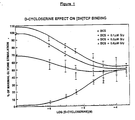
- D-cycloserine potentiated the glycine stimulation of [3H]TCP binding at glycine concentrations below 0.1 ⁇ M, while at higher glycine concentrations (0.1-15 ⁇ M) D-cycloserine produced a rightward shift in the dose-response curve.
- D-cycloserine The functional analysis of D-cycloserine described herein is the first report of a compound interacting at this glycine modulatory site exhibiting partial agonist characteristics. These results, along with the favorable brain bioavailability of the compound, are evidence for involvement of the NMDA/PCP receptor in psychosis treatment, and thus make D-cycloserine a valuable tool to probe NMDA receptor function.
- the acidic amino acids aspartic and glutamic acid, have been found to possess both excitatory and excitotoxic properties [J W. Olney, Science , 164 , 719-721 (1969); J.W. Olney et al., Exp. Brain Res. , 14 , 61-76 (1971)]. Indeed, neurons which have excitatory amino acid receptors on their dendritic or somal surfaces undergo acute excitotoxic degeneration when these receptors are excessively activated by glutamic acid.
- Glycine agonists which have a potentiating effect on the NMDA transmission would be expected to increase the glutamic acid excitotoxicity.
- a Glycine B partial agonist achieves beneficial excitatory effects without the detrimental excitotoxic side effect.
- Most glycine ligands are very polar molecules and hardly cross the blood brain barrier. Because of the difficulty in crossing the blood brain barrier, such ligands are not bioavailable at concentrations effective to be therapeutically beneficial. It is known that D-cycloserine easily passes the blood brain barrier [Goodman and Gilman, The Pharmacologic Basis of Therapeutics, Ch. , 53 , 1210-1211 (1980)].
- D-cycloserine was found to have such a good affinity for the strychnine-insensitive glycine receptor as shown by the binding data above.
- Glycine agonists are believed to facilitate NMDA transmission and, therefore, to have a potential for reversing the symptoms of schizophrenia and, in particular, to reverse the symptoms induced by acute or chronic PCP intoxication.
- Administration of compounds within Formulas I and II to humans can be by any technique capable of introducing the compounds into the bloodstream of a human patient, including oral administration, and by intravenous, intramuscular and subcutaneous injections.
- Compounds indicated for therapy will preferably be administered in a daily dose generally in a range, depending upon patient condition and symptomology, which is an amount therapeutically effective at the lowest possible dose up to about 1 mg per kilogram of body weight per day.
- a more preferred dosage will be a range from about 0.01 mg to about 1 mg per kilogram of body weight. Most preferred is a dosage in a range from about 0.05 to about 0.5 mg per kilogram of body weight per day.
- a suitable dose can be administered in multiple sub-doses per day. These sub-doses may be administered in unit dosage forms. Typically, a dose or sub-dose may contain from about 1 mg to about 100 mg of active compound per unit dosage form. A more preferred dosage will contain from about 2 mg to about 50 mg of active compound per unit dosage form. Most preferred is a dosage form containing from about 3 mg to about 25 mg of active compound per unit dose.
- the active compound is usually administered in a pharmaceutically-acceptable formulation.
- Such formulations may comprise the active compound together with one or more pharmaceutically-acceptable carriers or diluents. Other therapeutic agents may also be present in the formulation.
- a pharmaceutically-acceptable carrier or diluent provides an appropriate vehicle for delivery of the active compound without introducing undesirable side effects. Delivery of the active compound in such formulations may be by various routes including oral, nasal, topical, buccal and sublingual, or by parenteral administration such as subcutaneous, intramuscular, intravenous and intradermal routes.
- Formulations for oral administration may be in the form of capsules containing the active compound dispersed in a binder such as gelatin or hydroxypropylmethyl cellulose, together with one or more of a lubricant, preservative, surface-active agent or dispersing agent.
- a binder such as gelatin or hydroxypropylmethyl cellulose
- Such capsules or tablets may contain a controlled-release formulation as may be provided by a dispersion of active compound in hydroxypropylmethyl cellulose.
- Formulations for parenteral administration may be in the form of aqueous or non-aqueous isotonic sterile injection solutions or suspensions. These solutions and suspensions may be prepared from sterile powders or granules having one or more of the carriers or diluents mentioned for use in the formulations for oral administration.
Landscapes
- Health & Medical Sciences (AREA)
- Chemical & Material Sciences (AREA)
- Medicinal Chemistry (AREA)
- Pharmacology & Pharmacy (AREA)
- Life Sciences & Earth Sciences (AREA)
- Animal Behavior & Ethology (AREA)
- General Health & Medical Sciences (AREA)
- Public Health (AREA)
- Veterinary Medicine (AREA)
- Epidemiology (AREA)
- Engineering & Computer Science (AREA)
- Bioinformatics & Cheminformatics (AREA)
- Psychiatry (AREA)
- Biomedical Technology (AREA)
- Neurology (AREA)
- Neurosurgery (AREA)
- Chemical Kinetics & Catalysis (AREA)
- General Chemical & Material Sciences (AREA)
- Nuclear Medicine, Radiotherapy & Molecular Imaging (AREA)
- Organic Chemistry (AREA)
- Pharmaceuticals Containing Other Organic And Inorganic Compounds (AREA)
- Medicines That Contain Protein Lipid Enzymes And Other Medicines (AREA)
- Heterocyclic Carbon Compounds Containing A Hetero Ring Having Nitrogen And Oxygen As The Only Ring Hetero Atoms (AREA)
- Acyclic And Carbocyclic Compounds In Medicinal Compositions (AREA)
Applications Claiming Priority (2)
| Application Number | Priority Date | Filing Date | Title |
|---|---|---|---|
| US07/294,851 US5187171A (en) | 1989-01-09 | 1989-01-09 | Use of a glycine b partial agonist as an antipsychotic |
| US294851 | 1999-04-20 |
Publications (2)
| Publication Number | Publication Date |
|---|---|
| EP0378134A2 true EP0378134A2 (fr) | 1990-07-18 |
| EP0378134A3 EP0378134A3 (fr) | 1991-07-17 |
Family
ID=23135223
Family Applications (1)
| Application Number | Title | Priority Date | Filing Date |
|---|---|---|---|
| EP19900100242 Ceased EP0378134A3 (fr) | 1989-01-09 | 1990-01-05 | Utilisation d'un agoniste de la glycine-B comme agent antipsychotique |
Country Status (5)
| Country | Link |
|---|---|
| US (1) | US5187171A (fr) |
| EP (1) | EP0378134A3 (fr) |
| JP (1) | JPH02225412A (fr) |
| CA (1) | CA2007332C (fr) |
| PT (1) | PT92799B (fr) |
Cited By (5)
| Publication number | Priority date | Publication date | Assignee | Title |
|---|---|---|---|---|
| US5153193A (en) * | 1991-10-01 | 1992-10-06 | Hoechst-Roussel Pharmaceuticals Incorporated | Carbamate derivatives of 4-amino-3-isoxazolidinones, 3-amino-1-hydroxypyrrolidin-2-ones and 1-amino-1-cyclopropanecarboxylic acid analogs |
| EP1084704A4 (fr) * | 1998-06-10 | 2003-07-23 | Meiji Seika Kaisha | Traitements de l'ataxie spinocerebelleuse et compositions utiles pour traiter l'ataxie spinocerebelleuse |
| US7750030B2 (en) | 2001-03-29 | 2010-07-06 | Michael Davis | Acute pharmacologic augmentation of psychotherapy with enhancers of learning or conditioning |
| EP2338482A3 (fr) * | 1998-04-14 | 2011-12-21 | The General Hospital Corporation | Procédés de traitement des troubles neuropsychiatriques |
| WO2019012109A1 (fr) | 2017-07-13 | 2019-01-17 | Paris Sciences Et Lettres - Quartier Latin | Probénécide pour utilisation dans le traitement de maladies, troubles ou affections épileptiques |
Families Citing this family (9)
| Publication number | Priority date | Publication date | Assignee | Title |
|---|---|---|---|---|
| WO1994000124A1 (fr) * | 1992-06-22 | 1994-01-06 | Eckard Weber | Antagonistes des recepteurs de glycine et leur utilisation |
| AU4019395A (en) | 1994-11-23 | 1996-06-17 | G.D. Searle & Co. | Use of amino-isoxazolidone compounds for improvement of implicit memory |
| JP2000501707A (ja) * | 1995-12-07 | 2000-02-15 | ジャビット,ダニエル・シー | グリシン捕捉性アンタゴニストを用いる拒絶性および認知性精神分裂病症候群の処置 |
| US6361957B1 (en) | 1999-08-03 | 2002-03-26 | Glytech, Inc. | Assay for D-serine transport antagonist and use for treating psychosis |
| US6355681B2 (en) * | 1995-12-07 | 2002-03-12 | Glytech, Inc. | Glycine substitutes and precursors for treating a psychosis |
| US6551993B1 (en) * | 1999-08-16 | 2003-04-22 | Thomas Jefferson University | Partial agonists at the glycine modulatory site of the NMDA receptor for treating cognitive dysfunction |
| US7160913B2 (en) * | 2002-09-13 | 2007-01-09 | Thomas Jefferson University | Methods and kit for treating Parkinson's disease |
| ES2338346T3 (es) * | 2004-12-16 | 2010-05-06 | Janssen Pharmaceutica Nv | Combinacion de un inhibidor del transportador de glicina (glyt1) y un antipsicotico para el tratamiento de los sintomas de esquizofrenia asi como preparacion y uso de la misma. |
| TWI544923B (zh) * | 2009-12-29 | 2016-08-11 | 何應瑞 | 用於治療神經退化性疾病之醫藥組合物 |
Family Cites Families (2)
| Publication number | Priority date | Publication date | Assignee | Title |
|---|---|---|---|---|
| JPS6183170A (ja) * | 1984-09-28 | 1986-04-26 | Nippon Chemiphar Co Ltd | 新規な1,3−オキサゾリジン−2−オン誘導体およびその製造法 |
| US4904681A (en) * | 1987-12-01 | 1990-02-27 | G. D. Searle & Co. | D-cycloserine and its prodrugs as cognitive enhancers |
-
1989
- 1989-01-09 US US07/294,851 patent/US5187171A/en not_active Expired - Lifetime
-
1990
- 1990-01-05 EP EP19900100242 patent/EP0378134A3/fr not_active Ceased
- 1990-01-08 CA CA002007332A patent/CA2007332C/fr not_active Expired - Fee Related
- 1990-01-08 PT PT92799A patent/PT92799B/pt not_active IP Right Cessation
- 1990-01-09 JP JP2001168A patent/JPH02225412A/ja active Pending
Cited By (7)
| Publication number | Priority date | Publication date | Assignee | Title |
|---|---|---|---|---|
| US5153193A (en) * | 1991-10-01 | 1992-10-06 | Hoechst-Roussel Pharmaceuticals Incorporated | Carbamate derivatives of 4-amino-3-isoxazolidinones, 3-amino-1-hydroxypyrrolidin-2-ones and 1-amino-1-cyclopropanecarboxylic acid analogs |
| EP2338482A3 (fr) * | 1998-04-14 | 2011-12-21 | The General Hospital Corporation | Procédés de traitement des troubles neuropsychiatriques |
| EP1084704A4 (fr) * | 1998-06-10 | 2003-07-23 | Meiji Seika Kaisha | Traitements de l'ataxie spinocerebelleuse et compositions utiles pour traiter l'ataxie spinocerebelleuse |
| US7067545B1 (en) | 1998-06-10 | 2006-06-27 | Meiji Seika Kaisha Ltd. | Remedies for spinocerebellar ataxia and compositions for treating spinocerebellar ataxia |
| US7750030B2 (en) | 2001-03-29 | 2010-07-06 | Michael Davis | Acute pharmacologic augmentation of psychotherapy with enhancers of learning or conditioning |
| WO2019012109A1 (fr) | 2017-07-13 | 2019-01-17 | Paris Sciences Et Lettres - Quartier Latin | Probénécide pour utilisation dans le traitement de maladies, troubles ou affections épileptiques |
| US12318358B2 (en) | 2017-07-13 | 2025-06-03 | Paris Sciences Et Lettres | Probenecid for use in treating epileptic diseases, disorders or conditions |
Also Published As
| Publication number | Publication date |
|---|---|
| PT92799B (pt) | 1997-12-31 |
| US5187171A (en) | 1993-02-16 |
| EP0378134A3 (fr) | 1991-07-17 |
| PT92799A (pt) | 1990-07-31 |
| CA2007332A1 (fr) | 1990-07-09 |
| JPH02225412A (ja) | 1990-09-07 |
| CA2007332C (fr) | 2002-09-17 |
Similar Documents
| Publication | Publication Date | Title |
|---|---|---|
| EP0319824B1 (fr) | D-cyclosérine et ses prodrugs pour modifier les capacités cognitives | |
| EP0387867B1 (fr) | Composition contenant du d-cyclosérine et de la d-alanine pour stimuler la mémoire et l'apprentissage ou pour le traitement d'un desordre cognitif ou psychotique | |
| US5187171A (en) | Use of a glycine b partial agonist as an antipsychotic | |
| RU2566821C2 (ru) | Модулятор nmda-рецептора со стабилизированной вторичной структурой и его применение | |
| JP5925121B2 (ja) | 副腎皮質ステロイド合成を阻害しないエトミデート類似体 | |
| US7592350B2 (en) | Polycyclic compounds as potent alpha2-adrenoceptor antagonists | |
| US7723324B2 (en) | Imidazo[1,2-A]pyridine anxiolytics | |
| US5260324A (en) | Composition containing D-cycloserine and D-alanine for memory and learning enhancement or treatment of a cognitive or psychotic disorder | |
| EP2121785A1 (fr) | Sydnonimines - inhibiteurs de réabsorption de dopamine spécifique et leur utilisation dans le traitement de troubles liés à la dopamine | |
| US6656962B2 (en) | Use of amino-isoxazolidone compounds for improvement of lexical priming | |
| US5468763A (en) | Use of a glycine B partial agonist for memory and learning enhancement or treatment of a cognitive disorder | |
| US5087633A (en) | Use of a glycine B partial agonist for memory and learning enhancement or treatment of a cognitive disorder | |
| US20030073730A1 (en) | Use of amino-isoxazolidone compounds for treatment of memory impairment following traumatic brain injury | |
| US10759822B2 (en) | Brain-targeting prodrug for AMPA receptor synergist, and pharmaceutical applications thereof | |
| WO2004063201A1 (fr) | Agent therapeutique pour la scizophrenie | |
| US20100227844A1 (en) | Cannabinoid-1 receptor modulators useful for the treatment of alzheimer's disease |
Legal Events
| Date | Code | Title | Description |
|---|---|---|---|
| PUAI | Public reference made under article 153(3) epc to a published international application that has entered the european phase |
Free format text: ORIGINAL CODE: 0009012 |
|
| AK | Designated contracting states |
Kind code of ref document: A2 Designated state(s): AT BE CH DE DK ES FR GB GR IT LI LU NL SE |
|
| PUAL | Search report despatched |
Free format text: ORIGINAL CODE: 0009013 |
|
| AK | Designated contracting states |
Kind code of ref document: A3 Designated state(s): AT BE CH DE DK ES FR GB GR IT LI LU NL SE |
|
| 17P | Request for examination filed |
Effective date: 19911107 |
|
| 17Q | First examination report despatched |
Effective date: 19930628 |
|
| STAA | Information on the status of an ep patent application or granted ep patent |
Free format text: STATUS: THE APPLICATION HAS BEEN REFUSED |
|
| 18R | Application refused |
Effective date: 19970705 |