EP0378508A2 - Antidots zur Verbesserung der Kulturpflanzenvertäglichkeit agrochemischer Wirkstoffe - Google Patents
Antidots zur Verbesserung der Kulturpflanzenvertäglichkeit agrochemischer Wirkstoffe Download PDFInfo
- Publication number
- EP0378508A2 EP0378508A2 EP90810001A EP90810001A EP0378508A2 EP 0378508 A2 EP0378508 A2 EP 0378508A2 EP 90810001 A EP90810001 A EP 90810001A EP 90810001 A EP90810001 A EP 90810001A EP 0378508 A2 EP0378508 A2 EP 0378508A2
- Authority
- EP
- European Patent Office
- Prior art keywords
- formula
- alkyl
- hydrogen
- cyclopropyl
- independently
- Prior art date
- Legal status (The legal status is an assumption and is not a legal conclusion. Google has not performed a legal analysis and makes no representation as to the accuracy of the status listed.)
- Granted
Links
- 239000000729 antidote Substances 0.000 title claims abstract description 51
- 229940075522 antidotes Drugs 0.000 title claims abstract description 15
- 239000003795 chemical substances by application Substances 0.000 title claims description 12
- 239000003905 agrochemical Substances 0.000 title description 4
- 239000004009 herbicide Substances 0.000 claims abstract description 117
- 230000002363 herbicidal effect Effects 0.000 claims abstract description 106
- 150000001875 compounds Chemical class 0.000 claims abstract description 83
- 239000000203 mixture Substances 0.000 claims abstract description 71
- 239000001257 hydrogen Substances 0.000 claims abstract description 54
- 229910052739 hydrogen Inorganic materials 0.000 claims abstract description 54
- 241000196324 Embryophyta Species 0.000 claims abstract description 48
- 125000001559 cyclopropyl group Chemical group [H]C1([H])C([H])([H])C1([H])* 0.000 claims abstract description 48
- 125000002023 trifluoromethyl group Chemical group FC(F)(F)* 0.000 claims abstract description 24
- 238000000034 method Methods 0.000 claims abstract description 22
- 125000004169 (C1-C6) alkyl group Chemical group 0.000 claims abstract description 16
- 238000002360 preparation method Methods 0.000 claims abstract description 14
- 125000005913 (C3-C6) cycloalkyl group Chemical group 0.000 claims abstract description 13
- -1 methoxy, ethoxy, difluoromethoxy, methyl Chemical group 0.000 claims description 38
- 150000002431 hydrogen Chemical class 0.000 claims description 35
- 244000038559 crop plants Species 0.000 claims description 26
- 125000002496 methyl group Chemical group [H]C([H])([H])* 0.000 claims description 26
- 125000006273 (C1-C3) alkyl group Chemical group 0.000 claims description 25
- UFHFLCQGNIYNRP-UHFFFAOYSA-N Hydrogen Chemical compound [H][H] UFHFLCQGNIYNRP-UHFFFAOYSA-N 0.000 claims description 19
- 229910052736 halogen Inorganic materials 0.000 claims description 15
- 150000002367 halogens Chemical class 0.000 claims description 15
- 239000002253 acid Substances 0.000 claims description 13
- 239000000969 carrier Substances 0.000 claims description 13
- 230000000254 damaging effect Effects 0.000 claims description 13
- ZAMOUSCENKQFHK-UHFFFAOYSA-N Chlorine atom Chemical compound [Cl] ZAMOUSCENKQFHK-UHFFFAOYSA-N 0.000 claims description 10
- 125000001797 benzyl group Chemical group [H]C1=C([H])C([H])=C(C([H])=C1[H])C([H])([H])* 0.000 claims description 10
- 239000000460 chlorine Substances 0.000 claims description 10
- 229910052801 chlorine Inorganic materials 0.000 claims description 10
- YROXIXLRRCOBKF-UHFFFAOYSA-N sulfonylurea Chemical class OC(=N)N=S(=O)=O YROXIXLRRCOBKF-UHFFFAOYSA-N 0.000 claims description 10
- VONWPEXRCLHKRJ-UHFFFAOYSA-N 2-chloro-n-phenylacetamide Chemical class ClCC(=O)NC1=CC=CC=C1 VONWPEXRCLHKRJ-UHFFFAOYSA-N 0.000 claims description 9
- KBJLFHPCGYCGCC-LBPRGKRZSA-N (2s)-2-(n-benzoylanilino)propanoic acid Chemical class C=1C=CC=CC=1N([C@@H](C)C(O)=O)C(=O)C1=CC=CC=C1 KBJLFHPCGYCGCC-LBPRGKRZSA-N 0.000 claims description 7
- 125000004178 (C1-C4) alkyl group Chemical group 0.000 claims description 5
- 238000005520 cutting process Methods 0.000 claims description 5
- 125000004453 alkoxycarbonyl group Chemical group 0.000 claims description 4
- 125000001997 phenyl group Chemical group [H]C1=C([H])C([H])=C(*)C([H])=C1[H] 0.000 claims description 4
- 125000006274 (C1-C3)alkoxy group Chemical group 0.000 claims description 3
- 125000004765 (C1-C4) haloalkyl group Chemical group 0.000 claims description 3
- 125000000229 (C1-C4)alkoxy group Chemical group 0.000 claims description 3
- IAYPIBMASNFSPL-UHFFFAOYSA-N Ethylene oxide Chemical group C1CO1 IAYPIBMASNFSPL-UHFFFAOYSA-N 0.000 claims description 3
- 125000003178 carboxy group Chemical group [H]OC(*)=O 0.000 claims description 3
- 125000001495 ethyl group Chemical group [H]C([H])([H])C([H])([H])* 0.000 claims description 3
- 229910052757 nitrogen Inorganic materials 0.000 claims description 3
- RBIIKVXVYVANCQ-CUWPLCDZSA-N (2s,4s,5s)-5-amino-n-(3-amino-2,2-dimethyl-3-oxopropyl)-6-[4-(2-chlorophenyl)-2,2-dimethyl-5-oxopiperazin-1-yl]-4-hydroxy-2-propan-2-ylhexanamide Chemical compound C1C(C)(C)N(C[C@H](N)[C@@H](O)C[C@@H](C(C)C)C(=O)NCC(C)(C)C(N)=O)CC(=O)N1C1=CC=CC=C1Cl RBIIKVXVYVANCQ-CUWPLCDZSA-N 0.000 claims description 2
- 125000004767 (C1-C4) haloalkoxy group Chemical group 0.000 claims description 2
- 125000000171 (C1-C6) haloalkyl group Chemical group 0.000 claims description 2
- 125000004209 (C1-C8) alkyl group Chemical group 0.000 claims description 2
- 125000006763 (C3-C9) cycloalkyl group Chemical group 0.000 claims description 2
- 125000001305 1,2,4-triazol-3-yl group Chemical group [H]N1N=C([*])N=C1[H] 0.000 claims description 2
- 125000004509 1,3,4-oxadiazol-2-yl group Chemical group O1C(=NN=C1)* 0.000 claims description 2
- 125000004521 1,3,4-thiadiazol-2-yl group Chemical group S1C(=NN=C1)* 0.000 claims description 2
- RYGMFSIKBFXOCR-UHFFFAOYSA-N Copper Chemical compound [Cu] RYGMFSIKBFXOCR-UHFFFAOYSA-N 0.000 claims description 2
- MYMOFIZGZYHOMD-UHFFFAOYSA-N Dioxygen Chemical compound O=O MYMOFIZGZYHOMD-UHFFFAOYSA-N 0.000 claims description 2
- PXGOKWXKJXAPGV-UHFFFAOYSA-N Fluorine Chemical compound FF PXGOKWXKJXAPGV-UHFFFAOYSA-N 0.000 claims description 2
- 125000002777 acetyl group Chemical group [H]C([H])([H])C(*)=O 0.000 claims description 2
- 230000002378 acidificating effect Effects 0.000 claims description 2
- 229910052783 alkali metal Inorganic materials 0.000 claims description 2
- 229910000272 alkali metal oxide Inorganic materials 0.000 claims description 2
- 150000001340 alkali metals Chemical class 0.000 claims description 2
- 229910052784 alkaline earth metal Inorganic materials 0.000 claims description 2
- 150000001342 alkaline earth metals Chemical class 0.000 claims description 2
- 125000002947 alkylene group Chemical group 0.000 claims description 2
- 125000003236 benzoyl group Chemical group [H]C1=C([H])C([H])=C(C([H])=C1[H])C(*)=O 0.000 claims description 2
- 125000003917 carbamoyl group Chemical group [H]N([H])C(*)=O 0.000 claims description 2
- 229910052802 copper Inorganic materials 0.000 claims description 2
- 239000010949 copper Substances 0.000 claims description 2
- 125000000532 dioxanyl group Chemical group 0.000 claims description 2
- 125000005879 dioxolanyl group Chemical group 0.000 claims description 2
- 229910052731 fluorine Inorganic materials 0.000 claims description 2
- 239000011737 fluorine Substances 0.000 claims description 2
- 125000002541 furyl group Chemical group 0.000 claims description 2
- 230000009931 harmful effect Effects 0.000 claims description 2
- 125000002887 hydroxy group Chemical group [H]O* 0.000 claims description 2
- XEEYBQQBJWHFJM-UHFFFAOYSA-N iron Substances [Fe] XEEYBQQBJWHFJM-UHFFFAOYSA-N 0.000 claims description 2
- 229910052742 iron Inorganic materials 0.000 claims description 2
- NQWFIZSGGAGHEP-UHFFFAOYSA-N methyl 3-[(5,7-dimethyl-[1,2,4]triazolo[1,5-a]pyrimidin-2-yl)sulfonylamino]thiophene-2-carboxylate Chemical compound S1C=CC(NS(=O)(=O)C2=NN3C(C)=CC(C)=NC3=N2)=C1C(=O)OC NQWFIZSGGAGHEP-UHFFFAOYSA-N 0.000 claims description 2
- 125000000250 methylamino group Chemical group [H]N(*)C([H])([H])[H] 0.000 claims description 2
- 125000004433 nitrogen atom Chemical group N* 0.000 claims description 2
- 229910052760 oxygen Inorganic materials 0.000 claims description 2
- 239000001301 oxygen Substances 0.000 claims description 2
- 125000002924 primary amino group Chemical group [H]N([H])* 0.000 claims description 2
- 125000003226 pyrazolyl group Chemical group 0.000 claims description 2
- 125000000168 pyrrolyl group Chemical group 0.000 claims description 2
- 229910052717 sulfur Inorganic materials 0.000 claims description 2
- 125000004434 sulfur atom Chemical group 0.000 claims description 2
- 125000003718 tetrahydrofuranyl group Chemical group 0.000 claims description 2
- 125000001544 thienyl group Chemical group 0.000 claims description 2
- 239000000543 intermediate Substances 0.000 abstract description 10
- 230000000885 phytotoxic effect Effects 0.000 abstract description 2
- 125000004435 hydrogen atom Chemical class [H]* 0.000 abstract 2
- 239000004480 active ingredient Substances 0.000 description 42
- 231100000674 Phytotoxicity Toxicity 0.000 description 32
- XLYOFNOQVPJJNP-UHFFFAOYSA-N water Substances O XLYOFNOQVPJJNP-UHFFFAOYSA-N 0.000 description 31
- 230000000694 effects Effects 0.000 description 28
- 230000001681 protective effect Effects 0.000 description 28
- 240000007594 Oryza sativa Species 0.000 description 23
- 235000007164 Oryza sativa Nutrition 0.000 description 22
- 235000009566 rice Nutrition 0.000 description 22
- LYCAIKOWRPUZTN-UHFFFAOYSA-N Ethylene glycol Chemical compound OCCO LYCAIKOWRPUZTN-UHFFFAOYSA-N 0.000 description 18
- RTZKZFJDLAIYFH-UHFFFAOYSA-N Diethyl ether Chemical compound CCOCC RTZKZFJDLAIYFH-UHFFFAOYSA-N 0.000 description 14
- 239000002689 soil Substances 0.000 description 14
- YMWUJEATGCHHMB-UHFFFAOYSA-N Dichloromethane Chemical compound ClCCl YMWUJEATGCHHMB-UHFFFAOYSA-N 0.000 description 12
- XEKOWRVHYACXOJ-UHFFFAOYSA-N Ethyl acetate Chemical compound CCOC(C)=O XEKOWRVHYACXOJ-UHFFFAOYSA-N 0.000 description 12
- 239000008187 granular material Substances 0.000 description 12
- 239000011734 sodium Substances 0.000 description 12
- 239000005995 Aluminium silicate Substances 0.000 description 11
- 239000002202 Polyethylene glycol Substances 0.000 description 11
- 235000012211 aluminium silicate Nutrition 0.000 description 11
- 238000009472 formulation Methods 0.000 description 11
- 229920001223 polyethylene glycol Polymers 0.000 description 11
- 239000000839 emulsion Substances 0.000 description 10
- 239000004094 surface-active agent Substances 0.000 description 10
- 239000000654 additive Substances 0.000 description 9
- NLYAJNPCOHFWQQ-UHFFFAOYSA-N kaolin Chemical compound O.O.O=[Al]O[Si](=O)O[Si](=O)O[Al]=O NLYAJNPCOHFWQQ-UHFFFAOYSA-N 0.000 description 9
- IGFHQQFPSIBGKE-UHFFFAOYSA-N 4-nonylphenol Chemical compound CCCCCCCCCC1=CC=C(O)C=C1 IGFHQQFPSIBGKE-UHFFFAOYSA-N 0.000 description 8
- VEXZGXHMUGYJMC-UHFFFAOYSA-N Hydrochloric acid Chemical compound Cl VEXZGXHMUGYJMC-UHFFFAOYSA-N 0.000 description 8
- JUJWROOIHBZHMG-UHFFFAOYSA-N Pyridine Chemical compound C1=CC=NC=C1 JUJWROOIHBZHMG-UHFFFAOYSA-N 0.000 description 8
- 229940100389 Sulfonylurea Drugs 0.000 description 8
- 238000005266 casting Methods 0.000 description 8
- QTBSBXVTEAMEQO-UHFFFAOYSA-N Acetic acid Chemical compound CC(O)=O QTBSBXVTEAMEQO-UHFFFAOYSA-N 0.000 description 7
- 238000006243 chemical reaction Methods 0.000 description 7
- 239000012141 concentrate Substances 0.000 description 7
- 235000008504 concentrate Nutrition 0.000 description 7
- 229910052708 sodium Inorganic materials 0.000 description 7
- 239000007787 solid Substances 0.000 description 7
- 229920001732 Lignosulfonate Polymers 0.000 description 6
- 125000004432 carbon atom Chemical group C* 0.000 description 6
- 239000011248 coating agent Substances 0.000 description 6
- 238000000576 coating method Methods 0.000 description 6
- JHIVVAPYMSGYDF-UHFFFAOYSA-N cyclohexanone Chemical compound O=C1CCCCC1 JHIVVAPYMSGYDF-UHFFFAOYSA-N 0.000 description 6
- MTHSVFCYNBDYFN-UHFFFAOYSA-N diethylene glycol Chemical compound OCCOCCO MTHSVFCYNBDYFN-UHFFFAOYSA-N 0.000 description 6
- VLKZOEOYAKHREP-UHFFFAOYSA-N n-Hexane Chemical compound CCCCCC VLKZOEOYAKHREP-UHFFFAOYSA-N 0.000 description 6
- 239000000843 powder Substances 0.000 description 6
- 238000009331 sowing Methods 0.000 description 6
- 239000000126 substance Substances 0.000 description 6
- 239000004563 wettable powder Substances 0.000 description 6
- WSFSSNUMVMOOMR-UHFFFAOYSA-N Formaldehyde Chemical compound O=C WSFSSNUMVMOOMR-UHFFFAOYSA-N 0.000 description 5
- VYPSYNLAJGMNEJ-UHFFFAOYSA-N Silicium dioxide Chemical compound O=[Si]=O VYPSYNLAJGMNEJ-UHFFFAOYSA-N 0.000 description 5
- 241000209140 Triticum Species 0.000 description 5
- 235000021307 Triticum Nutrition 0.000 description 5
- 235000013339 cereals Nutrition 0.000 description 5
- 235000014113 dietary fatty acids Nutrition 0.000 description 5
- 238000010790 dilution Methods 0.000 description 5
- 239000012895 dilution Substances 0.000 description 5
- 239000000194 fatty acid Substances 0.000 description 5
- 229930195729 fatty acid Natural products 0.000 description 5
- ZEZRLDPKNKIMTQ-UHFFFAOYSA-N methyl 3-[(5-cyclopropyl-7-methyl-[1,2,4]triazolo[1,5-a]pyrimidin-2-yl)sulfonylamino]thiophene-2-carboxylate Chemical compound S1C=CC(NS(=O)(=O)C2=NN3C(C)=CC(=NC3=N2)C2CC2)=C1C(=O)OC ZEZRLDPKNKIMTQ-UHFFFAOYSA-N 0.000 description 5
- 239000011541 reaction mixture Substances 0.000 description 5
- 150000003839 salts Chemical class 0.000 description 5
- 239000004546 suspension concentrate Substances 0.000 description 5
- 229920002134 Carboxymethyl cellulose Polymers 0.000 description 4
- 241000192043 Echinochloa Species 0.000 description 4
- 240000005979 Hordeum vulgare Species 0.000 description 4
- 235000007340 Hordeum vulgare Nutrition 0.000 description 4
- 125000000217 alkyl group Chemical group 0.000 description 4
- 239000001768 carboxy methyl cellulose Substances 0.000 description 4
- 235000010948 carboxy methyl cellulose Nutrition 0.000 description 4
- 239000008112 carboxymethyl-cellulose Substances 0.000 description 4
- 239000012043 crude product Substances 0.000 description 4
- XBDQKXXYIPTUBI-UHFFFAOYSA-N dimethylselenoniopropionate Natural products CCC(O)=O XBDQKXXYIPTUBI-UHFFFAOYSA-N 0.000 description 4
- 150000004665 fatty acids Chemical class 0.000 description 4
- 229910052740 iodine Inorganic materials 0.000 description 4
- 239000007788 liquid Substances 0.000 description 4
- SYCHERUTAJRFOY-UHFFFAOYSA-N methyl 3-[(7-cyclopropyl-5-methyl-[1,2,4]triazolo[1,5-a]pyrimidin-2-yl)sulfonylamino]thiophene-2-carboxylate Chemical compound S1C=CC(NS(=O)(=O)C2=NN3C(C4CC4)=CC(C)=NC3=N2)=C1C(=O)OC SYCHERUTAJRFOY-UHFFFAOYSA-N 0.000 description 4
- 239000003921 oil Substances 0.000 description 4
- 235000019198 oils Nutrition 0.000 description 4
- 239000000575 pesticide Substances 0.000 description 4
- 229920000151 polyglycol Polymers 0.000 description 4
- 239000010695 polyglycol Substances 0.000 description 4
- UMJSCPRVCHMLSP-UHFFFAOYSA-N pyridine Natural products COC1=CC=CN=C1 UMJSCPRVCHMLSP-UHFFFAOYSA-N 0.000 description 4
- 239000000243 solution Substances 0.000 description 4
- 239000000725 suspension Substances 0.000 description 4
- JGBAJYHIOADVQG-UHFFFAOYSA-N 2-chlorosulfonyloxy-5-cyclopropyl-7-methyl-[1,2,4]triazolo[1,5-a]pyrimidine Chemical compound N=1C2=NC(OS(Cl)(=O)=O)=NN2C(C)=CC=1C1CC1 JGBAJYHIOADVQG-UHFFFAOYSA-N 0.000 description 3
- JYDYWHAXNQATEZ-UHFFFAOYSA-N 2-chlorosulfonyloxy-7-cyclopropyl-5-methyl-[1,2,4]triazolo[1,5-a]pyrimidine Chemical compound N12N=C(OS(Cl)(=O)=O)N=C2N=C(C)C=C1C1CC1 JYDYWHAXNQATEZ-UHFFFAOYSA-N 0.000 description 3
- CSCPPACGZOOCGX-UHFFFAOYSA-N Acetone Chemical compound CC(C)=O CSCPPACGZOOCGX-UHFFFAOYSA-N 0.000 description 3
- WEVYAHXRMPXWCK-UHFFFAOYSA-N Acetonitrile Chemical compound CC#N WEVYAHXRMPXWCK-UHFFFAOYSA-N 0.000 description 3
- 0 CCCC(C(C(CC)CCC*)C1CC1)C1CC(C)CC1 Chemical compound CCCC(C(C(CC)CCC*)C1CC1)C1CC(C)CC1 0.000 description 3
- 235000017896 Digitaria Nutrition 0.000 description 3
- 241001303487 Digitaria <clam> Species 0.000 description 3
- LFQSCWFLJHTTHZ-UHFFFAOYSA-N Ethanol Chemical compound CCO LFQSCWFLJHTTHZ-UHFFFAOYSA-N 0.000 description 3
- ZMXDDKWLCZADIW-UHFFFAOYSA-N N,N-Dimethylformamide Chemical compound CN(C)C=O ZMXDDKWLCZADIW-UHFFFAOYSA-N 0.000 description 3
- SJRJJKPEHAURKC-UHFFFAOYSA-N N-Methylmorpholine Chemical compound CN1CCOCC1 SJRJJKPEHAURKC-UHFFFAOYSA-N 0.000 description 3
- CTQNGGLPUBDAKN-UHFFFAOYSA-N O-Xylene Chemical compound CC1=CC=CC=C1C CTQNGGLPUBDAKN-UHFFFAOYSA-N 0.000 description 3
- PMZURENOXWZQFD-UHFFFAOYSA-L Sodium Sulfate Chemical compound [Na+].[Na+].[O-]S([O-])(=O)=O PMZURENOXWZQFD-UHFFFAOYSA-L 0.000 description 3
- ZMANZCXQSJIPKH-UHFFFAOYSA-N Triethylamine Chemical compound CCN(CC)CC ZMANZCXQSJIPKH-UHFFFAOYSA-N 0.000 description 3
- XSQUKJJJFZCRTK-UHFFFAOYSA-N Urea Chemical compound NC(N)=O XSQUKJJJFZCRTK-UHFFFAOYSA-N 0.000 description 3
- 229960000583 acetic acid Drugs 0.000 description 3
- XCSGPAVHZFQHGE-UHFFFAOYSA-N alachlor Chemical compound CCC1=CC=CC(CC)=C1N(COC)C(=O)CCl XCSGPAVHZFQHGE-UHFFFAOYSA-N 0.000 description 3
- 239000004359 castor oil Substances 0.000 description 3
- 235000019438 castor oil Nutrition 0.000 description 3
- 235000019441 ethanol Nutrition 0.000 description 3
- 150000002170 ethers Chemical class 0.000 description 3
- ZEMPKEQAKRGZGQ-XOQCFJPHSA-N glycerol triricinoleate Natural products CCCCCC[C@@H](O)CC=CCCCCCCCC(=O)OC[C@@H](COC(=O)CCCCCCCC=CC[C@@H](O)CCCCCC)OC(=O)CCCCCCCC=CC[C@H](O)CCCCCC ZEMPKEQAKRGZGQ-XOQCFJPHSA-N 0.000 description 3
- 238000000227 grinding Methods 0.000 description 3
- WGCNASOHLSPBMP-UHFFFAOYSA-N hydroxyacetaldehyde Natural products OCC=O WGCNASOHLSPBMP-UHFFFAOYSA-N 0.000 description 3
- 238000002156 mixing Methods 0.000 description 3
- 239000002736 nonionic surfactant Substances 0.000 description 3
- 239000003208 petroleum Substances 0.000 description 3
- 125000000951 phenoxy group Chemical group [H]C1=C([H])C([H])=C(O*)C([H])=C1[H] 0.000 description 3
- 229910052938 sodium sulfate Inorganic materials 0.000 description 3
- 235000011152 sodium sulphate Nutrition 0.000 description 3
- 239000007921 spray Substances 0.000 description 3
- 239000000454 talc Substances 0.000 description 3
- 229910052623 talc Inorganic materials 0.000 description 3
- 239000008096 xylene Substances 0.000 description 3
- GVEAVJMQCUBYOH-UHFFFAOYSA-N 2-benzylsulfanyl-5-cyclopropyl-7-methyl-[1,2,4]triazolo[1,5-a]pyrimidine Chemical compound N=1N2C(C)=CC(C3CC3)=NC2=NC=1SCC1=CC=CC=C1 GVEAVJMQCUBYOH-UHFFFAOYSA-N 0.000 description 2
- VHYFNPMBLIVWCW-UHFFFAOYSA-N 4-Dimethylaminopyridine Chemical compound CN(C)C1=CC=NC=C1 VHYFNPMBLIVWCW-UHFFFAOYSA-N 0.000 description 2
- HKPHPIREJKHECO-UHFFFAOYSA-N Amichlor Natural products CCCCOCN(C(=O)CCl)C1=C(CC)C=CC=C1CC HKPHPIREJKHECO-UHFFFAOYSA-N 0.000 description 2
- 235000007319 Avena orientalis Nutrition 0.000 description 2
- 244000075850 Avena orientalis Species 0.000 description 2
- 229910021532 Calcite Inorganic materials 0.000 description 2
- 244000025254 Cannabis sativa Species 0.000 description 2
- KZBUYRJDOAKODT-UHFFFAOYSA-N Chlorine Chemical compound ClCl KZBUYRJDOAKODT-UHFFFAOYSA-N 0.000 description 2
- 229940126062 Compound A Drugs 0.000 description 2
- IAZDPXIOMUYVGZ-UHFFFAOYSA-N Dimethylsulphoxide Chemical compound CS(C)=O IAZDPXIOMUYVGZ-UHFFFAOYSA-N 0.000 description 2
- 244000068988 Glycine max Species 0.000 description 2
- 235000010469 Glycine max Nutrition 0.000 description 2
- NLDMNSXOCDLTTB-UHFFFAOYSA-N Heterophylliin A Natural products O1C2COC(=O)C3=CC(O)=C(O)C(O)=C3C3=C(O)C(O)=C(O)C=C3C(=O)OC2C(OC(=O)C=2C=C(O)C(O)=C(O)C=2)C(O)C1OC(=O)C1=CC(O)=C(O)C(O)=C1 NLDMNSXOCDLTTB-UHFFFAOYSA-N 0.000 description 2
- 229920003171 Poly (ethylene oxide) Polymers 0.000 description 2
- 229920001214 Polysorbate 60 Polymers 0.000 description 2
- YLPGTOIOYRQOHV-UHFFFAOYSA-N Pretilachlor Chemical compound CCCOCCN(C(=O)CCl)C1=C(CC)C=CC=C1CC YLPGTOIOYRQOHV-UHFFFAOYSA-N 0.000 description 2
- ATUOYWHBWRKTHZ-UHFFFAOYSA-N Propane Chemical compound CCC ATUOYWHBWRKTHZ-UHFFFAOYSA-N 0.000 description 2
- 241000857233 Rottboellia Species 0.000 description 2
- 241000209056 Secale Species 0.000 description 2
- 235000007238 Secale cereale Nutrition 0.000 description 2
- 235000005775 Setaria Nutrition 0.000 description 2
- 241000232088 Setaria <nematode> Species 0.000 description 2
- 240000005498 Setaria italica Species 0.000 description 2
- 235000007226 Setaria italica Nutrition 0.000 description 2
- CDBYLPFSWZWCQE-UHFFFAOYSA-L Sodium Carbonate Chemical compound [Na+].[Na+].[O-]C([O-])=O CDBYLPFSWZWCQE-UHFFFAOYSA-L 0.000 description 2
- 240000006394 Sorghum bicolor Species 0.000 description 2
- 235000011684 Sorghum saccharatum Nutrition 0.000 description 2
- 230000000996 additive effect Effects 0.000 description 2
- 150000001298 alcohols Chemical class 0.000 description 2
- 239000003513 alkali Substances 0.000 description 2
- 150000008055 alkyl aryl sulfonates Chemical class 0.000 description 2
- 150000003863 ammonium salts Chemical class 0.000 description 2
- 239000003945 anionic surfactant Substances 0.000 description 2
- 125000003785 benzimidazolyl group Chemical class N1=C(NC2=C1C=CC=C2)* 0.000 description 2
- 239000011575 calcium Substances 0.000 description 2
- 229910052791 calcium Inorganic materials 0.000 description 2
- 239000004202 carbamide Substances 0.000 description 2
- 239000012876 carrier material Substances 0.000 description 2
- 239000003240 coconut oil Substances 0.000 description 2
- 238000001816 cooling Methods 0.000 description 2
- WCGGWVOVFQNRRS-UHFFFAOYSA-N dichloroacetamide Chemical class NC(=O)C(Cl)Cl WCGGWVOVFQNRRS-UHFFFAOYSA-N 0.000 description 2
- 229940043264 dodecyl sulfate Drugs 0.000 description 2
- 229940071161 dodecylbenzenesulfonate Drugs 0.000 description 2
- 238000001035 drying Methods 0.000 description 2
- 238000005516 engineering process Methods 0.000 description 2
- XSVFQRWLDLHDKT-UHFFFAOYSA-N ethyl 3-[(5,7-dimethyl-[1,2,4]triazolo[1,5-a]pyrimidin-2-yl)sulfonylamino]thiophene-2-carboxylate Chemical compound S1C=CC(NS(=O)(=O)C2=NN3C(C)=CC(C)=NC3=N2)=C1C(=O)OCC XSVFQRWLDLHDKT-UHFFFAOYSA-N 0.000 description 2
- 239000008098 formaldehyde solution Substances 0.000 description 2
- 229910021485 fumed silica Inorganic materials 0.000 description 2
- 239000012362 glacial acetic acid Substances 0.000 description 2
- 238000010438 heat treatment Methods 0.000 description 2
- 239000000463 material Substances 0.000 description 2
- TWEQNZZOOFKOER-UHFFFAOYSA-N methyl 3-aminothiophene-2-carboxylate Chemical compound COC(=O)C=1SC=CC=1N TWEQNZZOOFKOER-UHFFFAOYSA-N 0.000 description 2
- 230000003287 optical effect Effects 0.000 description 2
- 239000012074 organic phase Substances 0.000 description 2
- 239000012071 phase Substances 0.000 description 2
- 239000002244 precipitate Substances 0.000 description 2
- 235000019260 propionic acid Nutrition 0.000 description 2
- IUVKMZGDUIUOCP-BTNSXGMBSA-N quinbolone Chemical compound O([C@H]1CC[C@H]2[C@H]3[C@@H]([C@]4(C=CC(=O)C=C4CC3)C)CC[C@@]21C)C1=CCCC1 IUVKMZGDUIUOCP-BTNSXGMBSA-N 0.000 description 2
- 238000010992 reflux Methods 0.000 description 2
- 229920002545 silicone oil Polymers 0.000 description 2
- 238000002791 soaking Methods 0.000 description 2
- 239000000344 soap Substances 0.000 description 2
- PYODKQIVQIVELM-UHFFFAOYSA-M sodium;2,3-bis(2-methylpropyl)naphthalene-1-sulfonate Chemical compound [Na+].C1=CC=C2C(S([O-])(=O)=O)=C(CC(C)C)C(CC(C)C)=CC2=C1 PYODKQIVQIVELM-UHFFFAOYSA-M 0.000 description 2
- 239000002904 solvent Substances 0.000 description 2
- 238000005507 spraying Methods 0.000 description 2
- 125000001424 substituent group Chemical group 0.000 description 2
- 150000003871 sulfonates Chemical class 0.000 description 2
- 150000003467 sulfuric acid derivatives Chemical class 0.000 description 2
- 238000002054 transplantation Methods 0.000 description 2
- WZZRJCUYSKKFHO-JTQLQIEISA-N (2s)-2-(n-benzoyl-3,4-dichloroanilino)propanoic acid Chemical compound C=1C=C(Cl)C(Cl)=CC=1N([C@@H](C)C(O)=O)C(=O)C1=CC=CC=C1 WZZRJCUYSKKFHO-JTQLQIEISA-N 0.000 description 1
- WRIDQFICGBMAFQ-UHFFFAOYSA-N (E)-8-Octadecenoic acid Natural products CCCCCCCCCC=CCCCCCCC(O)=O WRIDQFICGBMAFQ-UHFFFAOYSA-N 0.000 description 1
- KLCGMDWRXACELA-UHFFFAOYSA-N 1-cyclopropylbutane-1,3-dione Chemical compound CC(=O)CC(=O)C1CC1 KLCGMDWRXACELA-UHFFFAOYSA-N 0.000 description 1
- QQGRFMIMXPWKPM-UHFFFAOYSA-N 2,3,4-tributylphenol Chemical compound CCCCC1=CC=C(O)C(CCCC)=C1CCCC QQGRFMIMXPWKPM-UHFFFAOYSA-N 0.000 description 1
- JHFYXVSFTDFJRA-UHFFFAOYSA-N 2-(n-(2-chloroacetyl)-2,6-dimethylanilino)-n,n-dimethylacetamide Chemical compound CN(C)C(=O)CN(C(=O)CCl)C1=C(C)C=CC=C1C JHFYXVSFTDFJRA-UHFFFAOYSA-N 0.000 description 1
- XNWFRZJHXBZDAG-UHFFFAOYSA-N 2-METHOXYETHANOL Chemical group COCCO XNWFRZJHXBZDAG-UHFFFAOYSA-N 0.000 description 1
- JDSQBDGCMUXRBM-UHFFFAOYSA-N 2-[2-(2-butoxypropoxy)propoxy]propan-1-ol Chemical group CCCCOC(C)COC(C)COC(C)CO JDSQBDGCMUXRBM-UHFFFAOYSA-N 0.000 description 1
- FGLNHVXXLVRAJK-UHFFFAOYSA-N 2-benzylsulfanyl-7-cyclopropyl-5-methyl-[1,2,4]triazolo[1,5-a]pyrimidine Chemical compound N12N=C(SCC=3C=CC=CC=3)N=C2N=C(C)C=C1C1CC1 FGLNHVXXLVRAJK-UHFFFAOYSA-N 0.000 description 1
- WVQBLGZPHOPPFO-UHFFFAOYSA-N 2-chloro-N-(2-ethyl-6-methylphenyl)-N-(1-methoxypropan-2-yl)acetamide Chemical compound CCC1=CC=CC(C)=C1N(C(C)COC)C(=O)CCl WVQBLGZPHOPPFO-UHFFFAOYSA-N 0.000 description 1
- BQSCJUWZCLCXJK-UHFFFAOYSA-N 2-chloro-n-(1,3-dioxan-2-ylmethyl)-n-(2-ethyl-6-methylphenyl)acetamide Chemical compound CCC1=CC=CC(C)=C1N(C(=O)CCl)CC1OCCCO1 BQSCJUWZCLCXJK-UHFFFAOYSA-N 0.000 description 1
- ZKBAZVCGCOBULN-UHFFFAOYSA-N 2-chloro-n-(1,3-dioxolan-2-ylmethyl)-n-(2-ethyl-6-methylphenyl)acetamide Chemical compound CCC1=CC=CC(C)=C1N(C(=O)CCl)CC1OCCO1 ZKBAZVCGCOBULN-UHFFFAOYSA-N 0.000 description 1
- IWBVPTHEQYNDFB-UHFFFAOYSA-N 2-chloro-n-(1-methoxypropan-2-yl)-n-(2-methylphenyl)acetamide Chemical compound COCC(C)N(C(=O)CCl)C1=CC=CC=C1C IWBVPTHEQYNDFB-UHFFFAOYSA-N 0.000 description 1
- FGYMFIKOEQQHKC-UHFFFAOYSA-N 2-chloro-n-(2,2-diethoxyethyl)-n-(2,6-dimethylphenyl)acetamide Chemical compound CCOC(OCC)CN(C(=O)CCl)C1=C(C)C=CC=C1C FGYMFIKOEQQHKC-UHFFFAOYSA-N 0.000 description 1
- KBINTUMFQYSSSR-UHFFFAOYSA-N 2-chloro-n-(2,3-dimethylphenyl)-n-(1-methoxypropan-2-yl)acetamide Chemical compound COCC(C)N(C(=O)CCl)C1=CC=CC(C)=C1C KBINTUMFQYSSSR-UHFFFAOYSA-N 0.000 description 1
- UDRNNGBAXFCBLJ-UHFFFAOYSA-N 2-chloro-n-(2,3-dimethylphenyl)-n-propan-2-ylacetamide Chemical compound ClCC(=O)N(C(C)C)C1=CC=CC(C)=C1C UDRNNGBAXFCBLJ-UHFFFAOYSA-N 0.000 description 1
- ROIXRIKQIKVFKZ-UHFFFAOYSA-N 2-chloro-n-(2,6-diethylphenyl)-n-(1,2,4-triazol-1-ylmethyl)acetamide Chemical compound CCC1=CC=CC(CC)=C1N(C(=O)CCl)CN1N=CN=C1 ROIXRIKQIKVFKZ-UHFFFAOYSA-N 0.000 description 1
- NXFSZAARYUBOBT-UHFFFAOYSA-N 2-chloro-n-(2,6-diethylphenyl)-n-(1-methoxypropan-2-yl)acetamide Chemical compound CCC1=CC=CC(CC)=C1N(C(C)COC)C(=O)CCl NXFSZAARYUBOBT-UHFFFAOYSA-N 0.000 description 1
- WNFVVJKAQZVPBK-UHFFFAOYSA-N 2-chloro-n-(2,6-diethylphenyl)-n-(2-ethoxyethyl)acetamide Chemical compound CCOCCN(C(=O)CCl)C1=C(CC)C=CC=C1CC WNFVVJKAQZVPBK-UHFFFAOYSA-N 0.000 description 1
- STLBIPCVNZLGSV-UHFFFAOYSA-N 2-chloro-n-(2,6-diethylphenyl)-n-(2-methoxyethyl)acetamide Chemical compound CCC1=CC=CC(CC)=C1N(CCOC)C(=O)CCl STLBIPCVNZLGSV-UHFFFAOYSA-N 0.000 description 1
- ZPKDHDWWLJMPBD-UHFFFAOYSA-N 2-chloro-n-(2,6-diethylphenyl)-n-(5-methyl-1,3,4-oxadiazol-2-yl)acetamide Chemical compound CCC1=CC=CC(CC)=C1N(C(=O)CCl)C1=NN=C(C)O1 ZPKDHDWWLJMPBD-UHFFFAOYSA-N 0.000 description 1
- BCVZQNMDHYRBOG-UHFFFAOYSA-N 2-chloro-n-(2,6-diethylphenyl)-n-[(4-methyl-5-methylsulfanyl-1,2,4-triazol-3-yl)methyl]acetamide Chemical compound CCC1=CC=CC(CC)=C1N(C(=O)CCl)CC1=NN=C(SC)N1C BCVZQNMDHYRBOG-UHFFFAOYSA-N 0.000 description 1
- SPGVDZOLIOWCTE-UHFFFAOYSA-N 2-chloro-n-(2,6-diethylphenyl)-n-phenacylacetamide Chemical compound CCC1=CC=CC(CC)=C1N(C(=O)CCl)CC(=O)C1=CC=CC=C1 SPGVDZOLIOWCTE-UHFFFAOYSA-N 0.000 description 1
- KDMLKNHNRDKNTE-UHFFFAOYSA-N 2-chloro-n-(2,6-dimethylphenyl)-n-(1,2,4-triazol-1-ylmethyl)acetamide Chemical compound CC1=CC=CC(C)=C1N(C(=O)CCl)CN1N=CN=C1 KDMLKNHNRDKNTE-UHFFFAOYSA-N 0.000 description 1
- JPIAPIRTQWNVCT-UHFFFAOYSA-N 2-chloro-n-(2,6-dimethylphenyl)-n-(1,3-dioxolan-2-ylmethyl)acetamide Chemical compound CC1=CC=CC(C)=C1N(C(=O)CCl)CC1OCCO1 JPIAPIRTQWNVCT-UHFFFAOYSA-N 0.000 description 1
- ABSBYWQFUMKYCK-UHFFFAOYSA-N 2-chloro-n-(2,6-dimethylphenyl)-n-(1-ethoxypentan-3-yl)acetamide Chemical compound CCOCCC(CC)N(C(=O)CCl)C1=C(C)C=CC=C1C ABSBYWQFUMKYCK-UHFFFAOYSA-N 0.000 description 1
- KJYQOYQOCGXPLR-UHFFFAOYSA-N 2-chloro-n-(2,6-dimethylphenyl)-n-(1-methoxypropan-2-yl)acetamide Chemical compound COCC(C)N(C(=O)CCl)C1=C(C)C=CC=C1C KJYQOYQOCGXPLR-UHFFFAOYSA-N 0.000 description 1
- SREBMUPXRQPXHQ-UHFFFAOYSA-N 2-chloro-n-(2,6-dimethylphenyl)-n-(2-methoxybutan-2-yl)acetamide Chemical compound CCC(C)(OC)N(C(=O)CCl)C1=C(C)C=CC=C1C SREBMUPXRQPXHQ-UHFFFAOYSA-N 0.000 description 1
- DWPUVHBGUBPRQS-UHFFFAOYSA-N 2-chloro-n-(2,6-dimethylphenyl)-n-(2-methoxypropyl)acetamide Chemical compound COC(C)CN(C(=O)CCl)C1=C(C)C=CC=C1C DWPUVHBGUBPRQS-UHFFFAOYSA-N 0.000 description 1
- ODHYTKMLSKYOOS-UHFFFAOYSA-N 2-chloro-n-(2,6-dimethylphenyl)-n-(2-propan-2-yloxyethyl)acetamide Chemical compound CC(C)OCCN(C(=O)CCl)C1=C(C)C=CC=C1C ODHYTKMLSKYOOS-UHFFFAOYSA-N 0.000 description 1
- NIZACMDZBQKMTD-UHFFFAOYSA-N 2-chloro-n-(2,6-dimethylphenyl)-n-(2-propoxyethyl)acetamide Chemical compound CCCOCCN(C(=O)CCl)C1=C(C)C=CC=C1C NIZACMDZBQKMTD-UHFFFAOYSA-N 0.000 description 1
- GNINOWAQBGRGIM-UHFFFAOYSA-N 2-chloro-n-(2,6-dimethylphenyl)-n-(3-methoxybutan-2-yl)acetamide Chemical compound COC(C)C(C)N(C(=O)CCl)C1=C(C)C=CC=C1C GNINOWAQBGRGIM-UHFFFAOYSA-N 0.000 description 1
- CDACHQNZPZBVKH-UHFFFAOYSA-N 2-chloro-n-(2,6-dimethylphenyl)-n-(furan-2-ylmethyl)acetamide Chemical compound CC1=CC=CC(C)=C1N(C(=O)CCl)CC1=CC=CO1 CDACHQNZPZBVKH-UHFFFAOYSA-N 0.000 description 1
- NAYNDWTXTQPNPI-UHFFFAOYSA-N 2-chloro-n-(2,6-dimethylphenyl)-n-(oxolan-2-ylmethyl)acetamide Chemical compound CC1=CC=CC(C)=C1N(C(=O)CCl)CC1OCCC1 NAYNDWTXTQPNPI-UHFFFAOYSA-N 0.000 description 1
- QDOJXLUCPMRXBN-UHFFFAOYSA-N 2-chloro-n-(2-chloro-6-methylphenyl)-n-(2-ethoxyethyl)acetamide Chemical compound CCOCCN(C(=O)CCl)C1=C(C)C=CC=C1Cl QDOJXLUCPMRXBN-UHFFFAOYSA-N 0.000 description 1
- DQLWPEVFXSRNIQ-UHFFFAOYSA-N 2-chloro-n-(2-chlorophenyl)-n-propan-2-ylacetamide Chemical compound ClCC(=O)N(C(C)C)C1=CC=CC=C1Cl DQLWPEVFXSRNIQ-UHFFFAOYSA-N 0.000 description 1
- ZNEWTULDPKTNQN-UHFFFAOYSA-N 2-chloro-n-(2-ethoxyethyl)-n-(2,3,6-trimethylphenyl)acetamide Chemical compound CCOCCN(C(=O)CCl)C1=C(C)C=CC(C)=C1C ZNEWTULDPKTNQN-UHFFFAOYSA-N 0.000 description 1
- XZSLOQBJJCONRW-UHFFFAOYSA-N 2-chloro-n-(2-ethoxyethyl)-n-(2-ethyl-6-methylphenyl)acetamide Chemical compound CCOCCN(C(=O)CCl)C1=C(C)C=CC=C1CC XZSLOQBJJCONRW-UHFFFAOYSA-N 0.000 description 1
- WTDMSARUTWSAFQ-UHFFFAOYSA-N 2-chloro-n-(2-ethoxyethyl)-n-(2-methylphenyl)acetamide Chemical compound CCOCCN(C(=O)CCl)C1=CC=CC=C1C WTDMSARUTWSAFQ-UHFFFAOYSA-N 0.000 description 1
- JITPBKOUWKYXOT-UHFFFAOYSA-N 2-chloro-n-(2-ethoxypropyl)-n-(2-ethyl-6-methylphenyl)acetamide Chemical compound CCOC(C)CN(C(=O)CCl)C1=C(C)C=CC=C1CC JITPBKOUWKYXOT-UHFFFAOYSA-N 0.000 description 1
- XXBNWSRSCPMELR-UHFFFAOYSA-N 2-chloro-n-(2-ethyl-6-methylphenyl)-n-(2-methoxyethyl)acetamide Chemical compound CCC1=CC=CC(C)=C1N(CCOC)C(=O)CCl XXBNWSRSCPMELR-UHFFFAOYSA-N 0.000 description 1
- CSDFLGOLPKXOBC-UHFFFAOYSA-N 2-chloro-n-(2-ethyl-6-methylphenyl)-n-(2-propan-2-yloxyethyl)acetamide Chemical compound CCC1=CC=CC(C)=C1N(CCOC(C)C)C(=O)CCl CSDFLGOLPKXOBC-UHFFFAOYSA-N 0.000 description 1
- GMDBXHNSCSJZLE-UHFFFAOYSA-N 2-chloro-n-(2-ethyl-6-methylphenyl)-n-(2-propoxyethyl)acetamide Chemical compound CCCOCCN(C(=O)CCl)C1=C(C)C=CC=C1CC GMDBXHNSCSJZLE-UHFFFAOYSA-N 0.000 description 1
- BSNWBWQIIDAFLZ-UHFFFAOYSA-N 2-chloro-n-(2-ethyl-6-methylphenyl)-n-(furan-2-ylmethyl)acetamide Chemical compound CCC1=CC=CC(C)=C1N(C(=O)CCl)CC1=CC=CO1 BSNWBWQIIDAFLZ-UHFFFAOYSA-N 0.000 description 1
- LEWXCISRENMMMO-UHFFFAOYSA-N 2-chloro-n-(2-ethyl-6-methylphenyl)-n-(pyrazol-1-ylmethyl)acetamide Chemical compound CCC1=CC=CC(C)=C1N(C(=O)CCl)CN1N=CC=C1 LEWXCISRENMMMO-UHFFFAOYSA-N 0.000 description 1
- PPPBSNAKNNDTLQ-UHFFFAOYSA-N 2-chloro-n-(2-ethyl-6-methylphenyl)-n-phenacylacetamide Chemical compound CCC1=CC=CC(C)=C1N(C(=O)CCl)CC(=O)C1=CC=CC=C1 PPPBSNAKNNDTLQ-UHFFFAOYSA-N 0.000 description 1
- ULHCXOHYGYFFPU-UHFFFAOYSA-N 2-chloro-n-(2-methoxyethyl)-n-(2,3,6-trimethylphenyl)acetamide Chemical compound COCCN(C(=O)CCl)C1=C(C)C=CC(C)=C1C ULHCXOHYGYFFPU-UHFFFAOYSA-N 0.000 description 1
- NNVRQGZJHLEKBG-UHFFFAOYSA-N 2-chloro-n-(2-methoxyethyl)-n-(2-methoxy-6-methylphenyl)acetamide Chemical compound COCCN(C(=O)CCl)C1=C(C)C=CC=C1OC NNVRQGZJHLEKBG-UHFFFAOYSA-N 0.000 description 1
- SXAAVRUIADQETA-UHFFFAOYSA-N 2-chloro-n-(2-methoxyethyl)-n-(2-methylphenyl)acetamide Chemical compound COCCN(C(=O)CCl)C1=CC=CC=C1C SXAAVRUIADQETA-UHFFFAOYSA-N 0.000 description 1
- VIKQQGJMQDNWCH-UHFFFAOYSA-N 2-chloro-n-(cyanomethyl)-n-(2,6-dimethylphenyl)acetamide Chemical compound CC1=CC=CC(C)=C1N(CC#N)C(=O)CCl VIKQQGJMQDNWCH-UHFFFAOYSA-N 0.000 description 1
- KTFNPLHWDYECSQ-UHFFFAOYSA-N 2-chloro-n-(ethoxymethyl)-n-[2-methyl-6-(trifluoromethyl)phenyl]acetamide Chemical compound CCOCN(C(=O)CCl)C1=C(C)C=CC=C1C(F)(F)F KTFNPLHWDYECSQ-UHFFFAOYSA-N 0.000 description 1
- IBBLCWBPXDXJQF-UHFFFAOYSA-N 2-chloro-n-[2-(4-chlorophenyl)-2-oxoethyl]-n-(2,6-dimethylphenyl)acetamide Chemical compound CC1=CC=CC(C)=C1N(C(=O)CCl)CC(=O)C1=CC=C(Cl)C=C1 IBBLCWBPXDXJQF-UHFFFAOYSA-N 0.000 description 1
- WBIQQQGBSDOWNP-UHFFFAOYSA-N 2-dodecylbenzenesulfonic acid Chemical class CCCCCCCCCCCCC1=CC=CC=C1S(O)(=O)=O WBIQQQGBSDOWNP-UHFFFAOYSA-N 0.000 description 1
- LQJBNNIYVWPHFW-UHFFFAOYSA-N 20:1omega9c fatty acid Natural products CCCCCCCCCCC=CCCCCCCCC(O)=O LQJBNNIYVWPHFW-UHFFFAOYSA-N 0.000 description 1
- NQJATJCXKYZVEL-UHFFFAOYSA-N 3-benzylsulfanyl-1h-1,2,4-triazol-5-amine Chemical compound N1C(N)=NC(SCC=2C=CC=CC=2)=N1 NQJATJCXKYZVEL-UHFFFAOYSA-N 0.000 description 1
- HBAQYPYDRFILMT-UHFFFAOYSA-N 8-[3-(1-cyclopropylpyrazol-4-yl)-1H-pyrazolo[4,3-d]pyrimidin-5-yl]-3-methyl-3,8-diazabicyclo[3.2.1]octan-2-one Chemical class C1(CC1)N1N=CC(=C1)C1=NNC2=C1N=C(N=C2)N1C2C(N(CC1CC2)C)=O HBAQYPYDRFILMT-UHFFFAOYSA-N 0.000 description 1
- QSBYPNXLFMSGKH-UHFFFAOYSA-N 9-Heptadecensaeure Natural products CCCCCCCC=CCCCCCCCC(O)=O QSBYPNXLFMSGKH-UHFFFAOYSA-N 0.000 description 1
- VTNQPKFIQCLBDU-UHFFFAOYSA-N Acetochlor Chemical compound CCOCN(C(=O)CCl)C1=C(C)C=CC=C1CC VTNQPKFIQCLBDU-UHFFFAOYSA-N 0.000 description 1
- LSNNMFCWUKXFEE-UHFFFAOYSA-M Bisulfite Chemical compound OS([O-])=O LSNNMFCWUKXFEE-UHFFFAOYSA-M 0.000 description 1
- VVXYULNEAACABC-UHFFFAOYSA-N C/C=[O]/C(C1CC1)N Chemical compound C/C=[O]/C(C1CC1)N VVXYULNEAACABC-UHFFFAOYSA-N 0.000 description 1
- MQLDDROFHRQPOW-UHFFFAOYSA-N CC1=NC2=NC(=NN2C(=C1)C3CC3)S(=O)(=O)NC4=C(SC=C4)C(=O)O Chemical compound CC1=NC2=NC(=NN2C(=C1)C3CC3)S(=O)(=O)NC4=C(SC=C4)C(=O)O MQLDDROFHRQPOW-UHFFFAOYSA-N 0.000 description 1
- OYPRJOBELJOOCE-UHFFFAOYSA-N Calcium Chemical compound [Ca] OYPRJOBELJOOCE-UHFFFAOYSA-N 0.000 description 1
- 239000004215 Carbon black (E152) Substances 0.000 description 1
- WMLPCIHUFDKWJU-UHFFFAOYSA-N Cinosulfuron Chemical compound COCCOC1=CC=CC=C1S(=O)(=O)NC(=O)NC1=NC(OC)=NC(OC)=N1 WMLPCIHUFDKWJU-UHFFFAOYSA-N 0.000 description 1
- 244000060011 Cocos nucifera Species 0.000 description 1
- 235000013162 Cocos nucifera Nutrition 0.000 description 1
- XDTMQSROBMDMFD-UHFFFAOYSA-N Cyclohexane Chemical compound C1CCCCC1 XDTMQSROBMDMFD-UHFFFAOYSA-N 0.000 description 1
- MQIUGAXCHLFZKX-UHFFFAOYSA-N Di-n-octyl phthalate Chemical compound CCCCCCCCOC(=O)C1=CC=CC=C1C(=O)OCCCCCCCC MQIUGAXCHLFZKX-UHFFFAOYSA-N 0.000 description 1
- 241001057636 Dracaena deremensis Species 0.000 description 1
- 244000058871 Echinochloa crus-galli Species 0.000 description 1
- 241000792859 Enema Species 0.000 description 1
- VGGSQFUCUMXWEO-UHFFFAOYSA-N Ethene Chemical compound C=C VGGSQFUCUMXWEO-UHFFFAOYSA-N 0.000 description 1
- 239000005977 Ethylene Substances 0.000 description 1
- PQKBPHSEKWERTG-UHFFFAOYSA-N Fenoxaprop ethyl Chemical compound C1=CC(OC(C)C(=O)OCC)=CC=C1OC1=NC2=CC=C(Cl)C=C2O1 PQKBPHSEKWERTG-UHFFFAOYSA-N 0.000 description 1
- 239000004606 Fillers/Extenders Substances 0.000 description 1
- HWATZEJQIXKWQS-UHFFFAOYSA-N Flazasulfuron Chemical compound COC1=CC(OC)=NC(NC(=O)NS(=O)(=O)C=2C(=CC=CN=2)C(F)(F)F)=N1 HWATZEJQIXKWQS-UHFFFAOYSA-N 0.000 description 1
- 244000182067 Fraxinus ornus Species 0.000 description 1
- DGAQECJNVWCQMB-PUAWFVPOSA-M Ilexoside XXIX Chemical compound C[C@@H]1CC[C@@]2(CC[C@@]3(C(=CC[C@H]4[C@]3(CC[C@@H]5[C@@]4(CC[C@@H](C5(C)C)OS(=O)(=O)[O-])C)C)[C@@H]2[C@]1(C)O)C)C(=O)O[C@H]6[C@@H]([C@H]([C@@H]([C@H](O6)CO)O)O)O.[Na+] DGAQECJNVWCQMB-PUAWFVPOSA-M 0.000 description 1
- 241000209510 Liliopsida Species 0.000 description 1
- 239000005642 Oleic acid Substances 0.000 description 1
- ZQPPMHVWECSIRJ-UHFFFAOYSA-N Oleic acid Natural products CCCCCCCCC=CCCCCCCCC(O)=O ZQPPMHVWECSIRJ-UHFFFAOYSA-N 0.000 description 1
- 229910019142 PO4 Inorganic materials 0.000 description 1
- 235000011999 Panicum crusgalli Nutrition 0.000 description 1
- XBDQKXXYIPTUBI-UHFFFAOYSA-M Propionate Chemical compound CCC([O-])=O XBDQKXXYIPTUBI-UHFFFAOYSA-M 0.000 description 1
- DNIAPMSPPWPWGF-UHFFFAOYSA-N Propylene glycol Chemical group CC(O)CO DNIAPMSPPWPWGF-UHFFFAOYSA-N 0.000 description 1
- BGNQYGRXEXDAIQ-UHFFFAOYSA-N Pyrazosulfuron-ethyl Chemical compound C1=NN(C)C(S(=O)(=O)NC(=O)NC=2N=C(OC)C=C(OC)N=2)=C1C(=O)OCC BGNQYGRXEXDAIQ-UHFFFAOYSA-N 0.000 description 1
- 240000001451 Rottboellia cochinchinensis Species 0.000 description 1
- 239000004113 Sepiolite Substances 0.000 description 1
- PRXRUNOAOLTIEF-ADSICKODSA-N Sorbitan trioleate Chemical compound CCCCCCCC\C=C/CCCCCCCC(=O)OC[C@@H](OC(=O)CCCCCCC\C=C/CCCCCCCC)[C@H]1OC[C@H](O)[C@H]1OC(=O)CCCCCCC\C=C/CCCCCCCC PRXRUNOAOLTIEF-ADSICKODSA-N 0.000 description 1
- 239000004147 Sorbitan trioleate Substances 0.000 description 1
- 235000021355 Stearic acid Nutrition 0.000 description 1
- VBIIFPGSPJYLRR-UHFFFAOYSA-M Stearyltrimethylammonium chloride Chemical compound [Cl-].CCCCCCCCCCCCCCCCCC[N+](C)(C)C VBIIFPGSPJYLRR-UHFFFAOYSA-M 0.000 description 1
- QAOWNCQODCNURD-UHFFFAOYSA-N Sulfuric acid Chemical class OS(O)(=O)=O QAOWNCQODCNURD-UHFFFAOYSA-N 0.000 description 1
- GSEJCLTVZPLZKY-UHFFFAOYSA-N Triethanolamine Chemical class OCCN(CCO)CCO GSEJCLTVZPLZKY-UHFFFAOYSA-N 0.000 description 1
- 241000607479 Yersinia pestis Species 0.000 description 1
- 240000008042 Zea mays Species 0.000 description 1
- 235000005824 Zea mays ssp. parviglumis Nutrition 0.000 description 1
- 235000002017 Zea mays subsp mays Nutrition 0.000 description 1
- 239000002250 absorbent Substances 0.000 description 1
- 230000002745 absorbent Effects 0.000 description 1
- 150000008061 acetanilides Chemical class 0.000 description 1
- 239000013543 active substance Substances 0.000 description 1
- 239000000853 adhesive Substances 0.000 description 1
- 230000001070 adhesive effect Effects 0.000 description 1
- 125000001931 aliphatic group Chemical group 0.000 description 1
- 150000001338 aliphatic hydrocarbons Chemical class 0.000 description 1
- 150000001408 amides Chemical class 0.000 description 1
- 230000003042 antagnostic effect Effects 0.000 description 1
- 239000008346 aqueous phase Substances 0.000 description 1
- 239000007864 aqueous solution Substances 0.000 description 1
- 150000004945 aromatic hydrocarbons Chemical class 0.000 description 1
- 229960000892 attapulgite Drugs 0.000 description 1
- 239000002585 base Substances 0.000 description 1
- XMQFTWRPUQYINF-UHFFFAOYSA-N bensulfuron-methyl Chemical compound COC(=O)C1=CC=CC=C1CS(=O)(=O)NC(=O)NC1=NC(OC)=CC(OC)=N1 XMQFTWRPUQYINF-UHFFFAOYSA-N 0.000 description 1
- 239000000440 bentonite Substances 0.000 description 1
- 229910000278 bentonite Inorganic materials 0.000 description 1
- SVPXDRXYRYOSEX-UHFFFAOYSA-N bentoquatam Chemical compound O.O=[Si]=O.O=[Al]O[Al]=O SVPXDRXYRYOSEX-UHFFFAOYSA-N 0.000 description 1
- IDVDAZFXGGNIDQ-UHFFFAOYSA-N benzo[e][2]benzofuran-1,3-dione Chemical compound C1=CC2=CC=CC=C2C2=C1C(=O)OC2=O IDVDAZFXGGNIDQ-UHFFFAOYSA-N 0.000 description 1
- 150000005130 benzoxazines Chemical class 0.000 description 1
- KCXMKQUNVWSEMD-UHFFFAOYSA-N benzyl chloride Chemical compound ClCC1=CC=CC=C1 KCXMKQUNVWSEMD-UHFFFAOYSA-N 0.000 description 1
- 229940073608 benzyl chloride Drugs 0.000 description 1
- BCOZLGOHQFNXBI-UHFFFAOYSA-M benzyl-bis(2-chloroethyl)-ethylazanium;bromide Chemical compound [Br-].ClCC[N+](CC)(CCCl)CC1=CC=CC=C1 BCOZLGOHQFNXBI-UHFFFAOYSA-M 0.000 description 1
- 239000011230 binding agent Substances 0.000 description 1
- 239000011449 brick Substances 0.000 description 1
- VAIZTNZGPYBOGF-UHFFFAOYSA-N butyl 2-(4-{[5-(trifluoromethyl)pyridin-2-yl]oxy}phenoxy)propanoate Chemical compound C1=CC(OC(C)C(=O)OCCCC)=CC=C1OC1=CC=C(C(F)(F)F)C=N1 VAIZTNZGPYBOGF-UHFFFAOYSA-N 0.000 description 1
- WAHCDVGKSSIALI-UHFFFAOYSA-N butyl 2-[4-(5-chloro-3-fluoropyridin-2-yl)oxyphenoxy]propanoate Chemical compound C1=CC(OC(C)C(=O)OCCCC)=CC=C1OC1=NC=C(Cl)C=C1F WAHCDVGKSSIALI-UHFFFAOYSA-N 0.000 description 1
- 229910052799 carbon Inorganic materials 0.000 description 1
- 125000002091 cationic group Chemical group 0.000 description 1
- 239000003093 cationic surfactant Substances 0.000 description 1
- 239000007795 chemical reaction product Substances 0.000 description 1
- NSWAMPCUPHPTTC-UHFFFAOYSA-N chlorimuron-ethyl Chemical compound CCOC(=O)C1=CC=CC=C1S(=O)(=O)NC(=O)NC1=NC(Cl)=CC(OC)=N1 NSWAMPCUPHPTTC-UHFFFAOYSA-N 0.000 description 1
- VJYIFXVZLXQVHO-UHFFFAOYSA-N chlorsulfuron Chemical compound COC1=NC(C)=NC(NC(=O)NS(=O)(=O)C=2C(=CC=CC=2)Cl)=N1 VJYIFXVZLXQVHO-UHFFFAOYSA-N 0.000 description 1
- 235000019864 coconut oil Nutrition 0.000 description 1
- 239000007859 condensation product Substances 0.000 description 1
- 239000000599 controlled substance Substances 0.000 description 1
- 235000005822 corn Nutrition 0.000 description 1
- 238000003967 crop rotation Methods 0.000 description 1
- 125000004093 cyano group Chemical group *C#N 0.000 description 1
- 239000003599 detergent Substances 0.000 description 1
- GUJOJGAPFQRJSV-UHFFFAOYSA-N dialuminum;dioxosilane;oxygen(2-);hydrate Chemical compound O.[O-2].[O-2].[O-2].[Al+3].[Al+3].O=[Si]=O.O=[Si]=O.O=[Si]=O.O=[Si]=O GUJOJGAPFQRJSV-UHFFFAOYSA-N 0.000 description 1
- DOIRQSBPFJWKBE-UHFFFAOYSA-N dibutyl phthalate Chemical group CCCCOC(=O)C1=CC=CC=C1C(=O)OCCCC DOIRQSBPFJWKBE-UHFFFAOYSA-N 0.000 description 1
- SCCDDNKJYDZXMM-UHFFFAOYSA-N dimethachlor Chemical compound COCCN(C(=O)CCl)C1=C(C)C=CC=C1C SCCDDNKJYDZXMM-UHFFFAOYSA-N 0.000 description 1
- MOTZDAYCYVMXPC-UHFFFAOYSA-N dodecyl hydrogen sulfate Chemical compound CCCCCCCCCCCCOS(O)(=O)=O MOTZDAYCYVMXPC-UHFFFAOYSA-N 0.000 description 1
- 229940060296 dodecylbenzenesulfonic acid Drugs 0.000 description 1
- 239000010459 dolomite Substances 0.000 description 1
- 229910000514 dolomite Inorganic materials 0.000 description 1
- 238000012377 drug delivery Methods 0.000 description 1
- 239000000428 dust Substances 0.000 description 1
- 238000010410 dusting Methods 0.000 description 1
- 239000004495 emulsifiable concentrate Substances 0.000 description 1
- 239000003995 emulsifying agent Substances 0.000 description 1
- 230000001804 emulsifying effect Effects 0.000 description 1
- 238000005538 encapsulation Methods 0.000 description 1
- 239000007920 enema Substances 0.000 description 1
- 229940095399 enema Drugs 0.000 description 1
- 150000002148 esters Chemical class 0.000 description 1
- ZINJLDJMHCUBIP-UHFFFAOYSA-N ethametsulfuron-methyl Chemical compound CCOC1=NC(NC)=NC(NC(=O)NS(=O)(=O)C=2C(=CC=CC=2)C(=O)OC)=N1 ZINJLDJMHCUBIP-UHFFFAOYSA-N 0.000 description 1
- 125000001033 ether group Chemical group 0.000 description 1
- OSUHJPCHFDQAIT-UHFFFAOYSA-N ethyl 2-{4-[(6-chloroquinoxalin-2-yl)oxy]phenoxy}propanoate Chemical compound C1=CC(OC(C)C(=O)OCC)=CC=C1OC1=CN=C(C=C(Cl)C=C2)C2=N1 OSUHJPCHFDQAIT-UHFFFAOYSA-N 0.000 description 1
- 150000005452 ethyl sulfates Chemical class 0.000 description 1
- 241001233957 eudicotyledons Species 0.000 description 1
- 238000001704 evaporation Methods 0.000 description 1
- 230000008020 evaporation Effects 0.000 description 1
- 239000003337 fertilizer Substances 0.000 description 1
- NVVZQXQBYZPMLJ-UHFFFAOYSA-N formaldehyde;naphthalene-1-sulfonic acid Chemical compound O=C.C1=CC=C2C(S(=O)(=O)O)=CC=CC2=C1 NVVZQXQBYZPMLJ-UHFFFAOYSA-N 0.000 description 1
- 150000002334 glycols Chemical class 0.000 description 1
- 150000004820 halides Chemical class 0.000 description 1
- 229930195733 hydrocarbon Natural products 0.000 description 1
- 238000007654 immersion Methods 0.000 description 1
- 238000010348 incorporation Methods 0.000 description 1
- 239000012442 inert solvent Substances 0.000 description 1
- 229910052500 inorganic mineral Inorganic materials 0.000 description 1
- QXJSBBXBKPUZAA-UHFFFAOYSA-N isooleic acid Natural products CCCCCCCC=CCCCCCCCCC(O)=O QXJSBBXBKPUZAA-UHFFFAOYSA-N 0.000 description 1
- 150000002576 ketones Chemical class 0.000 description 1
- 229920005610 lignin Polymers 0.000 description 1
- STEPQTYSZVCJPV-UHFFFAOYSA-N metazachlor Chemical compound CC1=CC=CC(C)=C1N(C(=O)CCl)CN1N=CC=C1 STEPQTYSZVCJPV-UHFFFAOYSA-N 0.000 description 1
- QMDDYRTXFMBFBS-UHFFFAOYSA-N methyl 2-[(4,6-dimethoxypyrimidin-2-yl)carbamoylsulfamoyl]benzoate Chemical compound COC(=O)C1=CC=CC=C1S(=O)(=O)NC(=O)NC1=NC(OC)=CC(OC)=N1 QMDDYRTXFMBFBS-UHFFFAOYSA-N 0.000 description 1
- HJOZJSHSAQKXHM-UHFFFAOYSA-N methyl 2-[4-(5-chloro-3-fluoropyridin-2-yl)oxyphenoxy]propanoate Chemical compound C1=CC(OC(C)C(=O)OC)=CC=C1OC1=NC=C(Cl)C=C1F HJOZJSHSAQKXHM-UHFFFAOYSA-N 0.000 description 1
- ZTYVMAQSHCZXLF-UHFFFAOYSA-N methyl 2-[[4,6-bis(difluoromethoxy)pyrimidin-2-yl]carbamoylsulfamoyl]benzoate Chemical compound COC(=O)C1=CC=CC=C1S(=O)(=O)NC(=O)NC1=NC(OC(F)F)=CC(OC(F)F)=N1 ZTYVMAQSHCZXLF-UHFFFAOYSA-N 0.000 description 1
- HRVRUDMCXNLPBF-UHFFFAOYSA-N methyl 3-[(5-methyl-[1,2,4]triazolo[1,5-a]pyrimidin-2-yl)sulfonylamino]thiophene-2-carboxylate Chemical compound S1C=CC(NS(=O)(=O)C2=NN3C=CC(C)=NC3=N2)=C1C(=O)OC HRVRUDMCXNLPBF-UHFFFAOYSA-N 0.000 description 1
- 150000004702 methyl esters Chemical class 0.000 description 1
- 150000005451 methyl sulfates Chemical class 0.000 description 1
- RSMUVYRMZCOLBH-UHFFFAOYSA-N metsulfuron methyl Chemical compound COC(=O)C1=CC=CC=C1S(=O)(=O)NC(=O)NC1=NC(C)=NC(OC)=N1 RSMUVYRMZCOLBH-UHFFFAOYSA-N 0.000 description 1
- 239000011785 micronutrient Substances 0.000 description 1
- 235000013369 micronutrients Nutrition 0.000 description 1
- 239000011707 mineral Substances 0.000 description 1
- 150000007522 mineralic acids Chemical class 0.000 description 1
- 229910052901 montmorillonite Inorganic materials 0.000 description 1
- WMRNUXKJMBLTLO-UHFFFAOYSA-N n-(2-butoxyethyl)-2-chloro-n-(2,6-diethylphenyl)acetamide Chemical compound CCCCOCCN(C(=O)CCl)C1=C(CC)C=CC=C1CC WMRNUXKJMBLTLO-UHFFFAOYSA-N 0.000 description 1
- WHUMMUWAYKMPKW-UHFFFAOYSA-N n-(2-tert-butylphenyl)-2-chloro-n-(5-methyl-1,3,4-oxadiazol-2-yl)acetamide Chemical compound O1C(C)=NN=C1N(C(=O)CCl)C1=CC=CC=C1C(C)(C)C WHUMMUWAYKMPKW-UHFFFAOYSA-N 0.000 description 1
- 150000002790 naphthalenes Chemical class 0.000 description 1
- RTCOGUMHFFWOJV-UHFFFAOYSA-N nicosulfuron Chemical compound COC1=CC(OC)=NC(NC(=O)NS(=O)(=O)C=2C(=CC=CN=2)C(=O)N(C)C)=N1 RTCOGUMHFFWOJV-UHFFFAOYSA-N 0.000 description 1
- 235000016709 nutrition Nutrition 0.000 description 1
- 230000035764 nutrition Effects 0.000 description 1
- QIQXTHQIDYTFRH-UHFFFAOYSA-N octadecanoic acid Chemical class CCCCCCCCCCCCCCCCCC(O)=O QIQXTHQIDYTFRH-UHFFFAOYSA-N 0.000 description 1
- OQCDKBAXFALNLD-UHFFFAOYSA-N octadecanoic acid Chemical class CCCCCCCC(C)CCCCCCCCC(O)=O OQCDKBAXFALNLD-UHFFFAOYSA-N 0.000 description 1
- UYDLBVPAAFVANX-UHFFFAOYSA-N octylphenoxy polyethoxyethanol Chemical compound CC(C)(C)CC(C)(C)C1=CC=C(OCCOCCOCCOCCO)C=C1 UYDLBVPAAFVANX-UHFFFAOYSA-N 0.000 description 1
- 150000002888 oleic acid derivatives Chemical class 0.000 description 1
- 150000007524 organic acids Chemical class 0.000 description 1
- SOWBFZRMHSNYGE-UHFFFAOYSA-N oxamic acid Chemical class NC(=O)C(O)=O SOWBFZRMHSNYGE-UHFFFAOYSA-N 0.000 description 1
- 229910052625 palygorskite Inorganic materials 0.000 description 1
- 125000003170 phenylsulfonyl group Chemical group C1(=CC=CC=C1)S(=O)(=O)* 0.000 description 1
- 235000021317 phosphate Nutrition 0.000 description 1
- 150000003904 phospholipids Chemical class 0.000 description 1
- 150000003013 phosphoric acid derivatives Chemical class 0.000 description 1
- 150000003014 phosphoric acid esters Chemical class 0.000 description 1
- 150000003021 phthalic acid derivatives Chemical class 0.000 description 1
- 230000000704 physical effect Effects 0.000 description 1
- 229920000642 polymer Polymers 0.000 description 1
- 229920001451 polypropylene glycol Polymers 0.000 description 1
- 229910052700 potassium Inorganic materials 0.000 description 1
- 239000003755 preservative agent Substances 0.000 description 1
- 239000000047 product Substances 0.000 description 1
- 239000001294 propane Substances 0.000 description 1
- KOODSCBKXPPKHE-UHFFFAOYSA-N propanethioic s-acid Chemical compound CCC(S)=O KOODSCBKXPPKHE-UHFFFAOYSA-N 0.000 description 1
- 239000008262 pumice Substances 0.000 description 1
- 150000003242 quaternary ammonium salts Chemical class 0.000 description 1
- 150000003254 radicals Chemical class 0.000 description 1
- 239000000376 reactant Substances 0.000 description 1
- 239000011347 resin Substances 0.000 description 1
- 229920005989 resin Polymers 0.000 description 1
- 239000004576 sand Substances 0.000 description 1
- 229920006395 saturated elastomer Polymers 0.000 description 1
- 150000004671 saturated fatty acids Chemical class 0.000 description 1
- 235000003441 saturated fatty acids Nutrition 0.000 description 1
- 229910052624 sepiolite Inorganic materials 0.000 description 1
- 235000019355 sepiolite Nutrition 0.000 description 1
- 229910002027 silica gel Inorganic materials 0.000 description 1
- 239000000741 silica gel Substances 0.000 description 1
- 239000000377 silicon dioxide Substances 0.000 description 1
- 229910000029 sodium carbonate Inorganic materials 0.000 description 1
- 235000019337 sorbitan trioleate Nutrition 0.000 description 1
- 229960000391 sorbitan trioleate Drugs 0.000 description 1
- 239000003549 soybean oil Substances 0.000 description 1
- 235000012424 soybean oil Nutrition 0.000 description 1
- 241000894007 species Species 0.000 description 1
- 238000001228 spectrum Methods 0.000 description 1
- 235000020354 squash Nutrition 0.000 description 1
- 239000003381 stabilizer Substances 0.000 description 1
- 239000008117 stearic acid Chemical class 0.000 description 1
- 238000003756 stirring Methods 0.000 description 1
- 239000004575 stone Substances 0.000 description 1
- 238000006467 substitution reaction Methods 0.000 description 1
- 150000003460 sulfonic acids Chemical class 0.000 description 1
- 239000003784 tall oil Substances 0.000 description 1
- 150000003512 tertiary amines Chemical class 0.000 description 1
- AHTPATJNIAFOLR-UHFFFAOYSA-N thifensulfuron-methyl Chemical compound S1C=CC(S(=O)(=O)NC(=O)NC=2N=C(OC)N=C(C)N=2)=C1C(=O)OC AHTPATJNIAFOLR-UHFFFAOYSA-N 0.000 description 1
- QERYCTSHXKAMIS-UHFFFAOYSA-N thiophene-2-carboxylic acid Chemical class OC(=O)C1=CC=CS1 QERYCTSHXKAMIS-UHFFFAOYSA-N 0.000 description 1
- XOPFESVZMSQIKC-UHFFFAOYSA-N triasulfuron Chemical compound COC1=NC(C)=NC(NC(=O)NS(=O)(=O)C=2C(=CC=CC=2)OCCCl)=N1 XOPFESVZMSQIKC-UHFFFAOYSA-N 0.000 description 1
- VLCQZHSMCYCDJL-UHFFFAOYSA-N tribenuron methyl Chemical compound COC(=O)C1=CC=CC=C1S(=O)(=O)NC(=O)N(C)C1=NC(C)=NC(OC)=N1 VLCQZHSMCYCDJL-UHFFFAOYSA-N 0.000 description 1
- 238000009827 uniform distribution Methods 0.000 description 1
- 150000004670 unsaturated fatty acids Chemical class 0.000 description 1
- 235000021122 unsaturated fatty acids Nutrition 0.000 description 1
- 235000015112 vegetable and seed oil Nutrition 0.000 description 1
- 239000008158 vegetable oil Substances 0.000 description 1
- 238000009736 wetting Methods 0.000 description 1
Classifications
-
- C—CHEMISTRY; METALLURGY
- C07—ORGANIC CHEMISTRY
- C07D—HETEROCYCLIC COMPOUNDS
- C07D487/00—Heterocyclic compounds containing nitrogen atoms as the only ring hetero atoms in the condensed system, not provided for by groups C07D451/00 - C07D477/00
- C07D487/02—Heterocyclic compounds containing nitrogen atoms as the only ring hetero atoms in the condensed system, not provided for by groups C07D451/00 - C07D477/00 in which the condensed system contains two hetero rings
- C07D487/04—Ortho-condensed systems
-
- A—HUMAN NECESSITIES
- A01—AGRICULTURE; FORESTRY; ANIMAL HUSBANDRY; HUNTING; TRAPPING; FISHING
- A01N—PRESERVATION OF BODIES OF HUMANS OR ANIMALS OR PLANTS OR PARTS THEREOF; BIOCIDES, e.g. AS DISINFECTANTS, AS PESTICIDES OR AS HERBICIDES; PEST REPELLANTS OR ATTRACTANTS; PLANT GROWTH REGULATORS
- A01N25/00—Biocides, pest repellants or attractants, or plant growth regulators, characterised by their forms, or by their non-active ingredients or by their methods of application, e.g. seed treatment or sequential application; Substances for reducing the noxious effect of the active ingredients to organisms other than pests
- A01N25/32—Ingredients for reducing the noxious effect of the active substances to organisms other than pests, e.g. toxicity reducing compositions, self-destructing compositions
Definitions
- the present invention relates to the new use of antidotes of the formula I for protecting crop plants against the phytotoxic action of herbicides.
- the invention further relates to new compounds and their preparation and new intermediates and their preparation.
- the invention further relates to herbicidal compositions which contain a combination of herbicide and antidote and to methods for selectively controlling weeds by means of herbicide and antidote.
- the invention also relates to the seed of crop plants protected by the treatment with the antidote.
- herbicides from the substance classes of the sulfonylureas, the haloacetanilides, the aryloxyphenoxypropionic acid derivatives and the N-benzoyl-N-phenylalanines occasionally damage the crops to a certain extent in addition to the weeds to be controlled when used in an effective dose. Overdoses are often used unintentionally and accidentally when edge zones overlap when spraying in strips, be it due to the effects of wind or incorrect assessment of the width of the sprayer. Crop crops can also be damaged in the course of crop rotation if other crop plants are grown after crop plants which are resistant to the herbicide used and are not or only insufficiently resistant to said herbicide.
- British Patent No. 1,277,557 describes the treatment of seeds or sprouts of wheat and sorghum with certain oxamic acid esters and amides for protection against attack by "ALACHLOR" (N-methoxymethyl-N-chloroacetyl-2,6-diethylaniline).
- AACHLOR N-methoxymethyl-N-chloroacetyl-2,6-diethylaniline.
- US Pat. No. 4,618,331 discloses benzoxazine derivatives which protect against the herbicidal action of haloacetanilides and sulfonylureas.
- antidotes are proposed in EP-A-122 231 benzoyloxime ether and in EP-A-147 365 phenylglyoxylic acid nitrile oxime, naphthalenedicarboxylic acid anhydride, a thiazolecarboxylic acid ester and dichloroacetamides.
- corn plants according to DE-OS 2,402,983 can be effectively protected against damage by chloroacetanilides by adding an N-disubstituted dichloroacetamide to the soil as an antidote.
- DE-OS 2,828,265 and 2,828,293 such compounds are also used as antidotes against herbicidal acetanilides.
- the invention further relates to new compounds of the formula I which come under the formula I ' wherein R 1 ' C1-C6-alkyl or C3-C6-cycloalkyl and R 2 ' and R 3' independently of one another are hydrogen, C1-C3-alkyl, trifluoromethyl or cyclopropyl, with the proviso that at least one of the symbols R 2 ' and R 3' represents cyclopropyl, and the preparation of these compounds and intermediates used therefor.
- an antidote or antidote of the formula I can be used for pretreating the seed of the crop (dressing the seed or the cuttings) or added to the soil before or after the seed.
- it can also be applied on its own or together with the herbicide before or after emergence of the plants.
- the treatment of the plant or the seed with the antidote can therefore in principle be carried out independently of the time of application of the herbicide.
- the plant can also be treated by simultaneous application of herbicide and antidote (tank mix).
- the application rates of the antidote in relation to the herbicide largely depend on the type of application.
- the ratio of the amounts of antidote to herbicide is in the range from 1: 100 to 100: 1.
- the full protective effect is achieved with a ratio of antidote to herbicide of 10: 1 to 1:10.
- much smaller amounts of antidote are required compared to the amounts of herbicide later used per hectare of cultivated area.
- antidote In general, 0.01-6.0 g of antidote is required for seed dressing per kg of seed, although the full protective effect is usually achieved with 0.1-2.0 g of antidote per kg of seed. If the antidote is to be applied shortly before sowing by seed soaking, then solutions of the antidote which contain the active ingredient in a concentration of 1-10000 ppm are expediently used. As a rule, the full protective effect is achieved with concentrations of the antidote of 100-1000 ppm.
- the invention therefore also relates to agents which are protective for crop plants and which consist of an antidote of the formula I 'and one or more auxiliaries, carriers or auxiliaries and carriers.
- the invention further relates to herbicidal compositions which comprise, as an antidote, a compound of the formula I and a herbicide, against the influence of which the crop is to be protected, if appropriate together with auxiliaries, carriers or auxiliaries and carriers.
- the invention also relates to the propagation material of crop plants, such as seed, seedlings or cuttings, which has been pretreated with an active ingredient of the formula I.
- the active compounds of the formula I are suitable for the treatment of the seeds of soybeans and cereals.
- the term includes cereals all types of cereals. These primarily include wheat, rye, barley, oats, rice, sorghum and corn.
- Crops in the context of the present invention are plants which produce crops and are expanded for this purpose, in particular those plants which serve human nutrition, such as, above all, soybeans and cereals.
- Typical representatives of herbicidal sulfonylurea derivatives, the damaging effect on crop plants can be neutralized or reduced by antidotes of the formula I, are under the formula II summarized in what E one of the structural elements n is the number zero or one, G is hydrogen or methyl, X methoxy, ethoxy, difluoromethoxy, methyl or chlorine Y CH or N, Z methoxy, methyl, difluoromethoxy, cyclopropyl or methylamino, R4 C2-C5-alkoxyalkoxy, C1-C4-haloalkoxy, C1-C4-haloalkylthio, C2-C4-haloalkenyl, chlorine or C1-C4-alkoxycarbonyl, R5 trifluoromethyl or di (C1-C4-alkyl) carbamoyl, R6 C1-C4 alkoxycarbonyl, R7 C1-C4 alkoxycarbonyl, and R8 C
- Formula II includes the following herbicidal active ingredients: N- (3-trifluoromethylpyridin-2-ylsulfonyl) -N ′ - (4,6-dimethoxypyrimidin-2-yl) urea, N- (3-dimethylcarbamoylpyridin-2-ylsulfonyl) -N ′ - (4,6-dimethoxypyrimidin-2-yl) urea, N- (1-methyl-4-ethoxycarbonylpyrazol-5-ylsulfonyl) -N ′ - (4,6-dimethoxypyrimidin-2-yl) urea, N- (2-methoxycarbonylthien-3-ylsulfonyl) -N ′ - (4-methoxy-6-methyl-1,3,5-triazin-2-yl) urea, N- (2-methoxycarbonylbenzylsulfonyl) -N ′ - (4,
- Chloroacetanilides the damaging effect on crop plants by compounds of the formula I can also be known in large numbers.
- Such chloroacetanilides can be described by the following general formula III: wherein L is a C1-C5 alkylene bridge, in particular a C1-C4 alkylene bridge, R9, R10 and R11 independently of one another are hydrogen, halogen, C1-C4-alkyl, C1-C4-alkoxy, C1-C4-haloalkyl, C2-C5-alkoxyalkyl or C2-C5-alkylthioalkyl, and R12 is hydrogen, C1-C4-alkoxy, -COOH, C1-C4-alkoxycarbonyl, -CONH2, C1-C4-alkylcarbamoyl, di-C1-C4-alkylcarbamoyl, cyan, C1-C4-alkylcarbonyl, optionally substituted benzoyl, optional
- the alkylene bridge L can be straight-chain or branched.
- Chloroacetanilides of the formula III are preferred, in which L is a C1-C4alkylene bridge, R9, R10 and R11 independently of one another hydrogen, halogen, C1-C4alkyl, C1-C4alkoxy, C1-C4haloalkyl, C2-C5alkoxyalkyl or C2-C5-alkylthioalkyl, and R12 is C1-C4-alkoxy, -COOH, C1-C4-alkoxycarbonyl, -CONH2, C1-C4-alkylcarbamoyl, di-C1-C4-alkylcarbamoyl, cyano or C1-C4-alkylcarbonyl.
- Formula III includes in particular the following herbicidal chloroacetanilide derivatives: N-ethoxymethyl-N-chloroacetyl-2-ethyl-6-methylaniline, N-chloroacetyl-N-methoxymethyl-2,6-diethylaniline, N-chloroacetyl-N- (2-methoxyethyl) -2,6-dimethylaniline, N-chloroacetyl-N- (2-n-propoxyethyl) -2,6-dimethylaniline, N-chloroacetyl-N- (2-isopropoxyethyl) -2,6-dimethylaniline, N-chloroacetyl-N- (2-methoxyethyl) -2-ethyl-6-methylaniline, N-chloroacetyl-N- (2-methoxyethyl) -2-ethyl-6-methylaniline, N-chloroacet
- Herbicidal aryloxyphenoxypropionic acid derivatives of the formula IV in which Q is the rest are preferred is where R15 and R16 are halogen and R17, R18, R19 and T have the meanings given above for formula IV.
- Formula IV includes in particular the following herbicidal aryloxyphenoxypropionic acid derivatives: 2- [4- (3,5-dichloropyridin-2-yloxy) phenoxy] propionic acid propargylester, 2- [4- (3,5-dichloropyridin-2-yloxy) phenoxy] thiopropionic acid propargylester, Propane 2- (4- (5-chloro-3-fluoropyridin-2-yloxy) phenoxy] propionate, Methyl 2- [4- (5-chloro-3-fluoropyridin-2-yloxy) phenoxy] propionate, 2- [4- (5-chloro-3-fluoropyridin-2-yloxy) phenoxy] propionate, 2- [4- (5-chloro-3-fluoropyridin-2-yloxy) phenoxy] propionic acid butyl ester, 2- [4- (5-trifluoromethylpyridin-2-yloxy)
- the aryloxyphenoxypropionic acid derivatives of the formula IV can be present in two different stereoisomeric forms due to the asymmetrical substitution on the ⁇ -carbon atom of propionic acid.
- the invention relates both to the use of the compounds of the formula I as antidots for the racemates of the compounds of the formula IV and to the optical isomers of the compounds of the formula IV.
- Optical isomers of compounds of the formula IV are described, inter alia, in US Pat. No. 4,505,143, which relates to D (+) isomers of the formula IV.
- the compounds of the formula I can also be used in the R isomers of the formula IV which have become known from EP-A-0 248 968.
- the 2R-2- [4- (5-chloro-3-fluoropyrid-2-yloxy) phenoxy] propionic acid propionate should be emphasized here.
- N-benzoyl-N-phenylalanines whose crop-damaging effect is antagonized by the compounds of the formula I, correspond to the formula V. wherein R31 is hydrogen or C1-C4 alkyl and R32 and R33 independently of one another are fluorine or chlorine.
- the individual compounds of the formula V are: N-benzoyl-N- (3,4-dichlorophenyl) alanine ethyl ester and N-Benzoyl-N- (3-chloro-4-fluorophenyl) alanine methyl ester.
- the compounds of formula V are known per se (R. Wegler; Chemistry of Plant Protection and Pest Control Vol. 5, Springer Verlag, Berlin 1977, pp. 194-195).
- the antidots of the formula I can be used successfully both with the racemic compounds of the formula V and with their enantiomers.
- the antidots of the formula I are particularly suitable for protecting crop plants from the damaging effects of the herbicides of the formulas II, III, IV or V.
- the present invention also extends to a method for protecting crop plants against the crop-damaging action of herbicides, which comprises preparing the crop plant or its habitat or seeds or cuttings of the crop plant with an antagonistically active crop before, during or after the application of the herbicide Amount of a compound of formula I treated.
- Agrochemical compositions which contain a herbicide, in particular a sulfonylurea herbicide, an N-benzoyl-N-phenylalanine herbicide, a chloroacetanilide herbicide or an aryloxyphenoxypropionic acid herbicide, in a common formulation in addition to the antidote of the formula I, are suitable for use as selective herbicides in crop plants.
- a herbicide in particular a sulfonylurea herbicide, an N-benzoyl-N-phenylalanine herbicide, a chloroacetanilide herbicide or an aryloxyphenoxypropionic acid herbicide, in a common formulation in addition to the antidote of the formula I, are suitable for use as selective herbicides in crop plants.
- the herbicidal compositions according to the invention preferably comprise, as a herbicide, a sulfonylurea of the formula II, a chloroacetanilide of the formula III, an aryloxyphenoxypropionic acid derivative of the formula IV or an N-benzoyl-N-phenylalanine of the formula V.
- Preferred mixture partners are those highlighted above Antidots of formula I and the herbicides of formulas II, III, IV and V highlighted for use above
- the amount of antidote used varies between about 0.01 and about 100 parts by weight per part by weight of herbicide and is preferably in the range from 0.1 to about 10 parts by weight of the compound of formula I per part by weight of herbicide. In practice, it is determined from case to case, that is, depending on the type of herbicide used, which ratio is the most suitable in terms of optimal action for the particular crop.
- the invention further relates to agents which contain a compound of formula I 'with one or more auxiliaries, carriers or auxiliaries and carriers.
- the invention also relates to a method for the selective control of weeds in crop plants, wherein the crop plants, parts of the crop plants or cultivated areas for crop plants are treated with a herbicide and a compound of the formula I or an agent which contains this combination.
- the agents containing the herbicide / antidote combination also form part of the present invention.
- the weeds to be controlled can be both monocot and dicot weeds.
- Weeds in particular include the weeds of the genera Echinochloa, Rottboellia, Digitaria and Setaria.
- the dressing of the seeds or the treatment of the germinated seedlings are naturally the preferred methods of application, because the treatment of the active ingredient is completely aimed at the target culture.
- Man Usually uses 0.01 g to 6.0 g, preferably 0.1 g to 2.0 g of active substance per 1 kg of seed, depending on the method, which also allows the addition of other active ingredients or micronutrients, from the specified limit concentrations can deviate upwards or downwards (repeat stain).
- a liquid processing of a mixture of antidote and herbicide (mutual ratio between 100: 1 and 1: 100, preferably 10: 1 and 1:10) is used, the amounts of herbicide and safener being in each case 0.001 to 10 kg per hectare.
- Such tank mix is preferably applied before or after sowing and, when used before sowing, is worked into the soil which has not yet been sown 5 to 10 cm deep.
- the antidote is introduced into the open seeded furrow as an emulsion concentrate, wettable powder or as granules, and after the seed furrow has been covered, the herbicide is applied in a pre-emergence process in a normal manner.
- the active ingredient is applied to mineral granulate carriers or polymerized granules (urea / formaldehyde) in solution and left to dry. If necessary, a coating can be applied (coating granules) which allows the active ingredient to be dispensed in a metered manner over a certain period of time.
- mineral granulate carriers or polymerized granules urea / formaldehyde
- a coating can be applied (coating granules) which allows the active ingredient to be dispensed in a metered manner over a certain period of time.
- the compounds of the formula I are used in unchanged form or, preferably, together with the auxiliaries customary in formulation technology and are therefore processed, for example, into emulsion concentrates, directly sprayable or dilutable solutions, diluted emulsions, wettable powders, soluble powders, dusts, granules or encapsulations.
- the application methods such as spraying, atomizing, dusting, scattering or pouring, are selected in the same way as the type of agent, in accordance with the desired objectives and the given conditions.
- formulations i.e. agents, preparations or compositions containing an active ingredient of formula I and optionally a solid or liquid additive are prepared in a known manner, e.g. by intimately mixing and / or grinding the active ingredients with extenders, e.g. with solvents, solid carriers and optionally surface-active compounds (surfactants).
- extenders e.g. with solvents, solid carriers and optionally surface-active compounds (surfactants).
- Aromatic hydrocarbons preferably fractions C8 to C12, such as Xylene mixtures or substituted naphthalenes, phthalic acid esters such as dibutyl or di-octyl phthalate, aliphatic hydrocarbons such as cyclohexane or paraffins, alcohols and glycols and their ethers and esters, such as ethanol, ethylene glycol, ethylene glycol monomethyl or ethyl ether, ketones such as cyclohexanone, strong -Methyl-2-pyrrolidone, dimethyl sulfoxide or dimethylformamide, and optionally epoxidized vegetable oils such as epoxidized coconut oil or soybean oil; or water.
- Aromatic hydrocarbons preferably fractions C8 to C12, such as Xylene mixtures or substituted naphthalenes, phthalic acid esters such as dibutyl or di-octyl phthalate, aliphatic hydrocarbons such as
- solid carriers e.g. natural dust, such as calcite, talc, kaolin, montmorillonite or attapulgite
- natural dust such as calcite, talc, kaolin, montmorillonite or attapulgite
- highly disperse silica or highly disperse absorbent polymers can also be added.
- Porous types such as e.g. Pumice stone, broken brick, sepiolite or bentonite, as non-sorptive carrier materials e.g. Calcite or sand in question.
- a large number of pregranulated materials of inorganic or organic nature such as, in particular, dolomite or comminuted plant residues can be used.
- suitable surface-active compounds are nonionic, cationic and or anionic surfactants with good emulsifying, dispersing and wetting properties.
- surfactants are also to be understood as mixtures of surfactants.
- Suitable anionic surfactants can be both so-called water-soluble soaps and water-soluble synthetic surface-active compounds.
- soaps are the alkali, alkaline earth or optionally substituted ammonium salts of higher fatty acids (C10-C22), such as the Na or K salts of oleic or stearic acid, or of natural fatty acid mixtures, for example from coconut or tall oil can be obtained.
- higher fatty acids C10-C22
- Na or K salts of oleic or stearic acid or of natural fatty acid mixtures, for example from coconut or tall oil
- the fatty acid methyl taurine salts should also be mentioned.
- the fatty sulfonates or sulfates are generally present as alkali, alkaline earth or optionally substituted ammonium salts and have an alkyl radical with 8 to 22 carbon atoms, alkyl also including the alkyl part of acyl radicals, for example the Na or Ca Salt of lignin sulfonic acid, dodecyl sulfuric acid ester or a fatty alcohol sulfate mixture made from natural fatty acids.
- This subheading also includes the salts of sulfuric acid esters and sulfonic acids from fatty alcohol-ethylene oxide adducts.
- the sulfonated benzimidazole derivatives preferably contain 2-sulfonic acid groups and a fatty acid residue with 8-22 carbon atoms.
- Alkylarylsulfonates are e.g. the sodium, calcium or triethanolamine salts of dodecylbenzenesulfonic acid, dibutylnaphthalenesulfonic acid or a naphthalenesulfonic acid-formaldehyde condensation product.
- Corresponding phosphates such as e.g. Salts of the phosphoric acid ester of a p-nonylphenol (4-14) ethylene oxide adduct or phospholipids in question.
- Suitable nonionic surfactants are primarily polyglycol ether derivatives of aliphatic or cycloaliphatic alcohols, saturated or unsaturated fatty acids and alkylphenols, the 3 to 30 glycol can contain ether groups and 8 to 20 carbon atoms in the (aliphatic) hydrocarbon radical and 6 to 18 carbon atoms in the alkyl radical of the alkylphenols.
- nonionic surfactants are the water-soluble polyethylene oxide adducts containing 20 to 250 ethylene glycol ether groups and 10 to 100 propylene glycol ether groups on polypropylene glycol, ethylene diaminopolypropylene glycol and alkylpolypropylene glycol with 1 to 10 carbon atoms in the alkyl chain.
- the compounds mentioned usually contain 1 to 5 ethylene glycol units per propylene glycol unit.
- nonionic surfactants are nonylphenol polyethoxyethanols, castor oil polyglycol ethers, polypropylene-polyethylene oxide adducts, tributylphenol polyethoxyethanol, polyethylene glycol and octylphenoxypolyethoxyethanol.
- Fatty acid esters of polyoxyethylene sorbitan such as polyoxyethylene sorbitan trioleate, are also suitable.
- the cationic surfactants are primarily quaternary ammonium salts which contain at least one alkyl radical having 8 to 22 carbon atoms as the N-substituent and have lower, optionally halogenated alkyl, benzyl or lower hydroxyalkyl radicals as further substituents.
- the salts are preferably in the form of halides, methyl sulfates or ethyl sulfates, for example stearyltrimethylammonium chloride or benzyldi (2-chloroethyl) ethylammonium bromide.
- formulation options disclosed above can be used not only with antidots of the formula I, but in general also with mixtures of active compounds from antidots of the formula I and herbicides, in particular herbicides of the formulas II, III, IV and V.
- the agrochemical preparations generally contain 0.1 to 95%, in particular 0.1 to 80% active ingredient of the formula I or a mixture of antidote and herbicide, 1 to 99.9% of a solid or liquid additive and 0 to 25%, in particular 0.1 to 25% of a surfactant.
- Active ingredient mixture 1 to 20%, preferably 5 to 10% surfactant: 5 to 30%, preferably 10 to 20% liquid carrier: 50 to 94%, preferably 70 to 85%
- Active ingredient mixture 0.1 to 10%, preferably 0.1 to 1% solid carrier: 99.9 to 90%, preferably 99.9 to 99%.
- Active ingredient mixture 5 to 75%, preferably 10 to 50% Water: 94 to 25%, preferably 88 to 30% surfactant: 1 to 40%, preferably 2 to 30%
- Active ingredient mixture 0.5 to 90%, preferably 1 to 80% surfactant: 0.5 to 20%, preferably 1 to 15% solid carrier material: 5 to 95%, preferably 15 to 90%
- active ingredient mixture 0.5 to 30%, preferably 3 to 15% solid carrier: 99.5 to 70%, preferably 97 to 85%.
- the use forms can be diluted down to 0.001% of active ingredient.
- the application rates are generally 0.01 to 10 kg ai / ha, preferably 0.25 to 5 kg ai / ha.
- the agents can also contain other additives such as stabilizers, defoamers, preservatives, viscosity regulators, binders, adhesives and fertilizers or other active ingredients to achieve special effects.
- novel compounds of the formula I ′ which can be used according to the invention wherein R 1 ' C1-C6-alkyl or C3-C6-cycloalkyl and R 2 ' and R 3' independently of one another are hydrogen, C1-C3-alkyl, trifluoromethyl or cyclopropyl, with the proviso that at least one of the symbols R 2 ' and R 3' represents cyclopropyl, can be prepared by using a compound of formula VI wherein R 2 ' and R 3' independently of one another are hydrogen, C1-C3-alkyl, trifluoromethyl or cyclopropyl, with the proviso that at least one of the symbols R 2 ' and R 3' represents cyclopropyl, with a compound of formula VII wherein R 1 'is C1-C6-alkyl or C3-C6-cycldalkyl.
- the reaction is conveniently carried out in a temperature range from 5 ° C. to 25 ° C. and in the presence of a base such as pyridine or a tertiary amine such as 4-dimethylaminopyridine, N-methylmorpholine or triethylamine.
- a base such as pyridine or a tertiary amine such as 4-dimethylaminopyridine, N-methylmorpholine or triethylamine.
- the reaction is preferably carried out in an inert solvent, such as pyridine, dichloromethane or acetonitrile.
- the reactants of the formulas VI and VII are expediently used in an equimolar ratio to one another or a small excess of the compound of the formula VI is used.
- the intermediates of formula VI can be obtained by treating a compound of formula VIII wherein R 2 ' and R 3' independently of one another are hydrogen, C1-C3-alkyl, trifluoromethyl or cyclopropyl, with the proviso that at least one of the symbols R 2 ' and R 3' is cyclopropyl and A is hydrogen or benzyl, in aqueous, acidic medium with chlorine.
- the acid used is organic acid, especially acetic acid, or preferably inorganic acid, especially hydrochloric acid.
- the treatment with chlorine is expediently carried out at temperatures in the range from -25 ° C. to 20 ° C., preferably at -15 ° C. to 0 ° C.
- the treatment with chlorine is preferably carried out with the addition of dichloromethane to the medium.
- the intermediates of formula VIII can be prepared by reacting a compound of formula IX wherein A is hydrogen or benzyl, with a compound of formula X R b ⁇ CO ⁇ CH2 ⁇ - R a (X), wherein i) R a represents the group -CO-R c and one of the symbols R b and R c represents R 2 ' and the other represents R 3' or ii) R a represents the group -CH (OR d ) 2 is and R b is R 2 ' or R 3' and R d is methyl or ethyl.
- the intermediates of formulas IX and X are known or can be prepared analogously to known methods.
- the compound of formula IX, in which A is benzyl can be prepared, for example, in a manner known per se by reacting the compound of formula IX, in which A is hydrogen, with benzyl chloride.
- reaction of a compound of formula IX with a compound of formula X is advantageously carried out by first dissolving a compound of formula IX with heating in a little glacial acetic acid and, after adding the compound of formula X, heating the reaction mixture to reflux temperature.
- Example H3 Preparation of 2-benzylthio-5-methyl-1-cyclopropyl-1,2,4-triazolo [1,5-a] pyrimidine (Compound A) and 2-benzylthio-5-cyclopropyl-7-methyl-1 , 2,4-triazolo [1,5-a] pyrimidine (Compound B)
- seeds of rice are sown in seed trays that are fed with normally irrigated garden soil.
- the plants are transplanted into containers with heavily swampy soil.
- the water level is raised with increasing growth.
- the plants are cultivated in the greenhouse under adapted temperature and light conditions.
- the casting or The plants are fertilized as required.
- the safener is added to the swampy soil 7 days before transplantation and the herbicide is applied as an enema into the water 3 days after transplantation.
- the general damage to the plants is recorded 10 days after the application of the herbicide (phytotoxicity 0%: no damage, condition like untreated control; phytotoxicity 100%: maximum damage).
- the protective effect expressed in% results from the difference between the phytotoxicity caused by the exclusive application of the herbicide and the phytotoxicity which occurs when the herbicide and safener are applied.
- rice seeds (variety S-201) are grown in pots of 9 x 9 cm (diameter x height) in swampy soil.
- the plants are cultivated in the greenhouse under adapted temperature and light conditions.
- the casting or The plants are fertilized as required.
- Safener and herbicide are applied together as a tank mix with a water application rate of 550 l / ha directly after sowing (Pre) or 3 days after sowing (3 DAS).
- the protective effect results from the difference between the phytotoxicity caused by the exclusive application of the herbicide and the phytotoxicity which occurs when the herbicide and safener are applied.
- Example B1 The substances used in Example B1 (herbicide HE-1 and safener S-1) are used as active ingredients. The results are shown in Table 5. Table 5 Application time PRE 3 THAT HE-1 application rate [g / ha] 30th 30th S-1 application rate [g / ha] 120 60 120 60 Protection in% for rice of the "S-201" variety 40 45 60 60
- plants of wheat (variety BESSO) and barley (variety CORNEL) are grown in pots 11 cm in diameter in soil.
- the plants are cultivated in the greenhouse under adapted temperature and light conditions.
- the casting or The plants are fertilized as required.
- Safener and herbicide are applied together as a tank mix with a water application rate of 550 l / ha in post-emergence.
- the protective effect results from the difference between the phytotoxicity caused by the exclusive application of the herbicide and the phytotoxicity which occurs when the herbicide and safener are applied.
- Seeds of rice (variety NEWBONNET) are grown in pots 11 cm in diameter in soil to check the safening effect.
- the plants are cultivated in the greenhouse under adapted temperature and light conditions.
- the casting or The plants are fertilized as required.
- Echinochloa grass is grown using the same method.
- Safener and herbicide are applied together as a tank mix with a water application rate of 550 l / ha in post-emergence, using different growth stages of the test plants.
- the protective effect results from the difference between the phytotoxicity caused by the exclusive application of the herbicide and the phytotoxicity which occurs when the herbicide and safener are applied.
- Seeds of rice are grown in pots 11 cm in diameter in soil to check the safening action.
- the plants are grown in the greenhouse under adapted temperature and light conditions nits. The casting or The plants are fertilized as required.
- the Echinochloa, Rottboellia and Digitaria weeds are grown using the same method.
- Safener and herbicide are applied together as a tank mix with a water application rate of 550 l / ha in post-emergence.
- the protective effect results from the difference between the phytotoxicity caused by the exclusive application of the herbicide and the phytotoxicity which occurs when the herbicide and safener are applied.
- Table 8 Herbicide HE-4 application rate [g / ha] 60 Safener S-1 application rate [g / ha] 480 120 30th Protection in% Rice of the varieties "NEWBONNET” 50 40 35 "BALILLA” 90 65 50 "YOUNG WEON” 55 60 60 "PB 56" 60 50 45 "IR 54" 45 40 35 "YAMABIKO” 60 20th 25th "STARBONNET” 60 45 35 Echinochloa cg 0 0 0 Rottboellia exaltata 0 0 0 Digitaria sang. 8th 8th 3rd
- Seeds of rice (variety S-201) are grown in pots 12 cm in diameter in soil to check the safening effect.
- the plants are cultivated in the greenhouse under adapted temperature and light conditions.
- the casting or The plants are fertilized as required.
- the grass Setaria italica is grown according to the same procedure.
- Safener and herbicide are applied together as a tank mix with a water application rate of 550 l / ha in the post-emergence, rice in the 1-2 leaf stage and Setaria in the 3 leaf stage being treated with the tank mix.
- the general damage to the plants is recorded 10 days after application of the active compound mixture (phytotoxicity 0%: no damage, condition like untreated control; phytotoxicity 100%: maximum damage).
- the protective effect expressed in% results from the difference between the phytotoxicity caused by the exclusive application of the herbicide and the phytotoxicity which occurs when the herbicide and safener are applied.
- the herbicides are the herbicides of the formula IV 2- [4- (3-chloro-5-trifluoromethyl-pyridin-2-yl-oxy) phenoxy] propionate (The Pesticide Manual, 8 th Ed .; British grop Protection Gouncil, Thornton Heath, 1987, Comp. No. 7010) and 2- [4- (6-chloroquinoxalin-2-yloxy) phenoxy] propionate (The Pesticide Manual, 8 th Ed, The British Crop Protection Council, Thornton Heath, 1987, verb No.
- plants of rice are grown in pots of 9 x 9 cm (diameter x height) in swampy soil.
- the plants are cultivated in the greenhouse under adapted temperature and light conditions.
- the casting or The plants are fertilized as required.
- Safener and herbicide are applied together as a tank mix with a water application rate of 550 l / ha in post-emergence, with the rice plants being treated in the 1-2 leaf stage.
- the protective effect results from the difference between the phytotoxicity caused by the exclusive application of the herbicide and the phytotoxicity which occurs when the herbicide and safener are applied.
- the herbicide HE-4 used in Example B3 and the following safeners of the formula I are used as active ingredients: N- (5-methyl-1,2,4-triazolo [1,5-a] pyrimidin-2-ylsulfonyl) -3-aminothiophene-2-carboxylic acid methyl ester (S-2), N- (5-methyl-7-cyclopropyl-1,2,4-triazolo [1,5-a] pyrimidin-2-ylsulfonyl) -3-aminothiophene-2-carboxylic acid methyl ester (S-3), N- (5-Cyclopropyl-7-methyl-1,2,4-triazolo [1,5-a] pyrimidin-2-ylsulfonyl) -3-aminothiophene-2-carboxylic acid methyl ester (S-4) and that used in Example B1 Safener S-1.
- Table 10 HE-4 application rate [g / ha] 120 60 S-2 application rate [g / ha] 480 240 120 480 240 120 Protection in%: 37 25th 25th 25th 25th 37 S-3 or S-4 or S-1 application rate [g / ha] 400 100 25th 6 400 100 25th 6 S-3, protective effect in%: 50 37 12 12 50 50 25th 12 S-4, protective effect in%: 33 12 12 0 60 55 30th 25th S-1, protective effect in%: 60 40 40 20th 60 60 45 30th
- rice seeds (variety S-201) are grown in pots of 9 x 9 cm (diameter x height) in swampy soil.
- the plants are cultivated in the greenhouse under adapted temperature and light conditions.
- the casting or The plants are fertilized as required.
- Safener and herbicide are applied together as a tank mix with a water application rate of 550 l / ha before the plants emerge (pre).
- the general damage occurring to the plants is recorded 21 days after application of the active compound mixture (phytotoxicity 0%: no damage, condition like untreated control; phytotoxicity 100%: maximum damage).
- the protective effect expressed in% results from the difference between the phytotoxicity caused by the exclusive application of the herbicide and the phytotoxicity which occurs when the herbicide and safener are applied.
- the active ingredients used are the herbicide HE-7 used in Example 86 and the safener of the formula I N- (5,7-dimethyl-1,2,4-triazolo [1,5-a] pyrimidin-2-yl-sulfonyl) - 3-aminothiophene-2-carboxylic acid ethyl ester (S-5) used.
- S-5 3-aminothiophene-2-carboxylic acid ethyl ester
- F1 spray powder a) b) c) d) Herbicide HE-1 10% 20% 5% 30% Safener S-1 10% 40% 15% 30% Na lignin sulfonate 5% 5% 5% 5% Na lauryl sulfate 3% - 3% - Na diisobutylnaphthalenesulfonate - 6% - 6% Octylphenol polyethylene glycol ether 7-8 mol AeO) - 2% - 2% Fumed silica 5% 27% 5% 27% kaolin 67% - 67% -
- the mixture of active ingredients is mixed well with the additives and ground well in a suitable mill.
- Spray powder is obtained which can be diluted with water to form suspensions of any desired concentration.
- F2 emulsion concentrate a) b) c) Herbicide HE-7 5% 5% 12% Safener S-1 5% 20% 13% Octylphenol polyethylene glycol ether (4-5 mol AeO) 3% 3% 3% Ca-dodecylbenzenesulfonate 3% 3% 2% Castor oil polyglycol ether (36 mol AeO) 4% 4% 4% 4% Cyclohexanone 30% 30% 31% Xylene mixture 50% 35% 35%
- Emulsions of any desired concentration can be prepared from these concentrates by dilution with water.
- F3 dusts a) b) c) d) Herbicide HE-4 2% 4% 2% 4% Safener S-1 3% 4% 4% 8th % talc 95% - 94% - kaolin - 92% - 88%
- Ready-to-use dusts are obtained by mixing the active ingredient mixture with the carrier and grinding it in a suitable mill.
- F4 extruder granules a) b) c) Herbicide HE-4 5% 3% 5% Safener S-1 5% 7% 15% Na lignin sulfonate 2% 2% 2% Carboxymethyl cellulose 1 % 1 % 1 % kaolin 87% 87% 77%
- F6 suspension concentrate a) b) Herbicide HE-4 20% 20% Safener S-1 20% 40% Ethylene glycol 10% 10% Nonylphenol polyethylene glycol ether (15 mol AeO 6% 6% Na lignin sulfonate 10% 10% Carboxymethyl cellulose 1 % 1 % 37% aqueous formaldehyde solution 0.2% 0.2% Silicone oil in the form of a 75% aqueous emulsion 0.8% 0.8% water 32% 12%
- the finely ground mixture of active ingredients is intimately mixed with the additives. This gives a suspension concentrate from which suspensions of any desired concentration can be prepared by dilution with water.
- Fa-1 wettable powder a) b) c) Active ingredient from Table 1 25% 50% 75% Na lignin sulfonate 5% 5% - N-lauryl sulfate 3% - 5% Na diisobutylnaphthalenesulfonate - 6% 10% Octylphenol polyethylene glycol ether (7-8 mol AeO) - 2% - Fumed silica 5% 10% 10% kaolin 62% 27% -
- the active ingredient is mixed well with the additives and ground well in a suitable mill.
- Spray powder is obtained which can be diluted with water to form suspensions of any desired concentration.
- Fa-2 emulsion concentrates Active ingredient from Table 1 10% Octylphenol polyethylene glycol ether (4-5 mol AeO) 3% Ca-dodecylbenzenesulfonate 3% Castor oil polyglycol ether (35 mol Ae0) 4% Cyclohexanone 30% Xylene mixture 50%
- Emulsions of any desired concentration can be prepared from this concentrate by dilution with water. Fa-3 dusts a) b) Active ingredient from Table 1 5% 8th % talc 95% - kaolin - 92%
- Ready-to-use dusts are obtained by mixing the active ingredient with the carrier substances and grinding them in a suitable mill.
- Fa-4 extruder granules Active ingredient from Table 1 10% Na lignin sulfonate 2% Carboxymethyl cellulose 1 % kaolin 87%
- the active ingredient is mixed with the additives, ground and moistened with water. This mixture is extruded and then dried in an air stream. Fa-5 coating granules Active ingredient from Table 1 3% Polyethylene glycol (MG 200) 3% kaolin 94%
- Fa-6 suspension concentrates Active ingredient from Table 1 40% Ethylene glycol 10% Nonylphenol polyethylene glycol ether (15 mol AeO) 6% Na lignin sulfonate 10% Carboxymethyl cellulose 1 % 37% aqueous formaldehyde solution 0.2% Silicone oil in the form of a 75% aqueous emulsion 0.8% water 32%
- the finely ground active ingredient is intimately mixed with the additives. This gives a suspension concentrate from which suspensions of any desired concentration can be prepared by dilution with water.
Landscapes
- Chemical & Material Sciences (AREA)
- Life Sciences & Earth Sciences (AREA)
- Organic Chemistry (AREA)
- General Health & Medical Sciences (AREA)
- Health & Medical Sciences (AREA)
- Pest Control & Pesticides (AREA)
- Toxicology (AREA)
- Engineering & Computer Science (AREA)
- Dentistry (AREA)
- Wood Science & Technology (AREA)
- Zoology (AREA)
- Environmental Sciences (AREA)
- Plant Pathology (AREA)
- Agronomy & Crop Science (AREA)
- Agricultural Chemicals And Associated Chemicals (AREA)
- Organic Low-Molecular-Weight Compounds And Preparation Thereof (AREA)
- Catching Or Destruction (AREA)
Abstract

R¹ C₁-C₆-Alkyl oder C₃-C₆-Cycloalkyl und
R² und R³ unabhängig voneinander Wasserstoff, C₁-C₃-Alkyl, Trifluormethyl oder Cyclopropyl bedeuten,
mit der Massgabe, dass nur eines der Symbole R² und R³ für Wasserstoff stehen kann, zum Schützen von Kulturpflanzen gegen die phytotoxische Wirkung von Herbiziden. Ferner betrifft die Erfindung neue Verbindungen und ihre Herstellung sowie neue Zwischenprodukte und ihre Herstellung. Weiter betrifft die Erfindung herbizide Mittel, die eine Kombination von Herbizid und Antidot enthalten sowie entsprechende Unkrautbekämpfungsmethoden. Schliesslich betrifft die Erfindung auch das durch die Behandlung mit dem Antidot geschützte Saatgut von Kulturpflanzen.
Description
- Die vorliegende Erfindung betrifft die neue Verwendung von Antidots der Formel I zum Schützen von Kulturpflanzen gegen die phytotoxische Wirkung von Herbiziden. Ferner betrifft die Erfindung neue Verbindungen und ihre Herstellung sowie neue Zwischenprodukte und ihre Herstellung. Weiter betrifft die Erfindung herbizide Mittel, die eine Kombination von Herbizid und Antidot enthalten sowie Verfahren zur selektiven Bekämpfung von Unkräutern mittels Herbizid und Antidot. Schliesslich betrifft die Erfindung auch das durch die Behandlung mit dem Antidot geschützte Saatgut von Kulturpflanzen.
- Es ist bekannt, dass Herbizide aus den Stoffklassen der Sulfonylharnstoffe, der Halogenacetanilide, der Aryloxyphenoxypropionsäurederivate und der N-Benzoyl-N-phenylalanine bei der Anwendung in wirksamer Dosis gelegentlich neben den zu bekämpfenden Unkräutern auch die Kulturpflanzen in gewissem Masse schädigen. Ueberdosen werden oft ungewollt und zufälligerweise appliziert, wenn sich Randzonen beim streifenweisen Spritzen überdecken, sei es durch Windeinwirkung oder durch falsches Einschätzen der Breitenwirkung des Spritzgerätes. Zu einer Schädigung von Kulturpflanzen kann es auch im Rahmen der Fruchtfolge kommen, wenn nach Kulturpflanzen, welche gegen das eingesetzte Herbizid resistent sind, andere Kulturpflanzen angebaut werden, welche gegenüber besagtem Herbizid nicht oder nur unzureichend resistent sind. Es können klimatische Verhältnisse oder eine Bodenbeschaffenheit vorliegen, bei denen die für normale Bedingungen empfohlene Herbizidmenge als Ueberdosis wirkt. Die Qualität des Saatgutes kann bei der Herbizidverträglichkeit auch eine Rolle spielen. Um dem Problem unzureichender Selektivität von Herbiziden zu begegnen, sind schon verschiedene Stoffe vorgeschlagen worden, welche befähigt sind, die schädigende Wirkung des Herbizids auf die Kulturpflanze spezifisch zu antagonisieren, das heisst die Kulturpflanze zu schützen, ohne dabei die Herbizidwirkung auf die zu bekämpfenden Unkräuter merklich zu beeinflussen. Dabei hat es sich gezeigt, dass die vorgeschlagenen Gegenmittel sowohl bezüglich der Kulturpflanzen als auch bezüglich des Herbizids und gegebenenfalls auch in Abhängigkeit von der Applikationsart oft sehr artspezifisch wirken, das heisst, ein bestimmtes Gegenmittel eignet sich oft nur für eine bestimmte Kulturpflanze und einige wenige herbizide Stoffklassen.
- So beschreibt die Britische Patentschrift 1,277,557 die Behandlung von Samen oder Sprösslingen von Weizen und Sorghum mit gewissen Oxamsäureestern und Amiden zum Schutz vor dem Angriff durch "ALACHLOR" (N-Methoxymethyl-N-chloracetyl-2,6-diäthylanilin). Im US-Patent 4,618,331 werden Benzoxazinderivate mit Schutzwirkung vor der herbiziden Wirkung von Halogenacetaniliden und Sulfonylharnstoffen offenbart. Zum Schutz gegen Sulfonylharnstoffherbizide werden als Gegenmittel in der EP-A-122 231 Benzoyloximäther und in der EP-A-147 365 Phenylglyoxylsäurenitril-oxim, Naphthalindicarbonsäureanhydrid, ein Thiazolcarbonsäureester sowie Dichloracetamide vorgeschlagen. Ferner können Maispflanzen gemäss der DE-OS 2,402,983 wirksam vor Schädigung durch Chloracetanilide geschützt werden, indem man dem Boden als Gegenmittel ein N-disubstituiertes Dichloracetamid zuführt. Derartige Verbindungen werden gemäss DE-OS 2,828,265 und 2,828,293 auch als Antidots gegen herbizide Acetanilide verwendet.
- Der Einsatz von Thiophencarbonsäureestern als Antidots zum Schützen von Kulturpflanzen gegen Sulfonylharnstoff-Herbizide wird in der EP-A-127 469 beschrieben.
- Es wurde nun gefunden, dass sich überraschenderweise Verbindungen der Formel I

R¹ C₁-C₆-Alkyl oder C₃-C₆-Cycloalkyl und
R² und R³ unabhängig voneinander Wasserstoff, C₁-C₃-Alkyl, Trifluormethyl oder Cyclopropyl bedeuten,
mit der Massgabe, dass nur eines der Symbole R² und R³ für Wasserstoff stehen kann,
hervorragend dazu eignen, Kulturpflanzen gegen die schädigende Wirkung von Herbiziden zu schützen. Die Verbindungen der Formel I werden im folgenden auch als "Gegenmittel", "Antidots" oder "Safener" bezeichnet. - Besonders geeignet zum Schützen von Kulturpflanzen sind
- a) Antidots der Formel I, in welchen R² und R³ unabhängig voneinander C₁-C₃-Alkyl oder Cyclopropyl bedeuten und R¹ die für Formel I angegebenen Bedeutungen hat;
- b) Antidots der Formel I, in welchen eines der Symbole R² und R³ für Methyl und das andere für Cyclopropyl steht und R¹ die für Formel I angegebenen Bedeutungen hat;
- c) Antidots der Formel I, in welchen R¹ Methyl bedeutet und R² und R³ die für Formel I angegebenen Bedeutungen haben,
- d) Antidots der Formel I, in welchen R¹ C₁-C₃-Alkyl und R² und R³ unabhängig voneinander Wasserstoff, Methyl oder Cyclopropyl bedeuten, mit der Massgabe, dass nur eines der Symbole R² und R³ für Wasserstoff stehen kann, und insbesondere das Antidot [N-(5,7-Dimethyl-1,2,4-triazolo[1,5-a]pyrimidin-2-ylsulfonyl)-3-aminothienyl-2]-carbonsäuremethylester der Formel Ia

- Die Erfindung betrifft ferner neue, unter die Formel I fallende Verbindungen der Formel I′

R1′ C₁-C₆-Alkyl oder C₃-C₆-Cycloalkyl und
R2′ und R3′ unabhängig voneinander Wasserstoff, C₁-C₃-Alkyl, Trifluormethyl oder Cyclopropyl bedeuten,
mit der Massgabe, dass mindestens eines der Symbole R2′ und R3′ für Cyclopropyl steht, sowie die Herstellung dieser Verbindungen und dafür verwendete Zwischenprodukte. - Von den Verbindungen der Formel I′ sind besonders diejenigen erwähnenswert, in denen
- a) eines der Symbole R2′ und R3′ für Cyclopropyl und das andere für Methyl steht und R1′ die für Formel I′ angegebenen Bedeutungen hat;
- b) R1′ für Methyl steht und R2′ und R3′ die für Formel I angegebenen Bedeutungen haben; und
- c) R1′ für Methyl steht und eines der Symbole R2′ und R3′ für Cyclopropyl und das andere für Methyl steht.
- Besonders hervorzuheben ist der N-(7-Cyclopropyl-5-methyl-1,2,4-triazolo[1,5-a]pyrimidin-2-ylsulfonyl)-3-aminothiophen-2-carbonsäuremethylester.
- Ein Gegenmittel oder Antidot der Formel I kann je nach Anwendungszweck zur Vorbehandlung des Saatgutes der Kulturpflanze (Beizung des Samens oder der Stecklinge) eingesetzt oder vor oder nach der Saat in den Boden gegeben werden. Es kann aber auch für sich allein oder zusammen mit dem Herbizid vor oder nach dem Auflaufen der Pflanzen appliziert werden. Die Behandlung der Pflanze oder des Saatgutes mit dem Antidot kann daher grundsätzlich unabhängig vom Zeitpunkt der Applikation des Herbizids erfolgen. Die Behandlung der Pflanze kann jedoch auch durch gleichzeitige Applikation von Herbizid und Gegenmittel (Tankmischung) erfolgen. Die pre-emergente Behandlung schliesst sowohl die Behandlung der Anbaufläche vor der Aussaat (ppi = pre plant incorporation) als auch die Behandlung der angesäten, aber noch nicht bewachsenen Anbauflächen ein.
- Die Aufwandmengen des Gegenmittels im Verhältnis zum Herbizid richten sich weitgehend nach der Anwendungsart. Bei einer Feldbehandlung, bei der Herbizid und Gegenmittel entweder gleichzeitig (Tankmischung) oder separat appliziert werden, liegt das Verhältnis der Mengen von Gegenmittel zu Herbizid im Bereich von 1:100 bis 100:1. In der Regel wird bei einem Mengenverhältnis von Gegenmittel zu Herbizid von 10:1 bis 1:10 die volle Schutzwirkung erreicht. Bei der Samenbeizung und ähnlichen gezielten Schutzmassnahmen werden jedoch weit geringere Mengen Gegenmittel im Vergleich mit den später pro Hektar Anbaufläche verwendeten Mengen an Herbizid benötigt. Im allgemeinen werden bei der Samenbeizung pro kg Samen 0,01-6,0 g Gegenmittel benötigt, wobei jedoch meistens mit 0,1-2,0 g Gegenmittel pro kg Samen bereits die volle Schutzwirkung erreicht wird. Falls das Gegenmittel kurz vor der Aussaat durch Samenquellung (seed soaking) appliziert werden soll, so werden zweckmässigerweise Lösungen des Gegenmittels verwendet, welche den Wirkstoff in einer Konzentration von 1-10000 ppm enthalten. In der Regel wird mit Konzentrationen des Gegenmittels von 100-1000 ppm die volle Schutzwirkung erreicht.
- Häufig liegt zwischen protektiven Massnahmen, insbesondere bei der Samenbeizung und bei der Behandlung von Stecklingen mit einem Gegenmittel der Formel I und der möglichen späteren Feldbehandlung mit Herbiziden ein längerer Zeitraum. Die Erfindung bezieht sich daher auch auf für Kulturpflanzen protektive Mittel, welche aus einem Gegenmittel der Formel I′ und ein oder mehreren Hilfsstoffen, Trägerstoffen oder Hilfs- und Trägerstoffen bestehen. Ferner betrifft die Erfindung herbizide Mittel, welche als Gegenmittel eine Verbindung der Formel I und ein Herbizid, vor dessen Einfluss die Kulturpflanze geschützt werden soll, enthalten, gegebenenfalls zusammen mit Hilfsstoffen, Trägerstoffen oder Hilfs- und Trägerstoffen. Ebenfalls Gegenstand der Erfindung ist das mit einem Wirkstoff der Formel I vorbehandelte Vermehrungsgut von Kulturpflanzen wie Saatgut, Setzlinge oder Stecklinge. Insbesondere sind die Wirkstoffe der Formel I zur Behandlung des Saatguts von Soja und Getreide geeignet. Im Rahmen der vorliegenden Erfindung umfasst der Begriff Getreide sämtliche Getreidearten. Hierzu gehören vor allem Weizen, Roggen, Gerste, Hafer, Reis, Sorghum und Mais.
- Als Kulturpflanzen gelten im Rahmen vorliegender Erfindung Pflanzen, welche Ertragsstoffe produzieren und zu diesem Zweck ausgebaut werden, insbesondere solche Pflanzen, welche der menschlichen Ernährung dienen, wie vor allem Soja und Getreide.
- Hervorragende Schutzwirkung gegen Sulfonylharnstoffherbizide, gegen N-Benzoyl-N-phenylalaninherbizide, gegen Aryloxyphenoxypropionsäureherbizide und gegen Chloracetanilidherbizide werden bei Anwendung von Antidots der Formel I vor allem in Weizen, Roggen, Gerste, Hafer und Reis beobachtet.
- Sulfonylharnstoffherbizide, deren schädigende Wirkung gegenüber Kulturpflanzen durch Verbindungen der Formel I aufgehoben oder herabgesetzt werden kann, sind in letzter Zeit in grosser Zahl bekannt geworden. Aus der Vielzahl der Publikationen, welche herbizid wirksame Sulfonylharnstoffderivate offenbaren, sollen beispielhaft das US-Patent 4 127 405 sowie die publizierten Europäischen Patentanmeldungen EP-A-7687, EP-A-30142, EP-A-44807, EP-A-44808, EP-A-51466, EP-A-70802, EP-A-84020, EP-A-87780, EP-A-102925, EP-A-108708, EP-A-120814, EP-A-136061, EP-A-184385, EP-A-206995 und EP-A-237292 genannt sein.
- Typische Vertreter von herbiziden Sulfonylharnstoffderivaten, deren schädigende Wirkung auf Kulturpflanzen durch Antidots der Formel I aufgehoben oder herabgesetzt werden kann, sind unter der Formel II

E eines der Strukturelemente
G Wasserstoff oder Methyl,
X Methoxy, Aethoxy, Difluormethoxy, Methyl oder Chlor
Y CH oder N,
Z Methoxy, Methyl, Difluormethoxy, Cyclopropyl oder Methylamino,
R⁴ C₂-C₅-Alkoxyalkoxy, C₁-C₄-Halogenalkoxy, C₁-C₄-Halogenalkylthio, C₂-C₄-Halogenalkenyl, Chlor oder C₁-C₄-Alkoxycarbonyl,
R⁵ Trifluormethyl oder Di(C₁-C₄-alkyl)carbamoyl,
R⁶ C₁-C₄-Alkoxycarbonyl,
R⁷ C₁-C₄-Alkoxycarbonyl, und
R⁸ C₁-C₄-Alkyl bedeuten. - Unter die Formel II fallen folgende herbizide Einzelwirkstoffe:
N-(3-Trifluormethylpyridin-2-ylsulfonyl)-N′-(4,6-dimethoxypyrimidin-2-yl)-harnstoff,
N-(3-Dimethylcarbamoylpyridin-2-ylsulfonyl)-N′-(4,6-dimethoxypyrimidin-2-yl)-harnstoff,
N-(1-Methyl-4-ethoxycarbonylpyrazol-5-ylsulfonyl)-N′-(4,6-dimethoxypyrimidin-2-yl)-harnstoff,
N-(2-Methoxycarbonylthien-3-ylsulfonyl)-N′-(4-methoxy-6-methyl-1,3,5-triazin-2-yl)-harnstoff,
N-(2-Methoxycarbonylbenzylsulfonyl)-N′-(4,6-dimethoxypyrimidin-2-yl)-harnstoff,
N-(2-Methoxycarbonylphenylsulfonyl)-N′-(4,6-bis-difluormethoxypyrimidin-2-yl)-harnstoff,
N-(2-Methoxycarbonylphenylsulfonyl)-N′-(4-ethoxy-6-methylamino-1,3,5-triazin-2-yl)-harnstoff,
N-(2-Methoxycarbonylphenylsulfonyl)-N′-(4-methoxy-6-methyl-1,3,5-triazin-2-yl)-harnstoff,
N-(2-Ethoxycarbonylphenylsulfonyl)-N′-(4-chlor-6-methoxypyrimidin-2-yl)-harnstoff,
N-(2-Methoxycarbonylphenylsulfonyl)-N′-(4-methoxy-6-methyl-1,3,5-triazin-2-yl)-N′-methylharnstoff,
N-(2-Methoxycarbonylphenylsulfonyl)-N′-(4,6-dimethoxypyrimidin-2-yl)-harnstoff,
N-(2-Chlorphenylsulfonyl)-N′-(4-methoxy-6-methyl-1,3,5-triazin-2-yl)-harnstoff,
N-[2-(2-Chlorethoxy)-phenylsulfonyl]-N′-(4-methoxy-6-methyl-1,3,5-triazin-2-yl)-harnstoff, und besonders hervorzuheben ist
N-[2-(2-Methoxyethoxy)-phenylsulfonyl]-N′-(4,6-dimethoxy-1,3,5-triazin-2-yl)-harnstoff. - Chloracetanilide, deren schädigende Wirkung gegenüber Kulturpflanzen durch Verbindungen der Formel I aufgehoben werden kann, sind ebenfalls bereits in grosser Zahl bekannt geworden. Solche Chloracetanilide können durch die folgende allgemeine Formel III beschrieben werden:

L eine C₁-C₅-Alkylenbrücke, insbesondere eine C₁-C₄-Alkylenbrücke,
R⁹, R¹⁰ und R¹¹ unabhängig voneinander Wasserstoff, Halogen, C₁-C₄-Alkyl, C₁-C₄-Alkoxy, C₁-C₄-Halogenalkyl, C₂-C₅-Alkoxyalkyl oder C₂-C₅-Alkylthioalkyl, und
R¹² Wasserstoff, C₁-C₄-Alkoxy, -COOH, C₁-C₄-Alkoxycarbonyl, -CONH₂, C₁-C₄-Alkylcarbamoyl, Di-C₁-C₄-alkylcarbamoyl, Cyan, C₁-C₄-Alkylcarbonyl,
gegebenenfalls substituiertes Benzoyl,
gegebenenfalls substituiertes Furyl,
gegebenenfalls substituiertes Thienyl,
gegebenenfalls substituiertes Pyrrolyl,
gegebenenfalls substituiertes Pyrazolyl,
gegebenenfalls substituiertes 1,3,4-Oxadiazol-2-yl,
gegebenenfalls substituiertes 1,3,4-Thiadiazol-2-yl,
gegebenenfalls substituiertes 1,2,4-Triazol-3-yl,
gegebenenfalls substituiertes Dioxolanyl,
gegebenenfalls substituiertes Dioxanyl oder
gegebenenfalls substituiertes Tetrahydrofuryl, bedeutet, oder das Strukturelement -L-R¹² für eine durch zwei C₁-C₃-Alkoxygruppen substituierte C₁-C₄-Alkylenbrücke oder für 5-Methyl-1,3,4-oxadiazol-2-yl steht. - Die Alkylenbrücke L kann geradkettig oder verzweigt sein.
- Bevorzugt sind Chloracetanilide der Formel III, worin L eine C₁-C₄-Alkylenbrücke, R⁹, R¹⁰ und R¹¹ unabhängig voneinander Wasserstoff, Halogen, C₁-C₄-Alkyl, C₁-C₄-Alkoxy, C₁-C₄-Halogenalkyl, C₂-C₅-Alkoxyalkyl oder C₂-C₅-Alkylthioalkyl, und R¹² C₁-C₄-Alkoxy, -COOH, C₁-C₄-Alkoxycarbonyl, -CONH₂, C₁-C₄-Alkylcarbamoyl, Di-C₁-C₄-alkylcarbamoyl, Cyan oder C₁-C₄-Alkylcarbonyl bedeutet.
- Unter die Formel III fallen insbesondere die folgenden herbiziden Chloracetanilidderivate:
N-Ethoxymethyl-N-chloracetyl-2-ethyl-6-methylanilin,
N-Chloracetyl-N-methoxymethyl-2,6-diethylanilin,
N-Chloracetyl-N-(2-methoxyethyl)-2,6-dimethylanilin,
N-Chloracetyl-N-(2-n-propoxyethyl)-2,6-dimethylanilin,
N-Chloracetyl-N-(2-isopropoxyethyl)-2,6-dimethylanilin,
N-Chloracetyl-N-(2-methoxyethyl)-2-ethyl-6-methylanilin,
N-Chloracetyl-N-(2-methoxyethyl)-2,6-diethylanilin,
N-(2-Ethoxyethyl)-N-chloracetyl-2-ethyl-6-methylanilin,
N-Chloracetyl-N-(2-methoxy-1-methylethyl)-2-methylanilin,
N-Chloracetyl-N-(2-methoxy-1-methylethyl)-2,6-dimethylanilin,
N-Chloracetyl-N-(2-methoxy-1-methylethyl)-2,6-diethylanilin,
N-Chloracetyl-N-(2-methoxy-1-methylethyl)-2-ethyl-6-methylanilin,
N-(2-Ethoxyethyl)-N-chloracetyl-2,6-diethylanilin,
N-Chloracetyl-N-(2-n-propoxyethyl)-2-ethyl-6-methylanilin,
N-Chloracetyl-N-(2-n-propoxyethyl)-2,6-diethylanilin,
N-Chloracetyl-N-(2-isopropoxyethyl)-2-ethyl-6-methylanilin,
N-Ethoxycarbonylmethyl-N-chloracetyl-2,6-dimethylanilin
N-Ethoxycarbonylmethyl-N-chloracetyl-2,6-diethylanilin
N-Chloracetyl-N-methoxycarbonylmethyl-2,6-dimethylanilin,
N-Chloracetyl-N-(2,2-diethoxyethyl)-2,6-dimethylanilin,
N-Chloracetyl-N-(2-methoxy-1-methylethyl)-2,3-dimethylanilin,
N-(2-Ethoxyethyl)-N-chloracetyl-2-methylanilin,
N-Chloracetyl-N-(2-methoxyethyl)-2-methylanilin,
N-Chloracetyl-N-(2-methoxy-2-methylethyl)-2,6-dimethylanilin,
N-(2-Ethoxy-2-methylethyl)-N-chloracetyl-2-ethyl-6-methylanilin,
N-Chloracetyl-N-(1-ethyl-1-methoxyethyl)-2,6-dimethylanilin,
N-Chloracetyl-N-(2-methoxyethyl)-2-methoxy-6-methylanilin,
N-n-Butoxymethyl-N-chloracetyl-2-tert.-butylanilin,
N-(2-Ethoxyethyl-2-methylethyl)-N-chloracetyl-2,6-dimethylanilin,
N-Chloracetyl-N-(-2-methoxyethyl-2-chlor-6-methylanilin,
N-(2-Ethoxyethyl)-N-chloracetyl-2-chlor-6-methylanilin,
N-(2-Ethoxyethyl)-N-chloracetyl-2,3,6-trimethylanilin,
N-Chloracetyl-N-(2-methoxyethyl)-2,3,6-trimethylanilin,
N-Chloracetyl-N-cyanomethyl-2,6-dimethylanilin,
N-Chloracetyl-N-(1,3-dioxolan-2-ylmethyl)-2,6-dimethylanilin,
N-Chloracetyl-N-(1,3-dioxolan-2-ylmethyl)-2-ethyl-6-methylanilin,
N-Chloracetyl-N-(1,3-dioxan-2-ylmethyl)-2-ethyl-6-methylanilin,
N-Chloracetyl-N-(2-furylmethyl)-2,6-dimethylanilin,
N-Chloracetyl-N-(2-furylmethyl)-2-ethyl-6-methylanilin,
N-Chloracetyl-N-(2-tetrahydrofurylmethyl)-2,6-dimethylanilin,
N-Chloracetyl-N-(N,N-dimethylcarbamoylmethyl)-2,6-dimethylanilin,
N-(n-Butoxymethyl)-N-chloracetyl-2,6-diethylanilin,
N-(2-n-Butoxyethyl)-N-chloracetyl-2,6-diethylanilin,
N-Chloracetyl-N-(2-methoxy-1,2-dimethylethyl)-2,6-dimethylanilin,
N-Chloracetyl-N-isopropyl-2,3-dimethylanilin,
N-Chloracetyl-N-isopropyl-2-chloranilin,
N-Chloracetyl-N-(1H-pyrazol-1-ylmethyl)-2,6-dimethylanilin,
N-Chloracetyl-N-(1H-pyrazol-1-ylmethyl)-2-ethyl-6-methylanilin,
N-Chloracetyl-N-(1H-1,2,4-triazol-1-ylmethyl)-2,6-dimethylanilin,
N-Chloracetyl-N-(1H-1,2,4-triazol-1-ylmethyl)-2,6-diethylanilin,
N-Benzoylmethyl-N-chloracetyl-2,6-diethylanilin,
N-Benzoylmethyl-N-chloracetyl-2-ethyl-6-methylanilin,
N-Chloracetyl-N-(5-methyl-1,3,4-oxadiazol-2-yl)-2,6-diethylanilin,
N-Chloracetyl-N-(5-methyl-1,3,4-oxadiazol-2-yl)-2-ethyl-6-methylanilin,
N-Chloracetyl-N-(5-methyl-1,3,4-oxadiazol-2-yl)-2-tert.butylanilin,
N-Chloracetyl-N-(4-chlorbenzoylmethyl)-2,6-dimethylanilin und
N-Chloracetyl-N-(4-methyl-5-methylthio-1,2,4-triazol-3-ylmethyl)-2,6-diethylanilin. - Aryloxyphenoxypropionsäureherbizide, deren schädigende Wirkung gegenüber Kulturpflanzen durch Antidots der Formel I aufgehoben oder herabgesetzt werden kann, sind in grosser Zahl bekannt. Solche Aryloxyphenoxypropionsäurederivate können durch die folgende allgemeine Formel IV beschrieben werden:

Q für den Rest
-NR²⁰R²¹, -N(CN)R²², -OR²³ SR²⁴ oder -O-N=CR²⁵R²⁶ stehen, wobei
R¹³ und R¹⁵ Halogen oder Trifluormethyl,
R¹⁴, R¹⁶, R¹⁷, R¹⁸ und R¹⁹ Wasserstoff oder Halogen,
R²⁰ und R²¹ unabhängig voneinander Wasserstoff, C₁-C₈-Alkoxy, C₁-C₈-Alkyl, Phenyl oder Benzyl oder R²⁰ und R²¹ zusammen mit dem sie tragenden Stickstoffatom einen 5- bis 6-gliedrigen gesättigten Stickstoffheterocyclus, der durch ein Sauerstoff- oder Schwefelatom unterbrochen sein kann,
R²² C₁-C₄-Alkyl, C₃-C₄-Alkenyl, C₃-C₄-Alkinyl oder C₂-C₄-Alkoxyalkyl,
R²³ Wasserstoff oder Aequivalent eines Alkalimetall-, Erdalkalimetall-, Kupfer- oder Eisen-Ions; einen quaternären C₁-C₄-Alkylammonium- oder C₁-C₄-Hydroxyalkylammonium-Rest; einen gegebenenfalls ein- oder mehrfach durch Amino, Halogen, Hydroxyl, Cyan, Nitro, Phenyl, C₁-C₄-Alkoxy, Polyethoxy mit 2 bis 6 Ethylenoxideinheiten, -COOR²⁷, -COSR²⁸, -CONH₂, -CON(C₁-C₄-alkoxy)-C₁-C₄-alkyl, -CO-N-di-C₁-C₄-alkyl, CONH-C₁-C₄-alkyl, -N(C₁-C₄-alkoxy)-C₁-C₄-alkyl oder Di-C₁-C₄-alkylamino substituierten C₁-C₉-Alkylrest; einen gegebenenfalls durch Halogen oder C₁-C₄-Alkoxy substituierten C₃-C₉-Alkenylrest; einen gegebenenfalls durch Halogen oder C₁-C₄-Alkoxy substituierten C₃-C₉-Alkinylrest; C₃-C₉-Cycloalkyl; oder gegebenenfalls durch Cyan, C₁-C₄-Alkyl, C₁-C₄-Alkoxy, Acetyl, -COOR²⁹, COSR³⁰, -CONH₂, -CON(C₁-C₄-alkoxy)-C₁-C₄-alkyl, -CO-N-di-C₁-C₄-alkyl oder -CONH-C₁-C₄-alkyl substituiertes Phenyl,
R²⁵ und R²⁶ unabhängig voneinander C₁-C₄-Alkyl oder zusammen eine 3- bis 6-gliedrige Alkylenkette und
R²⁷, R²⁸, R²⁹ und R³⁰ unabhängig voneinander Wasserstoff, C₁-C₆-Alkyl, C₁-C₆-Halogenalkyl, C₂-C₆-Alkoxyalkyl, C₃-C₆-Alkenyl, C₃-C₆-Halogenalkyl, C₃-C₆-Alkinyl oder C₃-C₆-Halogenalkinyl bedeuten.
Die Substituenten R¹⁵ und R¹⁶ stehen bevorzugt für Halogen. - Bevorzugt sind herbizide Aryloxyphenoxypropionsäurederivate der Formel IV, worin Q für den Rest

- Unter die Formel IV fallen insbesondere die folgenden herbiziden Aryloxyphenoxypropionsäurederivate:
2-[4-(3,5-Dichlorpyridin-2-yloxy)-phenoxy]-propionsäure-propargylester,
2-[4-(3,5-Dichlorpyridin-2-yloxy)-phenoxy]-thiopropionsäure-propargylester,
2-[4-(5-Chlor-3-fluorpyridin-2-yloxy)-phenoxy]-propionsäurepropargylester,
2-[4-(5-Chlor-3-fluorpyridin-2-yloxy)-phenoxy]-propionsäure-methylester,
2-[4-(5-Chlor-3-fluorpyridin-2-yloxy)-phenoxy]-propionsäure-butylester,
2-[4-(5-Trifluormethylpyridin-2-yloxy)-phenoxy]-propionsäure-butylester,
2-[4-(5-Trifluormethylpyridin-2-yloxy)-phenoxy]-propionsäure-methylester,
2-[4-(6-Chlorchinoxalin-2-yloxy)-phenoxy]-propionsäure-ethylester und
2-[4-(6-Chlorbenzoxazolin-2-yloxy)-phenoxy]-propionsäure-ethylester. - Die Aryloxyphenoxypropionsäurederivate der Formel IV können, bedingt durch die asymmetrische Substitution am α-Kohlenstoffatom der Propionsäure in zwei unterschiedlichen stereoisomeren Formen vorliegen. Die Erfindung betrifft sowohl die Verwendung der Verbindungen der Formel I als Antidots für die Racemate der Verbindungen der Formel IV als auch für die optischen Isomeren der Verbindungen der Formel IV.
Optische Isomere von Verbindungen der Formel IV sind unter anderem beschrieben in der US-Patentschrift US 4,505,143, welche D(+)-Isomere der Formel IV betrifft.
In besonders vorteilhafter Weise können die Verbindungen der Formel I auch bei den aus der EP-A-0 248 968 bekannt gewordenen R-Isomeren der Formel IV eingesetzt werden.
Herauszustellen ist hier der 2R-2-[4-(5-Chlor-3-fluor-pyrid-2-yloxy)phenoxy]-propionsäurepropargylester. - Die N-Benzoyl-N-phenylalanine, deren kulturpflanzenschädigende Wirkung durch die Verbindungen der Formel I antagonisiert wird, entsprechen der Formel V

R³¹ Wasserstoff oder C₁-C₄-Alkyl und
R³² und R³³ unabhängig voneinander Fluor oder Chlor bedeutet. - Als Einzelverbindungen der Formel V zu nennen sind:
N-Benzoyl-N-(3,4-dichlorphenyl)alanin-ethylester und
N-Benzoyl-N-(3-chlor-4-fluorphenyl)alanin-methylester. - Die Verbindungen der Formel V sind an sich bekannt (R. Wegler; Chemie der Pflanzenschutz- und Schädlingsbekämpfungsmittel Bd. 5, Springer Verlag, Berlin 1977, S. 194-195). Die Antidots der Formel I können mit Erfolg sowohl bei den racemischen Verbindungen der Formel V als auch bei deren Enantiomeren eingesetzt werden.
- Die Antidots der Formel I eignen sich ganz besonders, um Kulturpflanzen vor den schädigenden Wirkungen der Herbizide der Formeln II, III, IV oder V zu schützen.
- Die vorliegende Erfindung erstreckt sich auch auf ein Verfahren zum Schützen von Kulturpflanzen gegen die kulturpflanzenschädigende Wirkung von Herbiziden, welches darin besteht, dass man vor, während oder nach der Applikation des Herbizids die Kulturpflanze oder deren Lebensraum oder Samen oder Stecklinge der Kulturpflanze mit einer antagonistisch wirksamen Menge einer Verbindung der Formel I behandelt.
- Agrochemische Mittel, welche in einer gemeinsamen Formulierung neben dem Antidot der Formel I ein Herbizid, insbesondere ein Sulfonylharnstoffherbizid, ein N-Benzoyl-N-phenylalaninherbizid, ein Chloracetanilidherbizid oder ein Aryloxyphenoxypropionsäureherbizid enthalten, sind zum Einsatz als selektive Herbizide in Nutzpflanzenkulturen geeignet. Vorzugsweise enthalten die erfindungsgemässen herbiziden Mittel neben dem Antidot der Formel I als Herbizid einen Sulfonylharnstoff der Formel II, ein Chloracetanilid der Formel III, ein Aryloxyphenoxypropionsäurederivat der Formel IV oder ein N-Benzoyl-N-phenylalanin der Formel V. Bevorzugte Mischungspartner sind die vorstehend hervorgehobenen Antidots der Formel I und die für die Verwendung vorstehend hervorgehobenen Herbizide der Formeln II, III, IV und V.
- Die angewendete Menge an Gegenmittel, sofern sie nicht auf die Samen gebeizt wird, schwankt zwischen etwa 0,01 und etwa 100 Gewichtsteilen pro Gewichtsteil Herbizid und liegt vorzugsweise im Bereich von 0,1 und etwa 10 Gewichtsteilen der Verbindung der Formel I je Gewichtsteil Herbizid. In der Praxis ermittelt man jeweils, von Fall zu Fall, das heisst je nach verwendetem Herbizid-Typ, welches Verhältnis in Bezug auf optimale Wirkung bei der speziellen Kulturpflanze das geeignetste ist.
- Die Erfindung betrifft ferner Mittel, welche eine Verbindung der Formel I′ mit ein oder mehreren Hilfsstoffen, Trägerstoffen oder Hilfs- und Trägerstoffen enthalten.
- Die Erfindung betrifft auch ein Verfahren zur selektiven Bekämpfung von Unkräutern in Kulturpflanzenbeständen, wobei die Kulturpflanzenbestände, Teile der Kulturpflanzen oder Anbauflächen für Kulturpflanzen mit einem Herbizid und einer Verbindung der Formel I oder einem Mittel, welches diese Kombination enthält, behandelt werden. Die die Herbizid/Antidot-Kombination enthaltenden Mittel bilden ebenfalls einen Bestandteil der vorliegenden Erfindung.
- Bei den zu bekämpfenden Unkräutern kann es sich sowohl um monokotyle wie um dikotyle Unkräuter handeln.
- Als Unkräuter zu nennen sind insbesondere die Unkräuter der Gattungen Echinochloa, Rottboellia, Digitaria und Setaria.
- Für die Verwendung der Verbindung der Formel I oder sie enthaltender Mittel zum Schützen von Kulturpflanzen gegen schädigende Wirkungen von Agrarchemikalien kommen verschiedene Methoden und Techniken in Betracht, wie beispielsweise die folgenden:
-
- a) Beizung der Samen mit einem als Spritzpulver formulierten Wirkstoff durch Schütteln in einem Gefäss bis zur gleichmässigen Verteilung auf der Samenoberfläche (Trockenbeizung). Man verwendet dabei etwa 0,1 bis 2,0 g Wirkstoff der Formel I (bei einer 25 %igen Formulierung: 0,4 g bis 8,0 g Spritzpulver) pro 1 kg Saatgut.
- b) Beizung der Samen mit einem Emulsionskonzentrat des Wirkstoffs oder mit einer wässrigen Lösung des als Spritzpulver formulierten Wirkstoffs der Formel I nach Methode a) (Nassbeizung).
- c) Beizung durch Tauchen des Saatguts in einer Brühe mit 10-1000 ppm Wirkstoff der Formel I während 1 bis 72 Stunden und gegebenenfalls nachfolgendes Trocknen der Samen (Tauchbeizung, Seed soaking).
- Die Beizung des Saatguts oder die Behandlung des angekeimten Sämlings sind naturgemäss die bevorzugten Methoden der Applikation, weil die Wirkstoffbehandlung vollständig auf die Zielkultur gerichtet ist. Man verwendet in der Regel 0,01 g bis 6,0 g, vorzugsweise 0,1 g bis 2,0 g Aktivsubstanz pro 1 kg Saatgut, wobei man je nach Methodik, die auch den Zusatz anderer Wirkstoffe oder Mikronährstoffe ermöglicht, von den angegebenen Grenzkonzentrationen nach oben oder unten abweichen kann (Wiederholungsbeize).
- Eine flüssige Aufarbeitung eines Gemisches von Gegenmittel und Herbizid (gegenseitiges Mengenverhältnis zwischen 100:1 und 1:100, vorzugsweise 10:1 und 1:10) wird verwendet, wobei die Aufwandmengen an Herbizid und Safener jeweils 0,001 bis 10 kg pro Hektar betragen. Solche Tankmischung wird vorzugsweise vor oder nach der Aussaat appliziert und bei Anwendung vor der Aussaat 5 bis 10 cm tief in den noch nicht gesäten Boden eingearbeitet.
- Das Gegenmittel wird als Emulsionskonzentrat, Spritzpulver oder als Granulat in die offene besäte Saatfurche eingebracht und hierauf wird nach dem Decken der Saatfurche in normaler Weise das Herbizid im Vorauflaufverfahren appliziert.
- Der Wirkstoff wird in Lösung auf mineralische Granulatträger oder polymerisierte Granulate (Harnstoff/Formaldehyd) aufgezogen und trocknen gelassen. Gegebenenfalls kann ein Ueberzug aufgebracht werden (Umhüllungsgranulate), der es erlaubt, den Wirkstoff über einen bestimmten Zeitraum dosiert abzugeben.
- Die Verbindungen der Formel I werden in unveränderter Form oder vorzugsweise zusammen mit den in der Formulierungstechnik üblichen Hilfsmitteln eingesetzt und werden daher z.B. zu Emulsionskonzentraten, direkt versprühbaren oder verdünnbaren Lösungen, verdünnten Emulsionen, Spritzpulvern, löslichen Pulvern, Stäubemitteln, Granulaten oder auch Verkapselungen verarbeitet. Die Anwendungsverfahren wie Versprühen, Vernebeln, Verstäuben, Verstreuen oder Giessen werden gleich wie die Art der Mittel den angestrebten Zielen und den gegebenen Verhältnissen entsprechend gewählt.
- Die Formulierungen, d.h. die einen Wirkstoff der Formel I und gegebenenfalls einen festen oder flüssigen Zusatzstoff enthaltenden Mittel, Zübereitungen oder Zusammensetzungen werden in bekannter Weise hergestellt, z.B. durch inniges Vermischen und/oder Vermahlen der Wirkstoffe mit Streckmitteln, wie z.B. mit Lösungsmitteln, festen Trägerstoffen und gegebenenfalls oberflächenaktiven Verbindungen (Tensiden).
- Als Lösungsmittel können in Frage kommen: Aromatische Kohlenwasserstoffe, bevorzugt die Fraktionen C₈ bis C₁₂, wie z.B. Xylolgemische oder substituierte Naphthaline, Phthalsäureester wie Dibutyl- oder Di-oktylphthalat, aliphatische Kohlenwasserstoffe wie Cyclohexan oder Paraffine, Alkohole und Glykole sowie deren Aether und Ester, wie Aethanol, Aethylenglykol, Aethylenglykolmonomethyl- oder -äthyläther, Ketone wie Cyclohexanon, stark polare Lösungsmittel wie N-Methyl-2-pyrrolidon, Dimethylsulfoxid oder Dimethylformamid, sowie gegebenenfalls epoxidierte Pflanzenöle wie epoxidiertes Kokosnussöl oder Sojaöl; oder Wasser.
- Als feste Trägerstoffe, z.B. für Stäubemittel und dispergierbare Pulver, werden in der Regel natürliche Gesteinsmehle verwendet, wie Calcit, Talkum, Kaolin, Montmorillonit oder Attapulgit. Zur Verbesserung der physikalischen Eigenschaften können auch hochdisperse Kieselsäure oder hochdisperse saugfähige Polymerisate zugesetzt werden. Als gekörnte adsorptive Granulatträger kommen poröse Typen wie z.B. Bimsstein, Ziegelbruch, Sepiolit oder Bentonit, als nicht sorptive Trägermaterialien z.B. Calcit oder Sand in Frage. Darüberhinaus kann eine Vielzahl von vorgranulierten Materialien anorganischer oder organischer Natur wie insbesondere Dolomit oder zerkleinerte Pflanzenrückstände verwendet werden.
- Als oberflächenaktive Verbindungen kommen je nach Art des zu formulierenden Wirkstoffes der Formel I nichtionogene, kation- undoder anionaktive Tenside mit guten Emulgier-, Dispergier- und Netzeigenschaften in Betracht. Unter Tensiden sind auch Tensidgemische zu verstehen.
- Geeignete anionische Tenside können sowohl sogenannte wasserlösliche Seifen, als auch wasserlösliche synthetische oberflächenaktive Verbindungen sein.
- Als Seifen seien die Alkali-, Erdalkali- oder gegebenenfalls substituierten Ammoniumsalze von höheren Fettsäuren (C₁₀-C₂₂), wie zum Beispiel die Na- oder K-Salze der Oel- oder Stearinsäure, oder von natürlichen Fettsäuregemischen, die beispielsweise aus Kokosnuss- oder Tallöl gewonnen werden können, genannt. Ferner sind auch die Fettsäuremethyltaurinsalze zu erwähnen.
- Häufiger werden jedoch sogenannte synthetische Tenside verwendet, insbesondere Fettsulfonate, Fettsulfate, sulfonierte Benzimidazolderivate oder Alkylarylsulfonate.
- Die Fettsulfonate oder -sulfate liegen in der Regel als Alkali-, Erdalkali- oder gegebenenfalls substituierte Ammoniumsalze vor und weisen einen Alkylrest mit 8 bis 22 C-Atomen auf, wobei Alkyl auch den Alkylteil von Acylresten einschliesst, zum Beispiel das Na- oder Ca-Salz der Ligninsulfonsäure, des Dodecylschwefelsäureesters oder eines aus natürlichen Fettsäuren hergestellten Fettalkoholsulfatgemisches. Hierher gehören auch die Salze der Schwefelsäureester und Sulfonsäuren von Fettalkohol-Ethylenoxid-Addukten. Die sulfonierten Benzimidazolderivate enthalten vorzugsweise 2-Sulfonsäuregruppen und einen Fettsäurerest mit 8-22 Kohlenstoffatomen. Alkylarylsulfonate sind z.B. die Na-, Ca- oder Triethanolaminsalze der Dodecylbenzolsulfonsäure, der Dibutylnaphthalinsulfonsäure oder eines Naphthalinsulfonsäure-Formaldehydkondensationsproduktes.
- Ferner kommen auch entsprechende Phosphate wie z.B. Salze des Phosphorsäureesters eines p-Nonylphenol-(4-14)-Ethylenoxid-Adduktes oder Phospholipide in Frage.
- Als nichtionische Tenside kommen in erster Linie Polyglykoletherderivate von aliphatischen oder cycloaliphatischen Alkoholen, gesättigten oder ungesättigten Fettsäuren und Alkylphenolen in Frage, die 3 bis 30 Glykol ethergruppen und 8 bis 20 Kohlenstoffatome im (aliphatischen) Kohlenwasserstoffrest und 6 bis 18 Kohlenstoffatome im Alkylrest der Alkylphenole enthalten können.
- Weitere geeignete nichtionische Tenside sind die wasserlöslichen, 20 bis 250 Ethylenglykolethergruppen und 10 bis 100 Propylenglykolethergruppen enthaltenden Polyethylenoxidaddukte an Polypropylenglykol, Ethylendiaminopolypropylenglykol und Alkylpolypropylenglykol mit 1 bis 10 Kohlenstoffatomen in der Alkylkette. Die genannten Verbindungen enthalten üblicherweise pro Propylenglykol-Einheit 1 bis 5 Ethylenglykoleinheiten.
- Als Beispiele nichtionischer Tenside seien Nonylphenolpolyethoxyethanole, Ricinusölpolyglykolether, Polypropylen-Polyethylenoxidaddukte, Tributylphenolpolyethoxyethanol, Polyethylenglykol und Oktylphenoxypolyethoxyethanol erwähnt.
- Ferner kommen auch Fettsäureester von Polyoxyethylensorbitan wie das Polyoxyethylensorbitan-trioleat in Betracht.
- Bei den kationischen Tensiden handelt es sich vor allem um quartäre Ammoniumsalze, welche als N-Substituenten mindestens einen Alkylrest mit 8 bis 22 Kohlenstoffatomen enthalten und als weitere Substituenten niedrige, gegebenenfalls halogenierte Alkyl-, Benzyl- oder niedrige Hydroxyalkylreste aufweisen. Die Salze liegen vorzugsweise als Halogenide, Methylsulfate oder Ethylsulfate vor, beispielsweise das Stearyltrimethylammoniumchlorid oder das Benzyldi(2-chlorethyl)ethyl-ammoniumbromid.
- Die in der Formulierungstechnik gebräuchlichen Tenside sind u.a. in folgenden Publikationen beschrieben:
"1986 International Mc Cutcheon's Emulsifiers & Detergents", Glen Rock NJ USA, 1986",
H. Stache, "Tensid-Taschenbuch", 2. Aufl., C. Hanser Verlag München, Wien 1981,
M. and J. Ash. "Encyclopedia of Surfactants", Vol. I-III, Chemical Publishing Co., New York, 1980-1981. - Die vorstehend offenbarten Formulierungsmöglichkeiten lassen sich nicht nur mit Antidots der Formel I anwenden, sondern im allgemeinen auch mit Wirkstoffgemischen aus Antidots der Formel I und Herbiziden, insbesondere Herbiziden der Formeln II, III, IV und V.
- Die agrochemischen Zubereitungen enthalten in der Regel 0,1 bis 95 %, insbesondere 0,1 bis 80 % Wirkstoff der Formel I oder eines Gemisches von Antidot und Herbizid, 1 bis 99,9 % eines festen oder flüssigen Zusatzstoffes und 0 bis 25 %, insbesondere 0,1 bis 25 % eines Tensides.
- Insbesondere setzen sich bevorzugte Formulierungen folgendermassen zusammen: (% = Gewichtsprozent)
- Aktives Wirkstoffgemisch 1 bis 20 %, bevorzugt 5 bis 10 %
oberflächenaktives Mittel: 5 bis 30 %, vorzugsweise 10 bis 20 %
flüssiges Trägermittel: 50 bis 94 %, vorzugsweise 70 bis 85 %
- Aktives Wirkstoffgemisch: 0,1 bis 10 %, vorzugsweise 0,1 bis 1 %
festes Trägermittel: 99,9 bis 90 %, vorzugsweise 99,9 bis 99 %. - Aktives Wirkstoffgemisch: 5 bis 75 %, vorzugsweise 10 bis 50 %
Wasser: 94 bis 25 %, vorzugsweise 88 bis 30 %
oberflächenaktives Mittel: 1 bis 40 %, vorzugsweise 2 bis 30 %
- Aktives Wirkstoffgemisch: 0,5 bis 90 %, vorzugsweise 1 bis 80 %
oberflächenaktives Mittel: 0,5 bis 20 %, vorzugsweise 1 bis 15 %
festes Trägermaterial: 5 bis 95 %, vorzugsweise 15 bis 90 % - aktives Wirkstoffgemisch: 0,5 bis 30 %, vorzugsweise 3 bis 15 %
festes Trägermittel: 99,5 bis 70 %, vorzugsweise 97 bis 85 %. - Während als Handelsware eher konzentrierte Mittel bevorzugt werden, verwendet der Endverbraucher in der Regel verdünnte Mittel. Die Anwendungsformen können bis hinab zu 0,001 % an Wirkstoff verdünnt werden. Die Aufwandmengen betragen in der Regel 0,01 bis 10 kg AS/ha, vorzugsweise 0,25 bis 5 kg AS/ha.
- Die Mittel können auch weitere Zusätze wie Stabilisatoren, Entschäumer, Konservierungmittel, Viskositätsregulatoren, Bindemittel, Haftmittel sowie Dünger oder andere Wirkstoffe zur Erzielung spezieller Effekte enthalten.
- Die erfindungsgemäss verwendbaren neuen Verbindungen der Formel I′

R1′ C₁-C₆-Alkyl oder C₃-C₆-Cycloalkyl und
R2′ und R3′ unabhängig voneinander Wasserstoff, C₁-C₃-Alkyl, Trifluormethyl oder Cyclopropyl bedeuten, mit der Massgabe, dass mindestens eines der Symbole R2′ und R3′ für Cyclopropyl steht, lassen sich herstellen, indem man eine Verbindung der Formel VI
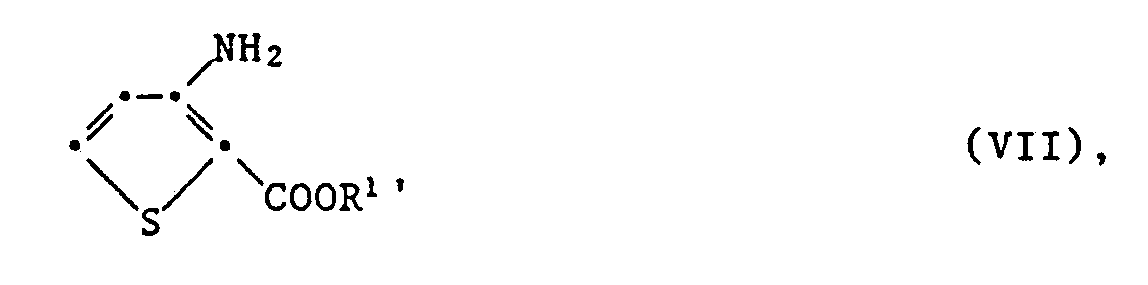
- Die Umsetzung erfolgt zweckmässigerweise in einem Temperaturbereich von 5°C bis 25°C und in Gegenwart einer Base, wie beispielsweise Pyridin oder einem tertiären Amin wie 4-Dimethylaminopyridin, N-Methylmorpholin oder Triäthylamin. Die Umsetzung wird bevorzugt in einem reaktionsinerten Lösungsmittel durchgeführt, wie beispielsweise Pyridin, Dichlormethan oder Acetonitril. Zweckmässigerweise setzt man die Reaktanden der Formeln VI und VII in äquimolarem Verhältnis zueinander ein oder verwendet einen geringen Ueberschuss der Verbindung der Formel VI.
- Die Zwischenprodukte der Formel VII sind bekannt oder lassen sich analog bekannten Verbindungen herstellen.
- Die Zwischenprodukte der Formel VI sind erhältlich durch Behandeln einer Verbindung der Formel VIII

- Die Zwischenprodukte der Formel VIII sind herstellbar durch Umsetzung einer Verbindung der Formel IX

Rb―CO―CH₂―-Ra (X),
worin i) Ra für die Gruppe -CO-Rc steht und eines der Symbole Rb und Rc für R2′ und das andere für R3′ steht oder ii) Ra für die Gruppe -CH(ORd)₂ steht und Rb für R2′ oder R3′ und Rd für Methyl oder Aethyl steht. - Die Zwischenprodukte der Formeln IX und X sind bekannt oder lassen sich analog bekannten Methoden herstellen. Die Verbindung der Formel IX, worin A für Benzyl steht, lässt sich beispielsweise auf an sich bekannte Weise durch Umsetzung der Verbindung der Formel IX, in welcher A für Wasserstoff steht, mit Benzylchlorid herstellen.
- Die Umsetzung einer Verbindung der Formel IX mit einer Verbindung der Formel X erfolgt vorteilhafterweise, indem man zunächst eine Verbindung der Formel IX unter Erhitzen in wenig Eisessig löst und nach Zugabe der Verbindung der Formel X das Reaktionsgemisch auf Rückflusstemperatur erhitzt.
- Die für die Herstellung von Verbindungen der Formel I′ entwickelten Zwischenprodukte der Formeln VI und VIII sind neu und bilden jeweils ebenfalls einen Gegenstand der vorliegenden Erfindung.
- Die Verbindungen der Formel I, welche nicht unter Formel I′ fallen, lassen sich analog den für Verbindungen der Formel I′ angegebenen Methoden herstellen.
- Die folgenden Beispiele dienen der Erläuterung der Erfindung. Sie schränken die Erfindung nicht ein.
- 35 g 2-Benzylthio-5-methyl-7-cyclopropyl-1,2,4-triazolo[1,5-a]pyrimidin in 200 ml Dichlormethan werden mit 300 ml Wasser und 20 ml konzentrierter Salzsäure verrührt. In das Gemisch werden bei 0°C bis -3°C 33,5 g Chlorgas eingeleitet. Nach ca. 30 Minuten ist die Einleitung beendet und das Reaktionsgemisch wird noch ca. 20 Minuten ohne Kühlung nachgerührt. Nach Verdünnen mit Wasser wird die organische Phase abgetrennt, über Natriumsulfat getrocknet und am Vakuum eingedampft. Das erhaltene Oel wird mit mehreren Portionen Petroläther gewaschen. Nach dem Trocknen liegt 5-Methyl-7-cyclopropyl-1,2,4-triazolo[1,5-a]pyrimidin-2-yl-sulfochlorid als Rohprodukt vor, welches für die weiteren Umsetzungen geeignet ist. Ausbeute: 28 g dunkles Oel.
- 14 g N-(5-Methyl-7-cyclopropyl-1,2,4-triazolo[1,5-a]pyrimidin-2-yl-sulfochlorid (Rohprodukt gemäss Teil a) in 15 ml Pyridin werden mit 7,9 g 3-Aminothiophen-2-carbonsäuremethylester verrührt. Nach Lösung unter leicht exothermer Reaktion färbt sich das Reaktionsgemisch dunkel. Nach längerem Stehenlassen bildet sich ein leichter Niederschlag. Das Reaktionsgemisch wird nun mit ca. 100 ml Essigester/Hexan 1:1 und 300 ml Wasser verdünnt und mit Soda stark alkalisch gemacht. Die wässrige Phase wird abgetrennt und mit Salzsäure angesäuert. Der ausfallende Niederschlag wird gesammelt und getrocknet (19 g). Das Produkt wird aus Aceton/Hexan umkristallisiert. Man erhält 14,8 g N-(5-Methyl-7-cyclopropyl-1,2,4-triazolo[1,5-a]pyrimidin-2-ylsulfonyl)-3-aminothiophen-2-carbonsäuremethylester. Smp. 185-187°C (Zers.).
- 14 g 2-Benzylthio-5-cyclopropyl-7-methyl-1,2,4-triazolo[1,5-a]pyrimidin in 200 ml Dichlormethan und 200 ml Wasser werden mit 10 ml konzentrierter Salzsäure vermischt und kräftig gerührt. Bei 0°C bis -3°C werden im Zeitraum von ca. 20 Minuten 13,5 g Chlorgas eingeleitet. Nach etwa halbstündigem Nachrühren ohne Kühlung wird die organische Phase abgetrennt, mit Wasser nachgewaschen und über Natriumsulfat getrocknet. Nach dem Eindampfen am Vakuum verbleibt ein dunkles Oel, welches mehrmals mit Petroläther durchgerührt wird. Der Petroläther wird abdekantiert und der erhaltene zähe Rückstand getrocknet. Man erhält 11,5 g 5-Cyclopropyl-7-methyl-1,2,4-triazolo[1,5-a]pyrimidin-2-yl-sulfochlorid als dunkles Oel (Rohprodukt), welches für die weiteren Umsetzungen geeignet ist. Das Protonenresonanzspektrum bestätigt die Konstitution der erhaltenen Verbindung.
- 5,7 g 5-Cyclopropyl-7-methyl-1,2,4-triazolo[1,5-a]pyrimidin-2-yl-sulfochlorid (Rohprodukt gemäss Teil a) werden in 15 ml Pyridin mit 3,5 g 3-Aminothiophen-2-carbonsäuremethylester verrührt. Die weitere Behandlung des Reaktionsgemisches erfolgt wie im Beispiel 1 (Teil b) beschrieben. Man erhält 4,8 g N-(5-Cyclopropyl-7-methyl-1,2,4-triazolo[1,5-a]pyrimidin-2-ylsulfonyl)-3-aminothiophen-2-carbonsäuremethylester. Smp. 133-134,5°C.
- 41,5 g 3-Amino-5-benzylthio-1,2,4-triazol werden in wenig heissem Eisessig gelöst und zusammen mit 30 g 1-Cyclopropyl-1,3-butandion am Rückfluss erhitzt. Nach ca. 1 Stunde wird die Reaktionslösung am Vakuum eingeengt und der Rückstand wird mit Wasser versetzt. Das ausgefallene dunkle Harz wird mit Essigester extrahiert und die Essigesterphase wird über Natriumsulfat getrocknet und eingedampft. Der Rückstand wird an einer Kieselgelsäule (Laufmittel: Essigester/Nexan 1:1) gereinigt. Man erhält die Titelverbindungen A und B:
1. Fraktion 20 g Smp. 101-103°C (Verbindung B)
2. Fraktion 39 g Smp. 84-86°C (Verbindung A) - Analog zu den beschriebenen Arbeitsweisen werden auch die nachfolgend zusammen mit Verbindungen der vorgängigen Beispiele genannten Verbindungen der Formel I (Endprodukte, Tabelle 1) sowie der Formeln VI (Zwischenprodukte, Tabelle 2) und VIII (Zwischenprodukte, Tabelle 3) hergestellt:


- Zur Ueberprüfung der Safeningwirkung werden Samen von Reis (Sorte YAMABIKO, NIHONBARE) in Saatschalen, welche mit normal bewässerter Gartenerde beschickt sind, gesät. Im 2-Blattstadium werden die Pflanzen in Behälter mit stark sumpfiger Erde transplantiert. Der Wasserstand wird mit zunehmendem Wachstum angehoben. Die Kultur der Pflanzen erfolgt im Gewächshaus unter angepassten Temperatur- und Lichtverhältnissen. Das Giessen resp. Düngen der Pflanzen erfolgt nach Bedarf.
- Der Safener wird der sumpfigen Erde 7 Tage vor der Verpflanzung zugegeben und das Herbizid wird 3 Tage nach der Verpflanzung als Einlauf ins Wasser appliziert.
- Zur Erfassung der Safeningwirkung (Schutzwirkung) wird 10 Tage nach der Applikation des Herbizids die an den Pflanzen auftretende allgemeine Schädigung erfasst (Phytotoxizität 0 %: keine Schädigung, Zustand wie unbehandelte Kontrolle; Phytotoxizität 100 %: maximale Schädigung). Aus der Differenz der durch ausschliessliche Applikation des Herbizids verursachten Phytotoxizität und der bei Applikation von Herbizid und Safener auftretenden Phytotoxizität ergibt sich die in % ausgedrückte Schutzwirkung.
- Die Ergebnisse für das Herbizid der Formel II

Tabelle 4 Aufwandmengen Schutzwirkung in % 100 ppm S-1; 260 g/ha HE-1 Reis der Sorte "YAMABIKO" "NIHONBARE" 20 30 - Zur Ueberprüfung der Safeningwirkung werden Samen von Reis (Sorte S-201) in Töpfen von 9 x 9 cm (Durchmesser x Höhe) in sumpfiger Erde angezogen. Die Kultur der Pflanzen erfolgt im Gewächshaus unter angepassten Temperatur- und Lichtverhältnissen. Das Giessen resp. Düngen der Pflanzen erfolgt nach Bedarf.
- Safener und Herbizid werden gemeinsam als Tankmix mit einer Wasseraufwandmenge von 550 l/ha direkt nach der Saat (Pre) oder 3 Tage nach der Saat (3 DAS) appliziert.
- Zur Erfassung der Safeningwirkung (Schutzwirkung) wird 24 Tage nach Applikation der Wirkstoffmischung die an den Pflanzen auftretende allgemeine Schädigung erfasst (Phytotoxizität 0 %: keine Schädigung, Zustand wie unbehandelte Kontrolle; Phytotoxizität 100 %: maximale Schädigung). Aus der Differenz der durch ausschliessliche Applikation des Herbizids verursachten Phytotoxizität und der bei Applikation von Herbizid und Safener auftretenden Phytotoxizität ergibt sich die in % ausgedrückte Schutzwirkung.
- Als Wirkstoffe werden die im Beispiel B1 eingesetzten Substanzen (Herbizid HE-1 und Safener S-1) verwendet. Die Ergebnisse zeigt Tabelle 5.
Tabelle 5 Applikationszeitpunkt PRE 3 DAS HE-1 Aufwandmenge [g/ha] 30 30 S-1 Aufwandmenge [g/ha] 120 60 120 60 Schutzwirkung in % bei Reis der Sorte "S-201" 40 45 60 60 - Zur Ueberprüfung der Safeningwirkung werden Samen von Weizen (Sorte BESSO) und Gerste (Sorte CORNEL) in Töpfen von 11 cm Durchmesser in Erde angezogen. Die Kultur der Pflanzen erfolgt im Gewächshaus unter angepassten Temperatur- und Lichtverhältnissen. Das Giessen resp. Düngen der Pflanzen erfolgt nach Bedarf.
- Safener und Herbizid werden gemeinsam als Tankmix mit einer Wasseraufwandmenge von 550 l/ha im Nachauflauf (post) appliziert.
- Zur Erfassung der Safeningwirkung (Schutzwirkung) wird 18 Tage nach der Applikation der Wirkstoffmischung die an den Pflanzen auftretende allgemeine Schädigung erfasst (Phytotoxizität 0 %: keine Schädigung, Zustand wie unbehandelte Kontrolle; Phytotoxizität 100 %: maximale Schädigung). Aus der Differenz der durch ausschliessliche Applikation des Herbizids verursachten Phytotoxizität und der bei Applikation von Herbizid und Safener auftretenden Phytotoxizität ergibt sich die in % ausgedrückte Schutzwirkung.
- Die Ergebnisse für die folgenden Herbizide der Formel IV


Tabelle 6 Herbizid HE-2 HE-3 HE-4 Aufwandmenge [g/ha] 1000 1000 120 Safener S-1 Aufwandmenge [g/ha] 2000 500 2000 500 2000 500 Schutzwirkung in % bei Weizen der Sorte "BESSO" 50 55 73 48 60 35 Gerste der Sorte "CORNEL" 60 70 33 28 ― ― - Zur Ueberprüfung der Safeningwirkung werden Samen von Reis (Sorte NEWBONNET) in Töpfen von 11 cm Durchmesser in Erde angezogen. Die Kultur der Pflanzen erfolgt im Gewächshaus unter angepassten Temperatur- und Lichtverhältnissen. Das Giessen resp. Düngen der Pflanzen erfolgt nach Bedarf. Das Ungras Echinochloa wird nach dem gleichen Verfahren angezogen.
- Safener und Herbizid werden gemeinsam als Tankmix mit einer Wasseraufwandmenge von 550 l/ha im Nachauflauf (post) appliziert, wobei verschiedene Wachstumsstadien der Testpflanzen verwendet werden.
- Zur Erfassung der Safeningwirkung (Schutzwirkung) wird 23 Tage nach der Applikation der Wirkstoffmischung die an den Pflanzen auftretende allgemeine Schädigung erfasst (Phytotoxizität 0 %: keine Schädigung, Zustand wie unbehandelte Kontrolle; Phytotoxizität 100 %: maximale Schädigung). Aus der Differenz der durch ausschliessliche Applikation des Herbizids verursachten Phytotoxizität und der bei Applikation von Herbizid und Safener auftretenden Phytotoxizität ergibt sich die in % ausgedrückte Schutzwirkung.
- Die Ergebnisse für das Herbizid HE-4 (gemäss Beispiel B3) und den Safener S-1 (gemäss Beispiel B1) sind in Tabelle 7 zusammengestellt:
Tabelle 7 Applikationszeitpunkt 1-2-Blattstadium 2-3-Blattstadium 4-Blattstadium Herbizid HE-4 Aufwandmenge [g/ha] 60 60 60 Safener S-1 Aufwandmenge [g/ha] 480 120 30 480 120 30 480 120 30 Schutzwirking in % bei Reis der Sorte "NEWBONNET" 60 35 40 60 60 50 80 45 40 Echinochloa crus galli 2 0 0 2 0 0 5 1 0 - Zur Ueberprüfung der Safeningwirkung werden Samen von Reis (Sorten NEWBONNET, BALILLA, JUNG-WEON, PB 56, IR54, YAMABIKO, STARBONNET) in Töpfen von 11 cm Durchmesser in Erde angezogen. Die Kultur der Pflanzen erfolgt im Gewächshaus unter angepassten Temperatur- und Lichtverhält nissen. Das Giessen resp. Düngen der Pflanzen erfolgt nach Bedarf. Die Unkräuter Echinochloa, Rottboellia und Digitaria werden nach dem gleichen Verfahren angezogen.
- Safener und Herbizid werden gemeinsam als Tankmix mit einer Wasseraufwandmenge von 550 l/ha im Nachauflauf (post) appliziert.
- Zur Erfassung der Safeningwirkung (Schutzwirkung) wird 23 Tage nach der Applikation der Wirkstoffmischung die an den Pflanzen auftretende allgemeine Schädigung erfasst (Phytotoxizität 0 %: keine Schädigung, Zustand wie unbehandelte Kontrolle; Phytotoxizität 100 %: maximale Schädigung). Aus der Differenz der durch ausschliessliche Applikation des Herbizids verursachten Phytotoxizität und der bei Applikation von Herbizid und Safener auftretenden Phytotoxizität ergibt sich die in % ausgedrückte Schutzwirkung.
- Für die Herbizid/Safenerkombination (gemäss Beispiel B4) erhält man die in Tabelle 8 angegebenen Ergebnisse:
Tabelle 8 Herbizid HE-4 Aufwandmenge [g/ha] 60 Safener S-1 Aufwandmenge [g/ha] 480 120 30 Schutzwirkung in % Reis der Sorten "NEWBONNET" 50 40 35 "BALILLA" 90 65 50 "JUNG-WEON" 55 60 60 "PB 56" 60 50 45 "IR 54" 45 40 35 "YAMABIKO" 60 20 25 "STARBONNET" 60 45 35 Echinochloa c.g. 0 0 0 Rottboellia exaltata 0 0 0 Digitaria sang. 8 8 3 - Zur Ueberprüfung der Safeningwirkung werden Samen von Reis (Sorte S-201) in Töpfen von 12 cm Durchmesser in Erde angezogen. Die Kultur der Pflanzen erfolgt im Gewächshaus unter angepassten Temperatur- und Lichtverhältnissen. Das Giessen resp. Düngen der Pflanzen erfolgt nach Bedarf. Das Ungras Setaria italica wird nach dem gleichen Verfahren angezogen.
- Safener und Herbizid werden gemeinsam als Tankmix mit einer Wasseraufwandmenge von 550 l/ha im Nachauflauf (post) appliziert, wobei Reis im 1-2-Blattstadium und Setaria im 3-Blattstadium mit dem Tankmix behandelt werden.
- Zur Erfassung der Safeningwirkung (Schutzwirkung) wird 10 Tage nach der Applikation der Wirkstoffmischung die an den Pflanzen auftretende allgemeine Schädigung erfasst (Phytotoxizität 0 %: keine Schädigung, Zustand wie unbehandelte Kontrolle; Phytotoxizität 100 %: maximale Schädigung). Aus der Differenz der durch ausschliessliche Applikation des Herbizids verursachten Phytotoxizität und der bei Applikation von Herbizid und Safener auftretenden Phytotoxizität ergibt sich die in % ausgedrückte Schutzwirkung.
- Als Herbizide der Formel IV werden neben den Herbiziden HE-2 und HE-4 (gemäss Beispiel B3) die Herbizide

und

in Kombination mit dem aus Beispiel 1 bekannten Safener S-1 verwendet. - Die Ergebnisse sind in Tabelle 9 zusammengefasst.
Tabelle 9 Herbizid HE-2 HE-4 HE-5 HE-6 HE-7 Aufwandmenge [g/ha] 128 64 128 64 512 Safener S-1 Aufwandmenge [g/ha] 100 100 100 100 100 Schutzwirkung in % bei Reis der Sorte "S-201" 35 20 25 90 35 Setaria italica 0 7 1 2 0 - Zur Ueberprüfung der Safeningwirkung werden Samen von Reis (Sorte NEWBONNET) in Töpfen von 9 x 9 cm (Durchmesser x Höhe) in sumpfiger Erde angezogen. Die Kultur der Pflanzen erfolgt im Gewächshaus unter angepassten Temperatur- und Lichtverhältnissen. Das Giessen resp. Düngen der Pflanzen erfolgt nach Bedarf.
- Safener und Herbizid werden gemeinsam als Tankmix mit einer Wasseraufwandmenge von 550 l/ha im Nachauflauf (post) appliziert, wobei die Reispflanzen im 1-2-Blattstadium behandelt werden.
- Zur Erfassung der Safeningwirkung (Schutzwirkung) wird 21 Tage nach Applikation der Wirkstoffmischung die an den Pflanzen auftretende allgemeine Schädigung erfasst (Phytotoxizität 0 %: keine Schädigung, Zustand wie unbehandelte Kontrolle; Phytotoxizität 100 %: maximale Schädigung). Aus der Differenz der durch ausschliessliche Applikation des Herbizids verursachten Phytotoxizität und der bei Applikation von Herbizid und Safener auftretenden Phytotoxizität ergibt sich die in % ausgedrückte Schutzwirkung.
- Als Wirkstoffe werden das im Beispiel B3 eingesetzte Herbizid HE-4 und die folgenden Safener der Formel I verwendet:
N-(5-Methyl-1,2,4-triazolo[1,5-a]pyrimidin-2-ylsulfonyl)-3-aminothiophen-2-carbonsäuremethylester (S-2),
N-(5-Methyl-7-cyclopropyl-1,2,4-triazolo[1,5-a]pyrimidin-2-ylsulfonyl)-3-aminothiophen-2-carbonsäuremethylester (S-3),
N-(5-Cyclopropyl-7-methyl-1,2,4-triazolo[1,5-a]pyrimidin-2-ylsulfonyl)-3-aminothiophen-2-carbonsäuremethylester (S-4) und der im Beispiel B1 eingesetzte Safener S-1. Die Ergebnisse zeigt Tabelle 10.Tabelle 10 HE-4 Aufwandmenge [g/ha] 120 60 S-2 Aufwandmenge [g/ha] 480 240 120 480 240 120 Schutzwirkung in %: 37 25 25 25 25 37 S-3 oder S-4 oder S-1 Aufwandmenge [g/ha] 400 100 25 6 400 100 25 6 S-3, Schutzwirkung in %: 50 37 12 12 50 50 25 12 S-4, Schutzwirkung in %: 33 12 12 0 60 55 30 25 S-1, Schutzwirkung in %: 60 40 40 20 60 60 45 30 - Zur Ueberprüfung der Safeningwirkung werden Samen von Reis (Sorte S-201) in Töpfen von 9 x 9 cm (Durchmesser x Höhe) in sumpfiger Erde angezogen. Die Kultur der Pflanzen erfolgt im Gewächshaus unter angepassten Temperatur- und Lichtverhältnissen. Das Giessen resp. Düngen der Pflanzen erfolgt nach Bedarf.
- Safener und Herbizid werden gemeinsam als Tankmix mit einer Wasseraufwandmenge von 550 l/ha vor dem Auflaufen der Pflanzen (Pre) appliziert.
- Zur Erfassung der Safeningwirkung (Schutzwirkung) wird 21 Tage nach Applikation der Wirkstoffmischung die an den Pflanzen auftretende allgemeine Schädigung erfasst (Phytotoxizität 0 %: keine Schädigung, Zustand wie unbehandelte Kontrolle; Phytotoxizität 100 %: maximale Schädigung). Aus der Differenz der durch ausschliessliche Applikation des Herbizids verursachten Phytotoxizität und der bei Applikation von Herbizid und Safener auftretenden Phytotoxizität ergibt sich die in % ausgedrückte Schutzwirkung.
- Als Wirkstoffe werden das im Beispiel 86 eingesetzte Herbizid HE-7 und der Safener der Formel I N-(5,7-Dimethyl-1,2,4-triazolo[1,5-a]pyrimidin-2-yl-sulfonyl)-3-aminothiophen-2-carbonsäureethylester (S-5) verwendet. Die Ergebnisse zeigt Tabelle 11.
Tabelle 11 HE-7 Aufwandmenge [kg/ha] 0,5 0,25 S-5 oder S-2 Aufwandmenge [kg/ha] 0,5 0,25 0,125 0,5 0,25 0,125 S-5, Schutzwirkung in %: 37 25 25 25 25 25 S-2, Schutzwirkung in %: 25 25 25 37 25 50 - Die in den Formulierungsbeispielen verwendeten Bezeichnungen für Herbizide und Safener entsprechen denen der vorstehenden biologischen Beispiele.
-
F1 Spritzpulver a) b) c) d) Herbizid HE-1 10 % 20 % 5 % 30 % Safener S-1 10 % 40 % 15 % 30 % Na-Ligninsulfonat 5 % 5 % 5 % 5 % Na-Laurylsulfat 3 % - 3 % - Na-Diisobutylnaphthalinsulfonat - 6 % - 6 % Octylphenolpolyäthylenglykoläther 7-8 Mol AeO) - 2 % - 2 % Hochdisperse Kieselsäure 5 % 27 % 5 % 27 % Kaolin 67 % - 67 % - - Das Wirkstoffgemisch wird mit den Zusatzstoffen gut vermischt und in einer geeigneten Mühle gut vermahlen. Man erhält Spritzpulver, die sich mit Wasser zu Suspensionen jeder gewünschten Konzentration verdünnen lassen.
F2 Emulsions-Konzentrat a) b) c) Herbizid HE-7 5 % 5 % 12 % Safener S-1 5 % 20 % 13 % Octylphenolpolyäthylenglykoläther (4-5 Mol AeO) 3 % 3 % 3 % Ca-Dodecylbenzolsulfonat 3 % 3 % 2 % Ricinusölpolyglykoläther (36 Mol AeO) 4 % 4 % 4 % Cyclohexanon 30 % 30 % 31 % Xylolgemisch 50 % 35 % 35 % - Aus diesen Konzentraten können durch Verdünnen mit Wasser Emulsionen jeder gewünschten Konzentration hergestellt werden.
F3 Stäubemittel a) b) c) d) Herbizid HE-4 2 % 4 % 2 % 4 % Safener S-1 3 % 4 % 4 % 8 % Talkum 95 % - 94 % - Kaolin - 92 % - 88 % - Man erhält anwendungsfertige Stäubemittel, indem das Wirkstoffgemisch mit dem Träger vermischt und auf einer geeigneten Mühle vermahlen wird.
F4 Extruder Granulat a) b) c) Herbizid HE-4 5 % 3 % 5 % Safener S-1 5 % 7 % 15 % Na-Ligninsulfonat 2 % 2 % 2 % Carboxymethylcellulose 1 % 1 % 1 % Kaolin 87 % 87 % 77 % - Das Wirkstoffgemisch wird mit den Zusatzstoffen vermischt, vermahlen und mit Wasser angefeuchtet. Dieses Gemisch wird extrudiert und anschliessend im Luftstrom getrocknet.
F5 Umhüllungs-Granulat a) b) Herbizid HE-4 1,5 % 3 % Safener S-1 1,5 % 5 % Polyäthylenglykol (MG 200) 3 % 3 % Kaolin 94 % 89 % - Das fein gemahlene Wirkstoffgemisch wird in einem Mischer auf das mit Polyäthylenglykol angefeuchtete Kaolin gleichmässig aufgetragen. Auf diese Weise erhält man staubfreie Umhüllungs-Granulate.
F6 Suspensions-Konzentrat a) b) Herbizid HE-4 20 % 20 % Safener S-1 20 % 40 % Aethylenglykol 10 % 10 % Nonylphenolpolyäthylenglykoläther (15 Mol AeO 6 % 6 % Na-Ligninsulfonat 10 % 10 % Carboxymethylcellulose 1 % 1 % 37 %ige wässrige Formaldehyd-Lösung 0,2 % 0,2 % Silikonöl in Form einer 75 %igen wässrigen Emulsion 0,8 % 0,8 % Wasser 32 % 12 % - Das fein gemahlene Wirkstoffgemisch wird mit den Zusatzstoffen innig vermischt. Man erhält so ein Suspensions-Konzentrat, aus welchem durch Verdünnen mit Wasser Suspensionen jeder gewünschten Konzentration hergestellt werden können.
-
Fa-1 Spritzpulver a) b) c) Wirkstoff aus Tabelle 1 25 % 50 % 75 % Na-Ligninsulfonat 5 % 5 % - N-Laurylsulfat 3 % - 5 % Na-Diisobutylnaphthalinsulfonat - 6 % 10 % Octylphenolpolyäthylenglykoläther (7-8 Mol AeO) - 2 % - Hochdisperse Kieselsäure 5 % 10 % 10 % Kaolin 62 % 27 % - - Der Wirkstoff wird mit den Zusatzstoffen gut vermischt und in einer geeigneten Mühle gut vermahlen. Man erhält Spritzpulver, die sich mit Wasser zu Suspensionen jeder gewünschten Konzentration verdünnen lassen.
Fa-2 Emulsions-Konzentrate Wirkstoff aus Tabelle 1 10 % Octylphenolpolyäthylenglykoläther (4-5 Mol AeO) 3 % Ca-Dodecylbenzolsulfonat 3 % Ricinusölpolyglykoläther (35 Mol Ae0) 4 % Cyclohexanon 30 % Xylolgemisch 50 % - Aus diesem Konzentrat können durch Verdünnen mit Wasser Emulsionen jeder gewünschten Konzentration hergestellt werden.
Fa-3 Stäubemittel a) b) Wirkstoff aus Tabelle 1 5 % 8 % Talkum 95 % - Kaolin - 92 % - Man erhält anwendungsfertige Stäubemittel, indem der Wirkstoff mit den Trägerstoffen vermischt und auf einer geeigneten Mühle vermahlen wird.
Fa-4 Extruder-Granulate Wirkstoff aus Tabelle 1 10 % Na-Ligninsulfonat 2 % Carboxymethylcellulose 1 % Kaolin 87 % - Der Wirkstoff wird mit den Zusatzstoffen vermischt, vermahlen und mit Wasser angefeuchtet. Dieses Gemisch wird extrudiert und anschliessend im Luftstrom getrocknet.
Fa-5 Umhüllungs-Granulate Wirkstoff aus Tabelle 1 3 % Polyäthylenglykol (MG 200) 3 % Kaolin 94 % - Der fein gemahlene Wirkstoff wird in einem Mischer auf das mit Polyäthylenglykol angefeuchtete Kaolin gleichmässig aufgetragen. Auf diese Weise erhält man staubfreie Umhüllungs-Granulate.
Fa-6 Suspensions-Konzentrate Wirkstoff aus Tabelle 1 40 % Aethylenglykol 10 % Nonylphenolpolyäthylenglykoläther (15 Mol AeO) 6 % Na-Ligninsulfonat 10 % Carboxymethylcellulose 1 % 37%ige wässrige Formaldehyd-Lösung 0,2 % Silikonöl in Form einer 75%igen wässrigen Emulsion 0,8 % Wasser 32 % - Der feingemahlene Wirkstoff wird mit den Zusatzstoffen innig vermischt. Man erhält so ein Suspensions-Konzentrat, aus welchem durch Verdünnen mit Wasser Suspensionen jeder gewünschten Konzentration hergestellt werden können.
Claims (28)

R¹ C₁-C₆-Alkyl oder C₃-C₆-Cycloalkyl und
R² und R³ unabhängig voneinander Wasserstoff, C₁-C₃-Alkyl, Trifluormethyl oder Cyclopropyl bedeuten,
mit der Massgabe, dass nur eines der Symbole R² und R³ für Wasserstoff stehen kann,
zum Schützen von Kulturpflanzen gegen die schädigende Wirkung von Herbiziden.


E eines der Strukturelemente

G Wasserstoff oder Methyl,
X Methoxy, Aethoxy, Difluormethoxy, Methyl oder Chlor
Y CN oder N,
Z Methoxy, Methyl, Difluormethoxy, Cyclopropyl oder Methylamino,
R⁴ C₂-C₅-Alkoxyalkoxy, C₁-C₄-Halogenalkoxy, C₁-C₄-Halogenalkylthio, C₂-C₄-Halogenalkenyl, Chlor oder C₁-C₄-Alkoxycarbonyl,
R⁵ Trifluormethyl oder Di(C₁-C₄-alkyl)carbamoyl,
R⁶ C₁-C₄-Alkoxycarbonyl,
R⁷ C₁-C₄-Alkoxycarbonyl, und
R⁸ C₁-C₄-Alkyl bedeuten.

L eine C₁-C₅-Alkylenbrücke,
R⁹, R¹⁰ und R¹¹ unabhängig voneinander Wasserstoff, Halogen, C₁-C₄-Alkyl, C₁-C₄-Alkoxy, C₁-C₄-Halogenalkyl, C₂-C₅-Alkoxyalkyl oder C₂-C₅-Alkylthioalkyl, und
R¹² Wasserstoff, C₁-C₄-Alkoxy, -COOH, C₁-C₄-Alkoxycarbonyl, -CONH₂, C₁-C₄-Alkylcarbamoyl, Di-C₁-C₄-alkylcarbamoyl, Cyan, C₁-C₄-Alkylcarbonyl,
gegebenenfalls substituiertes Benzoyl,
gegebenenfalls substituiertes Furyl,
gegebenenfalls substituiertes Thienyl,
gegebenenfalls substituiertes Pyrrolyl,
gegebenenfalls substituiertes Pyrazolyl,
gegebenenfalls substituiertes 1,3,4-Oxadiazol-2-yl,
gegebenenfalls substituiertes 1,3,4-Thiadiazol-2-yl,
gegebenenfalls substituiertes 1,2,4-Triazol-3-yl,
gegebenenfalls substituiertes Dioxolanyl,
gegebenenfalls substituiertes Dioxanyl oder
gegebenenfalls substituiertes Tetrahydrofuryl bedeutet, oder das Strukturelement -L-R¹² für eine durch zwei C₁-C₃-Alkoxygruppen substituierte C₁-C₄-Alkylenbrücke oder für 5-Methyl-1,3,4-oxadiazol-2-yl steht.

Q für den Rest

-NR²⁰R²¹, -N(CN)R²², -OR²³, SR²⁴ oder -O-N=CR²⁵R²⁶ stehen, wobei
R¹³ und R¹⁵ Halogen oder Trifluormethyl,
R¹⁴, R¹⁶, R¹⁷, R¹⁸ und R¹⁹ Wasserstoff oder Halogen,
R²⁰ und R²¹ unabhängig voneinander Wasserstoff, C₁-C₈-Alkoxy, C₁-C₈-Alkyl, Phenyl oder Benzyl oder R²⁰ und R²²¹ zusammen mit dem sie tragenden Stickstoffatom einen 5- bis 6-gliedrigen gesättigten Stickstoffheterocyclus, der durch ein Sauerstoff- oder Schwefelatom unterbrochen sein kann,
R²² C₁-C₄-Alkyl, C₃-C₄-Alkenyl, C₃-C₄-Alkinyl oder C₂-C₄-Alkoxyalkyl
R²³ Wasserstoff oder Aequivalent eines Alkalimetall-, Erdalkalimetall-, Kupfer- oder Eisen-Ions; einen quaternären C₁-C₄-Alkylammonium- oder C₁-C₄-Hydroxyalkylammonium-Rest; einen gegebenenfalls ein- oder mehrfach durch Amino, Halogen, Hydroxyl, Cyan, Nitro, Phenyl, C₁-C₄-Alkoxy, Polyethoxy mit 2 bis 6 Ethylenoxideinheiten, -COOR²⁷, -C0SR²⁸, -CONH₂, -CON(C₁-C₄-alkoxy)-C₁-C₄-alkyl, -CO-N-di-C₁-C₄-alkyl, CONH-C₁-C₄-alkyl, -N(C₁-C₄-alkoxy)-C₁-C₄-alkyl oder Di-C₁-C₄-alkylamino substituierten C₁-C₉-Alkylrest; einen gegebenenfalls durch Halogen oder C₁-C₄-Alkoxy substituierten C₃-C₉-Alkenylrest; einen gegebenenfalls durch Halogen oder C₁-C₄-Alkoxy substituierten C₃-C₉-Alkinylrest; C₃-C₉-Cycloalkyl; oder gegebenenfalls durch Cyan, C₁-C₄-Alkyl, C₁-C₄-Alkoxy, Acetyl, -COOR²⁹, COSR³⁰, -CONH₂, -CON(C₁-C₄-alkoxy)-C₁-C₄-alkyl, -CO-N-di-C₁-C₄-alkyl oder -CONH-C₁-C₄-alkyl substituiertes Phenyl,
R²⁵ und R²⁶ unabhängig voneinander C₁-C₄-Alkyl oder zusammen eine 3- bis 6-gliedrige Alkylenkette und
R²⁷, R²⁸, R²⁹ und R³⁰ unabhängig voneinander Wasserstoff, C₁-C₆-Alkyl, C₁-C₆-Halogenalkyl, C₂-C₆-Alkoxyalkyl, C₃-C₆-Alkenyl, C₃-C₆-Halogenalkyl, C₃-C₆-Alkinyl oder C₃-C₆-Halogenalkinyl bedeuten.

R³¹ Wasserstoff oder C₁-C₄-Alkyl und
R³² und R³³ unabhängig voneinander Fluor oder Chlor bedeuten.

R¹ C₁-C₆-Alkyl oder C₃-C₆-Cycloalkyl und
R² und R³ unabhängig voneinander Wasserstoff, C₁-C₃-Alkyl, Trifluormethyl oder Cyclopropyl bedeuten,
mit der Massgabe, dass nur eines der Symbole R² und R³ für Wasserstoff stehen kann,
behandelt.
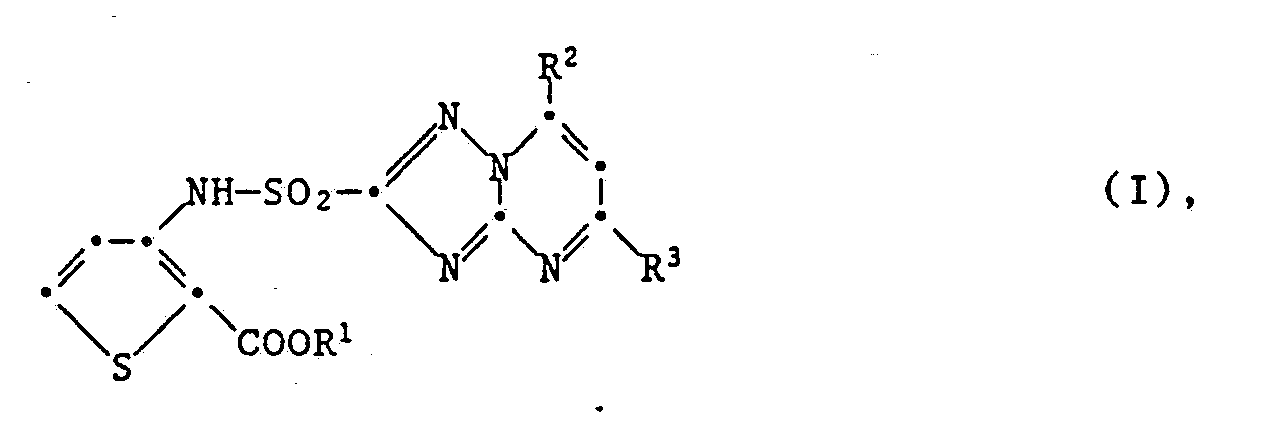
R¹ C₁-C₆-Alkyl oder C₃-C₆-Cycloalkyl und
R² und R³ unabhängig voneinander Wasserstoff, C₁-C₃-Alkyl, Trifluormethyl oder Cyclopropyl bedeuten,
mit der Massgabe, dass nur eines der Symbole R² und R³ für Wasserstoff stehen kann,
sowie gewünschtenfalls Hilfsstoffe, Trägerstoffe oder Hilfs- und Trägerstoffe enthält.

R1′ C₁-C₆-Alkyl oder C₃-C₆-Cycloalkyl und
R2′ und R3′ unabhängig voneinander Wasserstoff, C₁-C₃-Alkyl, Trifluormethyl oder Cyclopropyl bedeuten,
mit der Massgabe, dass mindestens eines der Symbole R2′ und R3′ für Cyclopropyl steht, und ein oder mehreren Hilfsstoffen, Trägerstoffen oder Hilfs- und Trägerstoffen besteht.

R1′ C₁-C₆-Alkyl oder C₃-C₆-Cycloalkyl und
R2′ und R3′ unabhängig voneinander Wasserstoff, C₁-C₃-Alkyl, Trifluormethyl oder Cyclopropyl bedeuten,
mit der Massgabe, dass mindestens eines der Symbole R2′ und R3′ für Cyclopropyl steht.

R1′ C₁-C₆-Alkyl oder C₃-C₆-Cycloalkyl und
R2′ und R3′ unabhängig voneinander Wasserstoff, C₁-C₃-Alkyl, Trifluormethyl oder Cyclopropyl bedeuten,
mit der Massgabe, dass mindestens eines der Symbole R2′ und R3′ für Cyclopropyl steht, dadurch gekennzeichnet, dass man eine Verbindung der Formel VI


Rb-CO-CH₂-Ra (X),
worin i) Ra für die Gruppe -CO-Rc steht und eines der Symbole Rb und Rc für R2′ und das andere für R3′ steht oder ii) Ra für die Gruppe -CH(ORd)₂ steht und Rb für R2′ oder R3′ und Rd für Methyl oder Aethyl steht, umsetzt.


Applications Claiming Priority (4)
| Application Number | Priority Date | Filing Date | Title |
|---|---|---|---|
| CH78/89 | 1989-01-11 | ||
| CH7889 | 1989-01-11 | ||
| CH3987/89 | 1989-11-06 | ||
| CH398789 | 1989-11-06 |
Publications (3)
| Publication Number | Publication Date |
|---|---|
| EP0378508A2 true EP0378508A2 (de) | 1990-07-18 |
| EP0378508A3 EP0378508A3 (de) | 1991-09-18 |
| EP0378508B1 EP0378508B1 (de) | 1995-03-01 |
Family
ID=25683434
Family Applications (1)
| Application Number | Title | Priority Date | Filing Date |
|---|---|---|---|
| EP90810001A Expired - Lifetime EP0378508B1 (de) | 1989-01-11 | 1990-01-04 | Antidots zur Verbesserung der Kulturpflanzenvertäglichkeit agrochemischer Wirkstoffe |
Country Status (9)
| Country | Link |
|---|---|
| US (1) | US5041157A (de) |
| EP (1) | EP0378508B1 (de) |
| JP (1) | JPH02288810A (de) |
| AT (1) | ATE119163T1 (de) |
| BR (1) | BR9000097A (de) |
| CA (1) | CA2007351A1 (de) |
| DE (1) | DE59008552D1 (de) |
| ES (1) | ES2069050T3 (de) |
| GR (1) | GR3015253T3 (de) |
Cited By (11)
| Publication number | Priority date | Publication date | Assignee | Title |
|---|---|---|---|---|
| EP0434624A1 (de) * | 1989-12-22 | 1991-06-26 | Ciba-Geigy Ag | Triazolylsulfonamide |
| WO1992010098A1 (en) * | 1990-12-11 | 1992-06-25 | Monsanto Company | Safened herbicidal sulfonamide compositions |
| US5175289A (en) * | 1989-01-11 | 1992-12-29 | Ciba-Geigy Corporation | 1,2,4-triazolo-[1,5a]pyrimidin-2-yl derivatives |
| US5217521A (en) * | 1989-12-22 | 1993-06-08 | Ciba-Geigy Corporation | Triazolylsulfonamides |
| WO1993004057A3 (de) * | 1991-08-16 | 1993-07-22 | Basf Ag | Herbizide mittel, enthaltend 3-aminobenzo[b]thiophene als antidots |
| WO2009056333A3 (en) * | 2007-11-01 | 2009-12-23 | Syngenta Participations Ag | Method of protecting rice crops |
| CN110573154A (zh) * | 2017-02-06 | 2019-12-13 | 卡斯西部储备大学 | 调节短链脱氢酶活性的组合物和方法 |
| US11426420B2 (en) | 2017-04-07 | 2022-08-30 | Case Western Reserve University | Inhibitors of short-chain dehydrogenase activity for treating coronary disorders |
| US11690847B2 (en) | 2016-11-30 | 2023-07-04 | Case Western Reserve University | Combinations of 15-PGDH inhibitors with corticosteroids and/or TNF inhibitors and uses thereof |
| US12336982B2 (en) | 2018-11-21 | 2025-06-24 | Rodeo Therapeutics Corporation | Compositions and methods of modulating short-chain dehydrogenase activity |
| US12616681B2 (en) | 2022-08-22 | 2026-05-05 | Case Western Reserve University | Compositions and methods for treating renal injury |
Families Citing this family (6)
| Publication number | Priority date | Publication date | Assignee | Title |
|---|---|---|---|---|
| US5010195A (en) * | 1988-05-25 | 1991-04-23 | The Dow Chemical Company | Herbicidal alkoxy-1,2,4-triazolo(1,5-c)primidine-2-sulfonamides |
| US5127936A (en) * | 1988-07-19 | 1992-07-07 | E. I. Du Pont De Nemours And Company | Substituted phenyltriazolopyrimidine herbicides |
| US5571775A (en) * | 1994-07-11 | 1996-11-05 | Dowelanco | N-aryl[1,2,4]triazolo[1,5-a]pyridine-2-sulfonamide herbicides |
| US6376424B1 (en) | 1998-01-21 | 2002-04-23 | Syngenta Crop Protection, Inc. | Herbicidal composition |
| US6556424B2 (en) * | 2001-02-06 | 2003-04-29 | O'brien Robert N | Supercapacitor with magnetized parts |
| AR048441A1 (es) | 2004-03-26 | 2006-04-26 | Syngenta Participations Ag | Una combinacion herbicida |
Family Cites Families (24)
| Publication number | Priority date | Publication date | Assignee | Title |
|---|---|---|---|---|
| GB951652A (en) * | 1960-06-28 | 1964-03-11 | Wallace Broadbent | Sulphamyl triazolopyrimidines and their preparation |
| US3719466A (en) * | 1970-04-16 | 1973-03-06 | Gulf Research Development Co | Protection of wheat and grain sorghum from herbicidal injury |
| JPS503170B1 (de) * | 1970-06-11 | 1975-01-31 | ||
| DE2961917D1 (en) * | 1978-01-18 | 1982-03-11 | Ciba Geigy Ag | Herbicidal active unsaturated esters of 4- (3',5'-dihalogenpyridyl-(2')-oxy)-alpha-phenoxy propionic acids, process for their preparation, herbicidal compositions containing them and their use |
| US4238621A (en) * | 1979-04-13 | 1980-12-09 | E. I. Du Pont De Nemours And Company | Intermediates for herbicidal sulfonamides |
| US4481029A (en) * | 1979-11-30 | 1984-11-06 | E. I. Du Pont De Nemours And Company | Triazinyl-sulfonyl-ureas and isoureas |
| CA1330438C (en) * | 1980-07-17 | 1994-06-28 | Willy Meyer | N-phenylsulfonyl-n'-pyrimidinyl-and-triazinylureas |
| US4443245A (en) * | 1981-07-13 | 1984-04-17 | Ciba-Geigy Corporation | N-Phenylsulfonyl-N'-triazinylureas |
| US4443243A (en) * | 1981-07-16 | 1984-04-17 | Ciba-Geigy Corporation | N-Phenylsulfonyl-N-triazinylureas |
| US4420325A (en) * | 1981-09-29 | 1983-12-13 | E. I. Du Pont De Nemours & Company | Herbicidal sulfonamides |
| US4505743A (en) * | 1981-12-31 | 1985-03-19 | Ciba-Geigy Corporation | α-[4-(3-Fluoro-5'-halopyridyl-2'-oxy)-phenoxy]-propionic acid derivatives having herbicidal activity |
| US4478635A (en) * | 1982-01-11 | 1984-10-23 | Ciba-Geigy Corporation | N-Arylsulfonyl-N'-pyrimidinylureas |
| US4954164A (en) * | 1982-02-27 | 1990-09-04 | Nissan Chemical Industries, Ltd. | Pyrazolesulfonylurea derivatives, preparation thereof, herbicide containing said derivative as active ingredient and herbicidal method by use thereof |
| US4780125A (en) * | 1982-09-01 | 1988-10-25 | Ciba-Geigy Corporation | N-phenylsulfonyl-N'-triazinylureas |
| US4515626A (en) * | 1982-10-06 | 1985-05-07 | Ciba Geigy Corporation | N-(Cyclopropyl-triazinyl-n'-(arylsulfonyl) ureas having herbicidal activity |
| US4740236A (en) * | 1982-12-03 | 1988-04-26 | Ciba-Geigy Corporation | N-sulfonyl-imino-thiocarbonic acid diesters as herbicide antagonists for the protection of rice crops |
| ATE35888T1 (de) * | 1983-03-28 | 1988-08-15 | Ciba Geigy Ag | N-phenylsulfonyl-n'-pyrimidinyl- und triazinylharnstoffe. |
| US4548638A (en) * | 1983-08-22 | 1985-10-22 | E. I. Du Pont De Nemours And Company | Herbicidal sulfonylureas |
| IL83139A (en) * | 1983-11-14 | 1993-01-14 | Dow Chemical Co | 1,2,4-triazolo (1,5-a) pyrimidine-2-sulfonyl chlorides and their preparation |
| US4744814A (en) * | 1984-12-06 | 1988-05-17 | Ishihara Sangyo Kaisha | N-[(4,6-dimethoxypyrimidin-2-yl)aminocarbonyl]-3-trifluoromethylpyridine-2-sulfonamide or salts thereof, herbicidal composition containing the same |
| GB8509381D0 (en) * | 1985-04-12 | 1985-05-15 | Ciba Geigy Ag | Tetra-aza indene compounds |
| US4759791A (en) * | 1985-06-18 | 1988-07-26 | Ciba-Geigy Corporation | N-heterocyclosulfonyl-N'-pyrimidinylureas |
| CH679396A5 (de) * | 1986-06-12 | 1992-02-14 | Ciba Geigy Ag | |
| US4786734A (en) * | 1986-11-28 | 1988-11-22 | E. I. Du Pont De Nemours And Company | Herbicidal pyridine sulfonamides |
-
1990
- 1990-01-04 ES ES90810001T patent/ES2069050T3/es not_active Expired - Lifetime
- 1990-01-04 EP EP90810001A patent/EP0378508B1/de not_active Expired - Lifetime
- 1990-01-04 AT AT90810001T patent/ATE119163T1/de not_active IP Right Cessation
- 1990-01-04 DE DE59008552T patent/DE59008552D1/de not_active Expired - Fee Related
- 1990-01-05 US US07/461,602 patent/US5041157A/en not_active Expired - Fee Related
- 1990-01-09 CA CA002007351A patent/CA2007351A1/en not_active Abandoned
- 1990-01-11 BR BR909000097A patent/BR9000097A/pt not_active Application Discontinuation
- 1990-01-11 JP JP2004423A patent/JPH02288810A/ja active Pending
-
1995
- 1995-03-02 GR GR950400282T patent/GR3015253T3/el unknown
Cited By (14)
| Publication number | Priority date | Publication date | Assignee | Title |
|---|---|---|---|---|
| US5175289A (en) * | 1989-01-11 | 1992-12-29 | Ciba-Geigy Corporation | 1,2,4-triazolo-[1,5a]pyrimidin-2-yl derivatives |
| EP0434624A1 (de) * | 1989-12-22 | 1991-06-26 | Ciba-Geigy Ag | Triazolylsulfonamide |
| US5217521A (en) * | 1989-12-22 | 1993-06-08 | Ciba-Geigy Corporation | Triazolylsulfonamides |
| WO1992010098A1 (en) * | 1990-12-11 | 1992-06-25 | Monsanto Company | Safened herbicidal sulfonamide compositions |
| CN1066313C (zh) * | 1990-12-11 | 2001-05-30 | 孟山都公司 | 安全的除草磺酰胺组合物 |
| WO1993004057A3 (de) * | 1991-08-16 | 1993-07-22 | Basf Ag | Herbizide mittel, enthaltend 3-aminobenzo[b]thiophene als antidots |
| WO2009056333A3 (en) * | 2007-11-01 | 2009-12-23 | Syngenta Participations Ag | Method of protecting rice crops |
| US11690847B2 (en) | 2016-11-30 | 2023-07-04 | Case Western Reserve University | Combinations of 15-PGDH inhibitors with corticosteroids and/or TNF inhibitors and uses thereof |
| CN110573154A (zh) * | 2017-02-06 | 2019-12-13 | 卡斯西部储备大学 | 调节短链脱氢酶活性的组合物和方法 |
| EP3576737A4 (de) * | 2017-02-06 | 2021-04-21 | Case Western Reserve University | Zusammensetzungen und verfahren zur modulation der aktivität von kurzkettiger dehydrogenase |
| US11718589B2 (en) | 2017-02-06 | 2023-08-08 | Case Western Reserve University | Compositions and methods of modulating short-chain dehydrogenase |
| US11426420B2 (en) | 2017-04-07 | 2022-08-30 | Case Western Reserve University | Inhibitors of short-chain dehydrogenase activity for treating coronary disorders |
| US12336982B2 (en) | 2018-11-21 | 2025-06-24 | Rodeo Therapeutics Corporation | Compositions and methods of modulating short-chain dehydrogenase activity |
| US12616681B2 (en) | 2022-08-22 | 2026-05-05 | Case Western Reserve University | Compositions and methods for treating renal injury |
Also Published As
| Publication number | Publication date |
|---|---|
| BR9000097A (pt) | 1990-10-16 |
| ES2069050T3 (es) | 1995-05-01 |
| ATE119163T1 (de) | 1995-03-15 |
| CA2007351A1 (en) | 1990-07-11 |
| EP0378508A3 (de) | 1991-09-18 |
| JPH02288810A (ja) | 1990-11-28 |
| US5041157A (en) | 1991-08-20 |
| DE59008552D1 (de) | 1995-04-06 |
| GR3015253T3 (en) | 1995-06-30 |
| EP0378508B1 (de) | 1995-03-01 |
Similar Documents
| Publication | Publication Date | Title |
|---|---|---|
| EP0365484B1 (de) | Sulfamoylphenylharnstoffe | |
| EP0094349B1 (de) | Verwendung von Chinolinderivaten zum Schützen von Kulturpflanzen | |
| EP0191736B1 (de) | Verwendung von Chinolinderivaten zum Schützen von Kulturpflanzen | |
| EP0120814B1 (de) | N-Phenylsulfonyl-N'-pyrimidinyl- und -triazinylharnstoffe | |
| EP0378508B1 (de) | Antidots zur Verbesserung der Kulturpflanzenvertäglichkeit agrochemischer Wirkstoffe | |
| DD208066A5 (de) | Verfahren zum schuetzen von kulturpflanzen gegen schaedigende wirkungen von aggressiven agrarchemikalien | |
| DE3816704A1 (de) | Heterocyclische 2-alkoxyphenoxysulfonylharnstoffe und ihre verwendung als herbizide oder pflanzenwachstumsregulatoren | |
| EP0600836A2 (de) | Selektiv-herbizides Mittel | |
| EP0149974B1 (de) | Mittel zum Schützen von Kulturpflanzen vor der phytotoxischen Wirkung von Herbiziden | |
| EP0159287B1 (de) | Verwendung von Chinolinderivaten zum Schützen von Kulturpflanzen | |
| EP0147365A2 (de) | Herbizides Mittel | |
| DE3826609A1 (de) | Heterocyclisch substituierte sulfonylharnstoffe, verfahren zu ihrer herstellung und ihre verwendung als herbizide oder pflanzenwachstumsregulatoren | |
| EP0434624B1 (de) | Triazolylsulfonamide | |
| EP0138773A2 (de) | Verwendung von Chinolinderivaten zum Schützen von Kulturpflanzen | |
| EP0122231B1 (de) | Herbizides Mittel | |
| EP0597807A1 (de) | Selektiv-herbizides Mittel | |
| EP0397602A1 (de) | Neue N-Phenylpyrrolidine | |
| EP0143078B1 (de) | Neue Phosphorverbindungen als Wirkstoffe zum Schützen von Kulturpflanzen vor der phytotoxischen Wirkung von Herbiziden | |
| EP0233151B1 (de) | Ester als Herbizide | |
| EP0126710B1 (de) | Mittel zum Schützen von Kulturpflanzen vor der phytotoxischen Wirkung von Herbiziden | |
| EP0310555B1 (de) | 1,5-Diphenyl-1,2,4,-triazol-3-carbonsäurederivate zum Schutz von Kulturpflanzen vor der phytotoxischen Wirkung von Herbiziden | |
| EP0086746B1 (de) | Phenylamino-oxo-essigsäure und deren Ester als Herbizid-Gegenmittel zum Schutz von Kulturpflanzen | |
| EP0471646B1 (de) | Sulfonylharnstoffe als Herbizide | |
| EP0094351B1 (de) | Cyclopropancarbonsäurederivate | |
| EP0303114B1 (de) | Heterocyclisch substituierte Sulfamidsäurephenylester, Verfahren zu ihrer Herstellung und ihre Verwendung als Herbizide und Pflanzenwachstumsregulatoren |
Legal Events
| Date | Code | Title | Description |
|---|---|---|---|
| PUAI | Public reference made under article 153(3) epc to a published international application that has entered the european phase |
Free format text: ORIGINAL CODE: 0009012 |
|
| 17P | Request for examination filed |
Effective date: 19900108 |
|
| AK | Designated contracting states |
Kind code of ref document: A2 Designated state(s): AT BE CH DE DK ES FR GB GR IT LI LU NL SE |
|
| PUAL | Search report despatched |
Free format text: ORIGINAL CODE: 0009013 |
|
| AK | Designated contracting states |
Kind code of ref document: A3 Designated state(s): AT BE CH DE DK ES FR GB GR IT LI LU NL SE |
|
| 17Q | First examination report despatched |
Effective date: 19940303 |
|
| RBV | Designated contracting states (corrected) |
Designated state(s): AT BE CH DE ES FR GR IT LI LU |
|
| GRAA | (expected) grant |
Free format text: ORIGINAL CODE: 0009210 |
|
| ITF | It: translation for a ep patent filed | ||
| AK | Designated contracting states |
Kind code of ref document: B1 Designated state(s): AT BE CH DE ES FR GR IT LI LU |
|
| REF | Corresponds to: |
Ref document number: 119163 Country of ref document: AT Date of ref document: 19950315 Kind code of ref document: T |
|
| REF | Corresponds to: |
Ref document number: 59008552 Country of ref document: DE Date of ref document: 19950406 |
|
| REG | Reference to a national code |
Ref country code: ES Ref legal event code: FG2A Ref document number: 2069050 Country of ref document: ES Kind code of ref document: T3 |
|
| ET | Fr: translation filed | ||
| REG | Reference to a national code |
Ref country code: GR Ref legal event code: FG4A Free format text: 3015253 |
|
| PLBE | No opposition filed within time limit |
Free format text: ORIGINAL CODE: 0009261 |
|
| STAA | Information on the status of an ep patent application or granted ep patent |
Free format text: STATUS: NO OPPOSITION FILED WITHIN TIME LIMIT |
|
| 26N | No opposition filed | ||
| REG | Reference to a national code |
Ref country code: CH Ref legal event code: PFA Free format text: CIBA-GEIGY AG TRANSFER- NOVARTIS AG |
|
| REG | Reference to a national code |
Ref country code: FR Ref legal event code: TP |
|
| PGFP | Annual fee paid to national office [announced via postgrant information from national office to epo] |
Ref country code: FR Payment date: 19971126 Year of fee payment: 9 |
|
| PGFP | Annual fee paid to national office [announced via postgrant information from national office to epo] |
Ref country code: BE Payment date: 19971128 Year of fee payment: 9 |
|
| PGFP | Annual fee paid to national office [announced via postgrant information from national office to epo] |
Ref country code: DE Payment date: 19971205 Year of fee payment: 9 |
|
| PGFP | Annual fee paid to national office [announced via postgrant information from national office to epo] |
Ref country code: GR Payment date: 19971210 Year of fee payment: 9 |
|
| PGFP | Annual fee paid to national office [announced via postgrant information from national office to epo] |
Ref country code: AT Payment date: 19971211 Year of fee payment: 9 |
|
| PGFP | Annual fee paid to national office [announced via postgrant information from national office to epo] |
Ref country code: CH Payment date: 19971217 Year of fee payment: 9 |
|
| PGFP | Annual fee paid to national office [announced via postgrant information from national office to epo] |
Ref country code: LU Payment date: 19971218 Year of fee payment: 9 |
|
| REG | Reference to a national code |
Ref country code: ES Ref legal event code: PC2A |
|
| PGFP | Annual fee paid to national office [announced via postgrant information from national office to epo] |
Ref country code: ES Payment date: 19980121 Year of fee payment: 9 |
|
| PG25 | Lapsed in a contracting state [announced via postgrant information from national office to epo] |
Ref country code: LU Free format text: LAPSE BECAUSE OF NON-PAYMENT OF DUE FEES Effective date: 19990104 Ref country code: AT Free format text: LAPSE BECAUSE OF NON-PAYMENT OF DUE FEES Effective date: 19990104 |
|
| PG25 | Lapsed in a contracting state [announced via postgrant information from national office to epo] |
Ref country code: ES Free format text: LAPSE BECAUSE OF NON-PAYMENT OF DUE FEES Effective date: 19990105 |
|
| PG25 | Lapsed in a contracting state [announced via postgrant information from national office to epo] |
Ref country code: LI Free format text: LAPSE BECAUSE OF NON-PAYMENT OF DUE FEES Effective date: 19990131 Ref country code: GR Free format text: LAPSE BECAUSE OF NON-PAYMENT OF DUE FEES Effective date: 19990131 Ref country code: CH Free format text: LAPSE BECAUSE OF NON-PAYMENT OF DUE FEES Effective date: 19990131 Ref country code: BE Free format text: LAPSE BECAUSE OF NON-PAYMENT OF DUE FEES Effective date: 19990131 |
|
| BERE | Be: lapsed |
Owner name: NOVARTIS A.G. Effective date: 19990131 |
|
| REG | Reference to a national code |
Ref country code: CH Ref legal event code: PL |
|
| PG25 | Lapsed in a contracting state [announced via postgrant information from national office to epo] |
Ref country code: FR Free format text: LAPSE BECAUSE OF NON-PAYMENT OF DUE FEES Effective date: 19990930 |
|
| PG25 | Lapsed in a contracting state [announced via postgrant information from national office to epo] |
Ref country code: DE Free format text: LAPSE BECAUSE OF NON-PAYMENT OF DUE FEES Effective date: 19991103 |
|
| REG | Reference to a national code |
Ref country code: FR Ref legal event code: ST |
|
| REG | Reference to a national code |
Ref country code: ES Ref legal event code: FD2A Effective date: 20010910 |
|
| PG25 | Lapsed in a contracting state [announced via postgrant information from national office to epo] |
Ref country code: IT Free format text: LAPSE BECAUSE OF NON-PAYMENT OF DUE FEES;WARNING: LAPSES OF ITALIAN PATENTS WITH EFFECTIVE DATE BEFORE 2007 MAY HAVE OCCURRED AT ANY TIME BEFORE 2007. THE CORRECT EFFECTIVE DATE MAY BE DIFFERENT FROM THE ONE RECORDED. Effective date: 20050104 |