EP0379048A2 - Essais pour bêta-lactamase employant les substrats capables de précipiter un chromogène - Google Patents
Essais pour bêta-lactamase employant les substrats capables de précipiter un chromogène Download PDFInfo
- Publication number
- EP0379048A2 EP0379048A2 EP90100438A EP90100438A EP0379048A2 EP 0379048 A2 EP0379048 A2 EP 0379048A2 EP 90100438 A EP90100438 A EP 90100438A EP 90100438 A EP90100438 A EP 90100438A EP 0379048 A2 EP0379048 A2 EP 0379048A2
- Authority
- EP
- European Patent Office
- Prior art keywords
- group
- lactamase
- formula
- biphenylene
- substrate
- Prior art date
- Legal status (The legal status is an assumption and is not a legal conclusion. Google has not performed a legal analysis and makes no representation as to the accuracy of the status listed.)
- Granted
Links
- 0 C*=C(C)[C@]1CC=CCC1 Chemical compound C*=C(C)[C@]1CC=CCC1 0.000 description 4
Images
Classifications
-
- C—CHEMISTRY; METALLURGY
- C12—BIOCHEMISTRY; BEER; SPIRITS; WINE; VINEGAR; MICROBIOLOGY; ENZYMOLOGY; MUTATION OR GENETIC ENGINEERING
- C12Q—MEASURING OR TESTING PROCESSES INVOLVING ENZYMES, NUCLEIC ACIDS OR MICROORGANISMS; COMPOSITIONS OR TEST PAPERS THEREFOR; PROCESSES OF PREPARING SUCH COMPOSITIONS; CONDITION-RESPONSIVE CONTROL IN MICROBIOLOGICAL OR ENZYMOLOGICAL PROCESSES
- C12Q1/00—Measuring or testing processes involving enzymes, nucleic acids or microorganisms; Compositions therefor; Processes of preparing such compositions
- C12Q1/34—Measuring or testing processes involving enzymes, nucleic acids or microorganisms; Compositions therefor; Processes of preparing such compositions involving hydrolase
-
- G—PHYSICS
- G01—MEASURING; TESTING
- G01N—INVESTIGATING OR ANALYSING MATERIALS BY DETERMINING THEIR CHEMICAL OR PHYSICAL PROPERTIES
- G01N33/00—Investigating or analysing materials by specific methods not covered by groups G01N1/00 - G01N31/00
- G01N33/48—Biological material, e.g. blood, urine; Haemocytometers
- G01N33/50—Chemical analysis of biological material, e.g. blood, urine; Testing involving biospecific ligand binding methods; Immunological testing
- G01N33/58—Chemical analysis of biological material, e.g. blood, urine; Testing involving biospecific ligand binding methods; Immunological testing involving labelled substances
- G01N33/581—Chemical analysis of biological material, e.g. blood, urine; Testing involving biospecific ligand binding methods; Immunological testing involving labelled substances with enzyme label (including co-enzymes, co-factors, enzyme inhibitors or substrates)
-
- C—CHEMISTRY; METALLURGY
- C12—BIOCHEMISTRY; BEER; SPIRITS; WINE; VINEGAR; MICROBIOLOGY; ENZYMOLOGY; MUTATION OR GENETIC ENGINEERING
- C12Q—MEASURING OR TESTING PROCESSES INVOLVING ENZYMES, NUCLEIC ACIDS OR MICROORGANISMS; COMPOSITIONS OR TEST PAPERS THEREFOR; PROCESSES OF PREPARING SUCH COMPOSITIONS; CONDITION-RESPONSIVE CONTROL IN MICROBIOLOGICAL OR ENZYMOLOGICAL PROCESSES
- C12Q2326/00—Chromogens for determinations of oxidoreductase enzymes
- C12Q2326/90—Developer
- C12Q2326/92—Nitro blue tetrazolium chloride, i.e. NBT
-
- C—CHEMISTRY; METALLURGY
- C12—BIOCHEMISTRY; BEER; SPIRITS; WINE; VINEGAR; MICROBIOLOGY; ENZYMOLOGY; MUTATION OR GENETIC ENGINEERING
- C12Q—MEASURING OR TESTING PROCESSES INVOLVING ENZYMES, NUCLEIC ACIDS OR MICROORGANISMS; COMPOSITIONS OR TEST PAPERS THEREFOR; PROCESSES OF PREPARING SUCH COMPOSITIONS; CONDITION-RESPONSIVE CONTROL IN MICROBIOLOGICAL OR ENZYMOLOGICAL PROCESSES
- C12Q2334/00—O-linked chromogens for determinations of hydrolase enzymes, e.g. glycosidases, phosphatases, esterases
-
- G—PHYSICS
- G01—MEASURING; TESTING
- G01N—INVESTIGATING OR ANALYSING MATERIALS BY DETERMINING THEIR CHEMICAL OR PHYSICAL PROPERTIES
- G01N2333/00—Assays involving biological materials from specific organisms or of a specific nature
- G01N2333/90—Enzymes; Proenzymes
- G01N2333/914—Hydrolases (3)
- G01N2333/978—Hydrolases (3) acting on carbon to nitrogen bonds other than peptide bonds (3.5)
- G01N2333/986—Hydrolases (3) acting on carbon to nitrogen bonds other than peptide bonds (3.5) acting on amide bonds in cyclic amides (3.5.2), e.g. beta-lactamase (penicillinase, 3.5.2.6), creatinine amidohydrolase (creatininase, EC 3.5.2.10), N-methylhydantoinase (3.5.2.6)
-
- G—PHYSICS
- G01—MEASURING; TESTING
- G01N—INVESTIGATING OR ANALYSING MATERIALS BY DETERMINING THEIR CHEMICAL OR PHYSICAL PROPERTIES
- G01N2415/00—Assays, e.g. immunoassays or enzyme assays, involving penicillins or cephalosporins
Definitions
- This invention relates to assays employing chromogenic reactions in which one of the reagents is a cephalosporin substrate of ⁇ -lactamase.
- 0-lactamases are enzymes produced by certain bacteria. These enzymes confer on these bacteria resistance to ⁇ -lactam antibiotic therapy.
- the capacity to produce ⁇ -lactamase is probably the most important and common cause of resistance to 0-lactam antibiotics in bacteria. For instance, if a patient infected with bacteria producing ⁇ -lactamase is treated with cephalosporin, many ⁇ -lactamases will recognize the cephalosporin and convert it into a metabolite with little or no antibiotic potency. Screening patient samples for ⁇ -lactamase activity can avoid subjecting the patient to a course of therapy with inappropriate antibiotics.
- ⁇ -lactamases also have uses as a label in enzyme immunoassays (EIAs). ⁇ -lactamases have very high turnover numbers, are easily available in high purity from many commercial sources, have pH optima compatible with ligand-antibody binding, are relatively stable, have low molecular weight, are inexpensive, and are usually absent in body fluids.
- EIAs enzyme immunoassays
- horseradish peroxidase requires chromogenic substrates unstable to varying degrees in the presence of hydrogen peroxide, and immunogenicity and mutagenicity of the chromogenic substrates for horseradish peroxidase are potential problems.
- Another disadvantage is the low yield of the horseradish peroxidaseilgG conjugation and loss of enzyme activity after conjugation.
- horseradish peroxidase exhibits markedly different stability characteristics at different pH values. Horseradish peroxidase is also difficult to use because of hemolysis problems and cross-reactivity of its substrates with hemoglobin.
- ⁇ -galactosidase substrates are often subjected to high rates of non-enzymatic hydrolysis leading to high numbers of failed tests.
- a loss of enzymatic activity upon enzyme conjugation can occur.
- the high molecular weight of ⁇ -galactosidase presents problems in some applications. As a result, few if any commercial products exist utilizing ⁇ -galactosidase.
- Alkaline phosphatase is a readily available enzyme at reasonable cost. However, the efficiency of conjugation of alkaline phosphatase is rather low, typically about 5 percent, and after conjugation, only about 10 percent or less of the immunological activity of the ligand conjugated to alkaline phosphatase remains. Thermal stability of the conjugates of alkaline phosphotase is typically very low. Furthermore, because many samples from humans contain alkaline phosphatase, it is difficult to detect the labelled alkaline phosphatase from the endogenous alkaline phosphatase activity.
- the present invention is a method and kit for the detection of ⁇ 3-lactamase enzymes in samples containing certain infectious bacteria, as well as for enzyme immunoassays which use ⁇ -lactamase as a label.
- the method of the present invention includes detecting ⁇ -lactamase activity in a sample by exposing the sample to a S-lactamase substrate of formula I
- R 1 is a group which maintains the ability of the cephalosporin substrate I to be recognized by ⁇ -lactamase.
- the R 2 group together with the sulfur atom to which it is attached, form a leaving group the conjugated acid of which has a pKa in water of less than 8.
- M is hydrogen or a group I metal.
- the current invention also involves kits for the detection of lactamase in samples and assays which employ ⁇ -lactamase as labels.
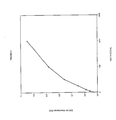
- Figure 1 is a standard curve obtained when using reagents of this invention in an assay for ⁇ -hCG.
- kits and methods for the detection of ⁇ -lactamases Preferred enzymes detected by the claimed method and kit are a subclass of ⁇ -lactamases designated as cephalosporinases.
- the claimed kits and method involve exposing the enzyme to cephalosporins of formula I in the presence of the tetrazolium salt of formula II as illustrated in the reaction scheme below:
- the ⁇ -lactamase cleaves the lactam ring in substrate I to create an intermediate compound IA which produces a leaving group of formula III.
- the leaving group reacts with the tetrazolium salt of formula II to produce a colored precipitate of formazan (Formula IV), indicating the presence or quantity of ⁇ -lactamase.
- Ri is a group which maintains the ability of the substrate of formula I to be recognized as a substrate by ⁇ -lactamases and cleave the ⁇ -lactam ring.
- R 1 can be a substituted or unsubstituted phenyl group linked to the lactam ring by an acetamide group, a substituted or unsubstituted alicyclic hydrocarbon group linked to the lactam ring by an acetamide group, or a substituted or unsubstituted straight or branched aliphatic hydrocarbon chain linked to the lactam ring by an acetamide group.
- Appropriate substituents for the groups above include halogen, cyano, sulfoxy or sulfonyl group(s).
- R 1 can also be an amino, substituted or unsubstituted alkylamino, substituted or unsubstituted arylamino group, or substituted or unsubstituted aromatic or non-aromatic heterocyclic substituted amino group.
- Alkylamino or arylamino groups can be substituted with either an aliphatic straight or branched chain or an alicyclic group.
- R 1 can also be a group of the formula: where R 6 is a lower aliphatic group, and R 7 is an amino or alkylamino group, and D represents an oxygen or sulfur atom.
- R 1 can also be a group of the formula: where R 8 is a 4-6 membered heterocyclic ring.
- R 1 Preferred groups for R 1 include those of the formulae:
- R 1 also includes alkoxycarbonyl, halogen, cyano, sulfoxy, or aminosulfonyl.
- R 2 forms a leaving group with the sulfur atom to which it is attached.
- the leaving group is released into solution.
- the conjugated acid of the leaving group must have a pKa of less than about ten such that the tetrazolium salt of formula II can be reduced to produce a colored precipitate of formazan of Formula IV above.
- the reduction of tetrazolium salts to colored formazans by the leaving group is pH dependent, and is facilitated by the increase of pH of the solution.
- the best leaving groups are those significantly deprotonated in the aforesaid pH range, e.g., thiols having pKa 8 or lower.
- Preferred leaving groups include an aliphatic or aromatic thiol; halo or amino substituted thiophenol; hydroxy, halo, or amino substituted mercapto pyridines; aliphatic or aromatic thiol acids; thiosulfonic acids; or a mercapto amino acid.
- Such preferred leaving groups include p-bromo-thiophenol, p-amino-thiophenol, 2-mercapto-3 pyridinol, thiolacetic acid, thiobenzoic acid, or cysteine.
- R 3 -R s are independently selected from groups such that the redox potential (E o , as defined in Lehninger, Principles of Biochemisrtry, Warth Publishers, 1982, pp470-475) of the resulting tetrazolium salt is 0 or lower volts.
- Ra-Rs can be independently selected from phenyl, p-iodophenyl, p-nitrophenyl, naphthyl, thiazolyl, alkylthiazolyl benzothiazolyl, phthalylhydrazidyl, styryl, biphenyl, 3-biphenylene-2,5 diphenyltetrazolium chloride, 3-dimethoxy-4-biphenylene 2,5-diphenyltetrazolium chloride, 3-dimethoxy-4-biphenylene-2-p-nitrophenyl-5-phenyltetrazolium chloride or 3-dimethoxy-4-biphenylene-2,5-p-nitrophenyl- tetrazolium chloride.
- Tetrazolium salts are a group of heteroaromatic compounds. They are colorless or very slightly colored and freely soluble in water due to their ionic character. They form on reduction highly colored water insoluble compounds called formazans (i.e. groups of Formula IV). A number of tetrazolium salts are commercially available or are reported in the literature, which will form a colored precipitate when exposed to a leaving group described above. Representative tetrazolium salts include the following:
- the redox potentials (E' o ) of the tetrazolium salts shown above are provided below for various pH values.
- halo or halogen refers to chloro, bromo, fluoro, and iodo groups
- Ci to Cs alkyl refers to lower alkyl groups including methyl, ethyl, propyl, isopropyl, butyl and the like.
- Conjugated Acid is the protonated species of the leaving group anion.
- Assays can be performed using the cephalosporin derivatives and tetrazolium salts described above.
- the presence of ⁇ -lactamase producing bacteria can be detected by introducing into a sample of biological fluid suspected of containing such bacteria a compound of formula I and a compound of formula II. If 6-lactamase producing bacteria are present, compound I will be cleaved, liberating a reducing group of formula III. The reducing group will reduce the tetrazolium salt of formula II to produce a colored formazan compound of formula IV.
- Kits for assays for ⁇ -lactamase producing bacteria include compounds of formulae I and II either in the same or different solutions, or provided in dry form to be made into solution.
- the kit can include an appropriate buffer or dilution solution.
- an electron carrier or accelerator
- An accelerator is a molecular species which is transiently reduced by the leaving group, and then immediately reoxidized by release of electrons to the tetrazolium salt. The accelerator aids in the transfer of electrons from the leaving group to the tetrazolium salt.
- the use of an accelerator greatly increases the speed of the reaction.
- Preferred accelerators include phenazine methosulfate (PMS), phenazine ethosulfate, 1-alkoxy phenazinium methosulfate, and Meldola's Blue.
- Specific binding member means any substance or group of substances which has a specific binding affinity for a particular ligand and virtually none other.
- a "ligand” is the substance or group of substances the presence or amount of which is to be determined in the sample.
- the specific binding member can be an antibody, and the ligand can be the drug, protein or the like to be detected in the sample which binds to the antibody.
- the specific binding member can be a drug, protein or the like which binds to the antibody to be detected in the sample.
- Other examples of specific binding member/ligand pairs include enzyme/enzyme receptors, carbohydrate/lectin, complementary nucleic acid strands, and the like.
- the labelled specific binding member can be used in assays for ligand in a variety of different ways.
- the assay can be a heterogeneous or homogeneous assay, forward or reverse, or a liposome lytic immunoassay.
- Assay kits for ligands employing reagents of this invention include ⁇ -lactamase conjugated to a specific binding member, a tetrazolium salt of formula II and a substrate of formula I. Appropriate buffer solutions and the like can also be included.
- an electron carrier or accelerator is desirable to aid in the transfer of electrons from the leaving group to the tetrazolium salt.
- Example 1 an assay employing a substrate of Formula I (7-thiophenylacetamido-3-thioacetoxymethyl-3-cephem-4-carboxylate sodium salt) is described.
- Example 2 a ⁇ -hCG assay using a substrate of Formula I is described.
- Example 3 another ⁇ -hCG assay is described.
- Example 4 the sensitivity of the reagents of this invention is demonstrated.
- Example 5 other assays for ⁇ -lactamase are described.
- thiolacetic acid 0.76 g, 10.2 mmol
- sodium bicarbonate 0.57 g, 10.2 mmol
- H 2 0 30 ml
- the warm solution was filtered through silica gel, and added to a solution of cephalothin (1.43 g, 3.4 mmol) in H 2 0 (10 ml).
- the reaction mixture was stirred for 31 hours at 50 C. After cooling to room temperature, the water was removed by vacuum, and the residue was dissolved in methyl alcohol. Crude product was precipitated by addition of diethyl ether, and the solid was triturated with ethyl acetate.
- Whatman #1 filter paper disks were impregnated with 0.05 M phosphate buffer pH 7.0 and dried. The disks were saturated with a solution of 1 ⁇ 10 -3 M INT, 2.5 ⁇ 10 -5 M PMS, and 2.5x10- 3 M the cephalosporin substrate of Part A in deionized water. The disks were dried at room temperature in the dark under high vacuum. Strips cut from these disks were then dipped in varying concentrations of ⁇ -lactamase from Enterobacter cloacae. A visible color change was observed with the strips turning reddish-pink. The greatest color change was observed with 1 ⁇ 10 -5 M S-lactamase (5 ⁇ 10 -10 moles deposited on the strip) with the limit of detectability at 1 ⁇ 10 -8 M (5 ⁇ 10 -13 moles deposited on the strip).
- Antibody to ⁇ -hCG was produced by inoculating goats with the purified ⁇ subunit of hCG combined with an adjuvant. This emulsion was then injected subcutaneously in the axillary and inguinal regions. A second injection was given 30 days later, and a third injection given 30 days after that. Two weeks later, a blood sample was drawn, and the serum tested for the presence of anti ⁇ -hCG IgG. When the antibody titer reached an acceptable level, the goat was put on a production bleeding schedule to harvest large volumes of serum. This serum was then accumulated and pooled for purification.
- the purification was accomplished by passing the serum over a ⁇ -subunit specific affinity column. ⁇ -specific IgG was then collected, protein concentration calculated, and the antibody diluted to 3.5 mg/ml.
- 0-lactamase (P-99 from Porton Products) was conjugated to anti ⁇ -hCG IgG (Example 2, part A) using succinimidyl 4-(N-maleimidomethyl)cyclohexane-1-carboxylate (SMCC) from Pierce.
- SMCC succinimidyl 4-(N-maleimidomethyl)cyclohexane-1-carboxylate
- Reduction of the antibody to generate thiols was accomplished by incubation of antibody (2 mg) at 3.5 mg/ml in 25 mM dithiothreitol (DTT) for 30 minutes at room temperature while rotating the mixture at 100 RPM. The DTT was then removed by passing the reduced antibody over a gel filtration (Sephadex G-25) column, collecting and pooling the antibody containing fractions.
- DTT dithiothreitol
- ⁇ -lactamase (2 mg) at 2.0 mg/ml was modified by incubation with a 50 molar excess of SMCC in N,N-dimethylformamide (DMF) for 30 minutes at room temperature while rotating the mixture at 100 RPM.
- the unreacted reactants were then removed by passing the derivatized enzyme over a gel-filtration (Sephadex G-25) column, collecting and pooling the enzyme containing fractions.
- the reduced antibody and modified enzyme were then combined at a molar ratio of 2.5 enzyme:1 antibody, and incubated 18 hours at 5 C while rotating the mixture at 100 RPM. Unreacted thiols were then capped to block any further conjugation/aggregation by the addition of 100 ul of 5 mM N-ethylmaleimide to 1.5 ml of conjugate. Conjugates were then stored at 5 C until utilized.
- polystyrene beads from Evco were ground to produce a rough surface.
- Affinity purified goat anti ⁇ -hCG (Example 2, part A) was adsorbed to the surface of the beads and the beads overcoated with a gelatin-sucrose mixture to block nonspecific binding.
- a standard curve ( Figure 1) for ⁇ -hCG was generated using ⁇ -lactamase/anti ⁇ -hCG IgG conjugate of Example 2, Part B. This assay was performed in a heterogeneous bead format and used thiol-substituted cephalosporin (TAC) from Example 1 part A as the substrate.
- TAC cephalosporin
- One of the beads from part C was added to each well of a reaction tray containing 300 ul of ⁇ -hCG standards of known concentration.
- the beads were incubated with the standards for one hour at room temperature while the reaction tray was rotated at 180 RPM.
- the beads were washed with 3 pulses of 5 ml each of phosphate buffer to wash away unbound analyte.
- ⁇ -lactamase/anti ⁇ -hCG IgG conjugate (300 ul 4.0 ug/ml) of Example 2 part B was added to each well of the reaction tray.
- the beads were incubated with the conjugate for one hour at room temperature while the reaction tray was rotated at 180 RPM.
- the beads were then washed with 3 pulses of 5 ml each of phosphate buffer to wash away unbound conjugate.
- the beads were transferred to clean reaction tubes to which substrate mixture (1.0 ml) was added.
- the substrate mixture of 1.3 x 10- 3 M iodonitrotetrazolium violet (INT), 3.2 x 10- 3 M TAC, and 3.2 x 10 -5 M phenazine methosulfate (PMS) in 0.1 M NaPO 4 , 0.1 M NaCI, 0.32% BSA pH 7.0 was prepared.
- the beads were incubated with the substrate mixture for one hour at room temperature while the reaction tubes were rotated at 180 RPM.
- the substrate mixture was then transferred to a clean cuvette, and the absorbance at 500 nm was read in a UV/Vis spectrophotometer. Asoo readings were then plotted against the standard concentrations to generate the standard curve of Figure 1.
- ⁇ -lactamase (P-99 from Porton Products) was conjugated to anti ⁇ -hCG IgG (Example 2, part A) using succinimidyl 4-(N-maleimidomethyl) cyclohexyl tricaproamido-1-carboxylate (a 30 atom linker group) disclosed in US patent application serial number 114,930 filed October 30, 1987 which was incorporated herein by reference.
- Reduction of the antibody to generate thiols was accomplished by incubation of antibody (2 mg) at 3.5 mg/ml in 25 mM dithiothreitol (DTT) for 30 minutes at room temperature while rotating the mixture at 100 RPM. The DTT was then removed by passing the reduced antibody over a gel filtration (Sephadex G-25) column, and the antibody-containing fractions were collected and pooled.
- ⁇ -lactamase (2 mg) at 2.0 mg/ml was modified by incubation with a 50 molar excess of 30-atom linker arm in N,N-dimethylformamide (DMF) for 30 minutes at room temperature while the mixture was rotated at 100 RPM.
- the unreacted linker was then removed by passing the derivatized enzyme over a gel-filtration (Sephadex G-25) column, and the enzyme-containing fractions were collected and pooled.
- the reduced antibody and modified enzyme were then combined at a molar ratio of 2.5 enzyme:1 antibody, and incubated 18 hours at 5 C while the mixture was rotated at 100 RPM. Unreacted thiols were then capped to block any further conjugation/aggregation by the addition of 100 ul of 5 mM N-ethylmaleimide to 1.5 ml of conjugate. Conjugates were then stored at 5 C until utilized.
- the assay of example 2 can be repeated using the conjugate of Example 3, part A instead of the conjugate of Example 2, part B.
- the absorbance of the reaction mixture in each cuvette was monitored at 500 nm during a 90 minute period. The results were then compared to the absorbance of a control reaction mixture having the same concentrations of INT, TAC and PMS, but without enzyme. Sensitivity down to 1 ⁇ 10 -10 moles of ⁇ -lactamase was observed for this system.
- An assay was performed by combining in a reaction vessel a solution of a tetrazolium salt, a S-lactamase substrate, and ⁇ -lactamase with or without an accelarator and bovine serum albumin (BSA) as indicated in Table I.
- BSA bovine serum albumin
- the absorbance of the reaction mixture was monitored at the wavelength indicated in the column captioned "wavelength". The maximum absorbance was recorded for each mixture tested.
- a control solution was prepared which was identical to the reaction mixture, except that no p-lactamase was added.
- the absorbance of the control was recorded in each case at 500nm, and the ratio of the maximum absorbance to the control solution absorbance was recorded (last column in Table I captioned "Ratio"). A ratio greater than 1.0 indicated an observable reaction in the reaction mixture in the "run time”. Unless indicted by an asterisk ( * ), the ⁇ -lactamase used was Sigma Chemical Co. P-0389. In the experiments indicated by the asterisk ( * ), B-lactamase from Porton Products (P-99) was used.
- cephalothin (1.06 g, 2.5 mmol) was added to a solution of 2-mercapto-3-pyridinol (0.322 g, 2.5 mmol) and triethylamine (0.257 g, 2.5 mmol) in H 2 0 (50 ml). The mixture was stirred for six hours at 70°C. The water was removed under reduced pressure. The residue was dissolved in 1:1 MeOH/benzene, and product was precipitated by addition of diethylether. Two further repetitions of this procedure yielded pure 7-thiophenylacetamido-3-(3-hydroxy-2-thiopyridyl) methyl-3-cephem-4-carboxylate sodium salt (0.677 g).
- Antibodies to urinary tract infectious microorganisms were raised by innoculating rabbits with emulsions containing heat inactivated microorganisms including Pseudomonas auruginosa, Streptococcus D, Es- cherichia coli, Proteus mirabilis, and Klebsiella pneumoniae, each rabbitt being injected with a different microorganism. Rabbits were injected with the emulsions subcutaneously and intramuscularly, later injections were given 21 days later, and third injections were given 21 days after that. One week later, blood samples were drawn and the serum tested for the presence of antibodies to the antigen pool described above.
- each rabbit was put on a production bleeding schedule to harvest sufficient volumes of serum for purification of antibodies to a particular urinary tract infectious microorganism.
- the serum was purified by passing the serum through a DE52 (Whatman) anion exchange column to separate IgG from other proteins.
- the antibody-containing fractions were then collected for each rabbit, and the protein concentration calculated.
- the antibodies against the various microorganisms were then pooled, and the antibody pool diluted to 1.1mg/m!.
- the rabbit antibacterial IgG from part A above was coupled using EDC (1-ethyl-3-(3-dimethylaminopropyl) carbodiimide hydrochloride) to polystyrene carboxylated microparticles (Seradyn, Indianapolis, Indiana) as described in Avrameas, S.C.R., Acad. Sci. Paris, Vol. 262, p. 2543 (1966).
- a ⁇ -lactamase/antibacterial IgG conjugate was produced following the procedure outlined in Example 2, part B, substituting the antibacterial IgG produced in part A of this example for the ⁇ -HCG IgG of Example 2, part B for use in an assay for urinary tract infectious microorganisms described in part D below.
- microparticles from part B of this example coupled to antibody were suspended in a buffer (phosphate-buffered saline from Sigma Chemical and 0.1% sodium azide, pH 7.4 to a concentration of 0.08%).
- the microparticles (135 ul; 0.08% solids) were combined with a sample (1.0 ml) containing 10 7 urinary tract infectious microorganisms per milliliter and EDTA/Sarcosyl (Sigma Chemical) extraction buffer (135 microliters), and the mixture was incubated at room temperature for five minutes.
- the mixture was then poured through a porous filter media (a Testpack device sold by Abbott Laboratories, Abbott Park, Illinois), and washed with buffer (1.0 ml of 1.0 M guanidine-HCI, 1.0 M NaCI, 0 .1 % Tween 20, o.i% sodium azide; hereinafter "buffer A").
- buffer 1.0 ml of 1.0 M guanidine-HCI, 1.0 M NaCI, 0 .1 % Tween 20, o.i% sodium azide; hereinafter "buffer A”
- the S-lactamase antibacterial IgG conjugate solution of part C of this example 200 ul; 100 micrograms/ml was added to the filter media and incubated at room temperature for five minutes.
- the filter media was then washed with buffer A (1 ml).
- the filter media was then washed with buffer A (1.0 ml) and visually compared to a control filter media which was treated in the same fashion, but without the bacteria.
- the bacteria-containing filter media was pink compared to the control which remained white, indicating that bacteria was detected by the assay in the bacteria-containing filter media.
Landscapes
- Life Sciences & Earth Sciences (AREA)
- Health & Medical Sciences (AREA)
- Chemical & Material Sciences (AREA)
- Engineering & Computer Science (AREA)
- Immunology (AREA)
- Organic Chemistry (AREA)
- Molecular Biology (AREA)
- Physics & Mathematics (AREA)
- Proteomics, Peptides & Aminoacids (AREA)
- Hematology (AREA)
- Urology & Nephrology (AREA)
- Zoology (AREA)
- Wood Science & Technology (AREA)
- Microbiology (AREA)
- Biotechnology (AREA)
- Analytical Chemistry (AREA)
- Biochemistry (AREA)
- General Health & Medical Sciences (AREA)
- Biomedical Technology (AREA)
- Medicinal Chemistry (AREA)
- Biophysics (AREA)
- Pathology (AREA)
- General Physics & Mathematics (AREA)
- Food Science & Technology (AREA)
- Cell Biology (AREA)
- Bioinformatics & Cheminformatics (AREA)
- General Engineering & Computer Science (AREA)
- Genetics & Genomics (AREA)
- Measuring Or Testing Involving Enzymes Or Micro-Organisms (AREA)
Applications Claiming Priority (2)
| Application Number | Priority Date | Filing Date | Title |
|---|---|---|---|
| US298098 | 1989-01-17 | ||
| US07/298,098 US4978613A (en) | 1989-01-17 | 1989-01-17 | Beta-lactamase assay employing chromogenic precipitating substrates |
Publications (3)
| Publication Number | Publication Date |
|---|---|
| EP0379048A2 true EP0379048A2 (fr) | 1990-07-25 |
| EP0379048A3 EP0379048A3 (fr) | 1991-10-23 |
| EP0379048B1 EP0379048B1 (fr) | 1995-09-13 |
Family
ID=23149021
Family Applications (1)
| Application Number | Title | Priority Date | Filing Date |
|---|---|---|---|
| EP90100438A Expired - Lifetime EP0379048B1 (fr) | 1989-01-17 | 1990-01-10 | Essais pour bêta-lactamase employant les substrats capables de précipiter un chromogène |
Country Status (6)
| Country | Link |
|---|---|
| US (1) | US4978613A (fr) |
| EP (1) | EP0379048B1 (fr) |
| JP (1) | JPH02234699A (fr) |
| CA (1) | CA2007885A1 (fr) |
| DE (1) | DE69022255T2 (fr) |
| ES (1) | ES2079386T3 (fr) |
Cited By (3)
| Publication number | Priority date | Publication date | Assignee | Title |
|---|---|---|---|---|
| EP0553741A3 (en) * | 1992-01-30 | 1993-11-18 | Becton Dickinson Co | Fluorogenic and chromogenic betalactamase substrates |
| WO2006031663A3 (fr) * | 2004-09-10 | 2006-05-11 | Genencor Int | Methodes pour detecter des cibles |
| CN107607719A (zh) * | 2017-11-02 | 2018-01-19 | 北京中生金域诊断技术股份有限公司 | 一种测定样品中β‑内酰胺酶方法 |
Families Citing this family (16)
| Publication number | Priority date | Publication date | Assignee | Title |
|---|---|---|---|---|
| DE3900649A1 (de) * | 1989-01-11 | 1990-07-12 | Boehringer Mannheim Gmbh | Verfahren zur abloesung eines analyten von seinem bindeprotein |
| US5126275A (en) * | 1990-09-19 | 1992-06-30 | Miles Inc. | Analytical method using tetrazolium salt indicators having a reflectance plateau |
| US5354658A (en) * | 1993-01-28 | 1994-10-11 | Dennis Wright | Non-radioactive method for detecting a labelled segment and a solution or composition therefor |
| US5741657A (en) * | 1995-03-20 | 1998-04-21 | The Regents Of The University Of California | Fluorogenic substrates for β-lactamase and methods of use |
| ES2285713T3 (es) * | 1995-06-07 | 2007-11-16 | Bioveris Corporation | Enzimoinmunoanalisis electroquimioluminiscente. |
| US20030235877A1 (en) * | 1996-04-30 | 2003-12-25 | La Region Wallone | Conjugates of haptens to beta-lactam derivatives and their use for detecting and/or quantifying haptens in solution and device for implementation thereof |
| US20040157262A1 (en) * | 1996-04-30 | 2004-08-12 | Michel Kohl | Conjugates of haptens to beta-lactam derivatives and their use for detecting and/or quantifying haptens in solution and device for implementation thereof |
| US5955604A (en) * | 1996-10-15 | 1999-09-21 | The Regents Of The University Of California | Substrates for β-lactamase and uses thereof |
| US6225074B1 (en) | 1997-08-18 | 2001-05-01 | Dennis Wright | Direct chloramphenicol acetyl transferase assay |
| US6031094A (en) * | 1998-07-23 | 2000-02-29 | The Regents Of The University Of California | Beta-lactam substrates and uses thereof |
| US8148110B2 (en) * | 1999-03-15 | 2012-04-03 | The Board Of Trustees Of The Leland Stanford Junior University | Detection of molecular interactions by β-lactamase reporter fragment complementation |
| EP1122542A1 (fr) * | 2000-02-01 | 2001-08-08 | Anda Biologicals S.A. | Méthode pour la détection rapide de microorganismes entiers sur des membranes retenantes à l'aide d' agents chaotropiques |
| GB201017547D0 (en) * | 2010-10-18 | 2010-12-01 | Univ Cardiff | Method and device for the detection of sulphur containing species |
| WO2013053953A1 (fr) * | 2011-10-14 | 2013-04-18 | Université de Liège | Procédé de mesure d'antibiotiques bêta-lactame |
| EP3583226B1 (fr) * | 2017-02-20 | 2025-07-02 | The Regents of the University of California | Technologie d'amplification mettant en oeuvre une détection en cascade à deux enzymes |
| US11385238B2 (en) * | 2017-06-30 | 2022-07-12 | Amgen Inc. | Methods of protein clips recovery |
Family Cites Families (2)
| Publication number | Priority date | Publication date | Assignee | Title |
|---|---|---|---|---|
| DE3006889A1 (de) * | 1980-02-23 | 1981-09-10 | Hoechst Ag, 6000 Frankfurt | Chromogene cephalosporine und verfahren zu ihrer herstellung |
| IL85018A0 (en) * | 1988-01-03 | 1988-06-30 | Orgenics Ltd | Stable chromogenic substrate mixture of indoxyl phosphate and tetrazolium salt,method of making and using same in biological and diagnostic assays |
-
1989
- 1989-01-17 US US07/298,098 patent/US4978613A/en not_active Expired - Fee Related
-
1990
- 1990-01-10 EP EP90100438A patent/EP0379048B1/fr not_active Expired - Lifetime
- 1990-01-10 ES ES90100438T patent/ES2079386T3/es not_active Expired - Lifetime
- 1990-01-10 DE DE69022255T patent/DE69022255T2/de not_active Expired - Fee Related
- 1990-01-12 JP JP2006096A patent/JPH02234699A/ja active Pending
- 1990-01-16 CA CA002007885A patent/CA2007885A1/fr not_active Abandoned
Cited By (5)
| Publication number | Priority date | Publication date | Assignee | Title |
|---|---|---|---|---|
| EP0553741A3 (en) * | 1992-01-30 | 1993-11-18 | Becton Dickinson Co | Fluorogenic and chromogenic betalactamase substrates |
| WO2006031663A3 (fr) * | 2004-09-10 | 2006-05-11 | Genencor Int | Methodes pour detecter des cibles |
| US8906637B2 (en) | 2004-09-10 | 2014-12-09 | Danisco Us Inc. | Methods for detecting targets |
| CN107607719A (zh) * | 2017-11-02 | 2018-01-19 | 北京中生金域诊断技术股份有限公司 | 一种测定样品中β‑内酰胺酶方法 |
| CN107607719B (zh) * | 2017-11-02 | 2019-08-02 | 北京中生金域诊断技术股份有限公司 | 一种测定样品中β-内酰胺酶方法 |
Also Published As
| Publication number | Publication date |
|---|---|
| CA2007885A1 (fr) | 1990-07-17 |
| JPH02234699A (ja) | 1990-09-17 |
| EP0379048B1 (fr) | 1995-09-13 |
| ES2079386T3 (es) | 1996-01-16 |
| DE69022255T2 (de) | 1996-04-18 |
| EP0379048A3 (fr) | 1991-10-23 |
| US4978613A (en) | 1990-12-18 |
| DE69022255D1 (de) | 1995-10-19 |
Similar Documents
| Publication | Publication Date | Title |
|---|---|---|
| EP0379048B1 (fr) | Essais pour bêta-lactamase employant les substrats capables de précipiter un chromogène | |
| Winn-Deen et al. | Development of a direct assay for alpha-amylase. | |
| US4299916A (en) | Preferential signal production on a surface in immunoassays | |
| US5731148A (en) | Adduct protection assay | |
| US4578361A (en) | Creatinine antibody | |
| US4637979A (en) | Composition and test device for determining the presence of leukocytes containing a zwitterion coupling agent | |
| EP0103784B1 (fr) | Substrats catalysés colorimétriques et fluorométriques pour déterminations enzymatiques de péroxydase | |
| CA2026809C (fr) | Systeme de determination de la chimioluminescence en milieu acide optimum par l'usage de l'haloperoxydase | |
| EP0656005B1 (fr) | Traceur, conjugues, dosages, materiels de dosage, chimioluminescents biotinyles | |
| US4764462A (en) | Detectably labeled cephalosporin assay for beta-lactamase | |
| CA1271419A (fr) | Augmentation du signal dans les dosages immunologiques par modulation de la catalyse chimique | |
| US4543325A (en) | Process and reagent for the determination of creatinine | |
| US4239852A (en) | Antibiotic detection method | |
| EP0202688B1 (fr) | Procédé et composition pour détecter les analyte-moitiés | |
| US5780239A (en) | Method for the determination of cast in urine | |
| US4239745A (en) | Antibiotic detection method | |
| GB2050602A (en) | Method of and reagents for quantitative determination of cyclic nucleotides | |
| Bayer et al. | [23] Colorimetric enzyme assays for avidin and biotin | |
| KR900005623B1 (ko) | Nag 아제의 측정 방법 및 그의 시약 | |
| US6159699A (en) | Enzyme linked chemiluminescent assay | |
| US20060292656A1 (en) | Lactamase amplification substrate | |
| JPS6214272B2 (fr) | ||
| EP0292169B1 (fr) | Substrates pour bêta-galactosidase | |
| US6455261B1 (en) | Diagnostic assay using microperoxidase | |
| JPH0970288A (ja) | 新規なアルカリホスファターゼ |
Legal Events
| Date | Code | Title | Description |
|---|---|---|---|
| PUAI | Public reference made under article 153(3) epc to a published international application that has entered the european phase |
Free format text: ORIGINAL CODE: 0009012 |
|
| AK | Designated contracting states |
Kind code of ref document: A2 Designated state(s): DE ES FR IT |
|
| PUAL | Search report despatched |
Free format text: ORIGINAL CODE: 0009013 |
|
| AK | Designated contracting states |
Kind code of ref document: A3 Designated state(s): DE ES FR IT |
|
| 17P | Request for examination filed |
Effective date: 19920413 |
|
| 17Q | First examination report despatched |
Effective date: 19931209 |
|
| GRAA | (expected) grant |
Free format text: ORIGINAL CODE: 0009210 |
|
| AK | Designated contracting states |
Kind code of ref document: B1 Designated state(s): DE ES FR IT |
|
| REF | Corresponds to: |
Ref document number: 69022255 Country of ref document: DE Date of ref document: 19951019 |
|
| ITF | It: translation for a ep patent filed | ||
| REG | Reference to a national code |
Ref country code: ES Ref legal event code: FG2A Ref document number: 2079386 Country of ref document: ES Kind code of ref document: T3 |
|
| ET | Fr: translation filed | ||
| PLBE | No opposition filed within time limit |
Free format text: ORIGINAL CODE: 0009261 |
|
| STAA | Information on the status of an ep patent application or granted ep patent |
Free format text: STATUS: NO OPPOSITION FILED WITHIN TIME LIMIT |
|
| 26N | No opposition filed | ||
| PGFP | Annual fee paid to national office [announced via postgrant information from national office to epo] |
Ref country code: FR Payment date: 19970113 Year of fee payment: 8 |
|
| PGFP | Annual fee paid to national office [announced via postgrant information from national office to epo] |
Ref country code: ES Payment date: 19970124 Year of fee payment: 8 |
|
| PGFP | Annual fee paid to national office [announced via postgrant information from national office to epo] |
Ref country code: DE Payment date: 19970129 Year of fee payment: 8 |
|
| PG25 | Lapsed in a contracting state [announced via postgrant information from national office to epo] |
Ref country code: ES Free format text: LAPSE BECAUSE OF NON-PAYMENT OF DUE FEES Effective date: 19980112 |
|
| PG25 | Lapsed in a contracting state [announced via postgrant information from national office to epo] |
Ref country code: FR Free format text: THE PATENT HAS BEEN ANNULLED BY A DECISION OF A NATIONAL AUTHORITY Effective date: 19980131 |
|
| PG25 | Lapsed in a contracting state [announced via postgrant information from national office to epo] |
Ref country code: DE Free format text: LAPSE BECAUSE OF NON-PAYMENT OF DUE FEES Effective date: 19981001 |
|
| REG | Reference to a national code |
Ref country code: FR Ref legal event code: ST |
|
| REG | Reference to a national code |
Ref country code: ES Ref legal event code: FD2A Effective date: 20000503 |
|
| PG25 | Lapsed in a contracting state [announced via postgrant information from national office to epo] |
Ref country code: IT Free format text: LAPSE BECAUSE OF NON-PAYMENT OF DUE FEES;WARNING: LAPSES OF ITALIAN PATENTS WITH EFFECTIVE DATE BEFORE 2007 MAY HAVE OCCURRED AT ANY TIME BEFORE 2007. THE CORRECT EFFECTIVE DATE MAY BE DIFFERENT FROM THE ONE RECORDED. Effective date: 20050110 |