EP0386882B1 - Provirus d'HIV défectif pour l'empaquetage, lignées cellulaires et leur utilisation - Google Patents
Provirus d'HIV défectif pour l'empaquetage, lignées cellulaires et leur utilisation Download PDFInfo
- Publication number
- EP0386882B1 EP0386882B1 EP90301212A EP90301212A EP0386882B1 EP 0386882 B1 EP0386882 B1 EP 0386882B1 EP 90301212 A EP90301212 A EP 90301212A EP 90301212 A EP90301212 A EP 90301212A EP 0386882 B1 EP0386882 B1 EP 0386882B1
- Authority
- EP
- European Patent Office
- Prior art keywords
- hiv
- vectors
- vector
- packaging
- gag
- Prior art date
- Legal status (The legal status is an assumption and is not a legal conclusion. Google has not performed a legal analysis and makes no representation as to the accuracy of the status listed.)
- Expired - Lifetime
Links
Images

Classifications
-
- C—CHEMISTRY; METALLURGY
- C12—BIOCHEMISTRY; BEER; SPIRITS; WINE; VINEGAR; MICROBIOLOGY; ENZYMOLOGY; MUTATION OR GENETIC ENGINEERING
- C12N—MICROORGANISMS OR ENZYMES; COMPOSITIONS THEREOF; PROPAGATING, PRESERVING, OR MAINTAINING MICROORGANISMS; MUTATION OR GENETIC ENGINEERING; CULTURE MEDIA
- C12N15/00—Mutation or genetic engineering; DNA or RNA concerning genetic engineering, vectors, e.g. plasmids, or their isolation, preparation or purification; Use of hosts therefor
- C12N15/09—Recombinant DNA-technology
- C12N15/63—Introduction of foreign genetic material using vectors; Vectors; Use of hosts therefor; Regulation of expression
- C12N15/79—Vectors or expression systems specially adapted for eukaryotic hosts
- C12N15/85—Vectors or expression systems specially adapted for eukaryotic hosts for animal cells
- C12N15/86—Viral vectors
-
- C—CHEMISTRY; METALLURGY
- C07—ORGANIC CHEMISTRY
- C07K—PEPTIDES
- C07K14/00—Peptides having more than 20 amino acids; Gastrins; Somatostatins; Melanotropins; Derivatives thereof
- C07K14/005—Peptides having more than 20 amino acids; Gastrins; Somatostatins; Melanotropins; Derivatives thereof from viruses
-
- A—HUMAN NECESSITIES
- A61—MEDICAL OR VETERINARY SCIENCE; HYGIENE
- A61K—PREPARATIONS FOR MEDICAL, DENTAL OR TOILETRY PURPOSES
- A61K38/00—Medicinal preparations containing peptides
-
- A—HUMAN NECESSITIES
- A61—MEDICAL OR VETERINARY SCIENCE; HYGIENE
- A61K—PREPARATIONS FOR MEDICAL, DENTAL OR TOILETRY PURPOSES
- A61K39/00—Medicinal preparations containing antigens or antibodies
-
- C—CHEMISTRY; METALLURGY
- C12—BIOCHEMISTRY; BEER; SPIRITS; WINE; VINEGAR; MICROBIOLOGY; ENZYMOLOGY; MUTATION OR GENETIC ENGINEERING
- C12N—MICROORGANISMS OR ENZYMES; COMPOSITIONS THEREOF; PROPAGATING, PRESERVING, OR MAINTAINING MICROORGANISMS; MUTATION OR GENETIC ENGINEERING; CULTURE MEDIA
- C12N2740/00—Reverse transcribing RNA viruses
- C12N2740/00011—Details
- C12N2740/10011—Retroviridae
- C12N2740/16011—Human Immunodeficiency Virus, HIV
- C12N2740/16041—Use of virus, viral particle or viral elements as a vector
- C12N2740/16043—Use of virus, viral particle or viral elements as a vector viral genome or elements thereof as genetic vector
-
- C—CHEMISTRY; METALLURGY
- C12—BIOCHEMISTRY; BEER; SPIRITS; WINE; VINEGAR; MICROBIOLOGY; ENZYMOLOGY; MUTATION OR GENETIC ENGINEERING
- C12N—MICROORGANISMS OR ENZYMES; COMPOSITIONS THEREOF; PROPAGATING, PRESERVING, OR MAINTAINING MICROORGANISMS; MUTATION OR GENETIC ENGINEERING; CULTURE MEDIA
- C12N2740/00—Reverse transcribing RNA viruses
- C12N2740/00011—Details
- C12N2740/10011—Retroviridae
- C12N2740/16011—Human Immunodeficiency Virus, HIV
- C12N2740/16051—Methods of production or purification of viral material
- C12N2740/16052—Methods of production or purification of viral material relating to complementing cells and packaging systems for producing virus or viral particles
-
- C—CHEMISTRY; METALLURGY
- C12—BIOCHEMISTRY; BEER; SPIRITS; WINE; VINEGAR; MICROBIOLOGY; ENZYMOLOGY; MUTATION OR GENETIC ENGINEERING
- C12N—MICROORGANISMS OR ENZYMES; COMPOSITIONS THEREOF; PROPAGATING, PRESERVING, OR MAINTAINING MICROORGANISMS; MUTATION OR GENETIC ENGINEERING; CULTURE MEDIA
- C12N2740/00—Reverse transcribing RNA viruses
- C12N2740/00011—Details
- C12N2740/10011—Retroviridae
- C12N2740/16011—Human Immunodeficiency Virus, HIV
- C12N2740/16111—Human Immunodeficiency Virus, HIV concerning HIV env
- C12N2740/16122—New viral proteins or individual genes, new structural or functional aspects of known viral proteins or genes
-
- C—CHEMISTRY; METALLURGY
- C12—BIOCHEMISTRY; BEER; SPIRITS; WINE; VINEGAR; MICROBIOLOGY; ENZYMOLOGY; MUTATION OR GENETIC ENGINEERING
- C12N—MICROORGANISMS OR ENZYMES; COMPOSITIONS THEREOF; PROPAGATING, PRESERVING, OR MAINTAINING MICROORGANISMS; MUTATION OR GENETIC ENGINEERING; CULTURE MEDIA
- C12N2740/00—Reverse transcribing RNA viruses
- C12N2740/00011—Details
- C12N2740/10011—Retroviridae
- C12N2740/16011—Human Immunodeficiency Virus, HIV
- C12N2740/16211—Human Immunodeficiency Virus, HIV concerning HIV gagpol
- C12N2740/16222—New viral proteins or individual genes, new structural or functional aspects of known viral proteins or genes
-
- C—CHEMISTRY; METALLURGY
- C12—BIOCHEMISTRY; BEER; SPIRITS; WINE; VINEGAR; MICROBIOLOGY; ENZYMOLOGY; MUTATION OR GENETIC ENGINEERING
- C12N—MICROORGANISMS OR ENZYMES; COMPOSITIONS THEREOF; PROPAGATING, PRESERVING, OR MAINTAINING MICROORGANISMS; MUTATION OR GENETIC ENGINEERING; CULTURE MEDIA
- C12N2740/00—Reverse transcribing RNA viruses
- C12N2740/00011—Details
- C12N2740/10011—Retroviridae
- C12N2740/16011—Human Immunodeficiency Virus, HIV
- C12N2740/16311—Human Immunodeficiency Virus, HIV concerning HIV regulatory proteins
- C12N2740/16322—New viral proteins or individual genes, new structural or functional aspects of known viral proteins or genes
Definitions
- the present invention is directed to vectors comprising a packaging defective HIV provirus, and the use of these vectors to create HIV packaging defective cell lines, and the uses thereof.
- the HIV provirus is an HIV-1 provirus.
- the human immunodeficiency virus (HIV-I, also referred to as HTLV-III, LAV or HTLV-III/LAV) is the etiological agent of the acquired immune deficiency syndrome (AIDS) and related disorders [Barre-Sinoussi, et al., Science 220 :868-871 (1983); Gallo et al, Science 224 :500-503 (1984); Levy et al., Science 225 :840-842 (1984); Popovic et al., Science 224 :497-500 (1984); Sarngadharan et al., Science 224 :506-508 (1984); Siegal et al., N. Engl. J. Med.
- AIDS acquired immune deficiency syndrome
- the disease is characterized by a long asymptomatic period followed by progressive degeneration of the immune system and the central nervous system.
- Studies of the virus indicate that replication is highly regulated, and both latent and lytic infection of the CD4 positive helper subset of T-lymphocytes occur in tissue culture [Zagury et al., Science 231 :850-853 (1986)].
- the expression of the virus in infected patients also appears to be regulated to enable evasion of the immune response.
- HIV-I Molecular studies of the regulation and genomic organization of HIV-I show that it encodes a number of genes [Ratner et al., Nature 313 :277-284 (1985); Sanchez-Pescador et al., Science 227 :484-492 (1985); Muesing et al., Nature 313 :450-457 (1985); Wain-Hobson et al., Cell 40:9-17 (1985)].
- Retroviruses are typically classified as belonging to one of three subfamilies, namely oncoviruses, spumaviruses and lentiviruses. Infection by oncoviruses is typically associated with malignant disorders. These viruses typically contain a single-stranded, plus-strand RNA genome of approximately 8,000 to 10,000 nucleotides encompassing the gag , pol and env , genes, as well as long terminal repeat (LTR) sequences. Some of the oncoviruses contain oncogenes. It is generally believed that spumaviruses are not pathogenic in vivo , although they induce foamy cytopathic changes in tissue culture. Infection by lentiviruses is generally slow and causes chronic debilitating diseases after a long latency period. These viruses, in addition to the gag , pol , and env genes possess a number of additional genes with regulatory functions.
- HIV human immunodeficiency viruses
- HIV-1 shares the gag , pro , pol , and env genes, respectively with other retroviruses [Haseltine, W.A., Journal of Acquired Immune Deficiency Syndrome, 1:217-240 (1988)]. HIV-1 also possesses additional genes modulating viral replication. The HIV-1 genome encodes vif , vpr , tat , rev , vpu and nef proteins [Haseltine, W.A., Journal of Acquired Immune Deficiency Syndrome, supra ]. Additionally, the long terminal repeats (LTRs) of HIV contain cis -acting sequences that are important for integration, transcription and polyadenylation.
- LTRs long terminal repeats
- the tat gene encodes a 14kD protein that is critical for HIV replication and gene expression [Rosen, C.A., et al., Nature 319 :555-559 (1986); Sodroski, J. et al., Science 227 :171-173 (1985); Arya et al, Science 229 : supra , Sodroski, et al., Science 229 , supra and Dayton, A., et al., Cell 44 :941-497 (1986) which are all incorporated herein by reference].
- Another gene necessary for replication is the rev gene. [Sodroski, et al., Nature 321 :412-417 (1986), which is both incorporated herein by reference].
- cis -acting sequences located between the 5′, LTR and the gag gene initiation codon have been located which are necessary for the efficient packaging of the viral RNA into virions [Bender, M.A., et al, J. Virol 61 :1639-1646 (1987), Katz, R.A., et al, J. Virol 59 :163-167 (1986), Mann, R., et al, Cell 33 :153-159 (1983), Pugatsch, T., et al, Virology 128 :505-511 (1983), Watanabe, S., et al, Proc. Natl. Acad. Sci.
- the packaging-defective provirus vector it would be possible to create packaging defective cell lines that could be used to investigate the packaging mechanism of the virus and to develop strategies to interfere with this packaging mechanism.
- the virions produced by such packaging negative proviruses could be used for vaccines and as a system for efficiently introducing a desired gene into a mammalian cell.
- This vector can be used to transform a preselected cell line to result in an HIV packaging defective cell line.
- each vector does not have a sufficient number of nucleotides corresponding to nucleotides of the HIV genome between the 5' major splice donor and the gag gene to package HIV RNA.
- each vector would contain a different marker gene.
- the transformed cell line would express HIV virions but would not be able to package HIV RNA into these virions. Thus, these virions could be used to generate antibodies, as a vaccine or as a method of transferring a desired gene product to a different cell line capable of infection by HIV.
- Figure 1 is a schematic of the HIV-1 genome from the 5' LTR to the gag initiation codon showing the 5' major splice donor (SD) and the site of the deletion in a vector representing one embodiment of this invention, pHXB ⁇ P1.
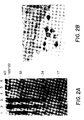
- Figure 2a is an autoradiogram of the immunoprecipitation of 35S-labelled viral protein from COS-1 cells with AIDS patient serum.
- Figure 2b is an electron micrograph of COS-1 cells transfected with pHXB ⁇ P1 showing virion particles of normal HIV-1 morphology.
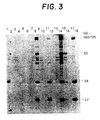
- Figure 3 is an autoradiogram of immunoprecipitation of labelled viral proteins from Jurkat T cell lysates or supernatants exposed to supernatants from COS-1 cells that were transfected or mock transfected.
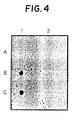
- Figure 4 is an RNA dot blot test.
- HIV packaging defective vectors and cell lines We have now discovered that it is possible to make HIV packaging defective vectors and cell lines. We have found that the region between the 5' major splice donor and the gag gene initiation codon in HIV viruses contains sequences necessary for packaging of HIV RNA into virions.
- sequences preferably correspond to the genome of HIV-1, HIV-2 and simian immunodeficiency virus (SIV).
- SIV simian immunodeficiency virus
- the vector contains a deletion of the HIV packaging sequence corresponding to the segment immediately downstream of the 5' major splice donor and just upstream of the gag gene initiation codon.
- the vector could contain nucleotides ranging from about 14 bases to 2 bases upstream of the gag initiation codon; for example either the 14 upstream bases or 5 upstream bases and still be packaging deficient.
- the vector contains a deletion of a nucleotide sequence beginning about 9 bases downstream of the 5' major splice donor and continuing to about 14 bases upstream of the gag initiation codon.
- the number of bases that need to be left out can vary greatly, for example, the 19 base pair deletion AAAAATTTTGACTAGCGGA deletion in HIV-1 is sufficient to result in loss of packaging ability (See Figure 1). However, even smaller deletions in this region should also result in loss of packaging efficiencies. Indeed, it is expected that a deletion as small as about 5 base pairs in this region should remove packaging ability. Thus the size of a particular deletion can readily be determined based upon the present disclosure by the person of ordinary skill in the art.
- the vector should contain an HIV nucleotide segment containing a sufficient number of nucleotides corresponding to nucleotides of the HIV genome to express functional HIV gene products, but as aforesaid, should not contain a sufficient number of nucleotides corresponding to the region between the 5′ major splice donor and the gag gene initiation codon to permit efficient packaging of the viral RNA into virions.
- HIV packaging defective cell lines it is preferred that such cell lines do not produce any infectious HIV.
- a cell line transformed by these packaging deficient vectors would have low infectivity because the cells are packaging defective, some RNA can still be packaged into the virion. Accordingly, it is preferable that the HIV nucleotide segment does not correspond to the entire HIV genome so that if some of the viral RNA is packaged into the virion, what is packaged will not be a replication competent virus.
- the vector would not contain sequences corresponding to an HIV LTR but would contain sequences corresponding to a promoter region and/or another genome's polyadenyltation sequences. Selection of particular promoters and polyadenylaton sequences can readily be determined based upon the particular host cell.
- one vector would include sequences permitting expression of HIV proteins upstream of env and the second vector would permit expression of the remaining proteins.
- one vector would contain an HIV nucleotide segment corresponding to a sufficient number of nucleotides upstream of the gag initiation codon to the env gene sequence to express the 5′-most gene products.
- the other vector would contain an HIV nucleotide segment corresponding to a sufficient number of nucleotides downstream of the gag gene sequence and including a functional env gene sequence.
- Such vectors can be chemically synthesized from the reported sequences of the HIV genomes or derived from the many available HIV proviruses, by taking advantage of the known restriction endonuclease sites in these viruses by the skilled artisan based upon the present disclosure.
- a different marker gene to each vector, i.e., co-transfect a preselected cell line with these different vectors and by looking for a cell containing both markers, one would have a cell line that has co-transfected with the two vectors.
- Such a cell would be able to produce all of the HIV proteins.
- virions would be produced, the RNA corresponding to the entire viral sequences would not be packaged in these virions.
- any cell line can be used.
- a mammalian cell line for example, CV-1, Hela, Raji, RD, SW480 or CHO cell lines.
- the CMV promoter will preferably express genes in CV-1 or Hela cells.
- the particular promoter used can be readily determined by the person of ordinary skill in the art, based upon the particular host cell line to be used.
- enhancer sequences can readily be determined by the person of ordinary skill in the art depending upon the host cell line.
- viral enhancer proteins such as those of herpes virus, hepatitis B virus, which act on HIV LTRs to enhance the level of virus product, or cellular transactivator proteins.
- Cellular transactivation proteins include NF ⁇ -B, UV light responsive factors and other T cell activation factors well known to the person of ordinary skill in the art.
- the cells By using a series of vectors that together would contain the complete HIV genome, one can create cell lines that produce a virion that is identical to the HIV virion, except that the virion does not contain the HIV RNA.
- the virions can readily be obtained from these cells. For example, the cells would be cultured and supernatant collected. Depending upon the desired use the supernatant containing the virions can be used or these virions can be separated from the supernatant by standard techniques. Typically, this would include gradiant centrifugation, filtering, etc.
- the virions can be used to generate an antigenic response to the HIV virions and because these virions are identical to the actual HIV virions, except that the interior of these virions do not contain the viral RNA, the vaccine created should be particularly useful.
- virions can also be used to raise antibodies to the virion that can then be used for a variety of purposes, e.g. screening for the virion, developing target system for the virions, etc.
- HIV packaging deficient cell lines can be extremely useful as a means of introducing a desired gene, for example, a heterologous gene into mammalian cells.
- virions could be used as an extremely efficient way to package desired genetic sequences into target cells infectable by HIV. This would be done by preparing a vector containing a nucleotide segment containing nucleotides corresponding to the packaging nucleotides of the HIV virus (HIV packaging region), a predetermined gene, and flanking the packaging sequence and the predetermined gene with sequences corresponding to a sufficient number of sequences from HIV LTRs for packaging, reverse transcription, integration and gene expression.
- the packaging region used would preferably correspond to at least the region between the 5' major splice donor and just upstream of the gag initiation codon, more preferably the region between the 5' major splice donor and the Bal I site in the gag gene.
- this vector When this vector is used to transfect one of the HIV packaging deficient cells, it is the nucleotide sequence from this vector that will be packaged in the virions. These "HIV packaged" genes could then be targeted to cells infectable by HIV. This method of transformation is expected to be much more efficient than current methods. Further, by appropriate choice of genes, one could also monitor the method of HIV infection.
- HIV packaging defective cell lines can be used to study various stages of the HIV life cycle, both in vivo and in vitro systems by a system because the cells will express HIV cellular proteins, but will not package the RNA.
- FIG. 1 The region between the HIV-1 5' LTR and the gag gene is shown in Figure 1 which shows the 5' major splice donor (SD) and site of deletion in a vector described below, pHXB ⁇ P1.
- SD 5' major splice donor
- pHXB ⁇ P1 The region between the HIV-1 5' LTR and the gag gene is shown in Figure 1 which shows the 5' major splice donor (SD) and site of deletion in a vector described below, pHXB ⁇ P1.
- SD major splice donor
- pHXB ⁇ P1 pHXBc2 of Fisher, A.G., et al, Nature 316 : 262-265 (1985).
- This plasmid also contains an SV40 origin of replication to allow efficient gene expression in COS-1 cells.
- the mutation was produced by the site-directed mutagenesis as described in Kunkel, T.A., et al, Methods in Enzymology 154 , 367-382 (1987), and the sequence confirmed by DNA sequencing (Sanger, F., et al, Proc. Natl. Acad. Sci. 74 :5463-5467 (1977).
- the mutated plasmid was designated pHXB ⁇ P1.
- COS-1 cells were transfected with the pHXBc2 and pHXB ⁇ P1 plasmids by the DEAE-dextran procedure [Lopata et al, Nucl. Acids Res. 12 :5707-5717 (1984); Queen and Baltimore, Cell 33 :741-748 (1983); (Sodroski, J., et al, Science 231 :1549-1553 (1986) which are incorporated herein by reference].
- COS-1 cell lysates and supernatants radiolabelled with 35S-cysteine Sodroski, J., et al, Science 231 , supra ) at 48 hours after transfection were precipitated with 19501 AIDS patient serum.
- the overall level of viral protein detected in cell lysates was comparable for the vectors containing the wild-type HXBc2 and the HIV packaging defective HXB ⁇ P1. See Figure 2A, which shows immunoprecipitation of 35S-labelled viral proteins from COS-1 cell lysates (lanes 1-3) or supernatants (lanes 4-6) with 19501 patient serum, after transfection with no DNA (lanes 1 and 4), 10 ⁇ g pHXBc2 (lanes 2 and 5) or 10 ⁇ g pHXB ⁇ P1 (lanes 3 and 6). The overall level of viral protein detected in cell lysates was comparable for cells transfected by either HXBc2 or HXB ⁇ P1.
- FIG. 1 The level of viral proteins precipitated from the supernatants of COS-1 cells was slightly less with HXB ⁇ P1 than with HXBc2.
- the amount of reverse transcriptase (RT) activity measured in the supernatants of COS-1 cell transfected by pHXB ⁇ P1 was 60% of that measured in cells transfected with the HXBc2 vector (data not shown).
- COS-1 cells transfected with pHXB ⁇ P1 were fixed 48 hours following transfection and examined by electron microscopy. Viral particles, including budding forms, of normal HIV-1 morphology were observed.
- Figure 2B is an electron micrographs of COS-1 cells transfected with PHXB ⁇ P1 showing virus particles of normal HIV-1 morphology.
- FIG. 3 shows immunoprecipitation of labelled viral proteins from Jurkat T cell lysates (lanes 1-3, 7-9 and 13-15) or supernatants (lanes 4-6, 10-12 and 16-18) exposed to supernatants from COS-1 cells that were mock transfected (lanes 1, 4, 7, 10, 13 and 16), pHXBc2 (lanes 2, 5, 8, 11, 14 and 17), or transfected with pHXB ⁇ P1 (lanes 3, 6, 9, 12, 15 and 18).
- the Jurkat cells were examined at day 7 (lanes 1-6), day 14 (lanes 7-12) and day 21 (13-18) following infection.
- Jurkat cultures exposed to HXB ⁇ P1 exhibited marked delays in and lower levels of viral protein production relative to those exposed to pHXBc2, the wild-type virus.
- Virus replication in human T lymphocytes transfected by HXB ⁇ P1 is thus seen to be significantly attenuated compared with cells transfected by HXBc2.
- FIG. 4 is an RNA dot blot without (column 1) and with (column 2) sodium hydroxide treatment following blotting of filtered supernatants from the Jurkat cultures.
- the supernatants contained a reverse transcriptase activity of 5 x 10⁴ cpm of HXB ⁇ P1 (row A), 5 x 10⁴ cpm of HXBc2 (row B), or 1 x 10⁵ cpm of HXBc2 (row C).
- a mutation in this region exhibits minimal effects on the ability of the provirus to produce proteins and virion particles following transfection, but markedly decreases the level of virion RNA and attenuates virus replication in a human CD4-positive lymphocyte line.
- HIV-1 replicates in cultured CD4-positive cells via cell-free transmission and cell-to-cell transmission, the latter involving the contact of infected and uninfected cells [Fisher, A.G., et al, Nature 316 :262-265 (1985), Sodroski, J., et al, Science 231 :1549-1553 (1986), Strebel, K., et al, Nature 328 :728-730 (1987)].
Landscapes
- Life Sciences & Earth Sciences (AREA)
- Health & Medical Sciences (AREA)
- Genetics & Genomics (AREA)
- Chemical & Material Sciences (AREA)
- Organic Chemistry (AREA)
- Engineering & Computer Science (AREA)
- Bioinformatics & Cheminformatics (AREA)
- Biochemistry (AREA)
- Biotechnology (AREA)
- General Engineering & Computer Science (AREA)
- Molecular Biology (AREA)
- Virology (AREA)
- Biomedical Technology (AREA)
- General Health & Medical Sciences (AREA)
- Wood Science & Technology (AREA)
- Zoology (AREA)
- Biophysics (AREA)
- Physics & Mathematics (AREA)
- Microbiology (AREA)
- Plant Pathology (AREA)
- Gastroenterology & Hepatology (AREA)
- Medicinal Chemistry (AREA)
- Proteomics, Peptides & Aminoacids (AREA)
- Micro-Organisms Or Cultivation Processes Thereof (AREA)
- Preparation Of Compounds By Using Micro-Organisms (AREA)
- Medicines Containing Material From Animals Or Micro-Organisms (AREA)
- Medicines Containing Antibodies Or Antigens For Use As Internal Diagnostic Agents (AREA)
Claims (21)
- Vecteur comprenant(a) des nucléotides correspondant à un génome de HIV destiné au codage des protéines gag, env et pol de HIV, désigné sous le nom de segment de HIV, les protéines gag, env et pol de HIV exprimées par le vecteur de manière associée étant capables de former un virion HIV, et ledit vecteur contenant une délétion du segment d'encapsidation de HIV nécessaire à l'encapsidation de l'ARN de HIV, qui est située entre le donneur d'épissure principal en 5' et le codon d'initiation du gène gag, et(b) un promoteur lié de manière fonctionnelle au segment de HIV ;lesdites protéines de HIV exprimées par le vecteur étant capables de former des virions HIV qui ne contiennent pas de quantités d'ARN de HIV suffisantes pour qu'il en résulte un virus HIV présentant une compétence de réplication.
- Système de vecteurs comprenant au moins deux vecteurs, désignés sous les noms de premier vecteur et second vecteur, dans lequel les vecteurs comprennent :(a) des nucléotides correspondant à un génome de HIV destiné au codage des protéines gag, env et pol de HIV, désigné sous le nom de segment de HIV, les protéines gag, env et pol de HIV exprimées par les vecteurs de manière associée étant capables de former un virion HIV, et lesdits vecteurs contenant une délétion du segment d'encapsidation de HIV nécessaire à l'encapsidation de l'ARN de HIV, qui est située entre le donneur d'épissure principal en 5' et le codon d'initiation du gène gag nécessaire à l'encapsidation efficace de l'ARN de HIV, et lesdits vecteurs contenant une délétion rendant impossible le codage desdites protéines gag, env et pol de HIV par un seul vecteur; et(b) un promoteur lié de manière fonctionnelle au segment de HIV ;ledit système de vecteurs étant capable de former des virions qui ne contiennent pas une quantité d'ARN de HIV suffisante pour qu'il en résulte un virus présentant une compétence de réplication.
- Vecteurs suivant la revendication 1 ou 2, dans lesquels le promoteur est une longue répétition terminale de HIV.
- Vecteurs suivant la revendication 1 ou 2, dans lesquels le promoteur est un promoteur qui exprime préférentiellement des produits de gènes dans des cellules particulières.
- Vecteurs suivant la revendication 4, dans lesquels le promoteur est un promoteur de CMV.
- Vecteurs suivant la revendication 1 ou 2, dans lesquels la délétion du segment d'encapsidation de HIV est une séquence de nucléotides en aval du donneur d'épissure principal en 5' jusqu'à environ 5 bases en amont du codon d'initiation du gène gag.
- Vecteurs suivant la revendication 1 ou 2, dans lesquels la délétion du segment d'encapsidation de HIV consiste en une séquence de nucléotides commençant environ 9 bases en aval du donneur d'épissure principal en 5' jusqu'à environ 14 bases en amont du codon d'initiation du gène gag.
- Vecteurs suivant la revendication 1 ou 2, dans lesquels la délétion du segment d'encapsidation de HIV consiste en la séquence AAAAATTTTGACTAGCGGA.
- Vecteurs suivant la revendication 1 ou 2, dans lesquels le génome de HIV est choisi dans le groupe consistant en les génomes de HIV-1, HIV-2 et SIV.
- Vecteurs suivant la revendication 1 ou 2, dans lesquels le génome de HIV est le génome de HIV-1.
- Vecteur suivant la revendication 8, dans lequel le génome de HIV est le génome de HIV-1.
- Lignée cellulaire présentant une défectivité d'encapsidation de HIV, qui consiste en une lignée cellulaire présélectionnée transformée par les vecteurs suivant la revendication 1 ou 2.
- Procédé de production d'une lignée cellulaire présentant une défectivité d'encapsidation de HIV, qui comprend :(a) la transformation d'une lignée cellulaire présélectionnée avec les vecteurs suivant la revendication 1 ou 2.
- Procédé suivant la revendication 13, dans lequel la lignée cellulaire présélectionnée est une lignée de cellules de mammifère.
- Procédé suivant la revendication 13, dans lequel la cellule est transformée par les deux vecteurs qui, collectivement, sont capables d'exprimer les protéines de HIV pour former le virion.
- Procédé suivant la revendication 15, dans lequel la cellule est transformée par deux vecteurs et un vecteur contient une séquence de nucléotides allant d'un site juste en amont du codon d'initiation gag à un site juste en amont de la séquence du gène env, et le second vecteur contient une séquence de nucléotides en aval de la séquence du gène gag et comprenant une séquence env fonctionnelle.
- Procédé suivant la revendication 15, dans lequel chaque vecteur contient une séquence de gène marqueur différente.
- Lignée cellulaire stable transformée par le procédé suivant la revendication 15.
- Procédé de production d'un vaccin contre le HIV, qui comprend la culture de la lignée cellulaire suivant la revendication 18 et la collecte des virions produits à partir de la lignée cellulaire pour l'utilisation comme vaccin.
- Procédé de transfert de gènes à des cellules de mammifère, qui comprend :(a) la transfection de la lignée cellulaire suivant la revendication 18 avec un vecteur contenant une séquence de nucléotides correspond à un gène choisi préalablement en aval d'une séquence de nucléotides correspondant à une séquence d'encapsidation de HIV pour l'encapsidation de l'ARN de HIV, le gène choisi préalablement et la séquence d'encapsidation de HIV étant flanqués de chaque côté d'une séquence correspondant à un nombre suffisant de nucléotides correspondant à des longues répétitions terminales de HIV pour l'encapsidation par la séquence d'encapsidation de HIV, la séquence d'encapsidation de HIV et les séquences consistant en longues répétitions terminales de HIV correspondant au même génome de HIV que les nucléotides de HIV ;(b) la culture de la lignée cellulaire transformée dans l'étape (a) ;(c) la collecte des virions produits à partir de la lignée cellulaire de l'étape (b) ; et(d) la mise en contact des virions de l'étape (c) avec une cellule cible prédéterminée de mammifère, in vitro.
- Procédé suivant la revendication 20, dans lequel les nucléotides de la séquence d'encapsidation de HIV sont les nucléotides allant du donneur d'épissure principal en 5' jusqu'au site Bal I dans le gène gag et les séquences consistant en longues répétitions terminales de HIV correspondent à la totalité des longues répétitions terminales de HIV.
Applications Claiming Priority (2)
| Application Number | Priority Date | Filing Date | Title |
|---|---|---|---|
| US30766489A | 1989-02-06 | 1989-02-06 | |
| US307664 | 1989-02-06 |
Publications (2)
| Publication Number | Publication Date |
|---|---|
| EP0386882A1 EP0386882A1 (fr) | 1990-09-12 |
| EP0386882B1 true EP0386882B1 (fr) | 1994-09-14 |
Family
ID=23190695
Family Applications (1)
| Application Number | Title | Priority Date | Filing Date |
|---|---|---|---|
| EP90301212A Expired - Lifetime EP0386882B1 (fr) | 1989-02-06 | 1990-02-06 | Provirus d'HIV défectif pour l'empaquetage, lignées cellulaires et leur utilisation |
Country Status (7)
| Country | Link |
|---|---|
| EP (1) | EP0386882B1 (fr) |
| JP (1) | JP3140757B2 (fr) |
| AT (1) | ATE111529T1 (fr) |
| CA (1) | CA2009403C (fr) |
| DE (1) | DE69012379T2 (fr) |
| DK (1) | DK0386882T3 (fr) |
| ES (1) | ES2063914T3 (fr) |
Families Citing this family (44)
| Publication number | Priority date | Publication date | Assignee | Title |
|---|---|---|---|---|
| US5591624A (en) * | 1988-03-21 | 1997-01-07 | Chiron Viagene, Inc. | Retroviral packaging cell lines |
| US5716826A (en) * | 1988-03-21 | 1998-02-10 | Chiron Viagene, Inc. | Recombinant retroviruses |
| DE69033975T2 (de) * | 1989-01-23 | 2002-10-02 | Chiron Corp. (N.D.Ges.D. Staates Delaware), Emeryville | Rekombinanttherapien für Infektionen und hyperproliferative Störungen |
| EP0487587A1 (fr) * | 1989-08-18 | 1992-06-03 | Chiron Corporation | Retrovirus de recombinaison apportant des constructions de vecteur a des cellules cibles |
| GB8923123D0 (en) * | 1989-10-13 | 1989-11-29 | Connaught Lab | A vaccine for human immunodeficiency virus |
| US5861282A (en) * | 1989-10-16 | 1999-01-19 | Whitehead Institute For Biomedical Research | Non-infectious HIV particles and uses therefor |
| JPH05501201A (ja) * | 1989-10-16 | 1993-03-11 | ホワイトヘツド・インスチチユート・フオー・バイオメデイカル・リサーチ | 非感染性hiv―1粒子およびそれらの使用 |
| WO1991007425A1 (fr) * | 1989-11-20 | 1991-05-30 | Oncogen Limited Partnership | Particules retrovirales non replicantes produites par recombinaton employees comme agents antiviraux et immunogenes |
| WO1992005266A2 (fr) * | 1990-09-21 | 1992-04-02 | Viagene, Inc. | Cellules d'encapsidation |
| US5837261A (en) * | 1990-09-25 | 1998-11-17 | Cantab Pharmaceuticals Research Limited | Viral vaccines |
| US7374768B1 (en) | 1990-09-25 | 2008-05-20 | Xenova Research Limited | Viral vaccines |
| KR100372934B1 (ko) | 1990-09-25 | 2003-12-24 | 캔탑 파마슈티칼스 리서취 리미티드 | 형질 상보성 세포주에 의해 생성된 바이러스 결손 백신 |
| GB9107631D0 (en) * | 1991-04-10 | 1991-05-29 | British Bio Technology | Proteinaceous particles |
| CN1062601C (zh) * | 1992-03-24 | 2001-02-28 | 剑桥药物研究有限公司 | 病毒疫苗 |
| US7223411B1 (en) | 1992-07-31 | 2007-05-29 | Dana-Farber Cancer Institute | Herpesvirus replication defective mutants |
| DK1473369T3 (da) * | 1993-01-26 | 2009-03-09 | Univ Pennsylvania | Præparater og fremgangsmåde til administration af genetisk materiale |
| US7001759B1 (en) | 1993-01-26 | 2006-02-21 | The Trustees Of The University Of Pennsylvania | Compositions and methods for delivery of genetic material |
| WO1994016737A1 (fr) | 1993-01-26 | 1994-08-04 | Weiner David B | Compositions et procedes d'administration de matieres genetiques |
| AU7263994A (en) * | 1993-08-06 | 1995-02-28 | Kai Juhani Ernst Krohn | Novel mutated human and simian immunodeficiency viruses and vaccines containing said viruses |
| US6544523B1 (en) | 1996-11-13 | 2003-04-08 | Chiron Corporation | Mutant forms of Fas ligand and uses thereof |
| EP1900818A3 (fr) | 1997-11-06 | 2008-06-11 | Novartis Vaccines and Diagnostics S.r.l. | Antigènes de Neisserial |
| WO1999036544A2 (fr) | 1998-01-14 | 1999-07-22 | Chiron S.P.A. | Antigenes du $i(neisseria meningitidis) |
| EP2261347A3 (fr) | 1998-05-01 | 2012-01-11 | Novartis Vaccines and Diagnostics, Inc. | Antigènes de Neisseria meningitidis et compositions |
| JP2002527066A (ja) | 1998-10-15 | 2002-08-27 | カイロン コーポレイション | 転移性乳癌および結腸癌調節遺伝子 |
| EP1961813B1 (fr) | 1998-12-16 | 2011-08-10 | Novartis Vaccines and Diagnostics, Inc. | Kinase de type humain dépendant de la cycline (hPNQALRE) |
| CA2372235A1 (fr) | 1999-04-30 | 2000-11-09 | Rino Rappuoli | Antigenes de neisseria conserves |
| GB9911683D0 (en) | 1999-05-19 | 1999-07-21 | Chiron Spa | Antigenic peptides |
| GB9916529D0 (en) | 1999-07-14 | 1999-09-15 | Chiron Spa | Antigenic peptides |
| EP1226253A2 (fr) | 1999-10-29 | 2002-07-31 | Chiron S.P.A. | Peptides antigeniques de neisseria |
| CA2871789C (fr) | 2000-01-17 | 2017-04-04 | Novartis Vaccines And Diagnostics S.R.L. | Vaccin a base de vesicule de membrane externe (omv) comprenant des proteines de membrane externe du serogroupe b de n. meningitis |
| ATE439372T1 (de) | 2000-10-27 | 2009-08-15 | Novartis Vaccines & Diagnostic | Nukleinsäuren und proteine von gruppen a und b- streptokokken |
| GB0107661D0 (en) | 2001-03-27 | 2001-05-16 | Chiron Spa | Staphylococcus aureus |
| GB0107658D0 (en) | 2001-03-27 | 2001-05-16 | Chiron Spa | Streptococcus pneumoniae |
| EP2168596B1 (fr) | 2001-12-12 | 2012-05-23 | Novartis Vaccines and Diagnostics S.r.l. | Immunisation contre la chlamydia trachomatis |
| WO2004046177A2 (fr) | 2002-11-15 | 2004-06-03 | Chiron Srl | Proteines de surface inattendues sur le meningocoque |
| GB0308198D0 (en) | 2003-04-09 | 2003-05-14 | Chiron Srl | ADP-ribosylating bacterial toxin |
| US8268324B2 (en) | 2004-03-29 | 2012-09-18 | Galpharma Co., Ltd. | Modified galectin 9 proteins and use thereof |
| FR2872170B1 (fr) | 2004-06-25 | 2006-11-10 | Centre Nat Rech Scient Cnrse | Lentivirus non interactif et non replicatif, preparation et utilisations |
| EP1712241A1 (fr) | 2005-04-15 | 2006-10-18 | Centre National De La Recherche Scientifique (Cnrs) | Composition pour application intratumorale dans le traitement du cancer |
| EP1739092A1 (fr) | 2005-06-28 | 2007-01-03 | I.N.S.E.R.M. Institut National de la Sante et de la Recherche Medicale | Antagonistes peptidiques des complexes sémaphorine/neuropiline de classe III |
| ES2380803T3 (es) | 2005-11-14 | 2012-05-18 | Centre National De La Recherche Scientifique (Cnrs) | Dominio no histona MACROH2A como inhibidor de la actividad PARP-1 y uso del mismo |
| ATE522541T1 (de) | 2006-06-09 | 2011-09-15 | Novartis Ag | Bakterielle adhäsine konformere |
| EP2139447A2 (fr) | 2007-03-20 | 2010-01-06 | Harold Brem | Compositions gm-csf cosméceuticales et leurs procédés d'utilisation |
| DK2694101T3 (en) | 2011-04-06 | 2017-01-09 | Biovaxim Ltd | Pharmaceutical compositions for the prevention and / or treatment of HIV disease in humans |
Family Cites Families (4)
| Publication number | Priority date | Publication date | Assignee | Title |
|---|---|---|---|---|
| US4752565A (en) * | 1986-04-07 | 1988-06-21 | The United States Of America As Represented By The Department Of Health And Human Services | Cell line producing AIDS viral antigens without producing infectious virus particles |
| FR2606030B1 (fr) * | 1986-10-31 | 1989-10-20 | Pasteur Institut | Retrovirus recombinant defectif, son procede de fabrication et ses applications, notamment pour l'etude de l'interaction des retrovirus sauvages avec des lignees cellulaires infectables par celui-ci |
| WO1989005349A1 (fr) * | 1987-12-09 | 1989-06-15 | The Australian National University | Procede servant a combattre des infections virales |
| CH684094A5 (de) * | 1988-03-21 | 1994-07-15 | Viagene Inc | Rekombinante Retroviren. |
-
1990
- 1990-02-05 JP JP02025911A patent/JP3140757B2/ja not_active Expired - Lifetime
- 1990-02-06 CA CA002009403A patent/CA2009403C/fr not_active Expired - Lifetime
- 1990-02-06 DK DK90301212.8T patent/DK0386882T3/da active
- 1990-02-06 EP EP90301212A patent/EP0386882B1/fr not_active Expired - Lifetime
- 1990-02-06 DE DE69012379T patent/DE69012379T2/de not_active Expired - Lifetime
- 1990-02-06 AT AT90301212T patent/ATE111529T1/de not_active IP Right Cessation
- 1990-02-06 ES ES90301212T patent/ES2063914T3/es not_active Expired - Lifetime
Non-Patent Citations (2)
| Title |
|---|
| JOURNAL OF AIDS, 4, p. 317-323 * |
| JOURNAL OF VIROLOGY 62, p. 1120-1124 * |
Also Published As
| Publication number | Publication date |
|---|---|
| DE69012379D1 (de) | 1994-10-20 |
| JP3140757B2 (ja) | 2001-03-05 |
| EP0386882A1 (fr) | 1990-09-12 |
| JPH0361492A (ja) | 1991-03-18 |
| CA2009403A1 (fr) | 1990-08-06 |
| CA2009403C (fr) | 2000-10-31 |
| ES2063914T3 (es) | 1995-01-16 |
| ATE111529T1 (de) | 1994-09-15 |
| DE69012379T2 (de) | 1995-03-09 |
| DK0386882T3 (da) | 1994-12-12 |
Similar Documents
| Publication | Publication Date | Title |
|---|---|---|
| CA2009403C (fr) | Provirus hiv a encapsidation defectueuse, lignees cellulaires et leur utilisation | |
| US5665577A (en) | Vectors containing HIV packaging sequences, packaging defective HIV vectors, and uses thereof | |
| US5981276A (en) | Vectors containing HIV packaging sequences, packaging defective HIV vectors, and uses thereof | |
| Arya et al. | New human and simian HIV-related retroviruses possess functional transactivator (tat) gene | |
| Malim et al. | Functional comparison of the Rev trans-activators encoded by different primate immunodeficiency virus species. | |
| Terwilliger et al. | The art gene product of human immunodeficiency virus is required for replication | |
| Kornfeld et al. | Cloning of HTLV-4 and its relation to simian and human immunodeficiency viruses | |
| Cheng-Mayer et al. | Host range, replicative, and cytopathic properties of human immunodeficiency virus type 1 are determined by very few amino acid changes in tat and gp120 | |
| Sodroski et al. | A second post-transcriptional trans-activator gene required for HTLV-III replication | |
| Terwilliger et al. | Effects of mutations within the 3'orf open reading frame region of human T-cell lymphotropic virus type III (HTLV-III/LAV) on replication and cytopathogenicity | |
| Ross et al. | Contribution of NF-kappa B and Sp1 binding motifs to the replicative capacity of human immunodeficiency virus type 1: distinct patterns of viral growth are determined by T-cell types | |
| Neumann et al. | Restriction of human immunodeficiency virus type 1 production in a human astrocytoma cell line is associated with a cellular block in Rev function | |
| Gao et al. | The heterosexual human immunodeficiency virus type 1 epidemic in Thailand is caused by an intersubtype (A/E) recombinant of African origin | |
| Kondo et al. | The p6gag domain of human immunodeficiency virus type 1 is sufficient for the incorporation of Vpr into heterologous viral particles | |
| Wagner et al. | Rev-independent expression of synthetic gag-pol genes of human immunodeficiency virus type 1 and simian immunodeficiency virus: implications for the safety of lentiviral vectors | |
| Paxton et al. | Incorporation of Vpr into human immunodeficiency virus type 1 virions: requirement for the p6 region of gag and mutational analysis | |
| Lisziewicz et al. | Inhibition of human immunodeficiency virus type 1 replication by regulated expression of a polymeric Tat activation response RNA decoy as a strategy for gene therapy in AIDS. | |
| Luciw et al. | Mutational analysis of the human immunodeficiency virus: the orf-B region down-regulates virus replication. | |
| Westervelt et al. | Macrophage tropism determinants of human immunodeficiency virus type 1 in vivo | |
| US5585263A (en) | Purified retroviral constitutive transport enhancer and its use to facilitate mRNA transport, and to produce recombinant, attenuated HIV | |
| Shibata et al. | Mutational analysis of the human immunodeficiency virus type 2 (HIV-2) genome in relation to HIV-1 and simian immunodeficiency virus SIV (AGM) | |
| US5851813A (en) | Primate lentivirus antigenic compositions | |
| Bosch et al. | Mutational analysis of the human immunodeficiency virus type 1 env gene product proteolytic cleavage site | |
| Peterlin et al. | Molecular biology of HIV | |
| US5654195A (en) | Vectors expressing hybrid viruses, methods of use and novel assays |
Legal Events
| Date | Code | Title | Description |
|---|---|---|---|
| PUAI | Public reference made under article 153(3) epc to a published international application that has entered the european phase |
Free format text: ORIGINAL CODE: 0009012 |
|
| AK | Designated contracting states |
Kind code of ref document: A1 Designated state(s): AT BE CH DE DK ES FR GB GR IT LI LU NL SE |
|
| 17P | Request for examination filed |
Effective date: 19901022 |
|
| 17Q | First examination report despatched |
Effective date: 19921022 |
|
| GRAA | (expected) grant |
Free format text: ORIGINAL CODE: 0009210 |
|
| AK | Designated contracting states |
Kind code of ref document: B1 Designated state(s): AT BE CH DE DK ES FR GB GR IT LI LU NL SE |
|
| REF | Corresponds to: |
Ref document number: 111529 Country of ref document: AT Date of ref document: 19940915 Kind code of ref document: T |
|
| REF | Corresponds to: |
Ref document number: 69012379 Country of ref document: DE Date of ref document: 19941020 |
|
| ITF | It: translation for a ep patent filed | ||
| ET | Fr: translation filed | ||
| REG | Reference to a national code |
Ref country code: DK Ref legal event code: T3 |
|
| REG | Reference to a national code |
Ref country code: GR Ref legal event code: FG4A Free format text: 3013705 |
|
| REG | Reference to a national code |
Ref country code: ES Ref legal event code: FG2A Ref document number: 2063914 Country of ref document: ES Kind code of ref document: T3 |
|
| EAL | Se: european patent in force in sweden |
Ref document number: 90301212.8 |
|
| PGFP | Annual fee paid to national office [announced via postgrant information from national office to epo] |
Ref country code: LU Payment date: 19950201 Year of fee payment: 6 |
|
| PGFP | Annual fee paid to national office [announced via postgrant information from national office to epo] |
Ref country code: SE Payment date: 19950210 Year of fee payment: 6 |
|
| PGFP | Annual fee paid to national office [announced via postgrant information from national office to epo] |
Ref country code: CH Payment date: 19950214 Year of fee payment: 6 Ref country code: GR Payment date: 19950214 Year of fee payment: 6 |
|
| PGFP | Annual fee paid to national office [announced via postgrant information from national office to epo] |
Ref country code: AT Payment date: 19950224 Year of fee payment: 6 |
|
| PGFP | Annual fee paid to national office [announced via postgrant information from national office to epo] |
Ref country code: DK Payment date: 19950227 Year of fee payment: 6 |
|
| PGFP | Annual fee paid to national office [announced via postgrant information from national office to epo] |
Ref country code: NL Payment date: 19950228 Year of fee payment: 6 |
|
| PGFP | Annual fee paid to national office [announced via postgrant information from national office to epo] |
Ref country code: BE Payment date: 19950314 Year of fee payment: 6 |
|
| PLBE | No opposition filed within time limit |
Free format text: ORIGINAL CODE: 0009261 |
|
| STAA | Information on the status of an ep patent application or granted ep patent |
Free format text: STATUS: NO OPPOSITION FILED WITHIN TIME LIMIT |
|
| 26N | No opposition filed | ||
| PG25 | Lapsed in a contracting state [announced via postgrant information from national office to epo] |
Ref country code: AT Effective date: 19960206 Ref country code: DK Effective date: 19960206 Ref country code: LU Free format text: LAPSE BECAUSE OF NON-PAYMENT OF DUE FEES Effective date: 19960206 |
|
| REG | Reference to a national code |
Ref country code: DK Ref legal event code: EBP |
|
| PG25 | Lapsed in a contracting state [announced via postgrant information from national office to epo] |
Ref country code: SE Effective date: 19960207 |
|
| PG25 | Lapsed in a contracting state [announced via postgrant information from national office to epo] |
Ref country code: LI Free format text: LAPSE BECAUSE OF NON-PAYMENT OF DUE FEES Effective date: 19960228 Ref country code: BE Effective date: 19960228 Ref country code: CH Free format text: LAPSE BECAUSE OF NON-PAYMENT OF DUE FEES Effective date: 19960228 |
|
| BERE | Be: lapsed |
Owner name: DANA FARBER CANCER INSTITUTE Effective date: 19960228 |
|
| PG25 | Lapsed in a contracting state [announced via postgrant information from national office to epo] |
Ref country code: GR Free format text: THE PATENT HAS BEEN ANNULLED BY A DECISION OF A NATIONAL AUTHORITY Effective date: 19960831 |
|
| PG25 | Lapsed in a contracting state [announced via postgrant information from national office to epo] |
Ref country code: NL Effective date: 19960901 |
|
| REG | Reference to a national code |
Ref country code: CH Ref legal event code: PL |
|
| REG | Reference to a national code |
Ref country code: GR Ref legal event code: MM2A Free format text: 3013705 |
|
| NLV4 | Nl: lapsed or anulled due to non-payment of the annual fee |
Effective date: 19960901 |
|
| REG | Reference to a national code |
Ref country code: GB Ref legal event code: IF02 |
|
| PGFP | Annual fee paid to national office [announced via postgrant information from national office to epo] |
Ref country code: ES Payment date: 20090226 Year of fee payment: 20 |
|
| PGFP | Annual fee paid to national office [announced via postgrant information from national office to epo] |
Ref country code: GB Payment date: 20090227 Year of fee payment: 20 |
|
| PGFP | Annual fee paid to national office [announced via postgrant information from national office to epo] |
Ref country code: DE Payment date: 20090331 Year of fee payment: 20 Ref country code: IT Payment date: 20090225 Year of fee payment: 20 |
|
| PGFP | Annual fee paid to national office [announced via postgrant information from national office to epo] |
Ref country code: FR Payment date: 20090217 Year of fee payment: 20 |
|
| REG | Reference to a national code |
Ref country code: GB Ref legal event code: PE20 Expiry date: 20100205 |
|
| REG | Reference to a national code |
Ref country code: ES Ref legal event code: FD2A Effective date: 20100208 |
|
| PG25 | Lapsed in a contracting state [announced via postgrant information from national office to epo] |
Ref country code: GB Free format text: LAPSE BECAUSE OF EXPIRATION OF PROTECTION Effective date: 20100205 |
|
| PG25 | Lapsed in a contracting state [announced via postgrant information from national office to epo] |
Ref country code: ES Free format text: LAPSE BECAUSE OF EXPIRATION OF PROTECTION Effective date: 20100208 |
|
| PG25 | Lapsed in a contracting state [announced via postgrant information from national office to epo] |
Ref country code: DE Free format text: LAPSE BECAUSE OF EXPIRATION OF PROTECTION Effective date: 20100206 |