EP0403151B1 - Mobiltelefon-Einrichtung mit Mittel zur Durchführung eines Alterungsprozesses - Google Patents
Mobiltelefon-Einrichtung mit Mittel zur Durchführung eines Alterungsprozesses Download PDFInfo
- Publication number
- EP0403151B1 EP0403151B1 EP90306148A EP90306148A EP0403151B1 EP 0403151 B1 EP0403151 B1 EP 0403151B1 EP 90306148 A EP90306148 A EP 90306148A EP 90306148 A EP90306148 A EP 90306148A EP 0403151 B1 EP0403151 B1 EP 0403151B1
- Authority
- EP
- European Patent Office
- Prior art keywords
- aging
- mobile telephone
- data
- telephone device
- serial interface
- Prior art date
- Legal status (The legal status is an assumption and is not a legal conclusion. Google has not performed a legal analysis and makes no representation as to the accuracy of the status listed.)
- Expired - Lifetime
Links
- 230000032683 aging Effects 0.000 title claims description 101
- 238000012545 processing Methods 0.000 claims description 28
- 238000000034 method Methods 0.000 claims description 4
- 230000005540 biological transmission Effects 0.000 description 7
- 230000001413 cellular effect Effects 0.000 description 2
- 230000002159 abnormal effect Effects 0.000 description 1
- 230000002950 deficient Effects 0.000 description 1
- 238000011161 development Methods 0.000 description 1
- 230000018109 developmental process Effects 0.000 description 1
- 239000011159 matrix material Substances 0.000 description 1
- 238000004377 microelectronic Methods 0.000 description 1
- 238000012986 modification Methods 0.000 description 1
- 230000004048 modification Effects 0.000 description 1
- 230000005855 radiation Effects 0.000 description 1
- 238000011160 research Methods 0.000 description 1
- 230000000452 restraining effect Effects 0.000 description 1
Images

Classifications
-
- H—ELECTRICITY
- H04—ELECTRIC COMMUNICATION TECHNIQUE
- H04W—WIRELESS COMMUNICATION NETWORKS
- H04W88/00—Devices specially adapted for wireless communication networks, e.g. terminals, base stations or access point devices
- H04W88/02—Terminal devices
-
- Y—GENERAL TAGGING OF NEW TECHNOLOGICAL DEVELOPMENTS; GENERAL TAGGING OF CROSS-SECTIONAL TECHNOLOGIES SPANNING OVER SEVERAL SECTIONS OF THE IPC; TECHNICAL SUBJECTS COVERED BY FORMER USPC CROSS-REFERENCE ART COLLECTIONS [XRACs] AND DIGESTS
- Y02—TECHNOLOGIES OR APPLICATIONS FOR MITIGATION OR ADAPTATION AGAINST CLIMATE CHANGE
- Y02D—CLIMATE CHANGE MITIGATION TECHNOLOGIES IN INFORMATION AND COMMUNICATION TECHNOLOGIES [ICT], I.E. INFORMATION AND COMMUNICATION TECHNOLOGIES AIMING AT THE REDUCTION OF THEIR OWN ENERGY USE
- Y02D30/00—Reducing energy consumption in communication networks
- Y02D30/70—Reducing energy consumption in communication networks in wireless communication networks
Definitions
- This invention relates to a mobile telephone device, such as an automobile telephone device, having an aging operation function.
- a mohile telephone device of the type described has a serial interface for connecting the mobile telephone device to an external device such as a handset.
- the serial interface includes a clock terminal for supplying a clock signal to the external device and a serial data terminal for receiving serial data from the external device.
- the mobile telephone device has an antenna plug. In a normal state for a normal operation, the antenna plug is connected to an antenna.
- the mobile telephone device In order to detect early or initial failure of the mobile telephone device before shipment of the mobile telephone device, the mobile telephone device has an aging operation function.
- the mobile telephone device When the mobile telephone device carries out an aging operation, the mobile telephone device is put into an aging state. In the aging state, the mobile telephone device is continuously or intermittently put into a transmission state.
- a mobile telephone which is referred to herein as conventional has a particular terminal which is called an aging terminal.
- the aging terminal is exclusively used when the mobile telephone device is subjected to the aging operation. More specifically, the aging terminal is supplied with a logic low level when the aging terminal is grounded. Otherwise, the aging terminal is supplied with a logic high level. If the aging terminal is grounded, the mobile telephone device carries out the aging operation after power is applied to the mobile telephone device. In other words, the mobile telephone device judges whether the mobile telephone device is subjected to the normal operation or the aging operation in accordance with a logic level supplied to the aging terminal when the power is applied. When the mobile telephone device is subjected to the aging operation, tile antenna plug is connected to a terminating set for restraining the radiation of undesirable radio waves.
- the conventional mobile telephone device carries out the aging operation when the power is applied to the conventional mobile telephone device. Accordingly, the conventional mobile telephone device radiates the undesirable radio wave which interferes with a mobile telephone system.
- the conventional mobile telephone device is disadvantageous in that it has a large-size and is expensive.
- a mobile telephone device includes a serial interface and is subject to an aging operation with an aging device connected to the serial interface.
- the aging device is for generating particular data.
- An arrangement will be described below in which a mobile telephone device includes clock delivering means connected to the serial interface for delivering a clock signal to the aging device through the serial interface, the clock delivering means thereby triggering the aging device to make the aging device supply the particular data to the serial interface; data receiving means connected to the serial interface and to the clock delivering means for receiving serial data as received data in synchronism with the clock signal, the serial data being supplied to the serial interface both during progress of the aging operation and while the mobile telephone device is not subjected to the aging operation; judging means connected to the data receiving means for judging whether or not the received data coincides with the particular data; and aging means connected to the judging means for carrying out the aging operation when the received data coincides with the particular data.
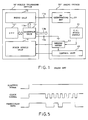
- the conventional mobile telephone device 10' comprises a radio unit 11, a central processing unit (CPU) 12', an interface unit 13', and a power supply unit 14.
- the radio unit 11 has an antenna plug 11a. In a normal state for a normal operation, the antenna plug 11a is connected to an antenna (not shown).
- the interface unit 13' connects the central processing unit 12' with the radio unit 11 and an external device (not shown) through an internal bus 13a and a serial interface 13b, respectively.
- the external device may be a handset.
- the power supply unit 14 supplies electric power to the radio unit 11, the central processing unit 12', and the interface unit 13'.
- the power supply unit 14 is controlled by the conventional aging device 20' in the manner which will later become clear.
- the interface unit 13' has an aging terminal 13c. It will later be described that the aging terminal 13c is for making the conventional mobile telephone device 10' carry out an aging operation.
- the conventional aging device 20' comprises an RF terminating set 21, a D.C. power supply 22, an ampere meter 23, and a control unit 24.
- the RF terminating set 21 is connected to the antenna plug 11a.
- the aging terminal 13c is grounded.
- the D.C, power supply 22 is connected to the power supply unit 14 through the ampere meter 23.
- the ampere meter 23 measures a current which flows from the D.C. power supply 22 to the power supply unit 14 to produce current data indicative of the current.
- the control unit 24 carries out on-off control of the power supply unit 14 and reads the current data from the ampere meter 23.
- the control unit 24 turns the power supply unit 14 on. Thereupon, the power supply unit 14 supplies the electric power to the radio unit 11, the central processing unit 12', and the interface unit 13'.
- the central processing unit 12' initializes the interface unit 13'.
- the central processing unit 12' judges whether or not the aging terminal 13c is grounded. When the aging terminal 13c is grounded, the central processing unit 12' carries out the aging operation. More particularly, the central processing unit 12' makes the radio unit 11 select a transmission channel and transmission power through the interface unit 13. Subsequently, the central processing unit 12' makes the radio unit 11 transmit a radio wave through the transmission channel.
- the ampere meter 23 measures the current during a predetermined time interval which is, for instance, equal to one minute. If the current is usual, the control unit 24 turns the power supply unit 14 off. After a predetermined time duration elapses, the control unit 24 again turns the power supply unit 14 on.
- the predetermined time duration is, for example, equal to five minutes.
- the aging operation is repeatedly carried out during a predetermined time period which is, for instance, equal to twelve hours.
- the conventional mobile telephone device 10' has disadvantages, as pointed out in the preamble of the instant specification.
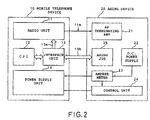
- a mobile telephone device 10 is for use in combination with an aging device 20, like in Fig. 1.
- the mobile telephone device 10 is similar in structure and operation to the conventional mobile telephone device 10' illustrated in Fig. 1 except that the aging terminal 13c is omitted.
- the aging device 20 is similar in structure and operation to the conventional aging device 20' illustrated in Fig. 1 except that the aging device 20 further comprises an aging jig 25.
- the aging device 20 is connected to the mobile telephone device 10. More specifically, the RF terminating set 21 is connected to the antenna plug 11a.
- the aging jig 25 is connected to the serial interface 13b.
- the D.C. power supply 22 is connected to the power supply unit 14 through the ampere meter 23.
- the control unit 24 is directly connected to the power supply unit 14.
- the aging jig 25 is for supplying the mobile telephone device 10 with particular data which will later be described. When supplied with the particular data, the 5 mobile telephone device 10 carries out the aging operation in the manner which will be described below.
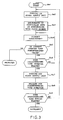
- the control unit 24 turns the power supply unit 14 of the mobile telephone device 10 on (a second stage Sa2 of Fig. 3). Thereupon, the power supply unit 14 supplies the electric power to the radio unit 11, the central processing unit 12, and the interface unit 13.
- the central processing unit 12 When the electric power turns on (a first step Sb1 of Fig. 4), the central processing unit 12 initializes the interface unit 13 (a second step Sb2 of Fig. 4). The central processing unit 12 delivers a clock signal to the aging jig 25 through the interface unit 13 and the serial interface 13b (a third step Sb3 of Fig. 4). The central processing unit 12 therefore acts in cooperation with the interface unit 13 as a clock delivering arrangement at the third step Sb3 of Fig. 4. The aging jig 25 delivers the particular data to the aerial interface 13b in synchronism with the clock signal (a third stage Sa3 of Fig. 3). The clock delivering arrangement thereby triggers the aging device 20 to make the aging device 20 supply the particular data to the serial interface 13b.
- the central processing unit 12 receives serial data as received data in synchronism with the clock signal (a fourth step Sb4 of Fig. 4).
- the serial data is supplied to the serial interface 13b both during progress of the aging operation and while the mobile telephone device 10 is not subjected to the aging operation.
- the central processing unit 12 therefore serves in combination with the interface unit 13 as a data receiving arrangement at the fourth step Sb4 of Fig. 4.
- the central processing unit 12 judges whether or not the received data coincides with the particular data (a fifth step Sb5 of Fig. 4).
- the central processing unit 12 is therefore operable as a judging arrangement at the fifth step Sb5 of Fig. 4.
- the central processing unit 12 When the received data coincides with the particular data, the central processing unit 12 carries out the aging operation. More partioularly, the central processing unit 12 makes the radio unit 11 select a transmission channel and transmission power through the interface unit 13 (sixth and seventh steps Sb6 and Sb7 of Fig. 4). Subsequently, the central processing unit 12 makes the radio unit 11 transmit a radio wave through the transmission channel (an eighth step Sb8 of Fig. 4). It is now understood that the central processing unit 12 acts as an aging arrangement at the sixth through the eighth step Sb6 to Sb8 of Fig. 4. When the received data does not coincide with the particular data, the 5 central processing unit 12 carries out a normal operation (a ninth step Sb9 of Fig. 4).
- the mobile telephone device 10 consumes a current supplied from the D.C. power supply 22.
- the ampere meter 23 measures the current (a fourth stage Sa4 of Fig. 3). If the current is greater than a predetermined value (YES of a fifth stage Sa5 of Fig. 3), the current is measured by the ampere meter 23 until the predetermined time interval elapses (NO of a sixth stage Sa6 of Fig. 3). If the current is not greater than the predetermined value or is abnormal (NO of the fifth stage Sa5 of Fig. 3), the mobile telephone device 10 is determined to be defective and thus is rejected.
- the control unit 24 turns the power supply unit 14 off (a seventh stage Sa7 of Fig. 3).
- the control unit 24 again turns the power supply unit 14 on at the second stage Sa2 if a predetermined time period does not elapse (No of a ninth stage sa9 of Fig. 3).
- the predetermined time period elapses, the mobile telephone device 10 is regarded excellent.
- the central processing unit 12 delivers the clock signal to the aging jig 25 through the interface unit 13 and the serial interface 13b.
- the aging jig 25 supplies the particular data to the central processing unit 12 through the serial interface 13b and the interface unit 13 in synchronism with the clock signal.
- the particular data is eight bits long and is represented by binary 0010 1110. It is possible to reduce a probability where the aging operation is erroneously carried out when the particular data consists of a lot of bits.
Landscapes
- Engineering & Computer Science (AREA)
- Computer Networks & Wireless Communication (AREA)
- Signal Processing (AREA)
- Mobile Radio Communication Systems (AREA)
- Telephone Function (AREA)
- Synchronisation In Digital Transmission Systems (AREA)
Claims (5)
- Mobiltelefon-Einrichtung (10) mit einer seriellen Schnittstelle (13b) zum Verbinden einer zentralen Datenverarbeitungseinheit (12) mit einer äußeren Einrichtung, und mit einer taktgebenden Einrichtung (12, 13, Sb3), wobei die serielle Schnittstelle einen Taktanschluß zum Liefern eines Taktsignals an eine äußere Vorrichtung und einen seriellen Datenanschluß zum Empfangen serieller Daten von der äußeren Vorrichtung aufweist, dadurch gekennzeichnet, daß die serielle Schnittstelle zur Verbindung mit einer Alterungsvorrichtung (20), die bestimmte Daten erzeugt, angepaßt ist, daß die taktgebende Einrichtung (12, 13, Sb3) mit der seriellen Schnittstelle (13b) verbunden ist, um das Taktsignal über die serielle Schnittstelle (13b) an die Alterungsvorrichtung (20) zu liefern, wobei die taktgebende Einrichtung dabei die Alterungsvorrichtung triggert, um die Alterungsvorrichtung (20) zu veranlassen, die bestimmten Daten an die serielle Schnittstelle zu liefern, und wobei die zentrale Datenverarbeitungseinheit (12) und die Schnittstelleneinheit (13) Datenempfangseinrichtungen bilden, die mit der seriellen Schnittstelle (13b) und der taktgebenden Einrichtung (12, 13, Sb3) zum Empfangen von seriellen Daten als Empfangsdaten in Synchronisation mit dem Taktsignal verbunden sind, wobei die seriellen Daten über die serielle Schnittstelle (13b) sowohl während des Vorgangs des Alterungsprozesses als auch wenn die Mobiltelefon-Einrichtung nicht dem Alterungsprozeß unterworfen ist, geliefert werden, daß eine Entscheidungseinrichtung (12, Sb5) mit den Datenempfangseinrichtungen (12, 13) verbunden ist, um zu entscheiden, ob die empfangenen Daten mit den bestimmten Daten übereinstimmen oder nicht, daß die Alterungsvorrichtung (20) mit der Entscheidungseinrichtung (12, Sb5) verbunden ist, um den Alterungsprozeß auszuführen, wenn die empfangenen Daten mit den bestimmten Daten übereinstimmen, und daß das Taktsignal auf das Einschalten der elektrischen Spannungsversorgung ansprechend über die serielle Schnittstelle (13b) zu der Alterungsvorrichtung (20) geliefert wird.
- Mobiltelefon-Einrichtung (10) nach Anspruch 1, ferner mit einer Funkeinheit (11), wobei die Alterungsvorrichtung (20) Einrichtungen zum Ein- und Ausschalten (Sa2, Sa7, Sa8, Sa9) der Funkeinheit (11) in vorgegebenen Abständen aufweist.
- Verfahren zur Durchführung eines Alterungstests für eine Mobiltelefon-Einrichtung (10) mit einer Funkeinheit (11), dadurch gekennzeichnet, daß es die Schritte aufweist: Liefern (Sbl, Sb2, Sb3) eines Taktsignals von der Mobiltelefon-Einrichtung (10) zu einer Alterungsvorrichtung (20), wenn die elektrische Versorgung eingeschaltet wird, Liefern (Sa3) von Alterungsdaten der Alterungsvorrichtung (20) zu der Mobiltelefon-Einrichtung (10) als Antwort auf das Taktsignal, Vergleichen (Sb5) der Alterungsdaten mit bestimmten Daten, und, aufgrund Übereinstimmung zwischen den Alterungsdaten und den bestimmten Daten, Erzeugen eines Steuersignals, und ansprechend auf das Steuersignal, Durchführen (Sb6, Sb7, Sb8) eines Alterungstests der Mobiltelefon-Einrichtung (10), wobei der Takt liefernde Schritt (Sb1, Sb2, Sb3) den Schritt des Lieferns des Taktsignals von der Mobiltelefon-Einrichtung (10) über eine serielle Schnittstelle (13b) an die Alterungsvorrichtung (20) aufweist, und wobei der Daten liefernde Schritt den Schritt des Liefern (Sa3) der Alterungsdaten von der Alterungsvorrichtung (20) über die serielle Schnittstelle (13b) an die Mobiltelefon-Einrichtung (10) aufweist.
- Verfahren nach Anspruch 3, wobei der Schritt des Durchführens des Alterungstests ein Ein- und Ausschalten (Sa2, Sa7, Sa8, Sa9) der Funkeinheit (11) für einen vorgegebenen Zeitbereich aufweist.
- Verfahren nach Anspruch 4, wobei der Schritt des Durchführens des Alterungstests ein Messen (Sa4) des Stromes, der von der Funkeinheit (11) verwendet wird, um einen gemessenen Stromwert zu liefern, und ein Bestimmen (Sa5), ob der gemessene Stromwert größer ist als ein vorgegebener Wert oder nicht und ein Erzeugen eines Fehlersignals, wenn der gemessene Strom nicht größer ist als der vorgegebene Wert aufweist.
Applications Claiming Priority (2)
| Application Number | Priority Date | Filing Date | Title |
|---|---|---|---|
| JP143234/89 | 1989-06-06 | ||
| JP1143234A JPH0758934B2 (ja) | 1989-06-06 | 1989-06-06 | 自動車電話装置 |
Publications (3)
| Publication Number | Publication Date |
|---|---|
| EP0403151A2 EP0403151A2 (de) | 1990-12-19 |
| EP0403151A3 EP0403151A3 (de) | 1992-03-11 |
| EP0403151B1 true EP0403151B1 (de) | 1996-01-17 |
Family
ID=15334021
Family Applications (1)
| Application Number | Title | Priority Date | Filing Date |
|---|---|---|---|
| EP90306148A Expired - Lifetime EP0403151B1 (de) | 1989-06-06 | 1990-06-06 | Mobiltelefon-Einrichtung mit Mittel zur Durchführung eines Alterungsprozesses |
Country Status (6)
| Country | Link |
|---|---|
| US (1) | US5179723A (de) |
| EP (1) | EP0403151B1 (de) |
| JP (1) | JPH0758934B2 (de) |
| AU (1) | AU629647B2 (de) |
| CA (1) | CA2018263C (de) |
| ES (1) | ES2081933T3 (de) |
Families Citing this family (5)
| Publication number | Priority date | Publication date | Assignee | Title |
|---|---|---|---|---|
| JP2701591B2 (ja) * | 1991-05-31 | 1998-01-21 | 日本電気株式会社 | 自動車電話装置の自己診断方法 |
| US6487420B1 (en) * | 1999-10-15 | 2002-11-26 | Telefonaktiebolaget Lm Ericsson (Publ) | Adaptive rach power determination for mobile telecommunications user equipment unit |
| KR100448644B1 (ko) * | 2002-04-12 | 2004-09-13 | 에버테크노 주식회사 | 휴대폰 에이징 장치 |
| CN100432684C (zh) * | 2005-07-29 | 2008-11-12 | 华为技术有限公司 | 对通讯设备进行生产测试的方法 |
| CN104540923A (zh) * | 2012-06-27 | 2015-04-22 | 提克纳有限责任公司 | 超低粘度的液晶聚合物组合物 |
Family Cites Families (8)
| Publication number | Priority date | Publication date | Assignee | Title |
|---|---|---|---|---|
| US3956601A (en) * | 1974-10-17 | 1976-05-11 | Paradyne Corporation | Telecommunications analyzer |
| US4048564A (en) * | 1976-01-26 | 1977-09-13 | Gleeson Jr Thomas Paul | Transceiver test device |
| US4455678A (en) * | 1981-08-03 | 1984-06-19 | Rockwell International Corporation | Test method and device for FM transmitter |
| DE3211325C1 (de) * | 1982-03-27 | 1989-05-18 | Rohde & Schwarz GmbH & Co KG, 8000 München | System zum automatischen Aufbau einer Kurzwellen-Telegrafiezeichen-Verbindung |
| JPS5989043A (ja) * | 1982-11-12 | 1984-05-23 | Hitachi Ltd | 移動電話装置保守診断方式 |
| US4680787A (en) * | 1984-11-21 | 1987-07-14 | Motorola, Inc. | Portable radiotelephone vehicular converter and remote handset |
| GB8503924D0 (en) * | 1985-02-15 | 1985-03-20 | Hewlett Packard Ltd | Testing telecommunications circuits/instruments |
| JPH0681086B2 (ja) * | 1989-03-31 | 1994-10-12 | 三菱電機株式会社 | 移動無線機 |
-
1989
- 1989-06-06 JP JP1143234A patent/JPH0758934B2/ja not_active Expired - Fee Related
-
1990
- 1990-06-05 CA CA002018263A patent/CA2018263C/en not_active Expired - Fee Related
- 1990-06-06 US US07/534,083 patent/US5179723A/en not_active Expired - Fee Related
- 1990-06-06 ES ES90306148T patent/ES2081933T3/es not_active Expired - Lifetime
- 1990-06-06 AU AU56846/90A patent/AU629647B2/en not_active Ceased
- 1990-06-06 EP EP90306148A patent/EP0403151B1/de not_active Expired - Lifetime
Also Published As
| Publication number | Publication date |
|---|---|
| EP0403151A3 (de) | 1992-03-11 |
| CA2018263A1 (en) | 1990-12-06 |
| JPH0758934B2 (ja) | 1995-06-21 |
| AU5684690A (en) | 1990-12-13 |
| AU629647B2 (en) | 1992-10-08 |
| ES2081933T3 (es) | 1996-03-16 |
| JPH039619A (ja) | 1991-01-17 |
| EP0403151A2 (de) | 1990-12-19 |
| CA2018263C (en) | 1993-12-21 |
| US5179723A (en) | 1993-01-12 |
Similar Documents
| Publication | Publication Date | Title |
|---|---|---|
| US5194860A (en) | Radio telemetry systems with channel selection | |
| MY133921A (en) | Positioning system, positioning method and positioning device | |
| US7233783B2 (en) | Mobile telephone system capable of effectively utilizing GPS information even if direct reception by a mobile telephone apparatus is difficult | |
| EP1376892A3 (de) | Verfahren und Vorrichtung zur Bestimmung räumlicher Parameter zur Kalibrierung einer Kommunikationsstation mit Antennenarray | |
| JP2007020230A (ja) | 移動電話の信号レベルを適合させる装置 | |
| EP0958530A1 (de) | Verfahren und vorrichtung zur zeitmessung in einem satellitenpositionierungssystem | |
| JP4440256B2 (ja) | プログラマブル・クロックを備える無線周波数からベースバンドへのシリアルなインターフェース | |
| US5774784A (en) | Temperature control system for electronic apparatus | |
| EP0403151B1 (de) | Mobiltelefon-Einrichtung mit Mittel zur Durchführung eines Alterungsprozesses | |
| AU6266498A (en) | Wireless communication device and system incorporating location-determining means | |
| EP0612162A2 (de) | Einrichtung zur Überwachung des Sendeleistungspegels in einem TDMA-Übertragungssystem | |
| WO1998009181A1 (en) | Combination of a gps receiver and a telecommunications apparatus | |
| EP0902298A3 (de) | Prüfverfahren und Prüfeinrichtung für eine elektronische Schaltung | |
| WO1998017018A3 (en) | Method and device to determine the transmission point in time of a first transfer in relation to another transfer in a radio medium | |
| JPH11118900A (ja) | Gps受信機及び受信方法 | |
| JP3323809B2 (ja) | 時分割多重無線通信方式の受信電界強度測定装置 | |
| JP3095305B2 (ja) | 受信レベル測定回路 | |
| JP3101834B2 (ja) | 無線送信電力制御方式 | |
| JP2970373B2 (ja) | 無線端末装置 | |
| JPH11341549A (ja) | 移動体通信システムにおける位置検出用端末データの作成方法 | |
| JP3035820B2 (ja) | アクセスプローブ測定装置 | |
| US20010017884A1 (en) | Communication aparatus | |
| JPH09121206A (ja) | ビット誤り率測定方法 | |
| JP2000209121A (ja) | 移動体識別装置 | |
| WO1998037711A3 (en) | A receiver unit for a central terminal of a wireless telecommunications system |
Legal Events
| Date | Code | Title | Description |
|---|---|---|---|
| PUAI | Public reference made under article 153(3) epc to a published international application that has entered the european phase |
Free format text: ORIGINAL CODE: 0009012 |
|
| 17P | Request for examination filed |
Effective date: 19900628 |
|
| AK | Designated contracting states |
Kind code of ref document: A2 Designated state(s): ES GB IT SE |
|
| PUAL | Search report despatched |
Free format text: ORIGINAL CODE: 0009013 |
|
| AK | Designated contracting states |
Kind code of ref document: A3 Designated state(s): ES GB IT SE |
|
| 17Q | First examination report despatched |
Effective date: 19930831 |
|
| GRAA | (expected) grant |
Free format text: ORIGINAL CODE: 0009210 |
|
| AK | Designated contracting states |
Kind code of ref document: B1 Designated state(s): ES GB IT SE |
|
| REG | Reference to a national code |
Ref country code: ES Ref legal event code: FG2A Ref document number: 2081933 Country of ref document: ES Kind code of ref document: T3 |
|
| ITF | It: translation for a ep patent filed | ||
| PLBE | No opposition filed within time limit |
Free format text: ORIGINAL CODE: 0009261 |
|
| STAA | Information on the status of an ep patent application or granted ep patent |
Free format text: STATUS: NO OPPOSITION FILED WITHIN TIME LIMIT |
|
| 26N | No opposition filed | ||
| PGFP | Annual fee paid to national office [announced via postgrant information from national office to epo] |
Ref country code: SE Payment date: 19970605 Year of fee payment: 8 |
|
| PG25 | Lapsed in a contracting state [announced via postgrant information from national office to epo] |
Ref country code: SE Free format text: LAPSE BECAUSE OF NON-PAYMENT OF DUE FEES Effective date: 19980607 |
|
| EUG | Se: european patent has lapsed |
Ref document number: 90306148.9 |
|
| PGFP | Annual fee paid to national office [announced via postgrant information from national office to epo] |
Ref country code: ES Payment date: 20010626 Year of fee payment: 12 |
|
| REG | Reference to a national code |
Ref country code: GB Ref legal event code: IF02 |
|
| PG25 | Lapsed in a contracting state [announced via postgrant information from national office to epo] |
Ref country code: ES Free format text: LAPSE BECAUSE OF NON-PAYMENT OF DUE FEES Effective date: 20020607 |
|
| PGFP | Annual fee paid to national office [announced via postgrant information from national office to epo] |
Ref country code: GB Payment date: 20030604 Year of fee payment: 14 |
|
| REG | Reference to a national code |
Ref country code: ES Ref legal event code: FD2A Effective date: 20030711 |
|
| PG25 | Lapsed in a contracting state [announced via postgrant information from national office to epo] |
Ref country code: GB Free format text: LAPSE BECAUSE OF NON-PAYMENT OF DUE FEES Effective date: 20040606 |
|
| GBPC | Gb: european patent ceased through non-payment of renewal fee |
Effective date: 20040606 |
|
| PG25 | Lapsed in a contracting state [announced via postgrant information from national office to epo] |
Ref country code: IT Free format text: LAPSE BECAUSE OF NON-PAYMENT OF DUE FEES Effective date: 20050606 |