EP0405236B1 - Copolymère de 4-méthylpentène-1 - Google Patents
Copolymère de 4-méthylpentène-1 Download PDFInfo
- Publication number
- EP0405236B1 EP0405236B1 EP90111248A EP90111248A EP0405236B1 EP 0405236 B1 EP0405236 B1 EP 0405236B1 EP 90111248 A EP90111248 A EP 90111248A EP 90111248 A EP90111248 A EP 90111248A EP 0405236 B1 EP0405236 B1 EP 0405236B1
- Authority
- EP
- European Patent Office
- Prior art keywords
- methylpentene
- copolymer
- ppm
- olefin
- polymer
- Prior art date
- Legal status (The legal status is an assumption and is not a legal conclusion. Google has not performed a legal analysis and makes no representation as to the accuracy of the status listed.)
- Expired - Lifetime
Links
Images


Classifications
-
- C—CHEMISTRY; METALLURGY
- C08—ORGANIC MACROMOLECULAR COMPOUNDS; THEIR PREPARATION OR CHEMICAL WORKING-UP; COMPOSITIONS BASED THEREON
- C08F—MACROMOLECULAR COMPOUNDS OBTAINED BY REACTIONS ONLY INVOLVING CARBON-TO-CARBON UNSATURATED BONDS
- C08F10/00—Homopolymers and copolymers of unsaturated aliphatic hydrocarbons having only one carbon-to-carbon double bond
- C08F10/14—Monomers containing five or more carbon atoms
-
- C—CHEMISTRY; METALLURGY
- C08—ORGANIC MACROMOLECULAR COMPOUNDS; THEIR PREPARATION OR CHEMICAL WORKING-UP; COMPOSITIONS BASED THEREON
- C08F—MACROMOLECULAR COMPOUNDS OBTAINED BY REACTIONS ONLY INVOLVING CARBON-TO-CARBON UNSATURATED BONDS
- C08F110/00—Homopolymers of unsaturated aliphatic hydrocarbons having only one carbon-to-carbon double bond
- C08F110/14—Monomers containing five or more carbon atoms
-
- C—CHEMISTRY; METALLURGY
- C08—ORGANIC MACROMOLECULAR COMPOUNDS; THEIR PREPARATION OR CHEMICAL WORKING-UP; COMPOSITIONS BASED THEREON
- C08F—MACROMOLECULAR COMPOUNDS OBTAINED BY REACTIONS ONLY INVOLVING CARBON-TO-CARBON UNSATURATED BONDS
- C08F210/00—Copolymers of unsaturated aliphatic hydrocarbons having only one carbon-to-carbon double bond
- C08F210/16—Copolymers of ethene with alpha-alkenes, e.g. EP rubbers
-
- Y—GENERAL TAGGING OF NEW TECHNOLOGICAL DEVELOPMENTS; GENERAL TAGGING OF CROSS-SECTIONAL TECHNOLOGIES SPANNING OVER SEVERAL SECTIONS OF THE IPC; TECHNICAL SUBJECTS COVERED BY FORMER USPC CROSS-REFERENCE ART COLLECTIONS [XRACs] AND DIGESTS
- Y10—TECHNICAL SUBJECTS COVERED BY FORMER USPC
- Y10S—TECHNICAL SUBJECTS COVERED BY FORMER USPC CROSS-REFERENCE ART COLLECTIONS [XRACs] AND DIGESTS
- Y10S526/00—Synthetic resins or natural rubbers -- part of the class 520 series
- Y10S526/902—Monomer polymerized in bulk in presence of transition metal containing catalyst
-
- Y—GENERAL TAGGING OF NEW TECHNOLOGICAL DEVELOPMENTS; GENERAL TAGGING OF CROSS-SECTIONAL TECHNOLOGIES SPANNING OVER SEVERAL SECTIONS OF THE IPC; TECHNICAL SUBJECTS COVERED BY FORMER USPC CROSS-REFERENCE ART COLLECTIONS [XRACs] AND DIGESTS
- Y10—TECHNICAL SUBJECTS COVERED BY FORMER USPC
- Y10S—TECHNICAL SUBJECTS COVERED BY FORMER USPC CROSS-REFERENCE ART COLLECTIONS [XRACs] AND DIGESTS
- Y10S526/00—Synthetic resins or natural rubbers -- part of the class 520 series
- Y10S526/943—Polymerization with metallocene catalysts
Definitions
- the present invention relates to a copolymer of 4-methylpentene-1 and an ⁇ -olefin having 2 to 25 carbon atoms except for 4-methylpentene-1 having a substantially syndiotactic structure and high tacticity.
- Syndiotactic polypropylene Polymers of ⁇ -olefin having a syndiotactic structure have been known for a long period of time, and one of them is syndiotactic polypropylene.
- the syndiotactic polypropylene which can be obtained by a method for polymerizing propylene at a low temperature in the presence of a catalyst comprising a vanadium compound, an ether and an organic aluminum compound, is poor in syndiotacticity. For this reason, such a kind of polypropylene is not considered to have the characteristics of syndiotactic polypropylene.
- J. A. Ewen et al. the activity of each transition metal is high, and the syndiotactic polypropylene obtained by this method has high syndiotacticity and excellent physical properties.
- J. A. Ewen et al. do not disclose the polymerization of 4-methylpentene-1 at all.
- the A. Zambelli et al. method comprises hydrogenating a 1,2-polymer of 4-methyl-1,3-pentadiene having the syndiotactic structure in order to prepare the polymer of 4-methylpentene-1 having the syndiotactic structure.
- the tacticity of the 1,2-polymer is not high, and thus the polymer of 4-methylpentene-1 which is the hydrogenated compound thereof is also poor in tacticity, with the result that the polymer of 4-methylpentene-1 has low crystallizability.
- the A. Zambelli et al. method has the drawback that a copolymer of 4-methylpentene-1 and another ⁇ -olefin cannot be prepared by this method.
- An object of the present invention is to provide a copolymer of 4-methylpentene-1 having high tacticity.
- Another object of the present invention is to provide a substantially syndiotactic copolymer of 4-methylpentene-1 and another ⁇ -olefin which copolymer is excellent in physical properties, particularly impact resistance, and also has good balance between impact resistance and stiffness and good transparency.
- a polymer and a copolymer of 4-methylpentene-1 according to the present invention can be obtained by polymerizing 4-methylpentene-1 alone or in combination with another ⁇ -olefin in the presence of a catalyst.
- the polymerization catalyst include compounds recited in the J. A. Ewen et al. literature and other compounds for providing homopolymers of propylene in which tacticity is relatively high, i.e., a syndiotactic pentad fraction obtained from the spectrum of 13C-NMR is at least 0.7.
- a catalyst comprising a compound of a transition metal having an asymmetric ligand and an aluminoxane is effective.
- transition metal compound having the asymmetric ligand examples include isopropyl(cyclopentadienyl-1-fluorenyl)hafnium dichloride, isopropyl(cyclopentadienyl-1-fluorenyl)zirconium dichloride and other similar compounds in which one or two chlorine atoms are replaced with other halogen atoms or alkyl groups having 1 to 5 carbon atoms.
- aluminoxane examples include compounds represented by the formulae wherein R is a hydrocarbon residue having 1 to 3 carbon atoms, preferably a methyl group, and n is a value of at least 5, preferably a value of from 10 to 100.
- the molar ratio of the aluminoxane to the transition metal compound is from 10 to 1,000,000, preferably from 50 to 5,000.
- the polymerization conditions are not subject to any particular restriction, and there can be used a solvent polymerization process using a known inert solvent, a mass polymerization process in a substantially inert solvent-free system or a gaseous phase polymerization process.
- the polymerization temperature is in the range of from -100 to 200°C
- the polymerization pressure is in the range of from atmospheric pressure to 101 bar (100 kg/cm2-G).
- the polymerization at a temperature of from -100 to 100°C under a pressure of from atmospheric pressure to 51 bar (50 kg/cm2-G) is particularly preferred.
- the homopolymer of 4-methylpentene-1 can be prepared by effecting the polymerization at a relatively low temperature in the presence of the above-mentioned catalyst. If necessary, the resulting polymer is then washed with a saturated hydrocarbon compound having about 5 to about 20 carbon atoms such as pentane, hexane or heptane, an aromatic hydrocarbon compound such as benzene, toluene, xylene or ethylbenzene, a compound thereof in which a part or all of hydrogen atoms are replaced with halogen atoms, an alcohol having 1 to 20 carbon atoms, or an ether or an ester having 2 to 20 carbon atoms, in order to remove polymers of 4-methylpentene-1 having relatively low tacticity, whereby the homopolymer of 4-methylpentene-1 having high tacticity is obtained.
- a saturated hydrocarbon compound having about 5 to about 20 carbon atoms such as pentane, hexane or heptane
- the peak intensity observed at about 43.1 ppm on the basis of tetramethylsilane in a spectrum of 13C-NMR measured as a 1,2,4-trichlorobenzene solution is at least 0.5 of the total of absorption intensities observed at about 42-44 ppm.
- the crystallization temperature of the polymer which is measured by melting the same at 300°C and then lowering its temperature at 10°C/minute is 160°C or more.
- the 4-methylpentene-1 polymer of the present invention is also characterized in that a maximum diffraction line appears in a spacing of about 9. 10 ⁇ 8 cm (9 ⁇ ) X-ray diffraction spectrum.
- the molecular weight of the 4-methylpentene-1 homopolymer according to the present invention is preferably 1,000 or more, particularly preferably 5,000 or more in terms of a weight average molecular weight measured by gel permeation chromatography, because this homopolymer will be molded later on.
- the above-mentioned molecular weight can be obtained by, for example, measuring a molecular weight of the polymer as a 1,2,4-trichlorobenzene solution at 135°C, and calculated as a polypropylene.
- a ratio (Mw/Mn) of the weight average molecular weight (Mw) to the number average molecular weight (Mn) of the polymer is preferably from 1.5 to 20.
- the polymer having a relatively narrow molecular weight distribution (Mw/Mn is 3 or less) is usually formed by using the above catalyst system
- the polymer having a broad molecular weight distibution can be produced by the use of a catalyst system formed by mixing a Hf containing catalyst with a Zr containing catalyst.
- examples of the ⁇ -olefin which will be subjected to the copolymerization with 4-methylpentene-1 are ⁇ -olefins having 2 to 25 carbon atoms except for 4-methylpentene-1.
- ⁇ -olefins can be used singly or in combination.
- the units of these ⁇ -olefin are contained in an amount of 0.1 to 30 mol%, preferably 0.2 to 25 mol%, more preferably 0.3 to 20 mol% of the total units in the copolymer.
- stiffness undesirably deteriorates.
- the polymerization is carried out under the conditions whereby the content of the ⁇ -olefin monomer other than 4-methylpentene-1 in a polymerization system is in the above-mentioned range and whereby the monomer ratio and polymerization temperature are in the above-mentioned ranges in order that an absorption intensity of the 4-methylpentene-1 unit observed at about 43.1 ppm on the basis of tetramethylsilane in a spectrum of 13C-NMR measured as a 1,2,4-trichlorobenzene solution of the obtained copolymer may be at least 0.3 of the total of the absorption intensities of the 4-methylpentene-1 unit observed at about 42-44 ppm.
- the molecular weight of the copolymer is 0.05 or more in terms of an intrinsic viscosity measured as a tetralin solution at 135°C, or about 1,000 or more, preferably 5,000 or more in terms of a propylene-converted number average molecular weight (Mn) measured by gel permeation chromatography.
- the ratio (Mw/Mn) of the weight average molecular weight to the number average molecular weight of the copolymer is preferably from 1.5 to 20.
- the molded article of the homopolymer of 4-methylpentene-1 according to the present invention is relatively brittle and therefore its physical properties cannot be evaluated under usual measurement conditions for physical properties, which means that it is difficult to apply the molded article to a typical uses. Needless to say, however, this polymer can be blended with another polymer and then molded.
- the molded article of the copolymer of 4-methylpentene-1 and another ⁇ -olefin according to the present invention is excellent in impact resistance and balance between impact resistance and stiffness.
- Mn and Mw weight average molecular weight
- 4-methylpentene-1 was polymerized in the presence of a 1,2-ethylenebisindenylzirconium dichloride catalyst in order to obtain isotactic poly(4-methylpentene-1).
- the absorption spectrum of 13C-NMR was measured, and peaks were observed at about 23.5, 25.9, 31.4, 42.6 and 46.0 ppm on the spectrum.
- the melting point and the crystallization temperature of the polymer were 227.5°C and 207.8°C, respectively.
- the intensity of the peak attributed to the syndiotactic pentad bond at 43.1 ppm of the peak attributed to CH2 groups of the main chain was 0.81 with respect to the peak attributed to CH2 groups of the main chain at 43.1 ppm and the peak attributed to the CH2 groups directly bonded to the main chain of the CH2 groups on all the side chains.
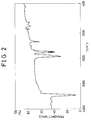
- the measurement results of a spectrum by 13C-NMR are set forth in Fig. 1, and the measurement results of an infrared absorption spectrum are set forth in Figs. 2 and 3.
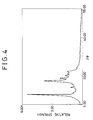
- the results of X-ray diffraction spectrum measured by using Cu-K ⁇ ray are shown in Fig. 4.
- the intrinsic viscosity of the polymer measured at 135°C as a tetralin solution was 0.40, and a ratio (Mw/Mn) of the weight average molecular weight to the number average molecular weight measured at 135°C as a 1,2,4-trichlorobenzene solution by using gel permeation chromatography was 2.1.
- the obtained copolymer powder was then press-molded at 210°C to form a sheet having a thickness of 1 mm, and the following physical properties were measured.
- Example 2 The same procedure as in Example 2 was carried out except that 10 g of propylene was replaced with 5 g of ethylene. Afterward, unreacted ethylene was purged, followed by filtration and drying at 80°C under reduced pressure to obtain 74 g of a polymer. In a spectrum of 13C-NMR measured as a 1,2,4-trichlorobenzene solution, a peak intensity observed at about 43.1 ppm on the basis of tetramethylsilane was 0.72 of the total of the peak intensities at about 42-44 ppm. The ethylene unit was present in a ratio of 2.6% by weight in the polymer. In addition, ⁇ was 0.40, and Mw/Mn was 2.1.
- tensile yield strength was 205 bar (205 kg/cm2)
- elongation was 620%
- Izod impact strength was 20 kg.cm/cm and 8 kg.cm/cm at 23°C and -10°C, respectively
- haze was 48%.
- Example 2 The same procedure as in Example 2 was carried out except that the amount of propylene was 3 g, in order to obtain 76 g of a polymer containing the propylene unit in a ratio of 2.1% by weight.
- a peak intensity observed at about 43.1 ppm by 13C-NMR was 0.87 of the total of the peak intensities at about 42-44 ppm, and ⁇ was 0.43 and Mw/Mn was 2.1.
- tensile yield strength was 185 bar (185 kg/cm2)
- elongation was 480%
- Izod impact strength was 25 kg.cm/cm and 6.5 kg.cm/cm at 23°C and -10°C, respectively
- haze was 46%.
- the present invention additionally includes a homopolymer of 4-methylpentene-1 and a copolymer of 4-methylpentene-1 and propylene which will be described hereinafter.
Landscapes
- Chemical & Material Sciences (AREA)
- Health & Medical Sciences (AREA)
- Chemical Kinetics & Catalysis (AREA)
- Medicinal Chemistry (AREA)
- Polymers & Plastics (AREA)
- Organic Chemistry (AREA)
- Addition Polymer Or Copolymer, Post-Treatments, Or Chemical Modifications (AREA)
- Transition And Organic Metals Composition Catalysts For Addition Polymerization (AREA)
Claims (5)
- Un copolymère de 4-méthylpentène-1 et d'une α-oléfine ayant 2 à 25 atomes de carbone, à l'exception du 4-méthylpentène-1, ayant une structure syndiotactique, dans le spectre de ¹³C-RMN mesuré en solution dans le 1,2,4-trichlorobenzène duquel l'intensité du pic du motif de 4-méthylpentène-1, observée à environ 43,1 ppm sur la base du tétraméthylsilane, est d'au moins 0,3 fois le total des intensités des pics du motif de 4-méthylpentène-1, observées à environ 42-44 ppm ; le motif d'α-oléfine est présent en une proportion de 0,1 à 30 % molaires ; et la viscosité intrinsèque, mesurée à 135°C en solution dans la tétraline, est de 0,05 ou plus.
- Un copolymère selon la revendication 1, dans lequel l'α-oléfine autre que le 4-méthylpentène-1 est une α-oléfine à chaîne droite ou ramifiée ayant 2 à 25 atomes de carbone.
- Un copolymère selon la revendication 1, dans lequel le rapport de la moyenne en poids du poids moléculaire à la moyenne en nombre du poids moléculaire du polymère est de 1,5 à 20.
- Un copolymère selon la revendication 2, dans lequel l'α-oléfine à chaîne droite est l'éthylène ou le propylène.
- Un copolymère de 4-méthylpentène-1 et de propylène, dans le spectre de ¹³C-RMN mesuré sous forme d'une solution dans le 1,2,4-trichlorobenzène duquel l'intensité du pic du motif de 4-méthylpentène-1, observée à environ 43,1 ppm sur la base du tétraméthylsilane, est d'au moins 0,5 fois le total des intensités des pics du motif de 4-méthylpentène-1, observées à environ 42,5-43,1 ppm ; la proportion de propylène est de 0,1 à 20 % en poids ; et la viscosité intrinsèque, mesurée à 135°C en solution dans la tétraline est d'au moins 0,05.
Applications Claiming Priority (6)
| Application Number | Priority Date | Filing Date | Title |
|---|---|---|---|
| JP15670689 | 1989-06-21 | ||
| JP156706/89 | 1989-06-21 | ||
| JP277246/89 | 1989-10-26 | ||
| JP27724689 | 1989-10-26 | ||
| JP2134041A JP2962770B2 (ja) | 1989-06-21 | 1990-05-25 | 4―メチルペンテン―1の重合体 |
| JP134041/90 | 1990-05-25 |
Publications (2)
| Publication Number | Publication Date |
|---|---|
| EP0405236A1 EP0405236A1 (fr) | 1991-01-02 |
| EP0405236B1 true EP0405236B1 (fr) | 1994-03-23 |
Family
ID=27316803
Family Applications (1)
| Application Number | Title | Priority Date | Filing Date |
|---|---|---|---|
| EP90111248A Expired - Lifetime EP0405236B1 (fr) | 1989-06-21 | 1990-06-14 | Copolymère de 4-méthylpentène-1 |
Country Status (4)
| Country | Link |
|---|---|
| US (1) | US5157092A (fr) |
| EP (1) | EP0405236B1 (fr) |
| CA (1) | CA2019361C (fr) |
| DE (1) | DE69007550T2 (fr) |
Families Citing this family (5)
| Publication number | Priority date | Publication date | Assignee | Title |
|---|---|---|---|---|
| IT1228906B (it) * | 1989-02-28 | 1991-07-09 | Giampiero Cislaghi | Chiusura per contenitori con sigillo di garanzia incorporato, particolarmente per vasetti di prodotti alimentari,cosmetici e simili. |
| US5436305A (en) * | 1991-05-09 | 1995-07-25 | Phillips Petroleum Company | Organometallic fluorenyl compounds, preparation, and use |
| US5446117A (en) * | 1993-08-19 | 1995-08-29 | Queen's University At Kingston | Process for producing amorphous syndiotactic polystyrene |
| US6461729B1 (en) | 1999-08-10 | 2002-10-08 | Fiber Innovation Technology, Inc. | Splittable multicomponent polyolefin fibers |
| WO2011078054A1 (fr) | 2009-12-21 | 2011-06-30 | 三井化学株式会社 | PROCÉDÉ POUR LA PRODUCTION DE POLYMÈRE DE α-OLÉFINE SYNDIOTACTIQUE |
Citations (2)
| Publication number | Priority date | Publication date | Assignee | Title |
|---|---|---|---|---|
| EP0387609A1 (fr) * | 1989-02-28 | 1990-09-19 | Montell Technology Company bv | Polymères d'alpha-oléfines à structure syndiotactique |
| EP0387691A1 (fr) * | 1989-03-11 | 1990-09-19 | Hoechst Aktiengesellschaft | Procédé de préparation d'une polyoléfine syndiotactique |
Family Cites Families (2)
| Publication number | Priority date | Publication date | Assignee | Title |
|---|---|---|---|---|
| US4791180A (en) * | 1985-12-12 | 1988-12-13 | Exxon Chemical Patents Inc. | New polymerization catalyst |
| US4892851A (en) * | 1988-07-15 | 1990-01-09 | Fina Technology, Inc. | Process and catalyst for producing syndiotactic polyolefins |
-
1990
- 1990-06-11 US US07/535,535 patent/US5157092A/en not_active Expired - Lifetime
- 1990-06-14 DE DE69007550T patent/DE69007550T2/de not_active Expired - Lifetime
- 1990-06-14 EP EP90111248A patent/EP0405236B1/fr not_active Expired - Lifetime
- 1990-06-20 CA CA002019361A patent/CA2019361C/fr not_active Expired - Lifetime
Patent Citations (2)
| Publication number | Priority date | Publication date | Assignee | Title |
|---|---|---|---|---|
| EP0387609A1 (fr) * | 1989-02-28 | 1990-09-19 | Montell Technology Company bv | Polymères d'alpha-oléfines à structure syndiotactique |
| EP0387691A1 (fr) * | 1989-03-11 | 1990-09-19 | Hoechst Aktiengesellschaft | Procédé de préparation d'une polyoléfine syndiotactique |
Also Published As
| Publication number | Publication date |
|---|---|
| CA2019361A1 (fr) | 1990-12-21 |
| CA2019361C (fr) | 1992-12-22 |
| US5157092A (en) | 1992-10-20 |
| EP0405236A1 (fr) | 1991-01-02 |
| DE69007550D1 (de) | 1994-04-28 |
| DE69007550T2 (de) | 1994-10-13 |
Similar Documents
| Publication | Publication Date | Title |
|---|---|---|
| CA2018666C (fr) | Compositions a base de resine de polypropylene a syndiotacticite elevee; methode de preparation | |
| EP0841371B1 (fr) | Composition polymère de propylène | |
| US5187250A (en) | Poly-α-olefins | |
| EP0403866A1 (fr) | Poly-alpha-oléfines | |
| US5169924A (en) | Copolymer of propylene and butene-1 | |
| EP0395055B1 (fr) | Copolymère syndiotactique de propylène | |
| EP0459264B1 (fr) | Procédé de préparation de poly(alpha-oléphine) syndiotactique | |
| EP0405236B1 (fr) | Copolymère de 4-méthylpentène-1 | |
| KR930004273B1 (ko) | 부텐-i 공중합체 및 이를 포함하는 수지조성물 | |
| EP0438710B1 (fr) | Polymère et composition avec une résine polypropylène | |
| JP2962770B2 (ja) | 4―メチルペンテン―1の重合体 | |
| JP3251607B2 (ja) | 耐衝撃性ポリプロピレン成形物 | |
| EP0430112B1 (fr) | Copolymère syndiotactique d'alpha-oléfine et d'alkénylsilane et méthode pour le préparer | |
| JP3683331B2 (ja) | ポリプロピレン組成物 | |
| JP3135304B2 (ja) | 耐衝撃性ポリプロピレン樹脂組成物 | |
| JP3058650B2 (ja) | シンジオタクチックポリプロピレン成形体およびその製造方法 | |
| KR930006249B1 (ko) | 신디오탁틱 폴리프로필렌 공중합체 | |
| KR940004846B1 (ko) | 신디오탁틱 폴리프로필렌 수지 조성물 | |
| KR930002702B1 (ko) | 신규한 폴리 α-올레핀 | |
| US7332456B2 (en) | Alpha olefin catalyst systems | |
| JPH07149968A (ja) | ポリプロピレン樹脂成形物 | |
| CN1052121A (zh) | α-烯烃/链烯基硅烷共聚物及其制备方法 |
Legal Events
| Date | Code | Title | Description |
|---|---|---|---|
| PUAI | Public reference made under article 153(3) epc to a published international application that has entered the european phase |
Free format text: ORIGINAL CODE: 0009012 |
|
| 17P | Request for examination filed |
Effective date: 19901015 |
|
| AK | Designated contracting states |
Kind code of ref document: A1 Designated state(s): BE DE ES FR GB IT NL |
|
| 17Q | First examination report despatched |
Effective date: 19920626 |
|
| GRAA | (expected) grant |
Free format text: ORIGINAL CODE: 0009210 |
|
| AK | Designated contracting states |
Kind code of ref document: B1 Designated state(s): BE DE ES FR GB IT NL |
|
| PG25 | Lapsed in a contracting state [announced via postgrant information from national office to epo] |
Ref country code: ES Free format text: THE PATENT HAS BEEN ANNULLED BY A DECISION OF A NATIONAL AUTHORITY Effective date: 19940323 |
|
| REF | Corresponds to: |
Ref document number: 69007550 Country of ref document: DE Date of ref document: 19940428 |
|
| ITF | It: translation for a ep patent filed | ||
| ET | Fr: translation filed | ||
| PLBE | No opposition filed within time limit |
Free format text: ORIGINAL CODE: 0009261 |
|
| STAA | Information on the status of an ep patent application or granted ep patent |
Free format text: STATUS: NO OPPOSITION FILED WITHIN TIME LIMIT |
|
| 26N | No opposition filed | ||
| REG | Reference to a national code |
Ref country code: GB Ref legal event code: 732E |
|
| REG | Reference to a national code |
Ref country code: FR Ref legal event code: TP |
|
| NLS | Nl: assignments of ep-patents |
Owner name: MITSUI CHEMICALS, INC. |
|
| REG | Reference to a national code |
Ref country code: GB Ref legal event code: IF02 |
|
| PGFP | Annual fee paid to national office [announced via postgrant information from national office to epo] |
Ref country code: BE Payment date: 20060816 Year of fee payment: 17 |
|
| BERE | Be: lapsed |
Owner name: *MITSUI CHEMICALS INC. Effective date: 20070630 |
|
| PG25 | Lapsed in a contracting state [announced via postgrant information from national office to epo] |
Ref country code: BE Free format text: LAPSE BECAUSE OF NON-PAYMENT OF DUE FEES Effective date: 20070630 |
|
| PGFP | Annual fee paid to national office [announced via postgrant information from national office to epo] |
Ref country code: NL Payment date: 20090615 Year of fee payment: 20 |
|
| PGFP | Annual fee paid to national office [announced via postgrant information from national office to epo] |
Ref country code: IT Payment date: 20090617 Year of fee payment: 20 |
|
| PGFP | Annual fee paid to national office [announced via postgrant information from national office to epo] |
Ref country code: GB Payment date: 20090610 Year of fee payment: 20 Ref country code: DE Payment date: 20090615 Year of fee payment: 20 |
|
| REG | Reference to a national code |
Ref country code: NL Ref legal event code: V4 Effective date: 20100614 |
|
| REG | Reference to a national code |
Ref country code: GB Ref legal event code: PE20 Expiry date: 20100613 |
|
| PG25 | Lapsed in a contracting state [announced via postgrant information from national office to epo] |
Ref country code: NL Free format text: LAPSE BECAUSE OF EXPIRATION OF PROTECTION Effective date: 20100614 |
|
| PG25 | Lapsed in a contracting state [announced via postgrant information from national office to epo] |
Ref country code: GB Free format text: LAPSE BECAUSE OF EXPIRATION OF PROTECTION Effective date: 20100613 |
|
| PG25 | Lapsed in a contracting state [announced via postgrant information from national office to epo] |
Ref country code: DE Free format text: LAPSE BECAUSE OF EXPIRATION OF PROTECTION Effective date: 20100614 |
|
| PGFP | Annual fee paid to national office [announced via postgrant information from national office to epo] |
Ref country code: FR Payment date: 20090611 Year of fee payment: 20 |