EP0405362A1 - Procédé de fabrication de barreaux d'un alliage présentant une magnétostriction très importante - Google Patents
Procédé de fabrication de barreaux d'un alliage présentant une magnétostriction très importante Download PDFInfo
- Publication number
- EP0405362A1 EP0405362A1 EP90111888A EP90111888A EP0405362A1 EP 0405362 A1 EP0405362 A1 EP 0405362A1 EP 90111888 A EP90111888 A EP 90111888A EP 90111888 A EP90111888 A EP 90111888A EP 0405362 A1 EP0405362 A1 EP 0405362A1
- Authority
- EP
- European Patent Office
- Prior art keywords
- crucible
- heating furnace
- alloy material
- alloy
- rod
- Prior art date
- Legal status (The legal status is an assumption and is not a legal conclusion. Google has not performed a legal analysis and makes no representation as to the accuracy of the status listed.)
- Withdrawn
Links
Images

Classifications
-
- C—CHEMISTRY; METALLURGY
- C30—CRYSTAL GROWTH
- C30B—SINGLE-CRYSTAL GROWTH; UNIDIRECTIONAL SOLIDIFICATION OF EUTECTIC MATERIAL OR UNIDIRECTIONAL DEMIXING OF EUTECTOID MATERIAL; REFINING BY ZONE-MELTING OF MATERIAL; PRODUCTION OF A HOMOGENEOUS POLYCRYSTALLINE MATERIAL WITH DEFINED STRUCTURE; SINGLE CRYSTALS OR HOMOGENEOUS POLYCRYSTALLINE MATERIAL WITH DEFINED STRUCTURE; AFTER-TREATMENT OF SINGLE CRYSTALS OR A HOMOGENEOUS POLYCRYSTALLINE MATERIAL WITH DEFINED STRUCTURE; APPARATUS THEREFOR
- C30B11/00—Single-crystal growth by normal freezing or freezing under temperature gradient, e.g. Bridgman-Stockbarger method
-
- C—CHEMISTRY; METALLURGY
- C30—CRYSTAL GROWTH
- C30B—SINGLE-CRYSTAL GROWTH; UNIDIRECTIONAL SOLIDIFICATION OF EUTECTIC MATERIAL OR UNIDIRECTIONAL DEMIXING OF EUTECTOID MATERIAL; REFINING BY ZONE-MELTING OF MATERIAL; PRODUCTION OF A HOMOGENEOUS POLYCRYSTALLINE MATERIAL WITH DEFINED STRUCTURE; SINGLE CRYSTALS OR HOMOGENEOUS POLYCRYSTALLINE MATERIAL WITH DEFINED STRUCTURE; AFTER-TREATMENT OF SINGLE CRYSTALS OR A HOMOGENEOUS POLYCRYSTALLINE MATERIAL WITH DEFINED STRUCTURE; APPARATUS THEREFOR
- C30B29/00—Single crystals or homogeneous polycrystalline material with defined structure characterised by the material or by their shape
- C30B29/10—Inorganic compounds or compositions
- C30B29/52—Alloys
-
- H—ELECTRICITY
- H10—SEMICONDUCTOR DEVICES; ELECTRIC SOLID-STATE DEVICES NOT OTHERWISE PROVIDED FOR
- H10N—ELECTRIC SOLID-STATE DEVICES NOT OTHERWISE PROVIDED FOR
- H10N35/00—Magnetostrictive devices
- H10N35/80—Constructional details
- H10N35/85—Magnetostrictive active materials
Definitions
- the present invention relates to a method for manufacturing an alloy rod having giant magnetostriction.
- An alloy rod having giant magnetostriction such as an amount of magnetostriction of, for example, at least 10 ⁇ 3 is now attracting the general attention as a material for elements of an electric audio converter, a vibrator, an actuator and the like, and industrialization thereof is underway.
- the alloy rod having such giant magnetostriction is usually manufactured by heat-treating a rod-shaped alloy material at a temperature slightly lower than the melting point thereof, or totally melting a granular or flaky alloy material and then solidifying the resultant melt of the alloy material into a rod shape.
- An alloy comprising at least two rare earth metals including terbium (Tb) and dysprosium (Dy) and at least one transition metal is available as an alloy material for the alloy rod having such giant magnetostriction.
- Tefenol Tb X Dy Y Fe Z
- X, Y and Z are ratios of the number of atoms, taking respectively the following values: X : from 0.25 to 0.35, Y : from 0.60 to 0.80, and Z : from 1.5 to 2.0.
- a rod-shaped alloy material having a chemical composition comprising Tb X Dy Y Fe Z is brittle in general. Therefore, an alloy rod having giant magnetostriction manufactured by applying a heat treatment to the rod-shaped alloy material having such a chemical composition is also brittle and easily cracks. In addition, the heat treatment applied to the rod-shaped alloy material requires a long period of time, thus leading to a low manufacturing efficiency.
- a diameter of the alloy rod capable of being stably manufactured in accordance with this method is 10 mm on the maximum even when adjusting the frequency and the output of the high-frequency heating coil for melting the alloy material.
- an alloy rod having giant magnetostriction which has a large diameter of over 10 mm, for use as elements for an electric audio converter, a vibrator, an actuator and the like having a large output.
- such a large-diameter alloy rod having giant magnetostriction cannot be manufactured by the prior art 2.
- the above-mentioned prior art 3 has the following problems: According to the prior art 3, it is possible to manufacture an alloy rod having a large diameter of over 10 mm. However, in order to manufacture an alloy rod having giant magnetostriction from an alloy material comprising at least two rare earth metals including terbium and dysprosium and at least one transition metal in accordance with the prior art 3, it is necessary to solidify and crystallize the melt of the alloy material in the crucible so as to achieve a single-crystal structure or a unidirectional-solidification structure consistent with the axial line thereof.
- An object of the present invention is therefore to provide a method for manufacturing stably at a high efficiency an alloy rod having a large diameter of over 10 mm and giant magnetostriction without causing cracks.
- Fig. 1 is a schematic descriptive view illustrating an embodiment of the apparatus used in the method of the present invention.
- a stationarily arranged cylindrical heating furnace 1 comprises a substantially vertical cylindrical furnace body 2, a main heater 3 arranged so as to surround an upper portion of the furnace body 2, and two sub-heaters 4 arranged directly below the main heater 3 so as to surround a lower portion of the furnace body 2.
- Each of the main heater 3 and the sub-heaters 4 comprises, for example, an electric-resistance heater.
- a granular or flaky alloy material comprising at least two rare earth metals including terbium and dysprosium and at least one transition metal, is supplied into the crucible 9.
- the crucible 9 thus supplied with the alloy material is positioned by means of the crucible supporting shaft 6 in the upper portion of the furnace body 2 of the heating furnace 1, which is surrounded by the main heater 3. Then, the crucible 9 is heated by means of the main heater 3 to totally melt the alloy material in the crucible 9.
- the crucible 9 is downwardly moved in the vertical direction by the action of the crucible supporting shaft 6 to solidify and crystallize the resultant melt 10 of the alloy material in the crucible 9 at a position in the furnace body 2, which corresponds to a lower portion of the main heater 3. An alloy rod is thus manufactured.
- the crucible 9 may be arranged in a stationary manner and the heating furnace 1 may be moved upwardly in the vertical direction.
- the alloy rod should have a single-crystal structure or a unidirectional-solidification structure consistent with the axial line thereof.
- the conditions for the method of the present invention for stably manufacturing, at a high efficiency without causing cracks, the alloy rod having giant magnetostriction, which comprises a single-crystal structure or a unidirectional-solidification structure consistent with the axial line thereof, are described below.
- a crystal lization start temperature of the melt 10 of the alloy material comprising at least two rare earth metals including terbium and dysprosium and at least one transition metal is within the range of from about 1,225 to about 1,245°C, and a secondary peritectic temperature of the melt 10 is about 1,185°C.
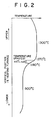
- a downward temperature gradient in the temperature region of from 1,270 to 1,180°C of the furnace body 2 of the heating furnace 1 is limited within a range of from 10 to 100°C/cm, and a moving speed of any one of the crucible 9 and the heating furnace 1 in the temperature region, in which a temperature decreases at such a temperature gradient, is limited within a range of from 0.1 to 5.0 mm/minute.
- the temperature region of the furnace body 2 of the heating furnace 1, in which a temperature decreases at the above-mentioned temperature gradient, is formed at a position in the furnace body 2, which corresponds to a lower portion of the main heater 3.
- An alloy comprising at least two rare earth metals including terbium and dysprosium and at least one transition metal is very active. Therefore, the interior of the crucible 9, in which the granular or flaky alloy material comprising such an active alloy is supplied and melted, and the melt 10 thereof is solidified, should be maintained in an inert gas atmosphere kept under a pressure within a range of from 0.2 to 10 atm. In the apparatus shown in Fig. 1, the interior of the heating furance 1 is maintained in an inert gas atmosphere kept under a pressure within the above-mentioned range.
- At least one sub-heater 4 should preferably be arranged directly below the main heater 3 so as to surround the lower portion of the furnace body 2.
- a preferable chemical composition of the alloy material for manufacturing an alloy rod having giant magnetostriction is as follows: Tb X Dy Y Fe Z where, X, Y, and Z are ratios of the number of atoms, taking respectively the following values: X : from 0.25 to 0.35, Y : from 0.60 to 0.80, and Z : from 1.5 to 2.0.
- a bottom 9a of the crucible 9 should preferably be formed into an inverted cone shape having an angle within a range of from 30° to 100°.
- An angle of under 30° of the inverted cone shape of the bottom 9a leads to an unnecessarily long bottom 9a.
- An inverted cone-shaped solidified mass 10′ solidified in such a long inverted cone-shaped bottom 9a has to be trimmed away.
- An angle of under 30° of the inverted cone shape of the bottom 9a therefore increases the amount of trimming of the solidified mass 10′, thus leading to a lower product yield.
- An angle of over 100° of the inverted cone shape of the bottom 9a makes it impossible to promote production of crystal nuclei and growth of a single-crystal structure, as described above.
- an elongated vertical recess not shown having, for example, a diameter of from 1 to 5 mm and a depth of from 10 to 50 mm, on the bottom 9a of the crucible 9, formed into the inverted cone shape, and to fill the thus formed recess with a seed crystal having the same chemical composition as that of the alloy material and the ⁇ 111> orientation or the ⁇ 112> orientation. Filling the recess with the seed crystal promotes growth of crystals having the ⁇ 111> orientation or the ⁇ 112> orientation excellent in magnetostrictive property in the alloy rod.
- the granular or flaky alloy material comprising at least two rare earth metals including terbium and dysprosium and at least one transition metal, is supplied into the tubular crucible 9 in an inert gas atmosphere kept under a pressure of from 0.2 to 10 atm., arranged in the furnace body 2 of the heating furnace 1.
- the alloy material in the crucible 9 is totally melted in the furnace body 2.
- the crucible 9 is downwardly moved in the vertical direction at a speed of from 0.1 to 5 mm/minute in a temperature region of from 1,270 to 1,180°C of the furnace body 2, in which a temperature decreases at a temperature gradient of from 10 to 100°C/cm, to solidify and crystallize the resultant melt 10 of the alloy material in the crucible 9 at a position in the furance body 2, which corresponds to the lower portion of the main heater 3.
- the solidified mass 10′ of the alloy material has a single-crystal structure or a unidirectional-solidification structure consistent with the axial line thereof, thus an alloy rod having giant magnetostriction is manufactured.
- An alloy rod having giant magnetostriction was manufactured as follows with the use of the apparatus as shown in Fig. 1.
- the crucible 9 made of ceramics mainly comprising pyrolytic boron nitride (P-BN), having the bottom 9a formed into an inverted cone shape with an angle of 60°, was placed on the crucible support 5 of the crucible supporting shaft 6.
- the crucible 9 had the following dimensions: Inside diameter of the crucible 9 : 32 mm, Outside diameter of the crucible 9 : 34 mm, and Height of the crucible 9 : 230 mm.
- the interior of the furnace body 2 of the heating furnace 1 was maintained in an argon gas atmosphere kept under a pressure of 2 atm., and a flaky alloy material having a chemical composition comprising Tb 0.3 Dy 0.7 Fe 1.9 was supplied into the crucible 9.
- Fig. 2 is a graph illustrating a temperature distribution in the vertical direction in the furnace body 2 of the heating furnace 1 of the apparatus shown in Fig. 1, used in the method of the present invention. As shown in Fig.
- the crucible 9 was positioned by means of the crucible supporting shaft 6 in the first temperature region of about 1,300°C of the furnace body 2 of the heating furnace 1, and the above-mentioned alloy material in the crucible 9 was heated at a temperature of 1,300°C for one hour to totally melt the alloy material. Then, the crucible 9 was moved downwardly in the vertical direction at a speed of 1.5 mm/minute in the second temperature region of from 1,270 to 1,180°C of the furnace body 2, in which a temperature decreased at a temperature gradient of 45°C/cm, to solidify and crystallize the resultant melt 10 of the alloy material in the crucible 9.
- the resultant solidified mass 10′ of the alloy material in the crucible 9 was slowly cooled in the third temperature region of about 800°C of the furnace body 2 while continuing the above-mentioned movement of the crucible 9, whereby an alloy rod having a diameter of 32 mm and having giant magnetostriction as represented by an amount of magnetostriction of at least 10 ⁇ 3, which comprised a single-crystal structure having the ⁇ 112> orientation, was manufactured at a high frequency without causing cracks.
Landscapes
- Chemical & Material Sciences (AREA)
- Engineering & Computer Science (AREA)
- Crystallography & Structural Chemistry (AREA)
- Materials Engineering (AREA)
- Metallurgy (AREA)
- Organic Chemistry (AREA)
- Inorganic Chemistry (AREA)
- Crystals, And After-Treatments Of Crystals (AREA)
Applications Claiming Priority (2)
| Application Number | Priority Date | Filing Date | Title |
|---|---|---|---|
| JP168454/89 | 1989-06-30 | ||
| JP1168454A JPH062635B2 (ja) | 1989-06-30 | 1989-06-30 | 巨大磁歪合金ロツドの製造方法 |
Publications (1)
| Publication Number | Publication Date |
|---|---|
| EP0405362A1 true EP0405362A1 (fr) | 1991-01-02 |
Family
ID=15868409
Family Applications (1)
| Application Number | Title | Priority Date | Filing Date |
|---|---|---|---|
| EP90111888A Withdrawn EP0405362A1 (fr) | 1989-06-30 | 1990-06-22 | Procédé de fabrication de barreaux d'un alliage présentant une magnétostriction très importante |
Country Status (3)
| Country | Link |
|---|---|
| US (1) | US5067551A (fr) |
| EP (1) | EP0405362A1 (fr) |
| JP (1) | JPH062635B2 (fr) |
Cited By (6)
| Publication number | Priority date | Publication date | Assignee | Title |
|---|---|---|---|---|
| EP0509628A1 (fr) * | 1991-02-05 | 1992-10-21 | Kabushiki Kaisha Toshiba | Alliage magnétostrictif, sa fabrication et applications |
| EP0678585A1 (fr) * | 1994-04-19 | 1995-10-25 | TDK Corporation | Préparation de matériau magnétostrictif |
| CN1045230C (zh) * | 1994-01-29 | 1999-09-22 | 冶金工业部钢铁研究总院 | 超磁致伸缩稀土铁合金棒的制造方法 |
| US6273965B1 (en) | 1996-10-18 | 2001-08-14 | Iowa State University Research Foundation, Inc. | Magnetostrictive materials and method for improving AC characteristics in same |
| CN103121852A (zh) * | 2012-12-12 | 2013-05-29 | 上海电气钠硫储能技术有限公司 | 一种合成钠硫电池固体电解质用氧化镁坩埚及其制备方法 |
| DE10196450B3 (de) * | 2000-07-21 | 2014-11-06 | Continental Automotive Systems, Inc. ( n. d. Ges. d. Staates Delaware ) | Metallurgische und mechanische Kompensation des Temperaturverhaltens von terbiumbasierten magnetostriktiven Legierungen der Seltenen Erden |
Families Citing this family (7)
| Publication number | Priority date | Publication date | Assignee | Title |
|---|---|---|---|---|
| GB2393042B (en) * | 2002-09-11 | 2005-09-28 | Black & Decker Inc | Electrical extension lead |
| DE69318998T2 (de) * | 1992-02-15 | 1998-10-15 | Santoku Metal Ind | Legierungsblock für einen Dauermagnet, anisotropes Pulver für einen Dauermagnet, Verfahren zur Herstellung eines solchen und Dauermagneten |
| US7294199B2 (en) * | 2004-06-10 | 2007-11-13 | Sumitomo Electric Industries, Ltd. | Nitride single crystal and producing method thereof |
| US7481918B2 (en) * | 2005-04-22 | 2009-01-27 | Siemens Water Technologies Holding Corp. | Vibratory mixer |
| GB201313849D0 (en) * | 2013-08-02 | 2013-09-18 | Castings Technology Internat | Producing a metal object |
| GB201319671D0 (en) | 2013-11-07 | 2013-12-25 | Ebner Ind Ofenbau | Controlling a temperature of a crucible inside an oven |
| JP6122882B2 (ja) | 2015-01-29 | 2017-04-26 | 日本高周波鋼業株式会社 | 磁歪部材およびその製造方法 |
Citations (3)
| Publication number | Priority date | Publication date | Assignee | Title |
|---|---|---|---|---|
| US4308474A (en) * | 1979-11-14 | 1981-12-29 | The United States Of America As Represented By The Secretary Of The Navy | Rare earth-iron magnetostrictive materials and devices using these materials |
| EP0221468A2 (fr) * | 1985-10-28 | 1987-05-13 | Iowa State University Research Foundation, Inc. | Procédé de fabrication de tiges magnétostrictives en alliage fer-terres rares |
| EP0282059A2 (fr) * | 1987-03-13 | 1988-09-14 | Iowa State University Research Foundation, Inc. | Méthode continue pour la préparation de corps magnétostrictifs à grains orientés |
Family Cites Families (5)
| Publication number | Priority date | Publication date | Assignee | Title |
|---|---|---|---|---|
| JPS5364798A (en) * | 1976-11-19 | 1978-06-09 | Shingijutsu Kaihatsu Jigyodan | Electric magntostrictive convertor |
| GB2051607B (en) * | 1979-07-05 | 1983-06-29 | Philips Electronic Associated | Method of making monocrystalline ternary semiconductor material |
| JPS59158574A (ja) * | 1983-03-01 | 1984-09-08 | Toshiba Corp | 磁歪合金 |
| JPS6241792A (ja) * | 1985-08-20 | 1987-02-23 | Fujitsu Ltd | 半導体単結晶の製造方法 |
| JPH01242480A (ja) * | 1988-03-25 | 1989-09-27 | Tokin Corp | 単結晶の製造装置 |
-
1989
- 1989-06-30 JP JP1168454A patent/JPH062635B2/ja not_active Expired - Lifetime
-
1990
- 1990-06-18 US US07/539,603 patent/US5067551A/en not_active Expired - Fee Related
- 1990-06-22 EP EP90111888A patent/EP0405362A1/fr not_active Withdrawn
Patent Citations (3)
| Publication number | Priority date | Publication date | Assignee | Title |
|---|---|---|---|---|
| US4308474A (en) * | 1979-11-14 | 1981-12-29 | The United States Of America As Represented By The Secretary Of The Navy | Rare earth-iron magnetostrictive materials and devices using these materials |
| EP0221468A2 (fr) * | 1985-10-28 | 1987-05-13 | Iowa State University Research Foundation, Inc. | Procédé de fabrication de tiges magnétostrictives en alliage fer-terres rares |
| EP0282059A2 (fr) * | 1987-03-13 | 1988-09-14 | Iowa State University Research Foundation, Inc. | Méthode continue pour la préparation de corps magnétostrictifs à grains orientés |
Non-Patent Citations (1)
| Title |
|---|
| METALLURGICAL TRANSACTIONS A, vol. 18A, February 1987, pages 223-231, New York, US; J.D. VERHOEVEN et al.: "The growth of single crystal terfenol-D crystals" * |
Cited By (10)
| Publication number | Priority date | Publication date | Assignee | Title |
|---|---|---|---|---|
| EP0509628A1 (fr) * | 1991-02-05 | 1992-10-21 | Kabushiki Kaisha Toshiba | Alliage magnétostrictif, sa fabrication et applications |
| US5336337A (en) * | 1991-02-05 | 1994-08-09 | Kabushiki Kaisha Toshiba | Magnetrostrictive materials and methods of making such materials |
| US5527398A (en) * | 1991-02-05 | 1996-06-18 | Kabushiki Kaisha Toshiba | Magnetostrictive materials and methods of making such materials |
| CN1045230C (zh) * | 1994-01-29 | 1999-09-22 | 冶金工业部钢铁研究总院 | 超磁致伸缩稀土铁合金棒的制造方法 |
| EP0678585A1 (fr) * | 1994-04-19 | 1995-10-25 | TDK Corporation | Préparation de matériau magnétostrictif |
| US5529745A (en) * | 1994-04-19 | 1996-06-25 | Tdk Corporation | Preparation of magnetostrictive material |
| US6273965B1 (en) | 1996-10-18 | 2001-08-14 | Iowa State University Research Foundation, Inc. | Magnetostrictive materials and method for improving AC characteristics in same |
| DE10196450B3 (de) * | 2000-07-21 | 2014-11-06 | Continental Automotive Systems, Inc. ( n. d. Ges. d. Staates Delaware ) | Metallurgische und mechanische Kompensation des Temperaturverhaltens von terbiumbasierten magnetostriktiven Legierungen der Seltenen Erden |
| CN103121852A (zh) * | 2012-12-12 | 2013-05-29 | 上海电气钠硫储能技术有限公司 | 一种合成钠硫电池固体电解质用氧化镁坩埚及其制备方法 |
| CN103121852B (zh) * | 2012-12-12 | 2014-07-16 | 上海电气钠硫储能技术有限公司 | 一种合成钠硫电池固体电解质用氧化镁坩埚及其制备方法 |
Also Published As
| Publication number | Publication date |
|---|---|
| JPH062635B2 (ja) | 1994-01-12 |
| US5067551A (en) | 1991-11-26 |
| JPH0337182A (ja) | 1991-02-18 |
Similar Documents
| Publication | Publication Date | Title |
|---|---|---|
| EP0068021B1 (fr) | Procede et appareil de formation et de developpement d'un monocristal d'un compose semi-conducteur | |
| US6027563A (en) | Method and apparatus for the oriented solidification of molten silicon to form an ingot in a bottomless crystallization chamber | |
| EP0405362A1 (fr) | Procédé de fabrication de barreaux d'un alliage présentant une magnétostriction très importante | |
| JP5493092B2 (ja) | 酸化ガリウム単結晶の製造方法および酸化ガリウム単結晶 | |
| US5993545A (en) | Crucible for growing single crystals, process for making the same and use of the same | |
| US4521272A (en) | Method for forming and growing a single crystal of a semiconductor compound | |
| US4303465A (en) | Method of growing monocrystals of corundum from a melt | |
| US4623423A (en) | Process for producing a strain-free monocrystal of a crystalline ferroelectric compound | |
| US5063986A (en) | Method for manufacturing alloy rod having giant magnetostriction | |
| JP7072146B2 (ja) | 鉄ガリウム合金の単結晶育成方法 | |
| EP0322799B1 (fr) | Procédé de fabrication d'un bloc en métal cristallin renforcé ou matériau analogue | |
| JP7486743B2 (ja) | FeGa合金単結晶の製造方法 | |
| CN1150185A (zh) | 一种金属材料单晶的制备技术 | |
| JP7613189B2 (ja) | FeGa合金単結晶の製造方法 | |
| JP7613188B2 (ja) | FeGa合金単結晶の製造方法 | |
| US6497762B1 (en) | Method of fabricating crystal thin plate under micro-gravity environment | |
| JP3367069B2 (ja) | 超磁歪合金ロッドの製造方法 | |
| JPH0497989A (ja) | 単結晶の製造方法および単結晶引上げ装置 | |
| RU2072399C1 (ru) | Способ получения монокристаллов тугоплавких веществ | |
| JP2024158672A (ja) | FeGa合金単結晶の製造方法 | |
| RU2040599C1 (ru) | Способ получения монокристаллов боридов редкоземельных металлов | |
| CS264935B1 (cs) | Způsob úpravy růstových podmínek a pěstování safíru modifikovanou Kyropoulovou metodou | |
| RU2199614C1 (ru) | Способ выращивания кристаллов | |
| JP3849004B2 (ja) | 急冷凝固バルクアモルファス合金材料の製造方法 | |
| JPS62148391A (ja) | 高融点物質結晶の製造方法および前記方法で使用する材料の容器 |
Legal Events
| Date | Code | Title | Description |
|---|---|---|---|
| PUAI | Public reference made under article 153(3) epc to a published international application that has entered the european phase |
Free format text: ORIGINAL CODE: 0009012 |
|
| 17P | Request for examination filed |
Effective date: 19900719 |
|
| AK | Designated contracting states |
Kind code of ref document: A1 Designated state(s): DE FR GB SE |
|
| 17Q | First examination report despatched |
Effective date: 19921014 |
|
| STAA | Information on the status of an ep patent application or granted ep patent |
Free format text: STATUS: THE APPLICATION IS DEEMED TO BE WITHDRAWN |
|
| 18D | Application deemed to be withdrawn |
Effective date: 19940216 |