EP0405376A2 - Caractérisation de rhinovirus humains - Google Patents
Caractérisation de rhinovirus humains Download PDFInfo
- Publication number
- EP0405376A2 EP0405376A2 EP90111950A EP90111950A EP0405376A2 EP 0405376 A2 EP0405376 A2 EP 0405376A2 EP 90111950 A EP90111950 A EP 90111950A EP 90111950 A EP90111950 A EP 90111950A EP 0405376 A2 EP0405376 A2 EP 0405376A2
- Authority
- EP
- European Patent Office
- Prior art keywords
- sequence
- primer
- rhinoviruses
- serotypes
- hrv2
- Prior art date
- Legal status (The legal status is an assumption and is not a legal conclusion. Google has not performed a legal analysis and makes no representation as to the accuracy of the status listed.)
- Granted
Links
Images

Classifications
-
- C—CHEMISTRY; METALLURGY
- C12—BIOCHEMISTRY; BEER; SPIRITS; WINE; VINEGAR; MICROBIOLOGY; ENZYMOLOGY; MUTATION OR GENETIC ENGINEERING
- C12Q—MEASURING OR TESTING PROCESSES INVOLVING ENZYMES, NUCLEIC ACIDS OR MICROORGANISMS; COMPOSITIONS OR TEST PAPERS THEREFOR; PROCESSES OF PREPARING SUCH COMPOSITIONS; CONDITION-RESPONSIVE CONTROL IN MICROBIOLOGICAL OR ENZYMOLOGICAL PROCESSES
- C12Q1/00—Measuring or testing processes involving enzymes, nucleic acids or microorganisms; Compositions therefor; Processes of preparing such compositions
- C12Q1/70—Measuring or testing processes involving enzymes, nucleic acids or microorganisms; Compositions therefor; Processes of preparing such compositions involving virus or bacteriophage
- C12Q1/701—Specific hybridization probes
-
- C—CHEMISTRY; METALLURGY
- C12—BIOCHEMISTRY; BEER; SPIRITS; WINE; VINEGAR; MICROBIOLOGY; ENZYMOLOGY; MUTATION OR GENETIC ENGINEERING
- C12Q—MEASURING OR TESTING PROCESSES INVOLVING ENZYMES, NUCLEIC ACIDS OR MICROORGANISMS; COMPOSITIONS OR TEST PAPERS THEREFOR; PROCESSES OF PREPARING SUCH COMPOSITIONS; CONDITION-RESPONSIVE CONTROL IN MICROBIOLOGICAL OR ENZYMOLOGICAL PROCESSES
- C12Q1/00—Measuring or testing processes involving enzymes, nucleic acids or microorganisms; Compositions therefor; Processes of preparing such compositions
- C12Q1/68—Measuring or testing processes involving enzymes, nucleic acids or microorganisms; Compositions therefor; Processes of preparing such compositions involving nucleic acids
- C12Q1/6813—Hybridisation assays
- C12Q1/6827—Hybridisation assays for detection of mutation or polymorphism
- C12Q1/683—Hybridisation assays for detection of mutation or polymorphism involving restriction enzymes, e.g. restriction fragment length polymorphism [RFLP]
-
- C—CHEMISTRY; METALLURGY
- C12—BIOCHEMISTRY; BEER; SPIRITS; WINE; VINEGAR; MICROBIOLOGY; ENZYMOLOGY; MUTATION OR GENETIC ENGINEERING
- C12Q—MEASURING OR TESTING PROCESSES INVOLVING ENZYMES, NUCLEIC ACIDS OR MICROORGANISMS; COMPOSITIONS OR TEST PAPERS THEREFOR; PROCESSES OF PREPARING SUCH COMPOSITIONS; CONDITION-RESPONSIVE CONTROL IN MICROBIOLOGICAL OR ENZYMOLOGICAL PROCESSES
- C12Q1/00—Measuring or testing processes involving enzymes, nucleic acids or microorganisms; Compositions therefor; Processes of preparing such compositions
- C12Q1/68—Measuring or testing processes involving enzymes, nucleic acids or microorganisms; Compositions therefor; Processes of preparing such compositions involving nucleic acids
- C12Q1/6844—Nucleic acid amplification reactions
- C12Q1/686—Polymerase chain reaction [PCR]
Definitions
- the present invention relates to a method for characterizing viruses and its use for typing.
- An object of the present invention was to develop a simplified typing method for viruses, in particular for rhinoviruses.
- oligonucleotides from these areas were used to amplify sequences of rhinoviral serotypes with the aid of the recently developed "polymerase chain reaction” (PCR; Saiki et al., 1988).
- the "polymerase chain reaction” enables the enzymatic amplification of unknown DNA sequences in vitro.
- two oligonucleotide primers are used, which flank the DNA fragment to be amplified. These primers are designed so that one binds to the (+) strand, the other to the (-) strand, and is oriented in such a way that DNA synthesis by the DNA polymerase takes place via the region lying between the primers.
- PCR By repeating a cycle of three stages several times, preferably up to thirty times: 1.) heat denaturation of the DNA; 2.) binding the primers to the complementary sequences; 3.) Extension with DNA polymerase (the amount of the DNA fragment is doubled in each cycle), there is an exponential accumulation of the DNA fragment flanked by the primers.
- the PCR can be automated through the preferred use of a thermostable DNA polymerase, for example from the bacterium Thermus aquaticus.
- Two primers derived from the conserved regions therefore offer the possibility of using them universally for amplifying even unknown DNA sequences.
- These primers in particular an 18- and a 14-mer, preferably the oligonucleotide primer 1 (sequence # 161 to 178) and the oligonucleotide primer 2 (complementary to sequence # 531 to 544), which had been prepared by known oligonucleotide synthesis methods, therefore form the basis of the typing method according to the invention.
- the object of the present invention was therefore to develop a typing method which makes use of structural distinctions between different viruses.
- these “indicators” can be special restriction enzyme recognition sites. (The method is generally applicable to nucleic acid sequences in that RNA can be rewritten into DNA by reverse transcription.) As is known to the person skilled in the art, restriction enzymes are generally extremely specific. In many cases, changing a base within a special recognition sequence can mean that the special restriction enzyme no longer recognizes the sequence.
- the amplified fragments of both the structurally known rhinovirus serotypes and the previously structurally unknown rhinovirus serotypes were compared.
- the serotypes that do not have a BanII site were identified as follows: HRV14 was identified via the EcoRI site. HRV1B and HRV1A both have a BglII site in the same position; the presence of a HinPI site in HRV1A made it possible to clearly differentiate between the two serotypes.
- RNA of types 1 and 2 would therefore also be amplified in a typing experiment according to the invention.
- RNA of types 1 and 2 would therefore also be amplified in a typing experiment according to the invention.
- the primers can also be used advantageously to check the speed of the U / C change at position 472 of poliovirus, a change that has been shown that it is responsible for virulence and that it occurs in the passage of the Sabin strains in humans (Cann et al., 1984). Under stringent amplification conditions, amplification of the Coxsackie viruses with these primers is not expected.
- oligonucleotides complementary to sequences from the 5'-non-coding regions of rhinoviruses could be used to detect rhinovirus RNA from over 50 serotypes in nasal secretion lavages (Bruce et al., 1988). It is possible that the primers described here can be used in conjunction with a similar hybridization assay to improve sensitivity and to distinguish between different serotypes.
- the PCR can be used in conjunction with two primers to amplify a DNA fragment from different rhinovirus serotypes. It was then possible to differentiate between the different serotypes by using different specific restriction enzymes on these amplified fragments.
- the present invention relates to a method by which viruses which have an arrangement of conserved sequence blocks between different serotypes, in particular rhinoviruses, can be typed.
- Viruses that can be characterized in this way are, for example: HIV, foot and mouth disease virus, echoviruses, coxsackie viruses.
- the primer 1 can preferably be derived from the 1st bracket sequence of the rhinoviruses, the primer 2 preferably from the 2nd bracket sequence of the rhinoviruses. Primer 2 is preferably used in step a) of the process according to the invention.
- the method according to the invention is particularly suitable for characterizing rhinoviruses, preferably human rhinoviruses.
- the oligonucleotides of sequence # 161 to 178 of HRV2 should be used as primer 1 and the oligonucleotides complementary to sequence # 531 to 544 of HRV2 as primer 2.
- BanII, HindIII, RsaI, EcoRI, BglII, PvuII, DraIII and HinPI have proven to be particularly suitable restriction enzymes for the characterization of rhinoviruses.
- the method according to the invention can be used for typing viruses, in particular rhinoviruses, particularly preferably human rhinoviruses.
- the present invention furthermore relates to a kit for the characterization of viruses, characterized in that it contains primers from the area of sequence identities and specific restriction enzymes, preferably primer 1 from the 1st bracket sequence of the rhinoviruses and primer 2 from the 2nd bracket sequence the rhinovirus is derived.
- a kit which contains an oligonucleotide of sequence # 161 to 178 as primer 1 and an oligonucleotide of sequence complementary to sequence # 531 to 544 of HRV2 and the restriction enzymes BanII, HindIII, RsaI, EcoRI, BglII, PvuII, as primer 2 Contains DraIII and HinPI.
- HeLa cells (Ohio strain) were cultured in 150 cm2 T-flasks and with an MOI of approximately 1 as in Skern et al. (1984) described infected with the HRV strains.
- the amount of virus was usually 109 PFU in 30 ml medium. After two cycles of freezing / thawing for cell lysis, the medium from cell debris was cleared by low-speed centrifugation. The virus was concentrated from the medium with polyethylene glycol 6000 (PEG) and resuspended in 1 ml of phosphate-buffered saline. When using infected HeLa lysates, PEG precipitation was dispensed with.
- PEG polyethylene glycol 6000
- the RNA was prepared by treating 0.1-0.5 ml of the viral, PEG concentrated suspension or 0.5 ml of non-concentrated suspension with 1% SDS and 10 mM EDTA. After extraction with phenol / chloroform, 2 ⁇ g of the carrier tRNA were added and the RNA was precipitated with ethanol.
- the cDNA was produced by using the entire RNA preparation, 10 pmol of primer 2 and 10 units of reverse transcriptase (Super RT, Yalen Biotechnology) in 20 ⁇ l final volume in accordance with the manufacturer's instructions. Initially, the cDNA was purified by phenol / chloroform extraction and ethanol precipitation; in later experiments the cDNA mixture was used directly for the "polymerase chain reaction".
- PCR polymerase chain reaction
- 10 .mu.l of the cDNA preparation 100 pmol each of primer 1 and primer 2, 0.4 mM of all four dNTPs, 2 units of Thermus aquaticus DNA polymerase (Cetus ) in the buffer from Cetus Corp., using the method described by Torgersen et al. (1989) described apparatus for 30 cycles at a setting of 92 ° C (2 min.), 40 ° C (3 min.) And 70 ° C (3 min.).
- 10 ul of the reaction mixture were analyzed directly on a 6% polyacrylamide gel (Maniatis et al., 1982). Restriction analyzes were performed on aliquots of the amplified DNA using the enzymes shown in Table 1; the products were analyzed on 6% polyacrylamide gel.
- the Sanger dideoxy sequencing method was used for sequencing (Sanger et al., 1977).
- the double-stranded DNA obtained after the PCR was electroeluted from the polyacrylamide gel and sequenced using primers 1 and 2 and the modified T7 polymerase (Pharmacia) according to the manufacturer's instructions.
- Computer analysis of the DNA sequences was performed using the Staden programs modified by Isono (Isono, 1982).
- oligonucleotide primer 1 sequence # 161 to 178: CAAGCACTTCTGTTTCCC
- oligonucleotide primer 2 complementary to # 531 to 544: ACTACTTTGGGTGT.
- the CDNA was made from viral RNA and amplified using primers 1 and 2 as described above.
- the serotypes can preferably be divided into two groups by using this enzyme:
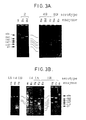
- the amplified fragments of each serotype were cut with BanII and the products were analyzed on polyacrylamide gels.
- the different fragment lengths obtained with HRV2 and HRV89 allow the identification of these serotypes as shown in Fig. 3a.
- the characteristic HindIII site of HRV2 and the Rsa site of HRV89 confirmed the identification (the 96 bp RsaI fragment was too weak to be seen on this gel).
- HRV2 and HRV49 could be distinguished by the absence of the HindIII site in HRV49.
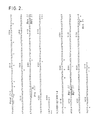
- the serotypes that do not have a BanII site were identified as follows: HRV14 was identified via the EcoRI site (partial digestion took place). HRV1B and HRV1A both have a BglII site in the same position; the presence of a HinPI site in HRV1A made it possible to clearly differentiate between the two serotypes. Since only two fragments were obtained with HinPI, the site marked in Figure 2 must actually be the only one in the amplified fragment.
- Tab. 1 Restriction sites used in identifying the rhinovirus serotypes. The numbers indicate base pairs. A dash means that there is no restriction site for the particular enzyme. NU indicates that a restriction site is present but has not been used.
Landscapes
- Chemical & Material Sciences (AREA)
- Life Sciences & Earth Sciences (AREA)
- Organic Chemistry (AREA)
- Health & Medical Sciences (AREA)
- Engineering & Computer Science (AREA)
- Zoology (AREA)
- Wood Science & Technology (AREA)
- Proteomics, Peptides & Aminoacids (AREA)
- Immunology (AREA)
- Biophysics (AREA)
- General Engineering & Computer Science (AREA)
- Microbiology (AREA)
- Molecular Biology (AREA)
- Analytical Chemistry (AREA)
- Physics & Mathematics (AREA)
- Genetics & Genomics (AREA)
- Biochemistry (AREA)
- Bioinformatics & Cheminformatics (AREA)
- Biotechnology (AREA)
- General Health & Medical Sciences (AREA)
- Virology (AREA)
- Measuring Or Testing Involving Enzymes Or Micro-Organisms (AREA)
- Micro-Organisms Or Cultivation Processes Thereof (AREA)
- Medicines Containing Material From Animals Or Micro-Organisms (AREA)
- Apparatus For Disinfection Or Sterilisation (AREA)
- Compounds Of Unknown Constitution (AREA)
- Heat Sensitive Colour Forming Recording (AREA)
- Non-Silver Salt Photosensitive Materials And Non-Silver Salt Photography (AREA)
- Materials For Medical Uses (AREA)
Applications Claiming Priority (2)
| Application Number | Priority Date | Filing Date | Title |
|---|---|---|---|
| DE3920754 | 1989-06-24 | ||
| DE3920754 | 1989-06-24 |
Publications (3)
| Publication Number | Publication Date |
|---|---|
| EP0405376A2 true EP0405376A2 (fr) | 1991-01-02 |
| EP0405376A3 EP0405376A3 (en) | 1992-11-25 |
| EP0405376B1 EP0405376B1 (fr) | 1996-09-18 |
Family
ID=6383503
Family Applications (1)
| Application Number | Title | Priority Date | Filing Date |
|---|---|---|---|
| EP90111950A Expired - Lifetime EP0405376B1 (fr) | 1989-06-24 | 1990-06-23 | Caractérisation de rhinovirus humains |
Country Status (7)
| Country | Link |
|---|---|
| US (1) | US5340713A (fr) |
| EP (1) | EP0405376B1 (fr) |
| JP (1) | JPH03117499A (fr) |
| AT (1) | ATE143058T1 (fr) |
| CA (1) | CA2019663A1 (fr) |
| DE (1) | DE59010504D1 (fr) |
| FI (1) | FI95398C (fr) |
Cited By (5)
| Publication number | Priority date | Publication date | Assignee | Title |
|---|---|---|---|---|
| WO1993016099A3 (fr) * | 1992-02-12 | 1993-09-30 | Bioph Biotech Entw Pharm Gmbh | Sequences d'adn codant de nouveaux facteurs de croissance/differentiation |
| WO1994001582A1 (fr) * | 1992-07-13 | 1994-01-20 | Medical Research Council | Procede de categorisation de populations de sequences nucleotidiques |
| WO1995001453A1 (fr) * | 1993-07-01 | 1995-01-12 | The Board Of Trustees Of The Leland Stanford Junior University | Essai de mobilite des heteroduplex pour l'analyse de la diversite de sequences d'acide nucleique |
| DE10320519A1 (de) * | 2003-04-30 | 2004-11-25 | 4Base Lab Gmbh Advanced Molecular Analysis | Verfahren zum Nachweis infektiöser (+)-Strang-RNA-Viren, insbesondere infektiöser Enteroviren |
| US8119338B2 (en) | 2004-07-06 | 2012-02-21 | Focus Diagnostics, Inc. | Methods and compositions for detecting rhinoviruses |
Family Cites Families (5)
| Publication number | Priority date | Publication date | Assignee | Title |
|---|---|---|---|---|
| WO1987002065A1 (fr) * | 1985-01-08 | 1987-04-09 | Biotal Limited | Determination d'identite entre deux organismes |
| AU606043B2 (en) * | 1985-03-28 | 1991-01-31 | F. Hoffmann-La Roche Ag | Detection of viruses by amplification and hybridization |
| US5176995A (en) * | 1985-03-28 | 1993-01-05 | Hoffmann-La Roche Inc. | Detection of viruses by amplification and hybridization |
| US4683195A (en) * | 1986-01-30 | 1987-07-28 | Cetus Corporation | Process for amplifying, detecting, and/or-cloning nucleic acid sequences |
| US5102785A (en) * | 1987-09-28 | 1992-04-07 | E. I. Du Pont De Nemours And Company | Method of gene mapping |
-
1990
- 1990-06-21 FI FI903143A patent/FI95398C/fi not_active IP Right Cessation
- 1990-06-22 CA CA002019663A patent/CA2019663A1/fr not_active Abandoned
- 1990-06-22 US US07/541,907 patent/US5340713A/en not_active Expired - Fee Related
- 1990-06-23 AT AT90111950T patent/ATE143058T1/de not_active IP Right Cessation
- 1990-06-23 EP EP90111950A patent/EP0405376B1/fr not_active Expired - Lifetime
- 1990-06-23 DE DE59010504T patent/DE59010504D1/de not_active Expired - Fee Related
- 1990-06-25 JP JP2166534A patent/JPH03117499A/ja active Pending
Cited By (6)
| Publication number | Priority date | Publication date | Assignee | Title |
|---|---|---|---|---|
| WO1993016099A3 (fr) * | 1992-02-12 | 1993-09-30 | Bioph Biotech Entw Pharm Gmbh | Sequences d'adn codant de nouveaux facteurs de croissance/differentiation |
| WO1994001582A1 (fr) * | 1992-07-13 | 1994-01-20 | Medical Research Council | Procede de categorisation de populations de sequences nucleotidiques |
| US5728524A (en) * | 1992-07-13 | 1998-03-17 | Medical Research Counsil | Process for categorizing nucleotide sequence populations |
| WO1995001453A1 (fr) * | 1993-07-01 | 1995-01-12 | The Board Of Trustees Of The Leland Stanford Junior University | Essai de mobilite des heteroduplex pour l'analyse de la diversite de sequences d'acide nucleique |
| DE10320519A1 (de) * | 2003-04-30 | 2004-11-25 | 4Base Lab Gmbh Advanced Molecular Analysis | Verfahren zum Nachweis infektiöser (+)-Strang-RNA-Viren, insbesondere infektiöser Enteroviren |
| US8119338B2 (en) | 2004-07-06 | 2012-02-21 | Focus Diagnostics, Inc. | Methods and compositions for detecting rhinoviruses |
Also Published As
| Publication number | Publication date |
|---|---|
| EP0405376B1 (fr) | 1996-09-18 |
| FI95398B (fi) | 1995-10-13 |
| DE59010504D1 (de) | 1996-10-24 |
| CA2019663A1 (fr) | 1990-12-24 |
| JPH03117499A (ja) | 1991-05-20 |
| ATE143058T1 (de) | 1996-10-15 |
| FI95398C (fi) | 1996-01-25 |
| FI903143A0 (fi) | 1990-06-21 |
| US5340713A (en) | 1994-08-23 |
| EP0405376A3 (en) | 1992-11-25 |
Similar Documents
| Publication | Publication Date | Title |
|---|---|---|
| DE69019795T2 (de) | Verfahren zur Feststellung der Empfindlichkeit von HIV-1 für Zidovudine und dazu geeignete Oligonukleotide. | |
| DE68928222T2 (de) | 4 Selbstfortsetzendes System für Sequenzreplikation | |
| DE3852177T2 (de) | Transkriptionsbasierte nukleinsäure-verstärkungs/nachweissysteme. | |
| DE69833160T2 (de) | Amplifizierung und Detektion von HIV-1 und/oder HIV-2 | |
| CN106947838B (zh) | 非洲猪瘟病毒非结构基因实时荧光lamp检测引物组、试剂盒及检测方法 | |
| DE69016079T2 (de) | Methode zur Extraktion, Amplifikation und zum Nachweis einer Nukleinsäure aus einer Fraktion mononuklearer Zellen von peripherem Blut. | |
| DE69011101T2 (de) | Methoden zur in vitro-dna-amplifikation, zum genomischen klonieren und zur genkartierung. | |
| DE60030811T2 (de) | Verfahren zur Ampifizierung von RNA | |
| Isaacs et al. | Reverse guanine phosphoribosyltransferase selection of recombinant vaccinia viruses | |
| EP2446054B1 (fr) | Procédé d'amplification d'adn en utilisant du tétraéthylèneglycole | |
| EP1389242B1 (fr) | Detection de microorganismes de l'espece yersinia pestis/yersinia pseudotuberculosis et/ou differenciation entre yersinia pestis et yersinia pseudotuberculosis | |
| CN113136455A (zh) | 一种检测BVDV、BCoV、BRV和IBRV的多重荧光定量PCR方法及试剂盒 | |
| DD298430A5 (de) | Verfahren zum nachweis und/oder zur identifizierung einer nucleinsaeuresequenz | |
| Friedman | Replicative intermediate of an arbovirus | |
| AT409383B (de) | Verfahren zur detektion und quantifizierung von nukleinsäuren in einer probe | |
| EP0405376B1 (fr) | Caractérisation de rhinovirus humains | |
| CN110894550A (zh) | 鳗鲡疱疹病毒(hva)的raa恒温荧光检测方法及试剂 | |
| EP1124993A2 (fr) | Nouvelles amorces et sondes destinees a la detection du vih | |
| RU2360971C1 (ru) | Способ и тест-система для обнаружения днк вируса африканской чумы свиней с помощью специфических олигонуклеотидных праймеров в полимеразной цепной реакции | |
| DE4020028A1 (de) | Charakterisierung von viren | |
| Giomi et al. | Heterogeneity of the polyribocytidilic acid tract in aphthovirus: changes in the size of the poly (C) of viruses recovered from persistently infected cattle | |
| CN119193933A (zh) | 用于检测猫口炎病原体的组合物、试剂盒及其用途 | |
| DE19832050C2 (de) | Verfahren zum Nachweis von Hepatitis B- bzw. Hepatitis C-Virusgenomen in Plasmaproben und spezifische Primer | |
| DE10030376A1 (de) | Neues Verfahren zum Auffinden neuer Wirkstoffe | |
| DE60124984T2 (de) | Verfahren zum kontrollieren der qualität eines abgeschwächten varicella phasen-impfstoffes |
Legal Events
| Date | Code | Title | Description |
|---|---|---|---|
| PUAI | Public reference made under article 153(3) epc to a published international application that has entered the european phase |
Free format text: ORIGINAL CODE: 0009012 |
|
| AK | Designated contracting states |
Kind code of ref document: A2 Designated state(s): AT BE CH DE DK ES FR GB GR IT LI LU NL SE |
|
| PUAL | Search report despatched |
Free format text: ORIGINAL CODE: 0009013 |
|
| AK | Designated contracting states |
Kind code of ref document: A3 Designated state(s): AT BE CH DE DK ES FR GB GR IT LI LU NL SE |
|
| 17P | Request for examination filed |
Effective date: 19921204 |
|
| 17Q | First examination report despatched |
Effective date: 19950619 |
|
| GRAH | Despatch of communication of intention to grant a patent |
Free format text: ORIGINAL CODE: EPIDOS IGRA |
|
| GRAA | (expected) grant |
Free format text: ORIGINAL CODE: 0009210 |
|
| GRAH | Despatch of communication of intention to grant a patent |
Free format text: ORIGINAL CODE: EPIDOS IGRA |
|
| AK | Designated contracting states |
Kind code of ref document: B1 Designated state(s): AT BE CH DE DK ES FR GB GR IT LI LU NL SE |
|
| PG25 | Lapsed in a contracting state [announced via postgrant information from national office to epo] |
Ref country code: IT Free format text: LAPSE BECAUSE OF FAILURE TO SUBMIT A TRANSLATION OF THE DESCRIPTION OR TO PAY THE FEE WITHIN THE PRE;WARNING: LAPSES OF ITALIAN PATENTS WITH EFFECTIVE DATE BEFORE 2007 MAY HAVE OCCURRED AT ANY TIME BEFORE 2007. THE CORRECT EFFECTIVE DATE MAY BE DIFFERENT FROM THE ONE RECORDED.SCRIBED TIME-LIMIT Effective date: 19960918 Ref country code: FR Effective date: 19960918 Ref country code: NL Free format text: LAPSE BECAUSE OF FAILURE TO SUBMIT A TRANSLATION OF THE DESCRIPTION OR TO PAY THE FEE WITHIN THE PRESCRIBED TIME-LIMIT Effective date: 19960918 Ref country code: DK Effective date: 19960918 Ref country code: GB Effective date: 19960918 Ref country code: GR Free format text: LAPSE BECAUSE OF FAILURE TO SUBMIT A TRANSLATION OF THE DESCRIPTION OR TO PAY THE FEE WITHIN THE PRESCRIBED TIME-LIMIT Effective date: 19960918 Ref country code: ES Free format text: THE PATENT HAS BEEN ANNULLED BY A DECISION OF A NATIONAL AUTHORITY Effective date: 19960918 |
|
| REF | Corresponds to: |
Ref document number: 143058 Country of ref document: AT Date of ref document: 19961015 Kind code of ref document: T |
|
| REF | Corresponds to: |
Ref document number: 59010504 Country of ref document: DE Date of ref document: 19961024 |
|
| PG25 | Lapsed in a contracting state [announced via postgrant information from national office to epo] |
Ref country code: SE Effective date: 19961218 |
|
| EN | Fr: translation not filed | ||
| NLV1 | Nl: lapsed or annulled due to failure to fulfill the requirements of art. 29p and 29m of the patents act | ||
| GBV | Gb: ep patent (uk) treated as always having been void in accordance with gb section 77(7)/1977 [no translation filed] |
Effective date: 19960918 |
|
| PG25 | Lapsed in a contracting state [announced via postgrant information from national office to epo] |
Ref country code: AT Free format text: LAPSE BECAUSE OF NON-PAYMENT OF DUE FEES Effective date: 19970623 |
|
| PG25 | Lapsed in a contracting state [announced via postgrant information from national office to epo] |
Ref country code: LU Free format text: LAPSE BECAUSE OF NON-PAYMENT OF DUE FEES Effective date: 19970630 Ref country code: LI Free format text: LAPSE BECAUSE OF NON-PAYMENT OF DUE FEES Effective date: 19970630 Ref country code: BE Effective date: 19970630 Ref country code: CH Free format text: LAPSE BECAUSE OF NON-PAYMENT OF DUE FEES Effective date: 19970630 |
|
| PLBE | No opposition filed within time limit |
Free format text: ORIGINAL CODE: 0009261 |
|
| STAA | Information on the status of an ep patent application or granted ep patent |
Free format text: STATUS: NO OPPOSITION FILED WITHIN TIME LIMIT |
|
| 26N | No opposition filed | ||
| BERE | Be: lapsed |
Owner name: BOEHRINGER INGELHEIM INTERNATIONAL G.M.B.H. Effective date: 19970630 |
|
| REG | Reference to a national code |
Ref country code: CH Ref legal event code: PL |
|
| PG25 | Lapsed in a contracting state [announced via postgrant information from national office to epo] |
Ref country code: DE Free format text: LAPSE BECAUSE OF NON-PAYMENT OF DUE FEES Effective date: 19980303 |