EP0408301A1 - DNA codant pour une séquence signal polypeptidique dans vaccinia - Google Patents
DNA codant pour une séquence signal polypeptidique dans vaccinia Download PDFInfo
- Publication number
- EP0408301A1 EP0408301A1 EP90307513A EP90307513A EP0408301A1 EP 0408301 A1 EP0408301 A1 EP 0408301A1 EP 90307513 A EP90307513 A EP 90307513A EP 90307513 A EP90307513 A EP 90307513A EP 0408301 A1 EP0408301 A1 EP 0408301A1
- Authority
- EP
- European Patent Office
- Prior art keywords
- sequence
- dna
- gene
- poxvirus
- promoter
- Prior art date
- Legal status (The legal status is an assumption and is not a legal conclusion. Google has not performed a legal analysis and makes no representation as to the accuracy of the status listed.)
- Withdrawn
Links
- 108010076504 Protein Sorting Signals Proteins 0.000 title claims abstract description 52
- 241000700618 Vaccinia virus Species 0.000 title description 34
- 108090000623 proteins and genes Proteins 0.000 claims abstract description 132
- 108020004414 DNA Proteins 0.000 claims abstract description 60
- 125000003275 alpha amino acid group Chemical group 0.000 claims abstract description 12
- 102000004169 proteins and genes Human genes 0.000 claims description 58
- 239000013598 vector Substances 0.000 claims description 34
- 230000006798 recombination Effects 0.000 claims description 24
- 238000005215 recombination Methods 0.000 claims description 24
- 238000003780 insertion Methods 0.000 claims description 10
- 230000037431 insertion Effects 0.000 claims description 10
- 238000010367 cloning Methods 0.000 claims description 9
- 238000002744 homologous recombination Methods 0.000 claims description 8
- 230000006801 homologous recombination Effects 0.000 claims description 8
- 210000004102 animal cell Anatomy 0.000 claims description 7
- 210000004899 c-terminal region Anatomy 0.000 claims description 2
- 230000005030 transcription termination Effects 0.000 claims description 2
- JYOAXOMPIXKMKK-YUMQZZPRSA-N Leu-Gln Chemical compound CC(C)C[C@H]([NH3+])C(=O)N[C@H](C([O-])=O)CCC(N)=O JYOAXOMPIXKMKK-YUMQZZPRSA-N 0.000 claims 1
- 230000028327 secretion Effects 0.000 abstract description 13
- 230000014509 gene expression Effects 0.000 abstract description 7
- 108020004511 Recombinant DNA Proteins 0.000 abstract description 2
- 238000010348 incorporation Methods 0.000 abstract description 2
- 239000012634 fragment Substances 0.000 description 39
- 241000700605 Viruses Species 0.000 description 35
- 229920001184 polypeptide Polymers 0.000 description 30
- 108090000765 processed proteins & peptides Proteins 0.000 description 30
- 102000004196 processed proteins & peptides Human genes 0.000 description 30
- 210000004027 cell Anatomy 0.000 description 29
- 239000013612 plasmid Substances 0.000 description 29
- 230000000694 effects Effects 0.000 description 27
- 150000001413 amino acids Chemical class 0.000 description 26
- YJQCOFNZVFGCAF-UHFFFAOYSA-N Tunicamycin II Natural products O1C(CC(O)C2C(C(O)C(O2)N2C(NC(=O)C=C2)=O)O)C(O)C(O)C(NC(=O)C=CCCCCCCCCC(C)C)C1OC1OC(CO)C(O)C(O)C1NC(C)=O YJQCOFNZVFGCAF-UHFFFAOYSA-N 0.000 description 15
- 239000002243 precursor Substances 0.000 description 15
- ZHSGGJXRNHWHRS-VIDYELAYSA-N tunicamycin Chemical compound O([C@H]1[C@@H]([C@H]([C@@H](O)[C@@H](CC(O)[C@@H]2[C@H]([C@@H](O)[C@@H](O2)N2C(NC(=O)C=C2)=O)O)O1)O)NC(=O)/C=C/CC(C)C)[C@H]1O[C@H](CO)[C@@H](O)[C@H](O)[C@H]1NC(C)=O ZHSGGJXRNHWHRS-VIDYELAYSA-N 0.000 description 15
- MEYZYGMYMLNUHJ-UHFFFAOYSA-N tunicamycin Natural products CC(C)CCCCCCCCCC=CC(=O)NC1C(O)C(O)C(CC(O)C2OC(C(O)C2O)N3C=CC(=O)NC3=O)OC1OC4OC(CO)C(O)C(O)C4NC(=O)C MEYZYGMYMLNUHJ-UHFFFAOYSA-N 0.000 description 15
- 101150066555 lacZ gene Proteins 0.000 description 13
- 101100321817 Human parvovirus B19 (strain HV) 7.5K gene Proteins 0.000 description 12
- 241000282326 Felis catus Species 0.000 description 11
- 230000003834 intracellular effect Effects 0.000 description 10
- 108020004705 Codon Proteins 0.000 description 9
- 101150055766 cat gene Proteins 0.000 description 9
- 238000010276 construction Methods 0.000 description 8
- 238000000338 in vitro Methods 0.000 description 8
- 238000000034 method Methods 0.000 description 8
- 101150003725 TK gene Proteins 0.000 description 7
- 230000000052 comparative effect Effects 0.000 description 7
- 230000013595 glycosylation Effects 0.000 description 7
- 238000006206 glycosylation reaction Methods 0.000 description 7
- 238000013519 translation Methods 0.000 description 7
- 230000014616 translation Effects 0.000 description 7
- 108091026890 Coding region Proteins 0.000 description 6
- 125000001429 N-terminal alpha-amino-acid group Chemical group 0.000 description 6
- 108091028043 Nucleic acid sequence Proteins 0.000 description 6
- 206010046865 Vaccinia virus infection Diseases 0.000 description 6
- 238000002474 experimental method Methods 0.000 description 6
- 108020004999 messenger RNA Proteins 0.000 description 6
- 238000011144 upstream manufacturing Methods 0.000 description 6
- 208000007089 vaccinia Diseases 0.000 description 6
- 108700026244 Open Reading Frames Proteins 0.000 description 5
- 108091081024 Start codon Proteins 0.000 description 5
- 239000000284 extract Substances 0.000 description 5
- 230000004927 fusion Effects 0.000 description 5
- 239000002609 medium Substances 0.000 description 5
- 238000006467 substitution reaction Methods 0.000 description 5
- 238000013518 transcription Methods 0.000 description 5
- 230000035897 transcription Effects 0.000 description 5
- 101150065425 7.5K gene Proteins 0.000 description 4
- 108090000790 Enzymes Proteins 0.000 description 4
- 102000004190 Enzymes Human genes 0.000 description 4
- 230000004988 N-glycosylation Effects 0.000 description 4
- 241000283973 Oryctolagus cuniculus Species 0.000 description 4
- 238000004519 manufacturing process Methods 0.000 description 4
- 239000003550 marker Substances 0.000 description 4
- 230000035772 mutation Effects 0.000 description 4
- 238000002741 site-directed mutagenesis Methods 0.000 description 4
- 102000053602 DNA Human genes 0.000 description 3
- 108700039887 Essential Genes Proteins 0.000 description 3
- 241000700662 Fowlpox virus Species 0.000 description 3
- 108091034117 Oligonucleotide Proteins 0.000 description 3
- 238000004458 analytical method Methods 0.000 description 3
- 230000015572 biosynthetic process Effects 0.000 description 3
- 238000012217 deletion Methods 0.000 description 3
- 230000037430 deletion Effects 0.000 description 3
- LOKCTEFSRHRXRJ-UHFFFAOYSA-I dipotassium trisodium dihydrogen phosphate hydrogen phosphate dichloride Chemical compound P(=O)(O)(O)[O-].[K+].P(=O)(O)([O-])[O-].[Na+].[Na+].[Cl-].[K+].[Cl-].[Na+] LOKCTEFSRHRXRJ-UHFFFAOYSA-I 0.000 description 3
- 230000002209 hydrophobic effect Effects 0.000 description 3
- 208000015181 infectious disease Diseases 0.000 description 3
- 230000037361 pathway Effects 0.000 description 3
- 239000002953 phosphate buffered saline Substances 0.000 description 3
- 230000003248 secreting effect Effects 0.000 description 3
- 238000012163 sequencing technique Methods 0.000 description 3
- 238000003786 synthesis reaction Methods 0.000 description 3
- 238000012360 testing method Methods 0.000 description 3
- OKZOABJQOMAYEC-NUMRIWBASA-N Asn-Gln-Thr Chemical group [H]N[C@@H](CC(N)=O)C(=O)N[C@@H](CCC(N)=O)C(=O)N[C@@H]([C@@H](C)O)C(O)=O OKZOABJQOMAYEC-NUMRIWBASA-N 0.000 description 2
- 108010035563 Chloramphenicol O-acetyltransferase Proteins 0.000 description 2
- GUBGYTABKSRVRQ-WFVLMXAXSA-N DEAE-cellulose Chemical compound OC1C(O)C(O)C(CO)O[C@H]1O[C@@H]1C(CO)OC(O)C(O)C1O GUBGYTABKSRVRQ-WFVLMXAXSA-N 0.000 description 2
- 238000001712 DNA sequencing Methods 0.000 description 2
- 101100364969 Dictyostelium discoideum scai gene Proteins 0.000 description 2
- 238000012286 ELISA Assay Methods 0.000 description 2
- 241001465754 Metazoa Species 0.000 description 2
- 101100364971 Mus musculus Scai gene Proteins 0.000 description 2
- ONIBWKKTOPOVIA-UHFFFAOYSA-N Proline Natural products OC(=O)C1CCCN1 ONIBWKKTOPOVIA-UHFFFAOYSA-N 0.000 description 2
- 239000011543 agarose gel Substances 0.000 description 2
- 238000013459 approach Methods 0.000 description 2
- 230000001580 bacterial effect Effects 0.000 description 2
- WIIZWVCIJKGZOK-RKDXNWHRSA-N chloramphenicol Chemical compound ClC(Cl)C(=O)N[C@H](CO)[C@H](O)C1=CC=C([N+]([O-])=O)C=C1 WIIZWVCIJKGZOK-RKDXNWHRSA-N 0.000 description 2
- 229960005091 chloramphenicol Drugs 0.000 description 2
- 238000009795 derivation Methods 0.000 description 2
- 229940079593 drug Drugs 0.000 description 2
- 239000003814 drug Substances 0.000 description 2
- 230000002255 enzymatic effect Effects 0.000 description 2
- 239000001963 growth medium Substances 0.000 description 2
- 210000004962 mammalian cell Anatomy 0.000 description 2
- 238000013507 mapping Methods 0.000 description 2
- 238000005259 measurement Methods 0.000 description 2
- 238000002360 preparation method Methods 0.000 description 2
- 238000011160 research Methods 0.000 description 2
- 230000006490 viral transcription Effects 0.000 description 2
- KPDLIRZVFSLCQH-NSCUHMNNSA-N C/C=C/C1CC(C2)C2C1 Chemical compound C/C=C/C1CC(C2)C2C1 KPDLIRZVFSLCQH-NSCUHMNNSA-N 0.000 description 1
- OYPRJOBELJOOCE-UHFFFAOYSA-N Calcium Chemical compound [Ca] OYPRJOBELJOOCE-UHFFFAOYSA-N 0.000 description 1
- 241000699662 Cricetomys gambianus Species 0.000 description 1
- 238000002965 ELISA Methods 0.000 description 1
- 241000588724 Escherichia coli Species 0.000 description 1
- 208000000666 Fowlpox Diseases 0.000 description 1
- 241000287828 Gallus gallus Species 0.000 description 1
- 101001108356 Homo sapiens Nardilysin Proteins 0.000 description 1
- FFEARJCKVFRZRR-BYPYZUCNSA-N L-methionine Chemical compound CSCC[C@H](N)C(O)=O FFEARJCKVFRZRR-BYPYZUCNSA-N 0.000 description 1
- KAFOIVJDVSZUMD-DCAQKATOSA-N Leu-Gln-Gln Chemical compound [H]N[C@@H](CC(C)C)C(=O)N[C@@H](CCC(N)=O)C(=O)N[C@@H](CCC(N)=O)C(O)=O KAFOIVJDVSZUMD-DCAQKATOSA-N 0.000 description 1
- KAFOIVJDVSZUMD-UHFFFAOYSA-N Leu-Gln-Gln Natural products CC(C)CC(N)C(=O)NC(CCC(N)=O)C(=O)NC(CCC(N)=O)C(O)=O KAFOIVJDVSZUMD-UHFFFAOYSA-N 0.000 description 1
- 108091027974 Mature messenger RNA Proteins 0.000 description 1
- 102100021850 Nardilysin Human genes 0.000 description 1
- XQLBWXHVZVBNJM-FXQIFTODSA-N Pro-Ala-Ser Chemical compound OC[C@@H](C(O)=O)NC(=O)[C@H](C)NC(=O)[C@@H]1CCCN1 XQLBWXHVZVBNJM-FXQIFTODSA-N 0.000 description 1
- 229940124861 Rabies virus vaccine Drugs 0.000 description 1
- 108091081062 Repeated sequence (DNA) Proteins 0.000 description 1
- 240000004808 Saccharomyces cerevisiae Species 0.000 description 1
- 241000700584 Simplexvirus Species 0.000 description 1
- 108020004682 Single-Stranded DNA Proteins 0.000 description 1
- 238000002105 Southern blotting Methods 0.000 description 1
- 102000006601 Thymidine Kinase Human genes 0.000 description 1
- 108020004440 Thymidine kinase Proteins 0.000 description 1
- JLCPHMBAVCMARE-UHFFFAOYSA-N [3-[[3-[[3-[[3-[[3-[[3-[[3-[[3-[[3-[[3-[[3-[[5-(2-amino-6-oxo-1H-purin-9-yl)-3-[[3-[[3-[[3-[[3-[[3-[[5-(2-amino-6-oxo-1H-purin-9-yl)-3-[[5-(2-amino-6-oxo-1H-purin-9-yl)-3-hydroxyoxolan-2-yl]methoxy-hydroxyphosphoryl]oxyoxolan-2-yl]methoxy-hydroxyphosphoryl]oxy-5-(5-methyl-2,4-dioxopyrimidin-1-yl)oxolan-2-yl]methoxy-hydroxyphosphoryl]oxy-5-(6-aminopurin-9-yl)oxolan-2-yl]methoxy-hydroxyphosphoryl]oxy-5-(6-aminopurin-9-yl)oxolan-2-yl]methoxy-hydroxyphosphoryl]oxy-5-(6-aminopurin-9-yl)oxolan-2-yl]methoxy-hydroxyphosphoryl]oxy-5-(6-aminopurin-9-yl)oxolan-2-yl]methoxy-hydroxyphosphoryl]oxyoxolan-2-yl]methoxy-hydroxyphosphoryl]oxy-5-(5-methyl-2,4-dioxopyrimidin-1-yl)oxolan-2-yl]methoxy-hydroxyphosphoryl]oxy-5-(4-amino-2-oxopyrimidin-1-yl)oxolan-2-yl]methoxy-hydroxyphosphoryl]oxy-5-(5-methyl-2,4-dioxopyrimidin-1-yl)oxolan-2-yl]methoxy-hydroxyphosphoryl]oxy-5-(5-methyl-2,4-dioxopyrimidin-1-yl)oxolan-2-yl]methoxy-hydroxyphosphoryl]oxy-5-(6-aminopurin-9-yl)oxolan-2-yl]methoxy-hydroxyphosphoryl]oxy-5-(6-aminopurin-9-yl)oxolan-2-yl]methoxy-hydroxyphosphoryl]oxy-5-(4-amino-2-oxopyrimidin-1-yl)oxolan-2-yl]methoxy-hydroxyphosphoryl]oxy-5-(4-amino-2-oxopyrimidin-1-yl)oxolan-2-yl]methoxy-hydroxyphosphoryl]oxy-5-(4-amino-2-oxopyrimidin-1-yl)oxolan-2-yl]methoxy-hydroxyphosphoryl]oxy-5-(6-aminopurin-9-yl)oxolan-2-yl]methoxy-hydroxyphosphoryl]oxy-5-(4-amino-2-oxopyrimidin-1-yl)oxolan-2-yl]methyl [5-(6-aminopurin-9-yl)-2-(hydroxymethyl)oxolan-3-yl] hydrogen phosphate Polymers Cc1cn(C2CC(OP(O)(=O)OCC3OC(CC3OP(O)(=O)OCC3OC(CC3O)n3cnc4c3nc(N)[nH]c4=O)n3cnc4c3nc(N)[nH]c4=O)C(COP(O)(=O)OC3CC(OC3COP(O)(=O)OC3CC(OC3COP(O)(=O)OC3CC(OC3COP(O)(=O)OC3CC(OC3COP(O)(=O)OC3CC(OC3COP(O)(=O)OC3CC(OC3COP(O)(=O)OC3CC(OC3COP(O)(=O)OC3CC(OC3COP(O)(=O)OC3CC(OC3COP(O)(=O)OC3CC(OC3COP(O)(=O)OC3CC(OC3COP(O)(=O)OC3CC(OC3COP(O)(=O)OC3CC(OC3COP(O)(=O)OC3CC(OC3COP(O)(=O)OC3CC(OC3COP(O)(=O)OC3CC(OC3COP(O)(=O)OC3CC(OC3CO)n3cnc4c(N)ncnc34)n3ccc(N)nc3=O)n3cnc4c(N)ncnc34)n3ccc(N)nc3=O)n3ccc(N)nc3=O)n3ccc(N)nc3=O)n3cnc4c(N)ncnc34)n3cnc4c(N)ncnc34)n3cc(C)c(=O)[nH]c3=O)n3cc(C)c(=O)[nH]c3=O)n3ccc(N)nc3=O)n3cc(C)c(=O)[nH]c3=O)n3cnc4c3nc(N)[nH]c4=O)n3cnc4c(N)ncnc34)n3cnc4c(N)ncnc34)n3cnc4c(N)ncnc34)n3cnc4c(N)ncnc34)O2)c(=O)[nH]c1=O JLCPHMBAVCMARE-UHFFFAOYSA-N 0.000 description 1
- 230000037429 base substitution Effects 0.000 description 1
- 102000005936 beta-Galactosidase Human genes 0.000 description 1
- 108010005774 beta-Galactosidase Proteins 0.000 description 1
- 229910052791 calcium Inorganic materials 0.000 description 1
- 239000011575 calcium Substances 0.000 description 1
- 239000006143 cell culture medium Substances 0.000 description 1
- 210000000170 cell membrane Anatomy 0.000 description 1
- 238000003776 cleavage reaction Methods 0.000 description 1
- 201000003740 cowpox Diseases 0.000 description 1
- 238000010586 diagram Methods 0.000 description 1
- 238000005516 engineering process Methods 0.000 description 1
- 108020001507 fusion proteins Proteins 0.000 description 1
- 102000037865 fusion proteins Human genes 0.000 description 1
- 239000000499 gel Substances 0.000 description 1
- 238000003306 harvesting Methods 0.000 description 1
- 238000001114 immunoprecipitation Methods 0.000 description 1
- 238000001727 in vivo Methods 0.000 description 1
- 238000011534 incubation Methods 0.000 description 1
- 230000005764 inhibitory process Effects 0.000 description 1
- 238000013383 initial experiment Methods 0.000 description 1
- 238000004255 ion exchange chromatography Methods 0.000 description 1
- 210000003734 kidney Anatomy 0.000 description 1
- 239000006166 lysate Substances 0.000 description 1
- 229930182817 methionine Natural products 0.000 description 1
- 238000002703 mutagenesis Methods 0.000 description 1
- 231100000350 mutagenesis Toxicity 0.000 description 1
- 239000002773 nucleotide Substances 0.000 description 1
- 125000003729 nucleotide group Chemical group 0.000 description 1
- 239000013600 plasmid vector Substances 0.000 description 1
- 238000002264 polyacrylamide gel electrophoresis Methods 0.000 description 1
- 244000144977 poultry Species 0.000 description 1
- 230000000644 propagated effect Effects 0.000 description 1
- 230000004853 protein function Effects 0.000 description 1
- 238000000746 purification Methods 0.000 description 1
- 230000010076 replication Effects 0.000 description 1
- 108091008146 restriction endonucleases Proteins 0.000 description 1
- 230000000717 retained effect Effects 0.000 description 1
- 210000001995 reticulocyte Anatomy 0.000 description 1
- 230000007017 scission Effects 0.000 description 1
- RYYWUUFWQRZTIU-UHFFFAOYSA-K thiophosphate Chemical compound [O-]P([O-])([O-])=S RYYWUUFWQRZTIU-UHFFFAOYSA-K 0.000 description 1
- 231100000331 toxic Toxicity 0.000 description 1
- 230000002588 toxic effect Effects 0.000 description 1
- 230000014621 translational initiation Effects 0.000 description 1
- 238000002255 vaccination Methods 0.000 description 1
- 230000003612 virological effect Effects 0.000 description 1
Images



Classifications
-
- C—CHEMISTRY; METALLURGY
- C12—BIOCHEMISTRY; BEER; SPIRITS; WINE; VINEGAR; MICROBIOLOGY; ENZYMOLOGY; MUTATION OR GENETIC ENGINEERING
- C12N—MICROORGANISMS OR ENZYMES; COMPOSITIONS THEREOF; PROPAGATING, PRESERVING, OR MAINTAINING MICROORGANISMS; MUTATION OR GENETIC ENGINEERING; CULTURE MEDIA
- C12N15/00—Mutation or genetic engineering; DNA or RNA concerning genetic engineering, vectors, e.g. plasmids, or their isolation, preparation or purification; Use of hosts therefor
- C12N15/09—Recombinant DNA-technology
- C12N15/63—Introduction of foreign genetic material using vectors; Vectors; Use of hosts therefor; Regulation of expression
- C12N15/79—Vectors or expression systems specially adapted for eukaryotic hosts
- C12N15/85—Vectors or expression systems specially adapted for eukaryotic hosts for animal cells
- C12N15/86—Viral vectors
-
- C—CHEMISTRY; METALLURGY
- C07—ORGANIC CHEMISTRY
- C07K—PEPTIDES
- C07K14/00—Peptides having more than 20 amino acids; Gastrins; Somatostatins; Melanotropins; Derivatives thereof
- C07K14/005—Peptides having more than 20 amino acids; Gastrins; Somatostatins; Melanotropins; Derivatives thereof from viruses
-
- C—CHEMISTRY; METALLURGY
- C07—ORGANIC CHEMISTRY
- C07K—PEPTIDES
- C07K2319/00—Fusion polypeptide
- C07K2319/01—Fusion polypeptide containing a localisation/targetting motif
- C07K2319/02—Fusion polypeptide containing a localisation/targetting motif containing a signal sequence
-
- C—CHEMISTRY; METALLURGY
- C12—BIOCHEMISTRY; BEER; SPIRITS; WINE; VINEGAR; MICROBIOLOGY; ENZYMOLOGY; MUTATION OR GENETIC ENGINEERING
- C12N—MICROORGANISMS OR ENZYMES; COMPOSITIONS THEREOF; PROPAGATING, PRESERVING, OR MAINTAINING MICROORGANISMS; MUTATION OR GENETIC ENGINEERING; CULTURE MEDIA
- C12N2710/00—MICROORGANISMS OR ENZYMES; COMPOSITIONS THEREOF; PROPAGATING, PRESERVING, OR MAINTAINING MICROORGANISMS; MUTATION OR GENETIC ENGINEERING; CULTURE MEDIA dsDNA viruses
- C12N2710/00011—Details
- C12N2710/24011—Poxviridae
- C12N2710/24111—Orthopoxvirus, e.g. vaccinia virus, variola
- C12N2710/24122—New viral proteins or individual genes, new structural or functional aspects of known viral proteins or genes
-
- C—CHEMISTRY; METALLURGY
- C12—BIOCHEMISTRY; BEER; SPIRITS; WINE; VINEGAR; MICROBIOLOGY; ENZYMOLOGY; MUTATION OR GENETIC ENGINEERING
- C12N—MICROORGANISMS OR ENZYMES; COMPOSITIONS THEREOF; PROPAGATING, PRESERVING, OR MAINTAINING MICROORGANISMS; MUTATION OR GENETIC ENGINEERING; CULTURE MEDIA
- C12N2710/00—MICROORGANISMS OR ENZYMES; COMPOSITIONS THEREOF; PROPAGATING, PRESERVING, OR MAINTAINING MICROORGANISMS; MUTATION OR GENETIC ENGINEERING; CULTURE MEDIA dsDNA viruses
- C12N2710/00011—Details
- C12N2710/24011—Poxviridae
- C12N2710/24111—Orthopoxvirus, e.g. vaccinia virus, variola
- C12N2710/24141—Use of virus, viral particle or viral elements as a vector
- C12N2710/24143—Use of virus, viral particle or viral elements as a vector viral genome or elements thereof as genetic vector
Definitions
- This invention is in the recombinant DNA field and relates to DNA coding for the secretion signal sequence of a polypeptide expressed by a strain of vaccinia virus.
- vaccinia virus has been used as a vector for introducing a foreign gene into mammalian cells.
- the foreign gene is introduced into the virus in a "non-essential region" within its genome in which it does not interfere with essential functions of virus, so that the virus is capable of at least limited, if not full, replication in the mammalian host.
- Transcription of the foreign gene requires a vaccinia virus promoter, which could be obtained by excising the relevant DNA from elsewhere in the genome, to be co-inserted upstream of the foreign gene within the non-essential region.
- VV vaccinia virus
- P7.5K The vaccinia virus promoter most widely used is the "7.5K” promoter (P7.5K). It promotes the transcription of a gene (7.5K gene) which encodes a protein of relative molecular mass of about 7.5 kiloDaltons.
- the gene and its promoter have been partially sequenced by S. Venkatesan et al ., Cell 25 , 805-813 (1981).
- VV Western Reserve
- the inventors' research was founded on the discovery that the 35kD polypeptide is secreted from the Lister strain, which does grow well and on the hope that the Lister strain of VV might contain a powerful promoter for the 35kD polypeptide. Such a promoter might be useful for linking to a heterologous gene to enhance expression of that gene in VV recombinants, i.e. to improve on the 7.5K promoter.
- the 35K gene in the Lister strain contains a signal sequence.
- a signal sequence is one which enables the polypeptide to pass through the cell membrane of the infected cell and enter the culture medium. During secretion, the signal sequence is cleaved, resulting in production of mature protein in the culture medium.
- a putative signal sequence was discovered initially by sequencing the 35K gene and comparing its sequence with that of the 7.5K gene.
- the first twelve codons of the open reading frame for the gene are the same for the two viruses, but thereafter they diverge.
- the putative signal sequence of the 35K gene comprises the first 17 codons of the open reading frame, for the 35K gene.
- the first 20 codons of this ORF are shown below:
- the underlined portion represents bases which are not present in the corresponding DNA of the WR strain.
- the 35K gene (a term used herein to denote the gene from which the 35kD protein is translated) codes differently from the 7.5K gene, not only in that it contains these additional bases, but also in that it is frameshifted immediately downstream of the additional sequence.
- the references herein to a relative molecular mass of 35kD for the mature protein are labels of convenience and not to be construed as denoting that this mass is necessarily accurate. A precise r.m.m. is calculable from the amino acid sequence shown hereinafter.
- the present invention provides a DNA molecule which is suitable for use in the manufacture of a cassette, ultimately for insertion into the genome of a poxvirus, said DNA molecule encoding the following amino acid sequence (SEQUENCE ID NO: 2):
- signal sequence DNA This sequence which might further contain one, two, three of four additional amino acids (following on from the C-terminal end of SEQUENCE ID NO: 2), i.e. Leu, possibly Gln, possibly another Gln and possibly thereafter Ser, is herein referred to as "the signal sequence DNA".
- signal sequence DNA The term "signal sequence” is used notwithstanding that it is probable that only the first 17 codons are required in secretion of she 35kD protein, at least 3 additional codons encoding amino acids of the mature 35kD protein being considered essential for the use of the signal sequence in a recombinant vector.
- the signal sequence DNA can be varied by appropriate substitutions of amino acids, particularly in the hydrophobic region from Ile onwards by hydrophobic substitutes (Gly, Ala, Val, Leu, Ile, Cys, Met, Phe, Tyr, Trp, Pro, His and sometimes Lys). The permissible extent of such substitution can be determined by experiment.
- the cassette will preferably include a promoter, desirably a strong promoter, for example the 7.5K promoter or the promoter which precedes the 35K gene. It will preferably also include a multiple cloning site downstream of the signal sequence, so that a foreign gene can easily be inserted.
- a promoter desirably a strong promoter, for example the 7.5K promoter or the promoter which precedes the 35K gene. It will preferably also include a multiple cloning site downstream of the signal sequence, so that a foreign gene can easily be inserted.
- the foreign gene to be introduced into the mammalian cells can be in principle any which is foreign with respect to the poxvirus with which the cells are to be infected.
- the cassette conveniently also contains, therefore, the foreign gene in frame with the signal sequence DNA.
- a preferred cassette therefore comprises the following elements linked together so that transcription can occur:- [promoter (such as VV 7.5K)]-["signal sequence DNA"]-[optionally further downstream sequence from the 35K gene, e.g. DNA encoding SEQUENCE ID NO: 3, but bearing in mind that DNA encoding the first 4 amino acids of SEQUENCE ID NO: 3 could be part of the signal sequence DNA and would not then be repeated here]-[foreign gene or a multiple cloning site for insertion of the foreign gene]-[a viral transcription termination signal].
- promoter such as VV 7.5K
- the invention includes a vector, such as a bacterial or yeast plasmid, carrying the cassette DNA together with flanking poxvirus sequence at each end thereof (from the infecting poxvirus).
- a vector such as a bacterial or yeast plasmid
- flanking poxvirus sequence at each end thereof from the infecting poxvirus.
- This is referred to herein as a "recombination vector”, meaning a vector which is ultimately destined for use in the homologous recombination process.
- the flanking poxvirus sequence in the recombination vector interchanges with the corresponding sequence in the "parent" strain of the infecting poxvirus, whereby the cassette DNA becomes inserted into that poxvirus.
- three separate plasmids of this type are provided with multiple cloning sites for insertion of the foreign gene into whichever of the three possible reading frames will put it in frame with the signal sequence.
- the invention includes a recombinant poxvirus resulting from homologous recombination and therefore containing the cassette DNA, animal cells infected with the recombinant poxvirus, the foreign protein obtained directly or indirectly from recombinant infected cells by in vitro culture, and, where national patent law permits, a method of vaccination which comprises administering the recombinant virus to an animal subject.
- the invention is of interest in relation to poxvirus vectors generically.
- the poxvirus family have sufficient similarity to allow the VV 7.5K promoter to be used in fowlpox, capripox cowpox, and dovepox.
- the invention is hereinafter described with reference to VV, it will be appreciated that the promoter and signal sequence combination is likely to be useful in aiding gene expression and product secretion in any other poxvirus in which the 7.5K promoter is functional for transcription of its genomic DNA.
- the signal sequence of the invention will be used in association with the 35X promoter DNA or its 7.5K counterpart which precedes it. It is known from Cochran et al ., J. Virol 54 , 30-37, (1985) that the 137 bp of VV DNA immediately upstream from the ATG start codon includes both the early and late promotion functions of the 7.5K promoter in WR strain. Of these 137 bp, the last 18 (counting backwards) were not present in the constructs described by Cochran et al ., and are therefore presumably non-essential. The 35K promoter in the Lister strain is almost identical, having only two base substitutions within the 86 bp length upstream of the putative mRNA start site.
- 137-18 115 bp length could be shortened, if desired, and various deletions or changes made in the promoter sequence, as may be determined by experiment, e.g. deletion mapping, synthesis of oligonucleotides, site-directed mutagenesis etc. as well known in the art. All such variant sequences are within the scope of the term "7.5K promoter” (P7.5K) or "35K promoter” (P35K) as used herein.
- the signal sequence could be used in poxviruses in conjunction with other poxvirus promoters or in other viruses together with their respective promoters, e.g. in herpes simplex virus.
- the promoter need not be a strong one, as the signal sequence will ensure secretion irrespective of promoter strength.
- any 17-codon DNA coding for the signal sequence of the precursor polypeptide is coupled with DNA coding for at least the three N-terminal amino acids, preferably at least the five N-terminal amino acids, of the mature 35kD protein, and followed by the desired foreign gene (exogeneous with respect to the poxvirus). This will normally ensure that the foreign protein is secreted by the host cells.
- the protein secreted will be the foreign protein fused at its N-terminus to amino acids from the N-terminal portion of the mature 35kD protein.
- the desirable number of amino acids from the N-terminus of the mature 35kD protein is a matter for experiment, but expression of a fusion polypeptide has been obtained when using a site in the 22nd or 42nd codon of the reading frame (including the signal sequence) for fusion of the foreign gene.
- the signal sequence after any poxvirus promoter, the 35K (or 7.5K) promoter not being critical. It is not even critical that the promoter be from the same virus.
- the invention includes any method of insertion, e.g. by creating a cassette containing the promoter and signal sequence DNA or by introducing the signal sequence DNA separately. Indeed, site-directed mutagenesis could be used to alter existing DNA.
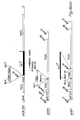
- the plasmid "p1" (arbitrary designation) contains non-essential region left-hand sequence, promoter, signal sequence, a multiple cloning site having restriction sites W, X, Y and Z (four are shown, but the term "multiple" means two or more) and non-essential region right-hand sequence.
- X is a restriction site which enables the sequence X-X from plasmid "p2" to be inserted in the cloning site, resulting in the recombination plasmid "p3".
- NER non-essential region
- the NER is of the same poxvirus, and, if possible, the same strain as is intended for the expression of the foreign gene.
- some NERs might be substantially homologous in several poxviruses, in which case the NER need not be of the homologous virus. Precise homology of the NER of the recombination vector with that of the infecting poxvirus, i.e. that in which recombination is to take place, is not necessarily required.
- Suitable NERs are for vaccinia virus the TK gene or 35K gene (this being non-essential and within the terminal inverted repeat region) and for fowlpox virus (FPV) a non-essential region within the inverted terminal repeat (ITR) as described in NRDC's UK Patent Application Publication No. 2220941A (or the equivalent PCT Application Publication No. WO85/12684, but the genomic location of the NER is not critical. Where it is within a ITR two copies of the foreign gene enter the poxvirus genome.
- homologous recombination does not require a NER, but can take place within an essential gene so long as the promoter signal sequence and foreign DNA are inserted into a non-essential region.
- the NER can itself be flanked by a region which is in an essential gene.
- the cassette contains at least 1000 bp of flanking sequence, i.e. the NER sequence and optional further flanking sequence, at each end thereof.
- the preferred construct conveniently comprises:
- Such a construct is cloned into a suitable vector such as a bacterial plasmid vector, to produce the required recombination vector.
- Sequences (1) and (2) are not necessarily distinct, nor are (6) and (7).
- the termination signal might be important for the production of mature mRNA.
- Recombination to produce the recombinant VV or other poxvirus can take place by any method known in VV recombinant technology and essentially comprises introducing an appropriate strain of poxvirus into animal cells in vitro and also introducing the recombination vector of the invention into those cells. Any animal cells infectable by VV will suffice, e.g. rat, rabbit, chicken or even human.
- the principal use contemplated for the invention is in the in vitro synthesis of proteins, using vaccinia virus or another virus as a vector for the introduction into animal cells of foreign DNA to be expressed as protein. It is, however, also possible that incorporation of a signal sequence might help in the in vivo presentation of the foreign product in an animal which is to be vaccinated with a recombinant poxvirus, e.g. poultry with fowlpox virus.
- the foreign protein thus produced will probably require enzymatic treatment to remove any amino acids of the mature 35kD VV protein fused to the foreign protein sequence, and/or to remove glycosylation. Any conventional such treatment can be used.
- the invention includes the foreign protein whether directly or indirectly obtained from the animal cells.
- the Lister strain of vaccinia virus is widely available.
- the DEAE cellulose column-purified preparation was used to immunise rabbits, and an antiserum obtained which was able to precipitate the 35kD protein secreted.
- Figure 1 shows the location of the 35K gene on the vaccinia virus genome.
- the boxed regions indicate the inverted terminal repeat sequences and the positions of the terminal Hind III (H) fragments B and G are shown.
- the expanded regions show the two copies of the 2.2 kb Bam HI (Ba) plus Sal I (S) fragment which arrested translation of the 35K gene (arrowed). 'Ss' indicates Sst I sites.
- the DNA sequence of the entire 2.2 kb Bam HI plus Sal I fragment plus approximately 300bp downstream of the Sal I site was determined by using the dideoxy chain termination method and is shown below, (SEQUENCE ID NO: 4).
- the longest open reading frame was 235 amino acids and extended beyond the Sal I site at its C terminus.
- the N-terminal end of the predicted polypeptide encodes a hydrophobic region of 17 amino acids which functions as a signal sequence. Immediately beyond this the predicted amino acid sequence is (SEQUENCE ID NO: 5): Pro Ala Ser Leu Gln Gln.
- This sequence corresponds to the limited amino acid sequence for the N-terminus of DE52 column-purified mature 35kD protein (Unknown-Ala-Unknown-Leu-Gln-Gln) which had previously been obtained for us, in confidence, by J.E. Fothergill and B. Dunbar of the University of Aberdeen, making us confident that the sequenced gene encodes the secreted 35kD protein.
- the remainder of the 35K gene downstream of the Sal I site was determined by sequencing an overlapping cloned DNA fragment and the complete gene encodes a further 23 amino acids.
- the sequence of the 2.2 kb Bam HI plus Sal I fragment is shown together with approximately 300 residues downstream of the Sal I site.
- the amino acids encoded by the 35K open reading frame are indicated.
- the 19 residues missing from strain WR DNA are underlined (1580-1598 inclusive) and the asterisked proline indicates the position (amino acid number 1) of the N-terminus of the mature secreted 35kD protein (i.e. following cleavage of the signal sequence).
- Also shown are the mapped positions of the 5′ and 3′ ends of the strain WR 7.5K mRNA (Venkatesan et al ., loc . cit .)
- the underlined restriction enzyme recognition sites are those for Cla I, Bam HI and Sal I (see Example 2).
- This Example relates to the testing of the promoter and signal sequences.
- Figure 3 shows a linearised map of the plasmids used in the construction of cassette DNA comprising promoter, signal sequence (omitted in a comparative construct) and foreign gene.
- the Bam HI- Sal I sub-fragment of a terminal Hind III fragment was cloned in the widely available plasmid pUC19.
- the resulting plasmid, which has most of the coding sequence for the 35kD protein, was designated pG62.
- the remainder of the 35K gene is located on an overlapping Xba I fragment in plasmid p48-15.
- PG620 was constructed from these two plasmids and carries the Bam HI to Xba I fragment which includes the entire 35K gene.
- the Cla I fragments coding for all except the first 42 N-terminal amino acids of the 35kD precursor polypeptide were deleted as follows.
- pG62 was cleaved with Hind III and partially with Cla I.
- a DNA fragment carrying the pUC19 and the vaccinia DNA sequence starting from the Bam HI to the second Cla I site was isolated from an agarose gel by electroelution and ligated to the Cla I and Hind III fragment of the plasmid p48-15 forming pD35.
- a Bgl II linker was introduced in the Cla I site downstream from the 35K promoter in pD35 forming pD35-L.
- the vaccinia DNA sequence in pD35-L was then subcloned on an Eco RI to Sal I fragment into pAT153 cleaved with the same enzymes.
- the resulting plasmid PD351 carries the DNA sequence left of the 35K gene [35K(L)], the 35K promoter (P35K) and the coding sequence for 42 N-terminal amino acids (42 aa of the precursor polypeptide, including 17 aa signal sequence) followed by a unique Bgl II site and the DNA sequence right of the 35K gene [35K(R)].
- lac Z gene and the cat genes, each on a Bam HI fragment, were cloned separately into the Bgl II site of pD351 to form plasmids pD352 and pD351/CAT respectively.
- These constructs have the above marker genes linked in frame to DNA encoding the N-terminal 42 amino acids of the 35K precursor polypeptide and contain the 35K promoter.
- a vector for introducing the lac Z and the cat gene immediately downstream from the ATG translation initiation codon of the 35K gene was constructed. Such a vector lacks the signal sequence but contains the promoter linked to the foreign gene.
- pD351 was cleaved with Bgl II, the ends filled in and partially digested with Sca I.
- the DNA fragment carrying the 35K(R) sequence starting from Bgl II/filled in end, PAT153 and the 35K(L) sequence ending at Sca I site 18bp upstream from the ATG start codon was isolated from an agarose gel by electroelution and ligated to a linker (SEQUENCE ID NO: 6):- ACTCAATCAA TAGCAATTAT GGATCC to form pD356. This allowed us to generate a Bam HI site immediately downstream from the ATG codon and also to delete the N-terminal coding sequence of the 35K gene in pD351. The sequence upstream from the ATG codon remained unchanged.
- the Bam HI DNA fragments encoding the lac Z and cat genes were inserted separately to form pD357 and pD356/CAT respectively. These constructs have the first ATG codon of the 35K gene linked in frame to the marker genes.
- the Eco RI and Bam HI fragment of pD356 carrying 35K(R) sequence and pAT 153 was ligated to the Eco RI and Sph I fragment of pG62 carrying the 35K(L), the 35K promoter plus part of the coding sequence (first 7 amino acids) of the precursor polypeptide in the presence of an oligonucleotide linker with Sph I and Bam HI sticky ends carrying the coding sequence downstream from the Sph I site (amino acids -10-5, followed by the Bam HI site) to form pD358.
- the lac Z and cat fragments were inserted separately into the newly formed Bam HI site in pD358, forming plasmids pD359 and pD358/CAT respectively.
- TK(L) and TK(R) refer to segments of vaccinia DNA which include the left and right portion of the TK gene.
- pSC8 has the lac Z gene under the control of the 11K VV late promoter flanked on both sides by vaccinia TK sequences; S. Chakrabarti et al . Mol. and Cell. Biol. S, 3403-3409 (1985)], to construct pSC8/351.
- This plasmid has the lac Z gene fused to DNA encoding the N-terminal 42 amino acids of the 35K precursor polypeptide and under the control of the 35K promoter.
- the 11K promoter is upstream from the 35K promoter.
- Calcium phosphate-precipitated plasmids pD357 and pV327 (containing the lac Z gene linked to the 35K promoter but no signal sequence and inserted into the 35K and TK loci, respectively) were transfected into CV-1 cells infected with wild type vaccinia virus strain Lister. Recombinant viruses (blue plaques) were isolated as reported previously [Mackett et al ., J. Virol. 49 , 857-864 (1984); Chakrabarti et al ., Mol. Cell. Biol. 5 , 3403-3409 (1985)].
- Recombinant viruses containing the lac Z gene under the control of the 35K promoter either in the 35K locus or TK gene (V357 and V327, respectively) efficiently expressed beta-galactosidase activity. As expected, most of the activity was located intracellularly. Southern blot analysis confirmed that the lac Z gene had been inserted into the 35K locus in both inverted terminal repeats of the V357 genome.
- Plasmids pV328, pV331 pV325 and pD351-CAT were used to construct the recombinant viruses V328, V331, V325 and V351-CAT respectively, as described above.
- the gene was inserted into the TK locus of strain Lister in viruses V328, V331 and V325 and into both copies of the 35K gene in V351-CAT.
- V328, V331, V325 and V351-CAT respectively contain sequences encoding 0, 22, 42 and 42 amino acids of the precursor polypeptide linked in frame to the 5′ end of the cat gene.
- Table 1 shows that although much more CAT protein was produced by the control virus, V328, than by the other viruses, considerably more was secreted from cells infected with V331, V325 and V351-CAT (see results of ELISA assay). Similarly measurement of CAT enzyme activity in a separate experiment showed that the majority of the detectable activity was secreted from cells infected with V331, V325 and V351-CAT, but remained intracellular in V328 infected cells. These results indicate that fragments containing 22 and 42 amino acids from the N-terminus of the 35kD precursor polypeptide include functional signal sequences and are able to direct efficient secretion of the normally largely intracellular CAT protein.
- the results (table 2) show that tunicamycin increased the level of CAT activity produced by V331 and V325 but not by V328. Protein gels indicated that tunicamycin caused a small decrease in the amount of CAT protein synthesised. Therefore the specific activity of the fusion proteins specified by V331 and V325 is substantially increased in the presence of tunicamycin. This is consistent with the reduced activities of the CAT protein specified by these viruses being at least partly due to inhibition by glycosylation. The increase in intracellular activity detected in the presence of tunicamycin in cells infected with V331 and V325 suggests that the intracellular enzyme activity is in transit through the secretory pathway.
- the cat gene was specifically mutated so as to remove the one potential N-linked glycosylation site Asn-Gln-Thr at amino acid positions 34-36.
- the amino acids Asn-34 and Thr-36 were substituted with Gln and Val respectively as follows.
- the Bam HI fragment carrying the cat gene was subcloned into vector pTZ19U (Pharmacia), and a single stranded DNA template form of this plasmid, pTZ19U-CAT, was propagated in E . coli strain TG1 with the phage M13K07 as helper [Mead et al ., Protein Engineering 1 , 67-76 (1986)].
- oligonucleotide (SEQUENCE ID NO: 7): 3′ CGTGTTACAT GGATA G T T GT C CA GCAAGTC GACCTATAA 5′ carrying mismatched bases (underlined) was synthesised. Mutagenesis of the cat DNA was performed according to the phosphorothioate based method of Sayers and Eckstein (1989, In Protein Function: A Practical Approach p279-295. Edited by Creighton, T.E. IRL Press, Oxford). A plasmid (pTZ19U-CAT14) containing substitution mutations coverting Asn-34 to Gln and Thr-36 to Val was identified by DNA sequencing.
- the mutant cat gene on the Bam HI fragment of pTZ19U-CAT14 was subsequently cloned in the correct orientation into recombination vectors pV326 and pV329 to form plasmids pV328-1 and pV331-10 respectively.
- An approximately 270 bp Bcl I and Bgl II fragment of pD351 specifying the 35K promoter and the coding sequences for the N-terminal 42 amino acids was inserted together with the Bam HI mutant cat fragment from pTZ19U-CAT14 into the TK locus of pV321 to form plasmid pV325-11.
- the plasmids pV328-1, pV331-10 and pV325-11 are identical to pV328, pV331 and pV325 respectively except for the two amino acids substitutions disrupting the potential N-linked glycosylation site.
- the mutant cat constructs were introduced into the TK locus of the strain Lister genome by homologous recombination, and the recombinant viruses V328-1, V331-10 and V325-11 were isolated as described above.
- Table 3 shows that the level of CAT activity produced by V328-1, V331-10 and V325-11 is not elevated by tunicamycin. On the contrary, in the presence of tunicamycin there appeared to be some decrease in CAT activity encoded by these viruses, possibly due to a toxic effect of the drug on cells. In the absence of the drug, the mutated CAT proteins expressed by viruses V331-10 and V325-11 migrated faster during polyacrylamide gel electrophoresis than their non-mutated counterparts (produced by V331 and V325). This is consistent with the specific mutations eliminating a glycosylation site. Strikingly, these amino acid substitutions also caused a severe reduction of overall CAT activities encoded by V328-1, V331-10 and V325-11 (table 3).
- the N-terminal 22 and 42 amino acids of the precursor polypeptide are both able to function as signal sequences and efficiently direct secretion of proteins to which they are attached.
- the hybrid proteins because they route the hybrid proteins through the secretory pathway, one potential problem is that proteins that are not normally glycosylated may become so if they possess glycosylation sites.
- the results show that there is a possibility of circumventing this problem either by using tunicamycin or by removing the glycosylation sites by site-specific mutagenesis of the gene encoding the protein to be secreted.
Landscapes
- Life Sciences & Earth Sciences (AREA)
- Health & Medical Sciences (AREA)
- Genetics & Genomics (AREA)
- Chemical & Material Sciences (AREA)
- Organic Chemistry (AREA)
- Engineering & Computer Science (AREA)
- Bioinformatics & Cheminformatics (AREA)
- Biochemistry (AREA)
- Biotechnology (AREA)
- General Engineering & Computer Science (AREA)
- Molecular Biology (AREA)
- Virology (AREA)
- Biomedical Technology (AREA)
- General Health & Medical Sciences (AREA)
- Wood Science & Technology (AREA)
- Zoology (AREA)
- Biophysics (AREA)
- Physics & Mathematics (AREA)
- Microbiology (AREA)
- Plant Pathology (AREA)
- Gastroenterology & Hepatology (AREA)
- Medicinal Chemistry (AREA)
- Proteomics, Peptides & Aminoacids (AREA)
- Micro-Organisms Or Cultivation Processes Thereof (AREA)
- Preparation Of Compounds By Using Micro-Organisms (AREA)
- Peptides Or Proteins (AREA)
- Medicines Containing Antibodies Or Antigens For Use As Internal Diagnostic Agents (AREA)
Applications Claiming Priority (2)
| Application Number | Priority Date | Filing Date | Title |
|---|---|---|---|
| GB898915870A GB8915870D0 (en) | 1989-07-11 | 1989-07-11 | Dna coding for a polypeptide signal sequence in vaccinia virus |
| GB8915870 | 1989-07-11 |
Publications (1)
| Publication Number | Publication Date |
|---|---|
| EP0408301A1 true EP0408301A1 (fr) | 1991-01-16 |
Family
ID=10659868
Family Applications (2)
| Application Number | Title | Priority Date | Filing Date |
|---|---|---|---|
| EP90910856A Ceased EP0482061A1 (fr) | 1989-07-11 | 1990-07-10 | Adn codant pour une sequence de signaux polypeptidiques dans le virus vaccinal |
| EP90307513A Withdrawn EP0408301A1 (fr) | 1989-07-11 | 1990-07-10 | DNA codant pour une séquence signal polypeptidique dans vaccinia |
Family Applications Before (1)
| Application Number | Title | Priority Date | Filing Date |
|---|---|---|---|
| EP90910856A Ceased EP0482061A1 (fr) | 1989-07-11 | 1990-07-10 | Adn codant pour une sequence de signaux polypeptidiques dans le virus vaccinal |
Country Status (6)
| Country | Link |
|---|---|
| EP (2) | EP0482061A1 (fr) |
| JP (1) | JPH05504253A (fr) |
| AU (1) | AU633334B2 (fr) |
| CA (1) | CA2063389A1 (fr) |
| GB (2) | GB8915870D0 (fr) |
| WO (1) | WO1991000911A1 (fr) |
Families Citing this family (2)
| Publication number | Priority date | Publication date | Assignee | Title |
|---|---|---|---|---|
| EP0862449A4 (fr) * | 1995-09-29 | 1998-11-11 | Immunex Corp | Inhibiteur de la chemokine |
| DE69738977D1 (de) * | 1996-03-29 | 2008-10-23 | Zeon Corp | Neues fusionsprotein, dafuer kodierendes gen, rekoerwendung |
Citations (1)
| Publication number | Priority date | Publication date | Assignee | Title |
|---|---|---|---|---|
| WO1986007609A1 (fr) * | 1985-06-18 | 1986-12-31 | Transgene S.A. | VECTEUR D'EXPRESSION DE L'INTERFERON-gamma DANS LES CELLULES DE MAMMIFERE, PROCEDE POUR SA MISE EN OEUVRE, PRODUIT OBTENU ET COMPOSITION PHARMACEUTIQUE CONTENANT L'INTERFERON-gamma |
Family Cites Families (3)
| Publication number | Priority date | Publication date | Assignee | Title |
|---|---|---|---|---|
| DE68919846T2 (de) * | 1988-02-12 | 1995-07-06 | Commw Scient Ind Res Org | Poxvirus-vektoren. |
| CA2001001A1 (fr) * | 1988-10-21 | 1990-04-21 | Matthew M. Binns | Promoteur du virus de l'acne molluscum |
| NL1004764C2 (nl) | 1996-12-12 | 1998-06-15 | Aluminium Verkoop Zuid B V | Arminrichting voor een uitvalscherm en uitvalscherm voorzien van dergelijke arminrichtingen. |
-
1989
- 1989-07-11 GB GB898915870A patent/GB8915870D0/en active Pending
-
1990
- 1990-07-10 EP EP90910856A patent/EP0482061A1/fr not_active Ceased
- 1990-07-10 GB GB9015168A patent/GB2233655B/en not_active Expired - Fee Related
- 1990-07-10 CA CA 2063389 patent/CA2063389A1/fr not_active Abandoned
- 1990-07-10 AU AU59555/90A patent/AU633334B2/en not_active Ceased
- 1990-07-10 JP JP2510018A patent/JPH05504253A/ja active Pending
- 1990-07-10 WO PCT/GB1990/001062 patent/WO1991000911A1/fr not_active Ceased
- 1990-07-10 EP EP90307513A patent/EP0408301A1/fr not_active Withdrawn
Patent Citations (1)
| Publication number | Priority date | Publication date | Assignee | Title |
|---|---|---|---|---|
| WO1986007609A1 (fr) * | 1985-06-18 | 1986-12-31 | Transgene S.A. | VECTEUR D'EXPRESSION DE L'INTERFERON-gamma DANS LES CELLULES DE MAMMIFERE, PROCEDE POUR SA MISE EN OEUVRE, PRODUIT OBTENU ET COMPOSITION PHARMACEUTIQUE CONTENANT L'INTERFERON-gamma |
Non-Patent Citations (1)
| Title |
|---|
| JOURNAL OF GENERAL VIROLOGY vol. 67, no. 10, 1986,& SMITH, G.L.: "Vaccinia virus expression vectors." * |
Also Published As
| Publication number | Publication date |
|---|---|
| GB9015168D0 (en) | 1990-08-29 |
| CA2063389A1 (fr) | 1991-01-12 |
| EP0482061A1 (fr) | 1992-04-29 |
| AU633334B2 (en) | 1993-01-28 |
| GB2233655B (en) | 1993-04-21 |
| GB2233655A (en) | 1991-01-16 |
| AU5955590A (en) | 1991-02-06 |
| JPH05504253A (ja) | 1993-07-08 |
| GB8915870D0 (en) | 1989-08-31 |
| WO1991000911A1 (fr) | 1991-01-24 |
Similar Documents
| Publication | Publication Date | Title |
|---|---|---|
| EP0389509B1 (fr) | Promoteurs du virus de la variole aviaire | |
| JP3044062B2 (ja) | 組換えポックスウイルス宿主選択系 | |
| US5225336A (en) | Recombinant poxvirus host range selection system | |
| Patel et al. | Isolation and characterization of herpes simplex virus type 1 mutants defective in the UL6 gene | |
| Perkus et al. | Cloning and expression of foreign genes in vaccinia virus, using a host range selection system | |
| EP0340359B1 (fr) | Vecteurs de transfert de Baculovirus | |
| EP0353851B1 (fr) | Régions non essentielles du virus du fowlpox | |
| US5858726A (en) | Self-assembling replication defective hybrid virus particles | |
| KR970000530B1 (ko) | 재조합 아비폭스비루스 | |
| US5322774A (en) | Procaryotic leader sequence in recombinant baculovirus expression system | |
| CA1337181C (fr) | Vaccin recombinant a base de gb et de gd contre l'herpes | |
| Feenstra et al. | Deletions in herpes simplex virus glycoprotein D define nonessential and essential domains | |
| Kimura et al. | Varicella-zoster virus glycoproteins E and I expressed in insect cells form a heterodimer that requires the N-terminal domain of glycoprotein I | |
| EP0397560A2 (fr) | ADN de la spéroidine et vecteurs d'expression d'entomopoxvirus recombinants | |
| CA1340473C (fr) | Methode pour isoler l'adn codant la thymidine-kinase de l'herpes virus | |
| WO1989012095A1 (fr) | Procede d'evaluation de vaccins recombinants contre le virus de l'immunodeficience | |
| EP0408301A1 (fr) | DNA codant pour une séquence signal polypeptidique dans vaccinia | |
| Gong et al. | A single point mutation of Ala-25 to Asp in the 14,000-Mr envelope protein of vaccinia virus induces a size change that leads to the small plaque size phenotype of the virus | |
| JPH09206084A (ja) | Cho細胞において増殖可能な組換えワクシニアウイルスを用いる方法 | |
| EP0422072B1 (fr) | Procede de selection de virus de la variole recombinants | |
| Tsao et al. | Construction and application of plasmids containing bidirectional promoters of vaccinia virus | |
| Krummenacher et al. | The mouse mammary tumor virus long terminal repeat encodes a 47 kDa glycoprotein with a short half-life in mammalian cells | |
| WO1989008716A1 (fr) | Nouveaux vecteurs d'expression du virus vaccinia recombinant et leur procede de selection | |
| PT87400B (pt) | Processo para a preparacao de proteinas estranhas em estreptomicetes e de estruturas geneticas uteis para essa preparacao | |
| CA2304991A1 (fr) | Gene synthetique du virus de la diarrhee virale des bovins |
Legal Events
| Date | Code | Title | Description |
|---|---|---|---|
| PUAI | Public reference made under article 153(3) epc to a published international application that has entered the european phase |
Free format text: ORIGINAL CODE: 0009012 |
|
| AK | Designated contracting states |
Kind code of ref document: A1 Designated state(s): GR |
|
| STAA | Information on the status of an ep patent application or granted ep patent |
Free format text: STATUS: THE APPLICATION IS DEEMED TO BE WITHDRAWN |
|
| 18D | Application deemed to be withdrawn |
Effective date: 19910717 |