EP0408539A1 - Verfahren zur Herstellung von Polyimiden - Google Patents
Verfahren zur Herstellung von Polyimiden Download PDFInfo
- Publication number
- EP0408539A1 EP0408539A1 EP90890202A EP90890202A EP0408539A1 EP 0408539 A1 EP0408539 A1 EP 0408539A1 EP 90890202 A EP90890202 A EP 90890202A EP 90890202 A EP90890202 A EP 90890202A EP 0408539 A1 EP0408539 A1 EP 0408539A1
- Authority
- EP
- European Patent Office
- Prior art keywords
- mol
- alkali metal
- metal hydroxide
- diisocyanate
- polyimides
- Prior art date
- Legal status (The legal status is an assumption and is not a legal conclusion. Google has not performed a legal analysis and makes no representation as to the accuracy of the status listed.)
- Granted
Links
Classifications
-
- C—CHEMISTRY; METALLURGY
- C08—ORGANIC MACROMOLECULAR COMPOUNDS; THEIR PREPARATION OR CHEMICAL WORKING-UP; COMPOSITIONS BASED THEREON
- C08G—MACROMOLECULAR COMPOUNDS OBTAINED OTHERWISE THAN BY REACTIONS ONLY INVOLVING UNSATURATED CARBON-TO-CARBON BONDS
- C08G18/00—Polymeric products of isocyanates or isothiocyanates
-
- C—CHEMISTRY; METALLURGY
- C08—ORGANIC MACROMOLECULAR COMPOUNDS; THEIR PREPARATION OR CHEMICAL WORKING-UP; COMPOSITIONS BASED THEREON
- C08G—MACROMOLECULAR COMPOUNDS OBTAINED OTHERWISE THAN BY REACTIONS ONLY INVOLVING UNSATURATED CARBON-TO-CARBON BONDS
- C08G73/00—Macromolecular compounds obtained by reactions forming a linkage containing nitrogen with or without oxygen or carbon in the main chain of the macromolecule, not provided for in groups C08G12/00 - C08G71/00
- C08G73/06—Polycondensates having nitrogen-containing heterocyclic rings in the main chain of the macromolecule
- C08G73/10—Polyimides; Polyester-imides; Polyamide-imides; Polyamide acids or similar polyimide precursors
- C08G73/1003—Preparatory processes
- C08G73/1035—Preparatory processes from tetracarboxylic acids or derivatives and diisocyanates
-
- C—CHEMISTRY; METALLURGY
- C08—ORGANIC MACROMOLECULAR COMPOUNDS; THEIR PREPARATION OR CHEMICAL WORKING-UP; COMPOSITIONS BASED THEREON
- C08G—MACROMOLECULAR COMPOUNDS OBTAINED OTHERWISE THAN BY REACTIONS ONLY INVOLVING UNSATURATED CARBON-TO-CARBON BONDS
- C08G18/00—Polymeric products of isocyanates or isothiocyanates
- C08G18/06—Polymeric products of isocyanates or isothiocyanates with compounds having active hydrogen
- C08G18/08—Processes
- C08G18/16—Catalysts
- C08G18/22—Catalysts containing metal compounds
- C08G18/225—Catalysts containing metal compounds of alkali or alkaline earth metals
-
- C—CHEMISTRY; METALLURGY
- C08—ORGANIC MACROMOLECULAR COMPOUNDS; THEIR PREPARATION OR CHEMICAL WORKING-UP; COMPOSITIONS BASED THEREON
- C08G—MACROMOLECULAR COMPOUNDS OBTAINED OTHERWISE THAN BY REACTIONS ONLY INVOLVING UNSATURATED CARBON-TO-CARBON BONDS
- C08G18/00—Polymeric products of isocyanates or isothiocyanates
- C08G18/06—Polymeric products of isocyanates or isothiocyanates with compounds having active hydrogen
- C08G18/28—Polymeric products of isocyanates or isothiocyanates with compounds having active hydrogen characterised by the compounds used containing active hydrogen
- C08G18/30—Low-molecular-weight compounds
- C08G18/34—Carboxylic acids; Esters thereof with monohydroxyl compounds
- C08G18/343—Polycarboxylic acids having at least three carboxylic acid groups
- C08G18/346—Polycarboxylic acids having at least three carboxylic acid groups having four carboxylic acid groups
Definitions
- the invention relates to a process for the preparation of polyimides by heating a solution of intramolecular tetracarboxylic acid dianhydrides and organic diisocyanates in an aprotic organic solvent in the presence of a polymerization accelerator.
- carboxylic acid dianhydrides and diisocyanates condense to polyimides if they are heated to temperatures of at least 100 ° C. in polar organic solvents for between 6 and 24 hours. Under these reaction conditions, however, the selectivity of the polycondensation suffers because the isocyanates also react with solvent molecules. These undesirable side reactions further prevent high molecular weights from being reached and make it more difficult to separate off by-products, as a result of which the polymer formed is contaminated.
- benzophenonetetracarboxylic acid dianhydride (BTDA) and MDI can be condensed to a homopolyimide, the catalyst being, inter alia, the extremely toxic phenylmercury hydroxide and tert. Alcohols are called. The catalysts remain partially enclosed in the polymer.
- the invention aims to avoid all of these disadvantages and aims in particular to provide a process of the type described at the outset which can be carried out using an inexpensive and easily accessible polymerization accelerator which is not built into the polymer chain.
- the inventive method should allow the production of polyimides with a higher molecular weight and thus an improved thermal stability.
- This object is achieved according to the invention in that a catalytic amount of an alkali metal hydroxide is used as the polymerization accelerator.
- Suitable intramolecular tetracarboxylic dianhydrides are, in particular, pyromellitic dianhydride, benzene-1,2,3,4-tetracarboxylic dianhydride, diphenyltetracarboxylic dianhydride, naphthalenetetracarboxylic dianhydride, benzophenone-3,3 ′, 4,4′- tetracarboxylic dianhydride, 4,4'-oxydiphtalic dianhydride, decahydronaphthalene-1,4,5,8-tetracarboxylic dianhydride, 4,8-dimethyl-1,2,3,5,6,7-hexahydronaphthalene-1,2,5,6-tetracarboxylic dianhydride , 2,6-dichloro-naphthalene-1,4,5,8-tetracarboxylic acid dianhydride, 2,7-dichloronaphthalene-1,4,5,8-tetracarboxylic
- Suitable organic diisocyanates are, in particular, 2,4-tolylene diisocyanate, 2,6-tolylene diisocyanate, 4,4'-methylene bis (phenyl isocyanate), dianisidine diisocyanate, tolidine diisocyanate, hexamethylene diisocyanate, 4,4'-methylene bis (cyclohexyl isocyanate), m-xylene diisocyanate, 1, 5-naphthalene diisocyanate, 1,4-diethylbenzene- ⁇ '-diisocyanate.
- Mixtures of several dianhydrides with mixtures of several diisocyanates can also be converted to polyimides by the process according to the invention.
- Dipolar solvents such as DMF, dimethylacetamide, dimethyl sulfoxide, N-methyl-2-pyrrolidone and tetrahydrofuran are primarily suitable as aprotic solvents.
- the process according to the invention can also be carried out in benzene, toluene or xylene.
- the inherent viscosity of the finished polycondensation solution shows that the use of an alkali metal hydroxide according to the invention as a polymerization accelerator leads to polyimides with a higher molecular weight than is achieved when alkali metal alcoholates are used.
- the alkali metal hydroxide can be added to the reaction mixture either in solid form or expediently in the form of an aqueous solution.
- DMF and N-methyl-2-pyrrolidone are particularly suitable as solvents.
- the process according to the invention can be carried out particularly gently at a temperature of at most 100 ° C., preferably between 60 ° C. and 80 ° C., with between 0.0001 and 0.2 mol of alkali metal hydroxide, preferably between 0.01 mol and 0, per mol of diisocyanate , 05 moles of alkali metal hydroxide, and between 0.97 moles and 1.01 moles of diisocyanate are used per mole of tetracarboxylic acid dianhydride.
- the progress of the method according to the invention can be followed using customary analytical methods, for example by IR spectral analysis (absence of absorption corresponding to the free NCO group). Since CO2 is split off during the reaction, the cessation of CO2 development indicates the end of polycondensation.
- the reaction product can be isolated by evaporation of the solvent or precipitation, or the solution can be processed directly.
- the polyimides obtained can be used to produce high-temperature-resistant fibers, moldings and coatings.
- N-phenylphthalimide can be prepared by reacting phthalic anhydride and phenyl isocyanate in the presence of phenylmercury hydroxide. The reaction is carried out at elevated temperature in benzene.
- the invention therefore also relates to a process for the preparation of mono- or diimides by reacting intramolecular dicarboxylic acid anhydrides with organic mono- or diisocyanates or by reacting intramolecular tetracarboxylic acid dianhydrides with organic monoisocyanates in a dipolar, aprotic solvent in the presence of a polymerization accelerator, which is characterized in that that a catalytic amount of an alkali metal hydroxide is used as the polymerization accelerator, the alkali metal hydroxide advantageously being present as an aqueous solution.
- Suitable intramolecular dicarboxylic acid anhydrides are, in particular, phthalic anhydride, succinic anhydride, adipic anhydride, glutaric anhydride, citraconic anhydride, maleic anhydride, itaconic anhydride, naphthalene-1,2-dicarboxylic acid anhydride, naphthalene-1,2-anhydride, 1,8-dicarboxylic acid, 1,8-dicarboxylic acid anhydride
- Suitable diisocyanates and tetracarboxylic acid anhydrides are those mentioned above and, in particular, phenyl isocyanate, p-tolyl isocyanate, o-tolyl isocyanate, m-xylyl isocyanate, ⁇ -naphthyl isocyanate, octadecyl isocyanate, benzyl isocyanate, allyl isocyanate, cyclohexyl isocyanate and p-nitrophenyl are suitable as monoisocyanates.
- the inventive method for the production of mono- or diimides is characterized by the further features that it is carried out at a temperature of at most 100 ° C., preferably between 60 ° C. and 80 ° C., between 0.0001 and 0.2 mol of alkali metal hydroxide, preferably between 0.01 mol and 0.005 mol of alkali metal hydroxide, are used per mol of mono- or diisocyanate, - Between 0.97 mol and 1.01 mol of mono- or diisocyanate are used per mole of dicarboxylic acid anhydride or tetracarboxylic acid dianhydride.
- Monoimides are used as fungicides, insecticides and herbicides.
- N-phenylphthalimide was obtained in xylene in 59.1% yield.
- the reaction mixture was heated to 80 ° C., and with constant stirring under a nitrogen atmosphere, 94.7 g (0.5 mol) of isocyanate mixture consisting of 69.7 g (0.4 mol) of 2,4-tolylene diisocyanate and 25 g (0.1 mol) of 4,4'-methylenebis (phenyl isocyanate) were added dropwise.
- the polycondensation solution was then stirred for one hour at 80 ° C. until the CO2 development had ended. No free anhydride groups were then visible in the IR spectrum, which made additional diisocyanate unnecessary.
- the polyimide was precipitated by adding acetone, the precipitate was filtered off, washed and dried.
- the glass transition temperature of the powder obtained was 315 ° C.
- the powder precipitated analogously to Example 3 had a glass transition temperature of 315 ° C.
- 4,4'-methylenebis (phenyl isocyanate) was added dropwise within six hours.
- the increase in viscosity was monitored using an in-line viscometer.
- the viscosity of the polycondensation solution began to increase with a 98% addition of the total amount of isocyanate.
- stirring was continued at 80 ° C. for one hour until the CO2 evolution had ended. No free anhydride and isocyanate groups could be seen in the IR spectrum.
- the total response time was seven hours.
- the total response time was nine hours.
Landscapes
- Chemical & Material Sciences (AREA)
- Health & Medical Sciences (AREA)
- Chemical Kinetics & Catalysis (AREA)
- Medicinal Chemistry (AREA)
- Polymers & Plastics (AREA)
- Organic Chemistry (AREA)
- Polyurethanes Or Polyureas (AREA)
- Macromolecular Compounds Obtained By Forming Nitrogen-Containing Linkages In General (AREA)
- Polymers With Sulfur, Phosphorus Or Metals In The Main Chain (AREA)
- Organic Low-Molecular-Weight Compounds And Preparation Thereof (AREA)
Abstract
Description
- Die Erfindung betrifft ein Verfahren zur Herstellung von Polyimiden durch Erhitzen einer Lösung von intramolekularen Tetracarbonsäuredianhydriden und organischen Diisocyanaten in einem aprotischen organischen Lösungsmittel in Gegenwart eines Polymerisationsbeschleunigers.
- Es ist bekannt, daß Carbonsäuredianhydride und Diisocyanate zu Polyimiden kondensieren, wenn sie in polaren organischen Lösungsmitteln zwischen 6 und 24 Stunden auf Temperaturen von mindestens 100°C erhitzt werden. Unter diesen Reaktionsbedingungen leidet aber die Selektivität der Polykondensation, weil die Isocyanate auch mit Lösungsmittelmolekülen reagieren. Diese unerwünschten Nebenreaktionen verhindern weiters das Erreichen hoher Molekulargewichte und erschweren die Abtrennung von Nebenprodukten, wodurch das gebildete Polymer verunreinigt wird.
- Es hat deshalb nicht an Versuchen gefehlt, die Reaktionsgeschwindigkeit mit Polymerisationsbeschleunigern zu erhöhen.
- In der US-A - 4,021,412 wird beispielsweise beschrieben, daß Alkalimetallactamate die Bildung mancher Mischpolyimide katalysieren. Als Diisocyanatkomponenten werden 4,4′-Methylen-bis-(phenylisocyanat) (MDI) und Toluylendiisocyanat (TDI) genannt.
- Der US-A - 4,156,065 ist zu entnehmen, daß gewisse vier- oder fünfgliedrige, zyklische Phosphorverbindungen ebenfalls eine katalytische Wirkung auf die Bildung der MDI/TDI-Mischpolyimide ausüben. Allerdings werden Polymerisate erhalten, die neben den Imideinheiten auch eine beträchtliche Anzahl Carbodiimideinheiten enthalten. Das wirkt sich nachteilig auf die Thermostabilität der Polyimide aus.
- Nach der US-A - 3,701,756 kann Benzophenontetracarbonsäuredianhydrid (BTDA) und MDI zu einem Homopolyimid kondensiert werden, wobei als Katalysator u.a. das äußerst giftige Phenylquecksilberhydroxid und tert. Alkohole genannt werden. Die Katalysatoren bleiben teilweise im Polymer eingeschlossen.
- Aus der US-A - 4,001,186 ist bekannt, daß Alkalimetallalkoholate die Reaktion von BTDA mit MDI und Toluylendiisocyanaten katalysieren. Für die Umsetzung genügt eine Reaktionstemperatur von 80°C. Als Reaktionsmedium wird trockenes Dimethylformamid (DMF) verwendet. Allerdings werden auch hier Polymere mit einer unbefriedigenden Thermostabilität erhalten, da das Alkoholation mit den Diisocyanaten zu Polyurethanen reagiert, die in die Polyimidkette eingebaut werden. Außerdem müssen die Diisocyanate in einem mindestens 1 Mol-%igen Überschuß eingesetzt werden, um hohe Ausbeuten zu erreichen. Dieser Überschuß verkleinert aber andererseits den Polymerisationsgrad und damit das Molekulargewicht des Polymeren.
- Bei allen heute bekannten Verfahren zur großtechnischen Herstellung von Polyimiden muß dieser Mindestüberschuß an Diisocyanat in der Reaktionsmischung vorhanden sein.
- Die Erfindung bezweckt die Vermeidung aller dieser Nachteile und setzt sich insbesondere zum Ziel, ein Verfahren der eingangs beschriebenen Art zur Verfügung zu stellen, das mit einem billigen und einfach zugänglichen Polymerisationsbeschleuniger durchgeführt werden kann, der nicht in die Polymerkette eingebaut wird. Außerdem soll das erfindungsgemäße Verfahren die Herstellung von Polyimiden mit einem höheren Molekulargewicht und damit einer verbesserten Thermostabilität erlauben.
- Dieses Ziel wird erfindungsgemäß dadurch gelöst, daß als Polymerisationsbeschleuniger eine katalytische Menge eines Alkalimetallhydroxides eingesetzt wird.
- Als intramolekulare Tetracarbonsäuredianhydride eignen sich insbesondere Pyromellithsäuredianhydrid, Benzol-1,2,3,4-tetracarbonsäuredianhydrid, Diphenyltetracarbonsäuredianhydrid, Naphthalintetracarbonsäuredianhydrid, Benzophenon-3,3′,4,4′- tetracarbonsäuredianhydrid, 4,4′-Oxydiphtalsäuredianhydrid, Decahydronaphthalin-1,4,5,8-tetracarbonsäuredianhydrid, 4,8-Dimethyl-1,2,3,5,6,7-hexahydronaphthalin-1,2,5,6-tetracarbonsäuredianhydrid, 2,6-Dichlor-naphthalin-1,4,5,8-tetracarbonsäuredianhydrid, 2,7-Dichlornaphthalin-1,4,5,8-tetracarbonsäuredianhydrid, 2,3,6,7-Tetrachlornaphthalin-1,4,5,8-tetracarbonsäuredianhydrid, Phenanthren-1,3,9,10-tetracarbonsäuredianhydrid, Perylen-3,4,9,10-tetracarbonsäuredianhydrid, Bis(2,3-dicarboxyphenyl)methandianhydrid, Bis(3,4-dicarboxyphenyl)methandianhydrid, 1,1-Bis(2,3-dicarboxyphenyl)äthandianhydrid, 1,1-Bis(3,4-dicarboxyphenyl)äthandianhydrid, 2,2-Bis(2,3-dicarboxyphenyl)propandianhydrid, 2,3-Bis(3,4-dicarboxyphenyl)propandianhydrid, Bis(3,4-dicarboxyphenyl)sulfondianhydrid, Bis(3,4-dicarboxyphenyl)ätherdianhydrid, Äthylentetracarbonsäuredianhydrid, Butan-1,2,3,4-tetracarbonsäuredianhydrid, Cyclopentan-1,2,3,4-tetracarbonsäuredianhydrid, Pyrrolidin-2,3,4,5-tetracarbonsäuredianhydrid, Pyrazin-2,3,5,6-tetracarbonsäuredianhydrid und Thiophen-2,3,4,5-tetracarbonsäuredianhydrid.
- Als organische Diisocyanate eignen sich insbesondere 2,4-Toluylendiisocyanat, 2,6-Toluylendiisocyanat, 4,4′-Methylenbis(phenylisocyanat), Dianisidindiisocyanat, Tolidindiisocyanat, Hexamethylendiisocyanat, 4,4′-Methylenbis(cyclohexylisocyanat), m-Xyloldiisocyanat, 1,5-Naphthalindiisocyanat, 1,4-Diäthylbenzol-ββ′-diisocyanat.
- Nach dem erfindungsgemäßen Verfahren können auch Mischungen mehrerer Dianhydride mit Mischungen mehrerer Diisocyanate zu Polyimiden umgesetzt werden.
- Als aprotische Lösungsmittel kommen in erster Linie dipolare Lösungsmittel, wie DMF, Dimethylacetamid, Dimethylsulfoxid, N-Methyl-2-pyrrolidon und Tetrahydrofuran in Frage. Das erfindungsgemäße Verfahren kann aber auch in Benzol, Toluol oder Xylol ausgeführt werden.
- An der inhärenten Viskosität der fertigen Polykondensationslösung zeigt sich, daß die erfindungsgemäße Verwendung eines Alkalimetallhydroxides als Polymerisationsbeschleuniger zu Polyimiden mit einem höheren Molekulargewicht führt, als es bei Verwendung von Alkalimetallalkoholaten erreicht wird.
- Das Alkalimetallhydroxid kann entweder in fester Form oder zweckmäßigerweise in Form einer wässerigen Lösung der Reaktionsmischung zugegeben werden.
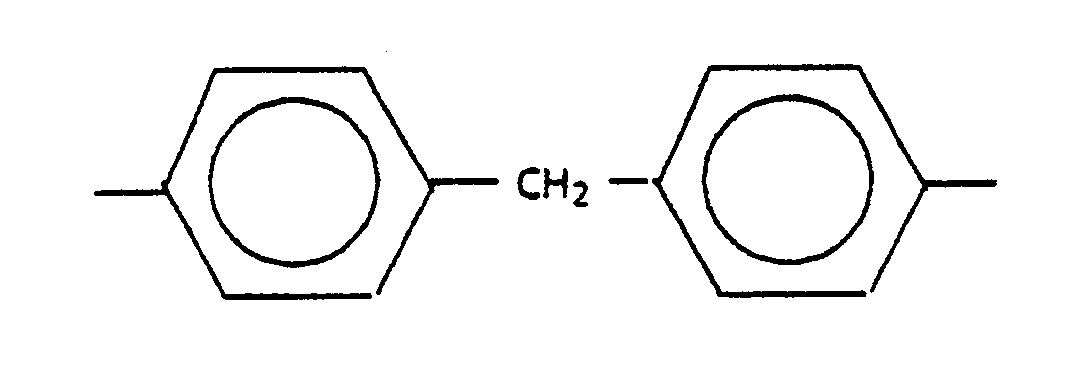
- Nach einer bevorzugten Ausführungsform des erfindungsgemäßen Verfahrens wird zur Herstellung von Polyimiden mit Struktureinheiten der allgemeinen Formel


- Als Lösungsmittel eignen sich DMF und N-Methyl-2-pyrrolidon besonders gut.
- Das erfindungsgemäße Verfahren kann besonders schonend bei einer Temperatur von maximal 100°C, bevorzugt zwischen 60°C und 80°C durchgeführt werden, wobei pro Mol Diisocyanat zwischen 0,0001 und 0,2 Mol Alkalihydroxid, bevorzugt zwischen 0,01 Mol und 0,05 Mol Alkalihydroxid, und pro Mol Tetracarbonsäuredianhydrid zwischen 0,97 Mol und 1,01 Mol Diisocyanat eingesetzt werden.
- Das Fortschreiten des erfindungsgemäßen Verfahrens läßt sich mit üblichen Analysenverfahren, beispielsweise durch IR-Spektralanalyse (Abwesenheit einer Absorption entsprechend der freien NCO-Gruppe) verfolgen. Da während der Reaktion CO₂ abgespalten wird, zeigt das Aufhören der CO₂-Entwicklung das Ende der Polykondensation an. Das Reaktionsprodukt kann durch Verdampfen des Lösungsmittels oder Ausfällen isoliert werden, oder es kann die Lösung direkt weiterverarbeitet werden. Die erhaltenen Polyimide können zur Herstellung von hochtemperaturbeständigen Fasern, Formkörpern und Beschichtungen verwendet werden.
- Es hat sich gezeigt, daß sich mit Alkalimetallhydroxiden nicht nur die Bildung von Polyimiden, sondern auch von Mono- und Diimiden aus den entsprechenden Ausgangsverbindungen katalysieren läßt. Derartige Imide sind bekannt Nach der US-A - 3,701,756 kann beispielsweise N-Phenylphthalimid durch Umsetzung von Phthalsäureanhydrid und Phenylisocyanat in Gegenwart von Phenylquecksilberhydroxid hergestellt werden. Die Reaktion wird bei erhöhter Temperatur in Benzol ausgeführt.
- Die Erfindung betrifft deshalb auch ein Verfahren zur Herstellung von Mono- oder Diimiden durch Umsetzung von intramolekularen Dicarbonsäureanhydriden mit organischen Mono- oder Diisocyanaten oder durch Umsetzung von intramolekularen Tetracarbonsäuredianhydriden mit organischen Monoisocyanaten in einem dipolaren, aprotischen Lösungsmittel in Gegenwart eines Polymerisationsbeschleunigers, das dadurch gekennzeichnet ist, daß als Polymerisationsbeschleuniger eine katalytische Menge eines Alkalimetallhydroxides verwendet wird, wobei das Alkalimetallhydroxid zweckmäßigerweise als wässerige Lösung vorliegt.
- Als intramolekulare Dicarbonsäureanhydride eignen sich inbesondere Phthalsäureanhydrid, Bernsteinsäureanhydrid, Adipinsäureanhydrid, Glutarsäureanhydrid, Citraconsäureanhydrid, Maleinsäureanhydrid, Itaconsäureanhydrid, Naphthalin-1,2-dicarbonsäureanhydrid, Naphthalin-1,8-dicarbonsäureanhydrid, Chlorendicsäureanhydrid und 1,2,3,6-Tetrahydrophthalsäureanhydrid.
- Als Diisocyanate und Tetracarbonsäureanhydride kommen die weiter oben genannten in Betracht und als Monoisocyanate insbesondere Phenylisocyanat, p-Toluylisocyanat, o-Toluylisocyanat, m-Xylylisocyanat, α-Naphthylisocyanat, Octadecylisocyanat, Benzylisocyanat, Allylisocyanat, Cyclohexylisocyanat und p-Nitrophenylisocyanat.
- Das erfindungsgemäße Verfahren zur Herstellung von Mono- bzw. Diimiden ist durch die weiteren Merkmale gekennzeichnet, daß
- es bei einer Temperatur von maximal 100°C, bevorzugt zwischen 60°C und 80°C durchgeführt wird,
- pro Mol Mono- bzw. Diisocyanat zwischen 0,0001 und 0,2 Mol Alkalihydroxid, bevorzugt zwischen 0,01 Mol und 0,005 Mol Alkalimetallhydroxid, eingesetzt werden,
- pro Mol Dicarbonsäureanhydrid bzw. Tetracarbonsäuredianhydrid zwischen 0,97 Mol und 1,01 Mol Mono- bzw. Diisocyanat eingesetzt werden. - Monoimide werden als Fungizide, Insektizide und Herbizide verwendet.
- Die Erfindung wird mit den folgenden Beispielen noch näher erläutert.
- Eine Mischung aus 5,92 g (0,04 mol) Phthalsäureanhydrid, 4,76 g (0,04 mol) Phenylisocyanat und 0,02 mg (0,005 mol) NaOH, gelöst in einem Tropfen Wasser, wurde in 40 ml trockenem Dimethylformamid 3,5 Stunden bei 100°C gerührt. Nach beendetem Erhitzen wurde das Reaktionsgemisch auf Raumtemperatur abgekühlt, worauf der hierbei ausgefallene Feststoff abfiltriert, mit Hexan gewaschen und getrocknet wurde. Ausbeute: 7,54 g N-Phenylphthalimid (= 85,1 %) in Form weißer Kristalle.
- Zum Vergleich wurde die Umsetzung ohne Katalysator durchgeführt, wobei in nur 56,1 %iger Ausbeute 4,99 g N-Phenylphthalimid erhalten wurden.
- Mit Dimethylphospholenoxid als Katalysator wurde in Xylol in 59,1 %iger Ausbeute N-Phenylphthalimid erhalten.
- Eine Mischung aus 8,72g (0,04 mol) Pyromellithsäuredianhydrid, 6,97 g (0,04 mol) 2,4-Toluylendiisocyanat und 0,02 mg (0,0005 mol) NaOH, gelöst in einem Tropfen Wasser, wurde in 40 ml trockenem Dimethylformamid 3,5 Stunden bei 100°C gerührt. Nach beendetem Erhitzen wurde der ausgefallene gelbe Niederschlag filtriert, gewaschen und getrocknet. Ausbeute an Polytoluylenpyromellithsäureimid: 99,2 %. Im Vergleich dazu betrug die Ausbeute der ohne Katalysator durchgeführten Umsetzung nur 90,1 %.
- In einem 1000 ml Kolben mit Rührer, Rückflußkühler, Thermometer und Stickstoffkühlung wurden 161 g (0,5 mol) Benzophenon-3,3′,4,4′-tetracarbonsäuredianhydrid und 0,15 g (0,0037 mol) Natronlauge, gelöst in 0,4 ml Wasser, in 496g trockenem DMF gelöst. Die Reaktionsmischung wurde auf 80°C erwärmt, und unter konstantem Rühren unter Stickstoffatmosphäre wurden innerhalb von sechs Stunden 94,7 g (0,5 mol) Isocyanatgemisch, bestehend aus 69,7 g (0,4 mol) 2,4-Toluylendiisocyanat und 25 g (0,1 mol) 4,4′-Methylenbis (phenylisocyanat) zugetropft. Die Polykondensationslösung wurde danach bis zur Beendigung der CO₂-Entwicklung eine Stunde bei 80°C weitergerührt. Im IR-Spektrum waren dann keine freien Anhydridgruppen mehr sichtbar, wodurch sich eine Zugabe von weiterem Diisocyanat erübrigte.
- Die fertige Polykondensationslösung hatte eine inhärente Viskosität (c = 0,5 g/dl bei 25°C in DMF/1 % LiBr) von 66 ml/g. Durch Zugabe von Aceton wurde das Polyimid ausgefällt, der Niederschlag abfiltriert, gewaschen und getrocknet. Die Glasübergangstemperatur des gewonnenen Pulvers lag bei 315°C.
- Nach dem in Beispiel 3 geschilderten Verfahren und unter Verwendung identischer Einsatzmengen mit der Ausnahme, daß anstatt Natronlauge 0,2 g (0,0037 mol) Natriummethylat in fester Form zugegeben wurden, wurde dieselbe Umsetzung durchgeführt. Nach sieben Stunden Reaktionszeit konnten noch freie Anhydridgruppen im IR-Spektrum nachgewiesen werden. Es wurden daher innerhalb von zwei Stunden noch weitere 0,95 g Isocyanatgemisch, bestehend aus 0,25 g (0,001 mol) MDI und 0,70 g (0,004 mol) TDI, zugetropft. Dies entspricht einem Isocyanatüberschuß von 1 Mol%.
- Die fertige Polykondensationslösung hatte eine inhärente Viskosität (c = 0,5g/dl bei 25°C in DMF/1 % LiBr) von nur 64 ml/g. Das analog zum Beispiel 3 ausgefällte Pulver hatte eine Glasübergangstemperatur von 315°C.
- In einem Reaktor aus Edelstahl mit Rührer, Rückflußkühler, Thermofühler und Stickstoffspülung wurden 5928 g (18,4 mol) Benzophenon-3,3′,4,4′-tetracarbonsäuredianhydrid und 7,4 g (0,184 mol) Natronlauge, gelöst in 15 ml Wasser, in 23350 g trockenem DMF gelöst. Die Reaktionsmischung wurde auf 80°C erwärmt, und unter konstantem Rühren wurden unter Stickstoffatmosphäre 3485 g (18,4 mol) Isocyanatgemisch, bestehend aus 2564 g (14,72 mol) 2,4-Toluylendiisocyanat und 921 g (3,68 mol) 4,4′-Methylenbis (phenylisocyanat) innerhalb von sechs Stunden zugetropft. Die Zunahme der Viskosität wurde über ein In-line-Viskosimeter verfolgt. Bereits bei 98 %iger Zugabe der gesamten Isocyanatmenge begann die Viskosität der Polykondensationslösung zu steigen. Nach Zugabe der gesamten Isocyanatmenge wurde bis zur Beendigung der CO₂-Entwicklung eine Stunde bei 80°C weitergerührt. Im IR-Spektrum waren keine freien Anhydrid- und Isocyanatgruppen mehr zu sehen.
- Die fertige Polykondensationslösung hatte eine inhärente Viskosität (c = 0,5 g/dl bei 25°C in DMF/1 % LiBr) von 57 bis 66 ml/g. Die gesamte Reaktionszeit betrug sieben Stunden.
- Nach dem in Beispiel 4 geschilderten Verfahren und unter Verwendung identischer Einsatzmengen mit der Ausnahme, daß anstatt Natronlauge 9,9 g (0,184 mol) Natriummethylat in fester Form zugegeben wurden, wurde dieselbe Reaktion durchgeführt. Nach Zugabe der gesamten Isocyanatmenge war noch kein Viskositätsanstieg am In-line-Viskosimeter zu beobachten. Nach sieben Stunden Reaktionszeit konnten noch freie Anhydridgruppen im IR-Spektrum nachgewiesen werden. Es wurden daher innerhalb von zwei Stunden weitere 52,3 g (0,276 mol) Isocyanatgemisch zugetropft. Dies entspricht einem Isocyanatüberschuß von 1,5 Mol%. Erst danach begann die Viskosität der Polykondensationslösung zu steigen. Bis zur Beendigung der CO₂-Entwicklung bzw. der Beendigung des Viskositätsanstieges wurde noch eine Stunde bei 80°C gerührt. Im IR- Spektrum wurden dann keine freien Anhydrid- bzw. Isocyanatgruppen mehr nachgewiesen.
- Die fertige Polykondensationslösung hatte eine inhärente Viskosität (c = 0,5g/dl bei 25°C in DMF/1 % LiBr) von nur 46 bis 55 ml/g. Die gesamte Reaktionszeit betrug neun Stunden.
Claims (6)


gekennzeichnet durch die weiteren Merkmale, daß
- es bei einer Temperatur von maximal 100°C, bevorzugt zwischen 60°C und 80°C durchgeführt wird;
- pro Mol Diisocyanat zwischen 0,0001 und 0,2 Mol Alkalimetallhydroxid, bevorzugt zwischen 0,01 Mol und 0,05 Mol Alkalimetallhydroxid, eingesetzt werden;
- pro Mol Tetracarbonsäuredianhydrid zwischen 0,97 Mol und 1,01 Mol Diisocyanat eingesetzt werden.
- es bei einer Temperatur von maximal 100°C, bevorzugt zwischen 60°C und 80°C durchgeführt wird,
- pro Mol Mono- bzw. Diisocyanat zwischen 0,0001 und 0,2 Mol Alkalimetallhydroxid, bevorzugt zwischen 0,01 Mol und 0,005 Mol Alkalimetallhydroxid, eingesetzt werden,
- pro Mol Dicarbonsäureanhydrid bzw. Tetracarbonsäuredianhydrid zwischen 0,97 Mol und 1,01 Mol Mono- bzw. Diisocyanat eingesetzt werden.
Applications Claiming Priority (2)
| Application Number | Priority Date | Filing Date | Title |
|---|---|---|---|
| AT1665/89 | 1989-07-10 | ||
| AT1665/89A AT392973B (de) | 1989-07-10 | 1989-07-10 | Verfahren zur herstellung von polyimiden und imiden |
Publications (2)
| Publication Number | Publication Date |
|---|---|
| EP0408539A1 true EP0408539A1 (de) | 1991-01-16 |
| EP0408539B1 EP0408539B1 (de) | 1993-10-13 |
Family
ID=3518340
Family Applications (1)
| Application Number | Title | Priority Date | Filing Date |
|---|---|---|---|
| EP90890202A Expired - Lifetime EP0408539B1 (de) | 1989-07-10 | 1990-07-05 | Verfahren zur Herstellung von Polyimiden |
Country Status (11)
| Country | Link |
|---|---|
| US (1) | US5132388A (de) |
| EP (1) | EP0408539B1 (de) |
| JP (1) | JP2854395B2 (de) |
| KR (1) | KR910002929A (de) |
| AT (2) | AT392973B (de) |
| BR (1) | BR9003415A (de) |
| CA (1) | CA2020738A1 (de) |
| DE (1) | DE59003063D1 (de) |
| IE (1) | IE62572B1 (de) |
| IL (1) | IL94931A (de) |
| PT (1) | PT94640A (de) |
Families Citing this family (5)
| Publication number | Priority date | Publication date | Assignee | Title |
|---|---|---|---|---|
| GB2283242B (en) * | 1993-10-28 | 1998-01-14 | Kobe Steel Europ Ltd | Polyimides |
| US6610242B1 (en) | 2000-11-13 | 2003-08-26 | Malcolm Swanson | Method for treating polymeric fiber mats and for making filters from such treated fiber mats |
| US7291223B2 (en) * | 2003-09-24 | 2007-11-06 | Nitto Denko Corporation | Epitaxial organic layered structure and method for making |
| JP6204102B2 (ja) * | 2013-07-26 | 2017-09-27 | 国立大学法人 東京大学 | イミノ基を有する可溶性ポリイミド系重合体、及びその製造方法 |
| CN104925782A (zh) * | 2015-06-17 | 2015-09-23 | 天津工业大学 | 一种制备一步法合成聚酰亚胺基微/纳米纤维的方法 |
Citations (4)
| Publication number | Priority date | Publication date | Assignee | Title |
|---|---|---|---|---|
| US3701756A (en) * | 1969-01-17 | 1972-10-31 | Upjohn Co | Catalytic preparation of polyimides from polyisocyanates |
| US4001186A (en) * | 1974-11-07 | 1977-01-04 | The Upjohn Company | Preparation of polyimide from organic diisocyanate with alkali metal salt of alcohol as catalyst |
| US4021412A (en) * | 1974-11-07 | 1977-05-03 | The Upjohn Company | Alkali metal lactamate catalyst for the polymerization of diisocyanate with tetracarboxylic acid/dianhydride |
| US4177333A (en) * | 1978-02-24 | 1979-12-04 | The United States Of America As Represented By The Administrator Of The National Aeronautics And Space Administration | Catalysts for polyimide foams from aromatic isocyanates and aromatic dianhydrides |
Family Cites Families (6)
| Publication number | Priority date | Publication date | Assignee | Title |
|---|---|---|---|---|
| JPS4948196A (de) * | 1972-08-14 | 1974-05-10 | ||
| US3870677A (en) | 1972-11-29 | 1975-03-11 | Jr William J Farrissey | Heat resistant reinforced composites of copolyimides |
| US3787367A (en) | 1972-11-29 | 1974-01-22 | Upjohn Co | Soluble copolyimides |
| US4156065A (en) * | 1977-01-21 | 1979-05-22 | The Upjohn Company | Catalytic condensation of isocyanates and carboxylic acids or anhydrides |
| US4795795A (en) * | 1985-02-20 | 1989-01-03 | Mitsui Toatsu Chemicals, Incorporated | Catalytic preparation of polyamide or polyamide-polymide with N,N'-dimethyl alkylene urea solvent |
| JP2674749B2 (ja) * | 1987-05-19 | 1997-11-12 | 株式会社クラレ | ポリアミドイミドエラストマー |
-
1989
- 1989-07-10 AT AT1665/89A patent/AT392973B/de not_active IP Right Cessation
-
1990
- 1990-06-29 IL IL9493190A patent/IL94931A/en not_active IP Right Cessation
- 1990-06-29 US US07/546,366 patent/US5132388A/en not_active Expired - Fee Related
- 1990-07-05 IE IE244290A patent/IE62572B1/en not_active IP Right Cessation
- 1990-07-05 DE DE90890202T patent/DE59003063D1/de not_active Expired - Fee Related
- 1990-07-05 EP EP90890202A patent/EP0408539B1/de not_active Expired - Lifetime
- 1990-07-05 AT AT90890202T patent/ATE95821T1/de not_active IP Right Cessation
- 1990-07-09 CA CA002020738A patent/CA2020738A1/en not_active Abandoned
- 1990-07-09 PT PT94640A patent/PT94640A/pt not_active Application Discontinuation
- 1990-07-10 BR BR909003415A patent/BR9003415A/pt not_active Application Discontinuation
- 1990-07-10 JP JP2185178A patent/JP2854395B2/ja not_active Expired - Lifetime
- 1990-07-10 KR KR1019900010389A patent/KR910002929A/ko not_active Ceased
Patent Citations (4)
| Publication number | Priority date | Publication date | Assignee | Title |
|---|---|---|---|---|
| US3701756A (en) * | 1969-01-17 | 1972-10-31 | Upjohn Co | Catalytic preparation of polyimides from polyisocyanates |
| US4001186A (en) * | 1974-11-07 | 1977-01-04 | The Upjohn Company | Preparation of polyimide from organic diisocyanate with alkali metal salt of alcohol as catalyst |
| US4021412A (en) * | 1974-11-07 | 1977-05-03 | The Upjohn Company | Alkali metal lactamate catalyst for the polymerization of diisocyanate with tetracarboxylic acid/dianhydride |
| US4177333A (en) * | 1978-02-24 | 1979-12-04 | The United States Of America As Represented By The Administrator Of The National Aeronautics And Space Administration | Catalysts for polyimide foams from aromatic isocyanates and aromatic dianhydrides |
Non-Patent Citations (1)
| Title |
|---|
| CHEMICAL ABSTRACTS, Band 83, Nr. 6, 11. August 1975, Seite 29, Zusammenfassung Nr. 44176e, Columbus, Ohio, US; & JP-A-74 48 196 (SHOWA ELECTRIC WIRE AND CABLE CO., LTD) 19-12-1974 * |
Also Published As
| Publication number | Publication date |
|---|---|
| JP2854395B2 (ja) | 1999-02-03 |
| JPH0352931A (ja) | 1991-03-07 |
| ATE95821T1 (de) | 1993-10-15 |
| DE59003063D1 (de) | 1993-11-18 |
| IE62572B1 (en) | 1995-02-08 |
| US5132388A (en) | 1992-07-21 |
| ATA166589A (de) | 1990-12-15 |
| IE902442A1 (en) | 1991-06-19 |
| CA2020738A1 (en) | 1991-01-11 |
| EP0408539B1 (de) | 1993-10-13 |
| IL94931A (en) | 1994-04-12 |
| KR910002929A (ko) | 1991-02-26 |
| BR9003415A (pt) | 1991-08-27 |
| IL94931A0 (en) | 1991-04-15 |
| PT94640A (pt) | 1991-03-20 |
| AT392973B (de) | 1991-07-25 |
Similar Documents
| Publication | Publication Date | Title |
|---|---|---|
| DE2801701C2 (de) | Verfahren zur Katalyse der Umsetzung zwischen einem organischen Isocyanat und einer organischen Carbonsäure und/oder einem organischen Carbonsäureanhydrid | |
| DE3507879A1 (de) | Polyimide und verfahren zu ihrer herstellung | |
| DE68905059T2 (de) | Durch maleinimidgruppen funktionalisierte aromatische polyamid-imide, verfahren zu ihrer herstellung und ihre verwendung, insbesondere zur herstellung vernetzter polymere. | |
| DE2155431A1 (de) | Verfahren zur Herstellung von cyclischen, dianhydridabgeschlossenen Monomeren | |
| EP0408539B1 (de) | Verfahren zur Herstellung von Polyimiden | |
| DE1495823B2 (de) | Verfahren zur herstellung von polyesterimiden und deren verwendung fuer lacke | |
| EP0245815B1 (de) | Neue lösliche und/oder schmelzbare Polyimide und Polyamidimide | |
| DE2257996A1 (de) | Loesliche polyimide | |
| DE69002711T2 (de) | Lineare aromatische Poly(amide-imide), die am Kettenende funktionalisiert sind durch latente Maleimidgruppen, Verfahren zu ihrer Herstellung und ihre Verwendung zur Herstellung vernetzter Polymere. | |
| DE69014990T2 (de) | Auf Dioxydiphthalsäureanhydrid basierende Polyimide und Co-Polyimide. | |
| DE2441020B2 (de) | Verfahren zur Herstellung von viskositätsstabilen Polyamidimid-Lösungen | |
| DE68903915T2 (de) | Verfahren zur herstellung von diorganopolysiloxan-gruppen enthaltenden thermostabilen copolyimidamiden. | |
| DE1795611C3 (de) | Formbare polymere Masse | |
| EP0408540B1 (de) | Mischpolyimide sowie Verfahren zu ihrer Herstellung | |
| EP0033477B1 (de) | Verfahren zur Herstellung von Hydantoinen und deren Verwendung in temperaturbeständigen Lacken, Folien, Klebern, Schaumstoffen oder Formkörpern | |
| EP0388394B1 (de) | Verfahren zur Herstellung von schwer entflammbaren, thermostabilen Homopolyimiden | |
| DE2059079C3 (de) | Verfahren zur Herstellung von aromatischen heterocyclischen Polykondensaten | |
| DE3537230A1 (de) | Polyesterimide und verfahren zu ihrer herstellung | |
| EP0112528B1 (de) | Verfahren zur Herstellung von Hydantoinestern | |
| EP0315992B1 (de) | Schwefelhaltige aromatische Tetracarbonsäuren und deren Derivate | |
| DE1770837B2 (de) | ||
| AT398977B (de) | Thermoplastische polyesterimide aus trimellitsäure, propandiphenol und einem aromatischen diamin mit verbesserten mechanischen eigenschaften, ihre herstellung und verwendung | |
| DE3701249A1 (de) | Alkoxy- und aryloxysubstituierte aromatische polyimide und verfahren zur herstellung von aromatischen polyimiden | |
| DE2066093C2 (de) | Polymere Triketoimidazolidine | |
| DE2009626C3 (de) | Verfahren zur Herstellung von Homo- oder Copolyamidlmlden |
Legal Events
| Date | Code | Title | Description |
|---|---|---|---|
| PUAI | Public reference made under article 153(3) epc to a published international application that has entered the european phase |
Free format text: ORIGINAL CODE: 0009012 |
|
| AK | Designated contracting states |
Kind code of ref document: A1 Designated state(s): AT BE CH DE DK ES FR GB IT LI LU NL SE |
|
| 17P | Request for examination filed |
Effective date: 19901219 |
|
| 17Q | First examination report despatched |
Effective date: 19920720 |
|
| GRAA | (expected) grant |
Free format text: ORIGINAL CODE: 0009210 |
|
| AK | Designated contracting states |
Kind code of ref document: B1 Designated state(s): AT BE CH DE DK ES FR GB IT LI LU NL SE |
|
| PG25 | Lapsed in a contracting state [announced via postgrant information from national office to epo] |
Ref country code: SE Effective date: 19931013 Ref country code: ES Free format text: THE PATENT HAS BEEN ANNULLED BY A DECISION OF A NATIONAL AUTHORITY Effective date: 19931013 Ref country code: DK Effective date: 19931013 Ref country code: BE Effective date: 19931013 |
|
| REF | Corresponds to: |
Ref document number: 95821 Country of ref document: AT Date of ref document: 19931015 Kind code of ref document: T |
|
| ITF | It: translation for a ep patent filed | ||
| REF | Corresponds to: |
Ref document number: 59003063 Country of ref document: DE Date of ref document: 19931118 |
|
| GBT | Gb: translation of ep patent filed (gb section 77(6)(a)/1977) |
Effective date: 19931027 |
|
| ET | Fr: translation filed | ||
| PG25 | Lapsed in a contracting state [announced via postgrant information from national office to epo] |
Ref country code: LU Free format text: LAPSE BECAUSE OF NON-PAYMENT OF DUE FEES Effective date: 19940731 |
|
| PLBE | No opposition filed within time limit |
Free format text: ORIGINAL CODE: 0009261 |
|
| STAA | Information on the status of an ep patent application or granted ep patent |
Free format text: STATUS: NO OPPOSITION FILED WITHIN TIME LIMIT |
|
| 26N | No opposition filed | ||
| PGFP | Annual fee paid to national office [announced via postgrant information from national office to epo] |
Ref country code: GB Payment date: 19960613 Year of fee payment: 7 |
|
| PGFP | Annual fee paid to national office [announced via postgrant information from national office to epo] |
Ref country code: FR Payment date: 19960617 Year of fee payment: 7 |
|
| PGFP | Annual fee paid to national office [announced via postgrant information from national office to epo] |
Ref country code: DE Payment date: 19960621 Year of fee payment: 7 |
|
| PGFP | Annual fee paid to national office [announced via postgrant information from national office to epo] |
Ref country code: CH Payment date: 19960625 Year of fee payment: 7 |
|
| PGFP | Annual fee paid to national office [announced via postgrant information from national office to epo] |
Ref country code: NL Payment date: 19960627 Year of fee payment: 7 |
|
| PG25 | Lapsed in a contracting state [announced via postgrant information from national office to epo] |
Ref country code: GB Free format text: LAPSE BECAUSE OF NON-PAYMENT OF DUE FEES Effective date: 19970705 |
|
| PGFP | Annual fee paid to national office [announced via postgrant information from national office to epo] |
Ref country code: AT Payment date: 19970718 Year of fee payment: 8 |
|
| PG25 | Lapsed in a contracting state [announced via postgrant information from national office to epo] |
Ref country code: LI Free format text: LAPSE BECAUSE OF NON-PAYMENT OF DUE FEES Effective date: 19970731 Ref country code: CH Free format text: LAPSE BECAUSE OF NON-PAYMENT OF DUE FEES Effective date: 19970731 |
|
| PG25 | Lapsed in a contracting state [announced via postgrant information from national office to epo] |
Ref country code: NL Free format text: LAPSE BECAUSE OF NON-PAYMENT OF DUE FEES Effective date: 19980201 |
|
| GBPC | Gb: european patent ceased through non-payment of renewal fee |
Effective date: 19970705 |
|
| REG | Reference to a national code |
Ref country code: CH Ref legal event code: PL |
|
| PG25 | Lapsed in a contracting state [announced via postgrant information from national office to epo] |
Ref country code: FR Free format text: LAPSE BECAUSE OF NON-PAYMENT OF DUE FEES Effective date: 19980331 |
|
| NLV4 | Nl: lapsed or anulled due to non-payment of the annual fee |
Effective date: 19980201 |
|
| PG25 | Lapsed in a contracting state [announced via postgrant information from national office to epo] |
Ref country code: DE Free format text: LAPSE BECAUSE OF NON-PAYMENT OF DUE FEES Effective date: 19980401 |
|
| REG | Reference to a national code |
Ref country code: FR Ref legal event code: ST |
|
| PG25 | Lapsed in a contracting state [announced via postgrant information from national office to epo] |
Ref country code: AT Free format text: LAPSE BECAUSE OF NON-PAYMENT OF DUE FEES Effective date: 19980705 |
|
| PG25 | Lapsed in a contracting state [announced via postgrant information from national office to epo] |
Ref country code: IT Free format text: LAPSE BECAUSE OF NON-PAYMENT OF DUE FEES;WARNING: LAPSES OF ITALIAN PATENTS WITH EFFECTIVE DATE BEFORE 2007 MAY HAVE OCCURRED AT ANY TIME BEFORE 2007. THE CORRECT EFFECTIVE DATE MAY BE DIFFERENT FROM THE ONE RECORDED. Effective date: 20050705 |