EP0408732B1 - Systeme de fermentation et son mode d'utilisation - Google Patents
Systeme de fermentation et son mode d'utilisation Download PDFInfo
- Publication number
- EP0408732B1 EP0408732B1 EP90903082A EP90903082A EP0408732B1 EP 0408732 B1 EP0408732 B1 EP 0408732B1 EP 90903082 A EP90903082 A EP 90903082A EP 90903082 A EP90903082 A EP 90903082A EP 0408732 B1 EP0408732 B1 EP 0408732B1
- Authority
- EP
- European Patent Office
- Prior art keywords
- flour
- mixture
- precursor base
- yeast
- precursor
- Prior art date
- Legal status (The legal status is an assumption and is not a legal conclusion. Google has not performed a legal analysis and makes no representation as to the accuracy of the status listed.)
- Expired - Lifetime
Links
Images

Classifications
-
- A—HUMAN NECESSITIES
- A21—BAKING; EDIBLE DOUGHS
- A21D—TREATMENT OF FLOUR OR DOUGH FOR BAKING, e.g. BY ADDITION OF MATERIALS; BAKING; BAKERY PRODUCTS
- A21D8/00—Methods for preparing or baking dough
- A21D8/02—Methods for preparing dough; Treating dough prior to baking
- A21D8/04—Methods for preparing dough; Treating dough prior to baking treating dough with microorganisms or enzymes
- A21D8/045—Methods for preparing dough; Treating dough prior to baking treating dough with microorganisms or enzymes with a leaven or a composition containing acidifying bacteria
Definitions
- This invention is directed to a new fermentation system that drastically reduces the fermentation time and equipment size necessary to produce bakery products without corresponding reductions in the quality of the bakery products.
- the bakery industry has been faced with the problems of rapidly increasing manufacturing costs associated with the steadily rising costs or labor, energy, raw materials, real estate and other such factors. To combat these increasing costs, the bakery industry began to look for increased productivity.
- the bakery industry in its yeast-raised product segment, found that a logical place to decrease manufacturing costs was in the most time-consuming element, namely the required fermentation time of the bakery product.
- Various methods were developed to speed-up fermentation by means of various chemical and physical inducements. In the early stages of such developments, the industry found no apparent problems associated with the reduction of fermentation time. However, as the trend to cut required fermentation time continued, the industry has continued to face increasing new problems, including adverse and undesirable effects on the quality of the bakery products. Bread, rolls, buns and other bakery products started having decreasing amounts of flavor and aroma along with the gradual loss of other such desirable characteristics as texture, aesthetic appeal and good shelf life.
- the sponge and dough method is also the most costly method due to the requirements of double mixing, approximately four hours fermentation time, and extra handling, all of which require much labor, space, energy, and time.
- the sponge and dough method is also intolerant of disruptions in the production process of even short durations thus resulting in higher waste if the process is interrupted.
- flour preferment method which normally contains up to about 50% of the total flour and which produces good quality products.
- the flour preferment method due to the high flour content, requires heavy-duty equipment, large pumps to handle the viscosity of the high flour content preferment product, and high energy consumption for cooling.
- frequent maintenance problems occur in the heat exchange and process flow equipment used in the flour preferment method.
- the water preferment method contains no flour, yet offers good yeast distribution.
- the water preferment method requires considerable amounts of water and sugar and produces below average quality bakery goods.
- such method is very sensitive at the yeast saturation point and therefore requires intensive monitoring during the preferment process in order to maintain bakery product consistency.
- the no-time dough method is very simple and requires no preferment.
- the no-time dough method produces lower quality goods that sacrifice flavor, aroma and shelf life keeping qualities in exchange for the lower production cost associated with the no-time dough method.
- the continuous mixing method is convenient and cost efficient for the baking industry.
- the continuous mixing method produces the least desirable quality bakery products in terms of flavor, aroma texture and keeping qualities.
- any compromise in the fermentation system will result, in various degrees, in a sacrifice of flavor, aroma, texture and other desirable characteristics.
- the bakery industry and the flavor companies and other food ingredient companies began developing compensating materials to replace the sacrificed characteristics, some through flavor chemistry, others through enzyme related materials.
- a few of these compensating materials have helped to partially overcome the blandness of these fast fermentation bakery products, but none of the compensating materials has really created or replaced the genuine flavor and other qualities that result from a good fermentation system. Therefore, the current remedies or compensating materials have not offered much improvement and the baking industry is still addressing the quality deterioration problem associated with shorter fermentation systems and the resultant dropping per capita consumption of bakery products.
- the present invention provides a technology which offers a significant breakthrough in solving the problems associated with short fermentation.
- the present invention greatly improves upon the pre-ferment methods described above.
- the present invention provides the necessary elements that enable the baker in the bakery industry to produce, through a fast fermentation method, end bakery products that display all of the desirable characteristics normally achievable only through the long fermentation methods.
- the present invention provides, in particular, an active ferment concentrate comprising yeast, water and a novel precursor base.
- the precursor base comprises an acidic concentrate, at least one type of sugar, yeast, at least one type of flour, non-fat dry milk, and at least one type of lactic acid producing bacterium.
- the precursor base is prepared by combining the acidic concentrate with a portion of the total sugar to be used in making the precursor base to form a liquid composition or slurry.
- the lactic acid producing bacterium is diluted with a small amount of flour.
- the other ingredients that is, the remaining portions of flour and sugar, the non-fat dry milk, the flour-bacterium dilute and the yeast are combined and thoroughly blended together.
- the liquid composition or slurry is added to the combined ingredients.
- the ingredients of the precursor base are present in the following ranges, by weight percent of the total precursor base: acidic concentrate 1.2-2.0 wt. percent; sugar 5.0-20.0 wt. percent; yeast 0.5-1.5 wt. percent; flour 65.0-85.0 wt. percent; non-fat dry milk 4.0-8.0 wt. percent; and lactic acid producing bacteria approximately 55-155 organisms/grams.
- the present invention also provides a practical, efficient universal fermentation system suitable for use in all yeast raised products of bakery operations.
- the present invention provides a simplified system that can replace any other prefermentation system or combination of systems.
- Time requirements of the present invention are about one-fourth as long as current state-of-the-art systems.
- the fermentation times required by the flour preferment method are approximately 2 to 2 1/2 hours.
- current state-of-the-art flour preferment systems which achieve good bakery product results, require that approximately 50% of the. total flour to be used during the bakery process be added during the prefermenting process.
- the present invention reaches optimal performance while using approximately 15% of the total flour necessary to produce the bakery product and the fermentation time is approximately 1/2 hour.
- the present invention also provides a simpler and smaller preferment system requiring equipment about seven times smaller than normally used in the state-of-the-art fermentation systems. Th reduction equipment in size and time requirements result in a much smaller fermentation system which produces the same quantity of finished bakery products. This results in significant energy and labor savings.
- the preferment mixture handled during the fermentation process of the present invention has a relatively low viscosity, thus requiring equipment which is lighter and simpler in design.
- the present invention eliminates the double mixing step required by the sponge method, reduces the container number and size requirements present in conventional brewing system processes, and thereby reduces the amount of floor space required. The present invention eliminates the need for multiple transfers of the prefermentation product which is typically required by most conventional prefermentation systems.
- the shorter time and greater tolerances of the preferment mixture of the present invention results a system requiring smaller holding systems than are required by the current state-of-the-art fermentation systems.
- the bakery product production cycle using the present invention requires no more time than the no-time dough methods, yet the quality of bakery goods produced according to the method of the present invention is not compromised in any way. Thus, better overall plant utilization is attained.
- the present invention further provides increased uniformity, reproducibility, and quality control in the bakery products.
- the fermentation system is completely automatic and easily controllable.
- the fermentation system is adaptable to microprocessor or microcomputer controls. After a desired time-temperature relationship has been established in a chosen fermentation sytem for a particular bakery, the variation in time to reach the desired pH or yeast saturation point is nominal, and the tolerance to variations in pH or yeast saturation is greater than in other, known fermentation systems.
- the present invention also provides an apparatus which includes a precursor system containing an agitator means which blends the precursor base, water and yeast. After multiple incubations in the precursor system, a finished precursor slurry or active ferment concentrate is produced.
- the precursor slurry is pumped to a fermentor system which includes an impeller means which blends the precursor slurry with 15% of flour, water, yeast, yeast nutrients and sugar.
- the impeller means thoroughly mixes the precursor slurry, water, flour, yeast, yeast nutrients and sugar to form a preferment mixture.
- the preferment mixture is allowed to ferment.
- the preferment mixture can be easily and quickly pumped through a heat exchanger where heat is transferred from the preferment mixture so that the preferment mixture achieves the desired temperature.
- the preferment mixture can be passed from the heat exchanger into a holding tank system prior to use in preparing the bakery product dough.
- the fermentation system of the present invention is simple to use, and with the use of the active ferment concentrate, the system has unusually high tolerances and requires little or no monitoring.
- the present invention provides a technology wherein consistent uniform performance is achieved in the production of the end product.
- the present invention also provides a compact system utilizing only approximately about 15% of the average flour used in a new system.
- the present invention requires low capital investment, is very energy efficient, and has low maintenance requirements.
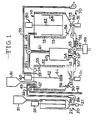
- Fig. 1 a generalized diagrammatic flowchart is shown, illustrating a fermentation system 10 of the present invention.
- preferment mixtures for yeast raised doughs are prepared.
- the fermentation system 10 generally includes a precursor ingrediator system 20 for preparing a precursor slurry (or active ferment concentrate), a fermentor system 40 for preparing a perferment mixture, optionally, a heat exchanger 60, and, optionally, a holding tank system 70.
- a control station (not shown) is operatively connected to the ingrediator system 20, the fermentor system 40, the heat exchanger 60 and the holding tank system 70, in a conventional manner and these connections are not shown or described in detail.
- the control station of the preferred embodiment includes micro processors which control the operations of the fermentation system 10.
- the precursor ingrediator system 20 generally includes an ingrediator tank 22, and a sweep agitator means 24.
- a portion of the precursor slurry ingredients, namely yeast, a first portion of the water necessary to form the precursor slurry and a first portion of the precursor base necessary to form the precursor slurry are metered or added to the ingrediator tank 22.
- the precursor base is supplied from a hopper 31 in a conventional manner.
- the agitator means 24 blends the precursor ingredients together to form a first mixture or portion of the precursor slurry.
- the first portion of the precursor slurry comprises approximately one third of the required water and approximately one third of the required precursor base.
- the first portion of the precursor slurry is allowed to incubate.
- the first portion of the precursor slurry is allowed to incubate for approximately 40-45 minutes at a preferred temperature of about 26-28°C (about 80-82°F).
- the yeast acts as a catalyst and some fermentation occurs.
- the first portion of the precursor slurry is relatively viscous and the agitator means 24 blends the first portion of the precursor slurry while adding the next, or second. portion of the required watcr to the ingrediator tank 22.
- the first portion of the precursor slurry is blended for approximately 1-2 minutes while the water is being added.
- the water is sprayed into the ingrediator tank 22, such that the sprayed water acts to clean or wash down the side walls of the ingrediator tank 22.
- the next, or second, portion of the precursor base is metered or added to the incubated first portion of the precursor slurry and is blended by the agitator means 24 to form a second portion of the precursor slurry, which in a preferred process is blended for approximately 2-3 minutes.
- the second portion of the precursor slurry comprises approximately an additional one third of both the water and precursor base.
- the second portion of the precursor base acts to revitalize the first portion of the precursor slurry.
- the second portion of the precursor slurry is allowed to incubate.
- the second portion of the precursor slurry is allowed to incubate for approximately 40-45 minutes at a preferred temperature of about 26-28°C (about 80-82°F).
- the incubated second portion of the precursor slurry is relatively viscous and the agitator means 24 blends the second portion of the precursor slurry while the last, or third, portion of the water is added to the ingrediator tank 22.
- the water is sprayed into the ingrediator tank 22 such that the sprayed water acts to clean or wash down the side walls of the ingrediator tank 22.
- the second portion of the precursor slurry is blended for approximately 1-2 minutes while the water is being added. Thereafter, the last, or third, portion of the precursor base is metered or added to the incubated second portion of the precursor slurry and is blended by the agitator means 124 to form the third or final portion of the precursor slurry, which in a preferred process is blended for another approximately 2-3 minutes.
- the third portion of the precursor slurry comprises approximately an additional one third each of the water and precursor base.
- the last portion of the precursor base also acts to revitalize the final portion of the precursor slurry. The final portion of the precursor slurry is then allowed to further incubate.
- the precursor slurry is allowed to incubate for approximately 40-45 minutes at a preferred temperature of about 26-28°C (about 80-82°F). After the final incubation period is complete, the resulting precursor slurry, also called the active ferment concentrate herein, has thereby been formed.
- the ingrediator system 20 further includes an outlet pipe 26 located proximate the bottom of the ingrediator tank 22.
- the outlet pipe 26 penetrates the ingrediator tank 22 and is operatively connected to a pneumatic valve 27 and a pump 28 (which are operatively connected to the control station [not shown] in a conventional manner).
- the agitator means 24 blends the additional water with the precursor slurry.
- the additional water and precursor slurry are blended for approximately 1-2 minutes.
- the pneumatic valve 27 is activated such that the precursor slurry is pumped from the ingrediator tank 22 through the outlet pipe 26 by the pump 28 to the fermentor system 30.
- the fermentor system 30 generally includes a fermentor tank 32 with a bottom 33, a top 34, and a temperature sensing means 36.
- the temperature sensing means 36 is operatively connected to the control station (not shown).
- a jacket 35 is placed around the fermentor tank 32 to control the ambient influence.
- the fermentor system 30 further includes an impeller means 40 which rotates and aims a shaft 42.
- An impeller blade 44 is operatively attached to the distal end of the shaft 42 such that when the shaft 42 is rotated about an axis through the shaft 42, the impeller blade 44 is rotated.
- Flour is supplied to the fermentor tank 32 from a flour hopper 46 in a conventional manner. Water is supplied at a controlled temperature through piping 39 to the fermentor tank 32.
- the precursor slurry, (which is also called the active ferment concentrate) flour, water, yeast, yeast nutrients and sugar are blended together by rotation of the impeller means 40 to form a mixture, which in a preferred process are blended for approximately 2 minutes.
- yeast comprises a commercially available inactive yeast and the term "yeast nutrients” comprises those substances normally employed in the bakery industry to support the growth and activities of the yeast.
- the amounts and types of yeast and yeast nutrients correspond to the amounts and types normally employed in the bakery industry.
- This mixture is then allowed to ferment. In the preferred fermentation process, the mixture is allowed to ferment for approximately 30 minutes at a preferred temperature of about 26-28°C (about 80-82°F) to form a completed brew or preferment mixture.
- the preferment mixture contains approximately 15% flour, based on the total flour required by the final dough product.
- the fermentor system 30 further includes an outlet pipe 50 located proximate the tank bottom 33.
- the outlet pipe 50 penetrates the bottom 33.
- the outlet pipe 50 is operatively connected to a pneumatic valve 51 and a pump 52.
- the pneumatic valve 51 and pump 52 are operatively connected to the control station (not shown) in a conventional manner.
- the pneumatic valve 51 is activated such that the preferment mixture is pumped from the fermentor tank 32 through the outlet pipe 50 by the pump 52.
- the outlet pipe 50 is operatively connected to a three-way valve 53, which is operatively connected to the control station (not shown).
- the valve 53 directs the flow of the preferment mixture to an inlet pipe 54.
- the inlet pipe 54 is operatively connected to the heat exchanger 60 where heat is transferred from the preferment mixture.
- the preferment mixture is pumped from the fermentor system 30 through the heat exchanger 60.
- the preferment mixture is cooled by the heat exchanger 60 to a desired temperature.
- the perferment mixture is cooled to a temperature of about 4-7°C (about 40-45°F).
- the cooled preferment mixture flows out of the heat exchanger 60 through an outlet pipe 61.
- the outlet pipe 61 is operatively connected to a three-way valve 62.
- the valve 62 directs the cooled preferment mixture to an inlet pipe 63.
- the inlet pipe 63 is operatively connected to the holding tank system 70.
- the holding tank system 70 generally includes a holding tank 72 having a bottom 73 and a top 74. A jacket 75 is placed around the holding tank 72 to provide insulation for the cooled preferment mixture.
- the holding tank system 70 further includes an agitator means 80 to rotate a shaft 82.
- a slow-sweep agitator 84 is operatively attached to the shaft 82 such that when the shaft 82 is rotated about an axis through the shaft 82, the slow-sweep agitator 84 is rotated. The rotation of the slow-sweep agitator 84 acts to prevent the cooled preferment mixture from separating and prevents the deposit of sediment on the bottom of the holding tank 72.
- the holding tank system 70 further includes a temperature sensor 86 to monitor the temperature of the cooled preferment mixture.
- the temperature sensor 86 is operatively connected to the control station (not shown) in such a manner that if the temperature of the cooled preferment mixture rises about a certain predetermined temperature the preferment mixture is recycled through the heat exchanger 60 until the desired temperature is reached again.
- the holding tank system 70 further includes an outlet pipe 90 located proximate the holding tank bottom 73.
- the outlet pipe 90 penetrates the bottom 73.
- the outlet pipe 90 is operatively connected to a pneumatic valve 91 and a pump 92, which are operatively connected to the control station (not shown) in a conventional manner. If the preferment mixture is to be cooled again, the pneumatic valve 91 is activated and the preferment mixture is pumped from the holding tank 72 through the outlet pipe 90 by the pump 92.
- the preferment mixture is pumped through a three-way valve 93 located at the distal end of the outlet pipe 90.
- the three-way valve 93 is operatively connected to a connecting pipe 95.
- the connecting pipe 95 is operatively connected to the three-way valve 53 adjacent the heat exchanger 60.
- the preferment mixture is forced by the pump 92 through the valve 93, the connecting pipe 95 and the valve 53.
- the valve 53 is automatically adjusted by the control station (not shown) such that the preferment mixture is pumped through the valve 53 through the heat exchanger 60 where the preferment mixture is cooled back to a desired temperature, if it becomes necessary.
- the three-way valve 62 is automatically adjusted by the control station such that the cooled preferment mixture is forced through the holding tank inlet pipe 63 back into the holding tank 72.
- the holding tank system 70 can therefore operate in a cyclic manner.
- the holding tank pneumatic valve 91 and the pump 92 are activated by the control station (not shown) and the cooled preferment mixture is pumped from the holding tank 72 through the outlet pipe 90.
- the three-way valve 93 is also activated such that the preferment mixture is prevented from flowing into the connecting pipe 95.
- the three-way valve 93 is further connected to a supply pipe 97.
- the three-way valve 93 is activated such that the preferment mixture is pumped by the pump 92 from the outlet pipe 90 through the three-way valve 93 and into the supply pipe 97.
- the supply pipe 97 can be operatively connected to a flow meter 99.
- the flow meter 99 indicates the amount of preferment mixture passing through the supply pipe 97.
- the supply pipe 97 is operatively connected to a conventional dough mixer (not shown) such that the preferment mixture exits the supply pipe 97 into the mixer.
- the preferment mixture is then blended with additional flour and other optional ingredients to form the final dough product.
- the process of the present invention may alternatively proceed as follows: a first batch or supply of precursor slurry is prepared and incubated in the ingrediator system 20, as described above, and supplied to the fermentor system 30 as an ingredient for the preferment mixture.
- the preferment mixture is produced in the fermentor system 30 as described above, cooled by the heat exchanger 60 and held in the holding tank system 70.
- a second batch of precursor slurry is prepared and incubated in the ingrediator system 20 and supplied to the fermentor system 30. After the completion of the prefermentation cycle, as described above, the second batch is cooled by the heat exchanger 60.
- the second batch may be processed through the heat exchanger 60 and supplied to the holding tank 72 on top of the first batch already contained in the holding tank 72.
- the second fermented batch may be cooled by the heat exchanger 60 and passed through the three-way valve 62 and through an outlet pipe 65. The second cooled batch may then be returned to the fermentor tank 32.
- the fermentor tank 32 can act as a "holding tank” until the first batch contained in the holding tank 72 is depleted.
- the ingrediator system 120 generally includes a first ingrediator tank 122, an agitator means 124 and an outlet pipe 126 operatively attached to a pneumatic valve 127 and a pump 128.
- a portion of the precursor ingredients namely, the yeast, a first portion of the water and a first portion of the precursor base are metered or added to the first ingrediator tank 122.
- the first portion of the precursor base is supplied from a hopper 131 having a valve 133 in a conventional manner.
- the agitator means 124 blends the ingredients together such that a first portion of the precursor slurry is formed.
- the first portion of the precursor slurry is allowed to incubate.
- the first portion of the precursor slurry is allowed to incubate for approximately 40-45 minutes at a preferred temperature of about 26-28°C (about 80-82°F).
- the yeast acts as a catalyst and some fermentation occurs.
- the first portion of the precursor slurry is relatively viscous and the agitator means 124 blends the first portion of the precursor slurry (in a preferred process for approximately 1-2 minutes), while the next, or second portion of the water is added to the first ingrediator tank 122.
- the water is sprayed into the first ingrediator tank 122. such that the sprayed water acts to clean, or wash down, the side walls of the first ingrediator tank 122.
- the pneumatic valve 127 is activated and the first portion of the precursor slurry is pumped from the first ingrediator tank 122 through the outlet pipe 126 by the pump 128 to a second ingrediator tank 132.
- the second ingrediator tank 132 is operatively connected to an agitator means 134, an outlet pipe 136, a pneumatic valve 137 and a pump 138.
- the next, or second, portion of the precursor base is metered or added from the hopper 131 to the first portion of the precursor slurry in the second ingrediator tank 132 are blended by the agitator means 134 (in a preferred process for approximately 2-3 minutes).
- the second portion of the precursor base acts to revitalize the first portion of the precursor slurry.
- the second portion of the precursor slurry is allowed to incubate.
- the second portion of the precursor slurry is allowed to incubate for approximately 40-45 minutes at a preferred temperature of about 26-28°C (about 80-82°F).
- the second portion of the precursor slurry is again relatively viscous and the agitator means 134 blends the second portion of the precursor slurry (in a preferred process for approximately 2-3 minutes), while the last or third portion of the water is added to the second ingrediator tank 132.
- the water is sprayed into the second ingrediator tank 132 such that the sprayed water acts to clean or wash down the side walls of the ingrediator tank 132.
- the pneumatic valve 137 is activated and the second portion of the precursor slurry is pumped from the second ingrediator tank 132 through the outlet pipe 136 by the pump 138 to a third ingrediator tank 142.
- the third ingrediator tank 142 is operatively connected to an agitator means 144, an outlet pipe 146, a pneumatic valve 147 and a pump 148. Thereafter the last or third, portion of the precursor base is metered from the hopper 131 to the precursor slurry in the third ingrediator tank 142. The precursor slurry and the last portion of the precursor base are blended by the agitator means 144 (in a preferred process for approximately 2-3 minutes). The last portion of the precursor base also acts to revitalize the resulting precursor slurry or active ferment concentrate. The precursor slurry is then allowed to further incubate.
- the precursor slurry is allowed to incubate for approximately 40-45 minutes at a preferred temperature of about 26-28°C (about 80-82°F).
- additional water is added to the third ingrediator tank 142.
- water is sprayed into the ingrediator tank 142 such that the sprayed water acts to clean or wash down the side walls of the ingrediator tank 142.
- the precursor slurry upon being pumped from the ingrediator tank 142 into the fermentor system 30, has a relatively low viscosity.
- the pneumatic valve 147 is activated and the precursor slurry is pumped from the third ingrediator tank 142 through the outlet pipe 146 by a pump 148 to the fermentor system 30.
- the tanks 122, 132 and 142 can be filled every hour and the precursor base can be dispensed from the hopper 131 into all three tanks at about the same time.
- the ingrediator tank 22, as shown in Fig. 1 is a relatively tall and narrow tank in order to accommodate the separate portions of the precursor slurry being incubated therein.
- the agitator tanks 122, 132 and 142, as shown in Fig. 2 vary in dimensions. Size requirements varies with given production requirements.
- the precursor slurry or active ferment concentrate disclosed herein is especially useful with the above-described fermentation method and apparatus.
- the active ferment concentrate provides the necessary quality factors for producing a quality end-product. These factors include eating qualities such as flavor, aroma and crumb structure along with the overall appearance qualities of volume symmetry, interior and exterior colors of the product, texture and desired softness and the shelf life qualities. It is necessary that the active ferment concentrate produce the desired pH in the end-product.
- the active ferment concentrate comprises predetermined quantities of yeast, water and precursor base.
- the precursor base comprises the following ingredients: an acidic concentrate, at least one type of sugar, yeast, at least one type of flour, non-fat dry milk, and at least one type of lactic acid producing bacteria.
- the ingredients in the precursor base all contribute to the desirable properties of the bakery end-products. In a preferred contribute to the desirable properties of the bakery end-products.
- the pH range of the precursor base ranges from about 4.5-5.5 and is most preferably within the range of about 4.9-5.1.
- the acidic concentrate provides a supply of ascorbic acid and flavoring and acts as a natural oxidant.
- the acidic concentrate comprises a lemon concentrate which comprises about 60% solids, by weight, and about 40%, by weight, water.
- the lemon concentrate is commercially available as a frozen product.
- the sugar provides substrates and contributes to the general flavor development of the end-product.
- Sugars which are especially useful in making the precursor base include malt syrup, molasses, sucrose and dextrose.
- a desired balance is achieved between the amounts of molasses, malt syrup, sucrose and dextrose in order to achieve proper carmelization, or colorization, of the bakery end-product.
- the yeast is a good contributor of protein and has desirable flavor characteristics.
- the yeast metabolizes with other ingredients in the active ferment concentrate and also provides desirable flavor characteristics to the end-product.
- the yeast comprises a commercially available inactive dry yeast.
- the flour acts as a carrier and a support to the precursor base and to the and dough product.
- more than one type of flour is used in preparing the precursor base.
- one of the flours comprise wheat flour and the other flour comprise rye flour.
- the rye flour potentiates the flavor and aroma characteristics of the bakery end-product and influences some of the acid developments which occur during the incubation and fermentation stages.
- other, smaller quantities of flour such as soya flour and potato flour constitute a portion of the total flour used in the precursor base.
- the soya flour is a good source of protein.
- the potato flour also acts as a starch and a stabilizing material.
- the potato flour acts as a humectant, that is an anticaking material, which absorbs excess moisture from the precursor base. Further, the addition of potato flour aids in prolonging the shelf-life of the bakery end-product. It should be noted that while the concentration of rye flour to wheat flour in the precursor base may be relatively high in proportion to the remaining ingredients in the active ferment concentrate, the rye flour is present in negligible quantities the final bread product.
- the non-fat dry milk provides mineral and protein content to the precursor base.
- the milk along with the lactic acid producing bacteria, becomes active by producing lactic acid during the preparation of the active ferment concentrate, as will be explained in detail below, and during the incubation stages of the precursor slurry.
- the lactic acid producing bacteria along with the non-fat dry milk, produces lactic acid.
- Any lactic acid producing bacteria can be utilized in the present invention including for example, lactobacillus acidophilus, l. brevis, l. buchneri , l. bulgaricus , l. casei , l. delbrueckii , l. fermenti , l. lactis , l. leichmannii , l. pastoriamus , 1. pentoaceticus , l. thermophilus , streptococcus citrovorus , and s. lactis , or a mixture thereof.
- a preferred bacteria comprises lactobacillus acidophilus .
- a liquid composition or slurry is formed by combining the acidic concentrate with a portion of the total sugar to be used in making the precursor base.
- the liquid slurry has a temperature in the range of about 15-18°C (about 60-65°F) and has sufficient liquidity without becoming warm.
- the lactic acid producing bacteria which is commercially available as a freeze dried product, is diluted with a small amount of flour.
- the dilution is preferably made to about 108 organisms per gram.
- the other ingredients namely the remaining portions of sugar and flour, the non-fat dry milk, the flour-bacteria dilute and the yeast are combined and thoroughly blended together.
- the liquid slurry is added to the combined ingredients.
- the liquid slurry is sprayed into the combined ingredients being blended together.
- the precursor base may be run through a multiple sifting device or through a mill. It is desirable that any lumps be broken apart since the lumps present are mostly comprised of sugar and acidic concentrate and such lumps lead to deterioration and shorten the shelf life of the precursor base.
- the precursor base is well blended and relatively small or no lumps are present, the precursor base is extremely stable.
- the precursor base is utilized for producing the active ferment concentrate (or precursor slurry), as described above, the desired proportions of normal fermentation by-products are developed, thus producing high quality end-products.
- the precursor base constitutes approximately 1.0-1.5 percent, by weight, based on the total flour in the dough.
- the active ferment concentrate (or precursor slurry) constitutes about 2-3 percent, by weight, of the total flour in the dough.
- the precursor base can be stored in the same manner as flour in bags is typically stored and has a shelf life of at least 6 months.
- the precursor base comprises the following ingredients in the following approximate ranges, by weight percent, of the total precursor base:
- the acidic concentrate is blended together with about 15%, by weight of the total amount of the sugar present in the precursor base in order to form the liquid slurry.
- the amount of sugar in the liquid slurry comprises about 1-3%, by weight, and most preferably about 2.0%, by weight, of the precursor base.
- the sugar in the liquid slurry comprises malt syrup.
- the sugar ingredients in a preferred embodiment comprise about 1-3%, by weight, malt syrup and most preferably about 2%, by weight; about 1-2%, by weight, molasses and most preferably about 1.8%, by weight, wherein the molasses if in liquid form can be sprayed onto the remaining ingredients or if in dry form added with the other sugars; about 5.0-10.0%, by weight, sucrose and most preferably about 7.5%, by weight; and, about 0-4.0%, by weight, dextrose, and most preferably about 2.0%, by weight.
- the flour ingredients in a preferred embodiment comprise about 35-45%, by weight, wheat flour and most preferably about 42.5%, by weight; about 25-35%, by weight, rye flour and most preferably about 30.0%, by weight; about 2.5-3.0%, by weight, potato flour and most preferably about 2.8%, by weight; and, about 2.5-3.0%, by weight, soya flour and preferably about 2.8%, by weight.
- the liquid slurry comprising the acidic concentrate and a first portion of the sugar (in a preferred embodiment, the malt syrup) are blended together to form the liquid slurry and thereafter the remaining portion of sugar is blended together with the liquid slurry.
- the yeast and first portion of the flour in a preferred embodiment, the soya flour
- a second portion of the flour in a preferred embodiment the second portion comprises rye and wheat flour
- a third portion of flour in a most preferred embodiment, the potato flour
- the non-fat dry milk and the lactic acid producing bacteria diluted with a fourth portion of the flour are gradually mixed until blended together to form the precursor base.
Landscapes
- Life Sciences & Earth Sciences (AREA)
- Microbiology (AREA)
- Engineering & Computer Science (AREA)
- Food Science & Technology (AREA)
- Bakery Products And Manufacturing Methods Therefor (AREA)
- Preparation Of Compounds By Using Micro-Organisms (AREA)
- Micro-Organisms Or Cultivation Processes Thereof (AREA)
- Dairy Products (AREA)
Claims (41)
- Base de précurseur utilisable dans une pâte pour produits de boulangerie, comprenant un concentré acide, au moins un type de sucre, de la levure, au moins un type de farine, du lait séché écrémé et au moins un type de bactéries productrices d'acide lactique.
- Base de précurseur selon la revendication 1, comprenant, par rapport au poids total de la base de précurseur, une proportion en poids de:concentré acide 1,2 - 2,0 %sucre 5,0 - 20,0 %levure 0,5 - 1,5 %farine 65,0 - 85,0 %lait séché écrémé 4,0 - 8,0 %bactéries lactiques environ 5⁵ x 15⁵ organismes/gramme
- Base de précurseur selon la revendication 1 ou 2, dans laquelle le concentré comprend un concentré de citron.
- Base de précurseur selon l'une quelconque des revendications 1 à 3, dans laquelle le sucre est choisi parmi le sirop de malt, la mélasse, le sucrose et le dextrose ou un de leurs mélanges.
- Base de précurseur selon la revendication 4, dans laquelle le sucre comprend, par rapport au poids total de la base de précurseur, une proportion en poids de 1-3 % de sirop de malt, de 1-2 % de mélasse, de 5-10 % de sucrose et de 0-4 % de dextrose.
- Base de précurseur selon l'une quelconque des revendications 1 à 5, dans laquelle la farine est choisie parmi la farine de blé, la farine de seigle, la farine de soja et la farine de pomme de terre, ou l'un de leurs mélanges.
- Base de précurseur selon la revendication 6, dans laquelle la farine comprend, en proportion en poids par rapport au poids total de la base de précurseur, 35-45 % de farine de blé, 25-35 % de farine de seigle, 2,5-3 % de farine de pomme de terre, et 2,5-3 % de farine de soja.
- Base de précurseur selon l'une quelconque des revendications 1 à 7, dans laquelle les bactéries productrices d'acide lactique sont choisies parmi lactobacillus acidophilus, l. brevis, l. buchneri, l. bulgaricus, l. casei, l. delbrueckii, l. fermenti, l. lactis, l. leichmannii, l. pastoriamus, l. pentoaceticus, l. thermophilus, streptococcus citrovorus et s.lactis, ou un de leurs mélanges.
- Procédé de préparation d'une base de précurseur selon: l'une quelconque des revendications 1 à 8, comprenant les étapes consistant à :
combiner le concentré acide avec une première fraction du sucre pour former une bouillie liquide;
diluer les bactéries productrices d'acide lactique avec une première fraction de la farine ;
combiner la farine restante, le sucre restant, le lait séché écrémé, les bactéries diluées avec de la farine, et la levure, pour former un mélange;
malaxer le mélange et
ajouter au mélange la bouillie liquide pendant le malaxage. - Procédé selon la revendication 9, dans lequel la bouillie est pulvérisée sur le mélange pendant le malaxage.
- Procédé pour produire une base de précurseur selon l'une quelconque des revendications 1 à 8, comprenant les étapes consistant à:
combiner le concentré acide et une première fraction du sucre pour former une bouillie liquide;
ajouter le sucre restant à la bouillie liquide et malaxer pour former un mélange;
malaxer la levure et une première fraction de la farine et ensuite, ajouter ce mélange au précédent;
y ajouter et mélanger une seconde fraction de la farine;
y ajouter et mélanger une troisième fraction de la farine; et
y ajouter et mélanger le lait séché écrémé et les bactéries productrices d'acide lactique diluées avec une quatrième fraction de la farine. - Procédé selon la revendication 11, dans lequel la première fraction de la farine comprend de la farine de soja.
- Procédé selon la revendication 11 ou 12, dans lequel la seconde partie de la farine comprend de la farine de seigle et de la farine de blé.
- Procédé selon l'une quelconque des revendications 11 à 13, dans lequel la troisième partie de la farine comprend de la farine de pomme de terre.
- Procédé selon l'une quelconque des revendications 9 à 14, dans lequel la première fraction de sucre constitue 1-3 % en poids par rapport au poids total de la base de précurseur.
- Procédé selon l'une quelconque des revendications 9 à 15, dans lequel la première fraction de sucre comprend du sirop de malt.
- Concentré de ferment actif comprenant une base de précurseur selon l'une quelconque des revendications 1 à 8, conjointement avec de la levure et de l'eau.
- Concentré de ferment actif selon la revendication 17, comprenant environ 50 % en poids d'eau et environ 2 % en poids de levure par rapport au poids total du concentré de ferment actif.
- Procédé pour la production d'un concentré de ferment actif selon la revendication 17 ou 18, comprenant les étapes consistant à :
combiner la levure, une première fraction de l'eau et une première fraction de la base de précurseur et les malaxer pour former un premier mélange ;
laisser incuber le premier mélange ;
agiter le premier mélange incubé ;
ajouter une seconde fraction de l'eau et une seconde fraction de la base de précurseur au premier mélange incubé et malaxer pour former un second mélange ;
laisser incuber le second mélange ;
agiter le second mélange incubé ;
ajouter une troisième fraction de l'eau et une troisième fraction de la base de précurseur au second mélange incubé et malaxer pour former un troisième mélange ; et
laisser incuber le troisième mélange. - Procédé selon la revendication 19, dans lequel chacune des première, seconde et troisième fractions de l'eau comprend environ un tiers de la totalité de l'eau.
- Procédé selon la revendication 19 ou 20, dans lequel chacune des première, seconde et troisième fractions de la base de précurseur comprend environ un tiers de la base de précurseur totale.
- Procédé selon l'une quelconque des revendications 19 à 21, dans lequel chacun des premier, second et troisième mélanges est mis à incuber à une température de 26-28°C.
- Procédé selon l'une quelconque des revendications 19 à 21, dans lequel chacun des premier, second et troisième mélanges est mis à incuber pendant environ 40-45 minutes.
- Procédé selon l'une quelconque des revendications 19 à 23, dans lequel le premier mélange incubé est agité pendant environ 1-2 minutes.
- Procédé selon l'une quelconque des revendications 19 à 24, dans lequel chacun des second et troisième mélanges est malaxé pendant environ 2-3 minutes.
- Procédé selon l'une quelconque des revendications 19 à 25, dans lequel le second mélange incubé est agité pendant environ 2-3 minutes.
- Procédé selon l'une quelconque des revendications 19 à 26, dans lequel les seconde et troisième fractions d'eau sont ajoutées respectivement, par pulvérisation, au premier et second mélanges incubés.
- Procédé pour la préparation d'un mélange de pâte de préfermentation, comprenant l'étape consistant à combiner un concentré de ferment actif selon la revendication 17 ou 18, de l'eau, de la farine, de la levure et éventuellement des éléments nutritifs de levure, et l'étape de fermentation des ingrédients combinés.
- Procédé selon la revendication 28, dans lequel le mélange de pâte de préfermentation comprend environ 15 % en poids de farine par rapport au poids total de la pâte pour produits de boulangerie obtenue ensuite à partir de ce mélange.
- Procédé selon la revendication 28 ou 29, dans lequel les ingrédients combinés sont mis à fermenter à 26-28°C pendant environ 30 minutes.
- Procédé selon l'une quelconque des revendications 28 à 30, comprenant les étapes supplémentaires consistant à refroidir le mélange de pâte de préfermentation à une température prédéterminée et ensuite, ajouter une quantité finale de farine pour former une pâte à produit de boulangerie.
- Procédé selon la revendication 31, comprenant l'étape supplémentaire consistant à conserver le mélange de pâte de préfermentation refroidi avant d'y mélanger la quantité finale de farine.
- Utilisation d'une installation de fermentation pour produire un mélange de pâte de préfermentation par un procédé selon l'une quelconque des revendications 28 à 32, l'installation comprenant la combinaison de :
un système à ingrédients contenant au moins une cuve à ingrédients muni d'un agitateur, pour produire un concentré de ferment actif ;
des moyens pour alimenter le concentré de ferment actif dans un système fermenteur ; et
un système fermenteur comprenant une cuve de fermentation munie d'un agitateur, pour combiner le concentré de ferment actif avec des quantités prédéterminées d'eau, de farine, de levure et éventuellement d'éléments nutritifs de levure, pour former le mélange de pâte de préfermentation. - Utilisation selon la revendication 33, dans laquelle le système à ingrédients de l'installation comprend au moins trois cuves à ingrédients raccordées entre elles, chaque cuve à ingrédients étant munie d'un agitateur pour mélanger l'eau, la levure et la base de précurseur afin de former un concentré de ferment actif.
- Utilisation selon la revendication 33 ou 34, dans laquelle l'installation comprend également des moyens pour alimenter le mélange de pâte de préfermentation dans un dispositif de préparation de pâte, afin de malaxer le mélange de pâte de préfermentation avec une quantité supplémentaire finale de farine et éventuellement d'autres ingrédients, pour former une pâte à produit de boulangerie.
- Utilisation selon la revendication 35, dans laquelle l'installation comprend un échangeur thermique raccordé au système fermenteur pour recevoir un mélange de pâte de préfermentation depuis le système fermenteur et refroidir le mélange de pate de préfermentation à une température prédéterminée.
- Utilisation selon la revendication 36, dans laquelle l'installation comprend des moyens de recyclage pour ramener le mélange de pâte de préfermentation refroidi dans le système fermenteur.
- Utilisation selon la revendication 36 ou 37, dans laquelle l'installation comprend au moins une cuve de réservoir raccordée à l'échangeur thermique, destinée à recevoir et conserver le mélange de pâte de préfermentation refroidi provenant de l'échangeur thermique.
- Utilisation selon la revendication 38, dans laquelle la cuve de réservoir de l'installation comprend des moyens pour agiter le mélange de pâte de préfermentation refroidi.
- Utilisation selon la revendication 38 ou 39, dans laquelle l'installation comprend des moyens pour la circulation du mélange de pâte de préfermentation entre la cuve de réservoir et l'échangeur thermique, afin de maintenir la température du mélange de pâte de préfermentation entre des limites supérieure et inférieure prédéterminées.
- Utilisation selon l'une quelconque des revendications 38 à 40, dans laquelle l'installation comprend des moyens pour enlever le mélange de pâte de préfermentation refroidi conservé de la cuve de réservoir, afin d'alimenter le mélange de pâte de préfermentation refroidi dans le moyen de préparation de pâte.
Priority Applications (1)
| Application Number | Priority Date | Filing Date | Title |
|---|---|---|---|
| AT90903082T ATE96275T1 (de) | 1989-01-23 | 1990-01-22 | Gaerungssystem und verfahren zu dessen verwendung. |
Applications Claiming Priority (2)
| Application Number | Priority Date | Filing Date | Title |
|---|---|---|---|
| US07/300,270 US5185165A (en) | 1989-01-23 | 1989-01-23 | Fermentation system |
| US300270 | 1989-01-23 |
Publications (2)
| Publication Number | Publication Date |
|---|---|
| EP0408732A1 EP0408732A1 (fr) | 1991-01-23 |
| EP0408732B1 true EP0408732B1 (fr) | 1993-10-27 |
Family
ID=23158397
Family Applications (1)
| Application Number | Title | Priority Date | Filing Date |
|---|---|---|---|
| EP90903082A Expired - Lifetime EP0408732B1 (fr) | 1989-01-23 | 1990-01-22 | Systeme de fermentation et son mode d'utilisation |
Country Status (9)
| Country | Link |
|---|---|
| US (1) | US5185165A (fr) |
| EP (1) | EP0408732B1 (fr) |
| JP (1) | JPH04503007A (fr) |
| AT (1) | ATE96275T1 (fr) |
| CA (1) | CA2025897C (fr) |
| DE (1) | DE69004174T2 (fr) |
| DK (1) | DK0408732T3 (fr) |
| ES (1) | ES2049023T3 (fr) |
| WO (1) | WO1990007881A1 (fr) |
Families Citing this family (11)
| Publication number | Priority date | Publication date | Assignee | Title |
|---|---|---|---|---|
| HU218045B (hu) * | 1991-06-03 | 2000-05-28 | Innovi N.V. | Eljárás szelénben gazdag adalékanyag előállítására |
| WO1998042194A1 (fr) * | 1997-03-24 | 1998-10-01 | Viva America Marketing, Inc. | Compositions bactericides solides stabilisees |
| US6524574B1 (en) * | 1998-05-29 | 2003-02-25 | Agri-King, Inc. | Probiotic mixture intended for monogastric animals to control intestinal flora populations |
| DE19835269A1 (de) * | 1998-08-04 | 2000-02-17 | Mueller Brot Gmbh | Verfahren zur Verwertung von Backwaren, insbesondere von Rest-, Rückbrot und/oder Altbackwaren |
| US20040057934A1 (en) * | 2002-09-20 | 2004-03-25 | Hisashi Fujimura | Therapeutic agent for treating retroviral infection |
| US6950723B2 (en) * | 2003-08-22 | 2005-09-27 | International Business Machines Corporation | Method, system, and program for virtualization of data storage library addresses |
| US20060188630A1 (en) * | 2005-02-23 | 2006-08-24 | Rettey David C | Bread and dough composition and method |
| WO2006097949A1 (fr) * | 2005-03-16 | 2006-09-21 | Actial Farmacêutica, Lda. | Melange d’au moins 6 especes de bacteries de l'acide lactique et/ou bifidobacteria dans la facrication du levain |
| EP2028265A1 (fr) * | 2007-08-21 | 2009-02-25 | Beldem | Compositions pour la libération et la protection de levure sèche active instantanément |
| MX384504B (es) | 2013-08-20 | 2025-03-14 | Lallemand Inc Star | Metodo moderno de fermentacion previa para fabricar mezcla de masa. |
| CN109929736A (zh) * | 2019-04-03 | 2019-06-25 | 陈佳男 | 一种用于提炼生化试剂的酸化罐设备 |
Family Cites Families (5)
| Publication number | Priority date | Publication date | Assignee | Title |
|---|---|---|---|---|
| GB372738A (en) * | 1930-10-31 | 1932-05-02 | Handelscie Alhaco Nv | Improvements in the manufacture of baked articles |
| DE634023C (de) * | 1933-03-16 | 1936-08-14 | Gustav Neumueller Dipl Ing Dr | Verfahren zur Herstellung eines trockenen Sauerteigerzeugnisses fuer Backzwecke |
| DE1051215B (de) * | 1955-04-25 | 1959-02-26 | Baker Process Company | Verfahren zur Herstellung von Hefebackwerk |
| US3404984A (en) * | 1964-09-25 | 1968-10-08 | Dairy Technics Inc | Process of making a frozen bacterial concentrate |
| DE1904399A1 (de) * | 1969-01-30 | 1970-08-06 | Otto Stark | Verfahren zur Herstellung eines Backhilfsmittels |
-
1989
- 1989-01-23 US US07/300,270 patent/US5185165A/en not_active Expired - Fee Related
-
1990
- 1990-01-22 AT AT90903082T patent/ATE96275T1/de active
- 1990-01-22 EP EP90903082A patent/EP0408732B1/fr not_active Expired - Lifetime
- 1990-01-22 ES ES90903082T patent/ES2049023T3/es not_active Expired - Lifetime
- 1990-01-22 DE DE90903082T patent/DE69004174T2/de not_active Expired - Fee Related
- 1990-01-22 WO PCT/US1990/000422 patent/WO1990007881A1/fr not_active Ceased
- 1990-01-22 DK DK90903082.7T patent/DK0408732T3/da active
- 1990-01-22 JP JP2503259A patent/JPH04503007A/ja active Pending
- 1990-01-22 CA CA002025897A patent/CA2025897C/fr not_active Expired - Fee Related
Also Published As
| Publication number | Publication date |
|---|---|
| WO1990007881A1 (fr) | 1990-07-26 |
| EP0408732A1 (fr) | 1991-01-23 |
| ATE96275T1 (de) | 1993-11-15 |
| DE69004174T2 (de) | 1994-03-17 |
| CA2025897A1 (fr) | 1990-07-24 |
| ES2049023T3 (es) | 1994-04-01 |
| JPH04503007A (ja) | 1992-06-04 |
| CA2025897C (fr) | 1997-06-17 |
| DK0408732T3 (da) | 1994-04-25 |
| DE69004174D1 (de) | 1993-12-02 |
| US5185165A (en) | 1993-02-09 |
Similar Documents
| Publication | Publication Date | Title |
|---|---|---|
| EP0408732B1 (fr) | Systeme de fermentation et son mode d'utilisation | |
| US6649197B2 (en) | Dry bakery products and a process for their preparation | |
| US5316776A (en) | Fermentation method | |
| US5221617A (en) | Process for producing fermentation products | |
| Lorenz et al. | Preferments and sourdoughs for German breads | |
| CN101361499B (zh) | 用于中式面点的冷冻生坯、其生产方法和制作面点的方法 | |
| EP0180727A1 (fr) | Système de fermentation et son utilisation | |
| JP2000300159A (ja) | 製パン改良剤及びそれを利用した製パン方法 | |
| EP0153057B1 (fr) | Méthode de fermentation | |
| RU2109447C1 (ru) | Способ производства заварных хлебобулочных изделий | |
| EP0903082A1 (fr) | ArÔmes de fermentation pour les produits de boulangerie | |
| RU2023394C1 (ru) | Способ производства крекера и галет | |
| RU2038016C1 (ru) | Состав для приготовления диетического хлеба и способ приготовления диетического хлеба | |
| Meuser et al. | Fermented doughs in bread production | |
| JP3567246B2 (ja) | 麹菌と酵母の固体混合培養による酒類の製造方法 | |
| RU2187936C2 (ru) | Способ производства ржано-пшеничного хлеба | |
| JP2003047393A (ja) | 酵母含有物並びに該酵母含有物を含有するパン生地及び焼成パン | |
| RU2183061C1 (ru) | Способ приготовления хлеба | |
| RU2259046C1 (ru) | Способ производства жидкой ржаной закваски с заваркой для приготовления сортов хлеба из смеси ржаной и пшеничной хлебопекарной муки и жидкая ржаная закваска с заваркой, полученная этим способом | |
| SU1286143A1 (ru) | Способ приготовлени теста дл хлебобулочных изделий с отруб ми | |
| SU786955A1 (ru) | Способ приготовлени жидких дрожжей дл производства хлебобулочных изделий | |
| PoMERAN et al. | UsE o LACAsE IN BREADMAKING | |
| RU2242126C2 (ru) | Способ изготовления заварок для производства теста и хлебобулочных изделий | |
| SU1303613A1 (ru) | Питательна среда дл культивировани дрожжей и молочно-кислых бактерий,используемых в хлебопечении | |
| KR19990025853A (ko) | 베이커리제품용 발효 향료 |
Legal Events
| Date | Code | Title | Description |
|---|---|---|---|
| PUAI | Public reference made under article 153(3) epc to a published international application that has entered the european phase |
Free format text: ORIGINAL CODE: 0009012 |
|
| AK | Designated contracting states |
Kind code of ref document: A1 Designated state(s): AT BE CH DE DK ES FR GB IT LI LU NL SE |
|
| 17P | Request for examination filed |
Effective date: 19910102 |
|
| 17Q | First examination report despatched |
Effective date: 19920403 |
|
| GRAA | (expected) grant |
Free format text: ORIGINAL CODE: 0009210 |
|
| AK | Designated contracting states |
Kind code of ref document: B1 Designated state(s): AT BE CH DE DK ES FR GB IT LI LU NL SE |
|
| REF | Corresponds to: |
Ref document number: 96275 Country of ref document: AT Date of ref document: 19931115 Kind code of ref document: T |
|
| REF | Corresponds to: |
Ref document number: 69004174 Country of ref document: DE Date of ref document: 19931202 |
|
| ITF | It: translation for a ep patent filed | ||
| ET | Fr: translation filed | ||
| EPTA | Lu: last paid annual fee | ||
| REG | Reference to a national code |
Ref country code: ES Ref legal event code: FG2A Ref document number: 2049023 Country of ref document: ES Kind code of ref document: T3 |
|
| REG | Reference to a national code |
Ref country code: DK Ref legal event code: T3 |
|
| PLBE | No opposition filed within time limit |
Free format text: ORIGINAL CODE: 0009261 |
|
| STAA | Information on the status of an ep patent application or granted ep patent |
Free format text: STATUS: NO OPPOSITION FILED WITHIN TIME LIMIT |
|
| 26N | No opposition filed | ||
| EAL | Se: european patent in force in sweden |
Ref document number: 90903082.7 |
|
| PGFP | Annual fee paid to national office [announced via postgrant information from national office to epo] |
Ref country code: LU Payment date: 19960101 Year of fee payment: 7 |
|
| PGFP | Annual fee paid to national office [announced via postgrant information from national office to epo] |
Ref country code: DK Payment date: 19960111 Year of fee payment: 7 |
|
| PGFP | Annual fee paid to national office [announced via postgrant information from national office to epo] |
Ref country code: SE Payment date: 19960119 Year of fee payment: 7 |
|
| PGFP | Annual fee paid to national office [announced via postgrant information from national office to epo] |
Ref country code: ES Payment date: 19960129 Year of fee payment: 7 |
|
| PGFP | Annual fee paid to national office [announced via postgrant information from national office to epo] |
Ref country code: CH Payment date: 19960212 Year of fee payment: 7 |
|
| PGFP | Annual fee paid to national office [announced via postgrant information from national office to epo] |
Ref country code: BE Payment date: 19960306 Year of fee payment: 7 |
|
| PGFP | Annual fee paid to national office [announced via postgrant information from national office to epo] |
Ref country code: FR Payment date: 19961216 Year of fee payment: 8 |
|
| PGFP | Annual fee paid to national office [announced via postgrant information from national office to epo] |
Ref country code: DE Payment date: 19961218 Year of fee payment: 8 |
|
| PGFP | Annual fee paid to national office [announced via postgrant information from national office to epo] |
Ref country code: AT Payment date: 19961219 Year of fee payment: 8 |
|
| PGFP | Annual fee paid to national office [announced via postgrant information from national office to epo] |
Ref country code: GB Payment date: 19961220 Year of fee payment: 8 |
|
| PGFP | Annual fee paid to national office [announced via postgrant information from national office to epo] |
Ref country code: NL Payment date: 19961223 Year of fee payment: 8 |
|
| PG25 | Lapsed in a contracting state [announced via postgrant information from national office to epo] |
Ref country code: LU Free format text: LAPSE BECAUSE OF NON-PAYMENT OF DUE FEES Effective date: 19970122 Ref country code: DK Effective date: 19970122 |
|
| REG | Reference to a national code |
Ref country code: DK Ref legal event code: EBP |
|
| PG25 | Lapsed in a contracting state [announced via postgrant information from national office to epo] |
Ref country code: SE Effective date: 19970123 Ref country code: ES Free format text: LAPSE BECAUSE OF NON-PAYMENT OF DUE FEES Effective date: 19970123 |
|
| PG25 | Lapsed in a contracting state [announced via postgrant information from national office to epo] |
Ref country code: LI Effective date: 19970131 Ref country code: CH Effective date: 19970131 Ref country code: BE Effective date: 19970131 |
|
| BERE | Be: lapsed |
Owner name: SUPERIOR FERMITECH INC. Effective date: 19970131 |
|
| REG | Reference to a national code |
Ref country code: CH Ref legal event code: PL |
|
| EUG | Se: european patent has lapsed |
Ref document number: 90903082.7 |
|
| PG25 | Lapsed in a contracting state [announced via postgrant information from national office to epo] |
Ref country code: GB Free format text: LAPSE BECAUSE OF NON-PAYMENT OF DUE FEES Effective date: 19980122 Ref country code: AT Free format text: LAPSE BECAUSE OF NON-PAYMENT OF DUE FEES Effective date: 19980122 |
|
| PG25 | Lapsed in a contracting state [announced via postgrant information from national office to epo] |
Ref country code: FR Free format text: THE PATENT HAS BEEN ANNULLED BY A DECISION OF A NATIONAL AUTHORITY Effective date: 19980131 |
|
| PG25 | Lapsed in a contracting state [announced via postgrant information from national office to epo] |
Ref country code: NL Free format text: LAPSE BECAUSE OF NON-PAYMENT OF DUE FEES Effective date: 19980801 |
|
| GBPC | Gb: european patent ceased through non-payment of renewal fee |
Effective date: 19980122 |
|
| NLV4 | Nl: lapsed or anulled due to non-payment of the annual fee |
Effective date: 19980801 |
|
| PG25 | Lapsed in a contracting state [announced via postgrant information from national office to epo] |
Ref country code: DE Free format text: LAPSE BECAUSE OF NON-PAYMENT OF DUE FEES Effective date: 19981001 |
|
| REG | Reference to a national code |
Ref country code: FR Ref legal event code: ST |
|
| REG | Reference to a national code |
Ref country code: ES Ref legal event code: FD2A Effective date: 19990503 |
|
| PG25 | Lapsed in a contracting state [announced via postgrant information from national office to epo] |
Ref country code: IT Free format text: LAPSE BECAUSE OF NON-PAYMENT OF DUE FEES Effective date: 20050122 |