EP0409496A2 - Mikroporöse Membranen - Google Patents
Mikroporöse Membranen Download PDFInfo
- Publication number
- EP0409496A2 EP0409496A2 EP90307673A EP90307673A EP0409496A2 EP 0409496 A2 EP0409496 A2 EP 0409496A2 EP 90307673 A EP90307673 A EP 90307673A EP 90307673 A EP90307673 A EP 90307673A EP 0409496 A2 EP0409496 A2 EP 0409496A2
- Authority
- EP
- European Patent Office
- Prior art keywords
- polymer
- membrane
- solvent
- microporous membrane
- latent
- Prior art date
- Legal status (The legal status is an assumption and is not a legal conclusion. Google has not performed a legal analysis and makes no representation as to the accuracy of the status listed.)
- Withdrawn
Links
Images




Classifications
-
- C—CHEMISTRY; METALLURGY
- C08—ORGANIC MACROMOLECULAR COMPOUNDS; THEIR PREPARATION OR CHEMICAL WORKING-UP; COMPOSITIONS BASED THEREON
- C08J—WORKING-UP; GENERAL PROCESSES OF COMPOUNDING; AFTER-TREATMENT NOT COVERED BY SUBCLASSES C08B, C08C, C08F, C08G or C08H
- C08J9/00—Working-up of macromolecular substances to porous or cellular articles or materials; After-treatment thereof
- C08J9/28—Working-up of macromolecular substances to porous or cellular articles or materials; After-treatment thereof by elimination of a liquid phase from a macromolecular composition or article, e.g. drying of coagulum
-
- B—PERFORMING OPERATIONS; TRANSPORTING
- B01—PHYSICAL OR CHEMICAL PROCESSES OR APPARATUS IN GENERAL
- B01D—SEPARATION
- B01D67/00—Processes specially adapted for manufacturing semi-permeable membranes for separation processes or apparatus
- B01D67/0002—Organic membrane manufacture
- B01D67/0006—Organic membrane manufacture by chemical reactions
-
- B—PERFORMING OPERATIONS; TRANSPORTING
- B01—PHYSICAL OR CHEMICAL PROCESSES OR APPARATUS IN GENERAL
- B01D—SEPARATION
- B01D67/00—Processes specially adapted for manufacturing semi-permeable membranes for separation processes or apparatus
- B01D67/0002—Organic membrane manufacture
- B01D67/0009—Organic membrane manufacture by phase separation, sol-gel transition, evaporation or solvent quenching
-
- B—PERFORMING OPERATIONS; TRANSPORTING
- B01—PHYSICAL OR CHEMICAL PROCESSES OR APPARATUS IN GENERAL
- B01D—SEPARATION
- B01D69/00—Semi-permeable membranes for separation processes or apparatus characterised by their form, structure or properties; Manufacturing processes specially adapted therefor
- B01D69/02—Semi-permeable membranes for separation processes or apparatus characterised by their form, structure or properties; Manufacturing processes specially adapted therefor characterised by their properties
-
- B—PERFORMING OPERATIONS; TRANSPORTING
- B01—PHYSICAL OR CHEMICAL PROCESSES OR APPARATUS IN GENERAL
- B01D—SEPARATION
- B01D69/00—Semi-permeable membranes for separation processes or apparatus characterised by their form, structure or properties; Manufacturing processes specially adapted therefor
- B01D69/08—Hollow fibre membranes
-
- B—PERFORMING OPERATIONS; TRANSPORTING
- B01—PHYSICAL OR CHEMICAL PROCESSES OR APPARATUS IN GENERAL
- B01D—SEPARATION
- B01D71/00—Semi-permeable membranes for separation processes or apparatus characterised by the material; Manufacturing processes specially adapted therefor
- B01D71/06—Organic material
- B01D71/52—Polyethers
- B01D71/522—Aromatic polyethers
- B01D71/5222—Polyetherketone, polyetheretherketone, or polyaryletherketone
-
- B—PERFORMING OPERATIONS; TRANSPORTING
- B01—PHYSICAL OR CHEMICAL PROCESSES OR APPARATUS IN GENERAL
- B01D—SEPARATION
- B01D2323/00—Details relating to membrane preparation
- B01D2323/10—Specific pressure applied
-
- B—PERFORMING OPERATIONS; TRANSPORTING
- B01—PHYSICAL OR CHEMICAL PROCESSES OR APPARATUS IN GENERAL
- B01D—SEPARATION
- B01D2323/00—Details relating to membrane preparation
- B01D2323/12—Specific ratios of components used
-
- B—PERFORMING OPERATIONS; TRANSPORTING
- B01—PHYSICAL OR CHEMICAL PROCESSES OR APPARATUS IN GENERAL
- B01D—SEPARATION
- B01D2325/00—Details relating to properties of membranes
- B01D2325/02—Details relating to pores or porosity of the membranes
- B01D2325/0283—Pore size
-
- C—CHEMISTRY; METALLURGY
- C08—ORGANIC MACROMOLECULAR COMPOUNDS; THEIR PREPARATION OR CHEMICAL WORKING-UP; COMPOSITIONS BASED THEREON
- C08J—WORKING-UP; GENERAL PROCESSES OF COMPOUNDING; AFTER-TREATMENT NOT COVERED BY SUBCLASSES C08B, C08C, C08F, C08G or C08H
- C08J2201/00—Foams characterised by the foaming process
- C08J2201/04—Foams characterised by the foaming process characterised by the elimination of a liquid or solid component, e.g. precipitation, leaching out, evaporation
- C08J2201/052—Inducing phase separation by thermal treatment, e.g. cooling a solution
Definitions
- This invention relates to membranes, particularly microporous membranes suitable for use in filtration and to a process for the preparation thereof.
- Ultrafiltration and microfiltration membranes can be prepared by the well established solvent phase-inversion process developed by Loeb and Sourijan (Adv. Chem. Ser. 38 , 117, 1963). In that process a selected polymer is dissolved in a solvent and subsequently precipitated by addition of a non-solvent under controlled conditions.
- Polymers that have been used in that process include cellulose acetate, polyimides, polyvinylidenefluoride, polysulphones, amorphous sulphonated polyetheretherketone, and polyamides.
- Solvents that have been used in that process include acetone, dimethylsulphoxide, dimethylformamide, dimethylacetamide, N-methylpyrrolidinone, concentrated sulphuric acid, and aqueous hydrochloric acid.
- Ultrafiltration and microfiltration membranes can also be prepared by the so-called "thermal phase-inversion” process as described in more detail in "Synthetic Polymer Membranes, a Structural Perspective", Second Edition, R R Kesting, J Wiley and Sons, New York at 261-4.
- Such a process comprises the dissolving of the polymer at a high temperature in a latent solvent therefor, the cooling of the resulting solution to precipitate the membrane and the removal of the latent solvent from the membrane.
- polymers which have been used in such a process may be mentioned inter alia polyethylene, polypropylene, polycarbonate and polyvinyl chloride.
- Membranes prepared from the aforesaid polymers tend to suffer from one or more of the following disadvantages.
- they can be used in a limited temperature range, e.g. 0-90°C; they are unable to withstand sterilisation by super-heated steam; they have a limited chemical stability to, for example, acids, bases and oxidising agents; they lack resistance to ⁇ -radiation; they are soluble in, or swellable by, organic solvents, e.g. at room or elevated temperature.
- microporous membranes comprising an at least partially crystalline aromatic polymer containing in-chain ether or thioether and ketone linkages.
- the process allows the preparation of membranes from certain high melting point aromatic polymers, e.g. PEDK (as defined hereinafter), which membranes cannot be prepared by known thermal processes.
- the membranes prepared by the process of the present invention tend to have a higher crystallinity than those made from the same polymer hitherto, eg by the aforementioned solvent phase inversion process.
- the process of the present invention allows the membrane to be prepared in a suitable form or shape, from a solution of the polymer in a latent solvent for the polymer.
- suitable forms or shapes may be mentioned inter alia tubular, capillary or sheet.
- membranes prepared by the process of the present invention overcome many of the aforesaid disadvantages of known membranes.
- Such membranes may have (i) a pore size which allows their use in ultrafiltration and as a porous substrate for composite gas separation, pervaporation and reverse osmosis membranes, or (ii) a pore size which allows their use in microfiltration.
- a process for the preparation of a microporous membrane comprising an at least partially crystalline aromatic polymer bearing in-chain (a) ether or thioether and (b) ketone linkages
- process is characterised in that it comprises the steps of:
- isotropic membranes we mean membranes in which the structure and pore size remain substantially constant throughout the membrane.
- asymmetric membranes we mean membranes in which there is a variation of pore size across the thickness of the membranes.
- a microporous membrane characterised in that it comprises a highly crystalline aromatic polymer bearing at least (a) ether or thioether and (b) ketone linkages in the polymer backbone.
- partially crystalline as referred to in the first aspect of the present invention we mean that the level of crystallinity is at least about 5% and typically above 15% weight fraction.
- Membranes made by the process of the present invention from certain polymers often have crystallinity above 40%; where those certain polymers are used in the liquid phase-inversion process the membranes prepared thereby have typically crystallinity less than 40%.
- highly crystalline in the second aspect of the present invention, we mean a crystallinity of above 40% w/w.
- membranes according to the second aspect of the present invention are often flexible.
- flexible we mean that a membrane can be creased, often a plurality of times, thorough 180° without fracturing.
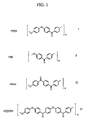
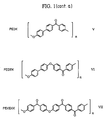
- the polymer is preferably a homopolymer, for example represented by formulae I-IX, e.g. PEEK or PEK
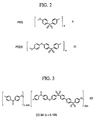
- a copolymer e.g. PEEK/PEK, PEEK/PES, PEK/PES, PEEK/PEES, wherein the copolymer units PES and PEES are represented by the formulae X and XI respectively in the drawings appended hereto.
- the polymer used in Step A of the process according to the first aspect of the present invention, or the polymer of which the microporous membrane according to the second aspect according to the present invention is comprised is a copolymer the nature and molar percentage of the "comonomer” will be chosen such that (i) it does not unduly decrease the crystallinity of the copolymer and (ii) the inter-aromatic links therein are non-hydrolysable under the conditions of preparation and use of the microporous membrane.
- comonomer units may be mentioned inter alia aromatic sulphones, sulphides, and biaryls.
- the microporous membrane of the present invention may comprise a mixture of the at least partially crystalline aromatic polymer containing in-chain ether or thioether and ketone linkages with a further polymer which is not extracted in Step D of the process (non-extractible polymer e.g. a second such partially crystalline aromatic polymer.
- the latent solvent should be a good solvent for the polymer at high temperature, by which we mean above about 50°C below the melting point of the polymer, and a poor solvent at low temperature, e.g. room temperature to 100°C. It should be substantially stable and involatile at the temperature at which the process of the present invention is carried out, e.g. up to about 400°C. Typically, the polymer is soluble therein at about 320-340°C.
- latent solvents for use in the process of the present invention may be mentioned inter alia compounds containing a plurality of aromatic rings, e.g. tetraphenyls, or hexaphenyls or preferably polar polyaromatic compounds, e.g. as represented by the formulae XIII-XVI in the drawings appended hereto.
- the latent solvents illustrated in formula XIII-XVI may bear one or more suitable substituents, eg a halide.
- the one or more suitable substituent, where present, should not unduly impair the functioning of the latent solvent, eg decrease its thermal stability or increase its volatility.
- the latent solvent will be chosen in the light of inter alia the mp of the polymer, the ability of the latent solvent to dissolve the polymer at a suitable temperature, and its thermo-oxidative stability at suitable processing temperatures.
- the concentration of the polymer in the latent solvent prior to film-forming is typically 10-50 w/w polymer and 90-50 w/w oligomeric latent solvent, preferably about 20% polymer and about 80% latent solvent.
- the solution for use in Step A of the process of the present invention is formed by dissolving the polymer, typically in particulate form, in the latent solvent under an inert atmosphere, at a temperature and timespan sufficient to substantially completely dissolve the polymer.
- a pore-forming agent may be added to the solution, e.g. an inorganic salt, an organic compound or an organic or inorganic polymer soluble therein, eg an aromatic polysulphone or a silicone.
- Step B of the process according to the present invention where a higher viscosity is required, e.g. for extrusion, a lower temperature will be used and where a lower viscosity is required, e.g. for fibre spinning, a higher temperature will be used.
- the flexible microporous membrane according to the second aspect of the present invention is a sheet membrane it is typically formed by moulding, eg injection or compression, casting or extruding the polymer solution as a thin film, typically of thickness between 20 and 500 ⁇ m.
- the membrane can optionally be supported by a porous fabric or sheet which can withstand the processing conditions, e.g. of PTFE, carbon fibre or stainless steel.
- the membrane can be unsupported in which case the film could be moulded on, or extruded onto, a nonporous surface, e.g. a drum or band of stainless steel or PTFE or a sheet of glass.
- a nonporous surface e.g. a drum or band of stainless steel or PTFE or a sheet of glass.
- the latent solvent may be extracted from the membrane before it is removed from the aforementioned surface.
- the membrane may contain particulate reinforcement, e.g. powdered glass, fumed silica or chopped carbon fibre, in addition to the crystalline polymer
- the flexible microporous membrane according to the second aspect of the present invention is a capillary membrane it may be formed by extruding the polymer solution through the outer annulus of a coaxial die. Through the inner nozzle of the co-axial die a suitable fluid, e.g. an inert gas or liquid, or non-solvent, flows.
- a suitable fluid e.g. an inert gas or liquid, or non-solvent
- Step C of the process according to the present invention the polymer is precipitated by allowing or causing the shaped solution, i.e. film or capillary, to cool at a suitable rate.
- the shaped solution i.e. film or capillary
- the skilled man by simple experiment, will find a suitable cooling rate.
- Step D of the process according to the present invention the latent solvent is removed from the membrane by treatment with an appropriate solvent therefor, (hereinafter referred to for convenience as "washing solvent"), eg DMF or acetone, at an appropriate temperature, e.g. between room temperature and the boiling point of the washing solvent.
- washing solvent eg DMF or acetone
- a relatively involatile washing solvent such as DMF
- a more volatile organic medium e.g. acetone
- the membranes prepared by the process according to the present invention tend to be highly crystalline, typically above 40%w/w. However, they may be further treated, for example, to enhance crystallinity.
- Such further treatment to enhance crystallinity may be mentioned inter alia heating the dry polymer above the Tg thereof, i.e. annealing; or treatment with a warm polar aprotic solvent, e.g. dimethylformamide (DMF) or dimethylacetamide (DMA). Where treatment with a warm polar aprotic solvent is carried out such a solvent may later be removed by suitable treatment, e.g. by washing with acetone.
- a warm polar aprotic solvent e.g. dimethylformamide (DMF) or dimethylacetamide (DMA).
- the microporous membrane according to the present invention has a higher level of crystallinity than the membrane described in our copending British Patent Application No. 8901672.9 and has good strength and toughness. Furthermore, we have found that the membrane according to the present invention is less brittle than the crystalline microporous polyetherketone structure described in our European Patent Specification No. 0,297,744A.
- microporous membrane according to the present invention may have pore diameters typically between 0.001 ⁇ and 1.0 ⁇ . Accordingly, they may be used for ultrafiltration or microfiltration.
- the crystallinity of the membranes described herein was measured by a DSC technique as is more fully described in Blundell et al, Polymer, 1983, Vol 24 (Aug), p953 or by wide-angle X-ray diffraction as described in the aforemetioned publication.
- formulae I-VII represent polyether ketone polymers and formulae VIII and IX represent polythioether ketone polymers.
- Formulae X and X1 represent aromatic polymers bearing in-chain ether and sulphone bonds.
- formula XII represents a copolymer containing in-chain ether, ketone, sulphone and biaryl linkages.
- formulae XIII and XIV represent aromatic latent solvents bearing in-chain ether and sulphone links
- formulae XV represents a heterocyclic latent solvent
- formulae XVI represents an oligomeric aromatic ether latent solvent.
- a heated reservoir (1) provided with a nitrogen inlet (2), a filter (3) and spinneret (4), is in operational engagement with an injection pump (5).
- a cooling bath (6) provided with two low-friction rollers (7), is disposed below the heated reservoir (1) and a wind-up roll (8).
- nitrogen at pressure is charged via nitrogen inlet (2) into the heated reservoir (1) to extrude spinning solution (9) through the filter (3), from the spinneret (4) where it contacts an internal gelating agent pumped from iniection pump (5).
- the extrudate is pulled over the low-friction rollers (7) in cooling bath (6) and wound onto wind-up roll (8).
- the outer surface of the hollow fibre membrane prepared in Example 28 contains pores of very much smaller average diameter (typically 0.05-0.2 ⁇ ) than those of the inner surface (typically 0.5-2 ⁇ ).
- This Example illustrates the preparation of a latent solvent, 6-RES, of Formula XIII, for use in the present invention.
- This Example illustrates the preparation of a further latent solvent, 6-RSE of Formula XIV, for use in the present invention.
- This Example illustrates the preparation of a yet further latent solvent, a di-imide i.e. 6-RIS of Formula XV, for use in the present invention.
- Phthalic anhydride (0.833 mole, 123.32 g), 4,4′-di(3-amino-phenoxy)-diphenyl sulphone, (0.416 mole 180 g) and xylene (2100 ml) were heated at reflux under nitrogen in a flask fitted with a Dean and Stark apparatus for collecting the water produced by the reaction.
- This Example illustrates the preparation of a blend of a polymer and a latent solvent by Step A of the process according to the present invention.
- Polyether ether ketone (ICI Victrex (RTM) PEEK 450P; melt viscosity of 0.425 KNS/m2 at 1000 S ⁇ 1 at 380°C; 11.57 g) and 6-RES (27 g) were charged into a glass tube fitted with a stainless steel stirrer and gas inlet. This was heated (electric furnace) gradually under nitrogen until a clear solution was obtained ( ⁇ 339°) then the viscous solution was poured onto aluminium foil to solidify. This solidified blend was broken up and milled using a Glen Creston ultracentrifuge mill fitted with a 0.5 mm screen.
- This Example illustrates the preparation of a membrane according to the present invention.
- a sample (4.3 g - 30% PEEK/70% 6-RES) of the blend prepared in Example 5 was placed in a mould comprising a 6 x 6 cm cut-out of 0.25 mm thick aluminium foil with aluminium foil backing sheets and placed between stainless steel backing pates 8" x 8". This was pressed at 20 tons at 350-360°C platen temperature for 5 min, then allowed to cool slowly by means of air blown through the platens. The aluminium foil was carefully removed to leave foil on one side of the brittle opaque film.
- composition of the film was found to be 40.2% PEEK 450/59.8% 6-RES.
- the film was extracted by refluxing in dimethyl formamide (DMF - 200 ml) for 1 hour.
- the film became progressively more flexible as the latent solvent was extracted and the remaining aluminium foil was removed after ca 5 min.
- the extraction was repeated with two fresh volumes of DMF, and then with refluxing acetone (twice).
- the membrane was dried in vacuum at 90°C.
- a plane membrane disc was mounted in a Sartorius SM 16223 cell.
- the membrane was first subjected to acetone at 2 bar to wet the membrane pores then to de-ionised 18 M ⁇ water.
- the membrane had a pure water flux at 2 bar of 17.5 l/m2/hr (litres/square meter membrane surface per hour).
- the acetone and nitrogen fluxes at 2 bar were found to be 29.6 and 2.13 x 10⁴ l/m2/hr respectively.
- This Example illustrates a further membrane according to the present invention.
- Example 6 The procedure of Example 6 was repeated except that the blend consisted of 20% w/w PEEK 450/80% 6-RES instead of 30% w/w PEEK 450/70% 6-RES.
- the composition of the compression moulded film before extraction was found to be 29.7% PEEK 50/70.3% 6-RES.
- the water flux was determined as in Example 2 and was found to be 310 l/m2/hr at 2 bar.
- the nitrogen flux was found to be 1.74 x 10⁵ l/m2/hr at 2 bar.
- the membrane was found to have a 99.6% rejection of a 0.1% aqueous suspension of 0.05 ⁇ m particle diameter polystyrene latex.
- This Example illustrates a yet further membrane according to the present invention.
- Example 6 The procedure of Example 6 was repeated except that the blend consisted of 40% w/w, PEEK 450/60% 6-RES instead of 30% w/w PEEK 450/70% 6-RES.
- the composition of the film was 50.6% PEEK 450/ 49.4% 6-RES.
- the water flux determined as in Example 2, was found to be 2.43 lit/m2/hr at 2 bar.
- the nitrogen flux was found to be 4.5 x 10³ l/m2/hr at 2 bar.
- Example 6 The procedure of Example 6 was repeated except that the latent solvents, blends and the concentrations thereof shown in Table 1 were used, instead of 30% PEEK/70% 6-RES.
- Nitrogen flux was measured using a Sartorius SM 16223 cell.
- TABLE 1 Example No Latent Solvent Blend Film Nitrogen Flux % w/w Latent Solvent % w/w PEEK 450 % w/w PEEK 450 (l/m2/hr at 2 bar 9 6-RSE 70 30 34.9 6.47x10⁴ 10 6-RIS 60 40 47.5 8.0x10³ 11 6-RIS 70 30 40.9 3.85x10⁴ 12 6-RIS 80 20 31.1 1.54x10⁵
- This Example illustrates the process and membrane of the present invention.
- Polyetheretherketone (ICI Victrex (RTM) PEEK 450P; 9.4g) and 6-PPE (Monsanto OS-138 (RTM); 37.6 g) were charged into a glass tube fitted with a stainless steel stirrer, thermocouple, and gas inlet. The mixture was heated (electric furnace) with stirring under nitrogen until a clear solution was obtained ( ⁇ 340°C), which was poured onto aluminium foil to give, on cooling, a tough opaque sheet about 3mm thick. The composition of the sheet (w/w) was found to be 30.0% PEEK and 70.0% 6-PPE.
- a square ( ⁇ 2.5 cm x 2.5 cm) cut from this sheet was compression moulded at 350-260°C (platen temperature) and 2 tons, between two sheets of 0.25mm aluminium foil using a 6 cm square cut-out from a third such sheet as the mould. After 5 minutes at moulding temperature, the press was cooled to 50°C over about 2 hours by blowing air through the platens.
- the aluminium foil was dissolved away from the moulding by immersion in 15% (w/v) aqueous hydrochloric acid, leaving a tough film which was extracted in refluxing acetone for 3 hours to remove the latent solvent and give a tough, flexible, microporous membrane.
- a disc 25mm diameter x 0.23mm thick was cut from the membrane and supported on a non-woven polyethylene cloth mounted in a Satorius SM 16223 cell.
- the disc was then wetted with acetone and the pure acetone flux, measured at 2 bar, was found to be 476 1/m2/hr.
- the acetone was exchanged for water without allowing the membrane to dry out, and the pure water flux, measured at 2 bar, was found to be 205 1/m2/hr.
- a second disc was cut from the membrane and used to filter 20 cm3 of a 0.1% aqueous suspension of 0.05 ⁇ fluorescent-labelled polystyrene microspheres (Polysciences 'Fluoresbrite') at 2 bar. Rejection of the microspheres was 100%. Since ultrafiltration is conventionally understood to involve rejection of particles smaller than 0.1 ⁇ in diameter (see for example 'Handbook of Industrial Membrane Technology', M.C. Porter (Ed.), Noyes Publications, 1990; Preface) the membrane of this Example can be used as an ultrafiltration membrane.
- Example 13 The preparation and characterisation procedures described in Example 13 were repeated except that different aromatic polyetherketones, including a copolymer and a blend of homopolymers were used, the latent solvent 6-RES instead of 6-PPE was used in Examples 14-17, 20,21 and 23-25 and different ratios of polymer to latent solvent were used.
- the copolymer CO-SK used in Example 23 had the structure shown in Formula XII, and in Example 24 a 1:1 (w:w) mixture of the two homopolymers PEEK 450P (structure I) and PEK 390 (structure II) was used.
- the extraction solvent for 6-RES was DMF at reflux, followed by acetone, and 6-PPE was extracted using refluxing acetone alone.
- Table 2 provides examples both of ultrafiltration membranes (Examples 17, 19, 23 and 25) and microfiltration membranes (Examples 15, 16, 19, and 24).
- the 0.03 ⁇ and 0.006 ⁇ particle-diameter gold sols used to characterise membranes prepared in Examples 23 and 25 were Janssen Aurobeads (RTM), G30 and G5 respectively.
- This Example illustrates the preparation of a microporous membrane according to the present invention prepared by casting.
- a solution of PEEK 450P (7.05 g) in 6-PPE (39.95 g) was prepared under nitrogen at 350°C, as described in Example 13, and this solution (containing 15 wt% of polymer) was cast onto aluminium foil to give a film which, after cooling and extraction in refluxing acetone, gave a tough microporous membrane of thickness 0.84mm.
- This membrane had an acetone flux of 1932 l/m2/hr at 2 bar and a water flux of 785 1/m2/hr at 2 bar, and gave 100% rejection of a 0.5 ⁇ polystyrene latex.
- the membrane could be creased repeatedly through 180° without fracturing, whereas in contrast a membrane of similar thickness prepared as described in European Patent Specification No. 0,297,744 (Example 6, Table 2, Run 10) proved extremely brittle, and fractured on bending through less than 90°.
- This Example illustrates a membrane according to the present invention comprising inorganic particles.
- a polymer solution was prepared as in Example 13 from a blend of PEEK 450 (9.4 g) and 6-PPE (37.6 g), except that fumed silica (Degussa Aerosil 300, 1.0g) was added as reinforcing particulate filler. After compression moulding and extraction as described in Example 13, the resulting silica-containing membrane showed an acetone flux at 2 bar of 229 1/m2/hr, and a pure water flux at the same pressure of 107 1/m2/hr.
- Organic solvent fluxes were determined at the same pressure for toluene (105 1/m2/hr), N-methyl pyrrolidone (23 1/m2/hr), and 1,1,1-trichloroethane (56 1/m2/hr).
- This Example illustrates a membrane according to the present invention in the form of spun hollow fibre.
- a 26% w/w solution of PEEK 450P in 6-PPE was prepared by dissolving a portion of polymer (8.5g) in latent solvent (24 g) at 340°C under nitrogen. This solution was charged to the heated (340°C) reservoir of a spinning unit, shown schematically in Figure 6 and was extruded under nitrogen pressure via a stainless steel tube-in-hole spinneret (hole diameter 1.5mm, tube size 0.55 mm outside diameter).
- 'Santotherm 66' (a mixture of terphenyls) was used as the internal gelating agent, at an injection rate of 10 cm3/minute.
- the extrudate was quenched in a bath of cold water, via an air gap of 2 cm, and was collected and extracted with acetone in a sohxlet extractor for 8 hours to remove both the latent solvent and internal gelating agent.
- the resulting hollow-fibre membrane was found to have an average wall thickness of 0.10mm and gave a nitrogen flux at 0.68 bar of 1.24 x 10⁵ 1/m2/hr, and an acetone flux at 1 bar of 295 1/m2/hr.
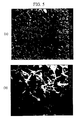
- Examination of the membrane cross-section by scanning electron microscopy revealed a similar interlocking fibrillar structure to that observed in the flat-sheet membranes described above in Example 26, but with the addition of a thin, finely porous skin on the outer (though not the inner) face of the membrane.
- Figures 7 and 8 are electron micrographs showing these features, which together reveal an asymmetric structure for this membrane; the average pore-size in the outer surface being very much smaller than that observed for the bulk and inner surface of the membrane.
Landscapes
- Chemical & Material Sciences (AREA)
- Chemical Kinetics & Catalysis (AREA)
- Engineering & Computer Science (AREA)
- Manufacturing & Machinery (AREA)
- Dispersion Chemistry (AREA)
- Health & Medical Sciences (AREA)
- Medicinal Chemistry (AREA)
- Polymers & Plastics (AREA)
- Organic Chemistry (AREA)
- Materials Engineering (AREA)
- Separation Using Semi-Permeable Membranes (AREA)
- Manufacture Of Porous Articles, And Recovery And Treatment Of Waste Products (AREA)
- Treatments Of Macromolecular Shaped Articles (AREA)
Applications Claiming Priority (2)
| Application Number | Priority Date | Filing Date | Title |
|---|---|---|---|
| GB898916441A GB8916441D0 (en) | 1989-07-19 | 1989-07-19 | Membranes |
| GB8916441 | 1989-07-19 |
Publications (2)
| Publication Number | Publication Date |
|---|---|
| EP0409496A2 true EP0409496A2 (de) | 1991-01-23 |
| EP0409496A3 EP0409496A3 (en) | 1991-07-24 |
Family
ID=10660232
Family Applications (1)
| Application Number | Title | Priority Date | Filing Date |
|---|---|---|---|
| EP19900307673 Withdrawn EP0409496A3 (en) | 1989-07-19 | 1990-07-09 | Microporous membranes |
Country Status (16)
| Country | Link |
|---|---|
| EP (1) | EP0409496A3 (de) |
| JP (1) | JPH03237142A (de) |
| KR (1) | KR910002503A (de) |
| CN (1) | CN1049297A (de) |
| AU (1) | AU628603B2 (de) |
| CA (1) | CA2021495A1 (de) |
| DD (1) | DD296637A5 (de) |
| FI (1) | FI903652A7 (de) |
| GB (2) | GB8916441D0 (de) |
| HU (1) | HU904156D0 (de) |
| IE (1) | IE902536A1 (de) |
| IL (1) | IL95063A0 (de) |
| NO (1) | NO903189L (de) |
| PL (1) | PL286129A1 (de) |
| PT (1) | PT94764A (de) |
| ZA (1) | ZA905530B (de) |
Cited By (6)
| Publication number | Priority date | Publication date | Assignee | Title |
|---|---|---|---|---|
| US5205968A (en) * | 1988-03-31 | 1993-04-27 | The Dow Chemical Company | Process for making a microporous membrane from a blend containing a poly(etheretherketone)-type polymer, an amorphous polymer, and a solvent |
| US5227101A (en) * | 1988-03-31 | 1993-07-13 | The Dow Chemical Company | Process of making microporous membranes from poly(etheretherketone)-type polymers and low melting point crystallizable polymers |
| EP0824959A4 (de) * | 1995-05-09 | 2000-01-19 | Asahi Chemical Ind | Poröser film |
| US20190300652A1 (en) * | 2013-09-03 | 2019-10-03 | Dic Corporation | Polyarylene sulfide resin and manufacturing method therefor, poly(arylene sulfonium salt) and manufacturing method therefor, and sulfoxide |
| CN112941656A (zh) * | 2021-02-03 | 2021-06-11 | 中山大学 | 热诱导相分离法制备聚芳醚酮纳米纤维及其衍生物 |
| WO2022096373A1 (en) * | 2020-11-04 | 2022-05-12 | Solvay Specialty Polymers Usa, Llc | Microporous articles and corresponding formation methods |
Families Citing this family (5)
| Publication number | Priority date | Publication date | Assignee | Title |
|---|---|---|---|---|
| DE102007029445A1 (de) | 2007-06-22 | 2008-12-24 | Werner A. Goedel | Verfahren zur Darstellung hierarchisch strukturierter Filme mittels Inkjet-Druck |
| CN101104702B (zh) * | 2007-07-24 | 2010-12-08 | 陕西科技大学 | 不同结晶度脂肪族聚酯膜的制备工艺 |
| EP2060315A3 (de) * | 2007-11-15 | 2009-08-12 | DSMIP Assets B.V. | Hochleistungsmembran |
| WO2015192238A1 (en) * | 2014-06-16 | 2015-12-23 | Dpoint Technologies Inc. | Blended membranes for water vapor transport and methods for preparing same |
| CN117504622A (zh) * | 2024-01-04 | 2024-02-06 | 阿克菲姆膜材(嘉兴)有限公司 | 一种高渗透选择性聚酮中空纤维膜的制备方法 |
Family Cites Families (7)
| Publication number | Priority date | Publication date | Assignee | Title |
|---|---|---|---|---|
| IL59581A0 (en) * | 1979-03-28 | 1980-06-30 | Monsanto Co | Methods for preparing anisotropic membranes and membranes prepared therefrom |
| US4721732A (en) * | 1984-05-18 | 1988-01-26 | Raychem Corporation | Polymeric articles and methods of manufacture thereof |
| GB8428525D0 (en) * | 1984-11-12 | 1984-12-19 | Ici Plc | Membranes |
| GB8715530D0 (en) * | 1987-07-02 | 1987-08-12 | Ici Plc | Microporous products |
| US4904426A (en) * | 1988-03-31 | 1990-02-27 | The Dow Chemical Company | Process for the production of fibers from poly(etheretherketone)-type polymers |
| DE3829766A1 (de) * | 1988-09-01 | 1990-03-22 | Akzo Gmbh | Verfahren zur herstellung von membranen |
| US4957817A (en) * | 1988-11-25 | 1990-09-18 | The Dow Chemical | Film, fiber, and microporous membranes of poly(etheretherketone)dissolved in high boiling point polar organic solvents |
-
1989
- 1989-07-19 GB GB898916441A patent/GB8916441D0/en active Pending
-
1990
- 1990-07-09 EP EP19900307673 patent/EP0409496A3/en not_active Withdrawn
- 1990-07-10 GB GB909015132A patent/GB9015132D0/en active Pending
- 1990-07-11 HU HU904156A patent/HU904156D0/hu unknown
- 1990-07-11 IE IE253690A patent/IE902536A1/en unknown
- 1990-07-12 IL IL95063A patent/IL95063A0/xx unknown
- 1990-07-13 AU AU58991/90A patent/AU628603B2/en not_active Ceased
- 1990-07-13 ZA ZA905530A patent/ZA905530B/xx unknown
- 1990-07-17 NO NO90903189A patent/NO903189L/no unknown
- 1990-07-18 DD DD90342902A patent/DD296637A5/de not_active IP Right Cessation
- 1990-07-19 KR KR1019900011001A patent/KR910002503A/ko not_active Withdrawn
- 1990-07-19 PL PL28612990A patent/PL286129A1/xx unknown
- 1990-07-19 FI FI903652A patent/FI903652A7/fi not_active Application Discontinuation
- 1990-07-19 CN CN90107266A patent/CN1049297A/zh active Pending
- 1990-07-19 PT PT94764A patent/PT94764A/pt not_active Application Discontinuation
- 1990-07-19 CA CA002021495A patent/CA2021495A1/en not_active Abandoned
- 1990-07-19 JP JP2189587A patent/JPH03237142A/ja active Pending
Cited By (8)
| Publication number | Priority date | Publication date | Assignee | Title |
|---|---|---|---|---|
| US5205968A (en) * | 1988-03-31 | 1993-04-27 | The Dow Chemical Company | Process for making a microporous membrane from a blend containing a poly(etheretherketone)-type polymer, an amorphous polymer, and a solvent |
| US5227101A (en) * | 1988-03-31 | 1993-07-13 | The Dow Chemical Company | Process of making microporous membranes from poly(etheretherketone)-type polymers and low melting point crystallizable polymers |
| EP0824959A4 (de) * | 1995-05-09 | 2000-01-19 | Asahi Chemical Ind | Poröser film |
| US20190300652A1 (en) * | 2013-09-03 | 2019-10-03 | Dic Corporation | Polyarylene sulfide resin and manufacturing method therefor, poly(arylene sulfonium salt) and manufacturing method therefor, and sulfoxide |
| EP3636632A1 (de) * | 2013-09-03 | 2020-04-15 | DIC Corporation | Polyarylensulfidharz und herstellungsverfahren dafür, poly(arylenesulfoniumsalz) und herstellungsverfahren dafür sowie sulfoxid |
| US10982049B2 (en) | 2013-09-03 | 2021-04-20 | Dic Corporation | Polyarylene sulfide resin and manufacturing method therefor, poly(arylene sulfonium salt) and manufacturing method therefor, and sulfoxide |
| WO2022096373A1 (en) * | 2020-11-04 | 2022-05-12 | Solvay Specialty Polymers Usa, Llc | Microporous articles and corresponding formation methods |
| CN112941656A (zh) * | 2021-02-03 | 2021-06-11 | 中山大学 | 热诱导相分离法制备聚芳醚酮纳米纤维及其衍生物 |
Also Published As
| Publication number | Publication date |
|---|---|
| DD296637A5 (de) | 1991-12-12 |
| NO903189D0 (no) | 1990-07-17 |
| JPH03237142A (ja) | 1991-10-23 |
| GB8916441D0 (en) | 1989-09-06 |
| ZA905530B (en) | 1991-06-26 |
| EP0409496A3 (en) | 1991-07-24 |
| CN1049297A (zh) | 1991-02-20 |
| AU628603B2 (en) | 1992-09-17 |
| FI903652A0 (fi) | 1990-07-19 |
| KR910002503A (ko) | 1991-02-25 |
| PT94764A (pt) | 1991-04-18 |
| NO903189L (no) | 1991-01-21 |
| IL95063A0 (en) | 1991-06-10 |
| FI903652A7 (fi) | 1991-01-20 |
| AU5899190A (en) | 1991-01-24 |
| IE902536A1 (en) | 1991-02-13 |
| HU904156D0 (en) | 1990-12-28 |
| CA2021495A1 (en) | 1991-01-20 |
| GB9015132D0 (en) | 1990-08-29 |
| PL286129A1 (en) | 1991-04-08 |
Similar Documents
| Publication | Publication Date | Title |
|---|---|---|
| US4957817A (en) | Film, fiber, and microporous membranes of poly(etheretherketone)dissolved in high boiling point polar organic solvents | |
| US5205968A (en) | Process for making a microporous membrane from a blend containing a poly(etheretherketone)-type polymer, an amorphous polymer, and a solvent | |
| EP0407684A1 (de) | Verfahren zur Herstellung von mikroporösen Film- oder Hohlfasermembranen aus Lösungen von Polyetherether ketonen in hochsiedenden, polaren organischen Lösungsmitteln | |
| CN105555819B (zh) | 聚芳醚的制备方法及在膜制备中的使用 | |
| JP2907883B2 (ja) | 微孔性粉末または微孔性成形体の製造方法 | |
| CA2154070C (en) | Process of making microporous pps membranes | |
| EP0409496A2 (de) | Mikroporöse Membranen | |
| JPH02208329A (ja) | フルオロカーボン膜及びフルオロカーボン膜の製造方法 | |
| EP0492446A2 (de) | Mikroporöse Membranen aus Polyetheretherketon-Polymeren und niedrigschmelzenden, kristallisierbaren Polymeren und Verfahren zu deren Herstellung | |
| EP0382356B1 (de) | Membranen | |
| US4980101A (en) | Anisotropic microporous syndiotactic polystyrene membranes and a process for preparing the same | |
| EP1401559B1 (de) | Herstellungsverfahren für membranen | |
| WO1993004223A1 (en) | Microporous hollow fiber or film membrane of poly(phenylene sulfide) (pps) | |
| CA2115826A1 (en) | Microporous hollow fiber or film membrane of poly(phenylene sulfide) (pps) | |
| JPS6391122A (ja) | 水蒸気の分離方法 | |
| JPS6336805B2 (de) | ||
| KR100426183B1 (ko) | 미세 다공성 폴리에테르술폰막 제조용 조성물 및 그를 이용한 미세 다공성 막의 제조방법 | |
| Zuo | Fundamental Principles of Membrane Distillation Membrane Fabrication | |
| KR20250094899A (ko) | 직수 정수기용 중공사 역삼투 복합막의 다공성 고분자 지지체 및 그 제조방법 | |
| JPS61197006A (ja) | 精密濾過膜の製造方法 | |
| JPH0249769B2 (de) |
Legal Events
| Date | Code | Title | Description |
|---|---|---|---|
| PUAI | Public reference made under article 153(3) epc to a published international application that has entered the european phase |
Free format text: ORIGINAL CODE: 0009012 |
|
| AK | Designated contracting states |
Kind code of ref document: A2 Designated state(s): AT BE CH DE DK ES FR GB GR IT LI LU NL SE |
|
| PUAL | Search report despatched |
Free format text: ORIGINAL CODE: 0009013 |
|
| AK | Designated contracting states |
Kind code of ref document: A3 Designated state(s): AT BE CH DE DK ES FR GB GR IT LI LU NL SE |
|
| 17P | Request for examination filed |
Effective date: 19911123 |
|
| 17Q | First examination report despatched |
Effective date: 19930702 |
|
| STAA | Information on the status of an ep patent application or granted ep patent |
Free format text: STATUS: THE APPLICATION IS DEEMED TO BE WITHDRAWN |
|
| 18D | Application deemed to be withdrawn |
Effective date: 19961003 |