EP0410128A2 - Supraleitender Spannungsstabilisator - Google Patents
Supraleitender Spannungsstabilisator Download PDFInfo
- Publication number
- EP0410128A2 EP0410128A2 EP90111483A EP90111483A EP0410128A2 EP 0410128 A2 EP0410128 A2 EP 0410128A2 EP 90111483 A EP90111483 A EP 90111483A EP 90111483 A EP90111483 A EP 90111483A EP 0410128 A2 EP0410128 A2 EP 0410128A2
- Authority
- EP
- European Patent Office
- Prior art keywords
- energy storage
- current
- terminal
- storage cell
- energy
- Prior art date
- Legal status (The legal status is an assumption and is not a legal conclusion. Google has not performed a legal analysis and makes no representation as to the accuracy of the status listed.)
- Granted
Links
Images



Classifications
-
- H—ELECTRICITY
- H02—GENERATION; CONVERSION OR DISTRIBUTION OF ELECTRIC POWER
- H02M—APPARATUS FOR CONVERSION BETWEEN AC AND AC, BETWEEN AC AND DC, OR BETWEEN DC AND DC, AND FOR USE WITH MAINS OR SIMILAR POWER SUPPLY SYSTEMS; CONVERSION OF DC OR AC INPUT POWER INTO SURGE OUTPUT POWER; CONTROL OR REGULATION THEREOF
- H02M3/00—Conversion of DC power input into DC power output
- H02M3/02—Conversion of DC power input into DC power output without intermediate conversion into AC
- H02M3/04—Conversion of DC power input into DC power output without intermediate conversion into AC by static converters
- H02M3/10—Conversion of DC power input into DC power output without intermediate conversion into AC by static converters using discharge tubes with control electrode or semiconductor devices with control electrode
- H02M3/145—Conversion of DC power input into DC power output without intermediate conversion into AC by static converters using discharge tubes with control electrode or semiconductor devices with control electrode using devices of a triode or transistor type requiring continuous application of a control signal
- H02M3/155—Conversion of DC power input into DC power output without intermediate conversion into AC by static converters using discharge tubes with control electrode or semiconductor devices with control electrode using devices of a triode or transistor type requiring continuous application of a control signal using semiconductor devices only
-
- G—PHYSICS
- G05—CONTROLLING; REGULATING
- G05F—SYSTEMS FOR REGULATING ELECTRIC OR MAGNETIC VARIABLES
- G05F1/00—Automatic systems in which deviations of an electric quantity from one or more predetermined values are detected at the output of the system and fed back to a device within the system to restore the detected quantity to its predetermined value or values, i.e. retroactive systems
- G05F1/70—Regulating power factor; Regulating reactive current or power
-
- H—ELECTRICITY
- H01—ELECTRIC ELEMENTS
- H01F—MAGNETS; INDUCTANCES; TRANSFORMERS; SELECTION OF MATERIALS FOR THEIR MAGNETIC PROPERTIES
- H01F6/00—Superconducting magnets; Superconducting coils
- H01F6/006—Supplying energising or de-energising current; Flux pumps
-
- H—ELECTRICITY
- H02—GENERATION; CONVERSION OR DISTRIBUTION OF ELECTRIC POWER
- H02J—ELECTRIC POWER NETWORKS; CIRCUIT ARRANGEMENTS OR SYSTEMS FOR SUPPLYING OR DISTRIBUTING ELECTRIC POWER; SYSTEMS FOR STORING ELECTRIC ENERGY
- H02J15/00—Systems for storing electric energy specially adapted for power networks
-
- H—ELECTRICITY
- H02—GENERATION; CONVERSION OR DISTRIBUTION OF ELECTRIC POWER
- H02M—APPARATUS FOR CONVERSION BETWEEN AC AND AC, BETWEEN AC AND DC, OR BETWEEN DC AND DC, AND FOR USE WITH MAINS OR SIMILAR POWER SUPPLY SYSTEMS; CONVERSION OF DC OR AC INPUT POWER INTO SURGE OUTPUT POWER; CONTROL OR REGULATION THEREOF
- H02M1/00—Details of apparatus for conversion
- H02M1/0067—Converter structures employing plural converter units, other than for parallel operation of the units on a single load
- H02M1/007—Plural converter units in cascade
-
- Y—GENERAL TAGGING OF NEW TECHNOLOGICAL DEVELOPMENTS; GENERAL TAGGING OF CROSS-SECTIONAL TECHNOLOGIES SPANNING OVER SEVERAL SECTIONS OF THE IPC; TECHNICAL SUBJECTS COVERED BY FORMER USPC CROSS-REFERENCE ART COLLECTIONS [XRACs] AND DIGESTS
- Y02—TECHNOLOGIES OR APPLICATIONS FOR MITIGATION OR ADAPTATION AGAINST CLIMATE CHANGE
- Y02E—REDUCTION OF GREENHOUSE GAS [GHG] EMISSIONS, RELATED TO ENERGY GENERATION, TRANSMISSION OR DISTRIBUTION
- Y02E40/00—Technologies for an efficient electrical power generation, transmission or distribution
- Y02E40/60—Superconducting electric elements or equipment; Power systems integrating superconducting elements or equipment
-
- Y—GENERAL TAGGING OF NEW TECHNOLOGICAL DEVELOPMENTS; GENERAL TAGGING OF CROSS-SECTIONAL TECHNOLOGIES SPANNING OVER SEVERAL SECTIONS OF THE IPC; TECHNICAL SUBJECTS COVERED BY FORMER USPC CROSS-REFERENCE ART COLLECTIONS [XRACs] AND DIGESTS
- Y10—TECHNICAL SUBJECTS COVERED BY FORMER USPC
- Y10S—TECHNICAL SUBJECTS COVERED BY FORMER USPC CROSS-REFERENCE ART COLLECTIONS [XRACs] AND DIGESTS
- Y10S505/00—Superconductor technology: apparatus, material, process
- Y10S505/825—Apparatus per se, device per se, or process of making or operating same
- Y10S505/869—Power supply, regulation, or energy storage system
Definitions
- This invention relates to a superconductive voltage stabilizer.
- the invention relates to a voltage stabilizer which utilizes the energy stored in a superconducting energy storage coil.
- the invention draws energy from a three phase power line, stores that energy in a superconducting energy storage coil, and then processes that energy into a form which can be used for feeding to a load.
- the load is isolated from the power distribution lines, and consequently does not induce voltage or current disturbances typically induced when a load draws energy from the power distribution system.
- the quality of power delivered by utility systems determines how well electrical and electronic equipment operates. Any disturbances to the power system can severely affect the equipment's performance. Power disturbances typically result from lightning, utility switching and utility outages. Such disturbances can also be created by the users of power through the switching of loads, ground faults, or abnormally high demand from heavy normal equipment operation. In each of these situations, the depletion of power through the line is severe enough to affect the operation of electrical equipment being used by other utility customers. In one example, the fluctuating load of a large welder in a mill producing wire mesh can cause lights and television sets to flicker for approximately 500 residential customers who received their power from the same feeder line used to supply power to the mill. Proposed solutions in this case included powering the equipment by a diesel generator during evening hours or installing a special electric utility line connected directly to the mill at a substantial cost.
- UPS Uninterruptible Power Supply
- the UPS isolates the computer from the power distribution line so that any changes in delivered power do not affect the computer's operation.
- the system is designed to automatically provide power without delay or transients during any period when the normal power supply is incapable of performing acceptably.
- the amount of current that can be provided by a UPS is limited. Consequently, such a system is unsuited for use in utility applications, particularly where motors must be started.
- the in-rush of current necessary to start a motor is too large to be supplied by a typical UPS.
- Static-VAR Compensator uses a configuration of inductors, capacitors, and high power electronics. These devices are theoretically designed to deliver large amounts of power to equipment such as arc furnaces of arc welders. At this time, however, Static-VAR Compensators have not been used widely enough to determine their performance under day-to-day conditions.
- Another technique to control power disturbances is to store energy when demand is low and return that energy to the power system when demand is high.
- Battery systems have been used to store energy for this purpose, but battery systems have gained limited use because of various deficiencies. Efficient batteries are quite expensive, and since the amount of energy stored depends on the number of batteries used, large capacity battery systems are prohibitively expensive. Also, batteries produce hydrogen during operation, and because hydrogen is highly flammable, battery systems can pose serious safety problems.
- Peterson U.S. Patent No. 4,122,512 describes a system storing alternating current power in a superconductive magnet or inductor. Three-phase alternating current is converted to direct current and stored in a superconducting inductor. During periods of high energy demands, the direct current is reconverted to alternating current and delivered back to the three-phase line. In this way, any sudden depletion in line voltage is compensated by the energy stored in the superconducting system.
- U.S. Patent No. 4,695,932 discloses an energy storage circuit which converts three-phase alternating current to direct current. The DC current is then stored in a superconductive energy storage coil. A DC capacitor and chopper circuit are used to control the amount of direct current stored in the superconductive energy storage coil. This configuration allows the current capacity of the AC supply line equipment and the thyristor converter to be scaled down in accordance with service power established by the current rating of the coil, and also allows a reduction of operation losses.
- Prior art systems have reduced power line disturbances in two ways.
- One method has been to make a device specifically designed for a particular load such as the UPS for computers or the electronic motor starter for motors.
- Such systems although correcting some power line disturbances, have created other problems. Specifically, they are usually load-specific and not interchangeable, and they often cannot supply sufficient current to maintain proper operation of the load.
- a principal object of the invention is to provide a superconductive voltage stabilizer which delivers energy to a load without causing disturbances in the power delivered by utility systems.
- a further object of the invention is to provide a reduction in the cost of maintaining the quality of power delivered by utility systems.
- a superconductive voltage stabilizer comprising a superconducting energy storage coil to store direct current obtained from the conversion of three-phase AC power.
- the stored direct current is selectively delivered to a load through the use of a voltage regulator and an energy storage cell.
- the energy storage cell stores DC energy until it is drawn by a load.
- the voltage regulator selectively delivers the direct current from the energy storage coil by monitoring the amount of energy removed by the load.
- the regulator operates to either direct energy to the energy storage cell or to direct the direct current to the superconducting energy storage coil.
- the superconductive voltage stabilizer provides energy directly to a load, thereby isolating the load from the utility system. This configuration prevents the load from causing disturbances in the power system which would affect other consumers. Rather than attempting to maintain the quality of power delivered to a consumer by supplying stored energy back to a power system during times of heavy demand, the superconductive voltage stabilizer prevents machinery from affecting a power system in the first instance.
- Superconductive voltage stabilizer 10 includes an AC/DC converter 20, a superconducting coil 30, a voltage regulator 40 and an energy storage cell 50.
- the superconductive voltage stabilizer 10 has an AC/DC converter for converting alternating current to direct current.
- Three-phase alternating current provided by an AC supply line is connected to AC input 22 of AC/DC converter 20.
- AC/DC converter 20 has a first DC terminal 24 and a second DC terminal 26. Once the alternating current input has been converted to direct current, a direct current output is available between the first and second DC terminals.
- the direct current is the directed to a superconducting energy storage coil 30, through its connection to one of the DC terminals, which is used to store the energy created by the direct current and developed by AC/DC converter 20.
- Energy storage coil 30 stores energy depending on the control of voltage regulator 40.
- voltage regulator 40 comprises a current switch controller 42 and a current switch 44. Voltage regulator 40 controls the amount of current flowing through superconductive energy storage coil 30. Initially, current switch controller 42 activates current switch 44 so that a current path is created. When current switch 44 is activated, direct current can flow from first DC terminal 24, through energy storage coil 30, through current switch 44 and back through second DC terminal 26.
- an externally generated user control signal directs voltage regulator 40 to halt the current path through current switch 44 thereby directing the current through energy storage cell 50.
- Storage cell 50 comprises, in its most basic form, an energy storage capacitor 52.
- Energy storage cell 50 is connected in parallel with a load through a first output line 60 and a second output line 62.
- the voltage regulator 40 through the use of current switch controller 42, deactivates current switch 44 so that a new current path is created.
- Direct current can then flow from the first DC terminal 24, through energy storage coil 30, through a first input line 64 of energy storage cell 50, through energy storage cell 50, out through a second input line 66 of energy storage cell 50 and back through second DC terminal 26.
- voltage regulator 40 directs the direct current away from energy storage cell 50 and back through the voltage regulator 40.
- the supply of energy in energy storage cell 50 can be delivered to power a load through a first output line 60 and a second output line 62 of energy storage cell 50.
- Output lines 60 and 62 cooperate to provide an output current path to the load.
- the voltage across cell 50 measured between the first input line 64 and the second input line 66 begins to drop.
- voltage regulator 40 deactivates current switch 44, so that energy stored in superconducting coil 30 is delivered to energy storage cell 50.
- the delivery of stored energy continues until the voltage across energy storage cell 50 reaches a predetermined maximum value.
- voltage regulator 40 senses cell 50 is fully charged, and through current switch controller 42, activates current switch 44 so that current flows once again flows through current switch 44.
- Current switch 44 can comprise an insulated gate bipolar transistor (IGBT) having a collector lead 45, an emitter lead 46, and a gate lead 47.
- IGBT insulated gate bipolar transistor
- Collector lead 45 is coupled to first input line 64
- emitter lead 46 is coupled to second input line 66
- gate lead 47 is coupled to current switch controller 42, which controls the conduction of IGBT 44 through gate lead 47.
- IGBT 44 Various other devices can be used in place of IGBT 44 and can include gate-turn-off thyristors and silicon controlled rectifiers.
- energy storage cell 50 supplies energy to the load.
- voltage regulator 40 senses the voltage across the cell 50, and controls the amount of energy released from coil 30 to cell 50. A portion of the direct current stored in coil 30 is thereby delivered to energy storage cell 50 in accordance with the energy requirements of the load.
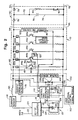
- FIG. 2 is a circuit diagram of another embodiment of superconductive voltage stabilizer 10.
- the illustrated superconductive voltage stabilizer 10 includes an AC/DC converter 20, a superconducting energy storage coil 30, a voltage regulator 40 and an energy storage cell 50, all employed previously in the configuration of FIG. 1.
- the circuit of FIG. 2 also includes additional circuitry which provides a more stable and reliable design.
- energy storage cell 50 includes an energy storage capacitor 70.
- Energy storage capacitor 70 has a first terminal 72 and a second terminal 74.
- First input line 64 is coupled to first terminal 72 through first diode 76 so that the cathode of first diode 76 is connected to first terminal 72 of energy storage capacitor 70.
- First terminal 72 is also coupled to first output line 60 through a second diode 78.
- Second diode 78 is oriented such that its anode is connected to first terminal 72.
- Second terminal 74 is coupled to both second input line 66 and second output line 62.
- First diode 76 and second diode 78 are included in energy storage cell 50 to control the direction of energy flow and to protect circuit components.
- Second diode 78 is included to protect capacitor 72 from any undesirable currents which might be generated by the load and fed back into the superconductive voltage stabilizer 10.
- First diode 76 provides a similar function, and prevents energy storage capacitor 7 from discharging through current switch 44 thereby protecting the remaining circuitry from undesirable currents, including the voltage regulator 40 and AC/DC converter 20.
- resistor 80 and switch 82 Another safety feature included in energy storage cell 50 is resistor 80 and switch 82. Resistor 80 and switch 82 are serially connected and in parallel combination with energy storage capacitor 70. Resistor 80 is a bleeder resistor which, in cooperation with normally open switch 82, is used to dissipate the energy in capacitor 70 whenever the superconducting voltage stabilizer is shut down. When superconductive voltage stabilizer 10 requires maintenance, switch 82 will be closed so that energy stored in capacitor 70 will be dissipated to prevent shock hazard.
- FIG. 2 illustrates a circuit diagram for another voltage regulator 40.
- Current switch controller 42 controls the conduction of five current switches 44a-44e. The number of current switches 44 can vary depending on the amount of current to be conducted and the current capacity of the current switches used.
- Current switch controller 42 monitors the voltage cross first input line 64 and second input line 66 to determine whether current switches 44a-44e should conduct.
- the circuit also includes watercooled sink 84 to maintain the proper operating temperature of high power current switches 44a-44e.
- Protection diode 86 is also included in this circuit to protect current switches or IGBTs 44. Protection diode 86 is connected across the emitter and collector of IGBT 44, with the anode connected to the collector. A snubber 88 is configured in parallel with protection diode 86, and is used to prevent spikes from damaging the circuit.
- overvoltage protector 100 is used to monitor the voltage across voltage regulator 40 and energy storage cell 50, and to bypass those circuits when the voltage level becomes unacceptable.
- Overvoltage protector 100 is connected in parallel with voltage regulator 40 and energy storage cell 50.
- voltage sensor 102 which is in parallel with voltage regulator 40, activates thyristor 104 through the gate thereof.
- Thyristor 104 conducts, so that a current path is created which bypasses the circuitry of voltage regulator 40 and energy storage cell 50.
- Thyristor snubber 106 is connected across the anode and cathode of thyristor 104 as illustrated in FIG. 3.
- control and interlock module 110 of FIG. 2 energy is initially stored in superconducting energy storage coil 30 and later delivered to energy storage cell 50 is initially stored with energy at a time determined by the needs of the driven system. Sometime before the load requires energy, the operator will direct current switch controller 42 to halt the current path through current switches 44, thereby delivering energy to energy storage cell 50. The operator, through user control signal module 112, directs control and interlock module 110 to direct current switch controller 42 to turn off current stitches 44. Consequently, the current path which did flow through current switches 44, now flows through energy storage cell 50. Energy is stored in energy storage cell 50 until the voltage across the cell 50 reaches a predetermined level.
- Interlock module 110 controls AC/DC converter 20 through control line 114 and dump circuit 115.
- interlock module 110 monitors the current flowing through the superconducting coil 30 by current sensor or transductor 116. Two characteristics of voltage regulator 40 are also monitored. First, current unbalance detector 118 detects whether the current flowing through current switches 44 vary with respect to one another outside a predetermined range. Secondly, temperature sensor 120 detects the temperature of the watercooled sink 84.
- current sensor 116 detects the current through superconducting coil 30 by the use of a transducer 116.
- Transducer 116 determines a current value by sensing the magnetic field created by current flow.
- interlock module 110 senses that a limit has been reached and then terminates the conversion of alternating current through control line 114, ceasing the supply of direct current to superconducting coil 30.
- Current will continue to flow through the coil 30, however, since a current path is provided through AC/DC converter 20.
- Current unbalance detector 118 detects the current through the current switches 44a-44e by cores 122a through 122e. If the current conducted through any of switches 44a-44e is greater or less than a predetermined value of current being conducted through any other of switch 44a-44e, interlock module 110 detects this difference and trips the dump circuit 112.
- Dump circuit 112 comprises the parallel combination of dump resistor 124, normally closed dump switch 126, and dump capacitor 128. When tripped, normally closed dump switch 126 opens so that current flows through a parallel combination of dump resistor 124 and dump capacitor 128.
- Temperature sensor 120 detects the temperature of watercooled sink 84. If the temperature reaches a high level, indicating that current switches 44a-44e are operating improperly, interlock module 110 trips dump circuit 112 to prevent circuit damage.
- Interlock module 110 is also provided with service module 130, which consists of a user accessible double-pole double-throw switch 132. Switch 132 can be actuated to close switch 82, thereby bleeding off the energy on energy storage capacitor 70 so that tests or repair work may be safely performed.
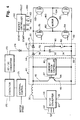
- FIG. 3 is a circuit diagram of another embodiment of energy storage cell 50.
- FIG. 3 illustrates an energy storage cell 50 comprising ten energy storage capacitors 70a-70j to store energy to be delivered to a load. The load is connected to first and second output lines 60 and 62.
- each of the capacitors 70a-70j is protected by a corresponding second diode 78a-78j. In this way, each capacitor is protected from any energy which may be reflected back into energy storage cell 50 from the load.
- Each capacitor 70a-70j also has associated with it a corresponding first diode 76a-76j.
- Diodes 76a-76j protect the remainder of the circuit, including voltage regulator 40 and AC/DC converter 20, from damage which might result from a malfunction in energy storage cell 50.
- Each capacitor 70a-70j also has associated with it a corresponding bleeder resistor 80a-80j. Resistors 80a-80j bleed energy from capacitors 80a-80j when bleeder switch 82 is closed.
- the superconductive voltage stabilizer described herein can be used to deliver energy to many different types of loads, especially loads requiring large amounts of power for short periods of time.
- Devices having these requirements include arc welders, arc furnaces, and three phase or single phase motors require extra power during start-up.
- the superconductive voltage stabilizer described herein is particularly well suited to start motors.
- a MOSFET or IBGT controller 140 operating at the AC line frequency and having a first control line 141, a second control line 142, a third control line 143, and a fourth control line 144.
- Each control line is coupled to the gate of its respective control MOSFET or control IGBT which includes a first control MOSFET 151, a second control MOSFET 152, a third control MOSFET 153, and a fourth control MOSFET 154.
- the drains of first control MOSFET 151 and third control MOSFET 153 are coupled to first output line 60.
- the source of first control MOSFET 151 is coupled to the drain of fourth control MOSFET 154 and the source of third control MOSFET 153 is coupled to the drain of second control MOSFET 152.
- the sources of fourth control MOSFET 154 and second control MOSFET 152 are coupled to second output line 62.
- a single-phase motor 160 is coupled to the drain/source coupling of first control MOSFET 151 and fourth control MOSFET 154 through first motor terminal 162, and the drain/source coupling of third control MOSFET 153 and second control MOSFET 152 through second motor terminal 164.
- MOSFET controller 140 selectively conducts first control MOSFET 151 and second control MOSFET 152 simultaneously and third control MOSFET 153 and fourth control MOSFET 154 simultaneously, so that when first and second MOSFETs are conducting, third and fourth MOSFETs are not, and when third and fourth MOSFETS are conducting, first and second MOSFETs are not. Consequently, single-phase motor 160 is started by the square wave delivered to motor 160 at first motor terminal 162 and second motor terminal 164.
- a first contactor 170 is energized by external control 171 to connect the three-phase line to a second AC/DC converter 172 whose output is coupled to first terminal through motor diode 174 whose cathode is connected to first terminal 72.
- This configuration allows the power to be supplied by the three-phase line once the motor 160 has been started.
- motor 160 is isolated from the utility system during start-up and consequently cannot affect the utility system and its other consumers.
- the superconductivity voltage stabilizer can be used to start a three-phase motor.
- a variable frequency inverter 176 is connected across first output line 60 and second output line 62.
- Variable frequency inverter 176 takes the energy stored in energy storage cell 50 and converts it to three-phase alternating current whose frequency can be varied.
- the three-phase alternating current seen at the output of variable frequency controller 176 is coupled to a three-phase AC motor 178 through a contactor 180 which can be energized to connect the output of variable frequency inverter 176 to motor 178.
- first contactor 170 is energized by external control 171 to connect the three-phase line to second AC/DC converter 172 whose output is coupled through motor diode 174 whose cathode is connected to first terminal 72. Consequently, power can be supplied by the three-phase line once motor 178 has been started and it has attained its steady-state operating speed, and its operation is therefore stabilized.
- variable speed drive to the superconductive voltage stabilizer of FIG. 2 could be used to start a motor.
- the DC link of a variable speed drive is connected to first output line 60 and second output line 62.
- the DC link draws energy from energy storage cell 50 to start the motor.
- the variable speed drive is used to continue driving the motor once it has started.
- the initial start-up current is delivered to the motor after being stored in superconductive energy storage coil 30.
- the employment of coil 30 prevents the motor from excessively loading the AC supply line, and thereby prevents motor in-rush currents from detrimentally affecting the utility system.
Landscapes
- Engineering & Computer Science (AREA)
- Power Engineering (AREA)
- Automation & Control Theory (AREA)
- Electromagnetism (AREA)
- General Physics & Mathematics (AREA)
- Radar, Positioning & Navigation (AREA)
- Physics & Mathematics (AREA)
- Supply And Distribution Of Alternating Current (AREA)
- Microwave Tubes (AREA)
- Thermistors And Varistors (AREA)
- Superconductors And Manufacturing Methods Therefor (AREA)
- Compositions Of Oxide Ceramics (AREA)
- Motor And Converter Starters (AREA)
- Containers, Films, And Cooling For Superconductive Devices (AREA)
Priority Applications (1)
| Application Number | Priority Date | Filing Date | Title |
|---|---|---|---|
| AT9090111483T ATE105117T1 (de) | 1989-07-25 | 1990-06-19 | Supraleitender spannungsstabilisator. |
Applications Claiming Priority (2)
| Application Number | Priority Date | Filing Date | Title |
|---|---|---|---|
| US385014 | 1989-07-25 | ||
| US07/385,014 US4962354A (en) | 1989-07-25 | 1989-07-25 | Superconductive voltage stabilizer |
Publications (3)
| Publication Number | Publication Date |
|---|---|
| EP0410128A2 true EP0410128A2 (de) | 1991-01-30 |
| EP0410128A3 EP0410128A3 (en) | 1992-04-15 |
| EP0410128B1 EP0410128B1 (de) | 1994-04-27 |
Family
ID=23519682
Family Applications (1)
| Application Number | Title | Priority Date | Filing Date |
|---|---|---|---|
| EP90111483A Expired - Lifetime EP0410128B1 (de) | 1989-07-25 | 1990-06-19 | Supraleitender Spannungsstabilisator |
Country Status (7)
| Country | Link |
|---|---|
| US (1) | US4962354A (de) |
| EP (1) | EP0410128B1 (de) |
| JP (1) | JP2513914B2 (de) |
| AT (1) | ATE105117T1 (de) |
| AU (1) | AU630472B2 (de) |
| CA (1) | CA2018055C (de) |
| DE (1) | DE69008449T2 (de) |
Cited By (2)
| Publication number | Priority date | Publication date | Assignee | Title |
|---|---|---|---|---|
| CN100405689C (zh) * | 2000-04-24 | 2008-07-23 | 美国超导体公司 | 对连接到公共电力网络的负载提供电压支持的系统 |
| CN102820669A (zh) * | 2012-08-30 | 2012-12-12 | 陈斌 | 动态储放节能控制柜及工作方法 |
Families Citing this family (60)
| Publication number | Priority date | Publication date | Assignee | Title |
|---|---|---|---|---|
| US5194803A (en) * | 1989-07-25 | 1993-03-16 | Superconductivity, Inc. | Superconductive voltage stabilizer having improved current switch |
| US5159261A (en) * | 1989-07-25 | 1992-10-27 | Superconductivity, Inc. | Superconducting energy stabilizer with charging and discharging DC-DC converters |
| US5111058A (en) * | 1990-05-23 | 1992-05-05 | Martin Richard A | Circuit for sustaining power supply output following momentary interruption of commercial a.c. power |
| DE4106859A1 (de) * | 1991-03-04 | 1992-09-10 | Magnet Motor Gmbh | Induktiver, supraleitender stromspeicher |
| AU646957B2 (en) * | 1991-07-01 | 1994-03-10 | Superconductivity, Inc. | Shunt connected superconducting energy stabilizing system |
| US5612615A (en) * | 1992-08-21 | 1997-03-18 | American Superconductor Corporation | Cryogenic electronics power supply |
| US6097181A (en) * | 1992-08-21 | 2000-08-01 | American Superconductor Corporation | High power drive from AC and DC sources using cryoelectronics |
| DE4420332A1 (de) * | 1994-06-10 | 1995-12-14 | Grohe Armaturen Friedrich | Wasserarmatur |
| US5625548A (en) * | 1994-08-10 | 1997-04-29 | American Superconductor Corporation | Control circuit for cryogenically-cooled power electronics employed in power conversion systems |
| US5656870A (en) * | 1995-08-01 | 1997-08-12 | Intermagnetics General Corporation | Current control for superconducting magnetic energy storage system |
| US5703766A (en) * | 1996-03-05 | 1997-12-30 | Echelon Corporation | Capacitor power supply for intermittent transmission |
| US5701240A (en) * | 1996-03-05 | 1997-12-23 | Echelon Corporation | Apparatus for powering a transmitter from a switched leg |
| US6043635A (en) * | 1996-05-17 | 2000-03-28 | Echelon Corporation | Switched leg power supply |
| US5796182A (en) * | 1996-06-27 | 1998-08-18 | Martin; Richard A. | Capacator storage circuit for sustaining a DC converter |
| US6100664A (en) * | 1999-03-31 | 2000-08-08 | Motorola Inc. | Sub-miniature high efficiency battery charger exploiting leakage inductance of wall transformer power supply, and method therefor |
| US6445555B1 (en) | 1999-11-24 | 2002-09-03 | American Superconductor Corporation | Method and apparatus for discharging a superconducting magnet |
| US6414853B2 (en) | 1999-11-24 | 2002-07-02 | American Superconductor Corporation | Method and apparatus for controlling a phase angle of AC power to keep DC voltage from an energy source constant |
| US6900619B2 (en) * | 1999-11-24 | 2005-05-31 | American Superconductor Corporation | Reactive power compensation to minimize step voltage changes and transients |
| US6600973B1 (en) | 1999-11-24 | 2003-07-29 | American Supercondutor Corporation | Method and apparatus for providing power to a utility network |
| MXPA02005243A (es) | 1999-11-24 | 2003-01-28 | American Superconductor Corp | Regulacion de voltaje de una red de energia de utilidad. |
| US6483317B1 (en) * | 2000-10-31 | 2002-11-19 | Rockwell Automation Technologies, Inc. | System for identifying valid connections between electrical system components and responding to invalid connections |
| US7280026B2 (en) | 2002-04-18 | 2007-10-09 | Coldwatt, Inc. | Extended E matrix integrated magnetics (MIM) core |
| US7091703B2 (en) * | 2004-03-04 | 2006-08-15 | American Superconductor Corporation | Dynamic reactive compensation system and method |
| US7200015B1 (en) * | 2004-05-10 | 2007-04-03 | La Marche Manufacturing Co. | Automatic capacitor discharge for power supplies |
| DE102005041501A1 (de) * | 2005-09-01 | 2007-03-08 | Leybold Vacuum Gmbh | Vakuum-Turbomolekularpumpe |
| TWI288525B (en) * | 2005-12-30 | 2007-10-11 | Yen Sun Technology Corp | Control circuit of a brushless DC motor |
| US8125205B2 (en) | 2006-08-31 | 2012-02-28 | Flextronics International Usa, Inc. | Power converter employing regulators with a coupled inductor |
| US9197132B2 (en) | 2006-12-01 | 2015-11-24 | Flextronics International Usa, Inc. | Power converter with an adaptive controller and method of operating the same |
| US7675759B2 (en) | 2006-12-01 | 2010-03-09 | Flextronics International Usa, Inc. | Power system with power converters having an adaptive controller |
| US7468649B2 (en) | 2007-03-14 | 2008-12-23 | Flextronics International Usa, Inc. | Isolated power converter |
| US7940029B2 (en) * | 2008-07-02 | 2011-05-10 | American Superconductor Corporation | Static VAR corrector |
| CN102217181B (zh) | 2008-11-14 | 2014-09-03 | 伟创力国际美国公司 | 用于同步整流器的驱动器以及采用该驱动器的功率转换器 |
| CN102342007B (zh) | 2009-01-19 | 2015-01-07 | 伟创力国际美国公司 | 用于功率转换器的控制器 |
| WO2010083514A1 (en) * | 2009-01-19 | 2010-07-22 | Flextronics International Usa, Inc. | Controller for a power converter |
| US9019061B2 (en) | 2009-03-31 | 2015-04-28 | Power Systems Technologies, Ltd. | Magnetic device formed with U-shaped core pieces and power converter employing the same |
| US9077248B2 (en) | 2009-06-17 | 2015-07-07 | Power Systems Technologies Ltd | Start-up circuit for a power adapter |
| US8643222B2 (en) * | 2009-06-17 | 2014-02-04 | Power Systems Technologies Ltd | Power adapter employing a power reducer |
| US8514593B2 (en) | 2009-06-17 | 2013-08-20 | Power Systems Technologies, Ltd. | Power converter employing a variable switching frequency and a magnetic device with a non-uniform gap |
| US8638578B2 (en) | 2009-08-14 | 2014-01-28 | Power System Technologies, Ltd. | Power converter including a charge pump employable in a power adapter |
| US8976549B2 (en) | 2009-12-03 | 2015-03-10 | Power Systems Technologies, Ltd. | Startup circuit including first and second Schmitt triggers and power converter employing the same |
| US8520420B2 (en) | 2009-12-18 | 2013-08-27 | Power Systems Technologies, Ltd. | Controller for modifying dead time between switches in a power converter |
| US8787043B2 (en) | 2010-01-22 | 2014-07-22 | Power Systems Technologies, Ltd. | Controller for a power converter and method of operating the same |
| US9246391B2 (en) | 2010-01-22 | 2016-01-26 | Power Systems Technologies Ltd. | Controller for providing a corrected signal to a sensed peak current through a circuit element of a power converter |
| WO2011116225A1 (en) | 2010-03-17 | 2011-09-22 | Power Systems Technologies, Ltd. | Control system for a power converter and method of operating the same |
| US8792257B2 (en) | 2011-03-25 | 2014-07-29 | Power Systems Technologies, Ltd. | Power converter with reduced power dissipation |
| US8792256B2 (en) | 2012-01-27 | 2014-07-29 | Power Systems Technologies Ltd. | Controller for a switch and method of operating the same |
| JP5363607B2 (ja) * | 2012-04-05 | 2013-12-11 | ファナック株式会社 | Dcリンク低電圧アラーム検出レベル可変機能を有するモータ駆動装置 |
| US9190898B2 (en) | 2012-07-06 | 2015-11-17 | Power Systems Technologies, Ltd | Controller for a power converter and method of operating the same |
| US9379629B2 (en) | 2012-07-16 | 2016-06-28 | Power Systems Technologies, Ltd. | Magnetic device and power converter employing the same |
| US9099232B2 (en) | 2012-07-16 | 2015-08-04 | Power Systems Technologies Ltd. | Magnetic device and power converter employing the same |
| US9214264B2 (en) | 2012-07-16 | 2015-12-15 | Power Systems Technologies, Ltd. | Magnetic device and power converter employing the same |
| US9106130B2 (en) | 2012-07-16 | 2015-08-11 | Power Systems Technologies, Inc. | Magnetic device and power converter employing the same |
| JP5973322B2 (ja) * | 2012-10-31 | 2016-08-23 | 東芝シュネデール・インバータ株式会社 | インバータ装置の蓄積電力放電回路 |
| US9240712B2 (en) | 2012-12-13 | 2016-01-19 | Power Systems Technologies Ltd. | Controller including a common current-sense device for power switches of a power converter |
| DE102013111212A1 (de) * | 2013-10-10 | 2015-04-16 | R.Stahl Schaltgeräte GmbH | Sicherheitsschaltung für ein explosionsgeschütztes Gehäuse und Verfahren zu deren Betrieb |
| US9300206B2 (en) | 2013-11-15 | 2016-03-29 | Power Systems Technologies Ltd. | Method for estimating power of a power converter |
| US11581737B2 (en) * | 2017-08-30 | 2023-02-14 | Siemens Energy Global GmbH & Co. KG | Frequency stabilization arrangement |
| CN111431290A (zh) * | 2019-01-10 | 2020-07-17 | 上海交通大学 | 一种具有低温线圈的能量馈送变换装置 |
| CN115085191B (zh) * | 2022-06-27 | 2024-07-05 | 国网湖北省电力有限公司电力科学研究院 | 基于用户侧储能系统的电压暂降控制方法及相关装置 |
| CN117198682B (zh) * | 2023-09-28 | 2026-01-02 | 中国船舶集团有限公司第七〇四研究所 | 一种基于超导储能的退磁电源 |
Family Cites Families (19)
| Publication number | Priority date | Publication date | Assignee | Title |
|---|---|---|---|---|
| US2987631A (en) * | 1958-07-14 | 1961-06-06 | Little Inc A | Electrical signal coupling circuit |
| US3243654A (en) * | 1964-03-19 | 1966-03-29 | Edgerton Germeshausen & Grier | Electric flash circuit utilizing inductive energy storage at superconductive temperatures |
| FR2109106A5 (de) * | 1970-10-01 | 1972-05-26 | Comp Generale Electricite | |
| US4122512A (en) * | 1973-04-13 | 1978-10-24 | Wisconsin Alumni Research Foundation | Superconductive energy storage for power systems |
| US3800256A (en) * | 1973-04-24 | 1974-03-26 | Atomic Energy Commission | Energy storage and switching with superconductors |
| US4079305A (en) * | 1975-10-17 | 1978-03-14 | Wisconsin Alumni Research Foundation | Power supply for high power loads |
| US4348630A (en) * | 1980-12-05 | 1982-09-07 | The United States Of America As Represented By The United States Department Of Energy | Superconducting VAR control |
| US4431960A (en) * | 1981-11-06 | 1984-02-14 | Fdx Patents Holding Company, N.V. | Current amplifying apparatus |
| JPS58154345A (ja) * | 1982-03-09 | 1983-09-13 | 三菱電機株式会社 | コイル間エネルギ−転送回路 |
| JPS58154344A (ja) * | 1982-03-09 | 1983-09-13 | 三菱電機株式会社 | コイル間エネルギ−転送装置 |
| US4438474A (en) * | 1982-05-12 | 1984-03-20 | Westinghouse Electric Corp. | Current limiter and VAR generator utilizing a superconducting coil |
| JPS59103541U (ja) * | 1982-12-27 | 1984-07-12 | 日産自動車株式会社 | 車両用充電警報装置 |
| FR2551599B1 (fr) * | 1983-09-06 | 1985-10-25 | Alsthom Atlantique | Machine synchrone a regulateur supraconducteur de tension et vitesse |
| US4599519A (en) * | 1984-05-16 | 1986-07-08 | The United States Of America As Represented By The United States Department Of Energy | Superconducting magnetic energy storage for asynchronous electrical systems |
| JPS61109432A (ja) * | 1984-10-30 | 1986-05-27 | 日本電気株式会社 | 電源遠隔投入/切断装置 |
| JP2543336B2 (ja) * | 1985-05-15 | 1996-10-16 | 三菱電機株式会社 | 超電導コイル・エネルギ−貯蔵回路 |
| JPS6248232A (ja) * | 1985-08-23 | 1987-03-02 | 株式会社日立製作所 | 超電導エネルギ転送回路 |
| JPS6452209U (de) * | 1987-09-28 | 1989-03-31 | ||
| JPH0199443A (ja) * | 1987-10-13 | 1989-04-18 | Toshiba Corp | シーケンシャルシャント装置 |
-
1989
- 1989-07-25 US US07/385,014 patent/US4962354A/en not_active Expired - Lifetime
-
1990
- 1990-06-01 CA CA002018055A patent/CA2018055C/en not_active Expired - Fee Related
- 1990-06-19 EP EP90111483A patent/EP0410128B1/de not_active Expired - Lifetime
- 1990-06-19 AT AT9090111483T patent/ATE105117T1/de not_active IP Right Cessation
- 1990-06-19 DE DE69008449T patent/DE69008449T2/de not_active Expired - Lifetime
- 1990-07-02 AU AU58610/90A patent/AU630472B2/en not_active Ceased
- 1990-07-25 JP JP2195113A patent/JP2513914B2/ja not_active Expired - Lifetime
Cited By (2)
| Publication number | Priority date | Publication date | Assignee | Title |
|---|---|---|---|---|
| CN100405689C (zh) * | 2000-04-24 | 2008-07-23 | 美国超导体公司 | 对连接到公共电力网络的负载提供电压支持的系统 |
| CN102820669A (zh) * | 2012-08-30 | 2012-12-12 | 陈斌 | 动态储放节能控制柜及工作方法 |
Also Published As
| Publication number | Publication date |
|---|---|
| JP2513914B2 (ja) | 1996-07-10 |
| CA2018055A1 (en) | 1991-01-25 |
| JPH03195336A (ja) | 1991-08-26 |
| ATE105117T1 (de) | 1994-05-15 |
| DE69008449D1 (de) | 1994-06-01 |
| EP0410128B1 (de) | 1994-04-27 |
| EP0410128A3 (en) | 1992-04-15 |
| CA2018055C (en) | 1995-07-18 |
| DE69008449T2 (de) | 1994-11-24 |
| AU630472B2 (en) | 1992-10-29 |
| AU5861090A (en) | 1991-01-31 |
| US4962354A (en) | 1990-10-09 |
Similar Documents
| Publication | Publication Date | Title |
|---|---|---|
| EP0410128B1 (de) | Supraleitender Spannungsstabilisator | |
| US6005362A (en) | Method and system for ride-through of an adjustable speed drive for voltage sags and short-term power interruption | |
| US6369461B1 (en) | High efficiency power conditioner employing low voltage DC bus and buck and boost converters | |
| EP2068423B1 (de) | Wechselstromerzeugungssystem | |
| US5729120A (en) | Dynamic voltage regulation stabilization for AC power supply systems | |
| US6339316B1 (en) | Exciter for generator | |
| US6175166B1 (en) | System for mitigating voltage disturbances and interruptions for power distribution applications | |
| JP4410670B2 (ja) | 無停電電源装置 | |
| KR101175576B1 (ko) | 발전기용 정적 여자기 시스템, 및 이러한 여자기 시스템의동작을 위한 방법 | |
| US5194803A (en) | Superconductive voltage stabilizer having improved current switch | |
| JP2014055902A (ja) | 原子力発電プラント用直流電源設備 | |
| US11258297B2 (en) | Inverter control strategy for a transient heavy load | |
| JP3748394B2 (ja) | 無停電電源装置 | |
| US6577485B2 (en) | Ultra-wide input range power supply for circuit protection devices | |
| KR101854089B1 (ko) | 전압상승 방지용 전기가변장치 및 그 제어 방법 | |
| JP2000152519A (ja) | 瞬時電圧低下補償装置の充電方法 | |
| JPH06189475A (ja) | 無停電電源装置 | |
| EP4395095B1 (de) | Unterbrechungsfreie stromversorgung und stromversorgungsumschaltverfahren | |
| CN221227208U (zh) | 供电电路、电源和不间断电源 | |
| KR0124339Y1 (ko) | 전동차 보조전원장치의 초기충전제어장치 | |
| JPH02164236A (ja) | 無停電電源装置 | |
| JPS6118423B2 (de) | ||
| JP2006042495A (ja) | 電力供給システム | |
| CN119765612A (zh) | 一种安全供电回路及其控制方法 | |
| CN120880160A (zh) | 一种节能型变频器低电压穿越装置及方法 |
Legal Events
| Date | Code | Title | Description |
|---|---|---|---|
| PUAI | Public reference made under article 153(3) epc to a published international application that has entered the european phase |
Free format text: ORIGINAL CODE: 0009012 |
|
| AK | Designated contracting states |
Kind code of ref document: A2 Designated state(s): AT BE CH DE DK ES FR GB GR IT LI LU NL SE |
|
| PUAL | Search report despatched |
Free format text: ORIGINAL CODE: 0009013 |
|
| AK | Designated contracting states |
Kind code of ref document: A3 Designated state(s): AT BE CH DE DK ES FR GB GR IT LI LU NL SE |
|
| 17P | Request for examination filed |
Effective date: 19921013 |
|
| 17Q | First examination report despatched |
Effective date: 19930712 |
|
| GRAA | (expected) grant |
Free format text: ORIGINAL CODE: 0009210 |
|
| AK | Designated contracting states |
Kind code of ref document: B1 Designated state(s): AT BE CH DE DK ES FR GB GR IT LI LU NL SE |
|
| PG25 | Lapsed in a contracting state [announced via postgrant information from national office to epo] |
Ref country code: LI Effective date: 19940427 Ref country code: BE Effective date: 19940427 Ref country code: SE Free format text: THE PATENT HAS BEEN ANNULLED BY A DECISION OF A NATIONAL AUTHORITY Effective date: 19940427 Ref country code: GR Free format text: LAPSE BECAUSE OF FAILURE TO SUBMIT A TRANSLATION OF THE DESCRIPTION OR TO PAY THE FEE WITHIN THE PRESCRIBED TIME-LIMIT Effective date: 19940427 Ref country code: CH Effective date: 19940427 Ref country code: DK Effective date: 19940427 Ref country code: NL Effective date: 19940427 Ref country code: ES Free format text: THE PATENT HAS BEEN ANNULLED BY A DECISION OF A NATIONAL AUTHORITY Effective date: 19940427 |
|
| REF | Corresponds to: |
Ref document number: 105117 Country of ref document: AT Date of ref document: 19940515 Kind code of ref document: T |
|
| REF | Corresponds to: |
Ref document number: 69008449 Country of ref document: DE Date of ref document: 19940601 |
|
| PG25 | Lapsed in a contracting state [announced via postgrant information from national office to epo] |
Ref country code: LU Free format text: LAPSE BECAUSE OF NON-PAYMENT OF DUE FEES Effective date: 19940630 |
|
| ITF | It: translation for a ep patent filed | ||
| REG | Reference to a national code |
Ref country code: CH Ref legal event code: PL |
|
| ET | Fr: translation filed | ||
| NLV1 | Nl: lapsed or annulled due to failure to fulfill the requirements of art. 29p and 29m of the patents act | ||
| REG | Reference to a national code |
Ref country code: GB Ref legal event code: 727 |
|
| REG | Reference to a national code |
Ref country code: GB Ref legal event code: 727A |
|
| PLBE | No opposition filed within time limit |
Free format text: ORIGINAL CODE: 0009261 |
|
| STAA | Information on the status of an ep patent application or granted ep patent |
Free format text: STATUS: NO OPPOSITION FILED WITHIN TIME LIMIT |
|
| REG | Reference to a national code |
Ref country code: GB Ref legal event code: 727B |
|
| 26N | No opposition filed | ||
| REG | Reference to a national code |
Ref country code: GB Ref legal event code: SP |
|
| PGFP | Annual fee paid to national office [announced via postgrant information from national office to epo] |
Ref country code: AT Payment date: 20010620 Year of fee payment: 12 |
|
| REG | Reference to a national code |
Ref country code: GB Ref legal event code: IF02 |
|
| PG25 | Lapsed in a contracting state [announced via postgrant information from national office to epo] |
Ref country code: AT Free format text: LAPSE BECAUSE OF NON-PAYMENT OF DUE FEES Effective date: 20020619 |
|
| PGFP | Annual fee paid to national office [announced via postgrant information from national office to epo] |
Ref country code: FR Payment date: 20060620 Year of fee payment: 17 |
|
| PGFP | Annual fee paid to national office [announced via postgrant information from national office to epo] |
Ref country code: GB Payment date: 20060626 Year of fee payment: 17 |
|
| PGFP | Annual fee paid to national office [announced via postgrant information from national office to epo] |
Ref country code: IT Payment date: 20060630 Year of fee payment: 17 |
|
| GBPC | Gb: european patent ceased through non-payment of renewal fee |
Effective date: 20070619 |
|
| REG | Reference to a national code |
Ref country code: FR Ref legal event code: ST Effective date: 20080229 |
|
| PG25 | Lapsed in a contracting state [announced via postgrant information from national office to epo] |
Ref country code: GB Free format text: LAPSE BECAUSE OF NON-PAYMENT OF DUE FEES Effective date: 20070619 |
|
| PG25 | Lapsed in a contracting state [announced via postgrant information from national office to epo] |
Ref country code: FR Free format text: LAPSE BECAUSE OF NON-PAYMENT OF DUE FEES Effective date: 20070702 |
|
| PG25 | Lapsed in a contracting state [announced via postgrant information from national office to epo] |
Ref country code: IT Free format text: LAPSE BECAUSE OF NON-PAYMENT OF DUE FEES Effective date: 20070619 |
|
| PGFP | Annual fee paid to national office [announced via postgrant information from national office to epo] |
Ref country code: DE Payment date: 20090629 Year of fee payment: 20 |
|
| PG25 | Lapsed in a contracting state [announced via postgrant information from national office to epo] |
Ref country code: DE Free format text: LAPSE BECAUSE OF EXPIRATION OF PROTECTION Effective date: 20100619 |