EP0410191B1 - Dérivés cyclohexane fluorés, procédé et produits intermédiaires pour leur préparation et utilisation des dérivés cyclohexane comme fongicide et produits intermédiaires - Google Patents
Dérivés cyclohexane fluorés, procédé et produits intermédiaires pour leur préparation et utilisation des dérivés cyclohexane comme fongicide et produits intermédiaires Download PDFInfo
- Publication number
- EP0410191B1 EP0410191B1 EP90113023A EP90113023A EP0410191B1 EP 0410191 B1 EP0410191 B1 EP 0410191B1 EP 90113023 A EP90113023 A EP 90113023A EP 90113023 A EP90113023 A EP 90113023A EP 0410191 B1 EP0410191 B1 EP 0410191B1
- Authority
- EP
- European Patent Office
- Prior art keywords
- formula
- hydrogen
- aryl
- alkyl
- group
- Prior art date
- Legal status (The legal status is an assumption and is not a legal conclusion. Google has not performed a legal analysis and makes no representation as to the accuracy of the status listed.)
- Expired - Lifetime
Links
Classifications
-
- A—HUMAN NECESSITIES
- A01—AGRICULTURE; FORESTRY; ANIMAL HUSBANDRY; HUNTING; TRAPPING; FISHING
- A01N—PRESERVATION OF BODIES OF HUMANS OR ANIMALS OR PLANTS OR PARTS THEREOF; BIOCIDES, e.g. AS DISINFECTANTS, AS PESTICIDES OR AS HERBICIDES; PEST REPELLANTS OR ATTRACTANTS; PLANT GROWTH REGULATORS
- A01N37/00—Biocides, pest repellants or attractants, or plant growth regulators containing organic compounds containing a carbon atom having three bonds to hetero atoms with at the most two bonds to halogen, e.g. carboxylic acids
- A01N37/44—Biocides, pest repellants or attractants, or plant growth regulators containing organic compounds containing a carbon atom having three bonds to hetero atoms with at the most two bonds to halogen, e.g. carboxylic acids containing at least one carboxylic group or a thio analogue, or a derivative thereof, and a nitrogen atom attached to the same carbon skeleton by a single or double bond, this nitrogen atom not being a member of a derivative or of a thio analogue of a carboxylic group, e.g. amino-carboxylic acids
- A01N37/48—Nitro-carboxylic acids; Derivatives thereof
-
- A—HUMAN NECESSITIES
- A01—AGRICULTURE; FORESTRY; ANIMAL HUSBANDRY; HUNTING; TRAPPING; FISHING
- A01N—PRESERVATION OF BODIES OF HUMANS OR ANIMALS OR PLANTS OR PARTS THEREOF; BIOCIDES, e.g. AS DISINFECTANTS, AS PESTICIDES OR AS HERBICIDES; PEST REPELLANTS OR ATTRACTANTS; PLANT GROWTH REGULATORS
- A01N33/00—Biocides, pest repellants or attractants, or plant growth regulators containing organic nitrogen compounds
- A01N33/02—Amines; Quaternary ammonium compounds
- A01N33/04—Nitrogen directly attached to aliphatic or cycloaliphatic carbon atoms
-
- A—HUMAN NECESSITIES
- A01—AGRICULTURE; FORESTRY; ANIMAL HUSBANDRY; HUNTING; TRAPPING; FISHING
- A01N—PRESERVATION OF BODIES OF HUMANS OR ANIMALS OR PLANTS OR PARTS THEREOF; BIOCIDES, e.g. AS DISINFECTANTS, AS PESTICIDES OR AS HERBICIDES; PEST REPELLANTS OR ATTRACTANTS; PLANT GROWTH REGULATORS
- A01N35/00—Biocides, pest repellants or attractants, or plant growth regulators containing organic compounds containing a carbon atom having two bonds to hetero atoms with at the most one bond to halogen, e.g. aldehyde radical
- A01N35/04—Biocides, pest repellants or attractants, or plant growth regulators containing organic compounds containing a carbon atom having two bonds to hetero atoms with at the most one bond to halogen, e.g. aldehyde radical containing aldehyde or keto groups, or thio analogues thereof, directly attached to an aromatic ring system, e.g. acetophenone; Derivatives thereof, e.g. acetals
-
- A—HUMAN NECESSITIES
- A01—AGRICULTURE; FORESTRY; ANIMAL HUSBANDRY; HUNTING; TRAPPING; FISHING
- A01N—PRESERVATION OF BODIES OF HUMANS OR ANIMALS OR PLANTS OR PARTS THEREOF; BIOCIDES, e.g. AS DISINFECTANTS, AS PESTICIDES OR AS HERBICIDES; PEST REPELLANTS OR ATTRACTANTS; PLANT GROWTH REGULATORS
- A01N35/00—Biocides, pest repellants or attractants, or plant growth regulators containing organic compounds containing a carbon atom having two bonds to hetero atoms with at the most one bond to halogen, e.g. aldehyde radical
- A01N35/06—Biocides, pest repellants or attractants, or plant growth regulators containing organic compounds containing a carbon atom having two bonds to hetero atoms with at the most one bond to halogen, e.g. aldehyde radical containing keto or thioketo groups as part of a ring, e.g. cyclohexanone, quinone; Derivatives thereof, e.g. ketals
-
- C—CHEMISTRY; METALLURGY
- C07—ORGANIC CHEMISTRY
- C07C—ACYCLIC OR CARBOCYCLIC COMPOUNDS
- C07C205/00—Compounds containing nitro groups bound to a carbon skeleton
- C07C205/44—Compounds containing nitro groups bound to a carbon skeleton the carbon skeleton being further substituted by —CHO groups
-
- C—CHEMISTRY; METALLURGY
- C07—ORGANIC CHEMISTRY
- C07C—ACYCLIC OR CARBOCYCLIC COMPOUNDS
- C07C205/00—Compounds containing nitro groups bound to a carbon skeleton
- C07C205/45—Compounds containing nitro groups bound to a carbon skeleton the carbon skeleton being further substituted by at least one doubly—bound oxygen atom, not being part of a —CHO group
-
- C—CHEMISTRY; METALLURGY
- C07—ORGANIC CHEMISTRY
- C07C—ACYCLIC OR CARBOCYCLIC COMPOUNDS
- C07C205/00—Compounds containing nitro groups bound to a carbon skeleton
- C07C205/49—Compounds containing nitro groups bound to a carbon skeleton the carbon skeleton being further substituted by carboxyl groups
- C07C205/50—Compounds containing nitro groups bound to a carbon skeleton the carbon skeleton being further substituted by carboxyl groups having nitro groups and carboxyl groups bound to acyclic carbon atoms of the carbon skeleton
- C07C205/51—Compounds containing nitro groups bound to a carbon skeleton the carbon skeleton being further substituted by carboxyl groups having nitro groups and carboxyl groups bound to acyclic carbon atoms of the carbon skeleton the carbon skeleton being saturated
-
- C—CHEMISTRY; METALLURGY
- C07—ORGANIC CHEMISTRY
- C07C—ACYCLIC OR CARBOCYCLIC COMPOUNDS
- C07C205/00—Compounds containing nitro groups bound to a carbon skeleton
- C07C205/49—Compounds containing nitro groups bound to a carbon skeleton the carbon skeleton being further substituted by carboxyl groups
- C07C205/55—Compounds containing nitro groups bound to a carbon skeleton the carbon skeleton being further substituted by carboxyl groups having nitro groups or carboxyl groups bound to carbon atoms of rings other than six-membered aromatic rings of the carbon skeleton
-
- C—CHEMISTRY; METALLURGY
- C07—ORGANIC CHEMISTRY
- C07C—ACYCLIC OR CARBOCYCLIC COMPOUNDS
- C07C211/00—Compounds containing amino groups bound to a carbon skeleton
- C07C211/33—Compounds containing amino groups bound to a carbon skeleton having amino groups bound to carbon atoms of rings other than six-membered aromatic rings
- C07C211/34—Compounds containing amino groups bound to a carbon skeleton having amino groups bound to carbon atoms of rings other than six-membered aromatic rings of a saturated carbon skeleton
- C07C211/37—Compounds containing amino groups bound to a carbon skeleton having amino groups bound to carbon atoms of rings other than six-membered aromatic rings of a saturated carbon skeleton being further substituted by halogen atoms or by nitro or nitroso groups
-
- C—CHEMISTRY; METALLURGY
- C07—ORGANIC CHEMISTRY
- C07C—ACYCLIC OR CARBOCYCLIC COMPOUNDS
- C07C225/00—Compounds containing amino groups and doubly—bound oxygen atoms bound to the same carbon skeleton, at least one of the doubly—bound oxygen atoms not being part of a —CHO group, e.g. amino ketones
- C07C225/20—Compounds containing amino groups and doubly—bound oxygen atoms bound to the same carbon skeleton, at least one of the doubly—bound oxygen atoms not being part of a —CHO group, e.g. amino ketones having amino groups bound to carbon atoms of rings other than six-membered aromatic rings of the carbon skeleton
-
- C—CHEMISTRY; METALLURGY
- C07—ORGANIC CHEMISTRY
- C07C—ACYCLIC OR CARBOCYCLIC COMPOUNDS
- C07C255/00—Carboxylic acid nitriles
- C07C255/01—Carboxylic acid nitriles having cyano groups bound to acyclic carbon atoms
- C07C255/10—Carboxylic acid nitriles having cyano groups bound to acyclic carbon atoms containing cyano groups and halogen atoms, or nitro or nitroso groups, bound to the same acyclic carbon skeleton
-
- C—CHEMISTRY; METALLURGY
- C07—ORGANIC CHEMISTRY
- C07C—ACYCLIC OR CARBOCYCLIC COMPOUNDS
- C07C255/00—Carboxylic acid nitriles
- C07C255/01—Carboxylic acid nitriles having cyano groups bound to acyclic carbon atoms
- C07C255/17—Carboxylic acid nitriles having cyano groups bound to acyclic carbon atoms containing cyano groups and doubly-bound oxygen atoms bound to the same acyclic carbon skeleton
-
- C—CHEMISTRY; METALLURGY
- C07—ORGANIC CHEMISTRY
- C07C—ACYCLIC OR CARBOCYCLIC COMPOUNDS
- C07C2601/00—Systems containing only non-condensed rings
- C07C2601/12—Systems containing only non-condensed rings with a six-membered ring
- C07C2601/14—The ring being saturated
Definitions
- the present invention relates to new fluorinated cyclohexane derivatives which contain at least one nitro or amino group and can be substituted in many ways, processes and intermediates for their preparation and the use of the new fluorinated cyclohexane derivatives as fungicides, active substances against parasites of farm animals and intermediates for the preparation of biologically active substances.
- substituted alkyl and / or aryl radicals can be present as radicals in formula (I), suitable substituents are, for example, nitro, halogen, C1 to C4alkoxy and cyano groups.
- Halogen is preferably fluorine, chlorine or bromine, in particular fluorine.
- Aromatic radicals are also suitable as substituents on alkyl radicals.
- R 1 and R 1 ' regardless of R2 and R 2' , and independently of it R3 and R 3 'are identical.
- the new fluorinated cyclohexane derivatives of the formula (I) can each be present as a single structural isomer, but also as any mixture of different structural isomers.
- the new fluorinated cyclohexane derivatives of the formula (I) are biologically active compounds and / or intermediates for the production of biologically active compounds.
- Biologically active means, for example, that the compounds have a good fungicidal activity in Have crop protection with good plant tolerance. Their particular effectiveness is directed against the pathogen of apple scab.
- the good plant tolerance of the fluorinated cyclohexane derivatives according to the invention in the concentrations necessary for controlling plant diseases allows treatment of above-ground parts of plants, of propagation stock and seeds and the treatment of the soil.
- the active compounds can be converted into the customary formulations, such as solutions, emulsions, suspensions, powders, foams, pastes, granules, aerosols, very fine encapsulations in polymeric substances and in coating compositions for seeds, and also in ULV formulations.
- formulations can be prepared in a manner known per se, for example by mixing the active ingredients with extenders, for example liquid solvents, pressurized liquefied gases and / or solid carriers, if appropriate using auxiliaries such as surface-active agents, emulsifiers, dispersants and / or foam-generating agents Medium.
- extenders for example liquid solvents, pressurized liquefied gases and / or solid carriers, if appropriate using auxiliaries such as surface-active agents, emulsifiers, dispersants and / or foam-generating agents Medium.
- auxiliaries such as surface-active agents, emulsifiers, dispersants and / or foam-generating agents Medium.
- organic solvents can, for example, also be used as auxiliary solvents.
- suitable liquid solvents are aromatics, chlorinated aromatics, chlorinated aliphatic hydrocarbons, aliphatic hydrocarbons, alcohols, ethers, esters, ketones, dimethylformamide, dimethyl sulfoxide and / or water
- Liquefied gaseous extenders or carriers are understood to be those liquids which are at normal pressure and normal temperature are gaseous, for example aerosol propellants such as low halogenated hydrocarbons, butane, propane, nitrogen and carbon dioxide.
- Suitable solid carriers are, for example, natural rock powder, synthetic rock powder, highly disperse silica, aluminum oxide and silicates. Broken and fractionated natural rocks as well as synthetic granules from inorganic and organic flours as well as granules from organic material such as sawdust, coconut shells, corn cobs or tobacco sticks are also of interest as solid carriers for granules.
- Non-ionic and anionic emulsifiers for example, are suitable as emulsifying and / or foaming agents, and lignin-sulfite leaching and methyl cellulose as dispersing agents.
- Adhesives such as carboxymethyl cellulose can also be used in the formulations.
- the formulations can contain, for example, 0.1 to 95% by weight of active compound, preferably 0.5 to 90% by weight.
- the active compounds according to the invention can be present in the formulations in a mixture with other known active compounds, e.g. in combination with other fungicides, insecticides, acaricides and herbicides, as well as in mixtures with fertilizers and growth regulators.
- the active substances as such in the form of their formulations or the use forms prepared therefrom, such as ready-to-use solutions, emulsifiable concentrates, emulsions, foams, suspensions, wettable powders, pastes, soluble powders, dusts and / or granules. They can be used, for example, by pouring, spraying, spraying, scattering, dusting, foaming or brushing. It is also possible to apply the active ingredients using the ultra-low-volume (ULV) process or to inject the active ingredient preparation or the active ingredient itself into the soil.
- UUV ultra-low-volume
- the seeds of the plants can also be treated.
- the active compound concentrations in the use forms can be varied within a wide range. They are generally 1 to 0.0001% by weight, preferably 0.5 to 0.001% by weight.
- amounts of active ingredient of 0.001 to 50 g / kg of seed, preferably 0.01 to 10 g / kg of seed, are generally used.
- active ingredient concentrations in the range from 0.0001 to 0.1% by weight, preferably 0.0001 to 0.02% by weight, can be used at the site of action.
- new fluorinated cyclohexane derivatives of the formula (I) are used as intermediates for the preparation of biologically active compounds, this can be done, for example, by reaction with chloroformic acid esters Carbamates or urea with isocyanates are produced which have insecticidal and / or herbicidal activity.
- the present invention further relates to a process for the preparation of fluorinated cyclohexane derivatives of the formula (I), which is characterized in that a compound of the formula (II) in the X, m, R1, R2, R3, R 1 ' , R 2' , R 3 ' and Y have the meaning given for formula (I) and Y 'represents a COR4, CO-OR5 or cyano group (R4 and R5 as defined for Y), cyclized in the presence of a base and, if necessary, subsequently re-derivatized.
- the most diverse basic compounds are possible as bases, for example alkali metal fluorides in an aprotic solvent, hydroxides, Carbonates, alcoholates, hydrides and amides of alkali and alkaline earth metals, organic bases such as tetraalkylammonium hydroxides and anion exchangers in basic form.
- Reaction conditions for the cyclization reaction are, for example, temperatures in the range from -78 to + 150 ° C., reaction times in the range from 6 to 48 hours and the presence of one or more solvents. The temperature in the range from 0 to 82 ° C. and the solvent acetonitrile are preferred.
- Such hydrogenation can be carried out, for example, catalytically using hydrogen or by reaction with metal hydrides.
- Catalytic hydrogenation with hydrogen can be carried out in the presence or absence of solvents. In general, it is advantageous to work in the presence of a solvent, since then better control of the exothermic hydrogenation is possible.
- Inert organic solvents are suitable as solvents, for example.
- solvents such as methanol, ethanol, ethylene glycol and diethylene glycol
- ethers such as dioxane, tetrahydrofuran, ethylene glycol monomethyl ether, ethylene glycol monoethyl ether, ethylene glycol dimethyl ether, diethylene glycol monoethyl ether and diethylene glycol dimethyl ether
- saturated hydrocarbons such as cyclohexane and esters such as ethyl acetate
- Preferred solvents are methanol and ethanol.
- the Hydrogen pressure vary widely. Pressures in the range from 1 to 30 bar, in particular 5 to 20 bar, are preferred.
- Suitable catalysts for the catalytic hydrogenation with hydrogen are, for example, those which consist of metals and / or compounds of elements of subgroup 8 of the periodic system of the elements or contain them. The metals ruthenium, rhodium, palladium, platinum, cobalt and nickel and their compounds are preferred. Such metals and metal compounds can also be applied to carrier materials.
- the compounds of the formula (II) required as starting compounds for the preparation of the new fluorinated cyclohexane derivatives of the formula (I) can be obtained by mixing 1 mol of a fluoronitroalkane of the formula (III) in the X and m have the meaning given for formula (I), in the presence of alkali metal fluorides and a polar, aprotic solvent with at least 2 moles of one or more ⁇ , ⁇ -unsaturated compounds of the formula (IV) in the R1, R2, R3 and Y have the meaning given for formula (I).
- the compound of formula (IV) is presented in excess of at least 2 moles and at low temperature, e.g. at -78 to + 10 ° C, preferably at 0 to 10 ° C, with a mole of a compound of formula (III). If necessary, stirring can be carried out at elevated temperature to complete the reaction, e.g. at 50 to 100 ° C, preferably at 70 to 85 ° C.
- ⁇ , ⁇ -unsaturated compounds of the formula (IV) are used, in particular two such compounds in succession, asymmetrical compounds of the formula (II) can be obtained, ie compounds of the Formula (II) in which R1 and R 1 ' , R2 and R 2' , R3 and R 3 ' and / or Y and Y' are each different from one another.
- a special procedure for the preparation of compounds of the formula (II) consists in that, first according to DE-OS, a compound of the formula (III ') (Meanings of X, m, R1, R2 and R3 as given in formula (I)) produces, cleans and then reacted in a second step with a compound of formula (IV).
- the mixture was then filtered off, the residue was washed with 100 ml of acetonitrile, the filtrate and the washing liquid were combined and the solvent and unreacted starting material were drawn off in a water jet vacuum.
- the residue which remained was dissolved in 200 ml of methylene chloride, washed with 100 ml of water, then 50 ml of 5% strength by weight aqueous hydrochloric acid and then again 100 ml of water and dried over sodium sulfate.
- the reaction mixture was then filtered off, the residue was washed with 50 ml of acetonitrile, and the solvent and unreacted acrolein were drawn off from the filtrate combined with the washing liquid in a water jet vacuum.
- the remaining residue was dissolved in 200 ml of methylene chloride, washed with 100 ml of water, then 50 ml of 5% strength by weight hydrochloric acid and then again 100 ml of water and dried over sodium sulfate.
- An active ingredient preparation was prepared by mixing 1 part by weight of the product prepared according to Example 6 with 4.7 parts by weight of acetone and 0.3 part by weight of alkylaryl polyglycol ether and diluting this concentrate with water to a concentration of 10 ppm has been.
- young plants were sprayed with the preparation of active compound to runoff. After the spray coating had dried on, the plants were washed with an aqueous conidia suspension of Apple scab pathogen (Ventura inaequalis) was inoculated and then left to stand in an incubation cabin at 20 ° C. and 100% relative atmospheric humidity for 1 day.
- the plants were then placed in a greenhouse at 20 ° C. and a relative atmospheric humidity of 70%.
Landscapes
- Chemical & Material Sciences (AREA)
- Organic Chemistry (AREA)
- Life Sciences & Earth Sciences (AREA)
- Agronomy & Crop Science (AREA)
- Plant Pathology (AREA)
- Health & Medical Sciences (AREA)
- Engineering & Computer Science (AREA)
- Dentistry (AREA)
- General Health & Medical Sciences (AREA)
- Wood Science & Technology (AREA)
- Zoology (AREA)
- Environmental Sciences (AREA)
- Pest Control & Pesticides (AREA)
- Organic Low-Molecular-Weight Compounds And Preparation Thereof (AREA)
- Agricultural Chemicals And Associated Chemicals (AREA)
Claims (6)
- Nouveaux dérivés fluorés de cyclohexane de formule (I)
 A représente l'un des restes alkylène en C₃ suivants :
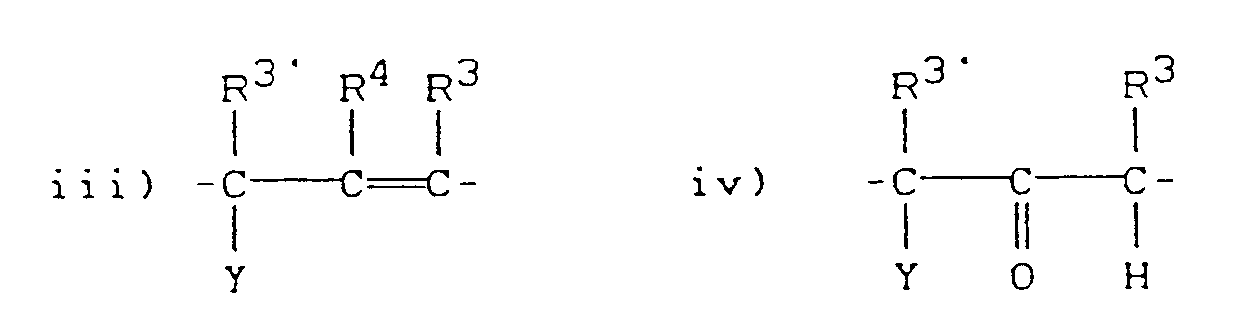


 B représente l'oxygène ou l'hydrogène,X est l'hydrogène, le chlore, le brome ou un groupe méthyle,m a la valeur 1, 2 ou 3,R¹, R², R³, R1', R2' et R3' représentent chacun, indépendamment les uns des autres, l'hydrogène, un halogène, un groupe cyano, un groupe alkyle en C₁ à C₆ éventuellement substitué ou un groupe aryle en C₆ à C₁₀ éventuellement substitué,R⁴ représente l'hydrogène, un groupe alkyle en C₁ à C₆ ou aryle en C₆ à C₁₀,etY représente un groupe COR4' dans lequel R4' est l'hydrogène, un radical alkyle en C₁ à C₆ ou un radical aryle en C₆ à C₁₀ (indépendamment de R⁴) ou bien
un groupe CO-OR⁵ dans lequel R⁵ est un radical alkyle en C₁ à C₆ ou aryle en C₆ à C₁₀ ou bien un groupe SO₂-OR⁶ dans lequel R⁶ est un radical alkyle en C₁ à C₆ ou aryle en C₆ à C₁₀, ou bien
un groupe cyano ou bien
un groupe nitro. - Dérivés fluorés de cyclohexane suivant la revendication 1, caractérisés en ce que dans la formule (I)A représente i), ii), iv), vii) ou viii),X est l'hydrogène ou le chlore,m a la valeur 2 ou 3,R¹, R², R³, R1', R2' et R3' représentent chacun, indépendamment les uns des autres, l'hydrogène, un halogène, un groupe alkyle en C₁ à C₆ non substitué ou un groupe aryle en C₆ à C₁₀ substitué, etY est un groupe COR4' dans lequel R4' est l'hydrogène, un radical alkyle en C₁ à C₆ ou aryle en C₆ à C₁₀ (indépendamment de R⁴) ou bien
un groupe CO-OR⁵ dans lequel R⁵ est un radical alkyle en C₁ à C₆ ou aryle en C₆ à C₁₀ ou bien
un groupe cyano. - Composition fongicide, caractérisée en ce qu'elle contient comme substance active un composé de formule (I) et, le cas échéant, des substances auxiliaires classiques.
- Procédé de production de dérivés fluorés de cyclohexane de formule (I), caractérisé en ce qu'on cyclise un composé de formule (II)

X, m, R¹, R², R³, R1', R2', R3' et Y ont la définition indiquée pour la formule (I) et
Y' représente un groupe COR⁴-, CO-OR⁵- ou cyano (R⁴ et R⁵ étant tels que définis pour Y)
en présence d'une base, et on effectue ensuite le cas échéant une trans-dérivatisation du produit cyclisé. - Procédé suivant la revendication 4, caractérisé en ce qu'on utilise comme bases des fluorures de métaux alcalins dans un solvant aprotique, des hydroxydes, des carbonates, des alcoolates, des hydrures ou des amidures de métaux alcalins ou alcalino-terreux, des bases organiques ou des échangeurs anioniques, et on conduit la réaction de cyclisation à des températures comprises dans la plage de -78 à +150°C et en présence d'un ou plusieurs solvants.
- Procédé suivant les revendications 4 et 5, caractérisé en ce qu'on hydrogène par voie catalytique le produit obtenu après la cyclisation.
Applications Claiming Priority (2)
| Application Number | Priority Date | Filing Date | Title |
|---|---|---|---|
| DE3924304A DE3924304A1 (de) | 1989-07-22 | 1989-07-22 | Neue fluorierte cyclohexanderivate, verfahren und zwischenprodukte zu deren herstellung und die verwendung der neuen fluorierten cyclohexanderivate als fungizide und zwischenprodukte |
| DE3924304 | 1989-07-22 |
Publications (2)
| Publication Number | Publication Date |
|---|---|
| EP0410191A1 EP0410191A1 (fr) | 1991-01-30 |
| EP0410191B1 true EP0410191B1 (fr) | 1993-10-20 |
Family
ID=6385621
Family Applications (1)
| Application Number | Title | Priority Date | Filing Date |
|---|---|---|---|
| EP90113023A Expired - Lifetime EP0410191B1 (fr) | 1989-07-22 | 1990-07-07 | Dérivés cyclohexane fluorés, procédé et produits intermédiaires pour leur préparation et utilisation des dérivés cyclohexane comme fongicide et produits intermédiaires |
Country Status (4)
| Country | Link |
|---|---|
| US (1) | US5109020A (fr) |
| EP (1) | EP0410191B1 (fr) |
| JP (1) | JPH0358958A (fr) |
| DE (2) | DE3924304A1 (fr) |
Families Citing this family (5)
| Publication number | Priority date | Publication date | Assignee | Title |
|---|---|---|---|---|
| PE20030320A1 (es) | 2001-07-17 | 2003-04-03 | Gruenenthal Chemie | Derivados sustituidos de 4-aminociclohexanol |
| DE10135637A1 (de) * | 2001-07-17 | 2003-02-06 | Gruenenthal Gmbh | Substituierte 4-Aminocyclohexanolderivate |
| DE10135636A1 (de) * | 2001-07-17 | 2003-02-06 | Gruenenthal Gmbh | Substituierte 4-Aminocyclohexanole |
| US7193101B2 (en) * | 2003-06-26 | 2007-03-20 | Tpat Ip | Esters with antimicrobial, bioresistant and fungal resistant properties |
| DE102004023507A1 (de) | 2004-05-10 | 2005-12-01 | Grünenthal GmbH | Substituierte Cyclohexylessigsäure-Derivate |
Family Cites Families (4)
| Publication number | Priority date | Publication date | Assignee | Title |
|---|---|---|---|---|
| DE2630562C2 (de) * | 1976-07-07 | 1984-01-12 | Bayer Ag, 5090 Leverkusen | Verfahren zur katalytischen Hydrierung von Perfluoralkyl-substituierten Anilinen |
| DE3611196A1 (de) * | 1986-04-04 | 1987-10-15 | Bayer Ag | Trifluormethylgruppen enthaltende cyolopropylamine |
| DE3739784A1 (de) * | 1987-11-24 | 1989-06-08 | Bayer Ag | Neue fluorierte nitroalkylverbindungen und ein verfahren zur herstellung von neuen und bekannten fluorierten nitroalkylverbindungen |
| DE3808276A1 (de) * | 1988-03-12 | 1989-09-21 | Bayer Ag | Verfahren zur herstellung von fluorierten nitroalkylverbindungen |
-
1989
- 1989-07-22 DE DE3924304A patent/DE3924304A1/de not_active Withdrawn
-
1990
- 1990-07-07 EP EP90113023A patent/EP0410191B1/fr not_active Expired - Lifetime
- 1990-07-07 DE DE90113023T patent/DE59003129D1/de not_active Expired - Fee Related
- 1990-07-09 US US07/549,784 patent/US5109020A/en not_active Expired - Fee Related
- 1990-07-18 JP JP2188146A patent/JPH0358958A/ja active Pending
Also Published As
| Publication number | Publication date |
|---|---|
| DE3924304A1 (de) | 1991-01-31 |
| JPH0358958A (ja) | 1991-03-14 |
| DE59003129D1 (de) | 1993-11-25 |
| US5109020A (en) | 1992-04-28 |
| EP0410191A1 (fr) | 1991-01-30 |
Similar Documents
| Publication | Publication Date | Title |
|---|---|---|
| DD206728A5 (de) | Fungizide mittel | |
| EP0040744B1 (fr) | Oximes d'aminopropiophénone, procédés pour leur préparation et leur application comme fongicides | |
| DE2743767A1 (de) | Diastereomere triazolyl-0,n-acetale, verfahren zu ihrer herstellung sowie ihre verwendung als fungizide | |
| EP0096786A2 (fr) | Dérivés hydroxyalkynyl-azolyles, leur procédé de préparation et leur application comme fongicides | |
| EP0040740B1 (fr) | Dérivés d'aminopropanol, procédé pour leur préparation et leur utilisation comme fongicides | |
| EP0010673B1 (fr) | N-Propargyl-anilines substituées, procédé pour leur préparation et leur utilisation comme fongicides | |
| EP0410191A1 (fr) | Dérivés cyclohexane fluorés, procédé et produits intermédiaires pour leur préparation et utilisation des dérivés cyclohexane comme fongicide et produits intermédiaires | |
| DE2842137A1 (de) | Halogenierte 1-azolyl-1-fluorphenoxy- butan-derivate, verfahren zu ihrer herstellung sowie ihre verwendung als fungizide | |
| DE2632603A1 (de) | Halogenierte 1-triazolyl-butan-derivate, verfahren zu ihrer herstellung und ihre verwendung als fungizide | |
| EP0144044A2 (fr) | Cétones acétyléniques substituées | |
| EP0109476A1 (fr) | Phénoxypropyltriazolyl-cétones et -carbinols, leur procédé de préparation et leur application comme fongicides ainsi que des intermédiaires de synthèse | |
| EP0020859A1 (fr) | N-allyl acétanilides substitués, procédé pour leur préparation et leur utilisation comme fongicides | |
| EP0022531B1 (fr) | 1-(2,4-Dichlorophényl)-1-(2,6-dihalogéno benzylmercapto)-2-(1,2,4 triazol 1-yl)-éthanes, procédé pour leur préparation et leur utilisation comme fongicides | |
| EP0023669B1 (fr) | Anilides d'acides cycloalcoyl- ou cycloalcényl-carboxyliques, procédé pour leur préparation et leur utilisation comme fongicides | |
| EP0018509B1 (fr) | N-Allényl-acétanilides, procédé pour leur préparation ainsi que leur utilisation comme fongicides | |
| EP0056161A2 (fr) | Esters d'acides hydroximiques, leur préparation et leur utilisation comme fongicide | |
| EP0161455A1 (fr) | Bêta-naphtylalkylamines | |
| EP0046931A2 (fr) | N-oxiamides, procédé de préparation et utilisation comme fongicides | |
| EP0012261B1 (fr) | Dérivés spiro substitués de 3-(3,5-dichlorophényl)-2,4-oxazolidine diones, procédés pour leur préparation et leur utilisation comme fongicides | |
| EP0066771B1 (fr) | 1-Iodo-1-propyn-3-ols, procédé pour leur préparation et leur utilisation comme agent de protection des plantes | |
| EP0003975B1 (fr) | Diamides de l'acide dichloromaléique, procédé pour les préparer et leur utilisation comme fongicides | |
| DD221343A5 (de) | Fungizide mittel | |
| EP0278346A1 (fr) | (Difluoro-2,4 phényl)-1 (fluoro-1 cyclopropyl)-1 (triazole-1,2,4 yl-1)-2 éthanol-1 | |
| EP0020437B1 (fr) | Acetanilides halogenés, leur préparation et herbicides les contenant | |
| EP0019190A2 (fr) | Utilisation des hydroxyalkyl-imidazoles comme fongicides |
Legal Events
| Date | Code | Title | Description |
|---|---|---|---|
| PUAI | Public reference made under article 153(3) epc to a published international application that has entered the european phase |
Free format text: ORIGINAL CODE: 0009012 |
|
| 17P | Request for examination filed |
Effective date: 19900709 |
|
| AK | Designated contracting states |
Kind code of ref document: A1 Designated state(s): CH DE FR GB IT LI |
|
| 17Q | First examination report despatched |
Effective date: 19920817 |
|
| GRAA | (expected) grant |
Free format text: ORIGINAL CODE: 0009210 |
|
| AK | Designated contracting states |
Kind code of ref document: B1 Designated state(s): CH DE FR GB IT LI |
|
| REF | Corresponds to: |
Ref document number: 59003129 Country of ref document: DE Date of ref document: 19931125 |
|
| ITF | It: translation for a ep patent filed | ||
| GBT | Gb: translation of ep patent filed (gb section 77(6)(a)/1977) |
Effective date: 19931102 |
|
| ET | Fr: translation filed | ||
| PLBE | No opposition filed within time limit |
Free format text: ORIGINAL CODE: 0009261 |
|
| STAA | Information on the status of an ep patent application or granted ep patent |
Free format text: STATUS: NO OPPOSITION FILED WITHIN TIME LIMIT |
|
| 26N | No opposition filed | ||
| PGFP | Annual fee paid to national office [announced via postgrant information from national office to epo] |
Ref country code: DE Payment date: 19950619 Year of fee payment: 6 |
|
| PGFP | Annual fee paid to national office [announced via postgrant information from national office to epo] |
Ref country code: CH Payment date: 19950623 Year of fee payment: 6 |
|
| PGFP | Annual fee paid to national office [announced via postgrant information from national office to epo] |
Ref country code: GB Payment date: 19950626 Year of fee payment: 6 |
|
| PGFP | Annual fee paid to national office [announced via postgrant information from national office to epo] |
Ref country code: FR Payment date: 19950629 Year of fee payment: 6 |
|
| PG25 | Lapsed in a contracting state [announced via postgrant information from national office to epo] |
Ref country code: GB Effective date: 19960707 |
|
| PG25 | Lapsed in a contracting state [announced via postgrant information from national office to epo] |
Ref country code: LI Effective date: 19960731 Ref country code: CH Effective date: 19960731 |
|
| GBPC | Gb: european patent ceased through non-payment of renewal fee |
Effective date: 19960707 |
|
| REG | Reference to a national code |
Ref country code: CH Ref legal event code: PL |
|
| PG25 | Lapsed in a contracting state [announced via postgrant information from national office to epo] |
Ref country code: FR Effective date: 19970328 |
|
| PG25 | Lapsed in a contracting state [announced via postgrant information from national office to epo] |
Ref country code: DE Effective date: 19970402 |
|
| REG | Reference to a national code |
Ref country code: FR Ref legal event code: ST |
|
| PG25 | Lapsed in a contracting state [announced via postgrant information from national office to epo] |
Ref country code: IT Free format text: LAPSE BECAUSE OF NON-PAYMENT OF DUE FEES;WARNING: LAPSES OF ITALIAN PATENTS WITH EFFECTIVE DATE BEFORE 2007 MAY HAVE OCCURRED AT ANY TIME BEFORE 2007. THE CORRECT EFFECTIVE DATE MAY BE DIFFERENT FROM THE ONE RECORDED. Effective date: 20050707 |